
Do the Math! Learning the Mathematics of the Kingdom is important for Salvation

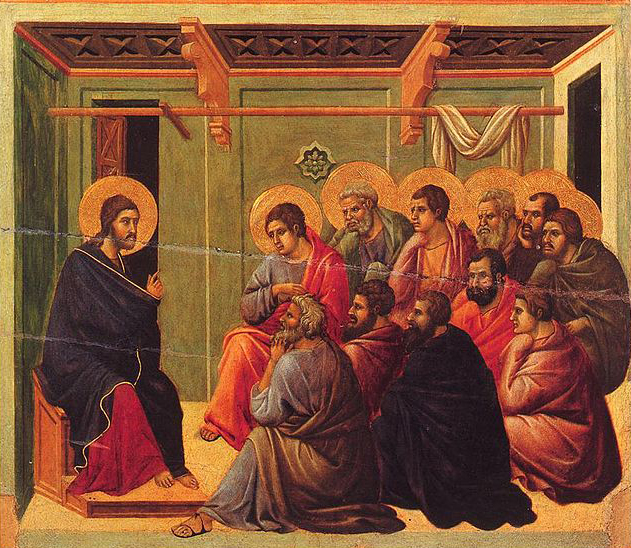
091213There is a remarkable set of sayings of Jesus, in Luke’s sermon on the plain that we have been reading recently at daily mass (Click here to See Gospel). These things present a kind of mathematics of the kingdom of God. In effect the Lord says to us, “Pay attention! You are going to be judged by the same standard by which you treat and judge others. So do the math, and realize that you were storing up for yourselves a kind of standard by which I will judge you.”

The key statement from today’s Mass comes at the very end, wherein the Lord says the measure with which you measure will in return be measured out to you (Luke 6:38). But this statement comes at the end of a long string of statements were in the Lord summons us to be generous, forgiving, merciful, patient, and reluctant to condemn others.

In effect, the Lord says “Do the math, and realize it if you are merciful you’ll be judged with mercy. But if you are harsh and critical you will be judged with a harsh and critical standard. If you have refused to forgive, you will not be forgiven.

Like it or not, this is the mathematics of the Kingdom of God that does not mean that we earn salvation, but it does mean that we have a lot of influence over the standard by which we will be judged.

So, if you are going to need mercy and grace on that day, (and we all are) it is good to do the math of the Kingdom, and store up mercy and grace for that day.

We will all, one day, answer to God. And that day, as Scripture repeatedly teaches, it is a day about which we should be sober. Sadly, there are many who give little thought to this truth, and some who outright scoff at it.

Remarkably we can influence the manner in which God will judge us, the standard he will use! Now here, we speak of the manner of God’s judgment, that is whether he will be strict or merciful. We do not refer here to the content. It is an obvious, and axiomatic truth, that God will judge our deeds. Hence, we should avoid grave sins and wickedness, and repent quickly when we commit such sins.

But again here, we ponder the manner of God’s judgment, the standard which he will use. Namely, whether he will judge us strictly, and or severely, or with lenience, and great mercy.

On the one hand, it would seem that we could have no influence on this. For, it would also seem that God is no respecter of persons, and judges with perfect justice.

And yet, there are passages which do speak of ways that we can influence the standard God will use, the a manner of His judgment. Let’s consider a few scripture passages wherein we are taught that we can have some influence over the manner in which God will judge us. Lets look at four related areas that will have influence:

I. Whether we show mercy –

Jesus says, Blessed are the merciful, for they shall obtain mercy (Matthew 5:7). James says something similar, and develops a bit when he says Always speak and act as those were going to be judged under the law of freedom, because judgment without mercy will be shown to anyone who has not been merciful. So mercy triumphs over judgment! (James 2:12 – 13). And thus we are taught that by observing mercy, and patience, in our relations with one another, we will influence the manner in which we are judged.

It is a fact that, sometimes in life, it will be required of us, especially if we are parents, or in leadership roles, that we will need to punish, and/or assign consequences for those who transgress moral laws, or legal limits. Hence, texts like these do not mean we should never correct with punitive measures. Such a way of living is unwise, and often confirms people in bad behaviors. But even when corrective or punitive measures are needed, it makes sense that we should seek to be lenient where possible, and use lesser measures before firmer ones are employed.

It is also clear from these biblical texts, that it is highly foolish to go through life with severity toward others, with a lack of compassion, or a harsh unyielding attitude. We are all going to need a lot of grace and mercy at our judgment. Therefore, how misguided, how foolish it is for us to be harsh and unmerciful toward others. For indeed, these text tell us the merciful are blessed, and warn that the unmerciful will be shown no mercy. Can you or I really expect, that we will make it on the day of judgment, without boatloads of Mercy?

Now therefore is the time for us to seek to invoke the promise of the Lord, Blessed are the merciful for they shall obtain mercy.

II. Whether we have been strict or lenient

In a related text, the Lord Jesus says, The measure that you measure to others, will be measured back to you (Mark 4:24). Here again, if we hope for, and need a merciful judgment, if we want a merciful measure or standard to be used, the Lord makes it clear that he will use the measure or standard that we have used for others. Have we been strict? He will be strict. Have we been merciful? He will be merciful, and so forth. Be very careful before demanding that sinners and others who transgress receive the strongest penalties. There may be a time for penalties, but it is not always true that the most severe punishments be used.

In John 8 the Pharisees wanted to invoke the most severe penalty for a woman caught in adultery (stoning to death). Jesus reasons with them that before they demand he throw the book at her, they might want to recall there are a few things about them that are also written in the book. One by one they drift away, seemingly considering the foolishness of their demands for the most severe penalty. Somehow they realize that the measure they want to measure to her, will be measured back to them.

III. Whether we are generous to the poor

Luke, relates this text more specifically to our generosity: Give and it will be given to you, good measure, pressed down, shaken together, and running over, will be poured into your lap. For the measure that you measure to others will be measured back to you (Luke 6:38). And this leads us to a second area which the Scriptures teach us that we can influence the day of our judgment.

Jesus, after rebuking the Scribes Pharisees for their severity, and their extreme legalism, says to them, who obsessed about cleaning the outside of the dish, You fools, did not the one who made the outside of the cup make the inside also? But if you give what is inside the cup as alms to the poor, everything will be made clean for you (Luke 11:40 – 41). It is a daring text, in the light of the theology of Grace, and almost implies that we could somehow “purchase” forgiveness. But of course, it is the Lord himself who says it, and he does not say we can somehow purchase forgiveness. But surely, he does teach that generosity to the poor will in fact influence the day of our judgment.

Later in Luke’s Gospel, Jesus develops the thought saying, I tell you, use your worldly wealth to gain friends for yourselves, so that when it is gone, you will be welcomed into trouble dwellings (Lk 16:9). It is a complicated text, but Jesus seems to be saying that our generosity to the poor, will surely gain for us advantages at the day of our judgment. Indeed, blessing the poor gives us powerful intercessors, for the Lord hears the cries of the poor. And on the day of our death, and our judgment, the picture that is painted here is of those very poor welcoming us into eternal dwellings.

Scripture elsewhere warns, If a man shuts his ears to the cry of the poor, he too will cry out and not be heard (Proverbs 21:13). So once again, it would seem that we can have some influence over the manner, measure or standard that will be used by God at our judgment. To the merciful, mercy will be shown. The generous too will experience that their cries are heard, for they heard the cries of the poor. And the Lord more than implies that those who have been generous to the poor will have powerful advocates praying and interceding for them on the day of judgment. Indeed, a number of the Fathers of the Church remind us that, in this life, the poor need us, but in the life to come, we will need them.

IV. Whether we have been forgiving –

A final area to explore in terms of how we might have influence over the manner of our judgment is the matter of forgiveness. Just after giving us the “Our Father,” the Lord Jesus says the following, For if you forgive others when they sin against you, your heavenly Father will also forgive you. But if you do not forgive others their sins, your Father will not forgive your sins (Matthew 6:14 – 15).

Later in Matthew, Jesus tells a terrifying parable of a man who had huge debt, a debt that was forgiven him. But when he refused to forgive his brother a much smaller debt, the king grew angry and threw him into debtors prison. Jesus concludes the parable by saying, This is how my heavenly Father will treat each of you, unless you forgive your brother from your heart (Matthew 18:35).

So yes, it would seem that we can have some influence over the manner in which God will judge us, over the standard he will use. And while it is true, God will judge will judge us by our deeds (cf Romans 2:6), yet the manner in which God judges us, whether with strictness or leniency, does seem to be a matter over which we have influence.

As we have already considered, it is a plain fact that we are all going to need lots of grace and mercy, for if God judges with strict justice and strict standards, who can stand? We will all have much to answer for. All the more reason for us to follow the teachings of the Lord, in his Scripture, and be sure that on the day of our judgment, mercy, and the grace of leniency will prevail in abundance. Do we want mercy? Then show mercy. Do we want a gentle standard? Then we must measure out gentleness. Do we want forgiveness? Then we must offer forgiveness. Recruit some good intercessors for the day of judgment, by giving to the poor. They will be the most powerful intercessors for us as we leave this life and go to judgment.

Indeed, God has shown us how we can store up a treasure of mercy, waiting for us in heaven, at the judgment seat of Christ. Some good lessons here to heed.

Perhaps you might like to add some other ways we can influence the standard God will use to judge us.

Photo credit: I have come for division – The Curt Jester

Here’s a funny video that illustrates that the measure we measure to others will be measured back to us:
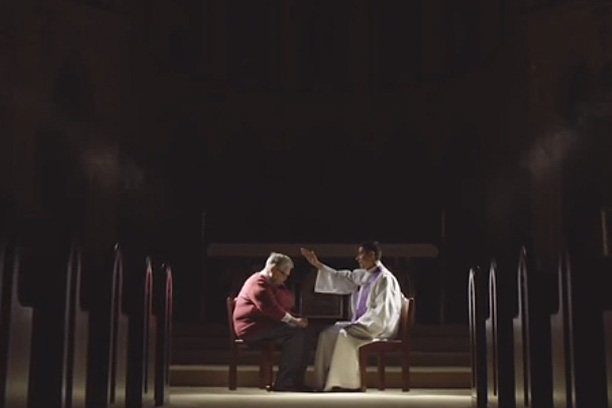
But worldly sorrow brings death… What is the Difference between healthy and unhealthy Guilt?

091113On of the trickier terrains to navigate in the moral world is the experience of guilt. Guilt is understood here as a kind of sorrow for sin.

On the one hand there is an appropriate sorrow for sin we ought to experience. Yet there are also types of guilt that can set up, either from our flesh or from the devil which are self destructive and inauthentic. Some forms of morbid or harmful guilt can cause great harm and actually increase the frequency of sin due to the way they render a person discouraged and self disparaging rather, rather than chastened but confident of mercy, healing and help. It may be of some value to make some distinctions so that we can discern what sort of guilt is healthy, and what is not.

St. Paul makes an important initial distinction for us to consider in the Second Letter to the Corinthians. Paul had rebuked the Corinthians in an earlier letter (esp. 1 Cor 5) for sinning, and tolerating sin their midst. Evidently his rebuke stung many of them significantly with sorrow. Paul writes:

Even if I caused you sorrow by my letter, I do not regret it. Though I did regret it—I see that my letter hurt you, but only for a little while—yet now I am happy, not because you were made sorry, but because your sorrow led you to repentance. For you became sorrowful as God intended and so were not harmed in any way by us. Godly sorrow brings repentance that leads to salvation and leaves no regret, but worldly sorrow brings death. See what this godly sorrow has produced in you: what earnestness, what eagerness to clear yourselves, what indignation, what alarm, what longing, what concern, what readiness to see justice done. (2 Cor 7:8-11)

Notice how Paul distinguishes between “Godly sorrow” and “worldly sorrow.” And the way we can distinguish them, according to Paul is by their fruits.

For Godly sorrow has for it fruits:

  1. A repentance
  2. An earnestness to do what is right. The Greek word is σπουδή (spoude) which refers also a kind of swiftness rooted in enthusiasm.
  3. A longing for what is right. The Greek text speaks of how this Godly sorrow gave them ἐπιπόθησις (epipothesis): not just an eager longing but also understood as a strong affection for what is good and just.
  4. It also produced in them a kind of indignation for sin,
  5. And a kind of holy fear of it.

So, not a bad harvest, to be sure. Godly sorrow brings forth good things and will be known by its fruits. Paul goes on to say that Godly sorrow is a sorrow that God intends and that it does not harm us in any way. Further it leaves no regrets.

We might also add that Godly sorrow is rooted in love, our love for God and others, and our experience of God’s love for us. The sorrow is real and often quite sharp, but since it is rooted in love, it makes us run to the beloved we have offended, rather than from Him, as we sulk.

“Godly sorrow” would also seem to be related to the perfect contrition, which we refer to in the traditional Act of Contrition when we say, I detest all my sins, not only because I fear the loss of heaven and the pains of Hell, but most of all , because I have offended you, my God, who art all good and deserving of all my love. Perfect contrition regards love, whereas imperfect contrition regards fear of punishment. Hence Godly sorrow would also seem to assist and increasingly perfect contrition.

I think I once experienced something close to Godly sorrow, approaching perfect contrition, as a child, but somewhat in relation to a human person, my mother. It was my 8th birthday, and Mom knew I loved tall buildings. So she took me to the top of the new John Hancock building in Chicago where we lived and I was thrilled to look out from the 100th floor visitors’ center. Then we had a nice lunch and returned home. I remember going to the cookie jar and reaching for one, but mom said, “Not now, you’ll spoil your birthday dinner.” I must have been tired from the long day for I looked at her and said, “You’re mean and I hate you!” As I ran from the room I realized what I had done, and was deeply sorry. I was not afraid she would punish me, I just knew I had said something terrible to my mother, something I didn’t mean. In my love and sorrow I cried and went back to tell her how sorry I felt. But love, made my sorrow a Godly sorrow and it drew me back to my mother in a way that increased my love and made me adverse to ever speaking to her like that again. I eagerly helped her set the table and told her I really loved her.

What of “worldly sorrow” as Paul puts it? He says only it “brings death.” Here we must surmise that, whereas Godly sorrow gives live, restores relationship and love, worldly sorrow and guilt sever these things. When we have this kind of guilt or “worldly sorrow” it is not our sins we hate, so much as our self that we hate.

In worldly sorrow, Satan has us where he wants us. Indeed, worldly sorrow is most often a fraud. For, though it masquerades as humility it often pride wherein a person may think, in effect, “How could I have done such a thing?”

If we can know something by its fruits, then we also do well to observe that worldly sorrow will often make us run from God in avoidance, rather than to him in love. Further it will often provoke anger in us making us resentful of God’s law, and that we should have to seek mercy and humble ourselves to God, or to another person we have offended. Rather than make us eager to repent, we will often delay repentance out of embarrassment or resentment. Further, these sorts of attitudes can lead us to rationalizing sin and minimizing its significance.

Others go in a very different direction of self-loathing and despair. They may hyper-magnify what they have done or over-correct by descending into an unhealthy scrupulosity, rooted in fear of punishment, more than love of God.

All of these negative fruits, though they often masquerade as something pious, tend only to make sin even more frequent. For if one is self-loathing and despairing of one’s capacity to live in God’s love, and experience his correction, then there is little strength for them to draw on. They see only weakness and guilt, but miss love and the splendor of grace. Perceiving no basis out of which to get better, they descend deeper into sin, run further from God in unholy fear, and the cycle gets deeper and darker. Thus St. Paul describes worldly sorrow as bringing death.

When one starts to see “fruits” of this sort, it is increasingly certain we are dealing with worldly sorrow which produces all these death-directed drives. A confessor or spiritual director will often have to work long and hard to break some of these negative cycles and help a person find and experience Godly sorrow which brings with it real progress. Godly sorrow is a sorrow to be sure, but one rooted in love.

Discernment in regard to guilt, to sorrow for sin, is essential. Thankfully we are given some good principles by St. Paul and encouraged to distinguish these very different sorrows (Godly and worldly) by their fruits. Satan loves cheap imitations. He, wolf that he is, loves to masquerade in sheep’s clothing. But learn to know his cheap “imitation sorrow” by its fruits, which are death-directed, rather than God-directed.

After a serious topic here is a a humorous and remarkable video depicting “guilt” in a dog. I have to say, I remain fascinated how the dogs and cats I have had all seem to know when they’ve messed up. Their guilt, I am sure is rooted more in fear of punishment than love of me, God or the truth. But one nice thing about animals, they run back pretty fast and make friends again. Enjoy this remarkable video that has over 12 million views.

Is the Syria of Today the Assyria of the Bible?

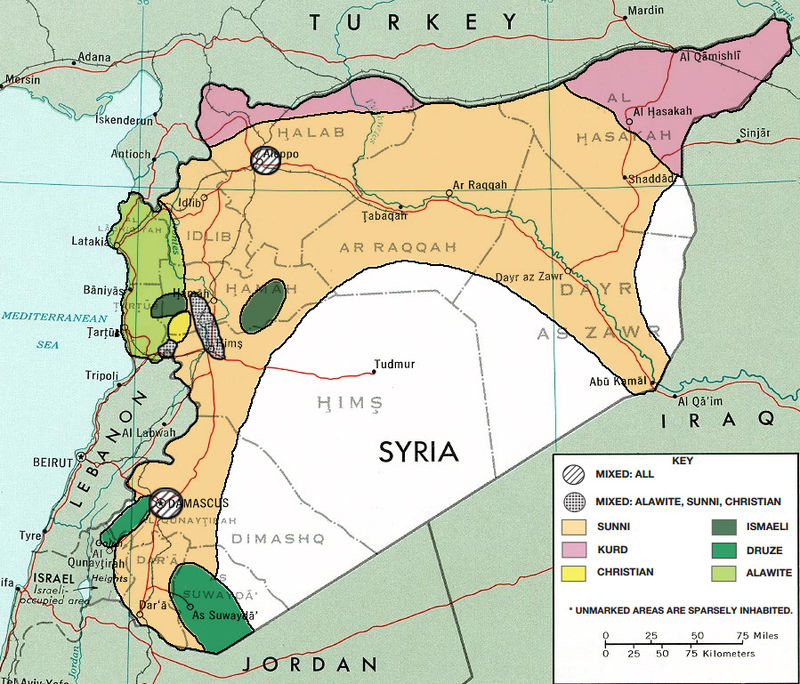
091013Given all the talk of Syria in the news lately, I was asked if Syria is the same “Assyria” that is mentioned in the Bible. The answer is no from a political perspective. The modern state of Syria was formed after World War I and became independent after World War II.

However, there are historical connections to ancient Assyria, including some similar territory. Given the recent news, perhaps we can take a brief look at ancient Assyria and the role it played in Biblical history. As with everything in Scripture, there are important teachings and admonitions for us.

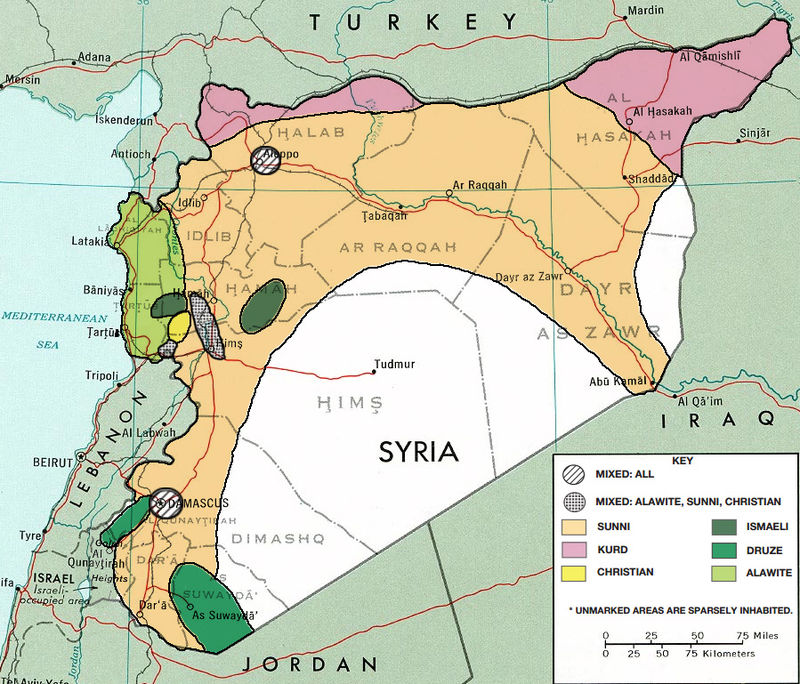
Assyria was one of the Great Mesopotamian powers along with the Babylonians and the nearby Persians. The areas they occupied are roughly close to the borders of modern day Syria (Assyria), Iraq (Babylon) and Iran (Persia). Assyria in particular, was located to the east and Northeast of the Northern Kingdom of Israel stretching into Mesopotamia (the broad plain between the Tigris and Euphrates rivers). See map at upper right, click to enlarge.

Assyria as a nation began a rise to power in the 13th Century BC and contended with Egypt and Babylon for control of the area of Palestine. During this time, The Jewish people were in bondage in Egypt.

Assyria enjoyed a kind of “Golden age” from 12th – 10 Centuries BC. but became weakened through corruption and increasing hostilities with Babylon to its south. It was during this time that the Jews reentered Palestine and reached their own “Golden Age” under King David. Even after David, Omri the King of Israel had conquered part of Assyria and the Land of Aram near modern day Damascus and Made an alliance with the Phoenicians to the North (modern day Lebanon). This was the height of the North Kingdom’s (Israel) power, and the Assyrian armies were largely held in check.

But, beginning in the 9th Century BC Assyria began a reform that led to it arising once more as a formidable power. During that same period, (9th – 8th Centuries BC), The Jews were in a decline as the Northern Kingdom of Israel and the Southern Kingdom of Judah had divided and were engaged in increasing conflict and even outright war with one another.

Assyria grew stronger, and by the early 8th Century and began to dominate the nations of the Ancient Near East, with Israel still being its most formidable foe.

Among the newer weapons the Assyrians employed were the battering ram, along with ladders to scale ancient walls. The Assyrians were also great charioteers, having some 2,ooo chariots, most of them large enough to carry two or three men with weapons. Assyria also had a reputation for great bowmen, slingers and even some cavalry.

Israel by comparison at the time had only 10 chariots and tended to win more through superior tactics than by lots of equipment.

By the late 8th Century (c.a. 725 BC) Assyrian had reconquered Babylon and was dominating Israel, demanding tribute. The Prophets had been warning Israel that due to her sins, she was growing weaker and her enemies were growing stronger. God sent Elijah and Elisha, Amos and Hosea. Each in their own way warned that power had corrupted the northern Kingdom of Israel.

Elijah and Elisha warned of the extreme spiritual danger posed by the false worship of the Baals by many in Israel and the toleration of this by many more. Hosea depicted Israel as a false Bride who in her infidelity had become an adulterer and prostitute. He poured out God’s heart and reminded Israel of its first Love and that God’s was calling her back. Amos minced no words and denounced Israel for her injustice to the poor, violence and of even being willing to sacrifice her children to false gods!

Yet there was a consistent refusal to heed the call to repent. This period is the background for the story of the Prophet Jonah who was sent by God to Nineveh, the Capitol of Assyria to preach repentance. Jonah knew that if they repented they would grow stronger, so he fled and refused the mission. God pursued him, and after the storm at sea and a whale of a ride, Jonah did go, and the Assyrians of Nineveh did repent, and thereby grew stronger.

The final showdown with Israel came in 721 B.C. during the reign of King Hoshea who foolishly and against prophetic instruction made a pact with Egypt and refused to pay tribute to Assyria. Shalmanesar,  King of Assyria attacked the Northern Kingdom of Israel utterly destroying it (cf 2 Kings 17). Those who survived disappeared into exile (the so-called “10 Lost Tribes” of Israel).  The few who remained intermarried with the Assyrians and became the Samaritan people.

An attempt to destroy the Southern Kingdom of Judah was miraculously turned back at the gates of Jerusalem when a likely case of dysentery afflicted the Assyrian army. Further conflicts in the decades ahead with Egypt and Babylon eclipsed Assyrian power once again. By the close of the 7th Century Assyria was little more than a loose confederation of Scythian Tribes.

The Modern State of Syria, though occupying Land similar to ancient Assyria, is not equivalent to or even a direct descendent of ancient Assyria. Syria was established after the first World War and was governed by the French who replaced the Ottomans. Syria gained independence in April 1946, as a parliamentary republic. But the  post-independence period has been stormy, with a large number of military coups especially in the years  1949–1971.

A final thought. Jesus warned the people of his own day, This is a wicked generation. It asks for a sign, but none will be given it except the sign of Jonah (Lk 11:29)  Jesus was harkening back to the historical paradox that when Israel would not repent, he frequently used the pagan nations around them to humble and purify them. Since Israel would not repent, God sent Jonah to strengthen the Assyrians and God eventually used Assyria to prune Israel, and execute justice for its failure to repent.

And thus for the people of Jesus time, if they would not repent, and come to believe, they, in their foolishness like Hoshea of old, would wage war, this time against the Romans, and suffer a horrible blow. That in fact happened in 70 AD when the Temple was destroyed and 1.2 million Jews died in the war.

It is a mysterious providence but it is also written to warn us. If we do not repent, we cannot be strong, and our enemies will surely overwhelm us. And what will our Assyria, our Rome be? It could be radical Islam, it could be our debt crisis, it could be our demographic winter. But by failing to repent, by our injustice, our refusal to keep commitments, our rising unbelief and ingratitude, by our sacrificing our children on the “altars” of our lust and our burning incense to the “gods” of this age, we are calling a just punishment and grave consequences that cannot forever wait.

CS Lewis as many have never heard him.

"C.S.Lewis3"  Licensed under Fair use   via Wikipedia
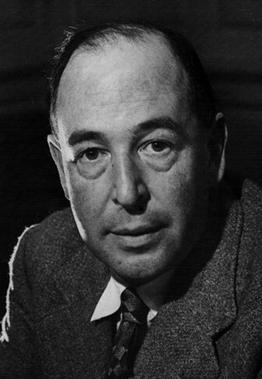
“C.S.Lewis3” Licensed under Fair use via Wikipedia

One of the lesser known and lesser read works of CS Lewis is his correspondence with Rev. Fr. Don Giovanni Calabria. Few indeed have read them since they were written in Latin. And though an English translation was published in 1998, I know few who have ever heard of these letters. The full collection of these letter is here: The Latin Letters of CS Lewis

I first wrote on these letters two years ago but a recent conversation prompts me to re-post on them. Why? There are many who are rightly bewildered at the steep decline of faith in here in America which seems to have happened very dramatically in the late 1960s. But as these reflections by CS Lewis witness, the decline in faith and the erosion of moral life in Europe was already well underway in the late 1940s. Indeed, it was linked to the horrifying experience with two world wars, that seems to have both resulted from, and further exacerbated the decline of faith there.

Had not our Lady warned at Fatima in 1917:

The war (WW I) is going to end: but if people do not cease offending God, a worse one will break out during the Pontificate of Pope Pius XI. When you see a night illumined by an unknown light, know that this is the great sign given you by God that he is about to punish the world for its crimes, by means of war, famine, and persecutions of the Church and of the Holy Father. (Second Secret of Fatima).

Of course we know the sad story. The repentance did not take place and, following one of the most vivid displays of the Northern lights ever recorded (Jan 25, 1938) the Second World War was underway. Germany annexed Austria in March of 1938 and Poland was invaded in 1939. WW II was engaged.

Many of us in America know little of the steep decline of Faith in Europe that took place long before the cultural revolution here of the 1960s. Our knowledge of world history is poor and little do most modern Americans understand the horrifying blood bath that the 20th Century was. Conservative estimates are that 100 million people died in wars or were exterminated for ideological purposes. Loss of faith was surely a cause and also a lasting effect from the cauldron of that horrible Century, a Century marked by amazing invention and yet a body count of almost unimaginable numbers, even more, when we add the horror of Abortion.

These Letters of CS Lewis open a window on that mid-century period of European History. There are some very important insights that CS Lewis offers for the loss in faith in Europe already well underway in the early 1950s when the letters were exchanged.

Indeed I would call his insights stunning in many ways. Lewis argues, in effect that Europe was in a far worse state than paganism. Would that she were even pagan, for the pagans accepted natural law. But Europe, having cast off the faith, is in a state far worse than even before she ever heard of Christ.

In the quotes that follow CS Lewis makes this case quite well an then proffers a solution that we may wish to consider in these times that are even darker for Europe and the whole of the West. Allow me to present just a few excerpts. The Latin text is italicized. The English translation (by Martin Moynihan) is just below the Latin in black bold and italic type face. My comments are in red.

Let us begin with Lewis assessment as to how and by what stages Europe lost the faith:

Neque tamen sine peccatis nostris evenit: nos enim justiam illam, curam illam pauperum quas (mendacissime) communistae praeferunt debueramus jam ante multa saecula revera effecisse. Sed longe hoc aberat: nos occidentales Christum ore praedicavimus, factis Mammoni servitium tulimus. Magis culpabiles nos quam infideles: scientibus enim voluntatem Dei et non facientibus major poena. Nunc unicum refugium in contritione et oratione. Diu erravimus. In legendo Europae historiam, seriem exitiabilem bellorum, avaritiae, fratricidarum Christianorum a Christianis persecutionum, luxuriae, gulae, superbiae, quis discerneret rarissima Sancti Spiritus vestigia? (Letter 20, Jan 7, 1953)

But (this) did not happen without sins on our part: for that justice and that care for the poor which (most mendaciously) the Communists advertise, we in reality ought to have brought about ages ago. But far from it: we Westerners preached Christ with our lips, with our actions we brought the slavery of Mammon. We are more guilty than the infidels: for to those that know the will of God and do not do it, the greater the punishment. Now the only refuge lies in contrition and prayer. Long have we erred. In reading the history of Europe, its destructive succession of wars, of avarice, or fratricidal persecutions of Christians by Christians, of luxury, of gluttony, of pride, who could detect any but the rarest traces of the Holy Spirit?

He makes a remarkable description here. Quite sobering! In effect there grew an appalling lack of love for God, for the poor and for one another. Greed and sloth also took their toll. The lip service faith meant that even Communism appeared more virtuous to some than the Faith.

The wars of which Lewis speaks encompass not only the 20th Century, wherein, as we remarked,  as many as 100 million souls perished in two World Wars and the dropping of the Iron Curtain, but war had taken a terrible toll all through the Christian era. Consider this list: European Wars of the Christian Era. The list is unbelievably long. War upon war, and so much of it was Christian killing Christian.

To be sure, 2oth Century was a kind of death blow to Europe. These terrible things happened on the Christian watch. We must be honest about that. Good things, wonderful things happened too: the monasteries, universities, hospitals etc, the great flowering of all that is best in Western culture. And it can be argued that the faith ushered in these things and also prevented things from being far worse. But a gradual internecine lack of love also took its toll and in the aftermath of the bloodiest century the world has ever known, Europe woke up to a largely faithless landscape.

Next Lewis describes how great is our fall:

Quae dicis de praesenti statu hominum vera sunt: immo deterior est quam dicis. Non enim Christi modo legem Naturae Paganis cognitam negligunt. Nunc enim non erubescunt de adulterio, proditione, perjurio, furto, certisque flagitiis quae non dico Christinaos doctores, sed ipsi pagani et barbari reprobaverunt. Falluntur qui dicunt “Mudus iterum Paganus fit” Utiam fieret! Re vera in statum multo pejorem cadimus. Homo post-Christianus non similis homini pre-Christiano. Tantum distant ut vidua a virgine….(est) magna differentia intra absentiam sponsi venturi, et sponsa amissi! (Letter 23, March 17, 1953)

What you say about the present state of mankind is true: indeed it is even worse than you say. For they neglect not only the Law of Christ, but even the Law of Nature as known by the Pagans. For now they do not blush at adultery, treachery perjury, theft and other crimes, which I will not say Christian doctors, but the Pagans and Barbarians have themselves denounced. They err who say: “The world is turning pagan again.” Would that it were! The truth is, we are falling into a much worse state. Post-Christian man is not the same as pre-Christian man. He is as far removed as a virgin from a widow….there is a great difference between a spouse-to-come and a spouse sent away.

Powerful analysis indeed. He makes similar remarks elsewhere about paganism but here it is succinctly stated. The modern European (and I would add American) are in a state below paganism. For at least the pagans had belief in the supernatural, some respect for Natural Law and could see what reality plainly taught. Modern Westerners are blinded even to that.

The pagan world was a virgin waiting for her groom. The modern West is an adulterous divorce’, cynical, angry and “so through” with Jesus. It is hard to know how the secular West will come round. Will she die in her sins, or will the miracle of broken, humbled heart emerge? Pray! Fast!

He reiterates and adds a stunning but biblical insight:

Certe sentio gravissima pericula nobis incumbere. Haec eveniunt quia maxima pars Europa apostasiam fecit de fide Christiana. Hinc status pejor quam illum statum quem habuimus ante fidem receptam. Nemo enim ex Christianismo redit in statum quem habuit ante Christianismum, sed in pejorem: tantum distat inter paganum et apostatam quantum innuptam et adulteram. Ergo plerique homines nostri temporis amiserunt non modo lumen supernaturale, sed etiam lumen illud naturale quod pagani habuerunt. (Letter 26, Sept 15, 1953)

I certainly feel that very grave dangers hang over us. This results from the great apostasy of the great part of Europe from the Christian faith. Hence, a worse state than the one we were in before we received the faith. For no one returns from Christianity to the same state he was in before Christianity, but into a worse state: the difference between a pagan and an apostate is the difference between an unmarried woman and an adulteress….Therefore many men of our time have lost not only the supernatural light, but also the natural light which the pagans possessed.

A powerful and stunning reminder that leaving the faith does not simply put them back to the status quo ante. You can never go home. The West is now in a worse state than paganism for the reasons Lewis states.

Jesus made the same warning: When an evil spirit comes out of a man, it goes through arid places seeking rest and does not find it. Then it says, ‘I will return to the house I left.’ When it arrives, it finds the house swept clean and put in order. Then it goes and takes seven other spirits more wicked than itself, and they go in and live there. And the final condition of that man is worse than the first. (Luke 11:24-25) Yes, having found the house bereft of the Holy Spirit, quite empty of true faith, Satan returns now with seven more demons and that last state is worse than the first.

St. Peter makes the same point: For if, after they have escaped the defilement of the world through the knowledge of our Lord and Savior Jesus Christ, they are again entangled in them and overcome, the last state has become worse for them than the first (2 Peter 2:20).

But, calling for Hope, CS Lewis considers a way back:

Sed Deus qui Deus misericordiarum est etiam nunc non omnio demisit genus humanum….Non desperandum. Et haud spernendus numerus (apud nos) iam redeunt in fidem….Equidem credo laborandum esse non modo in evangelizando (hoc certe) sed etiam in quadam praeparatione evangelica. Necesse est multos ad legem naturalem revocare antequam de Deo loquamur. Christus enim promittit remissionem peccatorum: sed quid hoc ad eos qui, quum legem naturalem ignorent, nesciunt se peccavisse. Quis medicamentum accipiet nisi se morbo teneri sciat? Relativismus moralis hostis est quem debemus vincere antequam Atheismum aggrediamur. Fere auserim dicere “Primo faciamus juniores bonos Paganos et postea faciamus Christianos. (Letter 26, Sept 15, 1953)

But God who is the God of mercies, even now has not altogether cast off the human race. We must not despair. And among us are not an inconsiderable number now returning to the faith. For my part, I believe we ought to work not only at spreading the Gospel (that certainly) but also to a certain preparation for the Gospel. It is necessary to recall many to the law of nature before we talk about God. For Christ promises forgiveness of sins, but what is that to those who, since they do not know the law of nature, do not know that they have sinned? Who will take medicine unless he knows he is in the grip of a disease? Moral relativity is the enemy we have to overcome before we tackle atheism. I would almost dare to say, “First let us make the younger generation good pagans, and afterwards let us make them Christians.”

To some extent, recent Popes have said the same, we have to begin all over again. But Lewis’ point goes even further since the apostles found a Europe where, at least people were in touch with reality and accepted reality’s testimony as a reliable guide.

Further, the Europe, the West that the apostles encountered had false religion, but at least it accepted that there was a spiritual realm that must be respected as real.

We in the post Cartesian West have retreated out of reality and into our minds. Reality, Natural Law is not a datum, is not a common ground on which to meet. There is no accepted reality, just thought, opinion, views. There is nothing outside ourselves to which we all owe allegiance and which demands our assent. No, we live, not in reality, but in a world of thoughts and abstractions.

Think I’m exaggerating? Try telling a homosexual that the body isn’t designed for homosexual acts and watch how quickly you get a blank stare or indignant response: “What’ my body got to do with it? Its what I feel that matters.” Yes, apparently our bodies have nothing to say to us and neither does anything else in the real world which we dismiss with our ideologies.

Our task in reintroducing the West to reality, to Natural Law, will not be easy, but CS Lewis thinks we’re going to have start there.

Pretty powerful insights, thought provoking, frank and insightful. I am interested in your thoughts.

Sober and Serious on Syria. A Pastoral Teaching rooted in the Just War Teaching

090813One of the more common critiques that many Catholics make of their clergy is that they seldom hear from their pastors on moral topics in the news and our culture such as fornication, divorce, abortion, religious liberty, homosexuality, redefining marriage and so forth. Most recently the question of war and warfare have also been in the news.

As a pastor I try my best to teach the faithful under my care when these topics arise and explain Church teachings in these matter briefly. I often provide handouts as well to accompany the teachings that I do, usually at announcement time, separate from the Homily.

This weekend as the question of military action looms in Syria, another teaching moment arose and I spoke for about five minutes on the topic explaining the insights of Pope Francis, the American Bishops and using the catechism. If your clergy spoke to you on this matter I am interested in what they said and how they said it and encourage you to use the combox.

As for me, here is a brief synopsis of my own  comments this weekend.

As you know there is a very savage civil war underway at this time in Syria. And recently this included the use of chemical weapons. According to our own Government and other international investigators this attack is credibly attributable to the Syrian Government.

Chemical weapons, to include poison gas and nerve agents were first used on a wide scale in World War I and the effects were so horrific that the international community later passed strong resolutions forbidding the use of such weapons. So vivid and awful were those memories from WW I, that the international community has largely, with a few exceptions, abided by these restrictions ever since.

All people of good will rightly detest and are gravely alarmed by the recent deployment of these sorts of weapons by the Syrian Regime against its own people. The President, to his credit, is not willing to simply ignore these egregious violations of human rights and international law. And, also to his credit, he has remanded deliberations regarding any military retaliation to the reflections of the American People, working with their congressional representatives.

In accord with this call for reflection, Pope Francis and the American Bishops have all expressed caution and concern regarding military retaliation at this point, considering it premature, and and in violation of the principles of the “Just War” teaching dating back to St Augustine.

The Just War Tradition is not meant to “justify” war so much as it is to frame the decision of any recourse to military action in the mature and thoughtful deliberations of Scripture, Natural Law and and the long experience of the Christian Tradition.

The Criteria to be met in order to regrettably enter a conflict with military retaliation is well summarized in the Catechism as follows:

The strict conditions for legitimate defense by military force require rigorous consideration. The gravity of such a decision makes it subject to rigorous conditions of moral legitimacy. At one and the same time:

– the damage inflicted by the aggressor on the nation or community of nations must be lasting, grave, and certain;

– all other means of putting an end to it must have been shown to be impractical or ineffective;

– there must be serious prospects of success;

– the use of arms must not produce evils and disorders graver than the evil to be eliminated. The power of modern means of destruction weighs very heavily in evaluating this condition.

These are the traditional elements enumerated in what is called the “just war” doctrine. (Catechism of the Catholic Church # 2309)

At this time, based on what is known and has been set forth by our government, it is the respectful judgement of the American Bishops, and Pope Francis that the criteria for the recourse to war or warfare are not fully met.

This judgment is very similar to the judgment that was rendered on the eve of entry into the War with Iraq. As can be seen, the conditions for recourse to war are very strict, and they ought to be. War is a horrible reality and brings great suffering. It is already clear that the suffering in Syria is great and it does not seem that military intervention by the US will have a reasonable hope of ending that.

Let us also be clear, the deliberations about recourse to War involve prudential judgements where reasonable people may differ as to the details. Unlike other moral issues such as abortion which involve an absolute moral evil, warfare, while strongly limited by our principles, can theoretically be a legitimate course of action under strict circumstances, as stated. Thus, the Catechism while giving clear principles to be followed also says:

The evaluation of these conditions for moral legitimacy belongs to the prudential judgment of those who have responsibility for the common good. (# 2309).

Hence we respect that this is a decision that does finally belong to the President in consultation with the Congress. The Church does obviously urge that our reasonable criteria for “Just War” be at the heart of any deliberations. Our Holy Father and the Bishops must also state that, based on what has been disclosed to the American People, the criteria for just war are not met and that other lesser measures be pursued first.

Let us pray for our President and congressional leaders that they wisely and faithfully execute the offices of leadership entrusted to them by the American People. May God grant his wisdom and insight. For the people of Syria too we pray for an end to conflict and the miracle of forgiveness.

Four Descriptions of Discipleship – A Sermon for the 23rd Sunday of the Year

090713In today’s Gospel Jesus defines four Demands of discipleship. We can look at them one by one.

I. The CONTEXT of the discipleship. The text says that large crowds were following Jesus and so he turned to address them. Just about any time you find a mention of a large crowd fasten your seat belts and prepare for a hard teaching. Jesus didn’t trust the big crowds who were often out for the goodies. They were looking for miracles, multiplied and free bread, physical healings and a fiery sermon. So upon sensing a large crowd the texts says, rather provocatively, that Jesus turned to address them. He then gives a series of “hard sayings” which seem almost designed to thin the ranks and to distinguish true disciples from the “lip service” crowd.

We will see in a moment what he says. But let’s take a moment and examine other incidents where the gospels demonstrate Jesus’ tendency to distrust big crowds:

  • Mat 7:13 Enter by the narrow gate; for the gate is wide and the way is easy, that leads to destruction, and those who enter by it are many. For the gate is narrow and the way is hard, that leads to life, and those who find it are few.
  • Matt 22:14 For many are called, but few are chosen.
  • Luke 6:26 Woe to you, when all men speak well of you, for so their fathers did to the false prophets.

There is also the tendency in the gospels for the mentioning of a large crowd to be followed by a “hard saying:”

  • Matt 19: 1-6 When Jesus had finished saying these things, he left Galilee and went into the region of Judea to the other side of the Jordan. Large crowds followed him, and he healed them there. Some Pharisees came to him to test him. They asked, “Is it lawful for a man to divorce his wife for any and every reason?” “Haven’t you read,” he replied, “that at the beginning the Creator ‘made them male and female,’ and said, ‘For this reason a man will leave his father and mother and be united to his wife, and the two will become one flesh’? So they are no longer two, but one. Therefore what God has joined together, let man not separate.” (cf also Mark 10)
  • Luke 11:29 As the crowds increased, Jesus said, “This is a wicked generation. It asks for a miraculous sign, but none will be given it except the sign of Jonah.
  • Luke 14:26-27 (Today’s Gospel) Large crowds were traveling with Jesus, and turning to them he said: “If anyone comes to me and does not hate his father and mother, his wife and children, his brothers and sisters—yes, even his own life—he cannot be my disciple. And anyone who does not carry his cross and follow me cannot be my disciple.
  • John 6: 2 and a great crowd of people followed him because they saw the miraculous signs he had performed on the sick….and He said to them, I am the living bread come down from heaven…..the crowds murmured.

So, the CONTEXT of discipleship is not usually with the crowd. Though many are called, indeed all are called, only few make the cut and become true disciples. There is a kind of remnant theology at work here, to be sure. But it is a common pattern that Jesus thins the ranks and distinguishes the many who are called from the few who are chosen.

This is a fact not only in the Scriptures but it also remains true that the Lord has often had to prune his Church. Even now we are seeing a large falling away, a kind of pruning as large numbers depart who are not able to take the “hard sayings” of Jesus and the Scriptures about sexuality, forgiveness, love of one’s enemies, heroic charity and generosity, and so forth. The CONTEXT of discipleship is with the few, rather than the many.

This insight about the context not usually being the crowd is also important, because there are many today who have a mentality that argues that the Church should “get with the times,” that the Church should listen to the people, and give them what they want, that the Church should reflect the views of the faithful. But this is not the job of the Church. The role of the Church is not to reflect the views of its members as if it were some political party. Rather, the role of the Church is to reflect the views of its Founder, Jesus Christ who handed on his teachings through the apostles and evangelists. More often than not, these teachings will not be in simple lockstep with what the crowd says, what is popular, or what is current.

The context of discipleship is often at odds with the great crowds and this we see, when Jesus turns on them. The first reading today reminds us: For the deliberations of mortals are timid, and unsure are our plans. For the corruptible body burdens the soul and the earthen shelter weighs down the mind that has many concerns. And scarce do we guess the things on earth, and what is within our grasp we find with difficulty (Wisdom 9:13-16)

II. The CENTRALITY of the discipleship. Jesus indicates that we can prefer or love no one more than him if we are going to be his disciples. This extends even to our family relationships: If anyone comes to me without hating his father and mother, wife and children, brothers and sisters, and even his own life, he cannot be my disciple. Now “hate” here does mean that we are to have contempt for others or nourish unrighteous anger toward them. What we are dealing with here is a Jewish idiom. The Hebrew language, for some reason, has very few comparative words such as: more, less, greater, fewer, and so forth. Hence in ancient Hebrew if one were to prefer vanilla ice cream to chocolate one would say, “I love vanilla but hate chocolate.” But what “hate” means here in context is that I “prefer” vanilla, not that I literally hate chocolate.

So, what Jesus means is that we cannot prefer anyone or anything to Him. He’s first, he’s number one. Jesus says, I must have absolute priority over the closest human relationships in your life.

If there’s anyone in your life that can talk you out of obeying God, forget ‘em! Anyone who keeps you away from God has too much power. Anyone who can keep you from your Christian walk has too much power. Anyone who can pull you into unrighteousness has too much power.

So if The boss instructs us to do something immoral – sorry boss. If the accountant or lawyers advise saving money by paying unjust wages or cutting necessary benefits – sorry boys. A boyfriend pressures his girl friend to have sex – sorry dear. Peers pressure to use drugs or abuse alcohol, skip school, or steal – sorry buddies. A spouse calls his or her mate away from teaching the children the ways of faith. – sorry honey. A child pressures a parent to that which is unwise or wrong. – sorry child of mine.

So, do you get it? No one is to have priority of Jesus Christ and what he teaches. The word “hate” here may not be literal but on second thought, if Jesus really does have priority in our life it may cause some to say, “You’re so devoted to him, I think you hate me!”

We need to attend to this since too many of our human relationships cause us to sinfully compromise our walk with Jesus. Some people have too much power, a power that belongs to the Lord.

III. The CROSS of discipleship. Jesus says, Whoever does not carry his own cross and come after me
cannot be my disciple. So if we want to be a disciple we must be willing to carry the cross.

Now the cross comes in many forms, but in the end, to be a disciple does not mean we are in any way exempt from the troubles and trials of this world. Jesus indicates that we will be hated by the word (cf Jn 15:20), persecuted and sorely tempted by this world. But if we hold out, victory will be ours.

It is a simple rule: No cross, No crown. There are some who want to preach a prosperity gospel. There are others who demand a gospel stripped of its moral imperatives. Still others demand an updated faith that tickles their ears and affirms their aberrant behavior.

But Jesus points to the Cross, not to torture us, but because it is the only way to glory. In the world ye shall have tribulation: but be of good cheer; I have overcome the world (John 16:33). Now, for a little while you may have to suffer various trials…(1 Peter 1:6). And this wisdom is already evident, when we consider that even in this world, all of what we most value, Family, talents, career, achievements, all came at the cost of sacrifice. Sacrifices bring blessings. Jesus is not into pain for its own sake, but because sacrifice brings blessings.

IV. The COST of discipleship – And thus Jesus continues: Which of you wishing to construct a tower does not first sit down and calculate the cost to see if there is enough for its completion? Otherwise, after laying the foundation and finding himself unable to finish the work the onlookers should laugh at him and say, ‘This one began to build but did not have the resources to finish.’ Or what king marching into battle would not first sit down and decide whether with ten thousand troops he can successfully oppose another king advancing upon him with twenty thousand troops? But if not, while he is still far away, he will send a delegation to ask for peace terms. In the same way, anyone of you who does not renounce all his possessions cannot be my disciple.

Jesus asks us to count the cost of what he is teaching here. Discipleship is costly. Jesus gives the image of someone building a tower or of a king going to battle. But, truth be told, these examples are distant from us. So Jesus brings it home and says to us: anyone of you who does not renounce all his possessions cannot be my disciple.

The Greek word ἀποτάσσω (apotasso) translated here as “renounce” also means, “to say farewell.” And the Lord is reminding us that heaven costs everything. Ultimately we must say farewell to everyone and everything we consider precious here in order to inherit heaven. This of course is not something that waits merely for death.

At one level, we give back everything to God as we go, little by little. We have all given back loved ones. Perhaps too we have given back youthful figures, strength, good health, and so forth. Ultimately we will give it all back.

But at another level the Lord is clear to say here that we must be willing to part with anything that hinders discipleship now, not later. The fact is that many things attach us to this world and make discipleship difficult. Are we willing to de-clutter our life, simplify and get more focused on being disciples? Or will we go on setting down roots here and amassing a worldly kingdom?

What’s it going to be, the world or the Kingdom? Count the cost. See what it really means to be a disciple and what it cost, then decide. In the end, heaven costs everything. But you’re going to lose it all anyway. It is a wise man who gives away what he cannot keep to gain what he could never buy.

What Jesus is looking for are disciples who, having counted the cost and realistically assessed it, are ready, nonetheless, to be his disciples. Tag-alongs, lip service Christians, fair weather folks, need not apply. So today Jesus is looking at a big crowd and teaches in a way that is meant to distinguish true disciples from the “lip service” disciples. We are asked to ponder in which category we most truthfully belong.

Not all lawful pleasures are necessarily helpful, as seen in a cartoon.

St. Paul wrote, All things are lawful for me, but not all things are expedient (1 Cor 6:12). “Expedient” here means useful, profitable, or helpful.

Of course St Paul does not refer in this verse to things which violate the moral law of God, but rather to things which, while lawful, may not be helpful. For it sometimes follows that was is fine for others causes harm to me. A glass of wine is good, but not for an alcoholic. A few potato chips are tasty and good, but some struggle to eat them in moderation and should stay away. Others struggle with salt or or sugar, both gifts of God but not helpful for those with hypertension or diabetes. I love peanut butter, but I cannot eat it in moderation so I don’t eat it at all. Making extensive travels may be fun and enriching, but not perhaps for someone who has duties to stay close to home and care for children.

Learning that all things are not helpful or expedient is a wisdom that saves us a lot of trouble.

Let us be clear again, this this does not refer to transgressions of the moral law. St Paul is not saying unchastity, or wrathful anger, or greed etc are “lawful” and thus above criticism. These sorts of things ought be critiqued and corrected along with a call to repent.

But even for lawful pleasures, a certain care is necessary. And thus Paul speaks of accepting that not all available pleasures are for us, or to be indulged just because we want them. Other factors such as health, safety, charity toward others, cost, the relationship of some pleasure to other duties, etc are all factors that may make a lawful pleasure inexpedient.

I thought of all this when I saw this video. It features a youngster with a strange horn protruding from his head. Perhaps it is a devilish horn of some sin or addiction. At any rate he sees others eating ice cream and seeks some for himself. But the ice cream man warns him that this pleasure is not for him for some unknown reason related to the horn. This pleasure is lawful, but for him it is not expedient.

But the youngster has a melt down, a temper tantrum and the ice cream man relents. As you will see in the video, the youngster suffers the effects. For, as St. Paul says, “All things are lawful for me, but not all things are expedient.”

Back to Basics! Recovering a Catechetical Vision that is simple and foundational

Image by PierreSelim (Own work)  Licensed under  CC BY 3.0, via Wikimedia Commons
Image by PierreSelim (Own work) Licensed under CC BY 3.0, via Wikimedia Commons

I’ve spent the last few days putting the Parish Sunday School curriculum together. As is often the case, every three or four years, I am returning to a back to basics approach in the parish that emphasizes the fundamental kerygma and its message of sin, redemption and grace. Perhaps a little background:

About eight years ago I was speaking to sixth grade Sunday School students and I mentioned Adam and Eve. It became evident to me within a few moments that they didn’t really know who Adam and Eve were. One of the students was able to say that he thought they were in the Bible or something, but no details could be given.

It became clear to me in that moment that we could no longer do business as usual when it came to catechesis. Luckily my Director of Religious Education had similar concerns and did not resist my notions that we had to try something radically new.

That “something new” was really “something old” and amounted to a back to basics approach which taught of sin, redemption and grace, in that order.

Clearly if God’s people have lost touch with the awful disaster of Original Sin and all our personal sins, the gift of redemption and the glory of grace are under-appreciated and and even dismissed as of no value. Further, how can someone experience Jesus as their Savior if they don’t even think or know that they need to be saved?

So we have to go back to basics and tell the “old, old stories” again of mankind lost in sin, living in the dark shadows of death and ensnared in the mystery iniquity. Yes, It was time to re-read the Genesis account of Original Sin and all the old stories.

We have also developed a “whole family catechesis” approach wherein every grade level is on the same subject and are reading the same Bible stories and following the same curriculum. And while the kids are in Sunday School class, I am out in the cafeteria teaching the parents the same material.

I teach the parents both method and material. For material we use the old Classic My Catholic Faith which provides a great summary and curriculum of the faith in a kind of flyer format that is both handy and properly detailed.

But in each session we also read a Bible Story. One of the great losses in modern times is the loss of story-telling. And the Bible has great stories.

Standing instruction # 1 for the parents is “READ THE BIBLE TO YOUR CHILDREN.” Every day if possible! And I model that with the parents. In each class we spend the first 20 minutes reading a Bible story, usually from the Catholic Children’s Bible which does a good job presenting the whole Bible in story form. And, having read a story (e.g. of the tower of Babel) we discuss its teaching and I link it to the catechetical material specified in the curriculum.

In modelling this, I hope to show how they can do the same with their children at home. Bible Stories are both memorable, and teach fundamental truths in ways that reach deeper than merely the intellect. They touch the heart and draw the children into the world and mind of God.

Bible Stories don’t just teach they imbue. To “imbue” means to inspire or permeate with a feeling or quality; to saturate, suffuse, or steep one in what is taught or presented.

Thus Bible Stories are essential if we want to communicate the culture and world of the Bible to our children and help them make sense of our glorious faith.

The back to basics approach is broken into three main sections, based on the words of an old hymn:

I once was lost in sin, but Jesus took me in, and then a little light from heaven filled my soul!

Part 1 (Sept to January) – SIN I once was lost in sin – Here we start with the story of Original Sin and read the early chapter that show how God made all things to be very good, But in Original Sin and all the other sins committed and described in the early chapters of Genesis, both creation and man were devastated. Sin and our conniving with the devil is responsible most of the suffering in the world. Through Bible stories and about forty pages of the “My Catholic Faith” catechism we learn of sin’s devastating effects We distinguish Original Sin, Actual sin, mortal and venial sin, the seven deadly sins and so forth. In so doing we paint of picture of how we were lost in Sin.

Part 2 (From Pre-Lent through early Easter) – Redemption – but Jesus took me in. Having welcomed Jesus as savior of the world at Christmas we now look to the paschal mystery wherein Jesus undertakes to save us from our wretched condition. Here too we read Bible stories and connect to the elements of Jesus ministry to heal us, drive out demons and ultimately to take the hill of Calvary engage Satan in battle, suffer die, rise and ascend for us. The goal here is gratitude more than information. We strive to “remember,” that is, to have so present in our mind and heart what Jesus has done for us so that we are grateful and different.

Part 3  – (Early Easter through Pentecost). – Grace And then a little light from heaven filled my soul! In saving us, Jesus gives us a new mind and heart, a whole new life. The graces of the Christian life are explored: Faith, Hope, Charity, patience, joy, chastity, forgiveness, mercy, and so many other virtues and gifts. We reflect on the whole new Life Jesus has given us and encourage testimony about the transformation brought about by God’s grace working through Scripture, Sacraments, fellowship and prayer. If anyone is in Christ he is a new creation.

Its a back to basics approach rooted in the basic kerygma and meant to draw people into the great drama of life: sin, redemption, grace.

Pray for our Sunday School. This evening I spend a couple of hours reviewing the first section of our curriculum with our teachers. In effect I teach the teachers.

Back to basics! Parents, are you reading bible stories to your children? How are you growing in your own faith? And don’t be anxious. The basic curriculum is not that hard. Its easily memorized in the words of the old song

I once was lost in Sin
But Jesus took me in.
And then a little light from heaven filled my soul!

Sin, redemption, grace. Keep it simple, don’t complicate it. Details can come later after the mastery of the basic elements. In two weeks I will scan the curriculum and post it on my Parish Website.

But don’t wait. Get a children’s Bible and start reading the Genesis stories to your kids (and to yourself)!

Here’s a kind of jazzed up version of the Hymn I reference. Looks like it was filmed in the 1970s so take that into consideration 🙂