On the Bondage of Abundance and the Freedom of Poverty and Simplicity

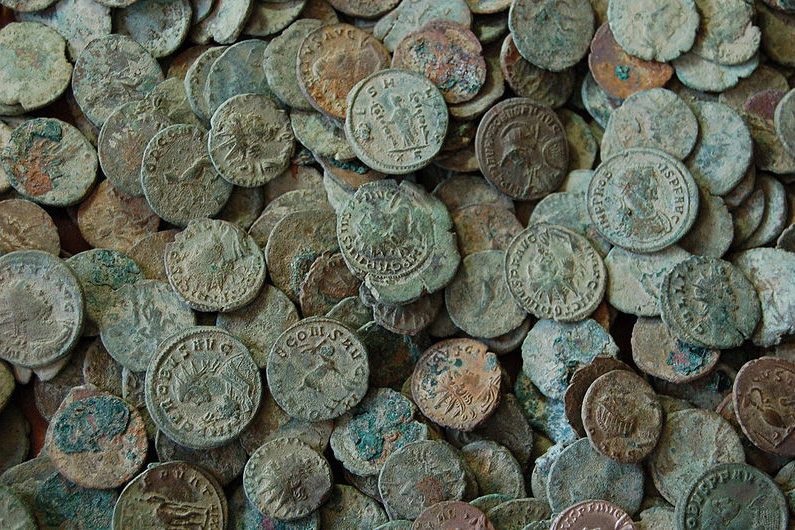
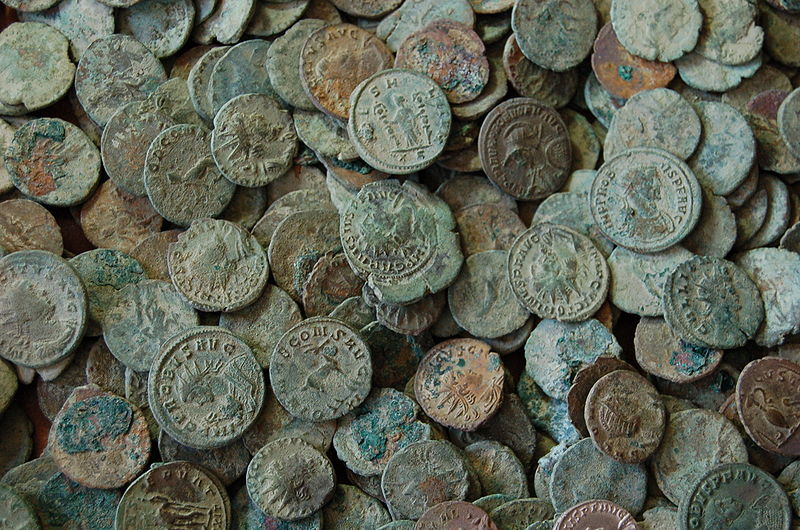
“Close up of the coin hoard”  By Portable Antiquities Scheme from London, England  Licensed under  CC BY-SA 2.0 via Wikimedia Commons
“Close up of the coin hoard” By Portable Antiquities Scheme from London, England Licensed under CC BY-SA 2.0 via Wikimedia Commons

In the Gospel from Monday, Jesus praises a woman who gives from her substance: He noticed a poor widow putting in two small coins. He said, “I tell you truly, this poor widow put in more than all the rest; for those others have all made offerings from their surplus wealth, but she, from her poverty, has offered her whole livelihood. (Lk 21:2-4)

Now in praising her act he also gives a  teaching for us all which highlights the kind of freedom that often comes with poverty and simplicity, and also the kind of bondage that can come with wealth and worldly connections.

The teaching is very paradoxical since, in worldly thinking, we usually conclude that those with the most money, power and access  are the most free to do what they please. But frequently the opposite ends up being the case, and our worldly possessions, power, popularity and access lead us in to a sort of bondage and fear that wasn’t featured in all the promises and advertisements about “the good life.”

Why and how is this so? In effect, those with great wealth and who have power, popularity and deep connections in the world, have “too much to lose.” You can’t steal from a man who has nothing and it is a lot harder to intimidate him. Yet those who go up on the heights, tend to look down from those heights, and fear the fall.

Yes, wealth brings on the bondage of many worries. Scripture says,  The sleep of a laborer is sweet, whether they eat little or much, but as for the rich, their abundance permits them no sleep (Ecclesiastes 5:12). And this evident, society-wide. We have never been so wealthy as modern Western culture affords. And yet, despite this, our stress is off the charts; fears and worries abound. Insurance buildings dominate our skylines, and huge numbers of Americans are on psychotropic medicines to stay calm and less depressed. Many others self-medicate with alcohol and drugs and addiction looms large in our culture.

Wealth also tends to bring on the bondage of insatiable cravings. Again, Scripture says, The eye is not satisfied with seeing, Nor is the ear filled with hearing. (Eccles 1:8). St Augustine says, For of a forward will, was a lust made; and a lust served, became custom; and custom not resisted, became necessity….a hard bondage held me enthralled. (Confessions 8.5.10).

Thus in our wealth we seldom reach a point where we say, I have enough and am satisfied. When does a person ever say, “Gee, I make $600,000 a year, that is more than enough. I think I can get by on 100K and I’ll give away the rest, or invest in something to help others. No, now we want 700K, and our 3,500 square foot home is just too small. Now we need the 7,000 square foot home with all the appointments, and the beach house too. We’re hooked, living well beyond what we need, we are now in bondage to what we merely want. And we thus mistake mere wants as needs. This is not freedom is the “necessity” that St Augustine describes as “bondage.”

Wealth and excess also lead us easily to the bondage of compromise and surrender of our soul to the world. St. Paul writes, But if we have food and clothing, we will be content with that. Those who want to get rich fall into temptation and a trap and into many foolish and harmful desires that plunge people into ruin and destruction. For the love of money is a root of all kinds of evil. Some people, eager for money, have wandered from the faith and pierced themselves with many griefs. (1 Tim 6:8-10)

Indeed, it is a very great tragedy that on account of the bondage to money, power and access, many sacrifice their vocation on the altar of career and advancement. Many set aside their vocation as husband and father, wife and mother, disciple and beloved child of God, for the sake of some career, and the money, power and access that comes with it. Their children are raised by strangers and the home fires grow cold. Most do not do this out of wickedness, but out of a kind of bondage, even a desperate fear, that if they do not do so, they will lose out on money, access, power and prestige. Too many cannot break free of this bondage, or do not want to.

None of this says “freedom” it says bondage.

Scripture attests that Jesus told a would be follower who seemed to seek Jesus for the power and access it might give him: Foxes have dens and birds have nests, but the Son of Man has no place to lay his head. (Mat 8:20).

Jesus owned next to nothing in this world, save for the seamless garment his mother likely wove for him. Even his deathbed of the cross was not his own. But in this, he had a radical freedom. He owed no one anything. Having nothing, he had nothing to lose. He could not be intimidated, he could not be owned, or pressured to compromise. He had no “access” or worldly power to lose. He could not be excluded because he was not desperate to join, to fit in, or gain worldly footholds. You can’t take from a man who has nothing, he is free from your influence. Jesus was free.

Yes, for all our talk of how wealth can free us to do what we want the paradoxical opposite seems more the case. Consider some other paradoxes beyond the mere question of wealth and perceive how what seems to offer more freedom and abundance actually leads to bondage and lesser fulfillment.

1. We moderns have more leisure time than perhaps ever before. Yet having all this time we seem to have less time. We are over-scheduled, running here and there to this diversion and that; taking the kids to the soccer practice, dance rehearsal, etc. Options multiply and now become required as we are expected to be here and there. The important is eclipsed by the urgent; scheduling and hurrying about goes off the rails, and many more central things, like eating dinner with the family, prayer and sleep give way. Having more time we strangely have less time and “busy” becomes the usual way we describe our lives.The freedom of leisure time too often turns to a kind of bondage.

2. We moderns have more food, more calories available to us than ever before. Food is quick and cheap. Such freedom, and such variety! Yet, it seems clear, many of us are in bondage. Obesity and all the health problems that go with it are rampant. The food that should sustain life is killing many of us.

It is interesting to observe that centuries ago, when food was far more scarce, fasting was a more rigorous and common Christian practice. Many fasted from meat the whole of Lent. Many also undertook fasting in Advent. Over the years as food became available in great abundance and predictability, it would seem we could fast more easily. But the opposite has happened and most people seem incapable of even the most simple fasts. The bishops, wisely or not, have relaxed the fasting laws to something almost meaningless, concluding that the traditional fasts were “too hard” on people.

We have so much food today that you’d think after a while we’d say, “Enough,  I don’t need to eat for days!” But the opposite seems to happen. The more we get the more we want. Portion sizes get ridiculous, and super sizing a way of life. And increasing numbers simply cannot stop, or even approach a reasonable caloric intake.

Thus our abundance does not bring us freedom and variety, but bondage and the limits of poor health. More does not bring freedom, it brings bondage.

3. Many sinfully claim a freedom regarding sex today that Scripture forbids. But honestly, for all the modern claims of freedom, sexual bondage is very deep for many today.

Calls to teach chastity to children are greeted with incredulous looks and remarks that such approaches are unrealistic, and the best that we can hope for is to throw contraceptives at youth who cannot really be expected to control themselves. This does not speak to freedom, but to bondage.

Internet porn is off the chain and many are in deep bondage to it.

And no matter how high the body count grows through abortion, broken families, teenage pregnancy, single motherhood, children raised with out proper families, sexually transmitted diseases, AIDs etc., no one seems to be able to connect the dots and say, “Promiscuity is unhealthy, even deadly, and we must become more serious about addressing this public health hazard.”

Here too the result of sexual revolution that marched under the banner of freedom, is not freedom, it is bondage.

Well, you get the point. Freedom is often paradoxical. We usually think the the “more” of riches, power, choices, and connections brings freedom. Usually it does not. Bondage is more often the case when we embark on the fool’s errand of living beyond what is needed, reasonable or holy.

Jesus looks to a poor woman in yesterday’s gospel and admires her freedom. Free from fear and having little to lose she is able to be generous. Too often our riches, abundance, variety and choices disable rather than enable us. Having much, we have too much to lose. Bondage is never far when this be the case.
Have You No fear of God?! A Meditation on the Need to Recover Salutary Fear.

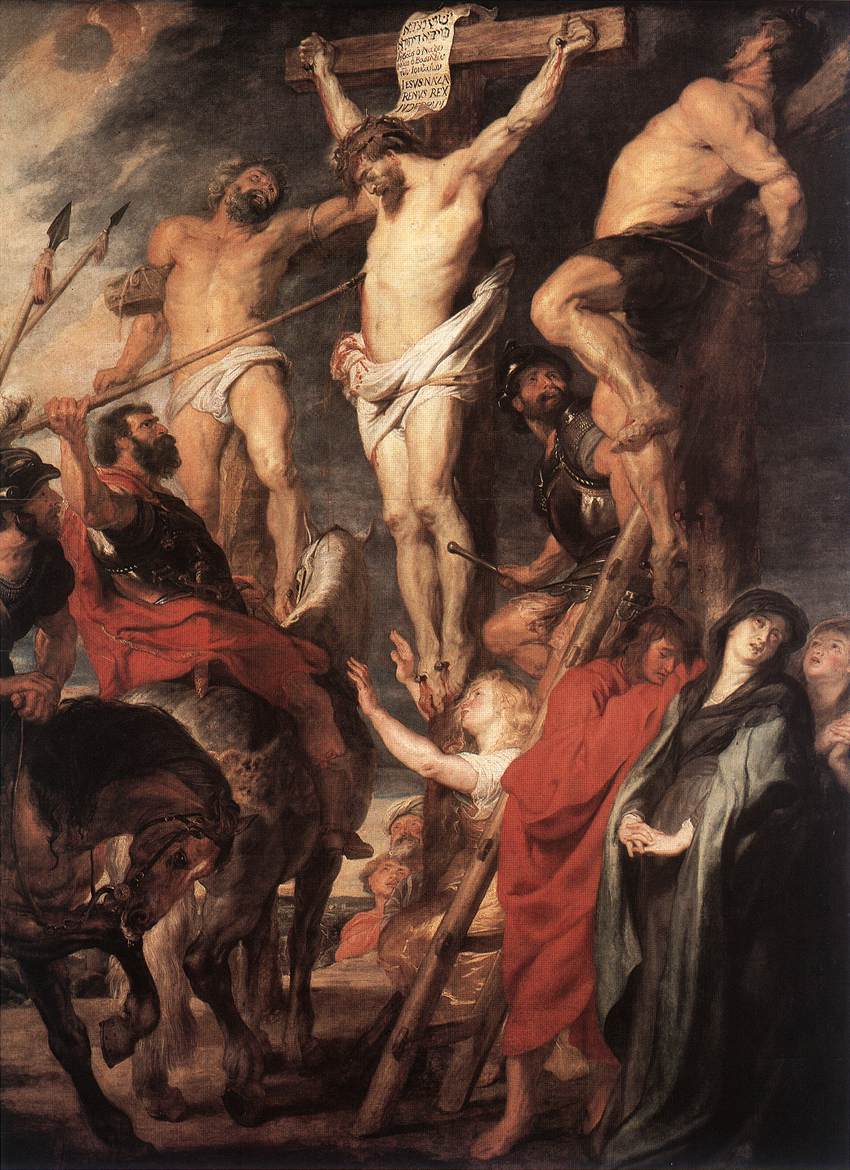
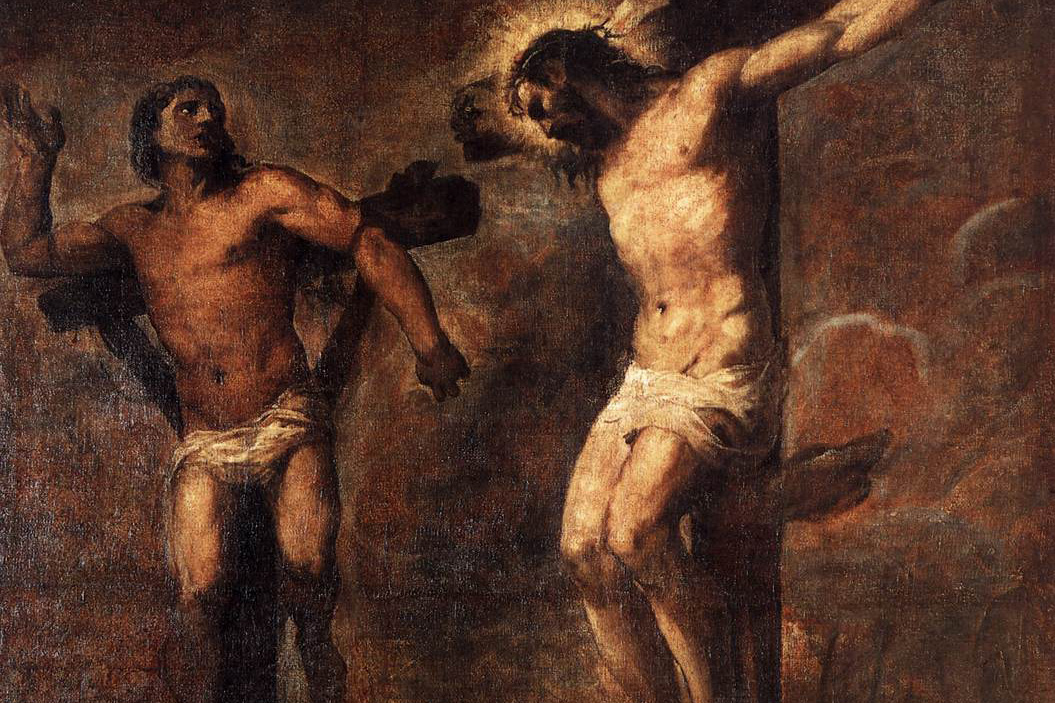
112413In yesterday’s (Sunday) Gospel, the good thief on the cross rebukes the bad thief at the other side of Jesus with a very poignant question, Have you no fear of God?.

Now this question is very well addressed to us as well; especially those of us who live in this modern age, so often marked by things like presumption. Further, with the rise of militant atheism, there is even a contemptuous dismissal of  the fact that we will ever answer to God or anyone for anything we do.

Even among believers, there are many who have all but set aside any notion that we will ever face a judgment of any significance. The error of “Universalism” is dismissive of the notion that judgment will result in anything but Heaven for the vast majority, especially me.

Yes, even those who faithfully attend Mass every Sunday, have often to come to this non-biblical notion and pay little regard to the day of their judgment. For this, the preachers of the Church are largely to blame. And when blogs like this, where we regularly discuss these issues, discuss them, many write to me saying they’ve never heard this from their pulpits. A few others, react with a kind of anger or dismissiveness.

Thus the question, the rebuke of the “Good Thief” Have you no fear of God?  is an important and poignant one for us today. Somewhere we have lost balance and erected a kind of “no fear” zone which is ultimately unbiblical and unsound.

Now granted, fear is not usually perceived of as a good thing, at least at an emotional level. It is not something to which we usually say, “Isn’t that nice.”

But fear, especially understood as respect and reverence, is an important and noble virtue. And, as we shall discuss, even servile fear, understood here is kind of fear of punishment, serves as an important foundation for the higher and more noble “Holy Fear” that is rooted more in reverence, respect and love for God.

And thus, while fear can be complex, it is important to get it right and restore proper balance, for Scripture speaks of it often at many different levels, and Jesus makes great use of it in his counsel to us.

In considering fear, let’s begin at the top with the “Holy fear” of the Lord. Holy Fear is distinct from servile fear in that servile fear has to do with punishment, where is Holy Fear is rooted in love.

Among the seven gifts of the Holy Spirit is Holy Fear. The Holy Fear the Lord is to hold God in awe, to be amazed at his glory, and his wisdom, his beauty and truth. And this awe, this Holy Fear draws us into a deep love for God which seeks union with him, so as to share in His awesome glory and majesty and to delight with wonder in it. And thus, we fear to offend him in any way, or to act in any way that might harm our union with him. And we do this, not so much out of fear of punishment, but simply because we love him so much, hold him in such reverence, awe and respect. Yes, this is a very great gift from God the Holy Spirit, the gift of Holy Fear!

Of this Holy Fear Scripture says,

  1. God is love. Whoever lives in love lives in God, and God in them. This is how love is made complete among us so that we will have confidence on the day of judgment: In this world we are like Jesus.There is no fear in love. But perfect love drives out fear, because fear has to do with punishment. The one who fears is not made perfect in love. (1 John 4:16-18)
  2. For you have not received a spirit of slavery leading to fear again, but you have received a spirit of adoption as sons by which we cry out, “Abba! Father!” (Rom 8:15).

But honestly, most of us cannot, and do not begin with this sort of fear. For this Holy Fear presupposes the kind of deep love, awe, and wonder that comes more often with spiritual maturity. Note how the Scriptures above speak to this reality of deep love and presuppose it for us to be free from the fear of punishment.

No, most of us begin with, and must be schooled in, a less perfect form of fear, but a fear which the Lord nevertheless counsels. Many theologians call it “servile fear,” since it speaks of the kind of fear that a servant might have of being punished for disobedience.

It is popular today to be dismissive of the sort of fear and see it as the relic of a immature faith, and not befitting of people who have come to an adult faith.

Some of the modern rejection of servile fear has resulted from the arrogance of the modern age, wherein it is common thinking that we moderns have attained it to a kind of maturity that our puerile ancestors did not have. After all, we have been to the moon, and have technology. So, not only are we smarter, we are some how more mature are well. They had “simplistic” and “childish” faith (e.g. “pray, pay, obey”), whereas somehow we have come of age, and are more mature and sophisticated; or so the thinking goes.

Of course the arrogance and error of this thinking (that tended to predominate especially in the 60s and 70s), becomes evident as we see how our culture has devolved to a kind of teenage fixation. Many in our culture never grow up, and the majority seem to remain rooted in a kind of teenage thinking, of which I have written more here: Modern Culture: Stuck on Teenage?

Thus, to presume that we can utterly reject servile fear as a relic of an immature faith and time, must be rejected. Not only is the height of arrogance, but also must be reject simply on the evidence. We are not mature, if anything we are far less mature than those who went before us, who generally knew how to take responsibility for their actions and assume adult responsibilities such as making commitments and keeping them, not making so many excuses, and by accepting consequences of decisions.

Thus, for all our braggadocio, about maturity, the fact is, many of us are nowhere near what it takes to be totally free of servile fear and fully capable of a mature Holy Fear rooted in love of God.

So, we need to rediscover a place for servile fear as necessary for most of us in our initial stages, and, even if we have developed a deeper Holy Fear rooted in love, to appreciate that there is still need to the preaching tradition to appeal to servile fear as well, for not all have passed on to mature faith (cf, Heb 5:14, 1 Cor 3:2).

Still not convinced? Jesus uses it. So do the Apostles he commissioned. Consider,

  1. Do not be afraid of those who kill the body but cannot kill the soul. Rather, be afraid of the One who can destroy both soul and body in hell (Mat 10:28) (N.B. He is referring to himself here, for he is the only one who has the power to cast into hell).
  2. Again, anyone who says to a brother or sister, ‘Raca,’ is answerable to the court. And anyone who says, ‘You fool!’ will be in danger of the fire of hell. (Mat 5:22)
  3. [Jesus says] But as for those enemies of mine, who did not want me to reign over them, bring them here and slay them before me. (Luke 19:27)
  4. And Jesus was saying to them, “You are from below, I am from above; you are of this world, I am not of this world. “Therefore I told you that you will die in your sins; for unless you believe that I AM, you will die in your sins.” (Jn 8:23-24)
  5. Then he [Jesus] will say to those on his left, ‘Depart from me, you who are cursed, into the eternal fire prepared for the devil and his angels. (Mat 25:41)
  6. Then I will tell them plainly, ‘I never knew you. Away from me, you evildoers!’ (Mat 7:23)
  7. Later the [foolish virgins] also came. ‘Lord, Lord,’ they said, ‘open the door for us!’ “But he replied, ‘Truly I tell you, I don’t know you.’ “Therefore keep watch, because you do not know the day or the hour. (Matt 25:11-13)
  8. If your right eye makes you stumble, tear it out and throw it from you; for it
    is better for you to lose one of the parts of your body, than for your whole body cast into hell. (Mat 5:29)
  9. And the King (the Lord) said to him, ‘Friend, how did you come in here without wedding clothes?’ And the man was speechless. “Then the king said to the servants, ‘Bind him hand and foot, and throw him into the outer darkness; in that place there will be weeping and gnashing of teeth.’ “For many are called, but few are chosen.” (Matt 22:12-14)
  10. Or do you not know that the unrighteous will not inherit the kingdom of God? Do not be deceived; neither fornicators, nor idolaters, nor adulterers, nor those who commit homosexual acts , nor thieves, nor the covetous, nor drunkards, nor revilers, nor swindlers, will inherit the kingdom of God! (1 Cor 6:9-10)
  11. But because of your stubbornness and your unrepentant heart, you are storing up wrath against yourself for the day of God’s wrath, when his righteous judgment will be revealed. (Rom 2:5)
  12. If we deliberately keep on sinning after we have received the knowledge of the truth, no sacrifice for sins is left, but only a fearful expectation of judgment and of raging fire that will consume the enemies of God. Anyone who rejected the law of Moses died without mercy on the testimony of two or three witnesses. How much more severely do you think someone deserves to be punished who has trampled the Son of God underfoot, who has treated as an unholy thing the blood of the covenant that sanctified them, and who has insulted the Spirit of grace? For we know him who said, “It is mine to avenge; I will repay,” and again, “The Lord will judge his people.” It is a dreadful thing to fall into the hands of the living God. (Heb 10:26-31)

Honestly, I could multiply texts like these tenfold. The point is, I hope, clear.  Jesus and the Apostles he commissioned to preach in his name had frequent recourse to the fear of punishment, judgment and hell, to servile fear.

Why? Because not all are at a place were loftier appeals will have any effect. Very often children must first be schooled in the discipline of punishment. Only later when discipline has had its proper effect can appeals to loftier concepts such as love, loyalty, enlightened self-interest, the common good and simple love for God and the truth, be motivating.

We grow in stages and the preaching and teaching of Scripture, and the Church rightly respect this and will appeal to many motives to convince us unto repentance. This must include the lesser fear of punishment as well as the greater motive of Holy Fear.

It will be granted that appeals to fear cannot and should not be our only focus. Clearly appeals to love of God and neighbor must also be included, along with appeals to reason and enlightened self interest as motives for keeping the commandments. The mercy and love of God can and must be preached.

But the point here is that things have gone out of balance and we need to recover that balance by pulling back in the other direction. Hence this blog post and I pray the voices now of many others who sense the current lack of balance.

Some will argue that fear based arguments simply do not hold the sway they once did. Perhaps. But why is this so? Perhaps the steady diet of cross-less Christianity, mercy without repentance, and universal salvation, a sort of sin without consequences, have deceived many. This sort of preaching and teaching is unbiblical and it is a lie.

All the more reason we must reacquaint the faithful with the true Scripture and the real Jesus. All the more reason we must work to inculcate a proper fear of judgment and consequence for unrepented sin.

Given the current climate referencing fear may NOT be effective at first and cause some to scoff and wonder if “Father is in a bad mood.”

But, my own pastoral experience is that people are at first surprised, and do sometimes scoff, but as I build the evidence for them over time in sermons and teachings, they gradually adjust to the biblical world view again. It is a process.

And once we get our own house in order, then our faith can once again begin to influence a culture that has inoculated itself from proper and healthy fear.

Yet all the inoculations in the world cannot ultimately erase the truth that Scripture affirms: So then, each of us will give an account of ourselves to God. (Rom 14:12) and again, [Jesus said] But I tell you that even for every careless word that people speak, they shall give an accounting for it in the day of judgment. (Matt 12:36). Yes we will answer to God. And that is worth having some salutary fear about it.

And thus the question of the Good Thief rings true and poignantly today: Have you no fear of God? 

King of the Universe and King of Thieves? A Homily for the Feast of Christ the King

112313Jesus Christ is King of Thieves, though he never stole. He is savior of sinners though he himself never sinned.

The Gospel chosen for today’s feast presents Jesus as reigning from the cross. Nothing could be more paradoxical. Perhaps we can look at this Gospel and feast from four perspectives:

I. Vision – In the Gospel for today’s feast we have vision or an image for the Church. We like to think of more pleasant images such as the Church being the Bride of Christ or the Body of Christ. Today’s image is less exalted and more humbling to be sure, but it is an image just the same: The Image of the Church is Christ, crucified between two thieves.

Yes, this is the Church too. Somehow we are all thieves. The fact is, we are all sinners and we have all used the gifts and things that belong to God in a way that is contrary to his will. To misuse things that belong to others is a form of theft and we are thus thieves for we have all misused what belongs to God.

Consider some of the things we claim as our own and how easily we misuse them: Our bodies, our time, our talents, our money, our gift of speech, our gift of freedom and so forth. We call them ours but they really belong to God and if we use them in ways contrary to the intention of the owner we are guilty of a form of theft.

So the Church is Christ, crucified between two thieves.

II. Variance – But consider also that these two thieves were very different;  even as in the Church we have saints and sinners, and in the world there are those who will turn to Christ and be saved and those who will turn away and be lost. 

  1. One thief derides Jesus and makes demands of him:Are you not the Christ! Save yourself and us! The text says this thief “reviles” Jesus. To revile means to speak against another with contempt and to treat some one as vile, or loathsome.
  2. The other thief reverences Christ and rebukes the other saying, – Have you no fear of God? This thief recognizes his guilt – We have been condemned justly. And he requests – Jesus remember me when you come into your kingdom. But he leaves the terms of it up to Christ. He acknowledges he is a thief and now places his life under the authority of Christ the King.

So here are two different men. Christ came to call sinners, thieves, if you will. Yes, we are all thieves, that is true. But pray God we are the good thief, the repentant thief, The one thief who is now ready to resubmit himself to the authority of Christ, who is King of all creation, and King of us thieves.

Now heaven is a real steal, something we don’t deserve. But it is only accessed through repentance and faith. The bad thief wants relief but will not open the door of his heart by repentance and faith so that Jesus can save him. Mercy is offered and available there right next to him, but it is accessed through repentance and faith. He does not open the door, but the good thief does and thereby will be saved.

III. Veracity – But is Christ really your king? Well a King has authority. So another way of asking is, “Does Christ have authority in your life? Do you and I acknowledge that everything we call our own really belongs to Him? How well do we use the things that we call our own but which really belong to God?”

  1. How do we use our time?
  2. Are we committed to pray and be at Mass every Sunday without fail?
  3. Do we use enough of our time to serve God and others or merely for selfish pursuits?
  4. What of our capacity to talk?
  5. Do we use our gift of speech to witness, to evangelize, or merely for small talk and gossip?
  6. What of our money?
  7. Are we faithful to the Lord’s command to tithe? (Mal 3:7-12; Matt 23:23).
  8. Are we generous enough to the poor and needy?
  9. Do we spend wisely or foolishly?
  10. Do we pay our debts in a timely way?
  11. What of our bodies?
  12. Do we exhibit proper care and nutrition of them?
  13. Are we chaste?
  14. Do we observe proper safety or are we reckless and unsafe?
  15. Do we reverence life?
  16. Do we love the poor and help sustain their lives?

Well you get the point. It is one thing to call Christ our King, it is another to truly be under his authority. The Lord is clear enough in telling us that he expects our obedience: Why do you call me Lord Lord and not do what I tell you? (Luke 6:46)

Is Christ your King? Which thief are you, really?

IV. Victory – The thief who asks Jesus to remember him manifests a kind of baptism of desire as well as repentance and faith. As such he moved straight-way in the victor’s column. Jesus words, Today you shall be with me in paradise indicate a dramatic and sudden shift for the thief. In other words Jesus says, Your faith has saved you. As of this moment you are now at my side, and I am your saving Lord.

Now to be with Jesus, wherever He is, is paradise and victory. Soon enough the heavens will be opened as well, but the victory is now, and paradise begins now.

And thus he claims the victory through his choice for Jesus Christ. Will you have the victory? Well, that depends on if you choose the prince of the world, or the King of the Universe, Jesus.

Some think they can choose neither Jesus nor Satan, but tred some middle way. Well if that’s your choice, I’ve got news for you, you’ve chosen the prince of this world, who loves compromise. Jesus says, Whoever is not with me is against me, and whoever does not gather with me scatters. (Matt 12:30)

As for me, I’ve decided to make Jesus my choice. Now I pray that he will truly be my King in all things and that my choice will be more than lip service. Come Jesus reign in my heart! Let me begin to experience victory and paradise even now!

A Meditation on the Beautiful Gift of Sleep

By Eugene0126jp (Own work)  Licensed under  CC BY-SA 3.0   or  GFDL via Wikimedia Commons
By Eugene0126jp (Own work) Licensed under CC BY-SA 3.0 or GFDL via Wikimedia Commons

One of God’s great gifts is the gift of sleep, especially sleep which is peaceful and deep. Alas, like many hyperactive and overstimulated moderns, I sometimes struggle to find deep sleep. My mother often said she was a light sleeper, and maybe I also got it from her. But when deep sleep does come, what a wonderful gift! A deep night’s sleep can be so refreshing, one of life’s great pleasures.

Some of the Psalms speak of sleep. One of the Psalms speaks with gratitude of the gift of God to fall asleep quickly and sleep deeply:

I will lie down in peace and sleep comes at once for you alone, Lord, make me dwell in safety. (Ps 4:9)

Another Psalm speaks to us of how God blesses us while we sleep:

In vain is your earlier rising, your going later to rest, you who toil for the bread you eat, when he pours gifts on his beloved while they slumber. (Ps 127:2)

What a magnificent thing to think of God bestowing blessings on us while we slumber. The image I have in mind is of a parent coming to the bedside of a sleeping child and kissing them on the forehead while they are sleeping,  making sure they are tucked in well for the night.

Yet another Psalm speaks of the blessings of not having to get up in the middle of the night to take care of you know what:

I will bless the LORD who gives me counsel; even in the night he admonishes my kidneys. (Psalm 16:7)

Yes, an unusual blessing that God would keep watch over my kidneys. Many of the translators, finding this peculiar, translate it that God keeps watch over our hearts at night. Now that’s a nice thing too, but the first meaning of the Hebrew word is kilyah, is “kidney.” There’s something earthy and practical about God keeping watch over our kidneys. Thank you Lord! Not having to arise several times at night allows me to sleep more deeply. Thank you Lord for watching over my kidneys!

So yes, restful and peaceful sleep such a great gift, itself a blessing, and also a source of blessings. Grant us, good Lord, a restful night and peaceful slumber!

Dr. Ralph Martin, commenting of a teaching of St. Therese of Liseaux, has this amusing and consoling reflection on the relation of sleep and prayer:

Therese shares about her own long struggle not to fall asleep during prayer times, and offers some interesting advice in the process:

I should be desolate for having slept (for seven years) during my hours of prayer and my thanksgivings after Holy Communion; well I am not desolate. I remember that little children are as pleasing to their parents when they are asleep as well as when they are wide awake; I remember, too, that when they perform operations, doctors put their patients to sleep. Finally, I remember that: “the Lord knows our weakness, that he is mindful that we are but dust and ashes.

[Dr. Martin observes]: Those of us who are parents know that we sometimes love our children even more when they finally go to sleep! Therese’s message is one of great confidence in God’s love for us. He knows our weaknesses and loves us anyway. If we just do the little bit we can, he’ll be able to continue the process of transformation even if prayer is sleepy and dry….little by little, even imperfect prayer will change us. (Dr. Ralph Martin, The Fulfillment of All Desire, pp. 283-284).

Of course it is also clear that one of the more unpleasant experiences in life is to have a restless or sleepless night, especially if it is accompanied by anxieties or fears. In the worst years of my struggle with anxiety in my mid thirties, I actually feared to go to sleep. For I would often fall asleep, and then within an hour be startled awake, racked with fear, and wrestling with demonic presence in my room. Somehow, in falling asleep, all my psychological and spiritual defenses seemed to have been shut down and I would awaken to terrors and fearsome assaults. Those were the difficult years when I feared, as late night drew on, and it was time to try and sleep.

The Book of Job well describes the nights I once experienced, as do many others who are troubled either by fears or anxieties of one sort or another:

When I say, “My bed shall comfort me,
My couch shall ease my complaint.”
Then you [O Lord] affright me with dreams,
and with visions terrify me.
In bed I say, “When shall I arise!?”
But the night drags on;
And I am filled with restlessness until the dawn. (Job 7:13-14; 4)

I used to keep printed version of this at my nightstand. And in those dark nights at three in the morning I read it out loud as a kind of complaint to God.

Thanks be to God, I am delivered from those awful times; thank you Lord! But I am sympathetic, to those whose bed provides no comfort and whose couch permits no sleep. It is an awful thing and a difficult cycle to break. I can only, with sympathy, encourage them to make the journey I’ve had to make growing in trust, finding greater serenity, and taking back with the devil stole from me, the gift of a restful night, and the peace and serenity the Lord wants to give.

Ah yes, the gift of restful sleep and quiet nights. It is a beautiful gift to be sought from the Lord each night. In the night prayer of the Church, there are these beautiful lines:

Protect us Lord as we stay awake, watch over us as we sleep, that awake we may keep watch with Christ, and asleep rest in his peace.

The office ends with the beautiful wish: May the Lord grant us a restful night and a peaceful death. The Salve Regina having been sung, the lights are switched off, and we rest in the arms of God.

One of the most beautiful Night Prayer Hymns is

God, that madest earth and Heaven, darkness and light;
Who the day for toil hast given, for rest the night;
May Thine angel guards defend us,
Slumber sweet Thy mercy send us;
Holy dreams and hopes attend us, all through the night.

When the constant sun returning unseals our eyes,
May we, born anew like morning, to labour rise;
Gird us for the task that calls us,
Let not ease and self enthrall us,
Strong through Thee whate’er befall us, O God most wise!

Guard us waking, guard us sleeping, and when we die,
May we in Thy mighty keeping all peaceful lie;
When the last dread call shall wake us,
Do not Thou, our God, forsake us,
But to reign in glory take us


Three Words That Can Change Your Life.

112013Sometimes we like to complicate things. Every now and again it is good to simplify, to make it plain and simple. The other day it occurred to me that three words well simplify the well being I have discovered in my physical, emotional and spiritual life. They are (in the same order): Move, Breathe, and Trust.

Lets look at each. Remember, “Move pertains to the physical, to the body; “Breathe” to the emotional and psychological, and “Trust” to the spiritual.

I. Move – Some years ago my doctor told me that the secret to good health, strength, and longevity, came down to one word: “move!” Becoming sedentary causes innumerable problems: weight gain, lethargy, fatigue, boredom, depression, muscular  atrophy, the bones become less firm, more brittle, breathing becomes shallow, posture becomes poor, the heart is weakened, pulmonary issues like asthma become more likely, the blood is less oxygenated, thinking is less clear…

Well you get the point: Move! Walk daily. Except for swimming, there is almost no better exercise. If joints are already arthritic or problematic, an elliptical machine is a good low impact option.

I was a runner earlier in life but my knees suffered. I don’t personally think the human body is designed for sustained distance running. There is too much impact on the joints. Injury is common, and some of the damage to the joints can be permanent. I thus took up walking about 15 years ago and walk at least two miles a day, six days a week.

Walking is low impact, and gentle. It promotes aerobic breathing, rather than the panting of running. It requires little or no equipment, and provides time for praying, listening to music or podcasts, talking with a walking partner or on the phone (recommend a hands free device so arms can naturally swing). I look forward to my evening walks!

The people of the Bible were amazing walkers. Mother Mary and St. Joseph, Jesus and all the Apostles make the yearly walk to Jerusalem on foot, 70 miles each way. They walked everywhere through very hilly and mountainous regions. Mary walked 70 miles to Bethlehem when she was min months pregnant. She and Joseph walked hundreds of miles to Egypt, carrying Jesus. And then back again. The people of the Bible were hardy people. They walked, often carrying heavy loads.

Move: Walk daily if you can. If you need to start by just walking half a block and back, start there and increase it every day. But move. Take the stairs when you can, walk instead of driving if you can. Get off the sofa. Some people even have a standing desk to work at in their office. (See photo above right).

There’s a handy little device called the “UP” bracelet that actually counts your steps each day. The goal for the average adult is 10,000 steps a day. Yours truly averages 12 – 15 thousand a day. There’s a video at the bottom that describes the “UP” system.

Move, it will change your life, improving not only your body but also your soul.

II. Breathe – My Psychotherapist has a plaque on her desk that just says, “BREATHE”. Most of us don’t know how to breathe. We breathe with our chest and only fill the top of our lungs.

It isn’t hard to learn how to breathe more properly, how to use the belly to breathe. Babies naturally do it, but as we get older and self conscious about our bellies we breathe less deeply. Once again, there is a video that shows the proper way to breathe deeply at the bottom of the post.

To breathe is to get in touch with our innermost self, and also our body. Breathing is very spiritual. As we breathe in, we receive the blessings of God. As we breathe out we let go of inner stresses and struggles. Exhaling is a form of release, inhaling a form of receiving.

Deep breathing can be very relaxing, it reduces stress and is a wonderful way to prepare ourselves to pray. Too many of us are out of touch with our body and our very self. Breathing can reconnect us to our self and to God. Too many of us store up a lot of stress. We need to learn how to exhale. Too many of us live on fumes. We need to learn how to draw more deeply from the life-breath God offers.

Breathe!

III. Trust – My Spiritual Director has often reduced his advice to one word: “Trust.” The root of all my anxiety, I have ever experienced, comes down to one fact, I did not trust God. To the degree that I have learned to trust God, I am less anxious. In fact I will say, I rarely get anxious anymore. It is the result of a 15 year journey out of panic disorder into trust.

I cannot write a whole article here on trust. But two things ought to be emphasized.

First the illusion of “control” is a big enemy of trust in God. Control is ultimately an illusion. You may have a few things under your control, such as what you will eat for dinner, where you will shop for clothes etc. But even the things and plans you have, and think you can control are based on innumerable things that you cannot control, like the next beat of your heart; that there will not be an accident that backs up traffic on the way to the store; that your car does not break down, etc. You have have no control over whether the store burns down or the item you want is in stock.

Thus, control, in any thorough sense, is illusory and limited. Thinking we can and should be in control is to seek to live in illusion,  and living in illusion is stressful, unhappy and very frustrating.

We always think that if we can be in control we will be less anxious. This is not so. The great paradox about serenity is that acceptance of the fact that there are many things we cannot control reduces anxiety and brings peace. “You are not in control” is a “hard” truth that brings great serenity and induces trust if we come to accept it.

Secondly, a central way to open the door to trust is the remembrance of gratitude. In the spiritual sense, to “remember” means to have deeply present in my mind and heart what God has done for me, so that I am grateful and different. To remember is to discipline my mind and heart to ponder how good and faithful God has been; to spend time every day considering the gifts and graces of God, how He has sustained and provided for me. This makes me grateful and different.

It also builds trust, and trust drives our fears, resentments, and all forms of anxiety. Through gratitude I become a man of hope. That is, I confidently expect God’s help and providence to see me through to my goal of being with Him in Glory.

An old song says, “Through it all, I’ve learned to trust in Jesus, I’ve learned to trust in God….I learn to depend upon his word!”

That is my story. I’ve learned to trust. And over the years, in the laboratory of my own life, I have proved God’s word and his promises and found them to be true. Trust, learn to trust, to lean, to let go. God says, “I’ve God this, so you let go.”

Three words that can change your life: move, breathe, trust.

The Word of God is not a mere text, He is a person. A meditation on the Personal Relationship we must have with the Word.

111913Many people think of the Word of God as an “it” when in fact, the Word of God is a person, Jesus Christ. Jesus did not come merely to give us information and exhortation. He came to give us his very self. He is the “Word made Flesh.”

Pope Emeritus Benedict made this point in, the Post Synodal Apostolic Exhortation, Verbum Domini. I want to give an excerpt and then reflect briefly upon it.

[There is a] statement made by the author of the Letter to the Hebrews: “In many and various ways God spoke of old to our fathers by the prophets; but in these last days he has spoken to us by a Son, whom he appointed the heir of all things, through whom also he created the world ” (1:1-2)….. Here the Word finds expression not primarily in discourse, concepts or rules. Here we are set before the very person of Jesus. His unique and singular history is the definitive word which God speaks to humanity. We can see, then, why “being Christian is not the result of an ethical choice or a lofty idea, but the encounter with an event, a person, which gives life a new horizon and a definitive direction ”.…. “the Word became flesh and dwelt among us ”(Jn 1:14a). These words are no figure of speech; they point to a lived experience! Saint John, an eyewitness, tells us so: “ We have beheld his glory, glory as of the only Son from the Father, full of grace and truth ” ( Jn 1:14b). ….. Now the word is not simply audible; not only does it have a voice, now the word has a face….(Verbum Domini 11-12)

The Word of God is not merely on the pages of a book. The Word of God is not just an idea or ethical system. The Word of God is not just a set of teachings or doctrines. The Word of God is Jesus Christ. And to really grasp this Word to the degree that we come to know Him, and experience Him and His power active in our lives.

It is a danger to turn Scripture into an abstraction or just a text. St Thomas Aquinas says, The Son is the Word, not any sort of word, but one Who breathes forth Love. Hence Augustine says (De Trin. ix 10): “The Word we speak of is knowledge with love.” Thus the Son is sent not in accordance with [just] any kind of intellectual perfection, but according to the intellectual illumination, which breaks forth into the affection of love, as is said (John 6:45): “Everyone that hath heard from the Father and hath learned, comes to Me. (Summa Prima Pars, 43.5 ad 2).

Hence we cannot really grasp Scripture unless we come to know Jesus Christ. Further, to authentically read Sacred Scripture is to more and more encounter Jesus Christ there. Before we analyze a text of Scripture we are summoned to encounter the One who is speaking to us.

It is surely possible for some, even secular scholar to analyze a Greek text of Holy Writ and parse its verbs. Perhaps another scholar can analyze idioms, or the historical context. Such research can help us understand what the text is saying at a mechanistic level. But only a deepening and personal knowledge of Jesus Christ can help us to know what the text really means. It is this personal, historical, and on-going encounter with Jesus Christ that distinguishes true theology from mere religious study or literary criticism.

Indeed, theologians and Scripture scholars are dangerous if they do not personally know Jesus Christ. To “know” Jesus is not the same as to “know about” Jesus. I might know about Jesus Christ from a book or from some other person. But it is not enough to know “about” him. I must know him. To be a true “authority” in Scripture requires that we have met and know the “author.” Do you see the word “author” in “authority?”

Note how Pope Benedict quotes the Prologue of John’s Gospel ”.…. “the Word became flesh and dwelt among us ”(Jn 1:14a). and then says, These words are no figure of speech; they point to a lived experience! The Pope also says above in reference to the Hebrews 1 text: Here we are set before the very person of Jesus.

In the Liturgical context of Scripture this fact is enshrined in our ritual. As the Priest or Deacon proclaims the Gospel, all the people stand out of respect. For, it is Christ himself who speaks to them and whom they encounter in this proclamation of the Word. At the conclusion of the proclamation of the Gospel, they acknowledge that they are encountering Jesus as they say to him personally: “Laus tibi Christe!” (Praise to you Lord Jesus Christ).

Hence, Scripture, and the wider concept of the Word of God, authentically interpreted by the Church, is not merely a book or a set of ideas. It is an encounter with a living God, the Lord Jesus Christ. The Word of God is a person, Jesus Christ.

Perhaps a couple of quick stories to illustrate the difference between seeing Scripture merely as a text, and seeing it as an encounter with the Word made flesh, Jesus.

1. A rural Appalachian community was visited by a Shakespearean actor. They were amazed at his elegant but strange way of speaking. At one moment in his public recital he recited the 23rd Psalm. The words were elegant, pronounced in finest King James English with great drama and flair. At the end of his recitation a strange silence filled the room. Where applause would usually follow, an awkward silence ensued. Finally a poor farmer in the back of the room stood and apologized that no one knew to applaud and that they meant no offense but they just weren’t sure he was done. “See, out in these parts we say it a little different.” The poor farmer then began, “The Loerd is mah shayperd….” When he completed the psalm the room was filled with amens and “praise the Lord”s. The Shakespearean actor then told the poor farmer, “I was elegant, but your words had greater power. That is because I know only the technique, but you know the author.”

2. Some years ago I heard a Black AME Preacher address an ecumenical gathering at a revival. And he said to the gathered, “You know I heard some strange stuff in seminary! The professors said Jesus never really walked on water, that he didn’t really multiply loaves and fishes, he just got folks to be generous. They said, he didn’t really know he was God, or rise from the dead. He just lives on in our thoughts or something…..Can you believe they taught me that in a Christian seminary?!” Through his description of these wretched “teachings” the moans and disapproval in the congregation of Protestants and Catholics were audible. He built his litany of faulty scholarship and you could hear folks saying, “Lord have mercy!” and “mah, mah, mah.” And then he stopped and mopped his brow, and looked at them and said, “I tell you what! The problem with them wasn’t that they read the wrong books, y’all. The problem with them was that they ain’t never met my Jesus!” Well the house came down and folks were on their feet for ten minutes praising God. The Choir too leapt to their feet and began the familiar chorus: “Can’t nobody do me like Jesus, he’s my Lord!”

Well, you get the point, when you’ve met Jesus Christ you just don’t doubt that he walked on the water, multiplied loaves, raised Lazarus, knew perfectly well that he was God and stepped out of the tomb on Easter morning.

The Word of God is not merely a text. It is a person, Jesus Christ, the Logos, the Word made flesh. And once you’ve met him his spoken (and later written word) begins to make greater and greater sense and there is just no doubt that this Word is true and powerful.

Let me let Pope Emeritus Benedict conclude as we recall his words above: the Word finds expression not primarily in discourse, concepts or rules. Here we are set before the very person of Jesus….These words are no figure of speech; they point to a lived experience! Saint John, an eyewitness, tells us so: “ We have beheld his glory, the glory as of the only Son from the Father, full of grace and truth.

A Meditation on Love and Lament for the Church

111813As a priest and pastor I work very closely with others, both clergy, religious and laity, who work for the Church and also volunteer. And of course all of us work for the Church, often for lower salaries than we could command elsewhere, because we love the Church and her people.

But along with that love comes, at times a disappointment, hurt or even disillusionment. Perhaps it is just the local problems of parish that are found in any gathering of human beings: gossip, hurtful actions, hypocrisy, power struggles, wrongful priorities, favoritism, injustice and so forth.

And while these things happen everywhere, many somehow hope there will be less of it in the Church. So who have come to work for the Church began by thinking, “What a wonderful thing, to work for a church (instead of in the cut-throat business world etc). Perhaps they envisioned a place where people prayed together and supported each other more, perhaps a place where there was less competition, and strife.

Alas, such hopes are usually set aside early for any who work for the Church. We are after all running a hospital of sorts. And just like hospitals tend to attract sick people, so the Church attracts sinners and those who struggle. Jesus was found in strange company, such that the Pharisees, were scandalized. He rebuked them saying People who are well do not need a doctor, sick people do. I have come to call sinners, not the righteous. (Mk 2:17)

And thus idealistic notions of working in and for the Church often give way quickly when the phone rings with an impatient parishioner on the line, or when two group leaders argue over who gets to use the hall, or when the pastor is irritable and disorganized, or when the maintenance engineer is is found to be drinking on the job, or certain members of the choir are making anything but harmony, or when some parishioners who are favorites get attention and access from the old guard leaders, and newcomers are resisted.

And then, of course there are the more serious and wider issues such as the betrayal of clergy sexual abuse; or the deep disappointments that sometimes come from a lack of courage and leadership from bishops and priests; the scandal of dissent in the highest levels such as universities, seminaries and so forth; the acceptance of money from questionable sources; questionable partnerships with anti-life and and anti-Catholic organizations; the breakdown of discipline; the strange severity over some infractions, and the almost total laxity toward other problems. The list could on.

In all these sorts of situations, be they mere irritation, disappointment or deep disillusionment, I keep a little prayer card near my desk, that I sometimes read for my own benefit, and sometimes to share with those who feel discouraged at what happens (or does not happen) in the Church. At critical moments, I slide the card out and read it to myself or to others, especially those who love the Church and work closely with her.

It is a beautiful mediation for it recalls how great love often generates the deepest disappointments. But in the end, love still abides.

I realize that many who read here have great love for mother Church, and also deep disappointments. And I apologize that I cannot post all your comments in this regard. But I do understand, great love can also provoke great shock and anger. But, at the end of the day, this is a blog that seeks to instill greater love for the Church and for faith, not to further inflame anger.

That said, we all know that people disappoint, and thus the Church, filled with people, disappoints too. I DO understand even if I cannot always grant the forum desired to vent those concerns.

Consider however the following words. They are perhaps overstated in places. But love has its excesses. Take these words as a kind of elixir that, even if excessive, will hopefully speak to the pain that love sometimes causes. But in the end, love is what remains. Here are the words I often share with those freshly hurt:

How baffling you are, Oh Church,
and yet how I love you!
How you have made me suffer,
and yet how much I owe you!
I would like to see you destroyed,
and yet I need your presence.
You have given me so much scandal
and yet you have made me understand what sanctity is.
I have seen nothing in the world more devoted to obscurity,
more compromised, more false,
and yet I have touched nothing more pure, more generous, more beautiful.
How often I have wanted to shut the doors of my soul in your face,
and how often I have prayed to die in the safety of your arms.

No, I cannot free myself from you,
because I am you, though not completely.
And besides, where would I go?

Would I establish another?
I would not be able to establish it without the same faults,
for they are the same faults I carry in me.
And if I did establish another,
it would be my Church,
not the Church of Christ. – Carlo Carretto in “The God Who Comes”

Yes, where else would I go?

Do you want a place at the table so you can direct the course of history? Try this.

111713-A   I sometimes like to joke with my parishioners that our church building which is located on the same street as United States Capitol has quite an exulted status.

For, indeed, just up the street from my parish of Holy Comforter, is the United111713-B States Capitol.  It is arguably one of the most powerful buildings on the planet. In it the decisions of the enormous importance are made, decisions about war and peace, decisions about spending money at an enormous levels, decisions about laws that affect hundreds of millions of people.

Yes, the United States Capitol, is a very important building, the second most important building on East Capitol Street, in Washington DC.

The most important building on East Capitol Street is Holy Comforter – St. Cyprian Roman Catholic Church. And while I say this in some jest, and with no intention to sound triumphalistic, nevertheless, there is a fundamental truth to what I say.

For, the US Capitol has many powerful people: senators and congressmen, indeed there is the Speaker of the House, there is the Majority Leader of the Senate, and the Vice President who presides.

However, in Holy Comforter-St. Cyprian Church, the King of the Universe tabernacles! All things came to be through him, and in him all things are, and hold together (cf Jn 1:3; Col 1:16-17). Heaven and earth shall pass away, but his Word and his Kingdom shall never pass away (cf Mt 24:35; Daniel 7:27).

And in this Catholic Church of the Holy Comforter exists also the most powerful prayer and event on earth: the Holy Sacrifice of the Mass. If anything good comes out of the second most important building on East Capitol Street, it is only because in the most important building on East Capitol Street, prayer has preceded, and God has inspired and blessed it. Nothing that comes from United states Capitol, will be good, or lasting, unless the King in the most important building on East Capitol Street empowers it. Do you want to change world history? Do you want a place at the most important “table” on the planet? Go to Mass, for the most important table isn’t a negotiating table, it’s an altar.

For indeed, the most powerful and efficacious act on the planet takes place in the first and most important building on East Capitol Street, and at the altar in every Catholic Church.

Nothing is more efficacious, nothing more powerful that the Holy Mass. It is more powerful than the trillion dollar budgets passed the second-most important building, it is more powerful than the great war machine that the second most powerful building can activate, its power to renew is more vast than the hundreds of billions of dollars in education funds. And on and on the list could go…

At the bottom of this article is a beautiful video that lists many quotes from the Saints and the Fathers of the Church, indicating the glory and the power of just one Mass. I want to list a few here, and invite you to view the video to see the rest. Consider these quotes.

If we really understood the Mass, we would die of Joy – St. John Vianney

It would be easier for the world to survive without the sun, than to do without Holy Mass – St. Padre Pio

Oh Lord, how can I thank you?! He replied to me, ‘Attend one Mass’– St Teresa of Avila.

I believe that if it were not for the Holy Mass, as of this moment, the world would be in the abyss. – St Leonard of Port Maurice.

Put all the good works in the world against one holy Mass; they would be as a grain of sand against a mountain. – St. John Vianney

He who is in the habit of devoutly hearing Holy Mass shall in death be consoled by the presence of the angels and saints. – Jesus speaking to St. Mechtilde

Yes, the glory of the Mass and the presence of the King of the Universe in every Catholic Church. This makes Holy Comforter – St. Cyprian Catholic Church the most powerful building on East Capitol Street,  in the most powerful city on the planet.

And now, let me ask you, do you believe these quotes? Someone may say to me, “But Father, but Father! If the mass is so powerful why is the world in such a mess?”  Yes, why!?

Could it be that too many Catholics never think of the Mass this way, never really fervently join their prayers to it? High expectations unlock many blessings, low expectations block blessings. The Bible says, You have not because you ask not (James 4:2). Even many church-going Catholics, find mass a sleepy affair, more of a tedious ritual to get through than transformative reality that changes all things. As a consequence, we do not ask, and therefore we do not receive.

If people knew the blessing of one Holy Mass, they would be breaking down the doors to get in the Catholic Church, and everywhere they would insist that Mass be celebrated around the clock. They would not even allow the priest to leave the sanctuary.

Yes, believe. There is no event more powerful on earth than the Holy Mass, none whatsoever. Get your seat at the table, the Altar where you can help guide the events of world history. Admission is free, though donations, and tithes are gladly accepted.

Enjoy this video for more quotes: