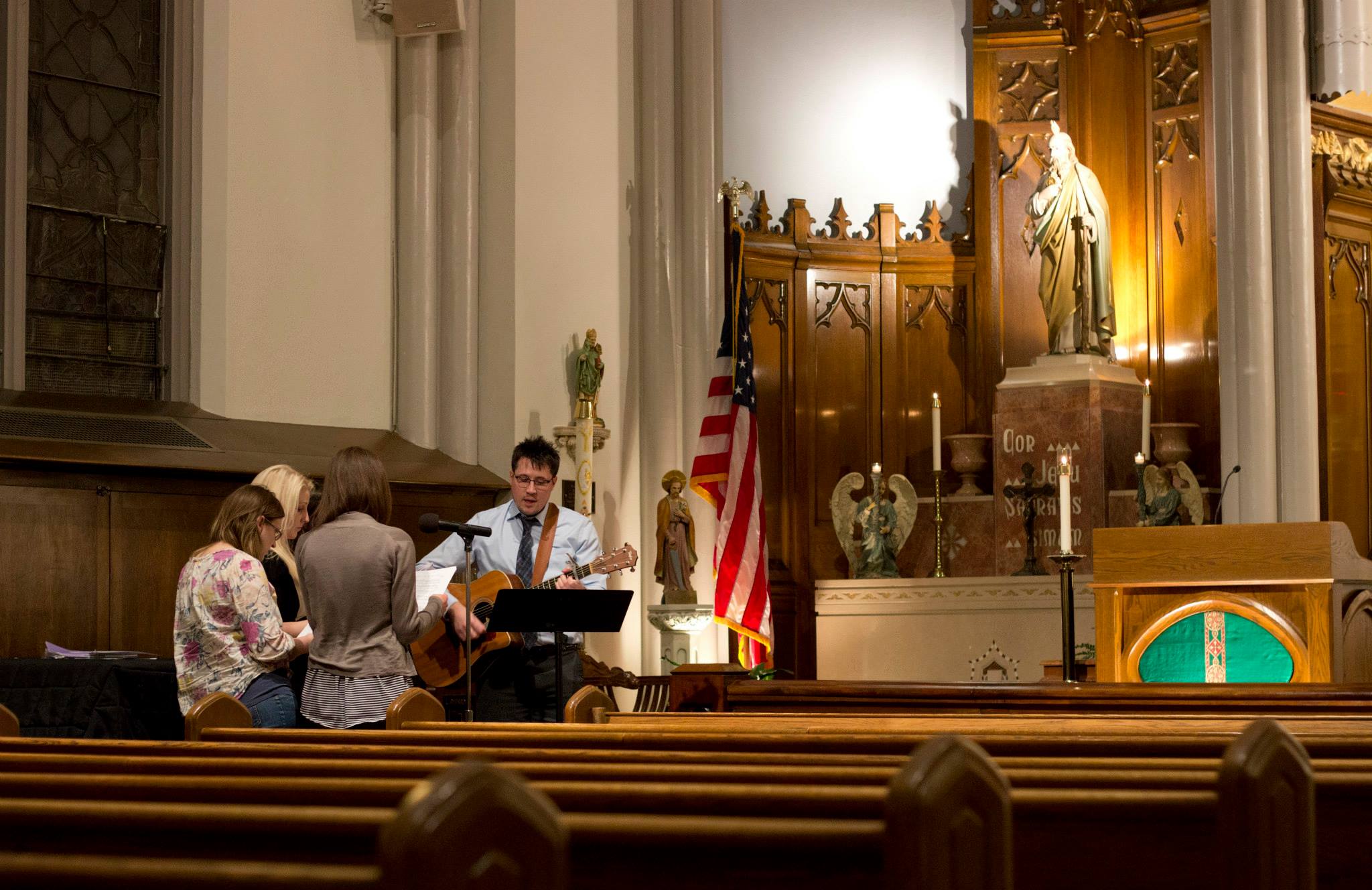
Jesus is in the House! A Consideration of How Jesus’Teaching Must Take Place in the Church

072414- pope-1In the 13th chapter of Matthew’s Gospel, which we are currently going through in daily Mass, there are a number of parables that Matthew seems to have collected from Jesus’ ministry in Galilee. Among them are the parable of the sower, the parable of the wheat and tares, the parable of the mustard seed, and the parable of the yeast.

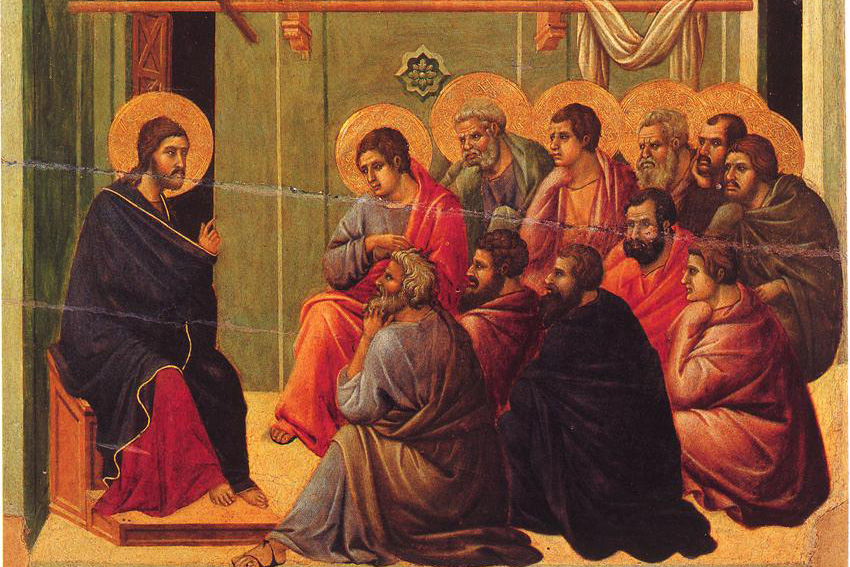
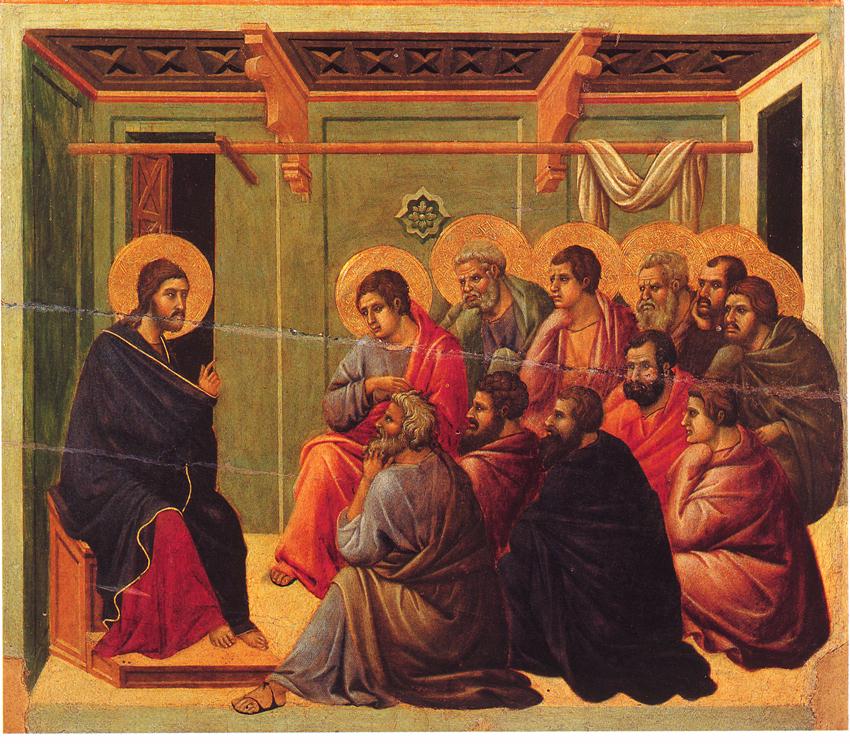
Another structure employed by Matthew, likely recording the actual practice of Jesus, is the mention of  “the house.” Chapter 13 begins with Jesus going “out of the house,” and speaking to the crowd in parables. Midway through the chapter (verse 36), Jesus goes back “into the house” and explains the parables to his disciples at their request. While the exact location of “the house” is not mentioned, it seems reasonable to assume that it is Peter’s house in Capernaum, which was Jesus’ home base for his ministry in Galilee.

With this background we do well to consider a four-staged teaching of Jesus on the centrality of the Church in evangelization, catechesis, and understanding the Word of God.

I. The Place of Pedagogy –  Plainly put, the Church is the place of pedagogy, the place of teaching and experiencing the deeper mysteries of Christ.  While Jesus’ teachings and words may in fact go out among the multitudes, it is necessary to come “into the house” in order for them to be fully understood and explained at length. Outside the house there are parables, snippets, riddles, and puzzling stories, if you will. But inside the house there is teaching that respects the subtleties and extended meanings of the sayings, parables, and utterances of Jesus.

And if we can allow for the identity of the house as being that of Peter, then we are not just talking about any old house, or any gathering place. We are talking about Peter’s house, the Church.

More on this in a moment, but first let us consider what takes place “outside the house” and why it is important to bring people “inside the house.”  To do this we must ponder the paradoxical quality of comparables, and the sad picture painted by Jesus of the condition of many.

II. The Paradox of Parables – Early in Matthew 13 the disciples approached Jesus, who was still outside the house, and asked him, Why do you speak to the crowds in parables? (Matthew 13:10)

Their question may puzzle us just a bit. For the fact is, we moderns tend to think of parables as ingenious devices by which to teach. And it is true that parables can and  do contain memorable teachings, at least to us who have had 2000 years to ponder them. Thus, we expect Jesus to answer the disciples simply by saying, “I use parables in order to teach them.”

But the question of the disciples presupposes another dimension of parables less familiar to us, who have had these many centuries to ponder their meaning. And Jesus understands the puzzlement of the disciples, who see parables as a sort of inferior brand of teaching, and he will answer them accordingly.

What is inferior about parables?  Stated plainly, the aspect of parables that we often miss is that  parables are largely like riddles that have to be figured out by those who hear them for the first time. Consider the following “parable” by me and note to some degree how it is like a riddle.

A man went out to clean his car. And as he went, he took with him a bucket, water, and soap, along with some sponges. And as he washed the car, some dirt came off immediately; some dirt came off only after scrubbing. But some dirt remained even after he was finished. If anyone has ears to hear, let him hear this.

Note how this parable has something of the quality of a riddle. In some sense, you know what I’m talking about, but you’re not exactly sure. The parable makes you think, but you may well struggle to apply it perfectly to your life or to your situation. If a group were to hear me relate this, people might become rather divided over the root meaning of the parable. While most to present might understand dirt as a metaphor for sin, many would struggle to understand the fact that some of the dirt remained, even after the washing. Is this concupiscence? Is it impenitence? Is the man who washes the car Jesus? If so then why did he fail to get all the dirt off? Perhaps then the man is a human who can overcome some but not all of his sins. Debates and opposing camps might well set up among those who heard my parable.

And thus parables are a bit like riddles: ultimately most of them need some explanation. As already noted, most of us moderns miss this aspect of the parables of Jesus because they have been explained to us for over 2000 years now. But of themselves, parables, like riddles, need some explanation.

And thus the question of the Apostles as to why Jesus speaks to the crowds so often in parables is both poignant and instructive for us. The parables, indeed the whole of the Word of God, cannot simply be presented or announced to the multitudes;  they require extensive teaching and careful explanation. The parables and all the Word of God cannot be simply published as a book. It is a Church book and must be read within the Church and in the context of the lived experience and faith of the Church.

Therefore, Jesus goes on to say to his Apostles in response to their question, The knowledge of the mysteries of the kingdom of heaven has been granted to you, but to them, it has not been granted (Matthew 13:11). So inside the house there is instruction, and knowledge as to the mysteries of the kingdom of heaven is granted there; outside the house this knowledge is not granted. In the house of the Church there is knowledge of the mysteries of the kingdom of heaven, but outside there is not. And this leads us to the third point that Jesus makes.

III. The Picture that is Painted – Jesus goes on to paint a rather sad portrait of those who are “outside the house.” His portrait is not merely a picture of their condition but it also serves to explain why most of them remain outside the house.

Jesus says of those outside, They look but do not see, and hear but do not listen or understand (Matt 13:14) He goes on further to quote Isaiah in reference to them saying, Gross is the heart of this people, they will hardly hear with their ears, they have closed their eyes, lest they see with their eyes, lest they hear with their ears and understand with their hearts and be converted, so that I would heal them (Matt 13:15; Is 6:9-10).

And here Jesus describes the sad condition of many who willfully remain outside the house. And the number today is large. Being outside the house, they hear the Word, the utterances and positions of the Church and Scripture, but they do not understand. Frankly, most do not want to understand.

And being outside the house, and thus lacking understanding, they ridicule God’s Word.  They often misquote it and/or  quote it out of context. Further, they ridicule the Church, speaking of her as being out of touch, old-fashioned, intolerant, bigoted, etc.

Much of this dismissive arrogance toward the Word of God is explained by the fact that many in the world simply do not understand the Word of God.  They do not understand it because they are outside the house, outside the Church.

Perhaps a brief reflection on the meaning of the word “understand” will help explain why this is so. The Greek word translated here as “understand” is συνίουσιν (syniousin), which more literally means to put the pieces of something together, to synthesize  (sýn, “together with” + hiēmi, “to put, or send”) . There is a modern expression, “to connect the dots.” So, “understanding” is an act of knowledge whereby one patiently acquires the many pieces that make up a teaching and, almost like a puzzle, put the pieces together and see the picture emerge. This is understanding.

One can see that with faith, as with any discipline of knowledge, long study and patience are often required in order to master the material, in order to understand it properly. One does not pick up the discipline of particle physics through sound bites, but rather through long, careful study of all the elements, which are gradually pieced together and bring understanding to the one who masters the material. It is this way with faith as well.

Thus many outside the house, outside the Church, lack understanding of our teachings because, they have not undertaken the careful and lengthy study required. This struggle is common even to many inside the Church. Too many today, both inside and outside the house, want to reduce the faith to sound bites, to bumper sticker slogans, and so forth. Yet the faith does not consist of a collection of clever sayings, but rather it is a whole discipline of life, mind, and heart that must be mastered after careful study.  Through this study one approaches understanding through syniousin (the synthesis that is understanding), by collecting the pieces, connecting the dots, and seeing the picture emerge.

Jesus sadly notes that this is a discipline many are not interested in shouldering. For many this is too much work, and the whole topic is not that interesting to them anyway. If they go to Church at all, they want simply to be entertained with clever little stories, quick sayings, and so forth. But to do the careful work of a disciple, to study the teachings of Jesus over a lifetime and come to understanding is too much work for many.

So Jesus describes them  as having hearts that are gross, that is, heavy and weighed down with passions and preoccupations. Elsewhere God describes us as being stubborn and stiff-necked, as having necks of iron and foreheads of brass. It is a lamentable diagnosis of so many in the human family. It is something that can only be remedied through the power of grace, leading us to fulfill the fourth aspect of what Jesus teaches here.

IV. The Prescription for the Problem – To his Apostles, Jesus turns and says, But blessed are your eyes, because they see, and your ears, because they hear (Matthew 13:16). This is more than mere flattery; these words of Jesus’ amount to a prescription for the problem.

In effect, the Lord announces that the problem of the lack of understanding is resolved by coming “into the house,”  coming into the Church with open ears and heart, listening carefully and with faith, and having our eyes open to behold the mysteries of God. This takes place “in the house,” in the Church.

This is exemplified in verse 36: Then Jesus left the crowds, and went into the house; and his disciples approached him saying, ‘Explain to us the parable of the weeds in the field’ … (Mat 13:36). Jesus then goes on to teach at some length as to the meaning of the parable which, outside the house, seemed to them as a kind of riddle. But now, inside the house, it is carefully explained.

Therefore Christ’s prescription for our problems—our lack of understanding, our spiritual deafness and blindness, our darkened intellect—is to come into the house, into the Church, where there will be careful and persistent teaching. It is not enough to have parables and proclamations, to have a biblical text sitting on a bookstore shelf that someone opens. Alone, this is insufficient, though it may have something of an inviting quality, something of the quality of the seed. But more than proclamations, more than parables, there must be what the Scriptures call didache (teaching).

And thus in our evangelization we cannot simply put information, tracts, or paperback Bibles into people’s hands. We must invite them “into the house,” where Jesus teaches; we must invite them to Peter’s house, the Church.

Put another way, we must invite them into a life-changing transformative relationship with Jesus Christ Himself. Jesus is found in the Church, in Peter’s house, where He teaches and celebrates the mysteries for us. And the Church contains the whole Christ, not the head only, but also the members of His body, us, the Church.

To evangelize is not simply to get the Word out, although that is a good beginning. Without understanding, many fall away from the Word, or even outright ridicule it. To evangelize is to invite people to a lifelong walk with Jesus in His Church, head and members together. True evangelization summons everyone “into the house,” where Jesus is found and is teaching; it summons all into the Church.

To those who say, “Yes,” comes the blessing of Jesus: But blessed are your eyes, because they see, and your ears, because they hear. 
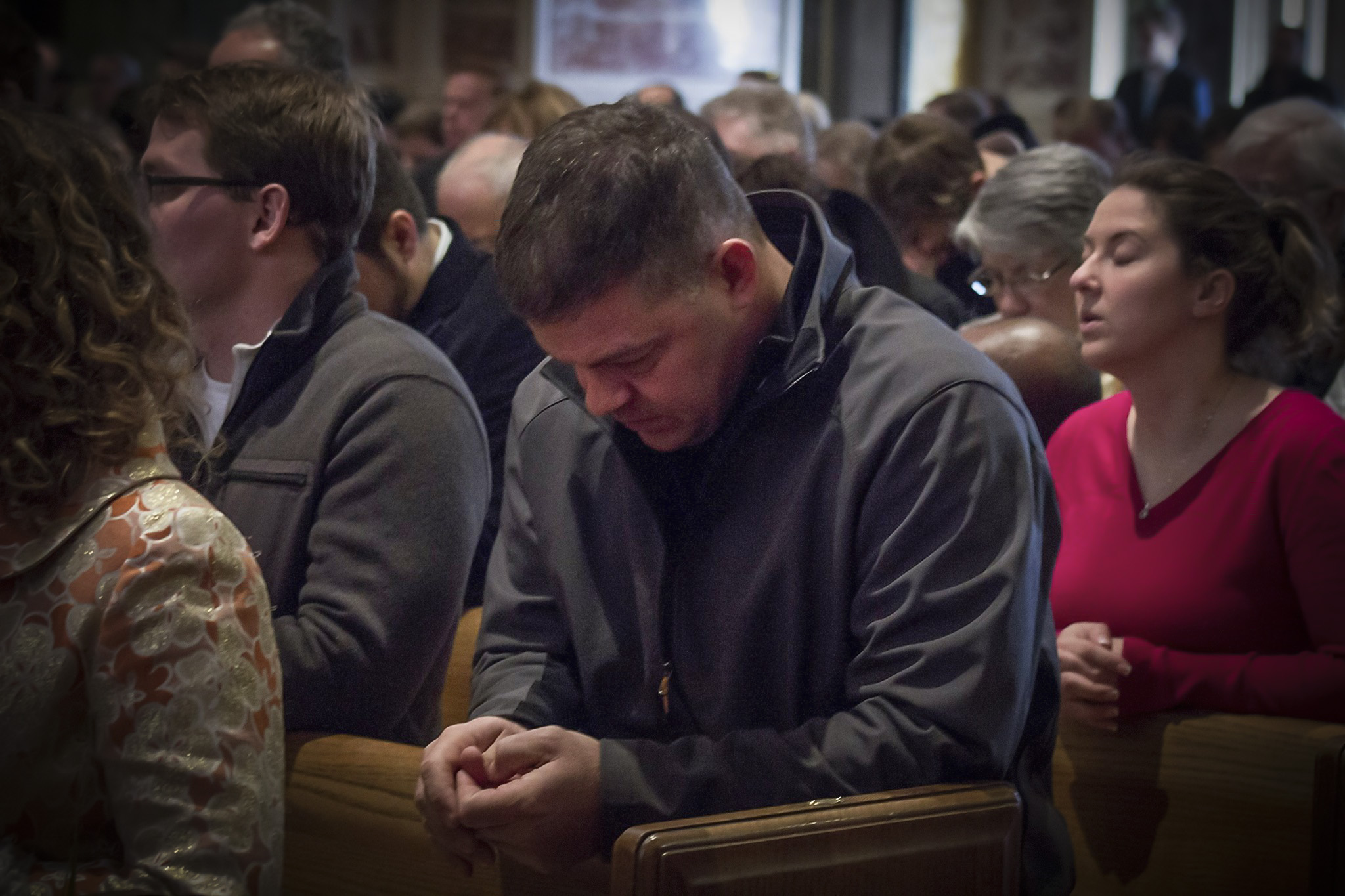
Five Steps to Better Mental Health – According to St. Paul

072414-pope-2In modern times, we tend to link our notions of happiness and inner well-being to circumstances and happenstance. And thus we think that happiness will be found when the things of this world are arranged in the way and quantity we like.  If we can just get enough money and creature comforts, we’ll be happy and have a better sense of mental well-being.

And yet it remains true that many can endure difficult external circumstances while remaining inwardly content, happy, and optimistic. Further, many who have much are still not content and are beset with great mental anguish, anxiety, and unhappiness. Ultimately, happiness is not about happenstance or circumstances; it is an “inside job.”

St. Paul says,

For I have learned to be content whatever the circumstances. I know what it is to be in need, and I know what it is to have plenty. I have learned the secret of being content in any and every situation, whether well fed or hungry, whether living in plenty or in want (Phil 4:11-12).

Note that Paul wrote these words from jail, so these are not merely “throwaway” lines.

Earlier in the same chapter he tells us the “secret” to this contentedness, joy, and mental well-being whatever the circumstances. He lays out a kind of “five-point plan” that, if worked, will set the stage for a deeper inner peace, a sense of mental well-being and contentedness not easily affected by external circumstances. Let’s review St. Paul’s five-point plan. (I am indebted to Rev. Adrian Rogers for the alliterative list, though the substance is my own reflection.)

Here is the full text of St. Paul’s five-point plan for better mental health:

Rejoice in the Lord always. I will say it again: Rejoice! Let your moderateness be evident to all. The Lord is near. Do not be anxious about anything, but in everything, by prayer and petition, with thanksgiving, present your requests to God. And the peace of God, which transcends all understanding, will guard your hearts and your minds in Christ Jesus. Finally, brothers, whatever is true, whatever is noble, whatever is right, whatever is pure, whatever is lovely, whatever is admirable—if anything is excellent or praiseworthy—think about such things. Whatever you have learned or received or heard from me, or seen in me—put it into practice. And the God of peace will be with you (Phil 4:4-9).

Now let’s examine each of the five points.

Step I. Rejoice in the Presence of the Lord – The text says, Rejoice in the Lord always. I will say it again: Rejoice! Let your moderateness be evident to all. The Lord is near.

Of supreme importance in the Christian life is to request, receive, and cultivate the gift of the presence of the Lord. Too easily, we turn inward and forget God’s presence. To become more consciously and stably aware of God’s presence is to be filled with joy and peace.

Note that although the text mentions joy (χαίρω) it also mentions moderateness. The Greek word used here is ἐπιεικὲς (epieikes), which means to be gentle, mild, forbearing, fair, reasonable, or moderate. Epieíkeia relaxes unnecessary strictness in favor of gentleness whenever possible. Such an attitude is common when one is joyful and unafraid.  By contrast, an unbending and unyielding attitude often bespeaks fear.

There are of course times to insist upon precision and to not give way easily. But often there is room for some leeway and for the assumption of good will. A serene mind and spirit, which are gifts of the presence of God, can often allow for this leeway and presumption of good will. There is an increasing ability to allow things to unfold rather than to try to control and manipulate conversations and outcomes in order to win on every point.

As we become more aware of God’s presence and thus are more serene and less conflicted within, we no longer need to shout or to win in every moment and on every point. We can insist on what is true while still expressing ourselves more moderately and serenely. We can stay in the conversation, but be content to sow seeds rather than insisting on reaping every harvest of victory.

Cultivating a joyful sense of the presence of God and reaping the serenity and moderateness that are its fruits are the first step toward greater contentment and improved mental health.

Step II. Rely on the Power of the Lord – The text says, Do not be anxious about anything, but in everything, by prayer and petition … present your requests to God.

There are very few things as destructive to our mental health as worry. Worry is like sand in a machine. It not only hinders the working of the machine, but damages it as well.

But simply being told not to worry isn’t very helpful. In this case, St. Paul is not simply saying, “Don’t worry.”

He has already laid a groundwork for the diminishment of worry in telling us to cultivate a sense of the presence of God. Some years ago, when I was a small boy, my Father left for the Vietnam War. During the year he was away, I spent many anxious nights worrying about a lot of things. But when my Father returned my fears went away. Daddy was home; everything was all right.

And for all of us, to the degree that we really experience that God is near so do many of our fear recede. My own experience is that as my awareness of God’s presence has grown my anxieties have significantly diminished.

Paul also says that the power of God is only a prayer away. Here, too, I and many can testify that God has a way of working things out. He may not always come when you want, or handle things exactly the way you want, but when I look back over my life and think things over I can truly say that God has made a way for me. And whatever my struggles and disappointments, none of them has ever destroyed me. If anything, they have strengthened me.

Whatever it is, take it to the Lord in prayer. Ponder deeply how He has delivered you in the past, how He has made a way out of no way, and how He has drawn straight with crooked lines.

Let the Holy Spirit anoint your memory to make you aware of God’s saving power in your life and recall how God has delivered you. These memories give us serenity when we consider how prayer is both effective and an ever-present source of power.

So much worry, which is a kind of mental illness, just goes away to the degree that we experience that God is present and that His power is only one prayer away.

And here is the second step to greater mental health: knowing by experience that God can and will make a way.

Step III. Remember the Provision of the Lord – The text says, “… with thanksgiving.”

Thanksgiving is a way of disciplining the mind to count our blessings. Why is this important? Because too easily we become negative. Every day about a trillion things go right and only a handful of things go wrong. But what do we tend to focus on? You bet—the few things that go wrong. This is a form of mental illness that feeds our anxiety and it arises from our fallen nature.

Gratitude disciplines our mind to count our blessings. As we do this, we begin to become men and women of hope and of confidence. Why? Because what you feed grows. If you feed the negative it will grow. If you feed the positive it will grow. And the fact is that God richly blesses us every day; we need only open our eyes to see it.

Step three is disciplining our fallen minds to see the wider reality of our rich blessings. This heals us and gives us great peace and serene minds.

Step IV. Rest in the Peace of the Lord – The text says, And the peace of God, which transcends all understanding, will guard your hearts and your minds in Christ Jesus.

As we begin to undertake these steps, our mental outlook and health improves. Gradually, serenity becomes a deeper and more stable reality for us. The text here says that not only will this serenity be present, but it will “guard” (or as some translations say, “keep”) our hearts and minds in Christ Jesus. In other words, as this serenity grows it screens out the negativity of this world and the demons of discouragement. Having this peace allows us to see the Lord, and seeing the Lord deepens that peace … and the cycle grows and continues!

It has been my experience that not only has the profound anxiety and anger that beset my early years gone away, but also the serenity I now increasingly enjoy makes all that anxiety unlikely to return. I am guarded and protected increasingly by the serenity God gives.

Step V. Reflect on the Plan of the Lord – The text says, Finally, brothers, whatever is true, whatever is noble, whatever is right, whatever is pure, whatever is lovely, whatever is admirable—if anything is excellent or praiseworthy—think about such things. Whatever you have learned or received or heard from me, or seen in me—put it into practice.

And as this serenity, this sense of well-being, this mental health comes to us, St. Paul finally advises us to follow a kind of “maintenance plan” wherein we intentionally and actively focus our thoughts and attention on what is Godly, true, good, and beautiful.

While it may be true that we need to stay up with the news of the world, be careful of too steady a diet of the 24/7 news cycle. They focus on the bad news, on what is controversial and adversarial. If it bleeds it leads. Too much of that and you’re unsettled before you know it. Limit your portions of this and focus on the greater, better, and lasting things of God. Ponder His plan, His truth, His glory, His priorities.

An old song says, More about Jesus would I know, more of his saving mercy show, more of his saving fullness see, more of his love who died for me.

Yes, more about Jesus and less of this world. How can we expect to keep our mental health and serenity on a steady diet of insanity, stinking thinking, wrongful priorities, endless adversity, darkness, chaos, and foolishness?

Do you want peace? Then reflect on the Lord’s plan for you.

So, then, here are some steps to better mental health. Recognize the presence of the Lord, call on His power, be grateful for His providence, savor His peace, and then inevitably our attention will turn more to the things of God and less to the things of this world.

Here’s to good mental health for us all!

Gifts in Strange and Terrifying Packages – A Meditation on a Saying from Job

072314I spent today high in the Cascades of Washington State.  I was near Mt. Baker, one of the volcanic peaks in the range along the “ring of fire” that comes up the coast along the Pacific plate. Despite the nearness of the volcanic cone, snow and glaciers were what we most noticed today, July 25th.

As I stood on the snowy heights looking at these sleepy but still inwardly fiery volcanic heights, it occurred to me that some of God’s gifts come in strange and terrifying packages. And I was reminded of this earlier in the week when I read the following lines from the book of Job (in the Office of Readings):

The earth, though out of it comes forth bread, is in fiery upheaval underneath (Job 28:2).

We live just above a fiery cauldron, separated from it by a thin membrane of earthly crust rife with cracks through which fire routinely flares from volcanoes through fissures. It is a crust that is always shifting and even shaking violently during earthquakes.

And yet were it not for this violent cauldron beneath us it seems unlikely that we would have life here at all. Volcanoes and other tectonic activity keep our soil rich and recycled. In this fiery cauldron are brewed some of our most useful minerals and most beautiful gems. Whole island chains and land masses are formed by eruptions, and geothermal energy is a resource we have just begun to tap. These beautiful heights on which I stood today were thrust upward by the same upheavals. Many scientists also think that volcanoes had a profound influence on the formation of an atmosphere in the early Earth period, and that the molten core of the earth has an important influence on the Van Allen radiation belts, which keep the harmful radiation of the sun’s rays away from the earth’s surface.

Yes, Job had it right: some of God’s gifts come in strange packages. The earth’s capacity to bring forth bread is directly connected to the fact that it is on fire beneath. And yet what a strange and terrifying package this gift comes in! For volcanoes and other seismic activity have claimed an enormous number of lives and vast amounts of property.

Water, too, such a rich source of life and blessing, can turn in a moment and destroy life in huge numbers. Floods and tsunamis can sweep away large areas in a startlingly short period of time.

And yet who could ever deny that without water life would be impossible? Ah, water—nothing more life-giving, nothing more deadly! Some of God’s gifts come in strange and terrifying packages.

I have often wondered why so many cities throughout the world are built on or near floodplains and/or along the “ring of fire,” with its volcanoes and fault lines. But of course the answer is plain enough: it is in these very areas that some of the richest soil and greatest resources are to be found.

God and nature’s most life-giving gifts are but 3° separated from disaster and instant death. We live on the edge of an abyss because that is where life is found.

Such a thin line, really. Mors et vita duello, conflixere mirando! (Death and life compete in a stupendous conflict!) To live is to cheat death.

All the basic elements and forces—earth, air, water, and fire—can be so deadly and yet at the same time so life-giving. Somehow all are part of the great cycle of living and dying that God intends.

Only God is existence itself; the rest of us are contingent beings and part of a cycle. Only in union with Christ, who said, “I am the life,” will we ever cheat death. As Archbishop Fulton Sheen once said, “Christ gave the earth the only serious wound it ever received, the wound of an empty tomb.” And with Christ—and only with Christ—will we one day give the earth that same wound.

For the time being, we live above the cauldron, upon a thin crust. Beneath us burns a tremendous fire. But somehow, mysteriously, it is the source of our bread:

The earth, though out of it comes forth bread, is in fiery upheaval underneath (Job 28:2).

Yes, some of God’s greatest gifts come in strange and terrifying packages.

Another decision that illustrates what social radicals really mean by”tolerance”

072114In another show of selective tolerance from those who support the “gay” agenda, President Barack Obama on Monday gave employment protection to “gay” and “transgender” workers in the federal government after being convinced by advocates of what they called the “irrefutable rightness of your cause.” However the “tolerance” of the administration does not give religious organizations any exceptions in terms of considering sexual orientation or gender identity. While Churches are able to hire ministers as they see fit (based on a 9-0 Supreme court decision against this administration, which sought to require churches to hire practicing gays even in ordained ministerial positions), there is little leeway given in the new executive order to permit churches to determine prudentially the employment of openly practicing “gay” employees.

One might argue that excluding homosexually-oriented people from working as, say, janitors or cafeteria contractors in a Catholic setting is unjust discrimination. And in this the Catechism does affirm that unjust discrimination against those of homosexual orientation is to be excluded. However, there are many other positions that, while not explicitly “ministerial” (i.e., requiring no ordination), are integral to the ministerial stance of the Church (e.g., catechists, pastoral associates, etc.) Letting the courts and the administration determine who should be included in the definition of the category “minister” is intrusive, a violation of religious liberty, and intolerant of those who hold a moral stance on homosexual activity long attested to in the Judeo-Christian heritage and unambiguously in our sacred texts.  

But, welcome to “tolerance” as defined by secular radicals. In their lexicon, “tolerance” is “your right to agree with me.” “Live and let live” means, “you have the right to live only where I say.” “Bigotry” applies only those speaking out against the classes they say are oppressed. “Phobes” (as in homophobes) applies only to those who oppose their  agenda. “Hate” only exists against the classes they say are “protected” and that they have defined as oppressed. It is never possible for religious or social conservatives to be the object of hate since hate only comes from social conservatives.

Yes, welcome to the tolerant utopia founded by proponents of gay sex, gay “marriage,” and other social inventions.

Pope Benedict spoke frequently of the “tyranny of relativism.” Essentially this means that when a culture decides there is no fundamental basis of truth (whether from Scripture or Natural Law), the result is that there is no real basis for discussion or resolution of issues. Thus, who “wins the day” is based not on reason but on who shouts the loudest and/or who has the most power, money, or political influence.

The way forward in a relativistic world is not to appeal to reason by reference to Natural Law (in philosophy), or to constitutional principles (in political discourse), or to Scripture and Tradition (in theology). Rather, the way forward is to gain power and to implement an agenda that binds.

Farewell to reason rooted in agreed upon principles; hello to tyranny rooted simply in opinion and power.

Revolutions that ride in on the train of “freedom” more frequently usher in a reign of terror, as those who claimed to be oppressed and repressed take up their new power and then, themselves, turn to oppression, suppression, and repression of any whom they thought, or think, to be on the wrong side of the issue.

Expect more of this “tolerance” from social radicals. The tyranny of relativism has ushered in a very poisonous and dangerous climate, which has little room for any true discussion or tolerance. And remember, what social radicals mean by tolerance has nothing to do with tolerating you  if you do not belong to a class or group favored by them.

It will require greater and greater courage from those of us who still think of truth as something higher than ourselves. And if you think that an exaggeration, just try to point to Natural Law, the Constitution, or (gadzooks) Scripture and brace yourself for the immediate scorn that will be heaped upon you.

There are some among the Catholic right who will argue that we should never have accepted Government money in the first place. Fine. But there is a long history to the rise of Catholic Charities as a federally funded provider of social services. Frankly, we were one of the best providers, and the government recognized this by partnering with us. The poor were the ones who benefited. And now, as Catholic Charities is increasingly marginalized and excluded from receiving federal funds, it will be the poor who suffer most. It should trouble liberals and even conservatives just a bit that the “rights” of homosexuals are trumping the service of the poor by what is arguably the best and most efficient of social service agencies.

Call it “tolerance” if you wish, but at least admit it is selective tolerance.

A heavy post needs a little levity. Enjoy this video from a Christian humorist.

Reaching the Sleeping Soul Through Music

072014In my life, I have learned that music is powerful beyond words and often does what words alone can never do.

Historically, when my soul was asleep morally, it was music that called me back. Although I joined the church choir in order to meet girls, it was through the music that the Lord showed me a deeper desire in my heart for goodness, beauty, and truth—indeed my desire for God Himself. The music awoke my sleeping soul to God.

More recently, and in a particular way, music often awakens my soul to the deeper meaning of Sacred Scripture. I have often heard or read a certain Scripture passage that had only a marginal impact on me. But then the choir takes it up in song and it is pressed into my heart like never before, such that I can never forget it. Through the music, my heart and soul are awakened to a deeper meaning of a text.

With humility I have also learned that though I may preach boldly, it is often the choir’s sung response that makes the thought catch fire. I have learned to link what I preach to what is sung and work carefully with the choir and musicians. For while the spoken word may inform and even energize, the sung word strikes even deeper, engraving the word not only in the mind, but touching the deepest parts of the heart.

There is an old saying,

Bach gave us God’s Word, Mozart gave us God’s laughter, Beethoven gave us God’s fire. God gave us music that we might pray without words. — quote from outside a German opera house

Scripture says that the Lord puts music in our hearts and that many, by it, will be summoned to faith. The Lord set my feet on a rock and gave me a firm place to stand. He put a new song in my mouth, a hymn of praise to our God. Many will see and fear and put their trust in the LORD (Psalm 40:3-4).

Yes, music can often reach where mere words cannot.

In the remarkable video below, there is a older man, Henry,  who, likely due to a seizure or other age-related factors, had largely turned inward. In fact his very posture illustrates well St. Augustine’s remarkable diagnosis of our problem: curvatus in se (turned in on himself).

Henry’s daughter remembers a lively vivacious man who quite literally danced through life and had such a joie de vivre. But in the last ten years he had shut down and turned inward.

Then came the miracle, a miracle in something ordinary yet mystical: music. Wait until you see how it awakens Henry! Quite an astonishing difference. Yes, suddenly there came the discovery by the staff of the nursing home and Henry’s daughter that there was still someone “alive” inside Henry’s aging body. Alive indeed, the human soul still deeply touched by the good, the true, and the beautiful.

Henry says that when he hears music, “I feel loved … the Lord came to me and made me a holy man … so he gave me these sounds.”

It’s the old Henry, the real Henry, alive and joyful. Where mere word’s fail, music speaks. Where therapy struggles, music soars.

I am mindful of an older woman I used to visit, Ms. Lorena; she died some years back at age 104. And when I’d visit, there wasn’t much she or I could say. But suddenly, gently, I’d start singing one of those old hymns, “Hmm … by and by … yes, we’ll understand it better by and by.” And Ms. Lorena would light up and join in. She’d sit up straight and be young again.

An old spiritual says, Over my head, I hear music in the air, there must be a God somewhere. Yes, Mr. Henry knows. Yes, Ms. Lorena knows. There IS a God somewhere! And when words alone fail, He still calls through music.

Enjoy this powerful video.

Saint or”Ain’t”? A Sermon for the 16th Sunday of the Year

071914We live in difficult times for the Church, and from many sectors the very legitimate cry for reform goes up frequently. Beyond the sexual abuse scandal there are also deep concerns regarding the uncertain trumpet of Catholic preaching, lukewarm and nominal Catholics, an overall lack of discipline among Catholics, and a lack of disciplining by the bishops and clergy of those Catholics (lay and clergy) who cause scandal. In a way the list is quite long and has been well discussed on this blog, which is overall sympathetic to the need for reform and greater zeal in the Church.

But today’s Gospel issues a caution against becoming overzealous in the attempt to root out sin and sinners from the Church. It is the memorable Parable of the Wheat and Tares. The Lord’s warning to the farmhands who wanted to tear out the weeds was that they might harm the wheat as well. “Wait,” says the Lord, “Leave it to me. There will come a day of reckoning, but it is not now; wait till the harvest.”

This does not mean that we are never to take notice of sin or never to rebuke a sinner. There is need for discipline in the Church and other texts call for it (see below). But today’s Gospel is meant to warn against a scouring that is too thorough, or a puritanical clean sweep that overrules God’s patience and seeks to turn the Church from a hospital for sinners into a germ-free (and hence people-free) zone.

We are going to need to depend on a lot of patience and mercy from God if any of us are to stand a chance. Summoning the wrath of God to come on (other) sinners, as some do, may destroy them as well. We all have a journey to make from being an “ain’t” to being a saint.

So let’s allow today’s Gospel to give us some guidance in finding the right balance between the summons to reform and the summons to patience. The guidance comes in four steps.

I. WAKE UP – The text says, Jesus proposed another parable to the crowds, saying: “The kingdom of heaven may be likened to a man who sowed good seed in his field. While everyone was asleep his enemy came and sowed weeds all through the wheat, and then went off.”

Notice in this text that everyone was sleeping when the enemy sowed weeds. There is a great mystery as to why God allows Satan to sow the seeds in the first place. But there is far less mystery as to why Satan has been so successful in our times. The weeds are numerous and are vigorously growing. And part of the reason is that we in the Church have been sleeping while Satan has been steadily sowing his weeds among us.

Now don’t just blame the Church leadership (though we share plenty of the blame). But the fact is that too many in the whole Church have been in a moral sleep. Too many Catholics will watch anything, listen to anything, and expose themselves to anything. We just “go with the flow,” and live unreflective, sleepy lives. We also allow our children to be exposed to almost anything. Too many parents have little knowledge of what their children are watching and listening to, where they are surfing on the Internet, who their friends are, etc. We hardly think of God or His plan for our lives, and collectively, we have priorities that are more worldly than spiritual. We are not awake and wary of sin and its incursions; we are not outraged; we take little action other than to shrug; we seem to be more concerned with fitting in than in living as a sign of contradiction to the world’s ways.

Church leadership, too, has been inwardly focused. While the culture was melting down beginning in the late 1960s, we were tuning guitars, moving the furniture in the sanctuaries, having debates about Church authority, engaging in gender wars, and having seemingly endless internal squabbles about every facet of Church life. I do not deny that there were right and wrong answers in these debates and that rebellious trends had to be addressed, but while all this was going on Satan was sowing seeds and we lost the culture.

We are just now emerging from 50 years in a cocoon to find a world gone mad. And we who lead the Church (clergy and lay) have to admit that this happened on our watch.

It is long past time to wake up to the reality that Satan has been working while we’ve been bickering and singing songs to ourselves.

And lots of hollering, and blaming one side of the Church or the other, and faulting this kind of liturgy or that is not very helpful because the focus is still inward.

It’s time to wake up and go out. There is work to be done in reclaiming the culture for Christ and in re-proposing the Gospel to a world that has lost it.

Step one in finding a balance between the need for reform and the need for patience is to wake up.

II. WISE UP – The text says, When the crop grew and bore fruit, the weeds appeared as well. The slaves of the householder came to him and said, “Master, did you not sow good seed in your field? Where have the weeds come from?” He answered, “An enemy has done this.”

Part of the sobriety we have to regain is to understand that we have an enemy who hates us—Satan. He is responsible for much of the spiritual, moral, and even physical ruin we see around us. We have too long been dismissive of his presence, as though he were a fairy tale. While we cannot blame everything on him, for we connive with him and also suffer weakness of the flesh and the bad influence of the world, Satan is real; he is an enemy and he hates you. He also hates your children; he hates the Church; he hates anything and anyone that is holy or even on the path to holiness.

We have to wise up and ask the Lord for an anointing. We need not utterly fear the devil, but we need to understand that he is at work. We need to learn and know his moves, designs, tactics, and tools. And, having recognized him, we need the grace to rebuke him at every turn.

Now be careful here. To wise up means to learn and understand Satan’s tactics. But it does not mean to imitate them in retaliation. Upon waking up and wising up, some want to go right to battle—but in worldly types of ways. But the Lord often proposes paradoxical tactics that are rooted in the wisdom of the cross, not the world. Wising up to Satan and his tactics does not often mean to engage in a full frontal assault. Often the Lord counsels humility to battle pride, love (not retaliation) to conquer hate, and accepted weakness to overcome strength.

To wise up means to come to the wisdom of the cross, not the world. As we shall see, the Lord is not nearly as warlike in His response to His enemy as some zealous reformers propose to be. We may be properly zealous for reform and want to usher in change rapidly, but be very careful what wisdom you are appealing to. Scripture says, Do not deceive yourselves. If any one of you thinks he is wise by the standards of this age, he should become a “fool” so that he may become wise. For the wisdom of this world is foolishness in God’s sight (1 Cor 3:19-20).

Step two in a finding a balance between the need for reform and the need for patience is to wise up.

III. WAIT UP – The text says, His slaves said to him, “Do you want us to go and pull them up?” He replied, “No, if you pull up the weeds you might uproot the wheat along with them. Let them grow together until harvest … “

We have already laid the groundwork for the Lord’s rebuke to these overly zealous reformers. Today in the Church we are well aware of the need for reform; so is the Lord. He says, clearly, an enemy has done this. And yet to those who want to go through the Church rooting out every sinner, every ne’er-do-well, every bad theologian (and there are many), and who call for an increasing and severe clampdown by the bishops across the board, the Lord presents a balancing notion.

There is need for discipline in the Church and even for punitive measures from time to time. The Lord himself proposes excommunication in certain instances (e.g., Matt 18:17); St Paul does too (e.g., 1 Cor 5:5). Yet texts such as those need to be balanced by texts such as the Gospel today. Fraternal correction is an essential work of charity (I have written more on that here: Fraternal Correction) but it must be conducted with patience and love.

But the Lord is patient and in today’s Gospel directs us to also to be prepared to wait and to not be overly anxious to pull out weeds lest we harm the wheat. Remarkably, the Lord says, let them grow together. Notice that now is the time to grow; the harvest comes later. In certain (rarer) instances the harm may be so egregious that the Church must act to remove the sinner or to discipline him or her more severely. But there is also a place for waiting and allowing the wheat and tares to grow together. After all, sinners may repent and the Lord wants to give people the time they need to do that. Scripture says, God’s patience is directed to our salvation (2 Peter 3:9).

So while there is sometimes need for strong discipline in the Church, there is also this directive to balance such notions: leave it be; wait; place this in the hands of God; give time for the sinner to repent; keep working and praying for that but do not act precipitously.

We have had many discussion here on the blog about whether and how the bishops should discipline certain Catholic politicians who, by their bad example and reprehensible votes, undermine the Gospel and even cost lives through abortion and euthanasia.

And while I am sympathetic to the need for them to be disciplined; how, when, and who remains a judgment for the Bishop to make. And as we can see, there are certain Scriptures that balance one another. In the end, we cannot simply make a one-size-fits-all norm. There are prudential aspects to the decision and the Lord himself speaks to different situations in different ways.

In today’s Gospel the Lord says we should wait. And generally it is good advice to follow. After all, how do YOU know that you don’t or won’t need more time? Before we ask God to lower the boom on sinners we ought to remember that we are going to need His patience and mercy too. Scripture says, The measure that you measure to others will be measured back to you (Matt 7:2& Luke 6:38). Be very careful before summoning God’s wrath, for who may endure the Day of his coming (Mal 3:2)?

Step three in a finding a balance between the need for reform and the need for patience is to “wait up” and balance zeal with patience.

IV. WASH UP – The text says, Then at harvest time I will say to the harvesters, “First collect the weeds and tie them in bundles for burning; but gather the wheat into my barn.”

So you see there is a harvest and those who have sinned or led others to sin and have not repented are going to have to answer to the Lord for it.

The Lord is no pushover and he does not make light of sin. In telling us to wait, he does not mean to say that judgment will never come. But his general advice is, “Leave it to me.” And to us he says, in effect, “As for you, wash up, get ready, and help others to get ready too. For judgment day is surely coming and every knee will bend to me and everyone will have to render an account.”

That’s it. Wash up! You’re either going to be a saint or an “ain’t.” For now, the wheat and tares grow together. But later the tares and all the weeds will be gathered and cast into the fire.

So here’s the balance: God is patient, but there is a harvest, and by God’s grace we have to get ready for it. To the overly zealous, God says, “Wait.” But to the complacent and sleepy, God says, “Wake up, wise up, and wash up!”

Here is a great exposition of this Gospel from Fr. Francis Martin. Don’t miss it!

.

Is your spiritual life like a motorboat or a sailboat?

OLYMPUS DIGITAL CAMERAWhen I was very young, perhaps 10 years old, I took some sailing lessons, and then once again when I was in my early 30s. Sailing involves a kind of “romancing the wind” wherein one observes the wind as it is and then adapts to it, wooing it, learning its moves, its vicissitudes, and its often subtle and changing signs.

Oh, for the great times when the wind was with us! And catching the wind the boat would speed along making a slick sound in the water. Oh, too, for those daring and thrilling times when the spinnaker was put out! The boat would almost strain as the proud winds filled her arcing sail.

But then, too, there were the difficult days when the winds were contrary and the hard work of tacking, beating, and jibing had to be engaged.

Now sailing is an image of receptivity. One cannot control the wind; one must simply take it as it is. Yes, sailing requires the sailor to adjust to what is, to accept, to work with what is given, to live in the world as it is rather than wishing for the world as it ought to be.

The sailor must simply accept the wind’s bidding and blessings, the way in which it would have us go, this way and that, shifting directions somewhat unexpectedly. And the good sailor accepts that a strong breeze can suddenly die down only to stir again shortly thereafter. This is especially the case in the sultry summer days when the prevailing winds are less evident and the strength and direction of the winds can be very local and very subtle.

Yes it is all very mysterious. Indeed Jesus used the wind as an image for mystery when he said to Nicodemus, The wind blows wherever it pleases. You hear its sound, but you cannot tell where it comes from or where it is going. So it is with everyone born of the Spirit (Jn 3:8).

And thus the sailor adapting to the wind becomes something of an image for the soul interacting with God. We cannot control God, nor should we try to. Our role is to sense His direction and put out our sails accordingly. We are to “romance the wind” by growing deeper in our love and trust of God. We are to discover the serenity of accepting what is, of following the lead of God, of receiving what is offered rather than seeking to control and manipulate the outcome.

Sometimes the wind of God’s Ruah (His Spirit and breath) is as strong and refreshing as at Pentecost when Scripture says, And suddenly there came from heaven a sound like a mighty rushing wind, and it filled the entire house where they were (Acts 2:4). At other times, God speaks in a whispering breeze: And after the fire came a gentle whisper. When Elijah heard it, he pulled his cloak over his face and went out and stood at the mouth of the cave. Then a voice said to him, “What are you doing here, Elijah?” (1 Kings 19:12-13)

Yes, allow the wind to represent the movements of God’s Spirit, His Ruah, His breath. God is looking for some good sailors who know the subtleties of the movements of the wind and can adjust accordingly.

Now since wind cannot be controlled and must simply be accepted for what it is, many prefer motorboats. How much nicer it is to feel empowered from within and able to resolutely set one’s own course no matter the wind! With a motorboat there is little or no threat of being at the mercy of the wind. There is no need to relate to, or be in relationship with, the wind. No need of “romancing of the wind” here! With a motorboat, there is only the need to drive forward with the powerful motor, following one’s own designs.

Here is control; here is power; here is the boater alone with his own will, dependent on few things and no one. It is one man against the elements.

But motorboats are a mixed blessing: they require a good bit of gas, can be noisy, need maintenance, suffer breakdowns, and can be downright dangerous to people and other things around them.

And here, too, is another image for our soul interacting with God. For there are many who prefer to be under their own power, dependent on no one other than themselves They prefer never having to wait for God or other human beings, acting and operating independently. They would rather not have to sense the direction of the winds, watch for other signs, or consider other factors.

And just as is the case with a motorboat, there are dangers associated with this sort of controlling image of the human person. For indeed such individuals can be noisy, gas-guzzlers, prone to breakdown, and potentially hazardous to people and things around them. For in their perceived power they often truck through life missing its subtleties and causing harm to themselves and others. “Breakdowns” are almost predictable with these sorts of people.

Most people prefer a motorboat. But God is more in the sailboat business. He’s looking for some good souls to sense the breeze of His Spirit, His Ruah, and having sensed that gentle breeze, to hoist their sails and follow where the wind—His Spirit—leads.

Yes, we are invited to be more like sailors following the Spirit’s lead. Yes, like sailors, trusting and yielding to a Godly breeze.

Do you prefer a motorboat or a sailboat? Are you a boater or a sailor?

Here is a remarkable video, not of a sailor at sea, but of a land sailor—a kite flier. Watch the beautiful interaction of this man and the wind as he “romances” it, working with its subtleties and rejoicing in its moves in a sort of great dance.

The Liturgy is More than a Text: A meditation on rediscovering a wider understanding of Sacred Liturgy

071714One of the greatest liturgical shifts in the last 60 years has been in the area of language and the spoken word. The almost complete disappearance of Latin is to be lamented, but the use of the vernacular has arguably produced many positive effects. The augmentation of the Scriptures used has also been notable and helpful. In addition, greater emphasis has been placed on preaching and preparing the clergy to preach well.

Great controversy and debate have accompanied these changes. The earliest debates concentrated on the use of Latin vs. the vernacular. Other debates centered on the nature of the Homily (or was it to be called a sermon?): its length, its content, and whether it should be rooted in the Scripture readings or catechetical themes. Almost everyone agreed that Catholic preaching was rather poor. The most recent debates surrounded a twenty-year struggle in English-speaking lands to get authentic translations of the Latin texts promulgated. All of this emphasis and debate on the texts of the Liturgy may well have been necessary and had good effects.

However, this focus on the texts has tended to reduce the Liturgy to its texts alone. Other areas such as architectural and aesthetic beauty, music, the ars celebrandi (the manner in which the clergy and ministers conduct themselves in the liturgy), and deeper theological understanding and appreciation of the Liturgy have all suffered. To some extent, we have reduced the Mass to the proclamation of a text. To many, it seems to matter little if the building is awful, the music is poor, or the meaning of the Liturgy arcane. Just make sure that the priests and others pronounce the text well, that it is intelligible, that the acoustics are good, and that the Homily is “meaningful.”

Perhaps a quote from Uwe Michael Lang would be helpful here:

The sacred liturgy speaks through a variety of “languages” other than language in the strict sense. [These are] non-verbal symbols which are capable of creating a structure of meanings in which individuals can relate one to another… It is my conviction that these non-linguistic or symbolic expressions of the liturgy are, in fact, more important than language itself.

 This would seem especially pertinent in today’s world where images are omnipresent: on TV, video and computer screens … We live in a culture of images … Today the image tends to make a more lasting impression on people’s minds than the spoken word.

The power of image has long been known in the Church’s liturgical tradition, which has used sacred art and architecture as a medium of expression and communication.

 But, in more recent times [there is] observed a tendency to see liturgy only as text. And to limit participation to speaking roles … It certainly applies to a broad stream of liturgical scholarship that has largely focused on liturgical texts that are contained in written sources from late antiquity and the early Middle Ages … This approach is legitimate, at least to a large extent, because the Church’s public worship is ordered to the official texts she uses for it.

However … it is sometimes forgotten that the liturgy is not simply a series of texts to be read, but rather a series of sacred actions to be done … words, music, and movement, together with other visual, even olfactory elements. (Quoted in Sacred Liturgy: The Proceedings of the International Conference on the Sacred Liturgy 2013, Ignatius Press, pp. 187-189.)

Lang goes on to affirm the preoccupation with texts (developing them, translating them, and giving recognition to them) I note above.

Necessary? Sure. But things have gotten a bit out of balance and it is time to focus more on other aspects of the Liturgy for a while. Even a text translated authentically and well delivered can fall flat in an atmosphere of sloppy liturgy, ugly and uninspiring buildings, and poor music. And thus we do well to spend some time now on visual and other non-verbal aspects.

But here, too, a key error is to be averted. For even if the text and all the non-verbals are in relatively good form, without proper liturgical catechesis for both clergy and the laity, the true meaning of the Sacred Liturgy can still be missed altogether and be reduced simply to an aesthetically pleasing action rather than an act of worship.

For example, almost no one asks at the end of a Mass, “Was God worshiped?” Many other questions and concerns will occur to clergy such as, “Were the lectors good and well trained?”, “Did the Homily go well?”, “Were the servers well trained?”, etc. The laity will often rate the Liturgy on the quality of the Homily, the prevalence of favorite songs, the style of worship, hospitality levels, etc. But almost no one asks the key question, “Was God worshiped?”, or more personally, “Did I worship God.”

Sometimes the honest answer is “No.” People largely went through motions and focused more on themselves and what they were doing, or on others and what they were doing, or on whether they “liked it” or not. God was barely considered at all. He may have been spoken to and referenced, but he was not really worshiped.

And this is why liturgical catechesis is so important today in addition to recovering the fuller range of issues beyond the texts themselves. So thanks be to God for our Sacred Texts. But now it seems time to, while still following them, fix our sights on wider issues such as the critical non-verbal, non-textual aspects of the Liturgy. Above all it is time to rediscover God at the heart of every Liturgy.