The Nativity Set is Snapshot of the Church

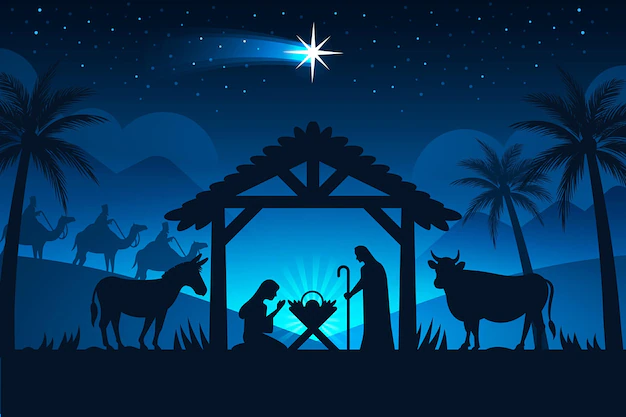
It is a nearly universal practice among Catholics to have a nativity set in our homes and surely in our parishes. Not only does the nativity set remind us of the birth of Christ, it is also a miniature replica of the Church. In the scene we see God (Jesus) and man, saints (Jesus Mary and Joseph) and sinners (all the rest), the rich (the Magi) and the poor, (Mary Joseph, Jesus and the shepherds). We see the learned (the Magi) and the simple (the shepherds). There are Jews and Gentiles since the Magi are Gentiles and the rest are Jews. In this midst of this diverse scene, Jesus is found! 

While it may seem “institutional” to ponder the Church on Christmas Day, please realize that it is not. The Church is not an institution, the Church is the Body of Christ; He the Head of the Body, the Church and we, his members (cf Col 1:18; 1 Cor 12:27). Therefore we do well to ponder Christ’s presence in the Nativity setting and what it teaches us about his Body, the Church. Let’s ponder some of the elements:

Divine and Human –  Cleary, Christ alone is divine and all the other figures are human or animals. But it is essential, when pondering the Church to remember that the Church is both divine and human. The Church is divine because it is Christ’s body and he is the head of the Body as noted above. It is human because we are members of Christ’s Body, the Church. Let’s be clear, if it wasn’t for the divine indwelling of the Church by Christ’s headship and the presence of his Holy Spirit, the Church would have lasted only twenty minutes, max. But the Church is still here, 2,000 years later proclaiming the same Gospel. The Church is a miracle. There is simply no way to explain it perdurance except that Christ is its head. We can call the Church “Holy” because of Christ, but without him we know sin from the human dimension of the Church would have destroy it centuries ago. Jesus, the Second Person of the Blessed Trinity is found at the center of the nativity scene, surrounded by the human beings he loves. The Church is human, to be sure, but the Church is also divine and thus holy and an object of faith.

Saints and Sinners – Jesus of course is sinless and holy. By his grace so is Mary his mother. Joseph is surely a saint even if not sinless from conception. The rest are sinners. Today also in the Church are saints and sinners. Some of the saints are perfected and in heaven. Some of the saintly are still among us here on earth, even if not perfected yet. And, to be sure, most of us are still sinners trying to make it in. This is the Church: many who are holy, and many who are sinners striving for holiness. Sadly there are also among us some who aren’t even trying to be holy, but the Church still holds us close and Christ is still calling. There is an impatience by many that the Church is not very holy and has too many scandals. Indeed, one is too many, but a perfect Church would be an empty Church, at least here on earth. Hospitals work for healing, but must admit the sick. So too the Church which is called to heal, must admit sinners to do so. Christ is found in Bethlehem among both saints and sinners. So too today.

Learned and Simple – In the Nativity Scene we Have Jesus surrounded by the learned and the simple. The wise men were learned, the shepherds were likely simple, unlettered men. Joseph and Mary knew their Scripture and the Jewish Law but were not likely credentialed scholars. In the Church too we have those of great learning, we have unlettered peasants and everyone in between. Saints Augustine and Aquinas, Saints Theresa of Avila and Catherine of Siena are all learned Doctors (teachers) of the faith in a Church which has a great deposit of faith and learning. And yet, many unlettered and simple believers also fill our pews throughout the world and through time.  The Church is the patron of the arts and sciences and also the refuge of the poor and simple.

Rich And Poor – The Magi were surely wealthy for they came with gold, frankincense and myrrh. The rest were likely among the working poor. They were not destitute, but their wages permitted little frills. So to the Church through time has included the rich and the poor and always together. A certain Anglican, years ago converted to the Catholic Faith in England. Upon hearing of his plans, his mother fretted: “Oh dear, you will be worshipping with ‘the help.'” Indeed, in a Catholic parish one may just as easily find the banker and the laborer kneeling in the same pew. The Church has benefited from certain wealthy benefactors, but has always been a home to the poor.

Jew and Gentile – In the nativity scene, wth the arrival of the Magi, we see Jews and Gentiles together with Christ. In the Creed we describe the Church as one, holy, catholic and apostolic. The term “catholic” means universal. People of every nation, race and language are summoned to Christ and the Church has a mission “unto the ends of the earth.”  Jesus said to the apostles, Going therefore, teach all nations; baptizing them in the name of the Father, and of the Son, and of the Holy Spirit. Teaching them to observe all things whatsoever I have commanded you (Matt 28:19-20). Today we can rightly claim that the Catholic Church is in every land, speaks every language and summons everyone to accept Jesus Christ and live his teachings. If you look at most Catholic parishes in our region you will see what looks like the United Nations. There is an old expression regarding the Church: “Here comes everyone!” 

Added to our Nativity scene are also the Angels who gathered that night. And, though invisible to our eyes, they dwell among us in unimaginable numbers. Wherever you go, the angels are everywhere attending to creation and assisting in our human endeavors. Trust God’s assistance and providence! We are not alone, myriads of angels assist and surround us and assist the Church!

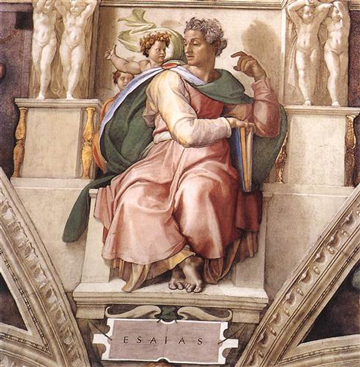
Finally, and most humbly, do not neglect to notice what the older translations called the “ox and the ass.” St. Francis of Assisi who gave us the Nativity Set as a devotion placed them there in fulfillment of the Prophet Isaiah who wrote: The ox knows his owner, and the donkey his master’s manger: but Israel has not known me, and my people has not understood (Is 1:3). I suppose the implied question is “Are you as smart as an ox or an ass?” We ought to be smarter, but too often we compare poorly to these otherwise stubborn and stupid animals if we fail to seek the Lord where he is humbly found. 

This Christmas and every Christmas, we can learn a lot just by studying the Nativity sets we set up. I like you, strive to go to that humble and challenging place where the Lord is actually found. We may wish to find him in a church or family of our own design. Instead, he is found in a complex place that includes the rich and poor, the learned and simple, Jew and Gentile, saints and sinners, even the likes of you and me.

And he is not ashamed to call us his brethren (see Heb 2:11). 
Five Reasons We Need a Savior – An Advent Meditation on a Text from Isaiah

Blog12-1As Christmas draws so near, we should ponder why we need a savior. In short, we’ve got it bad and that ain’t good. But praise the Lord, there is a doctor on the way. His name is Emmanuel; His name is Jesus, which means “God saves.”

Let’s look at a keynote reading of Advent describing five reasons we Jesus a savior!

I. Distant Sons Hear, O heavens, and listen, O earth, for the Lord speaks: Sons have I raised and reared, but they have disowned me! An ox knows its owner, and an ass, its master’s manger; But Israel does not know, my people has not understood. Ah! sinful nation, people laden with wickedness, evil race, corrupt children! They have forsaken the Lord, spurned the Holy One of Israel, apostatized (Is 1:2-4).

At the heart of most of our troubles is that we have distanced ourselves from God. Sometimes this is through forgetfulness rooted in a dullness of mind. Culturally in the West we have moved God to the periphery by an increasingly strident secularism. We are distant children. Collectively speaking, we have disowned our Father: the God who made us and who enables us to do everything we have done.

In so doing, we are cutting ourselves off from the very source of our power and achievement. This, of course, is the height of foolishness. Consider a fan that has just been unplugged. At first the blades continue to spin and the fan may “think” that all is well. But gradually the blades move more and more slowly. Eventually, they stop completely. It is this way with us as well.

Most of us believers are rightly concerned that our culture, having been unmoored, is becoming just as God described faithless ancient Israel: a sinful nation laden with wickedness, evil, and corruption. No age of this “paradise lost” has ever been sinless, but increasingly we cannot even get consensus on the most basic moral issues: that killing infants in the womb is wrong, that homosexual acts are disordered, and that promiscuity is unhealthy for the body and the culture. Even the most rudimentary understanding of biology shows that a life in the womb is a human baby and that homosexual acts are not meant to be (the parts don’t fit and the full purpose of sex is impossible). And clearly promiscuity brings disease. And this is just the biological evidence. Even a high school biology student can figure out that these practices are misguided.

But so deep is our confusion, that even the most obvious aspects of things evade us as we get lost in our rationalizations and foolish attempts to justify what we know, deep down, is wrong. Yes, unplugged from God, we get a little slow in our thinking.

The Lord goes on to compare His distant children to oxen and donkeys. Yes, even they are smarter than some of us, for they know their owner and who feeds them. Are you and I smarter than a donkey or an ox? There is a reason our nativity sets usually feature a donkey and a cow. They were there for the birth of Christ, but we had no room for him in the inn.

So the first reason we need a savior is that we tend to stray from God. And having strayed, we get lost in more ways than one. God has to come find us, just as in the garden when the first couple sinned He went through the Garden calling, “Adam, where are you?” (Gen 3:9) So now He seeks us, His distant children.

II. Disease-StruckWhy will you still be struck down? Why will you continue to rebel? The whole head is sick, the whole heart faint. From the sole of the foot to the head there is no sound spot: Wound and welt and gaping gash, not drained, or bandaged, or eased with salve (Isaiah 1:5-6).

This is a bad situation. The Lord says simply, “There is no sound spot.” The damage caused by sin is enormous and the Lord describes it sickening terms: wounds; welts; and horrifying, pus-filled, gaping gashes.

We tend to make light of sin, but God does not. St. Paul put things more bluntly and tersely: “You were dead in your sins” (Eph 2:1).

But making light of our sins we stand there and continue to get struck; we continue to rebel. We ignore the body count of abortion, the toll that divorce and promiscuity take on children, the high price of greed, and the foolishness of casting aside God and His wisdom.

As God describes it, our stance is unreasonable and just plain stupid. We rebel, glory in evil things, and assert a false notion of freedom. But God says to us that if we could only see ourselves as He does, we would be sickened: gaping wounds and foul discharge.

Jesus said to Sister Faustina, You see what you are of yourself, but do not be frightened at this. If I were to reveal to you the whole misery that you are, you would die of terror. … But because you are such great misery I have revealed to you the whole ocean of my mercy (Diary II. 718).

Here, then, is the second reason we need a savior: Our sins and stubbornness have made us wretched, pitiable, poor, blind, and naked (Rev 3:17). We cannot save ourselves. Only with grace and mercy do we stand a chance. We need more than an angel; we need a savior.

III. Desolate Scene Your country is waste, your cities burnt with fire. Your land before your eyes strangers devour, [a waste, like Sodom overthrown]—And daughter Zion is left like a hut in a vineyard, Like a shed in a melon patch, like a city blockaded. Unless the Lord of hosts had left us a scanty remnant, We had become as Sodom, we should be like Gomorrah (Is 1:7-9).

Ruined cultures eventually produced ruined cities and plundered landscapes. You don’t think it can happen today? Throughout the age of the Church, empires have risen and fallen, countries have come and gone, and powerful coalitions have gathered and fallen apart. None of them thought that they would collapse either. But they are all gone. Where is Rome? Where is the Napoleonic Empire? Where is the USSR? It was once said, “The sun never sets on the British Empire.” Now it does. The Church alone, by Christ’s promise, is indefectible. And she, too, needs often-severe purifications.

In the Bible the usual focus was on land, crops, and buildings. In our age, we speak of “economies.” But no matter what we call it, we cannot have strong economies or unless we are strong, true, consistent and disciplined. Our moral decline produces a decadence (from the Latin for “to be fallen down”) and a laziness.

We are even too lazy to have children. And thus the text above speaks of “strangers devouring your land.” Once-Christian Europe is soon to become a Muslim caliphate. Hagia Sophia became a mosque; will the great cathedrals of Europe go the same way?

In America the situation is more complex. Thankfully, most of our immigrants are Catholic Christians. But it does seem clear that our years of being an economic and political leader among the nations is fading; the thinning soil of our culture can little longer sustain the taller growths. Our economy has been stagnant for at least a decade now, and unemployment is shockingly high. There’s no telling where it will end up, but things don’t look very vigorous right now.

And here is the third reason we need a savior: to save us from the mess we’ve made and reinvigorate us with the things that make for healthy families, healthy communities, a healthy culture, and a healthy Church. We need rebuilding, reinvigoration, restoration, refocusing, and reformation.

IV. Disconnected Sacrifices Hear the word of the Lord, princes of Sodom! Listen to the instruction of our God, people of Gomorrah! What care I for the number of your sacrifices? says the Lord. I have had enough of whole-burnt rams and fat of fatlings; In the blood of calves, lambs and goats I find no pleasure. When you come in to visit me, who asks these things of you? Trample my courts no more! Bring no more worthless offerings; your incense is loathsome to me. New moon and sabbath, calling of assemblies, octaves with wickedness: these I cannot bear. Your new moons and festivals I detest; they weigh me down, I tire of the load. When you spread out your hands, I close my eyes to you; Though you pray the more, I will not listen. Your hands are full of blood! Wash yourselves clean! Put away your misdeeds from before my eyes; cease doing evil; learn to do good. Make justice your aim: redress the wronged, hear the orphan’s plea, defend the widow (Is 1:10-19).

Even our worship lacks integrity. That which is supposed to glorify God and bring forth in us a holy obedience has become lip service. God seeks hearts that are humble, docile, loving, and repentant. We cannot buy Him off by just singing hymns, saying a few prayers, or attending Mass. These things, good though they are, are meant to effect a conversion in us that makes us more loving of both God and neighbor, less violent, more just, more merciful, more generous to the poor, and more holy. Our worship should effect change in us such that we cease doing evil and learn to do good, we strive for justice, we address injustice, and we defend and help the poor.

An additional problem with our worship today is that God has become almost an afterthought. Much of our liturgy is self-centered, self-congratulatory, and anthropocentric (rather than theocentric). We are “the aware, gathered community celebrating itself.” While the Mass should focus on God and summon us to humility and joy before Him, too often it seems more an exercise in pride and self-congratulation. We are very narcissistic, even in a communal setting.

God cannot be pleased with all of this. Even if our worship is rightly ordered, we are not going to buy God off. God wants an obedient heart more than sacrifice. Sacrifice without obedience is a sham.

This is the fourth reason we need a savior: We need God to restore our integrity and give us a new heart. We are “dis-integrated,” in the sense that pieces of our life that should be together (e.g., worship and obedience, liturgy and healing) are not. Too often our worship does just the opposite of what it should. Instead of drawing us more deeply into the love and obedience of God it becomes the very occasion of keeping God at a distance and seeking to placate him with superficial gestures. This makes our worship an insult and a lie. God doesn’t mince words in the passage above when He says how displeased He is with this.

We need God to give us a new heart, one that loves Him as well as the people and things that He loves. Only then will our worship will truly reflect the heart that God seeks: a loving, humble, and generous heart.

V. Desire to Save Come now, let us set things right, says the Lord: Though your sins be like scarlet, they may become white as snow; Though they be crimson red, they may become white as wool. If you are willing and obedient, you shall eat the good of the land; but if you refuse and rebel, you shall be eaten by the sword; for the mouth of the Lord has spoken (Is 1:18-20).

God says that we should get started. Let the healing begin! And all the people must say,

“O Come, O Come Emmanuel, and ransom captive Israel, that mourns in lonely exile here, until you, O Lord, the Son of God appear.”

A Late Advent Message From the Lord

As the end of Advent approaches, the Office of Readings features some final admonitions from the Book of the Prophet Isaiah. On the one hand they console; on the other, they challenge us to remain firm.

Let’s look at these admonitions from the Lord (Isaiah 46:3-13), which were addressed to three different groups in ancient Israel. However, let’s apply them to three groups in our own times:

        • the faithful remnant,
        • the foolish rebels, and
        • the fainthearted at risk.

To the Faithful RemnantHear me, O house of Jacob, all who remain of the house of Israel, my burden since your birth, whom I have carried from your infancy. Even to your old age I am the same, even when your hair is gray I will bear you; It is I who have done this, I who will continue, and I who will carry you to safety.

This is directed to the devoted, to the remnant, to those who remain after the cultural revolution in our times, to those sometimes discouraged and sorrowful over the infidelity of loved ones and of the world around them. To these (often the elderly among us who remember a more faithful even if imperfect time) the Lord first speaks.

In effect, He says, Blessed are those who mourn, for they shall be comforted. Who are the mournful? They are those who see the awful state of God’s people: not glorifying the Lord in their lives, not knowing why they were made, spending themselves on what neither matters nor satisfies. Yes, those who mourn shall be strengthened, and, as their sorrow has motivated them to pray and work for the kingdom, they shall be borne to safety.

This faithful remnant should never forget that God has carried them from the beginning, even in the strength of their prime. Now, reduced by age, they are still carried by the Lord. He has never forgotten them and will carry them to safety; their faith in difficult times will be rewarded.

To The Foolish Rebels Remember this and bear it well in mind, you rebels; remember the former things, those long ago: I am God, there is no other; I am God, there is none like me. Whom would you compare me with, as an equal, or match me against, as though we were alike? There are those who pour out gold from a purse and weigh out silver on the scales; Then they hire a goldsmith to make it into a god before which they fall down in worship. They lift it to their shoulders to carry; when they set it in place again, it stays, and does not move from the spot. Although they cry out to it, it cannot answer; it delivers no one from distress.

The word “rebel” is from the Latin re (again) + bellum (war). In this context it refers to those who are forever at war with God and His plan for their lives. They foolishly forget His saving deeds. They imagine vain things: that there are other gods or entities that could save them. Even more foolishly, they craft other “gods” that they have to lift upon their shoulders to carry.

Many in our day act in the same way: always at war with God, His Church, and His plan. As G.K. Chesterton once noted, when people stop believing in God, it is not that they will believe in nothing but that they will believe in anything. Chesterton also wrote that when we break God’s big laws, we don’t get liberty; we get small laws. We transfer our trust away from God to false, crafted gods like government, or science, or the market. We hope that they will carry us, but we end up carrying the weight of these gods on our own shoulders. We carry this weight in the form of taxes, debt, and anxiety about everything in our health or environment (demanded by the increasingly politicized scientific and medical communities).

Science, the market, and government are not intrinsically evil, but they are not gods, either. They cannot deliver us from ourselves; only God can do that. To the many who rebelliously and foolishly persist with their “non-gods,” He says, “I am God; there is no other.”

To the Fainthearted at Risk Listen to me, you fainthearted, you who seem far from the victory of justice: I am bringing on my justice, it is not far off, my salvation shall not tarry; I will put salvation within Zion, and give to Israel my glory. At the beginning I foretell the outcome; in advance, things not yet done. I say that my plan shall stand, I accomplish my every purpose. I call from the east a bird of prey, from a distant land, one to carry out my plan. Yes, I have spoken, I will accomplish it; I have planned it, and I will do it.

Among the faithful there are some who are at risk, who are nearly ready to give up. God encourages them, but also warns that His plan will stand whether or not they endure. Thus there is an implicit warning from Jesus here (and an explicit warning elsewhere) that we must persevere. Jesus says that because lawlessness is increased, most people’s love will grow cold. But the one who endures to the end, he will be saved (Matt 24:12-13).

St. Augustine wrote, [God has] devised a plan, a great and wonderful plan … All this had therefore to be prophesied, foretold, and impressed on us as an event in the future, in order that we might wait for it in faith, and not find it as a sudden and dreadful reality (From a discourse on the psalms by Saint Augustine, bishop (In ps. 109, 1-3: CCL 40, 1601-1603)).

God’s plan will stand whether or not we do. We must stand as well, even when we want to faint or fall back. Our love must not grow cold nor our strength fail. God has triumphed and Satan has lost. We must choose with whom we will stand.

The evidence of the present age does not seem to show this, but as Scripture reminds us,

Therefore, we do not lose heart … So we fix our eyes not on what is seen, but on what is unseen, since what is seen is temporary, but what is unseen is eternal (2 Cor 4:16-17).

For all that is in the world, the lust of the flesh and the lust of the eyes and the boastful pride of life, is not from the Father, but is from the world. The world is passing away, and also its lusts; but the one who does the will of God lives forever (1 Jn 2:16-17).

Here, then, are some final instructions from the Lord this Advent, instructions for us who wait for Him: be faithful; the plan will come to pass. Do not be a foolish rebel, nor one of the at-risk fainthearted. Rather, be part of the faithful remnant. St. Paul says, Isaiah cries out concerning Israel: “Though the number of the Israelites be like the sand by the sea, only the remnant will be saved” (Romans 9:27).

The song performed in the clip below is entitled “Lord Help Me to Hold Out.”

Crisis At Christmas – A Homily for the 4th Sunday of Advent

j-and-m-and-jToday’s Gospel gives us some background for the Christmas feast that we need to take to heart. It speaks to us of a crisis at Christmas.

We tend to sentimentalize the Christmas story as we think of the baby Jesus in the manger. It is not absolutely wrong to be sentimental, but we must also be prayerfully sober about how difficult that first Christmas was, and about the heroic virtue required of Mary and Joseph in order to cooperate with God in making it come to pass.

Let’s look at this Gospel in three stages: distress, direction, and decision.

  1. DISTRESS This is how the birth of Jesus Christ came about. When his mother Mary was betrothed to Joseph, but before they lived together, she was found with child through the Holy Spirit. Joseph her husband, since he was a righteous man, yet unwilling to expose her to shame, decided to divorce her quietly.

The marriage is off. When we read that Mary was found to be with child before she and Joseph were together, we need to understand how devastating and dangerous this situation was. Pregnancy in this circumstance  brought forth a real crisis for both families involved in Joseph and Mary’s marriage plans. Quite simply, it put all plans for the continuation of the marriage permanently off.

Why is this? We read that Joseph was a “righteous man.” To our ears this like saying that he was a “good man.” Most of the Fathers of the Church interpreted “righteous” here to refer to Joseph’s gracious character and virtue where he steps back from a sacred situation. And we surely suppose all this of him. More recent biblical scholarship includes the idea that it meant Joseph was also an “observer of the Law.” He would thus do what the Law prescribed. This explains his decision to divorce Mary because of her apparent lack of virginity prior to their coming together in the  marriage. Here is an example of the Mosaic Law in reference to such a matter:

But if the tokens of virginity were not found in the young woman, then they shall bring out the young woman to the door of her father’s house, and the men of her city shall stone her to death with stones, because she has wrought folly in Israel by playing the harlot in her father’s house; so you shall purge the evil from the midst of you (Deut 22:20-21).

While this seems quite extreme to us, we can also recognize how far we have gone in the other direction in modern times, making light of promiscuity. I doubt that anyone would argue that we should stone such a woman today, and rightly so, but this was the landscape in Joseph’s time.

What about stoning? It would seem that Jews of the first century had varying interpretations about whether stoning was required or whether it was simply permitted (cf John 8). As a virtuous and patient man, Joseph looks for and senses some freedom in not “exposing” Mary to the full effects of the Law (stoning). But it does not seem he can find a way that he can take her into his home. Thus, as a “righteous man” (i.e., follower of the Law) he decides that divorce is required even if stoning is not.

This leads us to two important reflections, one about Mary and one about Joseph.

Mary – We can see into what a difficult and dangerous position her yes (her fiat) to the angel placed her. She risked her very life by being found with child outside the normal marital act with her husband. We know that it is by the Holy Spirit she conceives, but her family and Joseph and his family do not yet, or at least cannot verify it. And even if Mary explained exactly how she conceived, do you think you would accept such a story? Mary’s fiat placed her in real danger. It is a great testimony to her faith and trust in God that she said yes to His plans.

Joseph – We can also see the kind of pressure he would be under to do what the Law and custom required. There is no mention of Joseph’s feelings at this point, but we can assume that when Mary was found to be with child prior to their being together in marriage, the social pressure on him to be legally freed from Mary were strong, regardless of his feeling or plans.

  1. DIRECTION Such was his intention [to divorce] when, behold, the angel of the Lord appeared to him in a dream and said, “Joseph, son of David, do not be afraid to take Mary your wife into your home. For it is through the Holy Spirit that this child has been conceived in her. She will bear a son and you are to name him Jesus, because he will save his people from their sins.”

Be not afraid. The principal exhortation of the angel was that Joseph “not be afraid” to take Mary as his wife. This exhortation is powerful because fear was a very big factor. Joseph had much to fear in taking Mary. Some of the Fathers of the Church believed that what the angel meant was that Joseph should not fear God’s wrath, since he would not actually be taking an adulterer or fornicator into his home. Others think that the angel meant that Joseph should not fear taking God’s chosen instrument (Mary) as his wife.

One can also imagine some other fears that needed to be allayed by the angel. For example, Joseph could easily be rejected by his family for taking Mary in. The community could likewise shun him, and as a businessman, Joseph needed a good reputation to be able to ply his trade. All of these threats loom if Joseph “brings evil” into his house rather than purging the (apparent) evil from the midst of his house. But the angel directs him not to fear; this will take courageous faith.

The angel’s explanation is unusual to say the least. What does it mean to conceive by the Holy Spirit? It’s not exactly a common occurrence! Would his family buy such an explanation? What about the others in the small town of Nazareth? Yes, people were more spiritual in those days, but it all seems so unusual!

Further, Joseph hears all this in a dream. We all know what dreams can be like. They can seem so real at the time, but when we are fully awake we wonder if what we experienced was real at all. Joseph has to trust that what he was told is real, and that he should not be afraid because God has given him direction. As is often the case with things spiritual, we have to carefully discern and walk by faith, not by fleshly sight and certitude. Joseph has a decision to make.

  1. DECISION When Joseph awoke, he did as the angel of the Lord had commanded him and took his wife into his home.

We can see the strong faith of Joseph and the kind of trust he had to put in God. He had been told not to be afraid, to rebuke fear. Manfully, Joseph does this. He makes the decision to obey God whatever the cost. We are given no information about how his family and others in the town reacted. However, the fact that the Holy family later settles back in Nazareth indicates that God did come through on His promise that Joseph need not be afraid.

Heroes of Faith! Recognize the crisis of that first Christmas and the powerful faith of Joseph and Mary. Their reputations were on the line, if not their very lives. They had great sacrifices to make in the wondrous incarnation of our Lord. Quite simply, Mary and Joseph are great heroes of the faith. For neither of them was their “yes” easy. It is often hard to obey God rather than men. Praise God that they made their decision and obeyed.

Mary and Joseph’s difficulties were not yet over. There was a badly timed census, which required a journey to Bethlehem in the ninth month of Mary’s pregnancy. Imagine walking 70 miles through mountainous terrain in such a condition! There may or may not have been a donkey, but I doubt that riding a donkey in the ninth month of pregnancy is all that comfortable either. And then there was no room in the inn; Jesus had to be born in a smelly stable. Shortly thereafter they had to flee through the desert to Egypt because Herod sought to kill Jesus.

Jesus is found in a real Christmas, not a “Hallmark” one. The crisis of the first Christmas prefigures the passion. This where Jesus is found: in the crisis of the first Christmas. You may wish for the perfect Christmas, but there is no perfect Christmas. Jesus will find you where you are, in real life, in the imperfect Christmas, where loved ones have passed away and there is grief, where a job has been lost and there is anxiety, where health is poor and there is stress, where families are experiencing strife. That’s where Jesus will be found, in your real Christmas. A Christmas of joy, yes, but also of imperfections, even crises. He is there waiting for you to find Him, in the real Christmas of your life.

This is an old African-American spiritual that reflects on the fact that true discipleship isn’t always easy. Joseph and Mary surely experience and exemplify what these words express.

I tol’ Jesus it would be all right
If He changed my name

Jesus tol’ me I would have to live humble
If He changed mah name

Jesus tol’ me that the world would be ‘gainst me
If He changed mah name

But I tol’ Jesus it would be all right
If He changed mah name

On The Hidden Mercy of the Tilma of Guadalupe

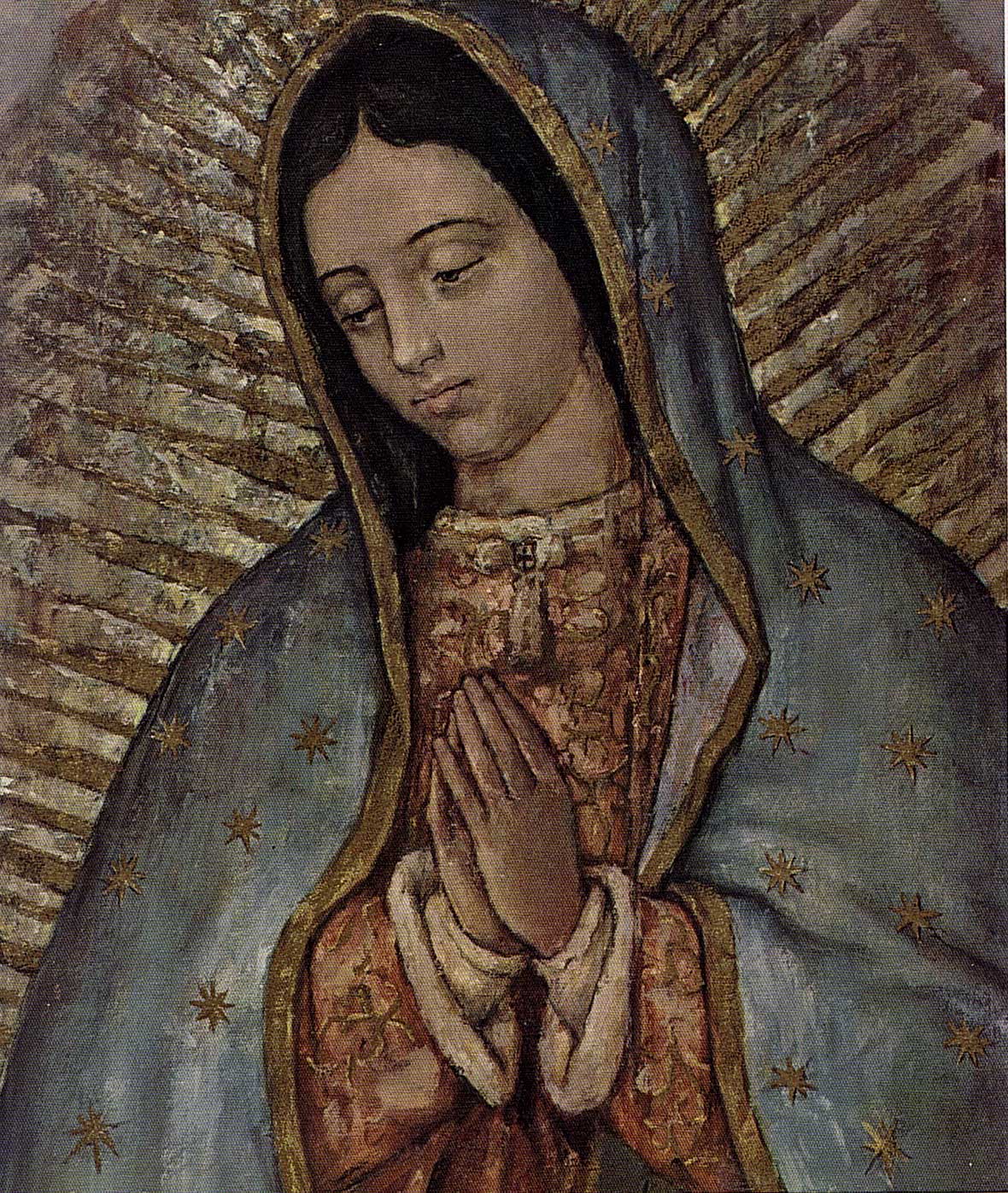
On the Feast of Our Lady of Guadalupe, it is a chance for us to rejoice in the great mercy of our divine Lord and our blessed Lady. I am drawn to mediate on the miraculous quality of our Lady’s eyes on the tilma.

As many of you know, recent discoveries using modern magnification and ophthalmological equipment have shown the seemingly miraculous reflection of as many as a dozen persons in her eyes. How such tiny and accurate reflections could occur in both eyes at just the angles that human stereoscopic sight requires is mysterious to say the least. Even more, there are claims from eye specialists who have had the opportunity to look into our Lady’s eyes on the tilma that they have an iridescence that make the eyes seem almost alive.

I do not propose to write an article here on all the findings and evidence. You can read more our Lady’s eyes HERE and HERE and also in the video below. Rather I propose a short and simple reflection on two merciful facts.

First that our this image demonstrates, in effect that God’s people are the “apple of Mary’s eyes.” Seen there are Juan Diego, the bishop and an assistant, an indigenous family, a woman from Africa and several others. Remarkable; in her own self-portrait, our Lady includes us. In the book of Psalms the cry goes up to God,

Wondrously show your steadfast love,
O Savior of those who seek refuge
from their adversaries at your right hand.

Keep me as the apple of your eye;
hide me in the shadow of your wings (Psalm 17:7-8
)

Deuteronomy also says of God,

He found Israel in a desert land, and in the howling waste of the wilderness; he encircled them, he cared for them, he kept them as the apple of his eye. (Dt 32:10)

And by his Grace, our Lord has often dispatched his mother to us. She finds un in difficult days, and in difficult places, speaking to us in love and sometimes in motherly warning. But, by the grace of God we are the apple of her eye too.

She came to Guadalupe at difficult time, to summon the Mexicans from the fearsome religious bondage of their ancient and often bloody religions, to Christ, their true and only Savior. The image on the tilma shows so many reflected in her eyes, reflected in love. They were the apple of her eye.

May our Lord be pleased to continue to send Mother Mary to us and remind us that we are loved and that heaven knows our struggles and is concerned for us. May none of us every forget that we are still reflected in Mary’s eyes and in the eyes of God to whom she intercedes for us. What a beautiful mercy.

And the second mercy is that images in her eyes, unknown for centuries in any detail seem to have been put there for us, who live now, to later discover. The same can be said for the Shroud of Turin. It is as if, knowing of cynical and unbelieving times where the physical sciences are almost idolized, Our Lord and our Lady left images that both speak to science and also confound it.  How were the image made? How do they have three dimensional effects and display scientific knowledge or techniques unknown in their time? 

Both the shroud and the tilma stand up to rigorous scientific investigation. The amazing truths about both images are backed up by science but also defy simple scientific or technical answers. Many of the “imponderable” mysteries were largely unknown in previous eras without photographic and scientific procedures and techniques. It is almost as if they were hidden there, waiting for us.

And that may in fact be the case. It is a love letter to a scientific but often unbelieving time. Despite our sometimes cynical demands for evidence, to our Lord and our Lady, we are still the apple of their eye. They look to us from afar, from an ancient shroud and very old tilma and they seem to say, “I am here for you to see. And I see you, you whom I love. You are the apple of my eye.” 

For such mercies, thank you Lord.

The Perfect Gift: A Homily for the 3rd Sunday of Advent.

What is the perfect gift? We tend to answer this question more in terms of what we want, but today’s Gospel teaches us that the perfect gift is what God is offering. One of the goals of the spiritual journey is to come to value, more than our latest desire, more than our perceived need—more than all else—what God offers.

The Gospel opens with John (who is in prison) sending his disciples to Jesus with a strange question: “Are you he who is to come, or should we look for another?” This is a strange question coming from the one who pointed Jesus out and spoke so powerfully of Him! Many of the Fathers of the Church (e.g., John Chrysostom, Gregory the Great, Theodore of Mopsuestia) interpreted John’s question as a rhetorical one,designed to teach his reluctant disciples to follow Jesus.

Essentially it does not matter if it is John or his disciples that are puzzled. It is we readers who really have this question. It is us that must accept the Messiah, Jesus as he is, not as we would wish him to be.

Today’s Gospel is best seen in three stages, as we are encouraged to make a journey from puzzlement, through purification, to perfection; a journey to understand that the perfect is gift is not one of our own imagining but of God’s true offer. It is a Gospel that encourages us to find and appreciate the perfect gift.

Puzzlement When John the Baptist heard in prison of the works of the Christ, he sent his disciples to Jesus with this question, “Are you the one who is to come, or should we look for another?”

This is a strange question given what St. John had already done!With delight, John had pointed out Christ as He approached, saying, Behold, the Lamb of God(John 1:29). With humble hesitation, John had baptized the One who would change everything. He encouraged his disciples to follow after the One who was mightier than he. So why this unusual question?

If John or his disciples seem puzzled, Consider that John’s comments in last week’s gospel had spoken of a Messiah who would root out injustice, crush the wicked, destroy the oppressors, and exalt the poor and the oppressed. Recall his words from last Sunday’s Gospel:

Even now the axe is laid to the root of the trees; every tree therefore that does not bear good fruit is cut down and thrown into the fire. “I baptize you with water for repentance, but he who is coming after me is mightier than I, whose sandals I am not worthy to carry; he will baptize you with the Holy Spirit and with fire. His winnowing fork is in his hand, and he will clear his threshing floor and gather his wheat into the granary, but the chaff he will burn with unquenchable fire(Mat 3:10-12).

John is now in prison, relegated there by a tyrant, an oppressor—the very sort of man John was sure that the Messiah would cut down and cast into the fire. Some might have wondered, based on that, Where was the hoped-for deliverance? Where was the exaltation of the lowly and the casting down of the mighty? Where was the axe being laid to the root of the tree? Jesus was not doing this sort of thing at all. Although He had some confrontations with religious leaders, His main work seems to have been healing the sick and summoning average people to repentance and faith.

Hence the question of some: Are you he who is to come, or should we look for another?

Other Old Testament texts had spoken of a wrathful coming of the Messiah. Here are a few:

        • Wail, for the day of the LORD is near; as destruction from the Almighty it will come. … Behold, the day of the LORD comes, cruel, with wrath and fierce anger, to make the earth a desolation and to destroy its sinners from it! … I will punish the world for its evil, and the wicked for their iniquity; I will put an end to the pride of the arrogant, and lay low the haughtiness of the ruthless. Therefore, I will make the heavens tremble, and the earth will be shaken out of its place, at the wrath of the LORD of hosts in the day of his fierce anger(Is 13:6-10).
        • Who can stand before his indignation? Who can endure the heat of his anger? His wrath is poured out like fire, and the rocks are broken asunder by him(Nahum 1:6).
        • But who can endure the day of his coming, and who can stand when he appears? (Mal 3:2)

John had worked hard calling people to repentance in order to get them ready for the great and terrible day of the Lord. Hence the  puzzlement is thus understandable from him or his disciples; Jesus goes about healing and preaching, and instead of slaying the wicked, endures scorn and ridicule from those in power.

The “perfect gift” for John or his followers would be to see all injustice rooted out, to see the threshing floor cleared and the distinction between the wheat and the chaff made obvious, to see the wicked burned with fire and the righteous shine like the firmament. Like many of the prophets, John sensed that the perfect gift was this: let judgment run down as waters and righteousness as a mighty stream(Amos 5:24).

Of itself this is a good and biblical vision that will one day be accomplished. But at this point is it the perfect gift? Is it the gift that Jesus wants to offer? What is the perfect gift?

Purification Jesus gives an answer to John’s disciples that draws from a different tradition of Messiah texts than those John had emphasized. The Old Testament texts that spoke of the Messiah were complicated and at times hard to interpret. While some texts spoke of His wrath toward the wicked and unjust, others spoke of His healing and mercy.

The differences in the description of the Messiah had a lot to do with the context, the audience, and also the possibility that the Messiah’s ministry might be accomplished in stages. Hence, while the comments John the Baptist last week were not wrong,  these wrathful and vindicating texts of the Messiah, the New Testament tradition came to understand such texts more in terms of the Messiah’s second coming than his first.

Jesus thus gives the following answer to those sent by John:

Go and tell John what you hear and see: the blind regain their sight, the lame walk, lepers are cleansed, the deaf hear, the dead are raised, and the poor have the good news proclaimed to them.

In this answer, Jesus stitches together many quotes and prophecies about the Messiah, mostly from Isaiah. For example, consider the following:

        • In that day the deaf shall hear the words of a book, and out of their gloom and darkness the eyes of the blind shall see. The meek shall obtain fresh joy in the LORD, and the poor among men shall exult in the Holy One of Israel(Isaiah 29:18-19).
        • The Spirit of the Lord GOD is upon me, because the LORD has anointed me to bring good tidings to the afflicted; he has sent me to bind up the brokenhearted, to proclaim liberty to the captives, and the opening of the prison to those who are bound; to proclaim the year of the Lord’s favor, and the day of vengeance of our God; to comfort all who mourn(Is 61:1-3).
        • The dead shall live, their bodies shall rise. O dwellers in the dust, awake and sing for joy! For thy dew is a dew of light, and on the land of the shades thou wilt let it fall(Is 26:19).
        • Then the eyes of the blind shall be opened, and the ears of the deaf unstopped; then shall the lame man leap like a hart, and the tongue of the dumb sing for joy(Is 35:5-6).

There is a need to purify our sense of what is best for God to do, to come to a better appreciation of the perfect gift.

To those who are disappointed in His lack of wrathful vengeance, Jesus says something quite remarkable: And blessed is the one who takes no offense at me.

Many of us have been hurt by others or have been deeply troubled by the fact that the wicked seem to prosper while the just struggle.When will God act? Why doesn’t He do something? It is very easy for us to be puzzled, discouraged, or even offended by God’s seeming inaction.

To all this Jesus simply says, And blessed is the one who takes no offense at me.

It is essential to accept Jesus’ teaching in order to have our sense of the perfect gift purified.Rejoicing in any other gifts than grace and mercy is very dangerous. Hoping for a wrathful punishment to be inflicted on the proud and all sinful oppressors, or wishing this upon individuals or even whole segments of the world, is very dangerous. The last time I checked, all of us are sinners.

Here, then, is the necessary purification in our thinking: God’s greatest gift is not the crushing of our enemies; it is His Son, Jesus. He is the Perfect Gift.

Further, it is not Jesus’ wrath that is His greatest gift; it is His grace and mercy. That is the perfect gift from the Perfect Gift.Without Jesus and a whole lot of His grace and mercy, we don’t stand a chance.

Perfection – And thus we see that the perfect gift is the grace and mercy of Jesus. It is not the destruction of our enemies. It is not a sudden, swift ushering in of justice before God’s chosen time. The perfect gift is the grace and mercy of Jesus, which all of us without exception desperately need.

In order to emphasize the absolute necessity of grace and mercy, and the perfect gift that they are, Jesus turns to the crowds and speaks of St. John the Baptist:

Jesus began to speak to the crowds about John, “What did you go out to the desert to see? A reed swayed by the wind? Then what did you go out to see? Someone dressed in fine clothing? Those who wear fine clothing are in royal palaces. Then why did you go out? To see a prophet? Yes, I tell you, and more than a prophet. This is the one about whom it is written: Behold, I am sending my messenger ahead of you; he will prepare your way before you. Amen, I say to you, among those born of women there has been none greater than John the Baptist.”

And thus St. John the Baptist is the best that this world has produced. But pay attention to what the Lord says next:

Yet the least in the kingdom of heaven is greater than he.

Do you see what grace and mercy can do? Do you see that they surpass any worldly excellence? The world can produce only human, worldly excellence. Grace and mercy produce heavenly excellence and make us like unto God. Without these gifts of God, we don’t stand a chance. John the Baptist needed grace and mercy; Mother Teresa needed grace and mercy. Grace and mercy are perfect and necessary gifts.

One day the perfect justice of God that we all seek will roll in. But unless and until you receive the perfect gift of grace and mercy through Jesus, you will not be able to endure the perfect justice of God. So until that time, it has pleased God to offer us the perfect gift of His Son, who by His grace and mercy will prepare us for that day.

If you are looking for the perfect gift this Christmas, look to Jesus. He alone can bestow the grace and mercy that we so desperately need. If even the holy St. John the Baptist was in need, how much more so you and I? Grace and mercy far exceed anything we can ask for or imagine.

Do you want to give the perfect gift to others?Then bring them to Jesus; bring them to Mass. Jesus awaits us in prayer, in the liturgy, in His Word proclaimed, and in the sacraments. Jesus is the perfect gift. The destruction of sinners is not the perfect gift; their conversion and salvation is.

Find the perfect gift this Christmas; find Jesus. Give the perfect gift this Christmas; give Jesus. Give Jesus the perfect gift this Christmas; give Him the give of your very self—the perfect gift.

An Ancient Bishop Rebukes His Emperor for Crimes Against Life: A Story of St. Ambrose and the Emperor Theodosius

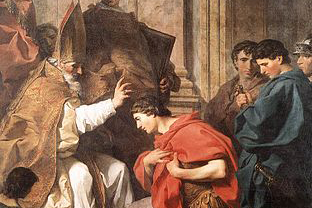
On this feast of St Ambrose we do well to reflect on a story from his life. It is a story that should inspire bishops and priests. It is the story of a remarkable event that took place between the Emperor Theodosius and St. Ambrose, Bishop of Milan. What makes it remarkable is that it shows an ancient bishop (Ambrose) and a politician (Theodosius) interacting over the dignity of human life. The Emperor Theodosius had the power of life and death over Ambrose the Bishop. St. Ambrose knew he had to correct the Emperor but also knew that this might endanger his freedom or even his life. Nevertheless, he did it and wrote a personal letter of rebuke to the Emperor.

Let’s look at this remarkable incident of a courageous bishop.

 The Offending Incident – Theodosius (Roman Emperor from 378 to 392) was in many ways an extraordinary emperor. He had successfully dealt with the Goths and other tribes and brought greater unity to the troubled Roman Empire in the West. But he was also known to have a very bad temper. In 390 A.D. in Thessalonica, a terrible riot broke out, which resulted in the death of Botheric, the captain of the Roman garrison there. It seems that a certain charioteer  had become very popular with the crowds. Now this charioteer also lived a rather debauched life. This offended Botheric, a Goth, and also a very upright and disciplined man. He had the charioteer arrested for debauchery. The crowds rioted, rising up in favor of the charioteer. In addition to the arrest there may also have been ethnic jealously involved on both sides since the Roman Garrison was comprised largely of Goths and the town was largely Greek. In the riot Botheric, the Captain was killed.

When Theodosius  heard of this, he was incensed. He ordered  the Roman army to round up the entire town and place them in the stadium  to be slaughtered.  7000 were killed that day!  The day after issuing the order, when his temper had cooled, Theodosius regretted his decision and sent another messenger to try to stop the massacre, but it was too late.

Theodosius  was mortified. He went to Milan to seek solace from St. Ambrose. But Ambrose, fearing the Church was  just being used as a political prop or fig leaf, left the city before Theodosius  arrived, in effect refusing to meet with the emperor.  This surely endangered Ambrose, for it risked inflaming the emperor’s infamous temper once more.

Ambrose then wrote the emperor a private letter (now known as Letter 51). You can read the whole letter here:  http://www.newadvent.org/fathers/340951.htm. The letter was a respectful but clear call to public repentance by the emperor and a refusal to admit him to the Holy Sacrifice of the Mass or to celebrate it in his presence until such public repentance had occurred. Here are some excerpts:

 The memory of your old friendship is pleasant to me, and I gratefully call to mind the kindnesses which, in reply to my frequent intercessions, you have most graciously conferred on others. Whence it may be inferred that I did not from any ungrateful feeling avoid meeting you on your arrival, which I had always before earnestly desired. And I will now briefly set forth the reason for my acting as I did …

 Listen, august Emperor, I cannot deny that you have a zeal for the faith; I do confess that you have the fear of God. But you have a natural vehemence [i.e., temper] , which … if any one stirs it up, you rouse it so much more that you can scarcely restrain it … Would that … no one may inflame it! … restrain yourself, and overcome your natural vehemence by the love of piety …

  This vehemence of yours I preferred to commend privately to your own consideration, rather than possibly raise it by any action of mine in public …

 There was that done in the city of the Thessalonians of which no similar record exists, which I was not able to prevent happening; which, indeed, I had before said would be most atrocious when I so often petitioned against it, and that which you yourself show by revoking it too late you consider to be grave, this I could not extenuate [i.e., minimize]  when done. When it was first heard of … there was not one who did not lament it, not one who thought lightly of it; your being in fellowship with Ambrose was no excuse for your deed …

 Are you ashamed, O Emperor, to do that which the royal prophet David, the forefather of Christ, according to the flesh, did? … he said: I have sinned against the Lord. Bear it, then, without impatience, O Emperor, if it be said to you: You have done that which was spoken of … say: I have sinned against the Lord. If you repeat those words of the royal prophet: O come let us worship and fall down before Him, and mourn before the Lord our God, Who made us. [I]t shall be said to you also: Since you repent, the Lord puts away your sin, and you shall not die.

  Holy Job, himself also powerful in this world, says: I hid not my sin, but declared it before all the people …

 I have written this, not in order to confound you, but that the examples of these kings may stir you up to put away this sin from your kingdom, for you will do it away by humbling your soul before God. You are a man, and it has come upon you, conquer it. Sin is not done away but by tears and penitence. Neither angel can do it, nor archangel. The Lord Himself, Who alone can say, I am with you, Matthew 28:20 if we have sinned, does not forgive any but those who repent …

  I urge, I beg, I exhort, I warn, for it is a grief to me, that you who were an example of unusual piety, who were conspicuous for clemency … The devil envied that which was your most excellent possession. Conquer him while you still possess that wherewith you may conquer. Do not add another sin to your sin by a course of action which has injured many.

 I, indeed, though a debtor to your kindness, for which I cannot be ungrateful, that kindness which has surpassed that of many emperors … but have cause for fear; I dare not offer the sacrifice if you intend to be present. Is that which is not allowed after shedding the blood of one innocent person, allowed after shedding the blood of many? I do not think so.

 Lastly, I am writing with my own hand that which you alone may read … Our God gives warnings in many ways, by heavenly signs, by the precepts of the prophets; by the visions even of sinners He wills that we should understand, that we should entreat Him to take away all disturbances, to preserve peace for you emperors, that the faith and peace of the Church, whose advantage it is that emperors should be Christians and devout, may continue.

 You certainly desire to be approved by God. To everything there is a time, Ecclesiastes 3:1 as it is written: It is time for You, Lord, to work. It is an acceptable time, O Lord. You shall then make your offering when you have received permission to sacrifice, when your offering shall be acceptable to God. Would it not delight me to enjoy the favor of the Emperor, to act according to your wish, if the case allowed it….when the oblation would bring offense, for the one is a sign of humility, the other of contempt.  For the Word of God Himself tells us that He prefers the performance of His commandments to the offering of sacrifice. God proclaims this, Moses declares it to the people, Paul preaches it to the Gentiles. … Are they not, then, rather Christians in truth who condemn their own sin, than they who think to defend it? The just is an accuser of himself in the beginning of his words. He who accuses himself when he has sinned is just, not he who praises himself.

… But thanks be to the Lord, Who wills to chastise His servants, that He may not lose them. This I have in common with the prophets, and you shall have it in common with the saints … If you believe me, be guided by me … acknowledge what I say; if you believe me not, pardon that which I do, in that I set God before you. May you, most august Emperor, with your holy offspring, enjoy perpetual peace with perfect happiness and prosperity.

Assessment – So here is a bishop speaking the truth to the emperor and calling him to repentance. Remember there were no laws protecting Ambrose from execution or exile for doing this. An emperor could act with impunity doing either. Yet St. Ambrose speaks a rebuke meant to provoke sincere repentance. Neither would Ambrose allow the Church to be used as a prop for some false and flattering acclamation. What was needed was sincere and public repentance. He rebukes both with the emperor’s salvation in mind as well as the good of the faithful. He used the Shepherd’s staff (which is a weapon used to defend the Sheep) to defend the flock from damnation, error, and discouragement. He insisted on truth when it could have gotten him killed by the wolf.

So what did Emperor Theodosius do? He went to the Cathedral of Milan and brought his whole entourage. Ambrose agreed to meet him there. The emperor walked into the door of the cathedral, shed his royal robes and insignia, and bowed down in public penance. One year later, in 391, he personally went to Thessalonica and asked for forgiveness. Theodosius died in 395 at the age of 48 and likely saved his soul by listening to Ambrose and placing his faith higher than his civil authority.

This is a remarkable story of the power of the gospel to transform the hearts of all. It is a remarkable story showing what risking to speak the truth can do. May God be praised.

So, here is an epic story. While every bishop must make prudential judgments in each situation based on the common good prudence looks to the essential goal of the salvation of souls. Some have judged to speak forth as did Ambrose. Others pursue quieter measures or judge that public rebukes would only make heroes of those being rebuked.  The faithful do well to encourage their bishops and priests and pray for them to make good judgments.

Priests, too, face challenges in speaking forthrightly to their congregations. They need courage to announce that which may not always be popular or may be out-of-season. In this clip, the famous preacher Vernon Johns (who preceded Dr. Martin Luther King in Birmingham) seeks to rouse a sleepy congregation to realize its own role in perpetuating injustice. Even as bishops and priests are called to speak up, so, too, are the laity. This clip is a remarkable glimpse of what a prophet must sound like. My favorite moment is the classic line, “Are you worthy of Jesus or are you just worthy of the State of Alabama?”

Courage, fellow clergy and people of God, courage!


A Prophet Who Prepares. A Homily for the Second Sunday of Advent

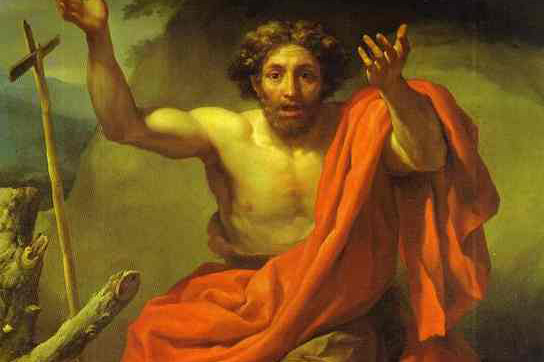
The Second Sunday of Advent usually features the Ministry of St. John the Baptist. He was the Prophet who fulfilled the Office of Elijah of whom it was said: See, I will send the prophet Elijah to you before that great and dreadful day of the Lord comes. He will turn the hearts of the fathers to their children, and the hearts of the children to their fathers; or else I will come and strike the land with total destruction (Mal 4:4-6).

Therefore St. John is a prophet who prepared the people of his time for the coming of Jesus, by summoning them to repentance and opening them to the Kingdom of God in its fullness.

But of course the coming of Jesus for which St. John prepared them has been fulfilled. And thus, for us who ponder John’s office, we need to realize that the coming of Christ for which we must be ready is his Second Coming.

Who is “John the Baptist” for us? Surely it is the Church, which Christ founded to prepare a people for him and draw us from darkness to light. But of course we experience the Church, not as an abstraction, but more locally in our Bishop, priests and deacons. Further we experience the Church in our parents and catechists. Through them all, the Church fulfills her mission to be a Prophet who prepares us.

And further, if you are prepared to accept it, YOU are also called to be a prophet who prepares others for the coming of Christ as judge. You do not work independent of the Church (at least you better not!). Rather the Church works through you.

The Catechism of the Catholic Church speaks of our prophetic office in the following way:

[the baptized] must profess before men the faith they have received from God through the Church” and participate in the apostolic and missionary activity of the People of God. (CCC, 1270)

So, we have an obligation to evangelize and to be prophets in this world who prepare others for judgement day. We are called to go before the Judge who is to follow and prepare the hearts of people we know.

But how can we do this effectively? What are the some of the essential ingredients of being a prophet who prepares? The ministry of St. John the Baptist in today’s Gospel provides four principles for prophets who prepare.  Let’s look at the elements that are displayed

I. Poise . Poise here refers to balance. The text says, John the Baptist appeared, preaching in the desert of Judea and saying, “Repent, for the kingdom of heaven is at hand!” Note the content of John’s preaching is twofold. He first says, “Repent!” And then adds, “For the Kingdom of God is at hand.”

Here is a balance to get right. The preacher and the prophet must speak frankly of sin and call people to repentance. But the prophet must also speak of the grace available to conquer that sin and the Good News that the Kingdom of Heaven is now open and available. Hence John the Baptist is willing and able to declare the reality of sin and the necessity of repenting from it. But he is also able to declare the availability of the Kingdom wherein one is able to find the grace to overcome sin.

Too many preachers, catechists and even parents lack this balance. In the past, some argue, that sermons were all fire and brimstone. Today it is too often, the steady diet “God is love” with little reference to the need to repent. This is one explanation of why our Churches have emptied in the past 40 years.

This is because the good news only has relevance and significance if the bad news is first understood. If you don’t know the bad news, the good news is no news. To illustrate, suppose you are looking at a newspaper and see a headline that announces a cure for a deadly disease has been found. But what if you have never heard of this disease and don’t even know you have it? It is not likely you will read the article, it will be only of passing interest. But, now suppose you know of this disease, and that you have it, and you know others who have it. Suddenly this headline jumps out, is very relevant, causes joy and is an article to read very carefully by you! Because you know very personally the bad news of the disease, the good news of the cure now means everything to you.

It is the same with the Kingdom. We have to know the bad news of sin in a very personal and profound way if the Good News of Salvation is going to be appreciated. But in the Church we have lately soft-pedaled the bad news. Thus the Good News is irrelevant to people and the medicine of the cure is pointless. Why pray, receive sacraments or read scripture if everything is really fine? Why bother coming to Church for all that stuff? Hence our Churches have emptied, in part, due to a lack of the proper balance of repent and the Kingdom of God is at hand.

If we are going to be powerful and effective prophet we are going to have to be able to speak frankly to others about the reality of sin and balance it with the joyful announcement of the Kingdom with its grace and mercy now being available. Prophecy must be proper by having the right balance.

Notice the St. John the Baptist wasn’t messing around and sugar-coating things. He was explicit, we need to repent or else. He spoke of a coming day of wrath and judgement for those who did not do so. He spoke of the axe being laid to the root of the tree. He spoke of fiery judgment, and unquenchable fire. And to the self-righteous he was not afraid to equate their pride with that of the ancient serpent, calling them vipers.

Too many are afraid to speak like this today, and therefore lack the balance necessary for a true preparing prophet. St. John joyfully announced the in-breaking of the Kingdom of God and the coming of the Messiah, but he spoke of repentance as the door of access. Do we have this balance, or do we preach mercy without repentance?

II. Product –  The text says, At that time Jerusalem, all Judea, and the whole region around the Jordan were going out to him and were being baptized by him in the Jordan River as they acknowledged their sins.

Here is the desired product of powerful prophecy: repentance unto salvation for all who believe. Prophets want to save people by drawing them to God’s grace, this is goal, the salvation of souls! Preparing prophets do not seek merely to scare people, they seek to prepare people.

To repent, to come to a new mind and heart by God’s grace, is to be prepared. This is the central work of the prophet who prepares and thus works to save others: repentance is unto salvation.

St. Paul wrote to the Corinthians about this aspect of prophecy and preaching. He is aware that he grieved some of them due to a strong rebuke he gave the community (cf 1 Cor 5) but he is glad that it produced a godly sorrow which in turn produced repentance and holiness. He also distinguishes between godly sorrow and worldly sorrow:

Even if I caused you sorrow by my letter, I do not regret it. Though I did regret it—I see that my letter hurt you, but only for a little while—yet now I am happy, not because you were made sorry, but because your sorrow led you to repentance. For you became sorrowful as God intended and so were not harmed in any way by us. Godly sorrow brings repentance that leads to salvation and leaves no regret, but worldly sorrow brings death. See what this godly sorrow has produced in you: what earnestness, what eagerness to clear yourselves, what indignation [at sin], what alarm, what longing, what concern, what readiness to see justice done…..By all this we are encouraged. (2 Cor 7:8-13)

An old priest once told me, “Never think you have preached well unless the line to the confessional is long.” Good preaching, among other things produces repentance unto salvation. It may cause some to be mad or sad, but if it is proper prophecy, it will produce a godly sorrow and the madness and sadness gives way to gladness. Here is the expected product of proper preaching: repentance unto salvation.

III. Purity – The text says: When [John] saw many of the Pharisees and Sadducees coming to his baptism, he said to them, “You brood of vipers! Who warned you to flee from the coming wrath? Produce good fruit as evidence of your repentance. And do not presume to say to yourselves, ‘We have Abraham as our father.’ For I tell you, God can raise up children to Abraham from these stones. Even now the ax lies at the root of the trees. Therefore every tree that does not bear good fruit will be cut down and thrown into the fire.

John the Baptist had no fear of people’s opinion and would not compromise the message based on his audience. All the credentials of the temple leaders did not impress him. Neither did the status of the Jews as the chosen people cause him to soften his message. John had no fear of human opinion, no need for the good favor of others, especially the rich and powerful.

Because of this his preaching had purity. He did not compromise the message out of fear or the need to flatter others. He spoke boldly, plainly and with love and desire for the ultimate salvation of all. If that called for strong medicine he was willing to do it.

The ancient martyrs went to their death proclaiming Christ but many of us moderns are afraid even of someone raising their eyebrows at us. Fear is a great enemy of powerful prophecy for by it many remain silent when they should speak. The fear of what other people may think causes many to compromise the truth and even sin against it. This sort of fear has to go if our prophecy is going to have the purity necessary to reach the goal.

IV. Person –  The text says, I am baptizing you with water, for repentance, but the one who is coming after me is mightier than I. I am not worthy to carry his sandals. He will baptize you with the Holy Spirit and fire. His winnowing fan is in his hand. He will clear his threshing floor and gather his wheat into his barn, but the chaff he will burn with unquenchable fire.

John’s audience and disciples were fascinated by him, and drawn by his charisma. But as they want to know more about him, John talks instead about Jesus. That’s the message, “Jesus, not me.” If we are going to be powerful prophets the message has got to be about Jesus, not about me and what I think. We are not out to win an argument and boost our own egos. We are not out to become famous. We are about Jesus Christ and his gospel, his message, his truth. John said of Jesus, “He must increase, I must decrease” (John 3:30). A prophet speaks for the Lord, not himself. A prophet announces God’s agenda not his own. A prophet is about Jesus.

Here then are four Principles of Powerful Prophecy: Poise, Product, Purity, Person.

You are now a preparing prophet whom the Lord seeks. Someone was John the Baptist for you. Someone brought you to Christ. Thank God for that individual or those individuals. But you too are to be John the Baptist for others. Learn from John, apply his principles and make disciples for Jesus Christ.