The Conditions for Mortal Sin are Not that Hard to Meet

Recent and public conversations about the nature of mortal sin, the reception of Holy Communion and worthiness to receive the Eucharist have shown how some in our culture, even if they accept the concept that sin could be mortal, so limit the possibility of committing it that it barely exists at all in their moral landscape. This is usually done by distorting or blurring the three conditions under which sin is considered mortal. Briefly stated these conditions are:

Mortal sin is: 

        • sin whose object is grave matter
        • which is also committed with full knowledge
        • and deliberate consent. (Catechism of the Catholic Church # 1857)

In all three of these conditions, there is a tendency to endlessly raise questions and doubts as to exactly what each phrase means and demand an exactitude without which we refuse to accept that a mortal sin has been committed. To some degree we humans love to cultivate uncertainty for this helps us remain undecided  and avoid the moral judgement of our actions, which is required of us as free moral agents.  And thus we think, “Well, who’s to say? There are a lot of opinions out there. What exactly do we mean by ‘deliberate consent’ and ‘full knowledge’?” And we forever delay pondering the answers to such things by using our moral reasoning and coming to a mature and adult faith. But God who gave us an intellect and a will is not pleased by this constant shrugging and delaying of the examination of conscience that is our responsibility and dignity to make.

As to grave matter, some insist on having an exact list of sins that are grave. And while some sins are obviously so (e.g. killing the innocent, adultery), other sins are affected by the circumstances. For example, if I steal a pen from work, it is  wrong, but is not a mortal sin because it is a very small matter. However, if I steal millions of dollars, the matter is grave due to the amount. But even if I steal a small amount from a poor man who has little on which to survive, it is mortal due to serious harm I cause him. Insisting on an exact “list of mortal sins” lacks moral sophistication, is persnickety and seems more rooted in refusal to engage in an honest moral reflection that accepts that grave matter is an ever-possible reality for us in this world of sin and temptation. Sincere moral reflection reveals that we can say and do things that cause serious harm to us, to others, and to our relationship with God and the truth. Further, just because we don’t like that the Scriptures and the Church teach that certain things are sinfully wrong, does not give us the right to us to jettison the sound teaching of the Lord. We must not call good or no big deal what God calls sin no matter how much the world celebrates or makes light of it. Once it is made clear to us  what God teaches we are obliged to follow it and confess any violation of it in our lives.  To do otherwise is pridefully disobedient

As to full knowledge, this does not mean we have to possess a doctoral degree in moral theology. Too often we like to pretend we don’t know things that, deep down we do know. St. Paul lamented to St. Timothy the human tendency to accumulate for ourselves teachers who say what our itching ears want to to hear. But he also states the sinful reason for this: “they do not tolerate sound doctrine.” Deep down, in the human conscience, the voice of God echoes; God has written his truth in the hearts and minds of us all. This grasp of fundamental moral principles St. Thomas calls synderesis (De Veritate q. 17, art 1-5). Almost every recent study has shown that even the youngest children and infants have a basic sense of right and wrong, justice and fairness, and love vs. cruelty. And though our moral knowledge and formation grows as we age, basic principles still speak in our souls and we are responsible to heed this voice. Certain moral situations can get complex (e.g. bioethics) and advice may be needed, but pleading ignorance or “lack of sufficient knowledge” in most cases is rooted more in avoidance than in truth. Even in a world filled with foolish teachers, deep down we know what we are doing in most cases and we are responsible for what we know.  All the wrath of the world directed at the moral vision of the Scriptures and the Church is a pretty good indicator that we have touched a nerve when we point to what is ultimately obvious under all the rationalizations and distortions of this age. If one is sincerely ignorant of teachings, that is a mitigating factor, but too much ignorance today is indulged and we far-too-easily appeal to it.

As to deliberate consent, the Catechism uses a phrase here at slight variance from the common expression: “full consent of the will.” This is good since some get lost in the word “full.” Our human wills are often beset with conflicting intentions and influences. Seldom is our will, or the consent we make by it, free from any temptation or pressure to do what is wrong. “Full” consent or total freedom unaffected by feelings, passions, external pressure, emotional disorders, is hard to come by in many if not most matters. This does not mean that we are never free enough to commit mortal sin.  Deliberate consent implies that there is time to think or “deliberate” on a matter and that our will is not significantly impaired. While passions, bad habits, compulsion or immaturity can lessen guilt at times, we ought not easily suppose that we or others are without sufficient or deliberate consent to commit mortal sin. But we often do just that, tending to talk out of both sides of our mouth today. On the one side we boast of our freedom and that nobody will tell us what to do. On the other side, we bemoan how we are not responsible for what we have done since “our mother dropped us on our head when were two,”or that “the devil made us do it,” or that it’s just too hard to do what is right.  This diminishes the dignity of the human person since an essential quality of being human is that we have free will and reason. Therefore we can and do act deliberately and are responsible for what we do. Shirking responsibility because we were tempted and found it “difficult” to resist likely points more to sloth, despair and/or a stubborn resistance to self mastery through grace.

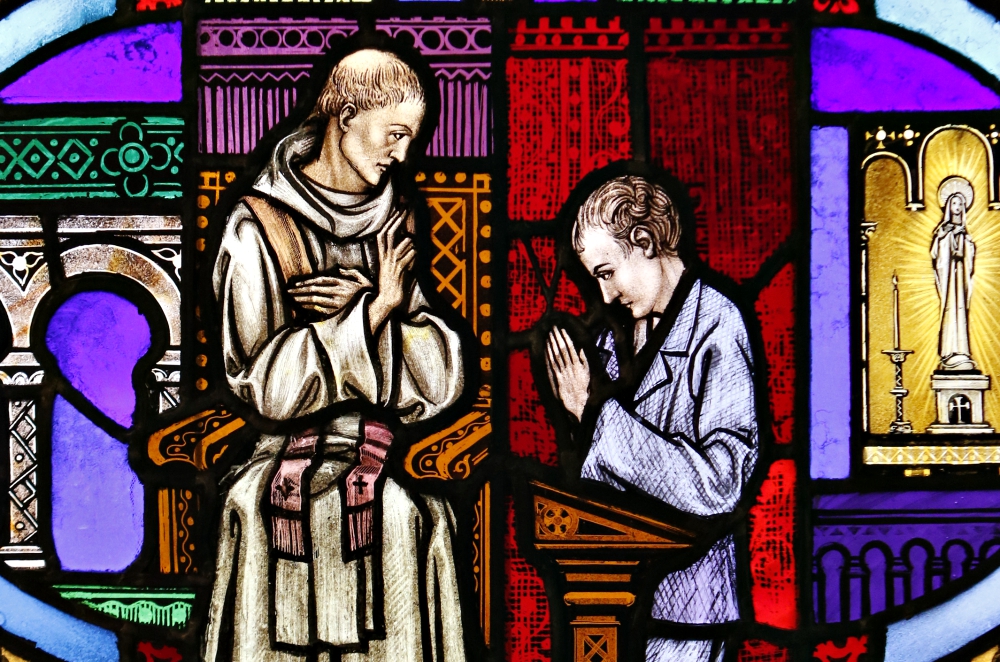
In all three of these conditions for mortal sin, we ought not be a judge in our own case. While we are responsible to personally deliberate and and properly inform our conscience, we should seek the advice and tribunal of the confessional. Knowledge of Scripture and consultation with the Catechism and reputable advisors should also be an on-going work in our lives. Our conscience is not its own source of authority, it must be formed so that we think with the Church and her revealed doctrines and are submitted to all that the Holy Catholic Church teaches and proclaims to be revealed by God.

It is a sad truth today that some clergy have misled God’s people and they will answer to God for every bit of it. However, the faithful need to remember that the magisterium (the teaching authority) of the Church is not limited to clergy alive today, or merely to documents written recently. The magisterium is the sum-total of what has been formally taught down through all the history of the Church. In addition to the Catechism, Catholics do well to have a copy of Fundamentals of the Catholic Dogma by Ludwig Ott which is a good summary of Catholic Dogma and Doctrine.

Remember we cannot forever delay coming to a balanced and healthy understanding of mortal sin and its conditions by endlessly raising questions and doubts as to exactly what each phrase means. We are not assigned an impossible task by the Lord and his warnings in His Scriptures about the danger of persisting in mortal sin are not empty teachings that apply to almost no one. His teachings are given to us because mortal sin is a clear and present danger. Thanks be to God, his remedies are also clear and ever-present: repentance and Holy Confession.  When in doubt, don’t argue about whether this or that condition have been for mortal sin, go to confession. Humility is always better than being defensive and argumentative. And, even if we occasionally err on the side of a little scrupulosity, that won’t kill us and a good confessor can guide and reassure us.

I will post at least two more columns in the next few days on mortal sin. One will explore what mortal sin does at its core, and the other will develop something of a Biblical catalogue of mortal sin. Stay tuned.

Meanwhile, Go to Confession!

In this video, note how the world says “No More excuses” about worldly goals and physical fitness. A Key line says, “Get rid of the debate… You Know the right decision to make.” Well why not in the spiritual life?

https://youtu.be/mjHWRPryFsM

 

Every Round Goes Higher – A Homily for the Second Sunday of Lent

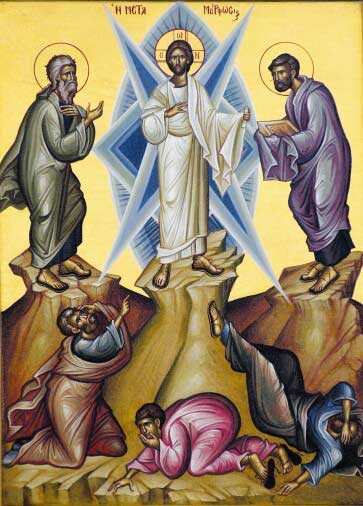
The second Sunday of Lent always features the Transfiguration. This is because we are following the Lord on His final odyssey to Jerusalem, and this journey up Mt. Tabor was one of His stops (with Peter, James, and John).

It is commonly held that Jesus did this to prepare His apostles for the difficult days ahead. There’s a line from an old spiritual that says, “Sometimes I’m up, sometimes I’m down, sometimes I’m almost on the ground … but see what the end shall be.” This is what the Lord is doing here: He is showing us what the end shall be. There is a cross to get through but there is glory on the other side.

The purpose in placing the account of the Transfiguration here is that it helps describe the pattern of the Christian life, which is the paschal mystery. We are always dying and rising with Christ in repeated cycles as we journey to an eternal Easter (cf 2 Cor4:10). This Gospel shows forth the pattern of the cross: the climb, the rising, and the glory of the mountaintop. Then it is back down the mountain again only to climb another one (Golgotha), and through it find another glory (Easter Sunday). Let’s look at today’s Gospel in three stages.

I The Purpose of Trials Jesus took Peter, James, and John and led them up a high mountain apart by themselves.

We often pass over the fact that they had to climb that mountain, no easy task.

Anyone who has been to Mt. Tabor can attest to its altitude: almost 2000 feet. Ascending it likely took the better part of a day and was probably somewhat dangerous. Looking down from the top on the Jezreel Valley (a.k.a. Megiddo or Armageddon) provides a view similar to what one would see out an airplane window.

So we have here a symbol of the cross and of struggle. A climb up the rough side of the mountain was likely exhausting, testing their strength.

I have it on the best of authority that as they climbed they were singing gospel songs like this one: “I’m comin’ up on the rough side of the mountain, and I’m doin’ my best to carry on!” Another song says, “My soul looks back and wonders how I got over!” Yet another says, “We are climbing Jacob’s ladder, every round goes higher, higher.”

This climb reminds us of life. Often we have had to climb, to endure, to have our strength tested. Perhaps it was the climb of earning a college degree. Perhaps it was the climb of raising children or building a career. What of real value do you have that did not come at the price of a climb, of effort and struggle?

Most of us know that although the climb is difficult, there is glory at the top if we but endure. Life’s difficulties are often the prelude to success and greater strength.

Although we might wish that life had no struggles, it would seem that the Lord intends them for us, for the cross alone leads to true glory. Where would we be without some of the crosses in our life? Let’s ponder some of the purposes of problems:

God uses problems to DIRECT us. Sometimes God must light a fire under you to get you moving. Problems often point us in new directions and motivate us to change. Is God trying to get your attention? Sometimes it takes a painful situation to make us change our ways. Proverbs 20:30 says, Blows and wounds cleanse away evil, and beatings purge the inner most being. Another old gospel song speaks of the need for suffering to keep us focused on God: “Now the way may not be too easy, but you never said it would be. ‘Cause when our way gets a little too easy, you know we tend to stray from thee.” Yes, God sometimes uses problems to direct our steps to Him.

God uses problems to INSPECT us. People are like tea bags: if you want to know what’s inside them, just drop them into hot water! Has God ever tested your faith with a problem? What do problems reveal about you? Our problems have a way of helping to see what we’re really made of. I have discovered many strengths I never knew I had through trials. There is a test in every testimony and trials have a way of purifying and strengthening our faith as well as inspecting it to see whether it is genuine. 1 Peter 1:6 says, In this you greatly rejoice, though now for a little while you may have had to suffer grief in all kinds of trials. These trials are only to test your faith, to see whether or not it is strong and pure.

God uses problems to CORRECT us. There are some lessons we learn only through pain and failure. When you were a child, it’s likely that your parents told you not to touch a hot stove, but you probably really learned by being burned. Sometimes we only learn the value of something (e.g., health, money, a relationship) by losing it. Scripture says, It was good for me to be afflicted so that I might learn your decrees (Psalm 119:71-72). Before I was afflicted, I strayed. But now I keep you word (Psalm 119:67).

God uses problems to PROTECT us. A problem can be a blessing in disguise if it prevents you from being harmed more seriously. A man was fired for refusing to do something unethical that his boss had asked him to do. Although his unemployment was a problem, it saved him from being sent to prison when management’s actions were finally discovered. In Genesis 50:20, Joseph speaks to his brothers: You intended to harm me, but God intended it for good to accomplish what is now being done, the saving of many lives.

God uses problems to PERFECT us. When responded to properly, problems are character builders. God is far more interested in your character than your comfort. Romans 5:3 says, We can rejoice, too, when we run into problems and trials, for we know that they are good for us they help us learn to be patient. And patience develops strength of character in us and helps us trust God more each time we use it until finally our hope and faith are strong and steady. Peter 1:7 says, You are being tested as fire tests gold and purifies it and your faith is far more precious to God than mere gold; so if your faith remains strong after being tried in the fiery trials, it will bring you much praise and glory and honor on the day of his return.

So here it is, the cross symbolized by the climb; but after the cross comes the glory.

II The Productiveness of Trials And he was transfigured before them, and his clothes became dazzling white, such as no fuller on earth could bleach them. Then Elijah appeared to them along with Moses, and they were conversing with Jesus. Then Peter said to Jesus in reply, “Rabbi, it is good that we are here! Let us make three tents: one for you, one for Moses, and one for Elijah.” He hardly knew what to say, they were so terrified. Then a cloud came, casting a shadow over them; from the cloud came a voice, “This is my beloved Son. Listen to him.”

All the climbing has paid off. Now comes the fruit of all that hard work. The Lord gives them a glimpse of glory! They get to see the glory that Jesus has always had with the Father. He is dazzlingly bright. A similar vision from the Book of Revelation gives us more detail:

I turned around to see the voice that was speaking to me. And when I turned I saw seven golden lampstands, and among the lampstands was someone like a son of man, dressed in a robe reaching down to his feet and with a golden sash around his chest. The hair on his head was white like wool, as white as snow, and his eyes were like blazing fire. His feet were like bronze glowing in a furnace, and his voice was like the sound of rushing waters. In his right hand he held seven stars, … His face was like the sun shining in all its brilliance. When I saw him, I fell at his feet as though dead. Then he placed his right hand on me and said: “Do not be afraid. I am the First and the Last. I am the Living One; I was dead, and now look, I am alive for ever and ever! And I hold the keys of death and Hades” (Rev 1:12-17).

Yes, all the climbing has paid off. Now comes the glory, the life, the reward for endurance and struggle. Are you enjoying any of the fruits of your crosses now? If we have carried our crosses in faith, it has made us more confident, stronger. Some of us have discovered gifts, abilities, and endurance we never knew we had. Our crosses have brought us life! St. Paul said, that this momentary affliction is producing for us a weight of glory beyond all compare (2 Cor 4:14). He also said, For I consider that the sufferings of this present time are not worth comparing with the glory that is to be revealed to us (Rom 8:18).

So here is the glory that comes after the climb. Here is the life that comes from the cross.

III. The Pattern of Trials – Suddenly, looking around, they no longer saw anyone but Jesus alone with them. As they were coming down from the mountain, he charged them not to relate what they had seen to anyone, except when the Son of Man had risen from the dead.

Although Peter wanted to stay, Jesus makes it clear that they must go down the mountain for the time being and walk a very dark valley to another hill (Golgotha); for now, the pattern must repeat. The cross has led to glory, but more crosses are needed before the final glory. An old spiritual says, “We are climbing Jacob’s ladder … every round goes higher, higher, soldiers of the cross!

This is our life. Always carrying within our self the dying of Christ so also that [the rising of Christ], the life of Christ may be manifest in us (cf 2 Cor 4:10).

There are difficult days ahead for Jesus and the Apostles, but the crosses lead to lasting glory. This is our life too. The paschal mystery is the pattern and rhythm of our life.

Here is an excerpt from the song “We Are Climbing Jacob’s Ladder.” The song repeats, “… every round goes higher, higher.” One can almost imagine a spiral staircase as the rounds get pitched higher musically. This is the pattern of our life: we die with Christ so as to live with Him. Each time we come back around to the cross, or back around to glory, we are one round higher and one level closer to final glory.

Flee to the Truth When Tempted – A Homily for the First Sunday of Lent

The Gospel today says that Jesus was tempted by the devil in the desert. Hebrews 4:15 also affirms, For we do not have a high priest who cannot sympathize with our weaknesses, but one who has been tempted in all things as we are, yet without sin.

How exactly a divine person, with a sinless human nature, experiences temptation is somewhat mysterious, and yet the text affirms that He does. A Lenten antiphon from the Breviary teaches that He did this, or allowed this, for our sake: Come, let us worship Christ the Lord, who for our sake endured temptation and suffering (Invitatory Antiphon for Lent). Hence, even without pondering too deeply the mystery of how He was tempted or experienced it, we can still learn what Jesus teaches us about how to endure temptation and be victorious over it. (More on the question of how Christ was tempted is available here.)

Before we look at each temptation, we might learn a few general aspects of what the Lord teaches us in electing to endure temptation.

Temptation and Sin – The fact that the Lord is tempted yet did not sin tells us that there is a distinction to be made between temptation and sin. Too often the very experience of temptation makes us feel sinful, as if we have already sinned, but that is not necessarily the case. Jesus, who never sinned, experienced temptation. Therefore, experiencing temptation is not to be equated with sin. One of the tactics of the devil is to discourage us into thinking that way. Some of our past sins may influence the degree to which we feel tempted, but we need not conclude that we have already sinned, or newly sinned, merely because we are tempted. Rather than to feel shame and run from God, we ought to run to Him with confidence and seek his Help.

Temptation and Scripture – Notice that Jesus responds to every temptation with Scripture. This is not to be equated with proof-texting or pronouncing biblical slogans. Rather, it indicates that Jesus was deeply rooted in Scripture, in the wisdom of the Biblical vision. In rebuking temptation in this way, Jesus is teaching us to do the same. It will not be enough for us to know a few biblical sayings, but to the degree that we are deeply rooted in the wisdom of God’s truth available to us through Scripture and the teachings of the Church, we are able to strongly rebuke unholy, worldly, or fleshly thinking. Half the battle in defeating temptation is knowing instinctively its erroneous vision. Having our minds transformed by the teachings of Scripture and the Church is essential in fighting temptation. Scripture says, Do not be conformed to this world, but be transformed by the renewal of your mind, that by testing you may discern what is the will of God, what is good and acceptable and perfect (Romans 12:2). Ephesian 6:17 speaks of the Word of God as the sword of the Spirit, with which we are properly armed for spiritual warfare. Thus, we are taught here by the Lord to be deeply rooted in His Word.

Temptation and Strength – Jesus is tempted three times, after which the devil leaves Him. In a certain way, the spiritual life is like the physical life, in that we grow stronger through repeated action. After lifting weights repeatedly, our physical strength increases and we are able to overcome increasingly difficult challenges. It is the same with the spiritual life. An old gospel song says, “Yield not to temptation, for yielding is sin. Each victory will help you, some other to win.” Scripture says, Resist the devil and he will flee (James 4:7). We need not conclude from this that Jesus needed to be strengthened (He did not) in order to understand that He is still teaching us what we need to do. The battle against temptation is not a “one and you’re done” scenario, but an ongoing battle in which each victory makes us stronger and the devil more discouraged. As we grow stronger, the devil eventually stops wasting his time tempting us in certain areas. At times the battle may weary us, but in the long run, it strengthens us. Jesus illustrates this with his three-fold battle with Satan.

Having review a few general principles, let’s look at the three temptation scenes.

Scene I: The Temptation of PassionsAt that time Jesus was led by the Spirit into the desert to be tempted by the devil. He fasted for forty days and forty nights, and afterwards he was hungry. The tempter approached and said to him, “If you are the Son of God, command that these stones become loaves of bread.” He said in reply, “It is written: One does not live on bread alone, but on every word that comes forth from the mouth of God.”

Hunger, as a desire, is a passion. It is not evil per se, for without it we would perish. The same is true of other natural desires for things like life, drink, and procreation (sexuality). We have other sorts of passions such as anger, love, joy, aversion, hatred, hope, despair, fear, and courage. Of themselves, these passions are neither good nor bad. Passions become bad only in relation to their object or insofar as we allow them to become inordinate.

Hence there is nothing wrong with Jesus as He experiences hunger. What the devil tries to do is to draw Jesus into the sin of yielding to His hunger and using His power inappropriately. Remember, Jesus had been led into the desert by the Spirit in order to fast and pray. This is His call. His hunger is real and without sin, but now He is tempted to set aside His call and to yield to His hunger in an inappropriate way, by rejecting his call to fast. Jesus is tempted to serve Himself. He obviously has the power to turn stones into bread, so a second temptation is to use His power inappropriately, to gratify and serve Himself rather than to glorify His Father.

What about us? We have passions, too. They are not wrong in themselves, but we can allow them to become inordinate or gratify them in unlawful ways. Remember that we, like Jesus, are called to fast. Our fast is from things like sin, injustice, unrighteousness, sexual impurity, unlawful pleasures, and excessive indulgence. We have it have it in our power to choose to reject our fast and to gratify our desires by rejecting our call to serve God. The devil tempts us to reject our call and to use our power to gratify our passions by lying, cheating, stealing, venting our anger, fornicating, and being gluttonous or greedy.

Jesus has recourse to God’s Word: Man does not live on bread alone, but on every Word that comes from the mouth of God. Jesus tells Satan that He would rather live and be sustained by the Word than by food; His food is doing the will of His Father.

What about us? Can we say, Neither have I gone back from the commandment of his lips; I have esteemed the words of his mouth more than my necessary food (Job 23:12)? Can we say that God’s Word is more important to us than my desires for satisfaction, sex, self-preservation, popularity, worldly joys, power, prestige, or possessions? Can we say that our strongest desire is for God and the things awaiting us in Heaven and that we will gladly forsake everything for it?

Scene II. The Temptation of PresumptionThen the devil took him to the holy city, and made him stand on the parapet of the temple, and said to him, “If you are the Son of God, throw yourself down. For it is written: He will command his angels concerning you and with their hands they will support you, lest you dash your foot against a stone.” Jesus answered him, “Again it is written, You shall not put the Lord, your God, to the test.”

It is important to trust God, but this is not an invitation to act recklessly. There will come a time when Jesus will throw himself down on the cross with the complete assurance that the Father will raise Him. He has this command from His Father. But now is not that time and Jesus must act to preserve and protect His life so that he can accomplish His full mission.

Presumption is a terrible problem today. Too many people think that they can go on sinning and that there will be, or should be, no consequences. This is true in both worldly and spiritual ways. Too many engage in risky and ruinous behavior and think, “I’ll be OK. I’ll escape. I won’t be a statistic. I won’t get caught. I won’t lose my job.” Many think, “I can use drugs without becoming addicted. I can have evil friends and still stay good and live morally. I can skip school and still get good grades. I can be promiscuous and won’t get a disease or become pregnant. I can drive recklessly and won’t have an accident. I can be disrespectful and still command respect.” In all this people are simply “cruisin’ for a bruisin’.”

Regarding the moral presumptiveness of thinking that no matter what we do, Heaven will still be the result, the Lord warns,

Say not I have sinned, yet what has befallen me? For the Lord bides his time. But of forgiveness be not overconfident adding sin upon sin. … Delay not your conversion to the Lord, put it not off from day to day for mercy and justice are alike with him (Sirach 5:4).

Do not be deceived; God is not mocked, for whatever a man sows, that he will also reap. For he who sows to his own flesh will from the flesh reap corruption; but he who sows to the Spirit will from the Spirit reap eternal life. And let us not grow weary in well‑doing, for in due season we shall reap, if we do not lose heart (Gal 6:7).

For they have sown the wind, and they shall reap the whirlwind. (Hosea 8:7).

But my people would not listen to me; Israel would not submit to me. So I gave them over to their stubborn hearts to follow their own devices. If my people would but listen to me, if Israel would follow my ways, how quickly would I subdue their enemies and turn my hand against their foes! (Psalm 81:11)

God clearly warns us that sin sets us on a path that hardens our heart and makes our final conversion increasingly unlikely. In this Lenten season, He is pleading with us to be serious about sin and its consequences. Sin renders us not only unfit for Heaven, but incapable of entering it.

A bad idea – Presuming that everything will be fine is not only a poor strategy, it is a snare of the devil, who seeks to cloud our mind with false hope and unreasonable expectations. Jesus has a very clear message for the devil and for any of us who would engage in presumption: Don’t you dare put the Lord your God to the test in this way. Obey Him out of love, but do not put Him to the test. Yes, presumption is a very foolish idea.

Scene III. The Temptation of Possessions Then the devil took him up to a very high mountain, and showed him all the kingdoms of the world in their magnificence, and he said to him, “All these I shall give to you, if you will prostrate yourself and worship me.” At this, Jesus said to him, “Get away, Satan! It is written: The Lord, your God, shall you worship and him alone shall you serve.”

Here is the obvious temptation of worldly possessions. Everything, everything, is offered to Jesus in exchange for a little worship of the devil. Tt may seem strange to us that having an abundance of things would be linked to worshiping the devil and forsaking God, but Scripture attests to this connection elsewhere:

  1. Adulterous people! Do you not know that friendship with the world is hatred toward God? Whoever therefore wants to be a friend of the world makes himself an enemy of God (James 4:4).
  2. Do not love the world or anything in the world. If anyone loves the world, the love of the Father is not in him (1 John 2:15).
  3. No one can serve two masters. Either he will hate the one and love the other, or he will be devoted to the one and despise the other. You cannot serve both God and Money (Matt 6:24).

This is all pretty blunt. We want to have both, but the Lord is clear in rebuking this temptation by insisting that we must serve God alone, adore God alone. The inordinate love of this world causes us to hate God more and more and to bow before Satan in order to get it. Don’t kid yourself. If this position seems extreme to you then you are calling God an extremist. The Lord is warning us that there is a major conflict here that steals our heart. For where a man’s treasure is, there is his heart (Matt 6:21). It is not wrong to desire what we really need to live, but our wants get us into trouble. The desire for riches ruins us and makes God seem as a thief rather than a savior. This is a very severe temptation and Jesus rebukes it forcefully. Him along shall you serve.

We need to beg God for single-hearted devotion to him. The Book of Proverbs has a nice prayer in this regard: Give me neither poverty nor riches, lest in my poverty I steal or in my riches I say “Who is the Lord?” (Prov 30:8-9, gloss)

In the end, temptations are real; we either accept God’s grace to fight them or we are going down. The Lord wants to teach us today about the reality of temptation and how to fight it, by His grace. Remember, the battle is the Lord’s and no weapon waged against us will prosper if we cling to His grace. In the end, the choice is clear: either tackle temptation (by God’s grace) or risk ruination (by Satan’s “ministrations”).

This song says,

“Yield not to temptation, for yielding is sin. Each victory will help you, some other to win. Fight valiantly onward. Evil passions subdue. Look ever to Jesus, He will carry you through. Ask the Savior to help you, comfort strengthen and keep you; He is willing to aid you, He will carry you through.”

Ash Wednesday Breaks All the Rules of Modern Churchthink

The Word for Lent is Repent. Metanoiate, the Greek Word for repent, means more literally, “come to a new way of thinking.” Here then is a second installment in my proposed Lenten series challenging us to think differently and see things in a new or differently ways from the common zeitgeist.

Modern Evangelization methods and parish “mission and vision statements” seem almost exclusively focused on staying “positive.”  Keywords include: welcoming, inclusion, and diversity.  Yes indeed, come to our lovely parishes, we are a welcoming, embracing and joyful faith family! or so the sayings go. Still-shrinking numbers suggest most people aren’t buying it and don’t find the vision compelling.

And then comes Ash Wednesday, a wildly popular day that isn’t even a Holy Day of Obligation, and it breaks every rule of the typically modern parish plan. Numbers aren’t just slightly higher on Ash Wednesday, they are remarkably higher.

And what is our message (if we are faithful to it)? Simply this: “Repent, you are going to die.” And while you’re at it, fast, pray and give alms.  We further alarm the congregants with messages from the Prophet Joel and St. Paul that give  urgent admonition that we should weep and fast on account of our sins, that we must be reconciled to God. And then we smudge soot on their foreheads.

It’s pretty humbling isn’t it? The usual Catholic fare in too many parishes looks and sounds nothing like this. Sin is soft pedaled, calls to repentance and conversion are shunned as non-welcoming and even hateful, and any talk of death, judgement or the possibility of Hell is just unthinkable. Maybe Ash Wednesday teaches us that we have things to learn!

There is very little “gravitas” evident in many modern parish settings. Hence, there is often little respect given to what we do. Frankly the problem isn’t what we do, it is what we fail to do. Cheerfulness has its place but, if you don’t know the bad news, the good news is no news. And hence, we fail to explain the very reason for our existence. We’re running a spiritual hospital but through our widespread silence about sin we imply there is no real illness or dangerous injuries to avoid. So who needs our hospital?  Our widespread modern cheerfulness is  not a compelling message because deep down most people know they’re in rough shape but the appointed doctors are more interested in attracting patients than healing them.

But then comes Ash Wednesday when, for at least a minute, the doctor (pastor) is willing to say, “You’ve got to be more serious and get with the program since your death will not tarry.” And this commands the respect that so much of our other messages fail to summon. It is not the cheerful, welcoming, inclusive and diverse message we are told will fill the pews, but we do well to heed the lesson motivation is more complicated than just seeming appealing. Commanding respect through a serious and necessary message is more important than many realize. Jesus was no clown attracting people to some circus entertainment. He knew how to look crowds in the eye, urgently summon them to repent and be serious about the difficult task of being true disciples. Death and judgment awaited them and there were but two outcomes: Heaven or Hell. Something of Ash Wednesday touches this serious side of Jesus that we have too easily cast aside.

Visions in Lent: Family Life As a Seen in a Rock Tumbler.

Most Lenten reflections center on fasting or abstinence along with prayer and almsgiving. However, the word “repent” in our English bibles translates the Greek word “Metanoiate” which most literally summons us “to change (meta) the way we think (noiate).” With this in mind, I would like to post some articles this Lent that help us to think of and see things differently, and in a more helpful way.

Family life is so central to our experience and moral life that I begin by offering a humble picture of it that emphasizes its somewhat tumultuous quality. As we well know, family life can be wonderful, but it can also be challenging and even terrible at times.  We can choose our friends, but seldom can we choose our family. Family is assigned by God and thus, we do well to understand that what we want is not always the same as what we need.

Family members have a way way of keeping us humble. Siblings, especially, are ever present to remind us that we are not all we are “not all that” and that life isn’t just about us. Sadly today, many people have few, if any, siblings and this factor tends to produce a lot more narcissism and idiosyncrasy. But oh, for a few siblings to keep you humble! Parents too can humble us and also encourage us, they can edify us and also cause deep pain. Add to the mix cousins and in-laws of every sort and the mix becomes quite a show. Our families can have all the glory, and all the gorey. Among us there are saints and there are aint’s; there are the mighty oaks of legendary renown and more than a few nuts falling from the same family tree.  Ah family, can’t live with it, can’t live without it.

This Lent we do well to ponder however that even the difficult and trying aspects of family life have a way of helping us. Somehow it all reminds me of a rock tumbler.

Indeed, when I was a kid there was a school geology kit that included a “rock-tumbler” which was meant to teach us how stones can go from being jagged and drab to being smooth, polished and even colorful.  It was a round drum that looked a bit link a cement mixer. Throw in some rocks and various sorts of sand and run it for a few weeks and, shazam, the rocks came out looking beautiful, almost like gems or marble.

And this is all a paradigm or image for family life. We are the rocks and the tumbler represents life with all its twists and turns. The sand is the tuff grit that comes from living in a world that has its fair weather but overall, is a kind of sandstorm of trials and tumult, tensions and disagreements. And so the world turns and we, especially in our families, bump up against each other and face the often-abrasive sands of life. But through it all, our rough edges are chipped away, the sands cause a polish to emerge on each of us. The process is harsh and gorey, but at the end, someone beautiful emerges: the very man or woman God has created us to be. We begin as diamonds in the rough or coarse stones and come forth as beautiful jewels, polished and lightesome.

Hence, even the less desirable aspects of life can ultimately be a blessing for us. Scripture says that “All things work together for good to those who trust the Lord and are called according to His purposes.” (Rom 8:28) So, in marriages, families and parishes, the rough and tumble of human interactions is often permitted by God to smooth us, polish us and beautify us.

This is not to sanctify every problem in family life. There is some abuse that is simply evil and should in no way be considered part of the rough and tumble that helps perfect us.

But in Lent, we do well to see beyond the annoyances of life and the tensions of family, to the greater purposes of God who permits such things for our good. A little less resentment and a lot more acceptance is a good lenten theme.

Metanoiate! Think differently this Lent about the ups and downs of Family life. Thank God even for those gifts in strange packages.


The Cycle of Hatred and Revenge Ends With Me – A Homily for the 7th Sunday of the Year

In today’s Gospel the Lord is teaching us, by His grace, to break the cycle of hatred and retribution. When someone harms me I may well become angry, and in my anger seek to get back at the offender. If I do that, though, then Satan has earned a second victory and brought the anger and retribution to a higher level. Most likely, the one who originally harmed me will then take exception to my retribution and try to inflict more harm on me. And so the cycle continues and escalates. Satan loves this.

Break the cycle. The Lord has dispatched us onto the field to turn the game around and break this cycle of retribution and hatred. The “play” He wants us to execute is the “it ends with me” play.

Don’t play on Satan’s team. To hate those who hate me, to get back at those who harm me, is to work for Satan, to play on his team. Why do that?

To advance the ball for Jesus is to break the cycle of retribution and hatred by taking the hit and not returning it. By loving our enemy, we break the cycle of hate. By refusing retribution, we rob Satan of a double victory.

Recall the words of Dr. Martin Luther King, Jr.:

Darkness cannot drive out darkness; only light can do that. Hate cannot drive out hate; only love can do that. Hate multiplies hate, violence multiplies violence, and toughness multiplies toughness in a descending spiral of destruction. … The chain reaction of evil—hate begetting hate, wars producing more wars—must be broken, or we shall be plunged into the dark abyss of annihilation (From Strength to Love, 1963).

Christ, living in us, wants to break the cycle.

The Necessity of Grace – Recall as well a point made in last Sunday’s reflection: that the antitheses contained in chapter 5 of the Gospel of Matthew are pictures of the transformed human person. Jesus is describing here what happens to a person in whom He has begun to live through the Holy Spirit. The verses are a description more so than a prescription. Jesus is not merely telling us to stop being so thin-skinned, easily offended, and retaliatory. He’s not just telling us to stop hating people. If that were the case, it would be easy for us to get discouraged or to write them off as some impossible ideal. No, the Lord is doing something far greater than just giving us a set of rules. He is describing what will happen to us more and more as His grace transforms us.

With this in mind, let’s look at the particulars in three sections.

I. Regarding Retaliation – The first of the antitheses reads as follows:

You have heard that it was said, “An eye for an eye and a tooth for a tooth.” But I say to you, offer no resistance to one who is evil. When someone strikes you on the right cheek, turn the other one to him as well. If anyone wants to go to law with you over your tunic, hand him your cloak as well. Should anyone press you into service for one mile, go with him for two miles. Give to the one who asks of you, and do not turn your back on one who wants to borrow.

Behind this text is the gift from the Lord of a generous heart. Psalm 118 says, In the ways of your precepts I run O Lord for you have enlarged my heart. It takes a large heart not to retaliate, to go the extra mile, to give alms. The transformed mind and heart that Jesus gives us is like this. It is a big heart, able to endure personal slights and attacks, refuse retaliation, and let go of personal possessions in pursuit of a higher goal.

That said, there are surely many questions that arise out of these sayings of Jesus’. Most of them, however, come from seeing Jesus’ words as a legalistic prescription rather than as a descriptive example. Nevertheless, they are important questions.

  • What does it mean to offer no resistance to injury?
  • Does it mean that there is no place for a criminal justice system?
  • Should police forces be banned?
  • It there no place for national defense or armed forces?
  • Should all punishment be banned?
  • Should bad behavior never be rebuked?
  • Am I required to relinquish anything anyone asks me for?
  • Must I always give money to beggars?
  • Is it always wise to give someone whatever he asks for?
  • Should I agree to accept every task that is asked of me?

To answer some of these questions, we do well to recall that the Lord is speaking to us as individuals. The state, which has an obligation to protect the innocent from enemies within and without, may be required to use force to repel threats. Further, it has an obligation to secure basic justice and may therefore be required to impose punishment on those who commit crimes. This has been the most common Catholic understanding of this passage. The New Testament seems to accept that the state does have punitive powers, to be used for the common good.

But don’t miss Jesus’ main point, which is directed to us as individuals. He testifies that, to the degree that we are transformed, we will not seek to retaliate or avenge personal injuries. Rather, due to our relationship with God the Father, we will be content to leave such matters to God. As Scripture testifies, Beloved, never avenge yourselves, but leave it to the wrath of God; for it is written, “Vengeance is mine, I will repay, says the Lord” (Rom 12:19). Further and even more important, to the degree that Jesus lives in us, we will be less easily offended. This is because our sense of our dignity is rooted in Him, not in what some mere mortal thinks, says, or does.

Jesus goes on to give four examples of what He means by us becoming less vengeful and retaliatory.

  1. When someone strikes you on the right cheek, turn the other one to him as well. In ancient times, striking someone in this manner was a sign of disrespect, just as it would be today. There is an intended humiliation when someone strikes another on the cheek. By turning the other cheek, one would then be struck with the back side of the striker’s hand. This was an even greater indignity in the ancient world! But as a Christian in whom Christ is really living, who can really dishonor me? God is the source of my dignity; no one can take it from me. By this grace, I can let any slight pass, because I have not been stripped of my dignity. The world did not give me my dignity and the world cannot take it away. From this perspective, Jesus is not offering us merely the grace to endure indignity, but the grace not to suffer or experience indignity at all.
  2. If anyone wants to go to the law with you over your tunic, hand him your cloak as well. In ancient times, it was forbidden to take someone’s tunic in pledge for a loan. Thus Jesus would seem to be using this example as a symbol of our rights. There are some people who are forever demanding and clinging to their rights. They clutch their privileges and will not let them go even if the common good would require it. They will go to the law rather than suffer any infringement upon their rights. The true Christian thinks more in terms of duties than rights, more of responsibilities than privileges. All this
    “personal honor” stuff is unimportant when Christ lives in us. To be sure, there are some rights necessary for the completion of our duties or for meeting our basic needs. It is unlikely that Jesus has in mind to forbid this. But as a general rule, Jesus is indicating that we can be freed of obsession over our “rights,” “dignity,” and also our personal possessions. Increasingly, we can be freed of the anger that can arise when someone might even think of touching anything that is “ours.” The more we are detached from earthly possessions, the less we get anxious or angry when these things are somehow threatened or used without our permission, or when our precious “rights” are trampled upon.
  3. Should anyone press you into service for one mile, go with him for two miles. It was legal for a Roman solider to press a person into service for one mile to carry things. Some might be bent out of shape over such indignities. Jesus offers us a generous heart that will go the extra mile. Jesus came as the servant of all; He came to serve rather than to be served. To the degree that He lives in us, we will willingly serve and not feel slighted when someone asks us to do something. Neither will we cop the “Why me?” attitude that commonly afflicts the ungenerous soul. The key gift here is a generous heart, even in situations in which others do not assign work to us fairly or appreciate our efforts sufficiently. This is of little concern for us, because we work for God.
  4. Give to the one who asks of you, and do not turn your back on one who wants to borrow. Many questions arise related to indiscriminate giving. In some cases, it may not be wise thing to give money simply because someone asks. But don’t miss the main point here: when Jesus lives in us, we will be more generous. We will give cheerfully and assist others gladly. We will not get bent out of shape when someone asks us for help. We may not always be able to help, but our generous heart will not begrudge the beggar; we will remain cheerful and treat him or her with respect.

Here, then, is a description of a transformation of the mind and heart. We will view things differently. We will not be so easily bent out of shape, retaliatory, or vengeful. We will be more patient, more generous, less grasping, and more giving. This is what happens when we live in a transformative relationship with Jesus.

II. Radical Requirement – Love your enemy.

You have heard that it was said, “You shall love your neighbor and hate your enemy.” But I say to you, love your enemies, and pray for those who persecute you, that you may be children of your heavenly Father, for he makes his sun rise on the bad and the good, and causes rain to fall on the just and the unjust. For if you love those who love you, what recompense will you have? Do not the tax collectors do the same? And if you greet your brothers only, what is unusual about that? Do not the pagans do the same?

This is the acid test, the hallmark of a true Christian: love of one’s enemy. Note that the Lord links this to being a true child of God. Why? Because God loves everyone and gives gifts of sun and rain to all. If we are a “chip off the old block,” we will do the same. It’s easy to love those who love us, but a Christian is called to fulfill the Law and exceed it.

If Christ lives in us, then we will love even our enemy. Recall that Jesus loved us even when we hated Him and killed Him. Jesus said, Father, forgive them; for they know not what they do (Luke 23:34). Elsewhere in Scripture is written, While we were his enemies we were reconciled to God by the death of his Son (Rom 5:10).

We should be careful not to make love an abstraction. The Lord is talking about a real transformation of our hearts. Sometimes we say silly things like this: You don’t have to like everyone but you have to love them. This turns love into something of an abstraction. God doesn’t just love me; he even likes me. The Lord is talking about a deep love that wills good things for our enemy and even works toward them.

We are called to have compassion, understanding, and even affection for those who hate us and will us evil. We may wonder how this can happen in us. How can we have affection for those who hate us? It can be so when Christ lives His life in us. We will good and do good to them who hate us, just as Jesus did.

It is also important not to sentimentalize this love. Jesus loved His enemies but did not coddle them. He spoke the truth to the Scribes and Pharisees of His day, often forcefully and uncompromisingly. We are called to a strong love, one which wants the truth for everyone, but we must give this testimony with understanding and true (not fake or false) compassion.

III. Remarkable Recapitulation – Finally, the Lord says,

So be perfect, just as your heavenly Father is perfect.

Here is the fundamental summary, the recapitulation: God-like perfection! Nothing less will do. How could there be anything less when Christ lives His life in us? To the degree that He lives in us and the old Adam dies, we become perfect. This is the state of the saints in Heaven: they have been made perfect. Christ’s work in them is complete. The Greek word used here is τέλειός (teleios) which means complete or perfect. Thus, the emphasis is on the completion of a work in us more so than mere excellence in performance. Paul writes to the Philippians, And I am sure that he who began a good work in you will bring it to completion at the day of Jesus Christ (Phil 1:6).

This sentence also serves as an open-ended conclusion to the antitheses today’s Gospel. It’s almost as if Jesus says, “I’ve only given you a few examples here. The point is to be perfect, complete in every way, totally transformed in your mind, heart, and behavior.”

And thus we return to the original theme: it ends with me. In these final two antitheses the Lord wants to break the cycle of anger, retribution, and violence. He wants the downward spiral of hatred and vengeance to end with me. When, on account of His grace, I do not retaliate, I break the cycle. When I do not escalate the bitterness or return the spite, when I refuse to allow hate to take possession of me, the cycle ends with me. Only God can do this for me.

But He does do it. I promise you in the Lord Jesus Christ that He can deliver us from anger, wrath, vengefulness, and pettiness. I can promise you because He is doing it in me. I do not boast; I am only telling you what the Lord has done. For the most part, I have been delivered from my anger, something that was once a major struggle for me. It is not any longer. I did not deliver myself—Jesus did. The promise of the Lord here is true. Only God can do it. He has said it and He will do it—if we let Him.

This song says, “I Look to you. After all my strength is gone, in you I can be strong. I look to you!”

What Does Jesus Mean When He Says We Must Be Salted with Fire?

The image of Salt occurs more frequently in the Bible than we often realize. Most of us remember Jesus calling us the salt of the earth. But there are many other references as noted in the linked article in the previous sentence. Let’s just list a few here that are most curious to New Testament readers. 

Everyone will be salted with fire. Salt is good, but if salt becomes insipid, with what will you restore its flavor? Keep salt in yourselves and you will have peace with one another (Mark 9:49-50).

Another interesting passage is in the Acts of the Apostles:

And while eating salt with them he charged them not to depart from Jerusalem, but to wait for the promise of the Father. (Acts 1:4)

These are odd references to us who live in an age that often demonizes salt as detriment to good health. How should we understand the biblical references to salt? Let’s begin with a few observations about salt in those times.

  1. Salt was valuable. Some people were even paid with salt (which is where we get the word “salary”).
  2. Salt was connected with healing and purity. Saltwater was applied to infections and wounds (it helps heal afflictions of the skin). Newborn babies were washed with saltwater.
  3. Salt was connected with preservation. In the years before refrigeration, salt was one of the most common ways of preserving meat and fish.
  4. Salt was connected with flavor. Salt adds spice to life; it brings out the flavor in food.
  5. Salt was an image for wisdom. Gregory the Great said, “Now by salt is denoted the word of wisdom. Let him therefore who strives to speak wisely, fear greatly” (Pastoral Rule 4.12).
  6. Salt was connected with worship and covenant. Scripture says, Season all your grain offerings with salt. Do not leave the salt of the covenant of your God out of your grain offerings; add salt to all your offerings (Lev 2:13). So, the use of salt was ordered first for the meal offerings, and afterwards for “all” offerings, including the “burnt offering.”
  7. Scripture speaks elsewhere of a “covenant of salt.” For example, Don’t you know that the LORD, the God of Israel, has given the kingship of Israel to David and his descendants forever by a covenant of salt? (2 Chron 13:5) The covenant of salt refers to the imperishable and irrevocable quality of the engagement made between the two parties to the covenant.
  8. The use of salt to signify and ratify what was sacred was widespread. There is a Latin saying attributed to Pliny the Elder (and Virgil, too), Nulla sacra conficiuntur sine mola salsa (Sacred things are not made without salted meal).

To apply the image of salt to the Christian life, we should see that the Christian is charged with purifying, sanctifying, and preserving this wounded and decaying world by being salt to it. The Christian is called to bring flavor to life in a world that is so often filled with despair and meaninglessness.

With that background, let’s turn to an analysis of Jesus’ words from the Gospel of Mark.

1. Everyone will be salted with fire. Two images of salt and fire come together here, but the result is the same: purification. We have already seen how salt purifies. Fire does the same thing through the refining process. Precious metals come from the ground admixed with iron and many other metals. Subjecting them to fire purifies the gold or silver, separating it from the iron and other metals.

Both salt and fire purify by burning, each in its own way. Hence the Lord marvelously brings those two images together, telling us that we will all be “salted with fire.”

Indeed, it must be so. We must all be purified. Scripture says of Heaven, nothing impure will ever enter it (Rev 21:27). St. Paul speaks of purgatorial fire as effecting whatever purification has not taken place here on earth:

If anyone builds on this foundation [of Christ] using gold, silver, costly stones, wood, hay or straw, their work will be shown for what it is, because the Day will bring it to light. It will be revealed with fire, and the fire will test the quality of each person’s work. If what has been built survives, the builder will receive a reward. If it is burned up, the builder will suffer loss but yet will be saved—yet as one escaping through the flames (1 Cor 3:15-15).

The Book of Malachi also reminds us of our need to be purified, to be “salted with fire.”

But who can endure the day of his coming? Who can stand when he appears? For he will be like a refiner’s fire or a launderer’s soap. He will sit as a refiner and purifier of silver; he will purify the Levites and refine them like gold and silver (Mal 3:2-3).

Yes, we must all be salted with fire. We must be purified, both here, and if necessary (as it likely will be), in Purgatory.

2. Salt is good, but if salt becomes insipid, with what will you restore its flavor? In other words, we must let the salt of God’s grace have its effect or else we, who are to be salt for others, become flat, tasteless, and good for nothing but to be thrown out and trampled underfoot (cf Matt 5:13).

If the salt will not be salt, there is no substitute for it. Jesus asks rhetorically, if salt becomes insipid, with what will you restore its flavor? There is no substitute for Christians. If we will not be light, then the world will be in darkness. If we will not be salt, then the world will not be purified, preserved, or have anything good or tasty about it at all. The decay of Western culture has happened on our watch, when we collectively decided to stop being salt and light.

3. Keep salt in yourselves and you will have peace with one another. In other words, allow the salt, the purification, to have its effect. Only if we do this will we have peace with one another.

Our divisions and lack of peace are caused by our sins. Thus, to accept the purification of being salted with fire is our only true hope for peace. When the Lord burns away my envy, I no longer resent your gifts; I rejoice in them and come to appreciate that I need you to complete me. In this way there is peace. When the Lord burns away my jealousy and greed and helps me to be grateful for what I have, I no longer desire to take what is rightly yours nor do I resent you for having it. In this way there is peace. When the Lord burns away my bitter memories of past hurts and gives me the grace to forgive, an enormous amount of poison goes out of my soul and I am equipped to love and to be kind, generous, and patient. In this way there is peace.

Yes, allowing ourselves to be salted with fire is a source of peace for us. And while we may resist the pain of fire and salt, just as with any stinging medicine we must learn that although it is painful it is good for us. Yes, it brings peace; it ushers in shalom.

Everyone will be (must be) salted with fire!


A Picture of the Transformed Human Person – A Homily for the Sixth Sunday of the Year

The Gospel for Sunday’s Mass is from the Sermon on the Mount (Matthew 5-7), specifically 5:17-37. In a way the Lord is drawing a picture for us of the transformed human person. He is presenting a kind of slide show of what sanctity really is. In understanding this rather lengthy text we do well to reflect on it in three parts.

I. The Power of New Life in Christ – We have discussed before that an important principle of the Christian moral vision is that it is received, not achieved. Holiness is a work of God. The human being acting out the power of his flesh alone cannot keep, and surely cannot fulfill, the Law. The experience of God’s people in the Old Testament bears this out. True holiness (not merely ethical rule-keeping) is possible only by and through God’s grace.

We must understand the moral vision given by Jesus as a description rather than a mere prescription. Notice what the text says here: I have come not to abolish but to fulfill [the Law]. It is Jesus who fulfills the Law. And we, who are more and more in Him and He in us, do what He does; it is His work.

Jesus describes these signs that we are transformed human beings:

  • Jesus Christ really begins to live His life in us (Gal 2:20).
  • The power of His cross goes to work in us and puts sin to death (Rom 6:2).
  • Jesus increases and we decrease (Jn 3:30).
  • Our old self is crucified with Him so that sin will no longer master us (Rom 6:6-7).

This is a work of God; the power is in the Blood and the cross. The power comes to us by grace. It is all a work of God.

Hence, in today’s Gospel, Jesus is not giving us a rigorous set of rules to follow (and they are rigorous), but is describing what the transformed human person is like. His description is not an impossible ideal, but is set forth as the normal Christian life. The normal Christian is a transformed human person. The normal Christian man has authority over his anger and sexuality, loves his wife and family, and is a man of his word. All this comes to him as the fruit of God’s grace.

It is very important to understand that this is a life offered to us by God. If we do not see it in that we, we are simply left with moral rules: Don’t be so angry or unchaste; don’t get divorced; and don’t lie. Rather, what is offered here is new life in Christ such that, on account of an inner transformation by the power of grace, our anger abates, our unchastity diminishes, our love of others increases, and we speak the truth in love. The power to do this comes not from our flesh but from the Lord, through the power of His cross to put sin to death and bring forth new life in us.

II. The Principle of New Life in Christ – Jesus’ moral vision is that, by His grace, we do not merely keep the Law, but fulfill it. The key word is “fulfill,” meaning to fill something until it is full, to exceed the minimum requirements. When we fulfill the Law, we enter into the full vision and meaning of the Law.

Thus, to use Jesus’ examples from today’s Gospel:

  • It is not enough to refrain from killing. True life in God means that I harbor no vengeful hatred. I love even my enemies and am reconciled with people I have wrongfully hurt or offended.
  • It is not enough to avoid adultery. True life in Christ means that I am chaste and pure even in my thoughts. By God’s grace, I have authority over what I am thinking and shun unchaste thoughts.
  • It is not enough to follow proper divorce law. True life in Christ means I have no desire to divorce my wife. I love her and my children. I am reconciled to her and accept that she is not perfect, just as I am not perfect.
  • It is not enough to refrain from swearing false oaths. True life in Christ means speaking the truth in love, being a man of my words. The grace of God keeps me from being duplicitous and deceitful.

In all these ways, the Law is not merely kept; it is fulfilled. It is filled full in that all these implications are abundantly and joyfully lived out as Jesus Christ transforms me. Christ came to fulfill the Law, and as our union with Christ grows more perfect we also fulfill the Law. For what Christ does, we do; we are in Him and He in us. I am the vine; you are the branches. If you remain in me and I in you, you will bear much fruit; apart from me you can do nothing (John 15:5).

III. The Picture of New Life in Christ. – The Lord then continues on to provide six descriptions of a transformed person. Today’s Gospel contains four of them. These pictures are often called “antitheses” because they are all formulated in this way: You have heard that it was said … but I say to you …. The key point is to see them as pictures of what happens to a person in whom Jesus Christ is really living. Let’s look at each.

A. On Anger You have heard that it was said to your ancestors, You shall not kill; and whoever kills will be liable to judgment. But I say to you, whoever is angry with brother will be liable to judgment; and whoever says to brother, ‘Raqa,’ will be answerable to the Sanhedrin; and whoever says, ‘You fool,’ will be liable to fiery Gehenna. The Lord teaches us that the commandment not to kill has a deeper meaning. What leads to murder? Is it not the furnace of anger, retribution, and hatred within us? We may all experience a flash of anger and it passes. Further, there is such a thing as righteous anger, which is caused by the perception of injustice and sin. The Lord Himself exhibited this sort of anger on many occasions. This type of anger is not condemned. Rather the anger that is condemned is that which is born of hate and vengeance, anger that goes so far as to wish harm to another or to deny his human dignity; this is what leads to murder.

That the Lord has this sort of anger in mind is revealed in the examples He cites, which use the words Raqa and fool. These words express contempt and hatred. Raqa has no clear translation, but seems to have had the same impact as the “N word” does today. It was a very hurtful word expressing deep contempt. Such utterances cannot come from a person in whom the Lord authentically lives. And to the degree that we allow Christ to live in us, they will not. Increasingly, we cannot hate others, for the Lord is in us and He died for all of us out of love. How can I hate someone He loves?

The Lord makes it clear that if we don’t rid ourselves of this anger, we are going to jail: Therefore, if you bring your gift to the altar, and there recall that your brother has anything against you, leave your gift there at the altar, go first and be reconciled with your brother, and then come and offer your gift. Settle with your opponent quickly while on the way to court. Otherwise your opponent will hand you over to the judge, and the judge will hand you over to the guard, and you will be thrown into prison. Amen, I say to you, you will not be released until you have paid the last penny. Either we allow the Lord to effect this reconciliation in us or we’re off to jail! Whether the jail is Hell or purgatory (for it would seem that there is release from this jail after the last penny is paid), it is jail. We are not going to Heaven unless and until this matter is resolved. Why delay the issue? Let the Lord work it now. Don’t go to jail because of your grudges and your stubborn refusal to admit your own offenses.

B. On LustYou have heard that it was said, You shall not commit adultery. But I say to you, everyone who looks at a woman with lust has already committed adultery with her in his heart. The Lord teaches us that the commandment against adultery has a deeper meaning. It is not merely about transgressing marital boundaries. To fill this Law full means to be chaste in all matters, in mind and in heart.

It is certainly wrong to engage in any illicit sexual union, but if one is looking at pornography or fanaticizing about others sexually, one is already in adultery. What the Lord is offering us here is a clean mind and pure heart. He is offering us authority over our sexuality and our thoughts. For those who are in Christ, self-mastery increases and purity of mind and heart become a greater reality. Our flesh alone cannot do this, but thanks be to God, who gives us the victory in Christ. It is His work in us to give us these gifts.

If your right eye causes you to sin, tear it out and throw it away. It is better for you to lose one of your members than to have your whole body thrown into Gehenna. And if your right hand causes you to sin, cut it off and throw it away. It is better for you to lose one of your members than to have your whole body go into Gehenna. We have to be serious about these matters. The Lord is using hyperbole to make a point: it is more serious to sin than to lose your eyesight or one of your limbs.

Most people don’t think this way; they make light of sin—sexual sin in particular. God does not make light of sin. Jesus teaches here that it is worse to lose our soul than to lose a part of our body. If we were to lose our eyesight or a limb to cancer, we would probably beg the Lord to deliver us. Why do we not think of sin in this way? Why are we not horrified to the same degree? We are clearly skewed in our thinking. Jesus is clear that these sorts of sins can land us in Hell (which is here called Gehenna). Lustful thinking, pornography, masturbation, fornication, adultery, contraception, and homosexual acts are not part of life in Christ, who wants to give us freedom and authority over our sexual passions.

Many people today are in some pretty serious bondage when it comes to sexuality. Jesus stands before us all and says, “Come let me live in you and give you the gift of sexual purity. It will be my gift to you. It will be my work in you to set you free from all disordered passions.”

C. On DivorceIt was also said, Whoever divorces his wife must give her a bill of divorce. But I say to you, whoever divorces his wife—unless the marriage is unlawful—causes her to commit adultery, and whoever marries a divorced woman commits adultery. At the time of the Lord Jesus, divorce was permitted in Israel, but a man had to follow certain rules. But the Lord says that to fulfill marriage law is to love your spouse. He teaches that when He begins to live His life in us, love for our spouse will grow; love for our children will deepen. Divorce won’t even occur to us! Who wants to divorce someone he loves?

If the Lord can help us to love our enemy, then He can surely cause us to love our spouse. Some of the deepest hurts can occur in marriage, but the Lord can heal all wounds and help us to forget the painful things of the past.

The Lord is blunt here. He simply refuses to recognize a piece of paper from a human judge approving a divorce. God is not impressed by a legal document and may well consider the couple married despite it.

The Lord says, “Come to me, bring me your broken marriage, your broken heart. Let me bring healing. Sometimes one of the spouses simply leaves or refuses to live in peace. In such a case, the Lord can heal by removing the loneliness and hurt that might drive one to a second “marriage” in which there is more trouble waiting. Let the Lord bring strength, healing, and a restoration of unity. He still works miracles and sometimes that is what it takes.

D. On OathsAgain you have heard that it was said to your ancestors, Do not take a false oath, but make good to the Lord all that you vow. But I say to you, do not swear at all; not by heaven, for it is God’s throne; nor by the earth, for it is his footstool; nor by Jerusalem, for it is the city of the great King. Do not swear by your head, for you cannot make a single hair white or black. Let your ‘Yes’ mean ‘Yes,’ and your ‘No’ mean ‘No.’ Anything more is from the evil one. The people of Jesus’ time had lots of legalism associated with oaths and lots of tricky ways of watering down the truth. The Lord says, just be a man or woman of your word. When Jesus begins to live His life in us, we speak the truth in Love. When we make commitments, we are faithful to them; we do not lie; we don’t “play games” with the truth. God is truth. As He lives in us, we become the truth, speak the truth, and live the truth. This is the gift that Jesus offers us here.

So, then, here are four pictures of a transformed human being. Remember, the Sermon on the Mount is filled more with promises than with prescriptions, descriptions more so than prescriptions. The Lord is telling us what He can and will do for us.

I am a witness to the transformative power of Jesus’ grace and love. I promise you, brethren in the Lord Jesus Christ, that He will do everything He offers us here. It is already happening and is taking deep root in my life. How about you? Are you a witness?

This song, “Breathe in Me,” speaks of the power of Jesus to transform us and of our need for His grace.

You breathe in me, and I’m alive with the power of your holiness.
You breathe in me, and you revive feelings in my soul that I have laid to rest

Chorus: So breathe in me, I need you now.
I’ve never felt so dead within, so breathe in me. 

Maybe somehow you can breathe new life in me again