Priest and Victim Are One and the Same – A Meditation on Offering Our Lives to God as Members of a Royal Priesthood

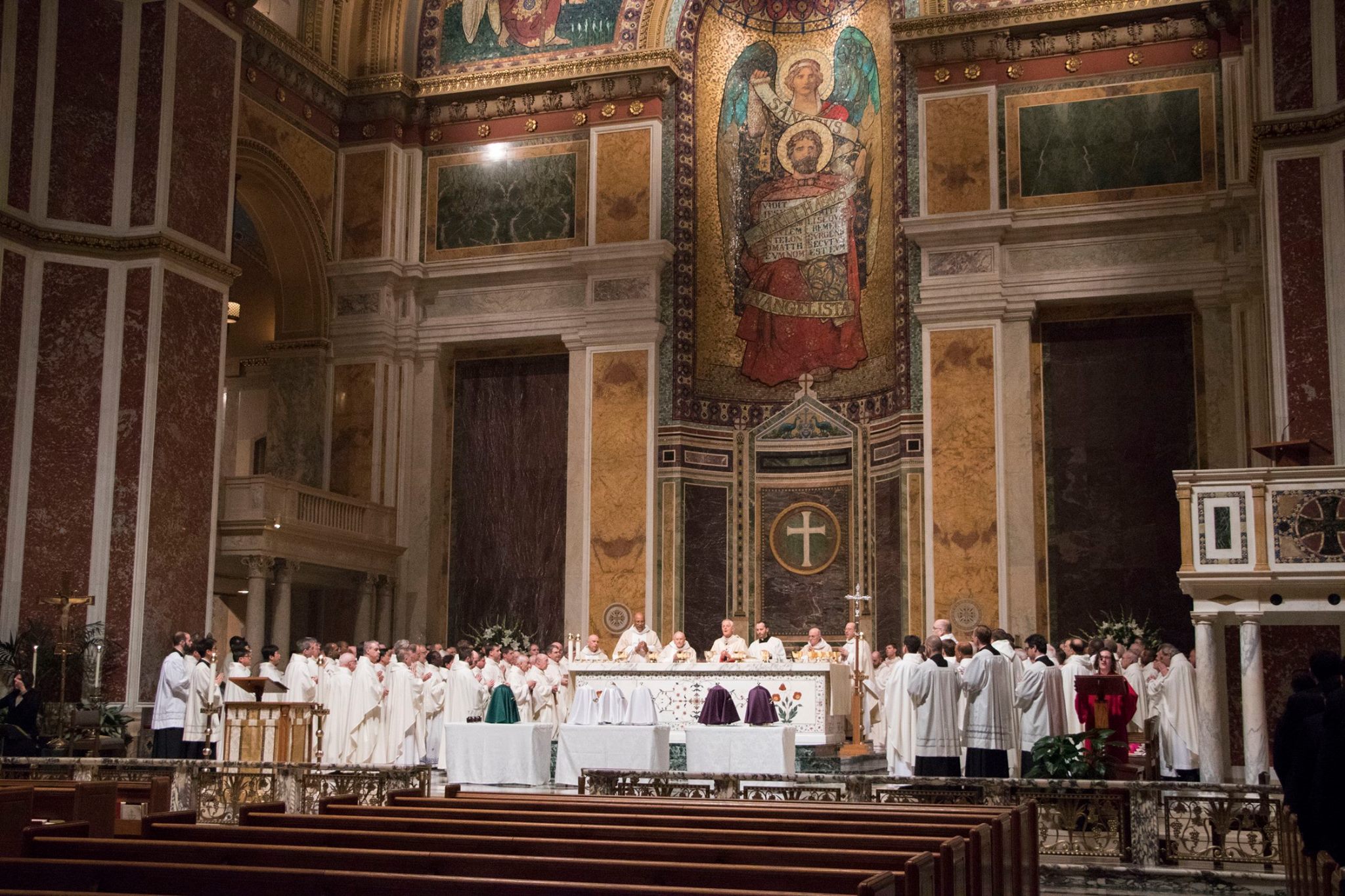
Blog 4-13A key aspect of the priesthood, set forth by Jesus in the New Covenant, is that priest and victim are one and the same. Prior to this, the priests of the Old Covenant sacrificed animals: lambs, bulls, goats, turtle doves, etc. But in the priesthood of Jesus Christ, the priesthood of the New Covenant, the priest offers himself as victim.

Regarding Jesus and His priesthood, Scripture says,

For it is impossible for the blood of bulls and goats to take away sins. Consequently, when Christ came into the world, he said, “Sacrifices and offerings you have not desired, but a body have you prepared for me; in burnt offerings and sin offerings you have taken no pleasure. Then I said, ‘Behold, I have come to do your will, O God, as it is written of me in the scroll of the book.’” When he said above, “You have neither desired nor taken pleasure in sacrifices and offerings and burnt offerings and sin offerings” (these are offered according to the law), then he added, “Behold, I have come to do your will.” He does away with the first in order to establish the second. And by that will we have been sanctified through the offering of the body of Jesus Christ once for all (Heb 10:4-10).

So priest and victim are one and the same. Christ does not offer animals (which cannot take away sin) but offers Himself as the Lamb of God.

This insight is essential for us who share in the priesthood of Jesus Christ, whether as ministerial priests or as those who share in the royal priesthood of Christ given to all believers at baptism (see Catechism # 1268). Although the royal and ministerial priesthoods are different in kind (not merely in degree), they have in common the fact that every priest offers sacrifice. The New Testament priest (royal or ministerial) is called to offer himself, not merely an animal, or money, or time, etc.

But what does this mean on a daily basis? How can we bring such a concept in for a landing, so to speak, so that it is not merely an abstract notion?

In the reading this past Sunday in the Extraordinary Form of the Mass there is a passage from First Peter which helps to specify three examples of how we offer a sacrifice to God not merely distinct from us (such as money or time or talent) but also one which is personal. The text says,

Dearly beloved, Christ suffered for us, leaving you an example, that you should follow His steps who did no sin, neither was deceit found in His mouth. Who when He was reviled, did not revile: when He suffered, He threatened not, but delivered Himself to him that judged Him unjustly: who His own self bore our sins in His body upon the tree: that we, being dead to sins, should live to justice; by whose stripes you were healed. For you were as sheep going astray: but you are now converted to the Shepherd and Bishop of your souls (1 Pet 2:21-25).

Note the reference to Christ’s priesthood, in which He is both priest and victim:

He delivered Himself to him that judged Him unjustly: who His own self bore our sins in His body upon the tree: that we, being dead to sins, should live to justice; by whose stripes you were healed.

That there are three ways that describe how Christ offered His very self. They are ways that we are called to imitate as well, for priest and victim are one and the same.

I. Resisting Temptation – The text of 1 Peter above speaks of Jesus as one who did no sin. It is easy to sin, to give in to temptation. It is much harder not to sin, to resist temptation.

Here, then, is our first sacrifice: that we engage in the difficult act of resisting temptation and sin. Sin does offer pleasures, but the bill comes later. The sacrifice is to refuse those pleasures, offered to us by the world, the flesh, and the devil. We sacrifice pleasures or we postpone them until there are sinless ways to gain them.

The royal priesthood of believers is called to offer this personal sacrifice. It is the sacrifice of obedience to which the Old Testament pointed:

Does the LORD delight in burnt offerings and sacrifices as much as in obeying the LORD? To obey is better than sacrifice, and to heed is better than the fat of rams (1 Sam 15:22).

Better to draw near in obedience than to offer the sacrifice as fools do (Eccl 5:1).

Here is our first priestly sacrifice: the sacrifice of our will, of our obedience to God.

Priest and victim are one and the same.

II. Reverencing the Truth – The text also says of Jesus, neither was deceit found in His mouth. There was in Jesus no duplicity; he did not gainsay the truth. Even His opponents said of Him, Teacher, we know that you are a man of integrity and that you teach the way of God in accordance with the truth. You aren’t swayed by others, because you pay no attention to who they are (Mat 22:16). Ultimately, Christ would pay the supreme sacrifice for this and be led out to the cross.

We, who would be members of the royal priesthood of believers, must likewise be willing to sacrifice our safety, our popularity, our access to higher places, our very lives in order to speak the truth. It is easy to compromise, to go along with what is popular. It is easy to quote trendy sayings. It is easy to be silent when the truth is scoffed at or ridiculed. It is harder—sacrificial—to speak the truth and to defend what is true.

And indeed we will pay a price for it in most cases. Some people will merely raise an eyebrow or scoff at us; others will ridicule us or label us as haters, bigots, and the like. Still others will seek to exclude us, compel us to change, or even criminalize us.

And herein lie the sacrifices we must be willing to make. Often they will be small sacrifices, but at times they will be costly. The martyrs of all ages are witnesses to the personal cost of speaking and living the truth. Those of the royal priesthood of Jesus Christ must be willing to attest to the truth, even at great cost.

Priest and victim are one and the same.

III. Resisting Retaliation – The text further says of Jesus the High Priest, Who when He was reviled, did not revile: when He suffered, He threatened not, but delivered Himself. The most instinctual human response is to retaliate against those who scoff at or seek to harm us. It is easy to hate; it is hard to love. It is easy to strike back; it is hard and sacrificial to absorb the hit but let the cycle of anger and hatred end with me.

Satan wants to see hatred and vengeance cascade through the human family and history. But Jesus put the cross in his way. It was as if He threw a wrench in the gears of Satan’s hate machine so as to grind it to a halt.

We, too, are asked to sacrifice a significant degree of our honor and become like sand in the gears of the cycle of hate and vengeance. It is a sacrifice to say, “The cycle of retribution ends with me. I will not perpetuate it. I will absorb the blow and not retaliate. I will not flee evil; I will confront it without entering its world or adopting its tactics. I will likely suffer for this, but I will not become what I must resist. I will fight it with the paradoxical weapons of love and the cross.”

We make this sacrifice because in the priesthood of Jesus Christ, priest and victim are one and the same.

Here, then, is a brief summary (with examples) of the priesthood of Jesus Christ, in which priest and victim are one and the same. Again, the royal priesthood of all the baptized, while different in kind (not merely in degree) from the ministerial priesthood, shares this truth with it: priest and victim are one and the same.

Offer the sacrifice of your very self to God.

Pondering the Great Reversal Announced in Scripture

blog2-25One of the strong traditions of Scripture is of the great reversal that will one day come for many. I have often been sobered by it when I consider how blessed I have been in this life. I have also been consoled by it when I struggle to understand why some people in this world seem to suffer so much more that I do, or others do.

Life seems a very uneven proposition if we only look at this side of the equation. Only God sees the whole picture, but to some extent, he has revealed that those who have suffered much in this life will be more than rewarded in the life to come and that there will be a great reversal.

The theme of the great reversal is most fully developed in the New Testament where the understanding of the life to come is also most developed. Consider the following texts:

  1. But many who are first will be last, and the last will be first (Matt 19:30, Mark 10:31).
  2. He has cast down the mighty from their thrones but lifted up the lowly. The hungry he has filled with good things; but the rich he has sent away empty (Lk 1:52-53).
  3. Abraham replied [to the rich man], “My child, remember that you received what was good during your lifetime while Lazarus likewise received what was bad; but now he is comforted here, whereas you are tormented …” (Luke 16:25).
  4. Blessed are you who are now hungry, for you will be satisfied. Blessed are you who are now weeping, for you will laugh. Blessed are you when people hate you, and when they exclude and insult you, and denounce your name as evil on account of the Son of Man. Rejoice and leap for joy on that day! Behold, your reward will be great in heaven. For their ancestors treated the prophets in the same way. But woe to you who are rich, for you have received your consolation. But woe to you who are filled now, for you will be hungry. Woe to you who laugh now, for you will grieve and weep. Woe to you when all speak well of you, for their ancestors treated the false prophets in this way (Luke 6:21-26).
  5. Much will be required of the person entrusted with much, and still more will be demanded of the person entrusted with more (Luke 12:48).
  6. I consider that the sufferings of this present time are as nothing compared with the glory to be revealed for us (Rom 8:18).
  7. For this momentary light affliction is producing for us an eternal weight of glory beyond all comparison, as we look not to what is seen but to what is unseen; for what is seen is transitory, but what is unseen is eternal (2 Cor 4:17-18).

There are other examples, and I invite you to add to this list. But, for now, let these suffice. As I have said, I am both challenged and consoled by these texts.

I am consoled because I have suffered and experienced setbacks in this life, as I’m sure have you. But the Lord promises that if these are endured with faith, they ultimately lead to profit, not loss. And while much of this benefit may wait until Heaven, sufferings endured with faith are like treasure stored up in Heaven. First the cross, but then the crown. Hallelujah!

I am also consoled on behalf of others. I know many people who have suffered far more than seems fair. They have experienced loss after loss: lost health, lost jobs, lost homes, lost family members. My humanity recoils at this and I often cry to God on the behalf of these people who seem to suffer so much more than others. Why, O Lord?

But I am also challenged. I am certainly among those who are first. What does this say for me in the great reversal that is coming upon this world? My health is good; I enjoy bountiful blessings. I am more blessed that I deserve. I live in the richest and most powerful country in the world. My needs are largely provided for. I am here in my temperature-controlled room with plenty of time to write and to ponder things. I live far above mere subsistence level. I am surely among the first, the rich. Even the poorest in this country are blessed compared to many in other parts of the world.

Where shall I be when the first trumpet sounds, when the great reversal sets in?

Not everything is as it appears. We crave wealth, power, and access, considering those to be blessings. We want to be first. But God warns that it may well be a curse:

Those who want to be rich are falling into temptation and into a trap and into many foolish and harmful desires, which plunge them into ruin and destruction. For the love of money is the root of all evils, and some people in their desire for it have strayed from the faith and have pierced themselves with many pains (1 Tim 6:9-10).

Even though we are familiar with texts like this we still want to be rich, on top, first. We are very obtuse!

And so I am challenged. I am not, however, defeated or fatalistic. God has not utterly forsaken those who are first. He has left us a way. He has given us instruction on how to avoid the “curse” of our wealth and good fortune: use our position as “first” in order to bless others; place our many gifts at the service of the human family. A few texts come to mind:

  1. I tell you, make friends for yourselves with deceitful wealth, so that when it fails, they [likely the poor whom we befriended] will welcome you into eternal dwellings (Luke 16:9).
  2. Tell the rich in the present age not to be proud and not to rely on so uncertain a thing as wealth but rather on God, who richly provides us with all things for our enjoyment. Tell them to do good, to be rich in good works, to be generous, ready to share, thus accumulating as treasure a good foundation for the future, so as to win the life that is true life (1 Tim 6:17-19).

And so it is that the Lord instructs those who are cursed to be first to store up our true treasure in Heaven (Matt 6:19). Of course we do not store up our treasure in Heaven by sending it up in a balloon or rocket! Rather, we store it up by generously dispensing it to the poor and needy. We may do this through a simple gift. Perhaps we provide jobs and economic opportunity for others. Maybe we share our knowledge, talents, or time. In doing such things, perhaps our curse of being among the first will be overcome.

The great reversal is coming! Where will I be when the first trumpet sounds?

This Chant of the Funeral Mass refers to the great reversal but prays that the deceased will be found with Lazarus, who once was poor. The text says, In paradisum deducant te Angeli; in tuo adventu suscipiant te martyres, et perducant te in civitatem sanctam Ierusalem. Chorus angelorum te suscipiat, et cum Lazaro quondam paupere æternam habeas requiem. (May the angels lead you to paradise and at your coming may the martyrs receive you and may they lead you into the Holy City Jerusalem. May a choir of Angels receive you and with Lazarus who once was poor, may you have eternal rest.)

The Passion of Anger and the “Miserable Truce” of the Modern Age

blog4-11Here in the Western world, we live in a culture that tends to treat anger as taboo. A common tactic to unsettle an opponent today is to accuse him or her of being angry. It is amazing how easily humiliated and/or defensive an adversary can become in response to such an accusation. Yes, it is remarkable how quickly the one accused of anger can feel the need to resort to denials such as these:

  1. I am not angry! (Note that this is usually said angrily, thus demonstrating its falsehood.)
  2. I’m not angry; I’m just frustrated. (Note that frustrated is just a nicer way of saying angry.)
  3. I’m not angry; You’re the one who’s angry! (Note that the “terrible” charge of being angry is denied instead of owned and appreciated as an expression of passion for something that matters.)
  4. Of course I’m angry, but who wouldn’t be angry when talking to an idiot! (Note that in saying this, one is tacitly accepting the accusation while at the same time excusing it.)

Rare indeed in the West is someone who will respond in a way that both admits anger and owns it as something positive and important. One way to do this would be to say, “You’re right; I am angry. I’m angry because I really care about this matter; I’m not just a neutral observer. I fully admit that I have an agenda, an agenda I believe in passionately. I experience grief and anger when what I value is disparaged. Yes, I’m angry; I care about this.”

Of itself, anger is just a passion, an energy that is aroused in us when we sense that something is wrong or that something is threatening us. This anger energizes us for action, mental and/or physical. The body becomes involved in this as adrenaline is released into our system.

The Bible does condemn vengeful anger, but it also describes anger that is not sinful: Be angry, but sin not (Eph 4:26). The sinless Jesus exhibits quite a bit of anger in several Bible passages (e.g., Luke 11; Mark 10; Matthew 17:17; Matthew 21:15; Matthew 26:8; Mark 10:14; Mark 14:4; John 2; and John 8). His indignation shows us that anger is sometimes an appropriate response.

Despite this, we seem to be felled quite easily by the charge that we are angry. We live in soft, thin-skinned times. The pervasive relativism of today suggests that even if we are going to believe in something, we ought not to believe in it too strongly, because that might mean that we have an “agenda,” that we think there is an objective truth to be upheld and insisted upon. And according to modern “rules,” having an “agenda” (i.e., thinking that certain things are surely true) is wrong with a capital ‘W.’ There is also today an inordinate emphasis on tolerance, a necessary component in a pluralistic setting but not an absolute virtue.

Whatever the reasons, anger, an ordinary and necessary human passion, is humiliating to most modern Westerners. The response of most to the charge of being angry is to try to squirm out of it.

And yet I say that we need more of it. Now I’m not talking about fisticuffs coming in a violent outburst, nor am I referring to the ugliness and personal disrespect rampant on the Internet (usually issued from behind the anonymous safety of a personal computer). Rather, I speak of an anger rooted in love and a deep commitment to the truth, an anger that arises from seeing the harm caused by lies, deception, error, sin, and injustice.

Lovers fight. Lovers get angry; and well they should. For when love is in the mix, things matter. Truth matters; error and harm matter. Lovers want what is best for their beloved, not merely what is expedient or convenient.

Author Dale Ahlquist expresses a lot of this better than I can. In his recent book The Complete Thinker, where he analyzes the thoughts of G.K. Chesterton, Ahlquist writes,

Chesterton illustrates the point about “the twin elements of loving and fighting.” … Modern philosophies have tried to do away with this paradox … but fighting and loving actually go together. You cannot love a thing without wanting to fight for it. … To love a thing without wishing to fight for it is not love at all. …

The connection between two such apparent opposites points to the idea that truth is always an amazing balancing act. … If we lean too far in one direction or the other, we lose our balance. Thus, both militarism and pacifism represent a loss of balance.

Militarism is simply bullying, the strong having their own way. Pacifism is a lack of loyalty, a promise not to defend the innocent, the helpless, the defenseless.

The Church has always had to maintain the precarious balance of truth, whether in war or in anything else. …

Sometimes the only way to stop the fighting is to fight. Sometimes the only way to end a war is to win it—but only as an act of defense, not as an act of aggression. …

The sword is an important symbol of Christianity. It is not only in the shape of a cross; it is the scriptural symbol of truth, which cuts both ways—because error comes from opposite sides.

Chesterton also says he likes swords because “they come to a point,” unlike most modern art and philosophy.

Yes, lovers fight and get angry. And the anger of the greatest lover of them all, God, is evident in the downward thrust of the cross into the soil of this world, with its manifold lies and half-truths. The cross is the downward thrust, like that of a sword, of God’s non placet to the rebellion of this world and to the error it holds so arrogantly.

And yet that downward thrust is also open in love, as can be seen in the outward arms of the cross, the outstretched arms of Christ. At the very center of the cross, where anger and love unite, is the heart of Christ.

Yes, love and anger are closer to each other than we moderns often realize or admit. Love says that there are certain things worth fighting for and being angry about. But the anger coming from love is not egocentric, it is “other-centric.” It is focused on God, the truth, and the dignity of those who are meant to walk in truth. Ahlquist says, “In loving our enemies, we want to convert them so they are not our enemies anymore. Ultimately, we want to get our enemies to join our side.”

Yes, some things are worth fighting for and about. Ahlquist continues,

No sane man has ever held, that war is a good thing. … But the … occasion may arise when it is better for a man to fight than to surrender …. War is not the direst calamity that can befall a people. There is one worse state, at least: the state of slavery.

While a good peace is better than a good war, even a good war is better than a bad peace.

[And thus the] Church on earth is called the Church Militant. War is a metaphor, and it would not work as a metaphor if it were not a reality, a reality that we have to live with.

This life of ours is a very enjoyable fight, but a very miserable truce.

That last line is a very telling description of the modern age: a miserable truce. Everyone is walking on eggshells, afraid of offending anyone, and suppressing the truth on account of this fear. And thus our anger gets suppressed, renamed, and turned inward. It has been said that the definition of depression is “anger turned inward.” That’s not a bad definition in times like these, when large numbers of people are on anti-depressants and other psychotropic medicines to manage the “miserable truce” that is the false peace of these times. It is a peace rooted not in the truth, but in the compelled silence of political correctness and under the cloak of euphemisms and thinly veiled politeness.

Perhaps that is why such ugliness erupts from time to time, especially in relatively anonymous settings like social media and blog comment boxes. Here, we, who have forgotten how to have a good argument in person or how to manage and appreciate our anger in normal ways, can resort to the ugliness of savage and unkind personal attacks.

This sort of anger, often seen in political settings as well, is not about truth or love. It is about scoring points; it is about winning with little regard for truth or love. But the Church Militant without love is not the Church.

At the end of the day, though, anger has its place in the context of love. Decent, fair fights are necessary for those who love. Without a proper appreciation for these, we end up with the gray fog of a “miserable truce” that is evident in the modern West.

Just for fun, here’s a music video of the Bobby McFerrin song “Don’t Worry Be Happy.”


Eradicating Poverty Is Not a Gospel Value – A Reflection on a Teaching by Cardinal Sarah

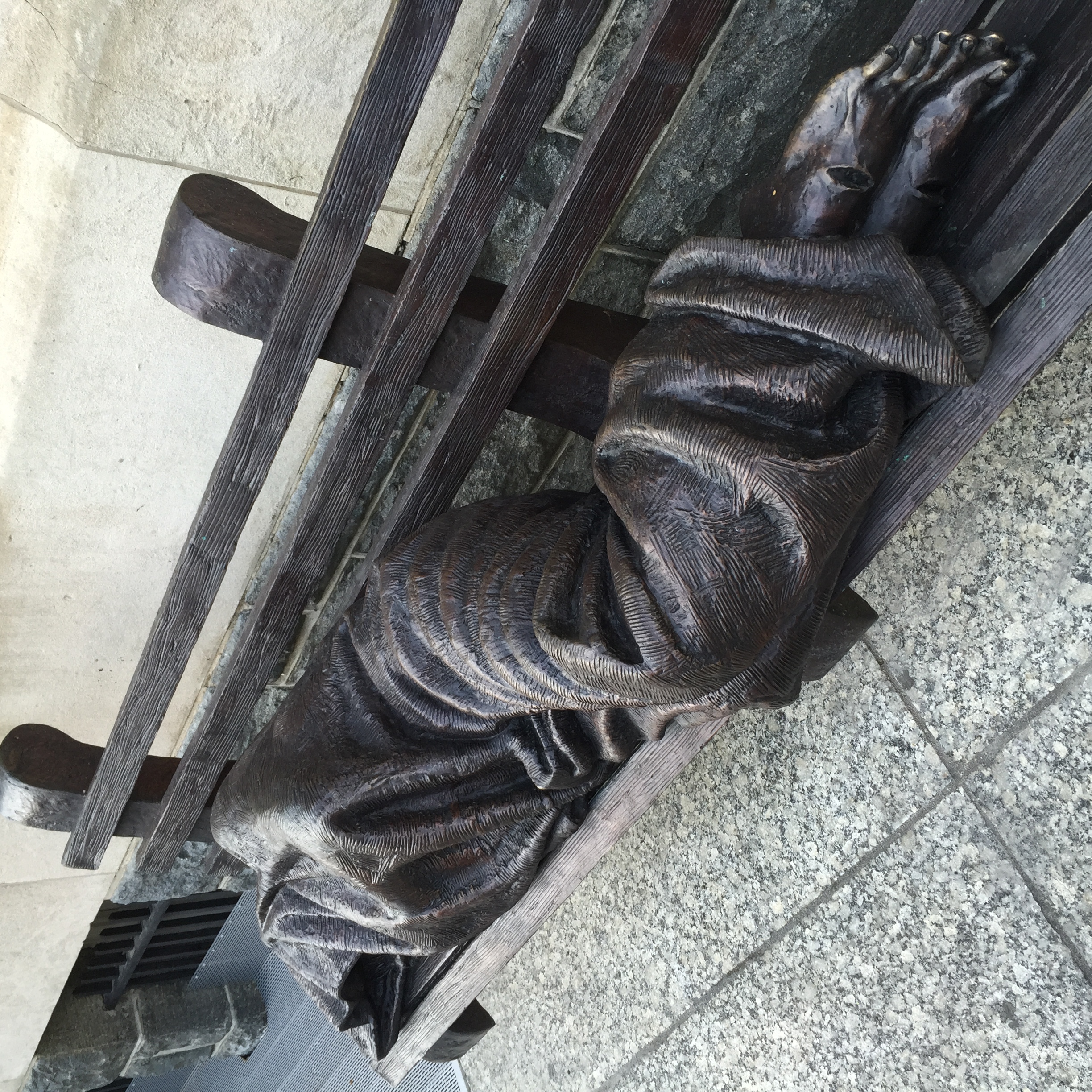
homeless-blog-postThe eradication of poverty is an oft-stated goal of the modern, liberal West. President Lyndon Baines Johnson’s pronouncement of a “war on poverty” so imprinted this notion in the Western mind that it has become almost axiomatic. It is now a fundamental pillar in the thinking of almost every person (and organization) in the Western world, from the religious pew-sitter concerned for the poor to the most secular humanist bent on a utopian vision. Poverty is a great enemy that must be stamped out!

The only problem is that this is contrary to the Gospel! It is no surprise, therefore, that even after decades of Western “do-goodism,” barely a dent has been made in the percentage of people living in poverty. In fact, some statistics show that the percentage in poverty has increased. But why should we expect great fruitfulness in something that opposes God?

I can see the look of shock on your face right now; you may even be embarrassed that I have written this. I’d like to share a quote with you from Robert Cardinal Sarah, which makes an important distinction that we need to recover. While what he says may also shock you, I encourage you to read it carefully and thoughtfully; the distinction he makes is critical. Not only does the Gospel depend on it, but cultures and individual lives do as well. For indeed, in the name of eradicating poverty some of the worst of Western arrogance has been displayed. It is an arrogance that does not even recognize that it can become willing to the destroy the poor themselves as well as what and whom they love all in the name of this “noble” goal.

Cardinal Robert Sarah is no neophyte in this discussion. He grew up in an impoverished region of Africa and later headed the Roman dicastery, Cor unum, a charitable arm of the Holy See. The extensive passage below is an abbreviated version of the Cardinal’s response to the following questions posed by his interviewer, Nicholas Diat:

How would you describe the nature of Cor unum, the dicastery to which you devoted several years of your life, in its fight against all sorts of poverty? Furthermore, why do you speak so often about the close relation between God and the poor?

In his reply, the Cardinal is reacting somewhat to Mr. Diat’s description of Cor unum’s work as “fight[ing] against all sorts of poverty.” The Cardinal’s response is nothing short of stunning. Please read it carefully and consider obtaining the book so as to able to read the unabridged remarks as well.

The Gospel is not a slogan. The same goes for our activity to relieve people’s suffering … [it is a matter] of working humbly and having a deep respect for the poor. For example, I remember being disgusted when I heard the advertising slogan of a Catholic charitable organization, which was almost insulting to the poor: “Let us fight for zero poverty” … Not one saint … ever dared to speak that way about poverty and poor people.

Jesus himself had no pretention of this sort. This slogan respects neither the Gospel nor Christ. Ever since the Old Testament, God has been with the poor; and Sacred Scripture unceasingly acclaims “the poor of Yahweh.” …

Poverty is a biblical value confirmed by Christ, who emphatically exclaims, “Blessed are the poor in spirit, for theirs is the Kingdom of heaven” (Mt 5:3). … The poor person is someone who knows that, by himself, he cannot live. He needs God and other people in order to be, flourish and grow. On the contrary, rich people expect nothing of anyone. They can provide for their needs without calling either on their neighbors or on God. In this sense wealth can lead to great sadness and true human loneliness or to terrible spiritual poverty. If in order to eat and care for himself, a man must turn to someone else, this necessarily results in a great enlargement of his heart. This is why the poor are closest to God and live in great solidarity with one another; they draw from this divine source the ability to be attentive to others.

The Church must not fight against poverty but, rather, wage a battle against destitution, especially material and spiritual destitution. … [so that all] might have the minimum they require in order to live. …

But we do not have the right to confuse destitution and poverty, because in so doing we would seriously be going against the Gospel. Recall what Christ told us: “The poor you will have always with you …” (Jn 12:8). Those who want to eradicate poverty make the Son of God a liar. …

[In his yearly Lenten message in 2014, Pope Francis] espoused what St. Francis [of Assisi] called “Lady Poverty.” … St. Francis of Assisi wanted to be poor because Christ chose poverty. If he calls poverty a royal virtue, it is because it shone brilliantly in the life of Jesus … and in the life of his mother, Mary of Nazareth. …

Similarly, I often think about the vow of poverty taken by religious … [they] do so in order to be as close as possible to Christ. The Son [of God] wanted us to be poor in order to show us the best path by which we can return to God. …

The Son of God loves the poor; others intend to eradicate them. What a lying, unrealistic, almost tyrannical utopia! I always marvel when Gaudium et Spes declares, “The spirit of poverty and charity is the glory and witness of the Church of Christ” (GS 88).

We must be precise in our choice of words. The language of the UN and its agencies, who want to suppress poverty, which they confuse with destitution, is not that of the Church of Christ. The Son of God did not come to speak to the poor in ideological slogans! The Church must banish these slogans from her language. For they have stupefied and destroyed peoples who were trying to remain free in conscience (Cardinal Sarah, God or Nothing: A Conversation in Faith with Nicholas Diat, pp. 140-142).

Perhaps stunned himself, Mr. Diat follows up with the following question: “Are you not afraid of being misunderstood in employing this sort of distinction?”

The Cardinal replies,

It is a lack of charity to shut one’s eyes. It is a lack of charity to remain silent in the face of confusing words and slogans! … If you read the Latin text of Gaudium et Spes carefully you will immediately notice this distinction (Ibid, p. 143).

This is a powerful insight and it reveals the deep flaw in Western “anti-poverty” programs. Christ asks us to love the poor and imitate the best of what they are, not eliminate them and disregard the simplicity and trust that they can often exemplify. But we in the West, imbued with our materialistic notions and mesmerized by the comfort and control that wealth can temporarily buy, denigrate what the Gospels praises and seek to eradicate it.

So unreflective are we in this matter that some will even justify the most awful things in the name of eradicating poverty. Many programs (U.S.-sponsored and U.N.-sponsored) with this goal advocate for contraception, abortion, and/or euthanasia. Some have even sought to compel these sorts of things as a precondition for receiving aid. Some seek to impose certain aspects of Western thinking, something that has been labeled an attempt at “ideological colonization.” Many of us in the “First World” often speak of the “Third World” in a way that at best is patronizing and at worst exhibits a thinly veiled contempt.

While it is true that certain economic and political systems best support Western lifestyles, there is more to life than material abundance. With our own culture, families, and common sense collapsing around us, it seems odd that we so easily consider our way of life superior; that we see our relationship to the poor and to poorer countries as one in which we have all the answers and they should just listen to us.

The word “arrogance” comes to mind. We too easily assume, without even asking, that we know what is best; we presume that poor people in every part of the world want what we have (materially) and that they don’t perceive the awful price we have paid in order to get it.

We must recover a respect for the world’s poor, who have much to teach us. Even if they are not materially without troubles, they often possess many things we have lost: simplicity, family and tribal (communal) life, reciprocity, proper interdependence (as opposed to radical individualism), trust, a slower life, and a less-stressful life.

Further, we must not forget that the Lord counseled poverty (Lk 18:22), declared the poor blessed (Lk 6:20), lived simply Himself having “nowhere to lay his head” (Mt 8:20), lived among the working poor, and warned of the pernicious quality of wealth (Lk 16:13). God hears the cry of the poor and Mother Mary taught us of a great reversal that is coming, when the mighty and powerful will be cast down and poor and lowly raised up (Lk 1:52). Jesus taught us that many who are now last will be first in the kingdom of Heaven (Mat 19:30). In this life, the poor will sometimes need us. In the next life, on Judgment Day, we are going to need them to welcome us into eternal dwellings (Luke 16:9).

I really cannot say it better than did the good Cardinal, so I will not attempt to do so. We must surely work to alleviate the destitution that often comes in times of famine, war, or natural disaster. But destitution and poverty are not the same thing. Overlooking this distinction can be deadly for the poor we claim to serve and for their cultures, and can result in the worst forms of ideological colonization and secular utopianism.

Back to the Future – A Meditation on the Gospel for the Third Sunday of Easter

blog4.10Today’s Gospel is really quite remarkable. For despite the fact that the apostles have seen the resurrected Jesus several times now, they seem to be retreating into the past. They’re headed backwards and Jesus must summon them, if you’ll pardon the expression, “back to the future.”

They were going back to fishing but the Lord calls them away from fishing and points them to the future, a future that includes going to all the nations and summoning them to saving faith.

This is a critical Gospel that shows us Jesus summoning the apostles back to their crucial call, a call that has its focus not in the past but in the future. Indeed, fellow believers, if this Gospel had not gone right, your faith and mine might well have been in jeopardy. We are the future that Jesus sought to preserve. Our own coming to the faith depended on whether Jesus was able to summon Peter and the other apostles back to the future.

Let’s look at this gospel in four stages.

1. Regrettable Reversal – The text says, At that time, Jesus revealed himself again to his disciples at the Sea of Tiberias. He revealed himself in this way. Together were Simon Peter, Thomas called Didymus, Nathanael from Cana in Galilee, Zebedee’s sons, and two others of his disciples. Simon Peter said to them, “I am going fishing.” They said to him, “We also will come with you.” So they went out and got into the boat, but that night they caught nothing.

Peter had no business going back to fishing. The Lord had clearly called him away from fishing. For example: And he said to them, follow me and I will make you fishers of men. Immediately, they left their nets and followed him (Mat 4:19).

But in today’s Gospel we see Peter going back to commercial fishing. This is not some sort of recreational fishing; the commercial nets are out. It is astonishing to think that after having encountered Jesus risen from the dead on at least two (and possibly more) occasions, he’s going back to fishing!

We often think that if only we were to see a miracle our faith would be strong, but there is very little evidence for this. Many who see signs and wonders, ponder whether what they have seen can be topped. Their fascination is engaged but not their faith. Ultimately, faith produces miracles; miracles do not produce faith.

Peter’s return to fishing is not only regrettable, it is scandalous. For in so doing it leads others say to him, “We will also go with you.” When we backslide we often bring others with us. Looking at it more positively, when we grow in holiness we also bring others with us. Sadly, Peter has regressed and others follow him. But as we shall see, the Lord will not abandon his church.

While we may wonder at St. Peter’s relapse, we should recognize that we, too, easily do the same. We praise Jesus with the same mouth that sometimes spews curses and gossip. We claim that we belong to Christ and are one body with Him, that we are a Temple of the Holy Spirit, and yet with that same body often comes forth fornication and other sexual impurity. We say that God is love, and yet from us too easily comes anger, hatred, and a lack of love for the poor and troubled.

We too easily run back to the things from which we have been called away. The Lord points us forward but we run backward.

Just as He did with the apostles in this Gospel, the Lord must stand on the shore of our baptismal waters, and call us out of the past and back into the future, a future of holiness and perfection. Too easily, we run from this. Yes, the Lord is faithful and stands on the shore calling us back. Would that we could say, in the words of an old gospel song, “Goodbye world, I stay no longer with you, goodbye pleasures of sin, I stayed along with you! I’ve made up my mind to go God’s way the rest of my life!” Another gospel song from the 1940s says, “No more, no more! I’ll never turn back no more! I’m going to keep on crossing till I reach the other shore. Rains may come, floods may roar, storms may race, and winds may blow, but I’ll never turn back, no more!”

Would that this were the case! But the Lord keeps calling us, calling from the shore, out across the waves of our discontent.

2. Redeeming Reminder – The text says, When it was already dawn, Jesus was standing on the shore; but the disciples did not realize that it was Jesus. Jesus said to them, “Children, have you caught anything to eat?” They answered him, “No.” So he said to them, “Cast the net over the right side of the boat and you will find something.” So they cast it, and were not able to pull it in because of the number of fish. So the disciple whom Jesus loved said to Peter, “It is the Lord.” When Simon Peter heard that it was the Lord, he tucked in his garment, for he was lightly clad, and jumped into the sea. The other disciples came in the boat, for they were not far from shore, only about a hundred yards, dragging the net with the fish.

The Lord stands on the shore and does again for them what he had some three years earlier, when he called them from fishing to evangelizing. He does not excoriate them; He does not call them fools or some other epithet. He calls out to them, “Children, have you caught anything to eat?” And rather than rebuke them, He asks them to assess the situation, to consider whether the course of action they have chosen has yielded anything at all. They admit that they’ve caught nothing.

And yet, strangely, this whole incident seems familiar. The Lord tells him that if they cast the net over the other side of the boat they will find something. Suddenly the nets are full! Oh, how this spoke to their hearts; it was just what happened three years ago! Scripture says,

And when he had ceased speaking, he said to Simon, “Put out into the deep and let down your nets for a catch.” And Simon answered, “Master, we toiled all night and took nothing! But at your word I will let down the nets.” And when they had done this, they enclosed a great shoal of fish; and as their nets were breaking, they beckoned to their partners in the other boat to come and help them. And they came and filled both the boats, so that they began to sink. But when Simon Peter saw it, he fell down at Jesus’ knees, saying, “Depart from me, for I am a sinful man, O Lord.” For he was astonished, and all that were with him, at the catch of fish which they had taken; and so also were James and John, sons of Zebedee, who were partners with Simon. And Jesus said to Simon, “Do not be afraid; henceforth you will be catching men.” And when they had brought their boats to land, they left everything and followed him (Luke 5:4ff).

In today’s Gospel, John draws the obvious conclusion, “It is the Lord!”  The Lord has given them a redeeming reminder. He does not rebuke them; he only reminds them. In effect, He says “Come out of the past! Remember the future to which I have summoned you, a future of going forth to the nations and announcing the Gospel for all to hear. Your life is not about fish; it is about humanity!”

What reminders has the Lord put into your life? How has He stood on the shore and called to you with some reminder? Perhaps it was a tattered old Bible, or maybe an old hymn that you heard. Perhaps it was your grandmother’s old rosary beads stored away in a dresser drawer. Perhaps you are summoned to a funeral or wedding.

In moments like these, the Lord stands on the shore of life and calls to you. He reminds you of your call, and asks you to consider whether your present course is doing anything for you whatsoever. Usually, it has not. Perhaps there is fleeting wealth or momentary popularity, but otherwise there is little else to show for it.

And thus the Lord calls. He calls us back to the future, a future (and a present) oriented toward Heaven. Since you have been raised to new life with Christ, seek the things that are above, rather than the earth below (Colossians 3:1).

In the words of a popular hymn, “Softly and tenderly Jesus is calling, calling for you and for me. See on the portals he’s waiting and watching, watching for you and for me; Come home, come home! Ye who are weary come home! Earnestly, tenderly, Jesus is calling, calling oh sinner come home!”

Here, then, is a redeeming reminder that Jesus is calling, softly and tenderly: “Come out of the past. Come away from commercial fishing. Look to the future, the future of saving souls!”

III. Reorienting Repast – The text says, When they climbed out on shore, they saw a charcoal fire with fish on it and bread. Jesus said to them, “Bring some of the fish you just caught.” So Simon Peter went over and dragged the net ashore full of one hundred fifty-three large fish. Even though there were so many, the net was not torn. Jesus said to them, “Come, have breakfast.” And none of the disciples dared to ask him, “Who are you?” because they realized it was the Lord. Jesus came over and took the bread and gave it to them, and in like manner the fish. This was now the third time Jesus was revealed to his disciples after being raised from the dead. When they had finished breakfast, Jesus said to Simon Peter, “Simon, son of John, do you love me more than these?” Simon Peter answered him, “Yes, Lord, you know that I love you.” Jesus said to him, “Feed my lambs.” He then said to Simon Peter a second time, “Simon, son of John, do you love me?” Simon Peter answered him, “Yes, Lord, you know that I love you.” Jesus said to him, “Tend my sheep.” Jesus said to him the third time, “Simon, son of John, do you love me?” Peter was distressed that Jesus had said to him a third time, “Do you love me?” and he said to him, “Lord, you know everything; you know that I love you.” Jesus said to him, “Feed my sheep.”

Notice three basic elements whereby the Lord uses a meal to reorient them. To reorient (re (again) + oriens (East)) literally means to turn someone back to the East, back toward the rising of the sun (Son), back toward the light and away from the darkness.

FISH – The fish are in, and their number is plentiful. The specific number, 153, has significance more for humanity than for fish. While much ink has been spilled on the significance of this number, the most likely explanation seems to be that this was the number of known nations at the time. And hence, that exactly 153 fish are caught seems to be the Lord’s way of saying, “…not fish, but humanity: all the nations!” We see that God can use even our backsliding, our sins, and use them to call us away from them. Yes, He can use our sins to be a teachable moment.

FIRE – As Peter comes ashore, he sees a fire. And though the text is silent on this, surely it must have unnerved him! For here was a charcoal fire, the same sort of fire that was in the courtyard of Caiaphas the high priest where Peter had denied the Lord (Jn 18:18). Hurt, and unnerved by what he had done—or rather failed to do—Peter felt unworthy. Yes, this fire reminded him of his denial of the Lord.

And yet even Peter’s repentance is somewhat egocentric. It would seem that he wonders, “How could I have done this, I, who promised the Lord to be with Him even if all should rage against Him!” But in moment of cowardice, Peter denied the Lord. Oh yes, this fire, this charcoal fire, is bothersome indeed! The Lord stands next to the fire and looks at Peter much as he had in the courtyard of Caiaphas when, after Peter had denied Him for the third time, Jesus turned and looked at Peter (Lk 22:61). How this fire bothered him!

FRANKNESS – But now comes a tender, poignant, and powerful conversation. To us who read the text in English, the conversation focuses on the fact that three times, the Lord asked Peter, “Do you love me?” But in Greek, there are subtleties that do not come through in the English translation.

In the English translation, the Lord asks Peter simply, “Do you love me?” And Peter answers, “Yes Lord, I love you.” The Greek text, however, is more subtle and more specific. In Greek, the Lord asks, Σίμων Ἰωάννου, ἀγαπᾷς με πλέον τούτων? (Simon Joannou agapas me pleon touton? – Simon, son of John, do you love (agapas) me more than these?). Jesus has asked about “agape” love. But Peter replies, κύριε, σὺ οἶδας ὅτι φιλῶ σε. (Kyrie, su oidas oti philo se. – Lord, you know that I have brotherly (philo) love for you.)

The Lord asked for agape love, the highest love, wherein we love God above all things and above all people, including ourselves. But Peter does not answer with agape love. Rather he replies that he loves the Lord in a brotherly (philo) way. This is far short of what the Lord asked. (I realize that there are debates about the Greek used in this passage, but I am convinced that the use of the two different verbs is significant. You can read more on this topic here: Agape vs Philo in John 21).

But in spite of Peter’s response of imperfect love, the Lord still has something important for St. Peter to do: Feed my lambs.

A second time, the same dialogue sets up wherein the Lord asks PeterΣίμων Ἰωάννου, ἀγαπᾷς με (Simon, son of John, do you love (agapas) me? Peter responds, κύριε, σὺ οἶδας ὅτι φιλῶ σε (Lord you know that I have brotherly (philo) love for you. Again, the Lord has asked for unconditional, ultimate love. But Peter can only return a lesser love, a brotherly love, a sort of affection. Yet again, the Lord does not reject Peter. He accepts what Peter says and tells him, Tend my sheep.

On the third occasion, Jesus accepts what Peter is able to offer and asks him, Σίμων Ἰωάννου, φιλεῖς με; (Simon, son of John, do you have brotherly affection (phileis) for me? The third question, which strikes Peter to the heart, causes him to exclaim that he (only) has brotherly love. Yet again, the Lord does not reject Peter, but rather assigns him a task, saying once again, Feed my lambs.

This is perhaps one of the most poignant, beautiful, and honest moments in Scripture. The Lord looks with love to a disciple and asks him for the highest love; that disciple honestly answers that he has only imperfect love to offer. Perhaps for the first time in his life, Peter is being absolutely honest. There is no more posing, no more bragging—only an honest answer, borne out of sober appreciation of his human lapses. There is nothing more beautiful than honest prayer, for honesty is a prelude to healing. Jesus accepts what Peter is able to offer, and as we shall see, promises him that his heart will expand so that one day he will love the Lord totally, unconditionally, above all things, and above all people.

How about you? Are you honest with the Lord? Have you experienced His love in spite of your sin? Do you know that He can use you even in your weakness if you are willing to be honest with Him?

IV–Required Remedy – The text says, “Amen, amen, I say to you, when you were younger, you used to dress yourself and go where you wanted; but when you grow old, you will stretch out your hands, and someone else will dress you and lead you where you do not want to go.” He said this signifying by what kind of death he would glorify God. And when he had said this, he said to him, “Follow me.”

In this whole conversation, the Lord’s purpose is not to stalk Peter or to badger him. Rather, it is to lead him toward a necessary remedy, to point him back toward the future, a future filled with evangelical fervor and sacrificial love. Peter is weak now, but the Lord will give him strength. Within ten days after His Ascension, the Holy Spirit will come and Peter will be quickened, strengthened in the faith.

But even then, the work the Lord needs to do is not finished, for the Lord speaks of the day when Peter will finally have the grace to accept martyrdom. It will be a day when someone will tie him fast and lead him off to where he would rather not go. But Peter will go. And he will die for Christ.

In the end, Peter will be able to say, without any simulation or exaggeration, “I love you, Lord, totally, with agape love. I love you above all things, above all people, and above even my own life.”

For now, though, Peter is not ready. But the Lord will lead him by stages and get him ready.

How will Peter get there? How will we get there?  The Lord simply says, Follow me.

So, fellow disciples, the Lord is leading you to a deeper love, an unconditional love, a love above all other loves. Only the Lord can do this. He did it for Peter—a hard case, actually—and He can do it for you!

For now, though, He is standing on the shore and calling us to a richer future:

A Powerful and Humorous Look at Vanity in a Commercial

blog-4-8Most people associate the word “vanity” with an excessive concern or pride in one’s appearance or sometimes in one’s qualities. But at its root, vanity refers to emptiness. To say that someone is vain is to say that it he or she is empty or largely lacking in meaning, depth, or substance.

It makes sense that people get worked up about externals when there isn’t much happening on the inside. And thus it makes sense that we connect emptiness (vanity) with excessive show.

There are many expressions that enshrine this connection:

All form and no substance

That Texan is all hat and no cattle

All bark and no bite

All booster, no payload

All foam, no beer

All sizzle and no steak

All talk

Show me the money

The Wisdom Tradition in the Bible, especially the Book of Ecclesiastes, speaks of vanity at great length. In it, the word is usually used to refer to the ultimate futility of what this world offers because the world itself is ultimately empty and vacuous.

  • Then I considered all that my hands had done and the toil I had expended in doing it, and behold, all was vanity and a striving after wind, and there was nothing to be gained under the sun (Eccl 2:11).
  • He who loves money will not be satisfied with money, nor he who loves wealth with his income; this also is vanity (Eccl 5:10).

The world, which so mesmerizes our senses, shows itself ultimately to be empty of power or any lasting substance.

  • We have here, no lasting city (Heb 13:14).
  • As for man, his days are like grass: or as the flower of the field. Behold, he flourishes. But the wind blows and he is gone; and his place never sees him again (Ps 103:15-16).

I thought of these notions of vanity when I saw this admittedly very funny commercial. It shows a man concerned only with his appearance. Actually, he’s even more vain than that: it’s how he smells that concerns him (this is an Old Spice commercial, after all). He is so vapid, so vain, that he thinks that even if he doesn’t look good, well at least he smells like someone who looks good!

As he moves through the scenes of the commercial he becomes increasingly devoid of substance (literally!).

Symbolically, we can see him as the vain person who goes through life carelessly, paying no attention to the way in which the world, the desires of the flesh, and the devil strike at and eat away at him. But he doesn’t worry about that because at least he smells like someone who looks good! His only real substance is to be lighter than air, a whiff. It is form over substance, impression over reality. It is empty show; it is vanity on steroids.

Here is a humorous look at vanity, a vanity so extreme that it goes beyond appearance and extends into the vapid, vacuous, and vaporous vanity of merely wanting to smell like someone who looks good. It is a remarkable portrait of the empty show that vanity ultimately is. Enjoy!

The Whole Gospel, Please – A Reflection on a Popular Gospel Verse

john316The Gospel proclaimed on Wednesday of this week included the familiar John 3:16. So familiar is this verse, that many hold up signs or have bumper stickers that simply say, “John 3:16.”

For God so loved the world that he gave his only-begotten Son,
so that everyone who believes in him might not perish
but might have eternal life
(John 3:16).

It is indeed a beautiful verse, but I would argue that many use it inauthentically by pulling it out from its place within a longer passage. The fuller segment is John 3:16-21, which is as much a passage of warning as it is of consolation and assurance.

Here it is again, along with the remainder of that longer passage:

For God so loved the world that he gave his only-begotten Son,
so that everyone who believes in him might not perish
but might have eternal life.
For God did not send his Son into the world to condemn the world,
but that the world might be saved through him.
Whoever believes in him will not be condemned,
but whoever does not believe has already been condemned,
because he has not believed in the name of the only-begotten Son of God.
And this is the verdict,
that the light came into the world,
but people preferred darkness to light,
because their works were evil.
For everyone who does wicked things hates the light
and does not come toward the light,
so that his works might not be exposed.
But whoever lives the truth comes to the light,
so that his works may be clearly seen as done in God
(John 3:16-21).

This fuller context has somewhat of a different tone. It sets forth a great drama in which our lives are cast. It amounts to sober assessment of the obtuseness of many human hearts and of the urgent need for us to decide well in life.

Those who merely quote the first verse run the risk of presenting this text as a kind of a freewheeling assurance that all is well and that salvation is largely in the bag, that judgment and condemnation are not a significant factor since “God so loved the world.” And while the concept of faith is included in this first verse, without the larger context the tendency is to soft-pedal the need for repentance and for the obedience of faith. In so doing, the true drama and sober teaching of the fuller text are lost.

The longer passage fleshes the message out and has a balance that the shortened text does not. Here is what Jesus is in effect saying, expressed in more modern language:

As I live, I and my Father do not desire that any should die in their sins or be lost. I have not currently come as your judge but as your savior. I will come one day as the judge of all, but now is a time of grace and mercy extended to you.

But you need to know that you have a decision to make, a decision that will determine where you will spend eternity.

So please listen to me! Open the door to me and let me draw you to the obedience of faith and the beauty of holiness. If you do this, light will dawn for you, for I am the Light and your life will grow ever brighter.

But if you will not repent and come to a lifesaving obedience of faith, your heart will begin to despise me and the light of my glory. You will become accustomed to the darkness and begin to consider the Light (which I am) to be obnoxious, harsh, judgmental, and even cruel. Yes, you will begin to hate me, for I am the Light. You will prefer the darkness because you love your sins more.

Come to your senses and don’t let this happen. You have a decision to make: for the light or for the darkness, for me or for the prince of this world, Satan. Be sober and understand the dramatic choice before you. Your salvation depends on your choice to come to obedient faith in me or to reject me.

And know this: on the day of your judgment, the verdict will not be rendered by me so much as by you. For by then, you will either love the Light or hate it. And I will not force you to live in a light you detest. You will be free to go your own way. It will not be I who reject you. It will be you who reject me.

Be sober. Don’t let this happen. Don’t marginalize or ignore me. Don’t prefer the world and its twisted values and passing pleasures. Your sins will make you hate the light and prefer the darkness. You have a decision to make.

This message is much more complex than that contained in the popular, abbreviated text known as John 3:16. God’s mercy is offered, but the final verdict will center on whether or not we accept it. This message may be less consoling but it is true nonetheless, and only the truth can set us free.

There is a tendency by many to pull out certain verses and isolate them from their context and from the fuller message of the Gospel. The full and authentic Gospel echoes the opening call of the Lord Jesus: “Repent and believe the Good News.”

So yes, John 3:16! But please continue reading. The whole Gospel, please!


Of Mice and Men – Pondering the Strange Loss of Faith in an Age of Science

faith and scienceOne of the more perplexing claims of the growing number of agnostics and atheists among us is that there is no evidence of an intelligent creator of the universe. But clearly the created universe manifests intelligibility and order from the farthest reaches of outer space down to our tiny planet and further down into the “inner space” of cells, atoms, and molecules. Science affirms the existence of a creator by uncovering the inner order and intelligibility of created things. But strangely, the age of science seems to be fostering a denial of that evidence.

Indeed, creation is a veritable symphony of billions of notes working together in an extraordinary harmony that seems to shout, “I was composed and carefully thought out; my master composer is also the great conductor of my symphony, so carefully laid out!”

That the created world is intelligible is the very basis of the sciences. The world manifests meaning that we can discover and it moves along in predictable ways; it does not randomly change from one thing to the next from one moment to the next. Because there is order and intelligibility, a scientist can predict, propose, and test theories, and replicate results. Without order and intelligibility there could be no scientific method.

And yet many of the scientists who use this scientific method deny the very intelligence who provides the intelligibility that their science presumes. For if the created world is intelligible, then clearly an intelligence imposed this intelligibility upon it. That the created world manifests order demonstrates that someone so ordered it.

If all of this intricate order happened just by accident at one moment in time, it would then require something to maintain that order and keep it from breaking down the very next instant into something completely different. And yet this does not happen. Reality does not suddenly and randomly mutate into something else. It follows predictable laws; changes are orderly and exhibit continuity with what went before. Order is present not just at one point in time, but is sustained over time and becomes demonstrably more organized as complex life forms develop. Clearly, creation tends toward a certain end in an orderly and progressive way.

That there is order and intelligibility to the created world is demonstrably true and to deny this fact would seem to be the reaction of a madman. The universe shouts out, “I was planned and carefully executed; I have been intricately designed by an intelligent cause moving me in an intelligible direction!”

I would understand if physical scientists were to say that they are not equipped to opine on who or what this intelligence is. Indeed, the physical sciences are not equipped to measure the metaphysical. For so many scientists to claim the ability to deny that there is an intelligence (whom we believers call God) is for them to act outside of their field, unreasonably so.

The claim that there is no God is not a scientific claim; it is a philosophical one. Those who maintain that there is only the physical and not the metaphysical are actually making a metaphysical claim. They refute their own assertion in the very act of declaring it! The claim that physical science wholly explains all of reality is not one that can be demonstrated scientifically. The claim is proven false the very moment it is declared.

Many will say that there is no evidence of God’s existence because they cannot see it under a microscope or through a telescope. But of course God is not a physical being; He does not tip our scales. He cannot be physically measured any more than can justice, mercy, beauty, or any other metaphysical concept. None of these can be seen with the tools of physical science—but they are no less real.

Yes, there is a great deal of evidence of a creator. The entire created world is steeped in intelligibility and order. There is a magnificent interplay between material, efficient, formal, and final causality. By its intelligibility, the created world shouts of the intelligence that made it so. By its order, it sings of the one who so ordered it.

Existence itself provides the answer to the questions: “Why is there something rather than nothing? Why is there anything at all?” The only reasonable answer that can come back from the existing cosmos is this: “I was caused!” Something cannot cause itself any more than you and I can cause ourselves. We, and the entire cosmos, were caused by someone other than ourselves and outside of ourselves. The cosmos says, “Someone outside of me caused me. That is why I exist. That is why anything exists at all.”

We moderns have become very obtuse and inwardly focused. If anything, we should be more convinced than ever that God exists, as our sciences have revealed such incredible complexity and intricate order in every layer and level of creation. We should be singing of the incredible wisdom of the creator who has so perfectly ordered every level of his creation. And yet, sadly, just the opposite seems to be happening—agnosticism and atheism are growing.

Far too many scientists, who should know better (for there would not be science at all without the intelligibility built into creation), make unfounded denials of God, a pronouncement that is clearly outside their field of expertise. And because so many of us idolize the sciences, we give great weight to the claims of scientists, even when those claims are nonscientific.

Contemplating this tragic turn of events brings to mind a little parable told by Venerable Fulton Sheen many decades ago:

Those who refuse to unify the cosmos in terms of Pure Intelligence but content themselves with secondary causes may be likened to an all-wise mouse living in a grand piano who … explained the music by the play of hammers on the strings, the action of which could be seen in his own narrow little world. Scientists catch the tune, but miss the player (Old Errors and New Labels, Fulton J. Sheen 1931, p. 17).

Yes, we have become mousy in our thinking. We prefer to live inside the piano and explain the music of the spheres only internally, never thinking of the great artist outside, who gives and causes the magnificent, understandable, beautiful, and intricate melody we hear.

Sadly, the great debate over the existence of God seems only to grow, even as the evidence of intelligibility, order, and design increases. It is a great debate of mice and men.

Are you a mouse or are you a man?

In this video, hear the song of the cosmos!