Some Thoughts on Recent Tragedies and Racial Tensions

Whats Your StoryFor some twenty-four of my twenty-seven years as a priest I have lived in and ministered to largely African-American parishes and communities. It has been a great blessing to me spiritually, liturgically, and personally.

As you may imagine, I get a lot of questions from people when racially charged events appear in the news. I’m asked what my parishioners think as well as what I think.

This past week began with the death of two African-American men, Philando Castile and Alton Sterling, in interactions with the police. Their deaths are certainly tragic and appear prima facie to be unnecessary, even possibly criminal. And while the investigations into the circumstances must continue, the videos are nevertheless horrible to watch. Add to this a long string of recently publicized deaths under similar conditions and the result is a widespread, deeply held belief among African-Americans that the weapons of law enforcement are too quickly drawn, guilt is too easily presumed, and deadly solutions are too frequently the recourse when the dispatcher notes that the subject is a black male.

The week ended with the tragic shooting death of five police officers and injury of several others. These officers had no connection with the questionable deaths earlier in the week other than the blue uniforms they wore. Whatever injustices police in other cities may have committed, the shooting of the Dallas policemen was an egregious crime that will likely set back any reasonable discussions on these matters for a long time. Violent responses only encourage more injustice and more violence. Absolutely no one is helped by this act of declared vengeance by the assailant, a man who does not deserve to be named.

In the midst of all of this, how should we respond? Something tells me that the first step is to stop and really listen to one another.

Not a Spokesman – Although I have pastored in and been immersed in the African-American community for many years, I often humorously note, “I’ve been white all my life.” I cannot begin to know the depths of what it feels like to be African-American in a country with a history like ours. I am not, and cannot be, a spokesman for the black community. And thus I resist answering those who ask me what my parishioners think. My response can only be inadequate.

But I can say that I have learned to listen and simply to accept the experiences of others, experiences that often surprise me because I’d like to think we’ve made more progress than what I hear. My parishioners are people whom I trust and I will not doubt their experiences just because they aren’t mine, or because I think America isn’t or shouldn’t be like that. Our parishioners have varied backgrounds. Many are college-educated. Some are government employees; some own their own businesses. Some work in healthcare: doctors, nurses, or nursing home staff. Others are teachers, lawyers, or work on Capitol Hill. Still others have IT-related jobs, work in retail, or are involved in real estate. Although some of our parishioners are poor, overall my parish is an upper-middle-class African-American parish. With 600 in attendance (120 of whom are children), the offertory alone is almost a million dollars per year; other donations amount to another 200,000. We are not a poor, black, inner-city parish by any definition.

Despite this, most of my parishioners (many of whom earn six figures) can attest to the ongoing frustration of “driving while black,” “shopping while black,” and “hailing a taxi while black.” A man in my parish who is nearly sixty and a professional with a job on K Street, rejoices that Uber has arrived; prior to that it was very difficult for him to get a cab. He once filmed his attempts. Empty taxi after empty taxi drove right past him only to stop further up the block to pick up another patron, usually white and/or female.

Stories like this shock me. I think to myself that this can’t possibly still be going on in America. But these are people I trust and have lived with for a long, long time; they are not fired-up activists looking for trouble. They are talking about experiences that are realities for them. I once took a walk with an African-American deacon from a nearby Catholic parish. He was wearing trousers and a button-down shirt—ordinary, “respectable” clothing. We stepped into a store and he said to me, “Now watch. I am the ‘face of crime.’ We’re going to get extra scrutiny.” Dubious, I kept a little distance from him so that I could observe. Sure enough, that extra scrutiny was subtle but undeniably there.

Many African-Americans have also experienced problems with their treatment by the police. This is not to say that every interaction with law enforcement is bad every time. But it is common enough that many African-Americans do not have the same level of trust in the police that white Americans do. The widespread anger in the black community is not artificially created by activists or by the media; even if they at times light the fuse, the powder keg comes from past experiences and from events that are still happening today.

This may not be your experience or mine. We tend to doubt the experiences of others, especially when they are different from ours. But the point is that these are the experiences of many, if not most, African-Americans.
The first step in listening is to accept the stated experiences of many African-Americans without discounting or doubting them, to respectfully acknowledge them. A respectful reply could be as simple as saying, “I’m sorry that this has happened to you in the past and still continues in our country. Thank you for telling me so that I can better understand.”

White Americans also have experiences with race that are painful. In fact, one of the greatest difficulties in this time of political correctness is that many of the feelings and experiences of white Americans are excoriated and/or disallowed. In some sense they are not even allowed to express them at all without being shamed or sidelined.

There is much dismay and fear among many white Americans at the soaring rate of crime in poor neighborhoods, the high rate of black-on-black crime, and the further breakdown of African-American families. There is also a frustration when, despite the emergence of a strong black middle-class in many regions and the election (and reelection) of an African-American president, many activists minimize progress and still label the United States a racist country.

Most white Americans do not simply lay this at the feet of the African-American community. The causes are also seen as rooted in a poorly designed, patronizing welfare system that has undermined poor families, isolated them in housing projects and inferior schools, and locked many into a suffocating cycle of intergenerational poverty.

But again, publicly expressing such thoughts, fears, or experiences is extremely difficult in today’s politically correct culture. And thus resentments simmer and honest conversations about mutual solutions seem impossible.

The terrible, radical act of an isolated gunman has surely not helped the advancement of honest, respectful, candid discussion of our various experiences. But I remain convinced that such conversation is essential. We ought not to doubt or excoriate the experiences of others.

Some will say, “What good will listening do? It’s just a bunch of talk.” Perhaps, but if real listening can take place, maybe better understanding and mutual respect will pave the way to better, more mutually satisfactory solutions. I know it’s big and idealistic, but I think there’s a place for big and idealistic—even in this cynical, decaying culture of ours.

I’m no policy wonk; I’m just a white guy who has loved and ministered to God’s people in largely African-American parishes for a long and wonderful time. There’s something about this long conversation over the years that has fostered mutual respect, love, and understanding. Believe it or not, we actually talk about things other than race! We talk about God and about the stuff of life: family, the death of loved ones, the latest movie, football, the weather, and how bad traffic is getting. People are people.

After all these years I can say to my parishioners, most of whom are African-American, “For you, I am your pastor. With you, I am your brother. From you, I am your son.”

Life lived together can do that. Race gives way to relationships, fears to familial feelings, concerns to commonality, and different experiences to delightful enrichment. It’s a long conversation that isn’t over yet, but that already blesses us.

Thank you, Lord. Help us to listen.

Love Lightens Every Load – A Homily for the 15th Sunday of the Year

blog.adw.org-july9One could easily reduce today’s Gospel to trite moralisms: Help people in trouble; Be kind to strangers; etc. While these are certainly good thoughts, I would argue that it is about far deeper things than human kindness or ethics. This is a Gospel about the transformative power of God’s love and our need to receive it. It is not a Gospel that can be understood as a demand of the flesh.

Let’s look at the Gospel in three stages.

I. The Radical Requirements of Love – As the Gospel opens, there is a discussion between Jesus and a scholar of the law as to a basic summation of the law. The text says, There was a scholar of the law who stood up to test him and said, “Teacher, what must I do to inherit eternal life?” Jesus said to him, “What is written in the law? How do you read it?” He said in reply, “You shall love the Lord, your God, with all your heart, with all your being, with all your strength, and with all your mind, and your neighbor as yourself.”

The Shema, a summary of the law known to every Jew, is quoted by the scholar. Note how often the word “all” occurs. There is a radical nature to the call of love that cannot be avoided. When it comes to love, the requirement is not to give what is reasonable, to give a little, or perhaps to give a tithe. No, the call is to give God all our heart, mind, being, and strength, and to love our neighbor as though he were our very self.

As we shall see in a moment, our flesh recoils at this sort of open demand; immediately we want to qualify it and quantify it somehow. The flesh seeks refuge in law, asking, “What is the minimum I can do while still meeting the requirements?”

But love is by its very nature open-ended and generous. Love is extravagant; it wants to do more. Love wants to please the beloved. A young man in love does not say to himself, “What is the cheapest gift I can get her for her birthday?” No, he will see an opportunity to show his love; he may even spend too much. Love does not think, “What is the least I can do?” Love thinks, “What more can I do?” Love is expansive and extravagant.

And thus the great Shema speaks to the open-ended and extravagant quality of love.

But the flesh, that fallen and sin-soaked part of our nature, recoils at such expansive talk and brings out the lawyer in us, negotiating for lesser terms.

II. The Reductionism that Resists Love After giving the beautiful answer about love, the lawyer (and there is a lawyer in all of us) now reverts to form and speaks out of his flesh. The text continues, But because he wished to justify himself, he said to Jesus, “And who is my neighbor?”

In other words, he wants to say, “Look, if I have to love my neighbor, let’s make this category as small and manageable as possible.”

Note how quickly he has retreated into a kind of fearful reaction to the broad expanse of love. His fear is likely rooted in the fact that he has reduced the Shema into a moralism, as if he could pull the whole thing off out of his own power. And so he recoils and demands more favorable terms of surrender. Because he thinks he has to do it all, he needs to get its scope into the range of something he can manage on his own. Perhaps he is willing to consider the people on his block to be his neighbors, but those two or three blocks away? That’s just too much.

The fearful lawyer in him has started negotiating a kind of “debt relief.” He seeks to “define down” the category “neighbor.” But the Lord is not buying it; He will expand the concept even further than the Jewish notions of the day.

To be fair to the lawyer in this passage, there is a lawyer in all of us, negotiating for favorable terms. And while it is not wrong for us to ask for some guidance in specifying the law, we all know that the lawyer in us is really trying more to evade the demands than to fulfill them.

In a way we are all like the typical teenager. Every teenager is a natural lawyer. Give a teenager a rule and he will parse every nuance of it in order to evade its demands or to water it down.

Some years ago I was teaching 7th grade religion in our parish’s Catholic school. I told the kids, “Do your work … and no talking!” Within moments, a young lady started singing. Interestingly, her name was Carmen (which means song in Latin). When I rebuked her for breaking the rule she replied, “I wasn’t talking; I was singing … and you didn’t say anything about singing.”  Yes, she was a natural born lawyer.

I remember my thoughts when I was in high school: I couldn’t break the 6th Commandment (forbidding adultery) because I wasn’t married and certainly wouldn’t be intimate with a married woman since they were all “old.” Yes, the lawyer was at work in me, but was answered by Jesus in Matthew 5:27-30.

This is how we are in our rebellious, fearful, and resentful flesh. Hearing a law, we go to work at once and seek to over-specify it, to parse every word, to seek every nuance so as to evade its intent in every way possible. If we are going to follow it at all, we’re going to try to find a way that involves the minimum effort on our part.

So often Catholics and other Christians talk more like lawyers than lovers: “Do I have to go to confession? How often? Do I have to pray? How long? Do I have to give to the poor? How much? Why can’t I do that? It’s not so bad; besides, everyone else is doing it.”

Sometimes, too, we seek to reduce holiness to perfunctory religious observance. Look, I go to Mass; I put something in the collection basket; I say my prayers. What more do you want? Perhaps we think that if we do certain ritual observances (which are good in themselves) we have bought God off and do not need to look at other matters in our life. Because I go to Mass and say a few prayers, I can put a check mark in the “God box” and don’t really need to look at my lack of forgiveness, my harsh tongue, or my lack of generosity.

This is reductionism. It is the lawyer in us at work, seeking to avoid the extravagance of love by hiding behind legal minimalism. It emerges from a kind of fear generated by the notion that I must be able to do everything on my own, by the power of my own flesh. But that’s not possible. You can’t pull it off on your own. But God can, and that is why He commands it of us.

Our fleshly notions have to die. Our spirit must come alive with the virtue of hope that relies trustingly on God’s grace to bring out a vigorous and loving response in us. Law and the flesh say, “What are the minimum requirements?” Love says, “What more can I do?” This is the gift of a loving heart that we must seek.

III. The Response that Reflects Love  The Lord then paints a picture of what his love and grace can do in someone: Jesus replied, “A man fell victim to robbers as he went down from Jerusalem to Jericho. They stripped and beat him and went off leaving him half-dead. A priest happened to be going down that road, but when he saw him, he passed by on the opposite side. Likewise, a Levite came to the place, and when he saw him, he passed by on the opposite side. But a Samaritan traveler who came upon him was moved with compassion at the sight. He approached the victim, poured oil and wine over his wounds and bandaged them. Then he lifted him up on his own animal, took him to an inn, and cared for him. The next day he took out two silver coins and gave them to the innkeeper with the instruction, ‘Take care of him. If you spend more than what I have given you, I shall repay you on my way back.’ Which of these three, in your opinion, was neighbor to the robbers’ victim?” He answered, “The one who treated him with mercy.” Jesus said to him, “Go and do likewise.”

There is a very important phrase that must not be missed, for it gives the key to the Samaritan man’s actions: “[he] was moved.” Note that the verb “was moved” is in the passive voice. That is to say it was not so much that he acted, but that he was acted upon.

More specifically, love and grace have moved within him and are moving him. The Greek verb here is ἐσπλαγχνίσθη (esplagchnisthe), a third person singular passive verb meaning “to be deeply moved” or “to be moved to compassion.” The verb is also in the aorist tense, signifying that something has happened but also that it has a kind of ongoing

Why is this phrase “was moved” so important? Because it indicates for us the power of the gift of grace. So many of our fears about what God asks and what love demands are rooted in the idea that we must accomplish them out of our own flesh. No, that is not the Gospel. In the New Covenant the keeping of the Law is received, not achieved. The keeping of the commandments is a work of God within us to which we yield. To keep the commandments and to fulfill the law is the result of love, not the cause of it.

We do not know the Samaritan’s history; the Lord does not supply it. And because this is only a story, the Samaritan is only a literary figure.

But for us the teaching must be clearly understood: Our receiving and experiencing of love is and must be the basis of our keeping of the law. Experiencing and receiving God’s love for us equips, empowers, and enables us to respond extravagantly as joyful lovers rather than as fearful lawyers.

Love lightens every load. When we love God and love other people, we want to do what love requires. Even if there are difficulties that must be overcome, love makes us eager to respond anyway.

When I was in the 7th grade, I found myself quite taken by a pretty girl named Shelly. I was quite “in love.” One day she was walking down the hall trying to carry a pile of books to the library; I saw my chance! I offered to carry those books at once. Now I was skinny as a rail with no muscles at all, and in those days the books were heavy. But I was glad to do it despite the effort. Love does that; it lightens every load and makes us eager to help, even at great cost.

Perhaps it’s just a silly story of an awkward teenager, but it demonstrates what love does. It “moves” us to be generous, kind, merciful, patient, and even extravagant. We don’t do what we do because we have to, but because we want to.

The Samaritan in this story, was “moved” with and by love to overcome race, nation, fear, and danger. He generously gave his time and money to save a brother and fellow traveler.

Let love lift you. Let it empower you, equip you, and enable you! Go to the Lord and pray for a deeper experience of His love. Open the door of your heart and let the love of God in. Go to the foot of the cross and remember what the Lord has done for you. Let what He has done be so present in your mind and heart that you are grateful and different. Let God’s love come alive in you.

As a witness, I promise you that love lightens every load and makes us eager to keep the commandments, to help others, to forgive, to show mercy, to be patient and kind, and to courageously speak the truth in love to others. Yes, I am a witness that love can and does change us. I’m not what I want to be, but I am not what I used to be. Love has lifted me and lightened every load of mine.

Again, today’s Gospel is not a mere moralism. The main point is that we must let the Lord’s love into our heart. If we do, we will do what love does and we will do it extravagantly—not because we have to, but because we want to.

The grace of love lightens every load and equips us for every good work.

This song says, “More of his saving fullness see, more of his love who died for me.

The Dignity of Humanity, as Observed in a Thousand Points of Light

Blog-07-08Given the violence of the past week both in the U.S. and abroad, it is important to consider the dignity of human life. I think the video below helps to do this. In it, you will see a visual representation of worldwide airline traffic over a 24-hour period. Each plane is represented by a small dot of yellow light.

As you view the video consider some of the following:

  1. Each dot is a plane that carries hundreds of people.
  2. Each individual has a story.
  3. Some people are joyful, flying to attend a weddings or family events.
  4. Some people are sad, flying to attend funerals.
  5. Some people are nervous, flying to job interviews.
  6. Other people are flying to attend conferences or give business presentations.
  7. Each dot is a plane filled with people who have both gifts and struggles.
  8. The life of each person on each plane intersects with that of hundreds of other people.
  9. Some people are influential and/or well-known.
  10. Other people live more quiet, hidden lives but are still very precious to others.
  11. The people on the planes are parents and children, brothers and sisters, husbands and wives, old and young.
  12. Some of the people on the planes will die soon.
  13. Other people on the planes will live for many more years.
  14. All of the people on these planes have lives that are swept up into the great mystery of God’s unfolding plan.
  15. None of the people on the planes is an “accident” or a surprise to God.
  16. Each person has the dignity of being an intentional and loving creation of God.
  17. Each person is known by God more than he knows himself.
  18. God knows everything about every person on each plane.
  19. God knows the past, present, and future of every person on each plane.
  20. God sustains every fiber of every person on each plane.
  21. Before these people were ever formed in their mother’s wombs, God knew them, loved them, and intended them.
  22. Every one of their days was written in God’s book before any of those days came to pass.

Each dot: a plane. Each dot: a gathering of people. Each person has both a history and a destiny unfolding, and is known to God, loved by God, and sustained by God.

Behold the mystery and the dignity of humanity as seen in a thousand points of light:

When Israel Was a Child I Loved Him – A Meditation on the Heavenly Father’s Love

father and sonWe recently pondered the story of Hosea’s marriage and through it had a glimpse into the heart of God. In today’s reading from Hosea, we get another look into the heart of the Father, not from the perspective of God as husband, but as Father to Israel. In this passage we get another moving portrait of a God who loves tenderly and immensely but who is also grieved at His son’s rebelliousness and all the trouble it brings.

By examining chapter 11 of Hosea, we can grow in deeper knowledge and appreciation of God’s love for us as a Father. In the reflection below, I have varied the order of the verses so as to group together parallel thoughts in the text. I show the verse numbers as superscripts so that you can see my changes to the normal order. The text from Hosea is shown in bold, black italics; my comments are in red.

I. Fond memories When Israel was a child, I loved him, and out of Egypt I called my son … 3 It was I who taught Ephraim to walk, taking them by the arms; but they did not realize it was I who healed them. 4 I led them with cords of human kindness, with ties of love; I lifted the yoke from their neck and bent down to feed them.

God the Father has always loved us. Jeremiah 1:4 attests that God knew and loved us before He ever formed us in our mother’s womb. This is a moving image of a Father who loves and is proud of His son. It is the tender image of God, like a father, stooping down to feed His son. There are the cords of love and kindness that are tied, almost reminiscent of the swaddling clothes of an infant.

This young son had wandered to Egypt and there was vexed and troubled (by 400 years of slavery). God called for His son to come forth from that awful and fearful state.

I once was in a store and noticed that a child had become separated from his father. Suddenly he realized he did not know where his father was and cried out, “Daddy! Daddy!” Then the father, a mere aisle over, leaned back from around the end cap and said “Here I am; come!” It was a tender moment of rescue and bonding for father and son.

Clearly God’s son Israel was in a far worse jam than being lost in a store. When Israel cried out to God, He (through Moses and Aaron) said, “Here I am; come!” It was a tender moment of rescue and of bonding for Father and son. And so God describes with great fondness His tender love for Israel from infancy and youth.

II. Wandering son2But the more I called Israel, the further they went from me.  They sacrificed to the Baals and they burned incense to images ….5 Will they not return to Egypt and will not Assyria rule over them because they refuse to repent? 6 Swords will flash in their cities, will destroy the bars of their gates and put an end to their plans.

We have all had the experience of trying to hug or console a young child, only to have him run away from us. Perhaps he was just fidgety or maybe sulking, but as we reached out he turned away and ran off as if trying to escape something he feared or misunderstood. Under certain circumstances this can be painful for us. In this passage, God expresses such a pain. He calls to His son, but His son runs further away. Perhaps it is fear, perhaps misunderstanding, perhaps aversion, perhaps not wanting to be under authority.

But hear the “grief” in the Father’s heart. I put grief in quotation marks because the way God experiences passions such as grief, anger, and sorrow is mysterious to us. In Scripture these things are said by way of metaphor and analogy. They say something that is very real, but exactly how God experiences something like grief is mysterious to us.

God’s grief extends to what happens next. When His son Israel runs off, bad things begin to happen. His son turns to the false and fearsome gods of the Canaanites, who even demanded child sacrifices. He also forms alliances with Egypt and thus incurs the wrath of Assyria. Israel’s wandering brings war and calamity. All of this grieves the heart of God. God also grieves what our sin and wandering does to us today.

I have had the sad duty of burying more than a few young men who got involved in gang activity and died violently. It is often the case that the parents, like God in this passage, reminisce about their son’s more innocent years, times when he was a joyful young child, at home instead of out running in the streets. Yes, I have seen the same grief on the faces of parents that God expresses of Himself here.

III. Hardened sinner7My people are determined to turn from me. Even if they call to the Most High, they will by no means exalt them…. 12Ephraim has surrounded me with lies, the house of Israel with deceit. And Judah is unruly against God, even against the faithful Holy One.

God is grieved at Israel’s hard, impenitent heart. Occasionally Israel pays God lip service and the people go through ritual observances, but they are not really worshipping God. Lies, deceit, and unruly behavior are the norm. As God says in verse 8 below, this angers Him and causes Him pain and grief. We, too, are sometimes guilty of paying lip service, of going through the motions with ritualistic, half-hearted observance. Meanwhile, we stubbornly refuse to repent. We can become hardened in sin, unruly, and deceitful toward God. God is not indifferent to this.

IV. Grieved and moved Father8How can I give you up, Ephraim? How can I hand you over, Israel? How can I treat you like Admah? How can I make you like Zeboiim? My heart is moved within me; all my compassion is aroused. 9 I will not carry out my fierce anger, nor will I turn and devastate Ephraim. For I am God, and not man—the Holy One among you. I will not come in wrath.

Admah and Zeboiim were two cities destroyed along with Sodom and Gomorrah. But though God considers venting His anger on them, He recoils from it. God’s heart is moved with compassion. He will not punish them as he did at Sodom. God’s mercy is stirred; He reminds us that He is not like a man who, when angry, always seems to vent that anger. God does not seek revenge; He has no egotistical need to get back at people. If He does punish, it is always with our conversion in mind.  God’s punishment is medicine. Despite our lack of love, God renews His love and extends His mercy. Thanks be to God! I live, says the Lord, I do not wish the death of the sinner, but rather that he turn to me and live (Ex 33:11).

V. Homeward bound 10“They will follow the LORD; he will roar like a lion. When he roars, his children will come trembling from the west. 11 They will come trembling like birds from Egypt, like doves from Assyria. I will settle them in their homes,” declares the LORD.

The Father’s ultimate goal for us is that we be with Him forever in Heaven, true home. God restored ancient Israel after the Babylonian captivity. Once again the people (his son Israel) were settled in their homes. This prefigures a far greater settling that the Father provided for us through Christ’s passion and resurrection. In the Father’s heavenly kingdom are many mansions; He wants to settle us there in our home. This is what is in the Father’s heart and what He desires for us.

Hell does not exist because the Father desires it for us, but rather because He respects our choice. He will not force His love upon us nor force us to accept the Kingdom of God and its values. We are summoned to love and this love must be given freely. Thus Hell is real and many (according to Scripture) choose it and its values over Heaven.

Have no mistake about what God desires for us: a great homecoming wherein He will settle us in our true home.

Here then is another look into the heart of God—God the Father. Do not doubt His love and His truest desire for you.

Below is a video I put together. The song is a plaintive, almost mournful spiritual. The lyrics say, “Sinner, please don’t let this harvest pass … before you die and lose your soul at last.” Consider the words as coming from the Father.

Were the Pagan Gods Actually Demons? The Scriptural View and Why It Matters

Blog-07-06There is a tendency for us to simplistically dismiss the gods of the ancient world as mere figments of human imagination, but the biblical approach is a bit more complex than that.

To be clear, at no time in the Scriptures were these gods ever acknowledged to be gods in any true sense of the word. There is only one God and He is the LORD.

Consider the following text by St. Paul:

For although there may be so-called gods in heaven or on earth—as indeed there are many “gods” and many “lords”—yet for us there is one God, the Father, from whom are all things and for whom we exist, and one Lord, Jesus Christ, through whom are all things and through whom we exist (1 Cor 8:5-6).

It is a bit unclear whether St. Paul is affirming the existence of these gods or simply prescinding from a debate about that topic. For example, if I were to say to you, “Look, even if you may be right about that particular detail, it still doesn’t change the final answer,” I am not necessarily affirming that you are right about that detail, I am saying that I don’t really want to discuss that point, but rather, move on to the more fundamental point and conclusion.

So St. Paul may not necessarily be affirming that these gods actually exist, but neither is he outright denying that some beings exist that the pagans wrongly call gods.

In the Old Testament a similar stance is evident. There are repeated references to the gods of the pagans or Gentiles. The gods are not usually declared to be nonexistent, but rather it is said that if they do exist they are of no avail and far inferior to the one, true God of Israel: the LORD. There is even a passage in the Book of Psalms that seems to presuppose God in the midst of these gods:

God has taken his place in the divine council; in the midst of the gods he holds judgment: “How long will you judge unjustly and show partiality to the wicked? … I said, “You are gods, sons of the Most High, all of you; nevertheless, like men you shall die, and fall like any prince” (Ps 82 1-2; 5-6).

It is a complex passage. The context seems to be God rebuking princes and leaders of the people. But then why are they called gods? And why are they told that they will fall like princes?

The Scriptures do not tend to deny that entities called gods may in fact exist among the pagans. Hence they may not merely be figments of imagination. Yet if they do exist, they are powerless before the True God of Israel and none of them is a true god in any proper sense of the word. They are called gods but are not.

But if they do exist, what could they be? The frequent biblical answer is that they are demons posing as gods, deceiving the nations. Consider some of the following texts:

They did not destroy the peoples, as the Lord commanded them, but they mixed with the nations and learned to do as they did. They served their idols, which became a snare to them. They sacrificed their sons and their daughters to the demons; they poured out innocent blood (Psalm 106:34-38).

Note here that many of the psalms are written in a poetic manner. But here the poetic structure is based on the correspondence of the thoughts, not the similarity of the sounds. Thus the parallel in this psalm is between “They served their idols” and “They sacrificed their own children to demons.” The gods of the peoples and nations around them are called demons.

They stirred him to jealousy with strange gods; with abominations they provoked him to anger. They sacrificed to demons that were no gods, to gods they had never known (Deut 32:16-17).

The attestation here is pretty straightforward: the strange gods are demons.

For you provoked your Maker with sacrifices to demons and not to God; You forgot the eternal God who nourished you, and you grieved Jerusalem who nurtured you (Baruch 4:7-8).

While in this passage the term “gods” is not used along with the reference to demons, the echo of other texts referring to the idols and gods of the heathen seems clear.

What do I imply then? That food offered to idols is anything, or that an idol is anything? No, I imply that what pagans sacrifice they offer to demons and not to God. I do not want you to be participants with demons. You cannot drink the cup of the Lord and the cup of demons. You cannot partake of the table of the Lord and the table of demons. Shall we provoke the Lord to jealousy? Are we stronger than he? (1 Cor 10:20-22)

St. Paul says here that the idols and gods of the pagans are no gods at all but are in fact demons. The sacrifices that the pagans think they are directing to their gods are really being directed to demons.

Thus the Biblical approach to the gods of the pagans is not as simple as mere scoffing and consigning them to the realm of fantasy. The reality was often more tragic and harmful than mere fantasy. The Scriptures hold forth the fearsome possibility (and likelihood) that many of these gods were in fact demons in disguise. They were the deceiver, mockingly assuming his place as a god among the deceived nations.

Early Church Fathers such as Justin Martyr and Tertullian held similar views (that the gods were actually demons).

We do well to remember that when people turn away from God today, it is usually not that they believe nothing, but rather they believe in something (in fact, some believe in almost anything). And in turning to their modern idols, they may not merely be embracing an idea, but far worse, a demon. Our task is not just to summon people away from bad ideas, errors, ignorance, or false doctrines. In many cases we must also rescue them from demons.

Beware the doctrines of demons and their very presence. Scripture’s stance on the gods of the nations is not merely to dismiss them as nonexistent. These gods may in fact be pernicious enemies who are very real, who are not fantasy. As it was then, even so today.

The Story of Hosea and What It Teaches About God and Holy Matrimony

HoseaWe are currently reading from the Book of the Prophet Hosea at daily Mass. The story of the Prophet Hosea’s troubled marriage is a powerful testimony to two things: our own tendency to be unfaithful to God, but also of God’s passionate love for us. We do well to recall the story, especially given the “great debate” among some in the Church today over the question of divorce and remarriage. And while there are many painful stories of what some have had to endure in difficult marriages, remember that God is in a very painful marriage with His people—yes, very painful! God knows the pain of a difficult marriage and a difficult spouse. The story of Hosea depicts some of God’s grief and what He chooses to do about it.

The precise details of Hosea’s troubled marriage are sketchy; we are left to fill in some of the details with our imagination. But here are the basic facts along with some “fill in”:

  1. Hosea receives an unusual instruction from God: Go, take a harlot wife and harlot’s children, for the land gives itself to harlotry, turning away from the LORD. So he went and took Gomer, the daughter of Diblaim (Hosea 1:2).
  1. Together they have three children, each with a symbolic name: Jezreel (for God is about to humble Israel in the Jezreel valley), Lo-Ruhama (not pitied), and Lo-Ammi (not my people). It is also possible that these children were not of Hosea but rather of Gomer’s various lovers, for although they are born during the marriage, God later refers to them as children of harlotry.
  1. At some point, though the text does not specify when or under what circumstances, Gomer leaves Hosea for another lover and enters into an adulterous relationship. We can only imagine Hosea’s pain and anger at this rejection. The text remains silent as to Hosea’s reaction, but as we shall see, God’s reaction is well-documented.
  1. Hosea takes her back. After an unspecified period of time, God instructs Hosea, Give your love to a woman beloved of a paramour, an adulteress; Even as the LORD loves the people of Israel, though they turn to other gods and are fond of raisin cakes (Hosea 3:1). Now while the quoted text does not clearly specify that this is the same woman he is to love, the overall context of chapters 1-3 of Hosea demand that this is the same unfaithful wife, Gomer. God tells Hosea to redeem, to buy back, Gomer and re-establish his marital bonds with her.
  1. Hosea has to pay a rather hefty price indeed to purchase Gomer back from her paramour: So I bought her for fifteen pieces of silver and a homer and a lethech of barley (Hosea 3:2). The willingness of her paramour to “sell her back” indicates quite poetically that the apparent love of the world and of all false lovers is not real love at all. It is for sale to the highest bidder.
  1. Prior to restoring her to any intimacy, a period of purification and testing will be necessary: Then I said to her: “Many days you shall wait for me; you shall not play the harlot Or belong to any man; I in turn will wait for you” (Hosea 3:3).

This story is both difficult and beautiful. Its purpose, as you likely know, is not merely to tell us of the troubled and painful marriage of Hosea. Its truer purpose is to show forth the troubled marriage of the Lord, who has a bride—a people—who are unfaithful to Him. We, both collectively and individually, have entered into a (marital) covenant with God. Our vows were pronounced at our baptism and we renewed them on many other occasions.

But all too often we casually “sleep with” other gods and worldly paramours. Perhaps it is money, popularity, possessions, or power. Perhaps we have forsaken God for our careers, politics, philosophies, or arts and sciences. Some have outright left God; others keep two or more beds, still speaking of their love for God but involved with many other dalliances as well. Yes, this is a troubled marriage, not on God’s part, but surely on ours.

And through it all, what does God decide to do? In the end, as Hosea’s story illustrates, God chooses to redeem, to buy back, his bride—and at quite a cost: For you know that it was not with perishable things such as silver or gold that you were redeemed from the empty way of life handed down to you from your forefathers, but with the precious blood of Christ, a lamb without blemish or defect (1 Peter 3:19-20). Yes, God paid dearly to draw us back to Him. And yet still we stray and often show little appreciation of His love. An old Gospel song says, “Oh Lord I’ve sinned but you’re still calling my name.”

A deeper look into the story of Hosea reveals a view into the grieving heart of God. Reading these Old Testament passages requires a bit of sophistication. The text we are about to look at describes God as grieving, angry, and weighing out His options; but it also shows Him as loving and almost romantic. On one level, we must remember that these attributes are applied to God in an analogical and metaphorical sense. Although God is said to be like this, He is not angry the way we are angry. He does not grieve the way we do; He is not romantic the way we are. Although we see these texts in terms of analogy and metaphor, we cannot wholly set them aside as having no meaning. In some sense, God is grieving, angry, loving, and even “romantic” in response to our wanderings. Exactly how He experiences these is mysterious to us but He does choose to use these metaphors to describe Himself to us.

With this balanced caution, let’s take a look at excerpts from the second chapter of Hosea, in which God decodes the story of Hosea and applies it to us. He describes to us His grieving heart as well as His plan of action to win back His lover and bride.

  1. Thoughts of Divorce! Protest against your mother, protest! for she is not my wife, and I am not her husband. The text suggests that God is weighing His options. But perhaps the better explanation is that this line is for us readers, so that we will consider that God could rightfully divorce us. But as we will see, He will not do that. For although we break the covenant, He will not. Though we are unfaithful, God will not be unfaithful. If we are unfaithful he remains faithful, for he cannot deny himself (2 Tim 2:13).
  1. The bitter charge against herLet her remove her harlotry from before her, her adultery from between her breasts … “I will go after my lovers,” she said, “who give me my bread and my water, my wool and my flax, my oil and my drink.” Since she has not known that it was I who gave her the grain, the wine, and the oil, And her abundance of silver, and of gold, which they used for Baal. God’s charge here is not merely that we are unfaithful but also that we are ungrateful. God is the giver of every good thing. But so often we do not thank Him. We run after the world and after the powerful, thinking it is they who provide our wealth. They do not—it is God who does so. But instead we love the world and forget about God. We “sleep with” the world. We give credit to medicine, science, and human ingenuity, but do not acknowledge or thank God. Our ingratitude contributes to our harlotry, for we are enamored of secondary causes and not of God, who is the cause of all. So we get into bed with the world and its agenda, and adulterously unite ourselves with it. God is distressed by our ingratitude and adultery and is presented here as a wounded and jealous lover. Is God a wounded and jealous lover? Remember these things are said by way of analogy and metaphor. God is neither hurt nor angered by the way we are. And yet we cannot wholly dismiss these words as having no meaning. God has inspired this text and wants us to understand that although He is not passionate as we are, neither is He indifferent to our infidelity.
  1. Grief-stricken but issuing purifying punishmentI will strip her naked, leaving her as on the day of her birth; I will make her like the desert, reduce her to an arid land, and slay her with thirst. I will have no pity on her children, for they are the children of harlotry. Yes, their mother has played the harlot; she that conceived them has acted shamefully. … I will lay bare her shame before the eyes of her lovers. … I will bring an end to all her joy, her feasts, her new moons, her sabbaths, and all her solemnities. … I will punish her for the days of the Baals, for whom she burnt incense. … If she runs after her lovers, she shall not overtake them; if she looks for them she shall not find them. This text could be seen as describing God in a jealous rage. But as we shall see, God has a result in mind. He does not punish as some uncontrolled despot exacting revenge. He punishes as medicine. He punishes as one who loves and seeks to restore. We are not sinners in the hands of an angry God; we are sinners in the hands of a loving God who seeks reunion.
  1. The hoped-for resultThen she shall say, “I will go back to my first husband, for it was better with me then than now.” God’s intent was to bring His bride back to sanity, to bring her to a place where she is ready to seek union once again. For without this union she will perish, but with it she will be united with the only one who ever loved her and who can save her.
  1. Passionate loverSo I will allure her; I will lead her into the desert and speak to her heart. From there I will give her the vineyards she had, and the valley of Achor as a door of hope. She shall respond there as in the days of her youth, when she came up from the land of Egypt. On that day, says the LORD, She shall call me “My husband,” and never again “My baal.” Then will I remove from her mouth the names of the Baals, so that they shall no longer be invoked. See how God wants to get alone with His bride and woo her once again! God will speak lovingly to her heart and declare again His love for her in a kind of Marriage Encounter She, now repentant and devoted, will renew her love as well. There is also an image of purgatory or purgation here. It is likely that when we die we will still have some attachments to “former lovers” in this world: creature comforts, power, pride, misplaced priorities, and the like. So as we die, God lures us into the desert of purgatory, speaks to our heart, and cleanses us of our final attachments. After this He restores to us the vineyards of paradise that once were ours.
  1. Renewed CovenantI will make a covenant for them on that day. … I will espouse you to me forever: I will espouse you in right and in justice, in love and in mercy; I will espouse you in fidelity, and you shall know the LORD. … and I will have pity on Lo-ruhama. I will say to Lo-ammi, “You are my people,” and he shall say, “My God!” God renews the marriage bond with us, both corporately in the Church and individually!

Here, then, is the astonishing, undying, and pursuing love of God for His bride, the Church, and for each of us individually. After all our whoring and infidelity, we do not deserve it. But God is a passionate lover. As He commanded Hosea to buy back his adulterous wife, so too did God buy us back at a high price. Now to be sure, God did not pay Satan. Rather, the payment He rendered was an indication of the high sacrifice He had to make to win back our hearts. We had wandered far and He had to journey far and then carry us back.

I am not here to render a personal judgment on those who have struggled to save a marriage but were unable to do so. Rather, my purpose is to reach those who are currently struggling, striving to persevere, so that you realize that God knows your pain—he too experiences it from us, time and time again. Yet each day He renews His covenant with us and offers us mercy. If it helps to realize that God knows your pain, please understand that He does. In the words of the old spiritual, “Nobody knows the trouble I’ve seen, nobody knows but Jesus.”

Let Us Fall by the Hand of God Rather than by Man – A Meditation on the Paradoxical Mercy of God’s Punishments

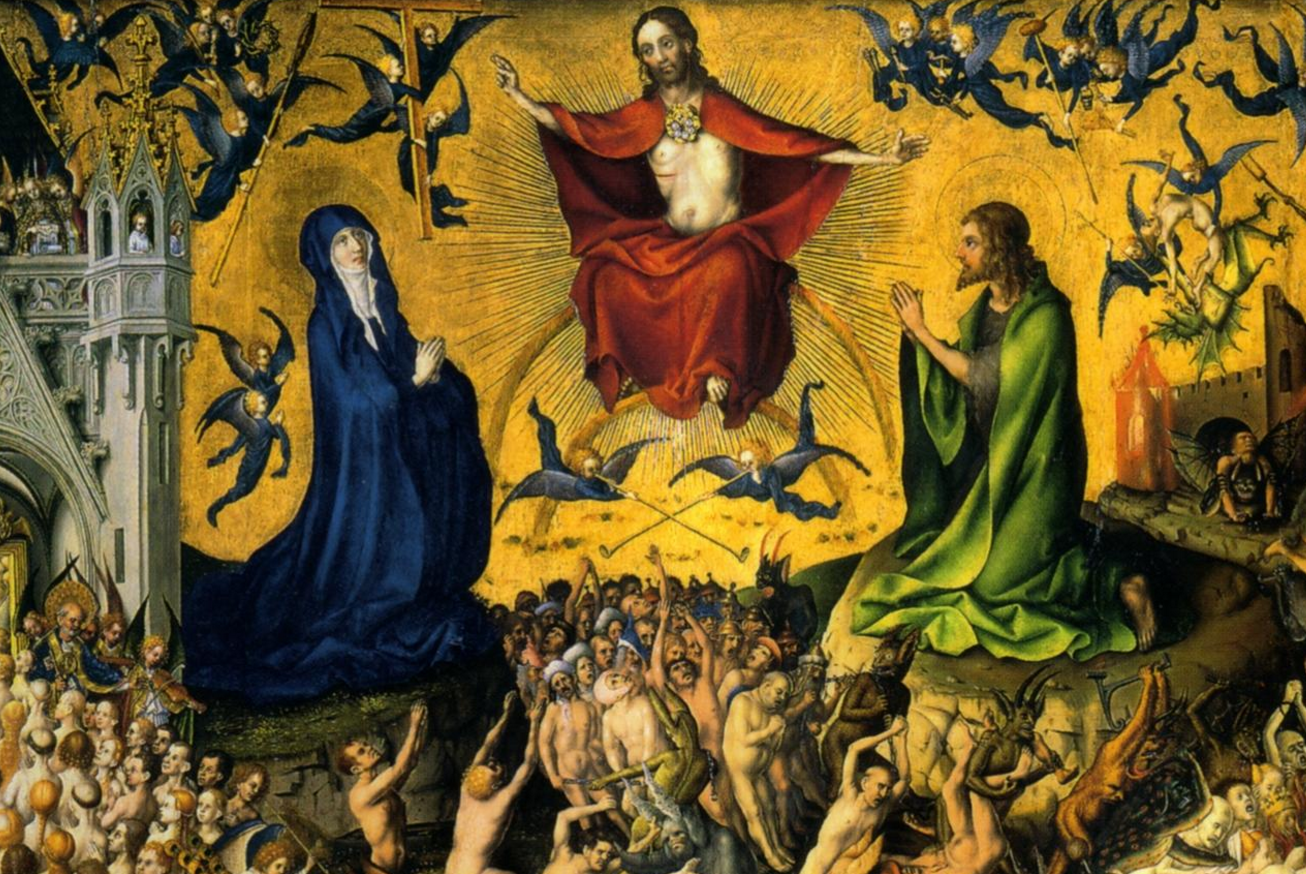
last-judgementOne of the paradoxes of God’s mercy is that through it He punishes wrongdoing. At first glance, mercy and punishment seem contradictory.

But the apparent contradiction is rooted in the premise that punishment is the same as vengeance. This premise holds that the one who punishes is merely exacting revenge for some offense, or that the punishment is merely a way for the more powerful to vent their anger on the less powerful. It is true that parents sometimes punish their children with mixed motives; at times they may be venting their anger as they punish. But this is because they are imperfect parents. God, however, is a perfect Father. And when He punishes it is not mixed with these sinful qualities.

A proper understanding of punishment is that it allows the one punished to experience the negative effects of his bad behavior in a small way, so that he does not experience far worse effects.

Consider a young boy who has been commanded by his parents not to cross the busy street without an older person to escort him. This warning is issued in love. The parents are not trying to take away his fun or limit his freedom; they are trying to protect him from harm. But what if the boy does cross the street unescorted and his parents find out about it? Likely they will, and should, punish him. Perhaps as punishment the boy is confined to his room to three hours.

Notice what is happening in this example. A smaller injury is inflicted in order to avoid a much more serious one. After all, which is worse, a three hour “time out” or being struck by a car? It is clear that the purpose of the punishment is to allow a small amount of pain in order to avoid a much worse situation.

When God punishes, He is often acting in the same manner. He will allow or inflict pain so that we avoid the pain that would be caused if our bad behavior spiraled downward into more serious matters and ended in the far worse pain of eternal Hell. When properly applied (and it always is so when applied by God), punishment is salutary. It helps bring an end to bad and ultimately hurtful behavior, and usually results in good and constructive behavior.

Hence punishment is integral to mercy and love. But love here must be understood as the strong and vigorous love that speaks the truth and insists upon it as the only basis for real and lasting fulfillment.

The Letter to the Hebrews has a remarkable passage that spells out the true contours of punishment and discipline rooted in God the Father’s true and vigorous love for us:

My son, do not disdain the discipline of the Lord or lose heart when reproved by him; for whom the Lord loves, he disciplines; he scourges every son he acknowledges. Endure your trials as “discipline”; God treats you as sons. For what “son” is there whom his father does not discipline? If you are without discipline, in which all have shared, you are not sons but bastards. Besides this, we have had our earthly fathers to discipline us, and we respected them. Should we not (then) submit all the more to the Father of spirits and live? They disciplined us for a short time as seemed right to them, but he does so for our benefit, in order that we may share his holiness. At the time, all discipline seems a cause not for joy but for pain, yet later it brings the peaceful fruit of righteousness to those who are trained by it. So strengthen your drooping hands and your weak knees. Make straight paths for your feet, that what is lame may not be dislocated but healed (Heb 12:5-13).

Note that those who are without discipline are provocatively called “bastards.” It is interesting that this word, which originally referred simply to a child born out of wedlock, has come to mean someone who is obnoxious, self-centered, or incorrigible. When a child grows up without the discipline of a father, he often becomes a “bastard” in both the ancient and modern senses of the word. In our use of this rather impolite word we are describing what happens to a person who does not know discipline.

Many children today have not known proper discipline. This leads to any number of ills: bad and self-destructive behavior, arrogance, a disrespectful attitude, incorrigibility, hostility, selfishness, greed, insensitivity, lack of self-control, and many other sociopathic tendencies.

Scripture says,

Whoever loves a son will chastise him often,
that he may be his joy when he grows up.
Whoever disciplines a son will benefit from him,
and boast of him among acquaintances…
Whoever spoils a son will have wounds to bandage,
and will suffer heartache at every cry.
An untamed horse turns out stubborn;
and a son left to himself grows up unruly.
Pamper a child and he will be a terror for you,
indulge him, and he will bring you grief….
Do not give him his own way in his youth,
and do not ignore his follies.
Bow down his head in his youth,
beat his sides while he is still young,
Lest he become stubborn and disobey you,
and leave you disconsolate (Sirach 30).

We need to rediscover the fact that punishment is part of love and is an act of mercy. It is not love to leave a child undisciplined. We are not helping the child in any way when we fail to discipline him. Surely discipline must be rooted in love. When it is, it leads to many positive effects. God, too, shows us His love in disciplining and punishing us.

St. Thomas Aquinas teaches, [F]raternal correction properly so called, is directed to the amendment of the sinner. Now to do away with anyone’s evil is the same as to procure his good: and to procure a person’s good is an act of charity, whereby we wish and do our friend well (Summa Theologica II, IIae, 33.1).

Mirror image – Up until now we have considered God’s punishment as a positive, if paradoxical, quality of His mercy and love. But now let’s consider a more negative approach that ponders what happens when God withdraws his merciful punishment.

It is indeed frightening that at some point God ceases to directly punish certain hardened sinners, be they individuals or nations. He no longer restrains them by His hand. Scripture speaks to this reality by saying, “God gave them up” to their sinful ways. Here are just a few such texts:

  1. And be not like your fathers, and like your brethren, who trespassed against the
    LORD God of their fathers, who therefore gave them up to desolation
    (2 Chon 30:7).
  2. But my people did not hearken to my voice, and Israel did not love me. So I gave them up unto the hardness of their heart, and they walked in their own counsels. Oh, if my people would hearken unto me and Israel would walk in my ways! I would soon subdue their enemies (Ps 81:12-14).
  3. Therefore, God gave them up in the lusts of their hearts to impurity, to the dishonoring of their bodies among themselves …. For this reason, God gave them up to dishonorable passions. For their women exchanged natural relations for those that are contrary to nature; and the men likewise gave up natural relations with women and were consumed with passion for one another, men committing shameless acts with men and receiving in themselves the due penalty for their error. God gave them up to a debased mind to do what ought not to be done … (Romans 1:24,26-28).

It would seem that this is God’s last-ditch effort to bring about conversion. St. Alphonsus teaches, [God] deprives them of his abundant graces and leaves them [only] with sufficient grace with which they can, but [likely] will not, save their souls (Considerations on the Eternal Maxims 17.2).

It has gotten so bad that only this last thing remains for God: to hand them over to the full experience of their sins. St. Alphonsus quotes Isaiah 5:5: I shall take away the hedge thereof and it shall be wasted. For indeed, gone is the hedge of holy fear, which brought divine protection.

While sinners may seem to have escaped unscathed for a while, the worst day of their life was the day when the Lord said to the sinner (or to the sinful nation), “Thy will, O sinner, be done.”

For indeed, to be punished no longer by the Lord is the worst punishment of all. Why? God punishes with mercy, but the sinner punishes himself without mercy. As King David once said, Let me fall into the hand of the Lord, for his mercy is very great, but do not let me fall into the hand of man (1 Chron 21:13). Further, it has been said that God forgives but nature does not. One cannot act contrary to the nature of things and expect to thrive in this world. Sooner or later, the consequences come—and without mercy. There is no greater suffering than when sin itself is the punishment for sin.

St. Alphonsus also notes,

God appears not to be enraged against certain sinners, “My jealousy will depart from you and I will cease to be angry” (Ez 16:42). He appears to allow them all they desire in this life. “I let them go according to the desires of their heart” (Ps 80:13). “Why”, says Jeremiah, “does the way of the wicked prosper?” (Jer 12:1) He then answers, “Gather them as sheep for the sacrifice” (Jer 12:3). There is no punishment great than when God … permits a sinner to add sin upon sin.

For their sake, one can only hope that the earthly consequences of their sin will stir them to final conversion. But if they do not, St. Alphonsus imagines that God will say to the finally unrepentant, “I will place before your eyes the mercies I have shown you, and will make these very mercies judge and condemn you” (Ibid, 17.3).

And thus in this negative way, we see that God’s punishments are far more merciful than any punishment the sinner will cause himself, or which nature or Satan will mete out.

Therefore, God’s punishments are an aspect of his mercy. Without them, the worst will surely befall us. Keep us in your mercy, O Lord, even a mercy that punishes. For it is far better to suffer blows from your hand than to suffer at the hands of men or nature. Mercy, Lord, mercy!

Beware of Fake Mercy – Behold True Mercy in the Call of St. Matthew

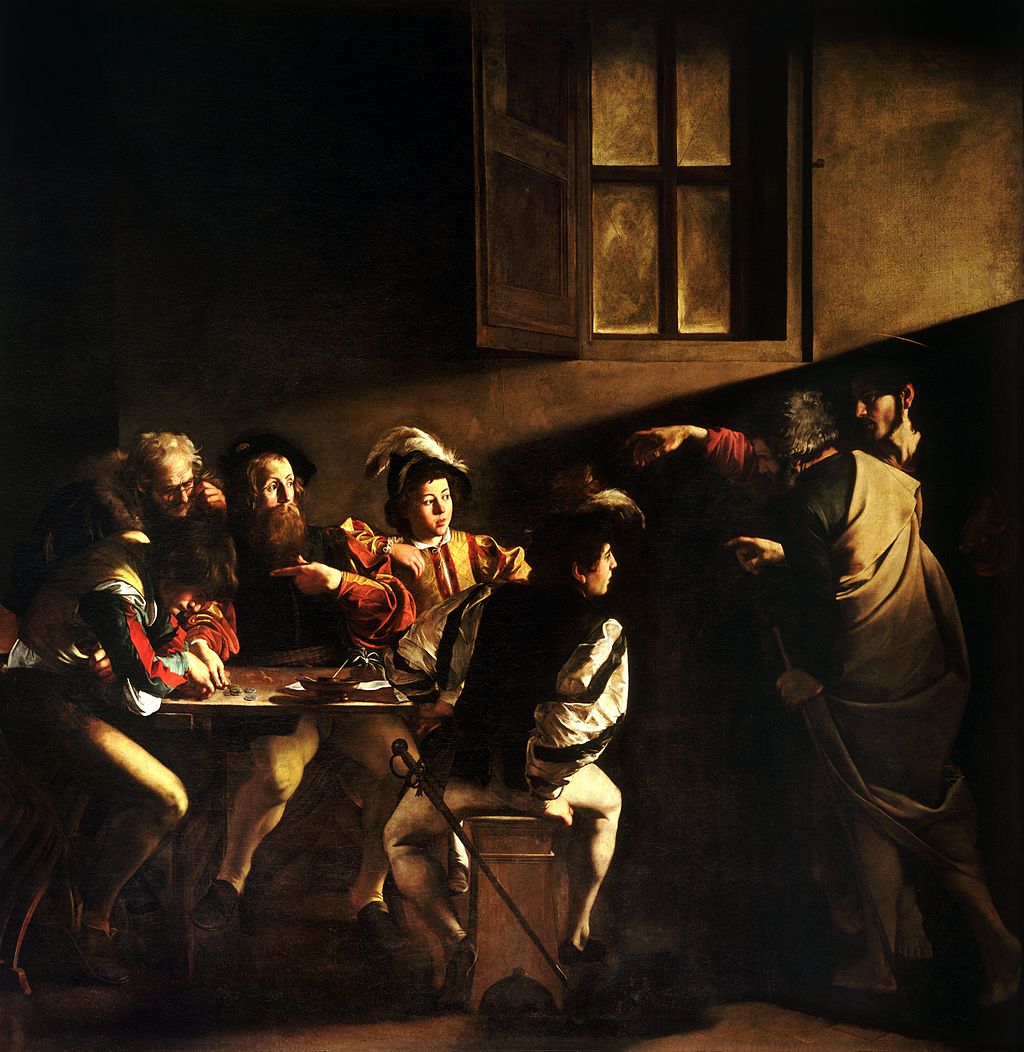
Calling-of-St-Matthew-CaravaggoThis year in particular (the year of mercy), we are summoned to reflect on the concept of mercy. Many think of mercy as an overlooking of sin rather than as a remedy for it. To some, the fact of God’s mercy is a sign that He doesn’t care about sin and is content to leave us in it. Those who speak to the reality of mercy are often called harsh, mean-spirited, etc. Many set mercy and sin in opposition to one another.

The Lord Jesus unites these realities together. For the Lord, mercy is necessary because there is sin, not because sin is “no big deal.” It is because sin is a big deal that mercy is needed and is glorious.

Bishop Robert Barron aptly states, Many receive the message of divine mercy as tantamount to a denial of the reality of sin, as though sin no longer matters. But just the contrary is the case. To speak of mercy is to be intensely aware of sin and its peculiar form of destructiveness (Vibrant Paradoxes: The Both/And of Catholicism, p. 1).

So mercy does not deny sin; it acknowledges it and supplies an often-challenging remedy. Jesus shows mercy by calling us from our sin and healing us from its effects.

This understanding is evident in the Gospel from Friday (Matt. 9:9-13 – Friday of the 13th week of the year).

As Jesus passed by,
he saw a man named Matthew sitting at the customs post.
He said to him, “Follow me.”
And he got up and followed him.
While he was at table in his house,
many tax collectors and sinners came
and sat with Jesus and his disciples.
The Pharisees saw this and said to his disciples,
“Why does your teacher eat with tax collectors and sinners?”
He heard this and said,
“Those who are well do not need a physician, but the sick do.
Go and learn the meaning of the words,
I desire mercy, not sacrifice.
I did not come to call the righteous but sinners
.”

Notice three things from this Gospel about the relationship of mercy to sin.

I. In His mercy, Jesus reckons us as sinners and regards us as sick. Jesus states plainly, “I have come to call sinners” (this means us). He also says that those who are well do not need a doctor, but the sick do (this means us).

We live in times when many have been deceived; they call their sin good and something to be proud of. They say, “God made me this way,” or “God likes me just the way I am.” No, to those such as these the Lord Jesus says, “You are sick. You are a sinner.” An antiphon in the Breviary says, God sees all men as sinners, that he might show them his mercy.

So in His mercy Jesus does not overlook sin or call it something good; he calls it what it is: sin and sickness.

II. In His mercy, Jesus summons us to change. In this Gospel, Jesus calls Matthew away from His tax post. He says, “Follow me.” The translation is “Stop what you are doing, come away from it, and follow me out of here.” To the woman caught in adultery He says, “Do not sin again.” Jesus began His ministry by saying, “Repent and believe the Gospel.” To repent (metanoiete) means to change, to come to a new and different mind.

The changes Jesus insists upon are too numerous to list in their entirety, but among them are that we become free of vengeful anger, lust, greed, retaliation, and unforgiveness, and that we become more generous, loving, serene, faithful, and trusting.

Thus in His mercy Jesus does not confirm us in our sin; He summons us away from it. He summons us to change and equips us to do so. His merciful call is, “Come away from here. Enough of this; follow me.”

III. In His mercy, Jesus heals sinners of sin – Jesus uses the image of a doctor and states plainly that sick people (sinners) need a doctor. Jesus is that doctor. A doctor does not look at a sick patient and say, “You’re just fine the way you are” or “I affirm you.” That would be malpractice. Jesus sees sin for what it is. He calls it such and prescribes the necessary medicines. He will also likely speak to a person’s lifestyle and recommend needed changes. This is how a doctor heals.

Jesus invokes the image of a doctor for what he does. He diagnoses and says, “This is bad. This is sickness. This is sin.” He then applies healing remedies such as the Sacraments, the Holy Liturgy, His Word, the carrying of the cross, active and passive purifications, punishments due to sin, solid moral teaching, and holy fellowship. Like a doctor, Jesus summons us from a bad and unhealthy life to a good and healthy one.

Thus, in his mercy Jesus heals our sins. He does not ignore them or approve them and certainly does not call them good or something to celebrate. In his mercy he heals them, he ends them.

So mercy is not a bland kindness. It is not mere flattery that pretends sin does not exist or matter. Beware of fake, flattering mercy. True mercy says, “Sin is awful. Let’s get out of here and go to a far better place.”

Matthew got up and followed Jesus. How about us?