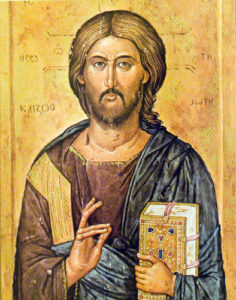
The Divinity of Jesus

In the Scriptures at daily Mass this week (the fifth week of Lent) we have pondered the lengthy debates that the Jewish leaders pressed upon our Lord. They are recounted in John’s Gospel as well as elsewhere.

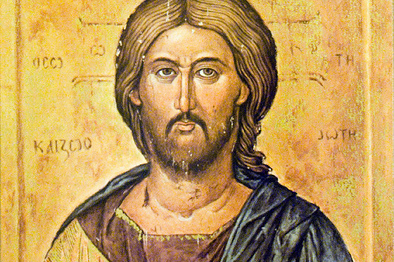
At the heart of the debate is Jesus’ divinity and His appropriation of divine actions and authority unto Himself. Although he offers four proofs of His divinity and His identity as Messiah and Lord, the Jewish leaders steadfastly refuse to believe Him. The four proofs are these: He fulfills the prophecies of the Messiah; He works miracles; John the Baptist testified to Him; and the Father testifies in their hearts (see Jn 5:31-40).

I have written more elsewhere on these four proofs (here), but in today’s post I will consider some of the biblical evidence of His divinity.

The biblical evidence of Jesus’ divinity is remarkably rich and consistent throughout the New Testament. Although I provide many Scripture citations below, I cannot include most of the texts, because doing so would dwarf the rest of the post. Perhaps at some point in the future I will publish a version containing all of the detailed citations and/or hyperlinks. For now, though, let these suffice to show forth a glorious scriptural affirmation of the divinity of Our Lord Jesus Christ.

1. As a premise, we should recall that the divinity of Christ is clearly a dogma of the Faith (de Fide). The divinity and divine Sonship of Jesus is expressed in all of the creeds. It is perhaps most clearly stated in the Athanasian Creed (Quicumque): “… we believe and confess that Our Lord Jesus Christ is the Son of God. He is God and man. He is God begotten of the substance of the Father before all ages and man born in time of the substance of His Mother. He is Perfect God and perfect man.”

2. There are many passages in the Old Testament that express the qualities of the coming Messiah, among them are some very exalted titles:

  • a prophet (Dt. 18:15,18)
  • a priest (Psalm 109:4)
  • a shepherd (Ez 34:23ff)
  • King and Lord (Ps 2; Ps 44; Ps 109; Zach 9:9)
  • a suffering servant (Is. 53)
  • the Son of God (Ps 2:7; 109:3)
  • God with us (Emmanuel) (Is 7:14; Is 8:8)
  • Wonderful Counselor, Mighty God, Father of the world to come, Prince of Peace (Is 9:6)
  • Eternal King (Dan 7:14)

3. In the New Testament, the Father attests to the divine Sonship of Jesus (Mt 3:17; 17:5; Mk 9:7; Lk 3:22; 9:35; Jn 1:34; II Pt 1:17).

4. In the Gospels, the Lord Jesus gives testimony to His own divinity and self-knowledge. He is of noble stature. He knows of His dignity and power, expressing it often in the following ways:

  • Jesus indicates that He transcends the prophets and Kings of the Old Covenant.
    • Jonah and Solomon – (Mt 12:41ff; Lk 11:31ff)
    • Moses and Elijah – Matt 17:3; Mk 9:4; Lk 9:30
    • King David – (Mt 22:43ff Mk 12:36; Lk 20:42ff)
    • He says that the least born into His Kingdom will be greater than John the Baptist who, until that time, was considered the greatest man born of woman (Mt 11:11; Lk 7:28).
  • Jesus teaches that He is superior to the angels.
    • The angels are His servants and minister to Him (Mt 4:11 Mk 1:13; Lk 4:13).
    • The angels are His army (Mt 26:53).
    • The angels will accompany Him at His second coming and do His will (Mt 16:27; 25:31; Mk 8:38; Lk 9:26).
  • Jesus appropriates divine actions unto Himself and thus sets forth an assimilation unto the Lord God.
    • He declares that it was He who sent the prophets and doctors of the Law (Mt 23:34; Lk 11:49).
    • He gives the promise of His assistance and grace (Lk 21:15).
    • He forgives sins, which power belongs to God alone (e.g., Mt 9:2).
    • He, by His own authority, completes and changes some precepts of the Law (Mt 5:21ff).
    • He declares Himself to be Lord of the Sabbath (Mt 12:8; Mk 2:28; Lk 6:5; Jn 5:17).
    • Like the Heavenly Father, He makes a covenant with His followers (Mt 26:28; Mk 14:24; Lk 22:20).
  • Jesus makes divine demands upon his followers.
    • He rebukes some for lack of faith in Him (Mt 8:10-12; 15:28).
    • He rewards faith in Him (Mt 8:13; 9:2; 22:29; 15:28; Mk 10:52; Lk 7:50; 17:19).
    • He demands faith in His own person (Jn 14:1; 5:24; 6:40,47; 8:51; 11:25ff).
    • He teaches that rejection of Him and His teachings will be the standard of final judgement (Lk 9:26; Mt 11:6).
    • Jesus demands supreme Love for Him, which surpasses all earthly loves (Mt 10:37,39; Lk 17:33).
    • He accepts religious veneration by allowing the falling to the feet, a veneration due to God alone (Mt 15:25; 8:2; 9:18; 14:33; 28:9,17).
  • Jesus is well conscious of His own power (Mt 28:18).
    • He works many miracles in his own name.
    • He transfers this power to His disciples.
  • Jesus knows and teaches that His own death will be an adequate atonement for the forgiveness of the sins of the whole human race (Mt 20:28; 26:28).
  • Jesus appropriates to Himself the office of Judge of the World, which according to the Old Testament (e.g., Ps 49:1-6), God would exercise (e.g., Mt 16:27). His judgment extends to every idle word (Mt 12:36), and will be final and executed immediately (Mt 25:46).
  • Jesus is conscious of being the Son of God.
    • Jesus clearly distinguishes His claim in this regard from His disciples’ relationship to the Father. When He speaks of His own relationship with God He says, “My Father.” However, when He addresses the disciples, He calls God “Your Father.” He never unites Himself with them in the formula “Our Father,” thus maintaining a distinction (Jn 20:17).
    • Jesus first reveals Himself to be the Son of God in the temple, when He remarked to Mary and Joseph that He must be about His Father’s business (Lk 2:49).
    • Jesus claims to be both Messiah and Son of God in the presence of the Sanhedrin (Mk 14:62). The Sanhedrin perceive this as blasphemous.
    • Jesus tells a story of himself in the Parable of the Evil Husbandmen, thus confessing himself to be the only Son of God.
    • Jesus is aware of being one with the Father (“The Father and I are one” (Jn 10:30,38). The Jews respond by accusing Him of blasphemy.
  • In John’s Gospel, Jesus indicates that
    • He is eternal “Before Abraham was, I am” (Jn 8:58);
    • He has full knowledge of the Father (Jn 7:29; 8:55; 10:14ff);
    • He has equal power and efficacy with the Father (Jn 5:17);
    • He can forgive sins (Jn 8:11 et sicut supra);
    • He is Judge of the World (Jn 5:22,27 et sicut supra);
    • He is rightly to be adored (Jn 5:23);
    • He is the light of the world (Jn 8:12);
    • He is the way, the truth, and the light (Jn 14:6);
    • His disciples may and ought to pray to the Father in His name (Jn 14:13ff, 16:23ff);
    • His disciples may pray to Him (Jesus) (Jn 14:13ff, 16:23ff);
    • the solemn confession of the Apostle Thomas, “My Lord and my God,” is acceptable and in fact an act of faith (Jn 20:28).
  • Other Scripture passages on the divinity of Christ:
    • And we know that the Son of God is Come and has given us Understanding that we may know the true God and may be in His True Son; this is the True God and Life Eternal (1 John 5:20).
    • In the beginning was the Word and the Word was with God and the Word was God (Jn 1:1-14).
    • Your attitude should be the same as that of Christ Jesus: Who, being in very nature God, did not consider equality with God something to be grasped … and every tongue must confess to the Glory of God the Father that Jesus Chirst is Lord (Phil 2:5-11).
    • … to them, (the Israelites) belong the patriarchs and of their race, according to the flesh is the Christ, who is God over all blessed forever (Rom 9:5).
    • Looking for the blessed hope and coming of the glory of the great God and our Savior, Jesus Christ (Titus 2:13).
    • But to the Son (God says): Your Throne, O God is for ever and ever (Heb 1:8).
  • Scripture attributes divine qualities to Jesus:
    • omnipotence, manifest in the creation and the conservation of the world (Col 1:15-17; 1 Cor 8:6; Heb 1:2ff)
    • omniscience – In Christ are hidden all the treasures of wisdom and knowledge (Col 2:3)
    • eternity – He is before all things, and in him all things hold together (Col 1:17)
    • immutability (Heb 1:12; 13:8)
    • adorability (Phil 2:10; Heb 1:6)

Well, I hope you get the point. Those who claim that Jesus didn’t know He was God or that He never made divine claims just haven’t read the Scriptures. Jesus is Lord. He is God. All things came to be through Him and He holds all creation together in Himself. Those who have denied His divinity will one day fall to their faces before His glory (Rev. 1:17).

Here is a powerful clip from the movie The Gospel of John. The words you will hear are taken directly from Scripture; there is no “Hollywoodization.”


The Pain of Greed

There is a text in the Office of Readings that speaks to the connection between greed, affluence and dissatisfaction.

The foreign elements among them were so greedy for meat that even the Israelites lamented again, “Would that we had meat for food! We remember the fish we used to eat without cost in Egypt, and the cucumbers, the melons, the leeks, the onions, and the garlic. But now we are famished; we see nothing before us but this manna.” … [The LORD replied,] “To the people, you shall say: Sanctify yourselves for tomorrow, when you shall have meat to eat. For in the hearing of the Lord you have cried, ‘Would that we had meat for food! Oh, how well off we were in Egypt!’ Therefore, the Lord will give you meat for food, and you will eat it, not for one day, or two days, or five, or ten, or twenty days, but for a whole month—until it comes out of your very nostrils and becomes loathsome to you. For you have spurned the Lord who is in your midst, and in his presence you have wailed, ‘Why did we ever leave Egypt?’” (Numbers 11:4-6, 18-30)

I have written before about the Israelites preferring slavery in Egypt, with its melons, leeks, and cucumbers (here), but in today’s reflection I would like to emphasize how what we desire can eventually become loathsome to us. The Lord says that not only would He give them the meat they asked for, but that He would do so until it comes out of your very nostrils and becomes loathsome to you. In this way, He reminds us that our greed for earthly things will eventually bring us consequences that disgust us.

What is greed? It is the insatiable desire for more. By it, we desire far more than we need; in fact, we can never be satisfied.

  1. Whoever loves money never has enough; whoever loves wealth is never satisfied with their income. This too is emptiness (Eccles 5:10).
  2. All the toil of man is for his mouth, yet his appetite is not satisfied (Ecclesiastes 6:7).
  3. All streams run to the sea, but the sea is not full; to the place where the streams flow, there they flow again. All things are full of weariness; a man cannot utter it; the eye is not satisfied with seeing, nor the ear filled with hearing (Eccles 1:7-8).
  4. Sheol and Abaddon are never satisfied, nor are the eyes of man ever satisfied (Proverbs 27:20).

In the passage from Numbers, God fed the people with the miraculous manna from Heaven. However, even food from the very hand of God is not enough for the faithless and the greedy.

The sinful drive of greed will always protest unless we, by God’s grace, learn to curb it. Greed will always make us think that we need more; that we need what we want, in the way that we want it, and exactly when we want it. And if we get all that, we are still not satisfied; we simply become more particular, fussy, and demanding. Indeed, we have never had so many consumer options, comforts, and conveniences; and yet I would say that on the whole we have never been more unhappy. In this age of comfort and convenience, psychotherapy and psychotropic medications are big businesses. Misery indexes, consumer confidence surveys, and opinion polls often show high levels of fear, dissatisfaction, and anger. It is the same with our health. We have never lived so long and been so healthy, yet we have never worried more about our health.

Yes, no matter how much we have, it is never enough; and we are all afflicted with greed to some extent.

Greed is one of the under-confessed sins of our time. It is always the other guy who is greedy, the one who earns more than I do; he is the greedy one.

No, greed is common a human problem, and it takes a heavy toll on us all by robbing us of gratitude, satisfaction, and joy with what we have. Greed robs us of the ability to enjoy life and to savor what is before us.

Even more, God teaches that greed punishes us with the very excess it drives us to desire. God says of this greed that it will sicken us with its excess: until it comes out of your very nostrils and becomes loathsome to you.

What does our present age with its unprecedented comforts and conveniences actually afford us? Stress, overwork, and worry seem to be our common lot. We are all in a big hurry to get somewhere, to get on to the next thing.

Consider a simple thing like a car or a cell phone—great conveniences, right? Yet they seem to bring more stress. Our cars raise the expectation that we should reasonably be all over God’s green acre with little care for the actual human cost of making the trip and sitting in traffic. Our cell phones make us available at any time of the day or night; there is little or no quiet in our lives; relationships are more often virtual than real.

At some point it all starts to seem loathsome to us. We have more and more, the latest and greatest, the most recent upgrade—more and more until it comes out of our nostrils. We start to long for simplicity and for a time before we ever knew we “needed” all this stuff. Yet we cannot imagine how to pull free from so much of it. Life without a cellphone? Life without Facebook? Are you kidding? All of our gadgets and advanced technology have not freed us; they have ensnared us. And still our greed drives us to want more.

Scripture says, The sleep of a laborer is sweet, whether they eat little or much, but as for the rich, their abundance permits them no sleep (Eccles 5:12). And this is largely true. Despite all our labor-saving devices we are busier and more restless than ever.

Yes, God’s word is true. Greed ignites an insatiable desire for more. At some point, God’s remedy is to permit us to obtain so much that it becomes downright loathsome to us; through this we discover that less is more.

Simplicity may be difficult to achieve in times like these. Living in an Amish village is not an option for most of us, but deciding what is important and then focusing on it is a step in the right direction. To an age that cries out” “You can have it all,” we must learn to respond, “No, I can’t. We have to accept that “all” is too much and that less is more.

Affluence and abundance usually seem unambiguously good to us, but they are not; they bring human costs that we too seldom weigh. Scripture says, The rich may be able pay a ransom for their lives, but the poor won’t even get threatened (Prov 13:8). In other words, in our abundance we have too much to lose and so are easily threatened. There is a paradoxical kind of freedom that comes from having and needing less.

God’s Word is true. The text from Numbers above provides wisdom, as does this teaching from the Holy Spirit through St. Paul:

But godliness with contentment is great gain, for we brought nothing into the world, and we cannot take anything out of the world. But if we have food and clothing, with these we will be content. But those who desire to be rich fall into temptation, into a snare, into many senseless and harmful desires that plunge people into ruin and destruction. For the love of money is a root of all kinds of evils. It is through this craving that some have wandered away from the faith and pierced themselves with many pangs (1 Tim 6:6-10).

This song in the video below says, “It’ll wear you out, dealin’ with too much stuff.”

The Use of Irony in John’s Gospel

Sunday’s Gospel about the raising of Lazarus points to a supreme irony in the Gospel of John: Jesus’ very act of raising Lazarus from the dead confirms the Jewish temple leaders in their conviction to kill Him. The contrast could not be clearer. Jesus, who brings life, is opposed by the death-dealing conviction of His opponents. This is but one example of Johannine irony serving to highlight the differences between Jesus and His opponents.

Irony is a literary technique that highlights a striking difference between two or more situations; this difference is known by the audience or readers while the characters in the narrative are unaware.

Another form of irony uses words to express something quite different from their typical meaning. A blind man may “see” better than those with vision. One considered a teacher may be ignorant of truths apparent to the most unlearned and simple of people.

The irony in the story of Lazarus comes several verses after the portion we read this past Sunday. The pertinent passage reads,

Therefore, many of the Jews who had come to Mary, and had seen what Jesus did, believed in Him. But some of them went to the Pharisees and told them what Jesus had done. Then the chief priests and Pharisees convened the Sanhedrin and said, “What are we to do? This man is performing many signs. If we let Him go on like this, everyone will believe in Him, and then the Romans will come and take away both our place and our nation.” But one of them, named Caiaphas, who was high priest that year, said to them, “You know nothing at all! You do not realize that it is better for you that one man die for the people than that the whole nation perish.” Caiaphas did not say this on his own. Instead, as high priest that year, he was prophesying that Jesus would die for the nation, and not only for the nation, but also for the scattered children of God, to gather them together into one. So from that day on they plotted to kill Him. As a result, Jesus no longer went about publicly among the Jews, but He withdrew to a town called Ephraim in an area near the wilderness. And He stayed there with the disciples (John 11:45-54).

Yes, this passage is dripping with irony. The occasion of Jesus raising a man from the dead causes the Pharisees to plot His death. He who gives life must be put to death.

A second irony is that Caiaphas “accidentally” speaks the truth. He conspires in murder, but his office of prophet remains! He cannot help but speak the truth because he is High Priest. His prophecy is true, but only in a way very different from what he intends. He is like Balaam’s donkey, which spoke the truth, but as a beast, knew not of what it spoke. Thus Caiaphas is a prophet, but only in an accidental, unknowing way.

Yes, John’s Gospel is rich with irony—in a gleeful, sharp, sarcastic way. We human beings are prone to becoming fodder for irony because we are so fickly and inconsistent; we often play into divine plans even as we resist them!

Consider some other examples of Johannine irony:

I. Straining gnats and swallowing camels – Jesus has been brought before Pilate on trumped up charges. Yes, they have an innocent man on trial and conspire to have him murdered. Yet despite this wickedness, John reports, the Jewish leaders did not enter the Praetorium [the Governor’s palace] to avoid being defiled and unable to eat the Passover (Jn 18:28).

They are more concerned with the ritual impurity of entering the house of a Gentile than the fact that they are conspiring to murder an innocent man (who happens to be the Son of God)!

Yes, this is dripping with irony, a kind of sarcastic and tragic irony. In their foolishness and blindness, they will consider themselves worthy to eat the Passover because they did not enter the house of a Gentile. Never mind that they have conspired to murder an innocent man.

II. Who is really blind here? – In the story of the man born blind (John 9) there are numerous ironies. The blind man himself says to the Pharisees who interrogate him, That is remarkable indeed! You do not know where He is from, and yet He opened my eyes (Jn 9:30). In other words, who is really the blind one here? Why should the student have to teach the teacher?

The blind man (who ironically can now see better than the supposed teachers and enlightened ones) instructs them of what they should know: Never before has anyone heard of opening the eyes of a man born blind. If this man were not from God, He could not do anything like this (Jn 9:32-33).

Jesus later doubles down on the irony by declaring, within earshot of the religious leaders, For judgment I have come into this world, so that the blind may see and those who see may become blind (Jn 9:39). They then continue, foolishly and blindly, to take the bait: Some of the Pharisees who were with Him heard this, and they asked Him, “Are we blind too?” “If you were blind,” Jesus replied, “you would not be guilty of sin. But since you claim you can see, your guilt remains” (Jn 9:40-41).

The caustic irony cannot be missed. The rhetorical question remains, “Who is really blind here?”

III. The “enlightened” ones stumble about in the dark – One of the themes in John’s Gospel is the battle between light and darkness. This theme is announced in the prologue: The Light shines in the darkness, and the darkness has not overcome it (Jn 1:5). Jesus is the Light of the World, but men have shown that they prefer the darkness due to their wickedness (See John 3:19).

Jesus also says, Are there not twelve hours of daylight? If anyone walks in the daytime, he will not stumble, because he sees by the light of this world. But if anyone walks at night, he will stumble, because he has no light (Jn 11:9).

When Judas leaves the Last Supper to betray Jesus, John merely says, “It was night.” He is not just telling us the time of day. Darkness now has its hour. Although Judas and his conspirators consider Jesus misguided and dangerous, they think that they are the enlightened ones, knowing better than Jesus, who is the true Light.

Here comes the irony: Jesus is in the garden of Gethsemane. He and His apostles made it there by the light of Passover moon and because Jesus is the light of the World. In a scene dripping with irony, John notes that as Judas approached the moonlit garden he brought a band of soldiers and officers from the chief priests and Pharisees. They arrived at the garden carrying lanterns, torches, and weapons (John 18:3). Yes, they stumble about on a moonlit night needing torches and lanterns to find their way.

IV. The arresters are arrested – Jesus, knowing their intentions and noting that they have trouble seeing, stepped forward and asked them, “Who are you looking for?” “Jesus of Nazareth,” they answered. Jesus said, “I AM.” And Judas His betrayer was standing there with them. When Jesus said, “I AM” they drew back and fell to the ground (Jn 18:4-6).

This is a kind of comedic irony. Sent to arrest Jesus, they are arrested by Him! The implication is that He almost needs to help them up from their fall. They are so overwhelmed by the authority of Jesus and His Divine Name that they fall backwards to the ground.

Some argue that their falling to the ground is a voluntary sign of reverence for the Divine Name. Maybe, but if so, then this is merely another supreme irony: that they would show reverence for the Divine Name while at the same time assisting in an act of betrayal and in the arresting of an innocent man.

V. The decider is indecisive – The description of the trial before Pilate in John’s Gospel is an ironic portrait of Pilate. Though possessed of great local power and the ability to decide Jesus’ fate in a way that will be unquestioned, Pilate is weak and vacillating. He is this way because of his ambition. He fears the crowd and their capacity to riot. Such an occurrence would be a huge blot on his record and likely prevent his future advancement.

Deep within his conscience, Pilate knows that Jesus is innocent of the charges. He correctly suspects that the Jewish leadership has brought Him up for unjust reasons and are serving their own interests more so than justice or religious conviction.

In chapters 18 and 19, John paints a physical picture of Pilate’s vacillation by describing his going in and out of the Praetorium (Governor’s palace) numerous times. In 18:28, Pilate goes out to address the Jews. In 18:33 He goes back into the Praetorium to speak with Jesus. In 18:38, Pilate goes back out to the Jews to say that he finds no guilt and tries to negotiate Jesus’ release. In 19:1, Pilate is back in the Praetorium and yet another compromise indicates that Jesus should be scourged but not killed. In 19:4, Pilate goes back out to the Jews hoping that the scourging of Jesus will have satisfied them. Though he said he had found no guilt in Jesus, he presents Him again after His scourging! Why have Jesus scourged (a terrible punishment) if he found no guilt in Him? Of course the Jewish leaders were still not satisfied and demanded Jesus’ crucifixion. Pilate’s fears grow and in 19:9 he goes back into the Praetorium to speak yet again with Jesus. Although Pilate asserts that he has the power to kill or release Him, Jesus looks at this deflated and fearful man and reminds him that he would have no power at all if God had not bestowed it on him. Finally, Pilate emerges one last time in 19:13 and in anger violates his own conscience and hands Jesus over to be crucified.

The dramatic irony is hard to miss. Here is a seemingly powerful man with the office to decide life or death, yet indecisive. He is a vacillator, swaying in the breeze of public opinion. On seven different occasions he goes into or out of the Praetorium. John’s portrait of this leader is dripping with irony. Pilate is more a follower than a leader.

VI. The judge is put on trial – John describes another irony within this irony. Although Jesus is on trial, at a key point He turns the tables on Pilate and it is Pilate who is on trial.

Usually in a trial the defendant is required to answer questions. Pilate begins by asking, “Are you the king of the Jews?” (Jn 18:33) Jesus turns the tables on Pilate and asks him, “Are you saying this on your own, or did others tell you about Me?” (Jn 18:34) Later, when Pilate asserts his authority to pass sentence on Jesus, Jesus reminds him that he would have no authority if God had not granted it to him.

Finally, when the critical moment to pass judgment comes, John writes, When Pilate heard this, he brought Jesus out and he sat down on the judge’s seat at a place known as the Stone Pavement (Jon 19:13). The Greek text is ambiguous as to who is sitting on the judge’s seat. Does the “he” who sat down on the judge’s seat refer to Pilate or to Jesus? Historically, it was Pilate who sat in the judge’s seat, but grammatically it is ambiguous.

John underscores the irony: Who is really being judged here? Clearly it is actually Pilate who has come under judgment for violating his conscience and succumbing to fear. Yes, it is another dramatic irony wrapped in a grammatical ambiguity.

There are other ironies in John’s Gospel (such as Nicodemus, the enlightened teacher who comes to Jesus by night but needs to be taught Jn 3:10), but allow these examples to suffice.

The use and uncovering of irony is a memorable way to teach. John and the Holy Spirit who inspired him do not hesitate to make use of it. Ultimately, irony exists because we human beings are fickle and often pretentious. Such qualities are the fuel of irony.

The Anatomy of a Sin

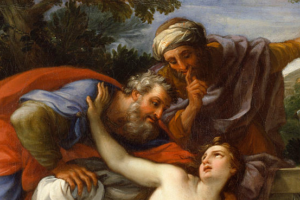
The first reading from Monday’s Mass (Monday of the 5th Week of Lent) is the story of Susanna, an extraordinary moral tale from the Book of Daniel. The full passage (which is quite lengthy) can be found here: Daniel 13:1-62. Interestingly, it is missing from Protestant bibles, which use a truncated version of the Book of Daniel. It is not well-known among Catholics, either, because it is only read once each year, at a weekday Mass.

The story is of a beautiful young woman, Susanna, who is married to a man named Joakim. One day as she is bathing in a private garden, two older men who have hidden themselves there try to seduce her. When Susanna rebuffs their brazen overture, they threaten to falsely accuse her of having committed adultery with a young man in the garden if she does not submit to their desires. She still refuses and they follow through with their threat, even demanding that she be stoned. Things look bleak for Susanna until Daniel comes to the rescue; through crafty interrogation he exposes their lie. The story is a small masterpiece; if you have never read it, I recommend you do so.

In the course of this engaging tale is a lesson on the anatomy of a sin. In a remarkable description, the story describes three sources from which their sin springs. The text says, They suppressed their consciences; they would not allow their eyes to look to heaven, and did not keep in mind just judgments (Daniel 13:9). I’d like to take a look at each of these three sources in turn.

1. They suppressed their consciences.What is the conscience? The Catechism puts it in this way: Deep within his conscience man discovers a law which he has not laid upon himself but which he must obey. Its voice, ever calling him to love and to do what is good and to avoid evil, sounds in his heart at the right moment. … For man has in his heart a law inscribed by God. … His conscience is man’s most secret core and his sanctuary. There he is alone with God whose voice echoes in his depths (Catechism of the Catholic Church (CCC) # 1776). In effect, the conscience is the voice of God within us. God has written His Law in the heart of every human person.

We have a basic understanding of right and wrong; we know what we are doing. There may be certain higher matters of the Law that the conscience must be taught (e.g., the following of certain rituals or feasts days), but in terms of fundamental moral norms, we have a basic, innate grasp of right and wrong. We see and salute virtues like bravery, self-control, and generosity; we also know that things such as the murder of the innocent, promiscuity, and theft are wrong. For all the excuses we like to make, deep down inside we know what we are doing and we know that we know what we are doing. I have written substantially about conscience here.

Notice that the text says that they “suppressed their consciences.” Even though we know something is wrong we often want to do it anyway. One of the first things our wily mind will do is to try to suppress our conscience.

The usual way of doing this is through rationalizations and sophistry. We invent any number of thoughts, lies, and distortions to try to reassure ourselves that something is really OK—something that deep down inside we know is not OK.

We also accumulate false teachers and teachings to assist in this suppression of the truth. St. Paul wrote to Timothy, For the time will come when men will not put up with sound doctrine. Instead, to suit their own desires, they will gather around them a great number of teachers to say what their itching ears want to hear. They will turn their ears away from the truth and turn aside to myths (2 Tim 4:1-3).

Suppressing one’s conscience takes quite a bit of effort, and I would argue that one cannot ever do it completely. In fact, the whole attempt to suppress the conscience is not only a substantial effort, but also very fragile. This helps to explain the anger and hostility of many in the world toward the Church. Deep down they know that we are right. Often, even the slightest appeal to the conscience awakens its voice, causing an eruption of fear and anger.

So this is the first stage in the anatomy of a sin: the suppression of the conscience. In order to act wickedly without facing the deep psychological pain of significant guilt, the men in the story suppress the conscience in order to shut off the source of that pain.

2… they would not allow their eyes to look to heaven … – In order to sustain the rationalizations and sophistry necessary to suppress the conscience, one must distance oneself from the very source of conscience: God Himself.

One way to do this is to drift away from God through neglect of prayer, worship, study of the Word of God, and association with the Church, which speaks for God. As time goes own, this drifting may increase and the refusal to repent become more adamant. Drifting can finally lead to absence, which often manifests as outright hostility to anything religious or biblical.

Another way that some avert their eyes from Heaven is by redefining God. The revealed God of Scripture is replaced by a “designer God,” who does not care about this thing or that. “God doesn’t care whether or not I go to church, or if I shack up with my girlfriend.” On being shown Scripture contrary to their distorted notions, they often respond that St. Paul had “hang-ups” or that the Bible was written in primitive times.

Culturally, the refusal to look heavenward is manifest in the increasing hostility to the Catholic Christian faith. Demands that anything even remotely connected to the faith be removed from the public square are becoming increasingly strident. According to radical secularists, prayer in public, nativity sets, Church bells, any reference to Jesus or Scripture, etc. must all be removed; they refuse to turn their eyes heavenward or even have anything around that reminds them to do so.

The cumulative effect is that many people are no longer looking to Heaven or to God. Having suppressed their consciences, they now demand a public square absent any reference to God. Still others reinvent a fake God, a false kingdom, an idol. Either way, the purpose is to isolate and insulate the self from God and what He reveals. This makes it easier to maintain the rather exhausting effort of suppressing the conscience.

3… and did not keep in mind just judgment. Finally let’s throw in a little presumption that dismisses the consequences of evil acts. This, of course, is one of the biggest sins of our current age. There are countless people, even among Catholics in the pews and Catholic clergy, who seem to deny that they will ever have to answer to God for what they have done. This is completely contrary to Scripture, which insists that we will indeed answer one day to God for our actions.

This final stage is meant to eliminate the salutary fear that should accompany evil acts. At this stage, the sinner has had some success in alleviating the psychic pain of guilt and in eliminating a lot of the fear that used to accompany sin.

However, even after suppressing the conscience and refusing Heaven’s influence, some fear still remains. Now, an attack is made on any notion of consequences. Perhaps the sinner exaggerates the mercy and patience of God to the exclusion of His holiness, which sin cannot endure. Perhaps he denies the reality of Hell, which God clearly teaches. Perhaps he denies that God exists at all and thus holds that there is no judgment to be faced. Regardless of how he does it, the sinner must push back the fear the punishment and/or judgment.

Here, then is the anatomy of a sin. Having suppressed the conscience, having muted the voice of God to the extent possible and removed oneself from Heaven’s influence, and finally having denied that any negative consequences will ensue, one feels freer to sin. It is as though one has taken a number of stiff drinks to anesthetized oneself sufficiently to proceed.

Guess what, though, the pain is still there, deep down inside. The voice of conscience remains. Despite all the attempts to insulate himself from the true God, deep down the sinner still knows that what he is doing is wrong. Even the slightest thing that pricks his conscience causes unease. Increasingly, he resorts to anger, projection, name-calling, and/or ridiculing of anyone or anything that awaken his conscience. Sin is in full bloom now; repentance seems increasingly difficult and unlikely. Only the prayers and fasting of others for his sake will likely spring him loose from his deep moral sleep. Pray for the conversion of sinners!

Well, because this post has been a little heavy it, I’d like end on a lighter note:

Scripture Does Not Tell Us to Storm the Gates of Hell

Recently in my Our Sunday Visitor “Question and Answer” column came the following question from a Catholic convert, in reference to the traditional understanding of the Lord’s promise to the Church: the gates of Hell shall not prevail against it (Matt 16:18).

“Before my recent conversion, my (protestant) pastor said that Catholics misunderstand the text about the gates of Hell not prevailing against the Church. He said that it is silly that Catholics think of gates as if they were an offensive weapon being wielded against the Church. He said gates cannot attack us, they just sit there. Rather, he said, we are called to attack them. Gates are something to storm to enter a fortress. Thus, he said the text means that we are to storm Hell’s gates and take back territory from the devil and that the gates of Hell could not ultimately prevail against our attack.”

This interpretation has made the rounds in certain Protestant circles in recent years. In effect, it boils down to taking the word gates in a rather literal way. The pastor humorously pointed out that gates don’t normally go around attacking things. Such a comment elicits a good laugh, but humor or ridicule does not always disclose the truth. As it the case with many things, language admits of subtleties. Let’s explore the figurative meaning of the word gates.

The Greek word underlying our English translation is πύλαι (pulai), and gates is a fine translation.

However, Strong’s Greek Concordance and Greek Lexicon of New Testament indicates that in antiquity, pulai was also used to indicate authority and power.

Contextually, it would seem rather obvious that Jesus does not have literal gates in mind. First of all, Hell does not have iron or wooden gates. Second, because Jesus speaks of the gates as “not prevailing,” it would also seem that He has in mind something more than mere inanimate objects of some kind. As inanimate objects, gates do not prevail or lose; they just sit there. However, the powers of Hell can and do act.

Thus, it seems clear that our Lord uses the word gates in a figurative rather than literal sense. He likely means that the powers of Hell would not prevail against the Church, although they will surely try.

Finally, while there may be a certain pastoral sense in which the Church attacks the strongholds of the Hell in this world in order to gain back territory for the Kingdom, this is not really the best passage to make that point. Frankly, the Church should not seek to storm the gates of Hell! One storms gates in order to be able to get into the place they demarcate—but who wants to enter Hell? Should not the Church and her members seek to avoid going there? Is there not also an abyss that prevents those who enter Hell from escaping (see Luke 16:26)? Instead of hoping to storm the gates of Hell and get in, we hope that the gates of Hell are sealed off by the Lord and locked from the outside (see Rev 20:3)! There is no point in trying to enter Hell. Whatever is there is there permanently. There is no return from Hell.

Therefore, this rather trendy notion that we are to storm the gates of Hell should be set aside. Jesus clearly uses the gates of Hell as a metaphor for the power of Hell. Hell’s power will not ultimately prevail. God wins!

As for storming the gates of Hell—don’t do it! Our battleground is this world and the souls here for which we can still fight.

Taking Back What the Devil Stole from Me – A Homily for the Fifth Sunday of Lent

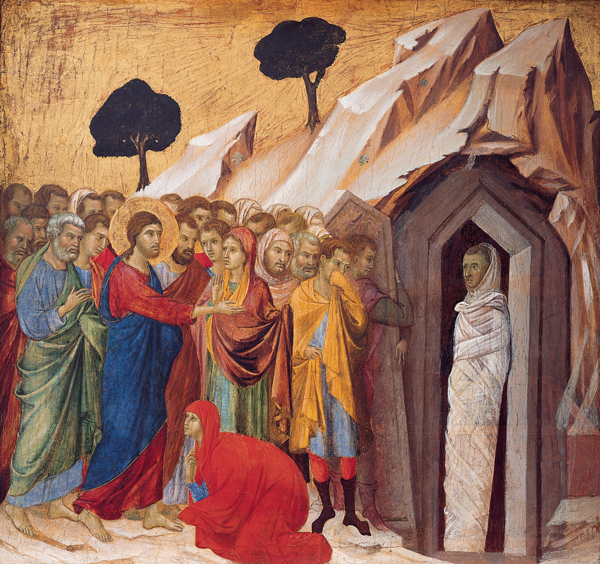
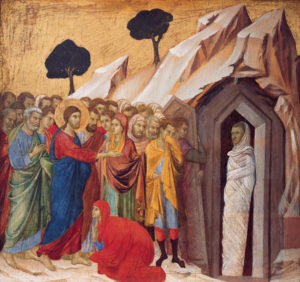
In today’s Gospel, we hear the story of the raising of Lazarus from the dead. The story marks a significant turning point in the ministry of Jesus: it is because of this incident that the Temple leadership in Jerusalem resolves to have Jesus killed.

As is proper with all the Gospel accounts, we must not see this as merely an historical happening of some two thousand years ago. Rather, we must recall that we are Lazarus; we are Martha and Mary. This is also the story of how Jesus is acting in our life.

Let’s look at this Gospel in six stages and learn how the Lord acts to save us and raise us to new life.

I. HE PERMITS. Sometimes there are trials in our life, by God’s mysterious design, to bring us to greater things. The Lord permits these trials and difficulties for various reasons. But, if we are faithful, every trial is ultimately for our glory and the glory of God.

Now a man was ill, Lazarus from Bethany, the village of Mary, and her sister Martha. Mary was the one who had anointed the Lord with perfumed oil and dried his feet with her hair; it was her brother Lazarus who was ill. So the sisters sent word to him saying, “Master, the one you love is ill.” When Jesus heard this he said, “This illness is not to end in death, but is for the glory of God, that the Son of God may be glorified through it.”

Notice that Jesus does not rush to prevent the illness of Lazarus. Rather, He permits it temporarily in order that something greater, God’s Glory in Jesus, be made manifest. In addition, it is for Lazarus’ own good and his share in God’s glory.

It is this way with us as well. We do not always understand what God is up to in our life. His ways are often mysterious, even troubling to us. But our faith teaches us that His mysterious permission of our difficulties is ultimately for our good and for our glory.

  1. Rejoice in this. You may for a time have to suffer the distress of many trials. But this so that your faith, more precious than any fire-tried gold, may lead to praise, honor, and glory when Jesus Christ appears (1 Peter 1: 10).
  2. But he knows the way that I take; when he has tested me, I will come forth as gold (Job 23:10).
  3. For our light and momentary troubles are producing for us an eternal glory that far outweighs them all. So we fix our eyes not on what is seen, but on what is unseen, since what is seen is temporary, but what is unseen is eternal (2 Cor 4:17-18).

An old gospel hymn says, “Trials dark on every hand, and we cannot understand, all the way that God will lead us to that blessed promised land. But He guides us with his eye and we follow till we die, and we’ll understand it better, by and by. By and by, when the morning comes, and all the saints of God are gathered home, we’ll tell the story of how we’ve overcome, and we’ll understand it better by and by.”

For now, it is enough for us to know that God permits our struggles for a season and for a reason.

II. HE PAUSES. Here, too, we confront a mystery. Sometimes God says, “Wait.” Again, this is to prepare us for greater things than those for which we ask.

Now Jesus loved Martha and her sister and Lazarus. So when he heard that he was ill, he remained for two days in the place where he was.

Note that the text says that Jesus waits because he loved Martha and Mary and Lazarus. This of course is paradoxical, because we expect love to make one rush to the aid of the afflicted.

Yet Scripture often counsels us to wait.

  1. Wait on the LORD: be of good courage, and he shall strengthen thine heart: wait, I say, on the LORD (Ps 27:14).
  2. For thus says the Lord God, the holy one of Israel, “By waiting and by calm you shall be saved, in quiet an in trust, your strength lies” (Isaiah 30:15).
  3. The Lord is not slow in keeping his promise, as some understand slowness. He is patient with you, not wanting anyone to perish, but everyone to come to repentance … God’s patience is directed to our salvation (2 Pet 3:9).

Somehow our waiting is tied to strengthening us and preparing us for something greater. Ultimately, we need God’s patience in order for us to come to full repentance; so it may not be wise to ask God to rush things. Yet still his delay often mystifies us, especially when the need seems urgent.

Note, too, how Jesus’ delay enables something even greater to take place. It is one thing to heal an ailing man; it is quite another to raise a man who has been dead four days. To use an analogy, Jesus is preparing a meal. Do you want a microwave dinner or a great feast? Great feasts take longer to prepare. Jesus delays, but he’s preparing something great.

For ourselves we can only ask for the grace to hold out. An old gospel song says, “Lord help me to hold out, until my change comes.” Another song says, “Hold on just a little while longer, everything’s gonna be all right.”

III. HE PAYS. Despite the design of God and His apparent delay, He is determined to bless us and save us. Jesus is determined to go and help Lazarus even though He puts himself in great danger in doing so. Notice in the following text how the apostles are anxious about going to Judea; some there are plotting to kill Jesus. In order to help Lazarus, Jesus must put himself at great risk.

Then after this he said to his disciples, “Let us go back to Judea.” The disciples said to him, “Rabbi, the Jews were just trying to stone you, and you want to go back there?” Jesus answered, “Are there not twelve hours in a day? If one walks during the day, he does not stumble, because he sees the light of this world. But if one walks at night, he stumbles, because the light is not in him.” He said this, and then told them, “Our friend Lazarus is asleep, but I am going to awaken him.” So the disciples said to him, “Master, if he is asleep, he will be saved.” But Jesus was talking about his death, while they thought that he meant ordinary sleep. So then Jesus said to them clearly, “Lazarus has died. And I am glad for you that I was not there, that you may believe. Let us go to him.” So Thomas, called Didymus, said to his fellow disciples, “Let us also go to die with him.”

We must never forget the price that Jesus has paid for our healing and salvation. Scripture says, You know that you were ransomed from the futile ways inherited from your fathers, not with perishable things such as silver or gold, but with the precious blood of Christ, like that of a lamb without blemish or spot (1 Pet 1:18).

Indeed, the Apostles’ concerns are borne out: because Jesus raised Lazarus from the dead, the Temple leaders plot to kill him (cf John 11:53). It is of course quite ironic that they should plot to kill Jesus for raising a man from the dead. We can only thank the Lord who, for our sake, endured even death on a cross to purchase our salvation by His own blood.

IV. HE PRESCRIBES. The Lord will die to save us. But there is only one way that saving love can reach us: through our faith. Faith opens the door to God’s blessings, but it is a door we must open, by God’s grace. Thus Jesus inquires into the faith of Martha and later that of Mary.

Martha said to Jesus, “Lord, if you had been here, my brother would not have died. But even now I know that whatever you ask of God, God will give you.” Jesus said to her, “Your brother will rise.” Martha said to him, “I know he will rise, in the resurrection on the last day.” Jesus told her, “I am the resurrection and the life; whoever believes in me, even if he dies, will live, and everyone who lives and believes in me will never die. Do you believe this?” She said to him, “Yes, Lord. I have come to believe that you are the Christ, the Son of God, the one who is coming into the world.”

Jesus prescribes faith because there is no other way. Our faith and our soul are more important to God than our bodies and creature comforts. For what good is it to gain the whole world and lose our soul? We tend to focus on physical things like our bodies, our health, and our possessions; but God focuses on the spiritual things. And so before raising Lazarus and dispelling grief, Jesus checks the condition of Martha’s faith and elicits an act of faith: “Do you believe this?” “Yes, Lord, I have come to believe.”

Scripture connects faith to seeing and experiencing great things:

  1. All things are possible to him who believes (Mk 9:23).
  2. If you had faith as small as a mustard seed, you could say to this mountain, “Move from here to there” and it would move. Nothing would be impossible for you (Mt 17:20).
  3. And he did not do many miracles there because of their lack of faith (Matt 13:58).
  4. When he had gone indoors, the blind men came to him, and he asked them, “Do you believe that I am able to do this?” “Yes, Lord,” they replied. Then he touched their eyes and said, “According to your faith will it be done to you” (Mat 9:28).

So Jesus has just asked you and me a question: “Do you believe this?” How will you answer? I know how we should answer. But how do we really and truthfully answer?

V. HE IS PASSIONATE. Coming upon the scene Jesus is described as deeply moved, as perturbed, as weeping.

When Jesus saw her weeping and the Jews who had come with her weeping, he became perturbed and deeply troubled, and said, “Where have you laid him?” They said to him, “Sir, come and see.” And Jesus wept. So the Jews said, “See how he loved him.” But some of them said, “Could not the one who opened the eyes of the blind man have done something so that this man would not have died?” So Jesus, perturbed again, came to the tomb. It was a cave, and a stone lay across it. Jesus said, “Take away the stone.” Martha, the dead man’s sister, said to him, “Lord, by now there will be a stench; he has been dead for four days.” Jesus said to her, “Did I not tell you that if you believe you will see the glory of God?” So they took away the stone. And Jesus raised his eyes and said, “Father, I thank you for hearing me. I know that you always hear me; but because of the crowd here I have said this, that they may believe that you sent me.”

In his human heart, Jesus experiences the full force of the loss and the blow that death delivers. That He weeps is something of mystery because He will raise Lazarus in moments. But for this moment, Jesus enters and experiences grief and loss with us. Its full force comes over Him and He weeps—so much so that the bystanders say, “See how much He loved him.”

But there is more going on here. The English text also describes Jesus as being perturbed. The Greek word used is ἐμβριμάομαι (embrimaomai), which means to snort with anger, to express great indignation. It is a very strong word and includes the notion of being moved to admonish sternly. What is this anger of Jesus and at whom is it directed? It is hard to know exactly, but the best answer would seem to be that he is angry at death and at what sin has done. For it was by sin that suffering and death entered the world. It is almost as though Jesus is on the front lines of the battle and has a focused anger against Satan and what he has done. Scripture says, by the envy of the devil death entered the world. (Wisdom 2:23). And God has said, “As surely as I live, declares the Sovereign LORD, I take no pleasure in the death of the wicked, but rather that they turn from their ways and live. Turn! Turn from your evil ways! Why will you die, O house of Israel?” (Ez 33:11)

At the death of some of my own loved ones, I remember experiencing not only sorrow, but also anger. Death should not be. But there it is; it glares back at us, taunts us, and pursues us.

Yes, Jesus experiences the full range of emotions that we do. Out of His sorrow and anger, He is moved to act on our behalf. God’s wrath is His passion to set things right. And Jesus is about to act.

VI. HE PREVAILS. In the end, Jesus always wins. You can skip right to the end of the Bible and see that Jesus wins there, too. You might just as well get on the winning team. He will not be overcome by Satan, even when all seems lost. God is a good God; He is a great God; He can do anything but fail. Jesus can make a way out of no way.

He cried out in a loud voice, “Lazarus, come out!” The dead man came out, tied hand and foot with burial bands, and his face was wrapped in a cloth.

I have it on the best of authority that as Lazarus came out of the tomb he was singing this gospel song: “Faithful is our God! I’m reaping the harvest God promised me, take back what devil stole from me, and I rejoice today, for I shall recover it al1!”

VII. HE PARTNERS. 

So Jesus said to them, “Untie him and let him go free.”

Notice something important here: Although Jesus raises Lazarus, and gives him new life, Jesus also commands the bystanders to untie Lazarus and let him go free. Christ raises us, but He has work for the Church to do: untie those He has raised in baptism and let them go free.

To have a personal relationship with Jesus is crucial, but it is also essential to have a relationship to the Church. For after raising Lazarus, Jesus entrusts him to the care of others. Jesus speaks to the Church—parents, priests, catechists, all members of the Church—and gives this standing order regarding the souls He has raised to new life: “Untie them and let them go free.”

We are Lazarus and we were dead in our sin, but we have been raised to new life. Yet we can still be bound by the effects of sin. This is why we need the sacraments, Scripture, prayer, and other ministries of the Church through catechesis, preaching, and teaching. Lazarus’ healing wasn’t a “one and you’re done” scenario and neither is ours.

We are also the bystanders. Just as we are in need of being untied and set free, so do we have this obligation to others. By God’s grace, parents must untie their children and let them go free; pastors must do the same with their flocks. As a priest, I realize how often my people have helped to untie me and let me go free, strengthened my faith, encouraged me, admonished me, and restored me.

This is the Lord’s mandate to the Church regarding every soul He has raised: “Untie him and let him go free.” This is the Lord’s work, but just as Jesus involved the bystanders then, He still involves the Church (which includes us) now.

Death and Burial at the Time of Jesus

Death and Burial at the Time of Jesus

N.B.: I am in the Holy Land at this time. As my travel schedule is heavy, I am republishing some articles about life in Jesus’ day. I hope you will enjoy reading (or re-reading) them as much as I did.

The Jewish people took the burial of the dead quite seriously; this was the way a community paid their last dues to the one who had died. The Scriptures laid down quite firmly that no dead body was to be left unburied, even those of one’s worst enemies. Perhaps one of the stronger horrors that a Jewish person could envision was stated in Psalm 78: They have thrown the bodies of thy servants as food for the birds of heaven; wild beast feast on the corpses of the just.

The dead, therefore, had a right to ceremonial treatment. As soon as a man died, his eyes were to be closed, he was to be kissed with love, and his body washed (Genesis 50:1; Acts 9:37). In this washing, the body was anointed with perfumes. Nard was the most common of these, but myrrh was also used, as well as aloe.

In Jesus’ day, the custom was for the body to be wrapped elaborately in a shroud and the face covered with a special cloth called a sudarium. The hands and feet were tied with strips of cloth.

Once the body and been prepared, relatives and friends could come to the home to say goodbye for the last time. All of this happened quickly and burial usually followed within eight hours of death. In the hot climate, burial could not be delayed.

After this brief time for farewells, the body was carried to the grave in a kind of litter. There were no professional carriers; the person’s relatives and friends took turns carrying the body, as a sign of affection. Women led the ritual procession, which was quite noisy even in cases in which the death had been expected for a long time. All funeral processions were expected to have people wailing loudly and throwing dust in their hair; there would also be a flautist playing mournful music. Given these expectations, families often hired professional mourners to assist.

The Jewish people never cremated their dead; indeed, the idea horrified them, for they believed in the resurrection of the body.

Cemeteries were required to be at least fifty yards outside of any town or village.

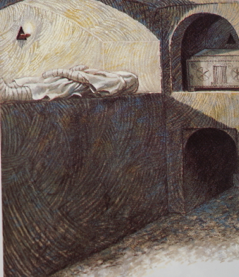
The typical tombs of Jesus’ day were a kind of cave or excavation cut into a rocky cliff. Sometimes groups of families would share these burial areas. An opening into the side of a cliff might lead into a crypt of several rooms used by different families. There would be an outer chamber and an inner chamber, or at least a front and back are. In the outer chamber the body would be laid out on a bench or shelf cut into the rock. After final farewells, a large round stone, usually rolling in a groove, would be rolled into place to cover the entrance to the tomb.

These stones would often be whitewashed as a sign to passersby that the area was a gravesite. This was done because Jews incurred ritual uncleanness by coming into close contact with a dead body. This could be endured as an act of charity for a dead relative, but one would not wish to incur it for a stranger. The marked entrances thus served as a warning to stay clear.

Very poor people who could not afford a rock-hewn tomb or foreigners who had no land were buried in vertical shafts within designated fields. There is a reference to the purchase of the potter’s field in the Gospel of Matthew, which refers to the existence of these sorts of cemeteries for strangers who died and needed burial (Mat 27:7).

A brief repast would follow, which included the ritual drinking of wine and eating of the bread of mourning. For the very closest relatives (e.g., the spouse or child), mourning lasted for thirty days. Signs of mourning were wearing special clothing, not wearing phylacteries during prayer, and not answering greetings in the street.

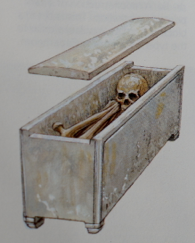
After about a year, family members would return to the tomb, collect the bones, and place them in a box called an ossuary. They would mark the box with identifying information and placed it in the back room of the tomb, where the bones of other relatives were stored. This is the source of the Jewish expression that after a man died, he “rested with his ancestors.” It also explains the concerns of the Patriarch Joseph: Then Joseph took an oath of the sons of Israel, saying, “God will visit you, and you shall carry up my bones from here” (Gen 50:25). Regarding the time when they left Egypt, Scripture says, And Moses took the bones of Joseph with him; for Joseph had solemnly sworn the people of Israel, saying, “God will visit you; then you must carry my bones with you from here” (Exodus, 13:19). Finally, Scripture says this: The bones of Joseph which the people of Israel brought up from Egypt were buried at Shechem, in the portion of ground which Jacob bought from the sons of Hamor the father of Shechem for a hundred pieces of money; it became an inheritance of the descendants of Joseph (Jos 24:32).

Thus Joseph rested with his ancestors. And so will we, until our bodies shall rise at the last trumpet.

What Sort of Clothing Did People in Jesus’ Time Wear?

N.B.: I am in the Holy Land at this time. As my travel schedule is heavy, I am republishing some articles about life in Jesus’ day. I hope you will enjoy reading (or re-reading) them as much as I did.

Determining what clothing was worn in Jesus’ day is surprisingly complex. First of all, there are many presumptions we make based on how many dress in the Middle East today. The typical form of clothing there now (the women in veils, and both men and women in long, flowing robes) seems very traditional and ancient to us, so we assume that this is how the people of Jesus’ time dressed. Even if many of the basics are the same, the details are difficult to determine.

This difficulty emerges from two basic problems. First, archeology unearths little evidence of ancient clothes, since they do not last like rocks, pottery, and some bones. Second, the Jews almost never represented human figures in their art, so we have nothing comparable to the Egyptian frescoes, or the artwork found from the ancient Greeks and Romans.

We are left to glean details from scriptural references to clothing and descriptions of what was required and forbidden. Although they do not paint a complete picture, they at least provide us with some rudimentary descriptions.

In everyday life, men and women alike wore garments often referred to as “tunics.” A tunic was a simple, one-piece robe, usually belted at the waist, with a hole for the head and two holes for the arms. People wore both an inner garment and an outer garment, each with a similar shape.

The inner garment resembled a long, loose-fitting T-shirt or a kimono. It was made of linen, cotton, or sometimes soft wool. For penitential reasons some would occasionally wear inner tunics made of sackcloth or camel hair. The earliest of these garments were made without sleeves and reached only to the knees; later the garment often extended to the wrists and ankles. A man wearing only this inner garment was said to be naked (e.g., 1 Samuel 19:24, Isaiah 20:2–4). Nothing at all was worn underneath the inner garment (except by Essene men, who wore a close-fitting loincloth).

The belt (also called a cincture or girdle) was a band of cloth, cord, or leather that could be loosened or tightened. It was worn around the inner and/or outer garment. Its use prevented the flowing robes (often long) from interfering with movement. The biblical expression “to gird up the loins” meant to put on the belt, thus freeing the lower legs to permit work and easy walking. The expression signified that the person was ready for service; it is largely equivalent to the modern expression, “roll up your sleeves.”

The outer tunic, also called a mantle or robe, was worn over the inner tunic. It consisted of a square or oblong strip of cloth with a hole for the head. Sometimes it had sleeves and sometimes was more like a poncho, with the area for the arms cut back. It was worn as a protective covering; people did not go out in public without some sort of outer tunic. Jewish men had tassels (called tzitzit) attached to the corners of their mantles, reminding them of the constant presence of the Lord’s commandments. Because the outer tunic was large and flowing, it was usually drawn in with a belt. The outer belt was often decorated with embroidery or even precious stones.

A bag or purse was often attached to the belt, fastened with a buckle.

While most Jewish men and women wore long (ankle-length) tunics, short (knee-length) tunics were worn by slaves, soldiers, and those engaging in work that required mobility.

The cloak –  In cooler weather, a cloak might be worn on top of these tunics. Cloaks could be designed either with sleeves or without.

Sandals were worn on the feet. They had wooden soles and were fastened with straps of leather. Jews did not wear sandals indoors; they removed them upon entering the house and washed their feet.

In terms of the basics, men and women dressed much alike. However, there were clearly differences because Scripture warns, A woman shall not wear man’s clothing, nor shall a man put on a woman’s clothing; for whoever does these things is an abomination to the LORD your God (Deut 22:5).

For women, the inner garment was largely identical to that for men. However, the outer garment was longer, with enough border fringe to largely cover the feet (Isaiah 47:2; Jeremiah 13:2). The outer garment was cinched with a belt similar to that used by men, but it was ornamented differently (and usually more elaborately). In some regions, women’s outer garments were made of different materials and/or sported different patterns than those worn by men. In addition, a woman might don an apron on top of the outer garment, in order to protect it and to enable her to carry things. The apron was usually attached to the belt and covered the lower half of the body.

The veil – There is debate as to how widespread the wearing of the veil was for Jewish women in Jesus’ day. It is certain that they wore them in the synagogue and the Temple (cf 1 Cor 11:15). It is also quite certain that unmarried women wore them. However, it is less evident that Jewish women wore them all the time, especially at home; some of them didn’t even wear them in public. It would seem that Jewish women in Roman Judea (i.e., the south, around Jerusalem, Jericho, and Bethlehem) wore hairnets, examples of which have been discovered at sites such as Masada.

So perhaps women did not wear a veil at all times as is now the custom in much of the Middle East. Other sources speak of the head covering being typical for both men and women and describe it as a length of cloth around the shoulders that could be pulled over the head and tied at the forehead, falling over the shoulders. Perhaps the veil or head covering was something that was used strategically, such as when one needed protection from the sun or wished to pray.

The Bible first mentions women’s jewelry when Abraham’s servants present earrings and bracelets to Rebecca (Genesis: 24:22). Jeremiah also observed, “Can a maid forget her ornaments?” Isaiah 3:16-23 features a detailed description of the fashionably ornamented woman of the Old Testament. As a general rule, Hebrew women wore bracelets and earrings. Less frequently they might have nose jewels and/or wear a necklace.

Bracelets – Bracelets were usually made of precious materials such as gold and were typically worn around the wrist. However, royal women often wore them above the elbow. Most bracelets were one solid piece and were slipped over the wrist; more rarely two pieces were fastened together and were open and closed at a hinge.

Anklets – Women wore anklets as often as they did bracelets. Anklets were made of much the same material (Isaiah 3:16 – 20). Some anklets were fashioned so as to create a tinkling, musical sound when the woman walked.

Earrings – Among the Jewish people, only women wore earrings (Judges 8:24). They were less common long ago than they are today. Generally, Scripture suggests that they were round or hoop-like. However, the law prohibited all mutilation of the body, so neither ears nor nose could be pierced to hold such ornaments. Thus earrings were clipped on or worn around the ear with a small chain.

Nose Jewels – Although some evidence exists of Jewish women wearing small jewels on or about the nose, there is little evidence that the wearing the nose rings was widespread. The practice was more common farther to the east, mainly among the Assyrians and Persians.

Rings were worn not only on the fingers, but also on the toes.

Cosmetics and perfume – Generally, Jewish women looked at cosmetics (such as painting the eyes) with disdain (Jeremiah 4:30; 23:40). There is some evidence that Jewish women dyed the nails of their fingers and toes with henna.

Perfume – Jewish women used perfume in much the same manner as today. Common sources of perfume in biblical times were frankincense and myrrh, aloes, nard, cinnamon, and saffron.

Hairstyle – Most Jewish women wore their hair long and braided. The Talmud mentions that Jewish women also used combs and hairpins. It would seem that they generally eschewed the more elaborate hairstyles of the Greek and Assyrian women.