The Biblical Roots of the Liturgy

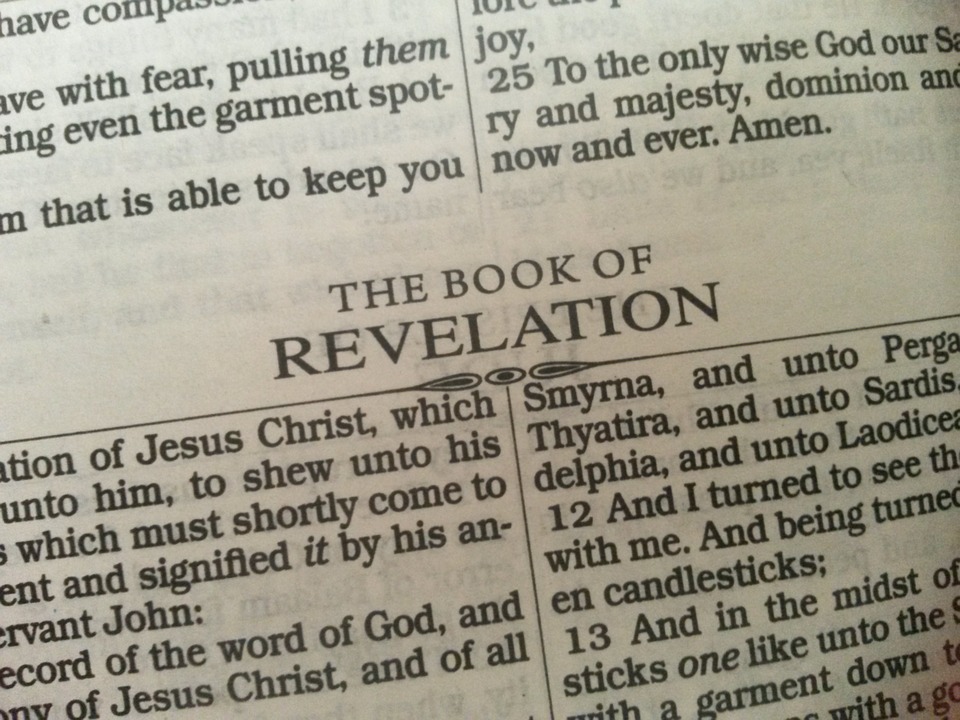
Catholics are often unaware just how biblical the Sacred Liturgy is. The design of our traditional churches; the use of candles, incense, and golden vessels; the postures of standing and kneeling; the altar; the singing of hymns; priests wearing albs and so forth are all depicted in the Scriptures. Some of these details were features of the ancient Jewish Temple, but most are reiterated in the Book of Revelation, which describes the liturgy of Heaven.

The liturgy here on earth is modeled after the liturgy in Heaven; that is why it is so serious to tamper with it. The Book of  Revelation describes the heavenly liturgy and focuses on a scroll or book  that contains the meaning of life and the answers to all we seek. It also focuses on the Lamb of God, standing but with the marks of slaughter upon it. Does this not sound familiar? It is the Liturgy of the Word and the Liturgy of the Eucharist.

We do well to be aware of the biblical roots of the Sacred Liturgy. Many people consider our rituals to be empty and vain, “smells and bells.” Some think austere liturgical environments devoid of much ritual are “purer” and closer to the worship in “spirit and in truth” that Jesus spoke of in John 4.

To such criticisms we must insist that our rituals, properly understood, are mystical and deeply biblical. Further, they are elements of the heavenly liturgy since almost all of them are mentioned as aspects of the worship or liturgy that takes place in Heaven. In this light, it is a serious mistake to set them aside or have a dismissive attitude toward them.

With that in mind we ought to consider the biblical references to the most common elements of Catholic and Orthodox liturgies. I have added my own occasional note in red.

Candles  –

  • Rev 1:12-13 Then I turned to see the voice that was speaking to me, and on turning I saw seven golden lampstands, and in the midst of the lampstands one like a son of man. In traditional catholic parishes, there are six candles on the high altar and a seventh candle is brought out when the bishop is present.
  • Rev 4:6 Seven flaming torches burned in front of the throne.

Altar –

  •  Rev 9:13 The sixth angel sounded his trumpet, and I heard a voice coming from the horns of the golden altar that is before God.
  • Rev 8:3 Another angel, who had a golden censer, came and stood at the altar. He was given much incense to offer, with the prayers of all the saints, on the golden altar before the throne.

Chair –

  •  Rev 4:1 and lo, a throne stood in heaven, with one seated on the throne! And he who sat there appeared like jasper and carnelian, and round the throne was a rainbow that looked like an emerald …
  • Daniel 7:9  As I looked,  thrones were placed and one that was ancient of days took his seat; … In the Sacred Liturgy, the chair of the priest is prominent. But, as he takes his seat, we are invited to see not Father Jones, but rather the Lord Himself presiding in our midst.

Priests (elders) in Albs –

  •  Rev 4:4 the elders sat, dressed in white garments …

Bishop’s miter, priest’s biretta –

  •  Rev 4:4, 10 With golden crowns on their heads … they cast down their crowns before the throne … In the Liturgy, the Bishop may only wear his miter at prescribed times. But when he goes to the altar he must cast aside his miter. The priest who wears the biretta in the Old Mass is instructed to tip his biretta at the mention of the Holy Name and to lay it aside entirely when he goes to the altar.

Focus on a scroll (book), The Liturgy of the Word

  •  Rev 5: 1 And I saw in the right hand of him who was seated on the throne a scroll written within and on the back, sealed with seven seals; and I saw a strong angel proclaiming with a loud voice, “Who is worthy to open the scroll and break its seals?” And no one in heaven or on earth or under the earth was able to open the scroll or to look into it, and I wept much that no one was found worthy to open the scroll or to look into it. Then one of the elders said to me, “Weep not; lo, the Lion of the tribe of Judah, the Root of David, has conquered, so that he can open the scroll and its seven seals.” In the ancient world, books as we know them now had not been invented. Texts were written on long scrolls and rolled up.

Incense, Intercessory prayer

  •  Rev 8:3 another angel came and stood at the altar with a golden censer; and he was given much incense to mingle with the prayers of all the saints upon the golden altar before the throne; and the smoke of the incense rose with the prayers of the saints from the hand of the angel before God …
  • Rev 5:7 and the twenty-four elders fell down before the Lamb, each holding a harp, and with golden bowls full of incense, which are the prayers of the saints;

Hymns – 

  •  Rev 5:8 And they sang a new hymn: Worthy are you O Lord to receive the scroll and break open its seals. For you were slain and with your blood  you purchase for God men of every race and tongue, and those of every nation.
  • Rev 14:1 Then I looked, and lo, on Mount Zion stood the Lamb, and with him a hundred and forty-four thousand who had his name and his Father’s name written on their foreheads … and they sing a new song before the throne and before the four living creatures and before the elders. No one could learn that song except the hundred and forty-four thousand who had been redeemed from the earth.
  • Rev 15:3 And they (the multitude no one could count) sing the song of Moses, the servant of God, and the song of the Lamb, saying, “Great and wonderful are thy deeds, O Lord God the Almighty! Just and true are thy ways, O King of the ages!  Who shall not fear and glorify thy name, O Lord? For thou alone art holy. All nations shall come and worship thee,  for thy judgments have been revealed.”

Holy, Holy, Holy –

  •  Rev 4:8 and day and night they never cease to sing, “Holy, holy, holy, is the Lord God Almighty,

Prostration (Kneeling)

  •  Rev 4:10 the twenty-four elders fall down before him who is seated on the throne and worship him who lives for ever and ever; they cast their crowns before the throne
  • Rev 5:14 and the elders fell down and worshiped  In today’s setting, there is seldom room for everyone to lie prostrate, flat on the ground. Kneeling developed as a practical solution to the lack of space, but it amounts to the same demeanor of humble adoration.

Lamb of God

  •  Rev 5:6 And between the throne and the four living creatures and among the elders, I saw a Lamb standing, as though it had been slain …

Acclamations –

  •  Rev 5:11  Then I looked, and I heard around the throne and the living creatures and the elders the voice of many angels, numbering myriads of myriads and thousands of thousands, saying with a loud voice, “Worthy is the Lamb who was slain, to receive power and wealth and wisdom and might and honor and glory and blessing!”

Amen! –

  •  Rev 5:14 And the four living creatures said, “Amen!

Silence – 

  •  Rev 8:1 When the Lamb opened the seventh seal, there was silence in heaven for about half an hour. (And you thought your priest paused too long after communion?)

Mary

  •  Rev 12:1 And a great portent appeared in heaven, a woman clothed with the sun, with the moon under her feet, and on her head a crown of twelve stars; 2she was with child and she cried out in her pangs of birth, in anguish for delivery.

Happy are those called to His “supper” –

  •  Rev 19:6 Then I heard what seemed to be the voice of a great multitude, like the sound of many waters and like the sound of mighty thunder peals, crying,  “Hallelujah! For the Lord our God the Almighty reigns.  Let us rejoice and exult and give him the glory, for the marriage of the Lamb has come, and his Bride has made herself ready; … And the angel said to me, “Write this: Blessed are those who are invited to the marriage supper of the Lamb.”

Golden vessels, vestments  –

  •  Rev 1:12 And when I turned I saw seven golden lampstands,
  • Rev 1:13 and among the lampstands was someone “like a son of man,” dressed in a robe reaching down to his feet and with a golden sash around his chest
  • Rev 5:8 the twenty-four elders fell down before the Lamb. Each one had a harp and they were holding golden bowls full of incense
  • Rev 8:3 Another angel, who had a golden censer, came and stood at the altar. He was given much incense to offer, with the prayers of all the saints, at the golden altar before the throne.
  • Rev 15:16 The angels were dressed in clean, shining linen and wore golden sashes around their chests.
  • Rev 15:17 seven golden bowls

Stained Glass –

  •  Rev 21:10 [The heavenly city] had a great, high wall, with twelve gates, … The foundations of the wall of the city were adorned with every jewel; the first was jasper, the second sapphire, the third agate, the fourth emerald, the fifth onyx, the sixth carnelian, the seventh chrysolite, the eighth beryl, the ninth topaz, the tenth chrysoprase, the eleventh jacinth, the twelfth amethyst. (The image of stained glass in our Church walls is hinted at here.)

Here is but a partial list, except for one quote drawn only from the Book of Revelation. I invite you to add to it.

Here is an awesome video with wonderful quotes:
Not Your Average King – A Homily for the Feast of Christ the King

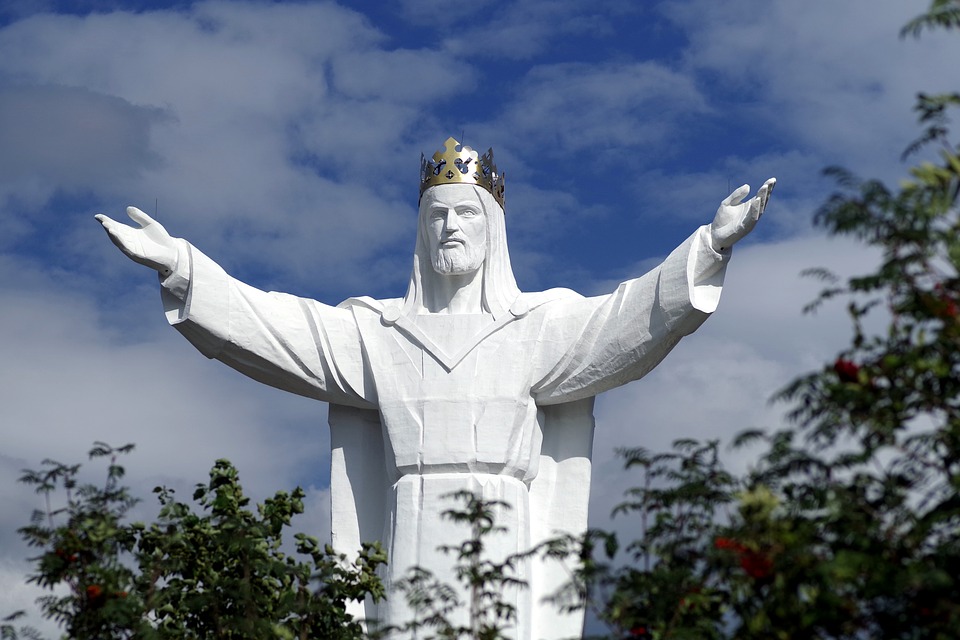
The readings for this Feast of Christ the King evoke three images of Christ as King. All of them are to some extent paradoxical because they emphasize things we don’t usually associate with kings. They also tell us that we have already met King Jesus even if we don’t realize it. Let’s look at these three images of our Lord Jesus Christ, King of all Creation:

I. Caring King – The first reading, from Ezekiel 34, speaks of the Lord as a shepherd who cares for His flock. Here are some of the lines that summarize His care: I myself will look after and tend my sheep … I will rescue them from every place where they were scattered when it was cloudy and dark … I myself will give them rest … The lost I will seek out … The strayed I will bring back … The injured I will bind up. The sick I will heal.

In the modern world we don’t typically think of kings and heads of state in such a caring role. Most world leaders are inaccessible to us, existing behind many layers of security and staff. Even bishops of larger dioceses are hard to reach personally.

Jesus, however, is a King who is more present to us than we are to ourselves. An old revival hymn says, “Jesus is on the Main Line … call him up and tell him what you want.” Another song says, “God is just one prayer away.”

In the ancient world it was much more comment to speak of a caring king. Most kings had more immediate contact with their subjects. Many had certain days on which their subjects could line up to talk to them. It is said that St. Athanasius ran up to the emperor on his horse one day, grabbed the reins, and proceeded to debate a theological point with him.

Until relatively recently, even U.S. Presidents had office hours. It is said that on Tuesdays Abraham Lincoln received visitors from among the citizenry who sought to speak to him of their concerns. They would line up at the door without formal appointments and he’d listen to them one by one. As our culture has become more violent and public figures have become more widely recognized and vulnerable, leaders have receded into sealed, bulletproof, and figuratively soundproof worlds, hearing little from “ordinary people.”

The idea of a king who cares for his people personally is somewhat paradoxical to us today, but Jesus does care for His people.

I want to testify that I do indeed have a caring King, Jesus. He’s been good to me. He has led me, rescued me, purified me, fed me, instructed me, and graced me; He died for me.

I also want to testify that He was being good to me even when I didn’t think He was being good to me. Scripture says, All things work together for good to them who love and trust the Lord (Rom 8:28). Notice that not just the “good things” work for my benefit but even the bad things. God sometimes permits some “stuff” to happen because it will bless us in the end. Even if you’re suffering, don’t give up on God. Some of His gifts sometimes come in strange packages. St Paul says, For this affliction is producing for us a weight of glory beyond compare (2 Cor 4:17).

Did you notice the last line in the passage from Ezekiel? But the sleek and the strong I will destroy, shepherding them rightly. Yes, even at those times when I needed to be humbled (to have my pride destroyed) the Lord was shepherding me rightly. There was a time in my life when I was sleeker and stronger, but the Lord let me experience some humiliation, destroying me as it were, and giving me humility. I even see this humiliation physically, for I was once slim and now I am overweight. It is humbling to be fat, especially when people scold me; they seem to think it is easy to lose weight. But God will humble them too, perhaps in other ways. God hates pride; He just can’t stand it. This is because He knows how deadly it is to us.

Yes, God is a caring King. Some of His ways are paradoxical. Do not reduce the noun “care” merely to meaning “that which comforts and consoles.” It can be that, but not always! Sometimes the “caring” thing to do is to rebuke, warn, or even punish. God never ceases to care for us. I’m a witness. He’s been good to me. Even when I didn’t think He was being good to me, He was being good to me.

Finally note that Jesus exercises this care through his Body, the Church. This means all of us, not just clergy. Parents, elders, youngsters, and all area summoned to share the faith, to console and care, find the lost and straying, and correct the sinner. We are Christ’s voice, his heart, his hands.

II. Conquering King – Today’s second reading speaks Jesus’ victory over all things, saying that He has been raised from the dead, the first fruits of those who have fallen asleep; that He has reversed what Adam did; that He is the first fruits, then each one in proper order will also rise. It says that He will hand the kingdom over to God his Father when he has destroyed every sovereignty and every authority and power and that he must reign until he has put all his enemies under his feet, the last enemy to be destroyed being death.

Here, too, there is a great paradox. As Hebrews says, In putting everything under him, God left nothing that is not subject to him. Yet at present we do not see everything subject to him. But we see Jesus, who was made a little lower than the angels, now crowned with glory and honor because he suffered death (Heb 2:8-10).

So while at times it seems that evil triumphs, God is working. One by one, He is putting all His enemies under His feet. One day, even death itself will be destroyed. The paradox of the cross shouts to us that God conquers, not by brutality and cruel strength, but by love, forgiveness, and mercy—things the world dismisses as weak.

Here, too, I want to say that God is a conquering King in my life. He has destroyed the power of many sins and diminished the strength of others on the way to their ultimate destruction. I have seen sins put down and under His feet as He cleanses the temple of my soul. He has conquered so much of my pride. I am seeing lust, greed, anger, sloth, envy, and fear on the ropes. One by one, He is diminishing their power and replacing them with greater love, compassion, kindness, purity, love for the truth, prayerfulness, courage, trust, and eagerness to do good and to win souls.

Thank you, Lord, for being a conquering King in my life.

Unlike worldly kings, this conquering King does not force us to be His subjects and live in His kingdom. Earthly kings conquer regions and force peoples under their rule by might. But Jesus is a King who respects our freedom to decide whether to have Him as our King and to accept the virtues of His kingdom—or not. Hence, Hell is not so much a place of punishment as it is a place for those who refuse, those who say no to Christ and His kingdom. This King, though all-powerful, does not force His kingship and laws. He offers them to all and allows each of us to decide.

III. Concealed King – The Gospel teaches us that Christ will come again to judge the living and the dead. In this second coming we will discover that we have known Him all along, though in a paradoxical way. As Christ comes and takes His seat and all are summoned to Him, we are going to have a strange sense that we’ve met Him before—and He will confirm that.

For indeed, we have met His Majesty and He is the strangest King of all. He is a King who is hungry, thirsty, sick, lonely, a foreigner, in prison, and a stranger. The list He gives should not be seen as exhaustive, for He is in the needy, whether rich or poor. He is in the discouraged loved one who cannot find a job; He is in our children, who need to be taught and encouraged; He is in the co-worker who just lost his wife; he is in the patient who was diagnosed with cancer; He is in the lost family member who needs instruction and to be drawn back to the Sacraments. He is even in you, in your struggles and needs.

Yes, we have met this King every day. And He is not merely saying that these people have some moral union with Him. He is saying, mystically, that He is each one of them. And when we cared for them, we were not simply doing something ethical; we were serving and caring for Him: “You did it for me.”

What a strange King! We usually picture kings in palaces, far removed from trouble, but this King is naked, poor, hungry, and thirsty. We walk past Him every day.

To those who have cared for Him in His poor, He says that He will never forget what they have done. The poor may not be able to repay us, but King Jesus will repay us a millionfold. On the day of our judgment we will look at Jesus and say, “I know you! I recognize you!” And He will say, “I know you, too.” Come, inherit the kingdom prepared for you from the foundation of the world.”

We should not view this judgment scene as containing the only standards by which we are to be judged, for numerous other passages lay out other standards such as having faith, being willing to carry our cross, living in purity, forgiving others, and loving our enemy. But this passage does remind us that we are not to neglect the corporal works of mercy.

Yes, Jesus our King is the strangest one you will ever meet: a caring and close King, a conquering King who never forces, a King who is hungry and thirsty, a King who reigns from the cross, a King who dies so that we don’t have to, a King who washes our feet, a King who comes to serve rather than to be served. He is a King, all right, one who rules with love, not force. He’s the strangest King you’ve ever met, and you meet Him every day: in the Eucharist, in the poor, in His Word, in your heart, in the events of your day, and in your very self.

The Most Important Things in Life aren’t Things, as Seen in a Commercial

We’ve all met people who are anxious to keep things in pristine condition. Some of us grew up with parents and grandparents who put plastic slipcovers on sofas or even forbade entering the “living room” on anything but special occasions. I once met a priest who kept the church locked up except for Sundays because he was concerned that people might track in dirt or otherwise alter its perfect, museum-like order. Heaven forfend that the hymnals might not be perfectly aligned in the pews!

Other people concentrate on money, forever saving funds for the proverbial rainy day and barely enjoying the good things of life in the present.

Taking care of possessions and showing prudence about money are both admirable traits in moderation, but excesses that hinder or outright bar the enjoyment of good things is to elevate things above people. The most important things in life aren’t things at all. Jesus once reminded us that the Sabbath was made for man. He said this to correct those who were so litigious about the rules of the Sabbath that the whole point was being lost. The Sabbath should be a joy, not a constant jeopardy. The rules were meant to frame the joy not eliminate it.

In this video below there is something of the message I am trying to convey. In it, a little girl dances her way through the house, causing near disasters of various sorts. In the end, though, she causes little damage. The company would have us insure things so that we can enjoy them rather than being limited by them. This gives the girl the freedom to be a little girl, enjoying her home without being burdened by the fear of breakage.

Insurance has its place, but even more so does detachment and prizing people more than things. Reasonable precautions and responsible limits are good, but things are meant to be used. This means that they may get dented, scratched, and show signs of wear and tear. That’s OK—people are enjoying them and being blessed.

How to Thank God as He Has Instructed – A Meditation on Thanksgiving Day

Your grace and mercy,
brought me through.
I’m living this moment,
Because of you.
I want to thank you,
And praise you too.
Your grace and mercy,
Brought me through!

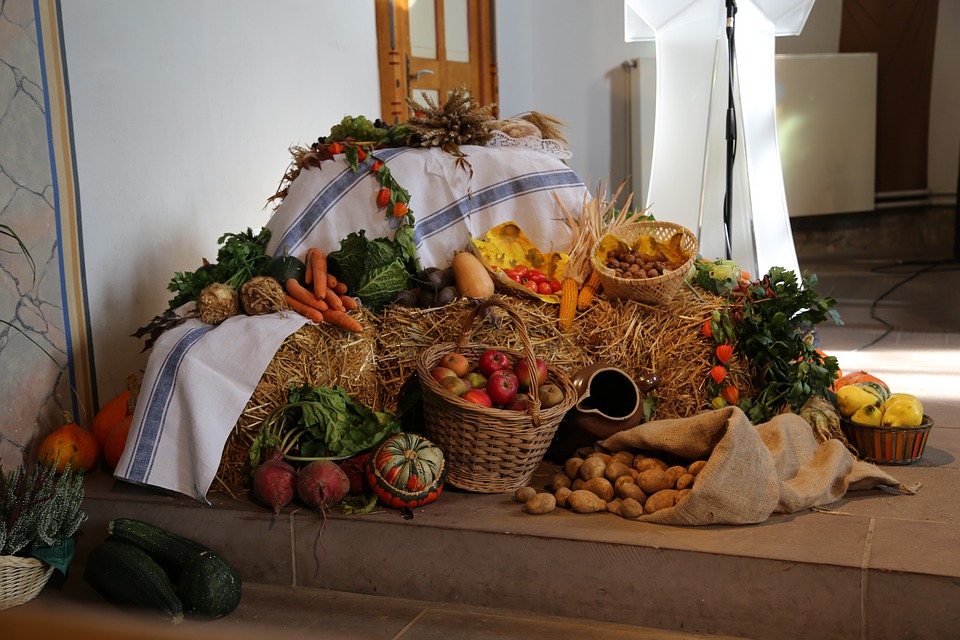
On this feast of Thanksgiving (here in America) we do well to ponder how we ought to give thanks to God. Indeed, how can one adequately thank God, who is the giver of every good and perfect gift? Is it really enough to simply kneel and say a prayer of thanks? Perhaps we should run to Church and light a candle, or visit some distant shrine. Maybe we should be doing the “Snoopy Dance” as we say over and over, “Thank you, thank you, thank you!”

But none of these acts of thanksgiving would prove adequate. God has been too good, has done too much, and is, after all, God.

Indeed, a great question went up in the Old Testament regarding this very problem of adequately thanking God. It occurs in Psalm 116, wherein the psalmist plaintively asks,

What return can I ever make to the Lord for all the good he has done for me?” (Psalm 116:12)

To that point, the Jewish people had been accustomed to killing thousands of animals every day and burning them up in the Temple in order to give thanks and to atone for sin. But the blood of animals cannot atone for sin and neither can slaying even many thousands of them really give adequate thanks to God.

And thus the same psalm not only asks the question, but also provides the answer:

What return can I ever make to the Lord, for all the good he has done for me? The chalice of salvation I will take up, I will call on the name of the Lord! (Psalm 116:12-13)

And yet, in supplying this answer, the actual raising of the chalice of salvation could only be pointed to in the Old Testament; it could not actually be done. The lifting up of the chalice of salvation and the giving of adequate thanks could, and would, only be done by Jesus.

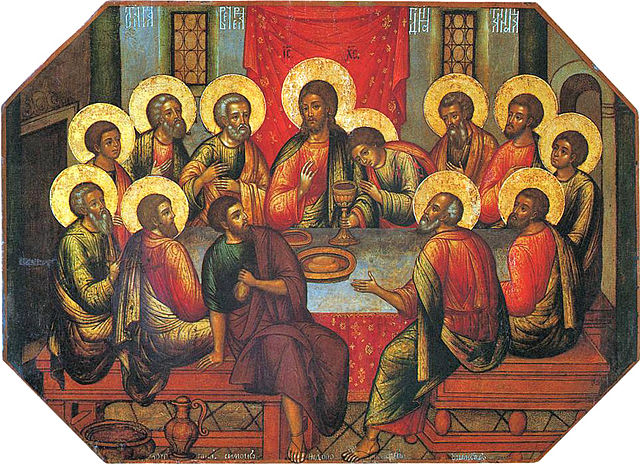
And this brings us to the first Thanksgiving meal. No, we are not in Plymouth Massachusetts in the 1620s. We are at the first, the true, the only Thanksgiving meal that can ever really render adequate thanks to the Father. That meal took place in the upper room, at the Last Supper that Jesus had with His disciples. We are told that He took the bread and, having given thanks, blessed it, broke it, and gave it to His disciples saying, “Take this all of you and eat of it, for this is my Body.” And likewise, after the meal, He took the chalice and gave thanks, and giving it to His disciples He said, “Take this all of you and drink from it, for this is the chalice of my Blood, the Blood of the New and eternal Covenant, which will be poured out for you and for many, for the forgiveness of sins.” He added, “Do this in memory of me.”

Yes, this is the true and the first Thanksgiving meal. Jesus alone is able to fulfill Psalm 116; taking the cup, the chalice, He lifts it up and gives thanks to God adequately for all the good He has done. Jesus fulfills the Scripture and gives adequate thanks.

You and I can never give adequate thanks to the Father, but we do have a member of our family who is so able: He is our Brother and He is our Lord; He is Jesus Christ.

At Thanksgiving, how can you and I give adequate thanks to the Lord? The answer is not on some far-off, distant mountaintop; it is as near as our parish church. We give adequate thanks to the Father by joining our meager thanksgiving to the perfect thanksgiving of Jesus in every Mass. We, as members of His Body (and He is the Head of His Body the Church at every Mass), fulfill Psalm 116 when we, through Jesus our head, take the cup of salvation and call on the name of the Lord. Joining our meager thanks to that of Jesus, the Father is perfectly glorified and perfectly thanked. The Mass is the perfect thanksgiving; it was, is, and remains for us our perfect Thanksgiving meal and sacrifice.

Hidden Mass? It is interesting that in one of the Gospels chosen for the Mass on Thanksgiving, we have the gospel of the ten lepers. And you may have noticed (but perhaps not) that the whole gospel, which is about giving thanks, itself has the form of a Mass. For there are lepers who gather, just as we lepers gather at every Mass. And as they are gathered, Jesus is in their midst; Jesus is passing by. It is just as Jesus, acting through the person of the priest, walks the aisle of our church. And seeing Jesus, the lepers cry out, “Lord, have mercy!” just as we cry out in every Mass, “Lord have mercy, Christ have mercy, Lord have mercy.” And Jesus, turning, gives them a word, quoting from Leviticus 13:2 “Go show yourselves to the priests.” We, too, are given a word from the Lord at every Mass. Jesus’ homily to the lepers was a brief one, saying in effect, “Go do what this reading says.” And at the end of the day, that is a pretty good summary of what every sermon should be, as Jesus speaking through our clergy says to us, “Go do what this reading says.” One of the lepers, realizing he has been healed by this word, falls to his knees to give thanks. And so do we fall to our knees to give thanks in the great Eucharistic prayer. And the word “Eucharist” is from the Greek meaning “to give thanks.” Jesus then bids the man leave, saying that his faith and his act of thanksgiving have saved him. Thus we are instructed by the priest or deacon at the end of the Mass to go and announce salvation to the world.

Yes, this gospel about giving thanks is in the very form of the Mass. And it is no mistake, for the Mass is the perfect act of thanksgiving, wherein we are joined to Jesus in the one perfect act of praise and thanksgiving.

Just a brief thought on Thanksgiving day: how shall we adequately thank God for all the good He has done? You know the answer: go to Mass and join with Jesus in the only adequate way of really thanking the Father.

Here’s a nice old prayer. But the Mass is even better.

Why Damnation Is Eternal and Other Teachings on Hell

This is the thirteenth and final installment in a series on the Four Last Things: Death, Judgment, Heaven and Hell.

The teachings of the Lord on Hell are difficult, especially in today’s climate. The most difficult questions that arise relate to its eternal nature and how to square its existence with a God who is loving and rich in mercy. As a closing reflection on Hell and on the Four Last Things, let us ponder a series of questions.

1. Does God love the souls in Hell? Yes.

How could they continue to exist if He did not love them, sustain them, and continue to provide for them? God loves because He is love. Although we may fail to be able to experience or accept His love, God loves every being He has made, human or angelic.

The souls in Hell may have refused to empty their arms to receive His embrace, but God has not withdrawn His love for them. He permits those who have rejected Him to live apart from him. God honors their freedom to say no, even respecting it when it becomes permanent, as it has for fallen angels and the souls in Hell.

God is not tormenting the damned. The fire and other miseries are largely expressions of the sad condition of those who have rejected the one thing for which they were made: to be caught up into the love and perfection of God and the joy of all the saints.

2. Is there any good at all in Hell? Yes. Are all the damned punished equally? No.

While Heaven is perfection and pure goodness, Hell is not pure evil. The reason for this is that evil is the privation or absence of something good that should be there. If goodness were completely absent, there would be nothing there. Therefore, there must be some goodness in Hell or there would be nothing at all. St. Thomas Aquinas teaches,

It is impossible for evil to be pure and without the admixture of good …. [So]those who will be thrust into hell will not be free from all good … those who are in hell can receive the reward of their goods, in so far as their past goods avail for the mitigation of their punishment (Summa Theologica, Supplement 69.7, reply ad 9).

This can assist us in understanding that God’s punishments are just and that the damned are neither devoid of all good nor lacking in any experience of good. Even though a soul does not wish to dwell in God’s Kingdom (evidenced by rejection of God or the values of His Kingdom), the nature of suffering in Hell is commensurate with the sin(s) that caused exclusion from Heaven.

This would seem to be true even of demons. In the Rite of Exorcism, the exorcist warns the possessing demons, “The longer you delay your departure, the worse your punishment shall be.” This suggest levels of punishment in Hell based on the degree of unrepented wickedness.

In his Inferno, Dante described levels within Hell and wrote that not all the damned experience identical sufferings. Thus, an unrepentant adulterer might not experience the same suffering in kind or degree as would a genocidal, atheistic head of state responsible for the death of millions. Both have rejected key values of the Kingdom: one rejected chastity, the other rejected the worship due to God and the sacredness of human life. The magnitude of those sins is very different and so would be the consequences.

Heaven is a place of absolute perfection, a work accomplished by God for those who say yes. Hell, though a place of great evil, is not one of absolute evil. It cannot be, because God continues to sustain human and angelic beings in existence there and existence itself is good. God also judges them according to their deeds (Rom 2:6). Their good deeds may ameliorate their sufferings. This, too, is good and allows for good in varying degrees there. Hell is not in any way pleasant, but it is not equally bad for all. Thus God’s justice, which is good, reaches even Hell.

3. Do the souls in Hell repent of what they have done? No, not directly.

After death, repentance in the formal sense is not possible. However, St. Thomas makes an important distinction. He says,

A person may repent of sin in two ways: in one way directly, in another way indirectly. He repents of a sin directly who hates sin as such: and he repents indirectly who hates it on account of something connected with it, for instance punishment or something of that kind. Accordingly, the wicked will not repent of their sins directly, because consent in the malice of sin will remain in them; but they will repent indirectly, inasmuch as they will suffer from the punishment inflicted on them for sin (Summa Theologica, Supplement, q 98, art 2).

This explains the “wailing and grinding of teeth” in so far as it points to the lament of the damned. They do not lament their choice to sin without repenting, but for the consequences. In the Parable of Lazarus, the rich man in Hell laments his suffering but expresses no regret over the way he treated the beggar Lazarus. Indeed, he still sees Lazarus as a kind of errand-boy, who should fetch him water and warn his brothers. In a certain sense the rich man cannot repent; his character is now quickened and his choices forever fixed.

4. Is eternal punishment just? Yes.

Many who might otherwise accept God’s punishment of sinners are still dismayed that Hell is eternal. Why should one be punished eternally for sins committed over a brief time span, perhaps in just a moment? The punishment does not seem to fit the crime.

This logic presumes that the eternal nature of Hell is intrinsic to the punishment, but it is not. Rather, Hell is eternal because repentance is no longer available after death. Our decision for or against God and the values of His Kingdom values becomes forever fixed. Because at this point the will is fixed and obstinate, the repentance that unlocks mercy will never be forthcoming.

St. Thomas teaches,

[A]s Damascene says (De Fide Orth. ii) “death is to men what their fall was to the angels.” Now after their fall the angels could not be restored [Cf. I:64:2]. Therefore, neither can man after death: and thus the punishment of the damned will have no end. … [So] just as the demons are obstinate in wickedness and therefore have to be punished for ever, so too are the souls of men who die without charity, since “death is to men what their fall was to the angels,” as Damascene says (Summa Theologica, Supplement, q 99, art 3).

5. Do the souls in Hell hate God? No, not directly.

St. Thomas teaches,

The appetite is moved by good or evil apprehended. Now God is apprehended in two ways, namely in Himself, as by the blessed, who see Him in His essence; and in His effects, as by us and by the damned. Since, then, He is goodness by His essence, He cannot in Himself be displeasing to any will; wherefore whoever sees Him in His essence cannot hate Him.

On the other hand, some of His effects are displeasing to the will in so far as they are opposed to any one: and accordingly a person may hate God not in Himself, but by reason of His effects. Therefore, the damned, perceiving God in His punishment, which is the effect of His justice, hate Him, even as they hate the punishment inflicted on them (Summa Theologica, Supplement, q 98, art 5).

6. Do the souls in hell wish they were dead? No.

It is impossible to detest what is fundamentally good, and to exist is fundamentally good. Those who say that they “wish they were dead” do not really wish nonexistence upon themselves. Rather, they wish an end to their suffering. So it is with the souls in Hell. St. Thomas teaches,

Not to be may be considered in two ways. First, in itself, and thus it can nowise be desirable, since it has no aspect of good, but is pure privation of good. Secondly, it may be considered as a relief from a painful life or from some unhappiness: and thus “not to be” takes on the aspect of good, since “to lack an evil is a kind of good” as the Philosopher says (Ethic. v, 1). In this way it is better for the damned not to be than to be unhappy. Hence it is said (Matthew 26:24): “It were better for him, if that man had not been born,” and (Jeremiah 20:14): “Cursed be the day wherein I was born,” where a gloss of Jerome observes: “It is better not to be than to be evilly.” In this sense the damned can prefer “not to be” according to their deliberate reason (Summa Theologica, Supplement, q 98, art 3).

7. Do the souls in Hell see the blessed in Heaven?

Some biblical texts say that the damned see the saints in glory. For example, the rich man in the parable can see Lazarus in the Bosom of Abraham (Lk 16:3). Further, Jesus says, There will be weeping and gnashing of teeth when you see Abraham, Isaac, Jacob, and all the prophets in the kingdom of God, but you yourselves are thrown out (Lk 13:28). However, St Thomas makes a distinction:

The damned, before the judgment day, will see the blessed in glory, in such a way as to know, not what that glory is like, but only that they are in a state of glory that surpasses all thought. This will trouble them, both because they will, through envy, grieve for their happiness, and because they have forfeited that glory. Hence it is written (Wisdom 5:2) concerning the wicked: “Seeing it” they “shall be troubled with terrible fear.”

After the judgment day, however, they will be altogether deprived of seeing the blessed: nor will this lessen their punishment, but will increase it; because they will bear in remembrance the glory of the blessed which they saw at or before the judgment: and this will torment them. Moreover, they will be tormented by finding themselves deemed unworthy even to see the glory which the saints merit to have (Summa Theologica, Supplement, q 98, art 9).

St Thomas does not cite a Scripture for this conclusion. However, certain texts about the Last Judgment emphasize a kind of definitive separation. For example, in Matthew 25 we read this: All the nations will be gathered before [the Son of Man], and he will separate the people one from another as a shepherd separates the sheep from the goats. … Then they will go away to eternal punishment, but the righteous to eternal life (Mat 25:32, 46).

Clearly, Hell is a tragic and eternal separation from God. Repentance, which unlocks mercy, is available to us; but after death, like clay pottery placed in the kiln, our decision is forever fixed.

Choose the Lord today! Judgment day looms. Now is the time to admit our sins humbly and to seek the Lord’s mercy. There is simply nothing more foolish than defiance and an obstinate refusal to repent. At some point, our hardened hearts will reach a state in which there is no turning back. To die in such a condition is to close the door of our heart on God forever.

Somebody’s knocking at your door.
Oh sinner, why don’t you answer?
Somebody’s knocking at your door!

Thanksgiving 2017

Earlier today, Cardinal Wuerl joined with other faith leaders of the Washington area to share a thoughts on the meaning of Thanksgiving. Read the message below or here.


Thanksgiving 2017

The American Holiday

Across our nation, people of every background and tradition celebrate Thanksgiving as a distinctly American holiday, rooted in gratitude. In the great diversity of faith traditions, we gather at table to give thanks for our many blessings. We pause to thank our Creator and, at the same time, celebrate our freedom. Thanksgiving is not only an historical celebration, but a present reality in which even the most recent arrival in our nation rejoices. Among the blessings Americans share is the gift of freedom. We celebrate its many expressions, including the freedom to practice one’s faith. Another is our freedom of speech and the liberty to express ourselves. We recognize, however, that freedom of expression carries the responsibility to do so with mutual respect and civility. As Americans, we are all free to speak what we believe to be the truth, but we are also challenged to do so in love, in the spirit of universal kinship recognizing the dignity of every person. For both the freedom and the challenge we give thanks. And we wish a peaceful, happy Thanksgiving to all.

The Solidarity Table

Imam Talib Shareef
Masjid Muhammad – The Nation’s Mosque

Bishop Mariann Budde
Episcopal Diocese of Washington

Rabbi Bruce Lustig
Washington Hebrew Congregation

Cardinal Donald Wuerl
Archdiocese of Washington

Images of Hell

This is the twelfth in a series of articles on the Four Last Things: death, judgment, Heaven, and Hell.

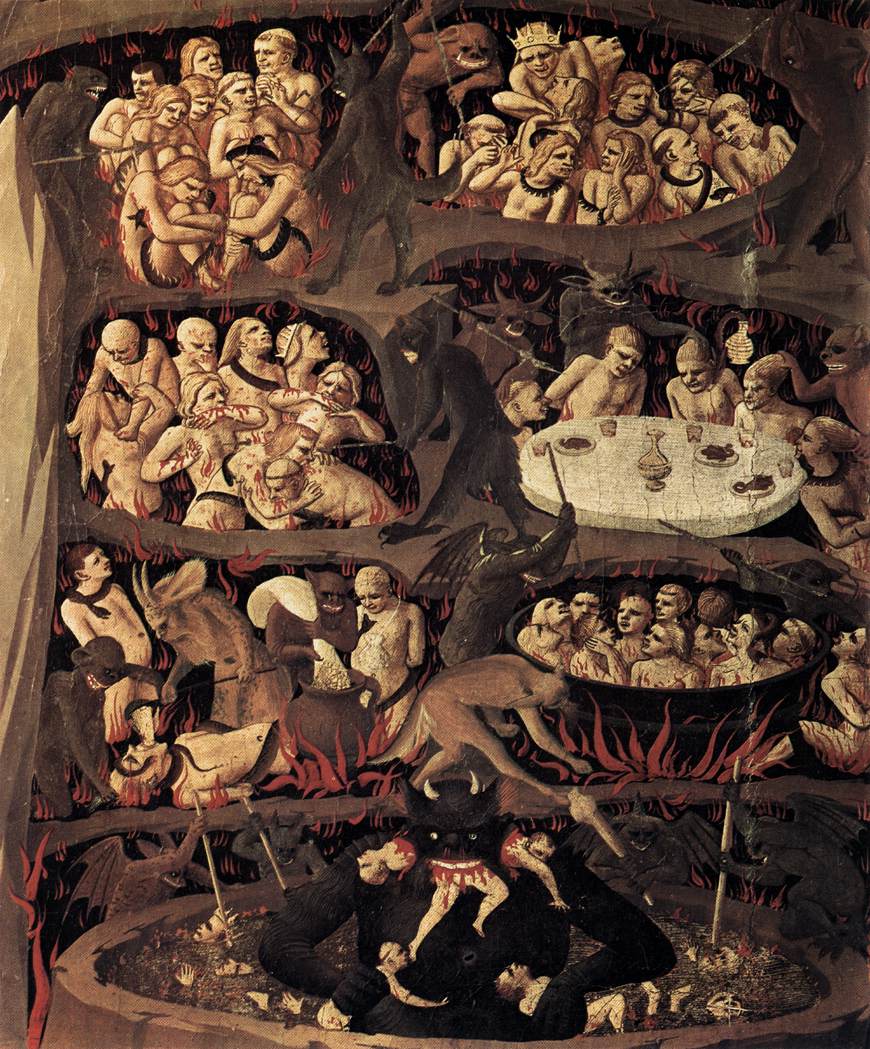
Hell, Fra Angelico, Museo di San Marco, Florence

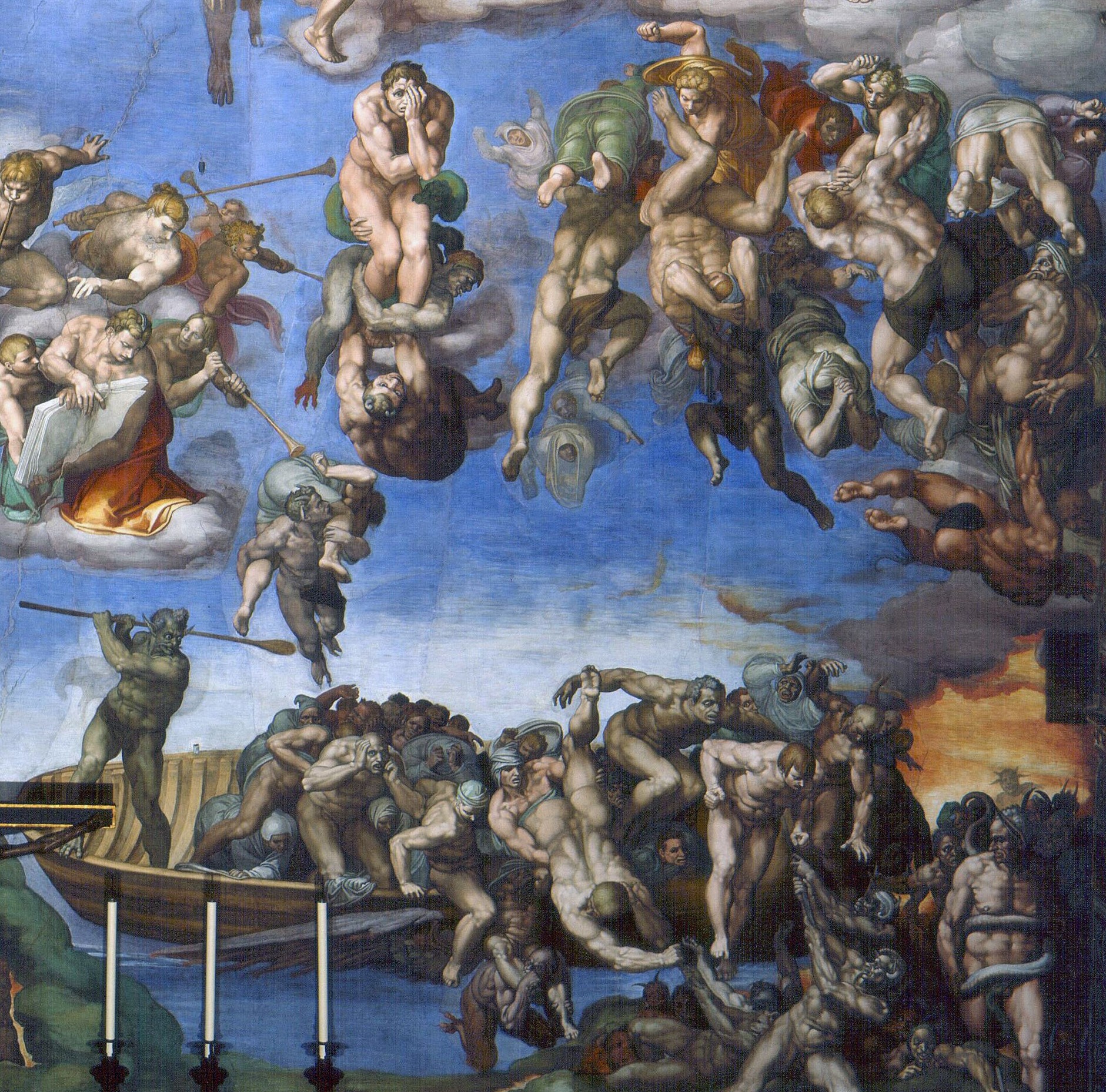
Part of what makes Jesus’ teaching on Hell difficult is the severe imagery He uses. In pointing to Hell, he seems to point to its deepest pits. He warns of eternal fire, undying worms, and wailing and grinding of teeth. Rather than lingering on philosophical descriptions or on the more subtle aspects of suffering, Jesus goes to the deepest aspects of the sufferings of Hell.

The undying fire in Hell is not a mere physical one; it is a fire of rage and disgust that consumes as it causes pain. In contrast, the refining fire of God’s love purifies. The souls of the dammed in Hell are seething inside and enduring the heat of the indignation of others.

The worms, real and allegorical, gnaw at and devour what little energy the rage has not already burned away. Unjust anger is ultimately exhausting; it saps life the way worms do. Their gnawing brings weariness and weakness, lethargy and listlessness. Depression is anger turned inward. Indeed, when Dante gets to the pit of Hell he sees Satan, strangely bored and up to his waist in ice! In fact, Satan is so bored that he barely notices the presence of Dante and Virgil. Satan’s anger saps him the way intestinal worms do in the physical body. His wrath consumes what little remains of his energy. For now, he rages, for he knows his time is short. Soon enough he will collapse, dissipated and consumed, a sad and pathetic creature: How you have fallen O Lucifer, O Daystar … Cast down to Sheol, into the pit! (Isaiah 14:12, 15)

As for the wailing and grinding of teeth, this double image makes it clear that it has nothing to do with sorrowful repentance. The wailing is linked to anger, expressed in the grinding of teeth. This is an angry sorrow at having been conquered, having been bested, having lost. The defiant refusal to repent from serious sins and the anger at “being told what to do” are the source of this anger. No, the sorrow is not a contrition leading to repentance, but a kind of anger that grinds away in the gnashing of teeth.

The Lord certainly gives powerful images! But we do well to understand the subtleties of Hell as well. Perhaps being in Hell is to be missing the one thing necessary. Perhaps it is like owning a mansion without a key to get in, or having a fortune in a bank account without the PIN to access it. It would be better not to have them at all than to have them but lack the one thing necessary to access them! Along these lines Archbishop Sheen told the following “joke” about Hell:

There is not a golfer in America who has not heard the story, which is theologically sound, about the golfer who went to Hell and asked to play golf. The Devil showed him a 36-hole course with a beautiful clubhouse, long fairways, perfectly placed hazards, rolling hills, and velvety greens. Next, the Devil gave him a set of clubs so well balanced that the golfer felt he had been swinging them all his life. Out to the first tee they stepped, ready for a game. The golfer said, “What a course! Give me the ball.” The Devil answered: “Sorry, we have no golf balls in Hell. That’s the hell of it!” (Three to Get Married, Kindle Edition, Loc. 851-57)

This is a subtle but piercing description of Hell. Perhaps Hell has its “goods” but there is no way to enjoy them! Many are surprised to think that there could be anything “good” in Hell at all. But, since evil is the privation of the good, if demons, the damned, and Hell itself had nothing good, they would not exist at all! There is no such thing as pure evil, for it would be pure nothing. So, there are good things in Hell, but the key to enjoying them is missing. God, of course, is the key to unlocking every other good. Having rejected the vision of God for their life, the damned lack the “one thing necessary” to unlock every other blessing. The frustration of this is but a more intense version of what many now experience as they try to satisfy their infinite longing with finite things. It doesn’t work. We have a God-size hole in our heart and only God can fill it. Until we learn this lesson and set our sights on Him, we will be frustrated and unfulfilled. If we die refusing to learn this lesson, refuse to admit our need for Him and what He is offering, we are doomed to the eternal frustration of lacking the one blessing necessary to unlock every other blessing.

Another description of Hell comes from St. Paul of the Cross. Imprisoned for his faith, he wrote the following passage, in which he presents an image of how the very denizens of Hell become one another’s chief source of suffering. It is the antithesis of the Communion of the Saints, a kind of “chaos of the condemned.”

The prison here is a true image of everlasting hell: to cruel tortures of every kind—shackles, iron chains, manacles—are added hatred, vengeance, calumnies, obscene speech, quarrels, evil acts, swearing, curses, as well as anguish and grief … How am I to bear with the spectacle, as each day I see … their retinue blaspheming your holy name, O Lord, who are enthroned above the Cherubim and Seraphim? Behold, the pagans have trodden your cross underfoot! Where is your glory? As I see all this, I would, in the ardent love I have for you, prefer to be torn limb from limb and to die as a witness to your love (From a letter of St. Paul Le-Bao-Tinh sent to students of the Seminary of Ke-Vinh in 1843 [Paris Foreign Mission Society, Paris, 1925], pp. 80-83).

In the above passage, Hell is described as a place of violence, hatred, vengeance, and calumny. People in Hell experience a kind of death by a thousand cuts. It is not hard to imagine such terrible things because to some degree they are the daily fare of this world, but in Hell they triumph and will never end. From Hell there is no hope of escape through the emergency exits of forgiveness, mutual mercy, reconciliation, or growth in virtue. That day is gone, replaced only by selfishness, greed, hate, revenge, envy, wrath, and bitterness. It is the bad fruit of every sinful tendency amplified by the free and unfettered manipulation of demons. The inmates run the asylum, and to the cruelest and crudest go the spoils. It is a pretty awful picture to be sure.

The grim descriptions of Jesus remain dogma; our own descriptions are a bit more speculative. Do your best to stay out of Hell! Whatever brief promises of pleasure Satan and sin might give you now, the visions of Hell are awful indeed.

Only grace and mercy can rescue us from the lies of Satan and sin. Run to Jesus, repenting of your sins. Ask for the grace to recognize the awful reality of Hell, with its sledgehammer force and its somber subtleties. Ask for the grace to see through the lies to the lasting truth of the glory of Heaven. Choose Heaven by choosing God and rejecting selfish and defiant attitudes.

Hell Has to Be

This is the eleventh in a series of articles on the Four Last Things: death, judgment, Heaven, and Hell.

Today we come to the final of the Four Last Things: Hell. I have written extensively on this topic over the years, largely in response to the widespread dismissal of the revealed doctrine of Hell. In contradiction to Scripture, many presume that Hell is an unlikely destination for most. Never mind that Jesus taught just the opposite (e.g., Matt 7:13-14). In my own small way, I have tried to keep people more rooted in the sobriety of the Gospel than in the wishful thinking of the modern age. No one warned of Hell more than did Jesus. Arguably, 21 of the 38 parables amount to warnings about Hell and the need to be ready for judgment day. (I have written more on that here: Jesus Who Loves You Warned Frequently of Hell.)

In this post, however, I would like to consider why Hell has to be. Frequently, those who doubt Jesus’ biblical teaching ask this: If God is love, then why is there Hell and why is it eternal?

In short, there is Hell because of God’s respect for our freedom. God has made us free and our freedom is absolutely necessary if we are to love. Suppose that a young man wanted a young lady to love him. Suppose again that he found a magic potion with which to lace her drink. After drinking it, Presto, she “loves” him! Is it real love? No it’s the effect of chemicals. Love must be freely given. The yes of love is only meaningful if we are free to say no. God invites us to love him. There must be a Hell because there has to be a real alternative to Heaven. God will not force us to love Him or to come to Heaven with Him.

But wait a minute; doesn’t everyone want to go to Heaven? Yes, but it is often a “heaven” as they define it, not the real Heaven. Many people understand Heaven egocentrically: It’s a place where they will be happy on their own terms, where what pleases them will be available in abundance. The real Heaven is the Kingdom of God in all its fullness. So while everyone wants to go to a “heaven” as they define it, not everyone wants to live in the Kingdom of God in all its fullness. Consider the following examples:

  1. The Kingdom of God is about mercy and forgiveness. Not everyone wants to show mercy or forgive. Some prefer revenge. Others favor severe justice. Some prefer to cling to their anger and nurse resentments or bigotry. Further, not everyone wants to receive mercy and forgiveness. Some cannot possibly fathom why anyone would need to forgive them since they are right! Recall the second son in the Parable of the Prodigal Son. Instead of entering the feast at the pleading of his father, he refuses to enter because that wretched brother of his is in there. He will not forgive or love his brother as the father does. In so doing, he excludes himself from the feast. Despite his father’s pleading, he will not enter through forgiveness and mercy. The feast is not a feast at all for him. Similarly, Heaven will not be “heaven” for those who refuse the grace to forgive and love their enemies and those who have harmed them.
  2. The Kingdom of God is about chastity. God is very clear with us that His Kingdom values chastity. For the unmarried, this means no genital sexual contact. For the married, this means complete fidelity to each other. Further, things such as pornography, lewd conduct, and immodesty are excluded from the Kingdom. Many people today do not prefer chastity. They would rather be unchaste and immodest. Many celebrate fornication and homosexual acts as a kind of liberation from “repressive” norms. Many people like to consume pornography and do not want to limit their sexual conduct. It is one thing to fail in some of these matters through weakness, but it is quite another to insist that there is nothing wrong with such behavior.
  3. The Kingdom of God is about Liturgy. All of the descriptions of Heaven emphasize liturgy. There are hymns being sung. There is the praise of God. There is standing, sitting, and prostrating at certain times. There are candles, incense, and long robes. There is a scroll or book that is opened, read, and appreciated. There is the Lamb on a throne-like altar. It’s all very much like the Mass—but many are not interested in things like the They stay away because the say it’s “boring.” Perhaps they don’t like the hymns and all the praise. Perhaps the scroll (the Lectionary) and its contents do not interest them or agree with their moral preferences. Having God at the center rather than themselves is unappealing.

The point is this: If Heaven isn’t just of our own design; if Heaven—the real Kingdom of God—is about these things, then doesn’t it seem clear that there actually are many who don’t want to go to Heaven? You see, everyone wants to go to a “heaven” of their own design, but not everyone wants to live in the real Kingdom of Heaven. God will not force any one to live in Heaven if he doesn’t want to live there. He will not force anyone to love Him or what He loves or whom He loves. We are free to choose His Kingdom or not.

Perhaps a brief story will illustrate my point:

I once knew a woman in one of my parishes who in many ways was very devout. She went to daily Mass and prayed the rosary on most days. There was one thing about her, however, that was very troubling: she couldn’t stand African-Americans.

She would often comment to me, “I can’t stand Black people! They’re moving into this neighborhood and ruining everything! I wish they’d go away.” I remember scolding her a number of times for this sort of talk, but it seemed to have seeming effect.

One day I decided to try to make it more clear: “You know you don’t really want to go to Heaven,” I challenged.

“Of course I do, Father,” she replied. “God and the Blessed Mother are there; I want to go.”

“No, you won’t be happy there,” I responded.

“Why?” she asked, “What are you talking about, Father?”

“Well you see there are Black people in Heaven and you’ve said that you can’t stand to be around them, so I’m afraid you wouldn’t be happy there. God won’t force you to live in Heaven if you won’t be happy there. That’s why I think that you don’t really want to go to Heaven.”

I think she got the message because I noticed that her attitude started to improve.

That’s just it, isn’t it? God will not force us to live in the Kingdom if we really don’t want it or like what that Kingdom is. We can’t just invent our own “heaven.” Heaven is a real place. It has contours and realities of its own that we can’t just brush aside. Either we accept Heaven as it is or we ipso facto choose to live apart from it and God. So, Hell has to be. It is not a pleasant place, but I suppose the saddest thing about the souls in Hell is that they wouldn’t be happy in Heaven anyway. It’s a tragic plight, not to be happy anywhere.

Understand this, too: God has not utterly rejected even the souls in Hell. Somehow, He still provides for their basic needs. They continue to exist and thus God continues to sustain them with whatever is required for that existence. He does not annihilate them or snuff them out.

God respects their wish to live apart from the Kingdom and its values. He loves them but respects their choice.

Why is Hell eternal? Here I think we encounter a mystery about ourselves. God seems to be teaching us that there comes a day when our decisions are fixed forever. In this world we always have the possibility of changing our mind so the idea of a permanent decision seems strange to us. Those of us who are older can testify that as we age we get more and more set in our ways; it’s harder and harder to change. Perhaps this is a little foretaste of a time when our decisions will be forever fixed and we will never change. The Fathers of the Church used an image of pottery to teach on this. Think of wet clay on a potter’s wheel. As long as the clay is moist and still on the wheel it can be shaped and reshaped, but once it is put in the kiln, in the fire, its shape is fixed forever. So it is with us that when we appear before God, who is a Holy Fire, our fundamental shape will be forever fixed, our decisions will be final. This is mysterious to us and we only sense it vaguely, but because Heaven and Hell are eternal, it seems that this forever-fixed state is in our future.

This is the best I can do on a difficult topic: Hell has to be. It’s about God’s respect for us. It’s about our freedom and summons to love. It’s about the real Heaven. It’s about what we really want in the end. We know what God wants: to save us. The real judgment in question is what we want.