The Night Prayer of the Church as a Rehearsal for Death

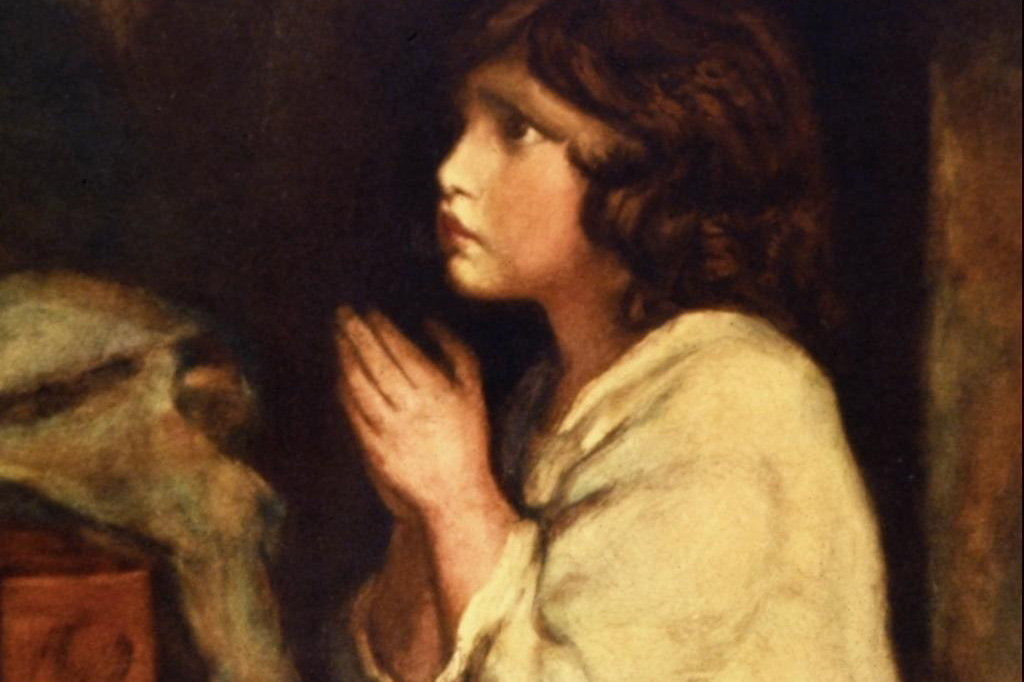
Some years ago, I was addressing a group of young adults at a “Theology on Tap” gathering. One of the attendees asked me to recommend some ways to avoid temptation. Among the advice I offered was this: meditate frequently on death, particularly before going to bed at night. Suddenly it got very quiet. Everyone looked at me as though I had said something in Swahili. “What did you just say? Would you repeat that?” Perhaps my remarks were the right answer and the wrong answer at the same time. In these modern, medically advanced times, those in their twenties don’t really relate to death as a near reality. Meditating on death seems like a strange idea to most of them.

The instinct of the Church has always been to link night prayer to death, considering sleep to be somewhat of a dress rehearsal for death. Consider these prayers:

Into your hands, O Lord, I commend my spirit. This is a reference to Jesus’ dying words, Father, into your hands I commend my spirit (Lk 23:46).

Lord, now you let your servant go in peace, your word has been fulfilled. My own eyes have seen the salvation which you have prepared in the sight of your people. These are the words of Simeon, who had been promised he would not see death until he had beheld the Messiah. Once he had held the infant Jesus in his arms, he could die peacefully.

May the Lord grant us a peaceful night and a peaceful death. This is the concluding line of night prayer just before the Salve Regina, in which we ask the Blessed Mother to “tuck us in” for the night.

There are also many beautiful references to night prayer in the hymns. For example,

Guard us waking guard us sleeping;
and when we die,
May we in thy mighty keeping
all peaceful lie.

When the last dread call shall wake us,
Do not Our God forsake us
But to reign in glory take us
With thee on high. 

— (Day Is Done, verse 2)

Teach me to live that I may dread
The grave as little as my bed;
Teach me to die, so that I may
Rise glorious at the awful Day.

— (Glory to Thee, My God, This Night, verse 3)

These are just some of the references. Night prayer is a time to remember that we will die and to ponder this with sobriety. Sleep is, to some degree, like death; we become “dead” to the world. We are no longer aware of the rhythms, demands, and fascinations of this world. We are “out” to this world—out of touch with it. We lie still as in death, unaware and uninterested, at a kind of comatose distance from the things that obsess us during our waking hours. Although we awake from sleep, one day we will never awake, never return to the demands of this world. Our coffin, like a little bed, will claim us. It will be closed, and this world will know us no more.

Night prayer serves as a gentle reminder of this looming summons. We entrust ourselves to the care of our Lord, who alone can lead us over the valley of the shadow of death. We also ask Our Lady for her prayers. We ask that she, as a good mother, console us and assure us that after this our exile we will see the glorious face of her Son and be restored to our Father in the warm love of the Holy Spirit.

Even if you don’t have time to pray the other hours of the Divine Office, I strongly recommend night prayer (Compline). It is brief and beautiful, sober and serene. It is the great dress rehearsal for our death. If we are faithful, this will be the greatest day of our life on this earth. On that day, we will be called to Him who loves us. Surely our judgment looms, but if we are faithful it will usher in our final purification and our release from the shackles of sin and the woes of this world.

May the Lord grant us a restful night and a peaceful death.

God, who made the earth and heaven,
Darkness and light:
You the day for work have given,
For rest the night.
May your angel guards defend us,
Slumber sweet your mercy send us,
Holy dreams and hopes attend us
All through the night.

And when morn again shall call us
To run life’s way,
May we still, whatever befall us,
Your will obey.
From the power of evil hide us,
In the narrow pathway guide us,
Never be your smile denied us
All through the day.

Guard us waking, guard us sleeping,
And when we die,
May we in your mighty keeping
All peaceful lie.
When the last dread call shall wake us,
Then, O Lord, do not forsake us,
But to reign in glory take us
With you on high.

Holy Father, throned in heaven,
All holy Son,
Holy Spirit, freely given,
Blest Three in One:
Grant us grace, we now implore you,
Till we lay our crowns before you
And in worthier strains adore you
While ages run.

Cross-posted at the Catholic Standard: The Night Prayer of the Church as a “Rehearsal for Death”

Who Was Jeremiah the Prophet?

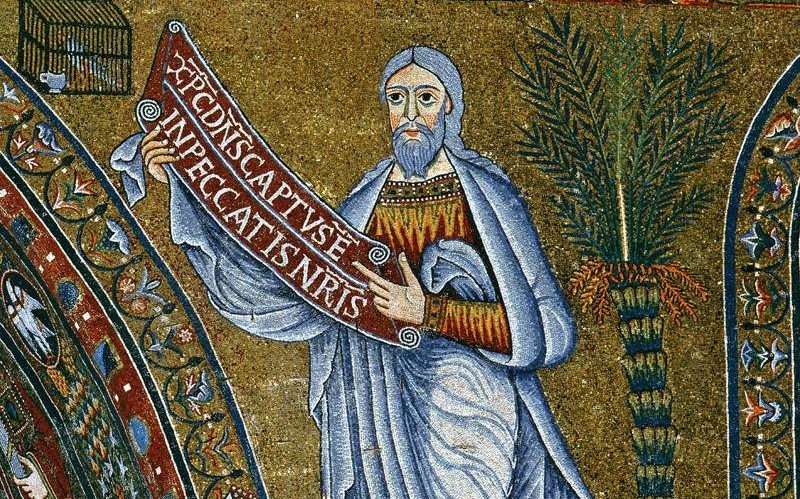
God called Jeremiah a fortified city, an iron pillar, and a bronze wall (Jer 1:18); a tester and refiner of metals, a tower and fortress (Jer 6:27); a man through whom He would speak against false prophets and shepherds who mislead their sheep. Is not my word like fire, declares the LORD, and like a hammer that breaks a rock in pieces? (Jer 23:29) Jeremiah would be the voice of that word. Hated and feared by many, yet secretly sought by the king, He belonged to no one but God, was indebted to no one but God. He was totaliter aliter (totally other).

Indeed, Jeremiah was the best kind of prophet, a reluctant one (Jer 1:6). Beware the eager prophets, the self-appointed ones who seize the mantle as a pretext for their anger and opinions. They claim to speak for God, but He says of them, I did not send the prophets, yet they ran; I did not speak to them, yet they prophesied (Jer 23:21).

God had always known Jeremiah and had laid the foundation for his ministry: Before I formed you in the womb I knew you, and before you were born I consecrated you; I appointed you a prophet to the nations (Jer 1:5).

Jeremiah ben Hilkiah was born in 640 B.C. in Anathoth, a small town just three miles north of Jerusalem. At age twelve or thirteen he had a mystical experience in which God spoke to him:

“Before I formed you in the womb I knew you, and before you were born I consecrated you; I appointed you a prophet to the nations.” Then I said, “Ah, Lord God! Behold, I do not know how to speak, for I am only a youth.” But the Lord said to me, “Do not say, ‘I am only a youth’; for to all to whom I send you, you shall go, and whatever I command you, you shall speak. Do not be afraid of them, for I am with you to deliver you, declares the Lord.” Then the Lord put out his hand and touched my mouth. And the Lord said to me, “Behold, I have put my words in your mouth. See, I have set you this day over nations and over kingdoms, to pluck up and to break down, to destroy and to overthrow, to build and to plant” (Jer 1:5-10).

Jeremiah’s early years were his happiest and it was of these that he likely wrote, When I found your words, I devoured them; your words were my joy, the happiness of my heart, Because I bear your name, LORD, God of hosts (Jer 15:16). The rediscovery of the Book of Deuteronomy and the sober example of the destruction of the northern Kingdom of Israel (721 B.C.) had spurred a religious revival led by King Josiah, beginning in 622 B.C. Foreign entanglements and the religious errors that accompanied them were eliminated. These days of reform would be brief, but for this short time there would be one Lord, one temple, one worship. It was a kind of Jewish renaissance, the best since the days of King David.

But then came disaster. Instead of trusting God, Josiah engaged in a foolish war against King Neco of Egypt, who was marching to assist Assyria against Babylon. Josiah was killed at Megiddo in 609 BC. The kings that followed were puppets of Neco, and foreign entanglement and religious syncretism resumed.

Jeremiah wrote of Israel’s infidelity and Judah’s failure to learn from Israel’s poor example:

The Lord said to me in the days of King Josiah: “Have you seen what she did, that faithless one, Israel, how she went up on every high hill and under every green tree, and there played the whore? And I thought, ‘After she has done all this she will return to me,’ but she did not return, and her treacherous sister Judah saw it. She saw that for all the adulteries of that faithless one, Israel, I had sent her away with a decree of divorce.

Yet her treacherous sister Judah does not fear, but she too went and played the whore. Israel took her whoredom lightly, she polluted the land, committing adultery with stone and tree. Yet for all this her treacherous sister Judah did not return to me with her whole heart, but in pretense, declares the Lord (Jer 3:6-10).

Jeremiah’s next forty years would be spent laboring under four different Kings (Jehoiakim, Johoiachin, Zedekiah, and Gedaliah). None of them would trust God, instead compromising with the world for a false peace. For them, Jeremiah had only scorching denunciations about a coming catastrophe for their religious laxity and political cowardice.

Even as a boy he had seen disaster coming from the north:

I see a boiling pot, facing away from the north. Then the Lord said to me, “Out of the north disaster shall be let loose upon all the inhabitants of the land. … each king shall come, and every one shall set his throne at the entrance of the gates of Jerusalem, against all its walls all around and against all the cities of Judah. And I will declare my judgments against them, for all their evil in forsaking me (Jer 1:13-16).

Against the priestly class who trusted merely in the location of the Temple and in sacrifices offered without obedience of the heart, Jeremiah railed:

Do not trust in your deceptive words, chanting, “This is the temple of the LORD, the temple of the LORD, the temple of the LORD.” For only if you really change your ways and deeds, if you act justly toward one another and no longer oppress the foreigner, the fatherless, and the widow, and no longer shed innocent blood in this place or follow other gods to your own harm, only then I will allow you to live in this place, in the land I gave to your fathers forever and ever. But look, at you, you keep trusting in deceptive words to no avail. Will you steal and murder, commit adultery and perjury, burn incense to Baal, and follow other gods that you have not known, and then come and stand before Me in this house, which bears My name, and say, “We are delivered, so we can continue with all these abominations”? Has this house, which bears My name, become a den of robbers in your sight? Yes, I too have seen it, declares the LORD. But go now to the place in Shiloh where I first made a dwelling for My name and see what I did to it because of the wickedness of My people Israel (Jer 7:4-12).

An even greater source of distress to Jeremiah were the court prophets and priests who lost their way in the halls of power and told the king what he wanted to hear and what was expedient rather than what God had to say. To them he said,

All are greedy for gain; from the prophet to the priest, all practice deceit. They dress the wounds of the daughter of My people with very little care, saying, “Peace, peace,” when there is no peace. Are they ashamed of their loathsome conduct? No, they have no shame at all, not even enough to blush. … But the snorting of enemy horses is heard from Dan. At the sound of the neighing of mighty steeds, the whole land quakes. They come to devour the land and everything in it, the city and all who dwell in it (Jer 8:10-12, 16).

Such talk, such an action, is sure to generate a reaction. Jeremiah was soon assailed by foes, family, and friends alike as an enemy of the state and of the Temple. He was labeled a doomsayer and “no friend of Judah.” A prophet’s lot is not a happy one.

Was Jeremiah simply an angry man, unpatriotic and hypercritical of his people and the leaders of the day? Time would tell. Too often people and cultures that are heading toward ruin become locked in avoidance, lies, denial, self-deception, and half-truths; they cannot envision a love that is anything other than approval. Dysfunction and disordered drives become the norm.

Jeremiah loved his people and sought their repentance. The medicine they needed was reality, not the smoke and mirrors of lies and half-truths. Jeremiah would pay dearly for his disclosure of the truth. To a people used to darkness, the light is obnoxious.

The king’s officials, including Pashur the priest, convinced King Zedekiah that Jeremiah should be put to death because his prophecies were discouraging the soldiers as well as the people. Zedekiah did not oppose them, and so Jeremiah was thrown into a cistern, where he sank down into the mud. They intended to starve him to death, but Ebed-melech the Cushite rescued Jeremiah by pulling him out of the cistern. However, Jeremiah remained imprisoned until Jerusalem fell to the Babylonian army in 587 B.C.

The tide had turned against Jeremiah:

And the LORD informed me, so I knew. Then You showed me their deeds. For I was like a gentle lamb led to slaughter; I did not know that they had plotted against me: “Let us destroy the tree with its fruit; let us cut him off from the land of the living, that his name will be remembered no more” (Jer 11:18-19).

Pursued and opposed, Jeremiah went into a dark place and lamented his role and the constant pain of hatred directed against him. He was isolated and sensed no consolation from God:

Woe to me, my mother, that you have borne me, a man of strife and conflict in all the land. I have neither lent nor borrowed, yet everyone curses me (Jer 15:10).

You have deceived me, O LORD, and I was deceived. You have overcome me and prevailed. I am a laughingstock all day long; everyone mocks me. For whenever I speak, I cry out, I proclaim violence and destruction. For the word of the LORD has become to me a reproach and derision all day long. If I say, “I will not mention Him or speak any more in His name,” His message becomes a fire burning in my heart, shut up in my bones, and I become weary of holding it in, and I cannot prevail. For I have heard the whispering of many, “Terror is on every side! Report him; let us report him!” All my trusted friends watch for my fall: “Perhaps he will be deceived so that we may prevail against him and take our vengeance upon him.” But the LORD is with me like a fearsome warrior (Jer 20:7-11).

Prophets suffer because they love and care for the ultimate well-being of God’s people, not merely their present comfort. They suffer because they do not fit into tidy political or tribal categories. They speak for God, who transcends such groups. Yes, although the prophet is totaliter aliter (totally other), the human cost is high, and he comes to resemble Christ on the cross. The prophet’s own notions of grandeur must be crucified. The idea that most people will ultimately accept the truth must be crucified. (I have written more about Jeremiah’s struggle here.)

Just before the end of Judah, King Zedekiah summoned Jeremiah from prison and asked for a prophecy regarding the war he proposed against the Babylonians. Jeremiah prophesied against it, implying that the present Babylonian oppression was punishment for Judah’s sin. He told the king that God would spare Judah the worst if they accepted this and did not take matters into their own hands.

This is what the LORD, the God of Hosts, the God of Israel, says: If you indeed surrender to the officers of the king of Babylon, then you will live, this city will not be burned down, and you and your household will survive. But if you do not surrender to the officers of the king of Babylon, then this city will be handed over to them. They will burn it down, and you yourself will not escape their grasp (Jer 38:17-18).

Zedekiah did not listen, and the end came swiftly:

In the ninth year of Zedekiah king of Judah, in the tenth month, King Nebuchadnezzar of Babylon advanced against Jerusalem with his entire army and laid siege to the city. And on the ninth day of the fourth month of Zedekiah’s eleventh year, the city was broken through. … [The] king of Babylon slaughtered the sons of Zedekiah before his eyes, and he also killed all the nobles of Judah. Then he put out Zedekiah’s eyes and bound him with bronze chains to take him to Babylon. The Chaldeans set fire to the palace of the king and to the houses of the people, and they tore down the walls of Jerusalem (Jer 39:1-8).

Jeremiah was freed from prison and likely spent the remainder of his days in Egypt (against his will). The remnant of Judah refused his prophecy and made alliances with Egypt. Jeremiah spent the rest of his life there trying to dissuade the Jewish people in Egypt from foreign alliances and from being enamored of the Egyptian gods. His warnings went unheeded and the remnant in Egypt received the following condemnation from God through him:

The Lord says, “Those who escape the sword to return from Egypt to Judah, will be few in number, and the whole remnant of Judah who went to dwell in the land of Egypt will know whose word will stand, Mine or theirs (Jer 44:28).

It was likely in Egyptian exile that Jeremiah died, although there is no certain account of his death. He died preaching and warning.

Yes, he was a pillar of brass against a stubborn people. He suffered greatly for his work; he had the often-thankless task of summoning people away from worldly thinking and political alliances that compromised their devotion to God.

This work must continue both in and out of the Church. In our world there is a great darkness, but Jeremiah would warn us that the problem should be seen within before we look outside. We can surely hear the echoes of warning to shepherds who mislead their flock. Collectively, we are compromised; we are too politically aligned with secular agendas and prone to giving God lip service rather than wholehearted obedience.

From the depths of Jeremiah’s dark period come some of the most beautiful promises of all from God:

I have loved you with an everlasting love; therefore I have drawn you with loving devotion. Again I will build you, and you will be rebuilt, O Virgin Israel. Again you will take up your tambourines and go out in joyful dancing. Again you will plant vineyards on the hills of Samaria; the farmers will plant and enjoy the fruit. For there will be a day when watchmen will call out on the hills of Ephraim, “Arise, let us go up to Zion, to the LORD our God” (Jer 31:3-6).

Behold, the days are coming, declares the LORD, when I will make a new covenant with the house of Israel and with the house of Judah. … “But this is the covenant I will make with the house of Israel after those days, declares the LORD. I will put My law in their minds and inscribe it on their hearts. And I will be their God, and they will be My people. … For I will forgive their iniquity and will remember their sins no more (Jer 31:31-34).

Yes, Jeremiah, you were like a brass wall and a pillar of iron among a shaky people. Your name means “The Lord founds.” May the Lord who has founded us find us again in His word through you.

https://youtu.be/yNAFeCLDSgE

Cross-posted at the Catholic Standard: Who Was Jeremiah the Prophet?

Being More Faithfully Catholic Is the Only Valid Response to Shrinking Numbers

Numerous surveys have documented the steady decline of religious belief in the U.S. and the rest of the Western world. The category of people known as “nones” consists of atheists, agnostics, and those who state that they are not affiliated with any particular religious denomination. There is little that unites them other than this lack of belief. In trying to bring others to the Catholic faith, we are not facing people with a single mindset but rather a bewildering and complex hodgepodge of stances and ideas; the “nones” disagree with one another as much as they do with us Catholics.

There is a simplistic perception that believers are losing ground to a united group of non-believers; this is not the case. We are losing ground, but to a host of disconnected groups/trends: atheists, agnostics, and the “spiritual but not religious,” as well as those who embrace Eastern religions, yoga, reiki, Wicca, Santeria, Wicca, Santa Muerte, and Satanism. There are also people who follow a syncretic religion, incorporating aspects of two or more different religions into a unique new one. The people we are trying to convert represent a mishmash of confusing and self-referential “movements,” some of which have a single member! Some who abandoned the Catholic faith did so in anger over a specific issue or teaching; others just drifted. Some oppose us intensely while others are merely indifferent. Almost nothing unites these groups except that none of them accept our faith.

This can be consoling, but it can also make our task more difficult. The consolation comes from the fact that is this not some strong, united force arrayed against us. If anyone in this non-believing “group” boasts, “We now outnumber you,” I would point out that there isn’t a lot of “we” going on in their supposed movement! Little if anything unites them besides unbelief.

Melanie McDonagh, writing in the Catholic Herald, describes a recent secular movement in England centered around the “Sunday Assembly.” In many ways this assembly mimics Sunday religious services: people sing songs, listen to a secular talk, and share coffee and fellowship afterwards. It turns out, though, that even this group is seeing a substantial decline in attendance. McDonagh writes,

Yet now, it would seem, the difficulties in maintaining attendance turn out to be common to believers and unbelievers alike. According to Faith Hill, writing in The Atlantic, “Sunday Assembly has reported a significant loss in total attendees over the past few years—from about 5,000 monthly attendees in 2016 to about 3,500 in 2018. … After a promising start, attendance declined, and nearly half the chapters have fizzled out ….” If it’s hard getting people to come to Mass when there’s the Body and Blood of Christ on offer, it must be far harder when you’ve got an unanchored community with nearly nothing in common. In fact, some Assembly members are agnostics and others are atheists, so even the absence of religion doesn’t mean unity.

So, it is not really a case of “us versus them.” Rather, it is more that we are against something no more cohesive than a morning mist as the sun rises.

While this may be consoling it also illustrates the difficulty of our response or strategy. Apologetics has always been multi-faceted: Catholic vs. Atheist, Catholic vs. Agnostic, Catholic vs. Mainline Protestant, Catholic vs. Evangelical, and so on. In the current quagmire of highly subjective denominations, the decline in belief resembles more a death by a thousand cuts. While certain commonalities may exist among the myriad varieties of unbelief and designer deities, it has become clear to me that the best thing we can do in response is to be the Church, clearly and unambiguously; we must be clear in our doctrine and identify ourselves as Catholics to others. St. Paul says,

We do not lose heart …. We do not practice deceit, nor do we distort the word of God. On the contrary, by open proclamation of the truth, we commend ourselves to every man’s conscience in the sight of God (2 Cor 4:1-2).

 What we certainly do not want to do is to follow the example of the mainline Protestant denominations, who have comprised nearly every doctrine and moral teaching to please the world rather than God. In the same article, Ms. McDonagh memorably describes some Protestant sects

[they] slid from non-conformity to Unitarianism and eventually to mere political activism. Unitarianism, in fact, strikes me as the American way of doing agnosticism, or at least deism—a way of being religiously observant without having anything in particular to observe.

What could be more useless than to become the very thing we set out to convert? How can we convert the world by becoming the world? What distinguishes the Protestant denominations and their teachings on moral issues like sexuality, marriage, and the value of life? One might argue that they stand against greed and for social justice. Those are not controversial stands in the liberal West, which loves to trot out such things as a form of virtue signaling.

No, I think that the best and only way forward is being fully, faithfully, and joyfully Catholic. There is still a place for arguments and apologetics, but in the era of competitive atheism and consumerized belief, being “happy customers” of the Lord Jesus and insisting on no cheap substitutes or imitation brands is our best way forward. This may seem bold or hard in an age of never-ending scandal and disappointment with our leaders. However, those are examples of not being Catholic enough or of living in outright contradiction to the Catholic faith. Be Catholic, joyfully. St. Teresa of Calcutta is purported to have said, “Joy is a net of love in which you can catch souls.”

https://youtu.be/tfOXBw-v9Ts

Cross-posted at the Catholic Standard: Being More Faithfully Catholic Is the Only Valid Response to Shrinking Numbers

Labor Day Reflection: We Need One Another to Survive

Labor Day makes me mindful of our interconnectedness; we need one another in order to survive. Consider how we are each called to contribute as well as how we benefit from the labor of others:

Even that simple can of corn you pull from the grocery store shelf has thousands of people standing behind it: from those who stock the shelves to the truckers who transport the product to the store; from the regional warehouse workers to the rail operators who supply the warehouse; from the farmers and harvesters to the granary workers. Then there are others such as those who supply fertilizers that aid in growth and those who developed innumerable agricultural technologies over the years. People also labored to build the roads and rails over which the products travel. Others supply fuel for the trucks, combines, and locomotives. Coal miners work hard to supply the electricity needed all along the way. Still others in banking and business take risks and supply the funds to run agricultural, transportation, and food distribution businesses and networks. The list of people who have worked so that you and I can buy that can of corn at the store is almost endless.

Thanks be to God for human labor; we help each other to survive!

As today is Labor Day in the United States, it seems good to reflect on some teachings about human labor from the Catechism of the Catholic Church (CCC). In the list below, the text from the catechism is italicized while my comments appear in plain red text.

1. Human labor precedes Original Sin and hence is not an imposition due to sin but rather part of our original dignity.

God places [Man] in the garden. There he lives “to till it and keep it.” Work is not yet a burden, but rather the collaboration of man and woman with God in perfecting the visible creation (CCC #378).

Note that our dignity is that we are to work with God to perfect creation. Adam and Eve were told by God to fill the earth and subdue it (Gen 1:28). Radical environmentalism often presents a far more negative view of humanity’s interaction with the environment. While we have not always done well in treating the environment, it is wrong to think of the created world as better without humanity’s presence. Rather, it is our dignity to work with God in perfecting nature. Note also the description of work as not burdensome prior to the advent of sin. Man and woman did have work to do, but it was not experienced as a burden. Only after Original Sin did work come to be perceived in this way: Eve would bring forth her children in pain and Adam would only get his food by the “sweat of his brow” (Gen 3:16, 19).

2. Human work is a duty and prolongs the work of creation.

Human work proceeds directly from persons created in the image of God and called to prolong the work of creation by subduing the earth, both with and for one another. Hence work is a duty: “If anyone will not work, let him not eat” [2 Thess 3:10]. Work honors the Creator’s gifts and the talents received from him (CCC #2427).

See again the emphasis on our dignity as collaborators with God in the work of creation and in perfecting what God has begun! Not everyone can work in the same way. Age and handicap may limit a person’s ability to perform manual labor. Further, talents and state in life tend to focus one’s work in specific areas. All, however, are called to work in some way. Even the bedridden can pray and offer their suffering for the good of others.

3. Work can be sanctifying and redemptive.

[Work] can also be redemptive. By enduring the hardship of work in union with Jesus, the carpenter of Nazareth and the one crucified on Calvary, man collaborates in a certain fashion with the Son of God in his redemptive work. He shows himself to be a disciple of Christ by carrying the cross, daily, in the work he is called to accomplish. Work can be a means of sanctification and a way of animating earthly realities with the Spirit of Christ (CCC #2427).

In his mercy God has not forsaken sinful man. The punishments consequent upon sin, “pain in childbearing” and toil “in the sweat of your brow,” also embody remedies that limit the damaging effects of sin (CCC # 1609).

Sin has brought upon us many weaknesses and selfish tendencies. Work can serve as a remedy through which we are strengthened unto discipline, contribution to the common good, and cooperation with others in attaining good ends.

4. Work is an acceptable sacrifice to God.

[The] laity, dedicated as they are to Christ and anointed by the Holy Spirit, are marvelously called and prepared so that even richer fruits of the Spirit maybe produced in them. For all their works, prayers, and apostolic undertakings, family and married life, daily work, relaxation of mind and body, if they are accomplished in the Spirit—indeed even the hardships of life if patiently borne—all these become spiritual sacrifices acceptable to God through Jesus Christ. In the celebration of the Eucharist these may most fittingly be offered to the Father along with the body of the Lord (CCC # 901).

5. To work is to participate in the common good.

Participation [in the common good] is achieved first of all by taking charge of the areas for which one assumes personal responsibility: by the care taken for the education of his family, by conscientious work, and so forth, man participates in the good of others and of society (CCC # 1914).

We work not only to benefit ourselves but also to contribute to the good of others and society in general. We do this first by caring for our own needs to the extent possible, thus not burdening others unnecessarily. We also contribute to the common good by supplying our talent and work in such a way as to contribute to the overall availability of goods and services in the community. We supply our human talent and the fruits of our labor to others, while at the same time purchasing the goods and services of others.

The key word seems to be “dignity.” Human work proceeds from our dignity as collaborators with God in perfecting and completing the work of creation. Everyone can work and should do so in the ways possible for him or her, not merely out of a sense of duty but also because it is the essence of dignity.

To return to our opening theme, here are some lyrics from the song “I Need You to Survive”:

I need you, you need me.

It is God’s will that every need be supplied.
You are important to me, I need you to survive.

Cross-posted at the Catholic Standard: Labor Day Reflection: We Need One Another to Survive

You Have to Serve Before You Sit – A Homily for the 22nd Sunday of the Year

In the Gospel for Sunday’s Mass, the Lord Jesus summons us to a deeper appreciation for what brings true honor, for what makes a person truly great. As you may imagine, what the world considers great and honorable is rather different from what God thinks and sees. Let’s look at this Gospel in three parts and discover its paradoxical vision.

I. THE PERSON who HONORS – The Lord is at a banquet and notices people vying for seats of honor. In response, He gives the following teaching: When you are invited by someone to a wedding banquet, do not recline at table in the place of honor. A more distinguished guest than you may have been invited by him, and the host who invited both of you may approach you and say, “Give your place to this man,” and then you would proceed with embarrassment to take the lowest place.

What the Lord is really reminding us is that at formal banquets, it is the host who determines where we sit. This is most common at wedding receptions, where seats are assigned by the couple ahead of time. For someone to walk in and sit at the head table reserved for the wedding party is rude, pompous, and presumptuous. The polite and expected behavior is to report to the entrance table, receive your table assignment, and graciously take your seat there.

Of course, the banquet we are invited to is God’s Kingdom. God has a place for us, but it is He who assigns each person his place.

Recall that when a dispute arose among the apostles as to who was the greatest, Jesus responded, I assign to you, as my Father assigned to me, a kingdom, that you may eat and drink at my table in my kingdom (Luke 22:29).

Another time, when James and John approached Jesus for seats at His right and left (places of honor), Jesus responded, to sit on my right hand and on my left hand is not mine to give; but it shall be given to them for whom it is prepared (Mk 10:40).

So, our places in the Kingdom are determined by God.

Many miss this point and like to assign themselves places and honors in God’s Kingdom. That right belongs to God. Some go through life resentful that they are not as rich or powerful as others. Some wish they were taller, thinner, smarter, or more attractive. They are jealous of what they see as the advantages of others.

Be very careful here. It is not for us to determine what is best for us. It is not for us to assign our own seat. Just because we think it is better to be rich than poor does not mean that it is so. The Lord warns how difficult it is for the rich to inherit the Kingdom of God, so being rich isn’t necessarily the blessing we think it is. It is for God to decide what is best for us. Riches, power, popularity, and good looks are all things that tend to root us in this world; they are not necessarily blessings. Having a “good” job like someone else’s, a family like someone else’s, or a talent like someone else’s may not be what is best for us.

God gives each of us the talents and blessings as well as the burdens and challenges He knows are best for us. Don’t just walk into God’s Kingdom and seat yourself! Check in with the host and find out His will in terms of your seat. He’s got just the right one in mind for you.

II. THE PARADOX of HONORS – Jesus was noticing how they were choosing the places of honor at the table. In effect, He was struck by how people perceive honor and how they vie for what they think is honor. They want to impress others and be thought of as important.

Remember that this is God’s banquet. The qualifications for the seats of honor there are very different from those necessary for worldly honors. In the world, we are impressed by things like brawn, beauty, and bucks. We’re impressed by big cars, big houses, and a big entourage. When a limo pulls up, just watch all eyes turn. The popular, the powerful, the glitterati, and the game changers emerge to flashing cameras and thunderous applause. These are the things that we notice; this is what draws our eyes.

What about God? As God looks around the banquet hall of His Kingdom, who catches His eye? The Lord provides the answer in many places in Scripture:

        • Whoever would be great among you must be the servant, and whoever would be first among you must be slave of all. For the Son of man also came not to be served but to serve, and to give his life as a ransom for many (Mark 10:43).
        • Rather let the greatest among you become like the youngest, and the leader like one who serves. For who do you think is the greater, one who sits at table, or one who serves? Is it not the one who sits at table? But I am among you as one who serves (Luke 22:26).
        • Though the LORD is on high, he looks upon the lowly, but the proud he knows from afar (Ps 138:6).
        • But God chose the foolish and low born things of the world to shame the wise; God chose the weak things of the world to shame the strong. He chose the lowly things of this world and the despised things—and the things that are not—to nullify the things that are, so that no one may boast before him (1 Cor 1:27).
        • Listen, my beloved brethren. Has not God chosen those who are poor in the world to be rich in faith and heirs of the kingdom which he has promised to those who love him? (James 2:5)
        • Many who are last shall be first, and many who are first shall be last (Luke 13:30).
        • He has cast down the mighty from their thrones and lifted up the lowly (Luke 1:52).

So, back to our question: In the banquet hall of God’s Kingdom, who catches His eye? Is it those at the “head table”? It is those on the red carpet? No. If we apply God’s words, we see that those who draw God’s attention are not even at the table; they are the ones waiting on tables, the ones serving, the ones back in the kitchen cooking and washing dishes. It is the lowly, the humble, the servants of all, who catch God’s eye.

This is the paradox of honor in God’s kingdom. It is not about being powerful in a worldly sense. God is not impressed by the size of our house, car, or bank account. Our popularity does not impress Him. It is our service, humility, and love for others that catches His eye. The seats of honor, the places closest to God’s heart, are for those who serve.

III. THE PRESCRIPTION for HONORS – The prescription is clear. Jesus instructs us, when you are invited, go and take the lowest place so that when the host comes to you he may say, “My friend, move up to a higher position.”

If we want to be great in the Kingdom of God, then we had better become a servant. Jesus says that we should take the lowest place, that we should serve before we sit. It is serving others that makes a person great. The greatest thing about us is not our big paycheck or our fancy house; it is that we serve.

We are great when we identify with the lowly and humble and seek to serve rather than to be served. We are great when we use our wealth, power, talents, and abilities to build up the people of God and extend His Kingdom. Even things we do for which we are paid can be service, provided that serving is our primary motivation.

Jesus then adds, When you hold a banquet, invite the poor, the crippled, the lame, the blind; blessed indeed will you be because of their inability to repay you. For you will be repaid at the resurrection of the righteous. This is a complete change in the way we see what is great in this world.

Jesus is giving us more than a moral directive (be generous to the poor). He is offering us a new vision for who is greatest in His Kingdom. We ought to run to the poor, the blind, the lame, and the afflicted, because they give us the ability to serve. In the end, our greatest honor is serving others, especially the poor and afflicted who cannot repay us.

A final dimension is learning that some of the greatest and most honorable people we know are those who serve us. Because serving is the greatest honor in the Kingdom of God, we ought to hold in high honor those who wait on our tables, clean our houses and workplaces, do our “dirty work,” serve in our hospitals, and care for and serve us in countless other ways. They are doing something honorable and we ought to treat them with respect, kindness, and honor. We ought to give generous tips when that is appropriate, but above all we are to honor them.

For the greatest among you is the servant, and whoever would be first among you must be slave of all (Mk 10:43).

Yes, you have to serve before you sit in any place of honor at God’s banquet.

The song in the video below says, “Sit down, servant. I can’t sit down … My soul’s so happy that I can’t sit down.” The video depicts quite a varied cultural expression: a Thai choir singing an African-American spiritual!

Cross-posted at the Catholic Standard: You Have to Serve Before You Sit – A Homily for the 22nd Sunday of the Year

Time to Upgrade

The world often tries to present itself as the latest and the greatest, but that’s only true on the surface—if at all. The Scriptures see the world as old and outdated, as passing away:

      • For this world in its present form is passing away (1 Cor 7:31).
      • The world and its desires pass away, but whoever does the will of God lives forever (1 John 2:17).
      • For what is seen is temporary, but what is unseen is eternal (2 Cor 4:18).

The tennis player in the commercial below is using an outdated racquet, and it hinders her game; it’s time for her to upgrade her equipment. This is true for each of us, too. The Lord says to each of us,

      • My friend, come up higher (Lk 14:10).
      • If then you have been raised with Christ, seek the things that are above, where Christ is, seated at the right hand of God. Set your minds on things above, not on earthly things (Col 3:1-2).

Upgrade your life. Rise above fleshly and passing things to spiritual and eternal ones. Step up to higher and better things. Accept the upgrade of grace, which will permit you to reach your full potential.

It’s time for an upgrade!


Cross-posted at the Catholic Standard: Time to Upgrade

St. John the Baptist, Martyr for the Sanctity of Marriage

The Memorial of the Passion of St. John the Baptist celebrated on Thursday speaks to a critical issue in our times. Herod both resisted and violated his own conscience; he feared the opinion of the crowd more than that of God, ordering the hideous and unjust murder of John the Baptist. Unfortunately, such acts are commonly committed by some leaders and others who compromise with evil in order to survive and flourish in an evil world. The reason for John’s imprisonment and murder is what makes his death a lesson, particularly for our age.

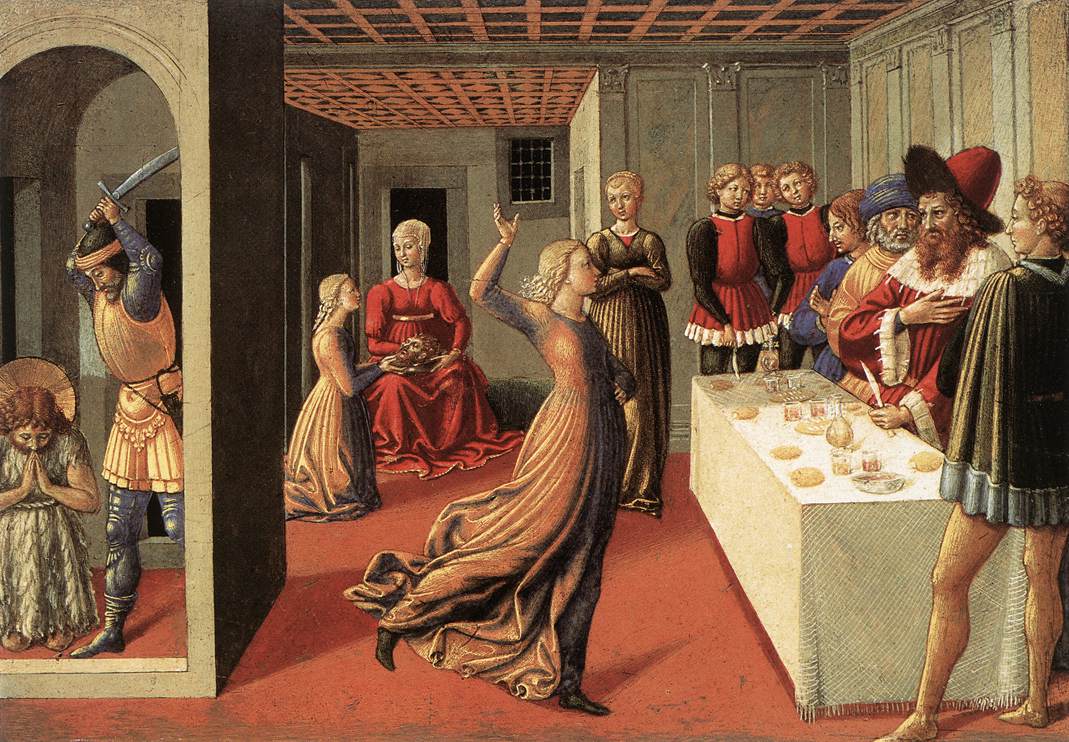
Simply put, St. John the Baptist died because he told Herod Antipas that his “marriage” to Herodias was invalid and sinful. Herod Antipas had divorced his first wife, Phasaelis, so as to be able to marry Herodias, who had been married to his half-brother Herod II (also known as Herod Philip I). The situation is described in Scripture:

For Herod himself had ordered that John be arrested and bound and imprisoned, on account of his brother Philip’s wife Herodias, whom Herod had married. For John had been telling Herod, “It is not lawful for you to have your brother’s wife.” So Herodias held a grudge against John and wanted to kill him. But she had been unable, because Herod feared John and protected him, knowing he was a righteous and holy man (Mark 6:17-20).

Herod eventually yielded to the machinations of Herodias, and John the Baptist was murdered for upholding the sanctity of marriage. Jesus would later affirm John’s teaching and say,

Whoever divorces his wife and marries another woman commits adultery against her. And if a woman divorces her husband and marries another man, she commits adultery (Mark 10:11-12).

Jesus suffered rebuke, even from his disciples (cf Matt 19:10), for teaching this (cf Matt 19:7), but He withstood them and rebuked their error (cf: Matt 19:8-9). St. John the Baptist died for this teaching, as did St. Thomas More and St. John Fisher.

Today there are many, even within the Church up to the highest levels of authority, who are willing to set aside or compromise this teaching, making sacramental accommodations never before imagined. While not every civil marriage is a sacramental marriage, and the church should be willing to hear evidence and potentially grant annulments in such cases, we cannot water down the Lord Jesus’ unambiguous teaching, a teaching these saints died to defend.

It is not simply an error to supplant this ancient teaching of the Lord—it is a grievous error. It is grievous because, intentionally or not, it diminishes the deaths of these glorious martyrs who loved and revered God too much to flatter men, even powerful ones. They suffered for this truth in a way that most today are not willing to suffer. This teaching, as the disciples imply, is a hard one (Matt 19:10), but how can we set aside something that Jesus insisted upon and for which these martyrs died?

The Church must have a pastoral stance for the divorced and remarried through a willingness to investigate their situations and grant annulments where appropriate. Further, we can recognize that not all situations are the same; not all acted in bad faith or with malice. However, we cannot set aside the truth of the Gospel to do this. Sometimes the answer must be that we cannot, at this time, extend the sacraments to them. We can still hold them close and encourage them to pray, attend Mass, and beseech God, until such time as they are willing to live as brother and sister. We can do nothing less because Jesus teaches this clearly.

At the Memorial of the Passion of St. John the Baptist, we do well to remember and cling to the truth for which he died.

Cross-posted at the Catholic Standard: St. John the Baptist, Martyr for the Sanctity of Marriage

Parish Boundaries Still Matter

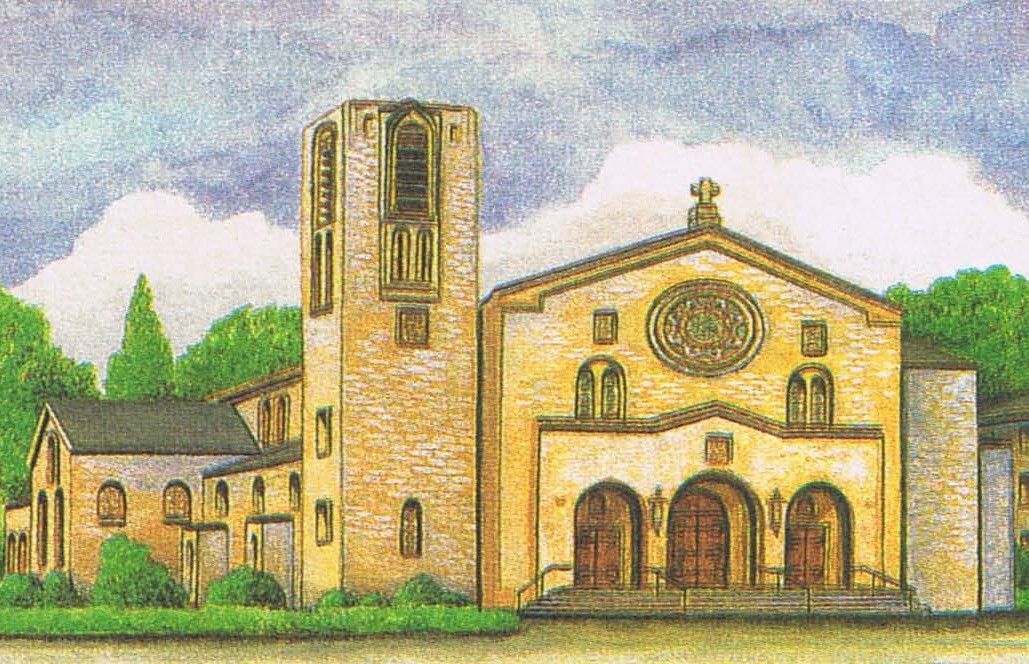
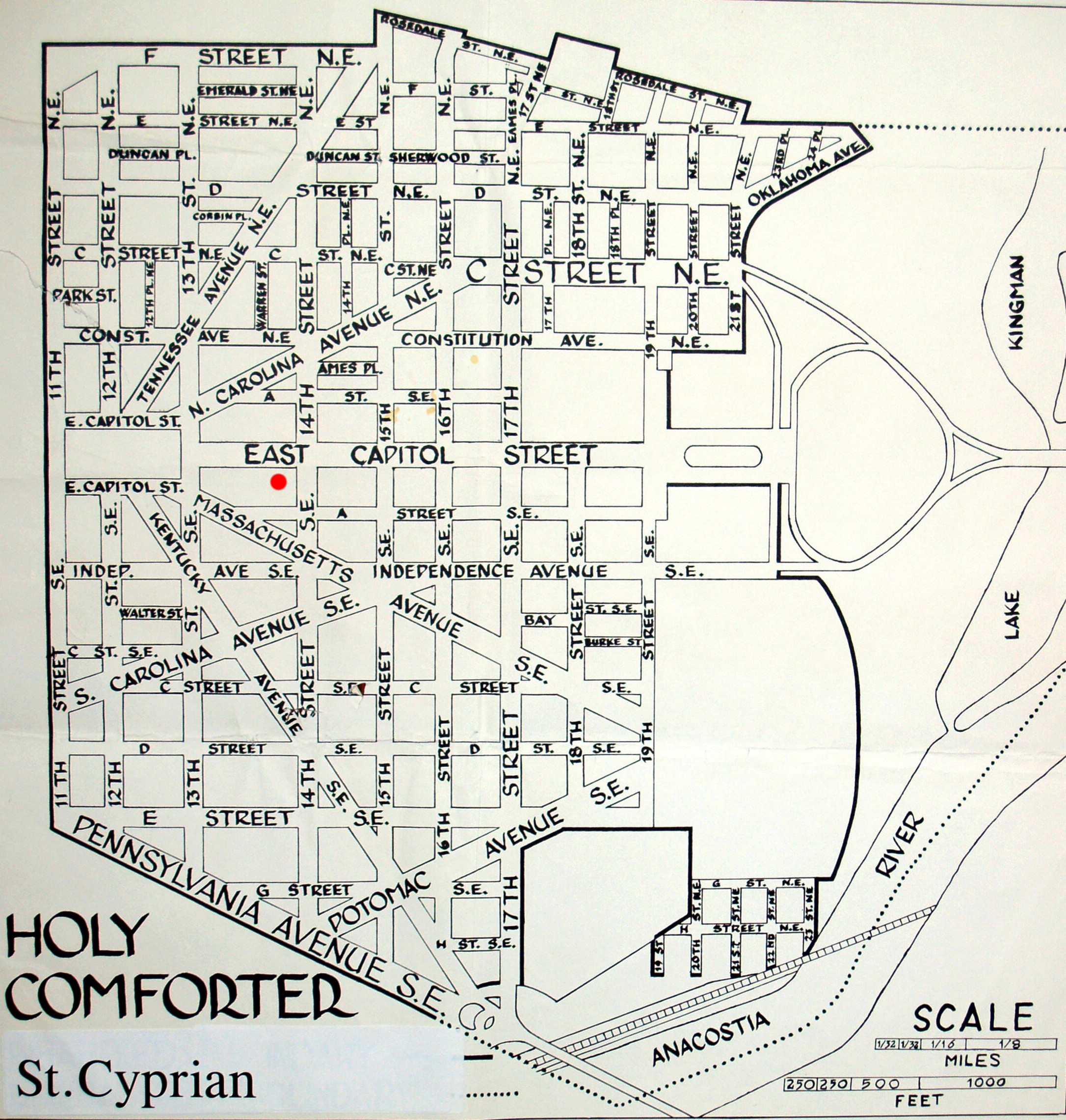
In my thirty years of priesthood I have come to see the genius in the fact that every Catholic diocese is divided into parishes with definitive geographical boundaries; the strongest parishes seem to be those that assume primary care for those in their territory. (See the territory of my parish in the diagram on the right.)

Prior to about 1980, parish boundaries were fairly strictly enforced, and in the absence of extenuating circumstances, Catholics were expected to attend Mass in the parish of their residence. Since that time, however, not only are they seldom enforced, they are rarely even known about by Catholics. Except in certain arcane matters of canon law and jurisdiction for the sacraments, they rarely come into play. Catholics thus often “shop around,” looking for a parish whose liturgical style, preaching, music, or Mass schedule most suit them. There are also parishes that seek to address a particular niche market, extending their outreach to particular ethnic or racial groups or by offering Mass in different languages.

I have come to believe that this trend is fatally flawed. A parish may successfully cater to a certain liturgical niche or ethnic tradition for a while – even for many years – but unless it focuses on its geographic neighborhood, it becomes, in effect, a “commuter parish,” with people driving past numerous other parishes to be able to partake of what they offer. Often, though, the appeal does not extend to the next generation. For example, parents who have moved to another part of town may still drive back and attend their parish, but experience tells me that this enthusiasm and dedication doesn’t transfer to their children and certainly not to their grandchildren. Hence, parishes that are living on a past legacy and not reaching out to their current residents become isolated and start to empty as the commuters age and eventually die.

Permit me to use the example of a parish within my own diocese. For the purpose of discretion, I will refer to it as “St. Wow,” but the story is a fairly common one.

St Wow’s Parish was once huge. The church building seated more than 1,000 people and in the halcyon days of the 1950s and early 1960s it was largely filled for ten Masses every Sunday. The school had 1,500 students and a long waiting list. It was located in a working-class suburb of second-generation Italians and Irish, who had moved there as the inner city became increasingly populated by African-Americans.

The neighborhood was established just after the Second World War and by the 1960s was heavily populated by Catholics. The Monsignor who oversaw the construction of the church was a legend and a king in his own right. He sat atop a miniature city of Catholics and was both respected and feared by local politicians. He and his parish were a beacon and destination for Catholics in a very tight knit community. There were dinners, bingo nights, school plays, carnivals, movie nights, sports leagues, men’s and women’s groups, a credit union, and even a bowling alley and pool in the Knights of Columbus hall. St Wow’s covered the equivalent of a city block and was the hub of the community; its vast parking lot was full most days until late in the evening.

By the late 1970s, the Black community began to spread to the closest suburbs. Racial dynamics sadly being what they were, many of St. Wow’s parishioners moved further south. Yet St. Wow was still their parish and the grizzled Monsignor had their loyalty. Numbers remained fairly strong through the 1980s.

The problem was that St. Wow’s now looked nothing like the residents in its neighborhood. The parish was 90 percent White while the area was 90 percent African-American. The parish had become insular and was not evangelizing within its boundaries; the writing was on the wall. The commuters aged, and then the famous Monsignor died. Numbers started slipping; parents couldn’t understand why their adult children weren’t as interested as they were in such a great parish. Today the commuters are largely gone; the folk group gave way to a gospel choir, and what is left is now is a smaller but viable group of African-American parishioners who live in the neighborhood. Unfortunately, the parish school couldn’t be saved and closed some years ago. One wonders if this could have been avoided if the parish had vigorously evangelized its new residents beginning in the 1970s.

Stephen Bullivant, interviewed in Catholic World Report about his book Mass Exodus, paints a similar picture, one that has been consistently repeated in the urban and ethnic northern United States:

Several factors, on both sides of the Atlantic, combined to erode those classic, urban Catholic neighborhoods That’s a very big part of the book’s argument: i.e., that the “social architecture” that had sustained and strengthened Catholic life and identity was well on the road to passing away by the time the Council came along.

The full story is too big to précis in any detail here, but consider just one U.S. case. Suppose you were brought up in an inner-city Polish or Italian neighborhood in the 20s or 30s in somewhere like Chicago or Milwaukee, where the parish was the center of social and cultural and educational and (quite probably) sporting life just as much as it was of your religious life. Then you go off to war, meet—and live and serve alongside—non-Catholics for the first time. Maybe you meet a girl while stationed somewhere—the first romantic interest you’ve ever properly spoken to not from your or a neighboring parish. Anyway, you come back from war with much wider horizons than you left with, and—thanks to the GI Bill—the prospect of going off to college. When you do get married, you’re a) significantly more likely, on average, to be marrying a non-Catholic than in your parents’ generation; and b) unlikely to be moving back to your home neighborhood. You’re a graduate now, remember, and hey—don’t those new suburban communities look just a swell place to raise Junior? When they do get ’round to building a proper Catholic church in Levittown—a Catholic school was the main priority—it’s a good couple of miles away. And while you have got a shiny new car to get to Sunday Mass, there’s plenty more exciting places you can drive to in it than just the round of parish rosary, sodalities, and fish fries that your parents still frequent back home.

I could go on, but you get the picture: Junior is brought up in a very, very different world than you were, and even if you’re still faithful Mass-goers, it’s a far less close-knit parish than your parents’ was. (Their parish, incidentally, ends up being merged with several others in the 1980s, before being sold off as luxury condos—as, I might add, was the Chicago church (St Boniface) that adorns the front cover of Mass Exodus.)

In examples like this, we see that a parish can ill afford to depend on parishioners who move away to keep commuting back. A Polish or Italian parish cannot long remain that if the Poles and Italians have moved away! It is essential to retool and gracefully adapt to welcome new people. It is certainly important to maintain traditions that still sustain the parish and make sense, but it is also time to adapt to the needs of the current population as well.

Parishes that do not prioritize reaching out to and evangelizing the residents of their neighborhood but instead remain focused on ethnic or racial groups that have moved away, or rely on the charisma of their pastor, or depend on the loyalty of former residents, can survive for a while—perhaps even ten or twenty years—but not forever. After all, charismatic pastors can be moved or die, and loyalty can fade.

There is no substitute for working with the residents within a parish’s boundaries. The genius of the Catholic Church is that we have divided the entire world up into parishes defined by geographical boundaries. The pastor and the parish together are responsible for the evangelization and salvation of every man, woman, and child within those boundaries. Parish boundaries used to tell Catholics where they were supposed to belong and attend Mass. Nowadays parish boundaries tell the parish where it is supposed to go to gather parishioners: here are the people for whom we are responsible even if they don’t look like us or speak our language or have our exact liturgical sensibilities. They are ours; we exist for them and to bring them to the Lord.

Parish boundaries still matter.

Cross-posted at the Catholic Standard:  Parish Boundaries Still Matter