Our Journey Through a Passing World – A Homily for the 33rd Sunday of the Year

During the month of November, the Church has us ponder the Four Last Things: death, judgment, Heaven, and Hell. As the golden gown of autumn gives way to the lifeless look of winter, we are encouraged to see that our lives are on a trajectory that leads to autumn and then to the winter of death. But those who have faith know that this passage to death ultimately leads to glory. Scripture says, And the world passes away, and the lust of it; but he who does the will of God abides forever(1 John 2:17).

In today’s Gospel, the Lord Jesus gives us a kind of road map of life and calls us to be sober about the passing and perilous nature of this world.

There is an historical context in which our Lord speaks. There were political rumblings in Israel in the early 30s AD that would eventually lead to war. Hatred of the Romans was growing among the Jews. The Zealot party and other factions were gaining power. In today’s Gospel, Jesus prophesies that war will come and lead to Jerusalem’s ultimate destruction; everything that the people know will pass away. By the summer of 66 AD, a three-and-a-half-year war was underway that resulted in the complete destruction of Jerusalem and the death of 1.2 million Jews. Josephus recorded the war in great detail in his work The Jewish War.

That is what this text meant historically. But we also need to understand what it means for us today. So let’s look at the text from that perspective. Today’s Gospel can be seen in three major sections.

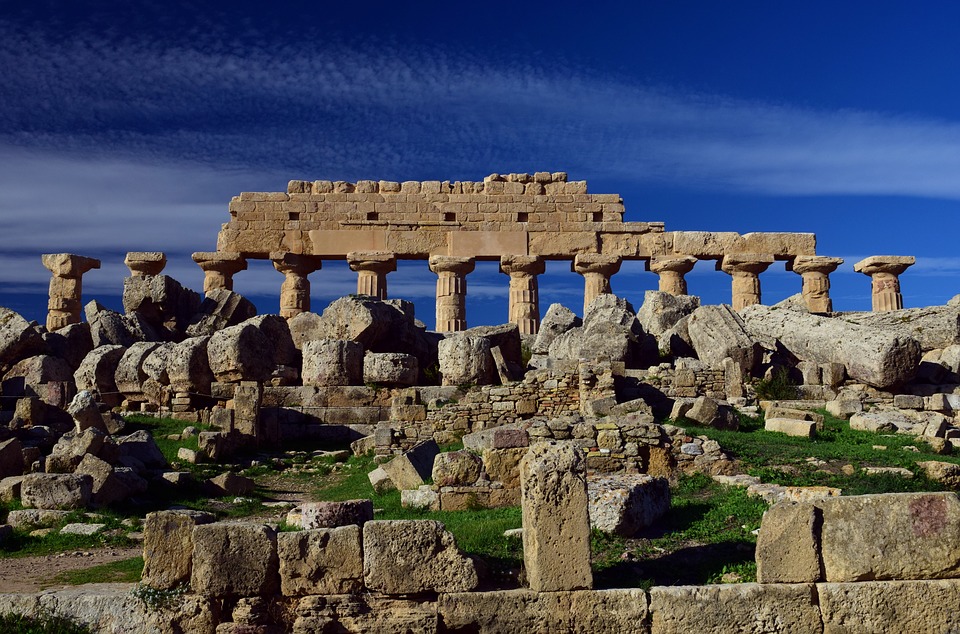
I. Portrait of Passing Things While some people were speaking about how the temple was adorned with costly stones and votive offerings, Jesus said, “All that you see here—the days will come when there will not be left a stone upon another stone that will not be thrown down.” Then they asked him, “Teacher, when will this happen? And what sign will there be when all these things are about to happen?” Notice how they admire the temple and its beauty. But the Lord reminds them that although it is glorious now, it will all be destroyed. We, too, must understand that whatever glory we see or experience in this world will not last; in the end it will all pass away.

The Temple is a symbol of passing things. Just as it was once in splendor and now is gone, so everything we see today will pass. This is a sober truth that we must come to accept, difficult though it may be. Other Scriptures also remind us of this truth: The world as we know it is passing away(1 Cor 7:29). And the world passes away, and the lust of it; but he who does the will of God abides forever(1 John 2:17). This world is passing and we, too, will pass from it one day.

Note, however, that for them as well as for us, although one world ends, another begins.The Old Testament, Old Covenant, and ritual order of the Temple was ending, but the New Testament age of the Church was beginning. It was already breaking forth even as the old was coming to an end.

And so we should not lament the end of this world or even our own death. A newer, greater world—that of Heaven—awaits those who are faithful. In fact, through the liturgy and the sacraments, that new world is already breaking forth for those who partake of it.

II. Points of Passage to Promised Things – Having been informed that all things will pass, the disciples ask for signs that will precede the coming end. We can learn from what Jesus teaches them and apply it to our own lives today.

Jesus warns them of four perils on the passage to the promised land of the New Testament age of the Church. We, too, will experience dangers in our journey to the promised land of Heaven.

A. False Messiahs “See that you not be deceived, for many will come in my name, saying, ‘I am he,’ and ‘The time has come.’ Do not follow them!” If you want Jesus Christ to be the Lord of your life, then you’ve got to get rid of false messiahs.

Too many people give greater authority in their life to people and worldly things than they do to Jesus Christ and His teachings. We submit our lives to all sorts of fads, fashions, philosophies, and people in hopes that we will be happy.

Perhaps it is someone in power whom we admire, or someone in the media whom we allow to influence us inordinately. Perhaps it is political positions that we allow to trump the Scriptures and the teachings of the Church. Perhaps it is just our personal convictions or ideas that we allow to overrule God’s teachings.

A false messiah is anything or anyone other than Jesus Christ telling you how to organize your life. Before Christ can reign unambiguously in your life, false powers and influences have to go.

Too many people look only to science, popular culture, economics, medicine, education, politics, and the like for guidance; they have been deceived.

It is not that we can’t use these things at all, but they are not a replacement for the Messiah. None of these things or people died for you. Only Jesus did that.

The power to save you isnot in the statehouse, the courthouse, or the White House—it is in the saving blood, of the Lamb, our Lord Jesus Christ.

B. Fierce Militarism “When you hear of wars and insurrections, do not be terrified; for such things must happen first, but it will not immediately be the end.” Then he said to them, “Nation will rise against nation, and kingdom against kingdom.”A war was looming for those ancient people.

We, too, are in a war, a battle.Before Christ can reign unambiguously within you, the false powers in you must be defeated. But they will not go without a fight. The world, the flesh, and the devil can be expected to wage a fierce battle in order to keep their power.

Are you in a battle?You should be! Too many Christians have lost the sense of battle. Scripture says, Resist the devil and he will flee from you(James 4:7). Yet not only do too many people not resist him, they welcome him! Scripture also says, Stand therefore, having girded your loins with truth, and having put on the breastplate of righteousness, and having shod your feet with the equipment of the gospel of peace; besides all these, taking the shield of faith, with which you can quench all the flaming darts of the evil one. And take the helmet of salvation, and the sword of the Spirit, which is the word of God (Eph 6:14).

An old hymn says, I’ve seen lightning flashing, and hear the thunder roll, I’ve felt sin-breakers dashing, which tried to conquer my soul; I’ve heard the voice of my savior, he bid me still to fight on. He promised never to leave me never to leave me alone.

On our way to the promised landof Heaven, we will encounter necessary battles: battles for what is right, battles against sin, battles for proper priorities.

C. Far-flung Marvels “There will be powerful earthquakes, famines, and plagues from place to place; and awesome sights and mighty signs will come from the sky.”In the time of Jesus and the era just preceding the war, there were in fact many earthquakes, droughts, and even heavenly signs. Historians of the time wrote of a comet and strange views of what we know today as the Aurora Borealis.

But what of us? What are the earthquakes of our life?Earthquakes involve the shaking of the ground, the shaking of that which seems most stable to us. What is the foundation of yourlife?

For most of us, the foundations of this world are things likemoney, politics, friends, family, and our own skills. All of these things are shaken in life and all of them will eventually fail. Our talents and abilities fade as we age. Friends and family members move away, fail us, and eventually die. Political power and worldly access ultimately fails. Haven’t we all experienced our world shaken, our soul famished, the plagues of sin infecting our world and ourselves?

Furthermore, haven’t stars grown cold, meteors fallen from the sky, the sun been hidden from our eyes from time to time?Has not our world at times been “turned upside down”? Maybe it was the sudden death of a loved one, the loss of a job, or a diagnosis of cancer.

This is why God must be our ultimate foundation, the star by which we navigate.If Jesus is not our foundation, then something else is. Without God as our foundation, we cannot last. The foundations of this world will all ultimately crumble. Christ must be our sure foundation.

D. Fearful MaliceBefore all this happens, however, they will seize and persecute you, they will hand you over to the synagogues and to prisons, and they will have you led before kings and governors because of my name. It will lead to your giving testimony. Remember, you are not to prepare your defense beforehand, for I myself shall give you a wisdom in speaking that all your adversaries will be powerless to resist or refute. You will even be handed over by parents, brothers, relatives, and friends and they will put some of you to death. You will be hated by all because of my name, but not a hair on your head will be destroyed.” The early Christians were greatly persecuted. Most of us in the Christian West have had less to suffer, more difficult days may well be ahead as the secular West grows increasingly hostile to traditional Christianity.

Persecution, however, is an expected part of the Christian journey to the promised land of Heaven. Even if we are not “handed over,” many of us today are not taken seriously, are written off, or are called names even by our friends and family.

Christ tells us not to worry about such things because they are part of the normal Christian life. Even if some of us eventually lose our life for the faith, the Lord promises that not a hair of our head will be harmed. That is, our souls will be saved. The world can only harm our body; it cannot harm our soul unless we allow it to do so.

3. Prescription for the Passage to Promised Things By your perseverance you will secure your lives.”We must always journey on and not lose faith or lose heart. There is glory waiting for us if we persevere.

Scripture says, But he who endures to the end will be saved(Mat 10:22). For yet a little while, and the coming one shall come and shall not tarry; but my righteous one shall live by faith, and if he shrinks back, my soul has no pleasure in him.” We are not of those who shrink back and are destroyed, but of those who have faith and keep their souls(Heb 10:37).

An old spiritual says, “Hold on just a little while longer; everything’s gonna be all right.”

In this regard, the end of the Book of Daniel also seems pertinent:[Daniel asked the Archangel Gabriel], My lord, what will the outcome of all this be?” He replied, “Go your way, Daniel, because the words are rolled up and sealed until the time of the end. Many will be purified, made spotless and refined, but the wicked will continue to be wicked. None of the wicked will understand, but those who are wise will understand. … As for you, go your way till the end. You will die, yet at the end of the days you will rise to receive your reward”(Daniel 12:8-10, 13).

Yes, on our journey through this passing world it is necessary to persevere unto the end. If we do not, greater woes will come. If we do, there will be glory for us on the other side.

https://youtu.be/wCdxun_IfIs?list=PLSQ9_a7EjS7et__6sffXKiAluIyWD7zf9
I’m Gonna Ride the Chariot in the Morning Lord! A Homily for the 32nd Sunday of the Year

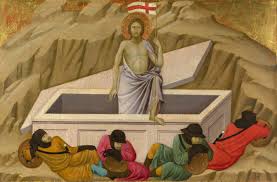
resurrectionIn the readings today the Church presents us with a strong reminder and teaching on the resurrection. Jesus Himself leads the charge against those who would deny the resurrection from the dead, and the seven brothers and their mother from the first reading bring up the rear. Let’s take a look at what we are taught.

I. Ridicule of the Resurrection – The Gospel opens with the observation that Some Sadducees, who deny there is a resurrection, came forward and put [a] question to Jesus. They propose a hypothetical situation in which a woman is married seven times, to brothers who successively die, having no children by any of them. They suggest that at the resurrection there will be confusion as to whose wife she really is! We’re supposed to laugh, according to these Sadducees, and conclude that the idea of resurrection is absurd.

Jesus will dismiss their absurdity handily, as we shall see in a moment, but let’s consider why the Sadducees disbelieved the resurrection.

Fundamentally, they rejected the resurrection because they only accepted the first five books of the Bible: Genesis, Exodus, Leviticus, Numbers, and Deuteronomy. This is point is debated among scholars, but we can surely say that if something was not explicitly in the Law of Moses, the Sadducees were unlikely to accept it. All the other Old Testament books such as the prophets, the historical books, the psalms, and the wisdom tradition, were not considered authoritative sources.

They claimed that the resurrection of the dead was not taught in these first five books. While most other Jews of Jesus’ time did accept the complete Old Testament (and teachings such as the resurrection of the dead which are set forth there), the Sadducees simply did not. They were a small party within Judaism (Josephus said that they were able to persuade none but the rich). Nevertheless, they were influential due to their wealth and to the fact that they predominated among the Temple leadership. You can read more about them here: Sadducees.

Hence, the Sadducees approached Jesus to poke fun at Him and all others who believed that the dead would rise.

They are no match for Jesus, who easily dispatches their arguments using the Book of Exodus (a book they accept) to do it. In effect, Jesus’ argument proceeds as follows:

  1. You accept Moses, do you not?
  2. (To which they would surely reply yes)
  3. But Moses teaches that the dead will rise.
  4. (Jesus must have gotten puzzled looks but He presses on).
  5. You accept that God is a God of the living and not the dead?
  6. (To which they would surely reply yes).
  7. Then why does God (in Exodus) identify Himself as the God of Abraham, Isaac, and Jacob, all of whom have been dead some 400 years? How can He call himself their God if they are dead?
  8. Obviously they are alive or He could not call Himself their God, for He is not a God of the dead but of the living.
  9. Therefore, they are alive to God; they are not dead.

In this way, Jesus dispatches their view. For us, the point is to see how forcefully and clearly Jesus upholds the fact that the dead are alive in the Lord. He powerfully asserts an essential doctrine of the Church. We should rejoice at how firmly Jesus rebukes their disbelief in the resurrection of the dead.

Rejoice, for your loved ones are alive before God! To this world they may seem dead, but Jesus tells us firmly and clearly that they live. And we, who will also face physical death, will live on. Let the world ridicule this, but hear what Jesus says and how he easily dispatches them. Though the idea is ridiculed, the resurrection is real.

II. Resplendence of the Resurrection – Jesus also sets aside the absurd hypothetical scenario that the Sadducees pose, by teaching earthly realities cannot simply be projected into Heaven. Marriage scenarios, perceived in earthly ways, cannot be used to understand heavenly realities. The saints in Heaven live beyond earthly categories.

Heaven is more than the absence of bad things and the accumulation of good things. It is far beyond anything this world can offer. Scripture says, No eye has seen, no ear has heard, and no human mind has conceived—the things God has prepared for those who love him (1 Cor 2:9). The sufferings of this world cannot compare to the glory that will be revealed in us (Rom 8:18).

Do you see the majesty of this teaching? We have a glory waiting for us beyond imagining. Consider your greatest pleasure, your happiest experience, your most fulfilled moment. Then multiply it by a thousand, or a million, or a trillion, and you are still not even close understanding the glory that awaits.

And this glory will transform us. The Lord once told Catherine of Siena that if she ever saw the glory of a saint in Heaven she would fall down and worship, because she would think she was looking at God. This is our dignity: to be transformed into the very likeness of God and reflect His glory. The following is a summary of St. Catherine’s vision of the soul of a saint in Heaven:

It was so beautiful that she could not look on it; the brightness of that soul dazzled her. Blessed Raymond, her confessor, asked her to describe to him, as far as she was able, the beauty of the soul she had seen. St. Catherine thought of the sweet light of that morning, and of the beautiful colors of the rainbow, but that soul was far more beautiful. She remembered the dazzling beams of the noonday sun, but the light which beamed from that soul was far brighter. She thought of the pure whiteness of the lily and of the fresh snow, but that is only an earthly whiteness. The soul she had seen was bright with the whiteness of Heaven, such as there is not to be found on earth. “My father,” she answered. “I cannot find anything in this world that can give you the smallest idea of what I have seen. Oh, if you could but see the beauty of a soul in the state of grace, you would sacrifice your life a thousand times for its salvation. I asked the angel who was with me what had made that soul so beautiful, and he answered me, “It is the image and likeness of God in that soul, and the Divine Grace which made it so beautiful.” [1].

Yes, Heaven is glorious and we shall be changed. Scripture says, we shall be like the Lord for we shall see him as he is (1 John 3:2). He will change our lowly body to conform with his glorified Body by the power that enables him also to bring all things into subjection to himself (Phil 3:19). I have written more on our resurrected bodies here: What will our resurrected bodies be like?

Too many people have egocentric notions of Heaven, where I will have a mansion, I will see my relatives, and I will be able to play all the golf I want. But the heart of Heaven is to be with God, for whom our heart longs. In God we will experience fulfillment and peace that is beyond earthly imagination. Heaven is far greater than golf, mansions, and family reunions. There is certainly more to it than clouds and harps. Heaven can never be described because it is beyond words. St Paul speaks of a man (himself) who was caught up into Heaven; he affirms that it cannot be described; it is ineffable; it is unspeakable.

I know a man in Christ who fourteen years ago was caught up to the third heaven …. And I know that this man—whether in the body or apart from the body I do not know, but God knows—was caught up to paradise and heard inexpressible things, things that no one is permitted to tell (2 Cor 12:2-3).

Do you long for heaven? Do you meditate on it? Is there a part of you that can’t wait to get there? There’s an old spiritual that says, “I’m gonna ride the Chariot in the morning, Lord. I’m gettin’ ready for the judgment day, my Lord, my Lord!”

III. Response to the Resurrection – What difference does the resurrection make other than to give us joy if we meditate upon it? To see that answer, consider today’s first reading, in which the seven brothers are willing to accept torture and death rather than violate God’s Law. If there is a great reward awaiting those who remain faithful, then we will endure anything to get there. Notice how the vision of Heaven inspires them stand firm in their refusal to deny their faith:

We are ready to die rather than transgress the laws of our ancestors. … [Y]ou are depriving us of this present life, but the King of the world will raise us up to live again forever. It is for his laws that we are dying. … Even the king and his attendants marveled at the young man’s courage, because he regarded his sufferings as nothing (2 Maccabees, 7:2,9, 12).

Their vision of the rewards awaiting them motivated them to endure the awful sufferings described in the 7th Chapter of 2nd Maccabees.

And what of us? Do we meditate on Heaven and value its reward enough to be willing to endure suffering to get there? We need a strong vision of Heaven to be able to endure and stand firm. Too many people today have lost a deep appreciation of Heaven. Too many pray to God merely for worldly comforts and rewards—but these will pass. We ought to ask God for a deep desire for Heaven and the things awaiting us there.

What athlete would discipline his body as severely as he does without the deep motivation of the satisfaction and rewards that will come upon meeting his goals? What college student would attend hundreds of hours of classes, read scores of books, and write lengthy papers if it were not for the rewarding career at the end of the trail? Who of us will endure the trials of faith if we are not deeply imbued with the vision of glory and deeply desirous of its fulfillment no matter the cost? Without this, our spiritual life becomes tepid and our willingness to endure trials falls away. An old hymn says,

When peace, like a river, attendeth my way,
When sorrows like sea billows roll;
Whatever my lot, Thou has taught me to say,
It is well, it is well, with my soul.

And Lord, haste the day when my faith shall be sight,
The clouds be rolled back as a scroll;
The trump shall resound, and the Lord shall descend,
Even so, it is well with my soul.

Meditate on Heaven often. Although we can never fully grasp its glory, we ought not to let that stop us from imagining it as best we can. In particular, read Revelation chapters 4,5, 8, 21, and 22. But above all, ask God for an ever-deepening desire for Him and the good things that await you in Heaven. Look to Heaven; long for Heaven. Desire God and deeply root your life in Him. Heaven will not disappoint!

This African-American spiritual says,

I’m gonna ride the chariot in the morning, Lord.
I’m getting’ ready for the judgment day, my Lord, my Lord!
Are you ready my brother? (Oh yes!)
Are you ready for the journey? (Oh Yes!)
Do you want to see Jesus (Yes, Yes!)
I’m waiting for the chariot ’cause I ready to go.
I never can forget that day,
(Ride in the chariot to see my Lord!).
My feet were snatched from the miry clay!
(Ride in the chariot to see my Lord!)

To Make a Long Story Short—A Homily for the 31st Sunday of the Year

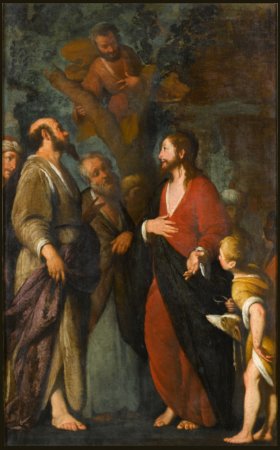
The Gospel today features the endearing story of Zacchaeus, a man who climbs a tree because he is too short to see Jesus. By climbing this tree (of the cross), he encounters Jesus and is changed.

The danger with familiar stories is that because they are familiar, it is easy to miss their remarkable qualities. Let’s look at today’s Gospel with fresh eyes, searching for the symbolic in the ordinary details.

Shortsighted Sinner – Zacchaeus is physically short, so short that he cannot see the Lord. Do you think that this detail is provided merely to describe his physical stature? I don’t. As a preacher, I’m counting on the fact that there is more here than meets the eye.

I suspect it is also a moral description. Zacchaeus cannot see the Lord because of the blindness brought by sin. Consider some of the following texts from Scripture, which draw parallels between sin and blindness:

      • My iniquities have overtaken me, till I cannot see (Ps 40:12).
      • I will bring distress on the people and they will walk like blind men, because they have sinned against the LORD (Zeph 1:17).
      • They know not, nor do they discern; for God has shut their eyes; so that they cannot see, and their minds so that they cannot understand (Is 44:18).
      • Because of the sins of her prophets and the iniquities of her priests, who shed within her the blood of the righteous, now they grope through the streets like men who are blind (Lam 4:13).
      • Unless one is born again by water and the Spirit, he cannot see the Kingdom of God. (John 3:5).
      • Blessed are the pure of heart for they shall see God (Matt 5:8).

Yes, sin brings blindness, an inability to see the Lord. Zacchaeus has fallen short through sin and hence cannot see Jesus. How has he sinned? Well, he is the chief tax collector of Jericho, and tax collectors were wicked, unjust men. The Romans recruited the mobsters of that day to collect taxes. Tax collector roughed people up and extorted money from them. The Romans permitted the collectors to charge in excess of the tax due as their “cut” of the deal. They were corrupt, exploited the poor, and rubbed elbows with the powerful. These were men who were both feared and hated—and for good reason.

Zacchaeus is not just any tax collector; he is the chief tax collector. He’s a mafia boss, a Don, a “Godfather.” Have you got the picture? Zacchaeus isn’t just physically short. He’s the lowest of the low; he doesn’t measure up morally. He’s a financial giant but a moral midget. Zacchaeus is well short of a full moral deck. His inability to see the Lord is not just a physical problem; it is a moral one.

Now I’m not picking on Zacchaeus. Truth be told, we are all Zacchaeus. You’re probably thinking, “Wait a minute. I’m not that bad.” Maybe not, but you’re not that good, either. We’re all a lot closer to being like Zacchaeus than like Jesus. The fact that we’re still here is evidence that we’re not yet ready to look on the face of the Lord. We’re not righteous enough to look upon His unveiled face. How will Zacchaeus ever hope to see the Lord? How will we?

Saving Sycamore – Zacchaeus climbs a tree in order to be able to see Jesus, and so must we. The only tree that can really help us to see the Lord is the tree of the cross. Zacchaeus has to cling to the wood of a sycamore to climb it; we must cling to the wood of the rugged cross.

Only by the wood of the cross and the power of Jesus’ blood can we ever hope to climb high enough to see the Lord. There is a Latin chant that goes like this: Dulce lignum, dulce clavos, dulce pondus sustinet (Sweet the wood, sweet the nails, sweet the weight (that is) sustained). By climbing a tree and being able to get a glimpse of Jesus, Zacchaeus foreshadows for us the righteousness that comes from the cross.

Sanctifying Savior – Jesus stops by that tree; we always meet Jesus at the cross. There at that tree, that cross, He invites Zacchaeus into a saving and transformative relationship. It is not surprising that Jesus essentially invites Himself to Zacchaeus’ house. Though dinner is not mentioned, it was a basic aspect of Jewish hospitality. Remember, however, that it is Jesus who ultimately serves the meal. Consider these texts:

      • Here I am! I stand at the door and knock. If anyone hears my voice and opens the door, I will come in and eat with him, and he with me (Rev 3:20).
      • And I confer on you a kingdom, just as my Father conferred one on me, so that you may eat and drink at my table in my kingdom (Luke 22:29).
      • As they approached the village to which they were going, Jesus acted as if he were going farther. But they urged him strongly, “Stay with us, for it is nearly evening; the day is almost over.” So he went in to stay with them. When he was at the table with them, he took bread, gave thanks, broke it and began to give it to them (Luke 24:28-30).

Yes, Zacchaeus has now begun to see the Lord, and the Lord invites him into a holy communion, a relationship, a liturgy that will begin to transform him. Zacchaeus and we are one and the same. We, too, have begun to see the Lord through the power of the cross to cast out our blindness, and the Lord draws us to sacred communion with Him. The liturgy and Holy Communion are essential for this, as the Lord invites himself to our house, that is to say, our soul and our parishes.

Started Surrender – Zacchaeus is experiencing the start of a transformative relationship, but it is only the start. Zacchaeus promises to return the money he has extorted four-fold and to give half his money to the poor. There’s a Christian hymn entitled “I Surrender All.” Zacchaeus hasn’t quite reached that point, but neither have most of us.

Eventually Zacchaeus will surrender all, and so will we. For now, he needs to stay near the cross so that he can see and continue to allow Jesus to have communion with him. One day all will be surrendered.

This is the start for Zacchaeus and for all of us. The best is yet to come. You might say that the Gospel ends here—to make a long story short.

A Warning from St. Gregory the Great for the Priest to Guard His Heart

For spiritual reading, I am currently reading The Book of the Pastoral Rule by St. Gregory the Great.   Pope Saint Gregory was a master at taking details from the Old Testament priesthood and applying them to the priests of the New Covenant. In one reflection, he remarks on the details of the breastplate of the high priest and what they signify.

In effect, Pope Gregory instructs the priest to guard his heart, keeping it safe from the poison of false doctrine and misplaced affections, wherein he fears man more than God and desires affection and approval more than speaking the truth.

And while his words apply especially to priests, surely they apply as well to any who would preach, teach, parent, or witness in the world today. I’d like to consider a few excerpts from his reflection on the breastplate that was worn by the high priest. As is often the case, I will present the original quote in bold black italics, and my own, inferior remarks in plain red text. The quotes come from the Pastoral Rule Part II article 2.

Thus, it was assigned by the divine Voice that on the breast of Aaron, the vestment of judgment should be closely bound by bands (Exodus 28:15, 28). This was so that the heart of the priest would not possess fluctuating thoughts, but be bound by reason alone. Nor should he consider indiscreet or unnecessary thoughts.

First note the use of the word “bands.” At the root of the meaning of the word “religion” is the same concept. The Latin root of the word religion speaks of being bound closely to or embraced by God (re = again + ligare = to bind). Thus the virtue of religion binds one’s heart, mind, and soul. One’s whole self is bound fast to God, held tightly by Him in an embrace of love and truth. Many people denigrate the word religion today as sounding too institutional. Many say they are “spiritual but not religious.”  But as can be seen from its root, religion is a beautiful word describing an embrace with God.

Therefore the bands of the high priest’s breastplate remind all of us of our need to be bound and held fast to God and by God. They remind us to not allow ourselves to waiver, wander, or be carried off from the love and truth of God. We are not to be enamored of the world or its lies; neither should we embrace or cling to them.

The bands of the breastplate of the high priest, drawn tightly and snugly, remind us to cling to God and be held closely by Him. And indeed, as Pope Gregory goes on to say, being thus held close to God and His truth, the priest will not easily fluctuate from the truth; he will not wander off in all sorts of different directions. Being held close by God, his own beating heart begins to synchronize with the heart of God. Cor ad cor loquitur (Heart speaks to heart). Gradually the priest’s heart will become much like the heart of God, loving the things of God and the people of God with proper and ordered affection, wanting only what God wants.

Further, being held fast by God will also preserve the priest from what Gregory calls indiscreet or unnecessary thoughts. Indiscreet matters are those matters into which we ought not delve or pry. All of us know that there are things we ought not seek to know, things that are none of our business. The priest should properly seek to know only those things he needs to know. He should also remember that there are many things he cannot fully know, many of the deep mysteries of God about which he must humbly admit he knows little.

As for unnecessary thoughts, this surely refers to the thousands of trifling things that often occupy many people throughout the day: discussions about sports, or Hollywood celebrities, or the minutia of popular culture. Some small diversions in life have their place, but most of these accumulate excessively in our mind. We think too much of frivolous things and not enough about eternal, glorious, edifying, and lasting things. Almost any silly thought can enter our mind and we are carried off in one of a thousand different directions. But to be held fast by God is to occupy our minds especially with His glorious truths, to begin to adopt His priorities, to think about the things that are most important, helpful, and edifying.

… It was strictly added that the names of the twelve patriarchs should also be depicted (Exodus 28:29).  For to carry always the inscribed fathers on the breast is to meditate on the life of the ancients without interruption … To consider unceasingly the footsteps of the Saints.

Yes, every priest, preacher, teacher, parent, and leader in the Church should be deeply rooted in the wisdom of the saints and in the ancient and lasting truth revealed by God in Holy Scripture and Sacred Tradition. To be a true Christian is to be deeply rooted in these things, always going back to that which is ancient and proposing it ever anew.  The truths of God are non nova sed nove (not new things, but understood newly).

 [The breastplate] is fittingly called a “vestment of judgment” because the spiritual director should always discern between good and evil … Concerning this it is written: “But you shall put on the breastplate of judgment, the doctrine and truth, which will be on Aaron’s breast … and [the priest shall] not add an element of human reasoning as he dispenses his judgments on behalf of God … Otherwise, personal affections might get in the way of zealous correction …

And here Pope Gregory warns against the human tendency to compromise the truth or to engage in rationalization. We can either add to the Word of God or subtract from it, but in so doing we render harm to the purity it should always have in our heart, in our mind, and on our lips.

Too easily, many priests, preachers, and teachers get carried away with trendy notions or theological speculations that can begin to substitute for the true word of God. Instead of preaching the Word directly from Sacred Scripture and from Sacred Tradition, too often he ends up preaching speculation or theories that serve more to raise doubts about or deflect from the true meaning of the Word of God.

St. Paul said to Timothy, Preach the word, be urgent in season and out of season, convince, rebuke, and exhort, be unfailing in patience and in teaching (2 Tim 4:2). He did not say preach lots of theories and speculations. Speculative theology has its place, but the priest must be careful not to be carried off by so much speculation that the actual Word of God is neglected. All of his judgments about what is right and what is wrong, what is good and what is evil, should be deeply rooted in the wisdom and the truth of God and not be tainted by dubious opinions, trends, fashions, popular opinions, or unbalanced notions.

The priest must also be aware of personal affections and preferences. Too often in human affairs, who said something becomes more important than what he said. Affection and admiration have their place, but everything must be judged by and squared with the truth of God, no matter who says it. No one should be so quick to esteem the opinions of so-called experts without first considering how and if what was said squares with the revealed truth of Scripture and Sacred Tradition. St. Paul says, Test everything; hold fast what is good, abstain from every form of evil (1 Thess 5:21-22).

If one fearfully considers the One who presides over all things then he will not direct his subjects without fear.

Here is a very deep human problem: fear. Too many priests, parents, teachers, and others in the Church fear human beings rather than God. God would have us simplify things in our life by fearing Him alone and then not having to fear thousands of others.

Yes, too many priests and other leaders cower before congregations and preach so vaguely and blandly that almost no one can remember what was said, and their obfuscations disguise the Word of God more than reveal it.

The first question every preacher and teacher should ask is “What would God think of what I have said today?” But too many of us who preach are more concerned with the opinions of men. The fear that a preacher should have is not whether his congregation is pleased, but rather whether God, who will judge him one day, is pleased. If he fears God, then he will direct his people with holy fear, not out of fear of man. He will have a proper and holy reverence for God, to whom we must one day be accountable for our office. May neither our silence nor our rash speech condemn us!


https://youtu.be/gqZtjXckaik

Of Hunger and Hallucinations – How the Stages of Starvation Describe the Decaying West

This is the third in a series of articles on the decline of the West. Given the exceptionally poor condition of whatever is left of Western Culture and Christendom, it may help us in this article to gain some perspective of what is going on from the stages of starvation.

Physical hunger is a serious problem; We are obliged to assist the starving and malnourished. But even more prevalent these days is spiritual hunger, if not outright starvation. As is the case with physical hunger, the source of spiritual hunger is not God, who has given us abundant grace and truth; it is we who are the source. It is a strange starvation to be sure, for it is largely self-inflicted. Further, it seems to be at an advanced stage.

I am told that as physical starvation advances there comes a time when a kind of lethargy sets in. Although a person knows he is hungry, he lacks the mental acuity to want to do much about it. This seems to be the stage of spiritual starvation at which many Westerners find themselves today. Most people know they are spiritually hungry and are longing for something, but through a kind of lethargy and mental boredom, they don’t seem inclined to do much about it.

I’d like to look at the progressive stages of physical starvation (gleaned from several medical sources) and then speak of their spiritual equivalents. Please understand that when I use the pronoun “we” I am not necessarily talking about you, but rather about a large number, perhaps even a majority, of people in our culture today.

  1. Weakness – In our time of spiritual starvation, a great moral weakness is evident. Self-control in the realm of sexuality and self-discipline in general seem increasingly lacking in our culture today. Many are too weak to keep the commitments they have made to marriage, religious life, or the priesthood. Addiction is a significant issue as well: addiction to alcohol, drugs, and pornography. In addition, we seem consumed by greed; we are obsessed with accumulating possessions, and the more we have the more we seem unable to live without them. Increasingly, people declare that they are not responsible for what they do and/or cannot help themselves. There is a general attitude that it is unreasonable to expect people to live out ordinary biblical morality, to have to suffer or endure the cross. All of these demonstrate weakness and a lack of courage, signaling the onset of spiritual starvation.
  2. Confusion – As spiritual starvation sets in, the mind gets cloudy; thinking becomes distorted. There is a lot of confusion today about even the most basic moral issues. How could we get so confused as to think that killing unborn babies is OK? Sexual confusion is also rampant, so that what is contrary to nature (e.g., homosexual acts) is approved and what is destructive to the family (e.g., illicit heterosexual behavior) is widely accepted as well. Confusion is also deep about how to properly and effectively raise, train, discipline, and educate our children.
  3. Irritability – As spiritual starvation progresses, a great deal of anger is directed at the Church whenever she addresses the malaise of our times. In addition, there is growing resistance to lawful authority and a loss of respect for elders and for tradition. St. Paul describes well the general irritability of a culture that has suppressed the truth about God and is spiritually starving: They are full of envy, murder, strife, deceit and malice. They are gossips, slanderers, God-haters, insolent, arrogant and boastful; they invent ways of doing evil; they disobey their parents; they have no understanding, no fidelity, no love, no mercy (Romans 1:29-31). Because we are starved of the common meal of God’s Word and revealed truth and because we have rejected natural law, we have been reduced to shouting matches and power struggles. We no longer agree on the essentials that the “food” of God’s truth provides. Having refused this sustenance, we have become irritable and strident.
  4. Immune deficiency – As our spiritual starvation grows we cannot ward off the increasing attacks of the disease of sin. We more easily give way to temptation. Deeper and deeper bondage is increasingly evident in our sin-soaked culture. Things once thought to be indecent are now done openly and even celebrated. Many consider any suggested resistance to sin to be unreasonable, even impossible. Sexually transmitted diseases, teenage pregnancy, abortion, the consumption of internet pornography, divorce, and cohabitation are becoming widespread. Like disease, sin spreads because we are less capable of fighting it off.
  5. The body begins to feed on its own muscle tissue (after fat cells are depleted) – In our spiritual starvation, we start to feed on our very own. We kill our children in utero; we use embryos for research. We euthanize our elderly. Young people kill other young people in gang violence. We see strife, power struggles, and wars increase. In tight economic times, we who have depleted the fat cells of public funds and amassed enormous debt fight with one another over the scraps that are left and refuse to give up any of our own entitlements, instead of restraining our spending and re-examining our priorities. Starving people can be desperate, and desperate people often turn on others. In the end, we as a body are consuming our very self.
  6. Internal organs begin to shut down – In the spiritually starving Western world, many of our institutions are becoming dysfunctional and shutting down. Our families are in the throes of a major crisis. Almost of half of all children today no longer live with both parents. Schools are in serious decline. Most public-school systems have been a disgrace for years. America, once at the top of worldwide academic performance, now lags far behind. Churches and parochial schools also struggle as Mass attendance has dropped in the self-inflicted spiritual starvation of our times. Government, too, is becoming increasingly dysfunctional; strident differences paralyze it, and scandals plague the public sector. As we go through the stages of starvation, important organs of our culture and our nation are shutting down.
  7. Hallucinations – St. Paul spoke of the spiritually starved Gentiles of his day and said, their thinking became futile and their senseless minds were darkened. Although they claimed to be wise, they became fools … Furthermore, just as they did not think it worthwhile to retain the knowledge of God, so God gave them over to a depraved mind (Romans 1:21-22,28). As we in the West spiritually starve, our thinking becomes increasingly bizarre, distorted, fanciful, silly, vain, and often lacking in common sense. Since our soul is starving, we hallucinate.
  8. Convulsions and muscle spasms – Violence and turmoil run through our culture as basic social structures shut down and become dysfunctional. The breakdown of the family leads to many confused, incorrigible, and violent children. This is not just in the inner cities; violence, shootings, and gangs are in the suburbs as well. Even non-violent children have short attention spans and are often difficult to control and discipline. Although ADHD may well be over-diagnosed, overstimulated children with short attention spans are a real problem today. Adults, too, manifest a lot of convulsive and spasmodic behaviors, short attention spans, and mercurial temperaments. As we reach the advanced stages of spiritual starvation in our culture, convulsive and spasmodic behavior are an increasing problem.
  9. Irregular heartbeat – In the spiritually starving West, it is not as though we lack all goodness. Our heart still beats, but it is irregular and inconsistent. We can manifest great compassion when natural disasters strike, yet still be coarse and insensitive at other times. We seem to have a concern for the poor, but abort our babies and advocate killing our sick elderly. Our starving culture’s heartbeat is irregular and inconsistent, another sign of spiritual starvation.
  10. Sleepy, comatose state – Our starving culture is sleepy and often unreflective. The progress of our terrible fall eludes many, who seem oblivious to the symptoms of our spiritual starvation. St Paul says, So then, let us not be like others, who are asleep, but let us be alert and self-controlled (1 Thes 5:6). He also says, And do this, understanding the present time. The hour has come for you to wake up from your slumber, because our salvation is nearer now than when we first believed (Rom 13:11). Jesus speaks of the starvation that leads to sleepiness in this way: Be careful, or your hearts will be weighed down with dissipation, drunkenness, and the anxieties of life, and that day will close on you unexpectedly like a trap (Luke 21:34).
  11. Death – Spiritual death is the final result of starvation. We become dead in our sins. Pope Francis remarked that the lights are going out in Europe. As Europe has forsaken its spiritual heritage and embarked upon a self-imposed spiritual starvation, its birthrates have declined steeply. It is quite possible that during the lifetime of some of the younger readers of this post, Europe as we have known it will cease to exist. Western liberal democracies that have starved themselves to death will be replaced by Muslim theocratic states. This is what happens when we starve ourselves: death eventually comes. America’s fate is less obvious. There are many on a spiritual starvation diet, but also many who still believe; there are signs of revival in the Church here. Pray God that the reversal will continue! Pray, too, that it is not too late for Europe.

Thus, while we know little of physical starvation in the affluent West, spiritual starvation and its symptoms are manifest. Be well-fed spiritually! Spiritual starvation is an awful thing; it is the worst thing.

This post has been a bit heavy, so I hope you won’t mind if I inject a little humor in the form of the video below. Though humorous, it makes an important point: you’re not you when you’re hungry. Spiritual starvation can rob us of our identity as joyful children of God, meant to be fully alive and fully functioning. Ultimately, we are meant to be Christ, to become what we eat in Holy Communion. When we do not eat, we are “not ourselves.” This video is trying sell Snickers bars, but please understand that I am talking about Jesus. If you’re hungry, you’re not yourself.


On the Paradoxical Freedom of Poverty as Taught by St. John Chrysostom

There is a saying that you cannot steal from a man who has nothing, and you cannot threaten a man who has nothing to lose. Of Jesus, the Son of Man who had no where to lay his head (Matt 8:20), this was surely true. The world had no claim on him, nothing to hook him or claim his loyalty. Even his life could not be taken from him for he had already laid it down freely (cf Jn 10:18).

St. John Chrysostom spoke of it boldly in a sermon that paints well the paradoxical freedom of poverty and the enslavement of riches and possessions.  More on that in a moment…

But first, consider that the heart of the slavery most of us experience comes from our attachments to this world. So easily do we sell our souls to its allurements; so easily does the world ensnare us with its empty promises and trinkets that so quickly become duties, distractions, and requirements. In our heart, we know how the things of the world weigh us down. But even knowing this, our addiction to things draws us further into the endless cycle of ever-deepening desires and the increasing inability to live without many burdensome things.

And it isn’t just things. The world hooks us with the mesmerizing promise of popularity, promotion, even fame. And in our desperate addiction to being popular, we come too easily to the point that we will do almost anything and make almost any compromise for popularity and advancement.

Jesus says, No one can serve two masters. Either he will hate the one and love the other, or he will be devoted to the one and despise the other. You cannot serve both God and Money (Matt 6:24).

Scripture elsewhere says,

Do not love the world or anything in the world. If anyone loves the world, the love of the Father is not in him (1 John 2:15).

Adulterers! Do you not know that the love of this world is hatred toward God? Therefore whoever chooses to be a friend of this world is an enemy of God (James 4:4).

But in the end, most of our slavery and anxiety is rooted in our love for this world and our fear of losing its pleasures, and its promises of power and popularity. It is without doubt the greatest of human struggles to get free from this world’s hooks and shackles and to become utterly free—free to follow the Lord unreservedly and with no fear of what the world might do in retaliation.

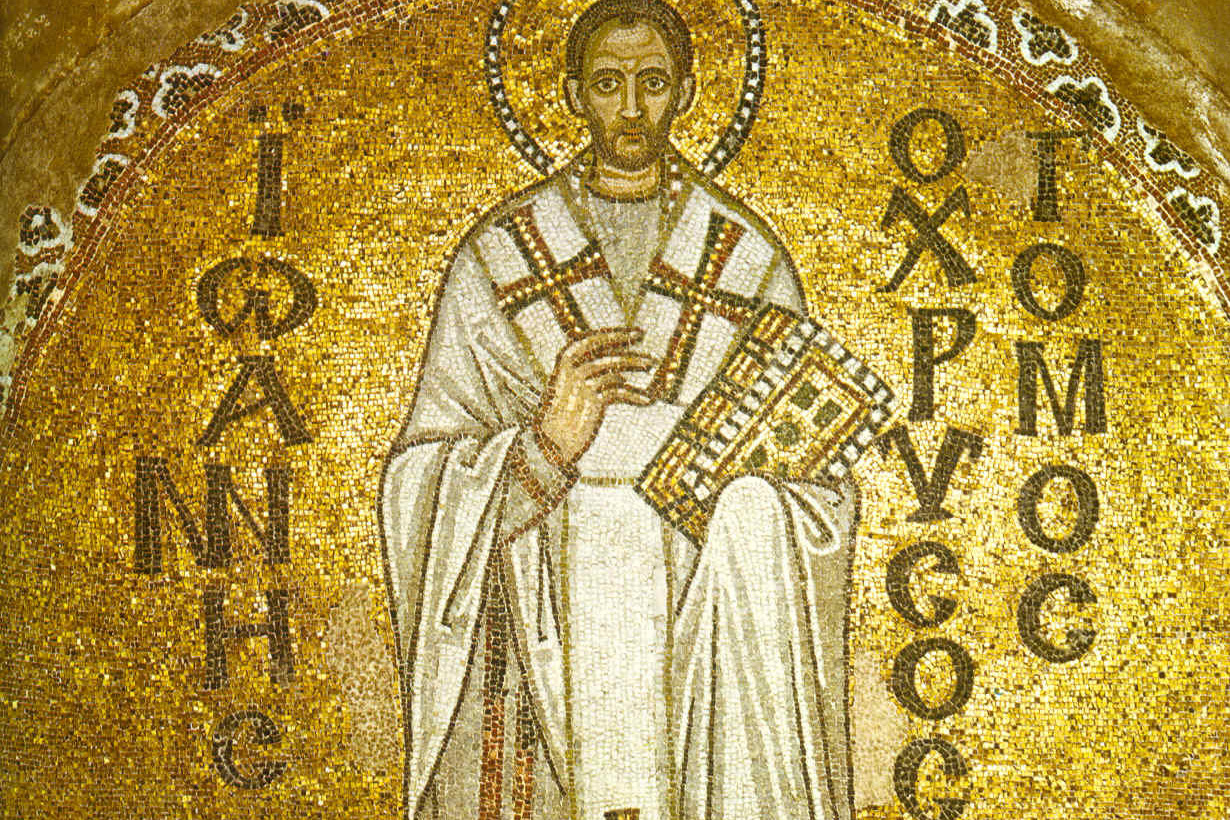
In one of his sermons, St. John Chrysostom describes well the human being who is utterly free. It is a magnificent portrait, and one he was largely able to exhibit not merely by his words but by his very life.

Born in 344 at Antioch, he became a young man very much admired for his brilliance and oratorical skills. In 374 he fled to the mountains to live quietly and to break the hold that the world had on him. After six years of “holy silence,” he worked quietly as a priest. But in 398, he was summoned to be bishop of Constantinople. He was beloved for his powerful capacity to preach and received the name “Chrysostom” (Golden mouth). Yet not all appreciated the freedom with which he preached, a freedom that led him to denounce vice openly, no matter who was doing it. He was exiled twice (in 403 and 407) by powerful enemies. And though his enemies tried to break his spirit and rob him of his joy, they could not prevail. Although he died on his way to his final exile (during a miserable journey in terrible weather), he died with joy, saying, “Glory be to God for all things. Amen.”

The world could not prevail over him; he did not fear it, for he owned nothing of it, and owed nothing to it. It had no hold on him.

And thus speaking not only from Scripture but from experience as he was being led into exile, St. John Chrysostom said,

The waters have risen and severe storms are upon us, but we do not fear drowning, for we stand firmly upon a rock. Let the sea rage, it cannot break the rock. Let the waves rise, they cannot sink the boat of Jesus. What are we to fear? Death? Life to me means Christ, and death is gain. Exile? The earth and its fullness belong to the Lord. The confiscation of goods? We brought nothing into this world, and we shall surely take nothing from it. I have only contempt for the world’s threats, I find its blessings laughable. I have no fear of poverty, no desire for wealth. I am not afraid of death nor do I long to live, except for your good. I concentrate therefore on the present situation, and I urge you, my friends, to have confidence …

Let the world be in upheaval. I hold to his promise and read his message; that is my protecting wall and garrison. What message? Know that I am with you always, until the end of the world!

If Christ is with me, whom shall I fear? Though the waves and the sea and the anger of princes are roused against me, they are less to me than a spider’s web … For I always say: Lord, your will be done; not what this fellow or that would have me do, but what you want me to do. That is my strong tower, my immovable rock, my staff that never gives way. If God wants something, let it be done! If he wants me to stay here, I am grateful. But wherever he wants me to be, I am no less grateful …

For though my body die, my soul will live and be mindful of my people (Ante exsilium, nn. 1-3).

Here is freedom. You cannot steal from a man who owns nothing, and you cannot threaten a man who has nothing to lose; you cannot deprive a man who has Jesus Christ.

Pray for this freedom.

Clear Enough? A Plain Warning that Unrepentant Sexual Sin Excludes One from the Kingdom of God

In today’s first reading for Mass (Tuesday of the 23rd Week) St. Paul writes clearly of the danger of certain behaviors that many celebrate today. Others minimize them as of any importance:

Do not be deceived; neither fornicators nor idolaters nor adulterers nor boy prostitutes nor sodomites nor thieves nor the greedy nor drunkards nor slanderers nor robbers will inherit the Kingdom of God. (1 Cor 6:9-10)

To say that someone who does not repent of such behaviors “will not inherit the Kingdom of God” is to say that they will go to hell. This is very clear and very strong. Willfully persisting in sins and “lifestyles” such as these leads to destruction.

Note, this warning extends to those who defiantly stubbornly refuse to cease such behaviors and even more to those who celebrate and encourage them. The warning is  not to those who many fall in weakness but acknowledge their sin, confess it and seek to get free.

Sadly the celebration and glamorization of such things is widespread in our culture today. Certainly, fornication (pre-marital sex), adultery and homosexual acts (spoken of in this text as sodomy) are depicted and celebrated in our movies, music and in many other ways. These forms of illicit sexual union are depicted as normal and “no big deal.”

In reference to homosexual acts there is the further problem that lifestyles and identities centered on this behavior are celebrated in our culture as something in which one should have “pride.” And, how shocking it is hear certain bishops in certain countries, along with certain priests, indicate that the Church should change her teachings on homosexual acts. But St. Paul, and the Holy Spirit never got the memo and have set forth a clear teaching that homosexual acts, along with other illicit forms of sexual union such as fornication, adultery and prostitution, cannot be approved. The Church has no authority to overthrow what God has clearly taught at every stage of Scripture, from the early pages to the last pages.

In addition to these forms of illicit sexual union the text also consigns other forms of sinful behavior to hellfire:  theft, greed, drunkenness,  slanderers and robbers. And yet, many of these things are also depicted in movies which glamorize the mafia, violence, theft (e.g. Oceans 11), drunkenness (e.g. Animal House), and so forth. Greed to is often normalized and celebrated in shows such as the “Lifestyles of the Rich and Famous etc.”

St. Paul indicates that those who engage in or celebrate such sins and sinful drives as those who are deceived.  They actually think that such matters are either fine, or no big deal. But this is not what Scripture says and, this passage is not the only place where such warnings are given. (See another article I have written that collates other similar teaching).

These sins and drives are certainly human problems and many of them afflict most of us. Surely, as any confessor knows our human condition is weak and we must have common recourse to God’s mercy and seek his grace. There may well be less concern with the salvation of those acknowledge their sin and seek absolution.  What is more worrisome are those who are defiant and refuse to admit that what they do in such matters is wrong. Dangerous indeed is the fate of those who celebrate, take pride in, or call no big deal what God calls sin. Indeed, our biggest sin is pride and it is really what leads us to every other sin.

Listen to God! Be humbled and at the same time privileged to hear his word and abide by it. Do not call good what God calls sin. We must humbly acknowledge our sins, even the popular and celebrated ones in culture. And having acknowledged them, we ought to repent, seek confession and strive to free of them by God’s grace.

Do not be deceived by false prophets who contradict God’s Word, even if they wear a roman collar or a miter. Let God’s word clearly reach you and humbly accept it and strive to live it. The Lord Jesus loves us but he expects to be taken seriously and for us to heed the full Word of God. What is more authoritative for you: the Word of God, or the customs of a world gone mad?

How Civilizations Rise and Fall in Eight Stages

In last week’s post we examined the stages or persecution. Given the serious damage and debasement we see in our culture, we do well to ponder a more sociological examination of how cultures and civilizations go through cycles. Over time, many civilizations and cultures have risen and then fallen. We who live in painful times like these do well to recall these truths. Cultures and civilizations come and go; only the Church (though often in need of reform) and true biblical culture remain. An old song says, “Only what you do for Christ will last.” Yes, all else passes; the Church is like an ark in the passing waters of this world and in the floodwaters of times like these.

For those of us who love our country and our culture, the pain is real. By God’s grace, many fair flowers have come from Western culture as it grew over the past millennium. Whatever its imperfections (and there were many), great beauty, civilization, and progress emerged at the crossroads of faith and human giftedness. But now it appears that we are at the end of an era. We are in a tailspin we don’t we seem to be able to pull ourselves out of. Greed, aversion to sacrifice, secularism, divorce, promiscuity, and the destruction of the most basic unit of civilization (the family), do not make for a healthy culture. There seems to be no basis for true reform and the deepening darkness suggests that we are moving into the last stages of a disease. This is painful but not unprecedented.

Sociologists and anthropologists have described the stages of the rise and fall of the world’s great civilizations. Scottish philosopher Alexander Tyler of the University of Edinburg noted eight stages that articulate well what history discloses. I first encountered these in in Ted Flynn’s book The Great Transformation. They provide a great deal of perspective to what we are currently experiencing.

Let’s look at each of the eight stages. The names of the stages are from Tyler’s book and are presented in bold red text. My brief reflections follow in plain text.

  1. From bondage to spiritual growth – Great civilizations are formed in the crucible. The Ancient Jews were in bondage for 400 years in Egypt. The Christian faith and the Church came out of 300 years of persecution. Western Christendom emerged from the chaotic conflicts during the decline of the Roman Empire and the movements of often fierce “barbarian” tribes. American culture was formed by the injustices that grew in colonial times. Sufferings and injustices cause—even force—spiritual growth. Suffering brings wisdom and demands a spiritual discipline that seeks justice and solutions.
  2. From spiritual growth to great courage – Having been steeled in the crucible of suffering, courage and the ability to endure great sacrifice come forth. Anointed leaders emerge and people are summoned to courage and sacrifice (including loss of life) in order to create a better, more just world for succeeding generations. People who have little or nothing, also have little or nothing to lose and are often more willing to live for something more important than themselves and their own pleasure. A battle is begun, a battle requiring courage, discipline, and other virtues.
  3. From courage to liberty – As a result of the courageous fight, the foe is vanquished and liberty and greater justice emerges. At this point a civilization comes forth, rooted in its greatest ideals. Many who led the battle are still alive, and the legacy of those who are not is still fresh. Heroism and the virtues that brought about liberty are still esteemed. The ideals that were struggled for during the years in the crucible are still largely agreed upon.
  4. From liberty to abundance – Liberty ushers in greater prosperity, because a civilization is still functioning with the virtues of sacrifice and hard work. But then comes the first danger: abundance. Things that are in too great an abundance tend to weigh us down and take on a life of their own. At the same time, the struggles that engender wisdom and steel the soul to proper discipline and priorities move to the background. Jesus said that man’s life does not consist in his possessions. But just try to tell that to people in a culture that starts to experience abundance. Such a culture is living on the fumes of earlier sacrifices; its people become less and less willing to make such sacrifices. Ideals diminish in importance and abundance weighs down the souls of the citizens. The sacrifices, discipline, and virtues responsible for the thriving of the civilization are increasingly remote from the collective conscience; the enjoyment of their fruits becomes the focus.
  5. From abundance to complacency – To be complacent means to be self-satisfied and increasingly unaware of serious trends that undermine health and the ability to thrive. Everything looks fine, so it must be fine. Yet foundations, resources, infrastructures, and necessary virtues are all crumbling. As virtues, disciplines, and ideals become ever more remote, those who raise alarms are labeled by the complacent as “killjoys” and considered extreme, harsh, or judgmental.
  6. From complacency to apathy – The word apathy comes from the Greek and refers to a lack of interest in, or passion for, the things that once animated and inspired. Due to the complacency of the previous stage, the growing lack of attention to disturbing trends advances to outright dismissal. Many seldom think or care about the sacrifices of previous generations and lose a sense that they must work for and contribute to the common good. “Civilization” suffers the serious blow of being replaced by personalization and privatization in growing degrees. Working and sacrificing for others becomes more remote. Growing numbers becoming increasingly willing to live on the carcass of previous sacrifices. They park on someone else’s dime, but will not fill the parking meter themselves. Hard work and self-discipline continue to erode.
  7. From apathy to dependence – Increasing numbers of people lack the virtues and zeal necessary to work and contribute. The suffering and the sacrifices that built the culture are now a distant memory. As discipline and work increasingly seem “too hard,” dependence grows. The collective culture now tips in the direction of dependence. Suffering of any sort seems intolerable. But virtue is not seen as the solution. Having lived on the sacrifices of others for years, the civilization now insists that “others” must solve their woes. This ushers in growing demands for governmental, collective solutions. This in turns deepens dependence, as solutions move from personal virtue and local, family-based sacrifices to centralized ones.
  8. From dependence back to bondage – As dependence increases, so does centralized power. Dependent people tend to become increasingly dysfunctional and desperate. Seeking a savior, they look to strong central leadership. But centralized power corrupts, and tends to usher in increasing intrusion by centralized power. Injustice and intrusion multiplies. But those in bondage know of no other solutions. Family and personal virtue (essential ingredients for any civilization) are now effectively replaced by an increasingly dark and despotic centralized control, hungry for more and more power. In this way, the civilization is gradually ended, because people in bondage no longer have the virtues necessary to fight.

Another possibility is that a more powerful nation or group is able to enter, by invasion or replacement, and destroy the final vestiges of a decadent civilization and replace it with their own culture.

Either way, it’s back to crucible, until suffering and conflict bring about enough of the wisdom, virtue, and courage necessary to begin a new civilization that will rise from the ashes.

Thus are the stages of civilizations. Sic transit gloria mundi. The Church has witnessed a lot of this in just the brief two millennia of her time. In addition to civilizations, nations have come and gone quite frequently over the years. Few nations have lasted longer than 200 years. Civilizations are harder to define with exact years, but at the beginning of the New Covenant, Rome was already in decline. In the Church’s future would be other large nations and empires in the West: the “Holy” Roman Empire, various colonial powers, the Spanish, the Portuguese, and the French.  It was once said that “The sun never sets on the British Empire.” Now it does. As the West began a long decline, Napoleon made his move. Later, Hitler strove to build a German empire. Then came the USSR. And prior to all this, in the Old Testament period, there had been the Kingdom of David, to be succeeded by Babylon, Medo-Persia, Greece, and Rome.

The only true ark of safety is the Church, who received her promise of indefectibility from the Lord (Matt 16:18). But the Church, too, is always in need of reform and will have much to suffer. Yet she alone will survive this changing world, because she is the Bride of Christ and also His Body.

These are hard days, but perspective can help. It is hard to deny that we are living at the end of an era. It is painful because something we love is dying. But from death comes forth new life. Only the Lord knows the next stage and long this interregnum will be. Look to Him. Go ahead and vote, but put not your trust in princes (Ps 146:3). God will preserve His people, as He did in the Old Covenant. He will preserve those of us who are now joined to Him in the New Covenant. Find your place in the ark, ever ancient and yet new.