Improving the Prayer of the Faithful

They have been called by many names: the prayer of the faithful, the general intercessions, and now most commonly the universal prayers.

But they are not the prayers of the faithful since they are usually written by an individual. They are really general intercessions, since they are often rather specific, and they are not universal in the sense that they are, by necessity, particular. It would be impossible to cover the full or universal range of human needs.  So even the nomenclature of this part of the Mass is difficult to pin down. This, in turn reflects a merely vague  understanding of the purpose of these prayers.

Further, there is an often disappointing quality to the intentions as they are used today. Some years ago, Peter Kwasniewski, in an article at New Liturgical Movement.org (here), summarized the problem very well.

It is surely no exaggeration to say that throughout the world the quality of these intercessions has tended to be deplorable, ranging from trite and saccharine sentiments to political propaganda, from progressivist daydreams to downright heretical propositions to which no one could assent without offending God. Even when the content is doctrinally unobjectionable, all too often the literary style is dull, flaccid, rambling, or vague. … [There is] problematic content, poor writing, and [a] monotonous manner of delivery.

Additional problems occur when there are people of many different nationalities present and it is felt necessary to have the petitions read in multiple languages. The impression is given that the intentions are directed more to the congregation than to God, who knows all languages and thoughts. I have been at Mass in the Basilica here in Washington, D.C. when as many as nine different languages were used in the Prayer of the Faithful, despite the fact that the vast majority of those present spoke English and/or Spanish. I seriously doubt that there were more than five people in attendance who could speak only German, Mandarin, or one of the other languages used. It quickly gets very tedious as a line of people traipse back and forth to the microphone. Is God the focus of these prayers or are we, in a self-referential concern just checking the diversity box?

It is all so different in the Eastern Liturgies, in which the Great Litany is so artfully woven into the liturgical experience and beautifully sung as well. I have memorized the Great Litany from the Liturgy of St. John Chrysostom (see video below).

History – These intentions were very common in the early Church, occurring at about the same point in the Mass as today. They followed the Homily (note that in earlier days the Creed was typically not said). All of the Fathers of the Church make mention of them. In the beginning, this prayer was recited antiphonally by the priest and the assembly. Over time, the deacon assumed a more prominent role; he announced all the intentions and then the faithful responded with Kyrie eleison or some other acclamation. You can read the Kyrie Litany of Pope Gelasius here: Litany of Gelasius

These intercessions endured until about the 9th century, well past the close of the patristic period. Their disappearance seems to coincide with their evolution into a Kyrie litany and their transfer to the beginning of the Mass. They eventually came to be regarded as an unnecessary appendage and were phased out. In the West they were used only on Good Friday, though they endured longer in certain particular areas. In the East they were never dropped. Today they have been restored to their original place in the Mass, but as noted, are difficult to craft in such as way that they feel integrated more than interruptive, as something to get through, rather than as something that flows from our liturgical experience

In his article (here), Mr. Kwasniewski offers a variety of intercessions, and download links are provided. I have done so for my own use and you might wish to do the same.

I would also like to add that St. Peter Canisius composed intercessions for use in his time. Saints are certainly reputable sources of such things! Here is an article by Mark Woodruff  that details those prayers.

The point is that much can be done to improve the quality of the Prayer of the Faithful, which has remained an amateur outing at best and an ideological hornet’s nest at worst.

Perhaps some benefit can be obtained from reviewing the norms and the history of this portion of the Mass.

The General Instruction in the Roman Missal (GIRM) has this to say about the Prayer of the Faithful:

In the Prayer of the Faithful, the people respond in a certain way to the word of God which they have welcomed in faith and, exercising the office of their baptismal priesthood, offer prayers to God for the salvation of all. It is fitting that such a prayer be included, as a rule, in Masses celebrated with a congregation, so that petitions will be offered for the holy Church, for civil authorities, for those weighed down by various needs, for all men and women, and for the salvation of the whole world. As a rule, the series of intentions is to be

      1. For the needs of the Church;
        2. For public authorities and the salvation of the whole world;
        3. For those burdened by any kind of difficulty;
        4. For the local community.

Nevertheless, in a particular celebration, such as Confirmation, Marriage, or a Funeral, the series of intentions may reflect more closely the particular occasion.

It is for the priest celebrant to direct this prayer from the chair. He himself begins it with a brief introduction, by which he invites the faithful to pray, and likewise he concludes it with a prayer. The intentions announced should be sober, be composed freely but prudently, and be succinct, and they should express the prayer of the entire community (GIRM 69-71).

In the end, I think these intentions deserve better than we have given them. I realize that enthusiasts of the Traditional Latin Mass (of which I am one) may say, “Just get rid of them entirely,” but that is not realistic. They are here to stay, at least in our lifetime. Maybe we can try to do better by making use of multiple sources: ancient, Eastern, and modern yet elegant. I

Here is the Great Litany from the Liturgy of St. John Chrysostom:

Stay Catholic Stay Put

Go with me to the year 1969. We are on the Texas border with Mexico not far from El Paso. Three men are leading a protest march arguing that the U.S. Government is not protecting the U.S. border and is allowing illegal immigration to occur is large numbers. The three men are Cesar Chavez, Walter Mondale and Ralph Abernathy Jr. They are the protesters with them argue that illegal immigration in such large numbers is driving down wages and making it nearly impossible to organize migrant workers.

Yes, three prominent Democrats demanding that the Federal Government enforce our borders. Today of course, things are largely reversed and most on the left support practically open borders.

Politics change like that. Issues come and go, coalitions shift and change. What was once thought of as  doctrinaire liberalism or conservatism can switch sides in many and important ways. This is increasingly important for Catholics who too easily cast their loyalties with political parties and cultural trends that come and go, rather than the faith and the teachings of the Lord. Indeed they are more passionate about politics and the latest trends than the faith. This should not be the case. Our loyalty must always be with the Lord and the teachings of the Church which do not change or reflect the times. Scripture and the doctrines of the faith are ancient and stable and we should hold to them wherever the political lines fall. A Democrat should not support abortion, no matter what the party says. A Republican should hold the Church teaching on immigration not simply the language of the party. We need to be Catholic when it comes to the crucial moral issues of our day to include: Abortion, the Definition of Marriage, fornication, cohabitation, homosexual acts, transgenderism, immigration,  physician assisted suicide and the like. Too easily however we will base our views on our politics and jettison our faith. We need to be anchored in the Lord not in the vicissitudes of politics and culture.

Consider some other examples of the many flip flops of politics:

      • Free speech was once the bastion and hallmark of 1960s liberalism. The University of California at Berkeley, Stanford University and many other colleges, were synonymous  with the free speech movement, seeing free speech as almost unlimited. While many Americans were appalled at some of the vigorous condemnation of our country, the burning of American flags, advocacy for forms of government inimical to our system, promotion of “free love,” drug use and other attacks on core American values, free speech largely won the day and withstood challenges to most of its limits. Today however, places like Berkley and Stanford are just the opposite. There are extensive limits to what may be said on many such campuses. Many words are banned, other pronouns and words are required. Students as well as faculty often seek to forbid speakers with traditional or conservative positions from speaking on campus at all and, when they are cannot ban such speech, they show up to shout it down and make a lecture of any sort impossible. Now, it is conservatives who advocate for free speech who seek for the free exchange of ideas on college campuses and elsewhere. On social media, the Left seeks to
      • Conservatives were once considered the natural ally of “Big Business” while  the left saw it  as privileged, undertaxed, polluting, and unjust in nearly all it did. Today however, many if not most large corporations have allied with the left and adopted countless “woke” policies.
      • The Democratic Party was once considered the friend of the working class. Decades of being “down with the struggle “ and advocacy for labor unions, concerns for improved work conditions, worker safety, proper wages and benefits, made the Democratic Party the most likely destination for most blue collar workers and laborers. Today however, many of these same workers often hear from the party that once advocated for them a strong aversion to all they represent. Coal workers, the oil, steel  and auto industries, are often considered by the left to be almost evil and are slated by them for elimination. In the 2016 election an major shift occurred as Donald Trump and the Republican Party became the defender of these industries and workers
      • Conservative Republicans were once labeled as the party of the rich and well landed in this country. “Country Club Republicans” was a designation that sought to portray them as aloof and removed from the care of the everyday person. Today however, it is the Left and the Democratic Party that is largely the bastion of the ruling class. Liberal elites dominate the world of social and news media, entertainment, Hollywood,  government officials, large corporations, university and college faculty and administrators and the like.
      • The news media was once the watchdog of government and big industry, now they are frequently an ally and apologist for them.
      • The cultural left once had a stance that was anti-authoritarian. It was suspicious of government claims and often counseled resistance and civil disobedience against an oppressive government, demanding investigations and accountability. Today the left more often proposes increasing laws and expansive government.
      • Liberals and many Democrats once championed the rights of women and also sought “Title IX” protections to preserve and enhance women’s sports. Now they are on the vanguard of a movement that permits men to call themselves women, enter the locker rooms and restrooms of women, invading their privacy. It is now Conservatives who speak of unfairness and seek to keep women’s sports from dying.
      • The cultural Left road in on a “free love” philosophy. Now theirs is more the language of  sexual abuse allegations and an advocacy of expansive list of dos and don’ts the wake of the “me-too” movement. While that movement raised many legitimate concerns, many on the right (the traditionally regarded prudish party) think may go too far, casting a chill on romance and possibly resulting in the “sudden death” of accusations that are hard to refute.
      • The Republican Party was once the champion of African American civil rights, founded on ending slavery and insisting on their rights and reparations after the Civil War.  Republican votes along with many Democrat votes were also essential in passing civil rights bills by countering the votes of racist Southern  democrats. Today, racial justice is often perceived as a priority of the Democratic Party.
      • President Barack Obama ran in 2008 against Gay “marriage” and in 2012 for it.
      • Finally, and most importantly, when Roe V. Wade invented a constitutional right to abort, that is, kill children in the womb.  At first, Democrats were just as likely as Republicans to oppose this decision. In 1976, the Hyde amendment banning federal funding for most abortions first passed the House, with 247 Democratic votes. Just 22 Democrats voted no. Prominent Democrats such as Hubert Humphrey, Sargent Shriver, Ted Kennedy, Bill Clinton, and Al Gore and many others were originally pro-life before switching their positions. One of the strongest  statements issued against Abortion was by the Rev. Jesse Jackson in 1977. Sadly he too changed his view in the 1980s as the politics changed. Today the political lines are hardened and there are almost pro life democrats in the House or Senate. It was not always so.

Enough. As can be seen politics is shifty; culture too. Don’t give your loyalty to this world. Are you worthy of Jesus Christ, or are you just worthy of the party or the latest trend? Stay put, stay Catholic.

The Hardening of Hearts Caused by the Deceit of Sin

stubbornThere is a line from the Letter to the Hebrews. In it was an important admonition, especially appropriate for our times:

Encourage yourselves daily while it is still today, so that none of you may grow hardened by the deceit of sin (Heb 3:12).

Collectively speaking, we been hardened by the deceit of sin. Many of us who are older remember times when sins that are openly practiced (and even celebrated) today were considered shameful a mere fifty years ago. Pre-marital sex (fornication), living together before marriage (which many called “shacking up”), and divorce were considered scandalous. “Gay” was a word that meant happy or joyful, and condoning (let alone celebrating) homosexual acts would have been inconceivable to most Americans. The concept of same-sex marriage was foreign and not even imaginable to most. Up through the 1950s, even contraception was considered by most Americans to be a loathsome practice and was often associated with prostitution.

This is not to say that it was a sinless time; it was not. There were indeed some who transgressed. Young, unmarried girls who got pregnant were generally sent to live with relatives or taken into the care of religious sisters until they gave birth; children born under such circumstances were usually given for adoption. But those cases were relatively rare and handled discreetly. There certainly weren’t child care centers in public high schools! So while some did stray, there was general agreement that such behavior was wrong.

Many of these attitudes began to shift in the cultural revolution of the 1960s. Although the tumultuous change of that decade was already brewing in the 1950s it is rightly said that we entered the 1960s through one door and came out a very different one.

The cultural revolution had different aspects. There was a revolution against authority and tradition, including religious faith; a steep drop in church attendance began. There was the feminist revolution, proper in some of its concerns, but also beset by a growing radicalism that ridiculed motherhood and men. And there was the rampant use of hallucinogenic drugs, which devastated the intellect and judgment of many young people. The hardening of hearts by the deceit of sin was underway.

The most long-lasting and devastating aspect of the 1960s was the sexual revolution. The spread of revolutionary sexual attitudes was facilitated by the availability of “the pill.” Thus there arose the evil and erroneous notion of “sex without consequences.” This notion has ultimately led to widespread fornication, consumption of pornography, adultery, abortion, divorce, sexually transmitted diseases, and large numbers of children being raised by single mothers.

The resistance to divorce rooted in religious concerns and the common-sense notion that divorce was harmful to children, had been eroding through the decade as many celebrities began flying to foreign countries in order to be divorced. Slowly, the shock that divorce once caused, began to give way. Prior to 1969, obtaining a divorce was a difficult, lengthy, legal process. But due to growing pressure, states began to pass “no-fault” divorce laws, making marriage one of the easiest contracts to break. The hardening of hearts by the deceit of sin was growing worse. Jesus Himself attributed the desire to divorce to hard hearts (See Matt 19:8).

A nation increasingly hypnotized by fornication and the evil deception of sex without consequences began to show a decline in the rightful indignation at killing babies in the womb. Legal maneuverers to permit abortion had already been underway, but abortion remained illegal in most of the United States until 1973, when the dreadful, immoral Roe v. Wade decision of the Supreme Court made abortion the “law of the land.” The hardening of hearts by the deceit of sin was by now full. Thanks be to God, Roe was finally overturned last year. But the backlash by the left is truly horrifying and show that we still have a long way to go in convincing nearly half of Americans that something as obviously horrifying as abortion is wrong.

Things continuously worsen and the hardening of hearts has seen added to it the darkening of our intellects (see Romans 1:21). Rational conversations about moral topics are becoming nearly impossible.

Added to all of this the is the recent, bewildering rise in the outright celebration of homosexual acts and subsequent approval of same-sex “marriage,” along with the latest cause célèbre, “transgenderism.”

And thus the words of the Letter to the Hebrews ring true:

Encourage yourselves daily while it is still today, so that none of you may grow hardened by the deceit of sin (Heb 3:12).

Sin hardens the heart and darkens the intellect. Many people today hold deeply and stubbornly to errors and are lost in moral confusion. Attempts to disabuse them of such deceptions often leads to venomous accusations of intolerance, bigotry, and hatred. The hardness is deep; the deception is dark. When one grows accustomed to the darkness, the light seems harsh and painful in comparison. The protests get louder as the years go by because as the darkness deepens, the light seems increasingly intolerable.

The text says that it is the deceit of sin which does this. The Latin roots of the word “deceive” present a picture of being pick up and carried off (de (from) + capere (to take or carry away)). The image of one who has been deceived is that of a small animal hanging limply from the jaws of a predator. To be deceived is a very dangerous thing. It means that the devil has us in his grasp; the end will come soon unless we can unlock the jaws of the evil dragon through the grace of mercy that comes from repentance.

Our age, like few others, demonstrates just how bad things can get when we are individually and collectively hardened by the deceit of sin. This has happened to us fairly quickly. It was not that long ago when we were still shocked by the things that many celebrate today with “pride” parades and divorce “parties.” Fornication and shacking up were once considered scandalous. A sex scene in a movie was considered indecent. Many other sins today, such as greed and disrespect for elders and leaders, are also glamorized. That this no longer shocks or surprises us shows the hardening that the deceit of sin can bring.

Ask the Lord for a sensitive conscience. It is a precious gift that is not to be confused with scrupulosity. A sensitive conscience is one that loves what God loves, that values what God values, and that shares His priorities. A sensitive conscience loves God’s law and His truth, and is saddened and productively mournful at the reality of sin, whether personal or collective.

Ask also for the gift to mourn. Scripture says, “Blessed are those who mourn, for they shall be comforted” (Mat 5:4). Who are those who mourn? They are those who see the awful state of God’s people (that they do not know God or glorify Him in their lives and that they are locked in sin and its deceptions) and are motivated to pray and speak the truth. They will even endure suffering in order that some may be snatched away from the evil dragon and from the hardening that comes from the deceit of sin.

Lord, heal our land; for we are surely hardened by the deceit of sin. Help us to turn to you. May you use our holy tears to wash away our sins and give us new and tender hearts.


Picture This! A Homily for the 4th Sunday of the Year

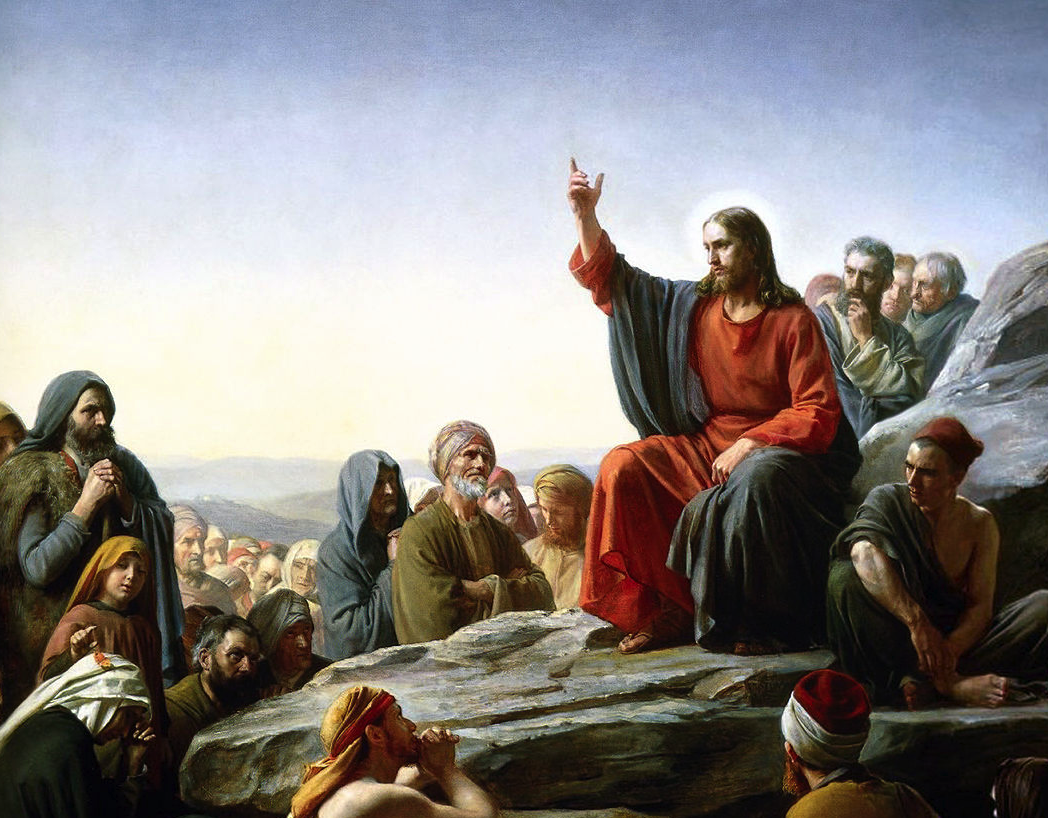
sermon-on-the-mountThe Gospel passage on the Beatitudes is one of the most familiar. Yet the Beatitudes are difficult to understand because many of them are paradoxical. We do not usually refer to the poor as blessed, but rather the well-off; we do not typically call those who mourn blessed, but rather the joyful.

The word “beatitude” itself means “supreme blessedness.”

First, it is critical to understand that beatitude is not something we achieve; rather it is something we receive. The Beatitudes declare an objective reality as the result of a divine act. The use of the indicative mood in the passage should be taken seriously; we should not transform it into an imperative. In other words, the Beatitudes are more of a description than a prescription. Jesus is not saying that we should be poor or meek and then God will bless us. Rather, He is saying that this is what the transformed human person is like; that this is what happens to us when He begins to live His life in us and transform us; that this is what our life is like when His grace and the power of His cross bring about in us a greater meekness and poverty of spirit; that we will experience being blessed.

Beatitude is a work of God and it results when we yield to His saving work in us.

With this understanding we can see the Beatitudes not as a prescription of what we must do, but a description of what a human being is like who is being transformed by Jesus Christ.

Second, we should consider the Hebrew roots. The Greek word makarioi in today’s text is rendered as “blessed,” but it also corresponds to the Hebrew word asher, which is more of an exclamation. It could easily be translated, “O, the blessedness of ….” When translated this way, it emphasizes that something is being described rather than prescribed.

Third, we must examine the Greek linguistic roots. Makarioi, (blessed) literally means “to make long or large.” We are enlarged or enhanced as a result of God’s blessings. Thus, the term “blessed” as used here describes a kind of stable, serene, confident joy that one receives because of God’s blessings.

Fourth, we should look at the Greek cultural roots. In pagan times, makarioi (blessed) referred especially to the happiness of the gods. They had achieved a state of happiness and contentment in life that was beyond all cares, labors, and even death. They lived in some other world away from the worries and problems of ordinary people. In taking up this term to translate the Hebrew asher, the New Testament teaches on the stability of beatitude, if it is from God. To a large degree it is a stable, deep, and serene beatitude not greatly affected by the vicissitudes of this world; because the world does not give it, it cannot take it away.

There is an old saying that happiness is an “inside job.” Too many people try to find happiness in the world, which is fickle and unstable. The Lord wants to confer on us an inner beatitude that is deeply rooted, stable, and not easily swept away by worldly conditions. In the Beatitudes, the Lord paints a picture of this state of blessedness.

This helps to explain the paradox of some of the Beatitudes. We are still blessed even when poor, mourning, or persecuted. Further, we are confirmed in blessedness by such realities, because they serve as reminders that we are not at home in this world and that God and His kingdom are our preoccupation and the source of our true beatitude.

Let’s explore the Beatitudes and remember that Jesus is saying, “When I begin to live my life in you and put the sinful flesh to death, you will experience the following blessings.”

Blessed are the poor in spirit for the kingdom of God is theirs.

Who are the poor in spirit? They are those who, by God’s grace, have their true treasure increasingly in Heaven rather than earth. They are poor to this world but rich to God. They have learned to depend on God.

All of us are dependent on God, but we may not realize it. The poor in spirit are those who have come to peace in the knowledge that they depend on God for every beat of their heart, for every good thing they have. Humans strongly resist any such sense of dependence or lack of control. Many strive to acquire wealth, power, and resources in order to create the illusion that they are in control—they are not. Ultimately this whole system will fail. It is a recipe for frustration and unhappiness.

Further, control is like an addictive drug. The more we get, the more we need in order to feel less anxious. Our modern age illustrates this. Consider, for example, modern medicine, through which we can control things we never could before: are all our fears gone as a result? No. Humans have never lived so long and been so healthy, yet, we have never been so anxious about our health. Our medicine cabinets are filled with prescriptions and over-the-counter medications. And still we worry! Control is an illusion, an addiction all its own. In the end, it seems we can never have enough of it to feel sufficiently “safe.”

How blessed are those who delight to depend on God, who realize that every beat of their heart is His gift and that everything they have is from Him and belongs to Him! Not only do they realize this; they delight in it. They are blessed because they are free of the countless fears that flow from the endless quest for illusory control.

Now Matthew adds “in spirit” to “the poor” because not all who are materially poor are thereby freed of the obsession with wealth, power, and the need to control. To be poor is not necessarily a measure of what is in my wallet, but what is in my heart.

This world is not the Kingdom, but Heaven is. How blessed are those who delight to know and experience that there is a Heaven! They may be poor in the eyes of this world, but who needs most of it? They already have the Kingdom by faith and that Kingdom is growing for them. The kingdom of this world, however, is passing away.

Blessed are those who mourn, for they will be comforted.

Who are those who mourn? They are those who, delighting in the Kingdom of Heaven, see the awful state of most of God’s people. They see that so many do not know God or why they were created. They see others willfully locked in sin and darkness. They see still others who are victims of the sins of injustice and oppression. And because of this they mourn, and moan, and pray. This beatitude is the basis of intercessory prayer and deepening love for sinners. Because I mourn, I pray for the world.

The object of this beatitude is rooted in the Kingdom of God and its values, not the passing values of this world. If my car gets scratched or the stock market goes down and I may mourn, but that’s not the type of mourning referred to here.

How blessed are those who mourn over what really matters and who pray! God will console, strengthen, and encourage them. He will cause their mourning to bear fruit in prayer and action for others. To mourn is this way is to be blessed. It is a grief that “hurts so good,” because we know that it brings abundant blessings for the world as it intensifies our prayer and our own commitment to God and His Kingdom.

Blessed are the meek, for they shall inherit the earth.

Anger is a difficult passion. It can be frustrating, but it is a necessary zeal for what is right. Aristotle spoke of meekness (praotes) as the proper balance between too much anger and not enough. Sometimes we merely vent our anger, but at other times we fail to be angry enough, allowing evil and injustice to go unaddressed and un-resisted. How blessed are those who, by God’s grace, have authority over their anger! They do not vent their anger unnecessarily or excessively. They have the zeal and courage to stand up for what is right and to express righteous indignation at sin and injustice.

The meek have authority over their anger and other passions and thus will inherit the earth. Self-control conserves resources, using them appropriately; unrestricted passions dissipate resources, squandering the gifts of God.

Blessed are those who hunger and thirst for righteousness, for they will be satisfied.

Many fight God and ridicule the values of His kingdom. Chastity, forgiveness, and mercy are objects of particularly derision today. Many hunger for anything but God; wealth, power, popularity, the latest fad—anything but God.

How blessed are those who hunger and thirst for the righteousness and justice of God and the values of His Kingdom! God will satisfy them with the joy of living under His law and they will rejoice to see the wisdom of His ways. They hunger for God’s word and devour it when they find it. They rejoice to see God put sin to death in them and bring about virtue. They are excited and satisfied at what God is doing in their life. They are blessed indeed.

Blessed are the Merciful for they shall obtain mercy.

We live in a world that often prizes revenge and the destruction of one’s enemies, but Scripture teaches that the measure that we measure to others will be measured back to us (Matt 7:2). We are also taught that if we do not forgive others we will not be forgiven (Matt 6:15), and that merciless is the judgment on the one who has shown no mercy (James 2:12). It is misguided and just a bad idea to go around condemning others and “throwing the book” at everyone.

How blessed are those who, by God’s grace, have experienced His mercy and share it with others! They are able to leave most vengeance to God. Though they correct the sinner, they do not feel the need to exact revenge. By showing mercy, they will experience mercy from God. They are blessed indeed.

Blessed are the pure of heart for they shall see God.

The Greek here is better translated as “single-hearted.” It is so easy for feel torn by contrary drives and wishes. The Book of James says that the man of two minds is unstable in all his ways (James 1:8).

Blessed are those who can say, with St. Paul, [T]his one thing I do. … I press on to the prize marked out for me in Christ Jesus (Phil 3:13), or to say with the psalmist, There is only one thing I ask of the Lord: to dwell in the courts of the Lord and behold his face (Psalm 27:4). How blessed to be single-hearted, to be centered on one thing, to have but one purpose, to be undivided and uncompromised!

Blessed are the peacemakers for they shall be called the sons of God.

Everyone loves peace but only some are really working for it. True peace can only be based on the truth. Being a peacemaker is more than being a nice guy and overlooking things. True peacemakers announce the Kingdom and bring souls to Christ; they strive for righteousness and justice and announce its demands. How blessed are those whom God inspires with a dedication to such work! They are indeed sons of God.

Blessed are those who are persecuted for righteousness sake for theirs is the Kingdom of God.

In life we are going to suffer, so it might as well be for something decent and noble. How blessed are those who, because they love God and His kingdom, are hated by this world! At least they share a common lot with Jesus. They know that only false prophets are loved by all (Lk 6:26). There is a paradoxical serenity that comes from this sort of persecution because it is a sign that we are no longer of this world, that the world has lost its hold on us and thus hates us (Jn 15:19). Forsaking this world and hated by it, they are blessed because the Kingdom of God is theirs in abundance.

In all these ways, the Lord paints a kind of picture for us of the transformed human person. He says, “This is what begins to happen to you as I live my life in you.”

Come and Go With Me To My Father’s House – A Homily for the Third Sunday of the Year

In these early weeks of “ordinary” time, we are being introduced to Jesus and the beginnings of His public ministry. Matthew’s Gospel today describes how Jesus began His public ministry in the wake of the arrest of John the Baptist. Matthew tells us four things about Jesus’ ministry: its context, its content, its call, and its comprehensiveness. Let’s look at each in turn.

The CONTEXT When Jesus heard that John had been arrested, he withdrew to Galilee. He left Nazareth and went to live in Capernaum by the sea, in the region of Zebulun and Naphtali, that what had been said through Isaiah the prophet might be fulfilled: Land of Zebulun and land of Naphtali, the way to the sea, beyond the Jordan, Galilee of the Gentiles, the people who sit in darkness have seen a great light, on those dwelling in a land overshadowed by death light has arisen.

The relocation of Jesus northward from Judea up to Galilee coveys some important truths. First, it tells us of the hostility of the southern regions to the message of John the Baptist and Jesus. The area in and around Judea (which included, principally, Jerusalem) was controlled by a sort of religious ruling class (the Sadducees, especially, and to a lesser extent, the Pharisees). Because they were in strong but often controversial control in these areas, they were far less open to ideas that in any way threatened their leadership or questioned the rituals related to the Temple.

And so Jesus moved north to more fertile territory in order to begin His public ministry; the Jewish people in Galilee were less hostile. In fact, the people of Jerusalem often looked down upon them for their simple, agrarian ways and their “rural accent.” But it was more fertile ground for Jesus to begin His work.

There is an important lesson in this: While we must carefully preserve Christian orthodoxy and only accept doctrinal development that is organic and faithful to the received Apostolic Tradition, we can sometimes inadvertently stifle the Holy Spirit, who speaks to us through unexpected people and in unexpected ways.

The Pharisee leaders simply rejected the notion that any prophet could come from Galilee.When Nicodemus encouraged them to give Jesus a hearing they scoffed, Are you from Galilee too? Search and see that no prophet arises from Galilee (Jn 7:52). Sometimes we can insist upon a single position in matters in which Christians are allowed freedom. For example, there are various degrees of expression permitted in the liturgy; there are also different schools of theological thought that are allowed by the Church.

Balance is required of us.We may prefer Thomistic formulations, Carmelite spirituality, charismatic worship, or the traditional Latin Mass. Such things are legitimate matters for discussion; we ought not to feel threatened by what the Church currently deems to be legitimate diversity. Discovering the range and limits of diversity is an ongoing matter for the Church; we should not permit the field of our own soul to be hostile to Jesus and His ministry, which may come to us in more diverse ways than we would prefer.

How tragic it wasfor Judea that Jesus thought He had to move on to more fertile territory, and what a blessing it was for Galilee that He moved there. But for Galilee there was this boon:The people who walked in darkness have seen a great light; those who dwelt in a land of deep darkness, on them has light shined (Is 9:2).

The CONTENT From that time on, Jesus began to preach and say, “Repent, for the kingdom of heaven is at hand.”

We have discussed before the careful balance of Jesus’ preaching. He is willing to challenge and so to say, “Repent.” But He also declares the good news that the Kingdom of Heaven is at hand. Accepting the ministry of Jesus requires that we avoid the two extremes of presumption and despair.

To those who make light of sin and their condition as sinners, Jesus says, “Repent.”It is wrong to presume that we do not need continual healing power from the Lord in order to overcome our sin. Perhaps our greatest sin is our blindness to it. Most do not seem to comprehend how serious their condition is.

The word translated here as “repent” is μετανοεῖτε (metanoeite), which means more literally “to come to a new mind,” or “to come to a new way of thinking.” In our sin-soaked world, a world in which sin is so pervasive as to almost go unnoticed, Jesus says, “Come to a new mind. Understand your condition and your need for mercy and grace. Come to understand that without the rescue that only God can provide, you are lost.” And hence we are told to reject presumption.

But we are also told to reject despair, for the Kingdom of God is at hand. In other words, the grace and mercy of God are available to rescue us from this present evil age and from our carnal condition. Through Christ we are granted admittance to the Kingdom. The Spirit of God can overcome our carnal, sinful nature and bring us to true holiness.

The proper balance between presumption and despair is the theological virtue of hope. By hope we confidently expect God’s help in attaining eternal life. By proper metanoia(repentance) we know that we need that help; by hope we confidently reach for it.

In our own proclamation of the Kingdom we also need the proper balanceexhibited by Jesus. Consider that if children hear nothing but criticism they become discouraged (they despair), but if all they hear is praise they become spoiled and prideful, presuming that everything should be just as they want it.

For the Church, too, balance is necessary.Many people expect the Church only to affirm and “be positive.” This leads to a selfish and incorrigible world and to the presumption that nothing matters (as we can plainly see today). Thus the Church must announce the call to repentance, but must also offer hope and mercy to sinners. She must offer grace though the Sacraments and her preaching, which, with God’s power, makes the Kingdom of God to be “at hand.”

The CALL As he was walking by the Sea of Galilee, he saw two brothers, Simon who is called Peter, and his brother Andrew, casting a net into the sea; they were fishermen. He said to them, “Come after me, and I will make you fishers of men.” At once they left their nets and followed him. He walked along from there and saw two other brothers, James, the son of Zebedee, and his brother John. They were in a boat, with their father Zebedee, mending their nets. He called them, and immediately they left their boat and their father and followed him.

In building His Kingdom, Jesus summons men to follow Him.He will train them to be the leaders of His Church as Apostles. The Kingdom of God is not just concerned with calling disciples, but also with developing leaders to provide order and authority in the Church.

Even the most “democratic” of organizations requires authorityand leadership. Without these there is anarchy and a battle of wills. Hence, in the early stages of His public ministry, the Lord calls disciples and also grooms leaders. Consider three things about the Lord’s call.

His ARTICULATENESS He says to these apostles, Come, Follow me.His announcement is unambiguous. Good leaders make clear what they ask, indeed, what they demand. Jesus is clear to set the course and point the way; Heis that way.

His APPEAL –Jesus must have had tremendous personal appeal and exuded a strong, reassuring authority. His appeal to them was personal: “Come, follow Me.” He did not merely say come and “learn my doctrine,” or “accept my vision.” He said, “FollowMe.” So, as we hand on the faith to our children and others, we cannot simply say, “Here is the Catechism; follow it.” Each of us must also take the next step and tell them to follow the Lord with me. We cannot simply parrot what a book says, correct though that book might be. Ultimately we must be able to say, “I am a personal witness to the fact that God is real and that the truth He has given to the Church is authentic and is changing my life.” Our appeal must include the personal testimony that what we proclaim is real and is changing our life: “Come, and go with me to my Father’s house.”

His APPROACHNote that the Lord builds on something they know: fishing. He starts with the familiar in order to draw them to the less familiar. In a way, He is saying that the gifts they are currently using are just the ones they need to use as leaders in God’s Kingdom. Fishermen are

          • Patient They often wait long hours for the fish to bite. Apostles and bishops must also be patient and have the ability to wait for long periods before there is a catch for the Lord.
          • Perceptive They learn to know the fish, their behavior, and what attracts them. Apostles and clergy must learn about their people and what will attract them to Christ.
          • Persevering– They must go through many days in which they catch very little; only through perseverance is there real gain in fishing. So it is with the work of the clergy, who may go long stretches with little to show for it. The Gospel may go “out of season,” even for decades in certain cultures (like our own). The good leader will persevere, will stay at the task.

The COMPREHENSIVENESS He went around all of Galilee, teaching in their synagogues, proclaiming the gospel of the kingdom, and curing every disease and illness among the people.

Note that all of Galilee was His mission field and He covered it comprehensively.He also cured people of every disease and illness. And thus the Church is catholic, and must address every part of the world, providing a comprehensive vision for life. We may not have the power to solve every problem, but we can provide the vision of the Paschal mystery, which sheds light and brings spiritual healing to every affliction. If we are suffering and dying, we must remember that Jesus did as well, but only to rise and be glorified on account of his fidelity and obedience.

For the Church and for the Christian, the comprehensive answer to every affliction isthat we are always carrying about in our bodies the dying of Christ so that the rising of Christ may also be manifest in us(2 Cor 4:10). We seek to bring healing to everyone we can, and where physical remedies are not possible, the truth of the Gospel reassures us that every Friday, faithfully endured, brings forth an Easter Sunday.

Here, then, are four crucial insights from the beginning of Jesus’ public ministry. They are important for us to acknowledge and to imitate.

Journey with me back to 1971 (a year of funny hair, to be sure) and listen to this old classic: “Come and Go with Me to My Father’s House.”

Who Is Jesus Christ? A Homily for the 2nd Sunday of the Year

011814As Ordinary Time (tempus per annum) opens up, the lectionary continues to “introduce” Christ to us. The Christmas cycle now done, we must ask, “Who is Jesus Christ? Who is this savior who has been born for us?”

In today’s Gospel, John the Baptist elaborates on this. John’s words are brief, but they are packed with Christological teaching. In this Gospel we learn at least five things about Jesus. We learn that He is prefigured, preexistent, preeminent, powerful, and is the presence of God. Let’s look at each one.

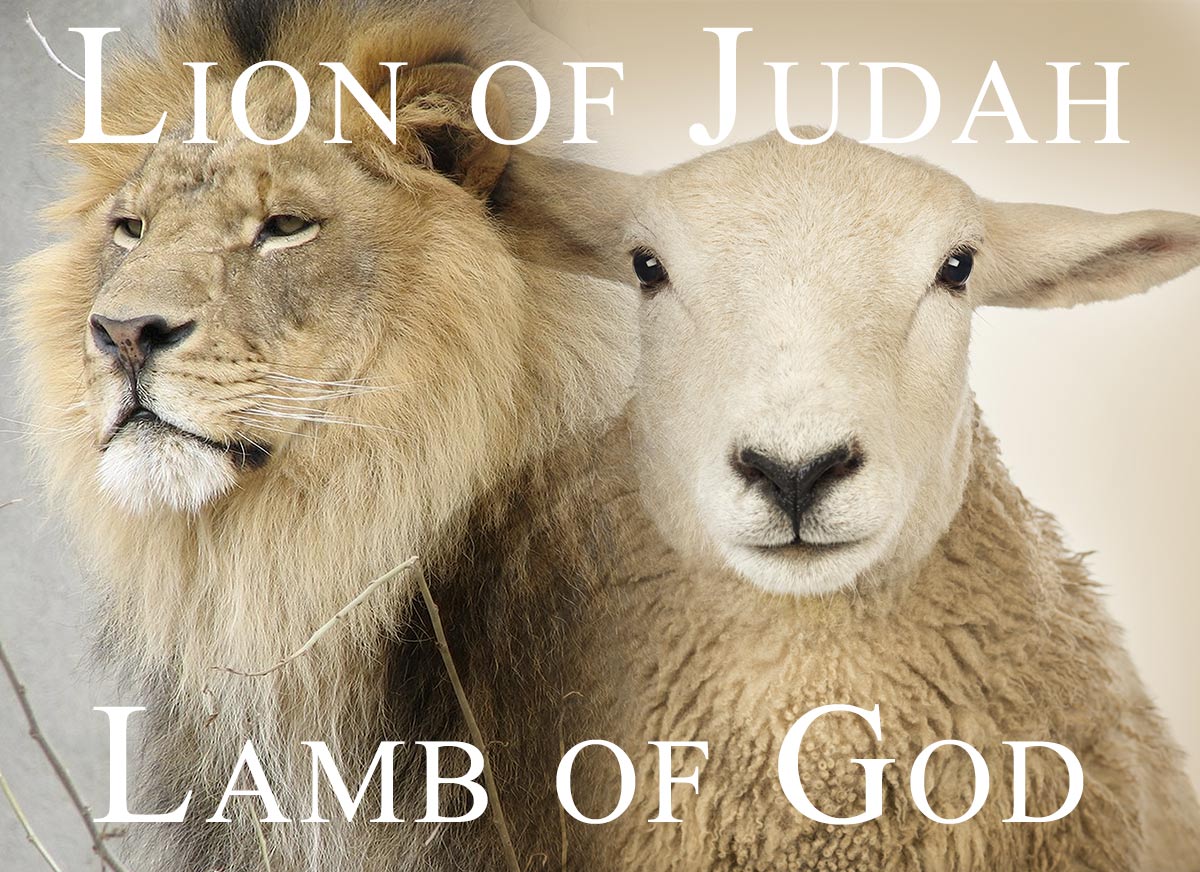
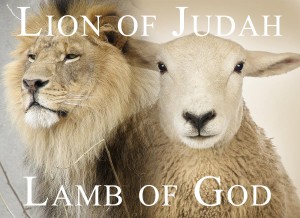
I Prefigured John the Baptist saw Jesus coming toward him and said, “Behold, the Lamb of God, who takes away the sin of the world.” Unless you know the history of this moment, it seems a little odd.

But for those who know Scripture, it is clear that John is really answering a question that was asked by Isaac some 1800 years prior to this event. Abraham had received from God a strange and terrible command: that he take his son to Mt. Moriah (present day Jerusalem) and there offer him in sacrifice.

And Abraham took the wood of the burnt offering, and laid it on Isaac his son; and he took in his hand the fire and the knife. So they went both of them together. And Isaac said to his father Abraham, “My father!” And he said, “Here am I, my son.” He said, “Behold, the fire and the wood; but where is the lamb for a burnt offering?” Abraham said, “God will provide himself the lamb for a burnt offering, my son.” So they went both of them together (Gen 22:6ff).

Do you get it? A promised son had wood laid upon his shoulder and was made to carry it up a hillside, the same hillside where Golgotha would one day be found. There, on the top of that hill he was to be laid on the wood and killed. Sound familiar? Of course Isaac is a prefigurement of Christ. Things were starting to look grim for Isaac, who got nervous and asked his father, “Where is the Lamb?” You know the rest of the story. It is true that God provided a ram caught in the thicket that day, but that ram pointed to Christ.

And so the question “Where is the Lamb?” wafted up on the breeze and was repeated down through the generations. Some five hundred years later, at the end of the period of slavery in Egypt, the blood of the lamb also protected Isaac’s descendants from death. Every Passover the question was still asked, “Where is the Lamb?” referring to the Passover lamb. Here, too, the Passover lamb was but a symbol, a prefigurement of Christ.

Now, standing on the banks of the Jordan, John the Baptist answers Isaac’s question, the question repeated down through the centuries: “Where is the Lamb?” John answers, “Behold the Lamb of God.” So the first thing we learn of Christ is that He was prefigured, here and in many other places in the Old Testament.

II Preexistent He is the one of whom I said, “A man is coming after me who ranks ahead of me because he existed before me.” Now this, too, is a strange thing for a man to say about his younger cousin. Jesus was born six months after John the Baptist, yet John says that Jesus existed before him. John is clearly teaching us here of Christ’s pre-existence. Before assuming a human nature, Jesus existed eternally with the Father.

There never was a time when Jesus the Son was not. He is eternally begotten by the Father; He existed before all ages. Scripture says the following of Him:

  • For in him all things were created, in heaven and on earth, visible and invisible, whether thrones or dominions or principalities or authorities—all things were created through him and for him. He is before all things, and in him all things hold together (Col 1:16).
  • In the beginning was the Word, and the Word was with God, and the Word was God. He was in the beginning with God; all things were made through him, and without him was not anything made that was made (John 1:1).
  • Your father Abraham rejoiced that he was to see my day; he saw it and was glad. The Jews then said to him, “You are not yet fifty years old, and you have seen Abraham?” Jesus said to them, “Truly, truly, I say to you, before Abraham was, I am” (John 8:56).

III. Preeminent I did not know him, but the reason why I came baptizing with water was that he might be made known to Israel. In effect, John is saying, “I exist for Him. My purpose is to reveal Him.” He must increase, but I must decrease (John 3:30). Jesus is greater than John or any prophet or world leader. Jesus is the Groom; John is but the best man.

IV Powerful John testified further, saying, “I saw the Spirit come down like a dove from heaven and remain upon him. I did not know him, but the one who sent me to baptize with water told me, ‘On whomever you see the Spirit come down and remain, he is the one who will baptize with the Holy Spirit.’”

The baptism of John could only announce repentance and call for it. It could not truly wash away sins; the Baptism of Jesus can.

Even more, not only does Jesus’ Baptism take away sins; it confers the Holy Spirit. In Baptism, we are given a whole new life. Sin is taken away and in its place grace upon grace is given: grace to restore us, renew us, and refashion us; grace that equips, empowers, and enables us; grace that sanctifies, gives sonship, and seals us with the Holy Spirit.

All this is in fulfillment of this passage from Ezekeiel:

I will sprinkle clean water upon you, and you shall be clean from all your uncleannesses, and from all your idols I will cleanse you. A new heart I will give you, and a new spirit I will put within you; and I will take out of your flesh the heart of stone and give you a heart of flesh. And I will put my spirit within you, and cause you to walk in my statutes and be careful to observe my ordinances (Ezekiel 36:25ff).

Scripture also says, But to all who received him, who believed in his name, he gave power to become the children of God (Jn 1:12).

V. Presence of God Now I have seen and testified that he is the Son of God. Jesus would say elsewhere, To see me is to have seen the Father; the Father and I are one (John 14:9). As the Son of God, He manifests the Father; He is the presence of God in this world. He shares fully in the one divine essence and as Son, shows us the Father. He is the presence of God among us.

So a brief passage from the Gospel of John contains five important teachings about Jesus Christ. He has existed forever. He was prefigured in the Old Testament. He has priority above and beyond anyone we know or think important. He has the power not only to save us from sin but to give us the very life of God. And as Son of God, He is God, and thus is God’s very presence among us. Jesus is not just the man from Galilee; He is very God from Heaven.


Welcome to “Ordinary Time”

Welcome to the wearing of the green, green vestments that is. The weeks of the year outside of seasons such as Advent, Christmas, Lent, and Easter are termed “ordinary time.” It’s a rather dull-sounding description, isn’t it? “Ordinary” time, hmm …

But in this case, the word “ordinary” does not refer to its typical meaning: “common, usual, or unremarkable.” Instead, it comes from the English word “ordinal” meaning “relating to a thing’s position in a series.” Some examples of ordinal numbers are “first,” “second,” and “third.” Thus ordinary time refers to weeks/Sundays that are numbered (e.g., 15th Week/Sunday in Ordinary Time).

The Latin description for this time is Tempus per annum (time through the year). Each week is merely designated as “Hebdomada # x” (Week # x).

These terms or titles seem somewhat uninspiring. This is especially the case when we consider that the old calendar (replaced in 1970, but still used in the Extraordinary Form of the Mass) numbered these Sundays and weeks in reference to Epiphany or Pentecost (e.g., Third Sunday after Epiphany, or Fourth Sunday after Pentecost). The pivotal events of Epiphany and Pentecost therefore set the tone for the following weeks e.g., “This is Third Sunday since our Lord was manifested to us,” or “This is the Fourth week since the Holy Spirit was granted to us for our mission.”

Alas, we are not likely to see the current calendar replaced any time soon, so welcome to Ordinary Time, and more specifically to the First Week of the Year!

But maybe there is some inspiration here after all. The faith is not just something reserved for extraordinary moments and seasons. It is meant to be lived in all the ordinary moments of life, too; it is meant to be lived throughout the year.

The liturgical readings and prayers of Ordinary Time emphasize discipleship. What does it mean to be a disciple of Jesus in matters involving money, time, priorities, etc.? How do we encounter the Kingdom of God and perceive it in our daily lives? What are the conditions of discipleship? How will we ultimately be judged? These are some of the themes of Ordinary Time.

So encounter God in the “ordinary,” in the time throughout the year, even when on vacation this coming summer. There is no vacation from our vocation. Do not miss what God is doing, even in the ordinary.

Hail Mary Full of Grace, Punch the Devil in the Face: A Meditation on Spiritual Warfare

Some years ago I wrote a blog post, Is the Church a Cruise Ship or a Battleship? I was surprised at the amount of negative commentary I got. For example, “How dare you compare the Church to an instrument of war!” Other comments lamented recourse to any violent imagery, ever. Still others called for bans on songs such as “Onward Christian Soldiers,” “I am On the Battlefield for My Lord,” and so forth. You might say that the response from the anti-military group was “militant.” I certainly wasn’t feelin’ the love! Most of those comments I didn’t publish because I didn’t want “war” to erupt in the combox.

Of course the reference to a battleship was by way of analogy, not literal. No one is insisting that the Church should actually use sixteen inch guns against unbelievers or purveyors of sin. The battle is a spiritual one requiring spiritual weapons. This is why we call it spiritual warfare!

It is important in our times that we recover some sophistication when it comes to language and how people use it. Analogies, similes, metaphors and the like are not to be interpreted in a crudely literalistic way. Deadpan literalism usually shows a lack of sophistication and maturity needed to engage others in a real conversation about what is actually being said. It usually rejects the possibility of analogy or hyperbole and assumes bad will on the part of one’s interlocutor, looking to take offense when none is intended.

Earlier this year an article in The Atlantic made such laments and actually expressed fears of growing violence that might come from “traditional” Catholics with all their talk of “war,” and so forth.  The author claimed that the rosary was an example of  “extremist gun culture” among traditional (he calls them “rad-trad”) Catholics.   Of course the article and the author exhibited just the kind of unsophisticated deadpan literalism mentioned above and thereby exhibited a gravely deficient understanding of an ancient Catholic tradition and instinct that we call spiritual warfare. I wonder if he even talked to an actual traditional Catholic, or was he just looking for trouble? Further, how many mass shooters or violent gang shooters march under Catholic banners? None.

But as noted above, many inside the Church as well misunderstand the battle language of spiritual warfare and, as a result, are either offended or fearful about the metaphorical language used by the faithful. But this should invite investigation rather than quick rejection.

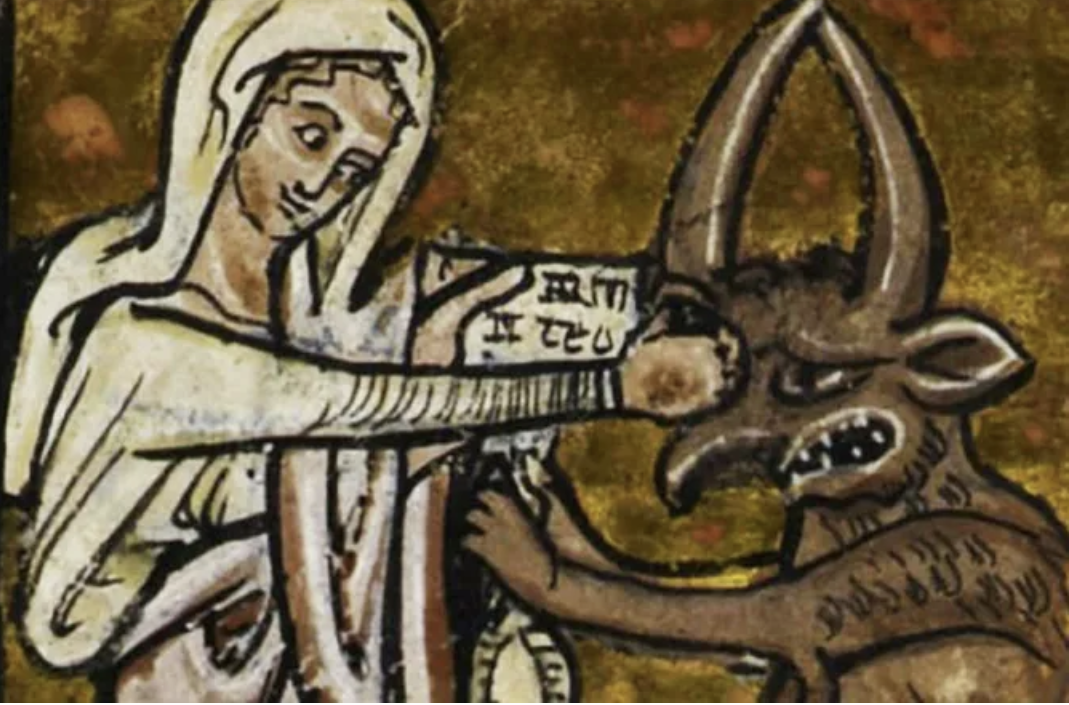
To all the hand-wringing associated with “violent imagery” I can only say, “Hail Mary, full of grace, punch the devil in the face.” In other words I don’t think apologies and changes are due when some take offense at metaphorical language the Church has used for the whole of her existence. The picture above of Mary punching the devil in the face is from the 13th Century. But the tradition of Mary and Jesus at war with the Devil is even older than that. If the use of violent imagery in the spiritual warfare against Satan and the kingdom of darkness is such a terrible thing, then God Himself never got the memo. God said in Genesis 3:15  And I will put enmity between you and the woman, and between your seed and her seed. He will crush your head while you will strike his heel. Gadzooks! Such violence!

In this vein, I have recently attracted some negative attention by referring in sermons and writings of the rosary as a “fifty-round clip” to fire at the devil. Again, most people “get it,” while a small but vocal minority object to such violent imagery. I upped the ante with my recent purchase of a “bullet rosary” (see photo at left). Such a image has sparked both whimsical understanding and instant outrage among those who have seen it. One woman protested that, with all the violent shootings and killing in our land, such a rosary is reprehensible. But this weapon, and these bullets are directed against Satan. Real bullets cannot harm Satan since he has no body. But the spiritual bullets of rosary prayers, other prayers, fasting, obedience  and so forth can inflict real harm on the kingdom of darkness. These are the practices  at the heart of spiritual warfare. The message of a “bullet rosary” is that unless we are willing to wage spiritual warfare we get physical warfare. Our Lady at Fatima said “Pray the rosary every day to bring peace to the world and the end of the war.” (1st Apparition May 13, 1917) 

The Rosary is the chief weapon of our times. To exasperated souls who lament the moral condition of this world comes the answer: “Pray the Rosary.” What are you waiting for? Take up your weapon and wage war against Satan. If we will not wage spiritual warfare what we will get is physical warfare: real bullets, tanks, planes bombs and all the death toll.

To those who still fret at the warlike imagery, I can only say, Sorry, but we are at war whether you like it or not. Satan wages war against the faithful and you’d better take up your weapons too. This war waged against us by Satan is responsible for most of the casualties you see lying about you: those addicted, those who die from hatred, racism and physical violence, the sexually confused, victims of the sexual revolution, those destroyed by drinking and overeating, those lost in greed, and those lost in confusion so deep they cannot even distinguish a man from a woman.  Yes, we are at war and the victims lie all about us. And if we will not choose sides and do battle, we are not just useless, we are on the other side.

Those who want to “sit on the fence” forget that Satan owns the fence. There are only two armies on the field. Tertium non datur (no third way is given).

Take up your beads, your fifty-round clip and start shooting. Blessed be the LORD, my Rock, who trains my hands for war, my fingers for battle! (Psalm 144:1) The Church is not a clubhouse, she is a lighthouse meant to conquer the darkness. She is not a cruise ship, she is a battleship sent to despoil Satan by shooting rounds of truth snatching back souls from his lying grasp.

This is war. Fight or be conquered.