
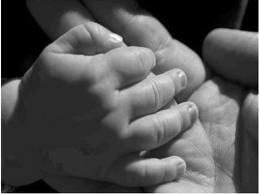
One of my favorite stages in the lives of my nieces and nephews is when they start putting the family connections together. That “Grand pop” is Dad’s father, that I and their dad are siblings who were once little kids. Of course, they find these ideas to be some of the craziest things they ever heard. Imagine, “dad” as a little kid! For days they will announce each relationship. The phone rings and they say “Dad, it’s your sister, Aunt Susan,” or they will ask someone who walks into the gathering, “Hey, did you know that when Mom was little, her mother was Grand mom?” They love tracing all of the relationships and it inevitably leads to questions about where we grew-up, where we went to school, who else is related to us. At some point, out comes the photo album and we marvel at how much Grand pop, when he was 12 looks like Daniel who is about to be twelve. It is these conversations that help a child find their place in the world; feel connected to a group of people who have influenced and them in ways that can’t always be seen. We are beginning to see a whole generation of kids who will never know their father or their father’s family. They may never learn that their passion for music has been shared by three generations of people before them, they may never know that their grandfather was also an all-star athlete or that their great-grandmother chose medicine as well. Dads, it seems are becoming optional.
Life according to Hollywood
This summer Hollywood is all about celebrating that dads are really not necessary in a child’s life. In two movies with huge stars, Jennifer Aniston, Annette Bening, Julianne Moore and Mark Ruffalo, the theme is the lives of children whose father’s origin is a donated sperm. In The kids are All Right, a brother and sister born of the same donor begin a search to find and meet their “dad.”
From the time that the movie came out, I was struck by the title “The Kids are All Right.” It seems to beg the question, “Might they not be all right? Or, did someone suggest that the kids are not“all right?” As is often typical with Hollywood, these movies want to promote a new norm. It is just fine for woman to choose motherhood as a single adult. If a mother can provide for all the child needs—who needs a father? In a recent interview Jennifer Aniston comments “Women are realizing more and more that you don’t have to settle, they don’t have to fiddle with a man to have that child.” While science makes that possible what science can’t change is that a child comes into the world with the imprint of a mother and father on his or her heart. It is not just that a child inherits certain physical features from Mom and Dad –I watched my brother and his son walk across a baseball field this summer and they walk exactly alike—they inherit a desire to be known by and to know mother and father.
Exactly how do you explain the “donor dad” concept to a child?
Any parent can tell you this is the case. I wish we would see more about how difficult it must be for those mothers who have to explain the concept of “donor dad” to a child who wants a Dad like the other kid’s dad. What you don’t see too much these days is social science supporting the idea that the best environment for children is a stable home with a mother and a father. The evidence is there in studies. In the early 1990’s, France commissioned a 33 member group panel to examine issues related to same-sex marriage and adoption by same-sex couples. The member organizations were not religious; they represented education, social service, mental health and government. The panel concluded that a child has a right to a mother and a father and so therefore laws ought to support the mother-father-child- construct as normative.
Studies paint a troubling picture
In a Wall Street Journal article dated June 18, W. Bradford Wilcox reports on more recent studies. Results of a study co-authored by Elizabeth Marquardt, Norval Glenn and Karen Clark, suggest that children are negatively impacted by the experience of being born of a “donor dad.” For example, 50% “feel sad” when they see “friends with their biological fathers and mothers.” In an article in the Washington Post, a few years ago, Katrina Clark writes about envying friends who have a biological mother and father. “That was when the emptiness came over me, I realized that I am in a sense a freak. I really truly would never have a dad. I finally understood what it meant to be a donor-conceived, and I hated it.”
What about the future of “donor dads”
I wonder also about the “donor dads” who probably have many reasons for participating in such a program; easy money, genuine interest in “helping” a woman out, or finding the idea of offspring for whom they have no responsibility appealing. I wonder however, if they give thought to the phone call that might come one day from the child looking for a relationship or as in the movie The Kids Are All Right points out meeting up with these young children who share some of your quirkiest habits. As much as five years ago on a news program, I saw a feature story about a group of kids in Colorado who were all the children of the same “donor dad.” They had formed a support group because they wanted to know their “siblings.” That to me is evidence of the innate desire to belong, to be family in a way they do not experience with a single-Mom. As much as I think being a sperm or egg donor is wrong, I feel for the “donor dads” and “donor-moms”. They did not sign-on to be in the lives of these kids, imagine what it must be like, twelve-fifteen-twenty years after the fact to be approached by a child who in their mind has called you “dad” or “mom.”
The wisdom of Catholic Moral Teaching
One of the beauties of Catholic teaching is that we do try to anticipate the consequence of moral actions on individuals and society, we say “no” in many cases because we see implications down the road that will be detrimental to everyone involved. In this case, we say “no” to protect a young person from an in the moment–seeing only an easy way to make quick and serious cash– (An Ivy League school alumni magazine posts want ads for donor eggs, offering as much as $10,000 dollars) and not really thinking about the child that will be born. We say “no” to protect a woman who may find at some point in her surrogate pregnancy that she does not want to give the child up, that she had no idea what it would mean to carry a child to birth for someone else. We say “no” to a decision that is so self-centered, it does not, in the moment, give full consideration to the still unborn child. How hard can it be to put ourselves in the position of a child who asks “who is my Dad” and imagine how crazy the “donor dad” answer will sound.