Will the Real January 1st Please Stand Up? A Homily for New Year’s Day

123114This feast day of January 1st is a very complex tapestry, both culturally and liturgically. Perhaps we can use the second reading by St. Paul to the Galatians as a way to weave through some of the many details. We can look at it in three parts.

I. The chronology of our celebration – The text from St. Paul’s letter to the Galatians says, When the fullness of time had come …

Most people in the wider culture and in the Church are going about today saying, “Happy New Year!” And rightfully so, for it is the beginning of the new year. But most people think of New Year’s Day in almost wholly secular terms. Sadly, it is best known for excessive drinking and rather loud parties.

Yet it is a mistake to see New Year’s Day simply as a secular holiday. St. Paul reminds us, in speaking of “the fullness of time,” that all time and all ages belong to God.

It is not simply 2015; it is 2015 Anno Domini (A.D.). Even the most secular and unbelieving of people in the Western world locate their place in time in relation to Jesus Christ. It is 2014 years since the birth of Christ. Every time we write the date on a check or at the top of the letter, every time we see the date at the top of the newspaper or on our computer screen, that number, 2015, points back to Christ. He is the Lord of history. Jesus sets the date; He is the clock we go by. All time belongs to Him.

Jesus says in the book of Revelation,I am the Alpha and the Omega, the first and the last, The beginning and the end. He who is, and who was, and who is to come” (Revelation 22:13).

If it is true that 2015 references the birth of Christ, the question arises as to why Christmas Day is not also New Year’s Day. But this actually makes a lot of sense if we understand liturgical and spiritual sensibilities.

In the Church, and stretching back into Jewish times, it was customary to celebrate the high feasts of faith over the period of a week. In Christian tradition this came to be known as the “octave.”  Though we think of a week as seven days, it does not take long to consider that we celebrated Christmas last week on Thursday. Now this week we celebrate New Year’s Day on Thursday, and Thursday to Thursday inclusive is eight days.

Thursday, January 1, 2015 is the eighth day of Christmas. In the Christian tradition the octave is considered really as one long day that lasts eight days. Therefore, Thursday, January 1, 2015 completes Christmas day; Christmas day is fulfilled. Or as St. Paul says, the “fullness of time” in terms of Christmas day has come. And thus the calendars flip from one year to the next. Now, at the end of Christmas day, our calendars go from 2014 to 2015 A.D.

The rest of the secular world has largely moved on already, barely thinking of Christmas anymore. As I walk in my neighborhood, I see the strange spectacle of Christmas trees already set out at the curb waiting to be picked up by the recycling trucks. Yes, for many in our hurried world, Christmas is over. But we in the Church continue to celebrate the great Christmas feast and cycle. Having completed the octave, we move on to Epiphany week.

Thus, this New Year, we contemplate the “fullness of time.” The passage of another year reminds us of the magnificent truth that to God all time, past, present, and future, is equally present. He holds all things together in Himself. He is the same yesterday, today, tomorrow, and forever. And whenever He acts, He always acts in our time, out of the fullness of time. This is a very deep mystery and we should ponder in silence the mystery that for God, all things ARE. He is not waiting for things to happen. For Him, everything is accomplished. I will write more on this in tomorrow’s blog.

II. The content of our celebration – St. Paul goes on to say, God sent forth his son born of a woman. And with this statement we are again reminded that we are still in the Christmas cycle.

We’ve already discussed the concept of the eighth day, of the octave. And while it is New Year’s Day, there is also a complex tapestry of religious meanings to this day as well.

As we’ve already seen, it is still Christmas day, the eighth day of the one long day that we call Christmas Day.

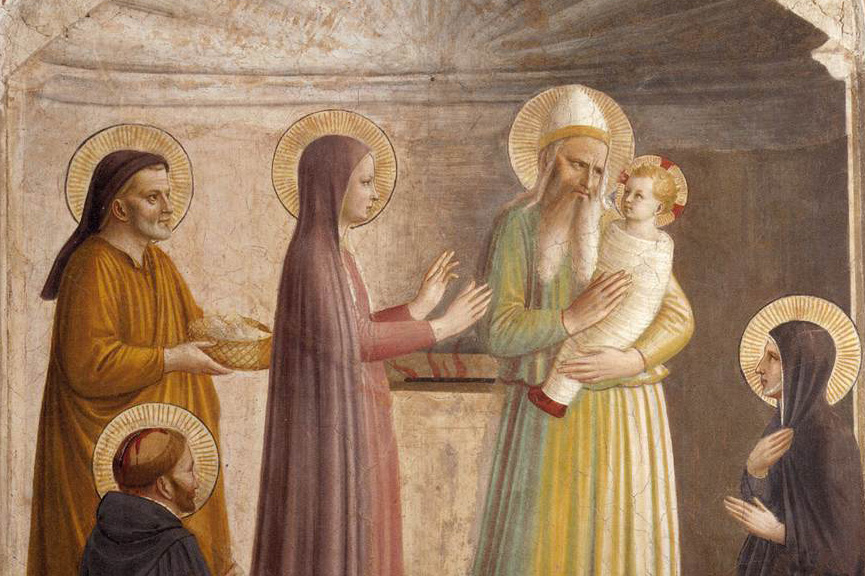
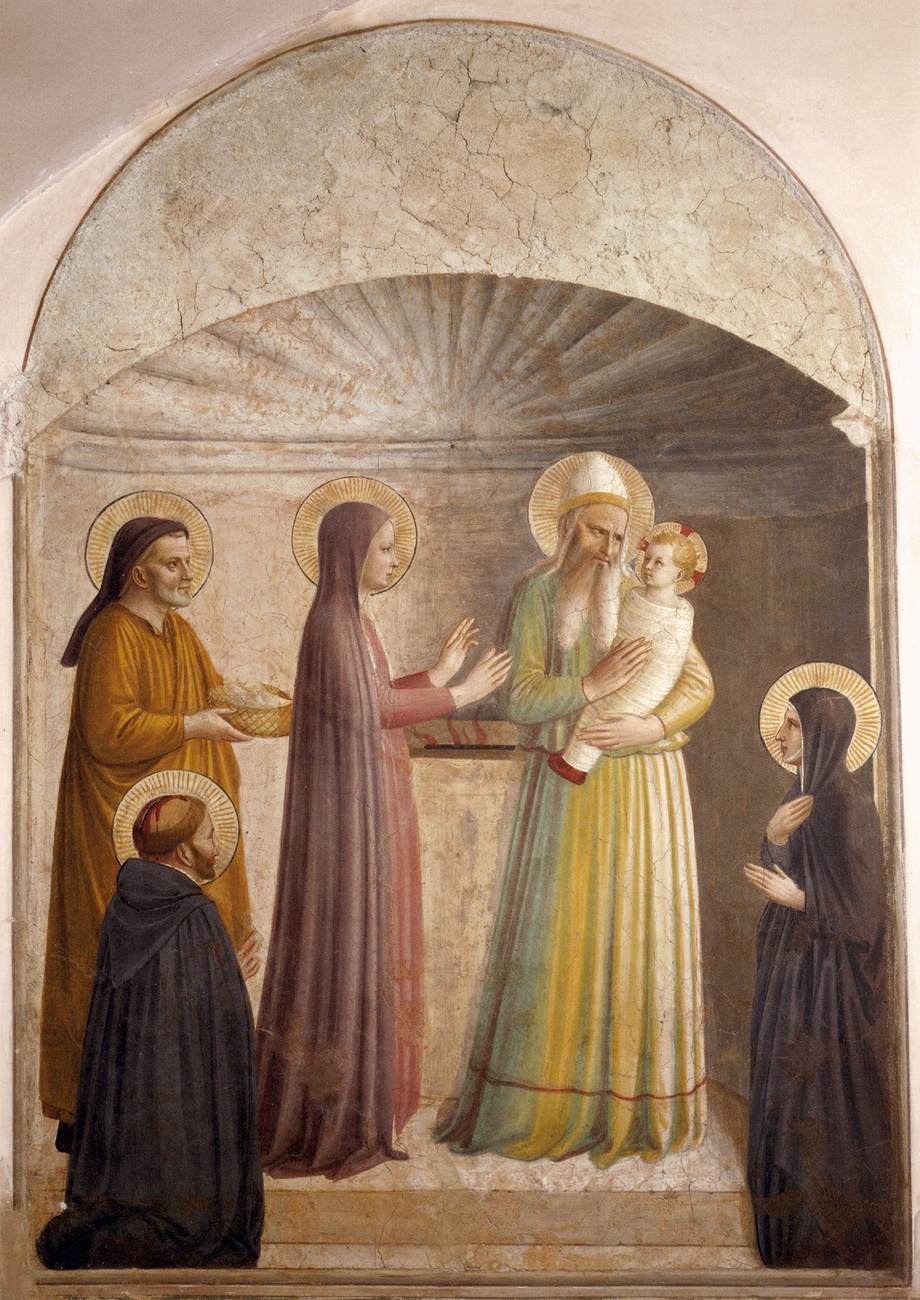
Historically, this is also the day of Christ’s circumcision. And for a long period in Church history that was the name given to this feast day, “The Circumcision of the Lord.” As I have written previously, I personally regret the loss of this feast, at least in terms of its title.

This is the day when Joseph and Mary brought Christ to be circumcised. In this, Jesus as man and also as God reverences the covenant He has made with His people. It is a beautiful truth that God seeks relationship with His people. And in this covenantal act of the circumcision is the moving truth that, as the Letter to the Hebrews puts it, Jesus is not ashamed to call us His brothers (Heb 2:11).

There is here the first shedding of blood by Jesus. It is also a sign of His love for us.

Another truth about the content of this feast is the Holy Name of Jesus. For not only was a Jewish boy circumcised on the eighth day, but he was also given his name, and all hear that name for the first time.

The name, Jesus, means “God saves.” And indeed this most Holy Name of Jesus, when used in reverence, has saving power. We are baptized in His Holy Name along with that of the Father and the Holy Spirit. And all of our prayers conclude with His Holy Name. Scripture says of His great and holy name,

Therefore God exalted him to the highest place and gave him the name that is above every name, that at the name of Jesus every knee should bow, in heaven and on earth and under the earth, and every tongue acknowledge that Jesus Christ is Lord, to the glory of God the Father (Phil 2: 9-11).

And yet another identity and content of this feast day is shown in its current, formal title, “The Solemnity of Mary Mother of God.” This title replaced the title of the Feast of the Circumcision back in 1970. However, it is the most ancient title for this feast day. Again, you can read more on this issue in a previous blog post.

We note in the reading that Paul says that God sent forth his Son, born of a woman. Jesus is the eternal Son of the Father; He is God from God, Light from Light, True God from True God. Jesus is God, and since Mary gives birth to Jesus, Mary is the Mother of God, because Jesus is not two different persons.

Mary did not just give birth to part of Jesus, she gives birth to Jesus. And thus the title “Mother of God” speaks to us as much about Jesus as it does about Mary. It is a title that she has because of the Church’s insistence that Jesus cannot be divided up into two different people. We cannot say that Mary gives birth to one Jesus but not “the other one.” There is only one Jesus, though He has two natures, human and divine.

And thus, on this feast of Christmas, on this eighth day of Christmas, we are reminded and solemnly taught that Jesus is human and also divine. In taking a human nature to Himself from his mother Mary, He remains one person. God has sent forth his son born of woman.

III. The consolation of our celebration – St. Paul goes on to say, Born under the law to ransom those under the law so that we might receive adoption as sons. As proof that you are sons, God sent the Spirit of his Son in our hearts crying out Abba, Father! So you are no longer a slave,  but a son, and, if a son, also an heir through God.

Note three things about this text:

A. Our Adoption – We have already noted that on the eighth day Jesus is circumcised and enters into the Covenant,  into the Law. In the Incarnation He joins the human family; in the Covenant He joins our family of faith. He will fulfill the old Covenant and inaugurate the new one. And by this New Covenant, by baptism into Him, we become members of His Body and thereby become adopted as sons.

We become sons in the Son. When God the Father looks to His Son, loving His Son, he is also looking at us and loving us, for we are in Christ Jesus, members of His Body through baptism. God is now our Father, not in some allegorical sense, but in a very real sense. We are in Jesus and therefore God really is our Father.

B. Our Acclamation – St. Paul says that the proof of our sonship is the movement of the Holy Spirit in us that cries out Abba! In Aramaic and Hebrew, Abba is the family term for father. It is not baby talk, like “Dada.” But just as most adults called their father “Dad” or some other endearment rather than “father,” so it is that Abba is the family term for father. It would be a daring thing for us to call God “Dad” unless we were permitted to do so, and instructed to do so by Christ.

St. Paul speaks of this word as proof that we are sons. In so doing, he emphasizes that it is not merely the saying of the word that he refers to. Even a parrot can be taught to say the word. Rather, St. Paul is referring to what the word represents: an inner movement of the Holy Spirit wherein we experience a deep affection for God the Father. By our adoption, our baptism into Christ, by our reception of the Holy Spirit, we love the Father! We develop a deep affection for Him and dread offending Him. By this gift of the Spirit, God is my Father whom I deeply love!

C. Our advancement – Notice that St. Paul then speaks of how we have moved from being a slave to being a son, an heir. In Jesus, we are not just any son, we are the only Son of the Father. And as Jesus has a kingdom from His Father, we too inherit it with Him! As sons in the Son, we are heirs with Jesus to the Kingdom!  Jesus speaks of His disciples as one day reigning with Him: And I confer on you a kingdom, just as my Father conferred one on me (Lk 22:29). In Jesus, all Heaven will be ours and we will reign with Christ forever. This is not our doing, not our glory; it is Christ’s doing and His glory in which we share.

And thus we have a very rich tapestry on this New Year’s Day, this feast of the Octave of Christmas, this Feast of the Circumcision of the Lord, this Feast of the Holy Name of Jesus, this Feast of Mary the Mother of God. And also we are given this feast wherein the glory of Christ is held before us and we who are  members of His body are told of the gifts that we receive by His Holy Incarnation and His Passion, Death, and Resurrection.

It’s not a bad way to start the new year: reminded of God’s incredible love for us, of His rich blessings and promises.
Why is Christmas a Nighttime Event?

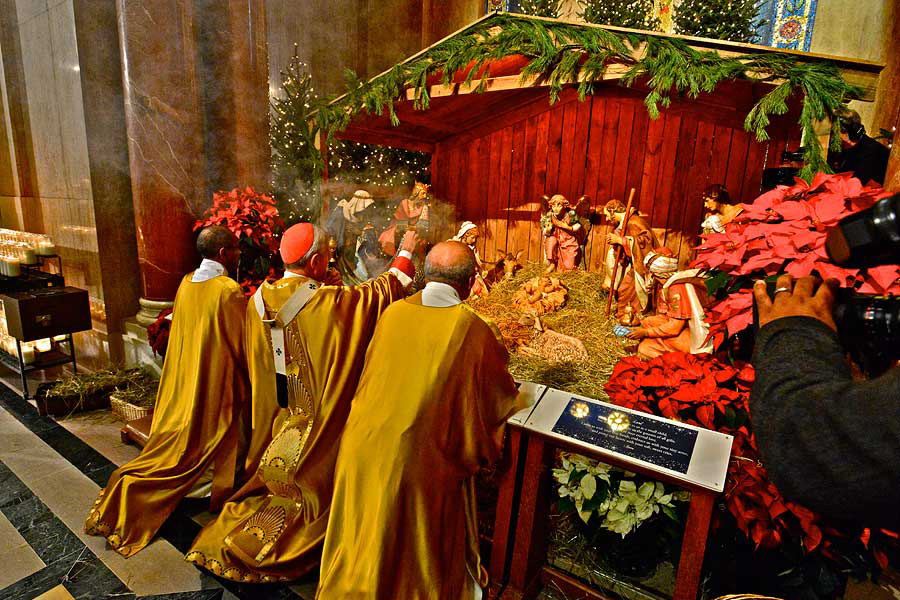
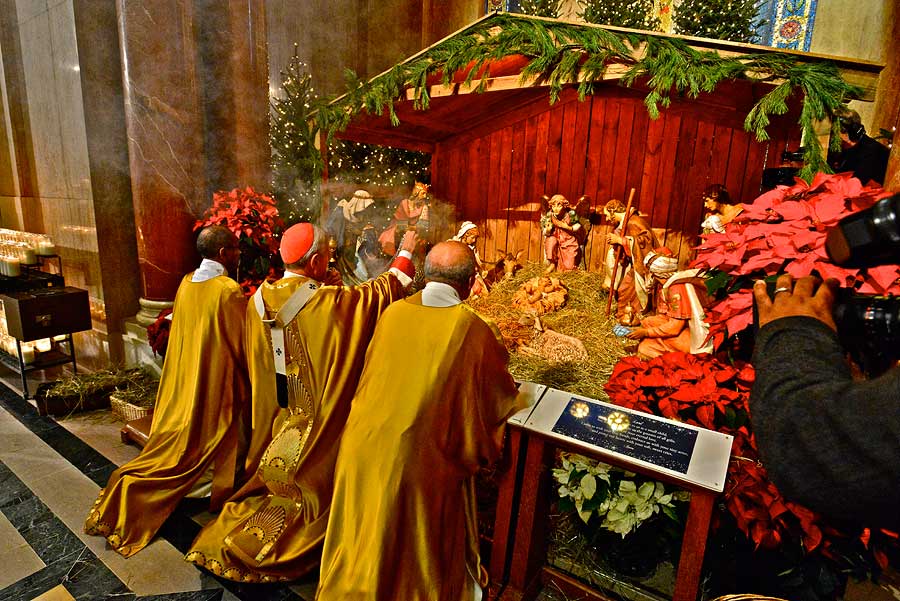
Cardinal Donald Wuerl serves as principal celebrant at the Christmas Mass at the Basilica of the National Shrine of the Immaculate Conception on Dec 25.O Holy night! Yes, a silent night! And it came upon a midnight clear. Christmas, it would seem, is a festival of the middle of the night. Jesus is born when it is dark, dark midnight. We are sure of it. And why not?

Even though we are not told the exact hour of His birth, we are sure it must have been at night. Scripture does say that the shepherds who heard the glad tidings were keeping watch over their flock “by night” (cf Luke 2:9). Further, the Magi sought him by the light of a star, and stars are seen at night—deep midnight. None of this is evidence that Jesus was born at 11:59 PM, but it sets our clocks for night—deep midnight.

Add to this the fact that Christmas is celebrated near the winter solstice, the very darkest time of the year in the northern hemisphere. More specifically, Christmas breaks in on the very days when the light begins its subtle return. The darkest and shortest days of the year make their appearance on December 21st and 22nd. But by December 23rd and 24th we notice a definite but subtle trend: the days are getting longer; the light is returning! It’s time to celebrate the return of the light; it’s going to be all right!

How fitting, now, to celebrate the birth of Jesus, the true Light of the World, in a deep and dark December. Jesus, our light, kindles a light and a fire that never dies away. Indeed, in the dark hours of December, we have noticed a trend. The light is returning; the darkness is abating; the days are growing longer from here on out. It is subtle now, but it will grow! And with the return of light, we celebrate our True Light: Jesus.

But light is best appreciated in contrast. We most appreciate the glory of light when darkness assails us. There’s just something about Christmas Eve. As the time approaches throughout December, and as the darkness grows, we light lights. All through December, as the darkness grows we light Advent candles, and we light more as it grows darkest! Even the secular among us string lights during dark December, in malls and on houses. It’s as if to say, the darkness cannot win; the light conquers!

Lights have their true glory in contrast to the darkness. Who sees the stars in midday? Who appreciates the beauty of light until he has experienced the darkness? Yes, Christmas is a feast of the light. We confront the darkness of December and declare to it, “Your deepest days are over; the light is returning.” And for us of faith, we say to a world in ever-deeper darkness, “Your darkness cannot remain. It will be overcome and replaced.” For though darkness has its season, it is always conquered by the light.

Light has a way of simply replacing the darkness. On December 22nd/23rd, the darkness begins to recede; the light returns and darkness diminishes. It is almost as if the darkness takes up the words of John the Baptist, He [Jesus] must increase, I must decrease. It seems subtle at first, but the light always returns; the darkness cannot last. In three months, the equinox (equal night and day) occurs, and in six months the summer solstice (the longest day) comes. And the darkness will once again seek to conquer. BUT IT ALWAYS LOSES. The light will return. Jesus is always born at the hour of darkness’ greatest moment. Just when the darkness is celebrating most, its hour is over; the light dawns again.

Yes, we celebrate after sundown on December 24th in accord with a tradition going back to Jewish times that our Feasts begin at sundown the night before.  Christmas morning is almost an afterthought. Most pastors know that the majority of their people have come the “night before.”  In a deep and dark December, a light comes forth, a star, and shines in the heavens.

We gather in and on a dark night. We smile. We are moved by the cry of a tiny infant, by whose voice the heavens were made. His little cry lights up the night. The darkness must go; the light has come; day is at hand.

Yes, we celebrate at night to bid farewell to the darkness. It cannot prevail. It is destined to be scattered by the Light that is far more powerful than it is, a Light it must obey, a Light that overwhelms and replaces it. Farewell to darkness; the Light of the World has come.

Jesus, the Light of the World.

The videos below are a celebration of light. As a Christmas gift to myself last December 22nd, the darkest day of the year, I took an afternoon off and went to photograph the triumph of light over darkness. I went to a Mausoleum—yes, to a place where thousands are buried in the walls. But also in those walls are windows, glorious windows where light breaks through and Christ shines forth. Some of the most beautiful stained glass in the city of Washington resides in that place of death and darkness. The light breaks through and it speaks of Christ.

These videos are a testimony to just some of those windows. In this place, a place of death, a light breaks through: the light of faith, the Light of Christ. The text of the music in this video is from Taizé, and it says, Christe lux mundi, qui sequitur te, habebit lumen vitae, lumen vitae (Christ, Light of the World! Who follows you has the light of life, the light of life). The second video features verses from the “Canticle of the Three Children” in the Book of Daniel.

As you view these videos, ponder that stained glass begins as opaque sand. But when subjected to and purified by the fire, it radiates the glory of light, which can now shine through it. So it is for us. Born in darkness, but purified by Christ and the fire of the Spirit, we begin to radiate His many-splendored Light shining through us to a dark world.

The Light wins. He always wins.

Strange Moments In Liturgical History – How a Paragon of Liturgical Tradition May Have Caused Unintended Effects

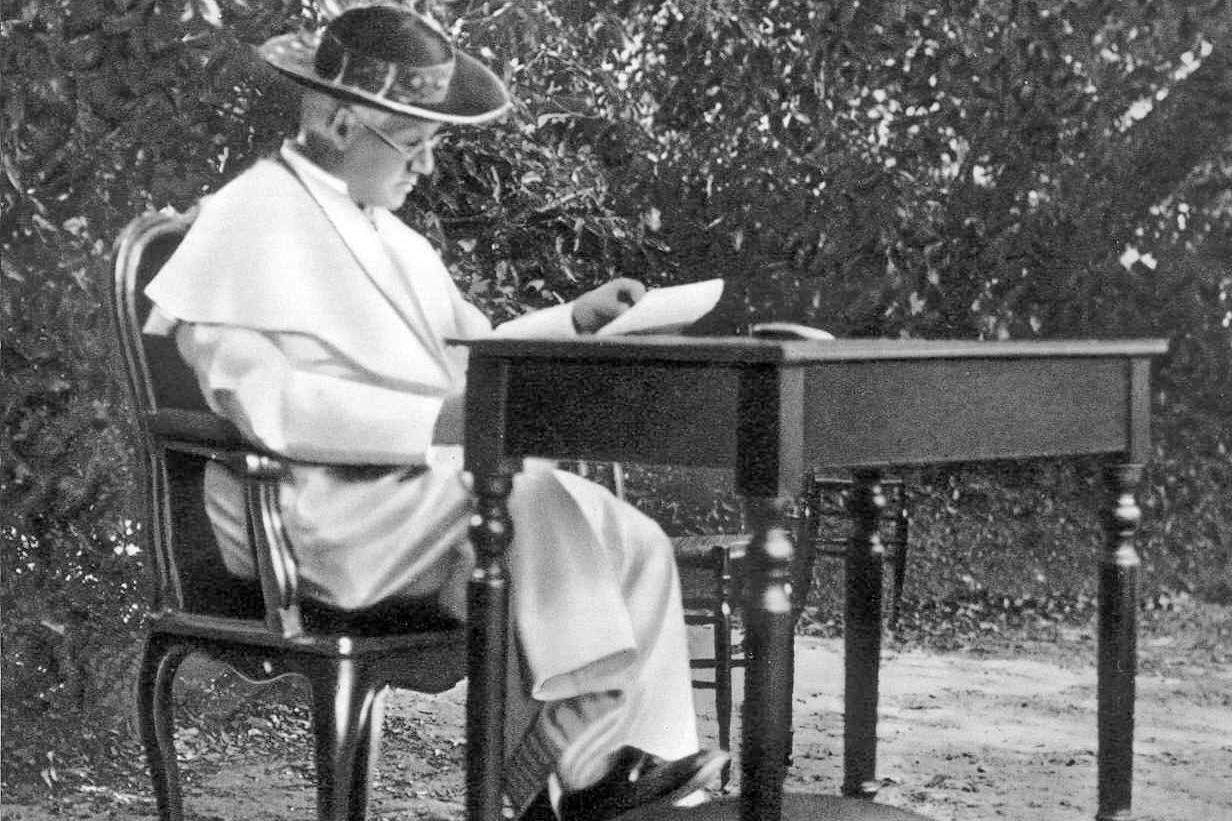
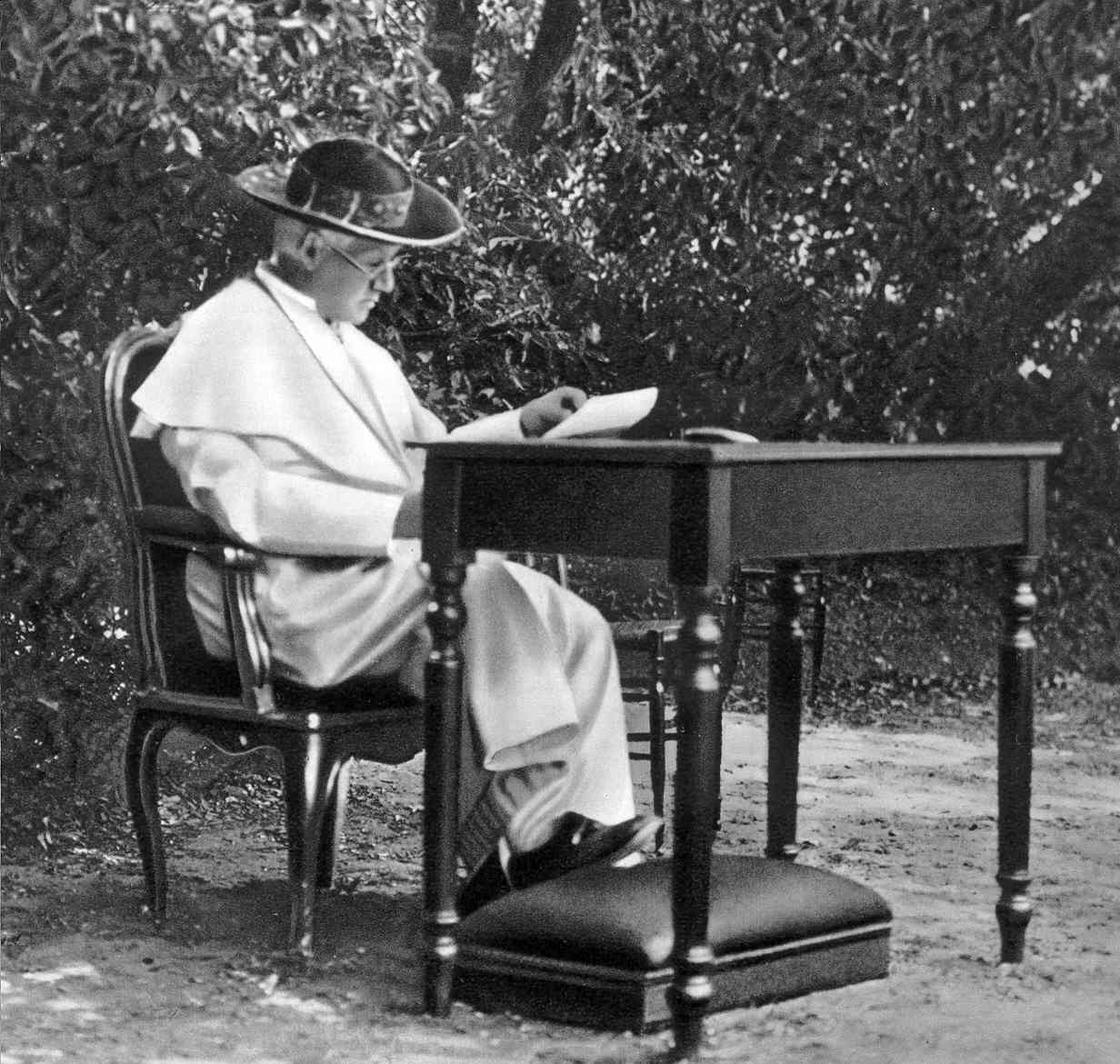
121614In the modern struggles and disagreements over the Liturgy, there tends to be a list of friends and opponents depending on one’s stance. For those of us with a more traditional leaning, Pope St. Pius X looms large as a friend and an image of tradition. He is usually seen as a defender of the tradition and a great proponent of what is called today the Extraordinary Form or Traditional Latin Mass (TLM)—so much so that the Society of St. Pius X (SSPX) takes its name from him.

And yet things, people, and movements are seldom as simple as we would like them to be. Despite many good reasons for admiring Pope St. Pius X’s attention to the Sacred Liturgy, he also (arguably) helped lay the groundwork for the revolution that would follow, not so much by his ideas but by his rather sweeping use of papal authority to influence and change the Liturgy in his day.

One of the most far-reaching things he did had little impact on the average Catholic but it had a dramatic effect on the Breviary, the prayers said by priests each day in the Divine Office (or Liturgy of the Hours). What makes what he did so significant was his use of papal power to rather summarily effect the change, a change that arguably did away with almost 1500 years of tradition, just because he wanted to. More of the details on that in a minute. Perhaps a little background first. (If you want a shorter read, go to the red line below.)

The Roman Rite of the Mass developed and came to fundamental form very early in the Church and had its most basic elements in mature form by the 5th Century, though it dates back far earlier in most of its elements. Due to the influence of the Roman See, it was largely the pure template for the liturgical practice of the Western Church. However, there were a lot of local variations to the Roman Rite, some of them significant enough to permit the use of another name altogether (e.g., the Gallican Rite, the Ambrosian Rite, the Sarum). In addition to these, there were many smaller variations and local usages.

This diversity of liturgical practice caused tension at times, if for no other reason than its bewildering complexity. There were various attempts made from time to time to unify the Liturgy throughout Europe by recourse to the Roman Rite and the fundamental purity and antiquity it was accorded. Most notably, the Council of Trent decreed that any form of the Liturgy that was less than 200 years old should be suppressed in favor of the Rite as celebrated in Rome. As such, there was a reverence for antiquity and a concern for novelty and recent innovations.

Yet even after Trent, especially in places like France, there was a tendency for accretions and innovations. Sometimes called “Gallicanism,” the decrees of the Council of Trent were either ignored or gradually less enforced. And thus many local variations began again to develop. By the 18th century, many liturgists began to critique the disorderly state of affairs and emphasized a kind of ultramontanism (a term meaning literally “beyond (or over) the mountains” and referring to Rome), which sought to establish the Roman Rite more purely.

By the time of the First Vatican Council (1869-70), papal influence was already well established from antiquity, but was also growing against Gallicanism and other local episcopal influence. Weariness over local European divisions was also part of the growing influence of the Pope. The Dogma of Papal Infallibility, proclaimed at the First Vatican Council (though narrowly construed and only invoked in very specific circumstances), served only to highlight papal power and influence.

Thus by the time of Pope Pius X (1903-1914), the relative “booster shot” given to the papacy enabled him to flex his papal muscles and extend his influence in more sweeping ways. And this leads us to the liturgical changes introduced by Pope Pius X.

It was in 1911, with the publication of Divino afflatus, that rather dramatic changes were made to the Roman Breviary. Some of the changes were small: cleaning up some accretions, adjusting the calendar, and giving greater priority to the temporal cycle over the more erratic sanctoral cycle. The obligations of what parts of the office and other prayers had to be said by priests were also clarified. All fine.

But among these changes was a casting aside of the very ancient arrangement of the psalter. Most notably, the ancient and almost universal tradition of praying the Laudate psalms (148-150) every morning and again every night at Compline was simply removed and replaced. No tradition in the Church was as universal and ancient as this, and with one stroke of a pen, Pope Pius X did away with it. Almost no liturgist of that time or since can describe what the Pope did as anything less than dramatic and sweeping.

Alcuin Reid, OSB quotes the views of a number of liturgical scholars on this action by Pope St. Pius X:

1. Anton Baumstark (in a scathing remark): Down to the year 1911 there was nothing in the Christian liturgy of such absolute universality as this practice in the morning office, and no doubt its universality was inherited from the Synagogue … hence, to [this “reform”] of Psalterium Romanun  belongs the distinction of having brought to an end the universal observance of a liturgical practice which was followed by the Divine Redeemer himself during his life on earth.

2. Pius Parsch commented, It is rather amazing that despite the conservative character of the Church Pius X should have resolved on this vast change which went counter to a practice of 1500 years’ standing.

3. Robert Taft, SJ: …this was a shocking departure from the almost universal Christian tradition.

4. William Bonniwell, OP: In the revision of Pius X the venerable office of the Roman Church was gravely mutilated.

All these quotes are from Alcuin Reid’s The Organic Development of the Liturgy (pp. 74-76).

Frankly, Pius X’s move was unprecedented in liturgical history. And though Urban VIII’s unfortunate redaction of the Latin Hymns of the Breviary was also an unfortunate and imprudent mutilation of ancient masterpieces, their use in the Church was less universal than the psalms of Lauds, and the redaction was not imposed by judicial power.

The issue may seem minor to those unfamiliar with the Office, but the precedent of using sweeping judicial power to simply end an ancient tradition is not minor at all. It is the same thinking that would later allow a sweeping change of the Mass to be promulgated in 1970 and for the Old Rite to be “abolished” by judicial fiat of the Pope. The Mass promulgated in 1970 was not specified by the Second Vatican Council Fathers, but by a small consilium. It was not marked by organic change but (as Pope Benedict and others have observed) rather was characterized by a hermeneutic of rupture and discontinuity. Only later would Pope Benedict XVI teach that there was no precedent for or right to abolish the older form Roman Rite (a rite far older than 200 years).

But all this heavy-handed use of papal power ironically had a precedent in Pope St. Pius X, the favored saint of many lovers of tradition. And there were other liturgical waves that emanated from this indisputably good man and pope that have troubled us since. Among them was the disruption in the order of the Sacraments when Pope Pius X moved First Communion to early youth but did not attend to the Sacrament of Confirmation. Thus the ancient order of initiation: Baptism, Confirmation, and Eucharist was disrupted and Confirmation became a kind of “hanging” Sacrament, detached from its liturgical and theological moorings. The result was its reduction to a kind of Catholic Bar Mitzvah and a lot of other questionable paradigms.

Further, Pope Pius X was also dismissive, if not juridically forbidding, of orchestral masses. And while he fostered chant—a good thing—he also suppressed a musical form that had inspired most of the classical composers (e.g., Mozart, Schubert, and Beethoven) to contribute to the Church’s musical patrimony. It would be 70 years before such Masses would again be heard widely in the Church.

Again, all these issues are less significant for their immediate effect and more significant for the groundwork they laid for what came later in the century.  The sudden liturgical changes of  the 1960s would not have been possible in previous ages since, though the Pope and Rome were strongly influential, local bishops and churches had a lot more leeway and influence on the Liturgy.

As stated above, this setup is not without its own troubles. Too much diversity leads to chaos and difficulty. Some general norms need to hold sway and regional and even ecumenical councils need to help clean out extreme diversity by reasserting proper liturgical principles.

However, centralizing power over the liturgy within the papacy also presents serious difficulties. Plainly put, the Liturgy is just too important to have it all depend on the notions of one man, even a holy man like Pius X. Many of his reforms were good, even necessary, and his sanctity is not in dispute. But even saints do not get everything right, and some of what they say and do may later be exaggerated or corrupted by those that follow.

In recent decades, traditional Catholics have looked to Rome to resolve liturgical debates. At one level this has been necessary, since many local bishops and churches have seemingly abdicated their responsibility to oversee the Liturgy, correct abuses, and guarantee the legitimate rights of the faithful.

However, traditional Catholics would also do well to understand the problems inherent in having an overly centralized control of the Sacred Liturgy. More needs to be done by traditional Catholics to build a foundation for good Liturgy in the local churches where they reside by building a culture that is respectful of tradition and sober about the pitfalls of depending too much on papal authority.

How strange it is that the paragon of traditional Catholicism should have, even if unwittingly, helped paved the way for the (I would argue) excessive use of supreme judicial authority in regard to the Liturgy, a use so sweeping that even Pope Benedict would have to announce that the suppression of the older Roman Rite was neither possible nor in effect.

Just one of those strange moments in liturgical history.

Don’t Forget to Worship God! A Call to Better Liturgy from an Unlikely Source

We have discussed before many of the trends of modern liturgy and how the focus has shifted from God to the “assembly.” Too much of modern liturgy today is anthropocentric (focused on man).

Back in the 1990’s, Thomas Day observed in the book Why Catholics Can’t Sing, that liturgy today often comes down  to “the aware, gathered community, celebrating itself.” Many modern songs go on at great length about how we are the gathered, we are the flock, we have been sung throughout all of history, we are God’s song, etc. When God is mentioned it is more in relation to us, rather than us being in relation to Him. He is all about us, and this seems to please us greatly.

The emphasis has shifted too far. If in the past the people were something of an afterthought or reduced to mere spectators (as some detractors of the older forms say), now it seems we are the excessive focus. And if something doesn’t speak to the people it should either be ditched or dumbed-down.

Even our architecture has given God the boot, so to speak. Circular and fan shaped churches dominated after 1950. The tabernacle was relegated to the side, altars became largely devoid of candles or a cross, and it became almost “immoral” for the priest-celebrant not to “face the people.” Seeing and interacting with each other became the goal. God was invited, too, but His role seemed more to affirm what we were doing and to be pleased with us; or so we sang, on and on and on. Surely God was happy when we were happy!

Well, I exaggerate, but just a little.

I was fascinated to read similar concerns in an unlikely place. I was sent a link from baptistnews.com wherein a Baptist minister raises similar concerns with Protestant worship. In effect, he argues that it is barely worship at all. The minister is  J. Daniel Day, retired senior professor of Christian preaching and worship at Campbell University Divinity School in Buies Creek, N.C., and he has authored a book Seeking the Face of God: Evangelical Worship Reconceived. Here are excerpts from his remarks in the article at Baptist News, in bold, black italics. The Full Article is here: Reviving Worship. As usual, my own remarks are in red text.

“Worship can be facilitated and used around any kind of style,” says Day, a former pastor of First Baptist Church in Raleigh, N.C. The music and sanctuary decorations can be tailored to fit the tastes of the congregation. “But the question becomes … ‘where’s the beef?’” By that, Day says he means the object of worship, which should be God. But over the centuries, the purpose of worship in many evangelical churches has been to attract and evangelize new members.

Perfectly and simply stated. The worship of God has become the secondary focus. To be sure, people are important. Evangelization is important. But worship is more important and is the first and chief work of the Church. And the worship of God does not demote man; it elevates him. Scripture says we have been destined and appointed to live for the praise of his glory (Eph 1:12). In other words, we were made to praise God, and in this worship, we are fulfilled, reach our highest dignity, and discover our true self in God. So God is not our competitor; He does not steal the stage, and the worship of Him is not a distraction or in opposition to the assembly. 

Further, making the liturgy more about evangelization than worship (where it too easily devolves into a sort of entertainment in order to “draw” numbers) belies the experience of the early Church when one did not gain admittance into the liturgy, into the celebration of the mysteries, until after baptism. In those early days, evangelization was accomplished through the witness of changed and holy lives in combination with preaching and witness. The goal was to gain admittance to the sacred liturgy so as to worship and encounter God and be transformed by that encounter. If worship “evangelized,” it was instead a deepening of faith already confessed. The deal had already been sealed and the liturgy served to deepen and further immerse a person into the life of God and His Body, the Church.

 Another major shift away from historic Christian worship came even earlier, he added. “The whole emphasis coming out of the Reformation was to convert worship into an educational experience,” Day said. “So you had these didactic, Calvinist lectures that became the models for today’s teaching sermons that go on for 45 minutes to an hour.” At that point, churches ceased being places of worship. “The sanctuary becomes a lecture hall.”

Indeed. And while I support Catholics learning to give a little more time to the sermon, here again we ought not lose our way. Homilies in Catholic parishes should teach more than they do, especially with the demise of Catholic Schools and family life.

However, the Mass is fundamentally an act of worship directed to the Father. Christ, the head of the Body and high priest, and we, the members of His body, turn to the Father at the high point of the Mass, the Eucharistic prayer, and we worship the Father. Head and members together.

This is why the stance of the priest during the Eucharistic prayer (facing the people) is misleading. Too often the impression is that the prayer is being read to the people. Not only is the priest facing them, but often priests, by their tone of voice and eye contact, give the impression that they are talking to the people. Heaven forfend if the priest were to lower his voice so Ms. Jones in the back pew could not hear, or that he pray the canon in Latin. But of course the “outrage” would, to a large extent, seem beside the point if we remember that the prayer is being directed to God the Father who is neither deaf nor ignorant of Latin. And while the vernacular has its advantages and helps the faithful to heartfully unite to the action, it is not a disaster if the priest is less-than-fully audible or prays in a language other than that which the faithful understand well.

Surely the Liturgy of the Word is rightly directed toward the people. And yet that aspect of the Liturgy is also marked with worship; it is not just readings and instruction. The singing of the psalm or gradual, and the alleluia or tract, are worshipful responses to what has been proclaimed. And after the homily, the creed and/or prayers also invite the worship of prayer. 

So yes, amen. The liturgy is more than a bible study or a lecture.

Or [beyond a lecture hall, churches] become entertainment centers, Day says, where worship is about “being impressed by the magnificence of the place, the costumes and the jumbo screens.”

Yes! When keeping people happy and coming becomes the main goal, things really start to go off the chain. Frankly, we people are fickle, our culture is ephemeral and trendy (especially in America), and we tend to need more and more exotic things in order to be impressed. A lot of megachurches note that although people come, they don’t often stay for long. There is really only so much you can do in a church surrounded by an entertainment culture.

Eventually, those who are indulged in merely trendy notions get bored and say, “Peel me another grape.” When ideas run short, the bored move on to the next phenomenon or star preacher. And eventually many of them end up out of the Church altogether or back in the Catholic parishes they left for greener pastures.

Entertainment-based churches eventually either run out of ideas or lose out to glitzier,  better-funded churches. Most of the megachurches of the 1990s here in D.C. are closed now and newer, bigger “centers” and campuses have opened to cater to the latest trends. But soon enough, even they, so financially difficult to maintain, will likely close as well.

Again, the central point of liturgy is not to impress or entertain human beings. It is to worship God. And even the “praise songs” of many such churches look and sound more like entertainment. Some songs are actually not bad in terms of content. But many are riddled with catch-phrases stitched together.

In the Catholic Church, too, a lot of contemporary liturgical trends seem to have “the people” in mind more so than God. He’s invited too, but pleasing the folks is more the point. Otherwise, why is trendy, ephemeral liturgy (especially the music) such an issue? Does God change and need new forms? Does He get bored with the older hymns and chants? No! So all the trendy stuff is more about us. 

To be fair, this problem is not new. The big orchestral masses of the Baroque period were quite the item back then. Eventually, they were criticized for trying to be more like opera, trying to impress donors rather than be suitable for the worship of God. Even early polyphony got so artsy that the Church had to warn composers that the text being sung was more important than the musical artistry designed to impress and “wow” the people. 

Every now and again, the Church needs to throw a penalty flag on the field and say “Back to God!” Now is surely one of those times in both Catholic and Protestant settings so powerfully influenced by the anthropocentric, consumer-focused culture. 

A growing number of scholars from a variety of traditions are exploring the value ancient approaches to worship can have in modern times, he adds. One is to provide a sense of authenticity and rootedness in the history and practice of the ancient church.

Sadly, I doubt our Baptist brethren will look to Catholic antiquity. But hey, this is a start! It never hurts to value ancient approaches. Inevitably, those who look to these sources may well discover how Catholic the early Church was. Let’s pray. God bless the good Reverend J. Daniel Day in his search and for his admonitions to us all!

I have some more things to present on Liturgy tomorrow, more from a Catholic setting.

Again, not all Contemporary Christian music is bad. I like a lot of it (e.g., “Still,” “You Never Let Go,” “Shout to the Lord”). But a good bit of it is also very poor. Here’s an amusing video that pokes fun at the poorer stuff:

A Prayer for the Internet from the 1946 Roman Ritual? Sure, and It’s Wonderful!

121114The old Roman Ritual was (is) a magnificent collection of blessings and prayers. It had some of the most amazing little blessings of things it would never occur to you to find in such a collection. For example, among other more common blessings of statues, religious medals, and so forth are blessings, often elaborately laid out, for things like a seismograph, a typewriter, a printing press, a fishing boat, a fire engine, a stable, medicine, a well, a bridge, an archive, a lime kiln, a ship, an automobile, mountain-climbing equipment, and an electric dynamo.

Thankfully, the old ritual is still able to be used since, as many priests will attest, the current “Book of Blessings” issued back in the 1990s is all but useless. It is also improperly named, since there are really no blessings to be found in it. It is all rooted in a rather narrow notion of blessing that seeks to bless the user of (or someone walking nearby?) an object, but not the object itself.

It is an odd theology to say the least, especially for the Catholic faith, which is so incarnational and seeks to sanctify things as well as the people who use them. But I’ll let the theologians debate this. As a pastor, I (as well as most of my brother priests) know that people want their things blessed, and they are looking for that sign of the cross, that holy water, those words somewhere in the rite that actually ask God to bless the thing. The old Roman Ritual does this, and does it well. It also has good prayers that go beyond the mere act of blessing and seek to put the object in God’s wider plan of sanctity for us.

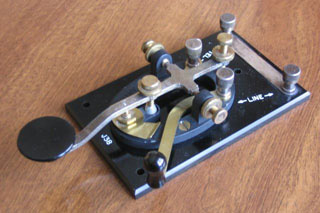
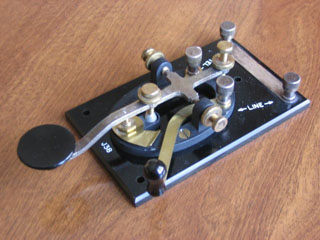
In the old ritual, there is a remarkable prayer for a telegraph—yes, a telegraph. It quite elaborately laid out psalms and antiphons, but I will only present here the prayer of gratitude at the end, just before blessing it with Holy Water.

To my mind, it is also perfect as a prayer, expression of gratitude, and blessing when using a computer or for the extended “cloud” of our computers, otherwise known as the Internet. The prayer is both thrilling and fitting. It is a minor masterpiece if you ask me. Though written sometime prior to 1945, and likely after 1830, its basic structure fits well what we do now with the Internet. There is probably one word that needs changing, and perhaps you can help by suggesting another word.

But without further drumrolls, here is the prayer, first in its Latin original, and then translated by Rev. Phillip Weller:

Deus qui ámbulas super pennas ventórum, et facis mirabília solus: concéde, ut per vim huic metállo índitam fulmíneo ictu celérius huc abséntia, et hinc álio praeséntia transmíttis; ita nos invéntis novis edócti, tua grátia opitulánte, prómptius et facílius ad te veníre valeámus. Per Christum Dóminum nostrum. Amen.

O God, who walkest upon the wings of the wind, and thou alone workest wonders! By the power inherent in this metal, thou dost bring hither distant things quicker than lightning, and transferest present things to distant places. Therefore grant that, instructed by new inventions, we may merit, by thy bounteous grace, to come with greater certainty and facility to thee. Through Christ our Lord. Amen.

Sign of the Cross + and sprinkling with Holy Water.

Magnificent. It almost paints a picture in the mind as the words go forth. Yes, such beauty and a picture of the swiftness of information going hither and yon, like lightning, or as on the wings of the wind! And may indeed this wondrous tool serve to draw us closer to God and not be corrupted by sinful curiosity, hostility, defamation, profanation, or pornographic and prurient temptations.

One word, “metal,” may need adjusting. What word would you suggest? Perhaps simply “computer” will work, but more is in mind: the whole Internet and “cloud” are part of what we are grateful for and ask blessings for. But of course we may not be in a position to bless the whole Internet, and our blessing or prayer of gratitude is only to be directed to our computer, our one portal to the vast communication network. Anyway, this is just a thought.

But I hope you enjoy this prayer as much as I do. Encourage your priest to get a copy of the older Roman Ritual. For many years now, it has been my custom to use it instead of the Book of Blessings.

This video of the history of the telegraph reminds us that the first telegraph message sent by Samuel Morse was “What hath God wrought?” This almost seems to have influenced the prayer in the ritual!

Advent and the Drama of Light and Darkness

120414Here are the summary notes from a talk I gave tonight at the Parish of St. Columba, here in D.C.

Many people think of Advent merely in terms of pre-Christmas time: office parties, shopping, decorating etc. But in the Church, Advent is more a penitential period, a time of preparation for both the Christmas Feast and the Second Coming of the Lord. The purple vestments signal penance. The faithful are encouraged to go to Confession, and the liturgical texts and readings emphasize readying for the coming of the Lord.

The theme of preparation (and much of the season itself) is couched in the dramatic struggle between light and darkness. This makes sense (at least in the northern hemisphere, where the darkness deepens and the days grow shorter). In these darkest days, we light candles and sing hymns that speak of the light that will come: Jesus the true Light of the World. Let’s take a look at Advent in three ways.

I. The Symbols of Darkness and Light – Outside, there is a great drama of light and darkness unfolding before us. The light is giving way to darkness. Here in the northern hemisphere, the days are getting very short, and they’re going to get even shorter. In Washington, D.C. (where I live), it is dark by 5:00 PM. On cloudy days, it is nearly dark by 4:00 PM. My brothers both live farther north: one in St. Paul and the other in Seattle. It gets dark even earlier there. There’s even a famous saying (probably by Yogi Berra), “It’s getting late very early out there.”

For us who live in modern times, the drama is less obvious. It is little more than an annoyance, as we must switch on the lights earlier. But think of those who lived not long before us in an age before electrical lights. Perhaps it was possible to huddle near a candle, oil lamp, or fire, but in the end, the darkness put a real stop to most things. Neither work, nor reading, nor most forms of recreation could take place. Darkness was a significant factor.

Some years ago, during a widespread power outage, I was struck at just how incredibly dark it was outside at night without the streetlights and the lights emanating from homes. Frankly, it was hard to venture out. I lost my bearings quickly and stumbled over some simple things like a curb and a fencepost. We moderns just aren’t used to this. Once, I toured Luray Caverns in the nearby Shenandoah Mountains. At the bottom of the caverns, hundreds of feet down, they gathered us near the center of a large cave and shut off the lights. The darkness was overwhelming. It was an almost physical feeling. I felt a wave of slight panic sweep over me and was so relieved when the lights came back on. I wondered, “Is this what it’s like to be blind?” Yes, light is very precious.

And so, here in a “deep and dark December,” the light continues to recede. The spiritual impact of this drama of light is brought into the Church. Our hymns turn to images of light. The darker it gets, the more candles we light on the Advent wreath. In the darkest days of December, our Advent wreath is at its brightest. As Scripture says, The light shines in the darkness, and the darkness has not overcome it … The true light that gives light to everyone was coming into the world (John 1:5, 9). An old prayer says, Within our darkest night you kindle a fire that never dies away.

As the drama of light and darkness outside continues, we arrive at December 21st and 22nd—the shortest, darkest days of the year. By December 23rd, the ancients could detect a slight return of the light. Now the morning star heralds something new, something brighter.

People, look East. The time is near
Of the crowning of the year …
People, look east and sing today:
Love, the guest, is on the way.

And then, on December 24th, in the middle of one of the longest nights of the year, the liturgy of Christmas begins: Christ is born and on December 25th a new light shines. From then on, the days get longer.

Yes, a great drama of light is unfolding before us. It is Advent. It is a time to recognize our need for the light and just how precious Jesus, the Light of the World, is. Ponder, in these darkest days, the beauty of the light. There are so many Advent hymns that set forth the dramatic images of light, darkness, and expectancy. They are too numerous to list here. However, click here if you wish to see some samples: Advent hymns that speak to the Light.

Of course, this external drama of light and darkness in nature is but a symbol of the great struggle between light and darkness in our world, our culture, our own hearts, and the hearts of all whom we love. It is the greatest drama of each of our lives. Will we choose to walk in the light or will we prefer the darkness? Our choice will determine our destiny. Judgment day is coming and we must be prepared by embracing the light of God’s truth and Jesus Himself, who is the Light of the World.

Thus, in Advent, we are summoned to understand how bad the darkness of sin really is, and we are warned to prepare for the coming judgment. Almost all the readings of the first two weeks of Advent speak to this theme of warning and readiness. The Dies Irae, which most associate with the Latin Requiem Mass, was actually written as a hymn for the Second Sunday of Advent.

Now, of course, some may protest such “negative” themes for Advent. But remember, if we aren’t aware of the bad news, then the good news is no news. Hence, this Advent reflection on the seriousness of the dark reality of sin is to prepare us for even greater joy at the birth of a Savior, who is the Light of the World and can lead us out of the dark tomb of sin into the wonderful light of grace.

Hence, the symbols of light and darkness point to a real drama and remind us to be sober and serious about the trouble we’re in, why we really need a savior, and how good it is to greet the Light of the World … IF we are prepared.

II. Our Stance to the Light and Darkness – Ultimately we are either facing the light and welcoming Him, or facing and in the darkness. These are the only two stances possible. There is no third way. Are you walking in the light or are you standing in the darkness?

This is Our Moral Stance. Scripture warns in many places about the two ways of light and darkness, and admonishes us to stand and walk in the light. Here are just a few:

  1. (Ro 13:11–14) Besides this you know what hour it is, how it is full time now for you to wake from sleep. For salvation is nearer to us now than when we first believed; the night is far gone, the day is at hand. Let us then cast off the works of darkness and put on the armor of light; let us conduct ourselves becomingly as in the day, not in reveling and drunkenness, not in debauchery and licentiousness, not in quarreling and jealousy. But put on the Lord Jesus Christ, and make no provision for the flesh, to gratify its desires.
  2. (1 Th 5:1–11) But as to the times and the seasons, brethren, you have no need to have anything written to you. For you yourselves know well that the day of the Lord will come like a thief in the night. When people say, “There is peace and security,” then sudden destruction will come upon them as travail comes upon a woman with child, and there will be no escape. But you are not in darkness, brethren, for that day to surprise you like a thief. For you are all sons of light and sons of the day; we are not of the night or of darkness. So then let us not sleep, as others do, but let us keep awake and be sober. For those who sleep, sleep at night, and those who get drunk are drunk at night. But, since we belong to the day, let us be sober, and put on the breastplate of faith and love, and for a helmet the hope of salvation. For God has not destined us for wrath, but to obtain salvation through our Lord Jesus Christ, 10 who died for us so that whether we wake or sleep we might live with him. Therefore encourage one another and build one another up, just as you are doing.
  3. (Mt 6:22-24) The eye is the lamp of the body. So, if your eye is sound, your whole body will be full of light; but if your eye is not sound, your whole body will be full of darkness.  If then the light in you is darkness, how great is the darkness!
  4. (2 Pe 1:19) And we have the prophetic word made more sure. You will do well to pay attention to this as to a lamp shining in a dark place, until the day dawns and the morning star rises in your hearts.

Thus, we are warned what time it is, that judgment draws ever closer, and that we must walk and stand with the light and not be like those in darkness. The Advent season acknowledges the reality of deepening darkness, and that we must all the more run to the coming  light, Jesus. We must walk in the light of His truth as set forth in His word, in the teachings of the Church, and in creation. We must seek the enlightenment of the Sacraments and live in honesty, integrity, and mutual fellowship with the Lord’s Body, the Church. This is to be our moral stance: toward the light and away from the darkness.

This is Our Liturgical Stance – Since we are discussing the season of Advent, we might also do well to mention something of our liturgical stance as well. Over the past few decades, our liturgical stance has become muddled and somewhat incoherent. What used to be a clear stance of a community facing East, has become an increasingly closed circle, a sort of image of a community closed in on itself, singing of itself, and referring incessantly to itself in song and (self-)congratulatory applause. Until about 1965, the almost universal liturgical stance was of a community all facing one direction (liturgical East, symbolized by the Crucifix more than by the compass), and being led there by a celebrant who could see where he was going. The celebrant, as alter Christus, represented Christ leading his people to the Father in adoration and thanksgiving. The priest, as a man, stood at the head of the community looking for Christ to come again. Scripture quite frequently attests that God will come “from the East.” (Again, it is less a matter of the compass and more a matter of the community all looking toward the liturgical East, the Cross.) Looking to the East for God to come is no arbitrary notion of a primitive religion. It is well attested in Scripture and makes sense based on the fact that the East is where the light comes from. Physical light is a symbol of the True Light, who is our Lord and God, Jesus Christ. Here are just a few Scripture references:

  1. (Mt 24:27–28) For as the lightning comes from the east and shines as far as the west, so will be the coming of the Son of man.
  2. (Bar 4:36) Look toward the east, O Jerusalem, and see the joy that is coming to you from God!
  3. (Eze 43:1–5) Afterward he brought me to the gate, the gate facing east. And behold, the glory of the God of Israel came from the east; and the sound of his coming was like the sound of many waters; and the earth shone with his glory. And the vision I saw was like the vision which I had seen when he came to destroy the city, and like the vision which I had seen by the river Chebar; and I fell upon my face. As the glory of the LORD entered the temple by the gate facing east, the Spirit lifted me up, and brought me into the inner court; and behold, the glory of the LORD filled the temple.
  4. (Psalm 68:32-34) Sing to God, ye kingdoms of the earth: sing ye to the Lord: Sing to God, who mounts above the heaven of heavens, to the east. Behold he will give to his voice the voice of power: give ye glory to God for Israel, his magnificence, and his power is in the clouds!

This is not intended to be a full-length treatment of the “Ad orientem” question regarding the stance of the priest and the people. Here I only wish to note that our liturgical stance has become muddled. If it is true that our stance should be toward the Light, then why are we facing all sorts of different and “opposing” directions in the liturgy? Why do we not all face East together for the great Eucharistic Prayer, as we did for over 19 centuries? While it is fitting that the Liturgy of the Word be celebrated toward the people, it seems that the Eucharistic Prayer is more suitably proclaimed with the whole community (priests included) facing to the East—toward God—for it is to God that the prayer is directed and it is to God that the people are led in admiration, thanksgiving, and pilgrimage.  The Advent hymn says it well: “People look East, the time is near!”

III. The Summons to the Light – Having laid out the great drama of light and darkness and heard that we should take a stand for and toward the light, we note that Advent also proclaims, through a series of biblical texts and prayers, a warning to those who either reject the light outright or just fail to prepare for it. Here are just a few biblical texts:

  1. (Ho 6:5) Therefore I have hewn them by the prophets, I have slain them by the words of my mouth, and my judgment goes forth as the light.
  2. (Mt 25:6–11) Behold, the bridegroom! Come out to meet him.’ Then all those maidens rose and trimmed their lamps. And the foolish maidens said to the wise, ‘Give us some of your oil, for our lamps are going out.’ But the wise replied, ‘Perhaps there will not be enough for us and for you; go rather to the dealers and buy for yourselves.’ And while they went to buy, the bridegroom came, and those who were ready went in with him to the marriage feast; and the door was shut. Afterward the other maidens came also, saying, ‘Lord, lord, open to us.’ But he replied, ‘Truly, I say to you, I do not know you.’ Watch therefore, for you know neither the day nor the hour.
  3. (Mal 4:1–2) For behold, the day comes, burning like an oven, when all the arrogant and all evildoers will be stubble; the day that comes shall burn them up, says the LORD of hosts, so that it will leave them neither root nor branch. 2 But for you who fear my name the sun of righteousness shall rise, with healing in its wings.
  4. (Jn 3:16–21) For God so loved the world that he gave his only Son, that whoever believes in him should not perish but have eternal life.  For God sent the Son into the world, not to condemn the world, but that the world might be saved through him. He who believes in him is not condemned; he who does not believe is condemned already, because he has not believed in the name of the only Son of God. 19 And this is the judgment, that the light has come into the world, and men loved darkness rather than light, because their deeds were evil.  For every one who does evil hates the light, and does not come to the light, lest his deeds should be exposed. But he who does what is true comes to the light, that it may be clearly seen that his deeds have been wrought in God.

There is not sufficient time in this post to comment on each of these texts above except to say that they summon us to the light in a spirit of readiness, having first prepared ourselves by becoming accustomed to the light and the fire of God’s love. If we are not ready, the light will seem blinding and the fiery love unbearable, and we will recoil in wrath, rather then rejoice in wonder.

Pay attention to these Advent themes. It’s getting late very early these days. Consider this a warning from the natural world (the Book of Creation), which the Church picks up in her liturgy. Prepare the way of the Lord! Repent! The Kingdom of God is at hand. Walk in the light! If we do, light, all glorious and unending, will be ours:

There shall no more be anything accursed, but the throne of God and of the Lamb shall be in it, and his servants shall worship him; 4 they shall see his face, and his name shall be on their foreheads.  And night shall be no more; they need no light of lamp or sun, for the Lord God will be their light, and they shall reign for ever and ever (Re 22:3–5).

This is our future, IF we are faithful and allow the Lord to enlighten us now so that we can love the future light of ten thousand megawatts. Walk in the Light!

A blessed Advent to all.

The Churching of Women and it Relation to the Feast of the Presentation

013014As we prepare for the Feast of the Presentation (Sunday, February 2), I though it might be appropriate to describe a liturgy of the Church that is largely lost to most today, “The Churching of Women.” To some extent it is subsumed in the modern Rite of Baptism with the blessing of the Mother, but it is not what it used to be. We CAN still celebrate this for women who ask, and I often do celebrate it especially when I do extraordinary form Baptisms.

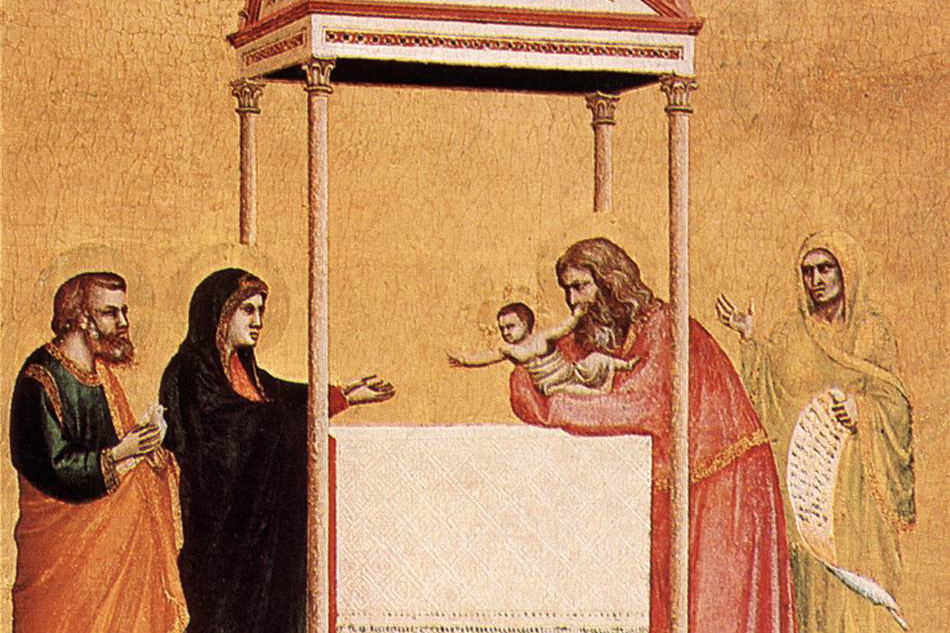
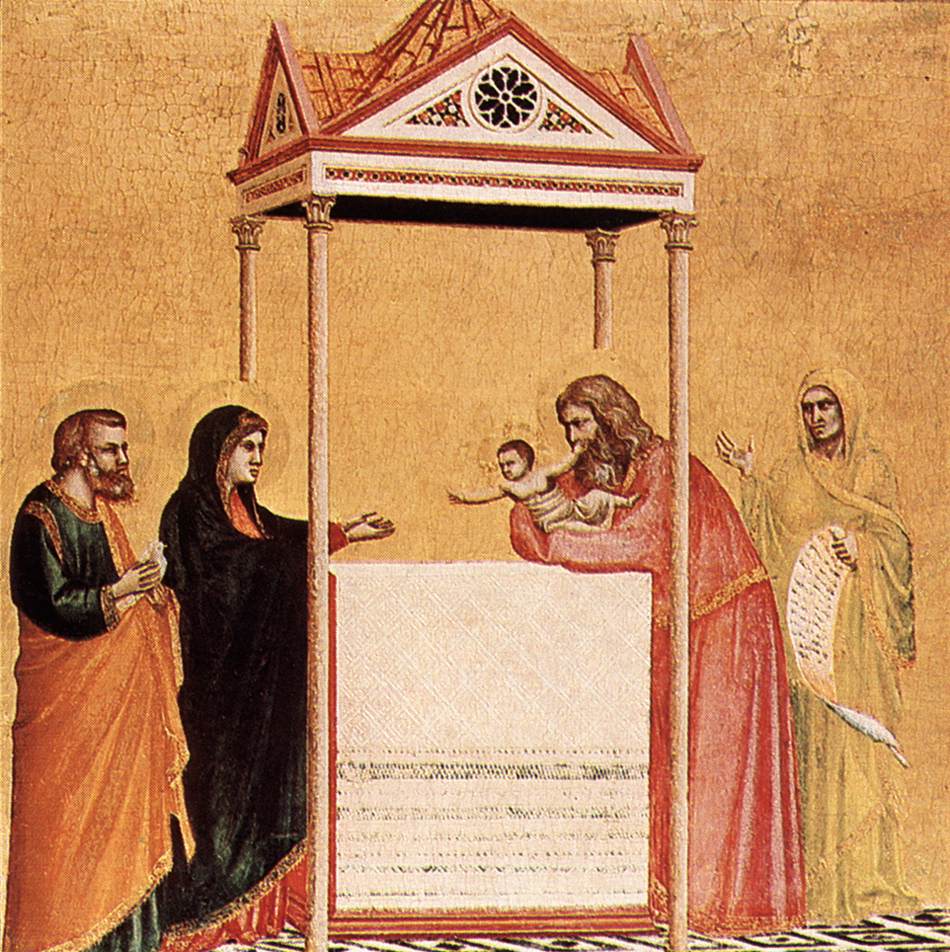
The Churching of Women is very rooted int he feast of the Presentation. Biblically this feast commemorates the Jewish practice of a woman presenting herself at the temple forty days after the birth of a male child in order to be “purified” and blessed by the priest. Mary as an observant Jew fulfilled this obligation and it is recorded in Luke 2:22-24:

When the time of their purification according to the Law of Moses had been completed, Joseph and Mary took him to Jerusalem to present him to the Lord (as it is written in the Law of the Lord, “Every firstborn male is to be consecrated to the Lord”and to offer a sacrifice in keeping with what is said in the Law of the Lord: “a pair of doves or two young pigeons.”

The Jewish practice of “purifying” a woman after childbirth was set forth in the Book of Leviticus 12:1-8:

The LORD said to Moses, “Say to the Israelites: ‘A woman who becomes pregnant and gives birth to a son will be ceremonially unclean for seven days, just as she is unclean during her monthly period. On the eighth day the boy is to be circumcised. Then the woman must wait thirty-three days to be purified from her bleeding. She must not touch anything sacred or go to the sanctuary until the days of her purification are over. If she gives birth to a daughter, for two weeks the woman will be unclean, as during her period. Then she must wait sixty-six days to be purified from her bleeding. ” ‘When the days of her purification for a son or daughter are over, she is to bring to the priest at the entrance to the Tent of Meeting a year-old lamb for a burnt offering and a young pigeon or a dove for a sin offering. He shall offer them before the LORD to make atonement for her, and then she will be ceremonially clean from her flow of blood.” ‘These are the regulations for the woman who gives birth to a boy or a girl. If she cannot afford a lamb, she is to bring two doves or two young pigeons, one for a burnt offering and the other for a sin offering. In this way the priest will make atonement for her, and she will be clean.’ “

As you can see, there is a fairly negative concept at work in the Old Testament concept. A woman becomes ritually “unclean” by giving birth. This was due to the flow of blood and/or other fluids at birth. Even more distressing to modern notions is that a woman who gave birth to a daughter was considered ritually unclean for even longer! Alas, it is well that the power of the Church to bind and loose has freed us from this thinking. Keep in mind that this was ceremonial law, not moral law and, hence, the Church is not setting aside immutable moral law in abrogating such notions of ritual impurity.

Nevertheless the custom and instinct of blessing women after childbirth was retained in the Church with an altered understanding from Jewish teaching. That rite came down through the centuries and was widely intact until very recent times and as we have said, was referred to in many places as the “Churching of Women.” (The official Latin title of the Rite was actually benedictio mulieris post partum – (the blessing of women after giving birth)). The rite was largely discontinued in the 1960s in the wake of the Second Vatican Council. The Book of Blessings published in 1984 does contain a “Blessing of a Woman after Childbirth” but it is seldom used and is significantly altered from the old rite in use until about 1965. There is also a blessing of the Mother at the Rite of Infant Baptism.

The reasons for the discontinuance are many. I remember my mother and other women of my mother’s generation saying they had been taught the Jewish history of this rite and thus rejected it for that reason. But the Catholic Church was clear to distinguish its practice from the Jewish roots. Pope Gregory as early as the 6th Century protested any notion that defilement was incurred by childbirth. Further, the prayers of the old “Churching of Women” Rite never mentioned a need for purification and spoke only of blessing and thanksgiving. So those who taught women of my Mother’s generation against this practice were probably engaged more in polemics than true Church history. Another reason for the discontinuance was probably and simply that so many things were dropped during the changes in the wake of the Council.

On this Feast of the Presentation I would like to recommend this beautiful ritual to your attention. In an extended sense it fulfills What Mary did at the presentation, forty days after the birth of Christ. Surely we do not understand it in an Old Testament way, but we rescue and fulfill the tradition with the beauty of Christian faith and the dignity of women who are mothers.

I have attached a PDF version of it here: The Churching of Women. Though it has never been required by the Church it is a beautiful way to welcome back and bless a woman who has perhaps been away for a few weeks giving birth. She has labored well for her family, her child and the Church and this ritual can serve simultaneously as a blessing and thanksgiving extended by the Church to the noble women who are our mothers. The blessing can be given after a baptism, after mass, collectively to recent mothers, or individually. It is true that the current baptismal rite contains a blessing for the mother but this older rite is a more single and special blessing. Pope Benedict’s  Motu Proprio Summorum Pontificum permitting the older forms of the sacraments to be used has made these older rituals also more available. Here is the concluding prayer of the rite:

Almighty, everlasting God, through the delivery of the blessed Virgin Mary, Thou hast turned into joy the pains of the faithful in childbirth; look mercifully upon this Thy handmaid, coming in gladness to Thy temple to offer up her thanks: and grant that after this life, by the merits and intercession of the same blessed Mary, she may merit to arrive, together with her offspring, at the joys of everlasting happiness. Through Christ our Lord.

I looked for a video depicting the Churching of Women but found none. Instead enjoy this video by Shirley Ceasar which celebrates the love of a mother as an image of God’s love: The full cost of my love is “no-charge”

Pondering a Puzzling Liturgical Posture: Standing until all have received Communion

012914As some of you know, I write the question-and-answer column for the Our Sunday Visitor weekly newspaper. Here’s a link to some of my back columns: OSV Q & A Columns.

Recently, a liturgical question came in from a Catholic in a Diocese that will remain nameless.  Below is the question, along with my brief answer. I’m curious to get some feedback from you about the matter. So I’ll ask a few more questions after the quote from my column.

Q: Our archdiocese has decided that all receiving communion should remain standing until all have completed receiving. The rationale is a sign of unity. However, this does not seem very worshipful, and though we are permitted to be seated after the celebrant is seated, very little time is given for prayer. I’ve chosen not to remain standing, but to observe the traditional practice of returning to my pew, and kneeling in prayer. And I being disobedient?

A: The instructions in the Roman Missal are silent regarding the posture of the faithful during the Communion Rite, though after the Rite they may sit or kneel during the silence (# 43).  A local Bishop does have some authority to request that certain norms that do not violate universal norms be followed in his diocese. Other things being equal, it would seem that the faithful should give due consideration, and strive to follow these norms.

However, the norm you have articulated does present a few practical issues. Most notably, it would seem that the elderly and others with issues of physical stamina might find it difficult to stand for so long. Also, as you point out, it does make prayer difficult at a time that is often very precious to people for a quiet moment with the Lord. Given the rather hurried nature of most American liturgies, it seems unlikely that significant time will be reserved for quiet prayer after all are seated.

Given that the local bishop does have the authority to request certain norms be observed, I might encourage you to strive to listen to what he’s teaching. Perhaps there is an issue in the local church he is trying to address. While prayer certainly pleases the Lord, obedience pleases him even more. Scripture says, Sacrifice or offering you wished not, but ears open to obedience you gave me” (Ps 40:4).

In terms of answering your question in an absolutely legal sense, while not a canonist, I suspect that this norm should be interpreted in the same way that the norm for receiving communion standing in this country is interpreted. While the norm requests, for the sake of unity, the faithful receive Communion standing, an exception is to be made for those who strongly prefer to receive kneeling (GIRM #160). So it seems allowance needs to be made for the faithful who strongly prefer kneeling in silent prayer.

As in all things, balance is required in understanding the nature of Holy Mass. Mass is essentially the communal act of Christ with all His people; it is not essentially a private devotion. However, times of silent prayer and reflection are often mentioned in the general norms. But frankly, with the rather hurried masses of modern times, periods of silent reflection are often nonexistent. In this sense, your concerns are understandable.

I surely encourage you to stay in communion with your bishop, and to continue to raise your concerns.

Of course you may or may not like the answer that I supplied, but I would ask you to recall that the column requires rather brief answers. Further, as a priest, I’m in the chain of command and you will not find me encouraging Catholics to disregard our bishops. That said, I do have some questions.

1. Is this practice of standing after receiving Communion until all have received something you have witnessed? Does it go on in your parish? Do you think it is becoming more widespread?

2. When I came to my current parish in 2007, it was the practice of the congregation to remain standing until all had received communion and the tabernacle door was closed. I had never seen this practice before and it puzzled me, but I did not seek to end it since, as I say above, the instructions are silent about the posture of the people during the Communion Rite after having received communion.

Within a few months of being here however, I received requests from parish leadership to remind the faithful that they should remiain standing, since some were not complying with the parish custom. But I was unwilling to issue this reminder since I did not think that I could require something of the people that the general instructions did not require.

Hence, there are some who currently remain standing after receiving communion and others who kneel. It may look a bit strange, but I see no need as a pastor to interfere with people’s freedom at this moment.

3. However, there is something of a different situation when the local Ordinary requests that all of his people adopt this posture. While I’m fairly certain that a bishop cannot absolutely require this of the faithful, I do suspect that he is within his rights to request strongly that they observe it—particularly if he has some reason to do so.

As a pastor, under the authority of a bishop, if I were asked to teach the faithful and request that they adopt a standing posture until all had received communion, I would do so. However, I doubt I would enforce discipline on those who felt strongly that they should kneel.

3. What do you think of the point above that the Sacred Liturgy, while not a private devotion, per se, nevertheless requires more silent periods than our usual rushed liturgies provide? Even if the people don’t stand, they are still encouraged by the norms to sing the communion hymn. How do we balance the communal nature of the Mass with moments for more private prayer? If there were a longer time for silence after communion, how long do you think it should be?

At any rate, I’m curious to know your thoughts about the practice. If you support it, why? If you do not, why not? Please avoid posting disrespectful comments about bishops. This blog does not exist to provide a forum for that, and I cannot post such comments. It is all right to disagree, or to express some wonderment at the practice, but please do so respectfully.