A Recipe for Readiness – A Sermon for the First Sunday of Advent

113013The first weeks of Advent focus more on the Lord’s second coming in glory more than his first coming at Bethlehem. The Gospel is clear enough to state that we must be prepared, for, at an hour we do not expect, The Son of Man will come! “Ready!” is the key word. But how should we be ready?

The Second reading of today’s Mass (Romans 13:11-14) gives us a basic recipe for readiness. We can distinguish five fundamental ingredients in Paul’s recipe.

1. WAKE UP – The text says: You know the time; it is the hour now for you to awake from sleep. For our salvation is nearer now than when we first believed; the night is advanced, the day is at hand. Let us then throw off the works of darkness and put on the armor of light; let us conduct ourselves properly as in the day – St. Paul of course has more than physical sleep in mind here. But consider for a moment some of the aspects of physical sleep. When we sleep we are unaware of what is taking place around us or even of what we are doing. Perhaps a family member will say, “When you sleep you talk and snore!” “Really?” we may wonder. “I was unaware I was doing that.” At other times we may doze off in front of the TV and miss the game-winning touchdown or the critical scene that helped the movie make sense. Further, when we are asleep our minds are dreamy and confused. Some of the craziest things happen in our dreams because our more rational part of the brain is asleep and any absurd thought may manifest itself and seem perfectly understandable. But when we finally do awake, we say. “What was THAT all about?!

Now this text which tells us to “wake up” refers to all of this in a moral and mindful sense. What St. Paul is really saying here is that we need to wake up, and become more aware of what is happening in our life.

We cannot sleep through life like someone dozing on a couch. We need to live lives that are alert and aware of what is happening. We need to be morally awake and responsible for our actions. We cannot and must not engage in dreamy thinking that is not rooted in reality and is fundamentally absurd in its premises. Dreamy thinking has to go.

We need to be alert, rooted in what is real, and what is revealed. We cannot go on calling good what God has called sinful. We need to wake up, take the “coffee” of God’s Word, shake off the cobwebs of drowsiness, and start living in the light of holiness, rather than the darkness of deceit and sin.

Waking up also means taking responsibility and exercising authority over one’s life. When we sleep we toss and turn and have little authority over our movements. But when we are awake we take authority over our actions and are responsible for them.

The first ingredient in the recipe for readiness is to wake up! The cobwebs of groggy and sleepy behavior have to yield to the alertness of a new mind. There are many scriptures that make a similar point

  • Rom 12:2 Do not be conformed to this world but be transformed by the renewal of your mind, that you may prove what is the will of God, what is good and acceptable and perfect.
  • 1 Cor 15:34 Come to your right mind, and sin no more. For some have no knowledge of God. I say this to your shame.
  • Eph 4:17 Now this I affirm and testify in the Lord, that you must no longer live as the Gentiles do, in the futility of their minds; they are darkened in their understanding, alienated from the life of God because of the ignorance that is in them…22 Put off your old nature which belongs to your former manner of life and is corrupt through deceitful lusts, and be renewed in the spirit of your minds
  • Col 3:2 Set your minds on things that are above, not on things that are on earth

2. CLEAN UP – the text says – not in orgies and, not in promiscuity and lust… and make no provision for the desires of the flesh. – Notice the emphasis in this passage on sexuality. This is because the pagan world at the time of Paul was sexually confused and immature: Promiscuousness, fornication, homosexual activity, divorce, abortion, and infanticide were all rampant. Sound familiar? We have slipped right back into pagan immaturity and immorality. This text tells us it is time to clean up and grow up and take authority over our sexuality by God’s grace. It’s time to act more like adults than irresponsible teenagers.

The text, in saying we should make no provision for the desires of the flesh, is indicating we should avoid the near occasions of sin. We should not easily find ourselves in compromising and tempting situations. To make “provision” literally means to “see ahead” or to “look toward” something in such a way as to facilitate it. The text says to resolve ahead of time not to provide occasion for the flesh.

Many people make light of sexual sin today and say it’s no big deal and “everyone is doing it.” But God says otherwise and speaks very strongly against it in his Word. He does not do this because he is a prude, or wants to limit our fun. Rather, God wants to save us a lot of suffering and also protect the innocent.

What does promiscuity get us? Sexually transmitted diseases, AIDS, abortion, teenage pregnancies, children born outside of the ideal nuclear and properly formed family, divorce, bitterness, jealousy, broken hearts, and used, discarded human beings. God is not out to limit our fun, He is trying to protect us. He is also trying to protect marriage and children. With all this promiscuity, it is children who suffer most. Many of them are simply killed by abortion. Those who survive are often raised in less than ideal settings without both parents in a stable union of marriage. Many are born to teenage mothers not ready to raise them.

God says to all of us that, in order to be ready we have to clean up. We have to take authority over our sexuality by his grace. Promiscuity, orgies, pornography, illicit sexual union, and lust have to go. Those who make light of sexual sin have been deceived. It is a very serious matter and God makes this clear in his word:

  • Ephesians 5:3-7 As for lewd conduct or promiscuousness or lust of any sort, let them not even be mentioned among you; your holiness forbids this. Nor should there be any obscene, silly or suggestive talk; all that is out of place. Instead, give thanks. Make no mistake about this: no fornicator, no unclean or lustful person – in effect an idolater – has any inheritance in the kingdom of God. Let no one deceive you with worthless arguments. These are sins that bring God’s wrath down upon the disobedient; therefore, have nothing to do with them.
  • 1 Cor. 6:9-11 Can you not realize that the unholy will not fall heir to the Kingdom of God? Do not deceive yourselves: no fornicators, idolaters, or adulterers, no sodomites, thieves, misers, or drunkards, no slanderers or robbers will inherit the kingdom of God…Flee fornication… You must know that your body is a temple of the Holy Spirit, who is within – the Spirit you have received from God. You are not your own. You have been purchased at a price. So glorify God in your body.

3. SOBER UP – the text says, Not in drunkenness– Physically, to be drunk means to have our mind confused due to the influence of alcohol or drugs. Conversely, to have a sober mind is to have a clear mind that is capable of making sound judgments.

So much of our battle to be ready to meet God comes down to our mind. Stinkin’ Thinkin’ is a real problem today. There are many fuzzy-headed, lame-brained, crazy and just plain wrongful notions today that amount to a lack of sobriety. They emerge from the haze of un-sober thinking and from a world that increasingly and in a moral sense resembles the Star Wars barroom scene.

Don’t believe everything you think. Much of what we think has come from a drunken and confused world. Square everything you think with God’s word and the teachings of the Church.

So, the third item in the recipe for readiness is to sober up, to request and receive from God a clear and sound mind. Scripture says elsewhere about the need to cultivate a sound and sober mind:

  • 1 Peter 1:13 Therefore gird up your minds, be sober, set your hope fully upon the grace that is coming to you at the revelation of Jesus Christ.
  • 1 Peter 5:8 Be sober, be watchful. Your adversary the devil prowls around like a roaring lion, seeking some one to devour. Resist him, solid in your faith.
  • Titus 2:2 Let the older men be sober, serious and temperate.

4. LIGHTEN UP – The text says, not in rivalry and jealousy – An awful lot of our sins revolve around our touchy little egos. Paul warns elsewhere of other things that flow from this source: enmity, strife, anger, selfishness, dissension, factions, and envy (Gal 5:20).

The recipe for readiness here warns that this sort of stuff has to go. We need to be more forgiving if we expect to be forgiven. We also to more generous to the poor, less stingy, and less prone to the kind of anger that comes from being thin-skinned and lacking in humility.

The biggest sin is pride and it is enemy number one. It has to go and along with it all its minions: envy, jealously, selfishness, hatred, fear, bitterness, a hard and unforgiving heart, and being just plain mean.

The Lord wants to give us the gift to be more light-hearted and less ponderous and serious about ourselves; a heart that is loving, generous to the poor, considerate, glad at others’ gifts, forgiving, truthful, patient and meek; a heart that is less ego-centric and more Theo-centric, a heart that is open to others.

5. DRESS UP – The text says, But put on the Lord Jesus Christ, – If we miss this point, everything else is just a moralism, more rules to live by. But the moral life of the New Testament is not achieved, it is received. The Moral life of the New Testament is not so much a prescription, as it is a description. It is description of what we are like when Jesus Christ really begins to live his life in us.

St. Paul says, I have been crucified with Christ; and it is no longer I who live, but Christ lives in me (Gal 2:20) Jesus says, I am the vine; you are the branches. Those who remain in me, and I in them , will produce much fruit. For apart from me you can do nothing (John 15:5). St John says, But if anyone obeys his word, God’s love is truly made complete in him. This is how we know [experience] we are in him: Whoever claims to live in him must walk as Jesus did(1 John 2:5-6).

Hence the moral life is not imposed, it is imparted, it is not achieved it is received, it is not demanded it is delivered. There is surely a requirement that the moral law describes, but the requirement can only be met in a real or full sense by Jesus Christ living his life in us. If we try and accomplish it by our flesh, any minor success will last about twenty minutes (max).

Hence we must put on the Lord Jesus Christ. We must humbly give him our life and assent to his kingship and authority over us. The more we surrender the more he renders us apt and fit to the life he describes. The fact is, if we really hope to wake up, clean up, sober up, and cheer up it will have to be a work of his grace.

The Book of Revelation speaks of the garment, the long white robe that is given to each of the saints to wear (Rev 6:11). Later, Revelation 19:8 describes the long white robe (of the Bride of the Lamb) as the righteous deeds of all the saints. It is in this sense that St. Paul tells us to “put on the Lord Jesus Christ”

Hence righteousness is given to us like a precious wedding garment. In the baptismal ritual the newly baptized is clothed in white and told that their garments represent their dignity which they are to bring it unstained to the judgment seat of Christ. In the funeral rites the cloth placed over the casket recalls the baptismal garment. Yes, the final element in the recipe for readiness is to “put on the Lord Jesus Christ.” Only Jesus can really can really get us ready.

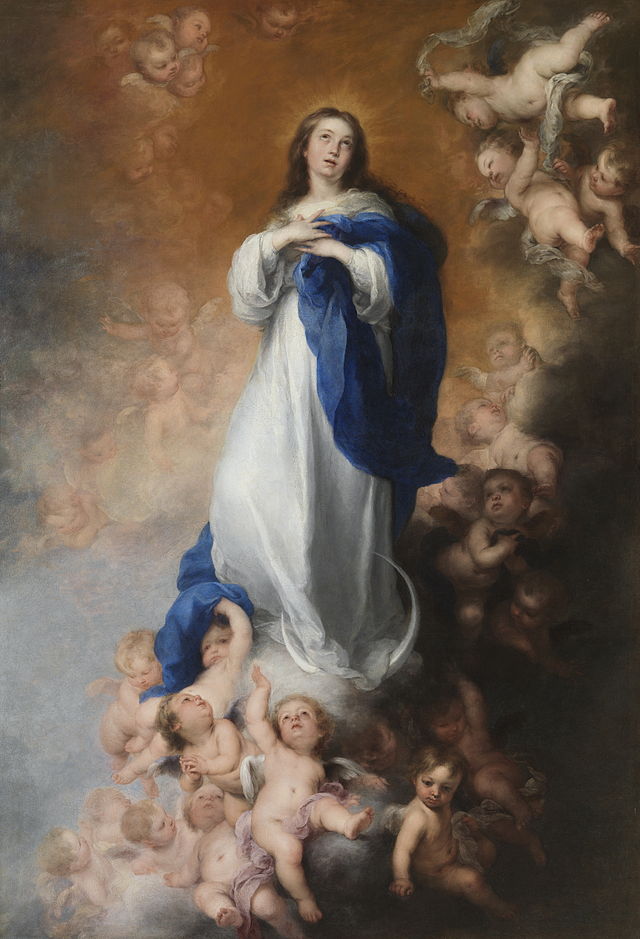
Some Biblical Roots of the Teaching on the Assumption of Mary

081413While the actual event of the Assumption of Mary in Heaven is not recorded in the Scriptures, nevertheless there is a biblical basis for the teaching that, considered as a whole, confirms Catholic teaching as both fitting and in keeping with biblical principles.  Let’s ponder this feast in three stages:

1. Explained – To be “assumed” means to be taken up by God bodily into heaven. As far back as the Church can remember we have celebrated the fact that Mary was taken up into heaven. We do not just acknowledge that her soul was taken to heaven, as is the case with all the rest of the faithful who are taken there (likely after purgation). Rather Mary was taken up, soul AND body into heaven after her sojourn on this earth was complete. There is no earthly tomb containing her body, neither are there relics of her body to be found among the Christian faithful. This is our ancient memory and what we celebrate today, Mary was taken up, body and soul into heaven.

2. Exemplified – The actual event of the Assumption is not described in Scripture. However, there are “assumptions” recorded in the Scriptures and the concept is thus biblical.

  1. It happened to Enoch in the Old Testament The Book of Genesis records: Enoch walked with God; then he was no more, because God took him away (Gen. 5:24). Hebrews 11: 5 elaborates: By faith Enoch was taken up so that he should not see death; and he was not found, because God had taken him. Now before he was taken he was attested as having pleased God.
  2. It also happened to Elijah as he walked with Elisha: And as they still went on and talked, behold, a chariot of fire and horses of fire separated the two of them. And Elijah went up by a whirlwind into heaven….And he was seen no more. (2 Kings 2:11 ).
  3. Some say Moses too was taken up since his grave is not known. As we read in yesterday’s first reading at Mass: He was buried in Moab, in the valley opposite Beth Peor, but to this day no one knows where his grave is (Dt. 34:6). The text of course does not say his body was taken up and if it was, it occurred after death and burial. Jude 1:9 hints at the fact when is says, But even the archangel Michael, when he was disputing with the devil about the body of Moses….. (Jude 1:9) Some further credibility is lent to the view of him being assumed by the fact that he appears alongside Elijah in the Transfiguration account. Some of the Church Fathers held this view and there is also a Jewish work from the 6th Century AD entitled The Assumption of Moses that represents the tradition of his assumption. But in the end the Assumption of Moses only a view held by some and it not officially held by the Church.
  4. And While it is true that the historical event of the assumption is not recorded in Scripture nor are there historical accounts of the event, there may be one other scriptural account that evidences Mary’s whereabouts, body and soul. The Church presents for our consideration in today’s second reading a passage from the Book of Revelation wherein John records his sighting of the Ark of God:

Then God’s temple in heaven was opened, and within his temple was seen the ark of his covenant. And there came flashes of lightning, rumblings, peals of thunder, an earthquake and a great hailstorm. A great and wondrous sign appeared in heaven: a woman clothed with the sun, with the moon under her feet and a crown of twelve stars on her head. She was pregnant and cried out in pain as she was about to give birth. Then another sign appeared in heaven: an enormous red dragon with seven heads and ten horns and seven crowns on his heads… The dragon stood in front of the woman who was about to give birth, so that he might devour her child the moment it was born. She gave birth to a son, a male child, who will rule all the nations with an iron scepter. (Rev 11:19 – 12:5)

The Woman is clearly Mary since the child is clearly Jesus (though she also likely allegorizes other realities such as Israel, and Mother Zion). And where is Mary seen? In heaven.

Now some may argue the text does not necessarily indicate her body is in heaven but may only be referring to her soul. However the physicality of the description of her is rather strong. Some also argue that Mary is linked to John’s sighting of the Ark of the Convent which is seen by John in Heaven. He mentions the Ark and goes on to describe the woman clothed with the sun (Mary) and there is a possibility that he is still describing the Ark he sees in Heaven. (I have written on this elsewhere. See here: Mary: The Ark of the New Covenant) If she is the Ark described that Ark is clearly described as being in heaven.

So, the Biblical record, while not recording the event of the Assumption, does set forth other assumptions and thus shows that assumption is a biblical concept. Further, Mary’s physical presence in heaven seems hinted at by John and some would argue that the passage actually attests to her physical presence there.

But remember, the Church does not rely solely on Scripture. In this case what we celebrate is most fundamentally taught to us by Sacred Tradition in that the memory of Mary’s assumption goes back as long as we can remember.

3. Extended – The Feast of the Assumption may be of theological interest to some and may provide for interesting biblical reflection but eventually the question is bound to come: “So What?” How does what happened to Mary have impact on my life and what does it mean for me? The answer to this question is bound up in nearly every Marian Doctrine. Simply put, what happened to Mary in an profound and preliminary way will also happen for us in the end. As Mary bore Christ into he world, we too bear him there in the Holy Communion we receive and in the witness of his indwelling presence in our life. As Mary is (and always was) sinless, so too will we one day be sinless (immaculate) with God in heaven. As Mary cared for Christ in his need, so do we care for him in the poor, the suffering, needy and afflicted. And as Mary was assumed, body and soul into heaven so too will we be there one day, body and soul.

For now our souls go to heaven once purified but our body lie in a tomb. But one day when the trumpet shall sound, on that “great gettin’ up morning” our bodies will rise and be joined to our soul:

For we will all be changed— in a flash, in the twinkling of an eye, at the last trumpet. For the trumpet will sound, the dead will be raised imperishable, and we will be changed. For the perishable must clothe itself with the imperishable, and the mortal with immortality. When the perishable has been clothed with the imperishable, and the mortal with immortality, then the saying that is written will come true: “Death has been swallowed up in victory.” “Where, O death, is your victory? Where, O death, is your sting?”…….Thanks be to God! He gives us the victory through our Lord Jesus Christ. (1 Cor 15:51-57)

So our bodies shall rise shall be assumed and joined to our soul.

Improved model! Now a older woman once said to me upon hearing that her body would rise: “Father if this old body has to rise, I’m hoping for an improved model!” Yes indeed! Me too! I want my hair back, my slender figure and knees that work! I want to upgrade from a general issue late model version, to a luxury model. And God will in fact do that. Scripture says:

  1. He will take these lowly bodies of ours and transform them to be like his own glorified body. (Phil 3:21)
  2. But someone may ask, “How are the dead raised? With what kind of body will they come?” How foolish! What you sow does not come to life unless it dies. When you sow, you do not plant the body that will be, but just a seed, perhaps of wheat or of something else. But God gives it a body as he has determined, and to each kind of seed he gives its own body…..So will it be with the resurrection of the dead. The body that is sown is perishable, it is raised imperishable; it is sown in dishonor, it is raised in glory; it is sown in weakness, it is raised in power; …..And just as we have borne the likeness of the earthly man, so shall we bear the likeness of the man from heaven. (1 Cor 15:35-49)
  3. Yes we shall also be taken up, assumed, and then shall be fulfilled for us the saying of Job: I know that my Redeemer lives, and that in the end he will stand upon the earth. And after my skin has been destroyed, yet in my flesh I will see God; I myself will see him with my own eyes—I, and not another ‘s (Job 19:25-27).

The assumption of our bodies, prefigured by Christ in his own power and also in Mary by the gift of God, will one day be our gift too. For now, it waits till that “great gettin’ up morning.” Until that day, and on that day, fare you well, fare you well!

This song is an African American Spiritual and speaks of that Great Gettin’ up morning when our bodies will rise. And if we have been faithful they will rise to glory!

I’m gonna tell you about the coming of the judgement (Fare you well) There’s a better day a coming….In that great gettin’ up morning fare you well! Oh preacher fold your Bible, For the last soul’s converted….Blow your trumpet Gabriel…..Lord, how loud shall I blow it? Blow it right calm and easy Do not alarm all my people….Tell them to come to the judgement…….In that great gettin’ up morning fare you well. Do you see them coffins bursting? Do you see them folks is rising? Do you see the world on fire? Do you see the stars a falling? Do you see that smoke and lightning? Do you hear the rumbling thunder? Oh Fare you well poor sinner. In that great gettin’ up morning fare you well.

One of the Strangest Kings You’ve Ever Met. A Meditation on the Feast of Christ the King

The reading today on this Feast of Christ the King evokes three images of Christ as King. All of them are to some extent paradoxical for they emphasize things about a King we don’t usually think of in relation to a king. They also tell us that we have already met King Jesus, even if we didn’t know it. Lets look at these three images of our Lord Jesus Christ, King of all Creation.

I. Caring King – The first reading from Ezekiel 34 speak of the Lord in terms of a Shepherd who cares for his flock. Some of the lines that summarize his care are: I myself will look after and tend my sheep…I will rescue them from every place where they were scattered when it was cloudy and dark…I myself will give them rest…The lost I will seek out….The strayed I will bring back…. The injured I will bind up. The sick I will heal…..

It is not usual for us in the modern world to think of Kings and heads of state in such a caring role. Most world leaders today are wholly inaccessible to us, behind many layers of security and staff. Even many bishops of larger dioceses are hard to personally reach.

But Jesus is a King who is more present to us than we are to ourselves. An old revival hymn says, Jesus is on the Main Line….call him up and tell him what you want. Another song says, God is just one prayer away.

It was more common and less paradoxical in the ancient world to speak of a caring king. Most Kings had more immediate contact with their subjects. Many kings had certain days when their subject could line up to talk to them. It is said that St. Athanasius one day ran up to the emperor on his horse, grabbed the reigns and proceeded to debate a theological point with him. Even until recently U.S. Presidents had office hours. It is said that on Tuesdays Abraham Lincoln received visitors from among the citizenry who sought to speak to them of their concerns, they would line up at the door without formal appointments and he’d listen to them one by one. As our culture has become more violent and public figures more widely recognized and vulnerable, they now live in sealed, bullet-proof and virtually sound proofed worlds, hearing little from ordinary people and mainly from their staff.

So the idea of a King who personally cares for his people is paradoxical to us. But Jesus does.

I want to testify that I do indeed have a caring King, Jesus. He’s been good to me. He has led me, rescued me, purified me, fed me, instructed me, graced me and died for me.

And I want to testify that he was being good to me even when I didn’t think he was being good to me. Scripture says, All things work together for good to them who love and trust the Lord (Rom 8:28 ). Notice, not just the good things work for my good, but even the bad things. God sometimes permits some “stuff” to happen because it will bless us in the end. If you’re suffering, don’t give up on God. Some of his gifts come in strange packages. St Paul says, For this affliction is producing for us a weight of glory beyond compare (2 Cor 4:17).

And, did you notice the last line in the passage from Ezekiel: But the sleek and the strong I will destroy shepherding them rightly? Yes, even at those times when I needed to be humbled (my pride destroyed) the Lord was shepherding me rightly. There was a time in my life when I was more sleek and strong. And the Lord let me experience some humiliation, destroying me as it were, and giving me humility. I even see this humiliation physically, for I was once sleek, and now I am fat. And it is humbling to be fat, especially when people scold me. They think it is easy to lose weight. But God will humble them too, perhaps in other ways. God hates pride, he just can’t stand it. This is because he knows how deadly it is to us.

Yes God is a caring King. Some of his ways are paradoxical. But he never ceases to care for us. I’m a witness. He’s been good to me, even when I didn’t think he was being good, he was being good.

II. Conquering King – The second reading speaks of the victory of Jesus over all things saying he has: been raised from the dead, the first fruits of those who have fallen asleep. That he has reversed what Adam did. That he is the first fruits, then each one in proper order will also rise. It says he will hand the kingdom over to God his Father when he has destroyed every sovereignty and every authority and power and that he must reign until he has put all his enemies under his feet, the last enemy to be destroyed being death.

Here too there is great paradox. For as Hebrews says, In putting everything under him, God left nothing that is not subject to him. Yet at present we do not see everything subject to him. But we see Jesus, who was made a little lower than the angels, now crowned with glory and honor because he suffered death, (Heb 2:8-10).

So, while it is true, at times it seems that evil triumphs, God is working and, one by one, putting all his enemies under his feet. One day, even death itself will be destroyed. The paradox of the cross shouts to us that God conquers not by brutality and cruel strength, but by love, and things the world dismisses as weak, such as forgiveness and mercy.

Here too I want to say, God is a conquering King in my life. He has destroyed the power of many sins and diminished others, on their way to destruction. I have seen sins put down and under his feet, as he cleanses the temple of my soul. He has conquered so much of my pride. I am seeing lust, greed, anger, sloth, envy and fear on the ropes. One by one, he is diminishing their power and replacing them with grater love, compassion, kindness, purity, love for the truth, prayerfulness courage, trust and eagerness to do good and win souls.

Thank you Lord for being a conquering King in my life.

And this conquering King, unlike worldly Kings does not ultimately force us to be his subjects and live in his kingdom. Earthly Kings conquer localities and force peoples under his rule by might. But Jesus is a King who respects our freedom to decide to have him as our king, and to accept his kingdom virtues, or not. Hence Hell is not so much a place of punishment as it is a place to which those who refuse, who say no to Christ and his kingdom, depart. This King, though he is all powerful does not force his kingship and laws. He offers them to all and we must decide.

III. Coming King – The Gospel teaches us that Christ will come again to judge the living and the dead. And in this coming we will discover that we have known him all along, but in a paradoxical way. As Christ comes and takes his seat and all are summoned to him, we are going to have a strange sense we’ve met him before. And he will confirm that.

For indeed we have met His Majesty and he is the strangest king of all. He is a King who is hungry, thirsty, sick, lonely, a foreigner, in prison and a stranger. And the list he gives should not be seen as exhaustive, for he is in the needy, whether rich or poor. He is in the discouraged family member who just lost a job, or a loved one; he is in our children who need to be taught and encouraged; he is the co-worker who just lost his wife, or the customer who just got a diagnosis of cancer. He is in the lost youth or family member who needs instruction and to be drawn back to the sacraments. He’s even in you, in your struggles and needs.

Yes, we have met this King every day. And he is not just saying these people have some moral union with him, he is saying, mystically, he IS them. And when we have cared for them we were not simply doing something ethical, we were serving and caring for Him: You did it for me.

What a strange King! We think of Kings in palaces, far removed from trouble. But this King is naked, poor, hungry and thirsty. We walk past him every day.

And to those who have cared for him in his poor, he says, “I will never forget what you have done.” The poor may not be able to repay us, But King Jesus will repay us a million-fold. And on the day of our judgment we will look at Jesus and say, I know you! I recognize you! And he will say, I know you too….come inherit the kingdom prepared for yo form the foundation of the world.

Yes, Jesus our King, the strangest King you ever meet: a caring and close King, a conquering King who never forces, a King who who is hungry and thirsty; a King who reigns from the cross; A King who dies so we don’t have to; a King who washes our feet and comes to serve, not be served. A King alright, one who rules with love, not by force. The Strangest king you’ve ever met, and you meet him every day: in the Eucharist, in the poor, in his Word, in your heart, in the events of your day, in your very self.

We Choose the Fear of the Lord – A Meditation on the Gospel for the 33rd Sunday of the Year

The Scriptures of the last weeks have been a rich sampling of the Wisdom Tradition in the Bible. In this tradition is distinguished among other things, the wise from the foolish. The wise are those have set their hearts on God and the lasting things of eternity. They prepare for what is certain (death and judgement) and have their treasure with God and in heaven, God is the joy of their heart. The foolish set their hearts on the passing and uncertain things of this world. They focus on, prefer and find their joy in things that are uncertain and passing, like wealth, good looks, and popularity. And they neglect death and judgment or the things of God.

In today’s reading we are focused on another wisdom concept: the Fear of the Lord. In the First reading we hear, Charm is deceitful, beauty is fleeting, but the woman who fears the Lord is to be praised.(Prov 23) The Psalm says, Blessed are you who fear the Lord (Psalm 128:1)

Now this phrase “the fear of the Lord” needs to be rescued from common misunderstandings. To fear the Lord does not mean to cringe with servile fear, with the fear of being crushed or destroyed. Such a fear as this is not what the beatitude is getting at. Rather to fear the the Lord is to hold him in awe, to reverence him with a deep and abiding love and appreciation as the source of all that I am and all that I have. It is a “fear” a reverence and awe rooted in love and appreciation. Since I love God and He is Abba to me, I fear offending him by sin, or severing my relationship to him by refusing his grace. Out of love, reverence and a sense of awe, I fear giving any offense to Him who is Holy, God, and deserving of all my love.

The Gospel today develops a kind of portrait of the Holy Fear of the Lord which is taught, and of the resentful servile fear which is not taught. Let’s look at it with this perspective in mind and discover the differences of each kind of fear.

A man going on a journey called in his servants and entrusted his possessions to them. To one he gave five talents; to another, two; to a third, one– to each according to his ability.  Then he went away. Immediately the one who received five talents went and traded with them, and made another five. Likewise, the one who received two made another two.  But the man who received one went off and dug a hole in the ground and buried his master’s money.

Three men are given resources to use. Two succeed, one fails. Why the difference?  Ultimately it is the difference between holy fear, love and confidence on the one hand, and unholy fear and resentment on the other.

Consider the plan of the first two men who succeed.

  1. Receive Riches – One gets 5 Talents, the other 2 Talents, each according to his ability. While the “inequity” may offend modern notions, we can simply note the commentary in the scripture itself. Each had different abilities. And while some in our modern world may sniff at the the different amounts, it is rather to be doubted that any of these “enlightened” people, if they ran a business, would not give more resources to an industrious employee over an average employee. The fact is, God blesses some more abundantly than others due to their good use of gifts. As the Lord teaches  later and gives a fundamental rule: We must prove faithful in a few things to be ruler over many (Matt 25:23).
  2. Risk Reinvestment -Something in these two men makes them free to risk reinvesting the money. It is likely their relationship with the Master. Implicitly they see him as a reasonable man, someone who would applaud their industriousness. Though there is a risk in reinvesting the money, they would seem to see the Master as reasonable and patient enough that even if there are losses, they will not be destroyed or dealt with unmercifully. Thus they seem to experience the freedom and courage to step out and make use of the Talents entrusted to them.  Notice the text says they “immediately” went out and traded. Thus they are eager to work for their master and take the risks on his behalf in order to please him.
  3. Render a Report – Upon the Master’s return they are called to render an an account. The text depict a kind of joy on their part as they report: He said, ‘Master, you gave me five (two) talents.  See, I have made five (two) more.’ There is sensible a kind of enthusiasm for the opportunity and a joy for the harvest.
  4. Rise in the Ranks. And note that their presumptions of the master as a fair and reasonable man are affirmed in his response. Well done, my good and faithful servant.  Since you were faithful in small matters, I will give you great responsibilities.  Come, share your master’s joy. Hence we see that the Master is joyful and wants to share his joy with the servants. Further, he is willing to give them greater access to share in his blessings and joy based on their openness to trust him and prove trustworthy themselves.

Thus at some level the two successful servants see the owner of the riches as a man they can deal with. They have a healthy respect for him but not an unhealthy fear. The receive the funds gladly, and with that with gratitude go to work, motivated and enthusiastic. Together they say, “We choose the Fear of the Lord!”

Allow them to be portrait of Holy Fear of The Lord. With this sort of Holy Fear we love God, and are enthusiastic to work for him, realizing that he shares his blessings and is both reasonable and generous. Confident of His mercy, (though not presumptive of it) we go to work in his vineyard. It is true there are risks and temptation in the vineyard. But if we fail or fall, we do not make light of our sin, we repent of it and are confident of God’s mercy. Holy Fear of the Lord does not box us in or paralyze us. It does remind of our boundaries and keep us away from truly dangerous things that erode our talents. But, because we love God, respecting his boundaries is a joyful thing for us and protects us from “unsafe investments.”  But within the designated boundaries there is both room to maneuver and safety from the thickets of sin. The Fear of the Lord is joyful and encouraging, not something to cause a cringing or hiding from God. Choose the Fear of the Lord

But the man who fails follows a different plan, a plan by which he is

  1. Fruitless – for he buries the treasure
  2. Furious – for he says, I knew you were a demanding person, harvesting where you did not plant and gathering where you did not scatter, so out of fear I went off and buried your talent in the ground he considers the owner a hard man. He also sees him as unjust by having others do his planting etc. He sees his work as slavery, unlike the other men who see it as an opportunity.  Notice too this subtlety. He the talent as “your talent” whereas the other men say, “You gave me five (two) talents.” These men see themselves as stewards whereas the third man sees himself as a slave.
  3. Fearful – For he says he buried it out of fear. In this case we see a cringing and servile fear, as distinct from the Holy Fear of the Lord, counseled by Scripture. Note too that it is his image of the Master that drives his fear.
  4. Forfeits – It is clear he wants nothing to do with the Master. The owner therefore says, in effect, Fine, if you don’t want to deal with me you don’t have to. I will take your talent and given it to the one with 10. And as for you, if you do not wish to be in my presence or deal with me, then consider yourself dismissed.

So we see how the failed servant gives way to anger, resentment and indulges his unholy fears that the owner is out to get him and the deck is stacked against him. He is not grateful for the opportunity afforded him by the owner. But notice these are thoughts he has that generate his feelings and actions. But are his thoughts true and unassailable? It is clear that the other two men do not see the Master in this way. And we see, by their example that the thoughts of the failed servant are not true, and that the Master is decent, just and joyful. The failed servant should believe everything he thinks, but should test it against reality.

It is a true and sad fact that many consider God in this way. They consider God trouble-maker and do not trust him. They are resentful of God and religion in general, due to what they perceive as rules and requirements, judgements and restrictions.

An old Irish saw says, In the beginning was the Word and the Word was “No!” Do you think of  God this way? Many do, and on account of their thoughts a thousand negative feelings are generated. But the challenge for them must be the same as for the failed servant: Are your thoughts and ideas about God true? Why do you insist on thinking of God this way? Is there no other way to see and understand God?

For many believers know and experience God’s love for them. Many of us have learned to trust him and rejoice in his gifts. And as for rules and restrictions, these are accepted in the love with which they were given. Within the protective walls that Holy Fear of the Lord accepts there is great freedom and joy. God’s laws are not prison walls, they are defending walls. We choose the Fear of the Lord, a fear rooted in love and trust.

The third man failed because he believed everything he thought and did not check out the reality of the Master as He really was. Many today also give way to negative thoughts about God and never stop to consider that not everything they think is true.

The common stereotype of faith today is that religion is an unhappy life, stifling one’s humanity and freedom, binding people with moral rules and dogmas that restrict human fulfillment.

But just because people think this, doesn’t mean it is true. And to such as these the challenge must go forth: “Don’t believe everything you think. Test the reality, talk to believers and open your heart to the possibility that God and religious faith are none of the things you think.

A challenge for us who believe is: what if a person of this sort came to you? Would they find in you someone who is joyful, fulfilled and being transformed? Would their stereotypical thoughts not stand up against the stereotype as they observed you? Or would you tend more to confirm the stereotype, exhibiting a cringing fear and a grouchy, joyless, faith? What would they see? Would they see a man or a woman who is “sharing their master’s joy” and choosing the Fear of the Lord? For the fact is, there are some grouchy Christians, some sour-faced saints, bored believers and dour disciples, the frozen chosen; those who seem never to have heard the Lord say, “Come, share your Master’s joy.” They do not choose the Fear of the Lord, but seem rather to endure Faith as something to do or else.

Make sure it isn’t you, for Christians are the “scriptures” people most often read.

To fear the Lord is to hold him awe, rejoicing in his power and wisdom, accepting his authority as saving and helpful. And thus we yield an abundant harvest with his gifts. But resentment, anger, and a servile, cringing fear only make us averse to being in God’s presence. In the end, God will respect our aversion and not force us to remain, we can consider ourselves dismissed, if that be the case.

What will it be for you and me? Pray it will be: We Choose the Fear of the Lord

I will write more tomorrow on the Fear of the Lord.

Oh Sinner, why don’t you answer. Somebody’s knocking at your door! A Meditation on the Gospel for the 32nd Week of the Year

The Gospel today presents a number of Practical Principles of Preparation. As always the Lord has a way of teaching us such practical things in a very memorable way. Most of us remember well the parable of the Wise and Foolish Virgins. Now it pertains to us to look with some care of some the principles it teaches us. Lets look at four of them. In the end we will find that the Lord turns the tables on us.

I. Procure your Provisions – The text says, The kingdom of heaven will be like ten virgins who took their lamps and went out to meet the bridegroom. Five of them were foolish and five were wise. The foolish ones, when taking their lamps, brought no oil with them, but the wise brought flasks of oil with their lamps.

In looking at this text we see that humanity is divided between the wise the foolish. We generally live in times that like to de-emphasize distinctions. It is a true fact that at times we have emphasized things that did not matter, or were unfair to focus on. But there are distinctions that DO matter and this is one of them. To be wise is to be richly rooted in God and in what God offers: His love, his wisdom, his grace and mercy, his truth, His vision and priorities, His very life.

To lack these things is not merely a matter of unfortunate poverty or bad luck, for these things are offered richly and freely by God and are widely known and available to all.

Thus to lack these things renders one a fool. Many proceed through this life and consider themselves very smart. And they may be smart in science, or finances, or business, or sports. But being smart is not the same as being wise. One can be very smart, and still be a fool. One can climb the ladder of success. But if it is leaning up against the wrong wall, they climb only to ruin. The wise, whether smart or simple, know God and are recipients of his gifts. The foolish deny him or his gifts, whether explicitly through conscious resistance, or implicitly through lukewarmness and lip service.

In the this parable, the wise virgins bring extra oil. They have procured their provsions.

But what is this oil? The Fathers of the Church had many answers. Some said it was love, others wisdom, or holy deeds. But we need not limit it to any one thing. The oil is the the love of God, the Wisdom of God. It is God Himself. It is all God’s treasures of Scripture, the Sacraments, prayer, the Church, the liturgy; it is joy, mercy, forgiveness, peace and the gift of holiness. The wise virgins have stocked up on God’s abundant and free gifts. They have richly availed themselves of God’s goodness a plentiful graces.

The foolish virgins are not wholly lacking in God’s gifts, for no human being made in the likeness of God is. But they have not sought to endow themselves sufficiently to see the night of this life through. They are careless and lazy. Perhaps carrying extra oil is too much trouble, just as going to Mass, praying, or reading Scripture is too much trouble for “the foolish” today.

What of you? Are you wise or foolish? Put another way, are you procuring your provisions? Are you availing yourself of the oil of God’s good gifts? Or, do you have other “more important” things to attend to?

The First Principle of Proper Preparation is: Procure your Provisions.

II. Personally Prepare – The text says, The foolish ones said to the wise, ‘Give us some of your oil, for our lamps are going out.’ But the wise ones replied, ‘No, for there may not be enough for us and you. Go instead to the merchants and buy some for yourselves.

At first glance the answer of the wise virgins surprises us. Shouldn’t they share? Isn’t this what we would expect Jesus to say?

But, the fact is, there are some things you can’t loan and there are some things you can’t borrow. You can’t borrow someone else’s relationship with God, you can’t borrow holiness, or mercy, or love, or wisdom. You can’t borrow someone else’s prayer life. You just have to have your own.

As a priest I get lots of requests, sometimes for money, perhaps to use the Church for a funeral etc. I often inquire, “Was the deceased a member here?” So often the answer is, “Well no, but his Grandmother was.” Or “His second cousin used to go here.” Now as for me, I’ll celebrate the funeral, no matter, but the frankly the answer is “No, he did not go here” and the fact that his Grandmother did or his second cousin has nothing to do with it. None of that will profit him before God and none of that adds even a drop of oil to his lamp. You can’t borrow you grandmother’s holiness. You have to have your own.

Hence we must personally prepare to meet God. We must come to know him and love him. We must personally be open to receiving the gifts he offers, be it prayer, scripture, the liturgy, sacraments, the moral life, a new mind and heart, and so forth.

What about us? Do we have our own oil, or are we just talking about what a great person granny was? An old gospel hymn says, Yes I know Jesus for myself. Do we? Another old Gospel hymn says, My mother taught me how to pray. So if I die and my soul be lost, it’s nobody’s fault but mine.

The Second Principle of of Proper Preparation is to Personally Prepare.

III. Persevere in Preparations – The Text says, At midnight, there was a cry, Behold the bridegroom! Come out to meet him!…and those who were ready went into the wedding feast with him. Then the door was locked.

Here too is an important reminder we must persevere in our walk to the end. The groom did not come till midnight and the foolish ones, though they had procured oil early on, could not hold out to the end.

I cannot tell you, how often people tell me, a priest,  things like, “I used to be an altar boy…..I used to go to “your” Church…..I went to St Cyprian’s School….I’m old St Cyprian’s….our family goes all the way back….My Grandfather helped build the place!” Of course I am supposed to be impressed. But instead I ask, “And where are you today?” Usually they aren’t anywhere, and so I say something like,  “You’re telling me you used to have your lamp trimmed and burning, but it sounds like you ran out of oil. Watch out, the Day is drawing nigh!”

But of course the point here is that only those who were ready with their lamps trimmed and burning WHEN THE GROOM ARRIVED, entered the wedding with him. Then the door was barred.  We must be faithful unto the end. Jesus says, He who perseveres to the end will be saved (Matt 24:13). Scripture also says, Call no man blessed till he die. For it is by his end that a man is known. (Sirach 11:28)

Persevere. I may be wonder that you read the whole Bible when you where in High School. But where are you today. And where will you be at midnight?

The Third Principle of Proper Preparation is to Persevere in Preparations.

IV. Procrastination is Perilous – The text says, While [the five foolish virgins] went off to buy [the oil], the bridegroom came…those who were ready went into the wedding feast with him. Then the door was locked. Afterwards the other virgins came and said, ‘Lord, Lord, open the door for us!’ But he said in reply, ‘Amen, I say to you, I do not know you.’ Therefore, stay awake, for you know neither the day nor the hour.

In the end, our Wisdom goes with us or our foolishness catches us. The foolish virgins scrambled at the end to get what they needed. But it was too late. The door was barred.

One physical explanation for this detail may be found in the fact that houses of the ancient world were often rather small, but backed out onto a closed courtyard. Hence, when all the guests had arrived, the doors of these small houses were close and the furniture moved up against the walls and the door to make room as the celebration began. To move everything to open the door was problematic, and it was rude to ask for this.

It was just too late for them. Procrastination is perilous.

And two things beckon for our special attention.

First there are the words of the Lord, “I do not know you.” The Greek word here is οἶδα (oida) which bespeaks a kind of intellectual knowing. And so it may surprise us to hear the omniscient Lord say he does not know someone. Perhaps here we can understand the word as meaning he does not “recognize” them as one of the guests. They are not of the wedding party, not on the guest list. Or, to use another metaphor, they are not among the sheep of his flock. Later, in this same chapter of  Matthew, Jesus will speak of dividing sheep from goats. Hence there is a judgment issued here: I do not recognize you as one of my flock, the door cannot be opened, it is too late.

But how did it get to be so late and what does it mean that the door is barred?

This leads us to the second point that demands our attention. It is said that the foolish virgins are knocking on the door, or at least calling out, asking entrance.

But this precisely backward. It is not we who knock, but the Lord who knocks. It is he who bids us open, and we who must answer. Jesus says, Here I am! I stand at the door and knock. If anyone hears my voice and opens the door, I will come in and eat with him, and he with me (Rev 3:20). It is the Lord who calls, It was I who chose you, he says (Jn 15:16).

Hence the way to heaven is not through some door “up there,” it is through the door down here, that we must open, the door of our heart. And the Lord is knocking now. Procrastination is peril, it is foolishness. It is now, and every day, that we must answer the knock. The choice is ours. Yes, the door to heaven is opened from the inside of our hearts. It is we who ultimately determine our destiny. The Lord merely ratifies it at the judgment.

The Lord wants to know us, want to recognize us as his own, that much is clear. That is why he knocks, and knocks. Will you answer?

Be careful, the fourth principle of proper preparation to realize that procrastination is perilous. There comes a day when the door is forever closed. But the door is your heart. Answer! Open!

This song says, Somebody’s knocking at your door. Oh Sinner, why don’t you answer? Somebody’s Knocking at Your Door.

And to the Author, All in Authority Must Answer – A Meditation on the Gospel of the 31st Sunday of the Year

The Gospel today is familiar to many Catholics from a negative point of view, in that many a Protestant has summoned the verse: Call no one on earth your father, to assail the Catholic practice of calling priests, “Father.” Never mind that the text also says to call no one on earth teacher. Never mind either that the New Testament contains almost 200 uses of the word “father” to refer to earthly male people. Apparently Matthew, Mark, Luke and John along with Paul and Peter and Stephen, never got the memo banishing all use of the word in reference to “anyone on earth.” (We will see some of these quotes later). Never mind all that.

Alas, to turn this into a gospel about terminology, is to miss its main point, which is to teach us about authority. And the teaching is both beautiful and essential, especially in modern times when the notion of authority is so misunderstood and frequently maligned.

Before looking at Jesus’ teaching on authority it is good to be clear one point: While it is true you and I are under authority, we also have authority. Whether it is as a parent, at work, as a community leader, Church leader, or just because you’re older; you have authority.

Because we live in a culture that largely despises authority, we tend to think it is always the “other guy” who has authority and needs to be “put in his place.” Maybe it’s that jerk in the corner office, or those nasty politicians, or the boorish and backward pastor. But, look in the mirror, this gospel isn’t just for “them,” it’s for you. So, as we explore this teaching on authority,  remember it applies to you and me just as much as “them.”

Let’s look at the teaching in four stages.

I. The Tenure of Lawful Authority.  Jesus says, The scribes and Pharisees have taken their seat on the chair of Moses. Therefore do and observe all things whatsoever they tell you but do not follow their example. Jesus teaches the disciples that, for now, they are to remain under the lawful authority of the Scribes and Pharisees. In the future, Jesus will fully send forth his Church and establish the authority of the Apostles themselves. But for now, they are to follow lawful authority, just as Jesus will expect the Church to be under the lawful authority of the Apostles and their successors in the future.

Christians are not encouraged anywhere in scripture to withstand, ridicule, resist or overthrow lawful authority. The human tendency, especially evident in modern times, to be insubordinate and disrespectful of lawful authority is neither encouraged nor supported in the Biblical teaching. Consider some of the following examples:

  1. Rom 13:1 Let every person be subject to the governing authorities. For there is no authority except from God, and those that exist have been instituted by God. Therefore he who resists the authorities resists what God has appointed, and those who resist will incur judgment.
  2. 1 Peter 2:13 Submit yourselves for the Lord’s sake to every authority instituted among men.
  3. Titus 3:1 Remind the people to be subject to rulers and authorities, to be obedient, to be ready to do whatever is good
  4. 1. Tim 2:1 I urge, then, first of all, that requests, prayers, intercession and thanksgiving be made for everyone– for kings and all those in authority, that we may live peaceful and quiet lives in all godliness and holiness. This is good, and pleases God our Savior, who wants all men to be saved and to come to a knowledge of the truth.
  5. 1 Peter 2:17 Honor all men. Love the brotherhood. Fear God. Honor the king.
  6. Matt 22:21 Give to Caesar what is Caesar’s, and to God what is God’s.

Hence, the Lord Jesus, indeed, Scripture in general, upholds the proper need and place for authority. Modern tendencies to celebrate rebellion and disrespect toward authority are not countenanced by Scripture, no matter how popular and pleasing such negative attitudes may seem.

And these tendencies are exhibited at every level in our western culture. Children are bold and disobedient toward parents, younger people toward elders, subordinates in the workplace toward supervisors, citizens toward elected officials, Catholics toward the hierarchy, and so forth.

One may argue, “Well, the one in charge is a pain, or a bad leader.” Perhaps, but consider what Biblical times featured: from the Scribes and Pharisees, all the way up to Herod and the likes of Nero. Yet still this teaching went forth.  Others may rush to assert, “Authorities need to be corrected.” Yes, at times they do, and a Christian should use means that are both respectful and non-violent.

Vigorous political discourse is surely a feature and a genius of our modern democratic republic. However, too much of the discourse strays into the hateful, and the hyperbolic, toward personal attack and ridicule. Such extremes are unfit discourse for a Christian, who is called to speak the truth with both clarity and charity.

So in setting forth a teaching on authority, the Lord Jesus first establishes that there IS authority and that, other things being equal, lawful authority is to be respected and obeyed. And though, as the Lord clearly indicates, there are times when the example of those in authority should not be imitated (more on that in a minute), their lawful and moral directives are to followed.

Thus, in cases where you are under authority, pray, strive to cooperate, and correct where necessary with reverence. And in cases wherein you have authority, do not be ashamed that you DO have it. Use it well, for the common good, and to provide necessary direction and unity for those under your authority. Remember too, as we shall see, if you have authority, it is to serve.

II. The Tyranny of Arrogant Authority. Jesus does acknowledge the burdensome and insensitive qualities of the leadership of that time. He says, Do not follow their example. For they preach but do not practice. They tie up heavy burdens, hard to carry and lay them on people’s shoulders. But they will not lift a finger to move them.

Here is a sober assessment by Jesus of the problems of leadership in his day. They will have to answer to God for their tenure. And Jesus holds them up as a kind of warning to the future leaders of his Church, who will also have to render an account for their leadership one day. “Do not follow their example,” Jesus warns.

As we shall see, true authority exists to serve, not to crush or merely exhibit its power. It exists to unite people around a common purpose and direct people and resources to a good and focused end. It exists to help others to accomplish their tasks in a unified and directed way. Hence we may ask the following questions of authority:

1. Does it make wings to lift a person up, or is it a deadweight to drag a person down?
2. Does help a person or haunt him?
3. Does it carry him does he have to carry it?
4. Does it bring joy to life or depression
5. Does it unite people around common goals or merely unite them in unproductive anger against authority?

How would those under your authority answer these questions?

III. The Trappings of Self-Centered Authority. Jesus sets forth how the Scribes and Pharisees loved titles, honors, and ostentation: All their works are performed to be seen. They widen their phylacteries and lengthen their tassels. They love places of honor at banquets, seats of honor in the synagogues, greetings in the marketplaces and the salutation, “Rabbi”

And so the Lord distinguishes the following problems:

  1. Their Actions are Acted – Jesus often called them hypocrites, not as derogatory, but as a descriptive. For the word hypocrite, in Greek, means “actor.” Now an actor performs and plays his role only when there is an audience. He does so for money and applause. But when the crowd is gone he does not pay his role.  There would be no point in that, since neither money or applause will result. The point here, in terms of authority, is that some in authority have forgotten the reason they have authority, or the goal to which it is directed. They care only about the praise that may increase their authority or build their ego.
  2. They Parade their Piety – The point here about authority is that the one in authority wants to be noticed as having authority. Rather than pointing to the end to which his authority is directed (in this case, God), some in authority see the acknowledgement of their authority as the proper end and desired goal.
  3. They Hunger for Honor – They seek the front seats, and to be seen as having authority. They take the honor due those in authority personally, as directed to them, rather than to the office they hold.
  4. They Take after Titles – But a title is only good if the one bearing it does not disgrace it. Having a title is not so much an honor as a responsibility.

So, in the end the poor example comes down to the fact that those in authority in Jesus’ time, mistook the “trappings” for personal ends and glory, rather than for the ends to which they were intended: the glory of God, the serving of his people and the common good and unity of all.

But leadership is not about trappings, it is about service and the glory of God.

IV. The Truth of Christian Authority. The text says,  Do not be called teacher (Rabbi) You have but one teacher. Do not be called Father, you have but one Father in heaven..Do not be called master, have but one master the Christ. The greatest among you must be your servant. Whoever exalts himself will be humbled. Who ever humbles himself will be exalted.

Jesus emphasizes Three fundamental things here, and I would a fourth.

1. All authority is under the headship of God – In critiquing the use of terms like “teacher,” “master” and “Rabbi,” Jesus is insisting that all teachers and “experts” must first be under the teaching and authority of God. All their teaching and “mastery” of any subject must be in conformity to, and submitted to the revealed truth of God. For someone to be worthy of the title “teacher,” “Rabbi,” or “Master” means that they are first submitted to what God teaches and reveals.

2. All Fatherhood, all headship, is submitted to the Father and Lord of us all and reflects His Fatherhood. No one deserves the title “father” who does not first have God for his Father. In this sense, Jesus is not so much banning a word, as insisting on a conformity to the one and perfect Father of us all. In this sense, St Paul can say, You do not have many fathers, For I became your father in Christ Jesus our Lord (1 Cor 4:15). And again, For you know how, like a father with his children, we exhorted you and charged each of you lead a life worthy of God (1 Thess 2:10).  St Paul takes up this title “Father” with them, only in relation to how he guides them to what the Heavenly and true Father would want.

3. Authority exists for service – Jesus says of those in authority: The greatest among you must be your servant. In other words those who have authority have to serve those under them, not to “lord it over.” Jesus says elsewhere:

You know that those who are regarded as rulers of the Gentiles lord it over them, and their high officials exercise authority over them. Not so with you. Instead, whoever wants to become great among you must be your servant, and whoever wants to be first must be slave of all. For even the Son of Man did not come to be served, but to serve, and to give his life as a ransom for many. (Mk 10:42ff)

Hence, those who have authority, have it not for their glory, but as a sign of their servitude. The priest who has authority, has it to serve his people in teaching, sanctifying and governing (uniting). The Parent has authority to serve their children, raising them to become the man or woman God intends them to be. The police officer has authority to protect and give order to the people. The teacher has authority in order that she may teach. And so forth. Authority is not for its own sake, it is for the sake of others.

4. Authority is exercised among equals – In the world, authority is equated to power, and is often ascribed to those who gain it because they are smarter, richer, more connected, and so forth. In a way, there is an assumption that “I have authority because I am, some how, better than you.” But among Christians authority is always exercised among equals. For the greatest title one can have is “Child of God.” Adding titles like CEO, President, Grand Knight, Monsignor, Excellency, and so forth, are but mere footnotes. The Pope has authority in the Church, but he is no more baptized than you or I. Please understand, he DOES have authority, and we have an obligation to submit to it. But his greatest title is not “Pope,” or “Supreme Pontiff.” His greatest title is “Child of God.” Authority does not make me greater than you, it makes me your servant. But before God we are all equally his children. This final point is my own addition and I fully open it for critique.

So there it is, a Gospel not about terminology (as in “Father”), but about authority and how to understand it and live it as a Christian. Remember it is not just about “that jerk in the corner office.” It is about you, since you too, have authority. One day we will answer to God about how we have used our authority, whether to build or destroy, enable or disable, inspire or unnecessarily infuriate. We will also render an account for how we have acted toward those in authority. And, no matter the laughter and praise this world gives to disrespect and disobedience, God is neither impressed or pleased. Authority, how we use it, and respect it, is critical to God.

Note the word “Author” in authority. For no authority exists unless it is granted from God (cf Jn 19:11).  And to the Author, all in authority must one day answer.

Here’s one of my favorite hymns: Crown Him with Many Crowns. It is here sung on the 50th Anniversary of the Coronation of Queen Elizabeth of England. It is fitting to see those in authority, even if (these days) more ceremonially so, to be seen praising to true King from who all kings, queens and leaders take their authority.

Of this King, Jesus, we can say he is the only King who died for us. And so the second verse of the hymn says, Crown him the Lord of Love, Behold his hands and side. Rich wounds yet visible above, in beauty glorified. No angel in the height, can truly bear that sight, so downward bend his wondering eye, at mysteries so bright.

Indeed, For the Son of man did not some to be served, but to serve, and give his life as ransom for many (Mk 10:45)

Reciting the Law, Standing on One Foot – A Meditation on the Gospel for the 30th Sunday of the Year

There was an expression common among the Rabbis of Jesus’ time, and perhaps even now, wherein one Rabbi would ask another a question, but request the answer be given, “Standing on one foot.” Which is a Jewish way of saying, “Be brief in your answer.”

And that sort of expression may be behind the question that is raised today by the scholar of law who asks, “Teacher, which commandment in the law is the greatest?”

Just as an aside, it is likely, that the scholar of the law is not only asking for brevity since he is in a hostile stance with Jesus. (The text says he speaks to Jesus in order to “test” him). In effect he says to Jesus, “Alright, let’s get right to the point. You’re talking a lot of new things, but what is the greatest commandment?”

But for this reflection let’s just set aside the background hostilities and allow Jesus to recite the Law standing on one foot. And in so doing, Jesus recites the traditional Jewish Shema:

שְׁמַע יִשְׂרָאֵל יְהוָה אֱלֹהֵינוּ יְהוָה אֶחָד.
Šĕmaʿ Yisĕrāʾel Ădōnāy Ĕlōhênû Ădōnāy eḥād.

Hear, O Israel, the Lord is our God, the Lord is One.

The fuller text recited by Jesus is from Deuteronomy 6:

Hear, O Israel: The Lord our God, the Lord is one.Love the Lord your God with all your heart and with all your soul and with all your strength. These commandments that I give you today are to be upon your hearts. (Deut 6:4-6)

And Jesus adds, also in common Rabbinic tradition: And the second is like it, You  neighbor as yourself. The whole law and the prophets depend on these two commandments.”

That’s it, the whole Law, standing on one foot. The first table of the Law, (the first three Commandants): Love the Lord your God. The Second table of the Law, (Commandments 4-10), Love your neighbor.

It is said that the ancient Rabbi Hillel, being even briefer, said of the second table of the Law, Do not do unto others that which you would hate done unto yourself, and all the rest is commentary.

We like to make it more complicated, but it really isn’t.

  1. No other gods– If I really love God I should need separate laws that tell me I ought not put other gods, whether things or people ahead of him? No!, I want to be faithful and would never dream of being unfaithful by “sleeping with other gods” of any sort.
  2. I Love His Name – Neither do I need rules that tell me not to use God’s name hatefully, or in vain and empty ways. I love his Name, and just to hear it lights up my heart with love.
  3. I love to Praise Him – And if I love God, I do not need to be compelled by law or fear to come to Church on Sunday and worship him. I want to worship him and praise his name.
  4. I love my family, Church and Country – And if I love my family my Church and my country , I do not need to be told to reverence those who have lawful authority in those places. I love my parents and my family, and am willing honor, reverence and pray for them for all set in authority and honor there. I love too my Church and willingly love our leaders and pray for them. And I follow the teaching of the Church with joy, trusting that I am hearing the voice of the Lord who teaches me through the Church. And I love my country and pray for our leaders that God may uphold them and guide them. I  willingly follow all just laws and work for unity based in truth and for the common good.
  5. And I love my neighbors, So why would I want to kill them, whether physically, emotionally or spiritually. If I love others I reverence their life and act in ways that build them up and encourage them and help them to have a richer and more abundant life rooted in the truth. I would never act recklessly  to endanger any of them. Of course not, I love them.
  6. I Love human life – And if I love my neighbor, why would I tempt them, or exploit them sexually? If I love the human family, why would I endanger it by treating as light the great sacredness of human sexuality by which God calls us into existence? Why would I want to look at pornography or laugh at crude jokes that demean something so sacred? If I love others why would I merely want to gratify myself at the expense of others?  If I love, I grow away from these unloving things.
  7. I love others by respecting what is rightfully theirs – And if I love others why would I wish to steal from them, harm or endanger what belongs to them or unjustly deprive them of what is rightfully theirs? Why would I want to act unjustly toward others by refusing them just wages or by giving just work for just wages? Why would I be unjust to the poor by refusing to help them when it is in my ability to help them. For if I have two coats one of them justly belongs to the poor. If I love others why would I steal or act unjustly? No, I want to help them and am glad when they are blessed. I respect what they rightfully have have and share in their joy.
  8. I speak the truth in love – And why would I lie to those I love? Or why would I seek to harm their reputation or gossip about them? Why would I pass on hurtful things that I don’t even know are true? And why would I fail to share the truth in love? Love rejoices in the truth, so why would I lie or suppress the truth?
  9. I rejoice in the good fortune of others – And if I love others why would I seek to unjustly possess what they have or resent them for what they do have? No, I love them and am happy for them. Perhaps their blessings mean that I too will be blessed.
  10. I reverence the families of others – And why would I ever seek to harm the marriage or family of another or resent them for the gift they have in their spouse and family? No I am happy for their blessings. I am happy that my friend has a beautiful wife and well-behaved children. Out of love I seek to encourage him to rejoice in his gifts!

So there’s a little commentary if you need it. But it all comes down to love. Love rejoices in God and wants whatever God wants. Love rejoices in the other and wants what is best for them.

Now of course love is the key. And many of us struggle to love. But God can give us a new heart, a heart that actually starts loving God, fully and freely; a heart that has a deep love, even affection, for everyone. God can do that for us. Yes, if we want it, God can do it:

I will give you a new heart and put a new spirit in you; I will remove from you your heart of stone and give you a heart of flesh.  And I will put my Spirit in you and move you to follow my decrees and be careful to keep my laws. (Ez 36:26-27)

A thousand questions and doubts may come to mind, when we are called to love. It is true even when we love, we cannot always say yes. Love sometimes must say no, and love cannot approve everything. Love must sometimes correct and reprove. But, in the end, people know if you love them or not, and they know if you love God. And if people know of your love and experience it, it is possible to say even difficult and challenging things. Yes, in the end, our thousand questions are still answered by love.

And now we ought to stop. For, since Jesus is giving the law standing on one foot, then the preacher must also brief. You and I like to complicate things and ask lots of question. But in the end, it is simple enough:  Love! And all the rest is commentary.

This song reminds us that to love God, is first to experience powerfully his love for us. One day it will finally dawn on each of us that the Lord died for us.

God and God Alone: A Meditation on the Gospel for the 29th Sunday of the Year

The Gospel today contains lots of interesting juxtapositions: Hatred for Jesus, but grudging respect for him,  real questions, versus rhetorical questions, politics and faith, duties to Caesar and duties to God. The word  “juxtaposition” is from the Latin juxta (meaning “near”) and positio (meaning “place or position”). Hence a juxtaposition is the placing of two things near each other to see how they are similar and yet different.  Usually, in English, a juxtaposition emphasizes differences more than similarities.

Let’s look at these one by one, spending the most time on the juxtaposition of our duties toward God and toward “Caesar.” The essential lesson in all these juxtapositions is that God will not be reduced to fit into our little categories. He is God, not man.

Juxtaposition 1 – The Enemy of my enemy is my friend. – The Gospel begins by describing an extremely unlikely set of “bedfellows.” The text says, The Pharisees went off and plotted how they might entrap Jesus in speech.  They sent their disciples to him, with the Herodians. A very unlikely set of allies here. The Pharisees hated the Herodians. It was a combination of political and racial hatred; just about as poisonous as you could get in the ancient world. Yet they both agreed on this: This Jesus has to go.

Here is an important teaching, if you’re going to be a true Christian: the world will hate you. Too many Christians think some segment of the world will agree to live in peace with us, and so we strive to forge allegiances with it. In the modern American scene some think that the Republicans, or the Democrats are natural allies for us. As we will discuss later, we really don’t fit well into either party, or, frankly, any worldly club.

Catholicism is an “equal-opportunity offender” if it is proclaimed in an unabridged form. Issue by issue, we may appeal to one political party or another. But taken as a whole, we’re a nuisance: Pro-life, traditional family values, over here, Immigrants rights, contra capital punishment, affordable housing, etc., over there. But in the end we both please and annoy at the same time. Which is another way of saying we don’t fit into the world’s categories, and everyone has a reason to hate us.

Welcome to Jesus’ world where the Herodians and Pharisees, who agree on nothing, do agree to hate Jesus.

Juxtaposition 2 – Prophet and Lord or Political talking head? In their opening remarks to Jesus, his enemies give him grudging respect, but not to actually praise him, rather to provoke him. They say, Teacher, we know that you are a truthful man and that you teach the way of God in accordance with the truth. And you are not concerned with anyone’s opinion, for you do not regard a person’s status. Tell us, then, what is your opinion

Now the juxtaposition here is to use praise as a pretext, to use praise to provoke. In effect, they think they can they can force a definition on Jesus: “You’re the Man, You’re the prophet….You’re the answer man….you’re the only one around here who tells the truth no matter what.” Now none of these things are false and they bespeak a grudging respect for Jesus.

But they are only using this to draw Jesus into a worldly debate well below his pay grade. They want Jesus to take sides in a stupid human debate over politics and worldly power. They want him to get arrested and killed over something not worth dying for.

Prophets die for the truth revealed by God, not for who the “big cheese” should be in human affairs, and who human beings think are the best. They want Jesus to opine as if he were some sort of talking head on T.V., rather than the prophet and Lord that he is. A question of this sort is not worthy of Jesus’ attention. Ask this of the local Senator or mayor, but leave God out of human political distinctions and camps do not expect him to take sides. He is beyond our distinctions and will not be confined by party lines, national boundaries, political philosophies and the like.

We may well debate that certain systems better reflect the Kingdom than others, but in the end, God cannot be reduced to being an Republican, a Democrat, or for that matter an American. He is God, and he transcends our endless debates and camps. He is not a talking head, he is God.

Juxtaposition 3- Real or Rhetorical? The odd coalition of Jesus haters asks him a question: Is it lawful to pay the census tax to Caesar or not? Though this is in the form of a question, it is not a sincere question, it is a rhetorical question.

Generally speaking rhetorical questions are statements or arguments in the form of a question. If I say to you, “Are you crazy?” I am not really looking for an answer.  Though it is in the form of a question, I am really making a statement: “You ARE crazy.”  This is what takes takes place here. The questioners already have their own opinion, and they are not about to change based on any answer Jesus would give. They don’t really want an answer per se. They just want something to use against Jesus.

If he says, “Yes, pay the taxes.” That is politically incorrect and will make him unpopular with the crowds. If he says “No, don’t pay the taxes” he gets arrested and will likely be executed.

In the end Jesus calls them what they are: hypocrites, a Greek word which means “actor.” And that is what they are, and are doing. This whole thing is an act. No real answer is sought, just a showdown. This is not about the truth, it is about a trap.

But Jesus will have none of it. He will not be reduced to human distinctions and categories. The truth he proclaims transcends the passing political order and struggles for human power. He will not be drawn in to declaring one side or the other better. Rather, He will apply the ruler of truth evenly to all.

He is Reality in the face of rhetoric, Perfection in the face of politics, Divinity in the face of division.

Juxtaposition 4 – God and Caesar – Jesus says, simply, and in a way that transcends worldly “all or nothing” scenarios: Then repay to Caesar what belongs to Caesar and to God what belongs to God.

This of course generates the wish for elaboration. But in our demands for more detail, we too often seek to conceal the fact that we really know the answer. And we also betray the need of the flesh to specify everything so as to control and limit its impact.

But if a list is demanded we might include some of the following things we ought to “pay” to Caesar (i.e. in our scenario, pay to our Country and locale):

  1. To obey all just laws
  2. Pay legally assessed taxes
  3. Pray for our country and leaders.
  4. Participate in the common defense  based on our abilities and state in life.
  5. Take an active and informed part in the political process
  6. Engage in movements of necessary and on-going reform
  7. Contribute to the common good through work, domestic and market based, and through the sharing of our abilities and talents.
  8. Maintain strong family ties, and raise disciplined children well prepared to contribute to the common good and the good order of society.
  9. Encourage patriotic love of this Country
  10. Strive for unity and love rooted in Truth.

And we might include some of the following in what we owe to God:

  1. Adoration, love and gratitude
  2. Obedience to his Word and Law
  3. Worship
  4. Repentance
  5. Support of his Church by attendance at sacred worship, financial support and sharing of our gifts and talents
  6. Proclamation of his Word by witness and in verbal ways
  7. Devoted reception of the Sacraments.
  8. Raising our Children in His truth and in reverence of Him
  9. Evangelization – making disciples
  10. Preparing for death and judgement through a holy and reverent sojourn here

A glance at these lists reveals however that there is overlap, and one would expect this with God. For, He defies many of our human categories and distinctions. In effect we see a setting forth of the great commandment of Love: that we should love the Lord our God with all our soul, strength and mind, and our neighbor as our self (e.g. Matt 22:37). For, while God is not Caesar and Caesar is not God, yet love unites both categories.

Hence we see that to love our Country is to love our neighbor. To work for, support and be involved in the common good is to love our neighbor. And to love our neighbor whom we see is to begin to love God whom we do not see. Further, to seek to reform our land, secure justice, and ensure unity rooted in truth, is to help usher in the Kingdom of God. Yet again, to be rooted in God’s law, walk in his truth and raise our children as strong and disciplined disciples of the Lord is to bless this Country. To obey God and to walk in sobriety, love and self-discipline, is to render, not only to God, but to also have the ingredients of good citizenship.

However, it must be clear that God is, and must be our supreme love. And So Jesus is not setting forth a mere equivalence here. It remains a sad fact that this world is often at odds with God. And thus, we, who would be his disciples, must often accept the fact that we will be seen as aliens from another planet,  according to this world. As we have already set forth, neither Jesus, nor we, should expect to fit precisely into any worldly category or club. We will be an equal-opportunity irritant to any large group.  If you are going to be a faithful Catholic, expect to be an outsider, and outlier, and an outcast.

Let’s move from the abstract to the real. Is the Catholic Church Republican? Democrat? And what are you? As for me:

  1. I’m against abortion, and they call me a Republican
  2. I want greater justice for immigrants, and they call me a Democrat
  3. I stand against “Gay” “Marriage,” and they call me a Republican
  4. I work for affordable housing, and stand with unemployed in DC, and they call me a Democrat
  5. I talk of subsidiarity and they say: “Republican, for sure.”
  6. I mention the common good, and solidarity and they say, “Not only a Democrat, but a Socialist for sure.”
  7. Embryonic Stem cell research should end, “See, he’s Republican!”
  8. Not a supporter of the death penalty, standing with the Bishops and the Popes against it…”Ah, told you! He’s really a Democrat!…Dye in the wool and Yellow Dog to boot!”

Gee, and all this time I just thought I was trying to be a Catholic Christian. I just don’t seem to fit in. And, frankly, no Catholic should. We cannot be encompassed by any Party as currently defined.

Rendering to God comes first. But too many people today are more passionate about their politics than their faith. They tuck their faith under their politics and worldview. They more more inclined to agree with their party, than the Church, or even the Scriptures. And just try to tell them that, and they’ll say you’re violating Church/State barriers (a phrase not in the Constitution, by the way), or that since something is not infallibly defined (as they determine it), and thus they are free to entirely ignore the teaching of the Bishops, the Pope and/or the Catechism on any number of matters.

Hence the question goes up: Is God really first? Is his Word really the foundation of our thoughts and views? Or are we just playing games. Loving this world and working for the common good are not at odds with our love for God. But submitting to worldly categories and human divisions, and permitting them to drive our views IS most often opposed to God, who will not simply be conformed to human political movements.

God has set forth the Catholic Church to speak for him, but he has not anointed any political movement, or worldly organization to speak as such. No Catholic ought to surrender to artificial and passing distinctions,  organizations, or permit worldly allegiances to them to trump what the Scriptures and the Church clearly proclaim. Sadly today, many do, and in such wise seem far more willing to render to some version of “Caesar” than to render first obedience and allegiance to God, and to the Church which speaks for Him. The Church is an object of faith, a political party is not. Render to God what is God’s.

This Song says, God and God alone is fit to take the Universe’s Throne: