A brief observation of the first two days in Lent reveals militaristic, even violent imagery in the battle against sin and the unruly passions of the flesh. The Collect (opening prayer) of Ash Wednesday provides an image of troops mustering for battle:
Grant, O Lord, that we may begin with holy fasting this campaign of Christian service, so that, as we take up battle against spiritual evils, we may be armed with weapons of self-restraint.
Through our Lord Jesus Christ, your Son, who lives and reigns with you in the unity of the Holy Spirit, one God, for ever and ever.
“Battle,” “weapons,” and “armed” all clearly have military connotations, but so does the phrase “campaign of Christian service” if we look at the Latin text: praesidia miltiae Christianae. The service or action (praesidia) is one of Christian battle or militancy (militiae). This refers to the Church Militant—the Church here on earth—waging war against sin and the kingdom of darkness.
Thus the opening prayer on Ash Wednesday announced and summoned us to a battle that is engaged by the Church with special intensity during Lent.
The Gospel for Thursday after Ash Wednesday also has a battle theme. Jesus says,
If anyone wishes to come after me, he must deny himself and take up his cross daily and follow me. For whoever wishes to save his life will lose it, but whoever loses his life for my sake will save it (Luke 9:23-25).
The battle theme is particularly apparent if one looks at the Greek text. The word translated as “lose” in English does not capture the vigor of the Greek word ἀπόλλυμι (apollumi). Apollumi comes from the root apó, meaning away from, with the intensifier ollymi, “to destroy.” Thus apollumi means to fully destroy, cutting off entirely. It implies permanent or absolute destruction.
So when Jesus says we must “lose” our life, it is really far stronger than the English translation captures. Losing our life involves a kind of violent overthrow of our worldly notions and the deep drives of sin. We must lose. That is, we must see utterly destroyed and cut off all things worldly, fleshly, and of the devil. This is war and it is going to involve more than a mumbled, half-hearted prayer on our part. Scripture says, In your struggle against sin, you have not yet resisted to the point of shedding your blood (Heb 12:4).
So behold the militaristic imagery as Lent begins. To arms!
The idea of such a battle might overwhelm us if we thought it must all be done in one day. Jesus says that we should take up our cross daily. Our daily cross is vital to our success. It’s not our weekly cross, or our monthly cross, or our yearly cross. We ought to do each day what we should do. If we put off or postpone the daily cross, the problems pile up. A monthly cross can seem overwhelming, and a yearly cross might seem impossible. Everyday discipline is crucial. Soon enough, the daily discipline becomes virtue; it becomes a good habit that one accomplishes fairly easily. To take up our cross daily is to endure short-term pain for long-term gain.
The battle is engaged! Fight it daily. Fight it with the Lord. Understand that it is battle, but in Jesus (and only in Jesus) the victory is won. Stay on the winning side and fight daily to the end.
There is a great sense of urgency in the readings for Ash Wednesday. It is as if some great event is looming that could be awesome, but only if the warning is heeded. Consider this selection from the first reading (Joel 2:12-18):
“Even now,” says the LORD, “Return to me with your whole heart, with fasting, and weeping, and mourning; Rend your hearts, not your garments, and return to the LORD, your God.”
Sound the trumpet in Zion! Proclaim a fast, call an assembly; gather the people! Assemble the elders; gather the children, even the infants at the breast.
Let the priests, the ministers of the LORD, weep, And say, “Spare, O LORD, your people!”
And consider this passage from the second reading (2 Corinthians 5:20-6:2):
We are ambassadors for Christ, as if God were appealing through us. We implore you on behalf of Christ, be reconciled to God.! Behold, now is the very acceptable time.
What is this awesome yet potentially catastrophic event about which we are warned?The Church supplies the answer as she distributes ashes:
Remember, O Man, that you are dust, and unto dust you shall return.
In other words, you’re going to die, and you don’t get to say when, where, or how. So, what are you doing to get ready to appear before the judgment seat of Christ? Mother Church is figuratively shaking us and saying, “Do you understand how significant this is and how serious you ought to be in preparing for it?”
Sadly, many people are notserious about their spiritual life nor are they preparing for death. They are not praying; they do not read Scripture; they are not receiving the sacraments; they do not attend Mass; they are not repenting of their sins. In fact, many celebrate and call “good” or “no big deal” what God calls sin. They are majoring in all the minors, pursuing the ephemeral while neglecting the eternal.
Yes, a trumpet must be sounded; an urgent summons must go forth.It is time to repent and to get serious about the judgment day that awaits us all. Now is a time of grace and mercy, when God provides remedies for sin and graces for holiness. The time for these will end, however:
It is appointed to man to die once, and thereafter to face judgment (Heb 9:27).
So we aspire to please the Lord, whether we are here in this body or away from it. For we must all appear before the judgment seat of Christ, that each one may receive his due for the things done in the body, whether good or bad. Therefore, since we know what it means to fear the Lord, we try to persuade men (2 Cor 5:9-11).
Sound the trumpet in Zion! It’s time to get ready to meet the Lord before the door of this life closes. Mother Church cries out, “Now is the time. This is the place. Turn from your sins and return to the Lord!”
This song asks, “Where Shall I Be When the First Trumpet Sounds?”
Most of the saints have written about the central battle of our life: desire. What we desire is crucial because in the end, we get what we want. Either we die wanting what God offers, or we die not wanting it. Either we love what and whom God loves, or we don’t.
We tend to think that everyone wants to go to Heaven, but that isn’t true. Heaven is not one’s personally designed paradise; it is the Kingdom of God with all of its values: forgiveness, chastity, love of all (including our enemies), and generosity, among many others. In addition, God is at the center, not us. Many people don’t desire some or all the values of the Kingdom of God and thus die in a state of indifference or opposition to what God is offering. For example, some do not want to love their enemies or live chastely. God will not force them to love what or whom he loves.
It is both foolish and presumptuous to think that when we die, we will suddenly start liking what we have disliked all our life or loving those whom we have not loved. When we die our decisions and desires are forever fixed. The saddest thing about those in Hell is that their earthly life demonstrated that they would be even more miserable in Heaven.
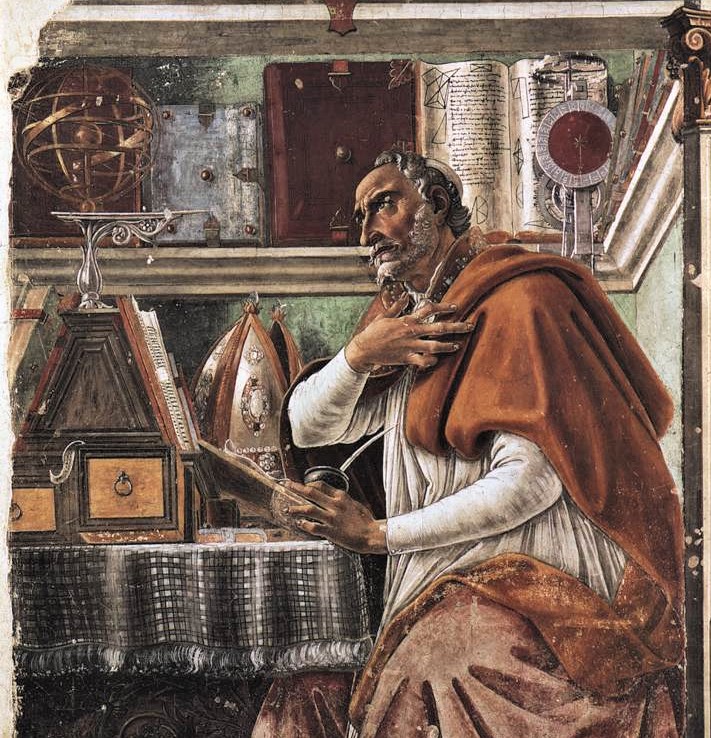
Life is a battle of desires. We must learn to want what God is offering and to eschew lesser or sinful things. St. Augustine wrote:
The entire life of a good Christian is in fact an exercise of holy desire. You do not yet see what you long for, but the very act of desiring prepares you, so that when he comes you may see and be utterly satisfied.
So, my brethren, let us continue to desire, for we shall be filled. Such is our Christian life. By desiring heaven we exercise the powers of our soul. Now this exercise will be effective only to the extent that we free ourselves from desires leading to infatuation with this world. (from the Tractates on the first letter of John by St. Augustine, bishop, Tract. 4: Pl 35, 2008-2009).
Because God offers more than we can possibly desire, not only must we adjust the object of our desire, we must increase the magnitude.
St. Augustine wrote of enlarging our desires. He also provided an insightful answer as to why God often makes us wait:
Suppose you are going to fill some holder or container, and you know you will be given a large amount. Then you set about stretching your sack or wineskin or whatever it is. Why? Because you know the quantity you will have to put in it and your eyes tell you there is not enough room. By stretching it, therefore, you increase the capacity of the sack, and this is how God deals with us. Simply by making us wait he increases our desire, which in turn enlarges the capacity of our soul, making it able to receive what is to be given to us [Ibid].
One of the psalms says, I have run the way of your commandments, when you did enlarge my heart(Ps 119:32). Hence, God not only changes our heart but enlarges it so it can contain even more blessings. Yes, God is the great cardiologist and the Church is His coronary care unit! He awaits our permission to perform His sometimes-painful work on us. It is not always easy to say yes because are attached to and prefer lesser things. St. Augustine wrote:
Let me return to the example I have already used, of filling an empty container. God means to fill each of you with what is good; so cast out what is bad! If he wishes to fill you with honey and you are full of sour wine, where is the honey to go? The vessel must be emptied of its contents and then be cleansed. Yes, it must be cleansed even if you have to work hard and scour it. It must be made fit for the new thing, whatever it may be[Ibid].
Therefore, pray that you will desire what God offers because it is not necessarily easy to do so. Speak to the Lord from the depths of your soul:
Lord, please heal me. Too often I desire lesser, passing things rather than what You want to give me. Grant me the grace to hunger and thirst for righteousness and for all that You offer. Help me to win in this great battle of desire by loving You above all things and all people. Heal my wounded heart and its twisted desires; then enlarge it so that it can contain the incomparable gifts You want to grant, in Christ Jesus, my Lord. Amen.
In today’s Gospel the Lord is teaching us, by His grace, to break the cycle of hatred and retribution. When someone harms me I may well become angry, and in my anger seek to get back at the offender. If I do that, though, then Satan has earned a second victory and brought the anger and retribution to a higher level. Most likely, the one who originally harmed me will then take exception to my retribution and try to inflict more harm on me. And so the cycle continues and escalates. Satan loves this.
Break the cycle. The Lord has dispatched us onto the field to turn the game around and break this cycle of retribution and hatred. The “play” He wants us to execute is the “it ends with me” play.
Don’t play on Satan’s team. To hate those who hate me, to get back at those who harm me, is to work for Satan, to play on his team. Why do that?
To advance the ball for Jesus is to break the cycle of retribution and hatred by taking the hit and not returning it. By loving our enemy, we break the cycle of hate. By refusing retribution, we rob Satan of a double victory.
Recall the words of Dr. Martin Luther King, Jr.:
Darkness cannot drive out darkness; only light can do that. Hate cannot drive out hate; only love can do that. Hate multiplies hate, violence multiplies violence, and toughness multiplies toughness in a descending spiral of destruction. … The chain reaction of evil—hate begetting hate, wars producing more wars—must be broken, or we shall be plunged into the dark abyss of annihilation (From Strength to Love, 1963).
Christ, living in us, wants to break the cycle.
The Necessity of Grace – Recall as well a point made in last Sunday’s reflection: that the antitheses contained in chapter 5 of the Gospel of Matthew are pictures of the transformed human person. Jesus is describing here what happens to a person in whom He has begun to live through the Holy Spirit. The verses are a description more so than a prescription. Jesus is not merely telling us to stop being so thin-skinned, easily offended, and retaliatory. He’s not just telling us to stop hating people. If that were the case, it would be easy for us to get discouraged or to write them off as some impossible ideal. No, the Lord is doing something far greater than just giving us a set of rules. He is describing what will happen to us more and more as His grace transforms us.
With this in mind, let’s look at the particulars in three sections.
I. Regarding Retaliation – The first of the antitheses reads as follows:
You have heard that it was said, “An eye for an eye and a tooth for a tooth.” But I say to you, offer no resistance to one who is evil. When someone strikes you on the right cheek, turn the other one to him as well. If anyone wants to go to law with you over your tunic, hand him your cloak as well. Should anyone press you into service for one mile, go with him for two miles. Give to the one who asks of you, and do not turn your back on one who wants to borrow.
Behind this text is the gift from the Lord of a generous heart. Psalm 118 says, In the ways of your precepts I run O Lord for you have enlarged my heart. It takes a large heart not to retaliate, to go the extra mile, to give alms. The transformed mind and heart that Jesus gives us is like this. It is a big heart, able to endure personal slights and attacks, refuse retaliation, and let go of personal possessions in pursuit of a higher goal.
That said, there are surely many questions that arise out of these sayings of Jesus’. Most of them, however, come from seeing Jesus’ words as a legalistic prescription rather than as a descriptive example. Nevertheless, they are important questions.
What does it mean to offer no resistance to injury?
Does it mean that there is no place for a criminal justice system?
Should police forces be banned?
It there no place for national defense or armed forces?
Should all punishment be banned?
Should bad behavior never be rebuked?
Am I required to relinquish anything anyone asks me for?
Must I always give money to beggars?
Is it always wise to give someone whatever he asks for?
Should I agree to accept every task that is asked of me?
To answer some of these questions, we do well to recall that the Lord is speaking to us as individuals. The state, which has an obligation to protect the innocent from enemies within and without, may be required to use force to repel threats. Further, it has an obligation to secure basic justice and may therefore be required to impose punishment on those who commit crimes. This has been the most common Catholic understanding of this passage. The New Testament seems to accept that the state does have punitive powers, to be used for the common good.
But don’t miss Jesus’ main point, which is directed to us as individuals. He testifies that, to the degree that we are transformed, we will not seek to retaliate or avenge personal injuries. Rather, due to our relationship with God the Father, we will be content to leave such matters to God. As Scripture testifies, Beloved, never avenge yourselves, but leave it to the wrath of God; for it is written, “Vengeance is mine, I will repay, says the Lord” (Rom 12:19). Further and even more important, to the degree that Jesus lives in us, we will be less easily offended. This is because our sense of our dignity is rooted in Him, not in what some mere mortal thinks, says, or does.
Jesus goes on to give four examples of what He means by us becoming less vengeful and retaliatory.
When someone strikes you on the right cheek, turn the other one to him as well.In ancient times, striking someone in this manner was a sign of disrespect, just as it would be today. There is an intended humiliation when someone strikes another on the cheek. By turning the other cheek, one would then be struck with the back side of the striker’s hand. This was an even greater indignity in the ancient world! But as a Christian in whom Christ is really living, who can really dishonor me? God is the source of my dignity; no one can take it from me. By this grace, I can let any slight pass, because I have not been stripped of my dignity. The world did not give me my dignity and the world cannot take it away. From this perspective, Jesus is not offering us merely the grace to endure indignity, but the grace not to suffer or experience indignity at all.
If anyone wants to go to the law with you over your tunic, hand him your cloak as well.In ancient times, it was forbidden to take someone’s tunic in pledge for a loan. Thus Jesus would seem to be using this example as a symbol of our rights. There are some people who are forever demanding and clinging to their rights. They clutch their privileges and will not let them go even if the common good would require it. They will go to the law rather than suffer any infringement upon their rights. The true Christian thinks more in terms of duties than rights, more of responsibilities than privileges. All this
“personal honor” stuff is unimportant when Christ lives in us. To be sure, there are some rights necessary for the completion of our duties or for meeting our basic needs. It is unlikely that Jesus has in mind to forbid this. But as a general rule, Jesus is indicating that we can be freed of obsession over our “rights,” “dignity,” and also our personal possessions. Increasingly, we can be freed of the anger that can arise when someone might even think of touching anything that is “ours.” The more we are detached from earthly possessions, the less we get anxious or angry when these things are somehow threatened or used without our permission, or when our precious “rights” are trampled upon.
Should anyone press you into service for one mile, go with him for two miles.It was legal for a Roman solider to press a person into service for one mile to carry things. Some might be bent out of shape over such indignities. Jesus offers us a generous heart that will go the extra mile. Jesus came as the servant of all; He came to serve rather than to be served. To the degree that He lives in us, we will willingly serve and not feel slighted when someone asks us to do something. Neither will we cop the “Why me?” attitude that commonly afflicts the ungenerous soul. The key gift here is a generous heart, even in situations in which others do not assign work to us fairly or appreciate our efforts sufficiently. This is of little concern for us, because we work for God.
Give to the one who asks of you, and do not turn your back on one who wants to borrow.Many questions arise related to indiscriminate giving. In some cases, it may not be wise thing to give money simply because someone asks. But don’t miss the main point here: when Jesus lives in us, we will be more generous. We will give cheerfully and assist others gladly. We will not get bent out of shape when someone asks us for help. We may not always be able to help, but our generous heart will not begrudge the beggar; we will remain cheerful and treat him or her with respect.
Here, then, is a description of a transformation of the mind and heart. We will view things differently. We will not be so easily bent out of shape, retaliatory, or vengeful. We will be more patient, more generous, less grasping, and more giving. This is what happens when we live in a transformative relationship with Jesus.
II. Radical Requirement – Love your enemy.
You have heard that it was said, “You shall love your neighbor and hate your enemy.” But I say to you, love your enemies, and pray for those who persecute you, that you may be children of your heavenly Father, for he makes his sun rise on the bad and the good, and causes rain to fall on the just and the unjust. For if you love those who love you, what recompense will you have? Do not the tax collectors do the same? And if you greet your brothers only, what is unusual about that? Do not the pagans do the same?
This is the acid test, the hallmark of a true Christian: love of one’s enemy. Note that the Lord links this to being a true child of God. Why? Because God loves everyone and gives gifts of sun and rain to all. If we are a “chip off the old block,” we will do the same. It’s easy to love those who love us, but a Christian is called to fulfill the Law and exceed it.
If Christ lives in us, then we will love even our enemy. Recall that Jesus loved us even when we hated Him and killed Him. Jesus said, Father, forgive them; for they know not what they do (Luke 23:34). Elsewhere in Scripture is written, While we were his enemies we were reconciled to God by the death of his Son (Rom 5:10).
We should be careful not to make love an abstraction. The Lord is talking about a real transformation of our hearts. Sometimes we say silly things like this: You don’t have to like everyone but you have to love them. This turns love into something of an abstraction. God doesn’t just love me; he even likes me. The Lord is talking about a deep love that wills good things for our enemy and even works toward them.
We are called to have compassion, understanding, and even affection for those who hate us and will us evil. We may wonder how this can happen in us. How can we have affection for those who hate us? It can be so when Christ lives His life in us. We will good and do good to them who hate us, just as Jesus did.
It is also important not to sentimentalize this love. Jesus loved His enemies but did not coddle them. He spoke the truth to the Scribes and Pharisees of His day, often forcefully and uncompromisingly. We are called to a strong love, one which wants the truth for everyone, but we must give this testimony with understanding and true (not fake or false) compassion.
III. Remarkable Recapitulation – Finally, the Lord says,
So be perfect, just as your heavenly Father is perfect.
Here is the fundamental summary, the recapitulation: God-like perfection! Nothing less will do. How could there be anything less when Christ lives His life in us? To the degree that He lives in us and the old Adam dies, we become perfect. This is the state of the saints in Heaven: they have been made perfect. Christ’s work in them is complete. The Greek word used here is τέλειός (teleios) which means complete or perfect. Thus, the emphasis is on the completion of a work in us more so than mere excellence in performance. Paul writes to the Philippians, And I am sure that he who began a good work in you will bring it to completion at the day of Jesus Christ (Phil 1:6).
This sentence also serves as an open-ended conclusion to the antitheses today’s Gospel. It’s almost as if Jesus says, “I’ve only given you a few examples here. The point is to be perfect, complete in every way, totally transformed in your mind, heart, and behavior.”
And thus we return to the original theme: it ends with me. In these final two antitheses the Lord wants to break the cycle of anger, retribution, and violence. He wants the downward spiral of hatred and vengeance to end with me. When, on account of His grace, I do not retaliate, I break the cycle. When I do not escalate the bitterness or return the spite, when I refuse to allow hate to take possession of me, the cycle ends with me. Only God can do this for me.
But He does do it. I promise you in the Lord Jesus Christ that He can deliver us from anger, wrath, vengefulness, and pettiness. I can promise you because He is doing it in me. I do not boast; I am only telling you what the Lord has done. For the most part, I have been delivered from my anger, something that was once a major struggle for me. It is not any longer. I did not deliver myself—Jesus did. The promise of the Lord here is true. Only God can do it. He has said it and He will do it—if we let Him.
This song says, “I Look to you. After all my strength is gone, in you I can be strong. I look to you!”
In the commercial below, a man is easily talked out of his meal by Yoda, the Star Wars Jedi Master. However, when the Jedi Master continues on to try to talk him out of his Pepsi, the man realizes that this is a bridge too far. He refuses to give way any longer.
I wonder if this is not an image for Christians in their battle against the world and the devil. Indeed, too often we are willing to give way to those in the world (and the devil himself), who ask us to surrender our dignity, make compromises, and give way to sin. So easily we surrender our serenity to a world that provokes anxiety and anger; we surrender our chastity to a world that exalts lust; we give over our generosity to a world that instills in us a fear that drives us to hoard; we hand over our prophecy to a world that demands our silence; we neglect our soul and hand over its care to a world that demands we be fixated on our body, on good looks and our physical health; we hand over prayer and the celebration of the sacraments to a world that demands all of our time.
In effect, the world and the devil say to us, “All you have is mine … now hand it over.”
After surrendering his meal, the man wakes up to what is happening and stops handing things over. For him, it is prospect of losing his Pepsi that brings about this awakening. But what about us? Have you reached this point? How? When? What was the “bridge too far” for you? For addicts, this point is called “hitting bottom,” when the insanity of their lifestyle finally becomes too much to handle and they are finally willing to say “No!” or “Enough!”
For most of us, perhaps the wake up moment comes when we finally begin to see that the world asks too much of us, takes too much of us without offering us anything of real or lasting value in return. Perhaps we, like the man in the commercial, start to recognize the lies, deception, and theft taking place as the world tries to have us ignore our true hunger and give away the Eucharistic meal and Holy Communion that is our baptismal right.
Yoda tries to mesmerize the man in the commercial, saying about the meal, “You do not want.” The world and the devil also say of God, “You do not want.” It’s as if to say, “Your desires are not about God and the things awaiting you in Heaven; they are about me. Give me your heart, your loyalty, your life.”
When the man in the commercial finally does wake up, it’s because of a drink. In this I am reminded of the woman at the well in the Gospel of John. Jesus finally reaches her through thirst and teaches, Everyone who drinks this water will be thirsty again. But whoever drinks the water I give him will never thirst. Indeed, the water I give him will become in him a spring of water welling up to eternal life (Jn 4:13-14). For her and for the man in the commercial, it is thirst that awakens them to the lies and deceptions of the world.
In the commercial below, a man is easily talked out of his meal by Yoda, the Star Wars Jedi Master. However, when the Jedi Master continues on to try to talk him out of his Pepsi, the man realizes that this is a bridge too far. He refuses to give way any longer.
<strong>I wonder if this is not an image for Christians in their battle against the world and the devil.</strong> Indeed, too often we are willing to give way to those in the world (and the devil himself), who ask us to surrender our dignity, make compromises, and give way to sin. So easily we surrender our serenity to a world that provokes anxiety and anger; we surrender our chastity to a world that exalts lust; we give over our generosity to a world that instills in us a fear that drives us to hoard; we hand over our prophecy to a world that demands our silence; we neglect our soul and hand over its care to a world that demands we be fixated on our body, on good looks and our physical health; we hand over prayer and the celebration of the sacraments to a world that demands all of our time.
<strong>In effect, the world and the devil say to us, “All you have is mine … now hand it over.”</strong>
<strong>After surrendering his meal, the man wakes up to what is happening</strong> and stops handing things over. For him, it is prospect of losing his Pepsi that brings about this awakening. But what about us? Have you reached this point? How? When? What was the “bridge too far” for you? For addicts, this point is called “hitting bottom,” when the insanity of their lifestyle finally becomes too much to handle and they are finally willing to say “No!” or “Enough!”
<strong>For most of us, perhaps the wake up moment comes when we finally begin to see that the world asks too much of us,</strong> takes too much of us without offering us anything of real or lasting value in return. Perhaps we, like the man in the commercial, start to recognize the lies, deception, and theft taking place as the world tries to have us ignore our true hunger and give away the Eucharistic meal and Holy Communion that is our baptismal right.
<strong>Yoda tries to mesmerize the man in the commercial, saying about the meal, “You do not want.” </strong>The world and the devil also say of God, “You do not want.” It’s as if to say, “Your desires are not about God and the things awaiting you in Heaven; they are about me. Give me your heart, your loyalty, your life.”
<strong>When the man in the commercial finally does wake up, it’s because of a drink.</strong> In this I am reminded of the woman at the well in the Gospel of John. Jesus finally reaches her through thirst and teaches, <em>Everyone who drinks this water will be thirsty again. But whoever drinks the water I give him will never thirst. Indeed, the water I give him will become in him a spring of water welling up to eternal life</em> (Jn 4:13-14). For her and for the man in the commercial, it is thirst that awakens them to the lies and deceptions of the world.
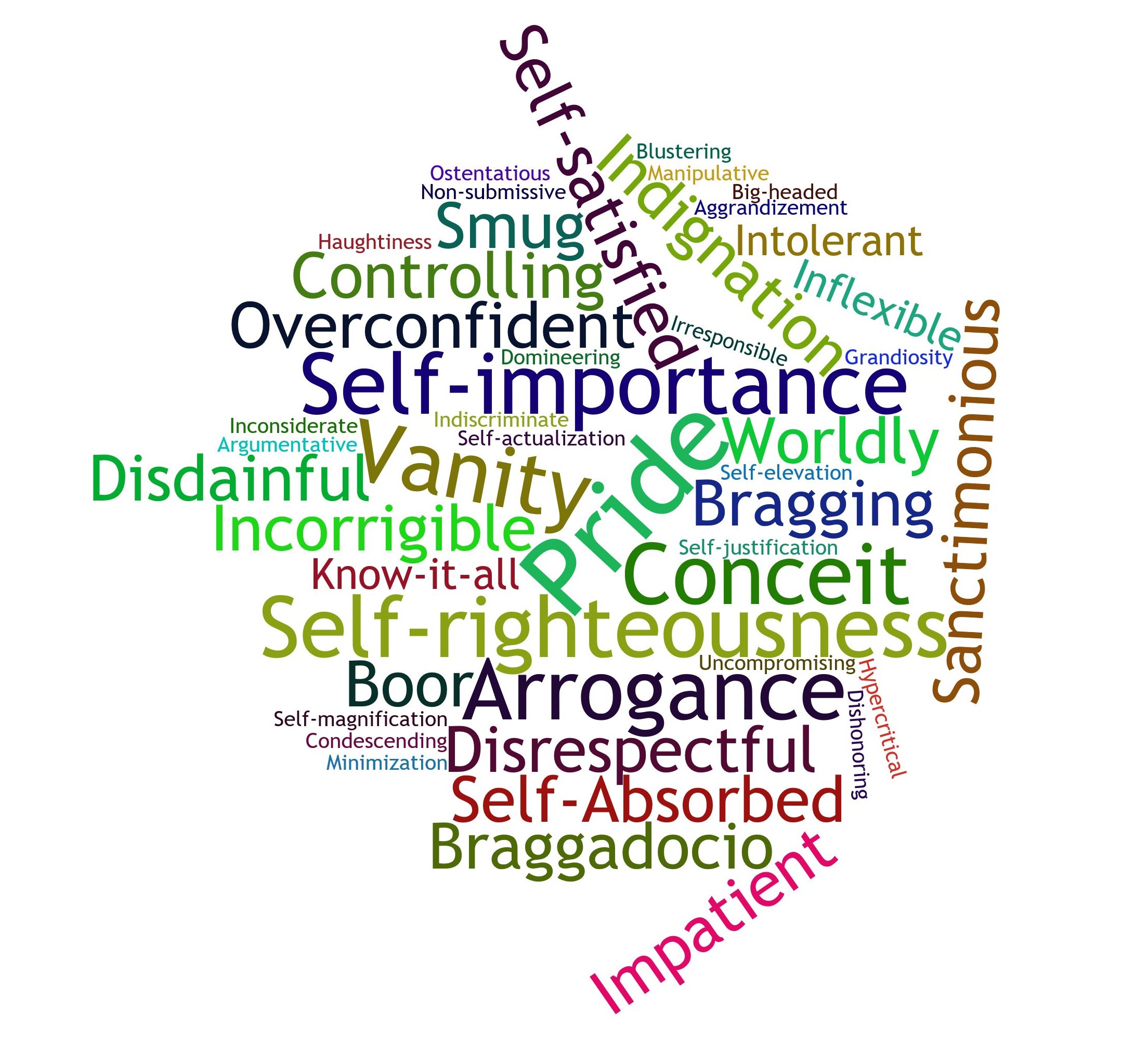
None of us likes to think we are prideful. It’s always someone else; that guy over there is the arrogant one. One way of gauging is to ponder how well we accept being corrected. Consider the following verses from Proverbs:
He who corrects an arrogant man earns insult; and he who reproves a wicked man incurs opprobrium. Reprove not an arrogant man, lest he hate you;
But, reprove a wise man, and he will love you. Instruct a wise man, and he becomes still wiser; teach a just man, and he advances in learning (Proverbs 9:7-12).
Which one are you?Do you bristle when someone corrects you or do you grow wiser from the input you receive?
It’s not easy to accept criticism or correction without feeling some degree of humiliation, particularly when it is public in some manner.
Of course, there are different kinds of correction.There is the sort that involves facts about which we are mistaken. At other times need to be set straight on the proper procedures to be followed in some situation. Finally, there are times when we have failed in a moral sense and need to be summoned back to what is right. Whatever the case, being corrected can be difficult, and how we handle it is a good indicator of pride or humility in our soul.
There are, to be sure, times when people do not correct us in the best way possible.Perhaps they are smug or seek to embarrass us. Even in those cases, though, if we are wrong, we should view correction as beneficial, regardless of how poorly it is delivered.
Note also that the passage from Proverbs above links humility to wisdom and learning.Thus, something we call docility is related to humility. The word docility comes from the Latin word for being teachable. Too often, we can be stubbornly opinionated and resist being taught. It is important to ask the Lord for greater docility.
In preparation for Lent, take this short self-test for pridefulness: How do you take correction? How teachable are you?
A while back on this blog we reflected on the puzzling truth that we can endure more pain than pleasure. We seem to be able to endure a lot of pain, but we can endure only a little pleasure at a time. In fact, too much pleasure actually brings pain: sickness, hangovers, obesity, addiction, laziness, and even boredom. You can read more of that HERE. But the point is that pleasures and good things are only enjoyed in moderation.
Something similar may be said for wisdom and knowledge. We learn best in small portions. For example, consider a teaching by St. Bernard, who is reflecting on a verse from Sirach:
If you have found wisdom, you have found honey. But do not eat so much that you become too full and bring it all up. Eat so that you are always hungry. Wisdom says: Those who eat me continue to hunger (Sirach 24:31). Do not think you have too much of it, but do not eat too much or you will throw it up. If you do, what you seem to have will be taken away from you… Solomon says: A man who eats too much honey does himself no good. – From a sermon by Saint Bernard, abbot (Sermo de diversis 15: PL 183, 577-579)
And so it is that we learn and gain wisdom slowly and in stages. A kind of four-fold moderation is suggested here.
The Moderation of Material– Too much, all at once, overwhelms us. It is a little like the image of trying to fill a small paper cup from an open fire hydrant. Most of water escapes and is wasted. The cup is better filled at a small faucet. Learning occurs best in small bite-sized potions.
The Moderation of Time– Most teachers know that an hour-long class is best, and ninety minutes is the maximum. Any longer and eyes glaze over and the diminishing returns set in quickly. Further, we all need time to reflect on what we learn. Acquiring information is not the same as learning. Reflection and consideration as to what something means and how it relates to other things is what makes for knowledge and wisdom.
The Moderation of Mastery – We learn in stages. Foundational principles must be mastered before more complex realties can be understood. Personal development also plays a role. I have found, for example, that certain scriptures suddenly make sense to me, or stand out in ways they did not before. This is often due both to our growth in knowledge and also to our personal growth in maturity and holiness. The Latin Fathers of the Church said of Scripture that it is non nova, sed nove(It is not a knew thing but it is understood newly). And thus, as we make our journey and if we are faithful, our understanding of Scripture deepens.
The Moderation of Novelty– There is a saying, “Repetition is the mother of studies.” While learning new things is important, so is remembering and recapitulating what we already know. One of the things that most deeply ingrained Scripture in my soul are the repeating cycles of readings in the Mass and in the Divine Office.
Yes, moderation is the key, even in learning the things of God. A slow steady, life-long learning is what makes for a wise soul. Though wisdom comes from God, it, like all graces, interacts which our nature, and it is our nature to grow slowly and in stages. There are surely growth spurts, but the general rule is slow, steady and in stages. Thus in your prayer and spiritual reading, a little each day adds up. But always remember to spend time reflecting on what you read and reviewing from time to time what you have read and learned in the past. Yes, a little each day helps keep the devil away.
In yesterday’s post, we considered the twelve steps of pride set forth by St. Bernard of Clairvaux. In escalating ways, the twelve steps draw us to an increasingly mountainous and enslaving pride.
St. Bernard also enumerates the twelve steps to deeper humility and it is these that we consider today. As with yesterday’s post, the list by St. Bernard is shown in red, while my meager commentary is shown in plain, black text. To read St. Bernard’s reflections, consider purchasing the book Steps of Humility and Pride.
(1) Fear of God– To fear the Lord is to hold Him in awe. It is to be filled with wonder at all God has done, and at who He is. Cringing, servile fear is not recommended. Rather, the fear rooted in love and deep reverence for God is what begins to bring us down the mountain of pride. It is looking to God and away from ourselves and our egocentric tendencies that begins to break our pride.
Scripture says, The fear the Lord is the beginning of wisdom (Prov 9:10). To fear the Lord is to turn to the Lord seeking answers, seeking meaning, realizing that in God is all wisdom and knowledge. To fear the Lord is to hunger and thirst for His truth and righteousness. To fear the Lord is to look outside oneself and upward to God.
Here begins our journey down the mountain of pride, a simple and loving look to God, who alone can set us free from the slavery that pride and sinfulness created for us.
(2) Abnegation of self-will – In the garden, Jesus said to His father, Father, not as I will, but as you will (Lk 22:42). This is what abnegation of the will means: to surrender one’s will to God’s will, to allow His decisions to override one’s own.
Pride demands to do what it pleases, to determine what is right or wrong. In this stage of humility, I am willing to look to God.
The saints say, “If God wants it, I want it. If God doesn’t want it, I don’t want it.” The prideful person says “Why can’t I have it? It’s not so bad. Everybody else is doing it.”
On the journey away from pride, having come to a fear of the Lord, we are now more joyfully ready to listen to Him and to submit to His vision for us.
(3) Obedience – Having attained a humbler disposition of heart, we are now more willing to obey. Obedience moves from hearing God’s word to heeding it, to obeying His holy will, to surrendering our stubborn will to His. We are made ready, by God’s grace, to execute that will, to put it into action.
(4) Patient endurance – Embarking on this journey down the mountain of pride, and striving to hear and understand God’s will and obey, we can surely expect to fact both external and internal obstacles.
Our flesh—that is, our sinful nature—does not simply and wholeheartedly surrender, but rather continues to battle. It resists prayer, resists being subject to anything other than its own wishes and desires. Thus, we suffer internal resistance from our sinful nature.
Little by little, we gain greater self-discipline and authority over our unruly passions. This is truly a struggle, requiring patience and an enduring spirit and will.
We also often encounter external resistance as we try to come down from the mountain of pride. Perhaps friends seek to draw us back into our former ways. Perhaps the structures of our pride remain: willfulness, self-reliance, powerful positions, etc. They continue to draw us away from our intention to come down the mountain of pride and further embrace humble submission to God. Perhaps the world continues to demand that we think and act out of old categories that are not of God, and still hold us bound to some extent.
Patient endurance is often required to see such things borne away. It often takes years—even decades—of patient and persistent action for the sinful world to lose its grip on us.
(5) Disclosure of the heart – As we come down the mountain of pride, perhaps the most humble journey is the one into our wounded hearts. Scripture says, More tortuous than all else is the human heart; beyond remedy; who can understand it? I, alone, the LORD, explore the mind and test the heart (Jer 17:10).
Recognizing our sinful drives, and misplaced priorities requires a lot of humility. We must often resurrect unpleasant memories and even traumas from the past, ones that we have experienced ourselves or have inflicted on others. In our heart, we are called to repent and show forgiveness and mercy or to accept that we must be forgiven and shown mercy.
We may be asked to remember and to realize that we have not always been 100% right, that we have sometimes acted unjustly and sinfully toward others, that we have at times been insensitive. This is a humbling but necessary part of the journey down the mountain of pride.
(6) Contentedness with what is – Contentedness is a form of acceptance; it is a great gift to seek and to receive. We can distinguish between external and internal contentedness:
External contentedness is rooted in the ability to live serenely in the world as it is and to realize that God allows many things that are not to our liking. Acceptance does not imply approval of everything. There are many things in the world that we ought not to approve of, but acceptance is the willingness to live and work humbly in a world that is neither perfect nor fully in accordance with our preferences. Some things we are called to change, other things to endure. Even with those things we are called to change, we may have to accept that we cannot change them as quickly as we would like. In the parable of the wheat and the tares, Jesus cautioned us not to act hastily to remove the tares lest the wheat be harmed as well. It is a mysterious fact that God leaves many things unresolved. Part of our journey in humility is to discern what we are empowered to change and what we must come to accept as beyond our ability to change.
Internal contentedness is gratitude for what we have and freedom from resentment about what we do not. Pride demands that our agenda be fully followed. In our journey toward humility, we come to be more content with accepting what God offers and saying, “It is enough, O Lord. I am most grateful!”
(7) Lucid self-awareness – In pride, we are often filled with many delusions about ourselves, thinking more highly of ourselves than we should. We are often unaware of just how difficult it can be to live or work with us.
Humility is reverence for the truth about ourselves. It is a lucid self-awareness that appreciates our gifts, but remembering that they are gifts. It is also an awareness of our struggles and our ongoing need for repentance and for the grace of God.
With lucid self-awareness, we increasingly learn to know ourselves the way God knows us (cf 1 Cor 13:12). As we come down from the mountain of pride into deeper humility, God discloses more to us about just who we really are. We become more and more the man or woman God has made us to be; our self-delusions and the unrealistic demands of the world begin to fade. The darkness of these illusions is replaced by the lucidity of self-awareness. We are able to see and understand ourselves in a less egocentric way. We are mindful of what we think and do and of how we interact with God and others, but we do this in a way that we are strongly aware of the presence and grace of God. We come to self-awareness in the context of living in conscious contact with God throughout the day.
(8) Submission to the common rule – The egocentric and prideful person resists being told what to do and is largely insensitive to the needs of others and the common good. The proud man thinks he knows better than the collective wisdom of the community.
As our journey down the mountain of pride into deeper humility continues, we become more aware of the effects we have on others. We must learn to interact and cooperate with others for goals larger than ourselves. Humility teaches us that the world does not revolve around us and what we want; sometimes the needs of others are more important than our own. Humility helps us to accept that although my individual rights are important, laws typically exist to protect the common good. Humility also makes us more willing to submit our personal needs and agenda to the needs of others and the wisdom of the wider community.
(9) Silence – Silence is a respectful admission that other people have wisdom to share and important things to say. The proud person interrupts frequently, thinking either that he already knows what the other person is going to say or that what he has to say is more important. As our humility grows, we become better listeners, appreciating that others may be able to offer us knowledge or wisdom that we currently lack.
(10) Emotional sobriety – Many of our emotional excesses are rooted in pride and egocentricity. When we are proud we are easily offended, easily threatened, for fear begets anger.
As we discussed yesterday, the initial stages of pride are often rooted in inordinate curiosity, mental levity, and giddiness. All of these things cause our emotional life to be excessive and disordered. As we grow deeper in humility, though, we are less egocentric and thus less fearful and less easily offended.
Having our mental life focused on more substantial and less frivolous things adds stability to our thought life. We are less carried off into gossip, intrigue, and rumor. We are less stirred up by the machinations of marketers, less disturbed by the 24/7 “breaking news” cycles of the media. We are more thoughtful and less likely to rush to judgments that often unsettle us. The humble person trusts God and is thus not easily unsettled by these things—and it is thoughts that generate feelings.
As our thought life becomes more measured, our conclusions are drawn more carefully and humbly, our emotions are less volatile, and we attain greater emotional serenity and sobriety.
(11) Restraint in speech – As we become more emotionally stable and less anxious and stirred up, that serenity is reflected in our speech and demeanor. We are less likely to interrupt, to speak in anger, or to be unnecessarily terse or harsh. We don’t need to “win” every debate. Rather, we are satisfied with staying in the conversation, with just sowing seeds to be harvested later, perhaps even by others. Our serenity tends to lower our volume and speed in talking; we are more content to speak the truth in love, with both clarity and charity.
(12) Congruity between one’s inside and one’s outside – We saw in yesterday’s post on pride the problem of hypocrisy. The Greek word hypocritas refers to acting. Hypocrites are actors playing a role rather than being who they are.
The proud and fearful are always posturing, trying to align themselves with what makes for popularity and profit. As humility reaches its goal, integrity, honesty, and sincerity come to full flower.
This is because the gift of humility opens us to be fully formed by God. Having turned our gaze to God and made the journey into our heart, we discover the man or woman God has made us to be. We begin to live out of that experience in an authentic and unpretentious way. In humility we are more focused on God and less nervously self-conscious.
By the gift of lucid self-awareness described above, we are comfortable in our own skin. We do not need to posture, dominate, compare, or compete. Rather, our inner spiritual life and focus on God now inform our whole self.
Humility has now reached its goal: reverence for the truth about our very self. We are sinners who are loved by God. As we make the journey to discover our true self before God, we become ever more grateful and serene. Living out of this inner life with Him, we are enabled to walk humbly with our God (Micah 6:8).
Thanks be to God for these insightful lists of St. Bernard of Clairvaux and St. Benedict, which have so aided in this reflection! Pray God that we are all able to make the journey down from the mountain of pride and into deeper humility.


 A brief observation of the first two days in Lent reveals militaristic, even violent imagery in the battle against sin and the unruly passions of the flesh. The Collect (opening prayer) of Ash Wednesday provides an image of troops mustering for battle: