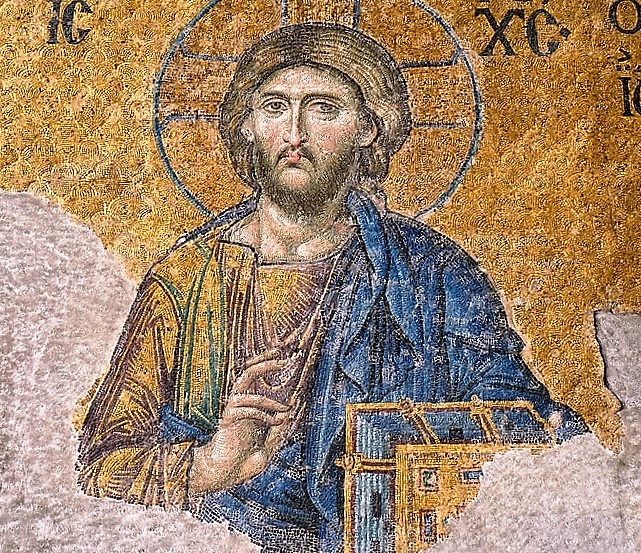
The commercial below contrasts two worlds. The first is the loud, chaotic world, of which Satan is prince—and he wants all your attention. The second is the quieter, more serene, more beautiful world of the Kingdom, of which Christ is King and Mary is Queen Mother. Choose for yourself.
St Anselm writes:
Insignificant man, escape from your everyday business for a short while, hide for a moment from your restless thoughts. Break off from your cares and troubles and be less concerned about your tasks and labors. Make a little time for God and rest a while in him. Enter into your mind’s inner chamber. Shut out everything but God and whatever helps you to seek him. And when you have shut the door, look for him, speak to God … (Proslogion, Chapter 1).
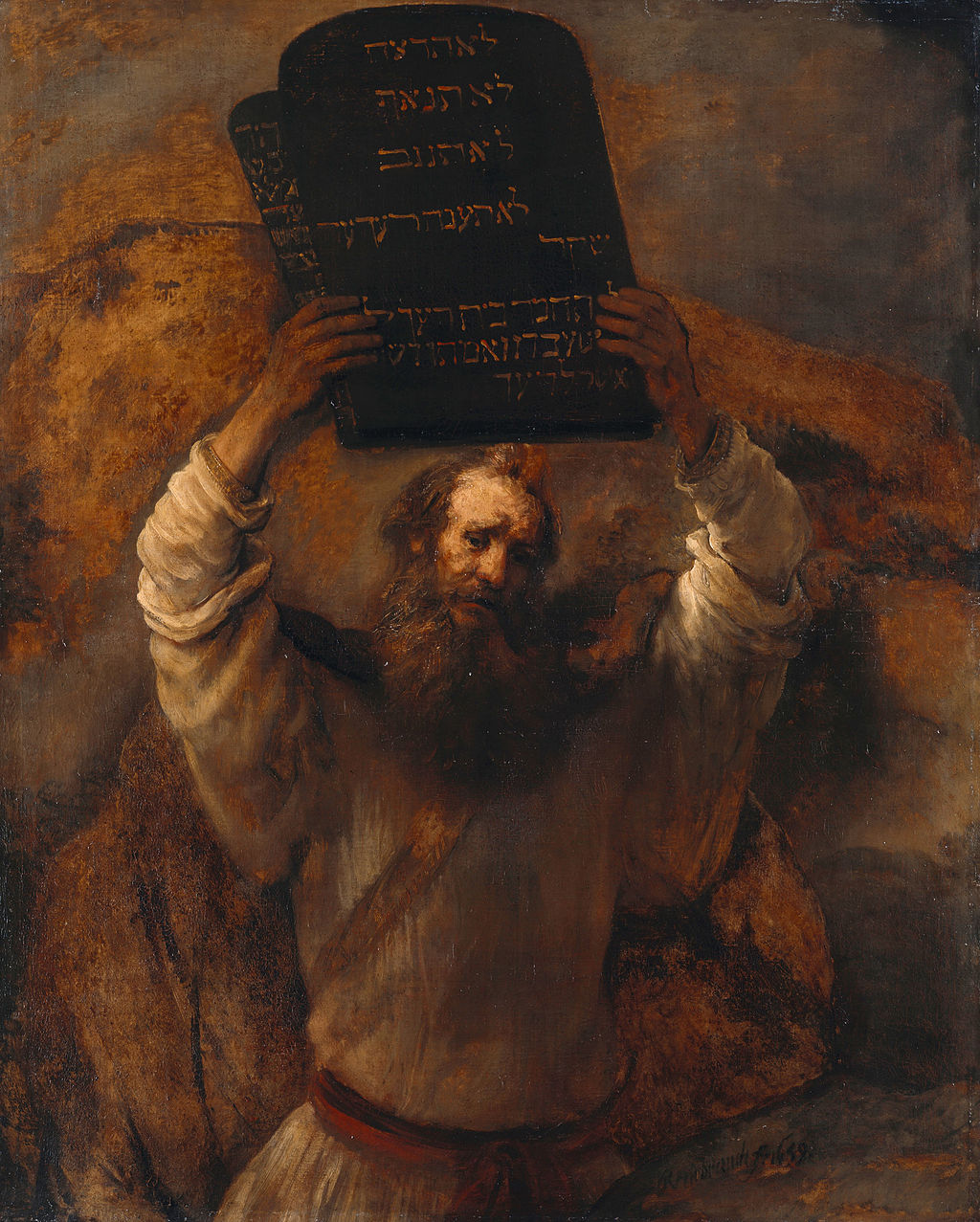
We are currently reading the story of Moses in daily Mass. The story reminds us that not all things are as they appear, and that God’s ways are not our ways.
Moses’ early years are marked with clear signs that he is gifted and chosen. Drawn from the water by Pharaoh’s own daughter, Moses’ very own mother is chosen to be his caretaker and is paid for that privilege by getting to live in Pharaoh’s palace. Pharaoh pays for Moses’ diapers, his food, and his education. And he is unwittingly preparing and equipping his nemesis. God can be very sly!
But at age forty, Moses gets ahead of God (never a good idea). He grows angry at an Egyptian who is oppressing a Hebrew and ends up killing the Egyptian. Moses has to flee.
Now why has God let this happen?From our perspective, Moses was in the prime of his life. At forty, he has experience but has not lost his youth. He is educated, gifted, and has access to power and lots of connections in Pharaoh’s own palace. Moses is in a perfect position to lead the people out of slavery! Or so we think. Except for one problem: God doesn’t think so.
But why not? In a word, pride. Moses, in getting out ahead of God and trying to take things in his own hands, is exhibiting pride. God says, in effect, “You’re too proud. I can’t use you in this condition. It’s time for some lessons in humility.”
And so Moses learns humility. He is forced to flee (humiliating). He must live out in the desert (humbling). And he marries and has children (quite humbling indeed! J).
Ok, so a few years’ worth of humility lessons and then Moses gets started. No, not a few, forty years’ worth!
Now Moses is eighty. He’s feeble, leaning on a staff, and he stutters when he talks. And God comes and tells Moses that it’s time to lead the people out. Moses says, in effect, “Are you crazy? I’m old, I can’t speak, I’m feeble … I can’t do it.” And that’s just the attitude that God needs from Moses: that he can’t do it. And he couldn’t do it at forty, either; he just didn’t know it. God has to do it and Moses will be His instrument. But now this instrument will be docile in the hands of the artist, now Moses can be useful to God.
This is not the way we think. We equate ability and leadership with vigor, power, money, access, talent, etc. For us, the prime of life is in our thirties, forties, and fifties. But God’s ways are not our ways; His thoughts are not our thoughts. Moses at eighty is what God needs. Moses at forty was not of use.
What are some conclusions we can draw?
First, be careful how you assess your own life. In typical earthly fashion most of us consider our prime as being those years when we were most in command of our gifts, when we were working, “making a difference,” earning an income. We measure human life in its prime in terms of money, power, access, physical strength, stamina, etc.
But has it occurred to us that our most powerful moments might be on our deathbed? For there we have many sufferings to offer and our prayers will pierce the clouds as never before. The Lord hears the cry of the poor, the suffering, and the repentant.
I often counsel the bedridden, and the dying in this way: I tell them that we are depending on their prayers as never before because their prayers are more important than ever before. And even if they have a hard time, because of age and discomfort, formulating prayers, just one word on our behalf, “Help!” may change the history of the world. St. Augustine said, More is accomplished in prayer by sighs and tears, than by many words (Letter to Proba).
Yes, be very careful how you assess your life’s worth. Our math is not God’s math; our thoughts are not His. God sizes us up quite differently.
Second, be careful how you assess the lives of others. Here, too, we tend to value those people who are powerful, have money, strength, beauty, talents, and “obvious” gifts. But the Lord warns us in many places that we should esteem the poor, the disabled, and the suffering. He says, Many who are last shall be first (Matt 19:30).
God also counsels that we ought to make friends among the needy and poor by our use of worldly wealth, so that when worldly wealth fails us (and it will), the poor and needy, those who benefitted from our generosity, will welcome us to eternal dwellings (See Lk 16:9).
Yes, befriend the needy, the disabled, and the poor. In this world they need us, but in the next world, we are going to need them! Those who have suffered and those who were poor due to injustice, if they have been faithful, are going to be in high places in Heaven. We’re going to have to get an appointment to see them! Things are not always as they appear. The poor, the disabled, and the suffering are quite often among the real powerhouses of this world.
So pay attention to what the story of Moses tells us. Not as man sees does God see (1 Sam 16:7). We are vainglorious and we look to worldly power and its categories. God is not impressed with our sandcastles, our big brains, and our bulging muscles. He bids us in stories like these to say, with St. Paul, Therefore I am well content with weaknesses, with insults, with distresses, with persecutions, with difficulties, for Christ’s sake; for when I am weak, then I am strong (2 Cor 12:10).
Things are often not as they appear to us. Put on your “God glasses” and by God’s grace see more as He sees.
The Gospel this Sunday speaks to us of the priority of personal prayer. In last week’s Gospel, Jesus sent the apostles out two by two to proclaim the Kingdom. Now they return, eager to report their progress and the graces they encountered.
As Jesus listens, He urges them (perhaps because they are so overjoyed) to come away and rest awhile, for they have labored long. In so doing, Jesus also teaches us about prayer. Let’s consider four teachings on prayer that are evident in today’s Gospel.
I. The Practice of Praise-Filled Prayer – As the text opens, the apostles are with Jesus, joyfully recounting all they experienced on their missionary journey. In a similar text in Luke (10:17), the apostles return rejoicing, saying that even demons are subject to them (through Jesus’ name). Thus, their first instinct is joyful gratitude before the Lord.
Is your prayer filled with praise and thanksgiving? Are you grateful to God for all He has done? Do you tell God what is happening in your life and give Him thanks for all He has enabled you to do?
Too many people think of prayer only in relation to petition, but praise is also an essential component. When Jesus began His instruction on prayer, He said, When you pray, say, ‘Our Father, who art in heaven hallowed be thy name’ (Mat 6:9). In other words, “Father, your name is holy. You are a great God, a wonderful God. You can do all things and I praise you! Thank you, Father; your name is holy, and you are holy.”
Praise the Lord. Thank Him for what He is doing and tell Him everything that you are experiencing. Scripture says that we were made for the praise of his glory (Eph. 1:16). So, praise the Lord in your prayer. How? Take a psalm of praise. Pray or sing the Gloria from Mass. Sing or recite a hymn. No matter how you do it, praise Him!
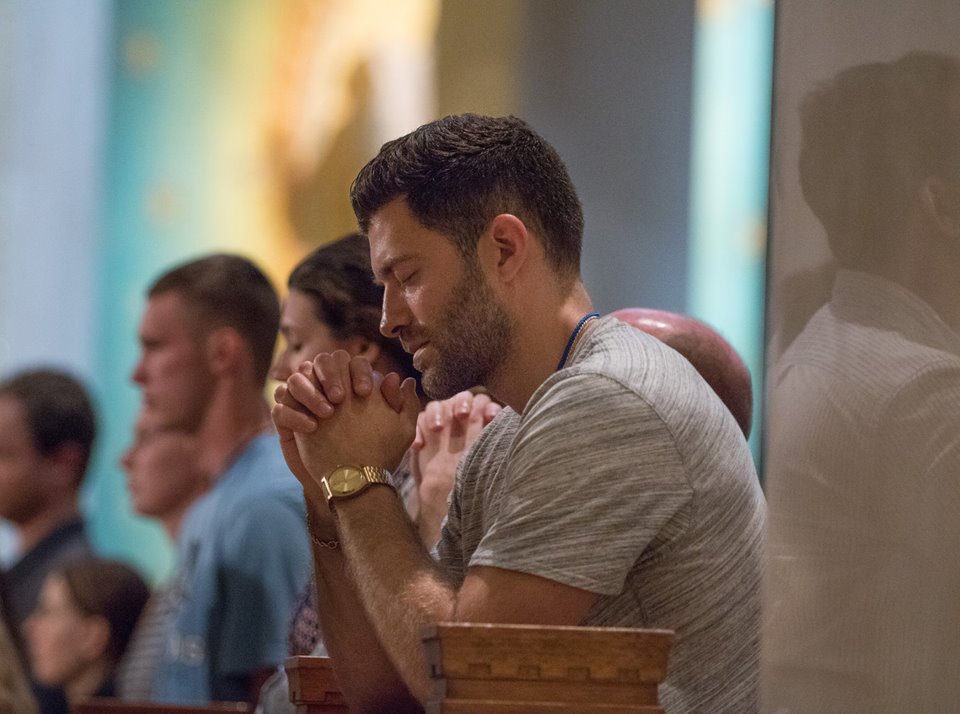
II. The Peace of Personal Prayer – Jesus invites the apostles to come away by themselves to a quiet place and rest for a while. Most people don’t think of their personal prayer as a privileged invitation from the Lord, nor do they think of it as rest.
Yet, consider that the Lord invites us to come aside and spend personal and private time with Him. Most people would relish personal attention from a famous person. Why not from the Lord? An old song says, “What a privilege to carry everything to God in prayer.”
Note the description of this time as “rest.” Most people think of prayer more as a task than as a time of rest. Yet to pray is to rest, to withdraw from this world for a brief time and enjoy the Lord’s presence. Scripture says, For thus the Lord GOD, the Holy One of Israel, has said, “In repentance and rest you will be saved. In quietness and trust is your strength” (Is 30:15).
An old hymn says,
Sweet hour of prayer! Sweet hour of prayer!
That calls me from a world of care,
And bids me at my Father’s throne
Make all my wants and wishes known.
In seasons of distress and grief,
My soul has often found relief,
And oft escaped the tempter’s snare,
By thy return, sweet hour of prayer!
Learn to think of prayer as quiet time, as rest with the Lord, when He soothes, strengthens, refreshes, and blesses us.
III. The Primacy of Prioritized Prayer – The text says that people were coming in great numbers seeking the attention of the Lord and the apostles; they could not even get a moment to eat!
There is no doubt that the people had critical needs. They needed to be taught, healed, fed, and cared for in many ways. Yet despite this Jesus said, in effect, “We have to get away from all this for a while.” He directed the apostles to go off in the boat to a deserted place.
Indeed, one of the few places they could “get away” was out on the water. There, the crowds could not follow them, and they could be alone and quiet for a short time.
Jesus made prayer a priority. Scripture says of Him, But Jesus often withdrew to lonely places and prayed (Luke 5:16). Scripture also speaks of Him rising early to pray (Mark 1:35), praying late into the night (Matt 14:23), praying all night long (Luke 6:12), and praying in the mountains (Matt 14:23) and other deserted places.
Understanding prayer as rest helps us to understand why prayer must be a priority in our lives. If we are going to engage in the work to which God has called us, we need to be replenished and refreshed daily by spending time with Him.
If we were to engage in physical work without ever stopping to rest, we would collapse. The spiritual life has a similar law. Resting with God in prayer fills us with His presence, grace, and strength so that we can be equipped, empowered, and enabled unto the tasks that He has given us.
No one can give or share what he does not have, so if we aren’t praying and experiencing God’s presence, how can we share it? To share grace, we must first receive it. To speak the Word, we must first receive it. To witness to the Lord, we must first know Him.
Jesus often had to hide in order to pray. Sometimes the only quiet place He could find was out on the lake, but He did make time for prayer. He invites the apostles and us to do the same, not only despite the busyness of life, but because of it.
A Brief Story –
A priest friend of mine told me that back in the 1970s he once gave spiritual direction to a religious sister. At that time, it was common for people to say, “My work is my prayer.” When this priest inquired about the good sister’s prayer life she answered, “Oh, I’m too busy to pray, but that’s OK because my work is my prayer; that’s my spirituality.” He replied, “Sister, if you’re not praying, you don’t have a spirituality.” He got her to start praying for one hour a day. Some years later, he ran into her at the airport. By now, she had moved on to become a major superior in her order. “How are you doing, Mother?” he asked. “Oh,” she replied, “I am very busy!” He cringed, but then she added, “I’m so busy these days that I have to spend two hours a day praying!”
Now there’s a smart woman! When we’re being foolish we say, “I’m too busy to pray.” When we’re smart we say, “I’m so busy that I need to pray more.”
Jesus made prayer a priority. Prayer is the rest that strengthens us for the task; it is the refreshment that gives us new vigor and zeal.
IV. The Power of Pious Prayer – The text says that after Jesus spent this time alone with the apostles on the boat, they reached the other shore. Sure enough, the crowd was there waiting for them, but Jesus and the apostles had been refreshed and were now well-rested. Jesus, renewed and refreshed, saw the vast crowd and began to teach them at great length.
Prayer has that effect. In drawing close to God, who is love, we are better equipped to love others. Jesus, though He never lacked love for them, models this renewal for us. The text says that upon seeing the crowd, His heart was moved with pity for them. The Greek word translated as “pity” is σπλαγχνίζομαι (splagchnizomai), which means “to be moved with compassion.” The word “pity” often carries with it a condescending tone, but what happens here is that Jesus sees them, loves them, and has compassion for their state. The religious leaders in Jerusalem have largely abandoned them, considering them “the great unwashed,” but Jesus loves them and teaches them at great length.
It often takes many years and a lot of prayer to equip our hearts in this way. One of the signs that grace and prayer are having their effect is that our love for others, even for the multitudes, grows deeper, more compassionate, more patient, and more merciful. This takes great prayer and long hours of sitting at the Lord’s feet learning from Him.
Here is the power that prayer bestows: we are more fully equipped for our mission, more zealous, and more loving. The rest afforded by prayer rejuvenates our better nature and helps it to grow.
So, here are four teachings on prayer. Jesus found time to pray; He made it a priority. How about you?
It is hard to describe our times as anything but contentious. Loud, strident protests often predominate over reasoned discourse and thoughtful argumentation.
To be sure, every era has had, and has needed, protest and public opposition to injustice. There is a time and a place for loud protest and the use of memorable sound bites.
However, it is the predominance of loud protest and civil disobedience that stands out today. Sound bites, slogans, and simplistic “war cries” have to a large extent replaced thoughtful, reasoned discourse. Volume, power, and visually flashy techniques are prized; they are being used more and more. Such approaches too frequently produce more heat than light.
Consider, then, this remarkable analysis by Joseph Cardinal Ratzinger, written back before the Internet and social media had turned up the volume even more. Ratzinger paraphrased an insight of Gandhi’s, applied it to his analysis of our current times, and then proposed a healing remedy to restore balance:
I would like to note a beautiful saying of Mahatma Gandhi … Gandhi refers to the three habitats of the cosmos and how each of these provides its own mode of being. The fish live in the sea, and they are silent. The animals of the earth scream and shout; but the birds, whose habitat is the heavens, sing. Silence is proper to the sea, shouting to the earth and singing to the heavens. Man has a share in all three of them. He carries the depths of the sea, the burden of the earth, and the heights of the heavens in himself. And for this reason, all three properties also belong to him: silence, shouting, and singing.
Today – I would like to add – we see only the shouting is left for the man without transcendence, since he only wants to be of the earth.…
The right liturgy, the liturgy of the Communion of the Saints, restores totality to man. It teaches him silence and singing again by opening him to the depths of the sea and teaching him to fly, the angels’ mode of being. It brings the song buried in him to sound once more by lifting up his heart. . . .
Right liturgy … liberates us from ordinary, everyday activity and returns to us once more the depths and the heights, silence and song … Right liturgy … sings with the angels … is silent with the expectant depths of the universe, and that is how it redeems the earth (Joseph Cardinal Ratzinger, Collected Works, Vol 11, Theology of the Liturgy, Ignatius Press, p. 460).
This is a remarkable analysis and an insightful application of liturgy and cosmology to the issues and imbalances of our day! It is in the vein of “Save the liturgy, save the world.” For indeed, only in the worship of God do we find our true selves. Only in the liturgy is our true personality formed. The human person in his glory unites the material and spiritual orders. We are capable of pregnant, expectant silence; of the joyful shout of praise and the Gospel going forth; and of the song of Heaven.
As Ratzinger pointed out, though, we too often are preoccupied with and value only one aspect: the shouting of the earthbound creatures of this world. But the liturgy – good and proper liturgy – trains us in all three and accomplishes the balance that is so often lost today. The liturgy is a training ground, not only for our heavenly destination, but also in what it means to be truly human.
Read and carefully consider Cardinal Ratzinger’s reflection. It will bless your soul; I know it has blessed mine.
One of the biggest reasons why most Christians have difficulty evangelizing effectively is that most lack the requisite freedom and simplicity of life to carry forth the task consistently and coherently. In Sunday’s Gospel, the Lord offers some counsel on what is required for effective evangelization.
As we read a Gospel like this, it is tempting to think that it speaks only of specialists such as missionaries, religious, priests, or deacons, but doing so ignores the fact that everyone is called to evangelize: clergy to people, parents to children, elders to youngsters, siblings to siblings, friends to friends, neighbors to neighbors.
This Gospel is for all of us, and it summons us to a greater freedom that will equip, empower, and enable us to evangelize more effectively. Let’s look at the Lord’s counsels.
I. The Freedom of SUMMONS – The text says, Jesus summoned the Twelve and began to send them out two by two and gave them authority over unclean spirits.
It may not be immediately obvious how a summons is freeing but consider that when we know we are called to do something by someone in authority, we are often more courageous and diligent in doing it, even if it is hard. A commanding officer may have to ask his troops to engage in a difficult battle, but because he knows that his own commanders have ordered it and that it is part of a wider strategy, he tries to rally his troops. He speaks not only with his own authority but that of others, and thus he is courageous, and his words have weight. Even if his troops protest or seem unenthusiastic, he remains strong because he understands his duty and knows that he is doing what is right.
Yes, being under a summons is freeing and empowering. If we know that the Lord has summoned us and sent us to evangelize (and he surely has (cf Matt 28:19)) we can go forth with courage to rally God’s people and summon them to the Lord’s team. Even when people react poorly we need not be discouraged, for we know that we are under the orders of God Himself and that what we speak is right.
As a priest, I am often called upon to speak on topics that some do not want to hear. Yet, to the degree that I know I have been called to speak it, I do so with courage. When the Lord and His Church bid me to address something, I speak not only with my own authority but with that of God. Some may grumble that they don’t want to hear me talk about money, abortion, religious liberty, or sexual sin. Yet to the degree that I know that I am called to speak on these things, I still do so and do so with courage. Yes, I am summoned. I am compelled to preach. Woe to me if I do not preach the gospel! … for God has given me this sacred trust (1 Cor 9:17).
Do you know that you have been summoned? Have you experienced this call? Do you see it as a mandate, as something you have been summoned to do? Priests and deacons need to recognize our call to preach the Word of God unambiguously. We are under orders from the Lord. As Scripture says, In the presence of God and of Christ Jesus, who will judge the living and the dead, I give you this charge: Preach the Word; be prepared in season and out of season; correct, rebuke and encourage—with great patience and careful instruction (2 Tim 4:1-2). Can any of you who are parents not see that you are called to do the same for your children? Who of us can say that any but perhaps the youngest are exempt from the summons to preach, to declare the Word of God?
Knowing and experiencing that you have been summoned is freeing!
II. The Freedom of SIMPLICITY – The text says, He instructed them to take nothing for the journey but a walking stick— no food, no sack, no money in their belts. They were, however, to wear sandals but not a second tunic.
One the fundamental reasons that people do not evangelize is that they have way too much baggage. What kind of baggage? Consider that our lives are
CLUTTERED – We have too much stuff, and stuff needs attention, maintenance, and money; it takes up space and ties us down. We also have the baggage and clutter of too many commitments. We’re overscheduled and overbooked. We have many wrongful priorities such that we spend too much time worrying about things that don’t matter all that much in the end, and what does matter gets put on hold. Read Bible stories to your children? No time for that; we’ve got to get to soccer practice! Yes, our lives are cluttered with distractions. What is a “dis-traction”? It’s something that gets you off track and makes you lose traction in what really matters.
COMPLEX – Most of our lives are so cluttered and choked with excess baggage that we don’t even know where to begin to simply it. We don’t know how to break the cycle, how to say no. We end up becoming enslaved to the many demands.
COMPROMISED – All of this extra baggage weighs us down and entangles us with the world. In this way, our values are not the values of the gospel. Instead, we are tied down to the world, loyal to it, invested in its thinking and its ways.
We need to be free to preach the Gospel and to evangelize. The Lord says, simplify! Obsession with money, food, clothes, possessions, and popularity will hinder you.
Think of a runner in a race. He does one thing only and carries nothing extra that would weigh him down. Travelers, too, do not take all their possessions with them, only what is necessary. Remember, in terms of this world, we are just traveling through.
Most of us just have too much stuff. Because of this, we are tied to this world and lack the kind of freedom necessary to witness prophetically to what is beyond it. Ask the Lord to help you gently but persistently simplify your life so that increasingly it becomes centered on the one thing necessary.
III. The Freedom of STABILITY – The text says, He said to them, “Wherever you enter a house, stay there until you leave.”
Stability is the freedom to accept what is and work with it rather than to be constantly looking for something better. It is the freedom to bloom where you are planted and to use what God has given you rather than waiting for something better.
There’s a real freedom to staying put and developing the deeper relationships that are usually necessary for evangelization to be effective and lasting.
One of the bigger problems with handing on the faith today is that there is very little stability in families, communities, and parishes. When things and people are passing and ephemeral, how can values rooted in lasting things be inculcated?
Preaching the gospel often depends on well-founded relationships, patience, perseverance, and taking the long view of life. Running here and there and living life only on the surface will not cut it. Shallow soil does not sustain taller growth. Only deep roots can do that.
Ask for the freedom to stay put and to be less anxious about the possibility that there may be a better job, a better community, a better deal out there somewhere. There is value in being grateful for what you have and working with that, in setting down deep roots and lasting relationships. This is the deeper and richer soil in which evangelization can happen.
IV. The Freedom of SURETY – The text says, Whatever place does not welcome you or listen to you, leave there and shake the dust off your feet in testimony against them.
Here is one of the greatest freedoms of all: the gift to be free of our obsession with being liked, approved of, and popular. We care too much about what others think of us, at the expense of the truth of the gospel.
Jesus implies here that rejection will surely happen, and He counsels that when it does we should shake it off, let it pass over us. Speak the truth and don’t worry about rejection; expect it! This is a very great freedom.
Too many parents are desperate to have their children like them. They avoid discipline and difficult teachings. It is necessary to be free of this “need.” The Lord can give that to you.
We are not talking here about becoming sociopaths, caring not one whit what others think. This is not an invitation to be impolite or to fail to groom ourselves and be presentable. Rather, it is an invitation to be free of our obsession with popularity so that we can shake off the rejection of the gospel that we will inevitably experience. The Lord can give that to us.
V. The Freedom of SUBSTANCE – The text says, So they went off and preached repentance. The Twelve drove out many demons, and they anointed with oil many who were sick and cured them.
There is freedom in knowing what to say and what to do. This freedom flows from the substance, for we do not preach ourselves, but Christ crucified. This is freeing, for we cannot be compelled to change or adapt the message that has already been set for us. There is a freedom in sticking to the message proclaimed once and for all. The world demands compromise, insists that certain passages of Scripture be modified. We, who in no way can do this, are free of such compulsion.
Only those who are enslaved to the times and to the mentality of this world can be so compelled. To the degree that we know we are summoned, sent, and given the substance of what to preach, we are free to announce, and free from coercion to compromise.
Substance was “repentance.” The Greek word μετανοῶσιν (metanoosin) means more than simply to clean up one’s behavior. It means “to come to a new mind,” or “to change one’s thinking.” Hence, the evangelizer seeks to appeal to the whole person. It is not only a person’s behavior that is important, but also how he thinks and what is taking place in the deepest part of his soul.
The Lord seeks to heal the whole person from the inside out. Thus, the apostles and those of us free enough to be true evangelizers are not seeking merely to inform but to transform.
Note that the text describes them as driving out demons and curing the sick. Is this merely some exotic ability of the early apostles? No. By this proclamation, we too drive out the demons of sadness, meaninglessness, ignorance, misplaced priorities, atheism, agnosticism, worldliness, materialism, and so forth. We also bring healing and peace to those who accept the power of the Word of God into their lives. These healings are very real. I know them in my own life and have seen them in the lives of others.
Are you free enough to evangelize, to preach the gospel, and to bring healing and peace to others? Are you free enough to be a means of God’s transformative Word??
All across the United States on the Fourth of July, we celebrate freedom. In particular, freedom from tyranny, from government that is not representative, from unchecked power, and from unaccountable sovereigns.
Yet as Christians, we cannot overlook that there are ways of understanding freedom today that are distorted, exaggerated, and detached from a proper biblical, Christian, or Natural Law context. Many modern concepts of freedom treat it as somewhat of an abstraction Yes, many speak of freedom in the abstract and have a hard time nailing down the details. Let’s talk about some of the details.
Most people like to think of freedom as absolute, as in, “No one is going to tell me what to do.” In the end, though, freedom is not absolute; it cannot be. As limited and contingent beings, we exercise our freedom only within limits and within a prescribed context. Pretending that our freedom is absolute leads to anarchy, which then leads to the collapse of freedom into chaos and the tyranny of individual wills locked in power struggles.
Yes, one of the great paradoxes of freedom is that it really cannot be had unless it is limited. Absolute freedom leads to an anarchy under which no one is really free to act. Consider the following:
1. Without traffic laws we would not be free to drive. The ensuing chaos would make it quite impossible, not to mention dangerous. The freedom to drive, to come and go freely, depends on us limiting our freedom through obedience to agreed-upon norms. Only constrained by traffic laws and agreed-upon norms can we really experience the freedom to drive. (See photo at upper right.) 2. Grammar or goofy – Right now I am writing this post in English. I appreciate the freedom we have to communicate and debate. But my freedom to communicate with you is contingent upon my limiting myself within the rules we call grammar and syntax. Were there no rules, I would lose my freedom to communicate with you, and you would not be free to comprehend me. What if I were to say, “Without not calendar if said my you in existential mode or yet,” and you were to respond, “dasja gyuuwe reuwiojlfs”? We might be exercising our “freedom” to say what we please, but our insistence on that absolute freedom would effectively cancel the experience of freedom, for we would not really be communicating. When we demand absolute freedom from the limits of grammar, syntax, and vocabulary, we are really no longer free to communicate at all. Anarchy leads not to freedom, but to chaos. 3. Music or mumble – Once I finish writing this post, I am free to go over to the church and play the pipe organ (which I think I’ll do). But I am only free to do that because I once constrained myself with many years of practice under the direction of a teacher. I am also only free to play if I limit myself to interpreting the musical notation within a set of rules and norms. Within and because of these constraints and rules, I am free to play the organ. I may wish to refuse to follow the rule that one must first switch on the power, but I am not going to get very far or really be free to play unless I obey.
So the paradox of freedom is that we can only experience it by accepting constraints upon it. Without constraints and limits, our ability to act freely is actually hindered.
This is a very important first step in rescuing the concept of freedom from the abstract and experiencing it in the real world. Absolute freedom is not freedom at all. Because we are limited and contingent beings, we can only exercise and experience our freedom within limits.
This is also an important lesson to the modern world. Too many people today push the concept of freedom beyond reasonable bounds. They insist on their right to act, but without accepting the reasonable constraints that make true freedom possible. Many today demand acceptance of increasingly bad and disruptive behavior.
In rejecting proper boundaries, though, we usually see not an increase of freedom but a decrease of it for everyone. Our culture is becoming increasingly litigious as burdensome laws are passed by a “nanny-state” seeking to regulate every small aspect of our lives. Among the sources of the growing number of intrusive laws is people’s refusal to limit their bad behavior, to live up to their commitments, to exercise self-control, or to live within safe and proper norms. Many insist that the solution to protecting them from others who abuse their freedom is more laws. Many have been successful in getting increasingly restrictive laws passed.
Again, the lesson is clear: freedom is not possible without some limits. When reasonable limits are cast aside, the paradoxical result is not more freedom, but far less. Freedom is not absolute. Absolute freedom is not freedom at all; it is the tyranny of chaos and the eventual erosion of freedom.
Alexis De Tocqueville said, “Liberty cannot be established without morality, nor morality without faith.” In America today, we are seeing the erosion of all three of these—in reverse order. Those who want to establish freedom in the abstract will only see that freedom erode.
Jesus and freedom – This leads us to understanding what Jesus meant when He said, “If you hold to my teaching, you are really my disciples. Then you will know the truth, and the truth will set you free” (John 8:31-32).
There are many people today who excoriate the Church and the Scriptures as a limit to their freedom. Sadly, quite a number of these are Catholics. To such as these, the Church is trying to “tell them what to do.” Christians are trying “to impose their values on the rest of us.” Now of course the Church cannot really force anyone to do much of anything.
Yes, many claim that the announcement of biblical truth threatens their freedom. Jesus said just the opposite: it is the truth that sets us free. Now the truth is a set of propositions that limits us to some extent. If “A” is true, then “not A” must be false. I must accept the truth and base my life on it in order to enjoy its freeing power. The paradoxical result is that the propositions of the truth of God’s teaching do not limit our freedom; they enhance it.
Image – As we have seen, absolute freedom is not really freedom at all. It is chaos wherein no one can really move. Every ancient city had walls, but they were not so much prison walls as they were defending walls. True, one had to limit oneself by staying within them to enjoy their protection, but within them there was great freedom because one was not constantly fighting off enemies or distracted with fearful vigilance. People were freed to engage in other pursuits, but only within the walls.
Those who claim that the truth of the Gospel limits their freedom might also consider that the world outsideGod’s truth shows itself to be far less free than it seems.
● Addictions and compulsions abound in our society. ● Neuroses and high levels of stress are major components of modern living. ● A seeming inability to establish and honor lasting commitments has contributed to the breakdown of the family. ● An apparent obsession with sex has led to widespread STDs, AIDS, teenage pregnancy, single motherhood (absent fathers), and abortion. ● Greed and addiction to wealth enslave many in a sort of financial bondage in which they try to maintain a lifestyle they cannot afford and yet are still unsatisfied.
The so-called “freedom” of the modern world (apart from the truth of the Gospel) is far from evident. This bondage also extends to the members of the Church to the extent that we do not seriously embrace the truth of the Gospel and base our lives upon it. The Catechism says rather plainly,
The more one does what is good, the freer one becomes. There is no true freedom except in the service of what is good and just. The choice to disobey and do evil is an abuse of freedom and leads to “the slavery of sin” (CCC # 1733).
In the end, the paradox proves itself. Only limited freedom is true freedom. Demands for absolute freedom lead to hindered freedom and even outright slavery.
Ponder freedom on this 4th of July. Ponder its paradoxes and accept its limits. Freedom is glorious, but because we are limited and contingent beings, so must our freedom be limited. Finally, ponder this paradoxical truth: the highest freedom is the capacity to obey God.
The gospel today portrays the Lord Jesus as preacher and prophet, but even the greatest preacher in the world, Jesus, can find His powerful and precious words falling lifeless on the rock-hard surface of many a soul. Yes, even His words can meet with resistance and hostility, indifference and ridicule. Indeed, the gospel today shows the ruinous result of rejection.
My formal homily notes begin with the red text below, but first I’d like to provide some background reflections that may prove helpful.
We sometimes think that if only Catholic priests were better preachers, all would be well, but that is only halfthe battle. The Catholic faithful must also have ears to hear and hearts that are open and eager to receive the truth. A well-known preacher and fine Protestant teacher, William Barclay, has this to say:
There can be no preaching in the wrong atmosphere. Our churches would be different places if congregations would only remember that they preach far more than half the sermon. In an atmosphere of expectancy, the poorest effort can catch fire. In an atmosphere of critical coldness or bland indifference the most spirit-packed utterance can fall lifeless to the earth (Commentary on Mark, p. 140).
Yes, of this I am a witness. I have preached before congregations that were expectant and supportive, and saw my feeble words catch fire. I have also preached in settings where “I couldn’t hear nobody pray.” And oh, the difference!
I have been blessed to serve most of my priesthood in African-American parishes, where there is a deep appreciation that the preaching moment is a shared one, with shared responsibilities. The congregation does not consider itself a passive recipient of the Word, but rather an active sharer in the proclamation.
There is an air of expectancy as the faithful gather and listen and begin to sing and pray. This air of expectancy is sometimes called “the hum.” During the reading of the Word and the sermon there are nods. Hands may go up, a foot may stomp, and an acclamation or two fill the air: Amen! Yes, Lord! Go on now! Take your time! Make it plain, preacher! You don’t need to tell me! My, my, my!
As a preacher, I too can call for help: Are you praying with me Church? Somebody ought to say, Amen! Come on, can I get a witness? It’s kinda quiet in here today; can I get an Amen? Yes, together we craft the message, as inspired by the Holy Spirit. While it belongs to the priest to craft the content, it belongs to the congregation to affirm the truth and acknowledge the Spirit through prayerful attention and support.
The preaching task is both precious and necessary, but it involves more than just the preacher.
Pope St. Gregory the Great also says this:
Beloved brothers, consider what has been said: Pray the Lord of the harvest to send laborers into his harvest.Pray for us so that we may have the strength to work on your behalf, that our tongue may not grow weary of exhortation, and that after we have accepted the office of preaching, our silence may not condemn us before the just judge.
For frequently the preacher’s tongue is bound fast on account of his own wickedness; while on the other hand it sometimes happens that because of the people’s sins, the word of preaching is withdrawn from those who preside over the assembly.
With reference to the wickedness of the preacher, the psalmist says: But God asks the sinner: Why do you recite my commandments? And with reference to the latter, the Lord tells Ezekiel: I will make your tongue cleave to the roof of your mouth, so that you shall be dumb and unable to reprove them, for they are a rebellious house. He clearly means this: the word of preaching will be taken away from you because as long as this people irritates me by their deeds, they are unworthy to hear the exhortation of truth.It is not easy to know for whose sinfulness the preacher’s word is withheld, but it is indisputable that the shepherd’s silence while often injurious to himself will always harm his flock [Ibid].
Note well, then, the shared responsibility of the preacher and the people. Let these texts serve as a worthy background to what is now to come in today’s gospel, which we can see in three stages.
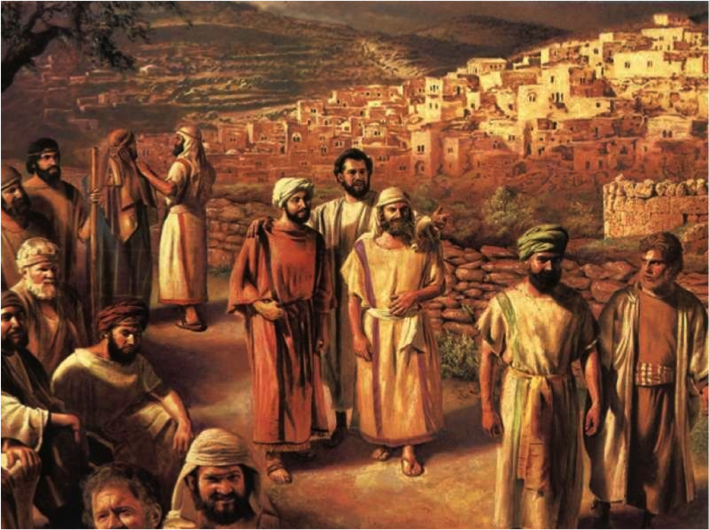
I. Real Rejoicing – The text says, Jesus departed from there and came to his native place, accompanied by his disciples. When the sabbath came he began to teach in the synagogue, and many who heard him were astonished. They said, “Where did this man get all this? What kind of wisdom has been given him? What mighty deeds are wrought by his hands!”
Thus, the initial reaction of Jesus’ hometown crowd is positive. They are filled with amazement and joy. The text sets forth two sources of their joy:
His wise words – Many who heard him were astonished. They said, “Where did this man get all this? What kind of wisdom has been given him?” Yes, what a blessing it must have been to hear Jesus preach. And boy, could Jesus preach! Scripture says of His preaching,
And when Jesus finished these sayings, the crowds were astonished at his teaching, for he taught them as one who had authority, and not as their scribes (Mat 7:28).
Sent to arrest him the temple guard returned empty handed saying: No one ever spoke like that man (Jn 7:46).
And all spoke well of him, and wondered at the gracious words which proceeded out of his mouth (Luke 4:22).
And the common people heard him gladly (Mark 12:37).
His wonderful works – They also say, “What mighty deeds are wrought by his hands!” Yes, Jesus had worked many miracles up to this point. He had
cast out demons,
turned water to wine,
raised up paralytics,
cured the man with a withered hand,
cast out blindness,
healed deafness,
multiplied loaves and fishes,
calmed storms, and
raised up Jairus’ daughter from the dead.
And so we see that the initial reaction to Jesus preaching is good. Their remarks and rejoicing are a sign that the Spirit is working and prompting them to belief.
Things are about to turn sour, however. The Word of God can fall on the rocky soil of hearts, where it springs up but soon withers because the soil is so shallow. Or His Word can be sown on the paths of hearts where the birds of the sky come and carry it off. Or the Word of the Lord can fall on divided hearts, where the thorns of worldliness and the anxieties of the world choke it off. And sometimes it falls on good soil, where it yields thirty, sixty, or a hundred-fold (cf Matt 13:1-9).
II. Rude Rejection– The text says, [But some began to say] Is he not the carpenter, the son of Mary, and the brother of James and Joses and Judas and Simon? And are not his sisters here with us?” And they took offense at him.
Notice how sudden their change is. There is an old spiritual that says, “Some go to church for to sing and shout, before six months they’s all turned out!”
They harden their hearts. Yes, the tide mysteriously and suddenly turns against Jesus. Sin has set in and hearts have hardened; the joy has been jettisoned. Though the Holy Spirit prompts them to faith and to call Jesus, “Lord,” they harden their hearts. It is a grim and tragic sin.
They also exhibit a kind of prejudice or unjust discrimination, dismissing Jesus as a mere carpenter and a “hometown boy.” It is odd that the poor and oppressed sometimes take up the voice of the oppressor. Thus, these simple people from a small town of only 300 take up the voice of the Jerusalemites, who regarded Galileans as “poor backwoods clowns” and as unlettered people. Yes, Jesus’ own townsfolk take up the voice of the oppressor and say to Him, in effect, “Stay in your place. You have no business being smart, talented, wise, or great. You’re just one of us and should amount to nothing.” It is the same sort of tragic rebuke that sometimes takes place among minority students who excel in school, when some of their fellow minority students accuse them of “going white.” It’s tragic.
They also exhibit the sin of envy. Envy is sadness or anger at the goodness or excellence of another person because we take it as diminishing our own. The text says, And they took offense at him. St. Augustine called envy the diabolical sin. This is because it seeks not to possess the good of another (as jealousy does), but rather to destroy what is good in others so that the destroyer can look better.
The result of these sins was that Nazareth was not a place where excellence was known, even among its own! Indeed, John 1:46 records Nathanael saying of Nazareth, “Nazareth! Can anything good come from there?” It would seem that even the townsfolk of Nazareth would agree! (But Philip, who surrendered his prejudice, said to Nathanael, “Come and see.”)
But an even more awful result of these sins ensues.
III. Ruinous Result– The text says, Jesus said to them, “A prophet is not without honor except in his native place and among his own kin and in his own house.” So he was not able to perform any mighty deed there, apart from curing a few sick people by laying hands on them. He was amazed at their lack of faith.
Because they judge Him to be nothing, they get nothing. They have blocked their blessings.
Jesus says, He who receives a prophet because he is a prophet shall receive a prophet’s reward, and he who receives a righteous man because he is a righteous man shall receive a righteous man’s reward (Mat 10:41). When we banish or discredit God, however, we should not expect to see many of His works. These things come only from faith.
Miracles are the result of faith, not the cause of it. Thus, the text says, So [Jesus] was not able to perform any mighty deed there … He was amazed at their lack of faith.
There are some things that even God can’t do, not because He lacks the power but because He respects our choices. Pay attention. The Lord is offering us salvation and the Kingdom of Heaven. Either we reach out to take it or we don’t, but the choice is ours. If we take it, He’ll go to work, but if we refuse, He respects our freedom and will “not be able” to perform any mighty deeds.
What a ruinous result for Nazareth and for all who reject the prophetic utterances of our Lord and His saving help. Scripture says,
I am the LORD your God, who brought you up out of the land of Egypt. Open your mouth wide, and I will fill it. “But my people did not listen to my voice; Israel would have none of me. So I gave them over to their stubborn hearts, to follow their own counsels. O that my people would listen to me, that Israel would walk in my ways! I would soon subdue their enemies, and turn my hand against their foes. Those who hate the LORD would cringe toward him, and their fate would last for ever. I would feed you with the finest of the wheat, and with honey from the rock I would satisfy you” (Psalm 81:10-16).
Either we accept God’s word and yield to its healing and saving power or we can expect little or nothing but ultimate ruin. It is as if we are in a raging stream heading toward the falls and almost certain death, but then a hand is stretched out to save us—the hand of Jesus. Mysteriously, we reject that hand and ridicule its power. The ruinous result of our hideous and foolish rejection is our death. The text says, He was amazed at their lack of faith.
Pay attention! God is preaching the Word to you every Sunday—every day, in fact. Will you heed and be healed? Will you receive and be rescued? Or will you reject and be ruined? Will the Lord be able to do mighty deeds for you? Or will He be amazed at your lack of faith? The choice is yours; it is all yours.
What of our nation, once steeped in the Word of God? The Founding Fathers once wove Scripture freely into their discourse, but in recent decades a hostile secularism has insisted on marginalizing all references to God and scoffing at biblical morality. They talk “tolerance” yet file lawsuits against those who would dare speak of God, display a nativity, or call something a sin. There is no room in this post to present statistics that show our blessings ebbing away, but it is clear that as our families disintegrate, a nation that once led the world in almost every respect is now well back in the pack and fading fast. To forsake the preaching of Christ though His Scripture and His Church is to forfeit blessings. He can work no miracles here because of our lack of faith.
Even Jesus can have a bad day in the pulpit, but it is not really His bad day—it is ours. If we sinfully reject the Word of God, it is we who will forfeit blessings and miracles because of our lack of faith.