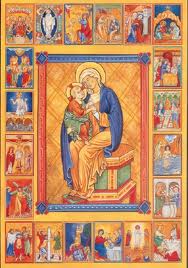
Lessons from the Life of St. Francis

Many fine histories exist on the life of St. Francis and I would not need to replicate them here. But on this Feast of St. Francis it might be significant for us to reflect on a few lessons from his life.

1.       On the possibility of radical conversion and the role of affliction and humiliation – St. Francis had lived and experienced the life of great wealth. The son of a successful cloth merchant, he enjoyed a very affluent easy life growing up and partook  of the permissiveness of the times. He was a natural leader and drew to himself a crowd of young people who spent their nights in wild parties. His biographer, Thomas of Celano, said of him that him that, “He attracted to himself a whole retinue of young people addicted to evil and accustomed to vice.”  He had visions of grandeur and became a knight. Perhaps the horrors of battle and a year as a prisoner of war began a gradual conversion in him. The Fourth Crusade was called in 1205  and Francis impulsively bought new armor and sallied forth. But perhaps his own anxiety, and more surely a vision, wherein God rebuked his manner of life,  led him to turn back. At home he was derided as a coward and suffered great wrath from his earthly father.

This crisis in his life led ultimately to his conversion, and a dramatic one at that. The Book of Psalms says, Before I was afflicted I strayed. But now I have kept your word, O Lord (Psalm 119:67).   We all know people whose conversion seems unlikely. But God may yet humble them and draw them to conversion. Further, we ought never underestimate the fact that affliction and humiliation may be a necessary component of conversion for many of us. At times we may feel as though God has abandoned us, or others we love. In fact he may be doing some very important work. Our greatest enemy is pride and our best friend is humility. Humility and affliction may be gifts in strange packages. Learn to trust in God’s ways, painful though they may be, sometimes. God may be drawing us, and those we love,  to deeper conversion.

2. On the freedom of poverty and simplicity – Francis and his early companions embraced a life of radical poverty. So severe was this poverty that some thought them mad and rebuked  their ways as beyond rational. St. Francis responded, If we had any possessions we should need weapons and laws to defend them.  One hagiographer says, Possessing something was the death of love for Francis. Also, Francis reasoned, what could you do to a man who owns nothing? You can’t starve a fasting man, you can’t steal from someone who has no money, you can’t ruin someone who hates prestige. They were truly free. [1] Not all of us may be able to embrace this radical poverty due to our obligations to others. But, more and more, we ought to experience a growing simplicity of life that frees us from the power of this world. Poverty and simplicity are powerful and fruitful gifts of God. Once again, they are gifts in strange packages. But, if we can learn to embrace them, we discover greater freedom.

3. On the Love of God’s Church and how reform is best accomplished – During St. Francis’ lifetime the Church was in need of reform. Greed, worldliness and scandal were problems among clergy and laity as well. Heresies were abundant. Some, noting sin in the Church have chosen to hate the Church and leave her. But others, like Francis, hear the call of God,  who never ceases to love His Church, and they, themselves, intensify their love for the Church and work for her reform. In a vision,  St. Francis sensed the call from God: “Francis, Repair my Church.” Gradually he deepened his understanding of the Lord’s call and began that reform by seeing first to his very own life.

It is possible for critics of the Church to excoriate the sins of others, but not see their own. Francis began in the vineyard of his own life and then went forth gently preaching conversion by personal example to his neighbors. The movement for reform spread. It was grassroots, it was personal. True reform begins with me. Simply denouncing the sins of others or the Church, real though these sins may be, seldom has lasting effect. The best reform  starts with personal conversion. Personal conversion spreads to others, and reform is underway. Within 10 years there were over 5,000 men in Francis’ community and the Poor Clares were also well underway. It works. If I let God set me on fire, then I can spread that fire.

4. On unity with all creation and the gift of wonder and awe -St. Francis thought of nature, all God’s creation, as part of his brotherhood. In some sense, the sparrow was as much his brother as the Pope.

There is a radical tendency today, in some of the environmental movement,  that sees man as the enemy of the natural world, rather than an integral part of it. We can tend to see ourselves as outsiders of the natural world, rather than partakers and members of it. But for St. Francis there was brotherhood. And in brotherhood there are legitimate needs we supply one another. Nature supplies us and we in turn help to perfect nature. We have done this in our best moments by helping to increase the yield of our fields and bring far greater bounty to the earth by agriculture and animal husbandry. We also seek to master disease and push back the destructive boundaries of what is unruly in nature, such as infestations and the like. It is true we have often transgressed by unnecessary pollution and the like. But in the end we are not the enemies of nature, we are companions and brethren to the natural world.

St. Francis can help us to find this balance. He surely exhibited a sense of gratitude for God’s creation and a deep wonder and awe at all that God has given. We too ought to develop a deep appreciation for the beauty of God’s work and reverence our very selves as a part of that creation.  In the first video below is a meditation based on the poem and prayer of St. Francis known as the Canticle of the Sun, his meditation on the magnificence of creation.

5. On the Need to Evangelize the Muslim World – We may think that the struggle with the Muslim world is new. It is not. In his life, St Francis decided to go to Syria to convert the Moslems while the Fifth Crusade was being fought. In the middle of a battle, Francis decided to do the simplest thing and go straight to the sultan to make peace. He and his companion were captured and  Francis was taken to the sultan, Melek-el-Kamel. Francis challenged the Muslim scholars to a test of true religion by fire; but they refused. Francis proposed to enter the fire first, under the condition that if he left the fire unharmed, the sultan would have to recognize Christ as true God. The offer was turned down but the sultan was so impressed that he allowed Francis to preach to his subjects. Though Francis did not succeed in converting the sultan, the last words of the sultan to Francis of Assisi were, Pray for me that God may deign to reveal to me that law and faith which is most pleasing to him.  This work of Francis  and his attempted rapprochement with the Muslim world had far-reaching consequences, long past his own death, since after the fall of the Crusader Kingdom,  it would be the Franciscans, of all Catholics, who would be allowed to stay on in the Holy Land and be recognized as “Custodians of the Holy Land” on behalf of Christianity. [2]

In times like these, when extremist forms of Islam have emerged, we need, more than ever to have the courage of St. Francis to engage the Islamic world and seek to bring them to Christ. It may be difficult work and successes may be few at this stage. But God calls us to be faithful, not successful. Ultimate success is up to God. We who are Catholics have a special role in this evangelization since the Muslim world shares with us a respect for Mary, Mother of Jesus our Lord. More on that in a future post.

This first video is set to the Music “All Creatures of Our God and King.” This hymn is based closely on the poem by St. Francis Canticum Fratris Solis (Canticle of Brother Sun) :


This second video is a very charming video of a man who has taught his dog to pray:

Five Fundamentals of a Firm Faith – A Meditation on the Readings for the 27th Sunday of the Year

The readings for today’s Mass provide a rich fare in describing some essential qualities of faith. Each of these amounts to a fundamental for firm faith. There are five fundamentals that can be seen:

1.  Want   The apostles said to the Lord, “Increase our faith.”  (Luke 17:5-6). There’s an old saying, “What you want, you get.” It is true that many doubt this and think that they have wanted many things that they did not get. But it is likely they didn’t want it enough. Precluding physical impossibilities and other impossible things, when we really want something enough we usually get it. That’s because we work at it and have a passion for it.

Many people who say they cannot find time to pray or go to Church still find time to golf, watch TV and eat. They find the time because they want to do these things. They do not find time to pray or go to Mass because they do not want to do these things enough.

Hence, the apostles ask the Lord to increase their faith. In effect they ask for a deeper desire to know the Lord. Too often we miss a step in our prayer. We might ask the Lord to help us to pray when what we really should ask for is that the Lord give us a desire to pray. For, when we want to pray, we will  pray. When we want to be holy, we will naturally strive for holy practices. It is about what we desire, what we want. Ask the Lord to help you want Him and his kingdom. Ask the Lord for a new heart that has proper wants and desires. Ask the Lord for a new mind that has proper priorities and that prefers to think on what is good, true and beautiful. What you want, you get.

 2. Wait How long, O LORD? I cry for help  but you do not listen!  I cry out to you, “Violence!” but you do not intervene. Why do you let me see ruin; why must I look at misery?  Destruction and violence are before me; there is strife, and clamorous discord. Then the LORD answered me and said:  Write down the vision clearly upon the tablets,  so that one can read it readily.  For the vision still has its time,  presses on to fulfillment, and will not disappoint;  if it delays, wait for it, it will surely come, it will not be late.  The rash one has no integrity(Hab 1:2-3; 2:2-4) –

Waiting is one of the great mysteries of the Christian life. Why God often makes us wait is not always clear. Perhaps He is trying to strengthen our faith. Perhaps he is helping us clarify or confirm our desires. But, truth be told, waiting on the Lord has a lot of mystery about it. Nevertheless it is consistently told us in scripture that we must learn to wait on the Lord  and that there are blessings  for those who do.  For example:

  1. Ps 37:8 Fret not yourself; it tends only to evil….those who wait for the LORD shall possess the land.
  2. Is 49:23 those who wait for me shall not be put to shame.
  3. Lam 3:25  The LORD is good to those who wait for him, to the soul that seeks him.  It is good that one should wait quietly for the salvation of the LORD.
  4. Is 40:31  but they who wait for the LORD shall renew their strength, they shall mount up with wings like eagles, they shall run and not be weary, they shall walk and not faint.

And so, waiting is a fundamental of firm faith. Gospel music is replete with waiting themes. One song says , You can’t Hurry God, you just have to wait, trust and never doubt him, no matter how long it takes. He may not come when you want him but he’s always right on time.  Another song says, Weeping may endure for a night but joy will come with the morning light. Other songs counsel that we must hold on and hold out:

  1. I promised the Lord that I would hold out, he said he’d meet me in Galilee
  2. Hold on just a little while longer, every thing’s gonna be alright
  3. Keep your hand on the plow…Hold on
  4. Lord help me to hold out, until my change comes!

The reading from Habakkuk above warns that the rash man has no integrity. That is another way of saying that waiting is integral to the Christian life. It is a fundamental of faith. To have integrity means to have all the necessary pieces and parts which make up the whole. To lack patience then is to lack integrity, to lack an essential fundamental of the Christian faith.

3. Withstand God did not give us a spirit of cowardice but rather of power and love and self-control.   So do not be ashamed of your testimony to our Lord,  nor of me, a prisoner for his sake; but bear your share of hardship for the gospel with the strength that comes from God. (2 Tim 1:6-8)  This quote from today’s second reading tells us that life has its difficulties and challenges. Things do not always get easier by becoming a Christian. In fact, they often get harder since we must endure the hatred and ridicule of the world. Thus a fundamental of the Christian Faith is that we be able to withstand such things with courage.

Notice that this courage, power and love come from God, not from us. Hence it is grace that is being described here. This is not a moralism or a slogan. Withstanding means that God is “standing with” us, and we with God. Such withstanding is only possible by the relationship with God that comes by faith. In this way we discover the power, the capacity to withstand, to courageously live the Christian faith in a hostile world.

4. Work –  Who among you would say to your servant who has just come in from plowing or tending sheep in the field,  ‘Come here immediately and take your place at table’?   Would he not rather say to him,  ‘Prepare something for me to eat.  Put on your apron and wait on me while I eat and drink.  You may eat and drink when I am finished’?   Is he grateful to that servant because he did what was commanded?  So should it be with you. When you have done all you have been commanded, say, ‘We are unprofitable servants; we have done what we were obliged to do.‘” (Luke 17:6-10) This saying of the Lord in today’s Gospel can tend to irritate us and even seem hurtful if we misunderstand grace and seek to understand this text by the flesh. Our flesh is self-centered and thinks we deserve praise and good things from God for the good things we do. The flesh expects, it demands,  rewards. But the fact is that we can never have God in debt to us, never. If we have good works, they are not our gift to God, they are His gift to us.

All our works of charity and faith which our flesh wants credit for, they are all God’s work and God’s gift. The letter to the Ephesians makes this clear:

For by grace you have been saved through faith; and this is not your own doing, it is the gift of God–  not because of works, lest any man should boast.  For we are his workmanship, created in Christ Jesus for good works, which God prepared beforehand, that we should walk in them. (Eph 2:8-10)

Hence if I think that I did something deserving of praise and reward I am thinking in terms of the flesh not the spirit. All I can really say to God is “Thank You” when I have done something good like caring for the poor or keeping the commandments. His grace alone permitted me to work them. God may speak elsewhere of rewarding us but that is His business. He is not in debt to us in anyway. When we have done everything we ought our one disposition should be gratitude. We are useless servants in the sense that we can do nothing without God’s grace. We can only do what we are told and what He enables us to do.

That said, it is clear, work is a pillar of faith. The text from today’s gospel and the text from Ephesians just above both make clear that work is something God has for us.  James 2:17 says,  So faith by itself, if it has no works, is dead. Likewise, Jesus says, “It was not you who chose me. It was I who chose you that you should go and bear fruit that will last”(Jn 15:16) Work is a fundamental of faith.

5. Win –  For the vision still has it’s time, it presses on to fulfillment and it will not disappoint. It will surely come, it will not be late.(Hab 2:3) Yes, it is true that we must want, wait, withstand and work. But we do not do this to no purpose. We have a cross to carry. But if we carry it with the Lord, we carry it to glory. The end of today’s first reading makes this clear. There is an old Gospel song that says,

Harder yet may be the fight, Right may often yield to might, Wickedness awhile may reign, Satan’s cause may seem to gain, There is a God that rules above, With hand of power and heart of love, If I am right, He’ll fight my battle, I shall have peace some day. I do not know how long ’twill be, Nor what the future holds for me, But this I know, if Jesus leads me, I shall get home some day.

This is what Habakkuk describes, that we will win with Jesus. He describes a victory that is

  1. Future – the vision still has it’s time, it presses on to fulfillment
  2. Fantastic – and it will not disappoint
  3. Firm – It will surely come
  4. Fixed – it will not be late

For all those who walk with Jesus on the way of the Cross, there is victory up ahead. Even here we already enjoy the fruits of crosses past. Our withstanding of the past has given us strength for today. Our waitings of the past have had their fulfillment and are the hope that our current waiting too will have its fruit. Our work by God’s grace has already granted benefits to ourselves and others.

But these are but a small foretaste of  a greater glory to come, which waits for us in heaven. Yes, if we want, and wait, withstand and work,  we will win! I promise it to you in the Lord Jesus Christ.

The Refrain of this song says, I do not know how long t’will be nor what the future holds for me. But this I know, If Jesus leads me, I shall get home some day.

Angels as Evangelizers

Today, we celebrate the feast of the Guardian Angels. It would be hard to improve on Msgr. Pope’s excellent blog last week. So, rather than do that, I’d like to propose that we can learn something about evangelization from the angels. After all, one of the primary missions of angels is to announce good news. Dr. Jem Sullivan in a recent talk at the John Paul II Cultural Center, suggested that angels show us how our lives can radiate the message and truth of the Gospel.

Pope Benedict also pointed to the enduring presence of angels in his address to public officials at Westminster Hall when he pointed to the painting on the ceiling of the hall and said “The angels looking down on us from the magnificent ceiling of this ancient hall remind us of the long tradition from which British Parliamentary democracy has evolved. They remind us that God is constantly watching over us to guide and protect us. And they summon us to acknowledge the vital contribution that religious belief has made and can continue to make to the life of the nation.”

It seems fitting today to thank God for the gift of our guardian angel and to thank our guardian angel for staying so close to God and to us.

What I Ask of Science

We live in a time when science is exulted. But the problem with science is that it is only able to deal with the material and the measurable. Hence to exalt science to the exclusion of other ways of knowing is to take the partial and declare it to be the whole.

Yet it is demonstrable that there are many things that are real yet not physical, not material, not measurable. Love is real, hate is real. They are not physical, measurable entities, though we can see their effects. Concepts such as justice, happiness and the like are not material or real though it is clear enough that they exist and that we can see their effects. They cannot be placed in a test tube or weighed on a scale, not matter how sensitive the scale. They are simply beyond what science is equipped to address.

So too with faith and with God. Many dismiss the claims of faith that God exists. This is done because there is no “proof” for it. By “proof” is usually meant scientific evidence and physical, measurable things. But, as already discussed, not all reality  falls into this realm of the physical and measurable. What faith claims is, that God exists, but not that he would tip the scales in some laboratory. There is more to life and reality than what physical science can measure.

That God exists is beyond the realm of science which deals only with the physically observable and measurable. We cannot see him though I would assert we can experience the effects of God’s existence. These effects manifest themselves in the careful order of the world, in the evident design we see about us. For example, we live a world wherein things tend to fall apart and return to their basic components unless acted upon by an outside energy. Consider for example how a corpse does this, or an abandoned house. And yet when we look at creation we see a kind of reverse process as well where simple things become more complex and build up in an orderly sort of way. We rightly conclude that they are being acted upon by some outside force of intelligence and reason. This force cannot be measured in a test tube but its effects are observable.

I accept that this alone does not prove the Christian God, only an outside force. I do not expect science to conclude that God exists, only that there is order observable in the universe otherwise prone to entropy and chaos.

I only ask – Proving God is beyond the realm  and capacity of science. I only ask this, that science and scientists limit themselves to scientific pronouncements and resist the urge to go beyond science by declaring that there is no God. They cannot say this by science. To say there is no God is not a scientific statement, it is a philosophical and theological one. Some scientists have strayed  from their field making such claims. Even more commonly, many fans of science, often try invoke science for their atheist claims. But science cannot be enlisted in this way. All that can be asserted  is that science cannot prove by its own methods that God exists. The partial is not the whole and all knowledge cannot be reduced to physical science. All the scientist can or need say is that existence of God is not our call to make. It is beyond the realm of science, beyond the measurable or visible. There are many such things beyond the realm of science and all I ask is that science, and fans of science,  accept its limitations and not make claims that science cannot make.

This song says, “There’s more to life than just what I can see. ”

Enhancing The Beauty of the Mass

These are times when many of the clergy have (properly) insisted on returning to a strict following of the General Instruction of the Roman Missal (GIRM).These instructions are found in two essential places: the instructions at the beginning of the Sacramentary and the red instructions interspersed within the prayers of the Mass. These last instructions are called the rubrics. Fr. Zuhlsdorf is famous for the simple instruction,  “Say the black and do the red.” That is to say, the prayers, written in black ought to be said, just as written, and the red instructions are to be followed exactly. To this I say a hearty “Amen.”

However, I would like to point to a step beyond in the celebration of the Mass wherein we celebrants might also re-learn some old habits that lent grace to the Mass, particularly in terms of the movements of the celebrant. While such suggestions are not strictly required, they can lend a real grace to the actions of the celebrant and to the Mass in general. (By the way I want to say that I just returned from giving a priest retreat and this post is NOT written in response to that. All the priests there did a fine job celebrating Mass. I had this written prior to my leaving for the retreat).

Helpful norms – I have learned these things largely by saying the Traditional Latin Mass which described the motions of the celebrant in great detail. However, I have also tired to observe what I can in the Ordinary Form of the Mass as well. If matters such as these are observed, though not in a robotic fashion, there can be a greater grace of movement and a deliberateness that lends to the solemnity of the Mass. Here are a few suggestions from the “old days” that can help:

1. When making the sign of the cross upon himself at the beginning of mass the Celebrant uses his right hand. But his left hand should not be left suspended in the air or dangling. He ought to place it on on his chest, just at the bottom of the breast bone as he makes the sign of the cross with his right hand. When finished his hands should be rejoined in the center.

2. The same is true when blessing the people at the end. The celebrant places his left hand at the bottom of his chest and he blesses the people with his right hand: fingers joined and straight. His right and left motions should reach far enough, to his left and right shoulders. Again, when finished, his hands should join in the center.

3. The hands – In general when the celebrant is standing and his hands are not in use they are joined, fingers straight and thumbs crossed at his breast. When the celebrant is seated, his hands should rest, separated, palms down, one on each thigh, near the knee.

4. When the celebrant moves somewhere in the sanctuary, he ought to turn in that direction, hands joined at the chest, prior to moving in that direction. In general simply stepping laterally to the left or right should be avoided.

5. The bowing of the head – It is appropriate at Mass to bow the head at certain times, such as after the priest says, Let us pray,” or at the name of Jesus. The simple bow of the head is accomplished entirely by the neck. The shoulder do not lunge and the torso does not move at all. The neck is like a hinge and the bow of the head is accomplished entirely at the neck and above.

6. Turning pages – When the priest is at the altar and turns the page of the missal, he does so (usually) with his left hand, while his right hand rests on the altar, not suspended in the air or dangling.

7. Epiclesis – Likewise when the priest makes the sign of the cross over the bread and wine just prior to the consecration he does so with his right hand, while his left hand rests on the altar, just outside the corporal. The left hand is not dangling in the air etc.

Well this is enough, since most of you are not priests. However, it is always good for the laity to encourage those of us who are priests when you observe reverence. We are human and can become forgetful of things in the Mass. Sometimes too we are not aware of how we come across. So, encourage us when you observe devotion and piety. Some years ago it was called to my attention that I tended to fiddle with my glasses a good bit when at the altar and that sometimes my fingers moved a lot when I was praying the Eucharistic prayer. I was unaware of these things and was (kindly) informed by the deacon.

In the end I have found some of the old “rules” helpful. They need to be done with manner that is not robotic or contrived, otherwise they may come across as affectations.

Perhaps you would like to add to the list or raise some concerns of things you have noticed at Mass. Please remember, be kind and constructive in the observations you make. Also, this need not become a post wherein we battle about forms of the Liturgy either. I am trying to emphasize matters that pertain to both forms of the liturgy.

The following video shows a priest making use of some of what we have discussed here. I am not sure exactly how I think he comes across. At one level I think he is more formal and restrained in his motions than I would be. But on him it looks good.

Catholicism is fun

My wife is very much a fan of everything horses. So last weekend, we went to see part of the World Equestrian Games in the horse capital of the world, Lexington, Kentucky. Being a “Horse Capital” Lexington is covered with horse statues decorated with various themes and motifs. It reminded me of the panda bears that dotted Washington a few years ago.

“The Run for the Rosaries”

On Saturday evening on our way out of church, we discovered a horse whose motif was a play on the nickname for the Kentucky Derby. Instead of the “Run for the Roses” this horse was entitled “The Run for the Rosaries.” As you can see from the picture, the horse is decorated with Marian symbols and has an actual rosary painted around its torso. After having seen so many of these horses during the day, this one caught our attention, made us laugh and turned us into obvious picture-taking tourists.

Catholicism is fun

We were so animated in our amusement that two parishioners easily tagged us as tourists.   They were equally amused at our reaction to the artwork. They eagerly explained the history of the painted horses in Lexington and the history of the horse we were admiring. Additionally, they readily admitted that they walk by the horse every week but never really appreciated it. We laughed about the horse and about the pride it showed in our faith as well as their town. In the middle of our conversation one of the two parishioners exclaimed, “You know, Catholicism is a lot of fun, isn’t it?”

If you are Catholic, have a little fun today

I can’t remember that last time I have heard someone describe Catholicism as “fun.” I have heard it described as fulfilling, enduring, influential, essential and even complicated – but fun?
In front of a Catholic Church is Lexington, Kentucky, four Catholics from different parts of the country discovered that Catholicism is indeed fun. This equestrian tribute to Our Lady and her Rosary is a reminder that our faith can bring laughter and joy as readily as it can bring comfort and security.

I pray that you have fun being a Catholic today. My wife and I sure did last week in Kentucky!

Could this be the start of something?

Last week I wrote about people in the archdiocese putting evangelization into practice by making the sign of the cross and praying grace in public places. Of course, this is not something new. In this painting, the great early 15th century English mystic, Julian of Norwich, is making the sign of the cross as she blesses a person seeking her prayer.

Yesterday and Today

A fellow Brit, Archbishop Vincent Nichols, following in Julian’s footsteps and seeking to make more ermanent some of the graces of the Holy Father’s visit is asking Catholics to  bless themselves openly with the sign of the cross, to offer to pray for people and to make such remarks to people as “God bless you,” as a way to make one’s faith more visible in daily life.  It seems that the New Evanglization is finding a place on both sides of the pond!

Are We Really Over-Populated?

One of the seeming premises of the culture of death is that human life is essentially a bad thing. The thinking goes that there are too many of us and that we destroy the planet by our mere presence and use of resources that could be put to better use by more noble creatures like the animals. The Culture of Death has used a lot of fearmongering over the past decades to make great inroads into the western psyche. One of the fearful images I vivdly remember from a Star Trek episode where they visit a planet that is horribly over-populated. Since I am away this week preaching a priest retreat I thought I might re-post this blog from about a year ago. I will monitor comments and so encourage you to comment.

It was always drilled in to us when I was growing up that the planet was overpopulated. We were promised famines, and disease by the doomsayers. Clearly we were headed for disaster and only contraception could save us. Some also suggested forced sterilization and abortion for recalcitrant reproducers, like they have done in China.

But really! How overpopulated are we? What kind of a physical footprint do we really have on this planet? Try this on for size.

  1. There are currently about 6 Billion people on this planet.
  2. Lets put them, four to house on a quarter acre of land. This is the typical size of a traditional suburban lot.
  3. Now, physically, how big is the suburb of houses we’ve created?
  4. Let’s see, 6,000,000,000 four to a house is 1.5 Billion houses.
  5. 1.5 Billion Houses on a quarter acre each is 375 Million Acres.
  6. What does 375 Million Acres compare to? Well lets see, The state of Texas is 171904640 acres. 375 Million Acres is just over twice the size of the State of Texas (2.18 Texases to be exact). It also equates to 3.6 Californias. Why Alaska at 420 Million Acres could hold them all and still have 45 million acres left over.

So there you have it. “But Father, but Father… we can’t all live in a suburb like that. We need roads, shopping centers, parks, farmland, schools, etc.” Yes indeed, but as you can see there is a lot of land left over. I think we’ll squeeze it all in somehow. Point is, there’s plenty good room. We are a long way from fulfilling God’s mandate to “be fruitfull and multiply to fill the earth and subdue it.” (Gen 1:28)

What of famines? True there are shortages in the world here and there. We have plenty of food here in America but it is sometimes hard to get it to famine regions due to war and corrupt governments. We have the food, it’s getting it there that is the problem. That’s why allowing starvation is so immoral. We have so much abundance in the god ole USA that our government actually pays farmers not to plant to help keep prices higher.

What of water? Fresh water is limited. But we can desalinate. Right now it costs too much but I have little doubt that as the need grows for more fresh water we will find more cost-effective ways to desalinate.

What about climate change? – not too sure about that. It does seem clear that the climate has always been changing. That was the case even before we were here. Climate has always changed, quite radically actually, and we, and the planet,  have adjusted.

Why is this on a Catholic blog? Well think about it, contraception, abortion, sterilization, even euthanasia all march under banners that, among other things, appeal to fear about overpopulation. The Church has often been ridiculed for being out of touch and insensitive to the great question of overpopulation. This little presentation has had as a goal to spark a discussion if such fears are really justified or is it just another fear mongering myth? How say you?

Here’s the scary Star Trek video I remember. Look at the terrible crowds  outside the window. We were told to expect such terrible things if we didn’t stop reproducing. Notice how Kirk suggests contraception and sterilization.

The following video gives a little more background to the history of overpopulation concerns. I think its a good video but, as you will see, I think they underestimate a little the acreage necessary to house six billion. They say one Texas I say two. But hey, it’s all pretty clear, we’ve got a lot of land, God’s been generous. Also, the video says population will peak in 30 years and then start to go back down. I am not sure how they say that or know it.