The Archdiocese of Washington, DC is hosting daily reflections on its Facebook page for the Year of Faith. Have you missed them? Today we are starting the next weekly series on faith. Please visit our page and “like” us, so you can follow along with the rest of the series.
Theme: Friendship.
1. Can we be friends with God?
Friendship is the very basis of our relationship with God in Jesus Christ: “I no longer call you slaves…I have called you friends.” (Jn 15:15) One quality of friendship is an exchange of personal knowledge and openness. As St. Thomas Aquinas says, “It is proper to friendship that a man reveal his secrets to his friend: because friendship unites their affections, and of two hearts makes one.” Couldn’t you use a good friend right about now? Friends talk to one another; friends listen to one another. When was the last time you spoke to Jesus as a true friend and from your heart? He is listening.
2. Why is it good to share things with our friends?
Another mark of friendship is that we share our belongings with our friends. “A friend is another self,” so we help a friend as we would ourselves–which is part of willing and doing good for our friend. St. John asks, “But if any one has the world’s goods and sees his brother in need, yet closes his heart against him, how does God’s love abide in him?” (1 Jn 3:17) Think too of the great love God has for us. When we were His enemies, He cleansed and sanctified our hearts by the gift of the Holy Spirit, and thus made us His friends.
3. Do you find delight in the presence of God?
“It also belongs to friendship that a man delight in the presence of his friend, and rejoice in his words and deeds: also that he find in him consolation in all his troubles: hence it is especially to our friends that we have recourse in time of sorrow.” How true this is of our friendship with Jesus! When we look upon God in prayer with a loving gaze true delight arises in our hearts, and we are able to admire His goodness. This type of prayer is called contemplation. It makes us lovers of God, and it brings us amazing joy. Do you find delight in the presence of God? Does your friendship with Jesus bring you joy?
4. What if our friends hurt us?
At their best, friends are always trying to build one another up and seeking the others good. But we are not always at our best, and all too often we end up offending those we truly care about. Still, the bond of friendship can overcome even serious human failings because “love covers all offenses.” (Pr 10:21) Of course God’s love for us is the ultimate friendship, and likewise the ultimate example of forgiveness. Despite our countless offenses against Him, by His love we are pardoned and we can be restored to our undeserved status as friends of God. What is more, by our love for God we are called to love all who are His–all people, both our friends and our enemies.
5. Does friendship mean agreeing with my friend?
Another part of friendship is harmony with your friend. Friends often and easily unite their wills, even in the smallest things, and even if they are very different personalities. We are also friends with God. Jesus says, “If you love Me, keep My commandments” (Jn 14:15). Friendship with God means aligning our wills to His. But there is nothing burdensome or weary about agreeing with friends. In friendship, we aren’t oppressed by obligation, but moved by the weight of love. The Holy Spirit moves us to follow God’s commandments from the heart, with love. St. Paul says, “Whosoever are led by the Spirit of God, they are the sons of God” (Rom. 8:14).
Please don’t forget to visit our Facebook page and “like” it to follow this week’s daily reflections on the theme “faith.”
I like many of you heard of a recent Pew Research Center survey on Abortion (released just before the March for Life) that presents discouraging results. The very title of their release was trumpeted by secular Media: Most Oppose Overturning Abortion Decision. That was the lead and really the only thing the secular media wanted to hear.
The actual Pew report is a lot more difficult to read and the results are hard to compare with other surveys since the wording of the questions is never held constant. For example, the exclusion of rape/incest clauses makes for different results. Like it or not most Americans are more sanguine about abortions in cases of rape and incest (rare though such cases are). Whether respondents are given such distinctions makes a difference, as do other factors. For example, many if not most Americans favor any number of restrictions on Abortion short of a total ban and, depending on how the questions are asked, the restrictions they favor come close to a general exclusion of Abortion as a legal option. Thus there are many subtleties in the context and wording of questions.
You can see the full Pew Report here:Roe v. Wade at 40 Frankly the report is bewildering to my eyes, pointing in many different directions and broken into so many categories. It is hard to draw any real conclusions at least to my amateur statistician eyes.
Ramesh Ponnuru writing in National review on-line has some of the following observations of the Pew Report that also help place the survey in context and which raise the problem of leading questions flawed premises that plague such surveys. His remarks are in bold black italics, my comments are plain red text. His full article is Here: How Not to Read Abortion Polls
Actually, Pew did not find that support for Roe has been increasing. It found less support for Roe than it did in 2005, which appears to be the last time it asked the question. The ABC/Washington Post poll also found declining support for Roe between 2005 and 2010.
But of course the lead headlines all suggest that support for legal abortion was growing, not declining. The impression on radio and TV news was that over 70% Americans want Roe to stay just as it is.
But the fact is that Roe and subsequent rulings that brought us Abortion on mere demand for all nine months of pregnancy has been steadily eroding as an unabridged legal right. This is because Americans, at many state levels, are insisting on and getting increasing restrictions both on the abortion industry, and the right to unrestricted abortion for all nine months.
Americans do not in practice provide unqualified support for Roe and abortion on demand away from the poll takers survey. Late term abortion are far more repugnant to Americans, as are abortions for crass reasons such as sex-selection. There are many things that will influence how a person answers the survey.
Other polling does not find any leftward shift. The University of Michigan’s polling finds no clear change from 1990 through 2008. The CBS/New York Times poll shows no movement between 2003 and 2012. Gallup shows no clear change in either direction from 2002 to 2012. (It also finds no pro-choice majority: In May of 2012, 59 percent of respondents told Gallup abortion should be legal in a few circumstances or illegal in all circumstances, while 38 percent said it should be legal in “all” or “most” circumstances.) Harris’s numbers show a movement in the pro-life direction from 1993 to 2009 on the question of under what circumstances abortion should be legal.
And here is a key point that makes surveys hard to read. Some surveys ask the question of support for Roe in an all or nothing, up or down fashion. Other surveys introduce circumstances. And it would appear that the circumstances make a lot of difference.
And when poll takers do not add any circumstances or qualifiers to the question it is less clear what qualifiers the respondents read into the question. For example, if a person is asked to vote up or down on Roe it is important to know if they think Roe allows abortion only in the first three months or if they know that Roe permits abortion right up to the last moment in the womb. Far fewer Americans support abortion in month 8 than in week 4. Further, far fewer Americans support abortion for sex-selection than due to the health of the mother.
Simply reporting that a percentage of Americans support or don’t support Roe is not really very informative.
Pollsters [often] include misinformation in their questions about Roe, as both the Pew and NBC/WSJ polls do. They suggest falsely that Roe limits the abortion license to the first three months of pregnancy. (The combined effect of Roe and its companion case Doe v. Bolton is to make abortion legal at any stage of pregnancy.) The latter poll even uses the phrase “completely overturn” in its question, a qualifier that can be expected to lower support for the option….what the Roe polls are probably picking up is that a strong majority of the public does not favor a ban on all first-trimester abortions.
Exactly, and while we may wish that Americans rejected abortion under ALL circumstances, we may have to be content to change hearts incrementally in this matter. It is at the outer edges that the pro-life progress is most evident. For, as noted above there is a steady string of legislative and legal victories at state levels that have sought to limit abortions. Gradually Americans are more comfortable that access to abortion at any stage for any reason should not be unrestricted. This may then lay the groundwork for further progress in a total change of heart and rejection of abortion at all stages for more and more Americans.
Maybe it will turn out that the public is becoming more supportive of abortion. I’d wait to see more evidence before calling that trend, which may not exist at all, “clear.”
Yes, it seems clear that the media rush to publicize the Pew results simplistically was likely more illustrative of their own views than of what this limited result actually shows. Shame on Pew as well for their leading headline which probably was aimed more at publicity than careful analysis.
More the complexity of this issue was discussed a year and half ago on this blog when a Gallup Poll released then said that 61% of Americans want all, or most abortions, to be declared illegal. Even there, the nature of the questions had to be carefully factored in. You can read more of my blog from then Here: Americans Want most Abortion to be Illegal.
Fair is fair. We continue to have a battle on our hands, be I still contend that we are steadily eroding support for abortion at the edges and more Americans want more restrictions. We are heading in the right direction. Further embryology and medical science in general are on our side. Increasingly, with 3-D sonograms and the like the reality of life in the womb is evident to all but the most hardened.
Onward fellow pro-lifers. Time + evidence favor our cause. Do not be discouraged by misleading reports and undistinguished data.
For those of us in pro-life work there are important precedents to be seen in the fight against slavery, the Civil Rights Movement, and even in the anti-smoking campaign. Consistent, persistent and organized action brings eventual results. This is often a battle for inches, but inches become yards, and yards, miles. Keep a inching alone like a poor old inch worm, Jesus will come by and by.
I like many of you heard of a recent Pew Research Center survey on Abortion (released just before the March for Life) that presents discouraging results. The very title of their release was trumpeted by secular Media: Most Oppose Overturning Abortion Decision. That was the lead and really the only thing the secular media wanted to hear.
The actual Pew report is a lot more difficult to read and the results are hard to compare with other surveys since the wording of the questions is never held constant. For example, the exclusion of rape/incest clauses makes for different results. Like it or not most Americans are more sanguine about abortions in cases of rape and incest (rare though such cases are). Whether respondents are given such distinctions makes a difference, as do other factors. For example, many if not most Americans favor any number of restrictions on Abortion short of a total ban and, depending on how the questions are asked, the restrictions they favor come close to a general exclusion of Abortion as a legal option. Thus there are many subtleties in the context and wording of questions.
You can see the full Pew Report here:Roe v. Wade at 40 Frankly the report is bewildering to my eyes, pointing in many different directions and broken into so many categories. It is hard to draw any real conclusions at least to my amateur statistician eyes.
Ramesh Ponnuru writing in National review on-line has some of the following observations of the Pew Report that also help place the survey in context and which raise the problem of leading questions flawed premises that plague such surveys. His remarks are in bold black italics, my comments are plain red text. His full article is Here: How Not to Read Abortion Polls
Actually, Pew did not find that support for Roe has been increasing. It found less support for Roe than it did in 2005, which appears to be the last time it asked the question. The ABC/Washington Post poll also found declining support for Roe between 2005 and 2010.
But of course the lead headlines all suggest that support for legal abortion was growing, not declining. The impression on radio and TV news was that over 70% Americans want Roe to stay just as it is.
But the fact is that Roe and subsequent rulings that brought us Abortion on mere demand for all nine months of pregnancy has been steadily eroding as an unabridged legal right. This is because Americans, at many state levels, are insisting on and getting increasing restrictions both on the abortion industry, and the right to unrestricted abortion for all nine months.
Americans do not in practice provide unqualified support for Roe and abortion on demand away from the poll takers survey. Late term abortion are far more repugnant to Americans, as are abortions for crass reasons such as sex-selection. There are many things that will influence how a person answers the survey.
Other polling does not find any leftward shift. The University of Michigan’s polling finds no clear change from 1990 through 2008. The CBS/New York Times poll shows no movement between 2003 and 2012. Gallup shows no clear change in either direction from 2002 to 2012. (It also finds no pro-choice majority: In May of 2012, 59 percent of respondents told Gallup abortion should be legal in a few circumstances or illegal in all circumstances, while 38 percent said it should be legal in “all” or “most” circumstances.) Harris’s numbers show a movement in the pro-life direction from 1993 to 2009 on the question of under what circumstances abortion should be legal.
And here is a key point that makes surveys hard to read. Some surveys ask the question of support for Roe in an all or nothing, up or down fashion. Other surveys introduce circumstances. And it would appear that the circumstances make a lot of difference.
And when poll takers do not add any circumstances or qualifiers to the question it is less clear what qualifiers the respondents read into the question. For example, if a person is asked to vote up or down on Roe it is important to know if they think Roe allows abortion only in the first three months or if they know that Roe permits abortion right up to the last moment in the womb. Far fewer Americans support abortion in month 8 than in week 4. Further, far fewer Americans support abortion for sex-selection than due to the health of the mother.
Simply reporting that a percentage of Americans support or don’t support Roe is not really very informative.
Pollsters [often] include misinformation in their questions about Roe, as both the Pew and NBC/WSJ polls do. They suggest falsely that Roe limits the abortion license to the first three months of pregnancy. (The combined effect of Roe and its companion case Doe v. Bolton is to make abortion legal at any stage of pregnancy.) The latter poll even uses the phrase “completely overturn” in its question, a qualifier that can be expected to lower support for the option….what the Roe polls are probably picking up is that a strong majority of the public does not favor a ban on all first-trimester abortions.
Exactly, and while we may wish that Americans rejected abortion under ALL circumstances, we may have to be content to change hearts incrementally in this matter. It is at the outer edges that the pro-life progress is most evident. For, as noted above there is a steady string of legislative and legal victories at state levels that have sought to limit abortions. Gradually Americans are more comfortable that access to abortion at any stage for any reason should not be unrestricted. This may then lay the groundwork for further progress in a total change of heart and rejection of abortion at all stages for more and more Americans.
Maybe it will turn out that the public is becoming more supportive of abortion. I’d wait to see more evidence before calling that trend, which may not exist at all, “clear.”
Yes, it seems clear that the media rush to publicize the Pew results simplistically was likely more illustrative of their own views than of what this limited result actually shows. Shame on Pew as well for their leading headline which probably was aimed more at publicity than careful analysis.
More the complexity of this issue was discussed a year and half ago on this blog when a Gallup Poll released then said that 61% of Americans want all, or most abortions, to be declared illegal. Even there, the nature of the questions had to be carefully factored in. You can read more of my blog from then Here: Americans Want most Abortion to be Illegal.
Fair is fair. We continue to have a battle on our hands, be I still contend that we are steadily eroding support for abortion at the edges and more Americans want more restrictions. We are heading in the right direction. Further embryology and medical science in general are on our side. Increasingly, with 3-D sonograms and the like the reality of life in the womb is evident to all but the most hardened.
Onward fellow pro-lifers. Time + evidence favor our cause. Do not be discouraged by misleading reports and undistinguished data.
For those of us in pro-life work there are important precedents to be seen in the fight against slavery, the Civil Rights Movement, and even in the anti-smoking campaign. Consistent, persistent and organized action brings eventual results. This is often a battle for inches, but inches become yards, and yards, miles. Keep a inching alone like a poor old inch worm, Jesus will come by and by.
There was a wonderful excursus on the Church as the Body of Christ in the Sunday readings. Would that we might better appreciate the diversity of gifts in the Church today instead of being fearful or dismissive of gifts that we appreciate less. As a pastor, I have come to appreciate that people find their way to God in many and diverse ways and that when the Church permits diversity we ought respectfully rejoice in even in the ways we do not personally prefer.
I want to comment on the St. Paul’s analogy of the Body, but I thought, as a prelude, to reflect on the fruits of the Holy Spirit as a necessary foundation and background to St. Paul’s reflection hence this post and another to follow this week on the analogy of the Body.
The Fruits of the Holy Spirit in the Catholic Catechism and Tradition are drawn largely from St. Paul’s letter to the Galatians where he writes:
But the fruit of the Spirit is love, joy, peace, patience, kindness, goodness, faithfulness, gentleness and self-control. Against such things there is no law. Those who belong to Christ Jesus have crucified the sinful nature with its passions and desires. Since we live by the Spirit, let us keep in step with the Spirit. Let us not become conceited, provoking and envying each other. (Gal 5:22-26)
We can now look at each fruit and ponder its meaning, both ancient and new. Many of these insights are drawn from William Barclay and also from Strong’s Concordance and Greek Lexicon:
I. Love – ἀγάπη (agape) – to love with a God-like love, unconditionally, and vigorously, not counting the cost, not being based on mere reciprocity. It is wanting only what is good for the other. This sort of love is distinct from other forms of love in Greek such as eros (passionate love), philia (warm love most common in the family or among close friends, brotherly love), and storge (the love of affection usually for family members. Agape love is far above these and is, of necessity, a work of God so as to come to its fullest expression. Hence it is rightly called a fruit of the Holy Spirit. While some scholars argue that “agape” is a word that pagan Greek knew little of, this is just the point. The Early Christians took this little used or distinguished word from the Greek language and sanctified it with special meaning in the First Century. It has had the special meaning we described ever since.
II. Joy – χαρά (Chara) – The joy referred to here is more than a passing worldly joy. It is deeper than an emotional experience. It is rooted in God and comes from him. Since it does not have the world for its origin but, rather, comes from God, it is more serene and stable than worldly joy, which is merely emotional and lasts only for a time. For example, note the following uses elsewhere in Scripture and note how it is always connected, not to the world, but to the faith and to God:
Ps 30:11 – You have turned my mourning into joyful dancing. You have taken away my clothes of mourning and clothed me with joy,
Romans 14:17 – For the kingdom of God is not a matter of eating and drinking, but of righteousness, peace and joy in the Holy Spirit
Romans 15:13 – May the God of hope fill you with all joy and peace as you trust in him, so that you may overflow with hope by the power of the Holy Spirit
Phil 1:25 – Knowing this, I am convinced that I will remain alive so I can continue to help all of you grow and experience the joy of your faith.
III. Peace – εἰρήνη (eirene) – This is normally used in the Greek Bible to translate the Hebrew word shalom. This sort of peace is more than an absence of conflict. Rather it is the presence in the human person and their relationships of everything that should be there. It is a kind of equilibrium that comes from trusting in God and the experience that everything is alright, that everything is in the hands of God. It is the tranquil state of a soul fearing nothing from God and content with its earthly lot, of what so ever sort that is. On account of this experience, the human person does not obsessively seek to control people and things and is more content to allow things to unfold, rather than to control and manipulate the outcomes of life. In this sense, they become more peaceful toward others.
IV. Patience – μακροθυμία (makrothumia) – Generally the Greek world applied this word to a man who could avenge himself but did not. This word is often used in the Greek Scriptures in reference to God and his attitude to us. In the human person, this fruit of the Spirit causes us to be more willing to suffer the difficulties of life and of other people. We are less needful to avenge wrongs and slights and are more able to endure the imperfections of people and this world. In English we once had the concept of ‘long-tempered’ as a counterpart to ‘short-tempered,’ then makrothumia could be called the quality of being ‘long-tempered’. . . . which is also a quality of God (Ex 34:6). By this fruit we can forebear the crosses, miseries and difficulties of life in this world.
V. Kindness – χρηστότης (Chrestotos) – In Greek, old wine was called “chrestos” which meant that it was mellow or smooth. Christ used this word in referring to his yoke that which was easy (Matt 11:30). That is to say, it did not chafe, it was well fitting and accommodated to the wearer. So kindness here refers to an attitude that goes beyond mere justice or what is required to a something wider and more accommodating. Here is a Spirit-produced goodness which meets the needs of others and avoids harshness.
VI. Generosity – Catholic Catechetical tradition usually adds Generosity here. To be generous is similar to kindness in that it is to give beyond what is required by justice. It is distinct from kindness in that it tends to refer to money and things whereas kindness is a little broader and includes matters of attitude and behavior as well as things.
VII. Goodness – ἀγαθωσύνη (agathosune) – This word is more difficult to define, in that it rarely occurs in secular Greek. Its biblical use seems to generally mean doing what is right and best for others in every circumstance. This might at times include rebuking or disciplining. At other times it would include encouraging or reassuring. The key point in the word seems to be what is good or best for the person. Here are some other instances where the word is used in the New Testament and one will notice that it places goodness in the context of instruction, truth and faith. Hence, goodness here can have different applications than just being a “nice guy.”As Scripture says,
Rom 15:14 – I myself am convinced, my brothers, that you yourselves are full of goodness, complete in knowledge and competent to instruct one another.
Eph 5:9 – For this light within you produces only what is good and right and true.
2 Thess 1:11 – To this end we always pray for you, that our God may make you worthy of his calling and may fulfill every resolve for good and every work of faith by his power.
VIII. Fidelity – πίστις (pistis) – This is the common Greek word for being trustworthy, being faithful and reliable. In the Bible the word is more commonly used in a nominative form simply to mean “faith,” that is, the act of believing in God. By extension it can mean the quality of being faithful. The connection between the two concepts can include the fact that if one believes in God they will tend to be more trustworthy and reliable since their faith imbues them with a sense that God is watching and they are accountable. Further, they are trustworthy because true faith makes them more inclined to respect others and the commitments they make to them. As fruit of the Spirit fidelity comes as a result of the Spirit’s promptings that we live up to our commitments.
IX. Gentleness – πραΰτης (praotes) – There are different ways that this word is used in the New Testament. Basically, it means to be submissive to God and to be humble enough to be taught by God. Toward others, it means to be considerate. Another common way of translating this word in English is “meekness.” Aristotle defined meekness (πραΰτης ) as the mean between being too angry and not being angry enough. There is a place and a need for anger. Not all anger is sinful. It is right to be angry over injustice, for example. The meek person has authority over their anger. They are able to summon its energy but control its extremes. The Greek word here was also used to describe an animal that had been tamed. Hence meekness refers to us having tamed our anger.
X. Self control – ἐγκράτεια (egkrateia) – This fruit or virtue was understood in Greek of one who had mastered their love and desire of pleasure. There is a place in life for pleasures and desires. Without them we would perish. Since the fall of man however, our desires are often inordinate and excessive. There is need for the virtue of self mastery that moderates and regulates them.
Regarding Self-control, Catholic catechetical tradition elaborates it into three distinct areas:
(X). Modesty – refers to observing a proper reverence for mystery in terms of the body. The word Modesty comes form “mode” or middle” and hence avoids excessive and harsh rejection of the beauty of the body, but neither does it flaunt it. As reverence for the body, more private areas of the body are clothed in such a way as to keep hidden what is appropriately unveiled only in certain places or before certain people: e.g.: a spouse or sometimes a doctor, people of the same sex and so forth. Modesty may include not only covering certain parts of the body but also covering the shape of the body to some degree. Finally, modesty would also include things such as posture, behaviors related to the comportment of the body and language. The word modesty is related to the word “mode.” Hence, by modesty one observe a middle position between inappropriate disclosure and excessive prudishness. Standards of modesty allow for some variance between cultures and even within cultures. Hence the context of beach may call for different standard than the workplace and so forth.
(XI). Continency – refers to general self control as stated above.
(XII). Chastity – Refers to the virtue wherein we exhibit proper sexual expression based on our state in life. For the single person, the member of a religious order and the Priest it involves total abstinence. For the married person it involves total fidelity to one’s spouse in one’s actions and thoughts.
Thus, altogether we have 12 fruits of the Holy Spirit in Catholic Tradition. As we can see many of them speak to zeal, while others in a way that seeks to set forth a virtue rooted in moderateness.
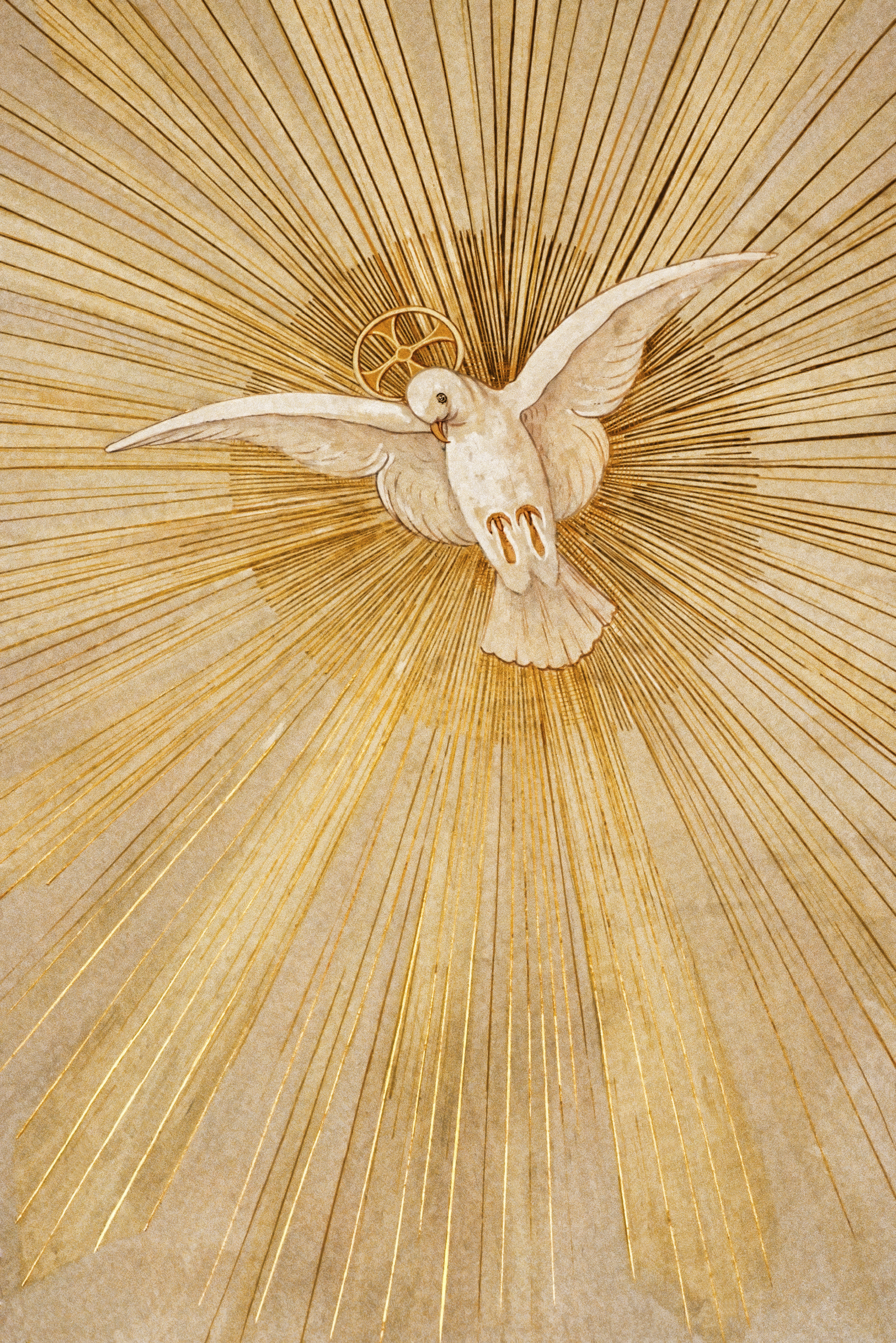
One of the great gifts the Spirit seeks to give us is not a rejection of passion or other human gifts, but a moderation and proper appropriation of them. For God the Holy Spirit has given all the gifts of the World, including beauty, and human passions for a reason and for a good end. But the Fruits of the Spirit are gifts to both to inspire zeal and to regulate and appreciate what God has given for a reason and a purpose. By these gifts we steer a middle ground between rejection and indulgence, excess and defect, enjoyment and hedonism. Modus omnibus in rebus (All things in moderation (including moderation)). The Sequence Hymn for Pentecost says of the Holy Spirit:
Flecte quod est rigidum (Bend what is rigid),
fove quod est frigidum (warm what is cold),
rege quod est devium. (rule what deviates).
And thus we see both zeal and moderation in these gifts and in all things a ruling over anything that deviates. Come Holy Holy Spirit, rule our hearts and inflame them with your love.
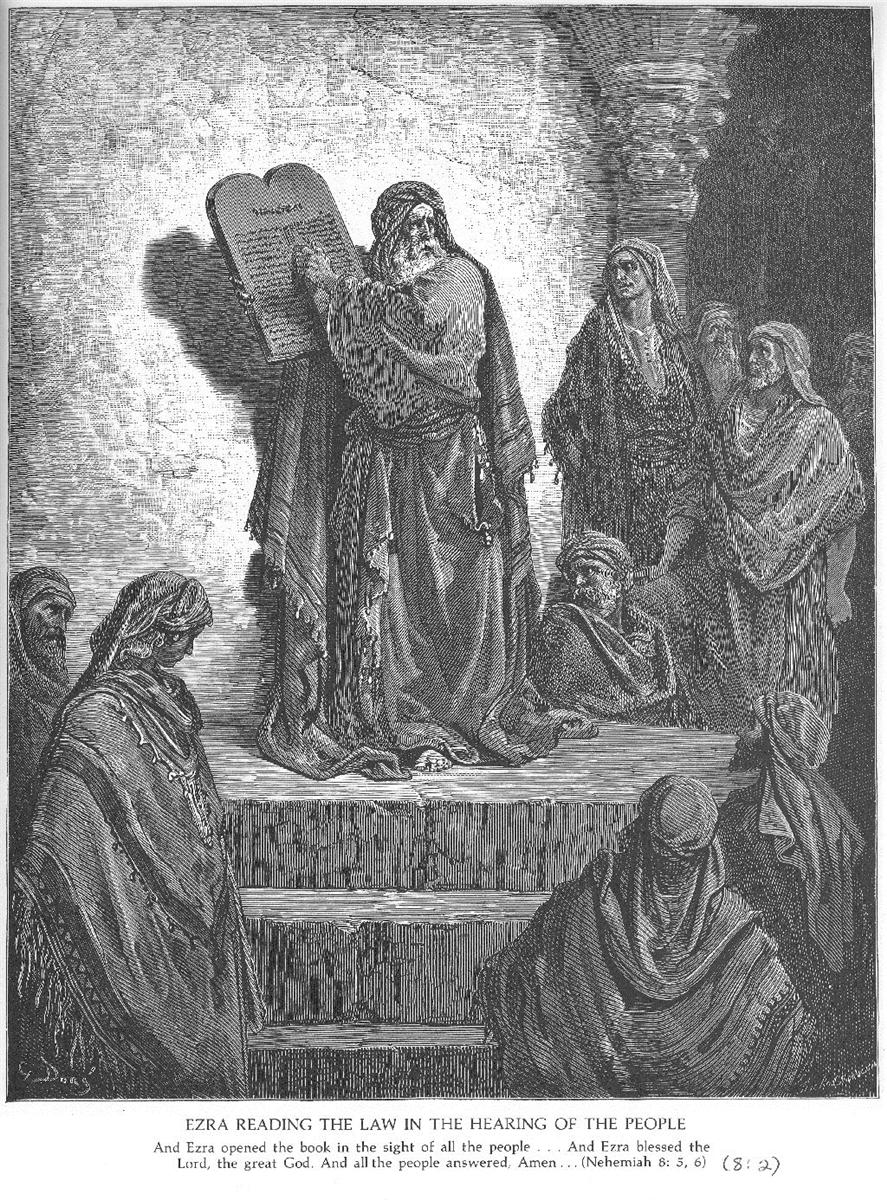
The Gospel for this Sunday is continued next week and so perhaps we can await an analysis of it until then. The First reading from Nehemiah 8 is a wonderful meditation on the glory and wonder of the Word of God and it deserves our attention.
The background of the text is that Israel, in 587 BC had been conquered by the Babylonians and the survivors of that war were led into exile in Babylon. After 80 years the Persians conquered the Babylonians and Cyrus, King of Persia, permitted the Jews to return to the Promised Land. Sadly, only a small number chose to return and rebuild the ruined land and city. Among them was Nehemiah, a Royal official and Jew who led the small band back and oversaw the rebuilding of Jerusalem.
He. along with Ezra, the priest, also led a spiritual renewal which was spurred on not only by the purification of exile, but also by the rediscovery of certain “lost” or forgotten sacred Books. On one occasion the people gathered to hear the proclamation of one of the lost books and that is where we pick up the text today.
I. HUNGER for the Word of God – The text says, And all the people gathered as one man into the square before the Water Gate; and they told Ezra the scribe to bring the book of the law of Moses which the LORD had given to Israel.
Note then that the people are hungry for the Word of God. They have gathered and now make the unified request (as one man) that the Book of the Law be brought and proclaimed to them.
The likely “book” referred to here is the Book of Deuteronomy. It would seem that the book had either been “lost” or at least severely neglected in the preaching of the time prior to the Babylonian exile of Israel. In Deuteronomy was contained not only a development of the Law but also a list of blessings for following it, and also of grave warnings for not following it. After the painful experience of exile the people gathered (as we shall see) are aware that, had they heard and heeded Deuteronomy, they could have avoided the terrible events of the Babylonian conquest and captivity of Israel.
So now, chastised and sober they are hungry for this Word from God. As the Book of Psalms says, Before I was afflicted I went astray, but now I obey your word (Psalm 119:67).
Are you hungry for the Word of God? More than for money? More than for bodily food? Scripture says,
Psalm 19:9 the ordinances of the LORD are true, and righteous altogether. More to be desired are they than gold, even much fine gold; sweeter also than honey and drippings of the honeycomb.
Deut 8:3 Man does not live by bread alone, but that man lives by everything that proceeds out of the mouth of the LORD.
Job 23:12 – I have esteemed the words of his mouth more than my necessary food.
Ps 119:162 I rejoice at thy word like one who finds great spoil.
Are we hungry for the Word like this? Well, we won’t miss a meal for our bodies, but we’ll go days without the Word. Our bodies gain weight and obesity is pandemic in our culture. But our souls too easily languish and endure famine from the Word of God and the Sacrament of Holy Communion.
E.Are you hungry for his Word? An old song says, More about Jesus in his word, holding communion with my Lord, hearing his voice in every line, making each faithful saying mine. More more about Jesus, more of his saving fulness see more of his love who died for me.
II. HEARING of the Word of God – The text says, And Ezra the priest brought the law before the assembly, both men and women and all who could hear with understanding, on the first day of the seventh month. And he read from it facing the square before the Water Gate from early morning until midday, in the presence of the men and the women and those who could understand; and the ears of all the people were attentive to the book of the law. And Ezra the scribe stood on a wooden pulpit which they had made for the purpose
Notice two things here:
ASSEMBLY – There is a communal dimension to the celebration of God’s word here. It’s not just a private celebration or reading. And while their is today in a more literate culture the possibility to read the Scriptures alone, we cannot neglect to gather with the Church and be taught the Word of God by others, especially the clergy who are trained and anointed unto this task. Scripture says, And let us consider how to stir up one another to love and good works, not neglecting to meet together, as is the habit of some, but encouraging one another, and all the more as you see the Day drawing near (Heb 10:24). Too many think that all they need is the Bible alone. But notice the proclamation of the Word is communal here. We’ll develop more of this is a future verse.
AMOUNT of time – The text says that the proclamation and explanation of this Word took place from “morning to mid-day!” This is no “say it in seven minutes sermon.” This is an extended time spent studying, praying and hearing the word of God. Many today consider a Mass that runs longer than 45 minutes to be counter-productive. Funny how we get thrilled when a three hour football game goes into overtime, but we complain when a sermon is longer than the regular time. We find so much time for other things, and our attention span is for them is long, and so little time for the Word of God and such impatience that the reflection be over sooner rather than later. Yes, we find time for everything else. Blame the preacher, and we may deserve it. But there’s usually more to the picture than just the preacher. Note what comes next.
III. HONOR for the Word of God – The text says, And Ezra opened the book in the sight of all the people, for he was above all the people; and when he opened it all the people stood. And Ezra blessed the LORD, the great God; and all the people answered, “Amen, Amen,” lifting up their hands; and they bowed their heads and worshiped the LORD with their faces to the ground.
One will note here a remarkable honor given the word through active listening. While it is true that many today, especially in the more traditional Catholic fashion see silent and passive listening as the proper, pious and respectful demeanor for the readings and sermon, this is not the cultural setting described here. Neither is this quiet demeanor the ubiquitous norm in the Church today. It is not a question of which is right or wrong, but of whether the Word of God is being honored.
Thus note that the listeners here that morning 2,500 years ago: Stood, said “Amen, Amen!” Lifted up their hands, and even prostrated themselves on the ground while the word was read. They are engaged in active listening, giving the Word undivided attention and interacting with its sounds as it resonates in their being. This is a listening that is attentive, reflective and responsive, a hearing with thoughtful attention.
Again it will be granted there are different cultural expression of attentiveness, but you can tell a lot by looking at peoples faces. But even in cultures that exhibit a prayer silence it will be noted that these same people get excited at the football game and even jump to their feet. So excitement and exuberant joy are not unknown even in cultures where religious reserve in the norm. Thus one would hope to rule out, even among the more reserved, that such reservation is a mere boredom. We want to be sure that we are simply dealing with sour-faced saints, bored believers, distracted disciples, or merely cold Christians. Thus, while reverence is expressed by many with prayerful and attentive silence, we want to be sure it is not simply the face of the “frozen chosen.”
And for those who are more demonstrative, we also want to be sure it is not a mere formulaic recitations of “amens” etc. or a sort of ego-centric, theatrical acting. Neither should one simply seek to exalt the preacher or the pew just in order to get everyone pumped up. The “amen-corner,” where it exists should be sincere.
The key point is to honor the word of God either by reverent silence or exuberant response. But in no way should the Word of God leave one bored and unmoved.
IV. HELP unto the Word of God – The text says, The Levites also, helped the people to understand the law, while the people remained in their places. And they read from the book, from the law of God, clearly; and they gave the sense, so that the people understood the reading.
So, the Word is not alone. It is explained and interpreted. We need the Church to properly understand the Word of God, to have it authentically interpreted. And while devotional reading is to be encouraged, the Word of God is not meant to be read apart from the Church. As the Protestant experiment has shown, an attempt to have the Scriptures without the Church and Magisterium from whence the Holy Spirit uttered them, is to usher in a disastrous and never-ending division. And this truth is expressed well in the story about the Ethiopian official: So Philip ran to him, and heard him reading Isaiah the prophet, and asked, “Do you understand what you are reading?” And he said, “How can I, unless some one guides me?” And he invited Philip to come up and sit with him. (Acts 8:30)
And thus the authoritative preachers of God’s word, the Bishops priests and deacons, have the task to read, analyze, organize, illustrate and apply the Word of God in the liturgical setting.
Beyond the need for authoritative teachers, there is also the pastoral assistance provided by others in the task of proclaiming the Word of God. In my own community there are excellent lectors who often read the word with such power and inflection that I hear it as I have never heard it before. Further I have a wonderful choir that often sings songs and passages rooted in the Scripture and I come to know it as never before. It’s really pressed to my heart. The congregation too, by its vivid response to the proclaimed word and the preached Words also brings forth insight and makes the Word of God an experienced reality.
V. HEARTFELT reaction to the Word of God – The text says, And Nehemiah, who was the governor, and Ezra the priest and scribe, and the Levites who taught the people said to all the people, “This day is holy to the LORD your God; do not mourn or weep.” For all the people wept when they heard the words of the law. Then he said to them, “Go your way, eat the fat and drink sweet wine and send portions to him for whom nothing is prepared; for this day is holy to our Lord; and do not be grieved, for the joy of the LORD is your strength.” So the Levites stilled all the people, saying, “Be quiet, for this day is holy; do not be grieved.”
Note how moved they are at what is proclaimed, they weep. And their weeping is born on the fact that they realize what their past stubbornness has gotten them and how it brought disaster, decline and exile. Had they but heard and heeded God’s Law this terrible period of Israel’s history could have been avoided.
True listening to the word of God and the desired outcome of preaching it is to bring for a response. The word of God is not only inform, its purpose is to transform. It might make you mad, sad or glad, but if you are listening to the authentic Word of God, you cannot remained unmoved. Scripture says,
For the word of God is living and active, sharper than any two-edged sword, piercing to the division of soul and spirit, of joints and marrow, and discerning the thoughts and intentions of the heart. And before him no creature is hidden, but all are open and laid bare to the eyes of him with whom we have to do (Heb 4:12).
VI. Heeding of the Word of God – The text that extends beyond what the lectionary appoints to today, goes on to say: On the second day the heads of fathers’ houses of all the people, with the priests and the Levites, came together to Ezra the scribe in order to study the words of the law. And they found it written in the law that the LORD had commanded by Moses that the people of Israel should dwell in booths during the feast of the seventh month, and that they should publish and proclaim in all their towns and in Jerusalem, “Go out to the hills and bring branches of olive, wild olive, myrtle, palm, and other leafy trees to make booths, as it is written.” So the people went out and brought them and made booths for themselves, each on his roof, and in their courts and in the courts of the house of God, and in the square at the Water Gate and in the square at the Gate of Ephraim. And all the assembly of those who had returned from the captivity made booths and dwelt in the booths; for from the days of Jeshua the son of Nun to that day the people of Israel had not done so. And there was very great rejoicing. And day by day, from the first day to the last day, he read from the book of the law of God. They kept the feast seven days; and on the eighth day there was a solemn assembly, according to the ordinance.
Thus, among the things they discovered is that Israel had not been celebrating an important and appointed feast day, the Feast of Tabernacles (or Booths) which, while a harvest festival, was also a celebration that acknowledged the gift of the Law on Mt. Sinai. That’s a pretty symbolic thing that they had stopped celebrating that particular feast. And thus the leaders, having studied the Word of God reestablish it and command the people to observe it carefully. In this is illustrated a heeding of the Word of God.
So, notice all the respect we’ve seen for the word of God: they hungered for it, heard it, honored it, helped in it proclamation, and had a heartfelt reaction. But here’s where the real honor is given, for now they HEED it. There’s a lot of “lip service” to the word of God, a lot of praise, some even shout “Amen” in Church. But the real acid test is if we heed the Word. And old spiritual says, Some go to Church for to sing and shout. Before six months they’s all turned out. Another says, Some seek God don’t seek him right, they fool all day and pray at night.
We are warned of the danger of failing to heed:
Mat 7:26 And every one that hears these sayings of mine, and does them not, shall be likened unto a foolish man, who built his house upon the sand: And the rain descended, and the floods came, and the winds blew, and beat upon that house; and it fell: and great was the fall of it.
Luke 12:47 And that servant who knew his master’s will, but did not make ready or act according to his will, shall receive a severe beating. But he who did not know, and did what deserved a beating, shall receive a light beating. Every one to whom much is given, of him will much be required; and of him to whom men commit much they will demand the more.
John 5:25 An hour is coming, has indeed come, when the dead shall hear the voice of the Son of God, and those who have heeded it shall live
There is wonder in the Word of God, But only if we heed it.
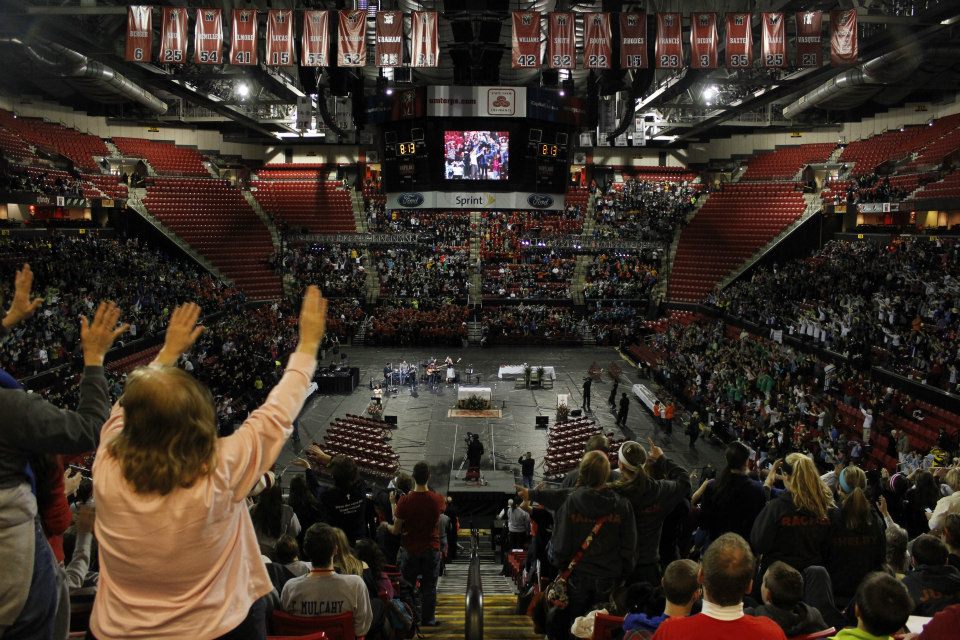
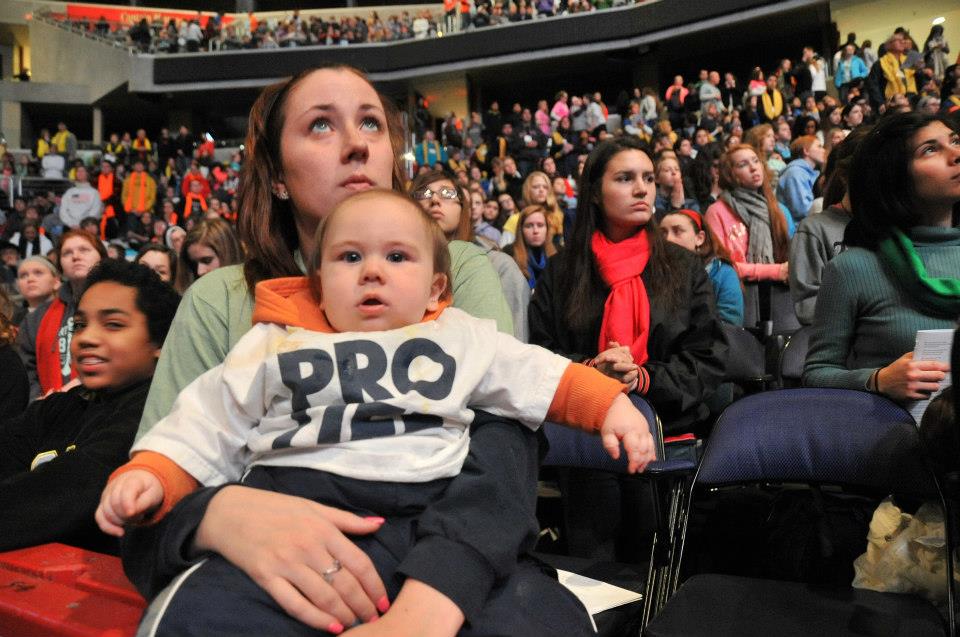
As I have remarked before, to March for Life is experience life. So many joyful Christians and others who support life gather and celebrate the glory and dignity of human life. The March is ever young, with the ranks of so many young people growing every year.
Here at my rectory are 15 fine seminarians from the Sacred Heart Seminary in Detroit. Fine orthodox, and zealous men who love God and the Church and are eager to preach the Gospel and celebrate the sacraments. Almost 700 seminarians marched into the Basilica Thursday evening along with hundreds of priests, and as many as 8000 lay people, standing room only in the Great Upper Church, and also filling the chapels of the undercroft.
Today at the Cathedral I was privileged to preach to a full Church and hear powerful witness talks from Project Rachel leaders prior to the Mass. Despite cold and some light snow, I would say the crowd was close in size to last year’s 400,000.
Yes, such life, such faith and joy.
I must say however, that my joy is often tempered each year toward the end of the march when I go and try to witness to the “pro-choice” demonstrators who stand in front of the Supreme Court. I often experience great pain in this work.
To be sure they are the hardened cases, but I experience such grief after talking with them. Here are a couple of conversations as I remember them.
A man with a sign that says, “Pro-Abortion without apology.”
Me: “Well, at least you say like it is, “Pro-abortion” instead of “pro-choice.” But listen, man, no one here asks for your apology, we’re praying for a your change of heart.
Him, laughter, a profanity and some mumbled references about priests belonging to a criminal class.
Me: well think about it, deep down you have to know its wrong.
Him: Ridiculing laughter, turns to talk to another pro-abortion demonstrator.
Another, even sadder conversation.
She, holding a sign that says, “Stop the war on Women.”
Me: listen I want you know that I don’t hate women and I’m not waging a war against you. I love women. We all love women here today. We’re fighting to save women. Think about it, half the children killed in abortion are women.
She: They’re not women and they’re not victims.
Me: Well that’s just bad biology.
Me: Come on, think about it. Deep down you know its wrong.
She: No I don’t. Don’t tell me what I think. You do know what I think.
Me: Well, I’m talking about your conscience, that’s deeper than your thoughts. I know you have a conscience and God wrote his law in your heart. So you do know, deep down, you know it’s wrong. Listen carefully to that still small voice.
She, walking away, “Your little make-believe God didn’t write anything in me. Your God is fairy-tale. Besides you’re a man, don’t even talk to me abortion.
Me: Well but I know a lot of women who don’t support abortion, It’s not just a man thing.
She: Well I don’t care about them. I only care about me.
Me: Do you think that’s a good way to live?
She: I don’t care. (Moving forward to end the conversation).
Most of my conversations went that way. I wasn’t very effective to be sure. My hope was to engage their conscience. I know they’ll never admit to me that they do know it is wrong, but deep down under all the rationalizations and stinking thinking, I am convinced that they do know, they know. I tried to reach there, but this year no apparent sign, not even a glimmer. Perhaps I planted seeds. But each year the soil seems harder and rockier. I leave those conversations quite downcast, I must say.
Luckily the day ended with a Solemn Pontifical Mass in the Extraordinary Form. Bishop Perry was celebrant and gave a fine and encouraging sermon. Sitting in choir I was able to pray quietly for those with whom I spoke today. I offered Mass for their intentions and also in reparation in case I handled anything poorly. Witnessing is hard work and I don’t always get it right, so have mercy Lord on me too.
A day of life to be sure, and also of a heavy heart. But in the end, at the Latin Mass the restorative mercy of God and the reminder of life as I looked at another packed Church, standing-room only.God be praised.
A Taize song says, “Within Our darkest night you kindle a fire that never dies away.” It was nice to enjoy that light today shining on the faces of so many who came to celebrate life. I pray too that those to whom I tried to witness will also discover that light that never dies away.
The magnificence of life is really too wonderful too describe. But I found this description some years ago which summons reverence by its very ability to baffle the mind:
MIRACLE OF LIFE– Consider the miracle of the human body. Its chemistry is just as extraordinarily well tuned as is the physics of the cosmos. Our world on bothsides of the divide that separates life from lifelessness is filled with wonder. Each human cell has a double helix library of three billion base pairs providing fifty thousand genes. These three billion base pairs and fifty thousand genes somehow engineer 100 trillion neural connections in the brain—-enough points of information to store all the data and information contained in a fifty-million-volume encyclopedia. And then after that, these fifty thousand genes set forth a million fibers in the optic nerves, retinae having ten million pixels per centimeter, some ten billion in all, ten thousand taste buds, ten million nerve endings for smell, cells that exude a chemical come-on to lure an embryo’s lengthening neurons from spinal cord to target cell, each one of the millions of target cells attracting the proper nerve from the particular needed function. And all this three-dimensional structure arises somehow from the linear, one-dimensional information contained along the DNA helix. Did all this happen by chance or do you see the hand of God?
Today, many of us march for life, here in Washington, on the West Coast, and in other communities. Today we ponder the great mystery that is expressed in the 139th psalm:
For it was you who created my being, knit me together in my mother’s womb. I thank you for the wonder of my being…Already you knew my soul my body held no secret from you when I was being fashioned in secret….every one of my days was decreed before one of them came into being. To me, how mysterious your thoughts, the sum of them not to be numbered! (Psalm 139 varia)
No human being is an accident, no conception a surprise or inconvenience to God. Mysteriously he knew and loved us long before we were ever conceived, for he says, Before I ever formed you in the womb I knew you (Jer 1:4). And, as the psalm says above, God has always known everything we would ever do or be.
It is often mysterious to us why human life is, at times, conceived in difficult circumstances such as poverty, times of family struggle or crisis, or even conceived with disability and disadvantage. But in the end we see so very little and must ponder the mystery of God’s reminder that many who are “last” now are going to be first in the kingdom (e.g. Matt 20:16; Luke 1:52-53).
So today, many will march, and all are called to remember the sacred lives that have been lost. We acknowledge our loss, for the gifts of these children and their lives have been swept from us as well. We pray for women who struggle to bring children to term and experience pressure to considerabortion. We pray for the immediate and sudden conversion of all support legalized abortion for any reason and for a dedication to assist women facing any difficulty in giving birth to or raising their children.
The following video is a shortened version of the masterpiece video called “Genesis” by Ramos David. It magnificently depicts fetal development. I have taken the liberty of adding a different music track since this is a shortened version. The Music is William Byrd: Optimam Partem Elegit (She has Chosen the Best Part), a text most fitting since we pray all mothers will choose life. The full length video is found in higher definition on YouTube by searching under “Genesis Ramos David”
It’s late January in Washington DC. It is the (dreadful) 40th Anniversary of Roe v. Wade A little snow, and surely a chill.
But this time every year is also marked by the warmth of tens of thousands who come to DC for the March for Life. I have marched just about every year, except when I was sick or away from the city.
My favorite year was 1985. There was record cold that year. The day before had featured the second inauguration of President Ronald Reagan. However, the temperature for that inauguration morning was -4 Degrees Fahrenheit. Thus the swearing in moved inside the Capitol and the parade was cancelled. The next day was just as cold, and the snow was knee high, but the Pro-life March went off any way. We walked through the bitter cold and snow in testimony to life. The numbers were down but our spirits were high (and our pace was swift!).
Most years have escaped such bitter conditions but its nice to know that many of us march anyway even in the worst weather.
But on this 40th March for life, I must say, I have longed for us to take a fresh look at the march. And while I hope it never comes, I have wondered if we could not perhaps do something powerfully memorable for the 50th Anniversary. Again, I hope that year never comes and that Roe v. Wade will be gone before then. But, I think that what I dream of is going to take about ten years to plan.
I also say this planning may be necessary since this 40th year kinda of caught us off guard. I remember last year being in a couple nationwide conversations to consider what we should do for this 4oth year of the march, (such a biblical number). But honestly we got to work too late and then Mrs. Nellie Gray died mid year (may she rest in peace).
That’s why I say, it may not be too early to start planing now for 2023 and my dream will take some planning. And my dream is born on something of yearning to really ramp up the March.
Regarding the March now, consider that we barely make the news anymore here in DC. And it’s always the same: the media says we have 30-70,000 and the March for life committee estimates over 100,000. Likewise the media always gives equal billing to the dozen or so counter-demonstrators that show up.
Another, more frustrating aspect is that every year the political speeches get longer and longer and the march starts later and later. What once began 1:00pm now often slips to as late as 2:30pm. 90% of the marchers can’t even hear the speeches anyway. Someone tells me that this will be different this year, we’ll see. I realize there is a political dimension to the march but frustrations do rise as we stand for a long period, often in poor and frigid conditions.
I am not sure exactly what to do on a yearly basis to move the march back into the headlines but I do have a dream that we would pick the year 2023, the 50th year of the March, and really pull all the stops to give Washington a March they’d never forget. Here are the aspects of my dream:
There are 78 million Catholics in this country according to recent Pew and Gallup Polls. If only 10% of them agreed to come to DC, that would be 7 million people filling the mall, the reflecting pool, the tidal basin area and even across the river to the Pentagon. Now I know that only 25% of Catholics really practice their faith in any meaningful way by coming to Church. But that’s still 19.5 million and if only 10% of them came we’d still have almost 2 million people here.
Now how to get that many to come? Well, what if we invited the Pope to lead us? In thirty-eight years of marching have we ever invited the Pope to personally summon us and promise to stand with us?
Bring the Pope! And bring with him other religious leaders. If our numbers did swell past 2 million I doubt we could actually march, but I can see the Pope and other religious leaders on the steps of the US Capitol standing at the head of two to three million people lamenting the legality of infanticide (aka abortion) and warning our nation that God’s justice cannot forever wait. Then I see him turn toward the Capitol, staff in hand and millions behind him. (Think of Moses before the Red Sea, staff in hand). And I hear the Pope in prophetic tones calling legislators to conversion, and insisting that the life must be respected. Insisting that it is shameful that the richest and most powerful land in this world cannot find the political courage and the moral fiber to end abortion, that the best it can offer women who face challenges in accepting life is a trip to the abortionist.
The speech would have to be very carefully developed because in my dream this speech would need to rank right up there with Dr. Martin Luther King’s Speech in 1963. That was a speech full of hope to be sure but also a speech that indicated no compromise with injustice and insisted that America live up to its vision and do what was right. Not in some distant future, but today.
Turnout goals – In the years and months leading up to the rally every Bishop would have goals to meet in terms of catechesis and turnout. Likewise every pastor. Dioceses closer to DC would have higher turnout goals, but every diocese would have to meet turnout goals and be publicly accountable.
With this sort of turnout and the presence of the Pope we’d give Washington a March they’d never forget.
I realize that our present Pope (may he live forever) is up in years and that in ten tears we may have another in his post. But the point here is, let’s dream big! Let’s break all records! One for the books. Let justice roll down like waters and righteousness like a mighty stream (Amos 5:24). Even if it takes years to plan, lets do it.
Do you have dream? Do you have ideas about the Pro-life March? How can we turn up the volume and wake the sleeping nation?

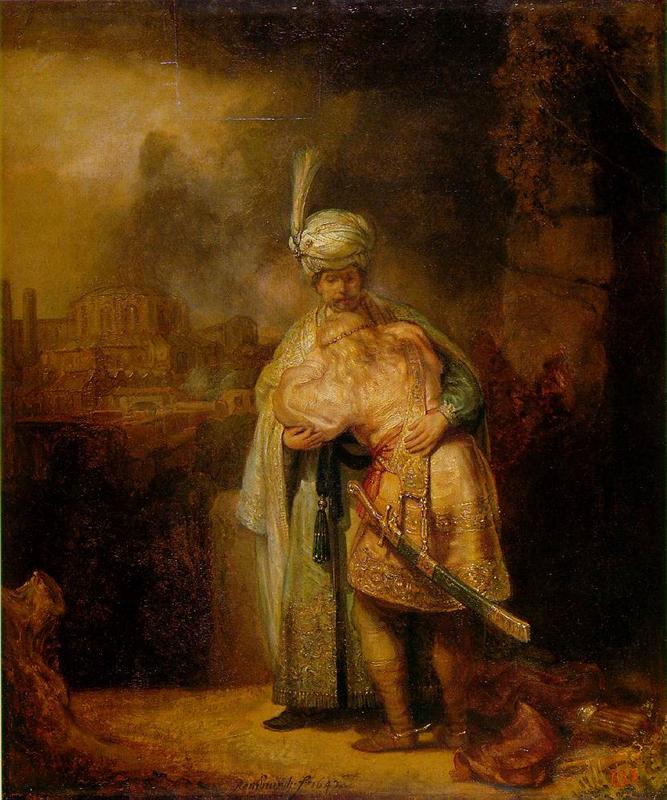 The Archdiocese of Washington, DC is hosting daily reflections on its Facebook page for the Year of Faith. Have you missed them? Today we are starting the next weekly series on faith. Please visit our page and “like” us, so you can follow along with the rest of the series.