Mercy and Patience Now, but sooner or later, Judgement must come. Homily for the 3rd Sunday of Lent

030213There’s an old Johnny Cash song that is rooted in today’s Gospel, a song that says,

You can run on for a long time, But sooner or later God will cut you down. Go tell that long tongue liar, go and tell that midnight rider, tell the rambler, the gambler, the back-biter, tell em that God’s gonna cut em down, sooner or later God’ll cut em down.

Now of course these verses of the song go right to the end point of judgement. But there is more to the story, a story of offered mercy and patience, but in the end there is a judgment.

We live in times that are dismissive of judgment, or that the judgment will result in anything but instant entrance to glory.

Today’s gospel contains a kind of necessary balance that speaks of God’s patience and care now, but also speaks of the day of reckoning, the day of judgment that must finally come when our decision is final and also adjudicated by God, and there will be no turning back.

Let’s look at this Gospel in two main parts:

I. The Proclamation of the Problem – The Gospel opens with the following lines:

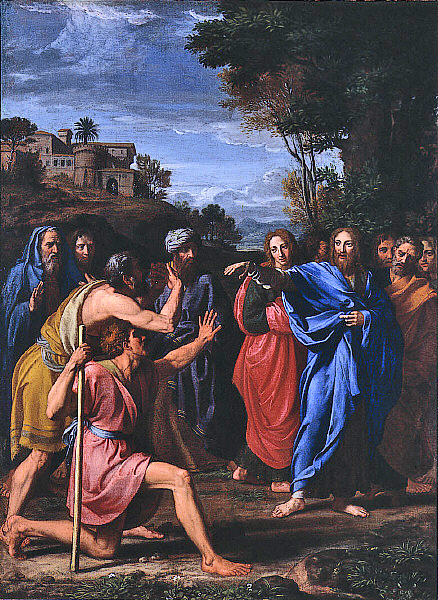
Some people told Jesus about the Galileans whose blood Pilate had mingled with the blood of their sacrifices. Jesus said to them in reply, “Do you think that because these Galileans suffered in this way they were greater sinners than all other Galileans? By no means! But I tell you, if you do not repent, you will all perish as they did! Or those eighteen people who were killed when the tower at Siloam fell on them — do you think they were more guilty than everyone else who lived in Jerusalem? By no means! But I tell you, if you do not repent, you will all perish as they did!

In effect what Jesus is saying is that is so easy for us to focus on the sins of others and fail to discern our own need for repentance and mercy. Before God we are all beggars, all of us have sinned and fallen short of the glory of God (cf Romans 3:23). Every one of us is in need of boatloads of grace and mercy. And while we may rightly distinguish that there is a difference here on earth in the sanctity of a Mother Theresa and the wretchedness of Hitler, yet before God we are all far short of the glory and holiness of God. We are all beggars.

Sin surely does have its effects in the lives of others and we are not asked to be blind to that. There is important truth in learning from the example of others, and we can learn form good example as well as bad example. But the point is to learn! We miss the point if all we do is stand around when someone suffers the effects of sin and say, “My, my my, God don’t like ugly!” Well then, if that be the case, what about the ugly in us? What about our own sin?

And thus to our all-too-eager question, “What about them O Lord!?” Jesus replies, “What about you? Stay in your own lane and work on your issues and leave their final fate to me. Judgement and punishment don’t just come others, if you don’t watch out, they will come to you as well.” And just to make sure we get it the Lord adds: [And] I tell you, if you do not repent, you will all perish as they did!

In effect, the Lord tells us to get serious about our sin and what it can do to us. The most serious problem in life is not the manner of our death, or even that we physically die. The most serious problem we face is not Pilate, or any political misfortune; it is not falling towers or any physical threat; it is not financial setback, or suffering, or losing our job, or losing our possessions. The most serious problem we face is our sin.

Now we don’t think like this. We minimize the maximum and maximize the minimum. We get all worked up about lesser things, and often completely ignore greater things. We are forever worked up about passing things like health and money, and give little heed to the things of eternity and to getting ready to go and meet God. Let our physical health be threatened even for a moment and we are instantly on our knees begging God for deliverance. But let our sins pile up and sinful drives be eating at our very soul and we take little notice and have little care to be delivered from things that are far more serious than mere cancer.

The Lord says, If your right hand causes you to sin cut it off and throw it away. It is better to lose one of your members than to have your whole body cast into hell (Matt 5:30). Pay attention, the Lord is saying that it is more serious to sin than to lose my right hand.

Again, we don’t think like this. If I were to lose my right hand I would lament this day for the rest of my life. The very thought of losing my hand gives me stabbing grief. But then why don’t we think of our sin this way? See how obtuse we are? See how distorted our priorities are?

One day the Lord looked at a paralyzed man and decided to cure his most serious problem. And thus he said to the quadriplegic, Your sins are forgiven. Could his sins have been more serious than his paralysis? Yes!

And thus the Lord warns us that we ought to be more serious about our sins lest we perish, not merely losing our earthly life, but more so, our eternal life. . The very fact that the solution to our problem required the death of the Son of God, indicates that we are evidently in worse shape than we think and that without our repentance and the magnificent mercy of God, something far worse than having a tower fall on us, or our enemies kill us might happen. Elsewhere the Lord says: I tell you, my friends, do not be afraid of those who kill the body and after that can do no more. But I will show you whom you should fear: Fear him who, after the killing of the body, has power to throw you into hell. Yes, I tell you, fear him. (Lk 12:4-5). Now, to be sure, the Lord does not counsel here a cringing and avoidant fear, but a respectful fear that is willing to be serious about judgement day, and realize that its effect is eternal unlike the passing quality of any earthly encounter.

Having portrayed the problem and underscored its seriousness both here and in other places, the Lord them reminds us that he is willing to help us to get ready with his grace and mercy. And, hence, he sets forth a process in which we must cooperate, for the day of judgment will surely come. Lets look at the Process.

II. The Portrayal of the Process – And thus the Lord tells a parable that sets forth the process in which we are currently engaged, a process of patience and mercy but leading ultimately to the finality of judgment. Note the following steps:

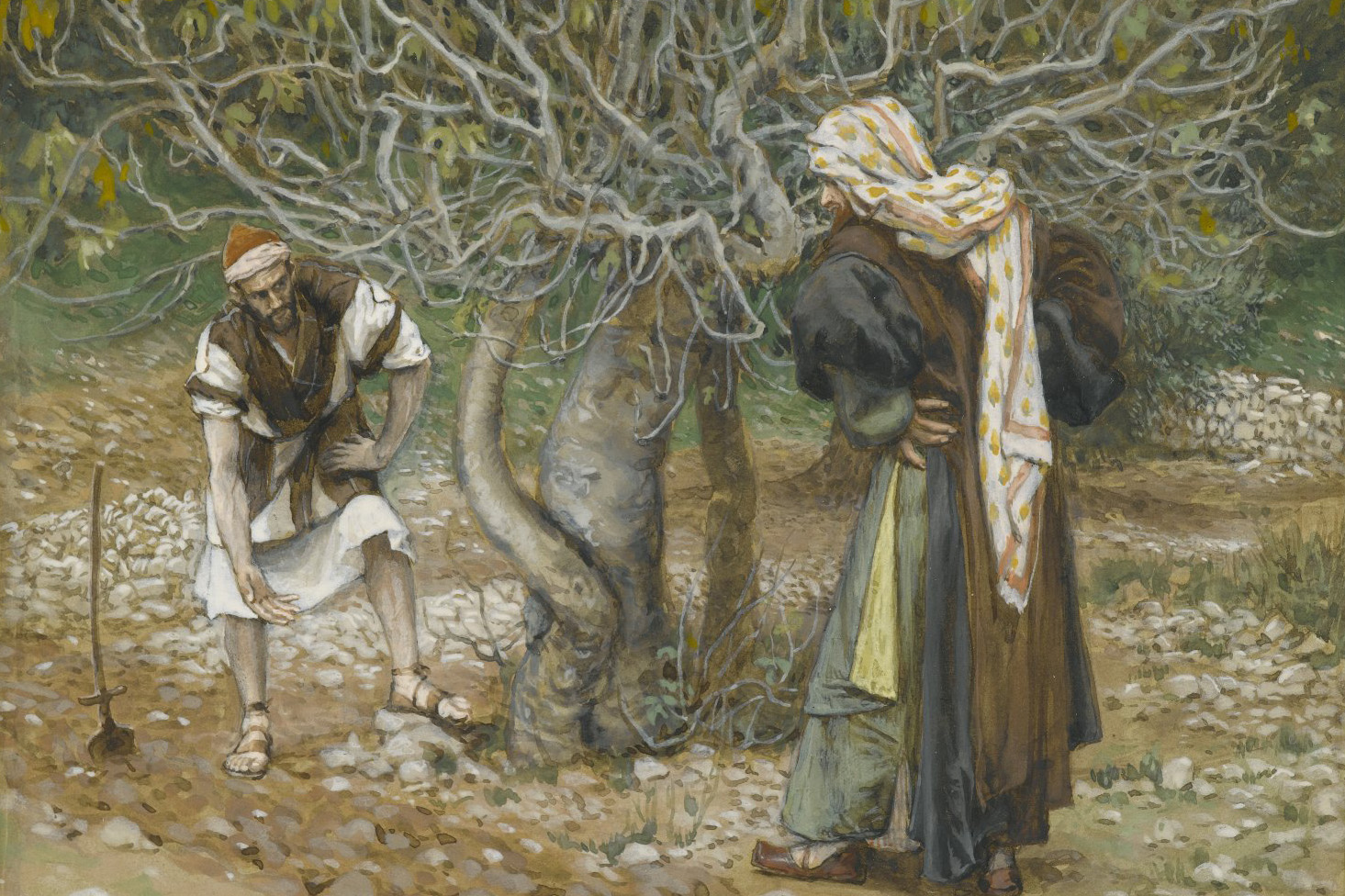
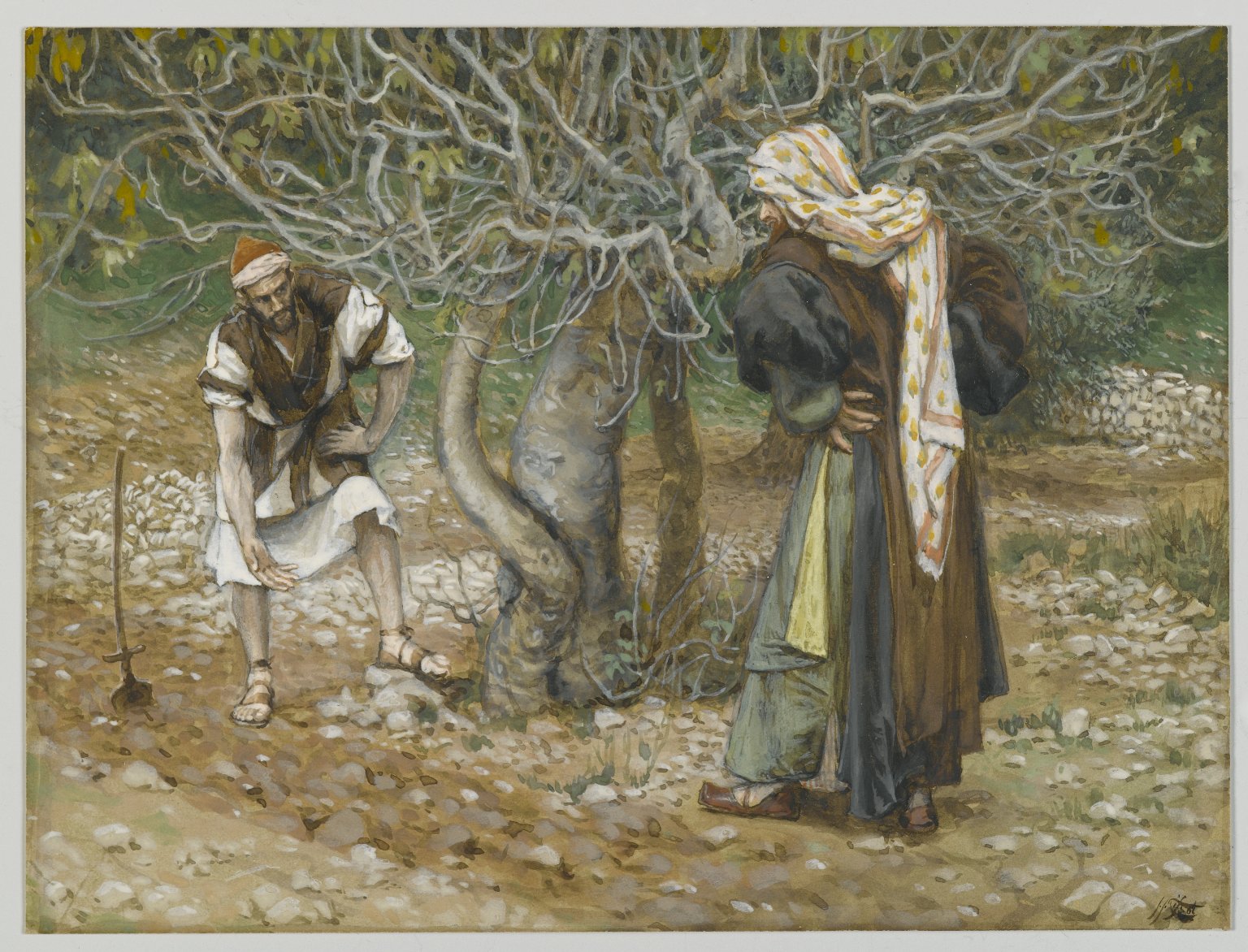
1. ASSESSMENT – There was once a person who had a fig tree planted in his orchard and when he came in search of fruit on it and found none said to the gardener, “For three years now I have come in search of fruit on this tree and have found none. So cut it down. Why should it exhaust the soil?

Faith is a fruit bearing tree. It is to bear the fruits of love, of justice, of the keeping of the commandments. Now the Lord looks for these fruits and often, through our conscience and by his Word, and He assesses if such fruits are present.

Many claim to have faith, many claim to be fruitful in what the Lord seeks. But, as owner of the field, it is He who sets the terms. We are not a judge in our own case. It is the Lord’s on-going work to assess our progress and and fruitfulness and it is he who has the right to determine if the necessary fruits are present.

Yet many today in this proud age claim the right to assess their own status, and many make bold proclamations that God would not “dare” find in them anything substantial to be lacking. And in presumption many declare themselves to be safe, fruitful and righteous.

But this is not for us to say. In the parable it is the owner, the Lord, who makes the assessment. And note that in this parable he proposes that something significant is lacking.

And yet, some interlocutor, here called the gardener, but let us call her the Church, asks mercy and time. And as we shall see such mercy and time is granted along with necessary supplies (grace) to help accomplish what is sought, namely the fruit of faith. And this leads us to stage two in the process.

2. ASSISTANCE – The text goes on to describe the prayers and requests of the gardener, in this case Mother Church: Sir leave it for this year also. I shall cultivate the ground around it and fertilize it. It may bear fruit in the future.

And thus we see that the Lord, the owner of the garden not only grants the request but will also be the one to supply the necessary helps to draw forth the fruits patiently awaited.

Indeed, the Lord sends us help and graces in so many ways:

  1. He speaks in our conscience, has written his law in our hearts
  2. He gave us the law
  3. He sent us prophets
  4. He punishes our wrong doings to bring us to repentance. Before I was afflicted I strayed. But now I have kept your word. (Ps 119:67) And again,  But God disciplines us for our good, that we may share his holiness. For the moment all discipline seems painful rather than pleasant; later it yields the peaceful fruit of righteousness to those who have been trained by it. (Heb 12:10)
  5. Sent us his Son!
  6. Who established the Church
  7. And gave us the grace and the Sacraments
  8. And It was he who gave some to be apostles, some to be prophets, some to be evangelists, and some to be pastors and teachers, to prepare God’s people for works of service, so that the body of Christ may be built up until we all reach unity in the faith and in the knowledge of the Son of God and become mature, attaining to the whole measure of the fullness of Christ. [That we be] no longer be infants, tossed back and forth by the waves, and blown here and there by every wind of teaching and by the cunning and craftiness of men in their deceitful scheming. Instead, speaking the truth in love, in all things grow up into him who is the Head, that is, Christ. (Eph 4: 11-17)

Yes, see how much God has done for us! He has graced us in every way and entrusted to the Church, in answer to here pleas, every necessary grace to bear fruit. And now he patiently awaits. Looking to return again to seek the fruits that are necessary for those who claim to have saving faith, fruits that are necessary to be able to endure the day of his comings, fruits which are necessary that we have the holiness without which no one will see the Lord (Heb 12:14)! Indeed we cannot see or endure his presence without the fruit of holiness by his grace. For as Scripture says, Who may ascend the mountain of the Lord? Or Who may stand in his holy place?Only he who has clean hands and a pure heart (Ps 24:3-4). And only God can accomplish this. But he who made us without us will not save us without us, and thus we must, by his grace, renounce our sin and accept his grace.

3. ACCEPTANCE – The parable ends simply with this line:  If not you can cut it down.

The word “acceptance” is chosen carefully here, for judgement is not so much God’s decision, but rather, is his acceptance of our decision to bear fruit or to refuse to bear fruit, to accept or refuse his offer of the bearing the fruits of faith such as chastity, mercy, forgiveness, reconciliation, love of the poor, appreciation of the truth and so forth.

The day of judgement amounts to the day when God accepts our final choice. Our judgment is not so much a passing of sentence on us but is rather the recognition of the final and absolute choice we have made.

Mysteriously it would seem that there comes a day when change for us is no longer possible. What we are remains fixed forever. Even as we get older we note how it is harder to change. We are like concrete that sets, and becomes ever harder. We are like pottery which begins moist and malleable but when subjected to the fire has a shape that is forever fixed.

And thus the Lord teaches us to be serious about sin and about the day of judgement. For now there is mercy and every grace available to us, thank you Jesus! But there comes a day when our decision is finally called, and forever fixed.

The Gospel today teaches beautifully of God’s patience, but ultimately of our need for mercy, (we are all beggars before God), and warns us that our decision will finally be called. Yes, there is a Day of Judgement and it closes in on us all.

Talking about how we sang “Kum bah ya” etc., will not suffice. St. Paul also warns in today’s second reading against presumption and of us trying to serve as a judge in our own case:

Our ancestors were all under the cloud and all passed through the sea, and all of them were baptized into Moses in the cloud and in the sea. All ate the same spiritual food, and all drank the same spiritual drink, for they drank from a spiritual rock that followed them, and the rock was the Christ. Yet God was not pleased with most of them, for they were struck down in the desert. These things happened as examples for us, so that we might not desire evil things, as they did. Do not grumble as some of them did, and suffered death by the destroyer. These things happened to them as an example, and they have been written down as a warning to us, upon whom the end of the ages has come. Therefore, whoever thinks he is standing secure should take care not to fall. (1 Cor 10:1:ff)

For now there is mercy! But there comes a day of ratification, of judgement, when the question is called and the lasting answer is supplied, not so much by God as by us.

Be careful, your flesh says, “No worries!” But the Lord says “Repent!”

This song by Johnny Cash rooted in the image from today’s parable warns:

You can run on for a long time
Run on for a long time,
run on for a long time
Sooner or later God’ll cut you down

Well, you may throw your rock
and hide your hand
Workin’ in the dark against your fellow man
But as sure as God made black and white
What’s down in the dark will be brought to the light.

Go tell that long tongue liar,
go and tell that midnight rider
Tell the rambler, the gambler,
the back biter
Tell ’em that God’s gonna cut you down
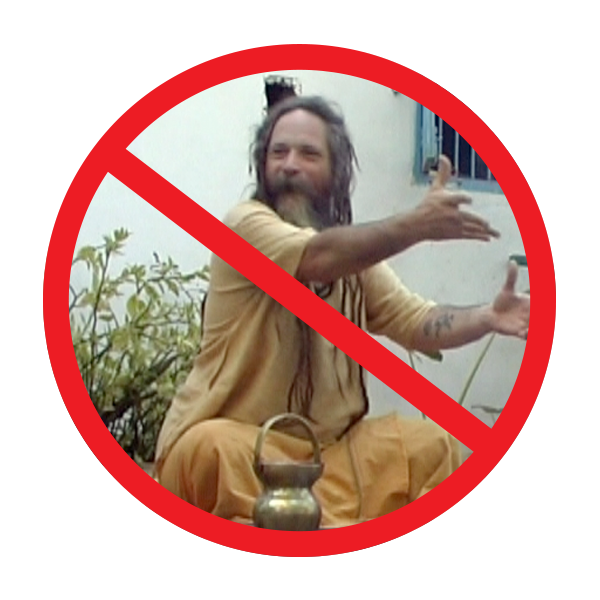
Meeting ourselves coming back. A reflection on the reaction to the reaction in our culture.

030113One of the things I often marvel at is that a good number of young people are more socially conservative than their parents.

I am in the last five years of the Baby Boom generation, perhaps the most selfish, immature, egotistical and rebellious generation that has ever lived in this country. The rebellion reached full flower in 1968, a terrible year not only of assassinations, but also of open sexual misconduct, the celebration of rebellion, of immature disrespect of authority and tradition, and a large percentage of people  stoned out of their mind.

Now, this generation (my generation) at some point had to take a bath (after wallowing in the mud of Woodstock), take the flowers of out its hair, put on a suit and go to work. But a lot of the selfish, egotistical and iconoclastic tendencies remained with this spoiled generation as they (we) ushered in abortion on demand, no fault divorce, cohabitation, low birthrates, widespread pornography, and numerous other social ills that amount to a general shredding of the family and a coherent and functional culture.

To some degree, the next generation will react to the reaction, rebel against the rebellion. And at least to some extent I have seen it. A lot of the younger people I have met and am preparing for marriage or see at theology on tap sessions, or meet over at the seminary and in novitiate for the Order in my parish , are re-embracing the tradition their parents and grandparents so carelessly cast aside. Further, these younger people see what a disaster the lives of their parents and grandparents have been with failed marriages, addictions, STDs, and many other ills.

At some level, disgusted by what they see, they are resolved to be more careful to avoid their parents mistakes. The knee-jerk rebelliousness of the boomers seems far less evident in their grandchildren whom I find more reasonable, teachable and even hungry for the truth.

I don’t know how widespread the phenomenon I describe is, and I suspect that the overall numbers in our culture are still headed in the wrong direction. The whole gay union thing is emblematic of that. Nevertheless there is a growing core, perhaps a remnant, of younger people who are picking up the pieces of things their boomer parents shattered and reconsidering once discarded treasures.

I pray only that it will grow and that increasing numbers of younger people will simply shake their heads in dismay at the foolishness of the Boomer generation and work explicitly to restore maturity, accountability and a love for the good, true and beautiful.

The following video is a humorous illustration of how, in order to rebel against the status quo involves another rebellion that, in effect, is a shift back to the status quo ante. What this video illustrates in a small and humorous matter is what I hope will be the case in bigger matters.

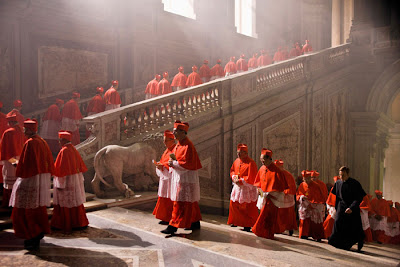
What is a Cardinal? The Role of the College of Cardinals in History and Today

Now that attention shifts to the College of Cardinals, it might be good to spend a brief time reflecting on what a Cardinal is and how the College of Cardinals functions. Perhaps it is good to start with a little history and then describe the present realities.
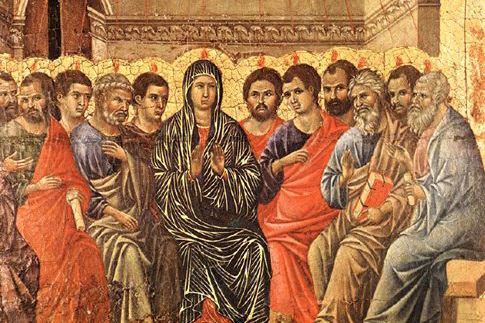
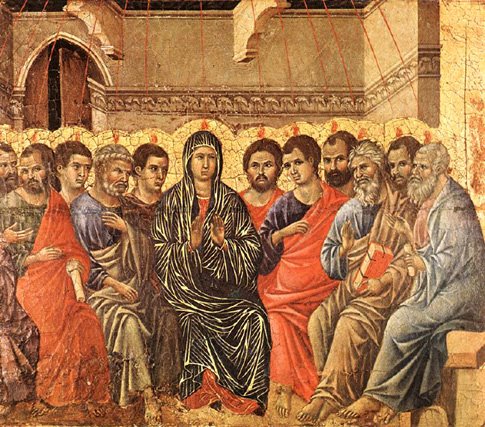
History [1]- Originally the term “cardinal” simply referred to any priest who was attached to a particular church or diocese. Even to this day we speak of diocesan priests as being “incardinated” (or attached) to a certain diocese, and this is required for every priest. There are not to be “free-ranging” priests. Later however, from about the 4th Century through the late Middle Ages the term “cardinal” came to be used only of certain more prominent priests in the larger and more prominent dioceses of antiquity such as Constantinople, Milan, Ravenna, Naples, Sens, Trier, Magdeburg, and Cologne and of course, Rome. In more recent centuries the term came only to be used of Rome.

And thus we find the term cardinal used in the Church at Rome (from at least fifth century) to designate priests permanently serving in the Roman parishes and ministries under the Bishop of Rome, the Pope— These were the “cardinal priests.” However, as the number of priests grew, not all the priests attached to these Roman parishes were known as cardinal, but only the first priest in each such parish—i.e. the Pastor or Rector.

Cardinal priests attended not only to their own ministry or parish but also convened regularly to oversee matters of Church discipline in the diocese of Rome. These might include matters of disciplining the clergy, filling vacancies and so forth. But it also involved matters pertaining to the laity insofar as they interacted with the Church. Thus the Cardinal priests assisted the Pope in the administration of the Diocese of Rome. There are some echoes of all this in every diocese through a mechanisms known as the College of Deans and College of Consultors who assist the Bishop in administrative details and matters of Church discipline.

Cardinal Deacons – During all this time just described there also existed a group known as the cardinal deacons. The Roman Diocese was divided into seven regions and a deacon was assigned to each. They performed numerous duties but chief among them was record-keeping and the coordination of the care of the poor, cemeteries and the like. Given their elevated status over a deacon who only served a parish, they came to be called cardinal deacons. These cardinal deacons would also assist the Pope liturgically whenever he was in that region of the diocese. The number of these cardinal deacons gradually rose over the years.

Cardinal Bishops – Yet again, during all this time there also emerged the cardinal bishops. As the worldwide Church grew in size, the duties of the Pope, and the administrative concerns of the Roman Church (diocese) grew. The Pope increasingly came to call on bishops of nearby dioceses (esp. Ostia and Velletri, Porto and Santa Rufina, Albano, Frascati (Tusculum), Palestrina (Præneste), and Sabina) to represent him in an official capacity and to give him counsel. In a way it was like the modern notion of a local synod.

Thus we see that the Cardinals had varying ranks and functions. They were, assistants of the pope in his liturgical functions, in the care of the poor, the administration of papal finances and possessions, and met in synod over the disposition of important matters to include Church discipline.

By the 11th Century the College of Cardinals took on more importance as they began to oversee the election of a new pope when this became necessary. They not only saw to the election but they also ran things during the interregnum. From this time on their functions and importance grew. The Pope met regularly with them in something called the “consistory,” i.e. the reunion of the cardinals and the pope. In these meetings were regularly treated doctrinal questions of faith, disciplinary matters, canonizations, approvals of rules of new orders, indulgences for the Universal Church, rules for papal elections, the calling of general councils, appointing of Apostolic legates and vicars etc. The consistory also oversaw matters concerning dioceses and bishops, creation, transfer, division, the nomination and confirmation of bishops, also their transfer, resignation, etc.

The Modern Scene – More could be said of the history but allow this to bring us to modern times [2].

Although we see historically that there are three ranks of Cardinals (bishop, priest and deacon) it is now the practice that only bishops are elevated to the College of Cardinals. Since 1962 all cardinals have been required to receive episcopal consecration unless they are granted an exemption from this obligation by the Pope. Most recently this happened with Cardinal Avery Dulles who was elevated to Cardinal but remained a priest.

Though all the Cardinals are now bishops, the traditional distinctions are maintained. The title of “Cardinal Bishop” only means that he holds the title of one of the “suburbicarian” (nearby dioceses of Rome listed above) or that he is the Dean of the College of Cardinals — or that he is a patriarch of an Eastern Catholic Church. Cardinal priests are the largest of the three orders of cardinals. Cardinal priests today are generally bishops of important dioceses throughout the world, though some hold offices in the Curia. The cardinal deacons are either officials of the Roman Curia or priests elevated after their eightieth birthday (such as Cardinal Dulles was).

As for the functions of the College of Cardinals, we have already seen much of this in the history above. In modern times the function of the college is to advise the Pope about Church issues whenever he summons them to an ordinary consistory. The cardinals not only attend the meetings of the College but also make themselves available individually or with small panels of cardinals if the Pope requests their counsel in this way . Most cardinals have additional duties, such as leading a diocese or archdiocese. Others run a department of the Roman Curia.

The College of Cardinals also convenes on the death or abdication of a pope as a papal conclave to elect a successor. The college has no ruling power except during the sede vacante (vacant see) period, and even then its powers are extremely limited.

Those who attain to this office have proven their worth as stable and wise counselors, good bishops of the Church. May our Cardinals experience many graces and blessings in their work of electing a new Pope, likely from among their own number.

What is a Cardinal? A Basic Review of the College of Cardinals in History and Today.

Now that attention shifts to the College of Cardinals, it might be good to spend a brief time reflecting on what a Cardinal is and how the College of Cardinals functions. Perhaps it is good to start with a little history and then describe the present realities.
History [1]- Originally the term “cardinal” simply referred to any priest who was attached to a particular church or diocese. Even to this day we speak of diocesan priests as being “incardinated” (or attached) to a certain diocese, and this is required for every priest. There are not to be “free-ranging” priests. Later however, from about the 4th Century through the late Middle Ages the term “cardinal” came to be used only of certain more prominent priests in the larger and more prominent dioceses of antiquity such as Constantinople, Milan, Ravenna, Naples, Sens, Trier, Magdeburg, and Cologne and of course, Rome. In more recent centuries the term came only to be used of Rome.

And thus we find the term cardinal used in the Church at Rome (from at least fifth century) to designate priests permanently serving in the Roman parishes and ministries under the Bishop of Rome, the Pope— These were the “cardinal priests.” However, as the number of priests grew, not all the priests attached to these Roman parishes were known as cardinal, but only the first priest in each such parish—i.e. the Pastor or Rector.

Cardinal priests attended not only to their own ministry or parish but also convened regularly to oversee matters of Church discipline in the diocese of Rome. These might include matters of disciplining the clergy, filling vacancies and so forth. But it also involved matters pertaining to the laity insofar as they interacted with the Church. Thus the Cardinal priests assisted the Pope in the administration of the Diocese of Rome. There are some echoes of all this in every diocese through a mechanisms known as the College of Deans and College of Consultors who assist the Bishop in administrative details and matters of Church discipline.

Cardinal Deacons – During all this time just described there also existed a group known as the cardinal deacons. The Roman Diocese was divided into seven regions and a deacon was assigned to each. They performed numerous duties but chief among them was record-keeping and the coordination of the care of the poor, cemeteries and the like. Given their elevated status over a deacon who only served a parish, they came to be called cardinal deacons. These cardinal deacons would also assist the Pope liturgically whenever he was in that region of the diocese. The number of these cardinal deacons gradually rose over the years.

Cardinal Bishops – Yet again, during all this time there also emerged the cardinal bishops. As the worldwide Church grew in size, the duties of the Pope, and the administrative concerns of the Roman Church (diocese) grew. The Pope increasingly came to call on bishops of nearby dioceses (esp. Ostia and Velletri, Porto and Santa Rufina, Albano, Frascati (Tusculum), Palestrina (Præneste), and Sabina) to represent him in an official capacity and to give him counsel. In a way it was like the modern notion of a local synod.

Thus we see that the Cardinals had varying ranks and functions. They were, assistants of the pope in his liturgical functions, in the care of the poor, the administration of papal finances and possessions, and met in synod over the disposition of important matters to include Church discipline.

By the 11th Century the College of Cardinals took on more importance as they began to oversee the election of a new pope when this became necessary. They not only saw to the election but they also ran things during the interregnum. From this time on their functions and importance grew. The Pope met regularly with them in something called the “consistory,” i.e. the reunion of the cardinals and the pope. In these meetings were regularly treated doctrinal questions of faith, disciplinary matters, canonizations, approvals of rules of new orders, indulgences for the Universal Church, rules for papal elections, the calling of general councils, appointing of Apostolic legates and vicars etc. The consistory also oversaw matters concerning dioceses and bishops, creation, transfer, division, the nomination and confirmation of bishops, also their transfer, resignation, etc.

The Modern Scene – More could be said of the history but allow this to bring us to modern times [2].

Although we see historically that there are three ranks of Cardinals (bishop, priest and deacon) it is now the practice that only bishops are elevated to the College of Cardinals. Since 1962 all cardinals have been required to receive episcopal consecration unless they are granted an exemption from this obligation by the Pope. Most recently this happened with Cardinal Avery Dulles who was elevated to Cardinal but remained a priest.

Though all the Cardinals are now bishops, the traditional distinctions are maintained. The title of “Cardinal Bishop” only means that he holds the title of one of the “suburbicarian” (nearby dioceses of Rome listed above) or that he is the Dean of the College of Cardinals — or that he is a patriarch of an Eastern Catholic Church. Cardinal priests are the largest of the three orders of cardinals. Cardinal priests today are generally bishops of important dioceses throughout the world, though some hold offices in the Curia. The cardinal deacons are either officials of the Roman Curia or priests elevated after their eightieth birthday (such as Cardinal Dulles was).

As for the functions of the College of Cardinals, we have already seen much of this in the history above. In modern times the function of the college is to advise the Pope about Church issues whenever he summons them to an ordinary consistory. The cardinals not only attend the meetings of the College but also make themselves available individually or with small panels of cardinals if the Pope requests their counsel in this way . Most cardinals have additional duties, such as leading a diocese or archdiocese. Others run a department of the Roman Curia.

The College of Cardinals also convenes on the death or abdication of a pope as a papal conclave to elect a successor. The college has no ruling power except during the sede vacante (vacant see) period, and even then its powers are extremely limited.

Those who attain to this office have proven their worth as stable and wise counselors, good bishops of the Church. May our Cardinals experience many graces and blessings in their work of electing a new Pope, likely from among their own number.

Yes, Modern Christian, there is a Wrath of God, and we must be saved by Him from it.

022813In one of the Lenten weekday readings (Wednesday the second week), the prophet Jeremiah says, Remember that I stood before you Oh Lord, to speak on their behalf, to turn away your wrath from them (Jer 18:20).

Jeremiah’s utterance also calls to mind the saying of Pope Gregory The Great who said, Anyone ordained a priest undertakes the task of preaching, that with a loud cry he may go on ahead of the terrible Judge who follows. (Pastoral Guide, Book 2:4).

Now statements like these have to be considered carefully. Descriptions of the wrath of God, and fearsome images of judgment, should not be taken as descriptions of a grouchy God or of a moody and irritable Jesus. Rather, the wrath of God describes the intrinsic conflict between God’s utter holiness and sin.

Consider for example that fire and water do not mix. They cannot be in the same place at the same time. The conflict between them is audible when, for example, we spill water on a hot stove top. We hear the hissing and popping. And this is wrath, this is the conflict.

For water and fire will not coexist in the same spot for long; one will displace the other. If there is a lot of water, and a little fire, out goes the fire. If there is but a little water and a lot of fire, the water immediately turns to steam and is blown away.

And this is how it is with God’s holiness in the presence of sin and injustice. There is a conflict that the Scriptures call wrath. Sin and injustice cannot endure the presence of God, and if they are in us, neither can we adore the presence of God.

It is necessary therefore that we be rendered holy prior to coming into the presence of God. Scripture says, in the book of Hebrews, that we are to strive for that holiness without which no one will see the Lord. (Heb 12:14). Of heaven, the book of Revelation says Nothing impure will ever enter it (Rev 21:27)

Now we live in times that tend to brush all of this teaching aside. Most moderns give little thought to their appointment with destiny, or their appearance before the judgment seat of Christ. Most simply think they can walk blithely into the presence of God. Not only is our sense of sin diminished, but even more so, our sense of God’s utter holiness is diminished.

Nevertheless, despite our modern conceptions, Scripture says over, and over, and over again that judgment is something to be taken very seriously and that many will be unable to enter the presence of God (eg. Luke 13:24, inter al).

In the end, it is only the Lord himself they can prepare us for the fateful day of our judgment. Scripture says that Jesus rescues us from the coming wrath (1 Thessalonians 1:10). The Letter to the Romans also says, we [shall] be safe from God’s wrath through him (Romans 5:9).

Yes, it is only the Lord who can save us and prepare us for judgement so as to avoid The wrath, which is the conflict between sin and God’s utter holiness.

But surely this means that we must be very serious then about prayer, receiving of the sacraments, growing in faith, and holiness by his grace, and staying within the saving ark which is the Church.

And while remains true that only God can save us, and is rich in mercy, it is also true as Augustine says, that he who made us without us will not save us without us (cf Sermon 169.13). Our cooperation and permission (by his grace) with his saving work is an essential aspect of being ready for the coming day of judgment.

Tragically, as the Lord warns, many refuse the pleas of God the Holy Spirit and harden their hearts. Remaining in repeated in unrepentant sin has, it would seem, a cumulative effect, and, as the Lord Jesus says the Day closes in like on them like a trap (Luke 21:34).

Given our propensity to procrastinate, and be presumptuous, especially in these modern days, we need to allow texts like the to increase our sobriety. God is clear, the Day of Judgment is something to be very sober and serious about.

We rightly trust in God’s mercy But we cannot simply neglect the responsibility that comes with freedom; a freedom in which God has constituted us so that we may love and freely choose him. We need to recover the understanding that our choice becomes cumulative over time.

We also need to better grasp that our judgment consists in a recognition by God of the choices we have made, it is a kind of respectful acknowledgment by God of what we have chosen. In this sense Judgement is more about our final choice, than simply a choice God makes to save or condemn.

Pray God that our choice is yes to God, and that we do not harden our hearts.

And even for those who die in friendship with God, it seems clear that for most of us, some finishing work is required in order that we enter into the full presence of God. For here too, we must remember that God is utterly holy and that nothing impure is able to endure His glorious presence for long.

Thus, God in his mercy, burns away our imperfections with a lesser fire, lest we endure the unmitigated fire of his utter Holiness, for again, the Scripture says, our God is a consuming fire (Heb 12:29).

Perhaps in this context, we do well to speculate that though Hell is hot, Heaven is hotter. For our God is a burning furnace of charity, a refining fire, an intensity of love. As Jesus one said, I have come to cast a fire on earth, and how I wish the blaze were already ignited! (Luke 12:49)

So, we must be ready to enter a glorious fire by already being on fire ourselves. It is no accident that the Lord kindled a fire by sending tongues of fire upon the early apostles, and upon all of us at our Confirmation. The only way to enter God’s fire is to already be fire ourselves, by his grace.

Yes fellow Christians there is a wrath. It is not a wrath as we commonly understand the term, but it is nevertheless something for which we must be ready. Let the Lord set you on fire with his love, to get you ready!

Do you have more faith than a dog? Lets See

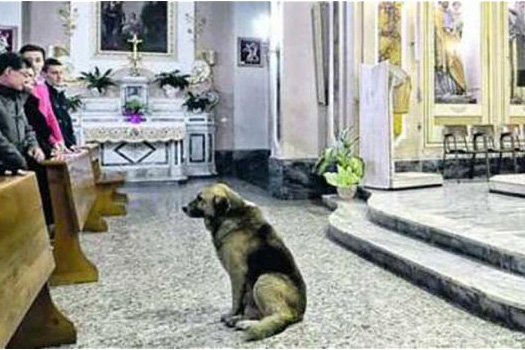
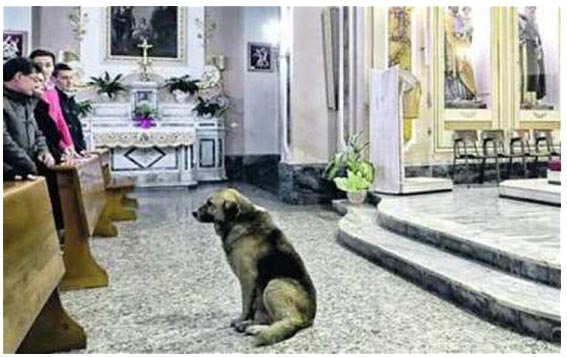
022613The picture at right shows “Tommy” the Dog. According to the article which featured the picture, Tommy the dog has not missed a single mass in the small church in southern Italy where his owner’s funeral was held. When the bells of the Santa Maria Assunta church in San Donaci toll each afternoon the 12-year-old German Shepherd sets off from the village to get himself a front row seat next to the altar. After following his mistress’s coffin up to the church on the day of her funeral, Tommy has returned daily, sitting quietly throughout masses, baptisms and funerals, according to local priest Donato Panna, who now wouldn’t do without him.

It is a remarkable feat of “faith” or shall we say remembering. Here was the last place the dog experienced his owner. And thus it is here that the dog gathers with others each day to “remember.”

At the Last Supper Jesus expressed a wish, it was the final request of a dying friend and Lord: Do this in remembrance of me. And thus each Sunday, indeed, every day the Church gathers with her Lord to remember.

Old Tommy the Dog gets it, he remembers. He comes each day to the last known sighting of his former owner, a lady whom the townsfolk say loved the Lord.

Tommy the Dog is in the right place, for at the altar, at Jesus feet, he is close to his owner, for she is in caught up in the Lord as a member of the Lord’s mystical body. And to be close to the Lord is to be close to her.

I often tell people who have lost loved ones that they will never be closer to them now than at the Altar of the Lord.

Tommy the Dog “gets it.” Do you and I? Are you smarter than a dog? Do we have more faith than this Dog?

Scripture says, The ox knows his owner, and the donkey his master’s manger: but Israel has not known me, and my people have not understood. (Is 1:3).

Well, lets hope that’s not the Lord’s final description of us. Let’s hope a few of us “get it” and have come to find and know the Lord.

Follow the example of Tommy the Dog.  Yes Tommy, you’ve got it right.

No One Goes Away From Jesus Unchanged. A reflection on the fruitfulness of the Sacraments and the Liturgy

022513There is a very clear and consistent principle in the New Testament which stated simply is “No one goes away from Jesus Christ unchanged.” That is to say, no one encounters him and leaves that encounter in the same condition that they began it. The blind man came away seeing, the deaf man came away hearing, the lame left walking, lepers went away cleansed, the poor had the good news proclaimed to them, those without a shepherd gained a Shepherd, those without a teacher, were taught, the sick got well, and the dead were raised to life.

Sadly too there were some who went away changed for the worse. Yes some went away glad, but some went away sad and some went away mad. The rich young man went away sad, for his possessions were many. And though hearing the call, he could not embrace it. The Pharisees, and other unbelievers one away mad, so mad that they plotted to kill Jesus.

Thus, no one goes away from Jesus unchanged. Jesus is no neutral figure. He is one who compels a choice and brings about a change. Some had their hearts melted, some had their hearts hardened but no one was unchanged. Either they were mad, sad or glad, but never unchanged.

This scriptural principle is often under appreciated and poorly understood today. At one level there are those who think they can remain largely neutral about Jesus, appreciating certain of his ethical teachings but doubting his divinity or of worshiping him as Lord.

Sorry, no can do. There is no middle way with Jesus. Either he is the Lord he claims to be. or a lunatic and a liar who is to be shunned as a blasphemer. But if he is the Lord, then we must worship him, put faith in him and base our life on his teachings.

Tertium non datur (No third way is given), there is no third team on the field, and if you think you can play for some third team of for both teams I got news for you about what team you’re really on.

But even for believers there remains a mitigated way in which this teaching is often diminished. If it is biblically true that no one goes away from Jesus Christ unchanged, then the question becomes whether a believer really believes this when it comes to liturgy, sacraments, prayer, and the reading of Scripture.

If it is true that the liturgy and the Sacraments are an encounter with the living Lord Jesus Christ, (and it is), then what are the expectations I bring to these encounters?

In my discussions with Catholics down through the years I’ve come to realize that most do not have many high expectations of their walk with Christ. Frankly, they expect very little to happen that is dramatically different or healing. And these low expectations, possibly rooted in sloth, tend to close them off from the dramatic transformation that one ought to expect from being in a relationship with the Lord Jesus Christ.

Many people, in fact, put more faith in Tylenol than in the Eucharist. How? Because when they take Tylenol they expect something to happen, for the pain to go away, the swelling to go down. Yes, they expect healing and change. But when people come forward to receive Holy Communion do they expect anything like this, anything at all?

Frankly, it is been my experience at most don’t expect much and many see the sacraments and the liturgy more as tedious rituals than transformative realities.

I lay a lot of the blame for this low expectation at the feet of us clergy. Very few of us preach and teach people that they should expect dramatic transformation through the faithful celebration of the liturgy and sacraments, personal prayer, the reading of Scripture and walking in fellowship with the Church. For the most part, the faithful usually hear only vague reasons given, if any at all, as to why such things are important or necessary, and why and how they can change your life.

All of this has to change. For as we’ve seen, it is a biblical norm that no one goes away from Jesus Christ unchanged.

But of course the encounter with Christ must be rooted in faith. And where faith is weak, the encounter is often vague and unfruitful.

To illustrate this recall that a woman in the crowd who had a hemorrhage for 12 years, reached out in faith and touched the hem of Jesus’ garment. When Jesus asked who touched him, feeling healing power go out from him, the disciples were amazed by the question and retorted that the crowd was hemming him in and that probably hundreds of people had bumped into him! But Jesus did not ask who bumped into him, he to ask who touched him. There is a big difference, and the different Is faith. Jesus congratulations woman and with joy tells her that her faith has saved her. (cf Mk 5)

And therefore for us too a more robust faith must be the solution. We must have a lively faith in the biblical norm that no one goes away from an encounter with Jesus Christ unchanged. And good faith in this truth draws us to have high expectations, and to go to the liturgy, to the Mass, prayer, to the reading of Scripture, and the Sacrament of Confession with high expectations rooted in the lively faith that we are going to encounter the living God, and that encounter will forever change us.

This must be our faith, these must be our expectations, namely radical transformation through the Lord’s celebration of the liturgy and in the sacraments.

We priests have to do a better job of preaching it, and all the faithful with their priests must embrace this truth: No one goes away from Jesus Christ unchanged! Any faith-filled encounter with him can and will have large effects. But our faith is critical.

It is time is Catholics to reclaim our birthright that comes to us through faith that Jesus Christ is alive, and ministers powerfully and effectively through the liturgy, the Sacraments and his word. If we will accept this truth and faith we will go away remarkably changed and transformed by the Lord who ministers to us.

No one is to go away from Jesus Christ unchanged, this means you.

Call Me the Optimist – A Meditation on Recent Reports of Crisis and Conclave

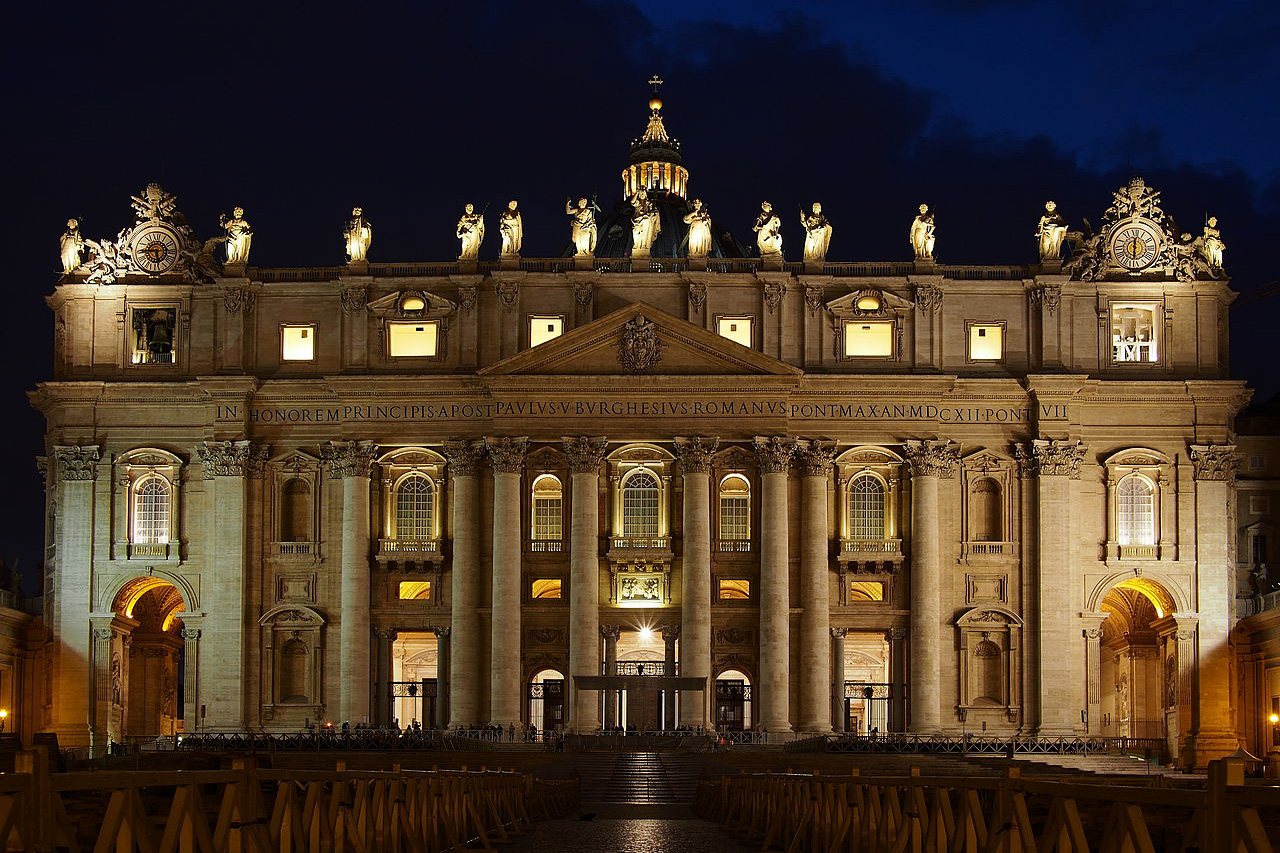
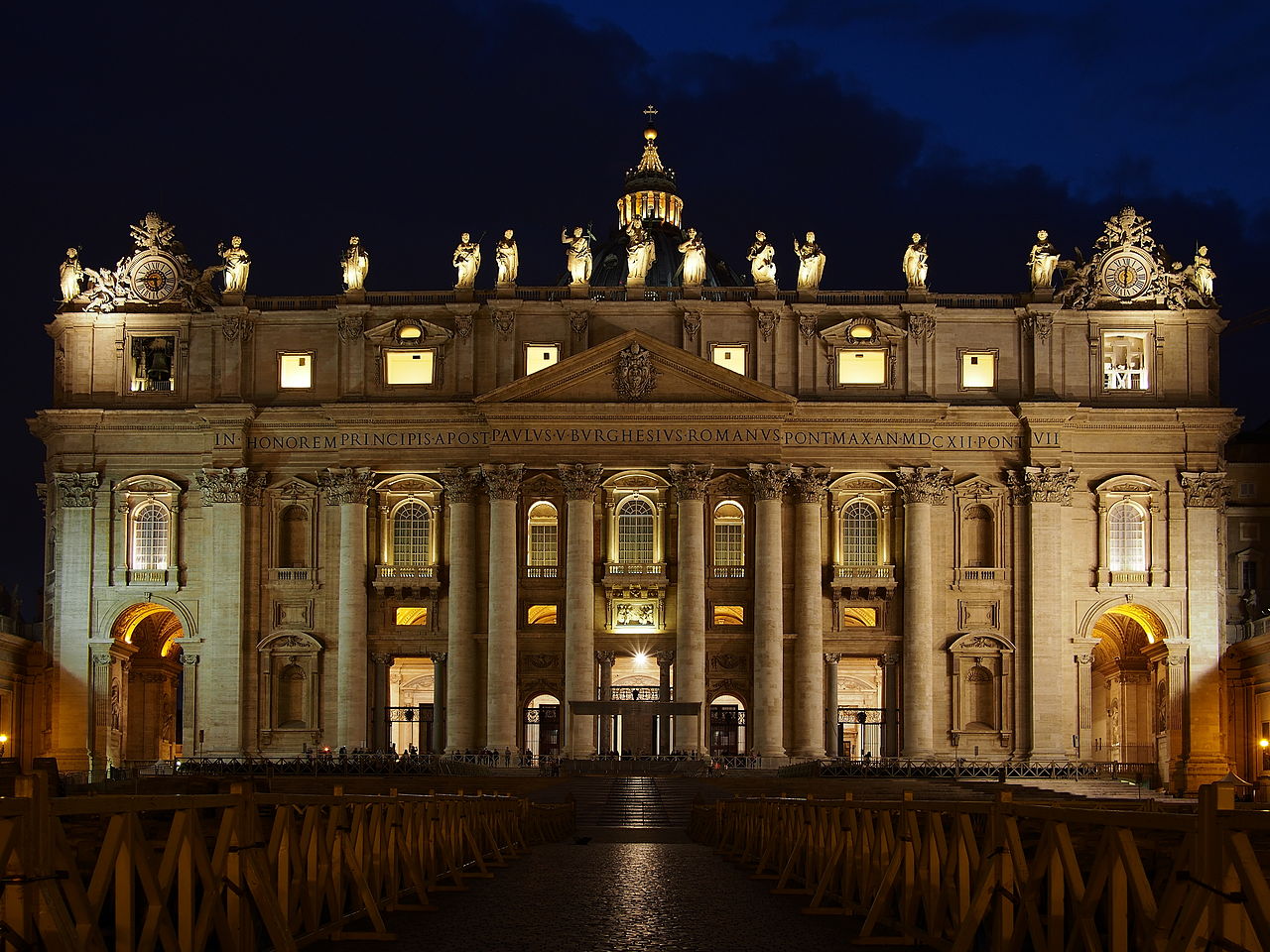
"Saint Peter's Basilica at night"  by Petar Milošević - Own work.  Licensed under  CC BY-SA 4.0 via Wikimedia Commons
“Saint Peter’s Basilica at night” by Petar Milošević – Own work. Licensed under CC BY-SA 4.0 via Wikimedia Commons

I’ve been asked by a few readers of this blog to record a few thoughts about the events surrounding the resignation of Pope Benedict. Over the weekend especially, many rumors circulated, regarding a seedy backstory to the resignation.

I am not surprised to read of such rumors in secular media sources, but I must admit I was surprised to read some of these things reported in Catholic sources.

As for me, it remains a rumor, and rumors are best unrepeated.

I prefer simply to take Pope Benedict at his word. He indicates that, given the effects of age, he thinks is best step back for the sake of the Church. I know of no other walk of life where we have, or expect 85-year-old man to hold a position that would tax a man half his age.

The fact is, the Papacy has changed, even in my own brief lifetime. When I was a child, it was common to refer to the Pope as the “prisoner the Vatican.” For, when a man was elected pope, he went into the Vatican, and was not seen outside again except at the window.

Pope Paul VI began to change this when he flew to the United Nations, and made other trips to the Holy Land and a few other places. At that time it was a stunning and bold move, that the Pope would actually emerge from the Vatican, get on a plane, and go somewhere!

This move opened the door on the modern papacy. Pope John Paul II obviously ushered it in full force. And now the papacy is a jet-set and very vigorous public presence in the world. The Pope is expected to be out and about, and make quick responses to worldwide issues. The pace is quick and the mileage long. All day, there are exhausting meetings with heads of state, and many other significant individuals who expect to meet with the Pope.

Yes, the days are very long and taxing. Even at age 51 I think I would be taxed by such a pace such high expectations. That an 85-year-old man thinks it’s best for younger man to take the position makes a lot of sense. The other alternative would be to dramatically scale back Pope Benedict’s calendar and duties. But his judgment is the Church needs a Pope to meet the current duties and that these are reasonable expectations for the office of the papacy.

This is how I understand the Pope’s resignation, according to what he himself is said. And the rumors and accusations of grave scandals are of no interest to me. Scandals will inevitably arise, but woe to those through whom they come (Lk 17:1).

In all of this let me also state my firm position that I remain very optimistic about the state of the Church today. Not only does she have the promise of the indefectability from the Lord, but I am seeing sure signs of great renewal especially here in America.

While I am less certain about the state of the Church in Europe, here in America our seminaries are beginning to fill again, many new and reformed religious communities are coming back alive, many superb Lay movements, and great clerical and lay leadership is developing. Our numbers in the pews do continue to decline, but I see many things being put in place that will address and prepare the Church for the near future.

It may well be, that a smaller and disciplined army is necessary for what may be difficult days ahead for Western culture as it continues to descend into deeper darkness. Yes, the Church is getting increasingly focused on her main mission, which is to be a light in the darkness, to continuously strive to make disciples, and to bring people into a life-changing, transformative relationship with Jesus Christ.

I think persecutions will probably arise in the near future but maybe that’s just what we need. And besides, the Church has a good track record of not only enduring persecution, but thriving in the midst of it

Even this weekend I have been able to celebrate many great signs of life. In Lent, the preaching circuit really lights up for me, and I’ve had a very busy weekend. I spent Friday and all day Saturday preaching a retreat 30 seminarians from the Archdiocese of Washington. Altogether we have well over 70 seminarians, and we are having to add a new wing to the seminary to accommodate more. These are good men, men who love the Church, who love the truth and are preparing to speak the truth in love. I am confident that all them I met will make great priests. The Seminary named for Blessed John Paul II, is a great place. The Priests who staff the seminary and teach are very solid and orthodox. Liturgies are well celebrated and in the men, both priests and seminarians show a strong faith.

In my parish convent we are blessed with the Servant Sisters of the Lord, a newer order who outgrew their last Juniorate and recently had to move to larger quarters. These are great religious sisters, joyful and passionate for the Lord and His Church. Vocations for their order and of several other orders like them are going strong.

Having completed preaching the retreat at the seminary, I was privileged to celebrate masses of my own parish on Sunday, the Church was filled with many lively and wonderful Catholics, who came to hear the Word of God and to receive Holy Communion.

And then, just this evening, I am returning from Southern Maryland where I preached the first night of a three-night revival in one of our parishes. The Church was filled with people eager to hear a word from God and have their faith strengthened.

Yes, God is alive and he’s gathering his faithful. Even if the overall numbers in the Church are down a bit, those who remain are becoming increasingly vigorous and vibrant in their faith, more clear about what it means to be a Catholic in these days and times.

So put me in the optimist camp, I think God is doing great work in purifying his Church. So many things are improving! I remember some very dark times in the early and mid-80s when I was in seminary and I must say that, in many ways, the tide has completely turned. On-going purification is necessary, but so much has been accomplished!

The Lord Jesus loves his Bride the Church, and His love for the Church is becoming increasingly evident to me.

Yes, call me an optimist, and call me uninterested in the rumors swirling, about Vatican corruption. If there is need for reform in the Vatican bureaucracy, the Lord Jesus will accomplish it. Jesus loves his Bride. I know that first-hand experience what he can do by way of reform.

I realize there are some who read this who will consider my remarks wrong or naïve They will recite to me let me of things they think are still wrong, everything ranging from liturgy to authority and discipline. I do not say the Church is perfect and I know on-going reform is still necessary. But I am saying that I see what God has done is doing and I know He will continue to do.

As we head for conclave, call me the optimist, call me the joyful son of Mother Church, everything will be alright, indeed, everything already is alright because Jesus is the Head of the Body the Church, and the beloved groom of the Church the Bride.

If you call me a fool, at least add that I was a fool for Christ. Call me naïve but at least said that my naïveté is rooted in an undying confidence in the love of Jesus for his bride the Church.

Was that a lightning bolt that struck the Vatican or was it a divine dose of refining fire and dynamic power from on high?