Back to the Future – A Meditation on the Gospel for the Third Sunday of Easter

041313The gospel today, is really quite remarkable. For, despite the fact that the apostles seeing Jesus risen from the dead several times now, we see in them a kind of retreat into the past. They’re going backwards, and Jesus must summon them, if you pardon the expression, “Back to the Future.”

Plainly stated, they were going back to fishing, but the Lord had called them away from fishing, and pointed them to the future, a future that included going to all the nations and summoning them to saving faith.

Thus, this is a critical gospel that shows us that Jesus summoning them back to their crucial call, a call that has its focus not in the past but in the future. Indeed, fellow believer, if this gospel had not gone right, your faith and mine might well have been in jeopardy. To make it plain, you and I are the future the Jesus sought to preserve in this crucial gospel. Our own coming to the faith depends on whether Jesus is able to summon Peter and the other apostles back to the future.

Lets look at this gospel in four stages.

I. Regrettable Reversal–the text says, At that time, Jesus revealed himself again to his disciples at the Sea of Tiberias. He revealed himself in this way. Together were Simon Peter, Thomas called Didymus, Nathanael from Cana in Galilee, Zebedee’s sons, and two others of his disciples. Simon Peter said to them, “I am going fishing.” They said to him, “We also will come with you.” So they went out and got into the boat, but that night they caught nothing.

Now let us be clear, Peter had no business going back to fishing. The Lord had called him away from fishing. For example, Back in Matthew’s Gospel, we read, And he said to them, follow me and I will make you fishers of men. Immediately, they left their nets and followed him. (Mat 4:19)

But here, we see Peter going back to commercial fishing. And lets be clear, this is not some sort of recreational fishing, their commercial nets are out! It is astonishing to think that after having seen Jesus risen from the dead on at least two occasions, possibly more, that they’re going back to fishing!

We often think that if we were to see miracles, our faith would be strong. But, there is very little evidence for this. Many who see signs and wonders, wonder if what they have seen can be topped. Their fascination is engaged, but not their faith. Ultimately, faith produces miracles, it is not the result of it.

Peter’s return to fishing, is not only regrettable, it is scandalous. For in so doing, others say to him, “We will also go with you.” Too often, when we backslide, we bring others with us. More positively, if we grow in holiness, we will also bring others with us. Sadly, Peter is backslidden, and others follow him. As we shall see, the Lord will not abandon his church.

And while we may wonder at St. Peter. The fact is, we too easily backslide. We praise Jesus with our mouth, and yet from the same mouth come curses and gossip. We claim that we belong to Christ, are one body with him, are a Temple of the Holy Spirit, and yet, too often, from the same body comes forth fornication and other sexual impurity. We say that God is love, and yet from us to easily come anger and hatred and a lack of love for the poor and the troubled.

The things we have been called away from, we too easily run back to. The Lord points forward, but we run backward.

So often, as with the disciples in this gospel, the Lord must stand on the shore of our baptismal waters, and call us out of the past, and back into the future, a future of holiness and perfection. Too easily we run from this. But the Lord is faithful, and as we shall see, stands on the shore and calls us back. Would that we could say, in the words of an old Gospel song:  Goodbye world, I stay no longer with you, goodbye pleasures of sin, I stayed along with you! I’ve made up my mind to go God’s way the rest of my life! Another old gospel song from the 1940s says, No more, no more! I’ll never turn back no more! I’m going to keep on crossing till I reach the other shore. Rains may come, floods may roar, storms may race, and winds may blow, but I’ll never turn back, no more!

Would that this were the case,. But as it is, and as we shall see, the Lord keeps calling calling from the shore,  out onto the waves of our discontent.

II. Redeeming reminder – the text says, When it was already dawn, Jesus was standing on the shore; but the disciples did not realize that it was Jesus. Jesus said to them, “Children, have you caught anything to eat?” They answered him, “No.” So he said to them, “Cast the net over the right side of the boat and you will find something.” So they cast it, and were not able to pull it in because of the number of fish. So the disciple whom Jesus loved said to Peter, “It is the Lord.” When Simon Peter heard that it was the Lord, he tucked in his garment, for he was lightly clad, and jumped into the sea. The other disciples came in the boat, for they were not far from shore, only about a hundred yards, dragging the net with the fish.

The Lord stands on the shore and rehearses for them what he had done for them some three years earlier, when he called them from fishing to evangelizing. He does not excoriate them, call them fools or some other epitaph. He calls out to them, “Children…have you caught anything?!” And rather than rebuke them, he asked them to assess the data, whether the course of action they have chosen has yielded anything at all. They admit that they’ve caught nothing.

And yet, strangely, this whole incident seems familiar! For the Lord tells him to cast the net elsewhere and that they would find something. And suddenly the nets are full! Oh how this spoke to their hearts! It was just when it happened three years ago! Scripture says,

And when he had ceased speaking, he said to Simon, “Put out into the deep and let down your nets for a catch.” And Simon answered, “Master, we toiled all night and took nothing! But at your word I will let down the nets.” And when they had done this, they enclosed a great shoal of fish; and as their nets were breaking, they beckoned to their partners in the other boat to come and help them. And they came and filled both the boats, so that they began to sink. But when Simon Peter saw it, he fell down at Jesus’ knees, saying, “Depart from me, for I am a sinful man, O Lord.” For he was astonished, and all that were with him, at the catch of fish which they had taken; and so also were James and John, sons of Zebedee, who were partners with Simon. And Jesus said to Simon, “Do not be afraid; henceforth you will be catching men.” And when they had brought their boats to land, they left everything and followed him. (Luke 5:4ff)

St. John draws the obvious conclusion, “It is the Lord!”  The Lord has given them a redeeming reminder. He does not rebuke them, he has only reminded them. In effect, he says “Come out of the past! Remember the future to which I have summoned you, a future of going forth to the nations in announcing the Gospel for all to hear. Your life is not about fish, is about humanity!”

What reminders has the Lord put you in your life? How has he stood on the shore and called to you with some reminder? Perhaps it was a tattered old Bible, or perhaps an old hymn that you heard. Perhaps it was grandmother’s old rosary beads stored away in a dresser drawer. Perhaps you are summoned to a funeral or wedding.

Somehow, in moments like these, the Lord stands on the shore of  life and calls to you. He reminds you of your call, and wonders whether your present course is done anything for you whatsoever. Usually, it has not. Perhaps there is fleeting wealth or momentary popularity, but otherwise little else to show for it.

And thus, the Lord calls. He calls us back to the future, a future and a present oriented toward heaven. Since you have been raised to new life with Christ, seek the things that are above, rather than the earth below (Colossians 3:1).

Yes, Softly and tenderly Jesus is calling, calling for you and for me. See on  the portals he’s waiting and watching, watching for you and for me; Come home, come home! Ye who are weary come home! Earnestly, tenderly, Jesus is calling, calling oh sinner come home!  

Here then, is a redeeming reminder Jesus calling, softly and tenderly: come out of the past, come away from commercial fishing, look to future, the future of saving souls!

III. Reorienting Repast– the text says, When they climbed out on shore, they saw a charcoal fire with fish on it and bread. Jesus said to them, “Bring some of the fish you just caught.” So Simon Peter went over and dragged the net ashore full of one hundred fifty-three large fish. Even though there were so many, the net was not torn. Jesus said to them, “Come, have breakfast.” And none of the disciples dared to ask him, “Who are you?” because they realized it was the Lord. Jesus came over and took the bread and gave it to them, and in like manner the fish. This was now the third time Jesus was revealed to his disciples after being raised from the dead. When they had finished breakfast, Jesus said to Simon Peter, “Simon, son of John, do you love me more than these?” Simon Peter answered him, “Yes, Lord, you know that I love you.” Jesus said to him, “Feed my lambs.” He then said to Simon Peter a second time, “Simon, son of John, do you love me?” Simon Peter answered him, “Yes, Lord, you know that I love you.” Jesus said to him, “Tend my sheep.” Jesus said to him the third time, “Simon, son of John, do you love me?” Peter was distressed that Jesus had said to him a third time, “Do you love me?” and he said to him, “Lord, you know everything; you know that I love you.” Jesus said to him, “Feed my sheep.

Now in this somewhat lengthy passage, notice three basic elements whereby the Lord uses a meal, or a repast, to reorient them. To “reorient,” literally, means to turn someone back to the East, back toward the rising of the sun (Son), back toward the light and away from the dark. Re (again) +  oriens (East) = back to the East, back to the light.

Note first, the FISH are in is are plentiful numbers. But the number, 153, has significance more for humanity, then for fish. While much ink has been spilled on the significance of this number, the most likely explanation seems to be that this was the number of known nations at the time. And hence, that 153 fish are caught exactly, seems to be the Lord’s way of saying, “Not fish, but humanity, all the nations!” Hence we see that God can even use our sins, our backsliding, and turn it to  something he is called us away from, yes he can use our sins to be a teachable moment.

Notice next, the FIRE. As Peter comes onshore, we note that he sees a fire. And though the text is silent, it must’ve unnerved him! For here was a charcoal fire, the same sort of fire in the courtyard of Caiaphas the high priest wherein Peter had denied the Lord (Jn 18:18). Hurt, and unnerved by what he had done, or rather, failed to do,  Peter felt unworthy, and was still deeply troubled by the sin he committed in denying the Lord. Yes, this fire reminded him.

And yet, even his repentance is somewhat egocentric. It would seem, he wonders, “How could I have done this, I who promise the Lord to be with him even if all should rage against him!” And yet, in moment of cowardice, Peter denied the Lord. Oh yes, this fire, this charcoal fire, is bothersome indeed! The Lord stands next to it it looks to Peter much as he had done in the courtyard of Caiaphas when, after Peter denied him for the third time, the text says that Jesus turned and looked at Peter (Lk 22:61). How this fire bothered him!

And the FRANKNESS – But now ensues a tender, poignant, and powerful conversation. To us to read only English, the conversation focuses on the fact that three times, the Lord asked Peter, “Do you love me?” But in Greek, there are subtleties that we easily miss.

For the Lord does not ask Peter simply, “Do you love me?” And Peter answers, “Yes Lord, I love you.” No, the Greek text is more subtle and more specific. In Greek, the Lord asked Peter, Σίμων Ἰωάννου, ἀγαπᾷς με πλέον τούτων (Simon Joannou agapas me pleon touton? – Simon Son of John, do you Love (agapas) me more than these? ). Note therefore the request for agape love. But Peter replies, in the Greek text, κύριε, σὺ οἶδας ὅτι φιλῶ σε. (Kyrie, su oidas oti philo se – Lord, you know that I have brotherly (philo) love for you.

And thus we see, that the Lord asked for a agape love, a love that is the highest love, wherein we love God above all things, and above all people, including ourselves. But Peter does not answer, with agape love, but rather says, that he loves the Lord in a brotherly (phileo) sort of a way. And this is far short of what the Lord asked. (I realize there are debates about the Greek here, but am convinced that the two different verb forms are significant. More on the debate here: Agape vs Philo in John 21).

But despite this, the Lord has still has something important for St. Peter to do so. He says to him, despite his imperfect love, “Feed my lambs!”

A second time, the same dialogue sets up wherein the Lord asked Peter, Σίμων Ἰωάννου, ἀγαπᾷς με (Simon son of John, do you love (agapas) me?   Peter  responds, κύριε, σὺ οἶδας ὅτι φιλῶ σε (Lord you know that I have affectionate (philo = bortherly) love for you.”  But here too, the Lord had asked for unconditional, an ultimate love, but Peter can only return a lesser love, a brotherly love, a sort of affection. Yet again, the Lord does not reject Peter. He accepts what Peter has, and says to him still “Tend my sheep.”

Yet in the third  occasion, Jesus, accepting what Peter is able to offer ask him the third time, Σίμων Ἰωάννου, φιλεῖς με; (Simon, son of John, do you have affection (phileis) for me?  The third question,  which strikes Peter to the heart, causes him to exclaim that he  (only) has brotherly love. Yet again the Lord does not reject him, but rather assigns him, saying once again, feed my lambs.”

Here, is perhaps one of the most poignant, beautiful, and honest moments in Scripture. The Lord looking with love to a disciple, asking them for the highest love, and that disciple honestly answering, “I have only imperfect love to offer you.” For the first time in his life, perhaps, Peter is being absolutely honest. No more posing here, no more bragging. Only an honest answer, born in sober appreciation of his human lapses. There is nothing more beautiful than honest prayer. For honesty is a prelude to healing. Jesus accepts what Peter can offer, and as we shall see, promises him his heart will expand so that, one day, Peter will love the Lord totally, unconditionally, above all things, and above all people.

How about you? Are you hones with the Lord? Have you experienced his love in spite of your sin? Do you know he can use you even in your weakness if you are will to be hones with him?

IV–Required Remedy– the text says  Amen, amen, I say to you, when you were younger, you used to dress yourself and go where you wanted; but when you grow old, you will stretch out your hands, and someone else will dress you and lead you where you do not want to go.” He said this signifying by what kind of death he would glorify God. And when he had said this, he said to him, “Follow me.”

In this whole conversation, the Lord’s purpose is not to stalk Peter, or to badger him. Rather it is to lead him toward a necessary remedy, and point him back toward the future, a future filled with evangelical fervor, and sacrificial love. He  is week now, but the Lord will give him strength and, within ten days after his Ascension, the Holy Spirit will come and Peter will be quickened, strengthened in the faith.

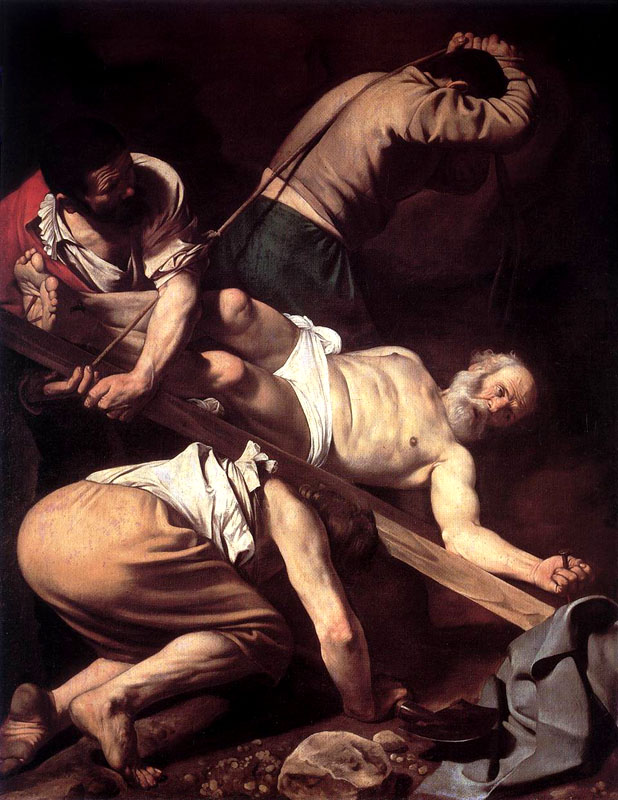
But even here, the work the Lord needs to do is not finished, for the Lord speaks of the day, when Peter will finally have the grace to accept martyrdom. It will be a day, when someone will tie him fast and lead him off to where he would rather not go. But he will go! And he will die for Christ.

Finally Peter will be able to say, without any simulation or exaggeration, I love you Lord totally, with agape love, I love you above all things, above all people, and above my own very life.

For now, he is not ready, but the Lord will lead him by stages, and get him ready. Peter will one day be able to say I love you with agape, with total, with unconditional love, above all things, above all people, above my very self!

How will Peter get there? How will we get there?  The Lord says simply, “Follow me.”

So, fellow disciple, the Lord leads you to deeper love, to unconditional love, to love above all other loves! Only the Lord can do this. He did it for Peter, a hard case actually, and he can do it for you!

For now, He is standing on the shore and calling us to a richer future:

An Allegory of the Truth and an Important Warning in a Creative Video

The video below is a kind of allegory on the truth. In the video the truth is symbolized by a “Lutin” an small caretaker of a house who orders everything and keeps it clean. And this is what truth does.

Enter a woman, harsh and mean. She has just bought the house and enters upon on it. Disdain is written all over her.

She is a symbol for the modern West and those who reject truth and disdainfully hurl overboard even the most obvious parameters of truth in the Natural Law, let alone the truth of the Scripture.

Observing the house all in order, she moves through scoffing. To her it is old, outdated, and she begins to disrupt its order. Her first encounter with truth, symbolized by Lutin, is to see him, wince, conclude he is ugly, and throw him in the trash.

But the truth won’t be so easily shown the door! I am mindful of an old quote by, of all people, Elvis Presley who said, Truth is like the sun. You can shut it out for a time, but it ain’t goin’ away.

Truth, the Lutin, responds by returning quietly and restoring order as she moves about disrupting and disdaining the order and sanity of the house. Yes, he does so quietly at first. But seeing this woman is a hard case he reveals himself and offers her his hand in friendship. She rejects him and continues her destructive rampage, seeking to oust him and his influence.

He seeks her conversion by issuing various small punishments, hoping to bring her to her senses and then once again offers friendship. But outraged she seeks only to kill him. Sadly she succeeds. But in killing the truth, she sees the destruction of everything. For truth had sustained the house and ordered it. Now, having wholly and finally rejected the truth, complete destruction and chaos ensues. All order is lost and fundamental structures collapse.

Welcome to the 21st Century West which, having rejected the most basic and fundamental truths about God, the sacredness of human life, the meaning of human sexuality, marriage, and family, and the need for self-control, is seeing all the basic structures collapse. Of these times Jesus said:

But everyone who hears these words of mine and does not put them into practice is like a foolish man who built his house on sand. 27The rain came down, the streams rose, and the winds blew and beat against that house, and it fell with a great crash.” (Matt 7:26-27)

Here is a video that powerfully illustrates the Lord’s warning.

And of Lutin, the personified truth quietly at work sustaining and ordering the home, I am mindful of a quote on the truth by the Ancient Philospoher of India, Chanakya: The earth is supported by the power of truth; it is the power of truth that makes the sun shine and the winds blow; indeed all things rest upon truth.

Surely for us Christians we know the Truth of whom Chanakya speaks: Jesus, who said, “I am the Way, the Truth, and the Life.” He is the Logos, who sustains all things in Himself showing forth the logike (logic) and order in all things. (cf John 1: 3; Col 1:17).

Did this Woman, successfully kill the truth? Of course not. But the truth is dead to her and she suffers the consequences of the dismissal she has made. And thus for us in the West, God is still calling, reaching out the hand of truth. But, like this woman, we in the West are experiencing the increasing consequences of our collective rejection, even hatred of the truth revealed by God in his Word, Sacred Tradition, and in his creation.

And though perchance the West does fully collapse, yet the truth lives on. The truth will out. I am mindful of the words of the Dr. Martin Luther King:

I believe that unarmed truth and unconditional love will have the final word in reality. This is why right, temporarily defeated, is stronger than evil triumphant.

Enjoy and learn from the video.

Clarity with Charity – A Meditation on the 8th Commandment

041113-pope-2The Eighth Commandment, You shall not bear false witness against your neighbor, proclaims the splendor and the beauty of the truth. It is not often that we hear of the truth described in this way but consider how precious and essential a foundation the truth is for our lives. One of the dangers, when it comes to commandments is that we see them merely as prohibitions. So for example here, we might think, “OK, I’m not supposed to lie.” Well, yes, but the Commandment is more than that! It is an exhortation for us to love the truth, live the truth, and proclaim the truth. Let’s look at some of the implications and distinctions regarding this Commandment.

I. The first implication of the Eighth Commandment is that we should love the truth, for it is of God and that we should seek to live the truth in our lives. The Catechism of the Catholic Church says,

Christians must be dedicated to the truth and live according to it. The Old Testament attests that God is the source of all truth. His Word is truth. His Law is truth. His “faithfulness endures to all generations.”[Ps 119:90; Prov 8:7; 2 Sam 7:28; Ps 119:142] Since God is “true,” the members of his people are called to live in the truth. To follow Jesus is to live in “the Spirit of truth,” whom the Father sends in his name and who leads “into all the truth.”[Jn 16:13] To his disciples Jesus teaches the unconditional love of truth: “Let what you say be simply ‘Yes or No.'”[Mt 5:37] (Catechism 2465, 2466).

So, we are to witness to it by word and deed. This is particularly the case with the truth of our faith, the truth which has set us free.

This witness is a transmission of the faith in words and deeds. Witness is an act of justice that establishes the truth or makes it known. All Christians by the example of their lives and the witness of their word, wherever they live, have an obligation to manifest the new man which they have put on in Baptism and to reveal the power of the Holy Spirit by whom they were strengthened at Confirmation. (Catechism 2472)

II. Put away falsehoodScripture bids us, Therefore, putting away falsehood, let every one speak the truth with his neighbor, for we are members one of another. (Eph 4:22-25) So the Eighth Commandment upholds the goodness and beauty of the truth, exhorts us to celebrate it and instructs that we must avoid all sins against the truth. There are numerous ways that the we can sin against the truth. It will be fruitful for us to consider them each in turn, along with some distinctions.

III. False Witness – Nothing can be so injurious to individuals as to harm their good name or reputation. Without a good reputation it becomes difficult for an individual to successfully relate to and interact with others whether it be for business or merely at a personal level. Clearly, to bear false witness against someone is to harm their reputation and we are forbidden to do so.

In the technical sense, false witness is something which takes place in a court of law and since it is under oath it is also called perjury.

But it is also often the case that false witness is given in daily matters through lies, half truths, exaggeration, and the like. Clearly our call to love the truth and to respect the reputation of others forbids us engaging in such activities.

Respect for the reputation of others also forbids us from:

  • A. Rash judgement – assuming without sufficient foundation the moral fault of a neighbor
  • B. Detraction – disclosing an other’s faults and failings without a valid reason to others who did not know them
  • C. Calumny – imputing false defects to another with the knowledge that they are false.

Yet it is also possible to offend the truth by

  • D. Inappropriately praising others
  • E. By refusing to correct them when it is proper to do so.
  • F. Flattery distorts the truth when it falsely attributes certain good qualities or talents to another. This is usually done to ingratiate oneself to individuals or for some other ulterior motive(s).

Such behavior becomes particularly sinful when it confirms another in malicious acts or sinful conduct.

IV. Lying A lie consists in speaking a falsehood with the intention of deceiving…Lying is the most direct offense against the truth. To lie is to speak or act against the truth in order to lead into error someone who has the right to know the truth.

By injuring man’s relation to truth and to his neighbor, a lie offends against the fundamental relation of man and of his word to the Lord…The Lord denounces lying as the work of the devil: “You are of your father the devil, . . . there is no truth in him….he is a liar and the father of lies.” [Jn 8:44]….

By its very nature, lying is to be condemned. It is a profanation of speech, whereas the purpose of speech is to communicate known truth to others. The deliberate intention of leading a neighbor into error by saying things contrary to the truth constitutes a failure in justice and charity…

A lie does real violence to another. It affects his ability to know, which is a condition of every judgment and decision…Lying is destructive of society; it undermines trust…and tears apart the fabric of social relationships. (Catechism 2482-2485)

Acts of lying are sins from which we must repent. Lying is also a sin that demands reparation. That is to say, since lying causes actual harm and real damage. These damages must be repaired. The actual truth must be made known to those who deserve to know it. The reputations of others which have been harmed by the lie must also be restored.

V. Is lying always so evil? The gravity of a lie is measured against the nature of the truth it deforms, the circumstances, the intentions of the one who lies, and the harm suffered by its victims. (Catechism 2484). Thus there are big lies and smaller ones. Nevertheless, it is always wrong to intentionally lie.

This includes so called “polite lies.” For example suppose a phone call comes in for someone in the household who has indicated a preference not to be disturbed just now. It is a lie to say, “She is not here.” Yet you could say, “She is not available now.” Other social situations are less simple! For example, if Mrs. Smith asks you, “Do you like my new hairstyle?” Suppose you do not. It is in fact wrong to say, “Yes, I like it.” Granted, we all feel a bit stuck in such situations! Perhaps we could answer truthfully but discreetly and say, “You look alright.” (Presuming that we do think so).

But wouldn’t it be nice if we actually felt secure enough either to indicate, charitably, our true feelings or to indicate our preference not to answer the question? Wouldn’t it be even nicer if our relationships with others were so based in sincerity and truth, that people both gave and expected honest answers? It is to this blessed state that the Lord points when he says, Let what you say be simply ‘Yes’ or ‘No’ (Mt 5:37).

VI. What about secrets? – This reflection has thus far emphasized the goodness and the splendor of the truth as well as the importance of communicating that truth to others who need it. However, as the Catechism states:

The right to the communication of the truth is not unconditional..Fraternal love…requires us in concrete situations to judge whether or not it is appropriate to reveal the truth to someone who asks for it. The good and safety of others, respect for privacy, and the common good are sufficient reasons for being silent about what ought not be known or for making use of a discreet language.

The duty to avoid scandal often commands strict discretion. No one is bound to reveal the truth to someone who does not have the right to know it…Everyone should observe an appropriate reserve concerning persons’ private lives.

Those in charge of communications should maintain a fair balance between the requirements of the common good and respect for individual rights.

Interference by the media in the private lives of persons engaged in political or public activity is to be condemned to the extent that it infringes upon their privacy and freedom. (Catechism 2488, 2489, 2492)

However, the fact that we are permitted, even obliged, to keep certain secrets and maintain discretion, does not mean that we are free simply to lie. For example we cannot say, “I don’t know anything about that” if we do. Neither can we make up false answers to requested information. When we must decline to give information that is properly to be kept secret, we must still remain truthful. We might say instead, “I am not free to discuss this matter with you now.” Or, “It would be inappropriate for me to comment on that.” Or, “Why don’t you ask him yourself?” Occasionally we may need to be more direct and say, “This is a private matter and not for you to know.”

VII. Are all secrets sacred? – Thus secrecy and discretion are often proper. Here too however, absolutes must be avoided. Sometimes we are asked to keep secrets that we should not keep. For example, suppose someone confides in you that they intend to commit a serious crime, or bring harm to another? It would be wrong to keep such a secret.

Other things being equal secrets ought to be kept, save in exceptional cases where keeping the secret is bound to cause very grave harm to the one who confided it, to the one who received it, or to a third party, and where the very grave harm can be avoided only by divulging the truth. (Catechism 2491).

An exception to this is the seal of confession which may never be violated for any reason whatsoever: The sacramental seal is inviolable; therefore, it is a crime for a confessor in any way to betray a penitent by word or in any other manner or for any reason. (Catechism 2490).

VIII. On the Manner of speaking the truth – That the truth should be celebrated and declared is surely an essential truth. However, one must not sever the declaration of truth from charity. An old Latin Motto says, veritatem in caritate (the truth, in charity). For the truth without love can bludgeon, or it can be something we use only to win an argument. Further, love without truth, is mere affirmation of others in often destructive tendencies, and really not love at all.

Yes, the truth should be spoken, but always in love. Always be prepared to give an answer to everyone who asks you to give the reason for the hope that you have. But do this with gentleness and respect (1 Peter 3:15). An older priest once told me, “If your people really know you love them, you can tell them almost anything, even the hardest truths, and they will accept it.

Further truth often has a time it is best revealed. Jesus said, I have much more to say to you, more than you can now bear. But when he, the Spirit of truth, comes, he will guide you into all truth. (John 16:12-13) Where there is time, we often do well to lead people patiently, to the deeper truths in stages.

IX. Final thought – Jesus has taught us that the truth will set us free (Jn 8:32). If this be the case then anything which distorts the truth leads to bondage. Thus the eighth commandment calls upon us to love the truth and to love one another by proclaiming the truth and witnessing to it in sincerity with mutual respect and love.

Here is an amazing illusion, a kind of visual “lie.” It is not a lie per se, since the illusionist makes it clear he is creating an illusion, and invites, dares, us to discover how he misleads our eyes. I must say this is a VERY good illusion.

Is the Church a Thermometer or a Thermostat? A Biblical reply to those who prefer a trendy and compliant Church

041113-pope-1Is the Church a thermometer or a thermostat? In other words are we called merely to reflect the temperature (thermometer), or are we called to affect the temperature (thermostat)? Many are deeply confused as to the role of the Church in the modern world and think we ought simply to reflect the mores of current times, rather than to prophetically announce the Gospel of Jesus Christ.

Yes, there are many who insist that the Church needs to “get with the times……Update her teachings….be more modern in her thinking, teachings and structures.” She needs to “Listen more to young people and speak their language and share their vision.”

Put more in a hostile way, the Church “needs to abandon her medieval ways, cease being hostile, judgmental, intolerant, bigoted, sexist, homophobic, hateful etc” (and the usual list of modern accusations that reflect more the accuser’s personal issues than the Church).

During the recent Papal Conclave the media had a field day interviewing various degrees and types of disaffected Catholics who all presented their wish list (or list of demands) of how the Church should change to be tenable and relevant to modernity and regain their “loyalty.” Most of the demands of course had to do with sex and power: that the Church should approve contraception and promote it, homosexual activity and same sex unions should get the thumbs up, divorce and remarriage should be approved, women and active gays ordained, priest should be bale to get married, abortion approved, euthanasia applauded, etc.

And somehow if the Church does all this, our parishes will be filled again and all will be right with the world.

Never mind that the Liberal (mainline) Protestants have tried all this for decades, approving whatever the people and the polls demanded, and with that approach their numbers have plummeted, far lower that any Catholic Parish. Never mind too that the only Protestant denominations that are growing at all are the more biblically conservative Evangelical Protestants who reject a good bit of the list of demands above.

But at the end of the day, the lists of demands above all show a fundamental misunderstanding of the nature and purpose of the Church. The Church does not exist to be a mere expression or manifestation of current popular or cultural views. The Catholic Church does not and cannot draw her inspiration from these, but rather must draw from the Word of God as it has been faithfully passed on for twenty centuries.

The Church does not exist to merely reflect and parrot the views of her parishioners, gleaned from polls and focus groups. She exists to reflect the views of her founder and head, Jesus Christ. And the Jesus referred to here is not some fake Jesus reinvented by moderns who use dubious and tortured methodologies to radically reinterpret Scripture so that it no longer “means” what it clearly says. Rather, we owe allegiance to the real Jesus, the Biblical Jesus. It is to Him that we look for Him that we speak. (More on that in another post).

But as for the Church, the cry goes up frequently in our culture today that the Church, and her clergy catechist other leaders should refrain From any sort of teaching or preaching that plainly characterizes immoral actions for the sins they are. Many, even among the clergy, insist on a “do no harm” mentality And any utterance which might even in the remotest possible way offend somebody, is strongly eschewed and denounced. Even directly quoting from the Scriptures, or the Catholic catechism, Is shamelessly denounced as hate speech. This is an egregious violation for those who only want the Church to be a thermometer.

And thus, the traditional “thermostatic” practice of the Church is to speak clearly about sin, but also to influence people to seek God’s offer of grace and mercy is largely scorned as “unloving,” even “hateful.”

The claim is made that since “God is love,” and Jesus loves everyone, therefore everything is somehow fine and any critique is somehow “unloving” and “un-Christ-like.”

In the biblical texts below, I hope to show forth that the consistent pastoral advice given in the Scriptures confirms the Church’s traditional approach. What follows is a kind of pastoral manual gleaned from the Scriptures.

I do not claim it to be complete, but have assembled these particular texts to affirm that God the Holy Spirit certainly expects the Church, and her clergy, as well as parents and other leaders to clearly and unambiguously address moral issues of the day. They also affirm that the goal of the Church is not simply to fit in, and, like a thermometer, reflect the values and wishes of the day. Rather, she is to thermostatically announce and seek to influence the world by speaking the ancient and tested wisdom that the Lord God himself has handed down through Biblical Tradition as well as Sacred Tradition. As such, this is an act of love, for it is good pastoral practice recommended by God the Holy Spirit Himself. The comments in Red are mine, and I admit some remarks are dripping with sarcastic irony as I play the role, in some of the remarks of an bemused or “outraged” interlocutor.

I. Some Old Testament admonitions to priests and prophets:

  • Malachi 2: 7For the lips of a priest ought to preserve knowledge, because he is the messenger of the Lord Almighty and people seek instruction from his mouth. 8But you have turned from the way and by your teaching have caused many to stumble. In other words, the priest has as a primary task to preserve and pass on ancient wisdom rather than to merely rehash modern jargon and views. They are to be a messenger for the Lord, not for the latest cause or rage. I failing to do this he causes the downfall of many.
  • Isaiah 56: 10Israel’s watchmen are blind, they all lack knowledge; they are all dumb dogs, they cannot bark; they lie around and dream, they love to sleep….They are shepherds who lack understanding; they all turn to their own way. In other words, the priest, prophet, parent and leaders of the Church are not supposed to be dumb dogs. Dogs are supposed to bark to warn of trouble and also to scare off interlopers. Too many priests and Church leaders are silent, they are dumb dogs, they cannot bark. But they should! Those of the “do no harm” mentality fail follow the instruction to be a guard dog. Further they turn a blind eye to error and evil
  • Ezekiel 3: 17Son of man, I have made you a watchman for the people of Israel; so hear the word I speak and give them warning from me. 18When I say to a wicked person, ‘You will surely die,’ and you do not warn them or speak out to dissuade them from their evil ways in order to save their life, that wicked person will die for their sin, and I will hold you accountable for their blood. 19But if you do warn the wicked person and they do not turn from their wickedness or from their evil ways, they will die for their sin; but you will have saved yourself. Here too the pastor, the shepherd, the leader is expect to warn sinners, not merely and gleefully affirm, tell jokes and avoid all offense.

II. That Jesus insisted that the Church take stands against sin and evil and not tolerate the presence of evil and error within her. Further that the Church must be willing to suffer on account of proclaiming the truth.

  • Matt 18:17 If they (the sinner) still refuse to listen (to fraternal correction), tell it to the church; and if they refuse to listen even to the church, treat them as you would a pagan or a tax collector. Hence the Church ought to discipline some, in more serious matters with punitive measures, and even with excommunication. And this is not un-Christ-like for he himself said it.
  • Matt 5: 13You are the salt of the earth. But if the salt loses its saltiness, how can it be made salty again? It is no longer good for anything, except to be thrown out and trampled underfoot. 14“You are the light of the world. A town built on a hill cannot be hidden. 15Neither do people light a lamp and put it under a bowl. Instead they put it on its stand, and it gives light to everyone in the house. 16In the same way, let your light shine before others, that they may see your good deeds and glorify your Father in heaven. But salt and light affect the word around them, not merely reflect the world around them.
  • John 15:18 If the world hates you, keep in mind that it hated me first. 19If you belonged to the world, it would love you as its own. As it is, you do not belong to the world, but I have chosen you out of the world. That is why the world hates you. 20Remember what I told you: ‘A servant is not greater than his master.’ If they persecuted me, they will persecute you also. If they obeyed my teaching, they will obey yours also. 21They will treat you this way because of my name, for they do not know the one who sent me. 22If I had not come and spoken to them, they would not be guilty of sin; but now they have no excuse for their sin. 23Whoever hates me hates my Father as well. Well if our job is to fit in, offend no one, do no harm and say nothing controversial, if our job is to merely reflect the culture and thoughts of the world, to be modern and up to date, then who is going to hate us? The text indicates that hatred from the world is NOT a sign we have necessarily done something wrong, but that we are in good company with Jesus and the martyrs. The thermometer Church cannot possibly fulfill this text.
  • Rev 2:4 (to Ephesus) 6But you have this in your favor: You hate the practices of the Nicolaitans, which I also hate. Oops, did Jesus say “hate” here? Didn’t he get the memo that we’re not suppose to hate anyone’s practices, but that we are supposed to affirm everyone, and not just every one, but every thing they do, since they identify themselves by what they do? Didn’t Jesus get the memo not to “judge”?
  • Rev 2:14 (to Pergamum) Nevertheless, I have a few things against you: There are some among you who hold to the teaching of Balaam, who taught Balak to entice the Israelites to sin so that they ate food sacrificed to idols and committed sexual immorality. 15Likewise, you also have those who hold to the teaching of the Nicolaitans. 16Repent therefore! Otherwise, I will soon come to you and will fight against them with the sword of my mouth. Wait a minute, is Jesus telling the Church that it is wrong to affirm sin? I thought we were not only to accept sinners, but also to affirm their practices. Here too, it seems that Jesus didn’t get the modernist memo. He even, kinda seems mad that the Church is tolerating evil!
  • Rev 2:20 (to Thyatira) 20 Nevertheless, I have this against you: You tolerate that woman Jezebel, who calls herself a prophet. By her teaching she misleads my servants into sexual immorality and the eating of food sacrificed to idols. 21I have given her time to repent of her immorality, but she is unwilling. 22So I will cast her on a bed of suffering, and I will make those who commit adultery with her suffer intensely, unless they repent of her ways. 23I will strike her children dead. Then all the churches will know that I am he who searches hearts and minds, and I will repay each of you according to your deeds. Uh oh! did Jesus just rebuke the Church for “tolerating” something? Doesn’t he know that the we’re supposed to tolerate everything and that we are just being hateful if we don’t. Man, Jesus is certainly unreformed.

III. Pastoral advice to Bishops, pastors, teachers, parents and other leaders in the Church:

  • 1 Thess 2:2We had previously suffered and been treated outrageously in Philippi, as you know, but with the help of our God we dared to tell you his gospel in the face of strong opposition. 3For the appeal we make does not spring from error or impure motives, nor are we trying to trick you. 4On the contrary, we speak as those approved by God to be entrusted with the gospel. We are not trying to please people but God, who tests our hearts. 5You know we never used flattery, nor did we put on a mask to cover up greed—God is our witness. 6We were not looking for praise from people, not from you or anyone else, even though as apostles of Christ we could have asserted our authority. 7Instead, we were like young children among you. Just as a nursing mother cares for her children, 8so we cared for you. Because we loved you so much, we were delighted to share with you not only the gospel of God but our lives as well. Now wait a minute, what was St. Paul doing in Jail? Did he offend someone? Did he say something controversial or “hateful?” Note too his central point, that our aim is to please God, not man. Would that every preacher entered a pulpit with this motive and this courage. The thermometer Church will be up in arms, but the Lord will be pleased.
  • 2 Tim 4: 1In the presence of God and of Christ Jesus, who will judge the living and the dead, and in view of his appearing and his kingdom, I give you this charge: 2Preach the word; be prepared in season and out of season; correct, rebuke and encourage—with great patience and careful instruction. 3For the time will come when people will not put up with sound doctrine. Instead, to suit their own desires, they will gather around them a great number of teachers to say what their itching ears want to hear. 4They will turn their ears away from the truth and turn aside to myths. 5But you, keep your head in all situations, endure hardship, do the work of an evangelist, discharge all the duties of your ministry.
    But what if people are offended? Don’t you care, St. Paul? Didn’t you get the memo that you’re supposed to only preach the gospel when it is popular? What is this “out of season” stuff? Who talks about football in summer? Get with the times! And how dare you suggest that people might not “tolerate” the truth! It is only true Christians that intolerant. It is not possible for the modern open-minded person to be intolerant, only Bible-believing Catholics and certain Christians are intolerant. Get your terms right. Aren’t the people (except for traditional Christians) and the current times always right, and should not the message be adapted?
  • Titus 1:10 For there are many rebellious people, full of meaningless talk and deception, especially those of the circumcision group. 11They must be silenced, because they are disrupting whole households by teaching things they ought not to teach—and that for the sake of dishonest gain…..Therefore rebuke them sharply, so that they will be sound in the faith…16They claim to know God, but by their actions they deny him. They are detestable, disobedient and unfit for doing anything good. Wow talk about judgmental! Someone send St. Paul (and the Holy Spirit who wrote this) a memo and tell him that he might offend some one! This sort of talk certainly doesn’t fit the “kinder-gentler” vision of the Church either. Now, granted, in our current times, such plain characterization is less common, and should only be used judiciously.
  • 2 Tim 2:24 And the Lord’s servant must not be quarrelsome but must be kind to everyone, able to teach, not resentful. 25Opponents must be gently instructed, in the hope that God will grant them repentance leading them to a knowledge of the truth, 26and that they will come to their senses and escape from the trap of the devil, who has taken them captive to do his will.
  • 2 Cor 4:2-6By setting forth the truth plainly we commend ourselves to everyone’s conscience in the sight of God. 3And even if our gospel is veiled, it is veiled to those who are perishing. 4The god of this age has blinded the minds of unbelievers, so that they cannot see the light of the gospel that displays the glory of Christ, who is the image of God. 5For what we preach is not ourselves, but Jesus Christ as Lord, and ourselves as your servants for Jesus’ sake. Wow, you mean to say that if the modern world doesn’t “get” the message, doesn’t understand it, that the problem is them and not the message?! Once again St. Paul didn’t get the memo that the problem is ALWAYS the Church and NEVER the world. Note too that St. Paul claims to speak for Christ. Here too the world shudders and claims that privilege for itself over and against St. Paul. Note too that St. Paul sets the Word of God forth “Plainly” Whereas too many clergy over the years have preferred to speak in abstractions and generalities, and to be any thing but plain in speaking clearly to moral issues of the day.
  • 2 Cor 5:12 ff Since, then, we know what it is to fear the Lord, we try to persuade others.…13If we are “out of our mind,” as some say, it is for God; if we are in our right mind, it is for you…And he has committed to us the message of reconciliation. 20We are therefore Christ’s ambassadors, as though God were making his appeal through us. We implore you on Christ’s behalf: Be reconciled to God. If only St. Paul would parrot the world, and the evening news agenda, he would not be considered “out of his mind.” But since he insists on all the “repentance stuff” and “judges” us to need reconciliation, he is, ipso facto, out of his mind.
  • 1 Cor 4:9ff 9For it seems to me that God has put us apostles on display at the end of the procession, like those condemned to die in the arena. We have been made a spectacle to the whole universe, to angels as well as to human beings. 10We are fools for Christ, but you are so wise in Christ! We are weak, but you are strong! You are honored, we are dishonored! Well if only Paul and the Church would toe the line, everything would be just fine. Hmm…. If he’d just become a thermometer instead of a troubling and meddlesome thermostat, he would be honored. Once again, it looks like the early Church and the advice of Scripture does not square with modernist insistence on being populist.
  • Acts 20: 26Therefore, I declare to you today that I am innocent of the blood of any of you. 27For I have not hesitated to proclaim to you the whole counsel of God. 28Keep watch over yourselves and all the flock of which the Holy Spirit has made you overseers. Be shepherds of the church of God, which he bought with his own blood.Note here that the Church has the task to proclaim the whole counsel, not just what is popular or safe.

IV. On the challenge to stay in the conversation and patiently exhort:

  • 2 Tim 2:24 And the Lord’s servant must not be quarrelsome but must be kind to everyone, able to teach, not resentful. 25Opponents must be gently instructed, in the hope that God will grant them repentance leading them to a knowledge of the truth, 26and that they will come to their senses and escape from the trap of the devil, who has taken them captive to do his will. Hence we do not look for arguments, nor do we seek hate. We soberly admit it may well come our way, but we seek to stay in the conversation hoping at least to plant seeds.
  • Gal 6:1Brothers and sisters, if someone is caught in a sin, you who live by the Spirit should restore that person gently. But watch yourselves, or you also may be tempted.So the operative word is gentle, and the disposition is humility. Clarity with Charity.

Allow these to suffice for now. But note clearly that the “do-no harm” and never offend, “any rebuke = hate” school of thought is pretty well set aside in the pastoral manual of Scripture. It looks like the Church actually IS supposed to speak to the sin of our times, summon to repentance and and offer God’s grace and mercy to actual sinners, who acknowledge themselves to be such. And, as the last scriptures also note, this work is to be done with patience and charity. But it IS to be done.

It’s old time religion, but more than that it is true.

On the Problem of False Dichotomies Advanced by those who oppose the Faith.

One of the more common issues faced today in proclaiming the faith is the problem that many, who reject some truth of the faith, set up false dichotomies. A false dichotomy is when one argues that there are only two possible and mutually exclusive alternatives, when in fact there are other alternatives, or the categories are not in fact mutually exclusive.

What makes false dichotomies particularly problematic when it comes to faith is that orthodoxy often requires careful balance and distinction. Since we are dealing with mysteries that often go beyond merely worldly categories, we must be careful in insisting that everything fit into worldly categories and boxes. Orthodoxy quite often says “both” whereas heresy chooses one apparently exclusive truth over and against the the other in order to resolve the tension between them. Orthodoxy also makes distinctions which false dichotomies fail to respect and holds the tension that is often required in two balancing truths.

A few examples of common false dichotomies that are directed against the biblical orthodox faith are:

1. The false dichotomy between Law and Love. In this mode of thinking, somehow law, or rules, or boundaries of any sort are a kind of anti-type to love.

Thus when the Church proposes any sort of limits to behaviors, teaches that certain acts or attitudes are sins, and so forth, the answer is often forthcoming that “God is Love” and that this somehow means that He doesn’t really care that I am doing what you, with all your rules, say is wrong.

A mitigated form of this, is to admit that perhaps a certain behavior is clearly described as wrong in Scripture but that since “God is Love” he therefore “understands” and won’t really care all that much.

But of course to oppose law and love is a false dichotomy. In fact all God’s commandments can be understood to flow quite beautifully from his love for us. The truth sets us free. In commanding us God seeks to preserve us from harmful behaviors that may harm or even destroy us and/or others. Because God loves, he commands.

2. The False dichotomy between Law and Freedom. In this mode of thinking somehow law exists only to limit my freedom. And therefore God, commandments and law belief are an assault on human freedom and exist only to limit and enslave human beings.

But of course law does not only limit freedom, it also enhances it. Since we humans are contingent and limited beings freedom can neither be absolute nor can it be a mere abstraction. Freedom must exist in a context wherein certain freedoms are limited to enhance others.

For example, I am free to write and you to read this post only if we both couch these words and letters within the limits of the rules of grammar and spelling. If you try to insist that you are free to read this post as a German language post, you are not going to really be free to read it. Without the limiting context of rules, the capacity to act stalls, and freedom breaks down. You and I are not free to drive, unless we also accept the limits that traffic law insists upon.

Hence Law and Freedom go together to a significant degree and are not directly opposed. They are not per se a false dichotomy. God gives us his law, not to destroy our freedom but to enhance and enable it. His laws are not prison walls, they are defending walls. The Catechism teaches: The more one does what is good, the freer one becomes. There is no true freedom except in the service of what is good and just. The choice to disobey and do evil is an abuse of freedom and leads to “the slavery of sin” (# 1733)

3. The false dichotomy between Love and punishment. In this mode of thinking, that God might punish us is wholly dismissed as inconsistent with the fact that he loves us. Hence any mention by the Church that punishment might be due for sin, or any move by the Church to apply punitive measures is is called unloving and something Jesus would never do.

But here too is a false dichotomy since love and punishment are not utterly opposed. Any parent who truly loves a child will punish the child when necessary. Surely love will ameliorate unnecessary severity, but to fail to punish or discipline at all is the opposite of love. Punishment exists to help an offender experience in a lesser way the consequences of sin so that they do not experience something worse. To fail to apply proper punishment when necessary is unloving.

Scripture says,

My son, do not make light of the Lord’s discipline, and do not lose heart when he rebukes you,because the Lord disciplines the one he loves, and he chastens everyone he accepts as his son.Endure hardship as discipline; God is treating you as his sons. For what children are not disciplined by their father?If you are not disciplined—and everyone undergoes discipline—then you are not legitimate children, but bastards.Moreover, we have all had human fathers who disciplined us and we respected them for it. How much more should we submit to the Father of spirits and live! They disciplined us for a little while as they thought best; but God disciplines us for our good, in order that we may share in his holiness. No discipline seems pleasant at the time, but painful. Later on, however, it produces a harvest of righteousness and peace for those who have been trained by it. (Heb 12:5-11)

4. The False dichotomy between Love and Hell. In this mode of thinking the cry goes up, “How can an all loving and merciful God send anyone to Hell? – He would not!”

But here too is false dichotomy between love and Hell. For in fact love requires Hell since love first requires freedom. Without freedom there can be no love. And if somehow God could force a solution and require our presence in his heavenly kingdom no matter our final disposition to his kingship and sovereignty, then God is not a lover, He is a slave owner.

Hell is ultimately God’s respect of our freedom and of his loving refusal to force his will or law upon us.

That Hell is eternal is mysterious, but seems rooted in the fact that our decision for or against God and his Kingdom values (such as mercy, love of enemies, chastity, forgiveness, etc) at some point becomes final and forever fixed.

That Hell is unpleasant is certainly taught. But to refuse the end for which we were intended leads to unpleasant results. Yet that unpleasantness seems self inflicted, rather than merely a punitive measure of God who respectfully permits (I would suppose with reluctance – for He does wish to save us) those who reject him to live apart from Him.

And, while Scripture does speak allegorically of the suffering in Hell, we ought not claim to know precisely the nature and degree of that unhappiness which remains mysterious to us to a large degree, despite the glimpses Scripture gives us.

For now allow these examples to begin a discussion on the false dichotomies that we often face in the world today as we seek to teach the faith. The modern and Western world that is often poorly trained not only in the faith, but also in philosophy and logic. It will also be noted that many of these dichotomies are rooted in the ego-centrism of our times that somehow eschews any notion that God would in anyway inconvenience, punish or demand any sort of accounting from me.

I am interested in having some of you list some of the false dichotomies you encounter as well. There are many of them. I have only listed a few generic ones here.

Three Characteristics of the Diabolical, And How they Are Manifest in the Modern World

040813The video at the bottom of this post is of Archbishop Fulton J. Sheen. It is a fascinating excerpt from a longer video he did, where he analyzes the diabolical (anything of or relating to the Devil), from several different perspectives. In the excerpt I present, he identifies three characteristics of the diabolical by examining the story of the Gerasene demoniac, depicted in the synoptic gospels. Here is the story as Luke presents it:

They sailed to the region of the Gerasenes, which is across the lake from Galilee. When Jesus stepped ashore, he was met by a demon-possessed man from the town. For a long time this man had not worn clothes or lived in a house, but had lived in the tombs. When he saw Jesus, he cried out and fell at his feet, shouting at the top of his voice, “What do you want with me, Jesus, Son of the Most High God? I beg you, don’t torture me!” For Jesus had commanded the evil spirit to come out of the man. Many times it had seized him, and though he was chained hand and foot and kept under guard, he had broken his chains and had been driven by the demon into solitary places. Jesus asked him, “What is your name?” “Legion,” he replied, because many demons had gone into him.. (Luke 8: 26-30)

You will then recall how Jesus drove the demon(s) out and into the herd of swine.

From this story and also based on an insight from a psychiatrist of his time (the talk was given in the mid 1970s), Bishop Sheen sets forth characteristics of the diabolical:

  1. Love of Nudity – For the text says: For a long time this man had not worn clothes.
  2. Violence – For the text says: though he was chained hand and foot and kept under guard, he had broken his chains. Mark 5:4 more vividly adds: For he had often been chained hand and foot, but he tore the chains apart and broke the irons on his feet. No one was strong enough to subdue him.
  3. Division (Split Personality and divided from others) – for the text says, many demons had gone into him. Mark’s version has the demoniac reply My name is Legion, for we are many. (Mk 5:9). Further all the texts say the demoniac lived apart from others, in solitary places.

So here are three characteristics of the diabolic.

It does not take much analysis to see how these three characteristics of the diabolic are alive and flourishing in the modern world, at least the Western branch of it. Let’s consider them

1. Love of Nudity – This is clearly manifest at several levels. First there is the widespread tendency of immodest dress. We have discussed modesty here before and ought to note that modesty comes from the word “mode” referring to the middle or to moderation. Hence, while we want to avoid oppressively puritanical notions about dress that impose heavy burdens (especially on women) and regard the body as somewhat evil, we must also critique many modern forms of dress at the other extreme. These “fashions” reveal more than is reasonable and generally have, as their intent to draw attention to aspects of the body that are private and reserved for sexual union in marriage. Too many in our culture see little problem parading about in various stages of undress, wearing clothing that are more intended to disclose and call attention to, than to conceal the private areas of the body. This love of disclosure and titillation is surely an aspect of the Evil One’s love of nudity, and he has surely spread his obsession to many in the modern West.

Pornography, though nothing new in this fallen world, has surely reached epidemic proportions via the Internet. Any psychotherapist, counselor or priest will tell you that addiction to pornography is a huge problem among people today. Pornographic sites on the Internet outpace all others tenfold. Multimillion Americans are viewing enormous amounts of pornography and the “industry” is growing exponentially. What was once hidden away in adult bookstores is now one click away on the Internet. And the thought that browsing habits are easily discoverable matters little to the addicts of this latest form of slavery. Many are on a steep slope downward into ever more deviant forms of porn. Many end up at illegal sites before they even know what has happened to them, and the FBI is knocking on their door. Satan’s love of nudity has possessed many!

The overall sexualization of culture also ties in to Satan’s love of nudity. We sexualize women to sell products. We even sexualize children. Our sitcoms chatter endlessly about sex in a very teenage and immature sort of way. We are, collectively, goofy and immature about sex, and our culture giggles like horny teenagers obsessed with something we don’t really understand. Yes, Satan loves nudity, and everything that goes with it.

And then of course there is the utter confusion, that celebrates homosexual activity. What Scripture calls gravely sinful, disordered, and contrary to nature (= παρὰ φύσιν – para physin – Rom 1:26) many in our culture now openly celebrate. And those afflicted as such, openly identify themselves with what tempts them. Rather than lament the difficulty and trial of such affliction and offer love, support and truth that they, may live celibately, (as all the unmarried are called to do), our sex saturated culture, blinded and darkened by its own wild lust, affirms and encourages them to indulge what can only bring further harm to them, and others, for it is of the darkness and contrary to nature. They have exchanged the truth of God for a lie… (Romans 1:25)

And thus, the love of the nudity and the related obsession with and confusion about sex is well manifest in our culture. It is a sign of the diabolical.

2. Violence – We have discussed here before how we, collectively, have turned violence into a form of entertainment. Our adventure movies and video games turn violent retribution into gleeful entertainment and death into a “solution.” Recent Popes have warned us of the culture of death, where death is increasingly proposed as the “solution” to problems. In our culture violence begins in the womb, as the innocent are attacked and it is called “choice” and “rights.” The violence and embrace of death continues to ripple through culture through contraception, violent gang activity, easy recourse to war and capital punishment. The past Century was perhaps the bloodiest ever known on this planet and untold people in the hundreds of millions died in two world wars, hundreds of regional wars and conflicts, horrific starvation campaigns in the Ukraine, in China and elsewhere, genocides in Central Europe, in Africa and Southeast Asia. Paul Johnson, in his book Modern Times estimates that over 100,000,000 died in war and violent ways in the just the first 50 years of the 20th Century. And with every death, Satan did his “snoopy dance.” Satan love violence. He loves to set fires, and watch us blame each other as we burn.

3. Division Satan loves to divide. Archbishop Sheen says that the word “diabolical” comes from two Greek words dia+ballein, meaning “to tear apart.” My own study of Greek, poor that it is, does not yield this result. Rather dia means “through” or “between” and ballein means “to throw or to cast.” Nevertheless, the Good Archbishop was a learned man and I ask you Greek Scholars to set me straight and defend Bishop Sheen.

But, even still, it is clear that the devil wants to divide us, within our very own psyche and among each other. Surely he rejoices at every division he causes. He “casts things between us” (dia+ballein)! Diabolical indeed. And thus, we see our families divided, the Church divided, our culture and Country divided. We are now divided at almost every level: racial, religious, political, economic. We divide over age, race, region, blue and red states, liturgy, music, language, and endless minutia.

Our families are broken, our marriages are broken. Divorce is rampant and commitments of any sort are rejected and deemed impossible. The Church is broken and divided into factions, so too the State, all the way down to the level of school boards. Though once we agreed on essentials, now even appeals to shared truth are called intolerant.

And within too, we struggle with many divisive drives and forms of figurative and literal schizophrenia. We are drawn to what is good, true and beautiful and yet what is base, false and evil also summons us. We know what is good, but desire what is evil, we seek love, but indulge hate and revenge. We admire innocence but often revel in destroying it or at least replacing it with cynicism.

And Satan dances his “snoopy dance.”

Three characteristics of the diabolic: love of nudity, violence, and division. What do you think? Is the prince of this world working his agenda? Even more important: are we conniving? The first step in over-coming the enemy’s agenda is to know his moves, to name them and then rebuke them in the Name of Jesus.

Thank you Archbishop Sheen. Your wisdom, God’s Wisdom, has never aged.

I beg your patience for this reprint of this article I wrote two years ago. Though I updated it a bit, my schedule today did not permit me to write a post this evening.

Pay attention to What the Good Archbishop has to say:

That at least Peter’s shadow might fall on them: A Challenge to the Church in the Acts of the Apostles.

040713In the first reading for  the second Sunday of Easter, (in the C cycle) we read from Acts 5:12-17. And as I heard this reading effectively proclaimed at the liturgies this weekend, it occurred to me that there is a portrait of the Church here. But even more, it is  a challenge for us, to be the sort of Church that is described!

For, in many biblical descriptions of the early Church, there is an affirmation of what we in effect are. We see the ministry of St. Peter, of the first apostles: bishops, priests, deacons, and the lay faithful. We see sacraments being celebrated and the basic structure of the liturgy set forth. And in these sorts of passages our Catholic faith is strongly affirmed. We see the Church in seminal form, already with her basic form in place, her basic structures, all of which are recognizable to us.

But in this brief passage from Acts 5 we also see a more challenging portrait for the Church. This is because this brief passage speaks and points deeper than structures. It points toward the fundamental mission of the Church, a mission in which she courageously proclaims the truth, is evangelical, summoning many new followers to Christ, and brings hope and healing, and drives out demons.

Here is where all the structure hits the road, and is meant to bear fruit for the kingdom of God. And thus in this brief passage are many challenges for us as a Church. For all our structure, and all our organization, do we accomplish these basic works of God? That is the challenge of a reading like this. Let us look at this brief passage in four stage and ask some probing questions. Here is the full text, and then the commentary:

Many signs and wonders were done among the people
at the hands of the apostles.
They were all together in Solomon’s portico.
None of the others dared to join them, but the people esteemed them.
Yet more than ever, believers in the Lord,
great numbers of men and women, were added to them.
Thus they even carried the sick out into the streets
and laid them on cots and mats
so that when Peter came by,
at least his shadow might fall on one or another of them.
A large number of people from the towns
in the vicinity of Jerusalem also gathered,
bringing the sick and those disturbed by unclean spirits,
and they were all cured. (Acts 5:12-16)

I. Courageous clergy – The text says, They were all together in Solomon’s portico. None of the others dared to join them, but the people esteemed them.

Note that in this passage, we see a remarkable thing, clergy, in this case the first bishops, the apostles, and they are out and about among the people of God! They are making a bold and public proclamation of Jesus Christ. They are willing to get into the danger zone. They are not just speaking among friends, and whispering quietly at close Church gatherings. They are out in the Temple, the very stronghold of some of their strongest opponents. They are risking their lives to announce Jesus Christ. They are risking arrest and detainment.

Note that here they are not hidden in some rectory, not detained in some parish council meeting, but out in the public square. And that are not in any safe corner of the public square, but in one of the more dangerous areas. They are engaging the issue, they are announcing Jesus Christ in some of the places where people and powerful leaders have most fiercely resisted and threatened them.

Here are courageous clergy. They will not gainsay (deny or qualify) the truth, they will not compromise. Their own safety is secondary. They want only this, to announce Jesus Christ, and him crucified; to announce that he is Savior and Lord, and that all must come to faith in him in order to be saved.

Within a few brief verses, these apostles will be arrested for their bold proclamations (Acts 5:17ff). And yet, they will praise God that they were deemed worthy to suffer for the sake of the name (Acts 5:41). They will also experience rescue by God, and that no weapon waged against them will prosper.

Are we, the clergy, like this today? It is so easy for us to hunker down our in our rectories, to hide in staff meetings, and to focus almost wholly on internal matters. Too easily, and too often, we have ceded the public square, be it the local park, or the culture in general.  We have ceded these to our opponents, and the devil himself.

We fearfully hide, and many of us do not even wear clerical attire in public. If we speak boldly at all, it is only in the church. And, as many laity sadly note, even in there, we are shy and retiring, avoiding controversy and speaking only abstractions in generalities.

Rare indeed is the priest who boldly proclaims Jesus Christ, who are not ashamed of his doctrine in this present evil age. There is hope, yes, hop in the many younger clergy, who themselves having been fed up for years with vague generalities from the pulpit, and a “do no harm” mentality among the clergy, are now emerging to more boldly preach Christ. We can only hope that this movement will grow and that the clergy will once again be found in both their pulpits, and in the public square firmly and prophetically announcing Jesus Christ to a world gone mad.

Note to that the text says “they were altogether in Solomon’s portico” but the Greek word here is far more descriptive, and more specific than to simply imply they were all physically together in one place. The Greek word is ὁμοθυμαδόν (homothumadon)  meaning, “to have the same passion…to be of one accord…to have the same desire.”  from homou meaning, “the same,” and thumos meaning “passion, or desire.”  In other words, these apostles were of one accord, one desire, one mind. They agreed on priorities and were focused on the one desire, on the one thing necessary.

Here too, we can only pray that our leaders, the Pope, bishops, priests and deacons and lay leaders in the Church, will all begin to focus on the one thing necessary, will be of one mind, one heart, one desire. Yet too often, we, like the laity, are so easily divided into camps, fighting and bickering among ourselves about which way is best, squabbling over legitimate diversity, and thus failing to find deeper unity on the essentials.

Divided, we present an uncertain trumpet; and who will follow an uncertain trumpet? But, there is some hope that, in recent years, younger clergy are less divided among themselves. Dissent is less of a problem today among the clergy then twenty years ago, and certainly thirty  years ago. Most younger priest have deep love for the Church, her teachings, and our holy Pontiff, the Pope. The Lord is restoring the lost unity among the clergy, and making us more of one mind. But the devil is still at work, trying to divide us.

Oh that we would see the kind of unity described here wherein the Apostles were agreed among one another, and preached coherently, and with unity Jesus Christ, crucified and yet raised from the dead.

And us we see, in these opening lines, clergy who are courageous, out among the faithful, and among enemies, boldly preaching, and unified in the essentials. Here is a vision for the Church that is both challenging, and sadly lacking today. And yet, there are signs of hope. The Holy Spirit is not abandoned His Church. After years of strife and division, one can see reform and improvement underway. It will become more essential, for it is clear that persecution is descending rapidly upon the Church.

Increasingly, clergy, and all Catholics, must be willing to accept that they must stand and Solomon’s portico, not an easy place to preach the gospel, and preach it anyway. We must be willing to preach the gospel, in season and out of season (2 Tim 4:2).

II. Engaged in Evangelizing–the text goes on to say, Yet, more than ever, great numbers of men and women, believers in the Lord, were added to them.

The essential work of the Church, “Job 1,”  is the Great Commission:  Go therefore unto all the nations, teach them all that I commanded you, and baptize them, in the Name of the Father, and of the Son, and of the Holy Spirit. (Matthew 28:19). Here then, is a Church focused on this essential mission, that of adding great numbers to those who know and love the Lord Jesus, and are called according to his purpose.

Oh that every pastor, and every parish, would understand that they have obligations to bring every man woman and child with in their parish boundaries to know the Lord Jesus, and to worship him in spirit and in truth. Too many parishes have an “enclave mentality” rather than an “evangelistic mentality.”

The evangelization plan of most parishes amounts to little more than opening the doors and hoping people come. This is not enough. It is not enough to relegate evangelization to some small committee. Evangelization is the work of the clergy, and all the people of God together and consistently working it. Every parish must be summoning every denizen of its parish boundaries to know Jesus, to love him, to worship and obey him, and to experience his healing power in Word, Sacrament and in the Sacred Liturgy.

Too many of our parishes are mere buildings in a neighborhood, fortresses of rock, expanses of parking lot. Meanwhile, thousands within the parish boundary know nothing of Jesus, or what they know of him is erroneous. Are the clergy of the parish along with their people out in the neighborhood, engaging their neighbors, and being the presence to them? Or, are they simply in the rectory, in the Parish Hall, having sodality meetings, parish council meetings, debates about what color to paint the women’s restroom, and whether the right group is sponsoring the spaghetti dinner this year?

Fellowship is fine. But evangelization is Job 1. Too often, in parishes, we maximize the minimum, and minimize the maximum. We are too inwardly focused to be outwardly focused. And many souls are loss because of our loss of engagement in the primary work of evangelization.

If America has become a darkened culture, and it has, it happened on our watch. Go ahead and blame this or that factor, but the primary reason is us. It is not enough to blame bishops, is not enough to blame pastors, it is all of us, priests and people who let this happen.

This passage from Acts makes it clear that the early Church was growing and adding great numbers of men and women. But the point is not numbers, per se, the point is souls being brought to Jesus Christ for healing.

Does your parish have a vigorous sense of its obligation to every man woman and child in its parish boundaries? If so, are you knocking on doors, or in  the public square inviting people to Mass, calling them to Jesus? Or are you just ringing the bell hoping they come? Is your parish engaged in the public square, are you out in the local market? Is your parish out in the public areas? Or are you just a piece of real estate with an access road into a large parking lot with the building at one end?

The early Church was engaged in Job 1, calling people to Jesus. What of your parish? And what will you do, if necessary, to get the parish more focused on Job 1. It is not enough to complain about your pastor, what will you do?

III. Hope and healing. The text says, Thus, they even carried the sick out into the streets and laid them on cots and mats, so that when Peter came by, at least his shadow might fall on one or another of them.

And here too, we see described the essential work of the Church, which is to bring hope and healing to the multitudes. Sadly, today, we have allowed the Church to be defined more in terms of what we are against, than what we are for, and what we offer. It is true, we must stand foursquare against many things in our culture today, to include abortion, fornication, promiscuity, homosexual acts, Same-sex unions, embryonic stem cell research, capital punishment, and so forth. But we cannot simply be defined in terms of what we are against. We must effectively proclaim what we are for.

And what we are for, fundamentally, is a health and healing of the human person, both individually and collectively. Vast numbers, today, are among the walking wounded. They are devastated by the effects of sin, of strife, and a very painful situations. Some have physical ailments, other, spiritual ailments. Some have been victims of abuse, abuse that has often come from broken and  dysfunctional families so common today. Others suffer financially.

In the midst of all this, do those who suffer see, and experience the Church as a place to find healing, support, and encouragement? Sadly, although it is unfair, we have too easily allowed the Church to be defined, as a place not of healing, but as a place of harsh criticism and judgment only. It is a true fact, that we must speak the truth in love, in the increasing darkness that is our culture. But it is also true, that we must provide forgiveness, mercy, healing, and hope to those weighed down by the burdens of this modern, confused and sinful age.

Sadly today, many set up a false dichotomy. In effect, they assert that if there any rules at all, if there is any mention of sin at all, it is not a place of healing or of love. But this is a false dichotomy. For, properly understood, law and love are not opposed,  but are facets of the same reality. Because God loves us, he commands us. His love and his law are one and the same.

We have a lot of work to do today, as the Church, to re-propose the Gospel to a cynical rebellious age. But even though this work is hard, we are not excused from doing it. We must be known as communities of healing, where sinners can find a home, hear the truth, but hear it in love.

For too long now, we have allowed our opponents to demonize us. But as our culture continues to melt down, as our families are in the shredder, as the effects of sin loom ever larger, we must continue to articulate a better way, the way of Jesus. Is it hard? Sure! But it was not easy for the first Apostles, and yet they did it anyway.

We see in this gospel, the amazement of many at the healing that was found even in the mere shadow of Simon Peter. The sick and the suffering were amazed at the power of Jesus, in his early Church, to bring forth healing.

Do people see our churches, our parishes this way? How many parishes even had healing masses? While it is true that suffering and the cross are part of the Christian walk, do we even aske God for healing today? Do we even lay hands on the sick and ask for healing? Yes, we do have the Sacrament of the Anointing of the Sick, but do we celebrate it merely as a ritual? Do we actually, and boldly request healing from God? Do we even expect it? Do the sick and the suffering, the addicted and the tormented, know that they can come to a Catholic parish and have clergy and people lay hands on them and pray over them? Are parishes places where people know that people will walk with them in their journey of repentance, and give them encouragement?

Or are we just going through the motions, a series of parish meetings, reading the minutes of the last meeting, and figuring out how to raise funds for the next trip some casino, or for some parish carnival? How are we known and perceived in the community? re we a clubhouse, or a lighthouse? Are we just some big meeting hall,  or are we a meaningful hospital with ministry and healing for people with real suffering and sorrow?

It is very clear from this passage is the earliest Christian Catholic community was powerfully experienced as a place of healing. Even the mere shadow of Simon Peter was sought for its healing power.

A word about this “shadow.” The Church is called not only to directly engage individuals, but also to indirectly engage them. Because we are human beings, we do not always have the resources or the capacity to engage everyone at a deeply personal level. But even here, the shadow of the Church is meant to fall on the community, and bring healing. Perhaps it is the ringing of the church bells, perhaps it is the clergy and religious sisters who move about the community in visible attire. Perhaps it is processions of the faithful in May,  or Corpus Christi processions. Perhaps it is the beauty of religious art, and Church buildings Perhaps it is simply the memorable stories of the Scriptures as beautifully retold in art and poetry.

Whatever it is, the Church is meant to engage the culture, both implicitly and explicitly. It is clear, that the synthesis between faith and culture, in our current times has broken down. Holy days have been replaced by holidays etc. And as the world becomes increasingly secular, all the more reason, for us to publicly celebrate our faith to make our presence in the culture or widely known.

Even if every parish has not yet had the capacity to engage every man woman and child in the parish boundaries, its presence through arts, architecture, and cultural influence can and must be felt. The shadow of the Church, bringing healing and a saving summons, must fall on everyone, even if not directly, at least indirectly.

Sadly, in recent times, Catholics have been all too willing to abandon their faith, their culture, their distinctiveness, such that the shadow of Catholicism no longer brings a moment of coolness in the heat of our cultural stupor. Too many church buildings look nothing like a church. Catholics hide their faith, no longer wearing signs of the faith, having their houses adorned with Christian symbols and so forth. We have sought to fit in, to blend in and to be almost invisible.

Once again, the shadow: the healing shadow, the cooling shadow of the Church, and of faith, must be felt in our culture.

IV. Delivering from Demons–the text concludes by saying, A large number of people from the towns in the vicinity of Jerusalem also gathered, bringing the sick, and those disturbed by unclean spirits, and they were all cured.

We have already discussed the importance of the Church as a place of healing. Here, the church is also described as a place of deliverance. It will be noted that the text describes that many were troubled and disturbed by unclean spirits, by demons.

One of the great tragedies of the modern church, since the 1970s, has been our retreat from the spiritual work of deliverance. It is indeed a shocking malfeasance by many in the clergy, who have surrendered to their work, one of their most essential works, and relegated it to the secular order.

For, it often happens that people arrive at our rectories, and they are tormented by demons, they  are troubled. Perhaps they hear voices, perhaps they experience a dark presence, perhaps they are tormented by depression and anxiety. And while it is true that there are psychological dimensions to this, we cannot, and should not, simply conclude that such people only need psychotherapy. Perhaps, in fact likely, they do. But they also need deliverance.

The Scriptures are clear, demons, and satanic influence, are realities of life faced by human beings. Demons are active and operative. And, while it is wrong for us simply to reject the help that psychotherapy and medical intervention can play, we,  as God’s ministers must be willing to play our role: to pray for deliverance over the people of God from the demons who torment them.

The faithful too, must be engaged in deliverance ministry. The Scriptures do not present the deliverance from demons as merely a work of the clergy. The Lord gave authority to drive out demons not just to the 12 but also to the 72, (cf also Mk 16:17-18, inter al).

A chief and central work of the Church is to deliver people from the power of Satan, to transfer them from the kingdom of darkness unto the Kingdom of Light, to shepherd God’s people out of bondage and into freedom. When people come to us, tormented by demonic incursions we can, and ought to pray for them. Parishes should be places where people can find clergy and others trained in deliverance ministry to lay hands on them and pray for their deliverance.

Deliverance ministry also involves walking with people for a lengthy period, helping them to name the demons that afflict them, to renounce any agreement with those demons, to repent and to receive deliverance and the power of Jesus name. Any good deliverance ministry will also interact with good psychotherapy, good medical intervention, and insist on the regular celebration of the Sacraments of Confession and Holy Communion for those who need deliverance.

Yes, our parishes must be known as places of deliverance. Places, where trained clergy and lay faithful know how to walk with, lay hands, and deliver the faithful from demonic incursions, torments, and afflictions. In rare cases, where there is full possession, exorcism must be employed by trained clergy appointed by the Bishop.

Deliverance ministry can and must become regular features of parish life once again. Sadly, too many priests and parishes have gotten “out of the business” of delivering souls. They have become content merely to issue references to the local psychotherapists, or psychiatrist or social workers. It is simply not enough. Priests and parishes have to  reengage the chief work of the Church of delivering souls from bondage and bringing them to Jesus Christ the author and perfecter of our freedom.

Such a powerful and challenging portrait of the early Church. As Catholics we have the glory of reflecting quite clearly the structure and form of the early Church. But sadly, structure alone is not enough. We must also be infused with and and come alive again with the gifts described in a passage like this.

Share this reflection from Acts with your Pastor. But do not make it all depend on him. Pray for him, and also take your own rightful role in the parish and the wider community for effective change and powerful ministry. God deserves it, and his wounded people need it.