The Dramatic and Final Words of the Old Testament. A fitting close to the Advent Season

122313-Pope In this, the final full day of Advent, we read the closing words of the Old Testament, from the book of the prophet Malachi. These closing words, these final lines of the Old Testament, are nothing short of astonishing.

While they ring with a promise, they also warn of great peril to those who do not lay hold of the promise. The words come forth almost like iron pellets. And though there is the way through, but it is only by being refined as through fire and by becoming fire.

Consider the words:

Surely the day is coming; it will burn like a furnace. All the arrogant and every evildoer will be stubble, and the day that is coming will set them on fire, says the Lord Almighty. Not a root or a branch will be left to them. But for you who revere my name, the sun of righteousness will rise with healing in its rays. And you will go out and frolic like well-fed calves. Then you will trample on the wicked; they will be ashes under the soles of your feet on the day when I act, says the Lord Almighty. Remember the law of my servant Moses, the decrees and laws I gave him at Horeb for all Israel. See, I will send the prophet Elijah to you before that great and dreadful day of the Lord comes. He will turn the hearts of the parents to their children, and the hearts of the children to their parents; or else I will come and strike the land with total destruction. (Mal 4:1-6)

Yes, and with these words the Old Testament ends, the curtain closes. Remarkably as the curtain reopens on the New Testament we see the Elijah figure, John the Baptist fulfilling exactly what is said here. More on that in a moment.

But here on the eve of the opening of the New Testament, with the conception, and now birth of Christ, it is worth looking at the final words of the Old Dispensation in order to understand why we need the New, why we need a savior who is Christ the Lord.

Lets look at this text in four stages:

I. Day of Destruction – Surely the day is coming; it will burn like a furnace. All the arrogant and every evildoer will be stubble, and the day that is coming will set them on fire, says the Lord Almighty. Not a root or a branch will be left to them.

The concept of the Day of judgment as a day of fire and wrath must be carefully understood. It does not men that God is “mad” or angry in some human sense. God is not moody, he is not subject to having bad days. God is Love and he is unchanging.

The images of wrath and fire describe our human experience of God if we are not prepared to experience his full presence. God is a burning furnace of charity, He is the fire of love and holiness. Now some things, such as fine gold and silver are able to be purified by fire. But many other things cannot endure fire, such as wood, hay, straw and many other things. And thus God warns in this text that he is a Holy Fire and that we must be made ready to endure his glory. “Wrath” is the human experience of being unprepared to encounter the holy fire of God’ presence.

Consider that fire and water do not mix. One can hear the conflict between the two when water is spilled on a hot stove. Thus, sin and injustice cannot endure the holiness of God, and to the unrighteous God’s presence is experienced as wrath.

Consider too the image of light. In the evening hours we delight to have the bright lights of our room to see by. But when we switch off the lights for sleep, we grow accustomed to the darkness. And thus at six in the morning when the lights are switched back on we complain, and say the light is “harsh.” But the light has not changed, it has not gotten brighter than the night before, it is not “harsh.” Rather it is we who have changed, we who now prefer the dark.

And thus when we speak of the wrath of God, we ought to remember how we often call the morning light “harsh,” and we should realize that the “wrath” of God says more about us than about God. God has not changed, we have. He is the same God who walked with us in the Garden of Eden. But we, departing to our sins and preferring the darkness, now too easily experience him as angry, or harsh. He is not. The problem is in us.

And as for fire, there is no reason to fear the fire of God’s love, if that fire of love is already in us and at work in us bringing us up to the temperature of glory.

What this text then warns about is not so much God’s stance, but, rather, our stance: our preference for the darkness, and the coldness of our hearts which prefer selfishness and sin to love and holiness. When “the Day” comes, those who prefer darkness and cold experience the day as a destructive and burning fire, and the warmth of God’s love as “wrathful” and destructive fire.

Now when shall that “Day” come? For us it may may come in one of two ways: either Christ will come to us in glory to judge the living and dead, or we shall go to him. Either way, the “Day” will come. And for the wicked, as we see here, the Day will be one of wrath, of a burning oven-like heat.

Historically the “Day” referred to in this text is the coming of the Messiah, Jesus. Now, one may wonder, since Jesus has come,  where is the oven that burns up the wicked? Clearly that aspect of this prophecy has been delayed to our judgment day.

But make no mistake, Jesus has already called the question. Either we will believe in him and be saved, or refuse belief and and be lost, and be subject to the wrath that is to come (cf  Mk 16:16; John 8:24; 1 Thess 1:10).

Jesus says, I came to cast fire on the earth, and would that it were already kindled! (Lk 12:49). So there is a fire that is coming on this world and all who dwell on it. God will judge the world by fire (cf 2 Peter 3:7). It is a fire that we must be prepared for or we will experience its wrath.

II. Distinction that Delivers – But for you who fear my name, the sun of righteousness will rise with healing in its rays. And you will go out and frolic like well-fed calves. Then you will trample on the wicked; they will be ashes under the soles of your feet on the day when I act, says the Lord Almighty.

But note that for those who have been rendered ready, and have, by God’s grace come to love the light and heat of God’s love, the “Day” will not seem to be a blazing oven at all! Rather it will a beautiful sunlit day wherein the fire of God’s love is like rays of sunshine that bring healing and warmth.

This is what God wants to accomplish for us, that we be ready to come into his presence. He will not change, and cannot change. Thus he must change us into his glory. He must set us on fire. No surprise therefore that the Pentecost event featured tongues of fire that came to rest on the faithful. It set them on fire and began a process to bring them up to the temperature of glory!

Thus, again, note that the problem is not in God, it is in us. So also the solution is in us, being changed into glory. And God will do this for his faithful and for those who fear his name. That is, for those who hold him in awe and respect that he is God, ever to be adored and obeyed.

Paradoxically the way to avoid the fire of wrath is accept the need in our life for a purifying fire. To avoid getting burned in the fire of wrath, we must pass through a fire that purifies, rather than burns. Scripture says,

  1. But who can endure the day of His coming? And who can stand when He appears? For He is like a refiner’s fire and like fullers’ soap. He will …purify the sons of Levi and refine them like gold and silver, (Mal 3:2-3). And again,
  2. Our work will be shown for what it is, because the Day will bring it to light. It will be revealed with fire, and the fire will test the quality of each person’s work. If what has been built survives, the builder will receive a reward. If it is burned up, the builder will suffer loss but yet will be saved—even though only as one escaping through the flames. (1 Cor 3:13-15)

And thus prior to meeting God we must all be purified as by fire so as to be able to endure the pure fire of God’s love.

To avoid the fire of wrath, let the Lord set you on fire and purify you by fire!

III. Directives to avoid Doom – Remember the law of my servant Moses, the decrees and laws I gave him at Horeb for all Israel.

At the end of the day, our love for God and our faith in him must be manifest in an obedience to his law. Now the law of God is not some arbitrary set of rules. It is an expression of the Love and will of God to save us. God instructs us for our salvation.

If you give me directions on how to get to your home, you are not just setting up arbitrary rules for me. You are giving me sound information for my good and for the ultimate “salvation” of finding my way to your home. It is even more so with God who can neither be deceived nor deceive. If we will follow him and the path he sets out, then by this grace we will be saved from the coming wrath, and from eternal loss. Follow the directions to avoiding getting burned, and trust that his grace will equip, empower and enable you to do so and thus find the way home to the Kingdom.

IV. Deliverer from total Destruction – See, I will send the prophet Elijah to you before that great and dreadful day of the Lord comes. He will turn the hearts of the fathers to their children, and the hearts of the children to their fathers; or else I will come and strike the land with total destruction.

And thus we come to the closing verses of the Old Testament. Having warned us of a coming fiery judgment, the Lord also promises us help. For it is not his will that any of us should be lost. And though sadly knowing of our collective stubbornness, and that many will sadly prefer the darkness to light, he nevertheless promises the help of his grace, and the presence of Elijah.

And who is this Elijah? Does the Lord mean that Elijah will return from heaven in the fiery chariot? Probably not, but rather, that the office of Elijah will revive and be continued.

Historically, Jesus identifies John the Baptist as the Elijah figure who was prophesied here:

To be sure, Elijah comes and will restore all things. But I tell you, Elijah has already come, and they did not recognize him, but have done to him everything they wished. In the same way the Son of Man is going to suffer at their hands.” Then the disciples understood that Jesus was talking to them about John the Baptist. (Matt 17:11-13)

And thus, the Old Testament ended with the promise of Elijah’s return. And as the curtains close on the Old and reopen again in the New Testament we are brought almost immediately to the Jordan River, where John the Baptist is preparing the people, “Elijah” has returned. And thanks be to God, since many of Jesus’ earliest disciples, and many of his apostles had first been disciples of John the Baptist. John did his work well!

But to some degree, the office of Elijah, must continue on. In a certain sense, the Church is Elijah and is John the Baptist. So are particular members of the Church such as our pastors, our parents, religious, catechists and teachers. All of them point to Christ, and it help lead us to Christ saying, “There he is! Follow him!”

There is also in this last line of the Old Testament a poignant and beautiful description of the work of Elijah, that he would “turn the hearts of fathers to their children, and children to their fathers.” For indeed, to be reconciled to one another is a beautiful and an essential way to be prepared one day to meet God.

Scripture asks, How we can say we love God whom we don’t see,  when we do not love our neighbor whom we do see (cf 1 Jn 4:20)? Jesus, in the great judgment scene of Matthew 25 also links our love for the needy and the poor to our love for him (Matt 25:31ff).

It is so easy for us to turn holiness and love into an abstraction. And yet, at the end of the day, a huge part of holiness is simply to be reconciled to one another and to have a vigorous love for one another rooted in the truth of the Gospel. An essential way to get ready for the day of fiery judgement is to be reconciled to God and one another.

Yes, it is fitting, that on the last full day of Advent we read the final lines of the Old Testament. And as the curtains of the old dispensation slide to a close, a promise of grace and mercy are extended. Messiah will come. But before the day of fiery judgment he will extend grace and mercy through Elijah.

Tomorrow evening we will see the Christ child lying in a manger.  God makes himself small for us; he comes to us meek and lowly, also extending his grace and mercy. One day he will come in fiery judgment on this world, but until that time,  grace and mercy.

Tomorrow evening, the cry of an infant will sound, saying “Come unto me. Accept me now before it is time to finally close the curtains on this, the final age.”

Before He comes again in glory to judge living in the dead, he comes to us once again humility, meekness and lowliness. He calls to you now this, Christmas feast, in the tender voice of an infant. Yes, he is calling.

Crisis At Christmas – A Homily for the 4th Sunday of Advent

122113The Gospel today gives us some background for the Christmas feast that we need to take to heart. It speaks to us of a crisis at Christmas.

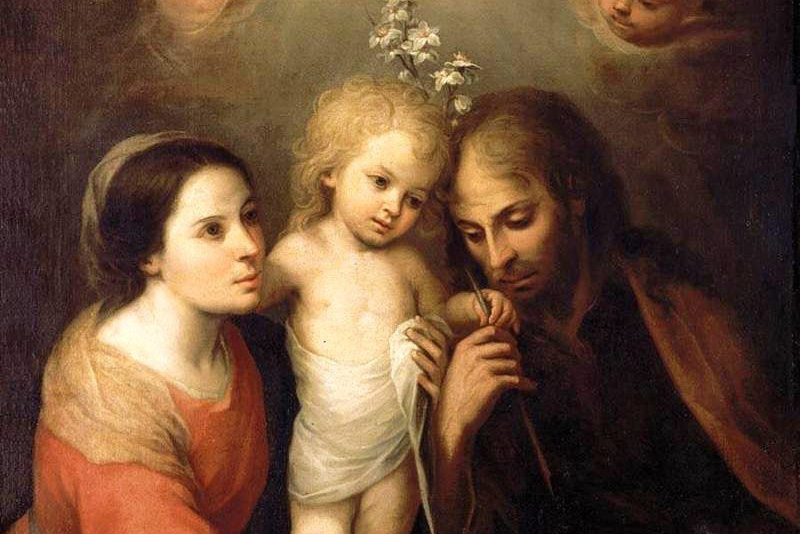
We tend to sentimentalize the Christmas story as we think of the “baby Jesus in the manger.” It is not absolutely wrong to be sentimental about Christmas but we also have to be prayerfully sober about how difficult that first Christmas was, and the heroic virtue required of Mary and Joseph in order to cooperate with God in its coming to pass.

Let’s look at the gospel in three stages: Distress, Direction and Decision.

1. DISTRESS – The text of the Gospel says, This is how the birth of Jesus Christ came about. When his mother Mary was betrothed to Joseph, but before they lived together, she was found with child through the Holy Spirit. Joseph her husband, since he was a righteous man, yet unwilling to expose her to shame, decided to divorce her quietly.

The Marriage is off – When we read in this text that Mary was found to be with child before Joseph and she were together, we need to understand how devastating and dangerous this situation is. The pregnancy prior to marriage brought forth a real crisis for both families involved in Joseph and Mary’s marriage plans. Quite simply, it put all plans for the marriage permanently off.

Why is this? We read in the text above that Joseph was “a righteous man.” To our ears this sounds akin to saying he “was a good man.” Most of the Fathers of the Church interpret “righteous” here to refer generally to his gracious character and virtue. And we surely suppose all this of him. More recent biblical scholarship also includes the notion that to say he was “a righteous man” also means that he was “an observer of the Law.” He would thus do what the law prescribed. And this explains his decision to divorce Mary on account of her apparent lack of virginity prior to the marriage. Here is an example of the Mosaic Law in reference to such a matter:

But if the tokens of virginity were not found in the young woman, then they shall bring out the young woman to the door of her father’s house, and the men of her city shall stone her to death with stones, because she has wrought folly in Israel by playing the harlot in her father’s house; so you shall purge the evil from the midst of you. (Deut 22:20-21)

This of course is quite extreme to modern ears, but we can see too how far we have come in making light of promiscuity compared to ancient times. No one would argue that such a thing be done today, and rightly so. However this was the landscape that the Law provided Joseph.

What about stoning? It would seem that Jews of the First Century had varying interpretations about whether stoning was required or simply permitted (cf John 8). Joseph, on account of his virtue and patience, looks for, and senses some freedom in not “exposing” Mary to the full effects of the Law (stoning). But it does not seem he can find a way that he can take her into his home. Thus, as a “righteous man” (i.e. follower of the Law) it seems he decides that divorce is surely required, even if stoning is not.

Now this leads us to two important reflections. One about Mary, and one about Joseph.

Regarding Mary, we can see into what a difficult and dangerous position her “yes” (her fiat) to the angel placed her. She risked her very life by being found with child outside the normal marital act with her husband. WE know that it is by the Holy Spirit she conceives, but her family and Joseph and his family do not yet know this, or at least cannot verify it. And even if Mary indicated exactly how she conceived, do you think YOU would merely accept such a story? Mary’s fiat placed her in a real danger, culturally speaking and it is a great testimony to her faith and trust in God that she said yes to his plans.

Regarding Joseph we can also see the kind of pressure he would be under to do what the Law and custom required. There is no mention of Joseph’s feelings at this point. But we can assume when Mary was “found to be with child” prior to the couple’s being together in Marriage, the social pressures on him from family to be legally free from Mary were likely strong, whatever his feeling or plans for her were.

As we shall see, Joseph too will undertake great risk to obey God. And thus we go to the second stage of the story.

2. DIRECTION – The text from the Gospel says, Such was his intention [to divorce] when, behold, the angel of the Lord appeared to him in a dream and said, “Joseph, son of David, do not be afraid to take Mary your wife into your home. For it is through the Holy Spirit that this child has been conceived in her. She will bear a son and you are to name him Jesus, because he will save his people from their sins.”

Be not afraid – One will note that the principle exhortation of the angel that Joseph “not be afraid” to take Mary as his wife. This exhortation is powerful since fear WAS a very big factor in this whole matter. Joseph had much to fear in taking Mary. Some of the Fathers of the Church indicate that the thing the angel said he should not fear was God’s wrath, since in fact, he would not actually be taking an adulterer or fornicator into his home. Others think the thing he should not fear was taking God’s chosen instrument (Mary) as his wife.

One can also imagine however some other fears that also needed to be consoled by the angel. For example, Joseph could easily be rejected by his family for taking Mary in. Likewise neighbors and others could shun him. As a business man Joseph needed a good reputation to be able to use his skills and ply a trade. All of these threats loom if Joseph bucks the law and custom and “brings evil into his house” rather than “purge the (apparent) evil from the midst” of his house. But the angel directs his not to fear. This will take courageous faith.

The angel’s explanation is unusual to say the least. What does it mean to conceive by the Holy Spirit? Not exactly a common occurrence! Would his family buy such an explanation? What of the others in the small town of Nazareth? Yes, people were more spiritual in those days, but it all seems so unusual.

Further, Joseph hears all this in a dream. We all know what dreams can be like. They can seem so real, but when we are fully awake we wonder if what we experienced was real at all. Joseph too has to trust that what he was told is real, and that he should not fear for God has given him direction. But as is often the case with things spiritual, we have to carefully discern and walk by faith, not by fleshly sight and certitude. Joseph has a decision to make.

3. DECISION – The text from the Gospel says, When Joseph awoke, he did as the angel of the Lord had commanded him and took his wife into his home.

Now given all that we have reflected upon, we can see the strong faith of Joseph and the kind of trust he had to put in God. He had been told not to be afraid, to rebuke fear. Joseph manfully does this. He makes his decision to obey God whatever the cost. We are given no information on how his family and others in the town may have reacted. However, the fact that the Holy family later settles back in Nazareth indicates that God did come through on his promise that Joseph need not be afraid.

Heroes of Faith! But here again note the crisis of that first Christmas and the powerful faith of Joseph and Mary. Quite literally their reputations were on the line, if not their very lives. They had great sacrifices to make in the wondrous incarnation of our Lord. Quite simply Mary and Joseph are great heroes of the faith. For neither of them was their “yes” easy. It is often hard to obey God rather than men. Praise God that they made their decision and obeyed.

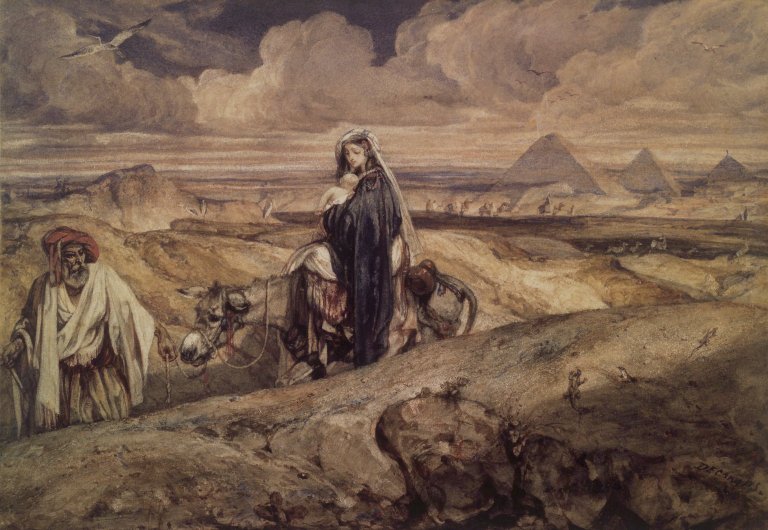
And, as we know their difficulties were not over in the crisis of that first Christmas. There was a badly timed census which required a journey to Bethlehem in the ninth month of Mary’s pregnancy. Imagine walking 70 miles through mountainous terrain in the ninth month! There may or may not have been a donkey, but I doubt riding a donkey in the ninth month is all that comfortable either. Then there was no room in the inn and Jesus had to be born in a smelly animal stable. Shortly thereafter they must flee through the desert to Egypt for Herod sought to kill Jesus.

Jesus is found in a real Christmas, not a hallmark one. The crisis of the first Christmas prefigures the passion. But this where Jesus is found: in the crisis of the first Christmas. You may hope for the perfect Christmas but there is no perfect Christmas. Yet, Jesus will find you where you are – in real life, in the imperfect Christmas where loved ones may have been recently lost and there is grief, where a job has just been lost and there is anxiety, where health is poor or families are experiencing stress and strife. That’s where Jesus will be found, in your real Christmas. A Christmas of Joy, yes, but also of imperfections, even crises. He is there waiting for you to find him, in the real Christmas of your life.

This song is an old African American Spiritual that reflects on the fact that true discipleship isn’t always easy. Joseph and Mary surely experience and exemplify what the these words say:

I tol’ Jesus it would be all right
If He changed my name

Jesus tol’ me I would have to live humble
If He changed mah name

Jesus tol’ me that the world would be ‘gainst me
If He changed mah name

But I tol’ Jesus it would be all right
If He changed mah name

The Greater Gift – As seen in a touching Christmas Commercial

There is an old saying that the greatest things in life aren’t things. Our greatest gifts are those we love, beginning with God, and extending to one another.

One of the great dangers at Christmas time (and with life in general) is that we maximize the minimum and minimize the maximum, of, as Jesus puts it, we strain out gnats and swallow camels (Matt 23:24).  He spoke this of the religiously observant of his day who meticulously followed small and technical rules about cleanliness and ritual purity,  but neglected the weightier provisions of the law: justice and mercy and faithfulness (Matt 23:22).

In other words, at Christmas we can so focus on getting things and arranging events at Christmas that we neglect or even harm those who are our greatest gift.

Consider the growing sadness that many have now largely set aside the once sacred Thanksgiving holiday where people could spend time with family and enjoy company. Why? To have the stores open so people can run from the people they love to buy things for them. The gift eclipses both the giver and the recipient. And, on top of that we potentially sin against charity by creating a climate that requires the poor and those of the lower wage, working class in our store to work on Thanksgiving.

Add to this the short tempers at shopping malls, often caused by traffic, long lines, and items out of stock and the impression is created that things are more important than people. Not all suffer from this, but it is a problem.

In the video below is a touching reminder that the truer purpose of a gift is the well-being of another and the love we can show at Christmas.

The basic scene is that two snowmen are built, a kind of husband and wife snowman family. But one has, and the other has not. Seeing his wife’s need, a snowman sets out, enduring great hardship and many obstacles, to get for his wife what she needs. The greatest gifts are those that show care for another.

The “creator” of the snowman is watching this act of love unfold through the window. At the touching end of the video, the creator is very pleased.

And so too our Creator and Lord is also watching from the window of heaven and He is pleased with our acts of mercy as well.

The greatest things in life aren’t things; they are those we love. And the greater gift this Christmas is not so much the thing we give, as the care and love we extend through gifts shared, and the shared gift of our very selves.

The Bridegroom Comes! A reflection on the Great Wedding Feast That Christmas Brings

“Wedding Couple” This file is licensed under the Creative Commons Attribution-Share Alike 2.0 Generic license.

The coming of Christ at Christmas was as an infant. And thus we don’t usually think of wedding imagery related to the First coming of Jesus.  Yet, since the first coming of Christ is certainly fulfilled, we now focus more on his Second coming, of which the first coming is a sacramental reminder.

Thus, in Advent our longing and thrill are also and essentially  directed to his glorious second coming. And now Mother Church, the New Jerusalem, our Mother looks for her groom Jesus to come again all his glory:

I saw the Holy City, the new Jerusalem, coming down out of heaven from God, prepared as a bride beautifully dressed for her husband. And I heard a loud voice from the throne saying, “Now the dwelling of God is with men, and he will live with them. They will be his people, and God himself will be with them and be their God…I heard what sounded like the roar of a great multitude in heaven shouting: “Hallelujah! Salvation and glory and power belong to our God. Let us rejoice and be glad and give him glory! For the wedding of the Lamb has come, and his bride has made herself ready. Fine linen, bright and clean was given her to wear.” (Rev 21:2-3; 19:7-8)

And this longing remains until Mother Church, Christ’s beautiful bride, hears those words from him: Surge amica mea, speciosa mea et veni! (Arise, my beloved, my beautiful one and come!) (Song of Songs 2:10). Till then, her longing cannot be quenched, when he comes again, in all his radiant beauty and majesty. Till then, she longs, she looks and she waits.

Though some of her children have attained to this glory, she waits and longs till the number of her elect children are complete and she, in her fullness, will go to be with her spouse for ever in beatific glory.

One of the great Advent hymns of the Protestant tradition picks up this bridal theme and “weds” it with advent longing. This particular translation is a masterpiece of English translation (from the German). It is both biblical and artistically beautiful:

Wake, Awake with tidings thrilling;
The Watchmen all the air are filling;
Arise, Jerusalem, Arise!
Midnight strikes, no more delaying;
“The hour has come,” we hear them saying;
Where are ye all ye virgins wise?

The bridegroom comes in sight
Raise high, your torches bright!
Alleluia!
The wedding song swells loud and strong;
Go forth and join the festal throng.

Zion hears the watchman shouting;
Her heart leaps up with joy undoubting;
She stands and waits with eager eyes!
She her love from heaven descending;
Adorned with truth and grace unending;
Her light burns clear her star doth rise!

Now come our precious crown;
Lord Jesus, God’s own Son;
Hosanna!
Let us prepare to follow there
Where in thy supper we may share
.

Yes there is a great wedding feast in every liturgy, and its culmination looks to the glorious second coming of Jesus. This Christmas look to your wedding garments which the Lord gave you at baptism, a garment which, in the baptismal liturgy your were told to bring unstained to the great judgment seat of Christ. The Bridegroom comes! Let us go out to meet Christ the Lord (cf Matt 25:6)

Here is the Great Wedding Song of Advent quoted above:

Run, Don’t Walk, To the Nearing Jesus. How Advent is a season of running more than waiting.

121813The Lord’s coming is near. And though we have all been well taught that the word “Advent” means “coming”  there is the danger that we think we are only passively waiting for him to come.  It is not just that the Lord is coming to us, but we are also journeying to him. In fact, as the Advent prayers in the Roman Missal instruct, we ought to run (don’t walk) and hasten, to greet him as he draws near.

The image of the Prodigal Son that comes to mind. His Father saw him and ran toward him, but he too was hastening to his Father with contrition and hope. So too, in Advent we do look for the Lord’s coming. But the Lord also looks for us as we come to him by faith.  We, like the prodigal son, consider our need for salvation, and with contrition, (did you get to confession this advent?), hasten to meet our Lord, whom we know by faith is coming to us.

This notion of our running to meet God is set forth as a consistent theme in the prayers of the Roman Missal.  Consider these prayers and how the theme of our running, hastening, and going out  to meet God, even as he is coming to us, is set forth:

  1. Grant your faithful, we pray, almighty God, the resolve to run forth to meet your Christ with righteous deeds at his coming, so that, gathered at his right hand, they may be worthy to possess the heavenly kingdom.  (First Sunday of Advent)
  2. Almighty and merciful God, may no earthly undertaking hinder those who set out in haste to meet your Son, but may our learning of heavenly wisdom gain us admittance to his company. (Second Sunday of Advent)
  3. Stir up your mighty power, O Lord. and come to our help with a mighty strength, so that what our sins impede, the grace of your mercy may hasten. (Thur of the First Week of Advent).
  4. Grant that your people, we pray , almighty God, may be ever watchful for the coming of your Only Begotten Son, that, as the author of our salvation himself has taught us, we may hasten, alert with lighted lamps, to meet him when he comes. (Friday of the Second Week of Advent)
  5. May the reception of your sacrament strengthen us O Lord, so that we may go out to meet our savior, with worthy deeds when he comes, and merit the rewards of the blessed. (post communion, Dec 22)

Thus, we are not counseled to “wait on the Lord” in a merely passive sense, as though we were sitting still and waiting for a bus to arrive. Rather, we are counseled to “wait on the Lord” in an active sense, much as when we speak of a waiter in a restaurant “waiting on tables.” Such a form of waiting is a very active form of waiting. Alert and aware, the waiter or waitress carefully observes the needs of others around them and serves their brothers and sisters. The good ones strive to avoid distraction and do their job of serving well and with swiftness.

Notice too how the prayers indicate what it means to “run.”  We do not run aimlessly or in frantic circles. Rather running to the Lord means:

  1. Being engaged in righteous deeds (holiness) by God’s grace.
  2. Not being hindered by worldly preoccupations and distractions.
  3. Learning heavenly wisdom.
  4. Receiving the Lord’s mercy unto the forgiveness of our sins.
  5. Being alert and ready for the Lord’s coming, the lamp of our soul trimmed (humble and purged of sin) and burning (alive with fiery love).
  6. Being strengthened by the Eucharist which is our food for the journey.

St. Paul speaks of running too:

Do you not know that in a race all the runners run, but only one gets the prize? Run in such a way as to get the prize. Everyone who competes in the games goes into strict training. They do it to get a crown that will not last; but we do it to get a crown that will last forever. Therefore I do not run like a man running aimlessly; I do not fight like a man beating the air. No, I discipline my body and make it my slave so that after I have preached to others, I myself will not be disqualified for the prize (1 Cor 9:24-27).

Are you running to meet the Lord? Or are you just waiting? Advent involves looking and waiting, but it also means running to meet the Lord who is coming to us. Run, Don’t Walk to the Nearing Jesus!

The text of this song says, simply: Domine ad adjuvandum me festina! (Lord, make haste to help me!). It is composed by Vivaldi, and its running eighth notes creates the image of an energetic and joyful running. Vivaldi also loved to run a melody up and down the scale, creating (here) a sense of running up and down the hills as we hasten to the Lord. (the video goes on to include the Gloria Patri). Try not to tap your toe in the first and third movements of this snip from the Vespers of Vivaldi in G Major!


A Brief Meditation on”Other Duties as Assigned.”

121813-PopeI think all of us who embark on a certain career path, or status or vocation have a certain file in our life called “other duties as assigned.” Priests, and especially pastors are no exception. Since most of us live on site, there are many custodial duties that often find their way into our “other duties as assigned” file.

Often for example since we do live on site, (I affectionately refer to it as “living above the store”) we are the failsafe when keys are forgotten and doors must be opened. So it’s 6:00 AM, and the youth group is off to an early morning bus trip. But three of the kids and two adults must get into the school to use the bathroom.  “Well just call Father, and have him come down and unlock the building!”  So that goes into the “other duties as assigned file” and is  subfiled under “keeper the keys,” “opener of the doors,” and “the failsafe.”

The Picture at the upper right is me in 2005 in the parish play, “Purlie Victorius” where I played the part of “Old Captain Cotchipee”  Filed under “other duties as assigned.”

This weekend, I realized how much I miss our maintenance man, who recently had a stroke. And though we have some part-time help, recent snows meant that the leaves went unraked out front.   So there I was, before the next snow comes raking the leaves cassock  and all. Neighbors walking by wistfully asked,  “Msgr., don’t you have anyone else to help you with that?” “Ah!,” said I, “A little exercise is good for the soul and the body!” And I filed it under “other duties as assigned.”

But perhaps one of the wildest examples of other duties as assigned happened this weekend also, in the middle of our main Mass. Just at the end of the homily, terrible sounds began coming out of the basement boiler room. I knew it once what was happening. The bearings on the flywheel of the blower have come loose recently, and parts for the old mechanism have been ordered. But meantime, the friction burns up the grease,and the screeching sound signals that the flange is eating itself up, send sparks out and all. Not good, I thought.

It may or may not surprise you to know that pastors, especially those with older churches are skilled  boiler mechanics! Usually it results from living above the store and being the one on-site when the boiler does bad stuff. For some reason, boilers like to act up at 2:00 AM in the morning. And so we learn a lot the hard way, on the phone to the HVAC people: “OK Father, it sounds like the pneumatic system, so reset the compressor and tell me if that helps….Alright Father, try bleeding down the boiler to blow the sludge…its the valve on the right….etc” Along the way, we just learn a lot by osmosis and probably know just enough to be dangerous.

So there I was, at mid Mass, and the prayers of the faithful have just concluded. The Church is already growing cold and the grinding sounds are worse.  A quick word to the nearest choir member: “Sing some extra verses!”  and off I dash down the back stairs to the basement, vestments and all, grabbing the grease gun from the tool room as I go!

The blower housing and coil are the size of a truck trailer and it took a moment for the vacuum seal to let loose. But then, in I went. Now that’s a sight! Inside the blower housing, greasing the flywheel and motor, in full vestments, which are swaying in the wind from the fan still slowly turning at the back of the unit.

Back out, seal the door, fire up the unit! She ought to be good now, at least for the next few hours, “Hang in there baby!” Up the steps, tripping as I go, into the sanctuary, the cross and candles are just now leading the bearers of bread and wine up the aisle. “Thank you Jesus!…right on time!” The MC whispered, “Msgr. we were worried, thought we’d lost you.” “No concerns,” I said, “Just, other duties as assigned.”

Ah yes, we all have them, those things never appeared in the job description and will never go on our resumé or curriculum vitae, but there they are, other duties as assigned.

The Lord says, He who is faithful in a very little thing is faithful also in much (Lk 16:11). Please Lord, keep faithful in the lesser things, the unexpected things, so that one day I may be found worthy of the greater things too.  Help me never to begrudge “other duties as assigned.”

Somehow I am mindful that the Lord also had “other duties as assigned.” One of the most touching and moving scenes in the Gospels is on a certain resurrection morning, at the lakeside in Galilee. Peter is eagerly swimming ashore to see the Risen Lord. And there is Jesus, the very Son of God and Lord of all, cooking breakfast for them (Jn 21:7). Yes, Jesus Christ, Eternal Son of the Father, Divine Logos, Universal King, Savior of the Nations, and breakfast chef….”Other duties as assigned.”

The Rise and Fall of a Prophet. And a warning for us.

He is one of the more curious figures of the Bible, The details of his life and story are caught up in textual complexities in the book of Numbers. Though a prophet, he was not even an Israelite, he wrote no book and is not numbered among Israel’s prophets. And yet a prophet he was, for he spoke the oracles of God and brought blessings to Israel at a critical time in the History of Israel.

Perhaps no prophet spoke so eloquently of the glory that would come from Israel, like a star rising in the East, and a king who shall rise higher and whose abode shall endure. Yes a star would rise from Jacob! (Numbers 24).

Yes, no prophet spoke more highly, and more purely, for though paid to curse, he would only bless, not counting the cost for he would only say what God commanded and revealed.

And yet no prophet fell more mightily or arguably caused more harm in Israel. So egregious his crime that his act merits special condemnation from Jesus himself. Great was his glory, and mighty his fall.

He is Balaam Son of Beor. His name means, strangely, “devourer,” And though sent to curse, this devourer could only bless and thus build up. And yet, eventually he lived up to his name.

Among the many nations that stretched from Mesopotamia to the modern-day Holy Land, Balaam’s fame was widespread. His home was far off to the east in northern Mesopotamia near the Euphrates river.  As shall see, his journey from being a false prophet of false gods, to become for a time a true prophet of the true God, was an odd journey, often market by comical interlude.

The story begins in the 22nd chapter of the Book of Numbers. King Balak of Moab was confronted with the arrival of the Israelites who had begun their entrance into the Promised Land. Unsettled by their vast numbers, and unnerved by their power and the blessing of God they seemed to possess, Balak sent for the famed Balaam, asking him to curse the Israelites, so that the Moabites could defeat them. The King said with great trust, For I know that whoever you bless is blessed, and whoever you curse is cursed (Numbers 22:7).

To his credit, and despite being offered a large sum of money, Balaam refused to go with the men who were sent to fetch him. For, having prayed,  the Lord, warned him not to go. Now Balaam had never even heard of the Israelites, but God said, Do not go with these men and do not curse the people they fear, for they are blessed (Num 22:13). Despite more entreaties from the officials, and an even higher sum of money that was offered, Balaam responded Even if Balak gave me his house full of gold and silver, I could not do anything, small or great, contrary to the command the Lord my God (Num 22:19).

It is remarkable testimony at this point to Balaam that he so quickly learns of the True God and is willing to obey him!

Yet, Balaam’s faith, though growing quickly, still needed to be purified. Later, the next day, God came to Balaam and said to him, If these men have come to you, you may go with them; but only on the condition that you do exactly as I tell you. (Num 22:21)

Thus, Balaam went forth with the men who had summoned him. But God, who knows the secrets of the heart, seems to have known that as Balaam went forth, he did so with the intention of cursing this nation as was requested. Perhaps his intention was rooted in fear of these emissaries who drew him into the power of the King. Perhaps the rich profit enticed him. We do not know, but God had only given him permission to go with these men and await further instruction.  Balaam did not have permission to curse Israel. Thus, the anger of the Lord flared against him as he seemingly recanted on his vow of obeying the Lord.

In a comical turn of events, God sent an angel to block the way. But this “seer” (a word which means “one who sees”) could not see the angel;  yet, the donkey upon which he rode could see the angel!  And seeing the angel, the Donkey stubbornly refused to proceed.

When the frustrated Balaam began to beat the animal, the comical paradoxes grow. For Balaam,  a prophet who was supposed to speak for God, is now spoken to by God through his donkey! The donkey rebuked Balaam with these words What have I done to you that you should beat me these three times? Am I not your own beast, and have you not always ridden upon me until now? Have I been in the habit of treating you this way before? No, said Balaam (Num 22:29-30). The donkey is not only more reasonable than Balaam, not only rebukes him rightly, but even seems to psychoanalyze him! It is rich in comedy, and dripping in paradox.

Finally, the angel of the Lord reveals himself to Balaam. He falls to his knees and admits he has sinned and promises to go home immediately. But through the angel, God, who purifies our hearts, bids him to go forward anyway, but with this warning, you may say only what I tell you. (Num 22:35)

And in this way, God warns every prophet, including you and me who are prophets through our baptism. As prophets, we are to say only what God tells us, what God teaches us through his Scriptures and through the holy teachings of the Church.

Pay attention fellow prophet, if you won’t speak rightly, God can speak through a donkey! But he shouldn’t have to. If you don’t praise him the very rocks will cry out. But they shouldn’t have to. Never let it be said that donkeys and rocks are smarter and more useful to God than you are! Yes, God can raise up children for the kingdom from the very rocks, (cf Luke 3:8), but he shouldn’t have to.

Upon seeing Balaam, Balak runs to him,  relieved and wants him to go right to work cursing the Israelites. But Balaam, who has now been properly chastised and made the journey from being a false prophet of false gods, to a true prophet of true God says this profound, yet simple thing to the powerful king who stands before him: But what power have I to say anything? I can speak only what God puts in my mouth….I will tell you whatever he lets me see (Num 22:38; 23:3).

Still confident that Balaam would curse the Israelites Balak orders many rituals and sacrifices and then, perhaps presuming Balaam would give way to greed, and take the bride, or to fear and curse the Israelites, Balak  orders Balaam the utter the cursing oracle.

Yet out of Balaam’s mouth came not a curse but resounding blessings on Israel! Enraged, King Balaak ordered a new and “correct” oracle that would send curses on Israel. Yet again,  from Balaam’s mouth proceeded only another even more powerful blessing that foretold of Israel’s eventual triumph over its enemies including Moab!

Then a third, and a fourth oracle, but always the same result: a profound blessing rather than a curse. Only the words of the true God could come forth from Balaam’s mouth!

Yes, Balaam’s transformation was at it height, he was now a true prophet of the true God and he gave perhaps the most profound instruction any prophet has ever given. To a king who promised him riches and favor, or could also destroy him, he would only declare: I can speak only what God puts into my mouth.

Pay attention fellow prophet by baptism, is it true that nothing can come forth from your mouth except with God has put there? Really?

So here was Balaam at his height, at the time he was most conformed to God! And as such he uttered blessings that were critical to Israel, as she prepared to enter the Promised Land. It is astonishing that God would use a pagan “prophet” to utter his blessings. I suppose if God can use a donkey, he can use Balaam, and he can even use me.

And yet, mighty and steep was Balaam’s fall out of grace and away from his office to speak only that which God told him to speak. His crime is not explicitly recorded in Numbers, but it is described elsewhere. It is Jesus himself who best summarizes what Balaam did. He mentions it in his rebuke of the Church at Pergamum:

Nevertheless, I have a few things against you: There are some among you who hold to the teaching of Balaam, who taught Balak to entice the Israelites to sin so that they ate food sacrificed to idols and committed sexual immorality. (Rev 2:14).

And so it would seem that although Balaam would not curse Israel, he encouraged Balak to insinuate Moabite women into Israel to seduce the men there to false worship and fornication. Since he could not weaken them from without, perhaps Balak could weaken them from within, or so Balaam taught and advised.

The result was a grave falling away from the faith such that 24,000 men were killed to purge the evil within Israel.(cf Num 25)

Why did Balaam do it? It is not clear. One text from the New Testament suggests it was greed.

With eyes full of adultery, [these wicked men]  never stop sinning; they seduce the unstable; they are experts in greed—an accursed brood! They have left the straight way and wandered off to follow the way of Balaam son of Bezer, who loved the wages of wickedness. (2 Peter 2:14-15)

Another text ascribes it to envy:

Woe to them! For they have gone the way of Cain, and for pay they have rushed headlong into the error of Balaam, Jude 1:11

Whatever the cause, the wound was deep in Israel and never forgotten. When Israel finally conquered the Moabites they sought out Balaam and executed him. Thus the one who blessed them so profoundly and who could only obey God, now lay dead, a traitor to his office, and an enemy to God’s people. Corruptio optime pessima (the corruption of the best is the worst).

And yet, good reader, and fellow prophet, lest we think Balaam’s fate unique to him, we ought take heed lest we fall. Consider a brief incident in the Gospel from Monday of this week (3rd Week of Advent).

It is a classic and memorable exchange between Jesus and some of the religious leaders of his day:

When Jesus had come into the temple area, the chief priests and the elders of the people approached him as he was teaching and said, “By what authority are you doing these things? And who gave you this authority?” Jesus said to them in reply, “I shall ask you one question, and if you answer it for me, then I shall tell you by what authority I do these things. Where was John’s baptism from? Was it of heavenly or of human origin?” They discussed this among themselves and said, “If we say ‘Of heavenly origin,’ he will say to us, ‘Then why did you not believe him?’ But if we say, ‘Of human origin,’ we fear the crowd, for they all regard John as a prophet.” So they said to Jesus in reply, “We do not know.” He himself said to them, “Neither shall I tell you by what authority I do these things.” (Matt 21:23-27)

Such a sad and pathetic lot of men. Note therefore that Jesus catches them in the classic trap of every false prophet. And that is the trap of preferring their own safety and benefit to the truth that they are to proclaim.

See how different they are from Balaam at his best when he stood before a powerful king who could bring him great blessing or great curse. And yet, he feared God more than man, he loved the truth more than his life. He spoke the truth, whatever the cost. For at least that brief moment, he risked everything for the truth God had revealed.

And lest we scorn these religious leaders who were compromised so easily before Jesus we ought to know well that this is a very common human struggle. The fact is, most of us face a very grave temptation to navigate life in such a way that we avoid trouble, and seek to maximize blessings and access to money and power. Most human beings are more than willing to compromise the truth, even wholly set it aside, in order to take this path.

It is the great human struggle, frequently the truth just “costs too much.” And so we cash out.

Pray for bishops, priests and deacons, who have the first obligation to speak God’s truth. For too easily, we seek to avoid difficulties and troubles, and maximize personal blessings at the cost of compromising the gospel message, avoiding controversy, or challenging texts, of not confronting sin, of fearing man more than God, for whom we should speak.

Pray too for parents, for leaders of families who often do the same things, sometimes by silence, sometimes by tolerating sinful and bad behavior, sometimes with outright teaching that which is popular but wrong and contrary to God’s will.

Yes, too often we all seek to navigate life in such a way that we merely avoid trouble and maximize blessings or access.  But we do so by scorning the prophetic office to which we have been called by baptism.

And thanks be to God for those who have spoken the truth to us whatever the cost. For indeed some, yes many, suffered to hand on the Faith to us. Some have suffered and paid the greatest price to summon us to the repentance we did not want to hear.

Yes you and I are to be willing to suffer and preach the truth whatever the cost.

The tragic story Balaam reminds us we must keep constant vigil over our weak and fearful nature. For even if at one moment we stand strong in the face of evil, and proclaim the truth, too quickly we fall back into fear and compromise.

It is not clear what led Balaam back into the darkness, but let that also be a warning to us. For in any number of ways we too can be compromised. Our only refuge can be to beg God for his grace and mercy: Lord make me strong, and keep me strong; give me courage, and keep me courageous; let my zeal be for your whole law, and not part of it only. Let there be no openings that divide or compromise my heart; or my zeal you and your kingdom.

Some Sober Reflection on Matrimony, Sexuality and the Family. A Call to Prayer for the Upcoming Synod.

“Jay & Janet Nuptial” by John Ryan Cordova from Philippines This file is licensed under the Creative Commons Attribution-Share Alike 2.0 Generic license.

We’ve talked a good deal about the decline of marriage on this blog over the years. And our discussion must continue as the Synod on the family is planned in Rome.

In my short 25 years as a priest I have experienced a major drop off in marriages. In my early years, I had about thirty weddings a year; now, about five or six. In this urban parish in which I have ministered for the larger part of 20 years, a beautiful and picturesque setting for a matrimonial sacrament, we used to have to turn couples away who were not members. Some Saturdays featured two weddings back to back. Beginning in 2000, weddings plummeted.

And lest you think this just unique to me in my urban parish, note that in 1973 there just over 400,000 weddings in Catholic parishes in this country. In 2003, there were 199,645, more that a 50% drop in thirty years. Last year, 2012, there 166,991 weddings in the Church. Compare that to the 419,278 funerals and you have a pretty good picture of a Church and a culture that are in real trouble and of the Sacrament of Holy Matrimony that is “dying.” Thus my anecdotal experience matches the national trends and numbers.

Recently Mona Charen offered some thoughtful reflections on Marriage in National Review. I would like to offer her comments along with some of my own. Note that I am excerpting her article, the full version of which is here: The Marriage Divide.  In that article she speaks of the sources of some of her statistics and offers context that these excerpts may not include. Hence I recommend the full article as well. As usual, her comments are in Black, bold, italics. My remarks are in plain red text.

Marriage is decaying very fast. As recently as the 1980s, …only 13 percent of the children of moderately educated mothers…were born outside of marriage. Today, it is 44 percent. Even more disturbing are the recent data showing that 53 percent of babies born to women under age 30 are non-marital.

I will only add that these sorts of number are simply shocking, not just for their real impact but also for how swiftly this revolution has come upon us. One struggles not to see outright demonic along with the usual human sinfulness that produces cultural ailments.

If you graduate from college, you are likely to choose a family life similar to, if not quite identical to, the 1950s ideal. (I suspect eve this is beginning to change for the worse). If you are a high-school dropout, you are unlikely to marry at all. If you have a high-school diploma or some college, your family life in many cases is going to be chaotic, featuring cohabitation, short marriages, and high rates of instability….cohabiting couples have a much higher breakup rate than do married couples, a lower level of household income, and a higher level of child abuse and domestic violence. (She speaks to some of the sources of these sober trends in her article).

[C]ohabitation is a very bad deal for all concerned — especially women and children. The children of cohabiting couples do worse than those living with a single mother if the boyfriend is not the biological father of the children. The break-up rate among unmarried cohabiting couples is much higher than among married couples, with all that that entails for disruption, poverty, and pathology.

And again, it is the children who pay most and first for all this adult misbehavior. But the damage does not stop there, as can be seen.

I would also like to say that regarding the cohabitation problem, there are two levels to the problem: the young who do it, and the parents and grandparents who actively or passively approve of it. Once upon a time, even in my short 52 years, this behavior was not only frowned upon, it was punished at both the family and cultural level. Folk who “shacked up” received significant pressure: financial, social, familial and cultural, to stop “living in sin.”

The sexual revolution, with a thinking strongly tied in with a lot of hallucinogenic drugs, sold us a bill of goods that it was really “better” for a couple to “take a test ride” before tying the knot. For at least two decades now the data have exposed this as a lie. But the lie continues.

Bottom line, cohabitation harms everyone: man, woman, child, society, culture, the Church, the family, everyone. We stamp out smoking but celebrate something that causes even more harm. Time to wake up. Cohabitation is sinful and harmful.

In a 2001 survey, two-thirds of respondents approved of living together before marriage. Even then, data suggested that couples who cohabited before marriage were more likely to divorce than those who went straight to the altar….

Men cohabit with less expectation of permanence than women do. Many couples not destined for marriage waste good years in impermanent arrangements, often becoming parents….

Ms. Charen also developed the economic implications of cohabitation:

President Obama addressed income inequality in a recent address but failed to mention one of the most significant contributors to rising inequality in America — the marriage gap. Jobs are changing, international competition has driven down wages, top executives are pulling down enormous salaries, but it is cultural patterns, specifically personal decisions about cohabitation and marriage, that are most responsible for deepening the divide between haves and have-nots in America.

There is perhaps no greater correlation than the one between poverty and single-motherhood (absent fatherhood). And so many of the other social ills that we lament and decry come from irresponsible sexual activity.

Unlike trust funds, marriage is available to everyone and confers the same benefits on rich and poor. There is no substitute for two married parents who care for one another in sickness, help each other in child and elder care, watch the kids while a spouse takes night classes, and contribute to thriving communities. In-laws give loans, jobs, and other support that they are unlikely to extend to live-in “significant others.

Without the basics of security and permanence in their personal lives, people find it much more difficult to rise out of poverty or to maintain a middle-class life. They are also far less happy. If you care about the poor and the middle class, you ought to worry about marriage.

Amen. And yet many of those who most claim to care about the poor are loathe to discuss marriage or sexuality as factors in poverty.

I remember once being at a meeting of largely socially liberal clergy who were arguing that one of the “greatest threats” that young people face and the reason for dropping test scores and higher dropout rates in our city was lead paint and roach feces in the homes and schools. And thus the city should spend money to abate these things and (theoretically) the lower test scores etc., would rebound.

When I spoke, I said it would nice to get rid of these problems, but I thought there were bigger issues at work than lead paint and roach droppings. Perhaps, I stated, that single motherhood and teenage pregnancy were likely bigger factors in low test scores, higher dropout rates, and growing juvenile crime.

Well,  I received a scorn you can only imagine. I was passed a note by one of the leaders that I was “off message” and that I should keep my moral opinions to myself.

Somehow I figured that clergy might “get” what I was saying. Though scorned, I stood my ground, and insisted that the social devastation of sexual irresponsibility far out weighed many of the other things people obsess about. Fine, lets remove lead paint and clean up after the roaches and even stamp out smoking. But how about working to restore families? What of preaching and teaching God’s plan for marriage and sexuality? What of the extremely deleterious effects of sexual irresponsibility, cohabitation, divorce, and so many other trends that are out of control?

Even as we pass laws forbidding smoking almost everywhere, we seem to forget that before 1969 it was pretty hard to get a divorce in this country. People were generally expected to work their difficulties out, and be married to the father or mother of their children.

While there are rumors that some in the Church are going to pressure to Synod Fathers to change Church Law in the admittance of divorced and remarried Catholics to Communion, I rather doubt that will happen. It is my prayer that the Synod Fathers and members will focus rather on fixing the problems rather than lowering standards. We have a lot to answer for in the Church for the horrifying confusion today about marriage. We have not been clear on marriage and too many clergy don’t want to upset people who haven’t been able to attain to, or keep stable and marriages and families after God’s own design. We have been to silent. And to what degree people do know of our teachings, many find them unintelligible when we hand out annulments in the numbers we do,  and have so many complicated rules about the wedding ceremony but so little followup after the wedding day.

That said, I don’t think it fair to blame the Church wholly for the mess. Our culture clearly went over the cliff in 1968 and 1969 with the sexual revolution and no fault divorce. Contraception celebrated the lie that there was “no necessary connection” between sex and procreation, and also furthered the lie of sex without consequences. 55 million abortions later (Since 1973), our families in the shredder, and the lie is manifest, but many still choose to believe it. Sex without consequences? No such thing.

Pray for the Synod upcoming. Pray for clarity and prophetic teaching. Pray.