Facets of a Faithful Father – A meditation on the role of a priest at the Feast of Corpus Christi.

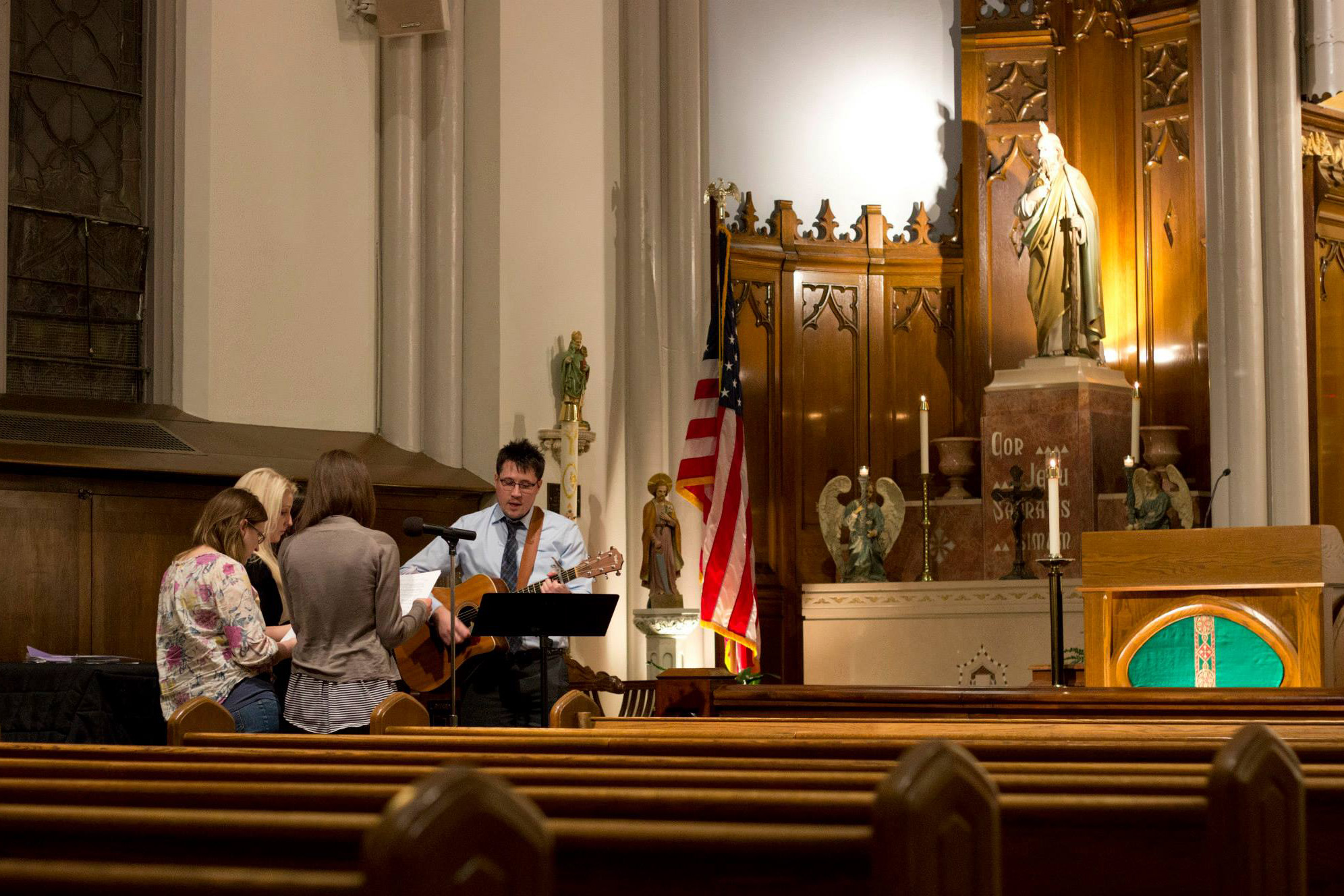
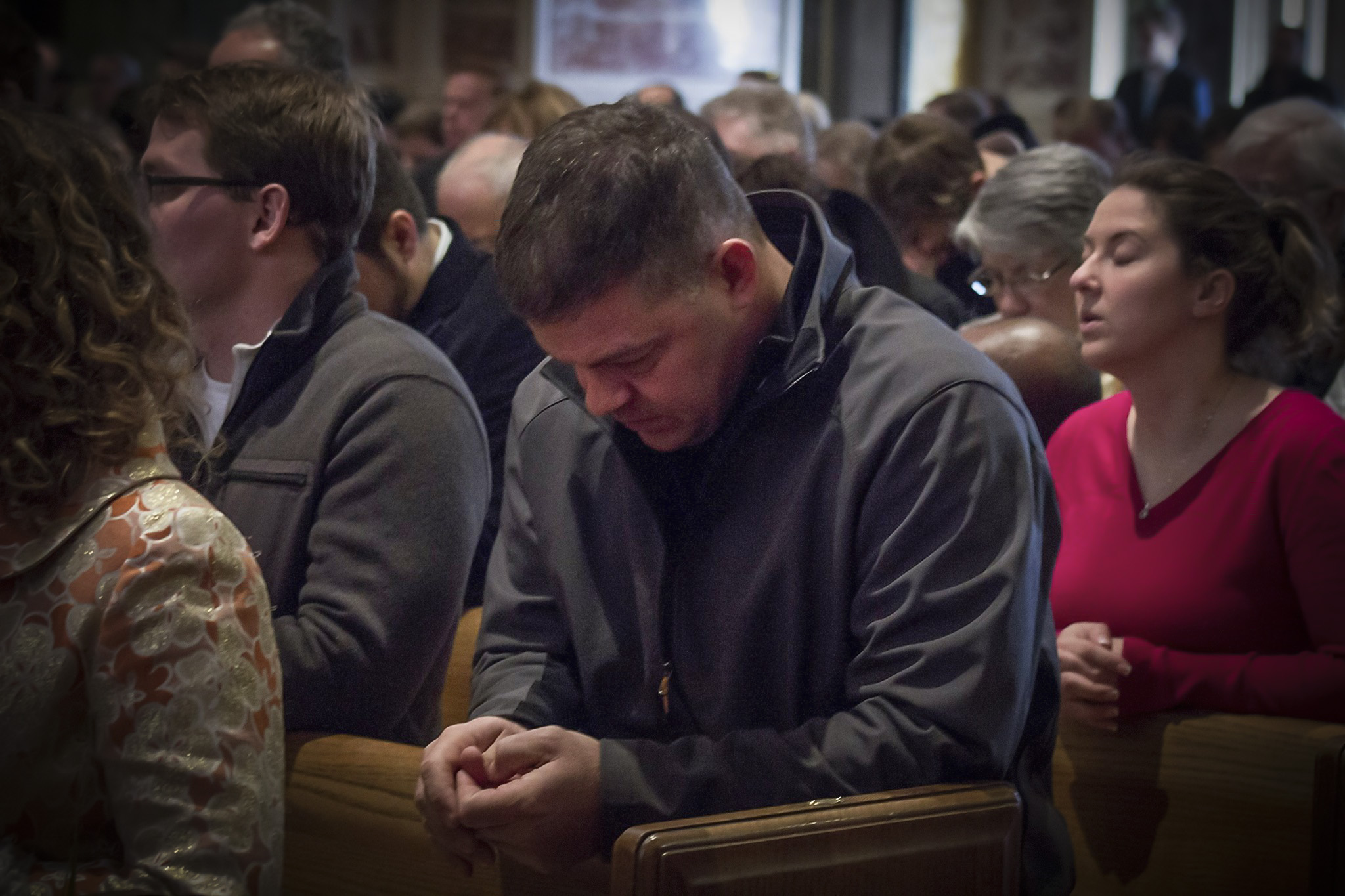
062214Sunday’s Feast of Corpus Christi brought the first Masses of seven new priests ordained here in Washington. I was privileged to preach the first Mass of one of them: Fr. Aaron Qureshi. Since the readings suggest a kind of threefold office for the priest (related to teaching, governing, and sanctifying), I thought it might be good to present some of the notes from that homily on the blog today. Here then, from yesterday’s feast, are three facets of a faithful Father—of a faithful priest.

I. He Announces the Truth – Throughout the readings today we see Moses, St. Paul, and Jesus announcing fundamental truths for God’s people. Scripture says, For the lips of a priest should preserve knowledge, and men should seek instruction from his mouth; for he is the messenger of the LORD of hosts (Malachi 2:7). In today’s readings, four truths stand out that the priest should announce.

A. REMEMBER – Moses says to the people, Do not forget the Lord your God (Deut 8:14).  He also adds, Remember how for forty years now the Lord, your God, has directed all your journeying in the desert (Deut 8:2).  And hence, every priest must stand  before his people and say to them always (whether explicitly or implicitly), “Never forget the works of God. Do not forget what He has done for you.  Remember Him and what He has done for you!”

To remember means to have so present in my mind and heart what God has done for me, that I’m grateful and different.  Indeed, gratitude is a form of joy. And when we are grateful, an awful lot of poison goes out of our heart.  When you’re joyfully grateful, it’s pretty hard to despise your neighbor, or to be stingy and greedy, or to be vengeful and envious.  Yes, a lot of poison goes out of our system when we remember what the Lord has done for us; we are grateful, joyful, different.  At every Mass, the priest, as a Father, should remind his people never to forget the works of the Lord.

B. REJOICE – Here too, the readings today portray the priestly call for his people to rejoice in the Lord. And thus the Psalm says, Glorify the Lord O Jerusalem; praise your God oh Zion! (Psalm 147:12). And the beautiful Sequence Hymn says, Laud O Zion your salvation, Laud with hymns of exultation, Christ your king and Shepherd true.

And thus every priest, as a faithful Father, must summon his people to rejoice in the Lord. For the Lord only permits difficulty in order for some greater glory to be ushered in. Every priest  should say, as in the words of Scripture, “Do not be sad, do not weep, for rejoicing in the Lord must be your strength!” (Neh 8:10). Joy is the natural state of every Christian, and every faithful priest should summon his people to joy by being a man of joy, hope, and confidence himself.

Sadly, joy is not the first thing that many people see upon walking into a typical Catholic congregation. Too often the scene looks more like a funeral than the wedding that the Mass is supposed to be. While it is true that people express joy in different ways, joyous is not the first way most outsiders would describe a typical Catholic congregation. 

Every faithful priest, every Father should stand before his people and say “Rejoice,” not only with his words, but also by his demeanor, hope, and manifest confidence.

C. RE-CENTER – In the first reading, Moses says to his people, Not by bread alone does one live, but by every word that comes forth from the mouth of God (Dt 8:3). Here too every priest, as a faithful Father, must exhort his people to center their lives on things that really matter. Too many of God’s people focus on lesser things such as sports and politics, or are overly concerned with money and how they stack up against other people, etc. But every faithful priest, every faithful Father must stand before his people and remind them, in the words of Isaiah,

Come, all you who are thirsty, come to the waters; and you who have no money, come, buy and eat! Come, buy wine and milk without money and without cost. Why spend money on what is not bread, and your labor on what does not satisfy? Listen, listen to me, and eat what is good and you will delight in the richest of fare. Give ear and come to me; listen, that you may live (Isaiah 55:1-3).

Yes, Sunday after Sunday, the holy priest must remind the faithful of that which really matters and call them to focus their lives on heavenly and lasting things, rather than on earthly, passing things.

D. RECEIVE – Jesus warns in the Gospel today,  Unless you eat the flesh of the Son of Man and drink his blood, you do not have a life in you (Jn 6:53). And thus every priest will celebrate the Eucharist for his people faithfully and will exhort them never to miss a Sunday.   His chief desire is to feed the people entrusted to his care and to warn them that if they neglect to feed on the Holy Eucharist of the Lord, they will have no life in them.

They will be like the children of Israel in the wilderness who would never have made it to the Promised Land if they had not faithfully eat the manna that God gave them to preserve them in the desert for over forty years. And neither will we make it to the heavenly Promised Land if we do not receive frequently our manna—the very Body, Blood, Soul, and Divinity of Jesus Christ.

Every priest, every faithful Father must stand before his people and say, “Come, eat His Body which was broken for you and His Blood which was shed for you. Every priest will seek the lost sheep to restore them to the nourishment they desperately need, and without which they will die.

II. He Admonishes the Timid and Temperamental – In today’s Gospel, as the Lord Jesus announced the essential truth of the Holy Eucharist, He encountered many who were quarrelsome and murmured against Him.

And how does He deal with them? Upon hearing their protests, He does not compromise; He does not water down His teaching. Rather, He intensifies His teaching and warns them clearly.

When He tells them that they must eat His Flesh and drink His Blood, and they object, He warns them with the well-known Jewish expression: “Amen, amen I say to you!”  And then He goes on to say that unless (which is a very strong and exclusive word) “you eat the flesh of the Son of Man and drink his blood you will not have a life in you.” And He even intensifies His teaching by substituting an impolite word for eating: τρώγων (trogon), which means to gnaw on or devour.

So when it comes to an essential truth, Jesus does not water down or “cave.”  Rather, He solemnly reasserts the truth even more forcefully. He does this not to be argumentative, but because He loves them and does not want them to be lost forever.

And so too for the priest of God today. We live in quarrelsome times in which many murmur and protest: about the Eucharist to be sure, but also about many moral teachings. The priest of God, as a faithful Father for his people, must not water down the truth or compromise. Rather, he must speak the truth even more clearly. He must explain it with love in order to save his people from the error that can and will destroy them. Yes, like Jesus, every priest must speak the truth clearly and in love.

St. Paul admonished Timothy, Preach the word; be ready in season and out of season; reprove, rebuke, exhort with great patience and instruction. For the time will come when they will not endure sound doctrine; but will surround themselves with teachers who will tickle their ears, they will accumulate for themselves teachers in accordance to their own desires (2 Tim 4:2-3).

All the more reason then that the priest of God must stand before his people, not counting the personal cost and the murmuring he may experience, and must speak the truth to them in love, the truth without which they will perish.

III. He Advances the Transformation of God’s People – It will be noted that in this brief passage the Lord Jesus presents the same truth four times:

i. I am the living bread that came down from heaven; whoever eats this bread will live forever;
ii. Whoever eats my flesh and drinks my blood has eternal life
iii. The one who feeds on me will have life because of me.
iv. Whoever eats this bread will live forever.”

Obviously, since repetition is the mother of studies, Jesus wants us to lay hold of this truth: if we receive his Body and Blood and follow him in faith, we will have eternal life!

And yet many misunderstand the concept of “eternal.” The Greek word  αἰῶνα (aiona) refers not merely to the length of life, but also to its fullness. Therefore, in offering us eternal life, Jesus is not simply saying that we will live forever in the sense of a very long time. Rather, He is saying that we will become more and more fully alive with Him, even now, and that one day we will enter into the glory of Heaven forever where we will be so alive that our life here will seem to have been a mere coma. St. Ireneus says that the glory of God is the human person fully alive.

Therefore every priest must stand before his people and announce to them a fuller life, a richer life, a more wonderful life—and not in some distant Heaven, but even now!  And he cannot be content merely to point to the possibility of such a thing. Rather, he must stand before them as a living witness, as one who has committed himself to prayer, to the Sacraments, to the Word of God, and to walking in holy fellowship with the Church, and must show that he is, even now, experiencing a life richer and fuller by the grace of the Sacraments working in his life.  He is not merely to announce to his people the richer and fuller life, he is to stand before them as a witness of it.

Of this, I myself can testify. At age 53, my body is heading south, but my soul is more alive than ever before.  I am more joyful and more confident. I love God more. My prayer life is coming alive; my mind and heart are being renewed. I’ve seen sins put to death and new graces come alive.  

Yes, every priest must be able to stand before his people as a living witness of how the Lord can transform our lives and bring us into the fullness of eternal life, even now. In this way, he helps to advance his people in the transformation that is the normal, the expected life of God’s people.

Here then are some facets of a faithful Father, gleaned from yesterday’s reading on the Solemnity of the Body and Blood of Christ.

Are You a Mouse or A Man? A Homily for The Feast of Corpus Christi

062114In many places this Sunday, the (moved) Solemnity of the Most Holy Body and Blood of Christ, Our Lord is celebrated.

While you may puzzle over my title for today’s blog, allow me to explain it a bit later. On a Solemn feast like this, many things occur that might be preached and taught. Allow three areas for reflection: the Reality of the Eucharist, the Requirement of the Eucharist, and the Remembrance of the Eucharist. We will look at each in turn.

I. The Reality of the Eucharist – On this solemn feast we are called above all to faith in the fact (as revealed by the Lord himself) that the Eucharist, the Holy Communion, is in fact a reception of the very Body, Blood, Soul, and Divinity of Jesus Christ, whole and entire, in his glorified state. We do not partake of a symbol. The Eucharist is not a metaphor; it is truly the Lord. Neither is it a “piece” of his flesh, but it is Christ, whole and entire. Scripture attests to this in many places:

A. Luke 22:19-20 And he took bread, and when he had given thanks he broke it and gave it to them, saying, “This is my body which is given for you. Do this in remembrance of me.” And likewise the cup after supper, saying, “This cup which is poured out for you is the new covenant in my blood.”

B. 1 Cor 10:16 The cup of blessing which we bless, is it not a partaking in the blood of Christ? The bread which we break, is it not a partaking in the body of Christ?

C. Luke 24:35 They recognized him in the breaking of the bread.

D. 1 Cor 11:29 For anyone who eats and drinks without recognizing the body of the Lord eats and drinks judgment on himself.

E. John 6:51 “I am the living bread which came down from heaven; if any one eats of this bread, he will live for ever; and the bread which I shall give for the life of the world is my flesh.”

This last quote is from the Gospel for today’s feast. The passage is a profound theology of the Eucharist from Jesus himself, and He makes it clear that we are not permitted to think of the Eucharist in symbolic or metaphorical terms.

When He referred to the bread as His flesh, the Jewish people hearing Him grumbled in protest. Jesus did not seek to reassure them or to insist that He was speaking only symbolically when He said that they must eat His flesh. Rather He became even more adamant by shifting his vocabulary from the polite form of eating, φάγητε (phagete – meaning simply “to eat”) to the impolite form, τρώγων (trogon – meaning to “munch, gnaw or chew”).

So insistent was He that they grasp this, that He permitted many to leave Him that day knowing that they would no longer follow in His company due to this very teaching (cf Jn 6:66). Yes the Lord paid quite a price for His graphic and “hard” teaching (Jn 6:60).

Today He asks us, Do you also want to leave me? (Jn 6:67). We must supply our answer each time we approach the altar and hear “The Body of Christ.” It is here that we answer the Lord, “Amen,”  as if to say, Lord, to whom shall we go, you have the word of eternal life! (Jn 6:68).

If only everyone would grasp that the Lord Himself is truly present in our Churches! Were that so, one could never empty our parishes of those seeking to pray with the Lord. As it is, only 27% come to Mass regularly. This is more evidence of the narrow road and how few there are who find it. Just as most left Jesus then, many continue to leave Him now, or stand far away through indifference or false notions.

What father would not be severely alarmed if one of his children stopped eating? Consider then God’s alarm that many of us have stopped eating. This leads us to the next point.

II. The Requirement of the Eucharist – When I was a kid I thought of Church and Communion as just something my mom made me do; it was just rituals and stuff. I never thought of it as essential for my survival. But in John’s Gospel today, Jesus teaches something very profound about Holy Communion (the Eucharist). In effect, He says that without Holy Communion we will starve and die spiritually.

Here is what Jesus says, Unless you eat the flesh of the Son of Man and drink his blood, you have no life in you (John 6:53).

As a kid and even a young adult I never thought of Holy Communion as essential for my life, as something that, if not received regularly, would cause me to die spiritually. But it makes sense doesn’t it? If we don’t eat food in our physical lives we grow weak and eventually die. It is the same with Holy Communion.

Remember this in the Book of Exodus: the people were without food in the desert and they feared for their lives. So God gave them bread from heaven, called “manna,” and they collected it each morning. Without eating that bread from Heaven they would never have made it to the Promised Land; they would have died in the desert.

It is the same with us. Without receiving Jesus, our Living Manna from Heaven in Holy Communion, we will not make it to our Promised Land of Heaven! I guess it’s not just a ritual after all. It is essential for our survival.

Don’t miss Holy Communion! Jesus urges you to eat.

A mother and father in my parish recently noticed that their daughter wasn’t eating. Within a very short time they took her to the doctor, who was able to cure the problem; now the young girl is able to eat again. Those parents would have moved Heaven and Earth to make sure their daughter was able to eat.

It is the same with God. Jesus urges us to eat, to receive the Holy Communion every Sunday without fail. Jesus urges us with this word: “Unless!” Holy Communion is our required food.

III. The Remembrance of the Eucharist – The word remembrance comes up a lot in reference to Holy Communion in today’s readings. Consider the following passages from Scripture:

A. Remember how for forty years now the LORD, your God, has directed all your journeying in the desert … and then fed you with manna (Deut 8).

B.  Do not forget the LORD, your God, who brought you out of the land of Egypt (Deut 8:24).

C. Do this in remembrance of me … (1 Cor 11:24 inter al).

What is remembrance and why is it important? In effect, to “remember” is to have present in your mind what God has done for you so that you’re grateful to have it so present to you, so that you’re different. God has saved us, made us His children, and opened Heaven for us. Yet our minds are very weak and too easily we let this slip from our conscious thoughts. Thus, the summons to an ἀνάμνησιν (anamnesin) or “remembrance” that is so common in the Eucharistic liturgy is a summons to our minds to be open to and powerfully aware of what the Lord has done for us. Don’t just stand or kneel there, forgetting; let this be present to you as a living and conscious reality that transforms you!

Are you a mouse or a man? And now to address the puzzling question I posed in my title. Back in my seminary days we were given the example of a mouse who runs across the altar, takes a consecrated host, and runs off and eats it. We were then asked, “Does it eat the Body of Christ?” Yes! For the Eucharist has a reality unto itself. “But does it receive a sacrament?” No! A mouse has no rational mind. It eats the very Body of Christ, but to no avail, for it has no conscious awareness or appreciation of what (whom) it is eating. And so here comes the question: “Are you a mouse or a man?”

How do you receive Holy Communion? Do you go up mindlessly, shuffling along in the Communion line in a mechanistic way? Or do you go up powerfully aware of Him whom you are about to receive? Do you remember? Do you have vividly present in your mind what the Lord has done for you? Are you grateful and amazed at what He has done and what He offers? Or are you just like a mouse, receiving something mindlessly that has been put into your mouth?

Some people put more faith in Tylenol than they do in the Eucharist. Why? Because when they take Tylenol they actually expect something to happen! They expect the pain to go away, and for there to be relief and healing. But when it comes to Holy Communion, they expect next to nothing. To them, it’s just a ritual. Hey, it’s time to go up and get the wafer (pardon the expression).

Really?! Nothing? How can this be? Poor catechesis? Sure. Little faith? Sure. Boredom? Yes indeed. At some level it can be no better than a mouse eating a host. We are receiving the Lord of all creation, yet most expect little.

To this the Church says, “Remember!” “Have present to your mind all that the Lord has done for you and what he is about to do. Let this reality of the Lord’s presence be alive in your mind so that it changes you and makes you profoundly grateful and joyful. Become the One you receive!”

Jesus is more powerful than Tylenol, and we are men (and women), not mice.

On this Solemnity of the Body of Christ, we are summoned to deepen our faith in the Lord, present in the Eucharist and acting through His Sacraments. Routine may have dulling effects, but it cannot be such that we receive the Lord of glory each Sunday in any way that would be called mindless.

Ask the Lord to anoint your mind so that you remember and never forget.

Faith is a Matter of Hearing, not Seeing – As”seen”on TV

062014As we approach the Feast of Corpus Christi, I thought it might be a good idea to reflect again upon the reality that faith comes by hearing—faith is about what is unseen. This is especially important to remember when it comes to the Sacraments, since what our fleshly eyes see remains unchanged, but with our ears the Word of Jesus speaks of a new reality unperceived by our eyes: “I baptize you … This is my Body … Be sealed with the Gift of the Spirit … They are no longer two, they are one, and what God has joined must never be divided …” These words convey the truth of a new reality that our eyes do not see. And thus we must learn to believe our ears rather than our eyes.

Now our flesh demands to see by its own unregenerate power; only then will the flesh say that it believes. But the truth is, our flesh often does not believe even when it sees. We’ll say, “Oh, they must have some way of doing that” or perhaps, “This is a trick, an illusion.” And in fact illusionists can do some pretty amazing stuff! (See the video below.)

But Scripture is clear to say that Faith comes by hearing, and hearing by the Word of God (Rom 10:17). It also says, Faith is the substance of things hoped for and the evidence of things unseen (Heb 11:1). Even Thomas, who is said to believe only because he sees, is really professing something he cannot see: that Jesus is Lord and God (Jn 20:29).

For example, when it comes to the Sacraments we must believe our ears, for our eyes cannot see the reality that faith declares to be so. St. Thomas Aquinas’ beautiful hymn “Adoro Te Devote” contains the following:

  • Visus, tactus, gustus in te fallitur, (Sight and taste and touch in thee fall short)
  • Sed auditu solo tuto creditur; (But only the hearing is safely believed)
  • Credo quidquid dixit Dei Filius, (I believe whatever the Son of God has said)
  • Nil hoc verbo veritatis verius. (Nothing is truer than this word of truth)

And thus I must often remind people when it comes to the Sacraments:

  1. Eucharist – Though your eyes may still see bread and wine, believe your ears. This is my Body, This is my Blood …  (Matt 26:26 inter al). The Bread I will give is my flesh for the Life of the world … (Jn 6:51).
  2. Marriage – Though your eyes may still see a newly married bride and groom as two separate individuals, believe your ears. They are no longer two, they are one. What God has joined together let no one divide (Matt 19:6).
  3. Baptism – Though your eyes may see a newly baptized baby as unchanged, believe your ears. This is my beloved son in whom I am well pleased (Lk 3:21). If anyone is in Christ he is a new creation (2 Cor 5:17). We who were baptized into Christ Jesus were baptized into his death so that just as Christ was raised from the dead by the glory of God the Father we too might live in newness of life (Rom 6:4).
  4. Confession – A person emerging from the confessional may appear to be just the same, but believe your ears. “I absolve you from your sins.” Whose sins you forgive, they are forgiven them (Jn 20:23).

As we approach the Feast of Corpus Christi, which are you going to believe … your eyes or your ears?

  • [For] we look not to what is seen but to what is unseen; for what is seen is transitory, but what is unseen is eternal … for we walk by faith, not by sight (2 Cor 4:18, 5:7).
  • And to the Pharisees who claimed they could see (but still refused to believe) the Lord said, “If you were blind, you would not be guilty, But you remain guilty because you claim you can see” (John 9:41).
  • And to those who do believe, the Lord says through Peter, You have not seen him, yet you love him; and still without seeing him you believe in him and so are already filled with a joy so glorious that it cannot be described (1 Peter 1:8).

Which are you going to believe, your eyes or your ears?

Your flesh demands to see on its own terms. But I promise you, even if you do see, your flesh will explain it away. Consider this video. Illusionists can do some pretty amazing things. But notice how quickly your flesh is willing to explain it all away. And in this case it should, for these are illusions. But what if you saw a real miracle? What do you suppose your flesh would do? What do you suppose?

Faith comes by hearing.

Seven Disciplines of Evangelization

061914The Lord Jesus sets forth a  plan for evangelization that is not just some sort of haphazard, shoot from the hip program in which he wanders about aimlessly. Rather, he had a plan to visit specific cities at specific times. And for each visit, He sent an entourage ahead of Him to prepare the town for His visit and to arrange for the necessary preliminaries. The texts says quite clearly, At that time the Lord appointed seventy-two others whom he sent ahead of him in pairs to every town and place he intended to visit (Luke 10:1).

Now these lead teams, these evangelizers, received seven basic instructions from the Lord on how to evangelize effectively. These seven basic habits are also for us, who have receive the mandate to evangelize (cf Matt 28: 19). Let’s look at them briefly.

1. Supplication – Jesus said, The harvest is abundant but the laborers are few; so ask the master of the harvest to send out laborers for his harvest. Hence before any effective evangelizing takes place, there must be prayer. In my own parish we are preparing to go out two-by-two in the fall. Prior to this we have prayed for over a year.  We’ve held Eucharistic holy hours and prayed at both Mass and Bible Study for a fruitful team of laborers sent, not by man, but by God. On Pentecost Sunday, fifty people signed up to walk door-to-door. They are the fruit of prayer. So step one for effective evangelization is to have a praying community asking for laborers. When we go door-to-door, fifty others have signed up to stay in Church and pray as we walk. Habit one: pray!

2. Sobriety – The Lord tells them, Go on your way; behold, I am sending you like lambs among wolves (Luke 10:3). We do have to be sober about the fact that we are in a world that is both critical of and hostile to our faith. We are bound to experience persecution, ridicule, anger, misunderstanding, misinterpretation, misrepresentation and just plain animosity. That we experience the world’s hatred or anger does not mean we have done anything wrong. The Lord was clear that the hatred of the world was a sign of true discipleship: If the world hates you, keep in mind that it hated me first. If you belonged to the world, it would love you as its own. As it is, you do not belong to the world, but I have chosen you out of the world. That is why the world hates you. Remember the words I spoke to you: ‘No servant is greater than his master.’ If they persecuted me, they will persecute you also (John 15:18-20). Too many Christians today want the world to like them, and they think that holiness is about winning a popularity contest and being “nice.” Well the fact is that Jesus did not end up on the cross by winning a popularity contest or being nice. He had enemies and so do we. But we are not to hate them; we are to love them. We have to be sober about accepting some degree of hatred from the world. And to those who have won the popularity contest and have no enemies Jesus warns, Woe to you when all men speak well of you,  for that is how their fathers treated the false prophets (Luke 6:26). The true disciple and evangelizer will experience some degree of hatred, anger, and scorn. We do not look for a fight, but hatred will come our way. An old spiritual says, “I been ‘buked and I been scorned. I been talked ’bout sure’s yo’ born.”

3. Simplicity – The Lord tells us to travel light: Carry no money bag, no sack, no sandals; and greet no one along the way (Luke 10:4). We are to bring nothing along that will weigh us down or hinder us in our tasks. The fact is that we all have a lot of baggage in this life that hinders us from the more important work of evangelizing our family and others. Too many parents barely know their children because they work long hours at jobs to maintain a lifestyle that is too expensive. On top of this we add endless projects and pursuits that keep us running all over God’s green acre. Though perhaps good in themselves, these pursuits become too much of a good thing and we end up barely knowing the first people we are to evangelize: our children. The Lord says that we should lighten up, simplify, and make do with less. First, take care of what is most important: God, family, parish, and community. Learn to prioritize and to say “no” when necessary. The bottom line is that we have too much baggage and too many distractions, and thus the Gospel goes unlived and unpreached. The unusual instruction from Jesus, “Greet no one along the way,” means that we ought not allow any relationship to hinder us either. There are folks who can sidetrack us and impede our progress and we ought to limit such contacts (charitably, of course).

4. Serenity – The Lord says, Into whatever house you enter, first say, ‘Peace to this household’ (Luke 10:5). Though the world may be hostile at times, the Lord tells us that upon entering into any place we should say, “Peace to the his household.” We do not go forth with hostility but with a serene joy and love. We must love those to whom we announce the Gospel. We are to radiate a serene confidence, joy, and peace. We are not picking a fight or trying to win an argument. If we need to clarify a misunderstanding someone has, we ought to do so peacefully and with serene confidence.  Because we are confident in the truth, we are serene in it. Shalom, peace is at our core, not hostility or aggressiveness.

5. Stability – The Lord instructs us, Stay in the same house … Do not move about from one house to another (Luke 10:7). Thus the Lord tells us to find our place and stay there. In the end, the best evangelization takes place where there are deep relationships. But deep relationships cannot exist when we are running all over the place and relating to others only superficially. We ought to stay put more with family, parish, and community and put down deep roots. Too many people barely know their own family. No wonder the faith is not passed on in the diffuse, rushed, sporadic climate of the family. Find home and stay there routinely. Build deep relationships.

6. Sensitivity – The Lord says, Eat and drink what is offered to you, … cure the sick in it and say to them, ‘The kingdom of God is at hand for you’ (Luke 10:8-9). In other words, the Lord counsels simple human kindness: do not complain about unnecessary things like the quality of food, or matters of preference. Further, He counsels that we have a charge to bring healing and help to others. And although we may cure the sick by physical means, the kind of healing necessary is often more emotional and spiritual in nature. We ought to manifest care for others. Even the simple act of listening to someone can bring great healing. Without simple human kindness, declaring that the Kingdom of God is at hand can seem not only to be an empty statement, but it can even make the Kingdom seem odious. To say to others that the Kingdom of God is at hand means that they can start living a whole new life. We ought then to manifest kindness and bring forth cures by helping people find wholeness and healing from the many blows this world inflicts. The Kingdom of God is not only about doctrine, it is also about healing, holiness, and the wholeness that comes from them.

7. Soulful Joy – The disciples returned with great joy and the Lord celebrates with them and helps to deepen their joy. There is nothing worse than a sour-faced saint or a bored believer. In the end, the greatest evangelization can be achieved by manifesting a joy at what God is doing in our lives. This joy is not necessarily a sentimental, emotional joy, but rather a deeper, more serene joy rooted in confidence, hope, and love. Do people see you in this way? If they do, the ground is fertile for evangelization. St. Peter says, Always be prepared to give an answer to everyone who asks you to give the reason for the hope that you have (1 Peter 3:15). Now of course giving an answer presupposes that someone notices the hope and joy in us, and in noticing this asks the reason. Does anyone notice this about you?

So then here are seven habits of divinely inspired evangelizers as taught by the Lord himself.


What Does Jesus Mean by Hypocrisy? It’s More than You Might Think

Feature-061814
Tragedy and Comedy Tim Green, Licensed under CC BY 2.0 via Flickr

In the Gospel from Ash Wednesday’s  Mass, Jesus gives an extended teaching on the problem of hypocrisy. You can read it here: Matthew 6 – On Hypocrisy. In the modern age we have tended to reduce the idea of hypocrisy to duplicity. The modern notion is that a hypocrite is someone who says one thing but does another, a person who is two-faced, inconsistent, or phony. Jesus’ teaching on hypocrisy does not exclude this definition, but it is far richer.

The biblical understanding used by Jesus is rooted in the original meaning of the Greek word ὑποκριταί (hypokritai), which means “stage actors.” At one level it is easy to see how this word has come to mean someone who is phony. For what hypocrites claim to be, they really are not; they are just acting a role. But when no one is looking (i.e., the audience is gone), the hypocrite reverts to his true self, which is someone quite different. Jesus, in his teaching here, develops the understanding far more richly and shows how sad and poignant hypocrisy is, what its origin is, and how it can be overcome.

Hypocrisy defined – In effect, Jesus describes hypocrisy as the sad state of a person who reduces himself to being an actor on a stage, because he does not know God the Father. There are many people who live their lives in a desperate search for human approval and applause. They discern their dignity and worth not from God, who is in effect a stranger to them, but from what other human beings think of them. They are willing to adapt themselves, often in dramatic ways, in order to win approval. They are willing to play many roles and wear many masks to please the audience. They are like actors on a stage, who seek applause or perhaps laughter and approval. Notice the way Jesus describes the heart of hypocrisy:

Jesus said to his disciples: “Take care not to perform righteous deeds in order that people may see them …” The Lord goes on to say that they blow trumpets so that others will see them giving alms; they pray ostentatiously so that others may see that they are praying; they alter their appearances so that others may see that they are fasting.

The heart of hypocrisy – Thus, the goal of such people is to be seen. They are on stage and seek to ingratiate themselves to the audience and win applause. Hence they engage in some action “in order that people may see them.” It is clear that this is ultimately very sad: a lonely actor on a stage performing whatever role is required in order to win approval from the current audience, his inner core or deepest self repressed and replaced by the demands of others. This is the true heart and description of hypocrisy.

Some take this desperate need for approval to very self-destructive extremes. Many young people, due to peer pressure, will engage in dangerous and unhealthy practices in order to win approval. Some will drop out of school, join gangs, and commit crimes. Others will drink heavily or use drugs. Still others will tattoo or pierce their bodies, engage in sexual activity before marriage, or do other risky things. The need for approval is often the deep drive that underlies this desperate behavior. But like actors on a stage seeking applause, they rush to fill these roles and wait for the applause and acceptance.

Adults, too, will often compromise core principles in order to fit in and be liked, gain promotions, or earn access. Christians will hide their faith, playing the role of the secular modern, in order to win approval. Some will act deceitfully in order to please a boss; others will gossip or engage in any number of sinful behaviors to ingratiate themselves to a group.

It is also clear that our modern notion of hypocrisy as duplicity, while incomplete, is not entirely wrong. Why does the hypocrite act inconsistently, often in a duplicitous manner? Because the audience changes, and therefore he must change with it. And so to one group he will say “yes” and to another group he will say “no.” Since the goal of the hypocrite (actor) is to be seen and to win approval, the answer must change if the group changes. Hence he will morph, hide his true thoughts, or outright lie in order to gain the approval. The hypocrite no longer has a core; his identity is outside of himself in whatever the audience requires in order to grant him approval.

Why does this happen to a person? Here, too, Jesus is rather clear. This happens to a person because he does not know God the Father. The great tragedy of many people’s lives is that they do not know the Father. They may know ABOUT God, but they do not personally know God nor do they comprehend the depth of His love for them. To them, God is at best a benevolent stranger who runs the universe. He is off in some remote heaven somewhere and the interaction they have with Him is vague and abstract. God exists but He is on the periphery of their lives. In effect, God is a stranger to them.

Notice the remedy that Jesus gives for each example of hypocrisy he cites:

Your heavenly Father, who sees in secret will repay you for giving alms … Your heavenly Father who sees in secret will repay you for praying … Your heavenly Father who sees what is hidden will repay you for your fasting.

In other words, the goal in life and the remedy for hypocrisy is that it is enough that your heavenly Father sees what you do. Now of course as long as God remains a distant and aloof figure, what He sees will NEVER be enough for us. But to the degree that we begin to experience God the Father’s love for us, His providence, and His good will toward us; we become less concerned with what others think. We begin to come down off the stage and show less concern about the approval of men, and more focus on and then satisfaction with the approval of God.

Notice, too, the intimacy that Jesus sets forth. Jesus says that God is “your heavenly Father.” He is not merely the “Deity.” He is not merely “God in Heaven.” He is not even merely “the Father.” He is “YOUR heavenly Father.” He is the one who created you, sustains you, provides for you, and loves you.

Journeying away from Hypocrisy – To the degree that this becomes real for us and is more than just words on the page of a book, or inferential knowledge based only on what others have said; to the degree that this is a real experience for us, we start to climb off the stage. We are less the actor (the hypocrite) and more the authentic self that God has created us to be. We begin to lose our obsession with what others think of us. We are less desperate for their approval. It is not that we become sociopaths, caring not one whit what others think. We still groom ourselves, etc., but we are not obsessed with the good opinion of others. It is enough that we know our heavenly Father and of His love for us.

Hence hypocrisy, at least as Jesus teaches it here, is a richer concept than we often think of today. To this sad and poignant problem, Jesus addresses a very powerful and personal solution of knowing “your heavenly Father” and experiencing His love for you. Thank you, Lord Jesus!

Is the Church a Clubhouse or a Lighthouse? A Cruise Ship or a Battleship?

A bow view of the battleship USS IOWA (BB-61) firing its Mark 7 16-inch/50-caliber guns off the starboard side during a fire power demonstration.

OK, so the title asks two focal questions plainly enough. Let’s begin with the first,  “Is the Church a clubhouse or a lighthouse?”

Many, it would seem, want the Church just to be a friendly place where people can gather. Many of these same people get angry when the Church shines the light of truth on something. They declare that the Church should just be open and inviting. They object when She is challenging and points to the demands of the Gospel.

But the Church has to be more than a clubhouse otherwise She is no different from a bowling league or the Moose Lodge. She is most certainly meant to be a lighthouse, a warning of danger giving light to those in darkness. But in doing so, She is also risking that some who are accustomed to the darkness will complain of the Light of Christ She reflects.

Here then is a focal question: clubhouse or lighthouse? Of course there does not need to be a radical dichotomy here. There are surely social aspects of the Church wherein She builds community. But mission needs to be first and it is our mission to be light that actually builds community since we are focused on one goal, not merely individual interests.

Another and even more provocative image is in the video below from Ignitermedia.com, which asks if the Church is a cruise ship or a battleship.

Many, it would seem, surely think of the Church as more of a cruise ship: one that exists for my pleasure and entertainment. “Peel me a grape!” seems to be the attitude that some bring to Church.  The video does a good job of pointing out how many think of the Church as a cruise ship by listing the questions many ask of a luxury cruise liner.

  1. Do I like the music they play in the ballroom?
  2. Do I like the captain and his crew?
  3. Is the service good?
  4. Am I well fed?
  5. Are my needs met promptly?
  6. Is the cruise pleasant?
  7. Am I comfortable?
  8. Will I cruise with them again?

It is true that our parishes ought to work very hard to make sure the faithful are effectively served and helped to find God. Good sermons, excellent and obedient liturgy (including good music), a beautiful Church, and dedicated clergy and lay staff are all important. God deserves the very best and so do His people.

However, it also follows that the world does not exist merely to please me. No parish we attend will ever be exactly the way we want it. No priest preaches perfectly every Sunday. The choir does not always sing my favorites.

Some people stay away from Mass calling it “boring,” or saying they aren’t being fed. But in the end, it’s not about you! We go to Mass to worship God because God is worthy, because God deserves our praise, and because He has commanded us to be there. God has something important to say to us whether we want to hear it or not. He directs us to eat his flesh and drink his blood whether we like it or not. We must eat or we will die. Holy Mass is about God and what He is saying and doing.

The video goes on to suggest a better image for the Church—a battleship. I was less impressed with the questions given in the video comparing the Church and a battleship, so I’ve added my some of my own as well.

  1. Is the ship on a clear and noble mission?
  2. Is the ship able to endure storms at sea?
  3. Does the captain submit to a higher authority?
  4. Are the tactics and moves of the enemy well understood by bridge crew?
  5. Does the bridge crew have proper training and experience?
  6. Are the general crew members equipped to succeed?
  7.  Is the general crew well trained in the available weaponry?
  8. Does the general crew cooperate with the captain?
  9. Are they taught to be disciplined and vigilant?
  10. Are they rooted in (naval) tradition yet well aware of current circumstances?
  11. Are they at their posts?
  12. Do they take the battle seriously?
  13. Does the ship have adequate first aid and medical help?
  14. Is the crew properly fed?

Some dislike any military imagery in reference to the faith. But pugna spiritalis (spiritual battle) is a simple fact. We are besieged by the world, the flesh, and the devil. We are called to engage in the battle and, by God’s grace, to persevere through to victory.  Our weapons are the Word of God, the Teachings of the Church, the Sacraments, and prayer. We cannot win on our own; we must work together under the authority of the Church, which is Herself under God’s care and authority. We are rooted in the wisdom of tradition and, guided by the Pope and Bishops, we are to apply that wisdom and our training to these current times. Peter’s Barque has endured many storms yet has never sunk. She is a sure, steady ship on a clear and noble mission.

Greed: A Brief Meditation on One of the More Underreported Sins

The Worship of Mammon

One of the more underreported sins is greed. Too easily do we conclude that greed is always about “that other person over there,” who appears to have a little more than I do. Yes, that rich guy over there, the one who earns a dollar more per hour than I do; he is greedy, but I’m not.

But honestly, for all of us, when do we ever come to a place in our life when we say, “I’m earning more than enough money, I’ll just give the rest away to the poor, or to some worthy cause.” Do most people ever come to that point? Not on your life! Consider a man who earns a million dollars a year. When does he ever say, “Honestly, I really only need about $200,000 a year to live very well; I think I’ll just give the other $800,000 away”?

Almost never would such a thought even occur to the average person. Instead, most of us just expand our lifestyle and go on complaining that we still don’t have enough. Yet somewhere along the line, we ought to admit that we do cross over into greed.

What is greed? Greed is the insatiable desire for more. It is a deep drive in us that, no matter how much we have, makes us think it’s not enough. We still want more. And then we get more and we still want more. And the cycle continues. This is the experience of greed.

But, familiar though this is, too few of us are willing to consider that greed is really a problem we can have. Greed is always something that other guy has.

Of course it doesn’t help that we live in a culture of consumption, which constantly tells us we don’t have enough. The car we’re driving isn’t as good as this other car we could be driving (according to the commercial). And so even though we have a perfectly good car: one that has four wheels, a working engine, and probably even air-conditioning, it still it isn’t good enough, and we are actually drawn to feeling deprived by the clever marketing experts of Madison Avenue. So it is with almost every other product or amenity that is sold to us on a daily basis. Therefore it almost never occurs to most of us that we may have crossed the line somewhere into greed. Despite having even six- and seven-figure incomes, many still feel deprived.

But this is all the more reason that we should spend some time reflecting on the nature of greed. Greed is a deep drive of sin, one of the deadly sins, and it brings with it a kind of blindness and illusion that causes us to mistake mere wants for true needs. And as we entertain the illusion that mere wants are actually serious needs, there’s very little to trigger in us the thought that we actually have more than enough. There is very little to cause me to say, “Gee, I’ve gotten greedy” or to work to curb the insatiable desire for more that we call greed.

Once again, it’s the other guy that’s greedy; I’m not. It’s a problem that those nasty rich and powerful people have. Never mind that I’m pretty darned rich myself, living in a home with running water, air conditioning, and amenities like granite countertops and widescreen TVs.

Frankly, when was the last time you heard a sermon on greed? And if you did, it was probably the priest talking about some abstract group of people (not present, of course) who probably also hold the “wrong” political opinions, etc. Yes, greed is always somebody else’s problem.

But when do I honestly look at myself and wonder if I am greedy? When do I ever conclude, on a very personal level, that I have more than enough and that I need to be a lot more generous with what has become excessive in my life? When do I ever apply the old precept that if I have two coats, one of them belongs to the poor? And yes, I understand that it’s good to have something laid up for a rainy day. But when do I ever ask myself if I’m really trusting in God, or just trusting in my rainy day fund? When do I ever wonder if I’ve crossed the line?

I realize that some of you who read this post will find it disturbing. Let me assure you, so do I. These are uncomfortable questions.

Let me also assure you that I do not write this post from a political perspective. I do not want the government mandating how much I can or should earn, and how much I can or should give away. I speak here of a very personal moral assessment that we all should make.

I also do not write as an economist. I realize that market-based economies are complex, and that there is nothing intrinsically wrong with meeting people’s needs with products and services. I am also aware that markets supply jobs. But here again I must insist that somewhere we all ought to ask some personal questions about limits. We cannot simply conclude that greed is always the other guy’s problem.

Greed is one of the seven deadly sins, and so we ought to take it more seriously than many of us do. Yes, somewhere there’s room for most of us to reflect on one of the most underreported sins: greed.

Some Plain Preaching About the Family on the Feast of the Holy Trinity

061514Every sermon ought to answer three questions: “What?”, “So what?”, and “Now what?”  There is a danger that on the feast of the Holy Trinity we could seek merely to describe the mystery and then sit down. But if so, there would still remain the question of what this mystery has to do with me (other than that I should think rightly about God). With some effort to apply the mystery to us and the issues of our day, I would like to present a written version of the second half of my sermon from yesterday. It is my hope to answer the questions “So what?” and “Now what?” The recorded version can be heard by clicking the video below.

So you may wonder what all this high doctrine has to do with you and your life. Actually it has a lot to do with us.

I. You and I are said to be made in the image and likeness of God. But if God is not all by himself and exists in a communion of three persons, then we ourselves are also called to live that way, since we are made in the image and likeness of God.

You know, every now and again I hear people speak of the “self-made man.” Please! Where does such arrogance come from? Did you cause yourself to be born? Who changed your diapers? Who fed you when you didn’t even know what food was? Who taught you to read, walk, and talk, and paid your bills for all those years? Who paved the roads you drive on and built the infrastructure you depend on? And yet some folks walk around as if they did all that by themselves. Hmm… There is no such thing as the self-made-man. I need you; you need me. We’re all part of God’s body.

We are individuals. I am not you and you are not I. But I cannot exist or survive without you. I am made to be in communion with you and you with me.

And there is something almost trinitarian about us. I’ll say of myself,

For you, I am your (spiritual) father; with you I am your bother; from you I am your son.

I have been twenty-five years a priest, but almost twenty of those years have been spent right here with you (my congregation of Holy Comforter). I am the man I am today from you. You’ve prayed with me and for me; you’ve given example; you’ve lifted me up, sung to me, and praised God with me; you’ve taught me. I am every bit your son as I strive to be your (spiritual) father. You formed me. God has created me to be the man I am, but He did it through you. This parish is the singular most important influence in my life. Yes, for you I am your spiritual father; with you I am your brother, but from you I am your son!

What I have just said to you about myself … you have those realities in your life too. You have been father or mother to some, brother or sister to others, son or daughter to others. All these things cycle in our lives and make us who we are. We are called to be in the image and likeness of God. And God is not the Father all by Himself. He is a communion of three persons sharing one substance. He is one divinity, one “family.”

So here is the first “so what” of the mystery of the Trinity: that we are made in the image of God. We are individuals, but called to live in communion  and relationship with one another. The Father is Father because He has a Son. The Son is Son because He has a Father. Yet each of them in His individuality keeps communion, a communion so deep that it is a person: the Holy Spirit. So too for us, who though individual, are meant to live in communion with God and one other and see our communion bear fruit.

II. There is another “So what?” (or “Now what?”) to consider. We are currently living in a culture in which we have seen our families go into great crisis. And part of the reason for this is that many today talk a lot about individual rights (which do exist). However, the basic unit of society is not the individual. The basic unit of society is the family.

Think of the family like the atom. What happened in the 1940s when we split the atom? Tremendous destructive forces were set loose which, if they were not controlled, would lead to utter devastation for miles around.

And so too for us, who though individuals (the way the protons, neutrons, and electrons are parts of the atom), are in the image of God and are meant to live together in families. And if our families are being split or are not strong, tremendous destructive forces are set loose in our culture. So here today, on the Feast of the Holy Trinity, I want to say that one of the most urgent needs for us is to pray for and to work for unity in our families.

Now what does that mean for you? I don’t know. But maybe it means that there is someone in your family you need to reach out to. Maybe it is a son or daughter who has become distant or alienated. Maybe it means you need to seek marriage counseling or make a Marriage Encounter weekend. Maybe family counseling is needed. Maybe there is someone you need to forgive, or someone in the family you need to ask forgiveness of. Whatever it means for you today to work for your family unity and strength, that is for you to decide. But do it. Don’t delay.

On the Feast of the Holy Trinity, remember that the basic unit of society is not the individual; it is the communion of persons we call the traditional family. And we’ve got to be very serious about working to strengthen our family life.

We’ve been through a long period during which too many walk away from family problems rather then working to resolve them or learning to live with some of them.

I am old enough to remember a time in this country when divorces were rather difficult to get. Before 1969, divorces were quite rare in part because they were difficult to get. It often took several years of legal wrangling to get one. It was so difficult that some even flew off to Mexico and lived there for a few weeks to get them.

Now there was a reason that divorces were difficult to get. It was part of the wisdom of our culture at that time that if you made a commitment you ought to stick by it and be held to it. Believe it or not, people used to think that! And second, there was an understanding that children needed stability and intact, two-parent families. I remember that my parents’ generation had an expression that even if a marriage was unhappy you ought to “stick it out for the sake of the kids.” There was a belief that children needed stable families and could trust their parents to work out their differences and be there for them, that children needed both a father and mother present to be properly formed. And thus there were all kinds of legal barriers to getting divorced easily.

And that’s just the way it was until 1969 when the first “no-fault divorce” laws began to pass and were railroaded through this country (much like the “gay” non-marriage movement of today). After this, divorces could be obtained in a matter of weeks. And so the number of divorces skyrocketed. And, as we all know, it was the children who suffered the most.

Now brethren, I know that life is complicated. I am not here to say that if you’re divorced you’re a bad person. You may have tried to save your marriage but could not do so. I am not here to make individual judgments.

But when we look at the divorce rate and the rate of single motherhood (i.e., absent fatherhood) in our culture, we can see we’re in trouble. When I was born in 1961, 80% of black children grew up in a two-parent home. Today, only 20% do. And other races are “catching up.” This is an American problem.

This isn’t good for us; it isn’t a sign of health. We are made in the image and likeness of God and we are meant to live in communion. And the fundamental communion for us that comes from God Himself is that a man leaves his father and mother and clings to his wife, and the two of them become one flesh, and they bear fruit in their children. That is the fundamental unit of society. And without it, we won’t be strong. A study of anthropology will show that civilizations do not survive when their family structure goes into disarray.

So, be serious about it. Pray and work for unity in your family. I know it isn’t easy and that there may be some nuts falling from your family tree. But listen: every marriage and family has some tensions and problems. Working through these, rather than running from them, can bring us strength and wisdom.

I think one of the problems that underlies this is that we have unrealistic expectations. We want and think that everything should be “peachy.” We get all upset when things aren’t comfortable and “nice.” And we live in a consumer society that says, “You deserve to happy about everything!” But, brethren, that is not life; that is not realistic. Life is hard and has struggles. But these struggles help to make us stronger.

So if there is some tension in your family, maybe God is permitting it to help make you stronger, wiser, and more patient and merciful. Yes, there are hardships. But here is the problem: too many people expect marriage and family to be ideal, and if there is any ordeal, they want to look for a new deal. And that is not the way life works. Happiness is ultimately an “inside job.” In this world we are going to have tribulation, but with the Lord we have to learn to be strong and preserve the unity He intends for us. We are made in the image and likeness of God and are meant for the communion of the family.

Talk to your kids about this. Prepare them for faithful and lasting marriage. And don’t get all hang-dog and think you can’t talk to them about it because you yourself didn’t accomplish it perfectly. Just say, “Here’s the way—God’s way—now walk in it. “

III. And the final thing to say, here on Father’s Day, is that critical to this problem of the family is a crisis in fatherhood. Too many children are being raised without their fathers. And that has a lot of effects.

God’s will is that every child should have a father and a mother; not just a mother, or just a father, or two fathers, or two mothers; but a father and a mother. Now this makes sense psychologically. We all have one human nature, but there is a feminine and a masculine genius. My mother taught me about the feminine genius in ways that my father could not have. And my father taught me of the masculine genius in ways my mother could not have. Together they helped form my personality. And when we don’t have that, as is the case in huge numbers in our culture today, things begin to get out of balance. And thus it is critical to get fathers back with their families.

Now I am not here to make any excuses for men, but I will tell you that in our culture today there is a tendency to ridicule men. For  example, there are a huge number of what I would call the “men are stupid” commercials. The general scenario of them is some goofy man who is clueless about what to do in some situation or how to use some product. Enter the wise and all-knowing woman who sets him straight. Sometimes the children must also set him straight. But the message is that men are stupid, clueless, foolish, and are buffoons. The sitcoms also perpetuate this representation. On TV, the children are the ones who are all-wise, cool, and clued-in, while the parents are hopelessly out-of-touch and stupid. The woman or mother is often poorly portrayed, but even she looks wise and rational compared to the man, who is made out to be a total buffoon. Thus the culture presents a picture of men and fathers as stupid and clownish.  And in other situations men are depicted as often violent and unreasonable—even as sexual predators.

The “men are stupid” commercials and sitcoms are in abundance in our culture and they are affecting the way people view men and fathers. None of this helps children to respect their elders and certainly not their fathers. And this has a grave effect on the family and on our culture. Men are demonized and portrayed as useless, stupid, and foolish. And many young men who see a steady diet of this start to imitate what they see, and in a kind of self-fulfilling prophecy, actually become what they have seen men portrayed to be. So they act badly, play the fool, and behave irresponsibly.

Again, no excuses here, but this is part of the mix in our culture. And too many of us live unreflectively in this climate and think “That’s just how things are.” No that is NOT how things are. Scripture says that the Lord puts a Father in honor over his Children (Sirach 3:2). Now that means that a father ought to live honorably, but it also means that we have no business ridiculing men and making men and fathers out as buffoons. A mother’s authority over her children is also confirmed (Ibid). And a lot of this “youth culture” stuff seeks to undermine the authority and wisdom of parents.

Once again, all of this attacks the family. But too often we just go on living unreflectively and unresponsively to these attacks on the dignity of the family and the honor due to fathers and mothers. At some point we have to rise up and say “NO, I do not accept the ridiculing attitude and will not let it affect my thinking. I cannot let it get into my children’s thinking since it affects the way they view adults, the way they understand themselves, and the way they grow up. Our families are being threatened by this and it all has to go.”

So on this feast of the Holy Trinity I would say to you that the family is under attack. It is being threatened by distorted thinking that is not the mind of God. We need to turn a critical eye to it and expose it for the error it is. It is worth staying in the fight, working for unity in our families, repelling attacks on the dignity of the family, confronting derogation of men and attempts to demonize them, and seeking to foster traditional, biblical marriage. We are made in the image and likeness of God. We are individuals, to be sure, but we are meant to live in communion, the communion we call the family. We will not be happy, nor will we flourish or find fulfillment in any other way.