Rights bring responsibilities – As seen in a Subaru Commercial

080114One of the lost insights in our current age, which emphasizes rights, is that rights also bring with them responsibilities and expectations. If I am free to do something then I must also accept responsibility for what I do. Further, my freedom and ability to do something often means that others ask me to use my ability in ways that may inconvenience or challenge me.

Jesus says, To whom much is given, of him will much be required; and of him to whom men commit much, they will demand the more (Luke 12:48). And James also warns, Let not many of you become teachers, my brethren, for you know that we who teach shall be judged with greater strictness (James 3:1).

Riches, too, bring perils and responsibilities. Jesus warns, “How hard it is for the rich to enter the kingdom of God! (Mk 10:24) And Paul advises the rich as to their responsibilities: As for the rich in this world, charge them not to be haughty, nor to set their hopes on uncertain riches but on God who richly furnishes us with everything to enjoy. They are to do good, to be rich in good deeds, liberal and generous, thus laying up for themselves a good foundation for the future, so that they may take hold of the life which is life indeed (1 Ti 6:17–19).

Yes, these are good reminders for us, who so easily want rights and claim that we should be allowed to do many things. Fine, but beware of the dangers as well as the additional responsibilities that go along with these things.

All this is wonderfully illustrated in this rather clever Subaru commercial. A young boy is playfully offered the keys to the family car by his father. At first the son thinks about how “cool” it will be to drive by his friends and impress them. But very soon he has premonitions of all the new duties and responsibilities that will open up for him. He wisely reconsiders, realizing that he cannot have the joys and “coolness” without the headaches and troubles as well as new duties and expenses.

He’s a smart kid! How about you and me?

Does God Harden Human Hearts?

073114One of the more difficult biblical themes to understand is the concept of God hardening the hearts and minds of certain human beings. The most memorable case is that of Pharaoh wherein, before sending Moses to him, God said he would “harden Pharaoh’s heart” (Ex 4:21). But there are other instances in which biblical texts speak of God as hardening the hearts of sinners, even from among his own people.

Jesus also hinted at such a theme in the Sunday readings two weeks ago (Matt 13) when He said He spoke in parables (here understood more as “riddles”) in such a way as to affirm that the hearts of most people “outside the house” were hardened. He quotes Isaiah 6:9-10 as He does so. Jesus’ own apostles wondered why He spoke plainly only to them and a close company of disciples, but in riddle-like parables to the crowds outside. In His answer we are left to wonder if Jesus has not perchance written off the crowds and left them in the hardness of their hearts. To be fair, His remark is ambiguous and open to interpretation.

What are we to make of texts like these which explicitly or implicitly speak of God hardening the hearts of people? How can God, who does no evil, be the source of a sinful mind or hard heart? Why would God do such a thing when he has said following elsewhere?

  1. As surely as I live, declares the Sovereign LORD, I take no pleasure in the death of the wicked, but rather that they turn from their ways and live. Turn! Turn from your evil ways! Why will you die, O house of Israel? (Ez 33:11)
  2. God our Savior … wants all men to be saved and to come to a knowledge of the truth (1 Tim 2:4).

To be sure, these questions involve very deep mysteries, mysteries about God’s sovereignty and how it interacts with our freedom, mysteries of time, and mysteries of causality. As a mystery within mysteries, the question of God hardening hearts cannot be resolved simply. Greater minds than mine have pondered these things,  and it would be foolish to think that an easy resolution can be found in a blog post.

But some distinctions can and should be made and some context supplied. We do not want to understand the “hardening texts” in simplistic ways or in ways that use one truth to cancel out other important truths that balance it. So please permit a modest summary of the ancient discussion.

I propose that we examine these sorts of texts along four lines:

  1. The Context of Connivance
  2. The Mystery of Time
  3. The Mystery of Primary Causality
  4. The Necessity of Humility

To begin, it is important simply to list a selection of the hardening texts. The following are not the only ones, but they provide a wide enough sample:

  1. The LORD said to Moses, “When you return to Egypt, see that you perform before Pharaoh all the wonders I have given you the power to do. But I will harden his heart so that he will not let the people go” (Ex 4:21).
  2. Moses and Aaron performed all these wonders before Pharaoh, but the LORD hardened Pharaoh’s heart, and he would not let the Israelites go out of his country (Ex 11:10).
  3. Why, O LORD, do you make us wander from your ways and harden our hearts so we do not revere you? Return for the sake of your servants, the tribes that are your inheritance (Is 63:17).
  4. He [God] has blinded their eyes and deadened their hearts, so they can neither see with their eyes, nor understand with their hearts, nor turn–and I would heal them (Jesus quoting Isaiah 6:9-10, in John 12:40).
  5. They perish because they refused to love the truth and so be saved. For this reason God sends them a powerful delusion so that they will believe the lie (2 Thess 2:11).
  6. Therefore God gave them over in the sinful desires of their hearts to sexual impurity for the degrading of their bodies with one another … Furthermore, since they did not think it worthwhile to retain the knowledge of God, he gave them over to a depraved mind, to do what ought not to be done (Rom 1:24, 28).

Point I. –  THE CONTEXT OF CONNIVANCE – In properly assessing texts like these we ought first consider the contexts in which they were made and written. Generally speaking, most of these declarations that God “hardens the heart” come after a significant period of disobedience on the part of those whose hearts were hardened. In a way, God “cements the deal” and gives them what they really want. For seeing that they have hardened their own hearts to God, He determines that their disposition is to be a permanent one, and in a sovereign exercise of His will (for nothing can happen without God’s allowance), declares and permits their hearts to be hardened in a definitive kind of way. In this sense there is a judgment of God upon the individual that recognizes the person’s definitive decision against Him. Hence this hardening can be understood as voluntary on the part of the one hardened, for God hardens in such a way that He uses the person’s own will for the executing of His judgment. God accepts that the individual’s will against Him is definitive.

A. In the case of Pharaoh, although God indicated to Moses that He would harden Pharaoh’s heart, the actual working out of this is a bit more complicated. We see in the first five plagues that it is Pharaoh who hardens his own heart (Ex 7:13; 7:22; 8:11; 8:28; & 9:7). It is only after this repeated hardening by Pharaoh of his own heart that the Exodus text speaks of God as the one who hardens (Ex 9:12; 9:34; 10:1; 10:20; 10:27). Hence the hardening here is not without Pharaoh’s repeated demonstration of his own hardness. God, if you will, “cements the deal” as a kind of sovereign judgment on Pharaoh.

B. The Isaiah texts (many in number) that speak of a hardening being visited upon Israel by God (e.g., #3 and #4 above),  are  also the culmination of a long testimony by Isaiah of Israel’s hardness. At the beginning of Isaiah’s ministry, God describes (through Isaiah) Israel’s hardness as being of their own doing: For the LORD has spoken: “I reared children and brought them up, but they have rebelled against me. The ox knows his master, the donkey his owner’s manger, but Israel does not know, my people do not understand.” Ah, sinful nation, a people loaded with guilt, a brood of evildoers, children given to corruption! They have forsaken the LORD; they have spurned the Holy One of Israel and turned their backs on him (Is 1:2-4). There follows a long list of their crimes, their hardness, and their refusal to repent.

1. St. John Chrysostom – Of the numerous texts later in Isaiah (and also referenced by Jesus (e.g., Jn 12:40)) that speak of Israel as being hardened by God (and having their eyes shut by Him), St John Chrysostom says, That the saying of Isaiah might be fulfilled: that here is expressive not of the cause, but of the event. They did not disbelieve because Isaiah said they would; but because they would disbelieve, Isaiah said they would … For He does not leave us, except we wish Him … Whereby it is plain that we begin to forsake first, and are the cause of our own perdition. For as it is not the fault of the sun, that it hurts weak eyes, so neither is God to blame for punishing those who do not attend to His words (on a gloss of Is. 6:9-10 at Jn 12:40, quoted in the Catena Aurea).

2. St Augustine also says, This is not said to be the devil’s doing, but God’s. Yet if any ask why they could not believe, I answer, because they would not … But the Prophet, you say, mentions another cause, not their will; but that God had blinded their eyes, and hardened their heart. But I answer, that they well deserved this. For God hardens and blinds a man, by forsaking and not supporting him; and this He makes by a secret sentence, for by an unjust one He cannot (quoted in the Catena Aurea at Jn 12:40).

C. Of the text of 2 ThessaloniansGod sends them a powerful delusion so that they will believe the lie (from #5 above), while the text speaks of God as having sent the delusion, the verses before and after make clear the sinful role of the punished, saying, They perish because they refused to love the truth and so be saved … so that all will be condemned who have not believed the truth but have delighted in wickedness (2 Thess 2:10,12).

1. Of this text St. Augustine says, From a hidden judgment of God comes perversity of heart, so that the refusal to hear the truth leads to the commission of sin, and this sin is itself a punishment for the preceding sin [of refusing to hear the truth] (Against Julian 5.3.12).

2. St John Damascus says, [God does this] so that all may be condemned who did not believe the truth but had pleasure in unrighteousness (The Orthodox Faith 4.26).

D. The texts from Romans 1 speak  of God handing them over only after they have suppressed the truth (1:18), persevered in their wickedness (1:18), and preferred lust and idolatry (1:23-24). Hence, as a just judgment, God hands them over to sexual confusion (homosexuality) and countless other destructive drives. So here, too, though it is said that God hands them over, it is really not that simple. God has, in effect, “cemented the deal.” They do not want to serve Him and so God, knowing their definitive decision, gives them what they want.

E. Thus our first point of distinction in understanding the “hardening” texts is that the context of connivance is important in assessing them. It is not asserted by Scripture that God takes a reasonably righteous man and, out of the blue, hardens his heart, confuses his mind, or causes him (against his will) to become obstinate. The texts are usually presented as a kind of prevenient judgment by God, that the state of the person’s hardness has now become permanent. They refuse and so God “cements the deal” and “causes” them to walk in their own sinful ways since they have insisted on doing so.

Point II.  – THE MYSTERY OF TIME – In understanding these hardening texts (which we have seen are akin to judgment texts) we must strive to recall that God does not live in time in the same way that we do. Scripture speaks often of God’s knowledge and vision of time as being comprehensive rather than speculative or serial (e.g., Ex 3:14; Ps 90:2-4; Ps 93:2; Is 43:13; Ps 139; 2 Peter 3:8; James 1:17).

A. To say that God is eternal and lives in eternity is to say that He lives in the fullness of time. For God, past, present, and future are all the same. God is not wondering what I will do tomorrow, neither is He waiting for it to happen. For Him, my tomorrow has always been present. All of my days were written in His book before one of them ever came to be (Ps 139:16). Whether and how long I live has always been known to Him. Before He ever formed me in my mother’s womb He knew me (Jer 1:4). My final destiny is already known and present to Him.

B. Hence, when we strive to understand God’s judgments in the form of hardening the hearts of certain people, we must be careful not to think He lives in time the way we do. It is not as though God is watching my life like a movie. He already knows the choices I will make. Thus, when God hardens the hearts of some, it is not as though He were merely trying to negatively influence the outcome and trip certain people up. He already knows the outcome and has always known it; He knows the destiny they have chosen.

C. Now be very careful with this insight, for it is a mystery to us. We cannot really know what it is like to live in eternity, in the fullness of time, where the future is just as present as the past. And even if you think you know, you really don’t. What is essential for us to realize is that God does not live in time the way we do. If we try too hard to solve the mystery (rather than merely accept and respect it) we risk falling into the denial of human freedom, or double predestination, or other misguided notions that sacrifice one truth for another rather than holding them in balance. That God knows what I will do tomorrow does not destroy my freedom to actually do it. How this all works out is mysterious. But we are free (Scripture teaches this) and God holds us accountable for our choices. Further, even though God knows my destiny already (and yours as well), this does not mean that He is revealing anything about that to us, so that we should look for signs and seek to call ourselves saved or lost. We ought to work out our salvation in reverential fear and trembling (Phil 2:12).

D. The key point here is mystery. Striving to understand how, why, and when God hardens the heart of anyone is caught up in the mysterious fact that He lives outside of time and knows all things before they happen. Thus He acts with comprehensive knowledge of all outcomes.

Point III. – THE MYSTERY OF CAUSALITY – One of the major differences between the ancient and the modern world is that the ancient world was much more comfortable dealing with something known as primary causality.

A. Up until the Renaissance, God was at the center of all things and people instinctively saw the hand of God in everything, even terrible things. Job of old said, The LORD gave and the LORD has taken away; may the name of the LORD be praised … if we have received good things at the hand of God, why should we not receive evil?” (Job 1:21; 2:10). Thus the ancients would commonly attribute everything as coming from the hand of God, for He was the “first cause” of everything that happened. This is what is meant by primary causality. The ancients were thus much more comfortable attributing things to God, even things that we are not. In speaking like this, they were not engaging in superstitious or primitive thinking, rather they were emphasizing that God was sovereign, omnipotent, and omnipresent and that nothing happened apart from His sovereign will. God is the primary cause of all that is.

1. Of this ancient and scriptural way of thinking the Catechism says, And so we see the Holy Spirit, the principal author of Sacred Scripture, often attributing actions to God without mentioning any secondary causes [e.g., human or natural]. This is not a “primitive mode of speech,” but a profound way of recalling God’s primacy and absolute Lordship over history and the world, and so of educating his people to trust in him (CCC # 304).

2. The key point here is understanding that the ancient biblical texts, while often speaking of God as hardening the hearts of sinners, did not mean to say that man had no role, no responsibility. Neither did the texts mean to say that God acted in a merely arbitrary way. Rather, the emphasis was on God’s sovereign power as the first cause of all that is. Hence He is often called the cause of all things and His hand is seen in everything.  As we shall see, we moderns are uncomfortable in speaking this way.

B. After the Renaissance, man moved himself to the center and God was gradually “escorted” to the periphery. Thus man’s manner of thinking and speaking began to shift to secondary causes (causes related to man and nature). If something happens we look to natural causes, or in human situations, to the humans who caused it. These are secondary causes, however, since I cannot cause something to happen unless God causes me. Yet increasingly the modern mind struggles to maintain a balance between the two mysteries: our freedom and responsibility, and God’s sovereignty and omnipotence.

C. In effect we have largely thrown primary causality overboard as a category. Even modern believers unconsciously do this and thus exhibit three related issues:

1. We fail to maintain the proper balance between two mysteries: God’s sovereignty and our freedom.

2. We exhibit shock at things like the “hardening texts” of the Bible because we understand them poorly.

3. We try to resolve the shock by favoring one truth over the other. Maybe we just brush aside the ancient biblical texts as a “primitive mode of speech” and say, inappropriately, “God didn’t have anything to do with this or that.” Or we go to the other extreme and become fatalistic, denying human freedom, denying secondary causality (our part),  and accusing God of everything (as if He were the only cause and had the sole blame for everything). We either read the hardening texts with a clumsy literalism or we dismiss them as misguided notions from an immature, primitive, and pre-scientific age.

D. The point here is that we have to balance the mysteries of primary and secondary causality. We cannot fully understand how they interrelate, but they do. Both mysteries need to be held. The ancients were more sophisticated in holding these mysteries in the proper balance. We are not. We handle causality very clumsily and do not appreciate the distinctions of primary causality (God’s part) and secondary causality (our own and nature’s part). We try to resolve the mystery rather than holding it in balance and speaking to both realities. As such, we are poor interpreters of the “hardening texts.”

Point IV. – THE NECESSITY OF HUMILITY – By now it will be seen that we are dealing with a mysterious interrelationship of God and Man, between God’s sovereignty and our freedom, between primary and secondary causality. In the face of such mysteries we have to be very humble. We ought not think more of the details than is proper for us, for, frankly, they are largely hidden from us. Too many moderns either dismiss the hardening texts or accept them and then sit in harsh judgment over God (as if we could do such a thing). Neither approach bespeaks humility. Consider a shocking but very humbling text in which Paul warns us in this very matter:

What then shall we say? Is God unjust? Not at all!  For he says to Moses, “I will have mercy on whom I have mercy, and I will have compassion on whom I have compassion.” It does not, therefore, depend on man’s desire or effort, but on God’s mercy. For the Scripture says to Pharaoh: “I raised you up for this very purpose, that I might display my power in you and that my name might be proclaimed in all the earth.” Therefore God has mercy on whom he wants to have mercy, and he hardens whom he wants to harden. One of you will say to me: “Then why does God still blame us? For who resists his will?” But who are you, O man, to talk back to God? “Shall what is formed say to him who formed it, ‘Why did you make me like this?’” (Romans 9:14-20)

None of us can demand an absolute account of God for what He does. Even if He were to tell us, could our small and worldly minds ever really comprehend it? My thoughts are not your thoughts, and my ways are not your ways, says the Lord (Is 55:8).

Summary – In this (rather too long) post, we have considered the “hardening texts” in which it seems that God hardens the hearts of certain people and groups. And so He does. But texts like these must be approached carefully, humbly, and with proper distinctions as to the scriptural and historical context. At work here are profound mysteries: God’s sovereignty, our freedom, His mercy, and His justice.

We should be careful to admit the limits of our knowledge when it comes to such texts. As the Catechism so beautifully states, when it comes to texts like these they are to be appreciated as a profound way of recalling God’s primacy and absolute Lordship over history and the world, and so of educating his people to trust in him (CCC # 304).

This song says, “Be not angry any longer Lord and no more remember our iniquities. Behold and regard us; we are all your people!”

Probably the strangest thing I’ve ever read. A refutation of the rant of a cultural radical.

Newborn baby girl right after delivery, shallow focus

A reader recently alerted me to a piece in Slate (an online magazine) that is so bizarre you might think it is a joke, an April Fools’ Day parody, or someone illustrating absurdity by being absurd. Yet as far as I can tell, the author means every word she says.

I must say, I have never read anything stranger in my life (except perhaps for a couple of things in Mad Magazine, but they actually were parodies). If you dare to read the excerpt below, prepare for your brain to explode.

And yet nothing I have read is such a perfect example of the growing absurdity of the cultural radicals, who are increasingly losing touch with reality. So bizarre and “out there” is this article, that some of you will surely say, “Oh well, no one really takes this seriously; why give publicity to such fringe lunacy?” But if that is your view I would ask you to think again. Even a mere ten years ago most people did not think the notion of “gay marriage” would ever go anywhere. And yet what was thought by most as a fringe lunacy then is now celebrated by many and is the “law of the land” in a growing number of states.

Watch out! Things are getting dark very quickly. Make sure you have a strong stomach before you read what follows. And beware, it may be coming soon to a maternity ward near you. A piece such as this surely illustrates what St. Paul said of the unbelievers and sexually depraved of his day: they became vain in their thinking and their senseless minds were darkened (Rom 1:21).

As usual the words of the author are in bold, black italics. My comments are in plain, red text.  If you have a very strong stomach and a brain that does not easily explode you can read the full piece here: Slate Magazine article

Imagine you are in recovery from labor, lying in bed, holding your infant. In your arms you cradle a stunningly beautiful, perfect little being. [“Being”? “Baby” is the usual term is it not? Consider this your first warning, dear reader.] Completely innocent and totally vulnerable, your baby [That’s better.] is entirely dependent on you to make all the choices that will define their life for many years to come. [OK, here’s another sign of trouble. This woman has succumbed to fearing her own philosophy. Let me state for the record that it does not pertain to the human person to “define the life” of another person. That is what God does. This is a central error of the cultural radicals. They claim the right to “define life” and the lives of others. This woman is going to go on to describe her anxiety that parents can “define the life” of their child. Again, her fear is based on a flawed and prideful notion.]

Suddenly, the doctor comes in. He looks at you sternly [Oh, please!], gloved hands reaching for your baby … “Is it really necessary?” [you ask] … The doctor flashes a paternalistic [Oh, please!] smile. “No, no … but … This is a standard practice. People just wouldn’t understand why you didn’t go along with it,” he says, casting a judgmental [Oh, please!] glance.

[Look out, here it comes!]

… The imaginary [scenario] I described above is real. Obstetricians, doctors, and midwives [Well at least it’s not all stern, paternalistic, judgmental male doctors!] commit this procedure on infants every single day, in every single country … without even asking for the parents’ consent, making this practice all the more insidious. It’s called infant gender assignment: When the doctor holds your child up to the harsh light of the delivery room, looks between its legs, and declares his opinion: It’s a boy or a girl, based on nothing more than a cursory assessment of your offspring’s genitals. [It just gets stranger every day. Again, this piece is so insane that I was certain it had to be a joke. But it seems the “woman” (May I call “her” that without giving offense?) is quite serious.]

We tell our children, “You can be anything you want to be.” We say, “A girl can be a doctor, a boy can be a nurse,” but why in the first place must this person be a boy and that person be a girl? Your infant is an infant. [No, the sex of a baby in not incidental; it is integral; the infant IS male or IS female AND it is deeper than genitals, despite the author’s flippant reductionism. The “gender”—or as most of us used to say, “sex”—of a person goes all the way down to the DNA and, I would argue, to the soul, which is the form of the body.] … As a newborn, your child’s potential is limitless [No, it isn’t. Human beings are limited, contingent beings. We are not God. Here, too, the strange notions of the cultural radicals are on full display. The simple fact is that no matter how unpleasant some think it is, human beings ARE limited and thus our potential is also limited. No matter how much the author might wish to leap a tall building in a single bound or to be “genderless” (to use her term), she cannot. There are just some stubborn facts that get in the way of her pipe dream. Namely, that we are not of unlimited potential and we ARE either male or female.] The world is full of possibilities that every person deserves to be able to explore freely, receiving equal respect and human dignity while maximizing happiness through individual expression. [I wonder if our author would allow “offspring” to “explore freely” the owning of slaves, or the thrill of “maximizing happiness” through the “individual expression” of engaging in human trafficking, or leading a genocidal campaign in a foreign land. Just asking. But her vague and wide open notions here allow such a question. Surely she has some lines in mind that should not be crossed. But if she does, is she not limiting the “limitless potentials” she celebrates in every newborn?

With infant gender assignment, in a single moment your baby’s life is instantly and brutally [Oh, please!] reduced from such infinite [There’s that word again.]  potentials down to one concrete set of expectations and stereotypes, and any behavioral deviation from that will be severely punished [Oh, please!]That doctor (and the power structure behind him) plays a pivotal role in imposing those limits on helpless infants, without their consent, and without your informed consent as a parent. This issue deserves serious consideration by every parent, [No, it doesn’t.] because no matter what gender identity your child ultimately adopts, infant gender assignment has effects that will last through their whole life. [I would like to say that I think the author is seeking to limit my “infinite potential” by trying to coerce me into ignoring the obvious. She is  “imposing” silliness on me and then (as the cultural radicals are more than capable of doing) threatening to “severely punish” any “behavioral deviation” by me against her (and their) politically correct agenda. In other words, doesn’t she want to break the very rules she announces? Does she not seek to impose an agenda on doctors and folks like me, who she says commit the crime of imposing an agenda on others?]

… Infant gender assignment might just be Russian roulette with your baby’s life. [Oh, for Heaven’s sake, such over the top rhetoric! But since she raised the issue of taking life, I would like to point out that the cultural radicals are the one who have the body count—in the hundreds of millions—through their advocacy and funding of abortion, which really DOES kill babies.] 

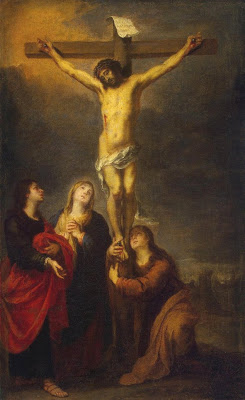
For the sake of thy sorrowful passion, have mercy on us and on the whole world.

Mysteries Should be Appreciated and Lived More Than”Solved”

"Mirror baby". Licensed underCC BY 2.0 via Wikimedia Commons.
“Mirror baby”. Licensed under CC BY 2.0 via Wikimedia Commons.

Today we tend to use the word “mystery” differently than in Christian antiquity, to which the Church is heir. We have discussed this notion on this blog before. In today’s brief post I’d like to review that idea and then add a new insight I gained recently from Fr. Francis Martin.

As we have noted before, our modern culture tends to think of a mystery as something to be solved. And thus the failure to resolve it is considered a negative outcome. In the typical mystery novel, some event (usually a crime) takes place and it is the job of the hero to discover the perpetrator of the crime or the cause of the problem. And if he does not do so he is considered a failure. And frankly, if word got out that, in a certain mystery movie, the mystery was not solved, there would be poor reviews and low attendance. Imagine if, in the TV series House, M.D., Dr. House routinely failed to “solve” the medical mystery—ratings would drop rather quickly.

But in the ancient Christian tradition, mystery is something to be accepted and even appreciated. Mystery is that which opens up the temporal meaning of an event and gives it depth. It also introduces a vertical dimension to an event and thus makes it a time of revelation, of unveiling. (Fr. Francis Martin says more about this in the video below.) In this sense, mystery is something we are meant to discover, thereby appreciating the depth and richness of both things and people. Because of this, mystery should be savored, respected, and appreciated.

However, the attempt to solve many of the mysteries in the Christian tradition would be disrespectful as well as prideful. Though we are meant to discover and appreciate mysteries, we must remember that much more remains hidden to us than is understood by us. The claim that we can “solve” mysteries of this sort implies that we are capable of seeing them in all their fullness. This is prideful and, frankly, rude.

Why is this so?

One reason is that the Christian understanding of mystery is slightly different than the worldly one. To the world, a mystery is something that is currently hidden, something that must be found and brought to light.  The Christian understanding of mystery is something that is revealed, but much of which lies hidden.

Further, in the Christian view, some or even most of what lies hidden ought to be respected as hidden and appreciated rather than solved. Surely we can seek to gain insight into what is hidden, but, we must do so respectfully. And we dare not say that we have wholly resolved or fully comprehended everyone or everything. For even when we think we know everything, we seem to forget that there are still greater depths beyond our sight. Thus mystery is to be appreciated and accepted rather than solved.

Perhaps an example will help. Consider your very self. You are a mystery. There is much about you that you and others know. Certainly your physical appearance is revealed. There are also aspects of your personality that you and others know. But, that said, there is much more about you that others do not see. Even many aspects of your physical nature are hidden. For example, no one sees your inner organs. And as for your inner life, your thoughts, memories, drives, and so forth are mostly hidden. Some of these things are hidden even from you. Do you really know and fully grasp every drive within you? Can you really explain every aspect of yourself? No, of course not. Much of you is mysterious even to you.

Now part of the respect that I owe you is to respect the mystery of who you are. I cannot really say, “I have you figured out.” For that fails to appreciate that there are deep mysteries about you caught up in the very designs of God. To reduce you to something explainable merely by words is both disrespectful to you and prideful on my part. I may gain insights into your personality, and you into mine, but we can never say we have each other figured out.

Hence, mystery is to be both respected and appreciated. There is something delightfully mysterious, even quirky, about every human person. At some level we ought to grow in our appreciation of the fact that every person we know has an inner dimension, partially known to us, but much of which is hidden.  This gives each person a dignity and a mystique.

Another example of mystery is the Sacraments. In fact, the Eastern Church calls them the “Mysteries.” They are mysteries because while something is seen, much more is unseen, though very real. When a child is baptized our eyes see water poured and a kind of washing taking place. But much more, also very real, lies hidden. For in that moment the child dies to his old life and rises to a new one, in which all his sins forgiven. He becomes, in that moment, a member of the Body of Christ; he inherits the Kingdom and becomes a temple of the Holy Spirit. Spiritually dead before, he is now alive and the recipient of all of God’s graces. These things are hidden from our eyes but they do in fact take place. We know this by faith. Thus there is a hidden, mysterious dimension to what we see. What we see is not all there is—not by a long shot. The mystery speaks to the interior dimension which, though hidden from physical sight, is very real.

So a mystery in the Christian understanding is not something to “get to the bottom of.” Rather, mysteries are to be appreciated, revered, respected, and accepted, humbly, as real. Some aspects of them are revealed to us but much more is hidden.

That said, neither are we to remain wholly ignorant of the deeper dimensions of things. As we journey with God, one of the gifts to be sought is deeper penetration into the mystery of who we are, the mystery of one another, the mystery of who God is, and the mysteries of creation, the Sacraments, and Holy Scripture. To be sure, as we grow spiritually we gain insights into these mysteries. But we can never say that we have fully exhausted their meaning or “solved” them. There remain ever-deeper meanings that we should respect and revere.

In the video that follows, Fr. Francis Martin explains how mystery is the interior dimension of something. In other words, what our eyes see or what our other senses perceive does not exhaust the meaning of most things.

Fr. Martin gives the example of  a man, Smith, who walks across the room and cordially greets another man, Jones, with a warm handshake. Jones smiles and reciprocates. OK fine, two men shake hands; so what? But what if I tell you that Smith and Jones have been enemies for years? Ah, now that is significant! Knowing that the handshake has an inner dimension to it helps us to appreciate the deeper reality of that particular gesture. To the average observer this inner dimension is hidden. But once we begin to have more of the mystery revealed to us, we appreciate more than what appears on the surface. But still we cannot say, “Ah, I have fully grasped this!” For even knowing this background information, we have grasped only some of the mysteries of mercy, reconciliation, grace, and the inner  lives of these two men. Mystery has a majesty all its own and we revere and respect it best by appreciating its ever-deeper realities, caught up, finally, in the unfathomable mystery of God Himself.

Here is a video in which Fr. Martin speaks about mystery:

Stained Glass and the Book of Revelation

072814Most Catholics are unaware of the fact that our traditional church buildings are based on designs given by God Himself. Their designs stretch all the way back to Mount Sinai, when God set forth the design for the sanctuary in the desert and the tent of meeting. Many of the fundamental aspects of our church layouts still follow that plan and the stone version of it that became the Jewish Temple in Jerusalem. Our traditional church buildings also have numerous references to the Book of Revelation and the Book of Hebrews, both of which describe the heavenly liturgy and Heaven itself.

There is not time to develop these roots at length in this post today, though I hope to do so in a series of future posts.

Sadly, in recent decades there has been a casting aside of these biblical roots in favor of a “meeting house” approach to church design. No longer was the thinking that our churches should reflect heavenly realities, teach the faith,  and follow biblical plans. Rather, the idea was that the church simply provided a space for people to meet and conduct various liturgies.

In some cases the liturgical space came to be considered “fungible” in that it could be reconfigured to suit various needs: Mass today, concert tomorrow, spaghetti dinner next Wednesday. This thinking began to be set forth as early as the 1950s. Pews were often replaced by chairs, which could easily be moved to suit various functions. And even in parishes that did not go so far as to allow spaghetti dinners in the nave (mine did in the 1970s), the notion of the church as essentially a meeting space still prevailed.

Thus churches began to look less and less like churches and more and more like meeting halls. The bare essentials such as an altar, pews or chairs, a pulpit, and very minimal statuary were still there, but the main point was simply to provide a place for people to come together. There was very little sense that the structure itself was to reflect Heaven or even remind us of it.

That is beginning to change as newer architects are returning more and more to sacred and biblical principles in church design. Further, many Catholics are becoming more educated on the meaning of church art as something more than merely that it is “pretty.” They are coming to understand the rich symbolism of the art and architecture as revealing the faith and expressing heavenly realities.

Take stained glass for instance. Stained glass is more than just pretty colors, pictures, and symbols. Stained glass was used for centuries to teach the faith through pictures and symbols. Until about 200 years ago, most people—even among the upper classes—could not read well if at all. How does the Church teach the faith in such a setting? Through preaching, art, passion plays, statues, and stained glass.

Stained glass depicted biblical stories, saints, Sacraments, and glimpses of Heaven. Over the centuries a rich shorthand of symbols also developed: crossed keys = St. Peter, a sword = St. Paul, a large boat = the Church, a shell = baptism, and so forth. And so the Church taught the faith through the exquisite art of stained glass.

But stained glass also served another purpose: acting as an image of the foundational walls of Heaven. Recall that traditional church architecture saw the church as an image of Heaven. Hence a church’s design was based on the descriptions of Heaven found in the Scriptures. Now among other things, Heaven is described in the Book of Revelation as having high walls with rows of jewels embedded in the foundations of those walls:

One of the seven angels … showed me the Holy City, Jerusalem, coming down out of heaven from God. It shone with the glory of God, and its brilliance was like that of a very precious jewel, like a jasper, clear as crystal. It had a great, high wall with twelve gates … The foundations of the city walls were decorated with every kind of precious stone. The first foundation was jasper, the second sapphire, the third chalcedony, the fourth emerald, the fifth sardonyx, the sixth carnelian, the seventh chrysolite, the eighth beryl, the ninth topaz, the tenth chrysoprase, the eleventh jacinth, and the twelfth amethyst ... (Revelation 21:varia).

Thus because Heaven had great, high walls, older churches almost always had a lot of verticality. The lower foundational walls gave way to the higher clerestory and above the clerestory the vaults of the ceiling rose even higher. And in the lower sections of the walls, extending even as high as the clerestory, the jewel-like stained glass recalled the precious gemstones described in the lower walls of Heaven.

The compelling effect of a traditional church is to say to the believer, you are in Heaven now. In my own parish church, the floors are a green jasper color, and the clerestory walls, red jasper. On the clerestory are painted the saints gathered before the throne-like altar in Heaven (Heb 12:1; Rev. 7:9). In the apse is the throne-like altar with Jesus at the center (Rev 5:6); the seven lamp stands are surrounding him with seven candles (Rev 4:5). In the stained glass of the transept are the 12 Apostles joined with the 12 patriarchs (symbolized by 12 wooden pillars). Together they form the 24 elders who surround the throne in Heaven (Rev 4:4). Above the high altar, in the clerestory windows, are the four living creatures also said to surround the throne (Rev 4:6-7).

Yes, it’s amazing! I stand in my church and realize its message: you are in Heaven when you enter here and celebrate the sacred mysteries: sursum corda (hearts aloft)!

The photo above is of the Sainte-Chapelle, a royal medieval Gothic chapel located in Paris, France.

Here’s a video I put together on stained glass. Enjoy these jewels of light that recall the lower walls of Heaven as you listen to the choir sing “Christe Lux mundi” (O Christ you are the Light of the world).

Here’s another video I created. Many of the photos in the video can be found here:

http://www.romeofthewest.com
http://viewfrombackpew.blogspot.com/


And finally, if you are interested, here is a video I made some time ago featuring some of the architectural details of my own parish.

Heather Has Three Parents – Strange and Awful Plans are Under Way in England’s In Vitro Fertilization (IVF) Labs

072714
“TripletsGirls” by The original uploader was Michael L. Kaufman at English Wikipedia – Licensed under CC BY-SA 3.0 via Wikimedia Commons.

There’s an old saying in Latin: Omni trinum perfectum (all things are perfect in threes). It is a saying that emerges from the Trinitarian Theology but is meant somewhat playfully.  The other day, however, something was announced that definitely is not perfect in threes. A frightening piece in the BBC News describes three where there should be two, or, two’s company but three’s an unnatural crowd. Here are some excerpts from the original article along with my comments in plain red text. The full article is available here: Three’s a Crowd!

A public review into the three person IVF technique has been broadly supportive, says the Department of Health. In other words, this technique involves taking genetic material from one sperm and TWO eggs. That equals three parents in case you hadn’t noticed.

The move would be restricted to mitochondrial disease, affecting one in 6,500 UK babies born each year.  Now you know that what the radicals propose as a rare and unique procedure is going to be available to anyone who wants it for any reason within a few short years. Some of us are old enough to remember that abortion was initially proposed only for those rare cases in which the life of the mother was threatened. But that was just a placeholder in order to get the approval. Approval having been granted, now here comes everybody! And those who sought to keep the awful procedure safe, legal, and rare, are now proposing it as a kind of sacrament of the women’s movement to which everyone should have access. So let these latest “safe, legal, and rare” proponents be aware that many of us don’t believe their “thoughtful limitations” approach. 

[Mitochondrial Disease]  may lead to muscle weakness, blindness, and heart failure. Using the parents’ sperm and eggs plus an additional egg from a donor woman should prevent such conditions, say scientists at Newcastle University.  And here is the proverbial sheep’s clothing. I suppose that all of us would like to prevent every possible negative outcome in life. And all these nice people want to do is to prevent bad things from happening to other nice people. All this is praiseworthy but it does try to make a good thing out of tampering with DNA and turning human life into a technology or a “deliverable.” There are many unintended consequences that go along with such approaches. For example, how will this further affect the way we regard the disabled? As it is, up to 90% of babies with poor prenatal diagnoses are aborted. So beware—all of our “niceness” about trying to make life more pleasant and perfect has created pressure to abort what is regarded as imperfect life if we can’t “fix it.” It is hard not to describe the massive number of abortions of disabled children as a bloodbath and a kind of genocide. It all parades around under the pleasant guise of trying to alleviate suffering, but at the end of the day our insistence on perfect outcomes take us to some pretty dark places. 

Any children born using the procedure would not be able to find out the identity of the mitochondrial donor. Why not?  Whom are the proponents trying to protect and why?

Opponents say it is unethical and could set the UK on a “slippery slope” to designer babies … Dr. David King, director of Human Genetics Alert said: “Looking back 15 years from now in the midst of a designer baby marketplace, people will see this as the moment when the crucial ethical line was crossed. Exactly!

Well, there you have it. Heather has three parents. Why should this be opposed? For many of the same reasons we must oppose in vitro fertilization. (Since most of you, my readers, are Catholic, I put forward here a religiously based argument. I will leave arguments based on natural law to others.) We have gotten into the very bad habit of trying to play God when it comes to human life. Clearly the most egregious example of this is abortion. There, we play God by sentencing innocent life to death. This is life that God has created (cf Jer 1:4; Psalm 139). In effect, we snatch the life from God’s creative hands and say, “This shall not be.” But we also play God by insisting that infertile couples have a right to conceive and bear children when nature and nature’s God have said no. With in vitro fertilization we go beyond assisting fertility and then depending on the marital act. Rather, we sideline the God-given manner for conception and turn it into a technology in a petri dish. This, too, is a way of telling God, “This shall not be” (in reference to infertility and normal conception). There are many problems with in vitro fertilization that have caused the Catholic Church to forbid it.

  1. Life as a consumer product – In IVF, a fertilizable ovum is removed from a woman’s ovary and put in a petri dish (the Latin for dish is vitrum), to which a few concentrated drops of sperm are added. This separates human conception from the marital act, its sacred and proper place, where God acts to bestow life.  IVF places conception in the laboratory, where man controls the process, treating it as a technology and as a consumer product rather than as part of a mystery of fruitful love caught up in the marital embrace and the love God.
  2. No person and no couple has a “right” to a child. A child is a person with rights; he or she is not merely an object, a possession, or a technological product.
  3. God is Wrong! From a faith perspective, IVF refuses to accept God’s “failure” to act in accord with the wishes of the couple to conceive and so tries to remove Him from the decision. God may be teaching something to them through their infertility. Perhaps He wants them to adopt; perhaps He has special work for them to do or a cause to which He wants them to be devoted. But IVF suspends such discernment and forces the solution.
  4. There is a strong bias today toward caring only about what is best for adults. This is widespread in our culture. If adults are unhappy they can divorce regardless of what this does to children, who have no legal voice or say in the matter. Further, if a child comes at an unexpected or inopportune time, many just abort. Again, it is the adults who matter. In IVF there is also some of this thinking since what seems to matter most is that the adults want a baby. Never mind that IVF may encourage us to think of life as a technology to be exercised at our whim rather than as a sacred mystery. Never mind that imperfect embryos are discarded or frozen. Never mind that many IVF procedures lead to selectively aborting later on. Never mind that IVF children are more often born prematurely and suffer higher rates of birth defects. What matters is what adults want and demand.
  5. Fix the disabled … or else! – In recent years a kind of genocide has been occurring against the disabled. Because we can often predict deformities and hardships and because we “can” abort them, we do—in huge numbers. The attitude is that imperfect or disabled life must go. Today, as many as 90% of babies with a poor prenatal diagnosis are aborted. Some might argue that this procedure will help prevent disabled or imperfect babies. But what we are really doing is insisting on our “right” to be without imperfect babies. And we seem to be willing to go to any lengths (including three parents) to achieve it. Pretty soon, having babies outside “the factory” will be frowned upon and insurance policies will refuse to care for handicapped children born in the “traditional” way. More abortions, more bloodshed is sure to follow our insistence on perfect babies.
  6. Discarding Embryos – As already stated, it is standard practice to fertilize more eggs than are needed. This is because not all embryos survive. If “too many” embryos survive, the rest are either discarded (i.e., killed), mined for stem cells (i.e., killed), or frozen for future use.

For reasons such as these, the Church considers IVF to be gravely sinful.

You can read more here: INSTRUCTION ON RESPECT FOR HUMAN LIFE IN ITS ORIGIN AND ON THE DIGNITY OF PROCREATION.

There are certain procedures allowable to Catholics that enhance fertility but do not remove or replace the marital act. But for the reasons stated above, IVF is far beyond what is approved.

So here we are with another cultural showdown. IVF and abortion have this in common: they both involve playing God and saying that I have a right over life, that I call the shots. Further, though many of the proponents of IVF services may choose not to think so, discarding embryos is killing; it is aborting. Freezing them is a cruel delay and a further indignity. Imagine keeping children on ice until their arrival is more convenient. And what if they never become convenient? The “big chill” continues until they become stale (i.e., dead). Disclaimer: There are likely many well intentioned couples who may never have thought through all of this, or have been misguided, or are just so desperate for a child that they’ll do almost anything. But in the end, IVF is problematic and morally wrong for the reasons outlined above. We live in times in which too many think that they can just have whatever they want. Many think that if we can do something, we should be free to do it. But there are other things at stake than just what people want. There is reverence for the sacred mystery of life; there is concern for the common good; there is the matter of what happens to imperfect or “superfluous” embryos; there is the matter of what happens to the disabled; and finally, there is the matter of where this will ultimately lead. This latest proposal goes another hideous step forward by tinkering with life in such a way that now three parents will be involved in the petri dish. Who’s your Daddy? Or in this case, who’s your Mommy? Natural family ties will be affected. And don’t tell me that there won’t be lawsuits if two mothers start to fight over the baby. Even Solomon would have a hard time sorting all this out!

For it was you who formed my inward parts; you knit me together in my mother’s womb. I praise you, for I am fearfully and wonderfully made. Wonderful are your works (Psalm 139:13-14).

Give Me Jesus – A Sermon for the 17th Sunday

By Manfred HeydeThis file is licensed under the Creative Commons Attribution-Share Alike 3.0 Unported license.
By Manfred Heyde This file is licensed under the Creative Commons Attribution-Share Alike 3.0 Unported license.

The Gospel today asks a fundamental question: “What is it that you value most?”  In other words, “What is it that you most want?” Now be careful to answer this question honestly. We tend to answer questions like this the way we think we “should” answer them rather than genuinely. But when we’re with the doctor (and Jesus is our doctor) the best bet is to answer honestly so that we can begin a true healing process. And the fact is, we all need a heart transplant. That is, we need a new heart, one that desires God and the things waiting for us in heaven more than any earthly thing.

So let’s take a look at this Gospel, which sets forth in three fundamental movements the Picture and the Price of the Kingdom of God along with a Peril that reminds us that we have a choice to make.

I. The Picture  – The Gospel uses three images for the kingdom, two of which we will look at here, and the third of which we will examine later. The first two images are that of the buried treasure and the pearl. Both of these images have some significance elsewhere in the Scriptures and studying them will be helpful in fine-tuning our understanding of the gift of the Kingdom, which Jesus is discussing.

A. Buried Treasure – The concept of treasure (buried treasure in this case) is mentioned elsewhere by Jesus:

Do not store up for yourselves treasures on earth, where moth and rust destroy, and where thieves break in and steal. But store up for yourselves treasures in heaven, where moth and rust do not destroy, and where thieves do not break in and steal. For where your treasure is, there your heart will be also (Matt 6:19-21).

Hence although we tend to think of treasure as a bunch of “stuff,” this image of treasure that Jesus uses in today’s Gospel is more of an image for the heart and for our deepest desires, because our treasure is linked to our heart. One of the greatest gifts that God offers us is the gift of a new heart which values most what God is offering, namely, holiness, and God himself. One of the most fundamental prophetic texts of the Old Testament announces what Jesus has fulfilled:

Oh, my people, I will sprinkle clean water on you, and you will be clean; I will cleanse you from all your impurities and from all your idols. I will give you a new heart and put a new spirit in you; I will remove from you your heart of stone and give you a heart of flesh. And I will put my Spirit in you and move you to follow my decrees and be careful to keep my laws (Ezekiel 36:25-27).

Thus, the great treasure of the Kingdom of God gives us a new heart, for by choosing this treasure our heart is changed. To have a new heart is to see and experience our desires change. We are less focused on passing, worldly things and more interested in the lasting treasure of the Kingdom of Heaven. We begin to love what and whom God loves. We begin to love holiness, justice, chastity, goodness, righteousness, and truth. We begin to love our spouse, family members, the poor, and even our enemies the way God loves them. Our hearts become alive with joy and zeal for the Kingdom of God and an evangelical spirit impels us to speak what we believe and know to be true.

Yes, the buried and hidden treasure of the Kingdom of God unlocks our heart and brings new life coursing through our veins and arteries, through our very soul. In choosing this treasure we get a new heart. For where our treasure is, there also will be our heart.

B. Pearl The second image, the pearl, comes from the Wisdom tradition, in which holy Wisdom is likened to a pearl. And here, too, is described one of the most precious gifts of the Kingdom of God: the gift of a new mind through holy Wisdom. And what is the new mind? It is a mind that begins to think more and more as God thinks, a mind that shares His priorities and His vision, a mind that sees as God sees; it is the mind of Christ (cf 1 Cor 2:16). With this new mind we see through and reject worldly thinking, worldly priorities, and worldly agendas. We come to rejoice in the truth of God and to grasp more deeply its beauty and sensibility. What a precious gift the new mind is, thinking with God and having the mind of Christ!

So here are two precious manifestations of the Kingdom of God: a new heart and a new mind, which is really another way of saying, “a whole new self.” God is offering us a new life, a new self, a complete transformation. This, then, leads to the next movement of the Gospel.

II. The Price – What are these offerings of the Kingdom worth and what do they ultimately cost? The answer is very clear in today’s Gospel: they cost, and are worth, EVERYTHING. Regarding the hidden treasure and the pearl, the text says that both men went and sold all they had for these precious offerings. They were willing to forsake everything for them.

Now be careful not to reduce this Gospel to a moralism. Notice that these men were eager to go and sell, to forsake, everything else. They did this not so much because they had to, but because they wanted to. They wanted to pay the price and were willing to do so even with eagerness because they were so enamored of the glory they had found. And here is the gift to seek from the Lord: a willing and eager heart for the Kingdom of God, so eager that we are willing to forsake anything and everything for it.

For ultimately the Kingdom of God does cost everything and we will not fully inherit it until we are fully done with this world and its claims on our heart.

But the gift to seek from the Lord is not that we, with sullen faces and depressed spirits, forsake the world as if we were paying taxes. No! The gift to seek is that we, like these men, be so taken by the glory of God and His kingdom that we are more than willing to set aside anything that gets in our way, that we should be so eager for the things of the Kingdom that the world’s intoxicating and addictive trinkets matter little to us and the loss of them means almost nothing.

Do you see? This is the gift: a heart that appreciates the true worth of the Kingdom of God such that no price is too high. Scripture says elsewhere:

  • What is more, I consider everything a loss compared to the surpassing greatness of knowing Christ Jesus my Lord, for whose sake I have lost all things. I consider them rubbish, that I may gain Christ (Phil 3:8).
  • For this light momentary affliction is preparing for us an eternal weight of glory beyond all comparison (2 Cor 4:17).
  • I consider that our present sufferings are not worth comparing with the glory that will be revealed in us (Rom 8:18).
  • No eye has seen, no ear has heard, no mind has conceived what God has prepared for those who love him (1 Cor 2:9).
  • But one thing I do: Forgetting what is behind and straining toward what is ahead, I press on toward the goal to win the prize for which God has called me heavenward in Christ Jesus (Phil 3:13-14).

Yes, the Kingdom of God is more than worth any price we must pay, and ultimately we will pay all for it. Pray for an eager and willing spirit that comes from appreciating the unsurpassed worth of the Kingdom!

III. The Peril – The final movement contains a warning about judgment. For ultimately we either want the Kingdom of God or we don’t. Hence the Lord speaks of a dragnet that captures everything (and this is the summons all have to come to the judgment). Those who want the Kingdom and have accepted its value and price will be gathered in. Those who do not want the Kingdom of God and do not accept its value will be escorted off.

For there are some who do not value the Kingdom. They may desire Heaven, but it is a fake “heaven” of their own making, not the real Heaven of the fullness of the Kingdom of God. The true Heaven is the Kingdom of God in all its fullness. The Kingdom of God includes things like forgiveness, mercy, justice, chastity, the dignity of life, love of the poor, love of one’s enemies,  and the celebration of what is true, good, and beautiful.  The Kingdom of God has God, not me, at its center.

Now there are many who neither want nor value some or even most of these things. When the net is drawn in, the decisions are final. And though we may wish for a magic, fairy tale ending in which the opponents of the Kingdom suddenly come to love it, God seems to say, quite clearly, that at the judgement one’s decision for or against the Kingdom is final and fixed forever.

An old song says, “Better choose the Lord today, for tomorrow, very well might be too late.” Thus we are warned: the judgment looms and we ought to be earnest in seeking a heart from the Lord that eagerly desires the Kingdom and appreciates its worth above all people and all things. In the end you get what you want. Either you will have chosen the Kingdom or not.

So pray for a new heart, one that values the Kingdom of Heaven above all else. We ought to consider ourselves warned.

The Gospel today is about what we truly value, in three movements.

This song says, “You can have all this world, just give me Jesus.”

Photo Credit AIRO via Creative Commons

It Happened on Our Watch – As Seen on TV

072514Recent news has brought to the forefront the great cost of war. During the very time I was in the air flying to the West Coast, another airliner was shot down over Ukraine. Perhaps it was a foolish accident, perhaps not. Regardless, 300 people who had no real involvement in the military conflicts between Ukraine and Russia were killed.

Some say that this is what happens when the USA sleeps. Like it or not, we are the 800-pound gorilla in the room, and if we don’t take an active role in world conflict this is what happens.

Other voices counsel that we should stay out of other nations’ affairs and regional conflicts that date back centuries. I leave it to you to decide where you think our mission lies.  At Walter Reed, I have seen men with missing limbs, with brain injuries, men who went to save the Iraqis from themselves. Now it seems that little was accomplished.

This is not a political blog or a military one. However, it seems clear to me that every course of action or lack thereof has its consequences; the devil will extract his pound of flesh either way.

But spiritually we are more answerable for the current state of affairs. The cauldron of Europe that exploded in two World Wars and a long cold war that is lately being reinvigorated happened in “Christian” Europe. Further, the widespread abandonment of the Faith in Europe does not bode well for anyone. We in the West love to cite the disarray and corruption in places like Africa. But Europe has been the site of bloodbaths for thousands of years. And at least the last two thousand years of bloodshed have happened on our watch—in a theoretically Christian Europe. In the past several decades we have seen an utter moral rebellion in the wake of a century of European war, both hot and cold. Yes, we who would preach Christ cannot absolve ourselves of responsibility for the condition the world.

When I saw the commercial below I was struck by a twinge of guilt. The words of a poem by William Butler Yeats came to mind:

Things fall apart; the centre cannot hold;
Mere anarchy is loosed upon the world,
The blood-dimmed tide is loosed,
and everywhere
The ceremony of innocence is drowned;
The best lack all conviction, while the worst
Are full of passionate intensity.

Yes, something struck me. In the commercial anarchy, destruction, injustice, violence, and pure chaos are shown. And yet all the while our superhero, with his “Bat Phone” screeching in the background signaling a call for help, is wholly distracted, mindlessly flipping through the channels unaware that the world around him is descending right into Hell. He is turned inward, wholly focused on his own little world.

Is this what we are like? Are we the superhero slouching on the couch while the world and Western culture descend into a maelstrom? We see the things of which Yeats wrote: lost innocence, the blood-dimmed tide of the 20th Century, perhaps more than a hundred million people put to death in war and for ideological reasons, and moral anarchy swept in on the four horsemen of the apocalypse—relativism, secularism, individualism, and the sexual revolution.

And while the wicked were marching with passionate intensity, the good were largely asleep, lacking the intensity for battle. All around us are divorce, abortion, teenage pregnancy, skyrocketing numbers of sexually transmitted diseases, broken families, increasing lack of self-control and discipline, declining school test scores and graduation rates, inability to live within our means, rising poverty rates for children, increasing drug and alcohol addiction, plummeting Church attendance—the list could go on and on.

And where have we been as a Church, as Christians in a world gone mad? Where, for example, was the Church in 1969, when the “no-fault divorce” laws began to be passed? It would seem we were inwardly focused: moving furniture around in our sanctuaries, tuning our guitars, and having endless debates about liturgy, Church authority, why women can’t be ordained, etc. These are not unimportant issues, but while we were being rather wholly focused on them we lost the culture.

Yes, it happened on our watch. I am now past the age of fifty and I cannot say that it is all the fault of the previous generation. Even during my relatively short lifetime, I have seen the world as I knew it largely swept away, especially in terms of family life. And now it is up to me to try to make a difference.

How about you? It will take courage and an increasing conviction to live the Catholic faith openly. No more of this “undercover Catholic” stuff; no more of the desire to fit in and be liked. It is long past midnight for our culture, our families, and our children.

In the commercial there is something very wrong with the scene: a superhero ignores the cries for help as the phone screeches its warning. It’s time for our superhero to get off the couch, pick up the phone, re-engage, and get to work. It is interesting to note that the movie he is watching shows a wolf being set loose. Jesus says, Watch out for false prophets. They come to you in sheep’s clothing, but inwardly they are ferocious wolves (Matt 7:15). Indeed many wolves speaking of (false) tolerance and other pleasantries have badly misled and spread error: calling “good” what is sinful and misrepresenting the biblical tradition.

Well, fellow superheroes, the last time I checked, we are supposed to be salt and light for the world. It’s time—long past time—to bring Christ’s power back to this world. It’s time to get off the couch, pick up the phone, re-engage, and get to work.

Don’t just watch culture; direct it.