See What the End Shall Be – A Homily for the 4th Sunday of Advent

The Annunciation by Henry Ossawa Tanner 1896In today’s Gospel we step back nine months to March 25th, the feast of the Annunciation, an event all but hidden, but which changed the world.

God, whose focal presence had departed the Temple just prior to the Babylonian invasion (cf Ez 10:18) and the loss of the Ark of the Covenant, now returns to the Ark of Mary’s womb. The glorious presence of God returns now to His people in an obscure town of fewer than three hundred, a town so small that no road led to it.

We are reading here of a pivotal moment in the history of mankind. God not only returns to His people but becomes one with them in the Incarnation.

And at this moment we do well to consider four aspects of this pivotal moment. As we do so, we consider not only Mary’s glories but ours as well (in a subordinate yet real way). For Mary is the perfect disciple and typifies in a most excellent way the glories that God also wishes to bestow on us, in perhaps a different but still substantial way. Let’s look at four aspects of this Gospel.

I. The RESPECT of God – The text says, The angel Gabriel was sent from God to a town of Galilee called Nazareth. To a virgin betrothed to a man name Joseph and the virgin’s name was Mary … Mary said “Behold I am the Handmaid of the Lord, May it be done to me according to your word.

Note that God asks of Mary her cooperation. Although the Angel Gabriel’s words are not in the form of a question, it is clear from Mary’s response that she considers this to be a request from God. She says yes, and thus understands it as a request, not merely a statement of what shall be.

In this regard we see an important indicator of the respect of God for her freedom. Surely He has prepared her and equipped her with every good grace to say yes, but in the end, her freely offered yes is significant, and something that God looks for and respects. Otherwise, why bother to send an angel at all? Why come through Mary at all? Why not simply appear suddenly as a full-grown man and start to work? As it is, God wills to come through Mary (cf Gen 3:15) and seeks her yes in the place of Eve’s no.

And this respect for Mary’s freely offered yes is also a respect God extends to us. Indeed we can see here how God’s respect is in direct contrast to the behavior of the devil, who provokes, shouts, and intrudes. Through cultural noise, etc., he tempts and provokes us. In contrast, God whispers and respectfully invites. He does not force a decision on us, but rather summons us in love and patiently awaits our answer.

In Scripture we read of Jesus, Behold, I stand at the door and knock; if any one hears my voice and opens the door, I will come in to him and eat with him, and he with me (Rev 3:20). Hence, though all powerful and able to coerce, God does not do so; He does not act violently or impose His will. He respects the freedom He Himself gave us and invites us to cooperate in His plan for us.

Mary (and we) are thus respected by God in terms of our freedom, and God “needs” us to open the door for Him to go to work.

II. The REGARD of God – Note in the text the great love, appreciation, and regard God extended to Mary through the angel. The text says, Hail, Full of grace! The Lord is with you … Do not be afraid Mary. You have found favor with God ...

As the great and glorious Angel Gabriel (and every angel is glorious) comes to Mary, he must still, in an astonishing way, acknowledge Mary’s beauty, holiness, and perfection by God’s grace. Imagine an all-glorious archangel rendering a kind of debt of praise to a mere human being! And in speaking this way he is speaking for God, of the deep love, appreciation, and regard that God has for Mary, His greatest human work.

Indeed, we should never forget the love and deep regard God has for Mary and also for us. Mary is surely God’s masterpiece. But she is also the result of His grace and work. She is sinless, “full of grace,” for, being filled with grace, there is no room in her for sin.

The Angel Gabriel speaks to her dignity and perfection in the greeting Χαιρε κεχαριτωμενη (Chaire, Kecharitomene – Hail, full of grace). Kecharitomene (full of grace) is a perfect, passive participle indicating an action completed (perfected) in the past but operative now as well. Thus Gabriel salutes her not by her name, “Mary,” but by a sort of new name: “Hail, she who was perfectly graced and is so now!” Thus she had been freed of all sin in the past for she is perfectly, fully graced, and she is so now as Gabriel greets her and regards respectfully the work of God in her.

In a less perfect (but still true) way, God also loves us and loves in us the perfection we will one day attain by His grace and mercy. A couple of texts come to mind:

I have loved you with an everlasting love; I have drawn you with loving kindness (Jer 31:3).

Fear not, for I have redeemed you; I have summoned you by name; you are mine. For I am the LORD, your God, the Holy One of Israel, your Savior … you are precious and honored in my sight, and … I love you (Isaiah 43:1-3).

We are not good, and therefore God loves us. God loves us and therefore we are good, if we accept His love. Mary was, by a singular grace, wholly open to God’s love and perfection. And if we are faithful, each of us, too, will one day become the man or woman God has always intended us to be.

God thus shows great regard for Mary (through Gabriel) and He also knows the glory we will one day share.

III. The RIDDLE in the middle – There remains the mysterious question of Mary: “How will this be since I do not know man?” Had she been thinking in strictly biological terms she would have known the obvious answer to the question: she and Joseph would conceive. But her question seems to imply she had other notions about her future than regular marital relations.

Some hold that the question is not really Mary’s question, but rather is rhetorically placed here by Luke so that the angel can inform us, the readers, that God alone is the true Father of the Son. But such a notion seems more likely concocted by nervous moderns in an attempt to solve the mystery. Reducing a pivotal question like this to a mere literary device seems unbecoming.

Catholic tradition surely sees evidence here of the doctrine of Mary’s perpetual virginity. To be sure, many other questions are raised by this resolution. Why would two people get married and then live as virgins? Were such arrangements common at that time? (It would seem not.) And so forth.

In the end, Mary’s question seems to point to some expectation on her part that she would “not know man” in some sense, going forward. But at any level, we are not going to be able to completely satisfy our curiosity in this matter, and ultimately it is none of our business.

One thing is sure: the Church teaches, without ambiguity, that Mary remained ever-virgin. It seems a reasonable conclusion that Mary’s question indicates that she was clear on this. But there remains also a mystery that we must respect.

In this case, Protestants and others who deny her lasting virginity have some thinking to do. For Mary’s question is not meaningless or naïve. It is a true question, with a true context, that ought to be respected as at least pointing to her virginity, even if it alone does not alone prove it.

IV. The REASSURANCE of God – Mary is in the presence of an archangel. This alone is frightening enough. But it is also true that her world is shifting quite dramatically. Hence, her natural fear and anxiety is understandable. Thus the Archangel Gabriel gives a number of reassurances to Mary: Do not be afraid Mary, For you have found favor with God … Behold you will conceive in your womb and bear a son and you shall name him Jesus. He will be great and will be called the Son of the most high, and the Lord God will give him the throne of David his father, and he will rule over the house of Jacob forever, and of his Kingdom there will be no end

In effect, St. Gabriel is saying to her that, however the details unfold, in the end there will be total victory, for she is to bear a Son who is the Son of the most High God, and who will have a kingdom that will never end or be conquered. Hence, whatever her concerns, this all leads to victory.

Mary will need this reassurance for there ARE some difficult days ahead: the crisis of homelessness at Jesus’ birth, the flight to Egypt, Simeon’s prophecy that a sword would pierce her heart, and the actual thrusting of that sword at the foot of the Cross. This knowledge of ultimate victory is an important reassurance for her to hold close and not forget.

So, too, for us. For we, too, have some difficult valleys to cross, some arduous hills to climb. We must constantly keep in mind the end of the story: Jesus is already the victor. Even if we might think we are losing, in the end, total victory belongs to Jesus, and to us if we stay with Him. The end of the story is already declared: Jesus wins, overwhelmingly, and all His enemies are placed under His feet (e.g., Rev 20-22; 1 Cor 15:25-26; John 16:33 inter al).

Consider this magnificent passage from Isaiah:

I am God there is no other. At the beginning I foretell the outcome; in advance, things not yet done. I say that my plan shall stand. I accomplish my every purpose. Yes, I have spoken, I will accomplish it; I have planned it and I will do it. Listen to me you fainthearted, you who seem far from the victory of justice: I am bringing on my justice, it is not far off, my salvation shall not tarry; I will put salvation within Zion, and give my glory to Israel (Isaiah 46:12ff).

If we were to memorize and internalize this passage, so many of our fears and anxieties would flee, our trust would build, and we would live victorious lives. It may at times seem that evil has the upper hand. Evil may have its day, but God has the ultimate victory. No matter how dark it may seem, God has already won, only the news has not yet leaked out.

But on our hearts this truth and reassurance must be emblazoned. For, like Mary, we have difficult days in our future. All the more reason God’s reassurance is essential for us. It got Mary through the Cross and it will get us through our trials.

Hence, we have here a pivotal moment in history. God’s presence returns to the human family. And it all happens so quietly in Nazareth, a town of 300, a town so small that there was not even a road that went to it. Quietly, but clearly and powerfully, God has thrust the first blow at Satan’s realm. Victory is sure.

Painting above: Annunciation, by H. Tanner

I have it on the best authority that Mary sang this song after the angel left: “Done made my vow to the Lord and I never will turn back, I will go, I shall go to see what the end shall be.”

It occurs to me that Mary, at this time, was not much older than the young ladies in this choir.

Christmas Isn’t Perfect – So Find Christ in Your Real Christmas

Kate Ter Haar  - https://creativecommons.org/licenses/by/2.0/ via Flickr.com
Kate Ter Haar Licensed under CC by 2.0 via Flickr.com

Most of us have a perfect Christmas in mind. Often it is the creation of Hallmark, Currier & Ives, and various marketers. But none of us will have a perfect Christmas, just a real one.

The First Christmas wasn’t perfect either. In fact, the only way to describe it is to call it a crisis. Mary was pregnant before marriage, a very dangerous thing in those times. Just at the time of birth they were required to travel eighty miles on foot to Bethlehem. There was no room for them in the inn. Joseph must have felt dejected, finding no place for his wife to give birth. Jesus is born in a stinking, dank cave. No sooner is He born than there are threats against His life and the family must flee to Egypt. There goes Joseph’s career and livelihood! Mary and Joseph are separated from family and home, from the support they likely needed.

It probably couldn’t have gone worse. There were surely no chestnuts roasting on an open fire, no roast or turkey, no gentle fallen snow.

Yet it was in that crisis of a Christmas that Jesus was found, not in the Hallmark Christmas. And whatever your Christmas holds this year, that is where He will be found. So Merry Christmas, unless another sort of Christmas awaits you. But find Christ there and it will be CHRISTmass.

This video shows an imperfect Christmas, but a good one nonetheless.

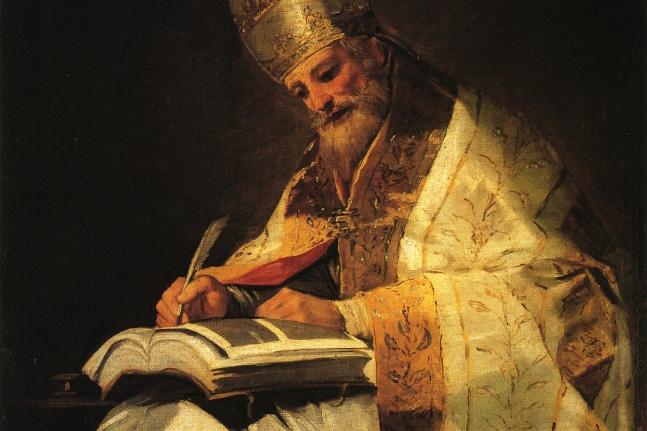
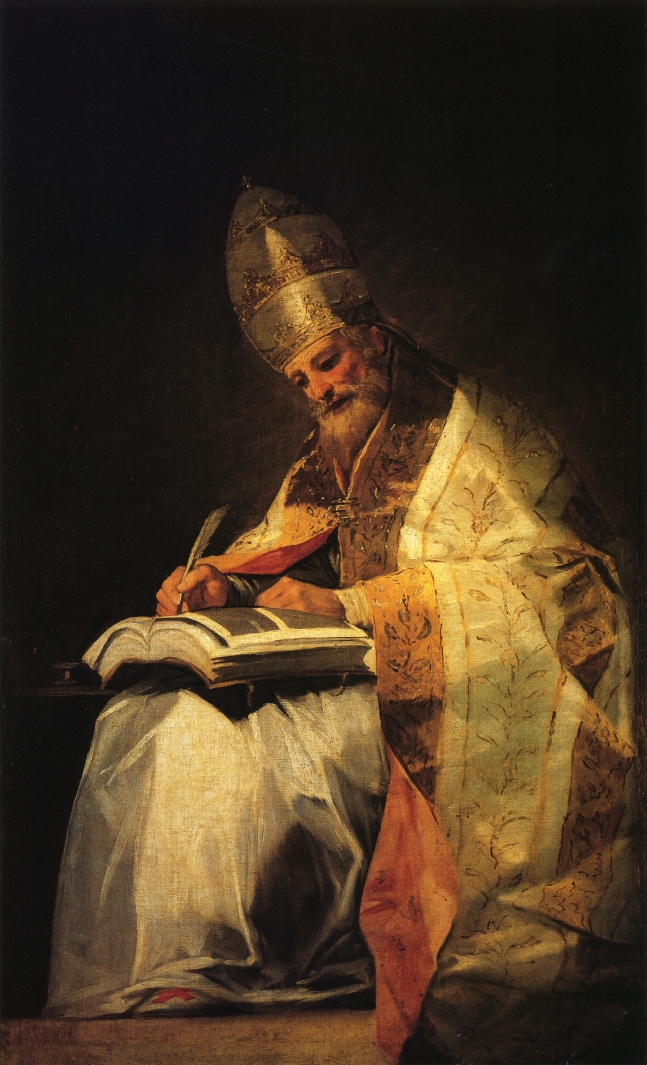
Pope Gregory the Great: Advice to the Married

121814Every now and again when I write on Holy Matrimony, especially the Church’s more staunch biblical teachings (indissolubility, no contraception, etc.), someone will inevitably write in with a kind of sneer and wonder at or even laugh at a celibate man advising married people about marriage. To be sure, inner experience of something has its place, but so does external observance. I remember as a youth that my swimming coach, who was out of the water, would often correct us if our form was wrong, and advise us on how to adjust it to swim better and faster. His perspective from out of the water gave him an understanding that even I, an experienced swimmer in the water, could not have. I might think my form was perfect, but he could see that it was not.

Similarly, priests and other celibates (such as religious) DO have something to teach about marriage. What we teach is not better than the advice of married people, but it is different; it is given from a different perspective. From our position, sometimes we can see things about Holy Matrimony that even the married have trouble seeing. Further, it is to be hoped that priests and religious are also well-versed in the Biblical teaching on Matrimony and family life and can offer the benefit of our study of God’s Word and our relationship with the Author of Holy Matrimony.

With that introduction, I would like to present some of the teaching of Pope St. Gregory the Great and his advice to the married. For spiritual reading, I am currently finishing up his Pastoral Rule, which contains this teaching. Since he is a priest and Bishop, his advice is less on practical things (such as communication, conflict resolution, etc.) and more at the level of theology and priorities. And yet it does have very practical importance. The following excerpts are taken from his Pastoral Rule (III.27) and are presented in bold, italics.

My own comments appear in red text.

Those who are joined in marriage should be advised that, as they mutually consider what is good for their spouse, they should be careful that when they please their spouse, they do not displease their maker. In other words, they should conduct their affairs in this world without relinquishing their desire for God … They should remain aware that their current situation is transitory and what they desire is permanent.

And in this is the heart of St. Gregory’s advice: God comes first. And even if a spouse may pressure one to forsake what God teaches, or to neglect to pray or attend to sacred duties, let that one with charity and confidence withstand any temptation to negligence of or disobedience to God. Pleasing God is more important and more required than pleasing one’s spouse. And while these two are not necessarily or even usually in conflict, when they are, God must be preeminent.

St. Gregory also reminds that Matrimony is of this world and therefore transitory, while the things of God remain forever. We frequently forget this and focus instead on passing things, joys, and troubles, and forget or minimize the things of the life to come, which have greater significance since they are permanent.

Such an insight is focused on seeing not only marriage’s joys in their proper and passing perspective, but also its sorrows and difficulties. “Trouble don’t last always.” And in this is a remedy that helps to endure difficulties and to see beyond the crosses to the glory that waits and endures.

[Though] as [the married] cannot completely abandon the temporal things [they] can desire union with the eternal … therefore, the married Christian should not give himself entirely to the things that he now possesses, or else he will fall completely from that which he ought to hope … St. Paul expresses this well and so simply saying for he who has a wife should act as though not having one. [In other words he means that] he who enjoys the consolation of the carnal life through his wife, but does so in such a way that his love for her does not divert him. He also has a wife as though not having one, who understands that all things are transitory. 

Here, too, while the love of one’s spouse and the goods of marriage are not necessarily, or even usually, in conflict with the desire for eternal things, nevertheless the married must not fail to consciously work to keep these desires connected and to not allow worldly desires to eclipse or attenuate the desire for heavenly things.

This happens in other areas beyond marriage, too. For example, we have attained great comfort in the modern age with electricity, running water, entertainment, good food in abundance, etc. And sadly, there is a pronounced diminishment today for spiritual things and the things of Heaven. Even many Christians in their so-called spiritual life and prayers, pray more and longer for better finances, improved health, and worldly things than they do for holiness and even Heaven.

Thus the joys of this world and those of matrimony ought to be seen as a mere foretaste of far greater glories to come for which we must more truly long.

The married should be advised that they endure with mutual patience those things that occasionally bring displeasure and that they exhort one another to salvation … They should be advised that they not worry themselves so much about what they must endure from their spouse, but consider what their spouse must endure on account of them. For if one really considers what must be endured on his account, it is all the easier to bear the things of others.

It is so easy to list the sins and shortcomings of others. But every spouse should begin by saying, “My marriage is not perfect because I am in it … I am a sinner and I married a sinner, knowing he was a sinner … I am living in a fallen world, governed by a fallen angel, and I myself have a fallen nature.”

The patience that Pope Gregory reminds us of is a reference to the Cross. And the Lord tells us that we must be willing to endure the Cross or we cannot be His disciples. Frankly, people often lay the heaviest crosses on those whom they love. This is because they care about them.

And love brings vulnerability. The word “vulnerabilty” is rooted in the Latin word “vulnera” meaning “wound.” Thus to be vulnerable is to be able to endure wounds out of love. And patience is rooted in the Latin word “patior” meaning “to suffer.” Hence patience bespeaks a capacity or willingness to suffer on account of others.

The married should be advised to remember that they come together for the purpose of producing children, but when they become immoderately enslaved by intercourse, they transfer the occasion for procreation to the service of pleasure … Thus St. Paul, skilled in heavenly medicine writes “Concerning the things you wrote to me, it is a good thing for a man not to touch a woman, but on account of fornication, let everyone have his own wife and every woman her own husband” (1 Corinthians 7:1).  And thus, by beginning with the fear of fornication, Paul did not extend this precept to those who were strong, but rather showed the couch to those who are weak, so they would not fall to the ground. He then adds, “Let the husband give what he ought to his wife, and similarly the wife to her husband” (1 Corinthians 7:3). … [He says this] because there are many who [though] clearly forsaking the sins of the flesh [i.e., fornication], nevertheless, in the practice of marital intercourse have not limited themselves solely to the confines of righteousness (i.e., intercourse without procreative intent).

And thus, though marital intercourse is both licit and noble, like any pleasure it can take on an importance either too large, or out of connection with its truest purposes.

In the modern age, the contraceptive mentality insists that there is no necessary connection between sex and procreation. When this error (contrary to both natural law and revealed truth) is indulged, sex is reduced to the thing itself and we divide what God has joined. Sex merely for pleasure too easily devolves into demeaning, even unnatural behaviors and to the reduction of others, even spouses, to sexual playthings, rather than eventual parents. A man who looks at his wife as (potentially or actually) the mother of his children sees her differently than if he sees her as a sexual plaything.

It was in this context that Pope John Paul controversially stated that it was possible even for spouses to lust after one another in violation of the Lord’s teaching in Matthew 5:28. And what is lust? Essentially, it is reducing the human person to his or her body and the pleasure that body can provide. It is forgetting that this is a person to be loved for his or her own sake, even if his/her body is not available for pleasure, or becomes less “desirable” through age or sickness.

Thus sexual desire, though beautiful and given by God, is, on account of our fallen nature, unruly and must be governed carefully by reason. It must not be allowed to eclipse what is right and what is greater than sex—God and the new life and the family life of which it is in service.

St. Gregory therefore interprets that St. Paul also teaches that a man ought to give his wife what she is due: not merely his body, but himself, wholly. He also should give her what is due by loving not merely her sexual charms, but her very self, her whole self. Likewise for the wife in return are all the same duties. 

If marital intercourse is just about pleasure and not about bigger and lasting things like the other person and children, pleasure has a way of running its course and becoming routine or boring. Building a marriage on things more lasting than pleasure and happiness is essential. Hence Pope Gregory uses creatively the notion that St. Paul shows couples the couch of true marital sexuality and bids them fall on that couch rather than all the way to the ground through lust, contraceptive sex, or fornication. 

Some wisdom from a great Father, pastor, and Saint of the Church. St. Gregory the Great, Pray for us! 

Run, Don’t Walk, to the Nearing Jesus!

121714The Lord’s coming is near. And though we have all been well taught that the word “Advent” means “coming,” there is the danger that we think we are only passively waiting for him to come.  It is not just that the Lord is coming to us, but that we are also journeying to Him. In fact, as the Advent prayers in the Roman Missal instruct, we ought to run, not walk, and hasten to greet Him as He draws near.

The image of the Prodigal Son comes to mind. His father saw him and ran toward him. But at the same time, he was hastening toward his father with contrition and hope. So too, in Advent, do we look for the Lord’s coming. But the Lord also looks for us to come to Him by faith.  We, like the prodigal son, consider our need for salvation, and with contrition (did you get to confession this advent?), hasten to meet our Lord, whom we know by faith is coming to us.

This notion of running to meet God is set forth as a consistent theme in the prayers of the Roman Missal.  Consider these prayers and how the theme of our running, hastening, and going out  to meet God, even as He is coming to us, is set forth:

  1. Grant your faithful, we pray, almighty God, the resolve to run forth to meet your Christ with righteous deeds at his coming, so that, gathered at his right hand, they may be worthy to possess the heavenly kingdom (First Sunday of Advent).
  2. Almighty and merciful God, may no earthly undertaking hinder those who set out in haste to meet your Son, but may our learning of heavenly wisdom gain us admittance to his company (Second Sunday of Advent).
  3. Stir up your mighty power, O Lord, and come to our help with a mighty strength, so that what our sins impede, the grace of your mercy may hasten (Thursday of the First Week of Advent).
  4. Grant that your people, we pray, almighty God, may be ever watchful for the coming of your Only Begotten Son, that, as the author of our salvation himself has taught us, we may hasten, alert with lighted lamps, to meet him when he comes (Friday of the Second Week of Advent).
  5. May the reception of your sacrament strengthen us O Lord, so that we may go out to meet our savior, with worthy deeds when he comes, and merit the rewards of the blessed (Post-communion, Dec 22).

Thus, we are not counseled to “wait on the Lord” in a passive sense, as though we are sitting still waiting for a bus to arrive. Rather, we are counseled to “wait on the Lord” in an active sense, much as when we speak of a waiter in a restaurant “waiting on tables.” Such a form of waiting is a very active form of waiting. Alert and aware, the waiter or waitress carefully observes the needs of others and serves as their brother or sister. The good ones strive to avoid distraction and do their job of serving well and with swiftness.

Notice, too, how the prayers indicate what it means to “run.”  We do not run aimlessly or in frantic circles. Rather, running to the Lord means

  1. being engaged in righteous deeds (holiness) by God’s grace.
  2. not being hindered by worldly preoccupations and distractions.
  3. learning heavenly wisdom.
  4. receiving the Lord’s mercy unto the forgiveness of our sins.
  5. being alert and ready for the Lord’s coming, with the lamp of our soul trimmed (humble and purged of sin) and burning (alive with fiery love).
  6. being strengthened by the Eucharist, which is our food for the journey.

St. Paul speaks of running, too:

Do you not know that in a race all the runners run, but only one gets the prize? Run in such a way as to get the prize. Everyone who competes in the games goes into strict training. They do it to get a crown that will not last; but we do it to get a crown that will last forever. Therefore I do not run like a man running aimlessly; I do not fight like a man beating the air. No, I discipline my body and make it my slave so that after I have preached to others, I myself will not be disqualified for the prize (1 Cor 9:24-27).

Are you running to meet the Lord or are you just waiting? Advent involves looking and waiting, but it also means running to meet the Lord, who is coming to us. Run, don’t walk, to the nearing Jesus!

The text of this song says, simply, Domine ad adjuvandum me festina! (Lord, make haste to help me!) It was composed by Vivaldi, and its series of eighth notes creates the image of an energetic and joyful running. Vivaldi also loved to run a melody up and down the musical scale, creating (here) a sense of running up and down the hills as we hasten to the Lord. (The video goes on to include the Gloria Patri.) Try not to tap your toe in the first and third movements of this clip from the Vespers of Vivaldi in G Major!


Strange Moments In Liturgical History – How a Paragon of Liturgical Tradition May Have Caused Unintended Effects

121614In the modern struggles and disagreements over the Liturgy, there tends to be a list of friends and opponents depending on one’s stance. For those of us with a more traditional leaning, Pope St. Pius X looms large as a friend and an image of tradition. He is usually seen as a defender of the tradition and a great proponent of what is called today the Extraordinary Form or Traditional Latin Mass (TLM)—so much so that the Society of St. Pius X (SSPX) takes its name from him.

And yet things, people, and movements are seldom as simple as we would like them to be. Despite many good reasons for admiring Pope St. Pius X’s attention to the Sacred Liturgy, he also (arguably) helped lay the groundwork for the revolution that would follow, not so much by his ideas but by his rather sweeping use of papal authority to influence and change the Liturgy in his day.

One of the most far-reaching things he did had little impact on the average Catholic but it had a dramatic effect on the Breviary, the prayers said by priests each day in the Divine Office (or Liturgy of the Hours). What makes what he did so significant was his use of papal power to rather summarily effect the change, a change that arguably did away with almost 1500 years of tradition, just because he wanted to. More of the details on that in a minute. Perhaps a little background first. (If you want a shorter read, go to the red line below.)

The Roman Rite of the Mass developed and came to fundamental form very early in the Church and had its most basic elements in mature form by the 5th Century, though it dates back far earlier in most of its elements. Due to the influence of the Roman See, it was largely the pure template for the liturgical practice of the Western Church. However, there were a lot of local variations to the Roman Rite, some of them significant enough to permit the use of another name altogether (e.g., the Gallican Rite, the Ambrosian Rite, the Sarum). In addition to these, there were many smaller variations and local usages.

This diversity of liturgical practice caused tension at times, if for no other reason than its bewildering complexity. There were various attempts made from time to time to unify the Liturgy throughout Europe by recourse to the Roman Rite and the fundamental purity and antiquity it was accorded. Most notably, the Council of Trent decreed that any form of the Liturgy that was less than 200 years old should be suppressed in favor of the Rite as celebrated in Rome. As such, there was a reverence for antiquity and a concern for novelty and recent innovations.

Yet even after Trent, especially in places like France, there was a tendency for accretions and innovations. Sometimes called “Gallicanism,” the decrees of the Council of Trent were either ignored or gradually less enforced. And thus many local variations began again to develop. By the 18th century, many liturgists began to critique the disorderly state of affairs and emphasized a kind of ultramontanism (a term meaning literally “beyond (or over) the mountains” and referring to Rome), which sought to establish the Roman Rite more purely.

By the time of the First Vatican Council (1869-70), papal influence was already well established from antiquity, but was also growing against Gallicanism and other local episcopal influence. Weariness over local European divisions was also part of the growing influence of the Pope. The Dogma of Papal Infallibility, proclaimed at the First Vatican Council (though narrowly construed and only invoked in very specific circumstances), served only to highlight papal power and influence.

Thus by the time of Pope Pius X (1903-1914), the relative “booster shot” given to the papacy enabled him to flex his papal muscles and extend his influence in more sweeping ways. And this leads us to the liturgical changes introduced by Pope Pius X.

It was in 1911, with the publication of Divino afflatus, that rather dramatic changes were made to the Roman Breviary. Some of the changes were small: cleaning up some accretions, adjusting the calendar, and giving greater priority to the temporal cycle over the more erratic sanctoral cycle. The obligations of what parts of the office and other prayers had to be said by priests were also clarified. All fine.

But among these changes was a casting aside of the very ancient arrangement of the psalter. Most notably, the ancient and almost universal tradition of praying the Laudate psalms (148-150) every morning and again every night at Compline was simply removed and replaced. No tradition in the Church was as universal and ancient as this, and with one stroke of a pen, Pope Pius X did away with it. Almost no liturgist of that time or since can describe what the Pope did as anything less than dramatic and sweeping.

Alcuin Reid, OSB quotes the views of a number of liturgical scholars on this action by Pope St. Pius X:

1. Anton Baumstark (in a scathing remark): Down to the year 1911 there was nothing in the Christian liturgy of such absolute universality as this practice in the morning office, and no doubt its universality was inherited from the Synagogue … hence, to [this “reform”] of Psalterium Romanun  belongs the distinction of having brought to an end the universal observance of a liturgical practice which was followed by the Divine Redeemer himself during his life on earth.

2. Pius Parsch commented, It is rather amazing that despite the conservative character of the Church Pius X should have resolved on this vast change which went counter to a practice of 1500 years’ standing.

3. Robert Taft, SJ: …this was a shocking departure from the almost universal Christian tradition.

4. William Bonniwell, OP: In the revision of Pius X the venerable office of the Roman Church was gravely mutilated.

All these quotes are from Alcuin Reid’s The Organic Development of the Liturgy (pp. 74-76).

Frankly, Pius X’s move was unprecedented in liturgical history. And though Urban VIII’s unfortunate redaction of the Latin Hymns of the Breviary was also an unfortunate and imprudent mutilation of ancient masterpieces, their use in the Church was less universal than the psalms of Lauds, and the redaction was not imposed by judicial power.

The issue may seem minor to those unfamiliar with the Office, but the precedent of using sweeping judicial power to simply end an ancient tradition is not minor at all. It is the same thinking that would later allow a sweeping change of the Mass to be promulgated in 1970 and for the Old Rite to be “abolished” by judicial fiat of the Pope. The Mass promulgated in 1970 was not specified by the Second Vatican Council Fathers, but by a small consilium. It was not marked by organic change but (as Pope Benedict and others have observed) rather was characterized by a hermeneutic of rupture and discontinuity. Only later would Pope Benedict XVI teach that there was no precedent for or right to abolish the older form Roman Rite (a rite far older than 200 years).

But all this heavy-handed use of papal power ironically had a precedent in Pope St. Pius X, the favored saint of many lovers of tradition. And there were other liturgical waves that emanated from this indisputably good man and pope that have troubled us since. Among them was the disruption in the order of the Sacraments when Pope Pius X moved First Communion to early youth but did not attend to the Sacrament of Confirmation. Thus the ancient order of initiation: Baptism, Confirmation, and Eucharist was disrupted and Confirmation became a kind of “hanging” Sacrament, detached from its liturgical and theological moorings. The result was its reduction to a kind of Catholic Bar Mitzvah and a lot of other questionable paradigms.

Further, Pope Pius X was also dismissive, if not juridically forbidding, of orchestral masses. And while he fostered chant—a good thing—he also suppressed a musical form that had inspired most of the classical composers (e.g., Mozart, Schubert, and Beethoven) to contribute to the Church’s musical patrimony. It would be 70 years before such Masses would again be heard widely in the Church.

Again, all these issues are less significant for their immediate effect and more significant for the groundwork they laid for what came later in the century.  The sudden liturgical changes of  the 1960s would not have been possible in previous ages since, though the Pope and Rome were strongly influential, local bishops and churches had a lot more leeway and influence on the Liturgy.

As stated above, this setup is not without its own troubles. Too much diversity leads to chaos and difficulty. Some general norms need to hold sway and regional and even ecumenical councils need to help clean out extreme diversity by reasserting proper liturgical principles.

However, centralizing power over the liturgy within the papacy also presents serious difficulties. Plainly put, the Liturgy is just too important to have it all depend on the notions of one man, even a holy man like Pius X. Many of his reforms were good, even necessary, and his sanctity is not in dispute. But even saints do not get everything right, and some of what they say and do may later be exaggerated or corrupted by those that follow.

In recent decades, traditional Catholics have looked to Rome to resolve liturgical debates. At one level this has been necessary, since many local bishops and churches have seemingly abdicated their responsibility to oversee the Liturgy, correct abuses, and guarantee the legitimate rights of the faithful.

However, traditional Catholics would also do well to understand the problems inherent in having an overly centralized control of the Sacred Liturgy. More needs to be done by traditional Catholics to build a foundation for good Liturgy in the local churches where they reside by building a culture that is respectful of tradition and sober about the pitfalls of depending too much on papal authority.

How strange it is that the paragon of traditional Catholicism should have, even if unwittingly, helped paved the way for the (I would argue) excessive use of supreme judicial authority in regard to the Liturgy, a use so sweeping that even Pope Benedict would have to announce that the suppression of the older Roman Rite was neither possible nor in effect.

Just one of those strange moments in liturgical history.

Don’t Forget to Worship God! A Call to Better Liturgy from an Unlikely Source

We have discussed before many of the trends of modern liturgy and how the focus has shifted from God to the “assembly.” Too much of modern liturgy today is anthropocentric (focused on man).

Back in the 1990’s, Thomas Day observed in the book Why Catholics Can’t Sing, that liturgy today often comes down  to “the aware, gathered community, celebrating itself.” Many modern songs go on at great length about how we are the gathered, we are the flock, we have been sung throughout all of history, we are God’s song, etc. When God is mentioned it is more in relation to us, rather than us being in relation to Him. He is all about us, and this seems to please us greatly.

The emphasis has shifted too far. If in the past the people were something of an afterthought or reduced to mere spectators (as some detractors of the older forms say), now it seems we are the excessive focus. And if something doesn’t speak to the people it should either be ditched or dumbed-down.

Even our architecture has given God the boot, so to speak. Circular and fan shaped churches dominated after 1950. The tabernacle was relegated to the side, altars became largely devoid of candles or a cross, and it became almost “immoral” for the priest-celebrant not to “face the people.” Seeing and interacting with each other became the goal. God was invited, too, but His role seemed more to affirm what we were doing and to be pleased with us; or so we sang, on and on and on. Surely God was happy when we were happy!

Well, I exaggerate, but just a little.

I was fascinated to read similar concerns in an unlikely place. I was sent a link from baptistnews.com wherein a Baptist minister raises similar concerns with Protestant worship. In effect, he argues that it is barely worship at all. The minister is  J. Daniel Day, retired senior professor of Christian preaching and worship at Campbell University Divinity School in Buies Creek, N.C., and he has authored a book Seeking the Face of God: Evangelical Worship Reconceived. Here are excerpts from his remarks in the article at Baptist News, in bold, black italics. The Full Article is here: Reviving Worship. As usual, my own remarks are in red text.

“Worship can be facilitated and used around any kind of style,” says Day, a former pastor of First Baptist Church in Raleigh, N.C. The music and sanctuary decorations can be tailored to fit the tastes of the congregation. “But the question becomes … ‘where’s the beef?’” By that, Day says he means the object of worship, which should be God. But over the centuries, the purpose of worship in many evangelical churches has been to attract and evangelize new members.

Perfectly and simply stated. The worship of God has become the secondary focus. To be sure, people are important. Evangelization is important. But worship is more important and is the first and chief work of the Church. And the worship of God does not demote man; it elevates him. Scripture says we have been destined and appointed to live for the praise of his glory (Eph 1:12). In other words, we were made to praise God, and in this worship, we are fulfilled, reach our highest dignity, and discover our true self in God. So God is not our competitor; He does not steal the stage, and the worship of Him is not a distraction or in opposition to the assembly. 

Further, making the liturgy more about evangelization than worship (where it too easily devolves into a sort of entertainment in order to “draw” numbers) belies the experience of the early Church when one did not gain admittance into the liturgy, into the celebration of the mysteries, until after baptism. In those early days, evangelization was accomplished through the witness of changed and holy lives in combination with preaching and witness. The goal was to gain admittance to the sacred liturgy so as to worship and encounter God and be transformed by that encounter. If worship “evangelized,” it was instead a deepening of faith already confessed. The deal had already been sealed and the liturgy served to deepen and further immerse a person into the life of God and His Body, the Church.

 Another major shift away from historic Christian worship came even earlier, he added. “The whole emphasis coming out of the Reformation was to convert worship into an educational experience,” Day said. “So you had these didactic, Calvinist lectures that became the models for today’s teaching sermons that go on for 45 minutes to an hour.” At that point, churches ceased being places of worship. “The sanctuary becomes a lecture hall.”

Indeed. And while I support Catholics learning to give a little more time to the sermon, here again we ought not lose our way. Homilies in Catholic parishes should teach more than they do, especially with the demise of Catholic Schools and family life.

However, the Mass is fundamentally an act of worship directed to the Father. Christ, the head of the Body and high priest, and we, the members of His body, turn to the Father at the high point of the Mass, the Eucharistic prayer, and we worship the Father. Head and members together.

This is why the stance of the priest during the Eucharistic prayer (facing the people) is misleading. Too often the impression is that the prayer is being read to the people. Not only is the priest facing them, but often priests, by their tone of voice and eye contact, give the impression that they are talking to the people. Heaven forfend if the priest were to lower his voice so Ms. Jones in the back pew could not hear, or that he pray the canon in Latin. But of course the “outrage” would, to a large extent, seem beside the point if we remember that the prayer is being directed to God the Father who is neither deaf nor ignorant of Latin. And while the vernacular has its advantages and helps the faithful to heartfully unite to the action, it is not a disaster if the priest is less-than-fully audible or prays in a language other than that which the faithful understand well.

Surely the Liturgy of the Word is rightly directed toward the people. And yet that aspect of the Liturgy is also marked with worship; it is not just readings and instruction. The singing of the psalm or gradual, and the alleluia or tract, are worshipful responses to what has been proclaimed. And after the homily, the creed and/or prayers also invite the worship of prayer. 

So yes, amen. The liturgy is more than a bible study or a lecture.

Or [beyond a lecture hall, churches] become entertainment centers, Day says, where worship is about “being impressed by the magnificence of the place, the costumes and the jumbo screens.”

Yes! When keeping people happy and coming becomes the main goal, things really start to go off the chain. Frankly, we people are fickle, our culture is ephemeral and trendy (especially in America), and we tend to need more and more exotic things in order to be impressed. A lot of megachurches note that although people come, they don’t often stay for long. There is really only so much you can do in a church surrounded by an entertainment culture.

Eventually, those who are indulged in merely trendy notions get bored and say, “Peel me another grape.” When ideas run short, the bored move on to the next phenomenon or star preacher. And eventually many of them end up out of the Church altogether or back in the Catholic parishes they left for greener pastures.

Entertainment-based churches eventually either run out of ideas or lose out to glitzier,  better-funded churches. Most of the megachurches of the 1990s here in D.C. are closed now and newer, bigger “centers” and campuses have opened to cater to the latest trends. But soon enough, even they, so financially difficult to maintain, will likely close as well.

Again, the central point of liturgy is not to impress or entertain human beings. It is to worship God. And even the “praise songs” of many such churches look and sound more like entertainment. Some songs are actually not bad in terms of content. But many are riddled with catch-phrases stitched together.

In the Catholic Church, too, a lot of contemporary liturgical trends seem to have “the people” in mind more so than God. He’s invited too, but pleasing the folks is more the point. Otherwise, why is trendy, ephemeral liturgy (especially the music) such an issue? Does God change and need new forms? Does He get bored with the older hymns and chants? No! So all the trendy stuff is more about us. 

To be fair, this problem is not new. The big orchestral masses of the Baroque period were quite the item back then. Eventually, they were criticized for trying to be more like opera, trying to impress donors rather than be suitable for the worship of God. Even early polyphony got so artsy that the Church had to warn composers that the text being sung was more important than the musical artistry designed to impress and “wow” the people. 

Every now and again, the Church needs to throw a penalty flag on the field and say “Back to God!” Now is surely one of those times in both Catholic and Protestant settings so powerfully influenced by the anthropocentric, consumer-focused culture. 

A growing number of scholars from a variety of traditions are exploring the value ancient approaches to worship can have in modern times, he adds. One is to provide a sense of authenticity and rootedness in the history and practice of the ancient church.

Sadly, I doubt our Baptist brethren will look to Catholic antiquity. But hey, this is a start! It never hurts to value ancient approaches. Inevitably, those who look to these sources may well discover how Catholic the early Church was. Let’s pray. God bless the good Reverend J. Daniel Day in his search and for his admonitions to us all!

I have some more things to present on Liturgy tomorrow, more from a Catholic setting.

Again, not all Contemporary Christian music is bad. I like a lot of it (e.g., “Still,” “You Never Let Go,” “Shout to the Lord”). But a good bit of it is also very poor. Here’s an amusing video that pokes fun at the poorer stuff:

Some with Same-Sex Attraction Choose Celibacy – A Reflection on an Article in the Washington Post

A little over a year ago, I wrote an article asking and answering this question: What Does the Catholic Church Offer for those with Same-Sex Attraction? And the answer is, “the truth.” It is the same gift we offer anyone who will give us the gift of attention and presence. The truth, as revealed by God, is what we offer and celebrate along with the Sacraments, the communal life, and prayer.

Of course the truth we offer in terms of human sexuality is out of favor among many today. But the truth, in accord with Scripture and natural law, is that human sexuality is ordered to the good of procreation, and by extension, to the good of the husband and wife so that they may be strengthened for their role as parents through the bonds of sexual intimacy and the stable love and loyalty cultivated there. This benefits not only them, but even more so their children, who need a loving and stable family in which to be best raised. It is to this that human sexuality is properly ordered and why its legitimate expression is only within the bonds of marriage. All other types of sexual expression are, in one degree or another, disordered (i.e., not properly ordered to the proper ends of sexuality). Thus sex as recreation, fornication (pre-marital sex), adultery, pornography, masturbation, and homosexual acts are disordered.

This is the truth that the Church offers to all who give us the gift of their attention. We affirm, as did St. Paul, that We do not use deception, nor do we distort the word of God. On the contrary, by setting forth the truth plainly we commend ourselves to everyone’s conscience in the sight of God (2 Cor 4:2). We do not discriminate or exempt anyone from this teaching. It is a teaching that applies equally to all and is the clear and consistent stance of Scripture and Church teaching extending all the way back into ancient Jewish times. Even if not all have lived it perfectly, it is what is taught and what is true from the Revelation of God and backed up by Natural Law.

There was an article in the Washington Post on Sunday that, thankfully, sets forth another side of the debate over those with “same-sex attraction.”

This other side is important to hear because it is commonly held by many today that the ONLY way to affirm, love, or accept those with this orientation is approve of and even celebrate homosexual acts. Anything less is called “intolerance,” “bigotry,” “homophobia,” and even “hatred.” But of course those of us who read the Scriptures and their plain teaching on the matter of homosexual acts cannot do what is “required” by many in our culture today.

And we must insist that this does NOT mean that we fail to love or accept those with same-sex attraction. An attraction to do things the Scriptures forbid is common to all of us. We are forbidden to lie, steal, fornicate, wrathfully vent our anger, drink too much, etc. But many experience an attraction to do sinful things like this.

We usually call such attractions to forbidden or excessive things “temptation.” But temptation does not make a person sinful—only yielding to it does. Some are strongly tempted to anger, some to drink in excess, others to illicit sexual union. The Church does not say, “stay away” to those who have these temptations. On the contrary, it is all the more reason to come, to be strengthened in the truth that these are sinful things, but also to experience mercy and help through the Sacraments, preaching, fellowship, and prayer to avoid giving in to these sinful drives. It is no less the case for those with same-sex attraction. They are tempted to do what is sinful. This alone does not make them bad nor does it make them unique. Only acting on sinful desires is sinful.

A person with same-sex attraction is called to live celibately, like any unmarried heterosexual person. And though celibacy has its challenges (as does marriage) it can also be a very fulfilling way to live. Of this I am a witness. I am heterosexual, but I live celibately, not just because I am a priest, but because I am unmarried. And my life is very rich and fulfilling. I am not lonely, frustrated, or miserable. I suppose sex can be a source a happiness. But I have done enough counseling to know that sex can also be a source of stress, struggle, and yes, unhappiness. It is wrong to simplistically link sexual intercourse with happiness or to declare it a sine qua non for fulfillment.

With this background in mind, I was pleased to see an article in the Washington Post that discusses the lives of those with same-sex attraction who choose to live celibately and in conformity with the teachings of the Church in this matter. Over the years, I have known many Catholics who do this, and do it successfully. It is a form of heroic virtue in an age that powerfully tempts them to think otherwise and to depart from biblical teaching on this matter.  I would like to present excerpts from the article in bold italics along with some remarks of my own in plain red text. The full article can be read here: Gay Christians choosing celibacy emerge from the shadows.

When Eve Tushnet converted to Catholicism in 1998, she thought she might be the world’s first celibate Catholic lesbian.

But, thankfully, she is not. There are many others in the Church who have same-sex attraction and yet live lives faithful to Church teaching.

Having grown up in a liberal, upper Northwest Washington home before moving on to Yale University, the then-19-year-old knew no other gay Catholics who embraced the church’s ban on sex outside heterosexual marriage. Her decision to abstain made her an outlier. “Everyone I knew totally rejected it,” she said of the church’s teaching on gay sexuality.

Today, Tushnet is a leader in a small but growing movement of celibate gay Christians who find it easier than before to be out of the closet in their traditional churches because they’re celibate. She is busy speaking at conservative Christian conferences with other celibate Catholics and Protestants and is the most well-known of 20 bloggers who post on spiritualfriendship.org, a site for celibate gay and lesbian Christians that draws thousands of visitors each month.

Thanks be to God for her witness. In the Catholic sphere, we also have http://couragerc.org, an outreach and support group for Catholics with same-sex attraction, and those who love them. 

Celibacy “allows you to give yourself more freely to God,” said Tushnet (rhymes with RUSH-net), a 36-year-old writer and resident of Petworth in the District. The focus of celibacy, she says, should be not on the absence of sex but on deepening friendships and other relationships, a lesson valuable even for people in heterosexual marriages. Amen.

However, they are also met with criticism from many quarters, including from other gays and lesbians who say celibacy is both untenable and a denial of equality. “We’ve been told for so long that there’s something wrong with us,” said Arthur Fitzmaurice, resource director of the Catholic Association for Lesbian and Gay Ministry.

But, respectfully, there is something wrong with you, just as there are things wrong with each of us. Not all of our desires are good or properly ordered. Some desires we have are disordered. Being attracted to have sexual relations with someone of the same sex is disordered. It is not ordered to the proper ends of sexuality, namely procreation and the good of the father and mother so as to be good parents. Physically, homosexual acts cannot attain the proper goals of sexual intimacy. The body parts do not fit together and are not designed for such purposes. Since these attractions are not ordered to the proper purpose of sexual intimacy, they are “dis-ordered.” Intentionally contraceptive sex is also disordered, as are pornography and masturbation. As such, they are all wrong.

Mr. Fitzmaurice also says that celibacy is “untenable.” It is not. I live it every day. So do the people interviewed in the article. What he probably means is that it is unpopular and/or difficult. So are many virtues. Many people find sin popular. Many also find exhibiting self-control to be less popular or less pleasant. But that does not make it impossible or wrong. 

As for his notion of “equality,” it is a modern problem that many use the word “equal” to mean “the same.” A man and a woman are equal in dignity before God, but they are not the same. A married person and a single person are equal in dignity before God, but they are not the same and do not have the same roles or obligations; neither do they have the same rights or prerogatives. Married people can do things that the unmarried should not. A courtroom judge and I have the same equality of dignity before God, but we have different roles, and there are things he or she can do that I cannot. Equality is not sameness.

Acceptance in exchange for celibacy “is not sufficient,” he said. “There’s a perception that [LGBT] people who choose celibacy are not living authentic lives.”

And here is the central problem with the whole LGBT(QIIA) movement. They insist on having their whole public identity revolve around a behavior that history, culture (until recently),  and the Scriptures have consistently thought wrong and sinful. And, claiming this as their almost sole identity, they then insist that anything short of a complete declaration of the goodness of their behavior is insufficient and amounts to a lack of personal acceptance. Those in the LGBT movement do not alone get to decide what constitutes “sufficient” acceptance. They can decide what they think, but “sufficiency” speaks to a matter of justice. And one side alone in a dispute does not get to simply declare what is just by diktat. There are legitimate and just objections at work from the standpoint of many in this dispute.

It is clear that many in the LGBT community take rejection of their behavior very personally even if many of us do not mean it that way. Perhaps they take it personally because many with same-sex attraction have decided to weave their entire identity and dignity around whom they are sexually attracted to. But as for me, I choose to see more of people than that. So I can truthfully say, “I accept you; you are a fellow human being. But I do not accept or approve of every behavior you exhibit or every behavior you insist that I approve of. I cannot and I will not do that. It is not personal; it is only experienced by you as being personal because you have chosen to make it so.”

The reaction among church leaders themselves has been mixed, with some praising the celibacy movement as a valid way to be both gay and Christian. But others have returned to the central question of how far Christianity can go in embracing homosexuality—even if people abstain from sex … [some leaders in Evangelical denominations are]  not comfortable with the way in which some celibate gay Christians proudly label themselves as gay or queer. “Even if someone is struggling with same-sex attraction, I’d be concerned about reducing them to the word ‘gay,’ ” Mohler said.

Fair enough, as stated above. Reducing our whole identity to a matter of sexual attraction is an awful reductionism. Neither is being “gay” a gift from God, (though like any cross he permits, he can draw graces from it). However, we ought not shun all discussion and identification. For example, it is sometimes important for alcoholics to speak openly of their struggle and to identify with a group and a cultural category that can help both the afflicted and the wider community to find healthy ways of overcoming difficulties. “Over-identification” ought not be replaced by total silence either. Silence and shame are often related. But silence and shame are not usually healthy either.

Josh Gonnerman, 29, a theology PhD student at Catholic University, writes…“There is this shift from the more negative to the more positive,” he said. “In the past, the Catholic approach was: ‘Oh, sucks for you’ [that you’re gay]. The emphasis was on the difficulty. Celibacy is being reimagined.” Yes, in other words, celibacy is a good thing; the celibate life is a rich life.

The rest of the article by Michelle Boorstein is here:  Gay Christians choosing celibacy emerge from the shadows.

So, it is good to finally see some publicity for those with same-sex attraction who live celibately. They are not few in number or percentage, as any Catholic pastor will tell you. There are many who do so. They are not usually among the loudest protestors; they usually live quietly as members of our congregation. Like any Catholics, they struggle with sin (sexual and otherwise), but they are in agreement with Church and biblical teaching and know how to find a confessional when sin of any kind overtakes them. It’s good to see another side to this story published in the Post.

Please be careful and gentle with your comments. The article is not perfect, people are not perfect. But it is worth affirming that some are striving to live the Church teaching. So, say what you mean and mean what you say—but don’t say it mean.

Sweet, Beautiful, Soul-Saving Joy – A Homily for the 3rd Sunday of Advent

121314This Sunday is traditionally called Gaudete Sunday based on the Introit for the day: Gaudete in Domino semper, iterum dico, Gaudete (from Philippians 4:4 Rejoice in the Lord always, again I say, Rejoice). This theme is developed most fully in today’s readings in 1 Thessalonians 5:16ff. It, too, begins with the salutation and imperative, “rejoice always!”

Let’s take a closer look at that reading and what is meant by the admonition to “rejoice.”

The text begins, Rejoice always. The Greek word properly translated here as “rejoice” is χαίρετε (chairete). However, more is intended here than to merely rouse ourselves to some sort of the emotional state of joy or happiness. You may note the root word “charis” in “chariete,” and charis refers to grace. Hence chairete means, properly, to delight joyfully in and BY God’s grace, to experience God’s favor (grace), to be conscious of and glad for His grace.

Since it is a work of grace, the gift of this sort of joy is more fully understood as a serene, confident, and stable joy, a joy not rooted merely in the passing moods of our fallen human state.

The text continues further to identify three basic ways that our joy can become both stable and deeply rooted in our personality and psyche. In effect, the text does not merely instruct us to rejoice always, but tells us how this can be done. Let’s look at these three ways.

I. PERSEVERANCE IN PRAISE – The text says, Pray without ceasing. In all circumstances give thanks, for this is the will of God for you in Christ Jesus. Do not quench the Spirit. Hence we see the first three foundations for rejoicing always. Let’s take them a little out of order.

A. Grateful – In all circumstances give thanks – Thanksgiving is an important discipline that trains our mind to focus on reality. For it so happens that we tend to be negative, perhaps due to our fallen nature. The reality is that every day ten trillion things go right and only a few things go wrong. Now you may think that ten trillion is an exaggeration, but it is not. Consider all the things that have to go right with every cell in your body. Add to that all the many things and factors on this earth, indeed in the whole universe, that must be perfectly balanced in order for you and me to even be here at all, alive and flourishing. Ten trillion is not an exaggeration.

However, if we are not careful, we are going to focus on the five or six things that went wrong today. And, mind you, some of them may feel serious at times (although usually they are not). Nevertheless, even the truly serious mishaps cannot negate the reality of the ten trillion things that have gone right.

Thanksgiving disciplines our mind to focus on the bigger reality of our countless blessings. Even some of the mishaps of a day can actually be blessings in disguise.

Hence we are told to give thanks in all circumstances. Daily thanksgiving disciplines our mind to focus on the astonishing number of blessings. What you feed grows, so if the negative is fed, it will grow. But, if the positive is fed, it will grow and become an important basis of stable joy in our life. Give thanks in all circumstances.

B. Prayerful – Pray without ceasing Here, too, is a discipline of the mind. Paul does not mean to say that we should stay in a chapel all day. He means that we should lay hold of the normal Christian life, which is to be living in conscious contact with God at every moment of our day. To the degree that we are consciously aware of God’s presence and in a dialogue of love with Him all day, our joy is deeper and becomes more stable.  Thus we are able, by this ongoing sense of His presence, to “rejoice always.”

C. Spirit-filled – Do not quench the Spirit That such gifts (ongoing prayer and thanksgiving) are “God’s will for us,” means that God wants to give us these gifts. Hence we should not quench the Spirit, which bids us to seek these things. Rather, we should heed His promptings and seek these gifts, even pester God for them. Too often we quench the Spirit by not taking seriously the promises He offers us in Christ Jesus. We are not convinced that the Spirit can give us a whole new life and deepen our prayer and gratitude, so we don’t even ask. We also quench the Spirit by cluttering our lives with endless distractions, never sitting still long enough to listen to the small, still voice of God. But if we fan into flame the gifts of God’s love, God the Holy Spirit will kindle a fire in us that will never die away. And as the gifts of His love, including deeper prayer and constant thankfulness, take hold, our joy deepens and we can “rejoice always.”

II. PERSPECTIVE THROUGH PROPHECY – The text says, Do not despise prophetic utterances. Test everything; retain what is good.

In the first place, “prophetic utterances” refers to Scripture itself. Scripture is a prophetic interpretation of reality. It describes the world as it truly is and sets forth a clear vision. It is an antidote to the muddled and murky suppositions of worldly thinking that, at best, grope in the darkness, and at worst, are deceitful and erroneous. We ought not despise God’s Word in any way, but should accept it wholeheartedly. To the degree that we do so, we are assured of the ultimate victory of God, His truth, and His Kingdom. Our own victory is also set forth in the paschal mystery of God’s Word, wherein every cross, faithfully carried, produces for us a weight of glory beyond all compare (cf 2 Cor 4:17). This vision, this prophetic interpretation of reality, produces in us a serene joy that allows us to “rejoice always.”

“Prophetic utterances” also refers to the teachings of the Church, the words of the Fathers of the Church, and the teachings of the saints down through the ages. There is a great deposit of faith that has been carefully collected and lovingly handed down from apostolic times. The dogmas and doctrines of the faith are like the precious fragments gathered up by the Apostles at the multiplication of the loaves and fishes. For the Lord had told them that nothing was to go to waste. And so we, too, ought to seek out every instruction prophetically uttered by Mother Church, allowing nothing to fall to the ground.

The Fathers and saints, too, have left us wondrous testimony that we should neither despise nor ignore. They, along with the Church, utter wisdom and announce victory to every believer. In the laboratory of their own lives, they have tested the Word of God and found it to be true. Added to this number are many trustworthy people in our own time who teach us the Word of God. They include our parents, priests, religious, and holy men and women who have inspired us. And to the degree that we will let the Church and the saints teach us, along with trustworthy souls of our own time, to the degree that we do not despise these prophetic utterances, the foundation of our joy becomes more sure and we can rejoice always.

III. PROGRESS TOWARD PERFECTION – The text says, Refrain from every kind of evil. May the God of peace make you perfectly holy and may you entirely, spirit, soul, and body, be preserved blameless for the coming of our Lord Jesus Christ. The one who calls you is faithful, and he will also accomplish it.

The greatest source of sorrow in our life, the biggest killer of joy, is our sin. To the degree that we indulge it, our joy is sapped. But to the extent that we allow the Lord to deliver us from sin and make us more and more holy, our joy becomes deeper and more lasting. The words “holy” and “whole” are not far removed from each other. And to the degree that we become more whole, more perfected, more free from sin, more holy and blameless, our joy becomes deeper and we can increasingly “rejoice always.” God will do this for us if we are willing and if we ask Him.

Thus we see that the mandate, the exhortation, to “rejoice always” is far more than a command to whip ourselves up to an emotional high. Rather, it is a stable and serene joy rooted in prayerful gratitude, a mind transformed by God’s truth and a growing holiness. Allow the promise of the Lord to be fulfilled in you. For He has said,

Now remain in my love. If you obey my commands, you will remain in my love, just as I have obeyed my Father’s commands and remain in his love. I have told you this so that my joy may be in you and that your joy may be complete (Jn 15:9-11).

This song says, “Joy, Joy, God’s great joy! Joy, Joy, down in my soul. Sweet, beautiful soul-saving joy. Oh Joy! Joy in my soul!”

And this songs says, “The King shall rejoice in thy strength O Lord! Exceeding glad shall He be.”