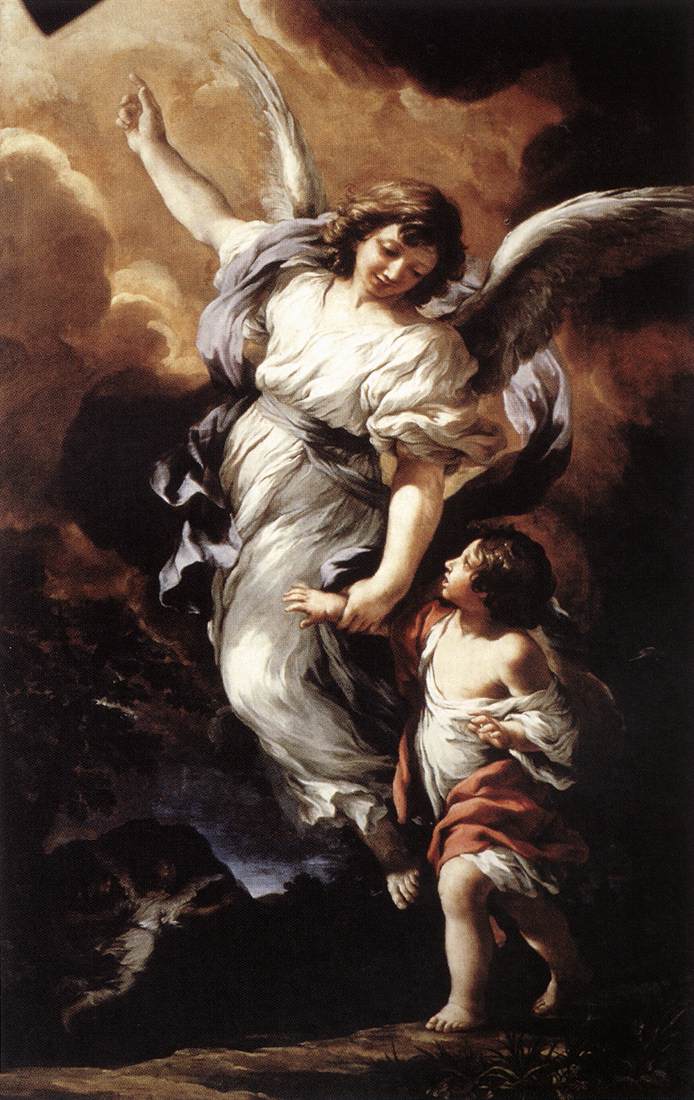
Love Lifted Me – A Homily for Ascension

In more dioceses than not, the Feast of the Ascension is celebrated this weekend. The liturgist in me regrets the move, but here we are any way. So let’s ascend with the Lord, three days late!

This marvelous feast is not merely about something that took place two thousand years ago. For though Christ our head has ascended, we the members of his body are ascending with him. Since he was ascended, we too have ascended. In my own life as a Christian, I am brought higher every year by the Lord, who is drawing me up with Him. This is not some mere slogan, but something I am actually experiencing. An old song says, I was sinking deep in sin, far from the peaceful shore. Very deeply stained with sin, sinking to rise no more. But the master of the sea, heard my despairing cry. And from the waters lifted me. Now safe am I. Love Lifted me, When nothing else could help. Love lifted me!

Yes, the feast of the Lord’s Ascension is our feast too, if we are faithful. Let’s look at it from three perspectives.

I. The Fact of the Ascension. – The readings today describe a wondrous event that the Apostles witnessed. The Lord, by his own power, is taken to heaven. In so doing He opens a path for us, too. The gates of paradise swing open again: Lift up your heads, O gates! and be lifted up, O ancient doors! that the King of glory may come in! (Psalm 24:7). In Christ, man returns to God. Consider three things about the Ascension:

A. The Reality Imagine the glory of this moment. Scripture says, As they were looking on, he was lifted up and cloud took him from their sight … they were looking intently in the sky as he was going (Acts 1:9). So impressive was the sight that the angels had to beckon them to get along to Jerusalem as the Lord had said, “Men of Galilee,” they said, “why do you stand here looking into the sky? This same Jesus, who has been taken from you into heaven, will come back in the same way you have seen him go into heaven” (Acts 1:11). Yes, it was glorious. Jesus had once said as a summons to faith, What if you were to see the Son of Man ascending to where he was before? (John 6:62). He had also encouraged them saying, Truly, truly, I say to you, you will see heaven opened, and the angels of God ascending and descending upon the Son of man (John 1:51). So here is a glorious reality and a fulfillment of what Jesus had said.

B. The Rescue In the Ascension, it does not seem that the Lord entered Heaven alone. As we have remarked, in His mystical body we also ascend with Him. But consider too this remarkable text that affirms that: Therefore it is said, When he ascended on high he led a host of captives, and he gave gifts to men. In saying, “He ascended,” what does it mean but that he had also descended into the lower parts of the earth? He who descended is he who also ascended far above all the heavens, that he might fill all things (Eph 4:8ff). Yes, the Lord had earlier, just after his death, descended to Sheol and awakened the dead and preached the gospel to them (cf 1 Peter 4:6). And now for those He had justified came the moment to ascend, with Jesus as a “host,” as an army of former captives now set free. Behold the great procession that enters behind Christ through the now opened gates of Heaven: Adam and Eve, Noah, Abraham, Sarah, Isaac, Jacob, Rachel, Judith, Deborah, David, Samuel, Isaiah, Jeremiah, Ezekiel, Malachi, John the Baptist, … and one day, you! Yes this is a great rescue. Adam and his descendants have not simply been restored to some paradisiacal garden; they have entered Heaven.

C. The Rejoicing Consider how this once captive train sings exultantly as they follow Christ upward to Heaven. The liturgy today puts before us a likely song they sang: God mounts his throne to shouts of Joy! The Lord amid trumpet blasts. All you peoples clap your hands, shout to God with cries of gladness, for the Lord the most high, the awesome is the great king over all the earth. God reigns over the nations, God sits upon his holy throne (Psalm 47:6-7). I also have it on the best of authority that they were singing an old gospel song: I’m so glad Jesus lifted me! Yes I also have it on the best of authority that they were even singing an old Motown song: Your love is lifting me higher than I’ve ever been lifted before!

Yes, here are some glorious facets of the Ascension.

II. The Fellowship of the Ascension – We have already remarked that, when Christ ascends, we ascend. Why and how? Scripture says, Now you are the body of Christ and individually members of it (1 Cor 12:27). It also says, All of us who were baptized into Christ Jesus were baptized into his death. By baptism we were buried together with him so that just as Christ was raised from the dead by the glory of God the Father, we too might live a new and glorious life. For if we have been united with him by likeness to his death we shall be united with him by likeness to his resurrection (Rom 6:3ff). So when Christ died, we died. When Christ rose, we rose. When He ascends, we ascend.

But, you may say, He is in glory while I am still here. How is it that I am ascended or ascending? Consider a humorous example using our physical bodies. When I get on an elevator and punch the button for the top floor, the top of my head gets there before the soles of my feet. But the whole body will get there unless some strange loss of integrity or tragic dismemberment takes place. In an analogous way, so it is with Jesus’ mystical body. In Christ, our Head, we are already in glory. Some members of His Body have already gotten there. We who come later will get there too, provided we remain members of His Body. Yes we are already ascended in Christ, our Head. We are already enthroned in glory with Him, if we hold fast and stay a member of his Body. This is the fellowship of the Ascension.

III. The Fruitfulness of the Ascension – Jesus does not return to Heaven to abandon us. He is more present to us than we are to ourselves. He is with us always to the end of the age (cf Matt 28:20). But in ascending, without abandoning us, He goes to procure some very important things. Consider four of them:

A. Holy Ghost power Jesus teaches very clearly that He is ascending in order to send us the Holy Spirit. Nevertheless I tell you the truth: it is to your advantage that I go away, for if I do not go away, the Counselor will not come to you; but if I go, I will send him to you (Jn 16:7ff). He also says, These things I have spoken to you, while I am still with you. But the Counselor, the Holy Spirit, whom the Father will send in my name, he will teach you all things, and bring to your remembrance all that I have said to you (Jn 14:25ff). And yet again, I still have many things to say to you, but you cannot bear them now. When the Spirit of truth comes, he will guide you into all the truth, for he will not speak on his own authority, but whatever he hears he will speak, and he will declare to you the things that are to come (Jn 16:13-14). So the Lord goes in order that He might, with the Father, send the Holy Spirit to live within us as in a temple. In this way, and through the Eucharist, He will dwell with us even more intimately than when He walked this earth.

B. Harvest Jesus says, And I, if I be lifted up from the earth, will draw all men unto me (John 12:32). While the immediate context of this verse is the crucifixion, the wonder of John’s gospel is that he often intends double meanings. Clearly Christ’s glorification is His crucifixion, but it also includes His resurrection and ascension. So, from His place in glory, Christ is drawing all people to Himself. He is also bestowing grace on us from His Father’s right hand to be His co-workers in the harvest: But you shall receive power when the Holy Spirit has come upon you; and you shall be my witnesses in Jerusalem and in all Judea and Samaria and to the end of the earth (Acts 1:8). Yes, from His place in glory, Christ is bringing in a great harvest, as he said in Scripture: “Do you not say, ‘Four months more and then the harvest’? I tell you, open your eyes and look at the fields! They are ripe for harvest. Even now the reaper draws his wages, even now he harvests the crop for eternal life, so that the sower and the reaper may be glad together. Thus the saying ‘One sows and another reaps’ is true. I sent you to reap what you have not worked for. Others have done the hard work, and you have reaped the benefits of their labor” (Jn 4:35-38). Harvest! And it is the Lord’s work from Heaven in which we participate.

C. Help At the Father’s right hand Jesus intercedes for us. Scripture says, Consequently he is able, for all time, to save those who draw near to God through him, since he lives always to make intercession for them (Heb 7:25). The Lord links his ascension to an unleashing of special power: Amen, amen, I say to you, he who believes in me will also do the works that I do; and greater works than these will he do, because I go to the Father. Whatever you ask in my name, I will do it, that the Father may be glorified in the Son (Jn 14:12).

It is true, we must not understand asking in the name of Jesus as a mere incantation, for to ask in His name means to ask in accord with His will. And yet we must come to experience the power of Jesus to draw us up to great and wondrous things in His sight. Despite the mystery of iniquity all about us, we trust that Christ is conquering, even in the puzzling and apparent victories of this world’s rebellion. We read, In putting everything under him, God left nothing that is not subject to him. Though, at present we do not see everything subject to him, yet we see Jesus, who was made a little lower than the angels, now crowned with glory and honor … so that by his death he might destroy him who holds the power of death—that is, the devil— and free those who all their lives were held in slavery by their fear of death (Heb 2:8-9; 14-15). Thus, from Heaven we have the help of the Lord’s grace which, if we will accept it, is an ever-present help unto our salvation.

D. Habitation Simply put, Jesus indicates that in going to Heaven He is preparing a place for us: In my Father’s house are many mansions: if it were not so, I would have told you. I go to prepare a place for you. And if I go and prepare a place for you, I will come again, and receive you unto myself; that where I am, there ye may be also (Jn 14:2ff). Yes, indeed. He has the blueprints out, and the hard hat on. He is overseeing the construction of a mansion for each of us that we may dwell with Him, the Father, and the Spirit forever.

Here then are the ways that Christ, by His love, is lifting us higher than we’ve ever been lifted before. Yes, love lifted me when nothing else could help; love lifted me.

Here’s a modernized version:

On the Balance of Virtue, As Seen in Two Videos

“Tightrope walking” by Wiros from Barcelona, Spain
Licensed under CC BY-SA 2.0 via Wikimedia Commons

I have remarked before on this blog that what we call “balance” is really more a range than a fixed point. That is to say, balance is achieved not so much by staying still on a fixed point as by moving within a range around that point. The videos below feature unicyclists and tightrope walkers.  The tightrope walker only survives by being able to move within a very narrow range. The same is true and even more visible with the unicyclists—the moment they stop moving, they will fall.

And in this is a picture of virtue. What is virtue? Virtue is the habit of doing good. St. Thomas Aquinas, basing his view on those of Aristotle, spoke of virtue as the mean between excess and defect. An old Latin saying comes to mind: in medio stat virtus (virtue stands in the middle).

The virtuous act is one that is neither excessive nor deficient. So, for example courage is neither foolhardy nor cowardly, and temperance is neither total abstinence nor gluttony. Humility is neither arrogance nor subservience. Perseverance is neither obstinacy nor capitulation (Art and Laraine Bennett, The Emotions God Gave You: A Guide for Catholics, p. 83).

Thus, the balance of the virtues is not something that freezes us, but rather is better described as a range of motion around the golden mean.

It is true that in highly specific moral acts or settings, there is often only one valid choice, e.g., in cases of abortion, fornication, and murder. But virtue here is understood more broadly as a general and habitual way of acting in accord with right reason.

Understanding virtue as the mean or midpoint between excess and defect is important for two reasons.

First, it helps us to avoid being overly scrupulous. In life there is often a range of possibilities available to us and we need some flexibility to be able to handle the unique circumstances of each moment. We must act within a range of responses that respect what faith and reason require. Scrupulosity often causes people to focus on a single aspect. Without balance, the flexibility necessary to move in a morally graceful way is limited.

Second, because life is made up of many complex things that come together in varying combinations, it is not reasonable, possible, or wise for the Church or Scripture to speak to every possible moral topic and scenario. What the Church and Scripture do most frequently is to give us principles to apply along with virtue.

There are many critics of the Church and of religion in general who are dismissive of rules and “micromanaging” by Church authorities. Of course there are some rules (there are rules in every walk of life). But more important, there are principles to be applied. It is quite impossible for the Church to micromanage every situation or have a rule for every possible situation. The dignity of Catholics is respected by the Church. She teaches us, but then expects us to use our intellect and reason to apply her principles virtuously, that is, with neither excess nor defect.

Just brief reflection on virtue.

As you view these videos, notice how balance is less a fixed point and more a range of motion. Further, if the artist is not able to move within a range and adjust to circumstances moment by moment, disaster is sure to follow. Virtue is moving and acting within the golden mean, within the range of neither excess nor defect. Virtue is a form of balance.

In this second video it is clear that the tightrope walker’s range of motion is much narrower, but still he must be able to move within that range to adjust to circumstances. I also want to say that I am not even sure that tightrope walking is a moral activity. In showing this video I do not affirm taking needless risks (though I know they train well). The reason I use this video is just to illustrate the point. The morality of tightrope walking is uncertain to me, but I’m inclined to lean against it. 😉

Not Crowded, but Close – A Brief Reflection and Clarification on the Communion of Saints in Heaven

051415Many of you know that I write the weekly “Question and Answer” column for the Our Sunday Visitor newspaper. Every now and again I get a question that stands out as unique, one that I had not thought of before. And such is the case with the question below. I had never thought of Heaven as potentially being crowded or considered it a drawback. But the question led me to reflect on the deeper experience of what we call the Communion of Saints in Heaven.

My answer is brief due to the limits of that particular column (600 words or less). But I choose not to expand my answer here, hoping that its brevity might provoke a few more readers.

There is an online catalogue of my “Question and Answer” column at OSV here: Msgr Pope’s OSV Columns.

Q: The descriptions in the Bible seem to describe a vast amount of people and the paintings I have seen from the Renaissance make it look rather crowded and busy. Frankly I hate big cities and crowds. Are these descriptions accurate or am I missing something? –Doris Leben, Wichita, KA

A: The danger to avoid when meditating on Heaven is taking earthly realities and merely transferring them to Heaven. Whatever similarities heavenly realities have to things on earth, they will be experienced there in a heavenly and perfected way, with unspeakable joy.

The more biblical and theological way to understand the multitudes in Heaven is not as some physical crowding, but as a deep communion. In other words the Communion of Saints is not just a lot of people standing around talking or moving about.

St. Paul teaches, So we, who are many, are one body in Christ, and individually members, one of another (Rom 12:5). And though we experience this imperfectly here on earth, we will experience it perfectly in Heaven. As members of one another we will have deep communion, knowing and being known in a deep and rich way. Your memories, gifts, and insights will be mine, and mine will be yours. There will be profound understanding and appreciation, a rich love and sense of how we all complete one another and really are all one in Christ.

Imagine the glory of billions of new thoughts, stories, and insights that will come from being perfectly members of Christ and of one another. Imagine the peace that will come from finally understanding and being understood. This is deep, satisfying, and wonderful communion—not crowds of strangers.

Therefore, the biblical descriptions of Heaven as multitudes should not be understood as mere numbers, but as the richness and glory of communion. The paintings showing “crowds” should be understood as an allegory of deep communion, of being close in a way we can only imagine.

St. Augustine had in mind the wonderful satisfaction of this deep communion with God and with one another in Christ when he described Heaven as Unus Christus amans seipsum (One Christ loving Himself). This is not some selfish Christ turned in on Himself. This is Christ, the Head, in deep communion with all the members of His Body, and all the members in Christ experiencing deep mystical communion with Him and one another, together swept up into the life of the Trinity. Again, as St. Paul says, and you are Christ’s, and Christ is God’s (1 Cor 3:23).

Reflections on the Latest Pew Survey Documenting "Religious Decline" – Not So Fast

051315A well-publicized Pew Survey given publicity in yesterday’s Washington Post announced a kind of “doom” for traditional religion in this country. I do not dispute most of the results as an accurate snapshot of today.

But snapshots have a way of recording things that eventually are replaced by other realities in the ensuing years. It is clear that what we have called “traditional religious practice” is in trouble. Cultural trends no longer favor the Sunday observance or the sectarian loyalty with which many of us over fifty grew up.

A mere fifty years ago, a snapshot of American religious practice would have depicted us as a vastly religious country, deeply rooted in sectarian loyalties and invested in the Judeo-Christian heritage.

What a difference fifty years has made! And who is to say that things won’t be different in another fifty years?

The Pew survey announces what we already know: Americans are very dissociated from sectarian religion and religious practice.  The erosion is steady, and, if we are honest, those of us who do attend have been noticing it for years.

All this said, in my 54+ years on this planet, I have seen a lot of shifting in religious observance. Any study of the history of this country will show lots of ups and downs. I am not so ready to cry doomsday for the Church or religion as a whole. Americans, and humans in general, are a fickle lot: what is “out” today has a way of being “in” tomorrow.

Some will argue that secularism is a megatrend that will continue to grow until there is no place for religion at all. We shall see. Something tells me (e.g., the Lord in Matthew 16) that the Church, with a 2000-year history and 3000 years before that in the Jewish situation, is here to stay. That Timothy should be told by St. Paul to preach the Gospel in season and out of season, suggests that winter is as much a part of the picture as is spring. One Pew survey does not seal our fate.

Yet we ought not simply ignore surveys like these either. Perhaps we can evangelize more effectively; perhaps we can be clearer or more aware of ways to reach this secular world.

But in the end, do not allow a snapshot to be a megatrend. As I write this reflection, a group of college students from American University is singing a concert of mostly sacred music in our Church. In the days of my own “secular rebellion” during college, it was Catholic music that called me back. At this very moment, the choir is singing “Ave Maria” by Josquin Des Prez (see video below). Perhaps in ten years the seeds of beauty, goodness, and truth sown by this music will come to fruition in the lives of some of these students and listeners as it did for me. For now, they live in a secular world and attend a secular university. But music, the Spirit, and the Lord have their way. If it could reach me it will reach them if that is necessary. I intend to go to each of them and call Mother Mary’s gratitude on them for the song and other beautiful sacred pieces they sang.

Let’s look at some excerpts from the Washington Post article summarizing the Pew research poll. The original text is in bold, black italics. My comments are in plain, red text. These are only excerpts; the full article is here: Sharp Decline.

Christianity is on the decline in America, not just among younger generations or in certain regions of the country but across race, gender, education and geographic barriers. The percentage of adults who describe themselves as Christians dropped by nearly eight percentage points in just seven years to about 71 percent, according to a survey conducted by the Pew Research Center.

The situation is much worse in parts of Europe, where close to 70% identify as atheist[*]. Europe-wide only about 10% of Catholics go to Mass at all. The problem there began shortly after World War II. I have written before about how C.S. Lewis decried the loss of faith in Europe as early as 1948 in his Latin Letters.

The country is becoming less religious as a whole, and it’s happening across the board. … In 1990, 86 percent of American adults identified as Christians, compared with 76 percent in 2008.

Here are three key takeaways from Pew’s new survey.

1 . Millennials are growing even less affiliated with religion as they get older … “Some have asked, ‘Might they become more religiously affiliated as they get older?’ There’s nothing in this data to suggest that’s what’s happening,” he said. Millennials get married later than older generations, but they are not necessarily more likely to become religiously affiliated, he said.

I have found, in my own life and in what I have observed in the lives of others, that there is really no way for anyone to predict this. At the age of 20 I would never have thought that I would even be a believer today, let alone a priest. Events and the people we meet have a lot to do with belief and with our future.

2. There are more religiously unaffiliated Americans than Catholic Americans or mainline Protestant Americans. The numbers of Catholics and Protestants have each shrunk between three and five percentage points since 2007. The evangelical share of the American population has dropped by one percentage point since 2007.

This is not surprising. In my 25 years a priest, the number of Catholics in the pews of the Washington Archdiocese has decreased (on average) by one percent per year, according to our own internal statistics. Nationwide, those who say they are Catholic has increased by over 15 million during that same time period [*]. But, the “real” number of Catholics is the count of those who are in the pews each Sunday, and this number has surely dropped. Catholics who do not attend Mass are of no real account to parish life other than the fact that they are one confession away from returning to the faith. They are not utterly lost, therefore, but on the “endangered and MIA Catholics” list to be sure.

The groups experience their losses through what’s called “religious switching,” when someone switches from one faith to another. Thirteen percent of Americans were raised Catholic but are no longer Catholic, compared with just 2 percent of Americans who are converts to Catholicism. “That means that there are more than six former Catholics for every convert to Catholicism,” Smith said. “There’s no other group in the survey that has that ratio of loss due to religious switching.”

There are 3 million fewer Catholics today than there were in 2007. While the percentage of Catholics in the United States has remained relatively steady, Smith said we might be observing the beginning of the decline of the Catholic share of the population.

I suppose by this he means “practicing Catholics,” since the overall number of Catholics has grown along with the increase in U.S. population [*].

Pew estimates there are about 5 million fewer mainline Protestants than there were in 2007.

Some in the Catholic Church think we should imitate the “give the people what they want” mentality of the mainline Protestants. This statistic shows that they are doing even worse than Catholics and Evangelicals, who toe a stricter biblical line on moral issues.

Evangelical Protestants have experienced less decline, due to their net positive retention rate. For every person who has left evangelical Protestantism after growing up, 1.2 have switched to join an evangelical denomination.

OK, but they were small to begin with, and there is a lot of revolving door, “going to the latest ‘hip’ service” among the Evangelicals. Frankly, a lot of them are ending up with us, after they finish running through all the ephemeral evangelical denominations and trends. If they read Church history and ponder theological consistency, they often head our way. We have many magnificent converts from the Evangelical denominations.

3. Those who are unaffiliated are becoming more secular – The “nones,” or religiously unaffiliated, include atheists, agnostics and those who say they believe in “nothing in particular.” Of those who are unaffiliated, 31 percent describe themselves as atheists or agnostics, up six points from 2007.

This may run its course since this state of affairs is not normal to the human person or experience.

“What we’re seeing now is that the share of people who say religion is important to them is declining,” Smith said. “The religiously unaffiliated are not just growing, but as they grow, they are becoming more secular.”

But I wonder if it can really be said that their credulousness has lessened. Chesterton once said that when people stop believing in God, it is not they believe nothing, but that they will believe in anything. Today very strange notions are becoming almost religious obsessions. The secular notions of “tolerance” and “niceness” have become almost dogma, such that any naysayer is guilty of “hate” and should be subject to nothing less than arrest or loss of a job or even jail (this is their form of excommunication). Original sin has been replaced by “anthropogenic global warming” and other deep-seated human flaws that speak to our apparent depravity and that we are really at the heart of “paradise lost.” Recycling, even the sorts of recycling that consume more resources than getting new resources, is insisted upon with a sort of religious zeal that is way out-of-balance with purely scientific analysis.

I do not say that these issues have no rational basis; I only point out that they are almost religiously insisted upon in a way that has often eclipsed the same religious zeal of the past that is condemned by these same adherents to these modern “dogmas.”

Perhaps as time unfolds these new “orthodoxies” will be seen as trendy notions, and the new orthodoxy will be labeled the old orthodoxy by the very same fickle believers who are currently rejecting ancient Christian dogma. We shall see, but I am not impressed that the the current trends have the staying power that Pew, et. al. ascribe to them. 

White Americans (24 percent) are more likely to say they have no religion, compared with 20 percent of Hispanic Americans and 18 percent of black Americans. The retention rates of the “nones” who say they were raised as religiously affiliated has grown by seven points since 2007 to 53 percent.

I wonder, too, what birthrates will do to these percentages, since believers in “old-time religion” have higher birthrates than seculars who are not even replacing themselves. Worldwide, Muslims and traditional Catholics more than replace themselves, while seculars have a negative replacement rate.

Further, there is the “sorting out” phenomenon wherein those who stay in the Catholic faith will tend to be more pure in observance than the lukewarm who leave. A smaller but purer Church may result. There are some who say that those who speak of the smaller but purer church, get only smaller one.

Time will tell. My anecdotal experience is that those who remain are more intense, interested in Catholic truth, and up for a battle. Time will tell if this continues for the long term.

Be sober about these results, but not despondent. People are fickle and that cuts both ways!

Here is a video of the Choir of American University singing “Ave Maria” in our Church. I asked the director if he gets any “pushback” for singing this sort of religious music (they also sang Spirituals and Mass parts). He said, “No.”

If any of the students who sang or heard this music are among the “nones” (I do not know that any were), something tells me that not all will remain aloof from the faith that produces it.  Of this I am a witness.

In the Darkness We See Farther – Pondering the Paradox of the "Dark Knowing" of Faith

051215As human beings we are very visual and there is a certain demand of our flesh to see on its own terms. But of course God, who is pure spirit, will not be seen in this way.

How can the human eye perceive what is spiritual? It is not designed to do so. We cannot see God, as God, any more than we should expect to be able to see justice sitting down to lunch with humility. These are not physical concepts; they are metaphysical ones. We may see evidence of their existence, but we do not physically see them. And so also with God. We see lots of evidence of His existence, but we do not see Him with our earthly eyes.

There is a well-known (but inaccurate) saying, “Seeing is believing.” But actually it is not; seeing is only seeing. When we see physical things or events, one of two things happens, either of which eliminates the existence of any sort of faith:

1. We see something and accept it as true, in which case faith is no longer necessary, for it is not necessary to believe what we can plainly see.

2. We scoff or act bemused and continue to disbelieve, saying (for example when we see a magic trick), “There’s a way of doing that; it’s just an illusion.”

In either case, faith (human or supernatural) is set aside when we see something with our earthly eyes.

Therefore, as Scripture insists over and over again, faith is not a matter of seeing in a physical way.

  1. Now faith is the substance of things to be hoped for, the evidence of things that appear not (Hebrews 11:1).
  2. So we fix our eyes not on what is seen, but on what is unseen, since what is seen is temporary, but what is unseen is eternal (2 Cor 4:18).
  3. For we walk by faith, not by sight (2 Cor 5:7).
  4. For in this hope we were saved. But hope that is seen is no hope at all. Who hopes for what they already have? (Rom 8:24)
  5. For now we see only a reflection as in a mirror; then we shall see face to face. Now I know in part; then I shall know fully, even as I am fully known (1 Cor 13:12).
  6. And though you have not seen [Jesus], you love Him, and though you do not see Him now, but believe in Him, you greatly rejoice with joy inexpressible and full of glory, obtaining as the outcome of your faith the salvation of your souls (1 Peter 1:8-9).
  7. Blessed are those who have not seen and yet believe (John 20:29).
  8. So faith comes from hearing, and hearing through the word of Christ (Rom 10:17).

St. Thomas Aquinas says, Faith is a habit of the mind whereby eternal life is begun in us, making the intellect assent to what is non-apparent (Summa IIa IIae 4 ad 1).

Therefore faith is not about what is seen with our earthly eyes. It comes from hearing—hearing the Word of God.

That said, faith is a way of knowing and thus also a way of “seeing,” but more in the intellectual sense, as when we say, “Oh! Now I see” when we grasp a point intellectually. And though we know and “see” by faith, spiritual theologians such as St. John of the Cross remind us that the seeing and knowing by faith is “obscure.”

Now usually we think of the word “obscure” with a negative connotation. If something is obscure, it is tricky or hard to figure out and we look for something to illumine the darkness, to scatter the obscurity.

Not so fast. Consider the deeply paradoxical notion that the darkness, the obscurity actually helps us to see better! Fr. Reginald Garrigou-Lagrange explains it this way:

Obscure faith enlightens us somewhat like the night, which though surrounding us with shadows, allows us to see the stars, and by them, the depths of the firmament. … That we may see the stars, the sun must hide, night must begin. Amazingly, in the obscurity of the night we see to a far greater distance than in the day; we see even the distant stars which reveal to us the immense expanse of the heavens. … [And so] faith, although obscure, opens up to us the supernatural world and its infinite depths: the Kingdom of God, His inner life, which we shall see unveiled and clearly in eternity (The Three Ages of the Interior Life, Tan Publications Vol 1, p. 361)

In the darkness we see farther and deeper into space. Sunlight is precious, but it envelops us; it closes us in a much smaller world. We see better what is near; what is farther off and higher up is lost to us. From the perspective of our physical senses, faith is a “dark” knowing or seeing. By it we see farther and higher, longer and deeper.

Fr. Garrigou-Lagrange continues,

Faith is obscure but it illumines our intellect … in a way very superior to the senses and to reason. … What is evident for our senses is sensible, not spiritual; therefore it is not God himself. … Now faith makes us attain here on earth the inner life of God in the penumbra, in obscurity. Consequently a man who preferred visions to infused faith would deceive himself … for he would prefer what is superficial and exterior, and what is accessible to our faculties, to what surpasses them. He would prefer figures to the divine reality (Ibid).

And therefore we must beware of the strong demand of our flesh to see on its own terms. Our earthly eyes are not going to see God on the terms that our flesh demands. He is just too immanent, too transcendent for that. Our eyes see what physically exists but not Existence Himself. If we yield to this demand of our flesh we are going to limit our world immensely. We will certainly see worldly and physical things well, but we will miss the greater portion of reality: the Kingdom of God and God Himself!

Welcome to the modern world; a small world increasingly closed in on itself; a world no longer enchanted and charged with mystery; a world that demands to see only in physical terms, preferring what is superficial and exterior, preferring the creature rather than the Creator, who is blessed forever.

Ponder the great paradox of the “darkness” and “obscurity” of faith. For in the humility of accepting the darkness, we see farther, higher, deeper, and longer. Jesus is the Light of the world. But we see Him in the “darkness” of faith and understand Him most clearly not by the false light of this world, but by faith. Faith is obscure to our senses, but understood by our souls as a necessary condition to loving Him as our only and true Light.

What Does the Arrest of St. Paul at Philippi Teach a Sometimes-Timid Church?

051115
“Saint Paul imprisoned at Philippi” oil on canvas by Leonaert Bramer Creative Commons Attribution-Share Alike 2.0 Generic license.

In daily Mass we are following the missionary journeys of St. Paul. Yesterday we heard of his going over to Macedonia and of the baptism of the first “European” converts: Lydia of Thyatira and her family.

Unfortunately, in today’s reading (Tuesday of the 6th Week of Easter) important lines are cut out that describe why Sts. Paul and Silas were in jail. The whole story serves as a metaphor for the radical nature of true Christianity and explains why it so perturbs many in this world. The Christian faith, its message, and the transformation it can effect can be very unsettling to a world that literally and figuratively “banks on” sin. Let’s consider this lesser-known story of Paul and see what it ought to mean for us if we take the Christian faith seriously and do not try to “tame” it. We pick up the story just after the baptism of Lydia, when Sts. Paul and Silas encounter a possessed slave girl, whom tradition sometimes calls “Pythonissa the Soothsayer.”

Once when we were going to the place of prayer, we were met by a slave girl who had a spirit by which she predicted the future. She earned a great deal of money for her owners by fortune-telling. This girl followed Paul and the rest of us, shouting, “These men are servants of the Most High God, who are telling you the way to be saved.” She kept this up for many days. Finally Paul became so troubled that he turned around and said to the spirit, “In the name of Jesus Christ I command you to come out of her!” At that moment the spirit left her.

When the owners of the slave girl realized that their hope of making money was gone, they seized Paul and Silas and dragged them into the marketplace to face the authorities. They brought them before the magistrates and said, “These men are Jews, and are throwing our city into an uproar by advocating customs unlawful for us Romans to accept or practice.”

The crowd joined in the attack against Paul and Silas, and the magistrates ordered them to be stripped and beaten. After they had been severely flogged, they were thrown into prison, and the jailer was commanded to guard them carefully. Upon receiving such orders, he put them in the inner cell and fastened their feet in the stocks (Acts 16:16-24).

Note the heart of the problem: St. Paul, in setting the slave girl free of her demon, has deprived her “owners” of the income they were deriving from her sad state. They were banking on her sad condition and profiting from her trouble. In the name and power of Jesus Christ, St. Paul sets her free. His action draws deep anger from the “owners.” He has rocked their world and touched their pocketbooks. They see the Christian message as revolutionary, disconcerting, threatening, and deeply unsettling.

It is a threat not only to profit but to power. In having Paul arrested, they stir up the hatred and fear of others as well, indicating that Paul is not merely preaching some “strange new religion” but is advocating customs forbidden to Romans. The word “customs” here in Greek is ἐθη (ethe) and refers to “religious rites or forms of worship.” Cicero, in De Legibus ii. 8,  wrote, “No person shall have any separate gods, or new ones; nor shall he privately worship any strange gods, unless they be publicly allowed.” While the Romans often overlooked the private worship of unapproved gods, they were strictly forbidden from publicly proclaiming new and unapproved deities, as this provided an occasion for dissension and controversy.

And, frankly, the charges against Paul and Silas were true enough. In the healing they brought about, they hindered profit. Further, they were openly proclaiming that Jesus was Lord. To our ears that is a religious proclamation, but to Roman ears it was a provocative and revolutionary statement. It was directly contrary to their proclamation that Caesar was Lord. Yes, Paul, Silas, Luke, and the others were shaking the ground in Philippi. While they were not advocating the overthrow of any government, they were announcing a power greater than Caesar, a higher King who demanded first loyalty: Jesus!

This is not the tame and domesticated proclamation of the faith that is so common today. This is not the faith that is trimmed to fit into worldly categories and to be tucked under political, philosophical, and moral preferences. This is the faith that shakes the world and brings a revolutionary challenge to the world’s priorities. Yes, Paul and Silas were a serious threat.

And what of us today? We have gone through a long period during which the faith could be lived quietly and generally fit quite well into the world in which we lived. Harmony and “getting along” were highly prized. Particularly here in America, Catholics wanted to reassure the general populace that our faith in no way hindered us from being full participants in the American scene and that we could fit right in and be just like everyone else. With the election of the first Catholic president back in 1960, we could say that we had finally made it and had been fully accepted. Finally we fit in.

Of course the culture was not in such disrepair in those days and there was a fairly wide moral consensus rooted in the Judeo-Christian vision. Now that we have finally “made it,” the fire of our distinctively Catholic culture seems to have faded away. At the same time, Western culture has also largely died. (Is it a coincidence?)

In recent years, so-called Catholic universities and other institutions have been caving in to pressure. They are affording marriage benefits to same-sex bedfellows and succumbing to the HHS mandates to provide contraceptives and abortifacients. This is sad, pathetic, wrong, and cowardly—hardly the revolutionary faith that got Paul arrested.

And now we are coming full circle. We must rediscover how revolutionary our Catholic faith truly is to this world gone mad. And as we proclaim healing and profess an allegiance to something other than this world, we will become increasingly repugnant to the world around us.

Let’s consider more thoroughly the two offenses for which Paul and Silas were beaten and imprisoned:

1. They ate into profits. Paul drove a terrible demon out of a slave girl, a demon that afflicted her but profited her “owners.” In this world today there is a lot of trafficking in sin and addiction. Terrible demons afflict many people in the areas of sexuality, drugs,  and alcohol. But there’s a lot of money to be made. Sex sells. Hollywood movie producers, pornographers, purveyors of contraceptives, pimps, escort services, abortionists, and even traffickers in the sex-slave industry feed at the trough. Drugs and alcohol are big money-makers as well. Huge numbers of products are sold using the demon of fear that says things like, “You’re not pretty enough,” “You’re not healthy enough,” “You’re getting old,” “You don’t drive the right car,” “You haven’t impressed your friends enough,” “You need to buy our product right away so you’re not so pathetic.” And thus the demon of fear and low self-esteem is exploited along with the demon of greed.

But what would happen if the Church were to start preaching unabridged Christianity effectively? You don’t need to be afraid of your health, your age, or what people think of you. You can find serenity in Christ so that you won’t need all that extra alcohol and those drugs. You can be set free from your enslavement to sex. You can take authority over your passions and discover the beauty of traditional marriage. What if we got back in the business of driving out demons?

Of course the answer is that we, like Paul, would be (and are) under attack. We are especially hated by the sex industry and the abortionists since those are hot-button issues these days. To them we are public enemy number one. We threaten the vision, the addiction, and the despair that fills their coffers. If we are too successful (and for now our successes are meager) their profits may go away. Yes, we must be dealt with.

But we will only be effective if we preach the unabridged faith, not the faith that is tailored and tucked under worldly priorities, not the faith that insists on being “realistic,” not the faith that makes endless apologies to the inevitable objections of the world no matter how much we water things down. The true faith is revolutionary in the freedom it offers from sin and demons.

Paul and Silas didn’t end up in prison by preaching a watered-down, tamed moral vision. They unabashedly drove out a demon that was afflicting a girl and in so doing they engaged in a revolutionary threat to a world that profits from sin.

2. They threatened power. Calling Jesus, “Lord,” was a revolutionary threat to incumbent power, which demands full loyalty. And thus today, many strive to make Catholics fit into neat little political categories. Both Republicans and Democrats want the Church to fit into their narrow little categories and to march in lockstep with their party platform. Even many Catholics want the Church to conform. Many Catholics in fact are more loyal to their party than to the Church and are more passionate about their political views than their faith. If there is a conflict between a Church teaching and the party line, guess which one usually gives way!

But in the end, the Church will not fit into some neat and tidy political category. The true faith is too revolutionary to fit into some worldly box.

And thus there is a lot of hatred and anger directed at the Church. Republicans say we’re too liberal; Democrats say we’re too conservative. More and more we are being kicked to the curb; our very right to religious liberty is being threatened. Religious exemptions to increasingly pernicious laws are slowly being removed and the number of lawsuits against Catholic institutions is increasing. And it will surely get worse as secular systems demand increasing loyalty. The Church must refuse that loyalty.

Jesus is Lord; the government is not. Jesus is not Republican or Democrat, conservative or liberal. He is God, and the faith He announces cannot be watered down or compromised to fit into a friendship with the world.

Tame, domesticated Christianity will not threaten or change this world. When Paul preached, the people rioted. Modern preaching too often incites only yawns and indifference.

What should we learn from St. Paul’s arrest at Philippi? That the true faith is revolutionary and hits the world right where it hurts: in the profit and power centers. As the world becomes increasingly secular, the revolutionary aspect of the faith will become more evident.

Are you ready?

Photo Credit: The Bible in Pictures

In this video Fr. Barron comments on the movie “The Matrix,” which depicts an interesting Christian motif. The Matrix is a machine from which people need liberation. The solution can only happen when someone from outside the Matrix (Neo) enters in and announces liberty, dies, rises, and defeats the Matrix.

Honor to the Martyrs! A Declaration of Gratitude to the Martyrs of Our Day

051015
“21 New Martyrs Icon” by Tony Rezk

In the Divine Office last week we read a remarkable passage on the persecution of the Church. It seems proper to consider a portion of it in times like these; more on that in a moment.

Of course in writing of persecution and martyrdom, I write as an American who, though experiencing a lot more scorn these days, does not have to endure grave threat for being a Catholic. But as I consider Catholics and Christians in places like Iraq, Egypt, Syria, Nigeria, the Sudan, Kenya, and other places having their churches burned, seeing their ancient Christian communities scattered, being exiled, and being killed by beheading or other methods, I am both shocked and moved.

Frankly, I can barely avoid screaming when, while all this goes on in the world, we in America get worked up about things like whether or not someone deflated a football before a game. We can be so decadent, spoiled, and focused on trivialities (but I digress).

While there is a tragedy to the martyrdom of Catholics and other Christians, there is also a glory. I do not think that we will ever really know in this life what their suffering has merited for the Church or how, as St. Paul said, they  fill up in [their] flesh what is still lacking in regard to Christ’s afflictions, for the sake of his body, which is the Church (cf Col 1:24). Somehow their sufferings are mystically united to the once for all perfect act of Christ for our salvation.

Honor to these martyrs! How they make reparation for our often decadent and pusillanimous living of the faith. I can only thank God that, as many people in places like Europe and North America forsake the faith and consider it of little value or demand changes to it (to accommodate divorce and remarriage, alternate families, homosexual acts, euthanasia, etc.), many in other parts of the world suffer and die for the unabridged faith handed down from the Apostles. May their heroism move us to courage and to a determination to preach the faith, pure and unadulterated, without considering the personal cost.

We do not seek conflict, but we must be willing to accept what comes, for we serve a Lord who was crucified for what He taught. The Book of Hebrews says it well:

So Jesus also suffered outside the gate in order to sanctify the people through his own blood. Therefore let us go to him outside the camp and bear the reproach he endured. For here we have no lasting city, but we seek the city that is to come (Heb 13:12-14).

Persecution is really the normal state of the Christian and the Church when we are seeking to live and teach the faith. The goal of the Christian faith is not to offend, but neither is it to win a popularity contest. Jesus warns, Woe to you when everyone speaks well of you, for that is how their ancestors treated the false prophets (Luke 6:26). Jesus had enemies and told us to love and pray for them. If we don’t have any enemies, we should ask ourselves why not. Do we think we can be more successful than Jesus in preaching the Gospel, such that we can preach it or live it without giving offense?

It is going to get increasingly difficult for us in the decadent West to argue that persecution can be avoided by anything but a serious compromising of our faith or at least a camouflaging of it. And neither of these is acceptable for disciples of Christ.

Meanwhile our brothers and sisters in other parts of the world show us true courage and help the Church to be the Church: willing to follow our crucified Lord.

Not only that, but they are a kind of medicine for the world, too. This leads us (finally) to the remarkable passage from the Breviary to which I referred at the beginning of the blog. And while it is applied to all Christians, it can be said to apply especially to martyrs and others who endure suffering for the faith:

Christians … condemned because they are not understood, are put to death, but raised to life again. … They are persecuted. … yet no one can explain the reason for this hatred.

To speak in general terms, we may say that the Christian is to the world what the soul is to the body. As the soul is present in every part of the body, while remaining distinct from it, so Christians are found in all the cities of the world, but cannot be identified with the world. As the visible body contains the invisible soul, so Christians are seen living in the world, but their religious life remains unseen.

[But] The body hates the soul and wars against it, not because of any injury the soul has done it, but because of the restriction the soul places on its pleasures. Similarly, the world hates the Christians, not because they have done it any wrong, but because they are opposed to its enjoyments.

Christians love those who hate them just as the soul loves the body and all its members despite the body’s hatred. It is by the soul, enclosed within the body, that the body is held together, and similarly, it is by the Christians, detained in the world as in a prison, that the world is held together.

The soul, though immortal, has a mortal dwelling place; and Christians also live for a time amidst perishable things, while awaiting the freedom from change and decay that will be theirs in heaven.

As the soul benefits from the deprivation of food and drink, so Christians flourish under persecution. Such is the Christian’s lofty and divinely appointed function, from which he is not permitted to excuse himself (from a letter to Diognetus (Nn. 5-6; Funk, 397-401)).

Yes, honor to the martyrs. The world hates them but does not realize that it depends on them and on every faithful Christian to be its soul and life force. Without faithful Christian presence, the world is dead and heading for eternal death. Without martyrs, the Church risks being a friend of the world but an enemy of God (cf James 4:4). But with them in our ranks the Church can say, “I love God whatever the cost and am willing to go with Jesus outside the gates, outside the world’s embrace, and suffer shame and even death.”

Pray in thanksgiving for these glorious martyrs of our age. Pray, too, that we may have their courage when the wolf comes for us. That wolf may first come in sheep’s clothing, talking about “tolerance” and “acceptance.” But beware, you will know them by their fruits (Mat 7:16). Do not hate them, but resist the evil they glorify, even unto loss and death.

Honor to the martyrs, honor!

On the Paradoxical Connection Between Love and Law – A Homily for the 6th Sunday of Easter

050915In the gospel today, Jesus cuts right across the modern Western tendency to oppose love and law, and law and joy. Though we oppose them, Jesus joins all three concepts and summons us to a new attitude. Let’s take a look.

I. Connections – Jesus says, As the Father loves me, so I also love you. Remain in my love. If you keep my commandments, you will remain in my love, just as I have kept my Father’s commandments and remain in his love. I have told you this so that my joy may be in you and your joy might be complete.

Note here how the Lord joins three concepts: love, law, and joy. This is precisely the opposite of what Western culture does. The best that Western culture will admit of law is that it is a necessary evil. While this is the best assessment of it, the more routine assessment is that law is somehow an unloving imposition by the powerful on the weak, the hierarchy on the laity, the (evil, oppressive, Pharisaical, etc.) Church on decent people.

But whereas the modern world disconnects law from love, Jesus links the two. How do we both experience and show love? Jesus says that we do so by keeping the commandments. Jesus sets forth a vision whereby we, having experienced God’s love, desire and rejoice in His commands. We also show love to the Lord through this very obedience and joyful adherence to His commands. And this loving obedience goes even further by setting forth an abundant joy through the very keeping of those commands.

Again, this is completely contrary to modern notions. The “loving” God, according to the world, has few or no rules; He affirms, encourages, accepts, and includes. Or so goes the thinking.

But the real Jesus is far more complex. He is surely loving, especially of sinners. He encourages, includes the outcast, and so forth. But He also speaks of sin and rebukes it. He embraces the sinner, but directs, “Sin no more.” He sets forth a demanding moral vision, even as He shows mercy. In this gospel, Jesus joins love and the law, and says that the law brings joy. They are not opposed; they are not either/or, they are both/and. There was a lot more to Jesus than just being the “affirmer in chief,” who went about saying nothing but pleasant things. In fact He often held many very contrary ideas in tension and balance.

Consider the following portrait painted by Ross Douthat in his book Bad Religion, How We Became a Nation of Heretics.

Christianity is a paradoxical religion because the Jew of Nazareth is a paradoxical character. No figure in history or fiction contains as many multitudes as the New Testament’s Jesus. He’s a celibate ascetic who enjoys dining with publicans and changing water into wine at weddings. He’s an apocalyptic prophet one moment, a [careful and] wise ethicist the next. … He promises to set [spouses against one another and] parents against children, and then disallows divorce; he consorts with prostitutes while denouncing even lustful thoughts. … He can be egalitarian and hierarchical, gentle and impatient, extraordinarily charitable and extraordinarily judgmental. He sets impossible standards and then forgives the worst of sinners. He blesses the peacemakers and then promises that he’s brought not peace but the sword. He’s superhuman one moment; the next he’s weeping.

Douthat goes on to conclude:

The boast of Christian orthodoxy, as codified by the councils of the early Church and expounded in the Creeds, has always been its fidelity to the whole of Jesus. … [Where heresy says which one] Both, says orthodoxy….The goal of the great heresies, on the other hand, has often been to extract from the tensions of the gospel narratives a more consistent, streamlined, and noncontradictory Jesus. [1].

The point here is to note that Jesus, who is love, does not hesitate to teach on many moral topics and warn sinners of judgment. He both personally, and through his inspired Apostles, speaks with clarity about anger, greed, malice, neglect of the poor, divorce, fornication, adultery, impure thoughts, homosexual acts, lack of faith, revenge, dishonesty, the sin of human respect, false and worldly priorities, and countless other things.

In today’s gospel, not only does Jesus link love to the keeping of the commandments, He also says that the keeping of the commandments leads to joy.

Of this, I am a witness. God’s law gives joy to my heart. As a priest, I live as a celibate, like Jesus, and my life is very fulfilling. I have been faithful to my celibate commitment without fail. I have not strayed from proper boundaries; I do not look at pornography; I am not in any way sexually active with women or anyone else. In all this I am not repressed; I am not sad or lonely. My life is joyful; I am fulfilled and see my celibacy as a gift. To those who cannot marry, whether because they are homosexual, too young, or have not met the right person, I say that God can and still does bless you. Living celibately is fulfilling and joyful for those who are temporarily and/or permanently called to it.

The Church cannot and will not affirm or call good what God calls sin, whether it is greed, violence, or (more controversially) homosexual acts or illicit heterosexual acts. In so doing we are not any more unloving, repressed, or sad than Jesus is—and He is none of these things. Neither can we affirm any other acts or attitudes that the Bible calls sinful. These things are all taught in love and they bring joy to those who will accept them.

The Lord is no liar, and He promises that love, His commandments, and joy are all interrelated. I am a witness that this is true. Thus, note the connection between love, law, and joy.

II. The Core – The Lord says, This is my commandment, Love one another as I have loved you. While it is true that the Church, and all of us as individuals, must speak the truth, we must speak it in love. We are not out to win an argument, to overpower, or merely to criticize. Our goal is to love. It is not helpful, and quite likely harmful, to correct people whom we do not first love.

Hence the Lord’s command to love one another is at the core of any preaching or teaching task. There are many today who declare that they do not experience love from the Church, only “denunciations.” It is a hard thing for the Church to convey our love to a large number of people, to a nation, or to a culture. But to the degree that we have failed to love or to convey that love, we must repent and strive even harder both to love and to express that love.

That said, the mere fact that we announce God’s law and summon others to it does not make us unloving. As we have seen above, Jesus links these concepts. There is no doubt that some will take offense no matter what we say or how we say it. But the fact that others are angry or hurt does not necessarily mean that we have done or said something wrong. Jesus, who was sinless, offended many and was a sign of contradiction both then and now.

But as for the Church, we must never fail to ask for a deepening love for all, even for those who hate us, misunderstand us, and misrepresent us. The core of Jesus’ teaching is “Love one another.”

Jesus goes so far as to say that we must be willing to endure martyrdom in order to speak the truth to others. He says, No one has greater love than this, to lay down one’s life for one’s friends. Are you and I willing to endure hatred? Are we willing to be spat upon and laughed at? Are we willing to be called hateful, bigoted, homophobic, backward, repressed, intolerant, and so forth in order that others can hear the truth? Jesus was willing because He had the kind of love to stay in the conversation even when many (though not all) hated Him. What are you willing to bear to proclaim the truth in love?

III. Camaraderie – Jesus also links friendship to the knowledge of His law. He says, You are my friends if you do what I command you. I no longer call you slaves, because a slave does not know what his master is doing. I have called you friends, because I have told you everything I have heard from my Father.

And here is another connection that Jesus makes that the modern world rarely does. The world thinks of rules, laws, and commandments in terms of slavery and subservience. But Jesus links these to friendship. A friend knows what his friend is about and gladly seeks to understand and support him. Scripture says, Happy are we, O Israel, for what pleases God is known to us (Baruch 4:4).

Yes, true friendship means seeking to know and understand one’s friend and to accomplish what is important to him. Many today call themselves friends of Jesus but they give Him little more than lip service. A true friend of Jesus is delighted to know His will and to accomplish it.

IV. Call – Jesus says, It was not you who chose me, but I who chose you and appointed you to go and bear fruit that will remain, so that whatever you ask the Father in my name he may give you. This I command you: love one another.” And thus, in the final lines, we are reminded that the Lord, who has chosen us, can and will equip us to live His law, to bear fruit in the keeping of the commandments, and to be someone whom the Father can trust with blessings.

To be rebellious and resentful is to be untrustworthy of further blessings. But here again, the Lord stresses that the keeping of the commandments is linked to love and to further blessings.

The commandments bring joy; they are rooted in love and bring blessings. Do you believe this? Or will you accept the worldly thinking that opposes love and law, law and joy, and law and friendship? The choice is yours. As for me, I am already a witness that the law is love; it is joy; it is friendship. Yes, I am a witness. How about you?

This song rejoices in the Light of Jesus, the clear Sun (Son) of Righteousness, who shows the way to the Father: