It may seem odd to say, “Let God find you.” After all, God knows just where we are. But there is something very respectful about a God who, as Jesus says in the Book of Revelation, stands at the door and knocks. Even back in the Garden of Eden, as sinful Adam and Eve hid, God walked through the garden and called, “Where are you?”
Yes, God waits until we let him find us, until we open the door of our heart where he knocks, or until we decide to come out of hiding.
But God does knock. He sends us prophets and speaks through creation and His Word to establish a connection with us. He seeks a connection. Let God find you. Open the gift of His offer.
Something of this dynamic occurred to me while watching the John Lewis Christmas commercial below. And while the roles seem reversed, the dynamic is the same. A little girl spies a lonely man on the moon and seeks to get his attention, to connect with him somehow. But the man seems lost in his loneliness. Through perseverance, she reaches him and the connection is opened.
Let God find you. Let Him connect with you this Christmas.
In recent years Fr. John Zuhlsdorf has made famous the liturgical instruction, “Say the black; do the red.” In other words, say the prayers as written in black ink (with no embellishments or deletions) and follow the instructions printed in red ink. After too many decades of liturgical errors—even outright disobedience—this is a pithy and memorable way to encourage proper demeanor and invoke the obedience that is due the Sacred Liturgy.
Recently I read an interesting remark from (then) Cardinal Joseph Ratzinger about the “red and the black” of the Missal. As always, he plumbs the spiritual depths in his commentary; he also introduced me to a word I never knew: nigrics. Pope Emeritus Benedict (then Joseph Ratzinger) wrote the following:
Participation [in the Sacred Liturgy] … is a question of what my professor of liturgics Joseph Pascher expressed in these words: “It is not enough to observe the rubrics—the external ceremonial directions; much more important is the claim of the nigrics—the inner demand made by what is printed in black, that is, by the liturgical text itself, which as such includes interaction in hearing and responding in prayer, acclamation, and song.” [Address on the Fortieth Anniversary of the Constitution on the Liturgy. Joseph Ratzinger, Collected Works, Vol 11, pp 585-586]
It was a new word—for me, anyway. Nigrics are the black words in the Missal, as distinct from “rubrics,” which are the red words in the Missal. Sure enough, the Latin word for black is nigra.
But more spiritually, Cardinal Ratzinger was recalling the admonition of his teacher to meditate on and penetrate to the deeper meaning of the text of the Sacred Liturgy. It is the lex orandi (the law of prayer) expressing the lex credendi (the law of belief).
These are precious words, many of them quite ancient and time-tested. They are words that deserve our deepest respect and devotion. They are worthy of pondering in one’s private prayer and of being said with deep and prayerful attentiveness in the liturgical moments.
The Mass is to be prayed, not merely recited or executed. Even simple instructions such as “Let us pray” should incite us to do just that: pray! And the rubric of the collect admonishes just that: “He pauses for a brief time …”
On the table where my current spiritual reading is stacked is a book that has a semi-permanent place: Oremus. Let Us Pray. The Collects of the Roman Missal. It contains them all, in both Latin and English, for study and devotion.
To participate in the liturgy is not just to talk, move about, or sing. It is to plumb its depths through prayer and meditation on the very texts proposed for our worship. The nigrics (the black words) are surely the precious treasure, along with the sacred action of worship that the rubrics seek to preserve from profanation and personal embellishment.
The “inner demand” of the black text is the faith to which we are summoned. As we “say the black” exactly as worded, we must also pray it, plumb its depths, ponder its inner demand, and obey the faith it summons us to act upon. As we “do the red,” we serve the faith announced by the black.
This is a good and salutary remind for clergy and laity alike.
Below is a clip from the movie True Confessions (1981). One of the main characters is played by Robert DeNiro, a method actor. As such, he set about studying the precise details of the life of a priest, including the celebration of the Sacred Liturgy. DeNiro says that he studied very carefully the sacred actions and words of the Mass and that very much shows in this clip. If an actor can develop such a devotion to carefully studying the Mass, how much more we who are priests in fact!
Jesus asked a lot of questions. And rightly so, for he was a supreme teacher. And as any good teacher knows, simply supplying information is not enough. A good teacher wants to teach students to think and go probe more deeply not just the answers, but why they are true. A good teacher also wants the students to examine their own premises, and discover where they stand in relation to the truth. Yes, asking questions of students is a great way to make them think, and the word disciple means “learner” or “student.” Socrates used a similar strategy of asking questions and his method has come down to us today as the “Socratic Method.”
So Jesus, the supreme teaches asks a lot of questions. But note this, YOU are supposed to answer them! Don’t just read how Peter, James, John or Mary Magdalene answered them. When Jesus asks a question, stop, ponder it and answer it! It is a great way to pray the Scriptures and let Jesus be your teacher.
Indeed, one of the bigger mistakes people make in reading Scripture is that they read it as a spectator. For them Scripture is a collection of stories and events that took place thousands of years ago. True enough, we are reading historical accounts.
But, truth be told these ancient stories are our stories. We are in the narrative. You are Abraham, Sarah, Moses, Deborah, Jeremiah, Ruth, Peter, Paul, Magdalene, Mother Mary, and, if you are prepared to accept it, you are also Jesus. As the narrative we read unfolds, we are in the story. We cannot simply watch what others say or do or answer. For what Peter and Magdalene and others did, we do. Peter denied and ran. So do we. Magdalene loved and never gave up, should should we. Magdalene had a sinful past and a promising future, so do we. Peter was passionate and had a temper so do we. But Peter also loved the Lord and ultimately gave his life for the Lord. So can we. Jesus suffered and died but rose again and ascended to glory. So have we and so will we.
The scriptures are our own story. We are in it. To read scripture as a mere spectator looking on is to miss the keynote. Scripture is our story.
And thus we return to the central task when Jesus asks a question: YOU, Answer the Question! This brings Scripture powerfully alive.
So twenty years ago Bishop John Marshall, Bishop of Burlington VT., and later Springfield Mass compiled a book: But Who Do You Say That I Am? In the book he collected and listed all the questions Jesus asked in the Gospels. And he encourages us to answer the question. Bishop Marshall, in listing the question, gives extra verses for context and adds brief commentaries. However, I would like to list just the raw questions.
I will give the verse reference so you can look it up. But, unless you really think it necessary, avoid looking it up at first. Just let the question meet you where you are right now. The question may mean something for you that is very different that its original context. But that is OK. Just pick a question, read it, consider it and answer it, by talking to the Lord.
Read the list slowly, perhaps over days or weeks, often taking just one question at a time. I have attached a PDF version of the List here: 100 Questions that Jesus asked and YOU must answer. Again, ponder each question. Answer each question prayerfully and reflectively. This is not the complete list of questions but it is surely food for thought. Now, answer the questions:
100 Questions that Jesus asked and YOU must answer:
And if you greet your brethren only, what is unusual about that? Do not the unbelievers do the same? (Matt 5:47)
Can any of you by worrying add a single moment to your lifespan? Matt 6:27
Why are you anxious about clothes? Matt 6:28
Why do you notice the splinter in your brother’s eye yet fail to perceive the wooden beam in your own eye? (Matt 7:2)
Do people pick grapes from thornbushes or figs from thistles? (Matt 7:16)
Why are you terrified? (Matt 8:26)
Why do you harbor evil thoughts? (Matt 9:4)
Can the wedding guests mourn so long as the Bridegroom is with them? (Matt 9:15)
Do you believe I can do this? (Matt 9:28)
What did you go out to the desert to see? (Matt 11:8)
To what shall I compare this generation? (Matt 11:6)
Which of you who has a sheep that falls into a pit on the Sabbath will not take hold of it and lift it out? (Matt 12:11)
How can anyone enter a strong man’s house and take hold of his possessions unless he first ties up the strong man? (Matt 12:29)
You brood of vipers! How can you say god things when you are evil? (Matt 12:34)
Who is my mother? Who are my brothers? (Matt 12:48)
Why did you doubt? (Matt 14:31)
And why do you break the commandments of God for the sake of your tradition? (Matt 15:3)
How many loaves do you have? (Matt 15:34)
Do you not yet understand? (Matt 16:8)
Who do people say the Son of Man is? (Matt 16:13)
But who do you say that I am? (Matt 16:15)
What profit would there be for one to gain the whole world and forfeit his life and what can one give in exchange for his life? (Matt 16:26)
O faithless and perverse generation how long must I endure you? (Matt 17:17)
Why do you ask me about what is good? (Matt 19:16)
Can you drink the cup that I am going to drink? (Matt 20:22)
What do you want me to do for you? (Matt 20:32)
Did you never read the scriptures? (Matt 21:42)
Why are you testing me? (Matt 22:18)
Blind fools, which is greater, the gold or the temple that makes the gold sacred….the gift of the altar that makes the gift sacred? (Matt 23:17-19)
How are you to avoid being sentenced to hell? (Matt 23:33)
Why do you make trouble for the woman? (Matt 26:10)
Could you not watch for me one brief hour? (Matt 26:40)
Do you think I cannot call upon my Father and he will not provide me at this moment with more than 12 legions of angels? (Matt 26:53)
Have you come out as against a robber with swords and clubs to seize me? (Matt 26:53)
My God, My God, Why have you forsaken me? (Matt 27:46)
Why are you thinking such things in your heart? (Mark 2:8)
Is a lamp brought to be put under a basket or under a bed rather than on a lamp stand? (Mark 4:21)
Who has touched my clothes? (Mark 5:30)
Why this commotion and weeping? (Mark 5:39)
Are even you likewise without understanding? (Mark 7:18)
Why does this generation seek a sign? (Mark 8:12)
Do you not yet understand or comprehend? Are your hearts hardened? Do you have eyes and still not see? Ears and not hear? (Mark 8:17-18)
How many wicker baskets full of leftover fragments did you pick up? (Mark 8:19)
[To the Blind man] Do you see anything? (Mark 8:23)
What were arguing about on the way? (Mark 9:33)
Salt is good, but what if salt becomes flat? (Mark 9:50)
What did Moses command you? (Mark 10:3)
Do you see these great buildings? They will all be thrown down. (Mark 13:2)
Simon, are you asleep? (Mark 14:37)
Why were you looking for me? (Luke 2:49)
What are you thinking in your hearts? (Luke 5:22)
Why do you call me ‘Lord, Lord’ and not do what I command? (Luke 6:46)
Where is your faith (Luke 8:25)
What is your name? (Luke 8:30)
Who touched me? (Luke 8:45)
Will you be exalted to heaven? (Luke 10:15)
What is written in the law? How do you read it? (Luke 10:26)
Which of these three in your opinion was neighbor to the robber’s victim? (Luke 10:36)
Did not the maker of the outside also make the inside? (Luke 11:40)
Friend, who appointed me as your judge and arbiter? (Luke 12:14)
If even the smallest things are beyond your control, why are you anxious about the rest? (Luke 12:26)
Why do you not judge for yourself what is right? (Luke 12:57)
What king, marching into battle would not first sit down and decide whether with ten thousand troops he can successfully oppose another king marching upon him with twenty thousand troops? (Luke 14:31)
If therefore you are not trustworthy with worldly wealth, who will trust you with true wealth? (Luke 16:11)
Has none but this foreigner returned to give thanks to God? (Luke 17:18)
Will not God then secure the rights of his chosen ones who call out to him day and night? (Luke 18:7)
But when the Son of Man comes, will he find any faith on earth? (Luke 18:8)
For who is greater, the one seated a table or the one who serves? (Luke 22:27)
Why are you sleeping? (Luke 22:46)
For if these things are done when the wood is green, what will happen when it is dry? (Luke 23:31)
What are you discussing as you walk along? (Luke 24:17)
Was it not necessary that the Messiah should suffer these things and then enter his glory? (Luke 24:26)
Have you anything here to eat? (Luke 24:41)
What are you looking for? (John 1:38)
How does this concern of your affect me? (John 2:4)
You are a teacher in Israel and you do not understand this? (John 3: 10)
If I tell you about earthly things and you will not believe, how will you believe when I tell you of heavenly things? (John 3: 12)
Do you want to be well? (John 5:6)
How is it that you seek praise from one another and not seek the praise that comes from God? (John 5:44)
If you do not believe Moses’ writings how will you believe me? (John 5:47)
Where can we buy enough food for them to eat? (John 6:5)
Does this (teaching of the Eucharist) shock you? (John 6:61)
Do you also want to leave me? (John 6:67)
Why are you trying to kill me? (John 7:19)
Woman where are they, has no one condemned you? (John 8:10)
Why do you not understand what I am saying? (John 8:43)
Can any of you charge me with sin? (John 8:46)
If I am telling you the truth, why do you not believe me? (John 8:46)
Are there not twelve hours in a day? (John 11:9)
Do you believe this? (John 11:26)
Do you realize what I have done for you? (John 13:12)
Have I been with you for so long and still you do not know me? (John 14:9)
Whom are you looking for? (John 18:4)
Shall I not drink the cup the Father gave me? (John 18:11)
If I have spoken rightly, why did you strike me? (John 18:23)
Do you say [what you say about me] on your own or have others been telling you about me? (John 18:34)
Have you come to believe because you have seen me? (John 20:29)
Do you love me? (John 21:16)
What if I want John to remain until I come? (John 21:22)
What concern is it of yours? (John 21:22)
After all this you might have a few questions for God:
The Lord’s coming is near. And though we have all been well-taught that the word “Advent” means “coming,” there is the danger that we think that we are only passively waiting for Him to come. It is not just that the Lord is coming to us; we are also journeying to Him. In fact, as the Advent prayers in the Roman Missal instruct, we ought to run, not walk, and hasten to greet Him as He draws near.
This notion of running to meet God is set forth as a consistent theme in the prayers of the Roman Missal. Consider the following prayers and how the theme of our hastening to go out to meet God, even as He is coming to us, is set forth:
Grant your faithful, we pray, almighty God, the resolve to run forth to meet your Christ with righteous deeds at his coming, so that, gathered at his right hand, they may be worthy to possess the heavenly kingdom (First Sunday of Advent).
Almighty and merciful God, may no earthly undertaking hinder those who set out in haste to meet your Son, but may our learning of heavenly wisdom gain us admittance to his company (Second Sunday of Advent).
Stir up your mighty power, O Lord, and come to our help with a mighty strength, so that what our sins impede, the grace of your mercy may hasten (Thursday of the First Week of Advent).
Grant that your people, we pray, almighty God, may be ever watchful for the coming of your Only Begotten Son, that, as the author of our salvation himself has taught us, we may hasten, alert with lighted lamps, to meet him when he comes (Friday of the Second Week of Advent).
May the reception of your sacrament strengthen us O Lord, so that we may go out to meet our savior, with worthy deeds when he comes, and merit the rewards of the blessed (Post-communion, Dec 22).
So, more than a mere passive waiting, we should be running and hastening to meet the Lord.
The image of the prodigal son comes to mind. In this parable, the father sees his son and runs toward him. But at the same time, the son is hastening toward his father with contrition and hope. In the same way, we look for the Lord’s coming during Advent. But the Lord also looks for us to come to Him by faith. Like the prodigal son, we should consider our need for salvation. With contrition (have you been to confession yet this Advent?) we should hasten to meet our Lord, who we know by faith is coming to us.
Thus, we are not counseled to “wait” for the Lord in a passive sense, as though we are sitting around waiting for a bus to arrive. Rather, we are counseled to “wait” for the Lord in an active sense, in much the same way that a waiter in a restaurant “waits” on tables. Such a form of waiting is an active one. Alert and aware, the waiter carefully observes the needs of the patrons in his care and serves them. Good waiters strive to avoid distraction and do their job of serving well and with an alert swiftness.
Notice, too, how the prayers above indicate what it means to “run” to the Lord. We should not run aimlessly or in circles. Rather, running to the Lord means
being engaged in righteous deeds (holiness) by God’s grace,
not being hindered by worldly preoccupations and distractions,
learning heavenly wisdom,
receiving the Lord’s mercy unto the forgiveness of our sins,
being alert and ready for the Lord’s coming, with the lamp of our soul trimmed (humble and purged of sin) and burning (alive with fiery love), and
being strengthened by the Eucharist, which is our food for the journey.
St. Paul also speaks of running:
Do you not know that in a race all the runners run, but only one gets the prize? Run in such a way as to get the prize. Everyone who competes in the games goes into strict training. They do it to get a crown that will not last; but we do it to get a crown that will last forever. Therefore I do not run like a man running aimlessly; I do not fight like a man beating the air. No, I discipline my body and make it my slave so that after I have preached to others, I myself will not be disqualified for the prize (1 Cor 9:24-27).
Are you running to meet the Lord or are you just passively waiting? Advent involves looking and waiting, but it also means running to meet the Lord, who is coming to us. Run, don’t walk, to the nearing Jesus!
The name of the piece below is Domine ad adjuvandum me festina! (Lord, make haste to help me!) It was composed by Vivaldi, and its series of eighth notes creates the image of energetic, joyful running. Vivaldi loved to run a melody up and down the musical scale; here he created a sense of running up and down the hills as we hasten to the Lord. (The video below goes on to include the Gloria Patri.) Try not to tap your toe during the first and third movements of this clip from a performance of the Vespers of Vivaldi in G Major!
Today’s Solemn Feast of the Immaculate Conception is often (mistakenly) thought to refer to the conception of the Jesus in the womb of the Blessed Mother. It does not. Perhaps it does not help the confusion that the Gospel chosen for today’s feast is in fact the gospel of the Annunciation, wherein Jesus was conceived in Mary’s womb by the power of the Holy Spirit! But there is a reason this gospel is chosen, as we shall later see. The dogma of the Immaculate Conception refers to Mary’s conception in the womb of her mother, Anne. The dogma is stated as follows in the papal document Ineffabilis Deus issued by Pope Pius IX in 1854:
The Most holy Virgin Mary was, in the first moment of her conception, by a unique gift of grace and privilege of Almighty God, in view of the merits of Jesus Christ, the Redeemer of Mankind, preserved free from all stain of Original Sin (D 1641).
Note how carefully the dogma is worded. Mary received this gift from God on account of the merits of Jesus Christ. Hence we do not teach that Mary was not in need of the saving grace of Jesus Christ, for it is only by His merits that she was able to receive this gift.
Why does the Church teach this? Let’s look at it from four perspectives:
1. Fittingness – When we consider the fittingness of something we do not deny that God could have done things otherwise. We argue only that what He did makes sense and is in accord with what seems best. For example, Jesus could have chosen to appear on earth as a full grown man, never having been born, never having been a child, never having learned to be a carpenter. It was surely possible for God to have done this. He could have created a human nature for himself ex nihilo (from nothing). However it seems fitting that instead the Lord Jesus lived life as we do: being conceived, born, raised, and nurtured; coming to manhood, laboring, and finally, ministering. So the Lord chose to have for Himself a mother, and from her to draw His humanity and be tabernacled within her for nine months. As such, it is fitting that Mary was the uncorrupted ark of his dwelling.
2. Fairness – It is also fair that Mary was preserved from Original Sin, due to her status as the new Eve. Mary fulfilled the text of Genesis 3:15: And I will put enmity between you and the woman, and between your offspring and hers; he will crush your head, and you will strike his heel. Mary was the woman, the new Eve, spoken of in this text. Because the first Eve was created sinless, it is fair that the second Eve was also created sinless. In effect, God revisited the original scenario in which we were harmed by a man, a woman, and a tree. Hence God decreed that we would be restored in the same way: via a man (Christ), a woman (Mary), and a tree (the cross). Christ saved us by the wood of the cross and by His obedience. The original scenario featured a sinless woman who disobeyed, but this second time a different sinless woman obeyed. It is thus both fair and fitting that Mary, as the new Eve, was created sinless.
3. Faithfulness to Scripture– The gospel chosen for today may confuse some people because it refers to Christ’s conception. However, it is chosen because of what the angel Gabriel said to Mary: And coming to her, he said, “Hail, full of grace! The Lord is with you” (Lk 1:28). There is a Greek word underlying the translation “full of grace,” and that word is κεχαριτωμένη (kecharitomene). The meaning of this word is not universally agreed upon, since it is a hapax legomenon (a word that only occurs once in the whole of Scripture).
The great scholar and native Greek speaker, Origen, said of this word, The angel greeted Mary with a new address which I could not find anywhere else in scripture … This greeting was reserved for Mary alone (Hom 6.7 on Luke).
At the heart of the word kecharitomene is the Greek word χαριτόω (Charitoo), which means to show forth grace (charis), or in the passive, to have grace shown. Kecharitomene is a perfect passive participle of charitoo and hence means endowed with grace.
What does it mean to say it is a perfect participle? A participle is a word that has the qualities of both an adjective and a verb. The ‘perfect’ action of the participle is considered to have been completed before the time of the speaker. How long before is not a consideration; the idea is that the action has already been completed and perfected. Perfected action implies the past in relationship to the speaker.
Thus Gabriel, in using this word, was confessing that Mary had already been graced. So the most literal rendering is “having been endowed with grace.” But in English that would lead to the awkward translation “Hail, having been endowed with grace! The Lord is with you.” So the more standard and still-literal way of translating this is “full of grace.” Attempts to translate the word more vaguely as “highly favored,” do not respect the root words charitoo and charis, which are almost always rendered as “grace” and not mere favor. The plain meaning of charis is grace.
Grammar aside, it would have been strange for Gabriel to say to a woman who had Original Sin that she was full of grace. In no way can the word be implied to mean that she would one day be graced, since it is a past participle. The action of her being made full of grace was in the past, though its effects were present then and continue forward. So Gabriel was greeting her in this condition. Hence the text implies some prior action by God. This does not ipso facto prove that the moment in the past when God made her full of grace was the time of her conception. But this seems timing seems to make them most sense, since that is the moment at which Original Sin is contracted. Gabriel’s greeting only makes sense if Mary was free from Original Sin; grace and Original Sin are not compatible.
The essential point remains that Catholic teaching on Mary’s freedom from Original Sin is most faithful to the Scriptural text here. The angel’s greeting was significant and Catholic teaching best connects the dots. It takes the greeting at its word and respects its plain meaning: Mary, having been made full of grace, was created free from Original Sin.
4. Fathers of the Church– The Church Fathers did not use the term Immaculate Conception, but they did teach on Mary’s holiness and sinlessness. Here are some quotes:
St. Ephrem (3rd century) – Thou and thy Mother are the only ones who are totally beautiful in every respect; for in thee O Lord there is no spot and in thy Mother, no stain (Carmina Nisibena, 27.8).
Hippolytus (3rd century) – The Lord was sinless, because in His humanity He was fashioned out of incorruptible wood, that is to say, out of the Virgin and the Holy Spirit (In Psalm 22; quoted by Theodoret, Dialogus 1; PG 10:610, 864-5).
St. Augustine (4th century) – All men must confess themselves as sinners except the Holy Virgin Mary, whom I desire for the sake of the honor of the Lord to leave entirely out of the question when the talk is of sin. For from Him we know what abundance of grace for overcoming sin in every particular was conferred upon her who had the merit to conceive and bear Him who undoubtedly had no sin (De Natura et gratia 36.42).
St. Ephrem (3rd century) – Mary and Eve, two people without guilt, two simple people were identical. Later however, one became the cause of our death, the other the cause of our life (Opus Syr. II, 327).
Origen (3rd century) – This Virgin Mother of the Only-begotten of God, is called Mary, worthy of God, immaculate of the immaculate, one of the one (Homily 1).
St Ambrose (4th century) – Mary, a Virgin not only undefiled but a Virgin whom grace has made inviolate, free of every stain of sin (Sermon 22:30).
In the end, Mary received this honor to be free of Original Sin due to her relationship with and for Christ her Son. All the great Marian doctrines refer back to Christ. Mary, as the perfect disciple and Mother of the Church, also prefigured the gifts that we will one day enjoy. In Heaven, having been freed of all our sins and purified by the blood of Christ, we too will be rightfully called immaculate (without stain). Mary’s feast is ours, too, by way of promise.
There is a beautiful text for today’s feast which says,
Tota pulchra es, Maria,
et macula originalis non est in te.
Vestimentum tuum candidum quasi nix, et facies tua sicut sol.
Tu gloria Jerusalem, tu laetitia Israel, tu honorificentia populi nostri. Tota pulchra es, Maria.
You are all beautiful, Mary,
and the original stain [of sin] is not in you.
Your clothing is bright as snow, and your face is like the sun.
You are the glory of Jerusalem, you are the joy of Israel, and the highest honor of our people.
You are all beautiful, Mary.
The Catholic Church has been singing the “O Antiphons” since about the 8th century. They were first composed as antiphons to accompany the singing of the Magnificat in Vespers of the Divine Office. They were composed for the last week of Advent, December 17th – 23rd.
They are a compact and beautiful theology that draws on biblical themes of the Old Testament. As such, they proclaim the coming Christ as the fulfillment of Old Testament prophecies and hopes. They also express current longings rooted in those themes. And although the prophecies are fulfilled, they remain an ever-longing aspect of all human hearts.
In these antiphons, note the repeated use of both the expression “O” and the word “come.”
These antiphons are memorably and poetically reworked in the beautiful and well-known hymn “O Come, O Come, Emmanuel,” which is included at the end of this post.
What follows here is less a scholarly presentation than a devotional reflection. Others have undertaken well the work of exploring the biblical roots and traditions. While I do not wholly ignore that, this is a modest and devotional meditation in joyful preparation for Christmas and in hopes of helping others to find joy and exhortation in these laconic and beautiful teachings. Let’s look at each of the antiphons in turn.
Dec 17: O Wisdom that comes out of the mouth of the Most High, that reaches from one end to another, and orders all things mightily and sweetly, come to teach us the way of prudence.
O Sapientia, quæ ex ore Altissimi prodiisti, attingens a fine usque ad finem, fortiter suaviterque disponens omnia: veni ad docendum nos viam prudentiæ.
The antiphon here is a brief summary of the wisdom tradition of the Bible. This wisdom, which comes forth from the mouth of God, orders all things mightily.
Notice that the antiphon says that wisdom orders all things. This refers to the obvious fact that there is an order in all of creation. Things work together intricately on many levels. The microscopic level of atoms, molecules, and cells is the foundational matter of an amazing interplay of delicately balanced realities that make possible complex systems of higher life and matter.
Our own bodies bespeak amazing organization in the interplay of the endocrine system, the nervous system, the lymphatic system, muscular and structural parts, and amazingly sophisticated organs such as the eyes and ears, not to mention the brain.
All around us are ecosystems that both support and enable life. There is photosynthesis, amazing weather patterns, and further above us, the Van Allen belts magnetically deflecting the harmful rays of the sun while letting in the helpful ones.
Add to this the beautiful balance of our solar system: the earth being just where it needs to be to permit enough warmth but not too much. Nearby, too, there are comet-catchers like Jupiter and Saturn in the asteroid belt keeping most of the asteroids at bay.
All of this magnificent interplay of systems, this balance and design, is what the wisdom tradition extols, and what the antiphon describes as coming forth from the mouth of God to order all things mightily and sweetly.
The book of Sirach, which announces the glory of God’s creation from 42:15 through 43:35, expressively says at its conclusion, Beyond these, many things lie hid; only a few of God’s works have we seen (Sirach 43:34).
St. Paul takes up the wisdom tradition when he says, For God’s invisible attributes, namely, his eternal power and divine nature, have been clearly perceived, ever since the creation of the world, in the things that have been made (Rom 1:20).
St. John takes it up when he writes in the prologue, In the beginning was the Word, and the Word was with God, and the Word was God … All things were made through him, and without him was not any thing made, that was made (Jn 1:1-3). And that word, the Logos, became flesh and dwelt among us. For indeed, God spoke all thinking to being through His word (e.g., Let there be light and there was light). And this Logos conveys a logic (logike) on and in all created things.
The hymn of the Letter to the Colossians says regarding Jesus, the Word made Flesh, For by him all things were created, in heaven and on earth, visible and invisible, whether thrones or dominions or rulers or authorities—all things were created through him and for him. And he is before all things, and in him all things hold together (Col 1:16-17).
This, then, is the great wisdom tradition so beautifully expressed in the antiphon.
Dec 18: O Adonai, and Ruler of the house of Israel, Who didst appear unto Moses in the burning bush, and gave him the law in Sinai, come to redeem us with an outstretched arm!
O Adonai, et Dux domus Israel, qui Moysi in igne flammæ rubi apparuisti, et ei in Sina legem dedisti: veni ad redimendum nos in brachio extento.
This antiphon speaks of Jesus as Lord and Ruler. We shall ponder him as ruler and king in another antiphon below.
But here, note the description of the Lord particularly in the aspect of fire. The first aspect of fire is explicit, in the burning bush that Moses encountered. The second image is less explicit, speaking of Moses up on the mountain receiving the law. The great theophany on Sinai’s heights was described in a fiery sort of way in Exodus 20:18-20 as being almost like a volcano. There are clouds, fire, lightning, and trumpet blasts as Moses goes up on the mountain. The people below are terrified; they instinctively realize that they cannot even touch the base of the mountain because they are not worthy or holy enough to be in God’s fiery presence.
Scripture speaks of God as a consuming fire (Heb 12:29, Psalm 18), a holy fire, and, most productively for us, as a refining fire (Mal. 3:2). As a refining fire, He shall burn away impurities so that we may one day be able to stand before Him with hands raised up praising Him who has redeemed us with strong hand and outstretched arm.
It is no accident that the Holy Spirit descended in the form of tongues of fire. The Holy Spirit enters us as fire to bring us up to the temperature of glory, burning away sinfulness, refining us as pure gold, enabling us to endure the blazing fire of God’s love.
Dec 19:O Root of Jesse, which stands for a sign over the people, at Whom the kings shall shut their mouths, Whom the Gentiles shall seek, come to deliver us, do not tarry.
O Radix Jesse, qui stas in signum populorum, super quem continebunt reges os suum, quem Gentes deprecabuntur: veni ad liberandum nos, jam noli tardare.
This antiphon stresses the historical roots of the Gospel in and among the Jewish people, whom God chose long ago to be the root, the vine, and eventually the very cradle of His saving love for all the nations.
The root of Jesse here (in accord with Isaiah 11) speaks of the Jewish people, of whom Jesus said and affirmed, “Salvation is from the Jews” (John 4:22).
And yet, as countless prophecies also disclosed, there would come a day when the Gentiles would also be joined to the saving plan of God and receive their Messiah from and through the Jewish people. In Romans 11:17 St. Paul speaks of the Gentiles as being like wild olive shoots grafted onto the olive tree, onto the vine of Israel. In this way all Israel will be saved, believing Jews and Gentiles together, grafted to the one vine, made members of the one Body of Christ. And Christ Himself joined the family of Jesse; He is a member of our own family tree!
This, then, is an antiphon that speaks to family ties and history. The Gospel is not located up in the skies; it is down-to-earth; it is among us by God’s grace. He is from us in His human roots and surely is also for us.
Dec 20: O Key of David, and Scepter of the house of Israel, that opens and no man shuts, and shuts and no man opens, come to liberate the prisoner from the prison, and them that sit in darkness.
O Clavis David, et sceptrum domus Israel; qui aperis, et nemo claudit; claudis, et nemo aperit: veni, et educ vinctum de domo carceris, sedentem in tenebris, et umbra mortis.
A key bespeaks access, and the one who holds the keys has the power to give or refuse admittance.
After original sin, we could no longer endure the presence of God; we were mercifully excluded from the garden, now guarded by an angel with the flaming sword (Gen 3:24). We could not, on our own, ever hope to regain access to the Father. There was no way for us, in our sinful state, to tolerate the holiness of God.
Thus the prophet Malachi memorably asked, But who may abide the day of his coming, and who shall stand when he appears? Malachi went on to answer that only when God acted as a refining fire could we be pure enough to endure or abide His presence (Mal 3:3ff). And this Jesus did for us on the cross, purifying us with His own blood, with the fire of His love.
Therefore, it is Jesus who holds the key to open so that no one can close, to close so that no one can open (Rev. 3:7). He alone restores us access to His Father. He opens the gates, not of some earthly paradise, but of Heaven itself. And how beautifully this is shown in the rending of the curtain in the sanctuary from top to bottom.
Yes, Jesus holds the keys to the kingdom. He alone can grant access to the heart of His Father.
Both the keys and the mention of His scepter are reminders of His authority. One day we will stand before Him who will judge us. He alone will grant access, opening so that no one can shut. He alone will deny access to those unfit and incapable of the kingdom, closing so that no one can open.
Dec 21: O Morning Star, Brightness of the everlasting light, and Sun of justice, come to give light to those sitting in darkness and in the shadow of death.
O Oriens, splendor lucis æternæ, et sol justitiæ: veni, et illumina sedentes in tenebris, et umbra mortis.
The Latin word used here, oriens, literally and most simply means “the East.” More politically and allegorically it can be translated “morning star,” “the dawn,” “Daystar,” “morning light,” “sunrise,” etc.
Christ is the light of the world. And He will come again from the East. Scripture says in numerous places that Christ will appear from the East:
For as the lightning comes from the east and shines as far as the west, so will be the coming of the Son of man (Mt 24:27–28).
Look toward the east, O Jerusalem, and see the joy that is coming to you from God! (Bar 4:36)
Afterward he brought me to the gate, the gate facing east. And behold, the glory of the God of Israel came from the east; and the sound of his coming was like the sound of many waters; and the earth shone with his glory. And the vision I saw was like the vision, which I had seen when he came to destroy the city, and like the vision, which I had seen by the river Chebar; and I fell upon my face. As the glory of the LORD entered the temple by the gate facing east, the Spirit lifted me up, and brought me into the inner court; and behold, the glory of the LORD filled the temple (Eze 43:1–5).
Sing to God, ye kingdoms of the earth: sing ye to the Lord: Sing to God, who mounts above the heaven of heavens, to the east. Behold he will give to his voice the voice of power: give ye glory to God for Israel, his magnificence, and his power is in the clouds! (Psalm 68:32-34)
Until relatively recently, the Church faced to the East to pray. Doing so is a way of turning toward God and looking for Him and to Him. Where the altar could not be situated facing East according to the compass, the crucifix became a kind of liturgical East. Everyone would face the same way to pray, especially during the Eucharistic prayer.
The Latin word oriens is also the root of the English word “orientation.” To be oriented means to be properly directed, to be facing in the correct direction.
To say the least, the modern practice of the priest facing the people to pray the Eucharistic prayer is historically flawed. It amounts to a departure from a centuries-old practice and instinct, going all the way back to Old Testament times. Increasingly in the Church today there is a desire by some to “re-orient” the liturgy, literally and figuratively, so that all face the liturgical East during the Eucharistic prayer. On altars that face the people, Pope Benedict encouraged the placement of the crucifix, and he encouraged the clergy to instruct the people that we are really gathered around the cross more so than facing one another. Our focus is to be on God at this moment not one another.
The antiphon goes on to speak of the Lord Jesus as the light of the world and begs Him to shed light on all of us who are in darkness and in the shadow of death. Indeed, Christ alone is the true light of the world and the lamp of the city of God!
The Lord wants His light to shine in this world! In the Sermon on the Mount, Jesus indicates that He wants His light to shine through us. In this way, in a subordinate sense, we are to be the light of the world (cf Matt 5:14) as Christ shines through us.
But O, the darkness, when Christians do not allow the light of Christ’s truth, His teachings, and His call to repentance and healing to shine through us! One may wonder how the world has become so dark today. The answer is not far away; look around. This is happened on our watch. Too many Christians have sheepishly hidden their light under a bushel basket.
O come Lord Jesus, O Daystar rising in the East, remove whatever hinders us from allowing your light to shine through us. Remove the fear. Remove the aversions. Cleanse us of our sins, which, like soot on glass, do not allow the light to go through. Come, Jesus, light of the world, shine in this world and through us.
Dec 22: O King of the Gentiles, and desire of them, Cornerstone, that makes of two one, come to save man, whom Thou hast made out of the dust of the earth!
O Rex Gentium, et desideratus earum, lapisque angularis, qui facis utraque unum: veni, et salva hominem, quem de limo formasti.
This antiphon calls Jesus “King.” Is He our king? Does He call the shots or is there someone else we obey? Do you and I obey Christ? Do we allow His thoughts to replace ours? Are His priorities, thoughts, and teachings ours as well?
Jesus Christ told Pontius Pilate that His kingship was about the fact that He came to bear witness to the truth, and that those who were of the truth would listen to His voice. See the connection between faith, kingship, and obedience to the truth that Christ, as King and teacher, proclaims to us!
The antiphon goes on to refer to Christ as the cornerstone. And while in our experience cornerstones tend to be more ceremonial, the cornerstone of a building is critical; the walls above rest on it. Therefore, a cornerstone has to be true, perfectly cut, reliable, sturdy, and firm. Jesus and His teachings are this for us; He is the cornerstone, the foundation on which we stand. And Peter is His vicar. Christ calls Peter the rock on which He will build His Church. Are you standing on the solid rock of Christ’s teachings or on the shifting sands of this world?
The antiphon also says that Christ is the desire of the nations. All of our desires that we think can be fulfilled by worldly things are really pointing to the Lord, who alone can fill the God-sized hole in our hearts. No one but the Lord can really and ultimately satisfy us. Sadly, though, we always think that just one more drink, just a little more money, just one more thing will fulfill us and make us happy. It will not. Christ really is your desire.
Are you and I in touch with this? Or do we think that just one more drink, just one more thing will do it?
Dec 23: O Emmanuel, our King and our Law-giver, Longing of the Gentiles, and their Savior, come to save us, O Lord our God!
O Emmanuel, Rex et legifer noster, exspectatio gentium, et Salvator earum: veni ad salvandum nos Domine Deus noster
This last antiphon is a great summation of most of the antiphons that have preceded it. The Lord Jesus is summoned as king, lawgiver, the desire of the nations, Savior—indeed, God Himself with us. Come, Lord Jesus. Come, you who are God among us; come and save your people.
VENI veni, Emmanuel
captivum solve Israel,
qui gemit in exsilio,
privatus Dei Filio.
R: Gaude! Gaude! Emmanuel,
nascetur pro te Israel!
O COME, O come, Emmanuel,
and ransom captive Israel,
that morns in lonely exile here
until the Son of God appear.
R: Rejoice! Rejoice! O Israel,
to thee shall come Emmanuel!
Veni, O Sapientia,
quae hic disponis omnia,
veni, viam prudentiae
ut doceas et gloriae. R.
O come, Thou Wisdom, from on high,
and order all things far and nigh;
to us the path of knowledge show,
and teach us in her ways to go. R.
Veni, veni, Adonai,
qui populo in Sinai
legem dedisti vertice
in maiestate gloriae. R.
O come, o come, Thou Lord of might,
who to thy tribes on Sinai’s height
in ancient times did give the law,
in cloud, and majesty, and awe. R.
Veni, O Iesse virgula,
ex hostis tuos ungula,
de spectu tuos tartari
educ et antro barathri. R.
O come, Thou Rod of Jesse’s stem,
from ev’ry foe deliver them
that trust Thy mighty power to save,
and give them vict’ry o’er the grave. R.
Veni, Clavis Davidica,
regna reclude caelica,
fac iter tutum superum,
et claude vias inferum. R.
O come, Thou Key of David, come,
and open wide our heav’nly home,
make safe the way that leads on high,
that we no more have cause to sigh. R.
Veni, veni O Oriens,
solare nos adveniens,
noctis depelle nebulas,
dirasque mortis tenebras. R.
O come, Thou Dayspring from on high,
and cheer us by thy drawing nigh;
disperse the gloomy clouds of night
and death’s dark shadow put to flight. R.
Veni, veni, Rex Gentium,
veni, Redemptor omnium,
ut salvas tuos famulos
peccati sibi conscios. R.
Veni, veni, Emmanuel
captivum solve Israel,
qui gemit in exsilio,
privatus Dei Filio.
O come, Desire of the nations, bind
in one the hearts of all mankind;
bid every strife and quarrel cease
and fill the world with heaven’s peace.
R.O Come, O come, Emmanuel,
and ransom captive Israel,
that morns in lonely exile here
until the Son of God appear.
But who may abide the day of his coming and who shall stand when he appeareth? This is the cry that goes up from the final pages of the Old Testament (Mal 3:2). The Lord himself gives the answer:
See, I will send you the prophet Elijah before that great and dreadful day of the Lord comes. He will turn the hearts of the fathers to their children, and the hearts of the children to their fathers; lest I come and strike the land with doom! (Mal 4:5-6)
With these words the Old Testament ends.
The New Testament opens in the desert near the banks of the River Jordan, with John the Baptist, of whom Jesus says, “He is the Elijah who was to come” (Mt 11:14). In John the Baptist is the fulfillment of the Elijah figure who was to come to prepare the hearts of the people for the great coming of the Messiah.
All of this leads us to today’s gospel, in which John the Baptist summons the faithful to repentance so that they will be ready when the Messiah arrives. Those of us who want to be ready also need to go into the wilderness and hear the message of John the Baptist: Prepare the way of the Lord! And though only the Lord can finally get us ready, on our part we must be able to say to the Lord, “I’m ready as I can be.”
Let us look at this gospel in three stages, going into the wilderness with John the Baptist as our teacher:
I. Context– The context of this Gospel is meticulously set forth by Luke: In the fifteenth year of the reign of Tiberius Caesar, when Pontius Pilate was governor of Judea, and Herod was tetrarch of Galilee, and his brother Philip tetrarch of the region of Ituraea and Trachonitis, and Lysanias was tetrarch of Abilene, during the high priesthood of Annas and Caiaphas, the word of God came to John the son of Zechariah in the desert.
What’s going on here? Why all the specifics? It almost seems as if we are reading an ancient Middle Eastern phone book, or a “Who’s Who in the Eastern Mediterranean.” Yes, notice the following:
A. The Prestige – You might say that this is a parade of the prestigious, a roll call of royalty, a list of leaders! There is an emperor (i.e., the federal government), a local governor (i.e., the state government), three tetrarchs (state and local officials), and two religious (and secular) leaders. Anybody who is anybody is in the list. But it was not to any of these glitterati that the Word of God came.
B. The Person – It was to John the Baptist, the simple man in the desert, that the Word came. Who? He was not on anyone’s list! John the who? And where do you say he lives? Not in the palace or even in Jerusalem? Hmmm … And yet recall the following Scripture passages:
But God chose what is weak in the world to shame the strong, God chose what is low and despised in the world, even things that are not, to bring to nothing things that are, so that no human being might boast in the presence of God (1 Cor 1:27-29).
At that time Jesus, full of joy through the Holy Spirit, said, “I praise you, Father, Lord of heaven and earth, because you have hidden these things from the wise and learned, and revealed them to little children. Yes, Father, for this was your good pleasure (Luke 10:21).
He hath lifted up the lowly, and the rich he has sent away empty. Yet to this simple, unlettered man, the Word of God came, and many went out to hear him speak the Word of God in wisdom.
C. The Place – Where is the word of God proclaimed? And where is John the Baptist found? And where will Jesus appear? In a palace? In the “Ivy League” town of Jerusalem? No indeed; not in a palace, not in some air-conditioned environment, not in a place of power, but in a place of vulnerability, where one experiences one’s limitations. In the desert, neediness reaches out and grabs you. Yes, it is in a hot desert where the prophet was found.
It is in this hostile climate that we go to hear the call and feel its power. Do you understand the context? It is not be overlooked. The context is not found in the halls of power; it is found in the desert where thirst and hunger hit rich and poor alike. It is here that the Word of God is found and heard.
II. Call– The text says, John went throughout the whole region of the Jordan, proclaiming a baptism of repentance for the forgiveness of sins, as it is written in the book of the words of the prophet Isaiah: A voice of one crying out in the desert.
Here we have a basic biblical call, “Repent and believe in the good news!” John said this but so did Jesus in His opening call: After John was put in prison, Jesus went into Galilee, proclaiming the good news of God. “The time has come,” he said. “The kingdom of God is near. Repent and believe the good news!” (Mk 1:14 -15)
There has to be a balance in preaching. Repent and believe the good news! Modern thinking and practice has strayed from this kerygmatic balance between “Repent” and “Believe the good news!” Many today only want to hear or proclaim the “good news.” But the good news only makes sense if we understand that we are in need of a divine physician. “Repent” sets the stage for the “good news.”
As we have discussed in other posts, metanoia means more than moral conversion. It means, more literally, to have your thinking changed (meta = change, noia = thought), to have your mind renewed, to think in a new way. The basic message is to have our mind converted from worldly self-satisfaction and self-righteousness, and to be convicted of our need for forgiveness and for a savior. Yes, I am a sinner in need of a savior. I am bound for eternal death and destruction and cannot save myself. But there is good news: the Savior is here, even at the door! And now I must arise and be ready to answer as soon as He knocks.
Our modern world, concerned more with comfort and relief than with real healing, needs to experience something of the desert where John was. There’s nothing like the desert to remind us of our frailty and neediness. In the Church today we often stress trying to make everyone feel comfortable; no talk of sin or controversial topics that might unsettle someone. Where’s the desert in that? John wasn’t found in some air-conditioned marble palace. He was in the searing desert with no creature comforts to be found. No padded pews, no finely tuned PA system, no air conditioning, and no pleasantries either. Just the call to come to a new mind, to surrender our stinking thinking, our misplaced priorities, our self-righteous “I’m OK, you’re OK. I’m basically a nice person” stuff, and to accept that we are frail sinners in need of a savior.
Now with the “bad news” established, the good news makes sense. And it really is good news: the savior is near at hand, even at the door. But we have to go into the desert and listen to a humble man, not one of the glitterati or the intelligentsia. We have to listen to John, a man clothed in camel hair and subsisting on wild honey and locusts.
He does proclaim good news, but only if we’re ready.
III. Content – I’ve got to repent, but what does that mean? John says, Prepare the way of the Lord, make straight his paths. Every valley shall be filled and every mountain and hill shall be made low. The winding roads shall be made straight, and the rough ways made smooth, and all flesh shall see the salvation of God.
Notice the elements of the content:
A. Ready– The text says, Prepare the way of the Lord. This is a hectic season; we’re all getting ready for Christmas. But most of this involves social readiness (presents, parties, and decorating). Will we be spiritually ready for Christmas? We know how to get ready for a lot of things. We prepare for tax day. We make sure to be on time for work. We know how to catch a plane. We know how to be on time for a movie or a sporting event. We spend years getting ready for careers. Why don’t we spend more time being ready for God? The one thing that is most certain is that we will die one day and stand before God. Are you ready? As the text says, Prepare the way of the Lord! This world will pass away but the things of God remain. Advancing careers and promotions are not certain, but death and judgment are. Why do we get ready for uncertain, worldly things and yet not take spiritual things all that seriously?
B. Right – The text says, make straight his paths. The winding roads shall be made straight! A winding road is a symbol of shifting priorities, of waywardness, of a heart that is not steadfast or straight. Too often we are all over the moral map; we are inconsistent and crooked. Scripture says,
In all your ways acknowledge him, and he will make straight your paths (Prov 3:6).
Put away from you crooked speech, and put devious talk far from you. Let your eyes look directly forward, and your gaze be straight before you. Take heed to the path of your feet, then all your ways will be sure. Do not swerve to the right or to the left; turn your foot away from evil (Prov 4:24-27).
Consider an example. If I am driving from Washington, D.C. to New York City and see a sign that says, “South to Richmond,” I know that to follow such a path would be foolish. We know how to set a course for worldly destinations and how to avoid going the wrong way. But what about our course home to Heaven? We might sing, “I’m on my way to heaven and I’m so glad the world can’t do me no harm.” But then we see an exit marked, “Sin City, Next Exit” And sure enough we take it. Why? Many of us are outraged to hear that we can’t just go whichever way we please and still end up in Heaven. And then comes all the anger directed at the Church, and the Bible, and the preacher, and anyone who might remind us that we have to make straight the ways of the Lord. You can’t go down to go up. You can’t turn left or right and say it’s straight. Thus the text says that we should make straight the way of the Lord.
C. Reverent– The text says, Every valley shall be filled and every mountain and hill shall be made low.
The mountain is pride. Every sin is rooted in pride, since it asserts that my way is better than God’s way. I know better than God; I am a modern man and Scripture is old fashioned; the Church is out of touch, etc. This is the mountain of pride and it has to go. God hates pride; He just can’t stand it. There is nothing that excludes us more from Heaven than pride, thinking that we know better than God.
The valley is low self-esteem and despair. Now it may not be obvious, but a lot of sins come from low self-esteem. For example, we gossip and denigrate others because we think that if they are brought low, we will feel better about our own self. We also give way to peer pressure since we can only feel better about our self if we “fit in” and are approved by others. We’ll even sin in order to accomplish that. Some young women fornicate for the price of pizza and beer, selling their bodies for less than a prostitute would; all because they fear that they won’t be loved if they don’t. Young men pressure young women and disrespect them because they think that they must in order to “be a man.” Many young men join gangs—even drop out and commit crimes—all to “belong” and be “cool.” Low self-esteem is an ugly business that leads us to commit lots of sins. These valleys have to be filled in.
The solution to both pride and low self-esteem is fear of the Lord, reverence. The fear of human beings and what they will think is at the root of much sin. That is why the Scriptures admonish us to fear the Lord instead. When I fear the Lord I don’t have to fear anyone else. And when I reverence the Lord, my pride is dissolved. Mountains are made low and valleys are leveled when we have a reverential and loving fear of the Lord.
D. Refined – The text says, the rough ways shall be made smooth. Rough ways are filled with obstacles, stumbling blocks, and pitfalls. What are some of the things that hinder our ways? What are some of our obstacles and pitfalls? Are they relationships, lifestyles, or habits? What are the things that cause me to stumble? Are they habits, excesses, or unlawful pleasures? What are the things that make me rough and difficult to live with? Am I unyielding, unforgiving, unmerciful, or unkind? Am I lax, frivolous, nonspiritual, or unaccountable? What are the rough ways in me and in my path that need smoothing? What trips me up? What in me needs softening and smoothing?
E. Recognizing – The text says, and all flesh shall see the salvation of God. The Greek word used is ὁράω (horao). While it is translated as “see,” it involves an active receptivity, more in the sense of looking than merely having something overshadow us or cross our visual path. The danger is that we can close our eyes. Thus we must remain active and receptive. We must look for salvation and redemption; we must seek it. It is a gift, but we must open our eyes and accustom ourselves to its light and to its ways.
It is very much like learning a language. Until we learn the letters, the meaning of the words, and to make sense of the written language, it can look like gibberish. For many today, the ways of faith are just that: gibberish. But for us who believe, having been made ready for God, making straight his paths, reverencing God and rejecting roughness, we are able to recognize our redemption and rejoice at its presence.
When I saw the commercial below, I was struck with a twinge of guilt. The words of a poem by William Butler Yeats came to mind:
Things fall apart; the centre cannot hold;
Mere anarchy is loosed upon the world,
The blood-dimmed tide is loosed,
and everywhere
The ceremony of innocence is drowned;
The best lack all conviction, while the worst
Are full of passionate intensity.
Yes, something struck me. In this commercial, anarchy, destruction, injustice, violence, and pure chaos are shown. And yet all the while our superhero, with his “bat phone” screeching in the background, is wholly distracted, flipping through the channels unaware that the world around him is descending right into Hell. He is turned inward, wholly focused on his own little world.
Is this what we’re doing? Are we the superhero slouching on the couch as the world and Western culture descend into a maelstrom? Innocence lost, the blood-dimmed tide of the 20th century with perhaps more than 100 million put to death in war and for ideological purposes, moral anarchy swept in on the four horsemen of the apocalypse: relativism, secularism, individualism, and the sexual revolution.
And while the wicked have been marching with passionate intensity, the good have largely been asleep, lacking any intensity for the battle. All around us are divorce, abortion, teenage pregnancy, sexually transmitted diseases, broken families, increasing lack of self-control and discipline, declining school test scores and graduation rates, the inability to live within our means, climbing poverty rates for children, drug and alcohol addiction, plummeting Church attendance … the list could go on and on.
And where have we been as a Church—as Christians—in a world gone mad? Where, for example was the Church in 1969, when “no-fault” divorce laws began to be passed? It would seem that we were inwardly focused: moving furniture around in our sanctuaries; tuning our guitars; and having debates about liturgy, Church authority, and why women can’t be ordained. These are not unimportant issues, but in being so focused on them we lost the culture.
Yes, it happened on our watch. I am now past fifty, and I cannot say that it is all the fault of the previous generation. Even in my relatively short span on this earth, the world as I knew it has largely been swept away, especially in terms of family life. And now it is up to me to try to make a difference.
How about you? It will take courage and an increasing conviction to live the Catholic faith openly. No more of this “undercover Catholic” stuff; no more trying to fit in and be liked. It is long past midnight for our culture, our families, and our children.
There is something very wrong with the scenario in the commercial: the superhero ignores the calls for help. It’s time for our superhero to get off the couch, pick up the phone, re-engage, and get to work. It is interesting to note that the movie he is watching shows a wolf being set loose. Jesus says, Watch out for false prophets. They come to you in sheep’s clothing, but inwardly they are ferocious wolves (Matt 7:15). Indeed, many wolves preaching (false) tolerance and spouting other pleasantries have badly misled people and spread error, calling what is sin, “good,” and misrepresenting biblical tradition.
Well, fellow superheroes, the last time I checked, we are supposed to be the salt of the earth and the light of the world. It’s time—long past time—to bring Christ’s power back to this world. It’s time for us to get off the couch, pick up the phone, re-engage, and get to work.

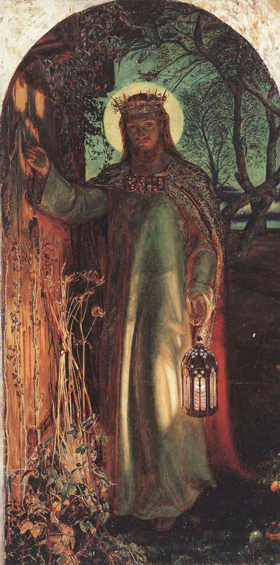 It may seem odd to say, “Let God find you.” After all, God knows just where we are. But there is something very respectful about a God who, as Jesus says in the Book of Revelation, stands at the door and knocks. Even back in the Garden of Eden, as sinful Adam and Eve hid, God walked through the garden and called, “Where are you?”