See What the End Shall Be – Palm Sunday

blog3-19The Passion, which we read in today’s liturgy, is too long to comment on in detail, so we will only examine a portion of it here.

It may be of some value to examine the problems associated with the more moderate range of personalities involved. The usual villains (the Temple leaders, Judas, and the recruited crowd shouting, “Crucify him!”) are unambiguously wicked and display their sinfulness openly. But there are others involved whose struggles and neglectfulness are more subtle, yet no less real. It is in examining these figures that we can learn a great deal about ourselves, who, though we may not openly shout, “Crucify him,” are often not as unambiguously holy and heroic as Jesus’ persecutors are wicked and bold.

As we read the Passion we must understand that this is not merely an account of the behavior of people long gone, they are portraits of you and me; we do these things.

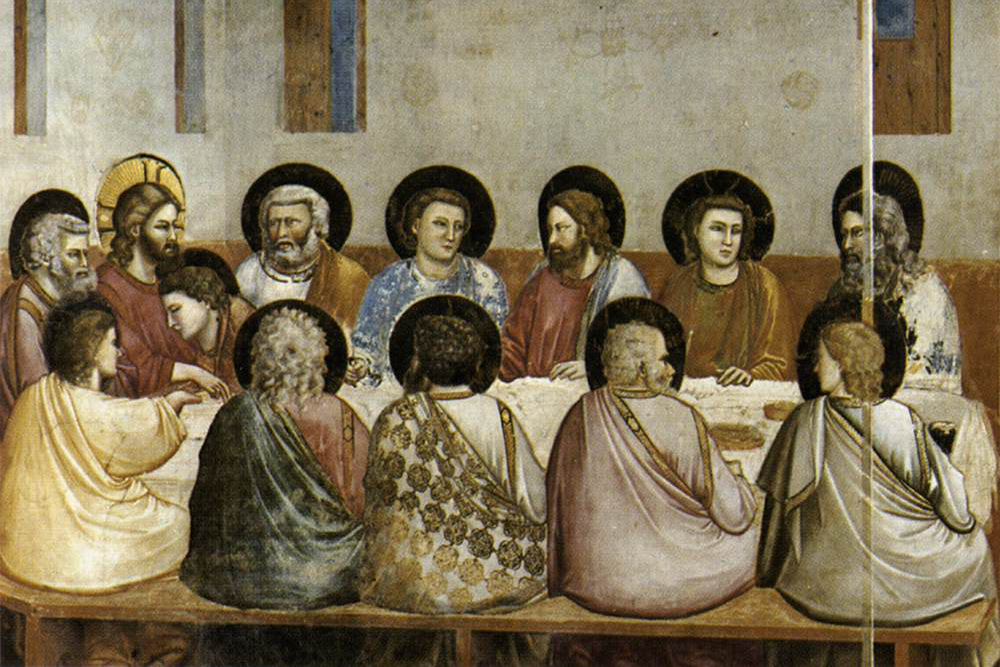
I. The Perception that is Partial – Near the beginning of today’s Passion account, the apostles, who are at the Last Supper with Jesus, are reminded of what the next days will hold. Jesus says,

This night all of you will have your faith in me shaken, for it is written, “I will strike the shepherd, and the sheep of the flock will be dispersed.” But after I have been raised up, I shall go before you to Galilee.

Note that the apostles are not being told these things for the first time; Jesus has spoken them before on numerous occasions:

  1. From that time on Jesus began to explain to his disciples that he must go to Jerusalem and suffer many things at the hands of the elders, chief priests and teachers of the law, and that he must be killed and on the third day be raised to life (Matt 16:21).
  2. When they came together in Galilee, he said to them, “The Son of Man is going to be betrayed into the hands of men. They will kill him, and on the third day he will be raised to life.” And the disciples were filled with grief (Matt 17:22-23).
  3. We are going up to Jerusalem, and the Son of Man will be betrayed to the chief priests and the teachers of the law. They will condemn him to death and will turn him over to the Gentiles to be mocked and flogged and crucified. On the third day he will be raised to life” (Matt 20:18-19).

Thus we see that the Lord has consistently tried to teach and prepare them for the difficulties ahead. He has told them exactly what is going to happen and how it will end: not in death, but rising to new life. But even though He has told them over and over again, they still do not understand. Therefore He predicts that their faith in Him will be shaken.

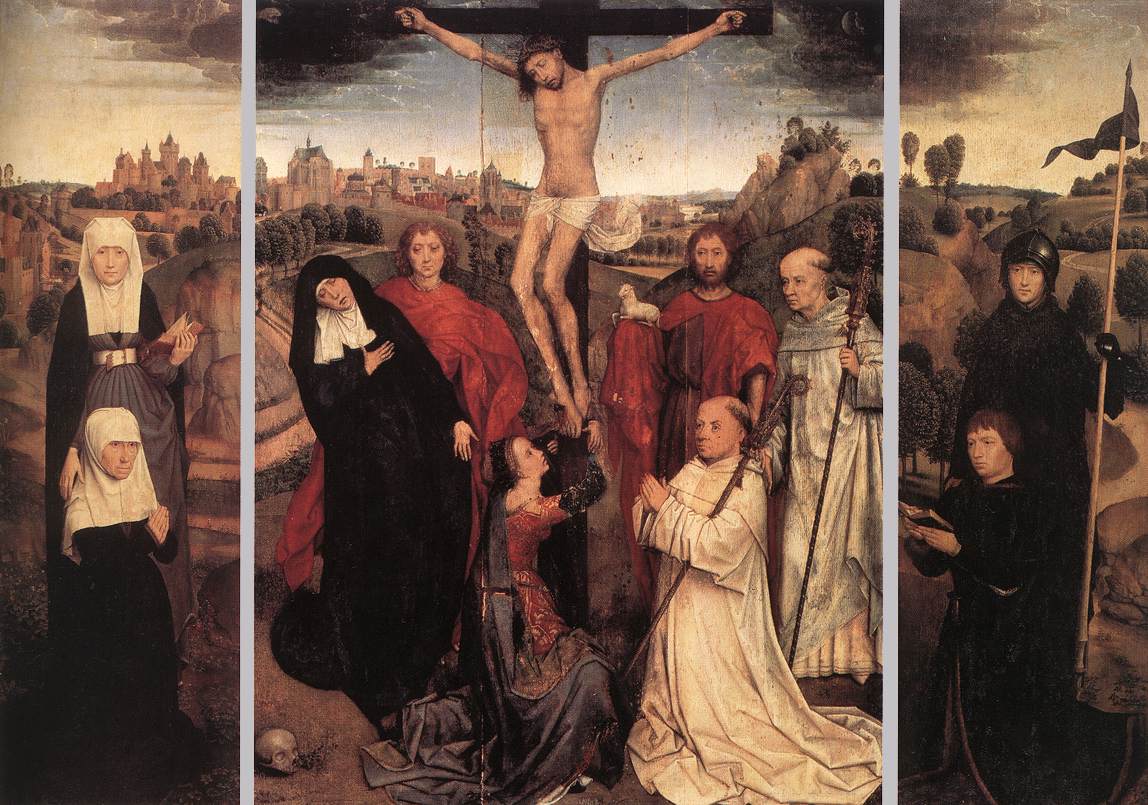
Their perception is partial. They will see only the negative, forgetting that Jesus has promised to rise. Because they cannot see beyond the apparent defeat of the moment they will retreat into fear rather than boldly and confidently accompanying Him to His passion and glorification (for His passion is a lifting up; it is His glorification). Instead they will flee. He has shown the “what the end shall be,” but they can neither see nor accept it. Thus fear overwhelms them and they withdraw into a sinful fear, dissociating themselves from Jesus. Only a few (Mary, His Mother; John; Mary Magdalene; and a few other women) would see Him through to the end.

As for the rest, they see only what is gory and awful, missing what is glory and awesome. Their perception is quite partial. Paradoxically, their blindness comes from not hearing or listening to what Jesus has been telling them all along.

We, too, can easily suffer from a blindness caused by poor listening. The Lord has often told us that if we trust in Him, then our struggles will end in glory and new life. But, blind and forgetful, we give in to our fears and fail to walk the way of Christ’s passion boldly. We draw back and dissociate ourselves from Jesus, exhibiting some of the same tendencies we will observe in the people of that day.

Next, let’s examine some of the problems that emerge from this partial perception and forgetful fear.

II. The Problems Presented – There are at least five problems that emerge. They are unhealthy and sinful patterns that spring from the fear generated by not trusting Jesus’ vision. Please understand that the word “we” used here is shorthand and does not mean that every single person does this. Rather, it means that collectively we have these tendencies. There’s no need to take everything here personally.

1. They become drowsy – A common human technique for dealing with stress and the hardships of life is to become numb and drowsy; we can just drift off into a sort of moral slumber. Being vigilant against the threat posed to our souls by sin or the harm caused by injustice (whether to ourselves or to others) is just too stressful, so we just “tune out.” We stop noticing or really even caring about critically important matters. We anesthetize ourselves with things like alcohol, drugs, creature comforts, and meaningless distractions. Prayer and spirituality pose too many uncomfortable questions, so we just daydream about meaningless things like what a certain Hollywood star is doing or how the latest sporting event is going.

In the Passion accounts, the Lord asks Peter, James, and John to pray with Him. But they doze off. Perhaps it is the wine. Surely it is the flesh (for the Lord speaks of it). Unwilling or unable to deal with the stress of the situation, they get drowsy and doze off. Grave evil is at the very door, but they sleep. The Lord warns them to stay awake, lest they give way to temptation, but still they sleep. Someone they know and love is in grave danger, but it is too much for them to handle. They tune out, much as we do in the face of the overwhelming suffering of Christ visible in the poor and needy. We just stop noticing; it’s too painful, so we tune out.

The Lord had often warned them to be vigilant, sober, and alert (Mk 13:34, Matt 25:13, Mk 13:37; Matt 24:42; Luke 21:36, inter al). Other Scriptures would later pick up the theme (Romans 13:11; 1 Peter 5:8; 1 Thess 5:6, inter al). Yes, drowsiness is a serious spiritual problem.

Sadly, God described us well when He remarked to Isaiah, Israel’s watchmen are blind, they all lack knowledge; they are all mute dogs, they cannot bark; they lie around and dream, they love to sleep (Is 56:10).

We do this not only out of laziness, but also out of fear. One strategy is to try to ignore it, to go numb, to tune out. But despite the sleepiness of the disciples, the wicked are still awake; the threat does not go away by a drowsy inattentiveness to it. Thus we ought to be confident and sober. Life’s challenges are nothing to fear. The Lord has told us that we have already won if we will just trust in Him. The disciples have forgotten Jesus’ promise to rise after three days; we often do the same. So they, and we, just give in to the stress and tune out.

2. They seek to destroy – When Peter finally awaken, he lashes out with a sword and wounds Malchus, the servant of the high priest. The Lord rebukes Peter and reminds him of the vision: Put your sword away! Shall I not drink the cup the Father has given me? (John 18:11) Jesus then heals Malchus, who tradition says later became a follower.

In our fear, we, too, can often lash out and even seek to destroy our opponents. But if we are already certain of our victory, as the Lord has promised, why do we fear? Why do we need to suppress our opponents and enemies ruthlessly? It is one thing to speak the truth in love, boldly and confidently. But it is quite another to lash out aggressively and seek to win a debate. In so doing, we may lose a soul. The Lord healed Malchus, seeing in Him a future disciple. The Lord saw what the end would be. Peter did not. In fear, he lashed out with an aggression that did not bespeak a confidence in final victory.

It is true that we are required to confront evil, resist injustice, and speak with clarity to a confused world. But above all, we are called to love those whom we address. There is little place for fear in our conversations with the world. The truth will out; it will prevail. We may not win every encounter, but we do not have to; all we must do is plant seeds. God will water them and others may well harvest them. In Christ, we have already won. This confidence should give us serenity.

Peter has forgotten Jesus’ promise to rise after three days; we often do the same. So Peter, and we, give in to fear and lash out, driven by a desire to win when in fact we have already won.

3. They deny – Confronted with the fearful prospect of being condemned along with Jesus, Peter denies being one of His followers or even knowing Him at all. He dissociates himself from Christ. And we, confronted with the possibility of far milder things such as ridicule, often deny a connection with the Lord or the Church.

Regarding one of the more controversial Scripture teachings (e.g., the command to tithe; the prohibition against divorce, fornication, and homosexual activity) some might ask, “You don’t really believe that, do you?” It’s very easy to give in to fear and to respond, “No,” or to qualify our belief. Why suffer ridicule, endure further questioning, or be drawn into an unpleasant debate? So we just dissociate from, compromise, or qualify our faith to avoid the stress. We even congratulate ourselves for being tolerant when we do it!

Jesus says, If anyone is ashamed of me and my words in this adulterous and sinful generation, the Son of Man will be ashamed of him when he comes in his Father’s glory with the holy angels (Mk 8:38). But too easily we are ashamed. And so, like Peter, we engage in some form of denial. Peter is afraid because he has forgotten to “see what the end shall be.” He has forgotten Jesus’ promise to rise after three days; we often do the same. We lack confidence and give in to fear; we deny in order to avoid suffering with Jesus.

4. They dodge – When Jesus is arrested, all the disciples except John “split.” They “get the heck out of Dodge.” They are nowhere to be found. After Jesus’ arrest, it is said that Peter (prior to his denials) followed the Lord at a distance (Mk 14:54). But as soon as trouble arose, he “scrammed.”

We, too, can run away. Sometimes it’s because of persecution by the world. But sometimes it’s our fear that following the Lord is too hard and involves sacrifices that we are just not willing to make. Maybe it will endanger our money (the Lord insists that we tithe and be generous to the poor). Maybe it will endanger our playboy lifestyle (the Lord insists on chastity and respect). Maybe we don’t want to stop doing something that we have no business doing, something that is unjust, excessive, or sinful. But rather than face our fears, whether they come from within or without, we just hightail it out.

The disciples have forgotten that Jesus has shown them “what the end shall be.” In three days, he will win the victory. But, this forgotten, their fears emerge and they run. We too, must see “what the end shall be” in order to confront and resist our many fears.

5. They deflect – In this case our example is Pontius Pilate, not one of the disciples. Pilate was summoned to faith just like anyone else. “Are you a king?” he asks Jesus. Jesus responds by putting Pilate on trial: “Are you saying this on your own or have others been telling you about me?” Pilate has a choice to make: accept that what Jesus is saying as true, or give in to fear and commit a terrible sin of injustice. The various accounts in Scripture all make it clear that Pilate knew Jesus was innocent. But because he feared the crowds he handed Jesus over.

Note that Pilate did this. The crowds tempted him through fear, but he did the condemning. Yet notice that he tries to deflect his choice. The text says, he took water and washed his hands in front of the crowd. “I am innocent of this man’s blood,” he said. “It is your responsibility” (Mat 27:24). Well actually, Pilate, it is also your responsibility. You had a choice and you made it. Your own career and your own hide were more important to you than justice was. And though you wanted to do what was right and were sympathetic with Jesus, merely wanting to do what is right is not enough.

So, too, for us. We also often favor our career or our hide over doing what is right. And in so doing, we often blame others for what we have freely chosen. “I’m not responsible because my mother dropped me on my head when I was two.”

We are often willing to say, in effect,

“Look, Jesus, I love you. You get my Sundays, and my tithe, and I obey you (generally, anyway). But you have to understand that I have a career; I need to make money for my family. If I really stand up for what’s right, I might not make it in this world. You understand, don’t you? I know the company I work for is doing some things that are unjust. I know the world needs a clearer witness from me. I’ll do all that—after I retire. But for now, well, you know… Besides, it’s really my boss who’s to blame. It’s this old hell-bound, sin-soaked world that’s to blame, not me!”

We try to wash our hands of responsibility. We excuse our silence and inaction in the face of injustice and sin.

And all this is done out of fear. We forget “what the end shall be” and focus on the fearful present. We lack the vision that Jesus is trying to give us: that we will rise with Him. We stay blind to that and only see the threat of the here and now.

III. The Path that is Prescribed – By now you ought to know the path that is prescribed: see what the end shall be. In three days we rise! Why are we afraid? Jesus has already won the victory. It is true that we get there through the cross, but never forget what the end shall be! Today we read the Gospel of Friday, but wait till Sunday morning! I’ll rise!

We end where we began with this Gospel: This night all of you will have your faith in me shaken, for it is written: ‘I will strike the shepherd, and the sheep of the flock will be dispersed;’ but after I have been raised up, I shall go before you to Galilee.

Yes, after He has been raised He goes before us into Galilee. And for us, Galilee is Heaven. Whatever our sorrows, if we are faithful we will see Jesus in the Galilee of Heaven. Never forget this vision. After three days, we will rise with Him and be reunited with Him in the Galilee of Heaven.

So take courage; see what the end shall be! The end for those who are faithful is total victory. We don’t need to drowse, destroy, deny, dodge, or deflect; we’ve already won. All we need to do is to hold out.

I have it on the best of authority that Mother Mary was singing the following gospel song with St. John for a brief time while at the foot of the cross, as they looked past that Friday to the Sunday that was coming:

It’s all right, it’s all right.
My Jesus said he’ll fix it and it’s all right.
Sometimes I’m up sometimes I’m down.
But Jesus he’ll fix it and it’s all right.
Sometimes I’m almost on the ground.
My Jesus said he’ll fix it and it’s all right.

To the Weak I Became Weak – As Seen in a Moving Commercial

blog10-16-2015The video at the bottom of this post is a heartwarming one, and with a surprise ending. I see in it an illustration of something St. Paul wrote about the sacrificial nature of evangelization:

Though I am free and belong to no one, I have made myself a slave to everyone, to win as many as possible. To the Jews I became like a Jew, to win the Jews. To those under the law I became like one under the law (though I myself am not under the law), so as to win those under the law. To those not having the law I became like one not having the law (though I am not free from God’s law but am under Christ’s law), so as to win those not having the law. To the weak I became weak, to win the weak. I have become all things to all people so that by all possible means I might save some. I do all this for the sake of the gospel, that I may share in its blessings (1 Cor 9:19-23).

To be clear, what St. Paul describes here must be understood as solidarity and brotherhood, not compromise with sin or evil. St. Paul is willing to set aside anything that hinders preaching the truth of the gospel. Every pretense, every honor, every distinction, and every preference that interferes with the gospel message is forsaken when necessary. St. Paul describes here a great willingness for kenosis (emptying of oneself).

And of course St. Paul is imitating Jesus, who,

though he was in the form of God, did not count equality with God a thing to be grasped, but emptied himself, taking the form of a slave, being born in the likeness of men. And being found in human form, he humbled himself by becoming obedient to the point of death, even death on a cross (Philippians 2:6-8).

It is remarkable that Jesus, though sinless, was not ashamed to be identified with sinners. He took baptism in the Jordan. He associated with sinners and even ate with them. He underwent the most humiliating punishment, one typically meted out only to the worst of sinners. Yes, He was crucified—and between two thieves at that! Everyone walking by that Friday probably remarked, “Look at that sinner!” Jesus was willing to be viewed as a sinner (by us sinners) in order to save us sinners. And, finally, He was assigned a grave with the wicked (Is 53:9).

There is an old saying that Jesus didn’t come just to get us out of trouble; He got into trouble with us. Yes, He endured every blow this world and Hell itself could dole out. Nobody knows the trouble I’ve seen. Nobody knows but Jesus.

Surely he endured our pain and bore our suffering, yet we considered him punished by God, stricken by him, and afflicted. But he was pierced for our transgressions, he was crushed for our iniquities; the punishment that brought us peace was on him, and by his wounds we are healed. We all, like sheep, have gone astray, each of us has turned to our own way; and the Lord has laid on him the iniquity of us all (Isaiah 53:4-6).

Yes, He joined us and got into trouble with us in order to save us:

In bringing many sons and daughters to glory, it was fitting that God, for whom and through whom everything exists, should make the pioneer of their salvation perfect through what he suffered. Both the one who makes people holy and those who are made holy are of the same family. So Jesus is not ashamed to call them brothers He says, “I will declare your name to my brethren …” (Heb 2:9-11)

I thought of all these Scripture passages as I watched this commercial. To be clear, there is no sin in paralysis. Let it be a metaphor for our weakness, which the Lord took up. Let it symbolize our sin, with which the Lord, though sinless, was willing to be identified. And what about us? Can we be like St. Paul and imitate Christ in this manner?

For Consolation and Rebuke Are Alike with Him: A Meditation on the Sterner Side of Christ

3.17blogIn daily Mass this week we have been drawing from the 8th Chapter of the Gospel of John, which presents a riveting and stern rebuke by Jesus of the Jewish people of His time who refused to believe in Him. The video below is a vivid and literal presentation of a section of the text we are covering.

Passages such as those in John chapters 5 and 8 put the lie to the notion that Jesus was merely a pleasant fellow who would only console and never challenge. Many today trot out this reworked version of Jesus because they cannot abide a Lord (or a Church) that rebukes, warns, and even threatens them.

This reworked Jesus, who is only tender, is inauthentic. Jesus could and did console, affirm, and bless, but He was also a Lord and teacher who could speak bluntly and issue searing condemnations of unbelief, hypocrisy, and stubborn refusal to repent. He called His opponents out and would even label them liars, hypocrites, a brood of vipers, and/or evil. He told them that they were of their father, the devil. He also called them sons of those who murdered the prophets; He even called them murderers who were plotting to kill Him. He said that they knew neither God nor Abraham, that they were whitened tombs full of corruption on the inside. He told them that the reason that they did not accept the truth He declared was that they were not of God. And He warned them that if they did not accept that He was I AM, they would die in their sins.

Jesus apparently never got the memo that preachers are supposed to be nice and never confrontational. Neither did He accept the modern role description that He was to be only affirming and loving, not really caring about sin (like certain Church leaders today). In fact, 21 of His 38 parables were about judgment and Hell.

The real Jesus was no pushover. He was patient and encouraging of repentant sinners, but a truly repentant sinner does not ask Jesus to approve of his or her sin. For unrepentant sinners, for those who make light of sin or of their need for obedient faith, Jesus has strong words of rebuke and stern warnings of the consequences of failure to repent. Any straightforward reading of John chapters 5 and 8, or of the troubles that befell the unrepentant cities and unbelieving crowds, or of the woes described in Luke 11, discloses that our loving Savior expresses His love not only in soft encouragement, but also through sober and pointed warnings and rebukes. True love includes both. The modern world often separates love from correction, but Jesus joins them. He says, Those whom I love, I reprove and discipline; therefore be zealous and repent (Rev 3:19).

With all this in mind, watch the videos below and behold a side of Jesus that many today would prefer to ignore. Yet the love of the true and biblical Jesus includes rebuke just as much as it does consolation.

Where the Tree Falls, There It Will Lie – A Meditation on the Finality of Judgment

March 16 blogSome engage in the wishful thinking that humans can suddenly and dramatically become converted and wholly different. To be sure, there are what are sometimes called “sudden conversions” of individuals. But what this usually means is that the person’s disposition against God and/or the faith is transformed into an openness to the truth and grace of God. It does not usually mean (barring a miracle) that the person is instantly possessed of all virtue and is suddenly free of all sinful inclinations. In order for fundamental change to take deep and lasting root in a person, he or she must work hard at it and must cooperate with God’s grace.

People change and grow slowly, incrementally, often in fits and starts. What we call our character is formed gradually over time. Thoughts and decisions produce deeds; deeds produce habits; habits produce character; and character ushers in our destiny. It is the steady march and repetition of virtue (or vice) that produces our character. True and lasting conversion takes time. It takes repeated good decisions to yield the fruit of a good character.

There are seldom any shortcuts. Expecting there to be a shortcut to good character would be like expecting a person with a newfound interest in classical piano, merely on account of this new interest, to be able to play Mozart Sonatas or Chopin Etudes immediately; it just doesn’t work that way. Rather, he must begin with scales and arpeggios, practice every day, master simple pieces, and then gradually progress to the full vision of classical piano.

The moral life is this way, too. A virtue is defined as a good habit. But habits are not acquired by doing something once. Habits, by definition, are repeated actions. Repeated (good) actions are the basis for virtue. Even if grace comes from God and can spur and enable virtue, virtue does not fall out of the sky. Grace builds on and cooperates with our nature, which is to grow and change slowly by habitual, repeated actions in response to grace. Over time, accumulated good actions become the good habits we call virtues and help to form the more lasting aspect of us that we call our character.

Sadly, the opposite is also true. Vices also build strongholds in our life and our character. Repeated sinful acts engender vice, which has a negative effect on our character. Character is rightly defined as the collection of moral qualities that define a person. And while qualities may change over time, it is wishful thinking to presume they can change quickly, dramatically, or substantially. Our character is largely the summation of our repeated decisions.

Among the more dangerous versions of this wishful thinking (that people can easily and fundamentally change in a moment) is the notion that upon death, those who have stubbornly indulged in sin and/or values opposed to God and His Kingdom will suddenly have a change of heart at the judgment seat of Christ. It is fancifully imagined that they will suddenly want what (until now) they had resisted, disliked, or outright rejected. The human heart seldom, if ever, changes on a dime. This is true even when we suddenly discover that we were wrong about something. We human beings are not even swayed by clear facts if we don’t want to accept certain truths. Instead, we will often grow angry and defensive rather than make a wholehearted change. And in those cases in which we do change our view, it is usually done slowly and in fits and starts, especially when it comes to deep-seated views such as those related to politics or religion.

Imagine a person who has, throughout his life, opposed or resisted essential aspects of the Kingdom of God such as forgiveness, love of one’s enemies, chastity, generosity, and the worship that is due to God. Values such as these are not simply hoops to jump through on the way to a magical kingdom or a personal resort of one’s own design. These are actual parameters of the Kingdom of God and the perfection of that Kingdom we call Heaven.

And herein lies the crucial point: by our repeated choices in life, we are either deepening our desire for God and His Kingdom or eroding it. Our character is either being configured to God and what He is offering through virtue, or disfigured and disinclined to what God is offering through vice.

It is foolish to think that a person who scoffed at chastity and God’s teaching on sexuality will suddenly esteem them when he dies, or that one who did not want to forgive his enemy will suddenly wish to do so. It is unlikely that one who spurned going to Mass and worshiping God in the Holy Liturgy will suddenly want to enter the great liturgy of Heaven, which is described consistently as featuring hymns (Rev 4:8-11; 5:8-14; 7:9-12), candles (Rev 4:5), priests in robes and miters (Rev 4:4), delight in the proclaimed words of a book (Rev 5:1-5), praise of the Lamb on the altar (Rev 5:8ff), incense (Rev 8:3ff), and so forth. How likely is it that one will go from considering these things boring, pointless, unnecessary, and not worthy of attendance, to suddenly considering them glorious and heavenly? How attractive will one find the worship and praise of a heavenly multitude of saints in Heaven if he was never attracted to worship with God’s people on Earth?

God will not force us to want what He offers or to obey His vision for us as portrayed in His Law. Heaven is the fulfillment of all that He offers; it is not our personally designed paradise.

The greatest tragedy of all is that the souls in Hell would be even less happy in Heaven, where the things that they rejected in this life are esteemed and are fully and perfectly present, where many whom they did not care for in this life are honored and in the highest places.

It is wishful thinking, therefore, to think that many who are disinclined to God or are outright hostile to Him and/or what He teaches and offers will experience a sudden conversion as they are escorted to judgment. Scripture says, Whether a tree falls to the south or to the north, in the place where it falls, there it will lie (Eccles 11:3). In other words, when we die, our character will be forever fixed. It is like a piece of pottery which, having been molded into any number of shapes while on the potter’s wheel, has its shape forever fixed when it is placed in the fire of the kiln. It is like the rich man in the parable of Lazarus who, though lamenting his awful state, shows no desire for Heaven and does not ask to be brought there. Rather, he asks to have Lazarus bring water to him in Hell.

Yes, it is a dangerously wishful thinking and presumption to think that an unrepentant sinner will suddenly want to repent, or that one averse to significant aspects of God’s Kingdom will suddenly wish to seek entrance or will suddenly rejoice in what moments before he found irrelevant or even odious. Instances of such sudden “changing of stripes” are exceedingly rare.

In this life there are certainly wonderful moments of conversion. But they must be followed by perseverance and reparative grace to undue the many lingering effects of years of bad choices. In the case of authentic deathbed conversions, purgatory seems a strong necessity.

A proper antidote to this wishful thinking is to have a sober urgency to summon sinners away from those things that deepen their aversion to the Kingdom. Repeated and unrepented sin hardens the heart and darkens the intellect. A sober reverence for this truth is both necessary and salutary. Wishful thinking is not only unhelpful, it is harmful; it detracts from the urgency that motivates us to work for the salvation of souls, beginning with our own.

Judgment day is but the final recognition and solidification of what has been a long series of decisions. Sow a thought, reap a deed. Sow a deed, reap a habit. Sow a habit, reap a character. Sow a character, reap a destiny.

Whether a tree falls to the south or to the north, in the place where it falls, there it will lie (Eccles 11:3).

Don’t Believe Everything You Think – A Consideration of Distorted Thinking and the Spiritual Life

march 15 blogIn my work as a spiritual director and in deliverance ministry as well as in my own experience of personal growth, it has become very clear to me that there are common patterns of distorted thinking that disrupt spiritual growth and cause distress and disorder. These cognitive distortions lead one to misinterpret or overanalyze the data of the world and to live in a kind of unreality or an exaggerated reality.

But of course holiness and wholeness presuppose what scripture calls a “sober mind” (cf 1 Thess 5ff; 1 Peter 1:13, 4:7, 5:8; Titus 2:2ff). Romans 12 exhorts us as follows:

Do not conform to the pattern of this world, but be transformed by the renewing of your mind. Then you will be able to test and approve what God’s will is—his good, pleasing and perfect will. For by the grace given me I say to every one of you: Do not think of yourself more highly than you ought, but rather think of yourself with sober judgment, in accordance with the faith God has distributed to each of you (Romans 12:2-3).

Many sinful attitudes, fears, resentments, aversions, and anxieties come from distorted thinking. These patterns emerge from our flesh but are also open doors for demons, who can exploit and further twist our experience of reality. The world, too, is able to exploit cognitive distortions for both profit and influence.

The renewal of our minds, traditionally referred to in spiritual manuals as “the purification of the intellect” is a key aim of spiritual direction, deliverance ministry, and of overall spiritual growth. Hence, we should learn to recognize and name the more common forms of distorted thinking, also called cognitive distortions. In learning about them we can begin to master them and to experience greater freedom and authority over our thought life. And, since most feelings come from thoughts, our emotional life will also be improved. This includes having greater authority over and freedom from anxieties, resentments, anger, paranoia, and depression.

Let’s take a brief look at some of the most common cognitive distortions:

1. Overgeneralization – This refers to the tendency to think that a negative situation is part of a constant cycle of bad things that happen. People who overgeneralize often use words like “always” or “never.”

For example, a person might think, I had plans to go to the movie with friends but the plans fell through. This always happens to me; I never get to have any fun!

The more likely truth is that such a person does have enjoyable things in his or her life. Life is a mixed bag, but overall, most people have far more blessings than burdens.

Everyday trillions of things go right while only a few things go wrong. This is not an exaggeration when one considers that every function of every atom, molecule, cell, and organ is a blessing and a success. Further, almost every part of every system on this planet is functioning in a way so as to sustain our life. Things we seldom think about are taking place at every moment: photosynthesis is supplying oxygen; millions of ecosystems are running in symbiotic harmony; the Van Allen belts in the upper atmosphere are deflecting harmful radiation from the sun; the Gulf Stream and weather patterns are distributing warmth and rain; Jupiter and Saturn are catching comets; the asteroid belt is keeping a lot of space debris at bay; our sun is stable; and our earth is revolving in a nearly circular orbit around the sun, ensuring that we are never too warm or too cold. This list could go on and on.

We ought to avoid overgeneralizing and exaggerating about how bad things “always” happen to us and good things “never” come our way. This is not reality. It is not sober thinking. It makes us negative, fearful, and anxious. It is not of God and has its origin in the sinful drive of ingratitude. There is so much for which to be grateful on any given day, even when we’ve had disappointments as well. We need to embrace reality: overgeneralization about negative outcomes is not balanced.

Satan can surely tap into this distortion to stir up resentment, fear, anxiety, and other negative emotions. The world, too, can “cash in” on this by stirring up the same negativity and then proposing false or incomplete solutions (for just $19.95 (plus shipping and handling)). Political parties and other organizations can also command too much of our loyalty, and with this power over us, incite such distortion.

2. All-or-Nothing Thinking – This refers to seeing things as only perfect or terrible, good or bad, 100% or zero, with little or no room in between. For example, I may label myself either a hero or a total loser. Small mistakes are seen as total failure. Perhaps a person on a diet backslides by eating a large piece of cake and then thinks, I am a total failure; I just gained ten pounds! There is very little “middle ground” in all-or-nothing thinking.

There is also the tendency to think that affirming one thing means denying others. For example, if I say that I like A this must mean that I am somehow saying that B, C, and D are of no value whatsoever. Of course that may not be the case at all. The all-or-nothing thinker may take offense at the affirmations or points made by others because he sees no middle ground, no possibility that many things can be affirmed and praised at once or that preferences can be on a continuum somewhere between zero and one hundred.

Indeed, most things in life fall somewhere on a continuum, with the vast majority being somewhere between all and nothing, 100% and zero. There are often many different outcomes and combinations of things that are praiseworthy and/or acceptable. But the all-or-nothing thinker, because of this cognitive distortion, has a difficult time remembering and accepting this.

The result of all-or-nothing thinking on a personal level can be excessive pride (wherein one thinks of himself or his performance too highly) or low self-esteem (wherein one deems himself a complete loser by virtue of his less-than-perfect performance). There are many other issues that can occur because of this cognitive distortion: anxiety (e.g., performance anxiety), fear (e.g., fear of failure), resentment, and depression.

On the social level, the all-or-nothing thinker is often hostile to all opinions that are not completely in agreement with what he insists is best. Such people often take offense when none is intended. For example, if someone espouses something other than what he does, he thinks that he (and/or his opinion) is being wholly discarded or even ridiculed. In this way, all-or-nothing thinking tends to make people hostile, fearful, thin-skinned, and unnecessarily insistent on perfect agreement or outcomes.

It is not hard to imagine how both the devil and the world can tap into this distorted drive of the flesh and hold people in bondage to fear, hostility, and many anxious notions that perceive no middle ground and no reason to hope. The all-or-nothing thinker believes that since the world is not perfect, there is nothing good to celebrate, and therefore dismisses those who do celebrate something as naïve, stupid, or worse. All-or-nothing thinkers presume that if a person affirms one thing, it must mean that he thinks everything is good (which, of course, is not necessarily true). This distortion leads them to scorn and even ridicule people unnecessarily. In this way, the evil one easily locks all-or-nothing thinkers into an ever-deepening spiral of negativity, hostility, and fear.

3. Fortune Telling – This is predicting that something bad will happen without any evidence. For example, a person may think, It doesn’t matter how hard I have prepared for my talk, it is going to go terribly. People will either hate it or be bored.

This is essentially a form pessimism and negativity that taps into the sin against hope called “despair.” Those who engage in this sort of thinking tend to see the world as a hostile place and to view opportunities as burdens and traps.

But, of course, opportunities are not necessarily good or bad, hostile or benign. They are just opportunities.

Further, failure is not always total; sometimes it is not even failure at all. The cross was a failure to many who witnessed it that day, but it was actually victory. Some of my “worst” sermons have had surprisingly good effects. Life is a funny proposition. But the fortune teller rejects all this and insists that disaster is lurking just over the next hill.

Sadly, most fortune tellers set up self-fulfilling prophecies. Expecting bad things, they usually get them, or at least can collect ample evidence to prove their thesis and be confirmed in their downward spiral of negativity, anxiety, depression, cynicism, and despair.

Satan can easily exploit negativity and the “hunch” that bad things are going to happen. Fortune tellers keep the door wide open to the devil’s shenanigans, practically delighting in his works so that they can say, “See, I told you so.”

This negative thinking has to go. It is a distortion that denies the possibility that exists in every opportunity, and the possibility of paradoxical or surprising outcomes in all sorts of situations.

4. Emotional Reasoning – This is believing that bad feelings or emotions reflect the reality situation. For example, I feel anxious when I fly, therefore airplanes are not safe.

Our feelings have the ability to “damn reason.” We need to be very careful to remember that feelings are just feelings. They ought not to be wholly ignored, but neither should they be the deciding factor. Scripture warns, The heart is deceitful above all things (Jer 17:9). Many of our strong feelings are rooted in traumatic or powerful events of the past and may not reflect current reality. That I feel unsafe does not mean I am unsafe. That I feel badly about how a meeting went does not mean it actually went badly.

Once when I was out walking with a friend, a dog came running up to us. My friend, who had once been bitten and infected by a dog, was afraid. But I, having grown up with dogs, could tell that the dog just wanted to greet us, not attack us. Both of us were looking at the same situation, but we had different feelings. I ended up being right; the dog merely came up and sniffed my hand and wagged his tail.

The point is that the feelings were not the reality, they were just feelings. In this case, mine happened to reflect the situation more accurately, but neither set of feelings changed the reality.

Satan and the world can easily exploit feelings to make us think things that are not necessarily so. An important part of spiritual growth is learn how to discern feelings, seeing them as part of the picture but not the whole picture.

5. Mind Reading – This is jumping to conclusions about what others are thinking without any evidence. For example, My friend didn’t stop to say hello so she must be angry at me. Well, perhaps she was in a hurry and had no time to stop; or maybe she didn’t even see you. Here’s another example, My boss cast a negative glance my way so he must be upset with me and I’m going to get fired. Well, perhaps as he was looking in your direction he remembered something he forgot to do or an argument he had with his wife. Or maybe he just had gas pains!

This sort of distortion is often rooted in a form of pride called grandiosity, wherein we think we are always the main thing on other people’s mind or the reason they act. I once knew a man who was very paranoid; I would often remind him that people had better things to do with their time than to think about him or plot ways to trip him up.

Mind reading is also rooted in pride because we trust too much that we have command of all the facts and really know what is going on. We do not; this is a distortion. We do well to develop a healthy reserve in our conclusions about what others are thinking or about their motives. We ought to ask of God a certain kind of “blindness” that fails to notice the many things we really can’t understand.

This form of distorted thinking leads to many fears and anxieties that are usually needless and baseless. Satan surely has many doorways through this form of pride and anxiety-producing thinking.

6. Mental Filtering – This is focusing only on the negative parts of a situation and ignoring anything good or positive. For example, I got a lot of good feedback from the conference I led, but one person disagreed with my premise, so I guess the conference wasn’t so good after all.

This distortion is similar to overgeneralization.

7. Making “Should” Statements – This is excessively telling yourself how you “should” or “must” act. For example, I should be able to handle this without getting upset and crying!

Clearly there are moral parameters that we must observe in our Christian walk. But there are also many other rules and norms we demand of ourselves that are not necessarily reasonable or correct.

During spiritual direction, a person will often say to me, “I should do [this or that]” And I often respond, “Who told you that?” Not everything that we think we should do must in fact be done.

We must carefully discern what is required of us and what is not, or what is merely optional based on circumstances.

The devil loves “should” statements because he loves to destroy truth by exaggerating it and making it seem an unbearable burden. It also gives him the opportunity to masquerade in pious clothes.

For example, consider the following “should” scenario: “You know, your prayers would be answered if you just prayed or fasted a little more. You really should increase your prayers and fasts.” But this can be very devilish.

First, it is devilish because to some degree it is true. We probably could pray more (if we neglected other things). Just because we could pray more (if, for example, we never slept) does not mean that we ought to do so or must do so.

Further, it is devilish because if the devil can sow the thought that we ought to pray more, then we can never have prayed enough. And that puts us right where he wants us: discouraged, guilty, and anxious; seeing prayer as an increasing burden and God as a taskmaster.

Finally, it is devilish because it suggests that we will get what we want as a result of our own efforts rather than by the grace of God.

So, “should” statements can be very devilish. They are this way because they are clothed in false piety and moral duties. Too often “should” statements are wolves in sheep’s clothing. We do have legitimate duties, but do not trust every “should” thought. Discern carefully.

There are many more cognitive distortions we could discuss, but allow these to suffice. Feel free to add your own in the comments section below.

The life of the mind is very important in the spiritual life. Our thoughts are critical to what we do, how we feel, and to our sense of well-being and serenity.

The bottom line is, DON’T BELIEVE EVERYTHING YOU THINK. Discern, distinguish, sift, and sort. Consider well that God wants to give you a sober mind, a clear mind, a mind that is in touch with reality rather than one lost in distortions and unreality. Ask for a sober mind and make the journey.

The Inclination to the Truth

TruthIn a recent post (Is There a Way Back to Undeniable Reality and Universally Binding Norms?) I discussed how we today tend to “live in our heads” a lot more so than did the people living in biblical times and even those who lived up to and including the High Middle Ages and the Scholastic Period. Prior to that time, the “real world” was taken to be largely self-evident. But in the late 13th and early 14th centuries, a school of thought later called “nominalism” began the intellectual journey away from the concept of the “real world.” As a result, there was less and less confidence in our ability to even posit that there was a “real world” out there to which we could refer and take as a given.

In that post, I suggested that one way back out of this flawed intellectual system was to look back to a time before the dark drape of the Nominalist and Cartesian divide, a time when people were more confident in their ability to seek the truth, find it, and conform to it. In that atmosphere, St. Thomas Aquinas could propose a moral system based on virtue and our common inclination to the good, the true, and the beautiful, rather than rooted in laws and mandates to be obeyed for fear of reprisal. Though sober about human sinfulness, St. Thomas could still confidently appeal (in this pre-nominalist world) to this shared propensity to make progress out of sin through virtue.

So we moderns do well to look to these inclinations that St. Thomas confidently asserts and recognize how universally they still apply today: from the atheist to the most firm believer, from the worst sinner to the most blessed saint. Here is the list:

  1. The natural inclination to what we see as good
  2. The natural inclination to the knowledge of the truth
  3. The natural inclination to self-preservation
  4. The natural inclination to sexual intimacy and the rearing of offspring
  5. The natural inclination to live in society

I have already discussed the first natural inclination in a previous post (The Universal Inclination to the Good). Today let’s consider the second: the natural inclination to seek and know the truth.

Of all the natural inclinations, our inclination to and desire for the truth is the most doubted today. As we shall see, this, too, is a result of nominalism and the doubts engendered by a post-Cartesian worldview. Many today either doubt that there is a truth to be known, or they believe that even if there are truths to be found they are relative and/or subject to change. The acceptance of immutable, universal truth is often derided.

Never mind that scoffing at the idea of truth and declaring that there is no such thing as immutable and universal truth is itself making a claim to an immutable and universal truth! Thus the “rule” is broken in the very act of announcing and insisting upon it. But philosophical soundness and consistency are not common features of our confused, ideological times.

The principle described and experiencedNevertheless, and in spite of current struggles, the strong inclination toward and deep desire for truth is demonstrably present in every person.

Each of us comes hard-wired with a longing that seems almost wholly absent in animals. This longing is expressed by the insistent questions we have, ones that are not easily satisfied, questions such as

  1. Why? Why do I exist? Why does anything exist? Why is there something rather than nothing? Why are things the way they are? Why?
  2. What? What is my life ultimately all about? What is the meaning of things and events? What is the purpose of this or that? What is it like on the moon, or Mars, or out in space? What is over the next hill? What will bring me happiness? What?
  3. How? How does this work? How does it relate to other things? How can I get answers? How is this distinct from that? How can I find happiness and completion? How?

Yes, we are insatiably hungry for truth, for answers, for meaning. And we will not be satisfied with pat answers or subterfuge. Indeed, we feel indignant and betrayed if we think or discover that someone is withholding the truth from us, or spinning it somehow, or treating our legitimate quest for real answers as less than deserving of full investigation and solid answers.

It is self-evident that we are wired for truth and seek it, even at great personal cost. We want to know, to discover, to uncover what is new or mysterious. We love to look around, explore, and delight in learning new things. So deep is this longing that we often engage in sinful curiosity, straying into the personal lives of others and insisting on knowing things that we ought not to know or cannot reasonably understand.

As human history shows, this longing for true answers is never fully satisfied. We have never reached the point at which we have even considered saying, “Well, that’s all there is to know; no need to look around anymore or ask any questions. We now know everything and don’t need to look for any more truth.” Indeed, such a scenario is inconceivable. We want to know; each answer generates desire for truth, meaning, and more answers. So we keep looking, deeper, wider, and longer.

The human psyche shouts, “I want to know! I want the complete truth!” And while we might placate ourselves for a while with “technical” truths such as how photosynthesis works, these ultimately will not satisfy us. We want deeper answers and truths that speak to the why of things. Deep truth is what we seek.

Ask an atheist, “Why is there something instead of nothing? Why is there anything at all?” While he may not be willing to accept that God is the answer, he cannot escape the validity of the question because he has the same question. Neither can he escape the gnawing realization that the physical sciences cannot answer metaphysical questions or even pose them.

Yes, we are wired for the truth and will not be satisfied until we have found it. Restlessly, we seek it. Even if we want to resist its demands, we cannot resist it.

The principle distinguishedSadly, our quest for the truth easily runs into any number of hazards: apparent truth, partial truth masquerading as comprehensive or deeper truth, and the rise of post-nominalist rationalism.

Nominalism has tended to hinder our quest for the truth. As noted in a previous post in this series, nominalism began a process wherein we stepped back from reality and started increasingly to live in our heads. Too often we seek the truth merely in our own thoughts and not enough through the created world which God has given us. In this post-nominalist era, truth is often relegated to the sphere of intellectual abstraction and ideology. Our quest for truth becomes too self-referential. Our bodies—indeed the whole Book of Creation—seem to have less and less to teach us as we step further and further back from reality and into our heads.

And this has brought us to the environment today in which one can look at a person with an obviously male body and think it perfectly “reasonable” for him to say he is actually a female (“trapped” in a male body). This is nothing to “celebrate.” It is not truth. It is a lie. It is a disconnect from reality, as is calling homosexual acts “natural,” or abortion “healthcare.” This sort of thinking amounts to saying that our bodies—indeed all of creation—has nothing to teach us. This is what happens when we step away from reality and look for the truth in our own minds rather than in the creation that is before us and in the revelation of God. Our quest for the truth is shipwrecked in self-referential mind games. St. Paul called the suppression of such obvious truths inexcusable; he said that it leads to our senseless minds becoming darkened and to us being handed over to degradation and base, unnatural behaviors (cf. Rom 1:18-32).

Yes, though wired for the truth, we go dreadfully wrong when we seek to substitute apparent truth and ideology for actual truth; it is like putting water into a gasoline engine. Truth must be found in what really is, not in our thoughts about what is.

The principle reiteratedBut this tragic shipwreck of the truth should not be taken to mean that we are not wired for the truth. The confusion caused by sin cannot eclipse our dignity nor the fact that we are summoned to the truth, inclined to it, and will not be happy with anything less than the complete and clear truth.

Our quest for knowledge and the truth exists in spite of our sinful tendencies to ignore it or evade its demands. We instinctively know that it is “out there” to be found. It calls to us, summons us. We are looking for it even when we don’t think that we are. At almost no point during our wakeful hours are we not curious and longing for answers. Evil and error have their days, but the truth will out.

Deep down, people know what they are doing. This is because we are wired for the truth and because God has written His law in our hearts. In our consciences, the voice of God is echoing. God speaks to us there and His voice in creation and revelation resonate at the same pitch. Despite our sinful tendencies to “prefer the darkness to light,” do not ever write a person off as “lost” as long as they are still alive. We should trust the human inclination to truth and remember the active presence of conscience and the help of the Holy Spirit. We should announce the truth to others confidently, realizing that often the loudest protests are merely evidence that we have touched something in their depths and startled them. When you’re getting a lot of flak, you know you’re near the target.

The principle applied Thus one important path out of nominalism and back to reality is to celebrate the quest for truth and have confidence that because human beings are inclined to the truth—indeed hungry for it—our declaration of it as seen in creation, our bodies, and revelation will have effect. This is so even when the ground seems fallow and sparse of growth (as it does today). The truth will win. It must! We are wired for it.

Even if we traverse down some dark, dead ends, humanity will not be long satisfied with any lie. The inexorable growth and perdurance of the Christian faith (despite attacks, martyrdom, and local and temporal setbacks) testifies to humanity’s inclination toward the truth. Errors come and go, but the truth remains. Error can cause great damage, as we are seeing today in the decaying West. But the truth lives to fight another day, whether or not the West survives. Truth exists because it is built into what God has created; error does not exist because it is the privation of truth. Having no existence of its own, error is doomed to fail. It is like a clear-cut forest; other growth and even trees themselves soon enough return.

Because human nature, wired for the truth, has not changed, neither has our commission to proclaim the truth. I will let St. Paul, who lived in similarly dark times (before the Christian spring), have the last word:

Preach the word; be ready in season and out of season; reprove, rebuke, and exhort, with complete patience and teaching. For the time is coming when people will not endure sound teaching, but having itching ears they will accumulate for themselves teachers to suit their own passions, and will turn away from listening to the truth and wander off into myths. As for you, always be sober-minded, endure suffering, do the work of an evangelist, fulfill your ministry….O Timothy, guard the deposit entrusted to you. Avoid the irreverent babble and contradictions of what is falsely called “knowledge,” for by professing it some have swerved from the faith (1 Tim 4:2-5; 6:20-21).

Mankind in 2016: still wired for truth, still inclined to it!

On Going to Our Own House

The Gospel for Mass this past Saturday contains one line that deserves some attention from us. On one level it seems like a mere scene-ender, a line that ends the section and has the dramatis personae (cast of characters) walk off the stage. But as most who are familiar with Scripture know, there is rarely a wasted syllable, particularly in John’s Gospel. There is not one word or syllable that should be dismissed as “filler” when the Holy Spirit is at work inspiring the sacred authors.

The line in question appears in the 7th Chapter of John’s Gospel, at the end of a debate among the temple leaders as to the identity of Jesus. They wrestle with the question of who Jesus is: is the coming Messiah, and whether He or not He is the eternal Son of the Father as He claims.

The majority of the interlocutors reject Jesus out of hand because He comes from Galilee and “no Prophet has ever come from Galilee!” One of their number, Nicodemus, encourages them to be more open to the possibilities and to have greater command of the facts before rendering judgment. The pericope (passage) ends in this way:

Then each went to his own house (John 7:53).

This sentence ought not to be overlooked because it invites great significance. We can distinguish three rather separate understandings of the line: an inward meaning, and outward meaning, and an eternal meaning.

1. Inward – Each one returning to his own house can be understood as describing how we must ultimately enter into the “house” of our soul. We must all go into the inner room of our heart and mind; that place where we are alone with God; where we ponder, reflect, deliberate, and discern.

It is in this place that we must answer for ourselves the deepest questions of life: Who am I? Who is God? What is the meaning of my life? What am I doing and why? Who is the man/woman God made me to be? Yes, this is the inner sanctum, the holy place where we are alone with God.

When we are with others we tend to posture. We seek to conform in response to peer pressure or other social influences. There is often undue influence from persuasion, excessive human respect, group pressure, and group dynamics.

But there comes a moment when we are summoned by the Lord to separate from others, to go into our own house, to enter into that quiet place inside us and listen carefully to voice of God that echoes in our heart (cf Catechism # 1776).

At the point in the Gospel cited above, the temple leaders have had their debate. They have sought to influence one another. Some have experienced pressure and persuasive argumentation. Many of them probably exhibited the human tendency we all have: to try to ingratiate ourselves to others by speaking so that others will think highly of us.

Now that all the posturing is over, it is time for each man to go to his own house and there privately ponder and decide what he really thinks. Yes, it is decision time. The Lord is asking a question: Who do you say that I am? It is time for each man to go to his own house and be face-to-face with God.

Sadly, many today reject this requirement to go to our own “house” and reflect deeply. Most take little time to enter the room of their own soul. In our modern world, with its myriad distractions, most prefer to just flip on the television instead.

Ultimately we cannot evade this call from God to decide, in that inner room of our own “house,” who God is and how we will respond to Him. And for those who go on for too long refusing to go to their own house, God has ways of forcing the issue. Maybe it’s one of those sleepless at 3:00 AM. Maybe it’s a time of crisis that provokes soul-searching. But ultimately, at some point, each of us must go to his own house and reflect quietly with God, away from social pressures, away from posturing. There, alone with God, each must face the deepest questions.

2. Outward – There is a different perspective from which one can read this text, and it provides an insight that is almost exactly opposite. For while it is of critical importance to go to that secret place, that house of our own soul and there reflect with God, it is also of vital to stay connected to the reality that is outside our house. Thus, this passage may also be viewed as a commentary on the human tendency to retreat into our own little world, to shrink from any evidence we don’t like, to avoid anything that challenges our worldview.

Jesus had earlier confronted these temple leaders with evidence of His divinity and His identity as Messiah and Lord. He spoke to them of His miracles, of His fulfillment of prophecy, of the testimony of John the Baptist, and of the Father’s voice echoing in their hearts (cf John 5:31-47).

But we all share the human tendency to retreat into our own world, our own house, despite the evidence. In effect, we retreat from reality into our own made-up little world.

There is an old saying, “Don’t believe everything you think.” We tend to believe that something is so just because we think it.

There is another saying, “Who is an adviser to himself has a fool for a counselor.” Yet too easily we take only our own counsel. Or, we surround ourselves only with teachers who “tickle our ears.”

Thus, though these temple leaders have been confronted with many facts pointing to the veracity of Jesus’ identity as Lord and Messiah, they choose instead to brush off the evidence and retreat into their own houses, their own little worlds.

Further, they err with the facts: they argue that the Messiah was to come from Bethlehem whereas Jesus came from Galilee. But of course Jesus was born in Bethlehem.

But never mind all that; each just goes off to his own house, to his own little world. And too often many do exactly this.

The challenge for us all to live in reality, not merely in the confines of our own house, our own little world, our own (sometimes flawed or incomplete) thoughts.

3. Eternal – The third interpretation of the “house” referred to in this line is our ultimate home, the destination to which we all journey. Thus, when the text says they all went each to his own house, it may also refer to that place where they will dwell for all eternity. Where that house is, in Heaven or Hell, depends on each man’s stance regarding Jesus.

Having scoffed at Jesus, each of the temple leaders now heads off to his own home. But no one comes to the Father except through Jesus, and thus their home is somewhere other than the heart of the Father.

There is an old saying, “You made your bed, now lie in it.” You and I must choose where to make our home. Where that home is will depend upon our acceptance or rejection of Jesus.

There will come a day when each of us will have said of us, Then [he] went to his own house. Where will your house be?

Counting the Cost of Condemnation

3.12blogToday’s Mass features the well-known Gospel of the woman caught in adultery. In this Gospel, the Lord intimates to the men of his day that the severe punishment they want to mete out to this woman may be unwise given that they themselves must prepare for their own judgment.

Before we look any further at the details, let’s consider a few background texts that may help us to better understand what Jesus is teaching. After each verse, I provide a brief commentary in red.

  1. Blessed are the merciful, for they will be shown mercy (Matt 5:7). Notice here that it is the merciful who will obtain mercy. Those who have shown proper mercy will be granted mercy on the Day of Judgment. By implication, the severe and merciless will be judged severely by the Lord.
  2. Do not condemn, and you will not be condemned. Forgive, and you will be forgiven. Give, and it will be given to you. A good measure, pressed down, shaken together and running over, will be poured into your lap. For with the measure you use, it will be measured to you (Luke 6:37-38). Here the text clearly states that if we use a severe standard of judgment, that same strict standard will be used by the Lord when He judges us. On the other hand if we are forgiving, merciful, and generous then we can expect a merciful, generous, and kind judgment from God.
  3. Speak and act as those who are going to be judged under the law of freedom, for judgment without mercy will be shown to anyone who has not been merciful. Mercy triumphs over judgment (James 2:12-13). James gives us three warnings in this text. First, he reminds us that we are going to be judged by the Lord. Second, he intimates that because we are free we are therefore responsible for what we do. Third, because we are going to face this judgment, in which we will not be able to blame others for what we have freely done, we’d better realize that our judgment will be without mercy if we have not shown mercy. But if we have shown mercy then we stand a chance on our judgment day, for mercy will triumph over strict judgment.
  4. For if you forgive men when they sin against you, your heavenly Father will also forgive you. But if you do not forgive men their sins, your Father will not forgive your sins (Mat 6:14-15). This warning seems clear enough: if we want to find forgiveness on the Day of Judgment we had better seek the grace to forgive others. 

All of these texts teach the bold truth that we can influence the standard against which the Lord will compare us on the day of our judgment. The measure we use for others will be measured back to us. If we have been merciful then we will find mercy. But if we have been harsh, unbending, and unmerciful, the Lord will judge us far more strictly.

We need to be sober about this. We are storing up things for the Day of Judgment by the way we treat others. Because we are all going to need so much mercy and because we cannot endure strict standards of judgment, we should consider carefully the need to be merciful and forgiving to others. And now, on to today’s Gospel!

I. COLLABORATORS IN CONDEMNATION – The teachers of the law and the Pharisees bring forward a woman caught in the very act of adultery. (There is something curious about this, though: If she was caught in the very act, the man involved must also be known. Why has he not be brought forward? The Law of Moses indicates that the man should be stoned as well.)

The accusers want to “throw the book” at her. They want the strictest punishment meted out: stoning. They also hope to discredit Jesus by putting Him in what they think is a no-win situation.

In their accusatory stance, they have become collaborators with Satan. Scripture describes Satan in this way: the accuser of our brethren has been thrown down, who accuses them day and night before our God (Rev 12:10). And thus these Pharisees, in seeking to hand her over, join Satan.

When we have been hurt in some way, many of us may wish to both accuse and demand punishment of the person before God. But this is unnecessary and unwise.

It is unnecessary because Satan is already accusing them “day and night” before God. In addition, God sees and knows all things anyway!

It is unwise because by demanding harsh punishment for others we set ourselves up to judged by the same strict standard. Cries for grace and the conversion of sinners is always a better policy.

 II. COUNTING THE COST – As God, Jesus knows the sins of all the men gathered. He must be amazed; surely they cannot be serious in demanding such a harsh punishment for the woman knowing that the day of their own judgment awaits them!

Jesus bends down and traces His finger on the ground, almost as if tracing along with the words of a book He is reading of their deeds. Some suggest that perhaps He is writing down their sins. Some liken it to the finger of God tracing the Commandments on stone. Still others recall the mysterious hand in the Book of Daniel, which traces the words MENE, TEKEL, PERES on the wall, announcing doom to the Babylonian king.

Whatever the case, it isn’t good. You don’t ever want Jesus to be writing stuff down about you!

But these Pharisees are slow to appreciate the significance of the gesture. So Jesus tries to reason with them, saying,Let him among you who is without sin cast the first stone.” Then He bends down again and continues tracing/writing on the ground.

It is almost as though Jesus were saying,

Reason with me, men. If you demand strict justice, if you insist that I “throw the book” at her, you’d better first look and see what is written about you in “the book.” If she is to be judged strictly and without mercy, then you, too, will face the same standard.

Gentlemen, there are things in the book about you—serious things. Have you counted the cost of condemning this woman? Are you sure that you want to go on demanding that I “throw the book” at her?

Think about it men. Think very carefully.

One by one they go away. It begins with the oldest, who are presumably less rash than the younger men (and may well have committed more sins).

So the message for us is clear: we will face judgment. We need to be sober about this. We must count the cost of being unmerciful, unforgiving, and vengeful. The measure that we measure out to others will be the measure that God uses for us.

What kind of judgment are you preparing for yourself? Condemnation comes at a high cost. Are you willing to risk storing up wrath and strict justice for the day of your own judgment?

On the other hand, gentleness, compassionate correction, and merciful love will also be given to us if we show it to others. Remember your upcoming judgment. Be like the wise man, who knows he will need grace and mercy on that day because he will not be able to withstand a strict adjudication of his crimes.

III. CORRECTING WITH COMPASSION – The departure of the accusers leaves Jesus alone with the woman. Though He speaks gently, Jesus is clear: “Woman, where are they? Has no one condemned you?” She replied, “No one, sir.” Then Jesus said, “Neither do I condemn you. Go, and from now on do not sin anymore.”

This Gospel, therefore, does not make light of the woman’s sin. Jesus knows well what she has done and so does she. Jesus is clear that she must turn away from sin; she must not commit it anymore. What Jesus does set aside is the condemning “hang-‘em-high” mentality that seeks the harshest measures for every situation.

Yes, we must sometimes correct sinners and mete out punishment. This is particularly true if we are a parent, a juror, or someone in a supervisory role.

But before rushing to extreme measures, we do well to show mercy and to attempt lesser measures first.

St. Paul has good advice: Brothers, if someone is caught in a sin, you who are spiritual should gently set him right. But watch yourself, or you also may be tempted (Gal 6:1).

Gentle and clear correction is the best course. More significant punishments should only be a later recourse. We must be careful not to be tempted to harshness, anger, mercilessness, and lovelessness.

OK, you get the point: count the cost. Be very careful to remember that the measure you measure out to others will be measured out to you. Blessed are the merciful for they shall obtain mercy.