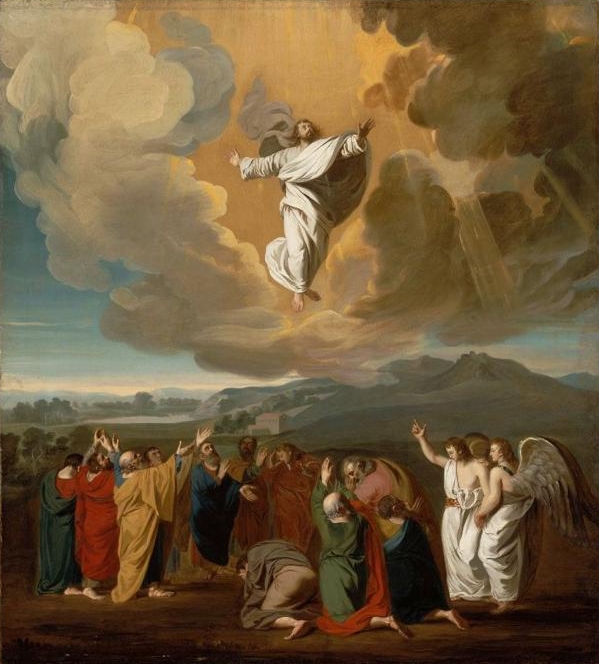
Why Was the Resurrection Such a Hidden Event?

easterThere is something of a hidden quality to the resurrection appearances that has always puzzled me. St. Peter gives voice to this when he says to Cornelius,

God raised Jesus from the dead on the third day and granted that he be visible, not to all people, but to us, the witnesses chosen by God in advance, who ate and drank with him after he rose from the dead. He commissioned us to preach to the people and to testify that he is the one appointed by God as judge of the living and the dead (Acts 10:41 to 42).

Note that Jesus did not appear openly to all but rather only to some. Why is this? It is so different from what most of us would do.

If I were God (and it is very good for you that I am not), I would rise from the dead very dramatically. Perhaps I would summon people to my tomb with trumpet blasts and then emerge amid great fanfare (including a multitude of angels), inspiring awe and striking fear in the hearts of the enemies who had killed me. Or maybe I would ride down on a lightning bolt right into the temple precincts and then go up to the high priest and tell him to seek other employment. Surely to accomplish such a feat would be an event that would never be forgotten! It would draw many to faith, would it not?

And yet the Lord does none of this! Not only did He appear only to some after His resurrection, but the actual dramatic moment of the resurrection itself seems to have been witnessed by no one at all. Instead of emerging from the tomb in broad daylight to the sound of trumpets, the Lord seems to have come forth before dawn to the sound of nothing but crickets chirping. Although St. Matthew mentions a great earthquake causing the rolling back of the stone and the guards stunned into unconsciousness, it seems that Jesus had already risen from the dead before the stone was rolled back.

Such a hidden event! It was the greatest event the world has ever known, and yet it was hidden from human eyes. No, this is not our way at all; Cecil B. DeMille would not be pleased.

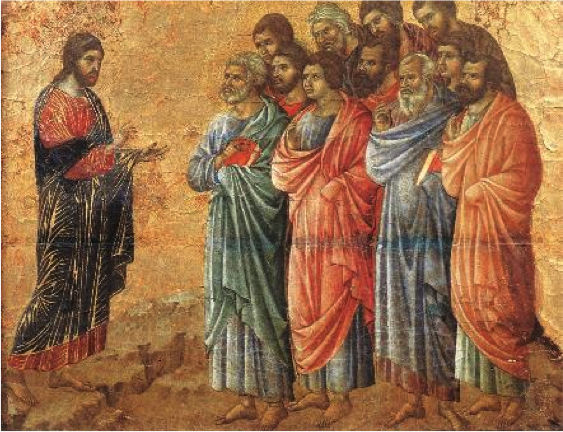
And then when the Lord does appear, it is only to some. Two of the appearances have often intrigued me because the details are so sparse; they are really mentioned only in passing:

One is the appearance to Peter. It would seem that the Lord appeared to Peter before appearing to the other apostles on that first resurrection evening. For when the two disciples return from Emmaus they are greeted with the acclamation, The Lord has truly been raised, he has appeared to Simon (Luke 24:34). Shortly thereafter, the Lord appears to ten of the apostles, along with some of the disciples.

Why is there so little information about this appearance to Simon Peter? We are told in great detail about a conversation between Jesus and Peter two weeks later in Galilee (John 21), but of this first appearance in Jerusalem we get only this passing reference.

In a certain sense it is a very significant appearance because it elevates the resurrection from just “some news” that the women were sharing, to the apostolic proclamation, the Lord has truly been raised. What moves it from rumor to fact? The difference is that he has appeared to Simon. Here is a kind of early and seminal act of the Petrine office and the Magisterium! But of this crucial apparition, no details are supplied.

The other appearance cloaked in obscurity is His appearance to the five hundred, which Paul relates here:

He appeared to Cephas, then to the twelve. After that He appeared to more than five hundred brethren at one time, most of whom remain until now, but some have fallen asleep (1 Cor 15:5-6).

This is an amazing appearance; it’s not to two or three, or even to a dozen, but to five hundred at once. And yet no details are supplied. Where did it happen? When? For how long? What did the Lord say? What did He do? Silence.

And then there are the resurrection appearances that never happened (but to worldly minds should have): Jesus’ appearance to His accusers and persecutors, to Caiaphas, to the Sanhedrin, to Pilate, and to all who jeered at Him as He hung on the cross. Surely they deserved a good dressing down—and they probably could’ve used it. Who knows, maybe they would have fallen to their knees and converted on the spot; maybe they would have worshiped Jesus.

Such are my thoughts on the strange and hidden quality of the resurrection. Why so hidden, why so selective an audience? Ultimately, I cannot say why; I can only venture a guess, a kind of theological hunch, if you will.

My speculation is rooted in the identity of God: God is love (1 Jn 4:16). Love is not merely something God does, nor is it just one of His many attributes. Scripture says that God is love. And it is the nature of true love (as opposed to lust) to woo the beloved, to invite rather than overwhelm, importune, force, or coerce. The lover wants to be loved, but to force the beloved to love or to overwhelm the cherished into a fearful love would mean not receiving true love in return.

It is in the nature of Satan to pressure, tempt, and overwhelm, in order to coerce us into sin. Satan is loud and loves to use fear as a motivator.

By contrast, God whispers. He calls us and gently draws us in. He supplies grace and evidence but does not overwhelm us with fearsome or noisy events. He is the still, small voice that Elijah heard after the fire and the earthquake (1 Kings 19:12). He is the One who has written His name in our hearts and whispers there quietly: Seek always the face of the Lord (1 Chron 16:11). At times He does allow our life to be shaken a bit, but even then it is more often something that He allows rather than directly causes.

God is not interested in loud, flashy entrances or in humiliating His opponents. He does not have a big ego. Even if He chose to compel the Temple leadership to worship Him by using shock and awe, it is unlikely that their faith response would be genuine. Faith that needs to see isn’t really faith; one doesn’t need faith to believe what he can plainly see with his own eyes.

Thus the Lord does rise from the dead and He does supply evidence to witnesses who had faith—at least enough faith to be rewarded. He then sends these eyewitnesses, supplies His graces, and gives us other evidence so that we can believe and love. But none of this is done in a way that overwhelms us or forces us to believe.

God is love, and love seeks a free and faithful response. The hiddenness of the resurrection is an example of tender love. There’s only so much that the human person can take. So the Lord rises quietly and appears (but only briefly) to some and then seems to withdraw—almost as if respectfully giving them time to process what they have experienced. He gives them time to deepen their faith and to come to terms with what was, for them, a completely new reality, one that would change their lives forever.

How different this is from the way we operate! So many of us think in terms of power, fame, glory, vindication, conquest, and so forth. How different God is! He is so often tender, hidden, and whispering. He doesn’t need to get “credit” for everything He does. He doesn’t need to crush His enemies. Rather, ruing the day on which their “no” might become a forever “no,” He works to win their love, always hoping for their conversion. Until then, He is always calling, willing, and giving grace. His mercies how tender, how firm to the end, our maker, defender, redeemer, and friend.

Why was the resurrection so hidden? God is love. And love woos, it does not wound. It invites, it does not incite. It calls, it does not crush. It respects, it does not rule or seek revenge. Yes, God is love.

Of her glorious Groom, the Church and Bride says,

Listen! My beloved! There he stands behind our wall, gazing through the windows, peering through the lattice … [He speaks to her and says], “Arise, my darling, my beautiful one, come with me” (Song 2:9-10).

Here’s how Cecil B. DeMille would do the Easter fire:

My Way Gets Brighter, My Load Gets Lighter – A Homily on the Easter Emmaus Gospel

easter2016There are four different Gospels proposed by the Church for Easter Sunday. Here I offer a homily on the Lucan account of the two disciples on the road to Emmaus. I have written sermons and commentaries on two of the other Gospels; they are available here:

  1. John 20:1-8 The Journey from Fear to Faith
  2. Matt 28:1-10 Jesus is Real – The Journey to Easter Faith

In this homily I reflect on the Emmaus Gospel (Luke 24:13-35) as a resurrection account, focusing on the journey of the two disciples out of darkness and into Easter light. (It is also clear that this whole Gospel account is a Mass, through and through, and I reflected on that aspect in another homily, available here: The Not-so-hidden Mass on the Road to Emmaus).

But on this Easter day, let’s focus on the journey of these two disciples in four stages, watching how their journey gets lighter and brighter as they go.

I. Despair That very day, the first day of the week, two of Jesus’ disciples were going to a village seven miles from Jerusalem called Emmaus, and they were conversing about all the things that had occurred. And it happened that while they were conversing and debating, Jesus himself drew near and walked with them, but their eyes were prevented from recognizing him. He asked them, “What are you discussing as you walk along?” They stopped, looking downcast. One of them, named Cleopas, said to him in reply, “Are you the only visitor to Jerusalem who does not know of the things that have taken place there in these days?” And he replied to them, “What sort of things?” They said to him, “The things that happened to Jesus the Nazarene, who was a prophet mighty in deed and word before God and all the people, how our chief priests and rulers both handed him over to a sentence of death and crucified him. But we were hoping that he would be the one to redeem Israel; and besides all this, it is now the third day since this took place. Some women from our group, however, have astounded us: they were at the tomb early in the morning and did not find his body; they came back and reported that they had indeed seen a vision of angels who announced that he was alive. Then some of those with us went to the tomb and found things just as the women had described, but him they did not see.” And he said to them, “Oh, how foolish you are! How slow of heart to believe all that the prophets spoke!”

As the gospel scene opens, we see two people: one named Cleopas and the other not named. Perhaps the other disciple is you.

Though it may be midday, they are experiencing a great darkness. Let’s consider their condition in four ways.

  1. They are Unfocused – As the curtain rises, we see these two, dejected and literally disoriented (they are traveling in the wrong direction, away from Jerusalem). It’s never a good idea to have Jerusalem behind you. Jerusalem is spiritual East, (oriens is the Latin word for east). Hence they are “dis-oriens,” disoriented; their focus is wrong. They are turned toward the west, toward darkness, away from the light and the resurrection.

So, too, for some (perhaps many) today whose focus is worldly and westward, rather than heavenly and eastward, toward spiritual Jerusalem. The second reading today says, Since you have been raised to new life with Christ, seek those things that are above, where Christ is seated at the right hand of God (Col 3:1).

  1. They are Unaware Jesus joins them and walks along with them. But the text says that their eyes were prevented from recognizing Him. We too quickly assume that it is the Lord who is preventing them. More likely, however, it is their sorrow or lack of faith that prevents them. The text describes them as looking downcast. This may speak to their sorrow, but it also indicates a certain lack of awareness and attention.

Sometimes we are so busy looking down that we forget to look up and remember the heavenly glory that should ever be our true focus. Psalm 121:1 says, I will lift up mine eyes unto the hills, from whence cometh my help. Were they to lift their eyes from their downcast state, they might become aware of who it is that is speaking to them! Instead, they are downcast and hence unaware of the saving presence of the very Lord they lament.

  1. They are Unbelieving – They are well aware of the testimony of many in the Church that Jesus was alive, risen from the dead. They also know that this is the third day, for they refer to it as such. But they are sinfully stubborn in that they disregard the news of His resurrection (from the women and the apostles) and are leaving town. This is despite Jesus’ repeated promises that He would rise on the third day, the very day they are departing Jerusalem. Yes, they are unbelieving; they disregard the evidence of the very thing promised. Too easily we can do the same, collapsing at the slightest misfortune despite the countless blessings of the Lord.
  2. They are uninstructed – And thus the Lord rebukes them as foolish for being slow to believe what the prophets had written. The Lord likely does not use the word “foolish” to mean stupid or bumbling (today’s connotation). Rather, He is probably using the meaning common at the time: uninstructed in biblical wisdom. Foolish usually meant unwise, out of touch with or uninstructed in the wisdom of God. Thus the Lord rebukes their forgetfulness of God’s wisdom, as set forth in the Holy Scriptures. They are thinking as men think, not as God (cf Mat 16:23) thinks; they are thinking in worldly ways not in the ways of wisdom. We, too, can easily fall prey to worldly thinking if we neglect the biblical texts and are slow of heart to believe what God teaches us therein.

II. Decoding “Was it not necessary that the Christ should suffer these things and enter into his glory?” Then beginning with Moses and all the prophets, he interpreted to them what referred to him in all the Scriptures.

The Lord decodes the recent events by teaching them, from the Word of God, what had been set forth about the Messiah.

What is Scripture? Scripture is the prophetic declaration of reality. It says, “This is what is really going on, no matter what you or others might think.”

And thus Jesus the Christ was fulfilling God’s plan. Nothing had gone wrong; nothing was out of control. The pride of Satan was defeated by the humble suffering of Christ; the disobedience of man was now replaced by the obedience of the God Man, Jesus. We are saved by the human decision of a divine person.

And for us who are too easily dismayed by the apparent (and short-term) triumph of evil and injustice comes the decoding of history: the cross wins; it always wins. Although it remains a cross, for down through the ages the faithful experience suffering and injustice, it always wins. Sunday always comes and an eternal Sunday dawns one day for all of the faithful.

No matter what you think is happening, this is what is really happening. The Paschal mystery decodes all history: the passion, death, and resurrection of Jesus Christ—this what is really happening. We are always carrying in our body the death of Jesus, so that the life of Jesus may also be manifested in our bodies (2 Cor 4:10). Jesus is the resurrection and the life and all who believe in Him will live.

III. Disclosure As they approached the village to which they were going, he gave the impression that he was going on farther. But they urged him, “Stay with us, for it is nearly evening and the day is almost over.” So he went in to stay with them. And it happened that, while he was with them at table, he took bread, said the blessing, broke it, and gave it to them. With that their eyes were opened and they recognized him, but he vanished from their sight.

Despite the evening hour, it is gradually getting brighter. Their hearts have been stirred by this walk with the Lord, who though hidden, has addressed their burdens, given them hope, and supplied meaning to the recent painful events.

The words of an old hymn come to mind: “My load gets lighter; my way gets brighter; walking up the King’s highway.” Something tells them that this must continue, that it must grow ever deeper. They ask the hidden Lord to stay.

Meals in the ancient world were about more than food; they were also about relationships. Meals were both a sign and a cause of greater intimacy and depth in relationships. And this is to be no ordinary meal.

Clearly this entire pericope has been a Mass, from the gathering of two or three, to the presence of the Lord, to the instruction in His Word, and now to the celebration of the Eucharist. The Lord took the bread, blessed it and broke and gave it to them. No Catholic can fail to hear the words of this familiar action and not realize that this is the Eucharist.

And for us the purpose is the same: that our load gets lighter, that our way gets brighter, and that we grow more deeply related to the Lord, who saves us. It is in this context that the Lord’s fundamental disclosure Lord takes place. Their eyes are opened and they recognize Him in “the breaking of the Bread,” the ancient Christian description of the Holy Eucharist.

Two sad and downcast disciples journey with the Lord. As their load gets lighter and their way gets brighter, they can finally the Lord, who has never abandoned them is now disclosed to them by faith, the Word of God, and the Sacrament. Is this how you experience the Mass and your Christian walk?

IV. Declaration Then they said to each other, “Were not our hearts burning within us while he spoke to us on the way and opened the Scriptures to us?” So they set out at once and returned to Jerusalem where they found gathered together the eleven and those with them who were saying, “The Lord has truly been raised and has appeared to Simon!” Then the two recounted what had taken place on the way and how he was made known to them in the breaking of bread.

No one goes away from Jesus unchanged. These men, having experienced the Lord profoundly, are now changed. They reverse course; they are “reoriented.” They return to Jerusalem and to the Church, gathered. There, they share with the others the joy that they have experienced. Is this how you leave Mass each Sunday?

Though it is now late in the evening, the spiritual darkness has cleared; the night is as bright as the day. Jesus is risen; they have seen the Lord. The declaration of the Church is clear: “The Lord has been truly raised!” If the Church ever stops being able to experience and declare this, we will no longer be the Church. But as it is, Christ has been raised, and this has been our declaration to an often skeptical, sad world.

It is Easter and we have seen the journey of these two disciples out of darkness and into light. One was named Cleopas; are you the other unnamed disciple? How? What is your story?

Four Immediate Results of Jesus’ Death on the Cross

crossLet’s conclude our consideration of certain texts from the Passion Narratives with one that describes the aftermath of Jesus’ death. The Gospel of Matthew recounts four immediate results of Jesus’ death, and while they describe historical events, they also signal deeper spiritual truths.

And when Jesus had cried out again in a loud voice, he gave up his spirit. At that moment, the curtain of the temple was torn in two from top to bottom. The earth shook, the rocks split, and the tombs broke open. The bodies of many holy people who had died were raised to life. They came out of the tombs after Jesus’ resurrection, went into the holy city, and appeared to many people. When the centurion and those with him who were guarding Jesus saw the earthquake and all that had happened, they were terrified, and exclaimed, “Surely he was the Son of God!” (Matt 27:50-53)

Let’s consider the four results described in this passage, each in turn.

I. Return At that moment, the curtain of the temple was torn in two from top to bottom.

The significance of the tearing of the Temple curtain and the way in which it happened ought not to be underestimated. Consider that God had walked intimately with Adam and Eve in the garden in the cool of day (cf Gen 3:8), but that after sin, they could no longer endure His presence; they had to dwell apart from the paradise that featured God’s awesome presence. Consider, too, how terrifying theophanies (appearances of God to human beings) were after that time. For example, the appearance of God on the top of Mt Sinai is described in the Book of Exodus:

When the people saw the thunder and lightning and heard the trumpet and saw the mountain in smoke, they trembled with fear. They stayed at a distance and said to Moses, “Speak to us yourself and we will listen. But do not have God speak to us or we will die” (Ex 20:18-19).

Had God changed? Was He different from when He walked with Adam and Eve in intimacy? No. We had changed and could no longer endure the presence of God.

Throughout the Old Testament, a veil existed between God and Israel. There was the cloud that both revealed God’s presence and concealed it. There was also the curtain in the sanctuary, beyond which the High Priest could only venture once a year, and even then in fear and trembling.

Sin had done this. Mere human beings could no longer tolerate God’s presence.

But with His Death on the cross, Jesus has canceled our sin. We once again have access to God through Christ our Lord. His blood has cleansed us and the ancient separation from the Father and from God’s presence has been canceled. But we will not encounter God in a merely earthly paradise; He has now opened the way to Heaven.

It is now up to us to make the journey there, but the way has been opened, the veil has been rent. Through this open veil the Father now says, “Come to me!”

II. Rendering of Judgment upon the World The earth shook, the rocks split …

Judgment has now come; Earth stands judged. This refers not merely to the created world, but also to the forces of this world, the forces of this age, which are arrayed against the Lord and His kingdom. These are forces that do not acknowledge the sovereignty of God but rather insist that political, social, cultural, and economic forces are what must hold sway and have our loyalty.

This earthquake, which has significant historical corroboration, demonstrates that the foundations of this rebellious world ultimately cannot stand before God. The foundations are struck; the powers of this world quake. Scripture says,

  1. People will flee to caves in the rocks and to holes in the ground from the fearful presence of the LORD and the splendor of his majesty, when he rises to shake the earth (Is 2:19).
  2. For thus says the LORD of hosts: Once more in a little while, I am going to shake the heavens and the earth, the sea also and the dry land. I will shake all the nations; and they will come with the wealth of all nations, and I will fill this house with glory, says the LORD of hosts (Haggai 2:6-7).
  3. In my zeal and fiery wrath, I declare that at that time there shall be a great earthquake in the land of Israel (Ez 38:19).
  4. The kings of the earth rise up and the rulers band together against the Lord and against his anointed, saying, “Let us break their chains and throw off their shackles.” The One enthroned in heaven laughs; the Lord scoffs at them. He rebukes them in his anger and terrifies them in his wrath, saying, “I have installed my king on Zion, my holy mountain” (Psalm 2:2-6).
  5. In the time of those kings, the God of heaven will set up a kingdom that will never be destroyed, nor will it be left to another people. It will crush all those kingdoms and bring them to an end, but it will itself endure forever (Daniel 2:42).
  6. The LORD will roar from Zion and thunder from Jerusalem; the earth and the heavens will tremble. But the LORD will be a refuge for his people, a stronghold for the people of Israel (Joel 3:16).
  7. A ruin! A ruin! I will make it a ruin! The crown will not be restored until he to whom it rightfully belongs shall come; to him I will give it (Ez 21:27).

Yes, the world shakes; the world is judged. And, most important, as Jesus says, Now is the time for judgment on this world; now the prince of this world will be driven out (John 12:31).

Do not doubt, dear reader, that no matter how powerful this world may seem in its pride and glory, it has already been shaken; it has already been judged. The world has been conquered and shaken to its very foundations. Do not put your trust or hope in any worldly reality; the world has been judged and shaken; it cannot stand the test of time. For here we have no lasting city, but we seek the city that is to come (Heb 3:14).

III. Resurrection to New Life … the tombs broke open. The bodies of many holy people who had died were raised to life. They came out of the tombs after Jesus’ resurrection and went into the holy city and appeared to many people.

“Death is struck and nature quaking. All creation is awaking, to its judge an answer making.” (from the Dies Irae). Yes, by dying, Jesus has destroyed our death.

Where, O death, is your victory? Where, O death, is your sting? The sting of death is sin, and the power of sin is the law. But thanks be to God. He gives us the victory through our Lord Jesus Christ (1 Corinthians 15:55-57).

Note well that although the text says that many of the dead appeared in Jerusalem, these appearances occurred after Jesus’ resurrection. Hence, we ought not to imagine ghosts or corpses walking around at 3:00 PM on Good Friday! Rather, they appeared on or after Resurrection Sunday. In this, they witness to the truth of resurrection and the initial fulfillment of the text from Ezekiel:

Behold, I will open your graves and cause you to come up out of your graves, My people; and I will bring you into the land of Israel. Then you will know that I am the LORD, when I have opened your graves and caused you to come up out of your graves, My people! I will put My Spirit within you and you will come to life (Ez 37:12-14).

Yes, on Good Friday, Jesus awakens the dead with the words, “Awake, sleeper, and arise from the dead, and Christ will shine on you” (Eph 5:14).

IV. Realization of Who Jesus Is When the centurion and those with him who were guarding Jesus saw the earthquake and all that had happened, they were terrified, and exclaimed, “Surely he was the Son of God!

Jesus most clearly showed His identity as the Son of God through His obedience to the Father. According to the Gospel of John, as Jesus rose from the table of the Last Supper, He said,

The prince of this world is coming. He has no hold over me, but he comes so that the world may learn that I love the Father and do exactly what my Father has commanded me. Come now; let us go forth (Jn 14:30-31).

The centurion, in seeing Jesus die this way, somehow recognizes in Him the obedience of the Son of God, who loves and obeys His Father.

By His obedience, Jesus has canceled our disobedience; His humility has canceled our pride. Yet the weakness of God is more powerful than any worldly force. The centurion, who knew power and was trained to respect it, saw in the earthquake and the other occurrences, an indication of the Lord’s glory. The Lord’s way to that glory is not our way. But His glory and Sonship cannot remain forever hidden! Scripture says,

See, he comes amid the clouds, and every eye will see him, even those who pierced him; and all peoples on earth will mourn because of him. Even So. Amen (Rev 1:7).

Come Down from the Cross and We Will Believe – A Meditation on a “Crucial” Decision by Jesus

holy-thursdayOne of the most remarkable aspects of Jesus’ crucifixion is the humble reserve He displayed. As God, He had the power to end His suffering and humiliation at any time. He had already reminded Peter, Do you think I cannot call on my Father, and he will at once put at my disposal more than twelve legions of angels? But how then would the Scriptures be fulfilled that say it must happen in this way?” (Matt 26:52-54)

As Jesus hung on the cross, Satan and others tempted Him one final time, saying, “Come down from the cross.”

Those who passed by hurled insults at him, shaking their heads and saying, “You who are going to destroy the temple and build it in three days, save yourself! Come down from the cross, if you are the Son of God!” In the same way the chief priests, the teachers of the law and the elders mocked him. “He saved others,” they said, “but he can’t save himself! He’s the king of Israel! Let him come down now from the cross, and we will believe in him. He trusts in God. Let God rescue him now if he wants him, for he said, ‘I am the Son of God.’ ” In the same way the rebels who were crucified with him also heaped insults on him (Matt 27:39-44).

The temptation is to give in to pride and the desire for power, to do anything but die on the cross. They taunt Jesus by saying that because God is all-powerful, if you really were God, you would have the power to come down and not be overpowered by your enemy.

It is a crafty, worldly temptation. To the worldly-minded, the demand makes sense. In effect, they are saying, “If it’s faith you want from me, you can have it if you’ll just come down from the cross. Then I’ll be impressed; then I’ll believe.” The tempters want to be saved on their own terms.

Why does Jesus stay on the cross? For three reasons, at least.

I. Humility – Jesus is out to overcome Satan. In this world, we seek to overpower our foes. Does it work? No. Usually the cycle of violence just continues; in fact, it often gets worse. We think, “If I can just yell louder, if I can just outwit or outgun my opponent, then I’ll win the day.” Yes, but there’s more to life than just one day. The next day your opponent will return with louder, wittier arguments and with bigger guns. And the cycle of violence goes on; it is is an endless power struggle.

Dr. Martin Luther King, Jr. once said, “Darkness cannot drive out darkness; only light can do that. Hate cannot drive out hate; only love can do that.” And I would add that here at the cross, pride cannot drive out pride; only humility can do that.

Therefore, although the crowd and Satan try to goad Jesus into a power struggle, the Lord chooses the only weapon that is truly effective against pride: humility. To the devil, humility is like kryptonite!

To our human eyes, it seems that the Lord is defeated. But in His humility, He is doing more damage to Satan than we could ever imagine. He stays on the cross to defeat Satan’s pride through His own profound humility. Jesus does this despite Satan’s desperate attempts to engage His pride and provoke Him into a power struggle.

II. Obedience – It was disobedience that got us into trouble in the first place, and it will be obedience that restores us. Adam said “No,” but Jesus, the New Adam, says “Yes.” It is not the suffering of Jesus itself that saves us; it is His obedience. And Jesus’ suffering is part of that obedience.

Jesus decides to obey His Father, no matter the cost. Isaiah says of Jesus, He suffered because he willed it (Is 53:7).  St. Thomas Aquinas said that if Jesus had suffered and gone to the cross without willing it, we would not be saved. Jesus Himself said, No one takes my life from me, I lay it down freely (Jn 10:18). St. Maximus the Confessor said, “We are saved by the human decision of a divine person.”

Jesus went to the cross and decided to stay on the cross in obedience. And it is by His obedience, by His will to obey, that we are saved.

III. To save me – On a more personal level, we can also see that Jesus decided to stay on the cross to save each one of us. If He had come down, I would not be saved; you would not be saved. We might have been impressed and we might have even had a kind of faith, but it would not have been a saving faith.

Pure and simple, Jesus decided to stay on the cross and to endure mockery, shame, pain, and death, in order to save a poor sinner like me. An old gospel song says,

When Jesus hung on Calvary, people came from miles to see
They said, If you be the Christ, come down and save your life
But Jesus, sweet Jesus, never answered them
For He knew that Satan was tempting
If He had come down from the cross, my soul would still be lost

He would not come down from the cross just to save himself
He decided to die just to save me.


A Prescription for Life, Given by Jesus in the Garden of Gethsemane

christ-in-the-garden-of-gethsemaneA moment occurs in the Garden of Gethsemane that presents a very good stance for Holy Week, indeed for the whole of our life: Jesus was at prayer; He returned to find His disciples asleep and said,

Watch and pray so that you may not undergo the test. The spirit is indeed willing but the flesh is weak (Matt 26:41).

Let’s examine the passage and explore what it has to say about us and to us.

I. Problem – Jesus comes to His disciples and finds them sleeping. A great showdown between light and darkness, good and evil, Satan and the Lord, is about to unfold—is unfolding! But the disciples, the first leaders of the Church, are sleeping at this crucial moment in human history. Disgracefully, things have not changed since that time.

Yes, this is too often still the case. And lest you think that I am singling out popes, bishops, priests, and deacons alone, let me be clear in saying that the phrase “leaders of the Church” includes parents and community elders as well.

We in the clergy too often remain sleepy and quiet while our people are undergoing severe trials and exposure to terrible sin and error. Well does the Scripture describe many of us clergy when it says, Israel’s watchman are blind, the lack knowledge; they are mute dogs, they cannot bark; they lie around and dream, they love to sleep (Is 56:10).

But many parents, the leaders of the domestic Church, are also woefully out of touch with the struggles of their children. They have little idea what their children are actually listening to or watching; they seem to have higher priorities than monitoring their children and teaching them with clarity.

Yes, for all of us Church leaders, at the parish level and at the domestic level, we too easily doze off and dream away, seemingly unaware of the great cosmic battle that is going on all around us, claiming our people and our children.

Or perhaps we do have some sense of the awful battle, but don’t know what to do about it. Overwhelmed and stressed out, we medicate ourselves. Perhaps like the disciples we drink some wine and doze off in the garden while the critical battle unfolds around us. Overwhelmed, we tune out. We veer off to diversions, watch fantasies on television, or lose ourselves in virtual Internet “relationships” while our real relationships languish. Reality is too painful, so we medicate ourselves and go off to sleep, a spiritual sleep, a moral sleep, even a physical sleep.

Only the pure mercy of God can save us. If the Church or the world depended on human leaders we’d be doomed. If the Church were solely dependent on human beings to keep her together, she would’ve lasted 20 minutes, at best! Yes, only the pure mercy of God can see us through. Without Jesus, awake and sober in the garden, we’re surely lost.

Yes, a serious problem is described here: while the cosmic battle between good and evil rages around us, too many of us are asleep. And while God’s mercy can help to close the gap, we must be willing to do what Jesus commands, what He now prescribes.

II. Prescription – Jesus says, Watch and pray! That is to say, “Wake up; come to your right mind; be sober!” To be sober is to have a clear mind, a mind that is aware of what is going on, and that can clearly identify the signs of the times. The sober mind is able to identify the tactics of the enemy, the drives of sin, and know their moves. The sober mind is also in touch with the remedies of grace and how to apply them prudently. We simply must watch and pray!

In particular, our prayer needs to be rooted in the Scriptures and the revealed truth of Jesus Christ. There’s just too much “stinking thinking” in our world today to believe that our mind is going to be anything but polluted if we don’t cleanse it every day with the Word of God.

Our minds are like sponges. Put a sponge in muddy water and the sponge is going to come out muddy. How then is the muddy sponge to be cleansed? It is plunged into clean water and rung out; then it is plunged back into the clean water and rung out again and again and again. Similarly, our minds—like sponges muddied by the polluted, confusing, and erroneous thinking of the world—must be cleansed daily by being plunged into the clear, clean water of God’s Holy Word.

It is a sobering fact that if we are not praying daily and being deeply rooted in God’s Word, it is very unlikely that we will make it.

The Lord’s prescription is bluntly simple: wake up and keep watch by praying! We somehow seem to find time for everything else. It’s time to wake up and keep our eyes focused on the Lord, to watch Him, to listen to Him, and to be deeply rooted in the relationship of prayer and obedience to His Word. Otherwise, a terrible peril is upon us.

III. Peril – We are told to watch and pray lest we undergo the test, lest we give way to temptation. The Greek word for temptation use here is πειρασμόν (peirasmon), which almost sounds like the English word “peril.”

Now don’t let temptation become something abstract. Temptation is the work of Satan to drag you to Hell. Are you clear on that? If you’re not watching and praying, you’re defenseless; you’re an easy target; you’re low hanging fruit; you’re probably not going to make it. If you do not pray, Jesus warns that you will give way to temptation. That is, Satan will be able to drag you off to Hell and probably others along with you.

If you don’t even care enough about yourself to pray, then at least do it for the sake of others, who are probably depending on you for teaching and example! No priest goes to Hell alone; he takes others with him. And no parents go to Hell alone; they take others with them.

It’s time to wake up and recognize the peril. You will give way to temptation if you won’t watch and pray. Satan can and will drive you to Hell. This peril is real. If you don’t think so, take it up with Jesus; He said it, I didn’t.

IV. Prevailing priority – Jesus goes on to say, The spirit is indeed willing, but the flesh is weak.

Sadly, most of us interpret this passage as an excuse, as if Jesus were permitting us to say, “Well, deep in my heart I want to do what’s right, but I’m really not able to do it because of my weak flesh. So it’s really not my fault. I should get credit for having good intentions in my heart.”

This is not only an incorrect interpretation of what Jesus says here; it is a sinful interpretation. Jesus is not saying that our flesh excuses us. He’s saying that our spirit is willing, that our Spirit (by His grace) has the capacity to prevail over the weakness of the flesh!

We are going to have to battle against our flesh; that is true; that much is clear. But our spirit, the part of us that is open to God, has the capacity to prevail, if we will permit God’s Holy Spirit to strengthen our human spirit.

In other words, our spirit is to be our number one priority, over and against our flesh. With this as our first priority, we will open our spirit to God’s Holy Spirit and will be strengthened. We will prevail over temptation. We will be victorious over Satan’s attempts to drag us to Hell.

There should be no excuses here. Jesus says that although the flesh is weak, and we’ll battle against it until the day we die, our spirit can “will” us to overcome the drives of our flesh. Our spirit can and must have a priority that will empower us to prevail over the flesh and over any incursions of the evil one.

We must make a decision; our spirit must be willing to watch and pray. We cannot allow the emphasis to fall on the weakness of the flesh. The emphasis must always be on the prevailing power and priority of the human spirit, graced by God’s Holy Spirit, to win the victory.

Not a bad prescription for life and for Holy Week, too!

A More Awful Thing – Jesus’ Lament on the Culture of Death as He Is on His Way to the Cross

8th-stationIn the Gospel we read on Palm Sunday, Jesus says a rather extraordinary thing as He is on His way to the cross. He addresses it to the women who have gathered to lament Him:

Daughters of Jerusalem, do not weep for me; weep instead for yourselves and for your children, for indeed, the days are coming when people will say, “Blessed are the barren, the wombs that never bore and the breasts that never nursed.” At that time people will say to the mountains, “Fall upon us!” and to the hills, “Cover us!” for if these things are done when the wood is green what will happen when it is dry? (Luke 23:28-31)

As awful as the crucifixion would be, as mightily sinful as it was for us to have condemned the Lord, Jesus says that something worse is coming, something even more awful. What was He talking about? Is it a prophecy for our times?

When we read any biblical text, we should ask three questions: What did it mean then? What does it mean now? What does it mean for me? Too often today an almost exclusive focus is placed on the historical meaning of a text. While this is interesting it is also important to apply the text to our own times and to our own self. This is usually the goal of good preaching. Let’s look at this passage with all three questions in mind.

1. What did it mean then? Jesus had often spoken of a great destruction soon to come upon Jerusalem for her lack of belief. He did this primarily in the Olivet Discourse, which is recorded in the Synoptic Gospels (Mt 24:1-51; Mk 13:1-37; Lk 21:5-36). Jerusalem will be surrounded by armies, nation will rise against nation, the temple will be destroyed and there will be great distress, unequaled from the beginning of the world until now—and never to be equaled again (Mat 24:21). Many misinterpret this discourse as referring to the end of the world, but Jesus is clearly referring to the destruction of the Temple and Jerusalem (which in fact took place in 70 A.D.) (cf Matt 24:2-4; Mark 13:2-5; Luk 21:5-7). In many ways, the Jewish war with the Romans was one of the bloodiest and most awful wars ever fought. Josephus indicates that 1.2 million Jews lost their lives in this devastating war. Jerusalem was destroyed and the Temple was thrown down, never to be rebuilt.

Jesus seems to be saying to the women, “Women of Jerusalem, though you weep for me in my suffering, be aware that something far worse will come upon you and your children. It will be so awful that people will actually call those who died ‘blessed’ and those who never existed ‘lucky.’ It will be so awful that people will long for death.”

He then refers to green wood and dry wood, in a sentence that basically means, “If I, who am innocent, meet this fate of crucifixion, what will be in store for the guilty?”

Hence, what this passage meant then was that Jesus was summoning the women to prayer, to a deep and mournful prayer that would call people to conversion. Otherwise, difficult days would lie ahead.

2. What does it mean now? Jesus spoke not only to his times but to ages yet unborn. His words fit our times like a glove. For indeed these are times when many say, “Blessed are the wombs that have borne no children. Blessed are the wombs that bear fewer children. Blessed are those who practice contraception. Blessed are the surgically sterilized.”  In other words, Blessed are the barren, the wombs that never bore, the breast that never nursed. Throughout the Western world, birth rates have plummeted; in some countries they are dangerously low. Some Western Christian nations and societies are practicing contraception and inflicting abortion to the extent that they are approaching a point of no return. Years of fear-mongering about overpopulation, extolling the virtues of contraception, and preferring the single life to marriage and family has led to a dramatic shift in the attitudes of many Westerners toward children, who are now seen as more a burden than a blessing. Sterility and barrenness were considered a terrible curse until quite recently. But in what Pope John Paul II termed a “culture of death,” many have come to say “Blessed are the barren.” And although nations such as Germany, France, and Italy are practically begging their citizens to have more children (even providing tax incentives) it seems that most Western Christians can’t be bothered with such things as marriage and family.

In addition, many in the radical environmentalist movement today see humanity as a great scourge on the planet and would seem to prefer that “the mountains fall on us and the hills cover us.” There are bumper stickers that say, “Earth First.” There is a show on The History Channel fantasizes about “Life after Humans” (actually, it’s a rather creative show).

In looking forward to our times, perhaps Jesus’ words to the women would be: “Women of Jerusalem, do not weep for me; weep for your descendants. For the days are actually coming when people will say ‘Blessed are the barren.’ The days are actually coming when people will prefer not to have children at all or at least to have as few as possible. The days are actually coming when children will be aborted in the womb and the ability to do this will be called a ‘right,’ when women in difficult situations will be taken to abortionists by people who they are doing something good. The days are actually coming when depression, self-loathing, hopelessness, and misplaced priorities will so consume your descendants that they will prefer nonexistence to existence, when death will become a kind of ‘therapy’ through abortion, euthanasia, contraception, and stem-cell research. Yes, dear women, prayerful weeping may push off these grievous times for a while, but the days are coming when these things shall come to pass. For if you think things are bad now when the wood is green, what will happen when the wood becomes dry?”

You may think that the picture I paint with those words is a bit extreme. But there is a stunning quality to Jesus’ words as He warns these women of very difficult days ahead. They are just as stunning in our times. Though our historical moment is different, it actually seems to be a more literal fulfillment of Jesus’ words!

3. What does it mean for me? Now do you really think I am going to do your work for you? It remains for each of us to answer this question for him/herself. What do we weep about? Do we weep about things that really matter or merely over worldly losses—things that will be lost anyway? What kind of a world are we bequeathing to our children? Do we love life? Is new life a sign of hope for us or is it a burden? Do we speak prophetically about the culture of death? Do we encourage marriage and praise childbearing? Do we help young parents through some of the difficulties of raising children? The Lord surely has many more of these personal questions for us. Ponder the text slowly and consider what the Lord might be saying to you.

As a child, I remember being taught in school to fear overpopulation; we were told that the Earth would soon run out of room. The video below is a clip from “The Mark of Gideon,” a 1969 episode of Star Trek that showcases the overpopulation anxiety of the time. In this episode, Captain Kirk is abducted by Ambassador Hodin of the germ-free, overpopulated planet, Gideon. Hodin has a plan to use Kirk to introduce a deadly virus (which Kirk carries but to which he is immune) to Gideon in order to reduce the population. Kirk exhorts Hodin to instead encourage the population to use contraceptives and sterilization. The segment goes on to paint the inhabitants’ love for life as somewhat pathetic. Kirk even gets angry when they demonstrate respect for life from conception until natural death.

Bait and Switch – A Meditation on the Continuing Cry, “Give us Barabbas!”

GiveUsBarabbasIn the mockery of a trial that Jesus endured before Pontius Pilate, there came a critical moment, one dripping with irony: the crowd chose for release a fake messianic figure and “son of the father” (the literal translation of the name Barabbas) to the actual messiah and true Son of the Father, Christ Jesus, the Lord.

The version we heard on Palm Sunday was from the Gospel of Luke and it records the foolish cries of a crowd that has been misled by a kind of devilish bait and switch. Pilate has just offered to release Jesus our Lord:

But all together [the crowd] shouted out, “Away with this man! Release Barabbas to us.”—Now Barabbas had been imprisoned for a rebellion that had taken place in the city and for murder. — Again Pilate addressed them, still wishing to release Jesus, but they continued their shouting, “Crucify him! Crucify him!” … So he released the man who had been imprisoned for rebellion and murder, for whom they asked, and he handed Jesus over to them to deal with as they wished.

As noted, “Barabbas” is a surname name that literally means “son of the father.” Some of the ancient manuscripts supply Barabbas’ first name as “Jesus.” The devilish irony and bait and switch doesn’t get much richer or darker. Two men, both named Jesus, stand before the multitude:

  • One is named Jesus Barabbas, “Jesus, son of the father.”
  • The other is Christ Jesus, true and eternal Son of the Father.

Both also have messianic credentials:

  • One is “Jesus Barabbas,” who represents the lies and misconceptions of a fake messiah offering a merely worldly liberation. This worldly messiah would rescue Israel from the Romans by riding in on a war-horse and, after a bloody battle, lead Israel to victory. This fake messiah is represented here by Jesus Barabbas and others like him, who seek redemption in worldly terms and will use worldly, political, and military means to attain their goals. The Lucan text above describes Barabbas as an insurrectionist and murderer. He was likely involved in an uprising (common at the time) against the Romans by those claiming to be the promised Messiah.
  • The other is Jesus, the Son of the Eternal Father, the true Messiah who has come to save us from our sins and from Satan. The blood Jesus will shed is not that of His enemies, but His own. The victory He will provide is not a victory over some passing worldly power, but over the ancient and perduring enemy, Satan, and the sin he inspires. Jesus applies His status as Messiah not to political and economic salvation, but to the spiritual salvation written of in the Suffering Servant Songs of Isaiah (Isaiah 42:1–9, Isaiah 49:1–13, Isaiah 50:4–11, and Isaiah 52:13—53:12).

Here, then, is the choice that is ever before us: a fake, contrived, worldly messiah or the true, promised, heavenly Messiah. Satan is the master deceiver and father of lies. It is no accident that he names his bait-and-switch messiah both “Jesus” and “Barabbas.”

The crowd then called for the release of Barabbas and insisted that Jesus, the true Christ, be crucified: Away with him! Crucify him!

It is as true now as it has been down through the ages. Satan, the father of lies, continues to craft false messiahs bearing false promises. Of course their promises are not usually outright lies, because those don’t sell as easily and Satan knows it. Instead, these false messiahs spout half-truths or promises of temporary relief (in the place of lasting healing); they promise quick fixes rather than deeper and lasting repentance.

Political liberation and economic prosperity have their place. But a sinful nation cannot ultimately prevail. Indeed, prosperity and power only further corrupt a sinful person or nation. Only a trusting, humble walk with God along with the resulting virtue and the mastering of sinful drives can bring lasting peace.

Still, the temptation to fall for false messiahs and utopian schemes continues. And so do the cries of many in the crowd, “Give us Barabbas,” or “Give us science,” or “Give us new policies,” or “Give us education.” Give us anything but Jesus; He has to go.

Again, science, philosophy, education, politics, culture, etc. have their place. They can bring us a temporary relief, chip away at injustice, cure certain diseases, or provide minor diversions; but they cannot save us.

  • Science, can’t you save me? No, I can’t save you. I can tell you how far it is from the Earth to the sun. I can tell you how to fly rocket ships into outer space. I can tell you the secrets of the atom. But I can’t tell you how to climb to Heaven, or why you were made, or why anything exists at all. I can tell you some of the “what,” but nothing of the “why.” But I can’t save you.
  • Philosophy, can’t you save me? No, I can’t save you. I can tell you more and more about less and less until you know everything about very little. I can tell you about the greatest thoughts and opinions of the greatest thinkers. But I can’t save you.
  • Education, can’t you save me? No, I can’t save you. I can make you smart. But I can’t make you wise. And I can’t save you.
  • Culture, can’t you save me? No, I can’t save you. I can make the world a more beautiful and entertaining place from which to go to Hell. But I can’t save you.
  • Economics, can’t you save me? No, I can’t save you. I can make you richer, but not rich in what matters to God. I can’t make you rich enough to buy your salvation. I can’t save you.
  • Politics, can’t you save me? No, I can’t save you. I can give you power and access to worldly power. I can make you fear the other political party. I can promise you utopia, but I can’t deliver it. I can’t save you.
  • Entertainment, can’t you save me? No, I can’t save you. I can supply you with temporary diversions and even mesmerize you for a moment. But I deal in fantasy and dreams, not reality. I can’t supply you with the happy endings I describe. I can’t save you.

Yes, Satan still trots out many a “Barabbas,” and many of us still fall for the old bait and switch. Maybe it’s because it’s an easy solution, a quick fix, the promise of a cheap thrill with few consequences. But it is all a bunch of lies, or even worse, half-truths. It is anything but true repentance, self-discipline, or a humble walk with God. Away with Jesus. We want Barabbas.

Do you think these biblical stories are locked in the past? Think again. Satan never stops. But even more sadly, our collective cry still goes up all too frequently: “Give us Barabbas … Crucify Jesus!”

Holy Week Guide – Walk with the Lord Each Day of This Holy Week

last-supperAt the heart of our faith is the Paschal mystery: the Passion, death, resurrection, and ascension of Jesus Christ. All of salvation history leads up to and goes forth from these saving events. We call this “Holy Week” because Jesus’ public ministry culminates with His suffering, death, and resurrection.

What follows is a brief description of each day of Holy Week. I publish it every year, often adding a few details. I hope you will print out this flyer (Walking with Jesus in Holy Week) and read it each day this week. Walk with Jesus prayerfully in His most difficult yet most glorious week.

Some scholars of Scripture scoff at the idea that we can construct a day-by-day journal of Jesus’ last week. There are historical gaps as well as things in the different accounts that don’t agree perfectly. Further, St. John posits a slightly different timeframe (shifted by one day) for the Last Supper relative to Passover. The following sequence follows the timing of the synoptic (Matthew, Mark, and Luke) accounts. Despite certain scholarly doubts, the accounts really do add up fairly well if one uses a little imagination and views the differences not as factual discrepancies but rather only as variations in the level of detail.

So read this chronology as a likely, but not certain, outline of Jesus’ last week. It is a great blessing to consider the Lord’s last week and to walk with Him.

Plan to attend some or all of the special liturgies of Palm Sunday, Holy Thursday, Good Friday, and Holy Saturday at your parish. By celebrating them in community, we make them present today and we learn again, in a new way, the reality of our risen Lord, alive in our midst.

 palmsundayPALM SUNDAY – Our celebration of Holy Week commences as we remember and make present the triumphant entrance of Jesus into Jerusalem to begin His final week and initiate His Passion. All four of the Gospels recount that Sunday morning so long ago. As you receive your palms, ponder being a part of that vast crowd. How will you journey with Jesus this week? Let the palms remind you to praise Him with your prayerful presence during the sacred Triduum (literally, three days). According to Mark 11:11, Jesus returned that evening to Bethany, a suburb of Jerusalem. Perhaps He stayed with his friends Martha, Mary, and Lazarus. Pray with Jesus this evening and think about how He contemplated the difficult days ahead of Him.

Monday of Holy Week – According to Matthew 21, Mark 11, and Luke 19, Jesus returned to Jerusalem on this day and, seeing shameful practices occurring in the Temple area, cleansed it. The Gospel of John also records that Jesus rebuked the unbelief of the crowds. Pray with Jesus and ponder His zealous desire to purify us.

Tuesday of Holy Week – According to Matthew, Mark, and Luke, Jesus again returned to Jerusalem, where He was confronted by the Temple leaders for His actions on the previous day; they questioned His authority. Jesus also taught extensively, using parables as well as other forms. There was the parable of the vineyard (cf Mt 21:33-46), the parable of the wedding banquet (cf Mt. 22:1), the teaching on paying taxes (cf Mt 22:15), and the rebuke of the Sadducees who denied the resurrection (cf Mt. 22:23). There was also the fearful prophecy about the destruction of Jerusalem if the inhabitants did not come to faith in Him: Jesus warned that not one stone would be left on another (cf Mt 24). Continue to pray with Jesus and listen carefully to His final teachings.

Wednesday of Holy Week – Traditionally, this day was called “Spy Wednesday,” for it was on this day that Judas conspired to hand Jesus over. For this, he was paid thirty pieces of silver (cf Mt. 26:14). Jesus likely spent the day in Bethany. In the evening, Mary of Bethany anointed Jesus with costly perfumed oil. When Judas objected, Jesus rebuked him, saying that Mary had anointed Him for His burial (cf Mt 26:6). The wicked are plotting against Jesus; are you praying?

 HolyThursdayHOLY THURSDAY – This marks the beginning of the sacred Triduum. Early in the day, Jesus gave instructions to the disciples on how to prepare for this most holy meal, which would be His last supper. Throughout the day they made these preparations (cf Mt 26:17). In the Mass of the Lord’s Supper we remember and make present the last meal that Jesus shared with His disciples. We place ourselves in the upper room with Jesus and the apostles and do what they did. Through the ritual of washing the feet (Jn 13:1) of twelve parishioners, we unite in service to one another. Through our celebration of this very first Mass and Holy Eucharist (Mt 26:26), we unite ourselves to Jesus and receive His Body and Blood as if for the first time. We especially thank God for His gift of the ministerial priesthood. After the Last Supper (the very first Mass), Jesus and the apostles made a short journey across the Kidron Valley to the Garden of Gethsemane, where He asked them to pray while He experienced His agony (cf Mt 26:30). During today’s Mass we process with Jesus in the Blessed Sacrament to a garden (the altar of repose) that has been prepared. The liturgy ends in silence. It is an ancient custom to spend an hour before the reposed Blessed Sacrament on this night. As we pray, we are with Jesus in the Garden as He goes through His agony. Many parish churches remain open until nearly midnight because it was at this time that Jesus was betrayed by Judas, was arrested, and was taken to the house of the high priest (cf Mt. 26:47).

goodFriday GOOD FRIDAY – All through the previous night, Jesus had been locked in the dungeon of the high priest’s house. Early in the morning He was brought before Pontius Pilate, who transferred the case to Herod. Herod promptly sent Jesus back to Pilate. Sometime in the middle of the morning, Pilate bowed to the pressure of the Temple leadership and the crowds and condemned Jesus to a horrible death by crucifixion. Late in the morning, Jesus was taken by soldiers through the city and up the hillside of Golgotha. By noon, He had been nailed to the cross, where He hung in agony for some three hours. Jesus died at approximately three o’clock in the afternoon. He was taken down from the cross and hastily placed in a tomb before sundown. Today is a day of prayer, fasting, and abstinence. To the extent possible, Christians are urged to keep the day free of work, social engagements, and entertainment, devoting themselves to communal prayer and worship. Many parishes gather together for the Stations of the Cross and for recollections of the seven last words of Jesus. Some offer the Stations of the Cross at 3:00 PM, the hour of Jesus’ death. In the evening, many parishes gather quietly to enter into a time of prayer, reflecting on Jesus’ death on the cross. We also pray for the needs of the world. To acknowledge the power of the cross in our lives today, each person comes forward to venerate the cross with a kiss. The hunger we experience as a result of this day of fasting is satisfied with Holy Communion, distributed at the end of the liturgy. As you pray on this night, contemplate how the apostles might have gathered together that night in fear and in prayer, reflecting on all that had happened.

 saturdayHOLY SATURDAY – Although the body of Jesus was in the tomb, His soul was among the dead, announcing the Kingdom. The hour is coming, and now is, when the dead will hear the voice of the Son of God, and those who hear it will Live (John 5:25). Consider what it must have been like for the dead in Sheol to awaken to the voice of Jesus! Meanwhile, the disciples, heartbroken at the death of Jesus, observed the Jewish Sabbath in sorrow. They had forgotten Jesus’ promise that He would rise. We, however, cannot forget His promise. Tonight in our parishes, after sundown, we gather for the great Easter Vigil, where we experience Jesus’ rising from the dead. We gather in darkness and begin by lighting the Easter fire, which reminds us that Jesus is light in the darkness; He is the light of the world. We enter into the church and listen attentively to Bible stories that describe God’s saving work of the past. Suddenly, the church lights are turned on and the Gloria is sung, as we celebrate the moment of Christ’s resurrection. He lives! In the joy of the resurrection, we then celebrate the Sacraments of Baptism, Confirmation, and Eucharist for our catechumens and candidates, who have prepared for many weeks for this night. As a Church, we sing Alleluia for the first time in forty days. Do everything you can to be present at this Mass, and invite friends and family to join you. Our Easter Vigil ushers in an Easter joy that never ends!