
I Got a Robe! A Teaching on One of the Most Shocking Parables Jesus Ever Told

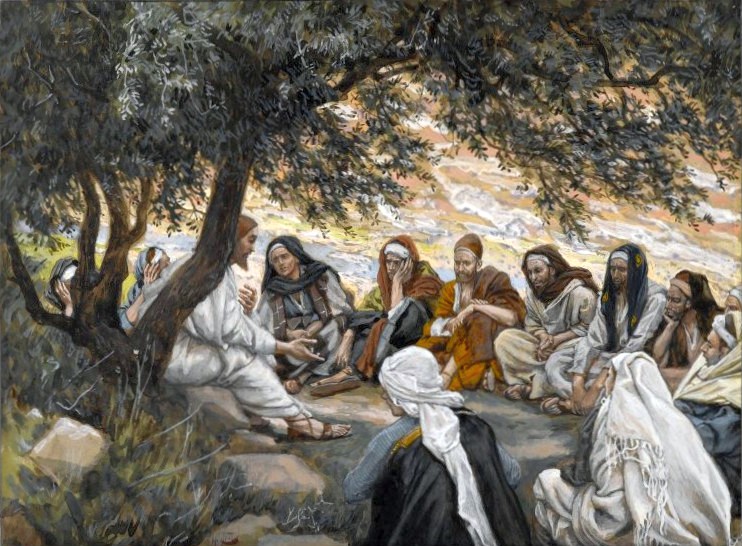
Parable_of_the_Wedding_FeastThe Gospel from Thursday’s Mass (Thursday of the 20th Week of the Year) contains one of the most shocking parables Jesus ever told. It is the Parable of the Wedding Feast from the Gospel of Matthew, and it tells the story of a king who gives a wedding banquet for his son. Most know it well, but in case you want to review it, the full text is available here: Parable of the Wedding Feast.

It does not take a degree in biblical theology to understand that this parable is an allegory. The “king” is God the Father, the “son” is Jesus, and the wedding feast is the great wedding feast of the Lamb described in the Book of Revelation:

Then I heard what sounded like a great multitude, like the roar of rushing waters and like loud peals of thunder, shouting: “Hallelujah! For our Lord God Almighty reigns. Let us rejoice and be glad and give him glory! For the wedding of the Lamb has come, and his bride has made herself ready. Fine linen, bright and clean, was given her to wear.” (Fine linen stands for the righteousness of God’s holy people.) Then the angel said to me, “Write this: Blessed are those who are invited to the wedding supper of the Lamb!” And he added, “These are the true words of God” (Revelation 19:6-9).

The invited guests are the Jewish people of that time who, when the feast is ready, ignore or reject it for various reasons. Some guests express concerns for land (I just bought a farm) or profit (I own a business). And a group of them (for unknown reasons) lay hold of the king’s servants (who represent the prophets and, later, the Apostles), beating and even killing them.

This rejection represents not just the rejection by the Jews of history, but also the long human history of ignoring or rejecting God in favor of worldliness (land), profit (business), and hostility to the truth (the beating and killing of the king’s servants (the prophets and Apostles)).

And yet the focus is on the rejection by the Jews of the time, for the parable calls them the “invited guests.”

The reaction to their rejection, related by Jesus Himself, is that the king (God the Father) was enraged and sent his troops, destroyed those murderers, and burned their city (Matt 22:6).

This detail is especially shocking to many modern readers, because we have bought into a watered down notion of the holiness of God and the significance of human choice for or against Him. The common modern vision of the Father is that of a doting older man (like George Burns or Morgan Freeman) who exists more to get us out of trouble and offer friendly advice than to summon us to holiness, obedience, and a critical choice.

But take note: this detail of the king burning their city is told by Jesus Himself. And as we shall see in this coming Sunday’s Gospel about the wide and narrow roads, He is not playing around! However we want to “rework” God and render Him harmless, however we want to try to oppose God’s love and justice, however we want to render human choice insignificant, the biblical text will have none of it. The bottom line is that no one loves you more than does Jesus Christ, yet no one warned of judgment and Hell more than He did.

Don’t be surprised if this parable shocks you; it is meant to do so. It is a call to sobriety in the face of the four most critical truths of our life: death, judgment, Heaven, and Hell. This parable teaches that we will either enter the wedding feast and celebrate with the Father or we will be caught up in the conflagration when the Lord comes to judge this world by fire (e.g., 2 Pet 3:7; Malachi 4:1; 2 Thess 1:7).

Add to this shock the fact that the parable was actually fulfilled in 70 A.D. (as a kind of precursor to the final end of the age) when, after forty years of pleading with the Jewish people to come to Christ, a fiery destruction came upon Jerusalem. After rejecting the Lord’s warnings (cf Matthew 24, 25; Mark 13; Luke 21), rejecting the call of the early Apostles and Church, and picking a pointless war with the Romans, the Jewish nation was utterly defeated. Jerusalem was sacked and burned and more than a million Jews were killed.

The choice is ours, but the judgment is certain to come: “God gave Noah the rainbow sign, no more water but the fire next time!” (Negro spiritual)

The only safe place to be is at the wedding feast of the Jesus the Lamb, who saves us from the wrath to come (1 Thess 1:10).

Jesus, with weeping, had warned,

Jerusalem, Jerusalem, you who kill the prophets and stone those sent to you, how often I have longed to gather your children together, as a hen gathers her chicks under her wings, and you were not willing. Look, your house is left to you desolate (Matt 23:37).

The next shocking part of the parable comes in the second half. The enraged king (God the Father) orders his servants to go into the streets and gather everyone they can. This detail represents going out to the Gentiles and the Great Commission.

Thanks be to God that the response is good and the banquet is filled. But then comes yet another shock:

When the king came in to meet the guests he saw a man there not dressed in a wedding garment. He said to him, ‘My friend, how is it that you came in here without a wedding garment?’ But he was reduced to silence. Then the king said to his attendants, ‘Bind his hands and feet, and cast him into the darkness outside, where there will be wailing and grinding of teeth.’ Many are invited, but few are chosen.

This makes us moderns wince. Perhaps part of our trouble with these verses is that we may think that the newly invited guests were dragged in right off the street with no chance to change clothes. But there is nothing in the text to suggest that they were not given time to don their wedding clothes. The other guests all seem to be clothed properly and the focus shifts to one man who is not properly dressed.

Whatever the debated cultural parameters of the story, the theological parameters are more clear. The wedding garment is provided by the king (God the Father), who clothes us in righteousness at our baptism.

For the wedding of the Lamb has come, and his bride has made herself ready. Fine linen, bright and clean, was given her to wear. (Fine linen stands for the righteousness of God’s holy people.) (Rev 19:8)

Yes, this is the baptismal gown, the robe of righteousness, which God gives to the baptized, who have been washed in the blood of the Lamb! In the Baptismal Rite, the celebrant points to the white garment of the newly baptized and says,

You have clothed yourself in Christ. Receive this baptismal garment and bring it unstained to the judgment seat of our Lord Jesus Christ, so that you may have everlasting life (# 578).

In the parable, the man is without a wedding garment not because he is poor or was pulled in off the street, but because he cast aside the garment he was given. Remember that the garment is no mere piece of cloth; it represents righteousness. And this righteousness is received and must be cherished. Without it, we cannot endure or remain at the Wedding Feast of the Lamb, which is Heaven.

Thus ends one of the most shocking parables Jesus ever told. (We will examine the “many are called but few are chosen” aspect of the text this coming Sunday.) And though the parameters of this parable do shock, Jesus speaks them with an urgent love to bring forth godly repentance from us and to stir an evangelical urgency in us to reach others before “Great and Terrible Day of the Lord” comes (cf Joel 2:31; Mal 4:5 inter al). On that day there will be only two places: safe at the wedding feast with the Lord or outside in the fiery judgment that is coming on this world.

An old spiritual says,

“God’s gonna set this world on Fire one of these days.”

Another old spiritual goes like this:

“I got a robe, you got a robe, all God’s children got a robe. When I get to heaven gonna put on my robe and go wear it all over God’s heaven! Everybody talkin’ bout heaven ain’t a goin’ there!”

Make sure you’ve got your robe and keep it washed in the blood of the Lamb.

A Warning from the Lord to Priests and a Request for Prayers

Blog-08-17The first reading from today (Wednesday of the 20th week of the year) is a significant admonition for priests. In this post, permit this priest to wonder how this warning from the Lord might apply to priests and shepherds today.

You who read these wonderings: please pray for priests, because we who have received much will also have much for which to account.

The passage from Ezekiel 34 is in bold, blue italics; my reflections are in bold, black text.

The word of the Lord came to me: Son of man, prophesy against the shepherds of Israel, in these words prophesy to them to the shepherds: Thus says the Lord GOD: Woe to the shepherds of Israel who have been pasturing themselves! Should not shepherds, rather, pasture sheep? You have fed off their milk, worn their wool, and slaughtered the fatlings, but the sheep you have not pastured.

We who are priests owe a great deal to our people. They take great care of us. They give us a place to live, food, a salary, health insurance, retirement plans, and other benefits. They also pray for us and are supportive of parish activities upon which we depend and from which we benefit. Yes, they are so very good to us!

We must be willing to serve our people with love and devotion. While there are human limits to what we can do, we ought to embrace the truth of offering our lives in sacrificial love and service. In the Old Testament, the priest and the victim (e.g., a lamb) were distinct. But in the New Testament, the priest and the victim are one and the same: Jesus, our High Priest, offered the sacrifice of His very self. We who act in His person must also learn to offer ourselves sacrificially to our people.

Cardinal McCarrick, my archbishop for six years, used to tell us, “If you don’t routinely go to bed tired, something is wrong.” It was his way of telling us to work hard for our people; he often reminded us of the difficult lives they led.

In this passage, the Lord (through Ezekiel) warns His priests not merely to live off the people or to use them, but to live for them, to give them a shepherd’s care by providing loving attention, the protection of prayer, the sacraments, and the truth of God’s Word. The Lord does not say that shepherds have no needs; they do indeed need the wool, milk, and food the sheep can give, just as we priests need the support of our people. But in the end, we receive these gifts not for ourselves or as an end in themselves, but rather so that we can better serve our people.

Woe to priests who live selfishly off the people rather than sacrificially for them. Most priests I know work hard and do live this, but woe to those who fall back from this duty.

You did not strengthen the weak nor heal the sick nor bind up the injured.

Priests surely do at times tend to the physical weaknesses and illness of the people, but more typically we minister those who are spiritually weak and injured by sin (their own or those of others who have hurt them). It is essential for us to reach out lovingly to those who are hurt, or who struggle with sin and weakness due to temptation.

Sacramental confession ought to be generously and conveniently supplied to God’s people. Early in my first pastorate, I realized that the traditional Saturday afternoon confession time was inconvenient for many. I decided to institute a policy of hearing confessions for half an hour before every weekend Mass. I know many other priests do the same. While it is sometimes a burden for me to rush from Sunday school to confessions and then right into the next Mass, God’s people have wounds that need binding and the medicine of the sacraments.

Counseling and spiritual direction are also needed. Thank God I have a staff of good people that effectively manage the business and administrative details of the parish. This enables me to do a lot of counseling and spiritual direction for people each day.

God’s people need care, and we who are priests and shepherds ought to do everything we can to be available and effective in healing the spiritual sickness of sin and in helping to bind the wounds of those hurt by the human struggle with sin.

We do this first by seriously tending to our own wounds and submitting our weaknesses and sins to others (our spiritual directors and confessors) for healing. As we gain skill in self-understanding and as we make our own journey, we are better equipped to help others.

We must also do this by preaching charitably but clearly about the reality of sin and the need to repent. Many Catholics are critical of the fact that their pulpits have been “silent” for years on many critical moral topics and that little moral guidance is given to God’s people by the clergy. We must commit to speaking the truth in love about sin, morality, and the need for repentance. Otherwise, we are like a doctor who never mentions disease and who merely shrugs when obviously sick people seek his help in getting better.

Woe to us if we are too busy to bind the wounds of sinners and bring healing love to those who struggle. If we do this, we are like the Pharisees of old who simply wrote off sinners as “the great unwashed.” Jesus welcomed and ate with sinners. Woe to us if we do not reach out to sinners. Some of the Lord’s most severe warnings were reserved for the Pharisees and other religious leaders who scorned sinners but did little or nothing to teach them, to help them, or to bind their wounds.

You did not bring back the strayed nor seek the lost.

Many Catholics today have strayed and are lost. Only about a quarter come to Mass at all, and even among those who do attend, there are some have been deceived by the world and have lost their way.

One of the greatest struggles of the modern priest is knowing what to do about the overwhelming number of strayed and lost Catholics. Too many Catholic parishes have an evangelization program that amounts to little more than opening the doors and hoping people come. We have to do better. We must actively seek out the lost and call them home.

Overwhelmed with parish tasks due to dwindling numbers, priests struggle to find the time for active and personal evangelization. Here are some things that can help:

Wearing clerical attire when away from the parish (shopping, traveling, etc.), concentrating on appearing approachable to those who seek answers and attention.

Using opportunities such as funerals and weddings (at which many unchurched and lapsed Catholics are in attendance) to call people home and to invite them to a closer walk with God.

Taking walks in the neighborhood and in local parks, greeting people and engaging them while doing so.

Asking for help from parishioners in encouraging their fallen away family members to attend instructional programs and to return to Church.

Asking group leaders to specifically reach out to members of their particular group who may have drifted, encouraging them to return.

Actively teaching parishioners how to be better evangelizers. In the end, shepherds don’t have sheep; sheep have sheep.

Regardless of how we do it, we priests must bring back the strayed and lost.

So they were scattered for the lack of a shepherd, and became food for all the wild beasts. My sheep were scattered and wandered over all the mountains and high hills; my sheep were scattered over the whole earth, with no one to look after them or to search for them.

I shudder to think of the immense losses the Church has suffered on the watch of us priests who live today. The flock is surely scattered. And while it is true that huge cultural waves have swept through Western world and brought devastation, we who are leaders of God’s flock cannot escape blame. Vast numbers of our people have been deceived by innumerable errors; too often we have been silent, or at best an uncertain voice. Often our silence has been due to concerns with remaining popular and accepted. At other times it has been simple laziness—not wanting to take the time and expend the effort necessary to study the cultural problems and develop a coherent and courageous response to errors. At still other times, it has been our own sin that has blinded us and caused uncertainty (even cynicism) about the Scriptures and Church teachings.

Whatever the causes, we who are leaders cannot escape significant responsibility for the lost and scattered quality of God’s people today; neither can we blame the previous generation. We just have to get to work and trust that God will bless us.

I will save my sheep, … For thus says the Lord GOD: I myself will look after and tend my sheep.

In this is our sole hope: that despite the weaknesses of priests, parents, educators, and all Church leaders, the Lord God alone can overcome all this and will ultimately bring to perfection the flock who follow Him in faith. We who are priests, who feel so often overwhelmed, do well to remember that the Lord is the ultimate and true shepherd, who can overcome our weakness and supply what is lacking. None of this excuses laxity; it only shows God’s grace and mercy in spite of it.

Disclaimer: Most priests I know are good, hardworking men. But none of us is perfect and the admonitions of this passage challenge all of us in some way.

Please pray for priests. Much has been given to us and thus much is rightly expected from us. Pray, pray, pray!

This video has a song that may not exactly fit for this sort of reflection, but the footage from Fishers of Men shows good priests in action:

Summoned, Sure, and Strong: Proverbs for Pro-Lifers

baby1By way of spiritually preparing for a pro-life project here in my parish and deanery, I asked the Lord to show me any biblical text He wanted me to see. I randomly opened the Bible and my eyes fell on Proverbs 24, which has some very good material for reflection for any and all engaged in pro-life witness.

Consider some lessons drawn from the 24th chapter of the Book of Proverbs:

OUR SUMMONS If you remain indifferent in times of adversity, your strength will depart from you. Rescue those who are being dragged to death, and from those tottering to execution withdraw not. If you say, “I know not this man!” does not he who tests hearts perceive it? He who guards your life knows it, and he will repay each according to his deeds (Prov 24:10-12).

Quite simply, we are told that this is a battle in which we must engage; we must take a stance. We must stand up and be counted; we must witness for life. Either our silence will condemn us or our witness will bring forth blessings.

Tens of millions of unborn babies have been and are being dragged to their death and are “tottering to execution” in abortion centers throughout this land. Too many Americans say, “I don’t know about this,” or “It’s not my issue,” or “It’s none of my business,” or (worst of all) “I’m personally opposed but don’t want to impose my view on others.”

God knows and sees through all of this. Each of us will have to render an account for what we have done or not done in the face of the scourge of abortion. This public slaughter cannot remain something that we are merely privately bothered by. We must stand up and be counted. This passage from Proverbs indicates that silence and inaction when the innocent are being dragged off to slaughter is tacit approval.

We are summoned to make a response!

OUR STRENGTH A wise man is more powerful than a strong man, a man of knowledge than a man of might; for it is by wise guidance that you wage your war, and the victory is due to the wealth of counsellors (Prov 24:5-6).

One thing is for sure: in this battle of the last 40+ years, our primary strength has not been in the law or in politics. Judges and princes (politicians) have done little to limit abortion on demand. At best, we have mildly limited access to unrestricted abortion. In general, the federal courts have resisted even the most reasonable and mild restrictions on abortion. There is also no political resolve at either the congressional or executive level to end abortion.

So our strength is in our wisdom and knowledge. The wisdom of God teaches us that God knew us before we were ever formed in our Mother’s womb (Jer 1:5) and that no life is an accident. It teaches us that God knit us together in our mother’s womb and fashioned us wonderfully and fearfully in the secret and sacred place of the womb (Ps 139). The wisdom of God is clear that to abort a child in the womb is to snatch the knitting from God’s hands and pridefully say, “This shall not be.” Scripture says, Woe to those who quarrel with their Maker, those who are nothing but potsherds among the potsherds on the ground. Does the clay say to the potter, “What are you making?” Does your work say, “The potter has no hands”? (Is 45:9)

And as for knowledge, in the end the truth will out. We are in a battle for hearts and minds. As medical evidence continues to mount, along with vivid 3-D imagery of babies in the womb, it is getting harder and harder for supporters of abortion to argue that abortion does not end the life of a human person who is, from the very early months, aware and able to feel pain. We must persistently and consistently persuade by assembling evidence and presenting it.

It is true that some stubbornly resist the truth of what they do not want to see, but there are many others whose ambivalence can be eroded and who have not hardened their hearts, as have the extremists and activists. Pulling back the curtain further and further is slowly winning the day. The truth is on our side and facts will eventually prevail.

Deep down, people know the truth of our stance. Deep down, people understand what they are doing and know that we are right. This explains a lot of the anger directed toward us.

Consider how the facts about cigarette smoking, once a commonplace habit and even considered glamorous, have practically ended its acceptance. Consider, too, how the acceptance of slavery (rooted in many similar arguments and flawed logic) is now considered a disgrace in our nation’s history, along with the segregationist attitudes that followed. Harmful lies cannot persist forever.

Our strength must continue to be rooted in the wisdom of God and in the knowledge of medical facts about the truth of life in the womb. People can and will be stubborn, but facts are stubborn things, too. We must boldly and confidently present those facts.

OUR SURETYBe not provoked with evildoers, nor envious of the wicked; For the evil man has no future, the lamp of the wicked will be put out. … For the just man falls seven times and rises again, but the wicked stumble to ruin. Rejoice not when your enemy falls, and when he stumbles, let not your heart exult, lest the Lord see it and be displeased with you, and withdraw his wrath from your enemy (Proverbs 24:19-20,16-18).

It is easy to become discouraged and battle-weary. This has been a long fight and the death toll astonishing. Every now and then I encounter pro-life and other cultural warriors who have become grouchy and who struggle with anger, even directing it at fellow pro-lifers. We have to remember that wicked philosophies and erroneous doctrines have their time, but they will not last. As this proverb reminds us, the lamp of the wicked will be put out and if they do not repent they will stumble to ruin.

Scripture says elsewhere, For the Lord who avenges blood is mindful of the oppressed; he does not forget the cry of the afflicted (Ps 9:12). God will thus requite the blood of the innocent that cry out to him (see Gen 4:10; Rev 6:10). He will do so in His time and in His way, but all will one day know and be ashamed of the horror that this nation has inflicted on our most innocent and defenseless members. The world will one day look back with deep shame upon our era, when the killing of infants in the womb was celebrated as a “right.” This period in history will be deservedly be called the new “Dark Ages.” For now, we can only soldier on in our work to change the hearts of others.

The passage also says that we should not let the wicked provoke us to vengeful anger or hatred. Unless they repent, in the end they will be the saddest of people; their lamps will go out and the deepest darkness of what they have done will envelop them. Our only true and godly stance is to pray for their conversion.

Many of them have now joined us. There are more than a few who have escaped the abortion industry and now work tirelessly to save lives and scatter the darkness and lies of abortion supporters/providers. Thank God they have escaped; thank God for their witness. We can only pray that more will leave their ranks and join with us! Keep praying and working for the conversion—not the destruction—of our opponents.

Indeed, we cannot become like our common enemy, Satan, who hates human beings and loves to see their downfall. We cannot, as the proverb says, rejoice at the downfall or destruction of our opponent or of any human being. While we may rejoice when evil influences end, we should never delight in the destruction of any person made in God’s image.

The worst deception of the Devil is to draw us into hate and vengeance (cloaked in righteousness) even as we work to preach the glory of life. Such behavior is a deception because no end, however good, can justify evil means or can excuse becoming like our enemy. If we become like Satan, he has us, no matter the cause. Leave final judgment to God, because only He can see well enough to do so.

These are a few proverbs to which I piously believe God pointed me when I asked for guidance. Our battle is difficult and wearying, but we must recall that we are summoned to it, whatever its difficulties; silence is unacceptable. All the more reason to rest in the gifts of wisdom and knowledge and to insist that others look to the truth that is written on their hearts. All the more reason to recall that we are on the right side of history and that the lie of abortion cannot forever stand.

If you find a good fight, get in it!

The Blessing of Pilgrimage – A Journey in Faith!

This coming March (19th – 30th), Patrick Coffin (of Catholic Answers) and I will lead a pilgrimage to the Holy Land. You are invited to come! Details are available here: Catholic Holy Land Pilgrimage.

As I prepare for that trip I recall that one of the greatest moments in my entire life, and certainly in my life as a priest, was celebrating Holy Mass in the Church of the Holy Sepulchre, at the Latin altar on Golgotha, the very site of the crucifixion. Not far away, just at the other end of the Church was the site of the resurrection. I was overwhelmed to think I was at the very site to which every Mass points.

calvaryThe site of the crucifixion and burial of the Lord is well documented both archaeologically and historically. A large church was built over the site in the Byzantine period (the period just after the Edict of Constantine). Parts of the current church date back to the 7th century. At one end of the church is a tall hill, covered over by the church structure but reachable by steep stairs. At the top of the platform high up in the church, the rock face of Calvary is exposed and there is a hole (under the Orthodox altar) through which pilgrims can reach to touch the rocky spot where the cross stood. Just six feet to the right of that is the Roman Catholic (Latin) altar where I was privileged to celebrate Mass with my parish group (see photo at right).

A pilgrimage is not a vacation; it is not a mere trip—it is a journey in faith. It is designed to grow our faith and confirm it. We pray and celebrate Mass every single day. Each day we visit several sites that we have always heard about and read in the Scriptures, both the Old and New Testaments.

There is nothing like walking through the streets of ancient Capernaum, standing in the ruins of the synagogue where the Bread of Life discourse was given. What an amazing experience to sail the Sea of Galilee, or go to Nazareth and look into the archeological remains of the simple home where the Angel Gabriel visited Mary! What a view from Mt. Tabor down into the Jezreel Valley, the “Valley of Armageddon”! It is nothing short of glorious to be in the hill country of Judea and walk the steep hill up to the Church of the Visitation. Jericho, too, never fails to amaze. And what an experience to go back up to Jerusalem and sit on the Mount of Olives, looking over the Kidron Valley! Ponder that our Lord sat here as well, looking down on ancient Jerusalem. Yes, what a view! Imagine spending time in quiet prayer in the Garden at Gethsemane and thinking of that difficult night for our Lord more than 2,000 years ago.

The Holy Land—there is just nothing like it! Even though I’ve been there twice, I still can’t wait to go back.

Another strong impression from my previous visits to the Holy Land is how very Catholic it is. To go to the many sites is to “enter” the Catholic Church, at least physically. At almost every site, a Catholic church dominates the scene: at Capernaum (where the loaves and fishes were multiplied), at Cana, in Nazareth, on the Mount of the Beatitudes, on Mt. Tabor. In all these places there is only one church building, and it is a Catholic church building. In Jerusalem, too, most of the sites have a Catholic church on or adjacent to the site: The Mount of Olives, Dominus Flevit (where the Lord wept over Jerusalem), the Garden of Gethsemane, the house of Caiaphas, the place of the trial before Pontius Pilate.

I wonder what Protestant Christians experience as they visit site after site and see, once again, a Catholic church (Blessed Sacrament and all) either at the site or literally on top of it. And in the few sites where the church is not Catholic (Bethlehem and Holy Sepulchre) it is the Orthodox who oversee it. In both cases there is a strong Roman Catholic presence. I do not intend to convey a triumphalist attitude, but only to say that I feel very proud and happy to be a Catholic when I’m in the Holy Land. Almost every site is fundamentally a Catholic site.

Gratitude for the Franciscans – We ought to be very grateful to the Franciscans of the Holy Land for the wonderful care they provide for these holy sites. They have been most kind to the groups I have led, allowing us to say Mass as well. At each site they are hospitable to people of every faith. They keep the churches clean and the holy sites in good repair. They have also accommodated archeological research and have been most helpful to the process of verifying the authenticity of the sites.

Please consider visiting the Holy Land. The pilgrimage that Patrick Coffin and I will lead takes place early next year (March 19th – 30th 2017). We will visit all the crucial sites: in Galilee, up north, in Jerusalem, in Bethlehem, in Jericho, and the Dead Sea down to the south. If you’ve never been before, I assure you that your life will be changed as all the sites you have always heard of are suddenly right before your very eyes.

More information on the trip is available here: Catholic Holy Land Pilgrimage.

Patrick Coffin put a video invitation together that you can view here:

Modesty and Beach Volleyball

One of the less edifying aspects of the Summer Olympics in Rio is the attire of the women’s beach volleyball players from Western countries. Most of the women wear a tiny bikini with the bottom being especially tiny. (I do not show a picture here because I deem it immodest to do so. Instead, I show a picture of some of the men, whose attire I mention below.)


Frankly, playing volleyball in a tiny bikini seems quite unnecessary. I would argue that it detracts from the sport because it distracts from the sport. The attention doesn’t seem to be drawn to the ball, shall we say. I would further argue that the attire encourages the focus not even on the women, but on certain aspects of the women’s bodies.

I can understand that swimmers (male and female) wear tight and sometimes abbreviated swimsuits to lessen drag in the water. Gymnasts, too, often wear brief and/or tight clothing to improve their performance and maximize the mobility of their limbs. The clothing is thus at least somewhat performance related.

But I can see no performance enhancement brought about by the wearing of tiny bikinis. Some will point out that the bikini top in question acts as a sports bra. Fine, but men wear supportive attire, too; but they do so under their shorts, not out in the open.


The Egyptian women’s beach volleyball player shown in the above photo illustrates that it is possible to compete quite well without wearing a bikini. One could argue that having short sleeves and shorter leg coverings might be cooler for the players. The impact on performance of wearing the hijab is debatable, but it is worn tucked in and did not seem to bother the women who wore it. These women played and competed well in a sport that is relatively new to their country and region.

Men’s beach volleyball attire also illustrates that near nudity is not required to play the sport well. The men do not play wearing tiny swimwear. They wear ample shorts along with t-shirts or tank tops.

I realize that each time the question of modesty has come up on this blog there are some readers who want to dismiss such discussions and emphasize the right of people to dress as they please. They believe that any sexual temptation aroused is almost wholly the fault of the viewer, not the one wearing the attire.

Modesty should avoid excessively burdening people. It seeks a middle ground wherein the one who dresses and the other who sees share responsibility. The one wearing the attire should not be burdened with difficult requirements, nor should the viewer be burdened by facing undue temptation. Mutual charity and concern are the goals.

The Catechism of the Catholic Church speaks of modesty as protecting the mystery, chastity, and dignity of the human person.

Modesty protects the mystery of persons and their love. … Modesty protects the intimate center of the person. It means refusing to unveil what should remain hidden. It is ordered to chastity to whose sensitivity it bears witness. … Modesty is decency. It inspires one’s choice of clothing. It keeps silence or reserve where there is evident risk of unhealthy curiosity. It is discreet (CCC 2521-2522).

As always, comments are appreciated, but I have found in the past that discussions about modesty are often difficult to have in a way that is helpful or charitable. Reasonable people may differ on the details of modesty. Modesty does involve a range of options, influenced by circumstances and the sensibilities of cultures. I have articulated here that I see no need for tiny bikinis in this sport and that I think more modest attire is important. If you disagree, please explain the relationship you see of the brief bikini to the sport, considering that men in general and women from other cultures who compete do not see the need to wear so little. If you agree, please remember in your comments that the imputation of motives to individuals is a sketchy and usually uncharitable thing to do. Everyone, please use care when commenting.

Battle Plan – A Homily for the 20th Sunday of the Year

roseThe readings today speak of a great cosmic battle that is taking place all around us. In the Gospel, Jesus speaks of it vividly and of his own mission to engage our ancient foe and to gather God’s elect back from the enslaving clutches of Satan, who was a murderer and a liar from the beginning (cf John 8:44).

As Jesus approaches Jerusalem for the final time, He describes the battle that is about to unfold. It is a battle He wins at the cross and resurrection, but it is one whose parameters extend across time to our own era.

We also do well to examine the second reading, which describes what should be our stance in reference to the great cosmic battle. Though the victory is ours, we can only lay hold of it by clinging to Christ and walking with Him. The Hebrews text gives us a kind of battle plan.

Let’s begin by considering Jesus’ description in the Gospel of the cosmic battle and of his own great mission as the great Shepherd of the sheep and the Lord of armies (Dominus Deus Sabaoth).

I A Passion to Purify – Jesus begins by saying, I have come to set the earth on fire, and how I wish it were already blazing!

Fire is powerful and transformative. Fire gives warmth and makes food palatable, but it also consumes and destroys. Nothing goes away from fire unchanged!

The Lord has come to purify us, by the fiery power of His love, His grace, and His Word. He has a passion to set things right.

But purification is seldom easy or painless, hence the image of fire. In this great cosmic battle, fire must be cast upon the earth, not only to purify but to distinguish. There are things that will be made pure, but only if other things are burnt away and reduced to ashes.

This image of fire is important, because many people today have reduced faith to seeking enrichment and blessings. Faith surely supplies these, but it also demands that we take up our cross and follow Christ without compromise. Many, if not most, enrichments and blessings come only through the fiery purification of God’s grace, which burns away sin and purifies us of our adulterous relationship with this world. Fire incites, demands, and causes change; and change is never easy.

Therefore, Jesus announces the fire by which He will judge and purify this earth and all on it, rescuing us from the power of the evil one.

This is no campfire around which we sit singing cute songs. Jesus describes it as a blaze that must set the whole world on fire!

How do you get ready for fire? By letting the Lord set you on fire! John the Baptist promised of the Lord, He will baptize you with the Holy Spirit and fire (Matt 3:11). And indeed, the Lord sent forth His Spirit on the early Church as tongues of fire (cf Acts 2:3) so as to bring them up to the temperature of glory and to prepare them for the coming judgment of the world by fire.

The battle is engaged. Choose sides. If you think you can remain neutral or stand on some “middle ground,” I’ve got news for you about which side you’re really on. No third way is given. You’re either on the Ark or you’re not. You’re either letting the fire purify you or you’re being reduced to ashes. You’re either on fire by God’s grace (and thereby ready for the coming judgment of the world by fire) or you’re not. The choice is yours. Jesus is passionate to set things right. He has come to cast fire on the earth

II A Painful PathThe text says, There is a baptism with which I must be baptized, and how great is my anguish until it is accomplished!

In coming among us, the Lord does not merely come to get us out of trouble, but to get into trouble with us. Though sinless, Jesus takes upon Himself the full weight of human sinfulness and manfully carries it to the cross. He accepts a “baptism” in his own blood on our behalf.

In waging war on our behalf against the evil one, Jesus does not sit in some comfortable headquarters behind the front lines; He goes out “on point,” taking the hill of Calvary and leading us over the top to the resurrection glory. He endures every blow, every hardship on our behalf.

And through His wounds we are healed by being baptized in the very blood He shed in the great cosmic war.

It is a painful path He trod, and he speaks of His anguish in doing it. But having won the victory, He now turns to us and invites us to follow Him, through the cross the glory.

The choice to follow is ours. In this sense the cosmic battle continues, as Jesus describes in the verses that follow.

III. A Piercing Purgation In words that are nothing less than shocking, the Lord says, Do you think that I have come to establish peace on the earth? No, I tell you, but rather division. From now on a household of five will be divided, three against two and two against three; a father will be divided against his son and a son against his father, a mother against her daughter and a daughter against her mother, a mother-in-law against her daughter-in-law and a daughter-in-law against her mother-in-law.

The words shock but they speak a truth that sets aside worldly notions of compromise and coexistence with evil. In order for there to be true peace, holiness, and victory over Satan, there must be distinction not equivocation, clarity not compromise. Fire and water do not mix; you can hear the conflict when they come together: hissing, popping, searing, and steaming. One must win; the other must lose. Compromise and coexistence are not possible.

The Lord said (back in Matthew 10:34) that He came not for peace but for the sword. In this there is a kind of analogy to a surgeon’s scalpel. The surgeon must wield this “sword” to separate out healthy flesh from that which is diseased. Coexistence is not possible; the diseased flesh has to go. The moment one talks of “coexisting” with cancer, the disease wins. Were a doctor to take this stance he would be guilty of malpractice. When there is cancer, the battle must be engaged.

And thus in this great and cosmic battle, the Lord cannot and will not tolerate a false peace based on compromise or an accepting coexistence. He has come to wield a sword, to divide. Many moderns do not like it, but Scripture is clear: there are wheat and tares, sheep and goats, those on the Lord’s right and those on His left, the just and wicked, the lowly and the proud, the narrow road to salvation and the wide road to damnation.

And these distinctions, these divisions, extend into our very families, into our most intimate relationships. This is the battle. There are two armies, two camps. No third way is given. Jesus says elsewhere, Whoever is not with me is against me, and whoever does not gather with me scatters (Matt 12:30).

Of all this we must be sober and must work for our salvation and the salvation of all. For while there may not be a season of mercy and patience now, the time is short for us all. The distinction between good and evil, righteousness and sin, will be definitive and the sword must be wielded.

And thus the Lord speaks to us of a cosmic battle in the valley of decision (cf Joel 3). Jesus has won, and it is time to choose sides. And even if family members reject us, we must choose the Lord. The cosmic battle is engaged. The fire is cast and the sword of the Spirit and God’s words is being wielded. The Lord has come to divide the good from the wicked, the sheep from the goats. Judgment begins now, with the house of God. Scripture says,

For it is time for judgment to begin with God’s household; and if it begins with us, what will the outcome be for those who do not obey the gospel of God? (1 Peter 4:17)

If this be the case, how do we choose sides, practically speaking? And having chosen sides, how do we fight with the Lord in the cosmic battle?

For this it is helpful to turn to the Letter to the Hebrews from today’s Mass, a magnificent text that summons us to courage and constancy. Let’s examine the four prescriptions in this letter for a soldier in the army of the Lord.

I Lay hold of the Proof of faith – The text begins Since we are surrounded by a great cloud of witnesses.

What do witnesses do? They testify to what is true, to what they have seen, heard, and experienced. In the previous chapter of Hebrews, we were given a litany of witnesses from the Old Testament who learned to trust God and were rescued from ungodly men and innumerable snares. Individually and collectively they stand before us summoning us to courage and declaring that God can make a way out of no way, that He can move mountains and deliver His people, that He can do anything but fail.

And thus we are to listen to their testimony, respond courageously to the summons to battle, and choose the Lord’s side, knowing that the Lord has already won the victory. To the litany of Old Testament heroes can be added an innumerable number of saints in our Catholic experience who speak to us of victory and who summon us to faith and steadfast courage. Yes, there is the cross, but resurrection always follows!

These witnesses tell us to choose the Lord for He has already won the victory, to live the life of faith by adhering to the Scriptures and the teachings of the Church, to let the Sacraments strengthen us, to rest in prayer, and to walk in fellowship with other Catholic believers in the army of the Lord.

Jesus is the Lord of Hosts; He is the King of Glory; He is the Head of the Body, the Church. We ought to listen to the testimony of these heroes and accept their witness as a proof of faith.

II Live The Priority of faith – The text says, let us rid ourselves of every burden and sin that clings to us and persevere in running the race that lies before us while keeping our eyes fixed on Jesus, the leader and perfecter of faith.

We are given the example of a runner in a race. What does a runner do? He runs the race! Runners do not stop to watch television; they do not stop to make small talk; they do not take stupid detours or go in the opposite direction. They do one thing: they run the race. So, too, with our faith: it has priority. Nothing should be allowed to hinder us.

Runners also know where the finish line is and what the goal is. They do not run aimlessly. They keep their eyes on the prize and single-hardheartedly pursue the goal. Not one step is wasted. No extra baggage is carried that would hinder them or weigh them down.

And so it must be for us. We must have our eyes on Jesus. He and the glory He offers are our goal. Every step must be toward Him. All that weighs us down or hinders us must be set aside. Increasingly, our life is to center on one thing, one goal. As St. Paul says,

This one thing I do: forgetting what lies behind and reaching forward to what lies ahead, I press on toward the goal for the prize of the upward call of God in Christ Jesus (Phil 3:13-14).

The rose window at the upper right (from my parish church) depicts the Christocentric vision of the Medieval world. Every petal of the window is precious: family, spouse, children, work, career, and vocation, but all are centered on Christ, flowing from Him and pointing back to Him. How different this is from the modern anthropocentric and egocentric world, in which man is at the center, his ego on throne, and God is relegated to the edges!

Let Christ be your center. An old song says, “Jesus you’re the center of my joy.”

III Learn the Perspective of faith. The text says, For the sake of the joy that lay before him he endured the cross, despising its shame, and has taken his seat at the right of the throne of God.

It is clear that there are crosses, setbacks, disappointments, and suffering in life. But do you know where these lead? To glory, if we are faithful! And thus the text reminds us that the Lord Jesus endured shame and the cross for the sake of the joy and glory that lay ahead.

There is no place in the Christian life for a discouraged, hangdog attitude of defeat. We’re marching to Zion, beautiful Zion! Glories untold await us. Scripture says, For our light and momentary troubles are producing for us an eternal glory that far outweighs them all. So we fix our eyes not on what is seen, but on what is unseen, since what is seen is temporary, but what is unseen is eternal (2 Cor 4:17-18).

So keep this perspective of faith. The devil wants you to be discouraged. Rebuke him and tell him you’re encouraged because no matter what you are going through, it’s producing.

IV Last to the end through the Perseverance of Faith – The text says, Consider how [Jesus] endured such opposition from sinners, in order that you may not grow weary and lose heart. In your struggle against sin you have not yet resisted to the point of shedding blood.

It is not enough just to answer an altar call or to get baptized. It is necessary to persevere. In this cosmic battle Jesus says, At [the end] time many will turn away from the faith and will betray and hate each other, and many false prophets will appear and deceive many people. Because of the increase of wickedness, the love of most will grow cold, but the one who stands firm to the end will be saved (Matt 24:10-13).

In a cosmic war like this, endurance to the end is essential. We must make it over the hill of Calvary with Jesus and unto the resurrection. Victory is promised, but we must make the journey—and make it with Jesus.

Scripture says, Now I would remind you, brothers, of the gospel I preached to you, which you received, in which you stand, and by which you are being saved, if you hold fast to the word I preached to you—unless you believed in vain (1 Cor 15:1-2).

OK, it’s a tough Sunday. This is not exactly the prosperity gospel, or a “Consumer Christianity” focused on enrichment without sacrifice or crowns without crosses. But this is the real Christianity and the only faith that can save. Jesus describes the cosmic battle and moves forward manfully to vanquish our ancient foe. But then He turns and says, “Follow me. Hear the Proof of faith. Make it your Priority. See by its Perspective and Persevere unto the end.”

At the end of the day, there will be only two groups: the victors and the vanquished. You know the outcome by faith, so why not pick the winning team?

The battle is engaged. Choose sides!

This video shows pictures from my parish Church, which features the “Great Cloud of Witnesses” up on the clerestory level.


Rock a My Soul in the Bosom of Abraham – Learning the Wisdom of an old Spiritual

Blog-08-12There is an old African-American spiritual that says, “Rock a my soul in the bosom of Abraham. Oh, rock a my soul!” At first glance its meaning may seem obscure, but it speaks to a deep tradition and a kind of spiritual strategy that has great wisdom.

Biblically, the “bosom of Abraham” referred to the place of rest in Sheol, where the righteous dead awaited the Messiah and Judgment Day. It is mentioned only once (Luke16:22-23), in the Parable of the Rich Man and Lazarus. In the parable, Lazarus is said to rest and abide in the bosom of Abraham, awaiting the Messiah’s full redemption, whereas the rich man is in Gehenna, a place of torment.

More generally, though, the image of resting in the bosom of Abraham is rooted in the image of a sick, frightened, or wounded child resting safely in the arms of his parents (in this case those of his father). Most children remember awakening from a bad dream and running into their parents’ bedroom for refuge, to a place where they could rest in security.

Spiritually, Abraham is our father in faith; he also symbolizes the heavenly Father. The ancient Jews considered the bosom of Abraham as a place of security, both in life and after death. Resting in the arms of Abraham meant resting in a place where the evil one could not reach and where the just rested securely.

Christians, too, have taken this image of safety and rest in the arms of Abraham. It finds expression in the beautiful hymn “In paradisum,” in which Christians are commended to the place (the bosom of Abraham) where Lazarus is poor no longer. One of the antiphons in the final commendation says, “May angels lead you to the bosom of Abraham.”

And then came the beautiful African-American spiritual that added a rocking motion to the beautiful rest in Abraham’s arms. The spiritual life is likened to the action of a father, rhythmically rocking his child in his arms. The rocking is soothing, reassuring, and (if one is attuned to it) adds a necessary spiritual rhythm to life.

Yes, rock a my soul in the bosom of Abraham, Oh, rock a my soul. In a world of injustice and great darkness, we need the soothing rhythm of the Father’s love. We need to learn to dance and move to its rhythms and not be overcome with the tremors and evils of this world.

Consider the graceful dance in this video and seek to imitate its wisdom. Learn to move to the rhythm of the Father rocking us in His arms. Learn to move to the gentle and steady beat of God’s love as He holds us close.

Rock a my Soul …

Enjoy this video, featuring an interpretation of this beautiful and rhythmic spiritual. It is a graceful and exuberant dance showing security in God’s love and embrace.

What Are Our Pets Really Saying? A Meditation on the Eager Expectation of All Creation

Dog and catI am often struck by the mystery of the relationship that dogs and cats set up with their owners. While I realize that we humans often project what we want their behavior to mean, I am still fascinated by the reality of how our pets come to “know” us and set up a kind of communication with us.

Dogs, especially, are very demonstrative, interactive, and able to make knowing responses. Cats are more subtle. My cat, Jewel, knows my patterns. She also knows how to communicate to me that she wants water, food, or just a back rub. She’s also a big talker, meowing each time I enter the room. I wish I knew what she wanted.

Yes, this interaction with our pets is indeed a mysterious thing. I am not suggesting that animals are on a par with us intellectually or morally; Scripture is clear that animals are given to us by God and that we are sovereign stewards over them.

But animals, especially our pets, are also to be appreciated as gifts of God. Scripture is also clear that animals will be part of the renewed creation that God will bring about when Christ comes again in glory:

The wolf will live with the lamb, the leopard will lie down with the goat, the calf and the lion and the yearling together; and a little child will lead them. The cow will feed with the bear, their young will lie down together, and the lion will eat straw like the ox. The infant will play near the hole of the cobra, and the young child put his hand into the viper’s nest. They will neither harm nor destroy on all my holy mountain, for the earth will be full of the knowledge of the Lord as the waters cover the sea (Isaiah 11:6-9).

Hence, when Christ from His judgment seat shall finally say, Behold, I make all things new (Rev 21:5), and when with John we see a new heavens and a new earth (Rev 21:1), I have little doubt that animals will share in that recreated and renewed kingdom where death shall be no more (Rev 21:4).

They are part of the Kingdom! Without elevating pets (no matter how precious to us) to the full dignity of human beings, it is not wrong to think that they will be part of the Kingdom of God in all its restored harmony and beauty.

Maybe now, in the mystery of our interaction with our pets, God is giving us a glimpse of the harmony we will one day enjoy with all creation. Scripture says,

For indeed, creation waits in eager expectation for the sons of God to be revealed. For the creation was subjected to frustration, not by its own choice, but by the will of the one who subjected it, in hope that the creation itself will be liberated from its bondage to decay and brought into the glorious freedom of the children of God (Romans 8:19-21).

Yes, creation itself is eagerly waiting the day when God says (in the words of an old spiritual), “Oh, preacher, fold your Bible, for the last soul’s converted!” And then creation itself will be set free from its bondage to death and decay and will be gloriously remade into its original harmony and the life-possessing glory that was once paradise.

Perhaps the mystery of our pets is that they are ambassadors for the rest of creation, a kind of early delegation sent by God to prepare the way and begin to forge the connections of the new and restored creation. Perhaps they are urging us on in our task of making the number of the elect complete so that all creation can sooner receive its renewal and be restored to the glory and harmony it once had. Who knows? But I see a kind of urgency in the pets I have had over the years. They are filled with joy, enthusiasm, and the expectation of something great.

They show joyful expectation! Yes, there was a kind of joyful expectation in the dogs of my youth: running in circles around me, dashing to greet me when I arrived home, and jumping for joy when I announced a car ride or a walk. My cats have always sauntered over to meet me at the door with a meow, an arched back, and a rub up against my leg. Somehow our pets manifest this Scripture passage: Creation waits in eager expectation for the sons of God to be revealed (Romans 8:19).