Why Is Our Tolerance for Pain Greater Than It Is for Pleasure?

"The Garden of Eden" by Thomas Cole
“The Garden of Eden” by Thomas Cole

One of the great mysteries of our life in this world is that we can endure more pain than pleasure. Indeed, we can endure only a little pleasure at a time. In fact, too much pleasure actually brings pain: sickness, hangovers, obesity, addiction, laziness, and even boredom. Yet we seem to be able to endure a lot of pain. Some of our pain, whether physical or emotional, can be very intense and go on for years.

Why is it that we can endure more pain than pleasure?

Physiologists and anthropologists might focus their answer on the fact that we are wired for survival and being able to endure pain helps us more than being able to enjoy pleasure. Fair enough. But I would like to offer an additional answer from a spiritual point of view.

The spiritual answer is that pain is for now while pleasure is for the hereafter. In this world, this exile, this valley of tears, we are being tested; we are meant to fill up our quotient of pain. And while we do enjoy some pleasures here, they are only a foretaste of what will be fully ours only in Heaven. In this world the foretaste seems limited to bite-sized morsels. Otherwise (as noted) we are overwhelmed by pleasure, distracted by it, and even sickened and enslaved by it. Until pain has had its proper effect within us, we are not disciplined or pure enough to properly enjoy large amounts of pleasure.

Pain is thus our first assignment here in this world, this paradise lost. Pain both purifies and teaches.

We should recall that God offered us the paradise of Eden with the proviso that we trust Him to teach us what is best. But we insisted on the knowledge of good and evil for ourselves and the right to decide what was right and wrong. We wanted a better deal than Eden. Here we are now in that “better deal.” Adam and Eve chose to eat from the Tree of the Knowledge of Good and Evil, even knowing that God had said it would usher in suffering and death. And we have all ratified their choice on countless occasions.

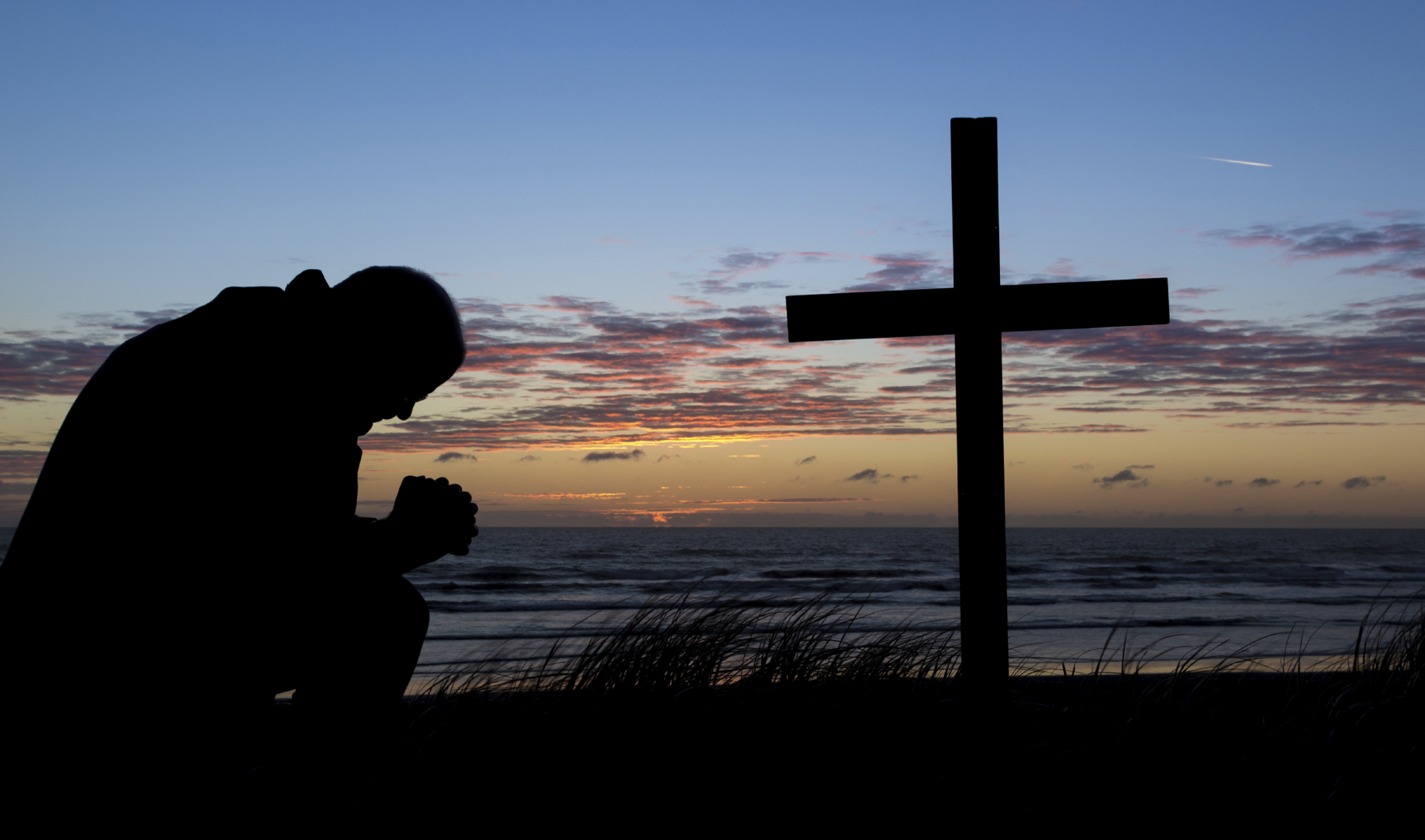
God, respecting our freedom, did not undo our choice. Rather, He said, in effect, “Fine, I will meet you at the cross of suffering and death, and allow that very suffering and death to be the way back to me.” And thus the way back to paradise, and to an even higher and heavenly glory, is through the cross.

This is why our tolerance for pain is greater now than is our capacity for pleasure. God has equipped us in this way because pain is for now; pleasure is for later.

Frankly, we need a high tolerance for pain, because it is a needed remedy for a very serious malady. Our condition is grave and requires strong medicine. The cross and its pain is the strong medicine needed. And thus our tolerance for pain must be certainly be greater than our capacity for pleasure.

Pain, despite its unpleasant qualities, has many salutary effects. It teaches us limits and helps conquer our pride. It purifies us. It reminds us that this world is passing and cannot ultimately be our answer. It intensifies our longing for Heaven and the shalom of God. If we endure pain with faith, it draws us to seek help and to trust God more. Pain endured with faith is like being under the surgeon’s scalpel. The scalpel inflicts pain but only to cut away what is harmful. It is a strong but healing medicine.

For now, our assignment is clear. Pain has the upper hand and is the strong medicine we need. When in pain, seek relief from God. But if he says no, remember that God promises that His grace will be sufficient for us (see 2 Cor 12:9), and that pain has a healing place for now. It is indeed a gift in a strange package.

Yes, it is a mysterious truth that we have a higher tolerance for pain than for pleasure. But given our current location in paradise lost, it makes sense. One day when suffering, pain, and death have had their full effect, we will enter into the Heaven of God, where pain will be no more and where our capacity for pleasure will blossom like a rose. Having been purified by our pain, our capacity for pleasure will now be full and there will be joys unspeakable and glories untold.

One, Holy, Catholic, Apostolic, and Organized! A Biblical Picture of the Early Church in Miniature

blog9-19I’d like to return to a brief Gospel that was read last week at daily Mass (Friday of the 24th Week of the Year). Though terse to the point of leaving a preacher wondering what to say, it actually paints a beautiful picture of the Church. Here is that short passage, followed by some commentary.

And it came to pass that Jesus journeyed throughout the towns and villages,
preaching and proclaiming the good news of the Kingdom of God.
Accompanying him were the Twelve
and some women who had been cured of evil spirits and infirmities,
Mary, called Magdalene, from whom seven demons had gone out,
Joanna, the wife of Herod’s steward Chuza,
Susanna, and many others
who provided for them out of their resources
(Luke 8:1-3).

Let’s look at the picture of the Church presented here:

I. They are with Jesus.

Though small, the community consists of head and members together. Jesus, the Head of the Body (the Church), is journeying, and His members are with Him. They are men and women, clergy (Apostles) and lay.

They are with Jesus and Jesus is with them. Some today think they can have Jesus without the Church. Sorry, no can do. Jesus is far more than just your personal Lord and savior. Head and members are together. The text says that they accompany Jesus, but they do not do this as isolated individuals. Jesus does not make a merely personal journey with them, but a communal one as well.

Each does his part and depends on the others.

This is another way of describing the Church as “one” and refers to one of the four marks of the Church mentioned in the early creeds: one, holy, catholic, and apostolic. Christ has one Body, the Church. He does not have many bodies, nor is Christ dismembered; the parts of His body are not scattered about and separated.

According to Ephesians 5 and Revelation 20-25, the Church is also Bride. Christ does not have many brides; he is no polygamist. He has one bride, the Church. Yes, the Church is “one.”

II. They are journeying throughout the area from one town to another.

This is another way of describing the Church with another of the four marks of the Church. The Church is “catholic” (universal). The Church goes everywhere, throughout the known regions, throughout the world. The Church calls everyone to faith, repentance, and salvation.

III. They are proclaiming the Kingdom of God.

The Greek text uses two terms to describe their fundamental work: κηρύσσων καὶ εὐαγγελιζόμενος (kerusson kai euaggelizomenos).

Kērýssō means to herald, to announce a message publicly and with conviction in order to persuade.

Euaggelizō comes from eu (well) and angellō (to proclaim). This same word was used to describe proclamations by the Roman emperors; and their messages most certainly would change the lives of those who heard them. How much more so the true evanggelion (gospel)!

Thus, they were proclaiming well a lifesaving and transformative message. The early Church went about heralding, like a town crier, the truth of the Gospel with conviction. They proclaimed the lifesaving transformative message of the true God.

So, too, today—if we truly are the Church we claim to be. Note that this message was proclaimed with Christ and the Apostles. There is no true proclamation of the Gospel apart from union with Christ, the source, and His appointed witnesses, the Apostles. This points to another of the four marks of the Church: apostolic.

IV. They are changed by their encounter, healed, and drawn to greater holiness.

Here is another of the four marks of the Church: holy. The Church is holy by the grace of Christ. Despite including sinners in her midst, she is granted by Christ the means of holiness through grace, the sacraments, the Word of God, and prayer.

The normal Christian life consists of being healed and made more holy. All the members described in this passage have had their lives changed; they were healed and made more holy. Some have had demons driven out, others have been called from lesser to higher things (e.g., Luke 5:10). All have been moved and astonished by the Lord’s teachings and are now following Him generously, giving Him their time and resources—their very selves. They are seeing their lives changed, their minds enlightened, and their wills strengthened. They are not perfect or complete, but they are on the way with Jesus. They have taken him into the boat of their lives.

V. They are organized.

Note, finally, that there is an organization in this picture of the early Church. Too easily we imagine that Jesus and the Twelve just walked about aimlessly, going from one town to the next as seemed expedient. No, not so. Jesus had things planned out. He knew each town He planned to visit and sent delegations of disciples ahead to prepare the people (e.g., Luke 10:1).

Further, the early Church depended on the donations of the women and others described in this passage, who helped them out of their means. Others were involved in preparing meals, arranging for lodging, etc. We know that Judas was the treasurer, so there must have been funds that needed to be managed (see John 12:6).

Surely there were many logistical concerns for this small but not insignificant band of early Christians, who provide an image of the Church in her infancy. Even today practical concerns are not absent. There are monies needed, provisions to be procured, plans to be implemented, and repairs to be made to structures and people.

From just a few almost terse lines comes a rich description of the early Church, the infant Church. It is also an exhortation for all of us, who can benefit from this pure picture of the Church as one, holy, Catholic, apostolic, and organized!

The Church Must Be Light, That the World May See

lightIn the Gospel today (Monday of the 25th Week of the Year) the Lord says,

No one who lights a lamp conceals it with a vessel or sets it under a bed; rather, he places it on a lampstand so that those who enter may see the light (Lk 8:16).

In other words, the Lord lit the light of the Church in order to give light to the world and to be seen. The world is in darkness; the moral darkness of these times is very deep.

You don’t light light. It is the darkness that needs the light. Light is meant to be seen. There are too many “undercover Christians,” “secret agent saints,” and “hidden holy ones.” Jesus didn’t light our light so that we could hide under a basket out of fear or secrecy. He wants the Church to shine; He wants you and me to shine. He wants every Christian to be a light so that we’re like a city on a hill! He wants us to shine so that we can’t be hidden.

If we don’t shine, then the world is dark. That is because we are not just a light, we are (in Christ) the light. If you want to know why the world is in darkness, you don’t need to look very far. We like to think that things are a mess because the wrong party is in power, or Hollywood is too secular, etc. But if we are the light of the world, then the world is dark because we are not shining the light of Christ. Light scatters darkness; it does not blame it. This darkness has happened on our watch. As a Church, we have been too content to hide our light under a basket. That is why the world is dark. If we collectively do our work, then the darkness does not stand a chance. But too many people—clergy and lay—remain fearfully silent while the purveyors of darkness are loud and proud.

To all of this, Jesus simply says, “You are the light of the world.”

Let’s look at some details about the light:

The CAUSE – Jesus describes himself as the One who lights a lamp. We are to yield to Christ, to allow Him to shine through us. He is the cause of our light. Let your light shine. There’s an old gospel song that says, “When you see me trying to do good, trying to live as a Christian should, it’s just Jesus, Jesus in me.”

The COST – The purpose of light is to shine, but there is no shining without burning. Shining costs us something. It may be Christ’s light, but it is through us that He shines. This means sacrifice on our part. It means letting Him use us. It means not always sleeping in when we want to. It means not just sitting at home and saying “Ain’t it awful.” It means getting out there and getting involved. It means risking a few things. It means being targeted and visible. It means being identified with someone (Jesus) who is hated by many. And in a world that prefers the darkness to the light (cf John 3:19-21), it means being called harsh, out-of-touch, and hateful. There is no shining without burning.

The CONCRETENESS – Letting our light shine is no abstract thing. It involves concrete behavior. Jesus talks about deeds. Your light shines by the way you live, the choices you make, the behavior you exhibit. The light shines when Christians get married and stay married, stay faithful to their commitments, and are people of their word. Our light shines when we tell the truth instead of lying, live chastely instead of fornicating, and behave courteously and respectfully. It shines when we respect life; it shines when we stop behaving recklessly. Our light shines when we clean up our language, give to the poor, and work for justice. Our light shines when we refuse to view pornographic, violent, or degrading material. Our light shines when we love instead of hate, when we seek reconciliation instead of vengeance, and when we pray for our enemies. Our light shines when we walk uprightly and speak the truth in love, without compromise. That’s when our light shines.

The CONSEQUENCE – God is glorified when our light shines. We should not act or get involved merely to satisfy our own anger or to fight for our own sake. We are light so as to glorify God. It is not about our winning; it is about God shining and being glorified. Too often when we do get involved we merely seek to win an argument or to be praised rather than to glorify God. We must pray that we have good intentions, for it is possible to do the right thing for the wrong reason. The desired result is God’s glory not ours.

Turn on the lights! It’s time to shine or else it’ll be over soon. Are you ready to shine? The Church is not just any light, the Church (by God’s grace) is the only light there is at all. As a member of Christ’s Body the Church, what are you doing to shine?

https://youtu.be/7OIwSQmyCg4


On Being Faithful in a Few Things before Being Ruler over Many Things – A Homily for the 24th Sunday of the Year

blog10-17In today’s Gospel, the Lord Jesus gives a penetrating analysis of the state of the sinner and some very sobering advice to us would-be saints. Let’s look at the Gospel in two stages:

I ANALYSIS OF THE SINNER – In the opening lines of the Gospel, Jesus describes a sinful steward:

  1. DELUSION (of the sinner) Jesus said to his disciples, “A rich man had a steward …” Notice that he is referred to as a steward rather than an owner. God is the owner of everything; we are but stewards. A steward must deal with the goods of another according to the will of the other. This is our state. We may have private ownership in relation to one another, but before God we own nothing, absolutely nothing.

Part of the essence of sin is behaving as though we were the owner. We develop an arrogant attitude that what we have is ours to do with as we please: “It’s mine, I can do what I want with it.” “It’s my body I can do as I please with it.” But in fact, everything belongs to God.

Scripture affirms, The earth is the LORD’S, and the fullness thereof; the world, and they that dwell therein (Ps. 24:1). Even of our bodies, which we like to think of as ours, Scripture says, You are not your own; you were bought with a price. So glorify God in your body (1 Cor 6:19). An old song says, “God and God alone created all these things we call our own. From the mighty to the small, the glory in them all is God’s and God’s alone.” So the Lord defines the sinner as a steward, though he acts as if he were an owner.

  1. DISSIPATION (of the sinner) “… who was reported to him for squandering his property.” The Lord here describes the essence of many of our sins: that we dissipate the gifts of God, we squander them. We waste the gifts we have received and using them for sinful ends.

For example, in greed we hoard the gifts that He gave us for the purpose of helping others. Instead of helping, we store them up for ourselves. Yet all the goods of the world belong to all the people of the world and they ought to be shared to the extent that we have excess.

Other examples of squandering the things of God are in gossip, lying, and cursing, wherein we misuse the gift of speech; in laziness, wherein we misuse the gift of time; in all sin wherein we abuse and squander the gift of our freedom. This is the dissipation, the squandering of God’s goods.

God has given us many good things, but instead of using them to build the Kingdom, we squander them and dissipate the Kingdom.

3. DEATH (of the sinner) “He summoned him and said, ‘What is this I hear about you? Prepare a full account of your stewardship, because you can no longer be my steward.’” Here the Lord reminds us that someday our stewardship will end and we will all be called to account. Elsewhere, scripture reminds us, So whether we are at home or away, we make it our aim to please him. For we must all appear before the judgment seat of Christ, so that each one may receive good or evil, according to what he has done in the body (2 Cor 5:9).

We have an appointed time to exercise our stewardship, but at some point our stewardship will end and the books will be opened. Scripture says, And books were opened. Another book was opened, which is the book of life. The dead were judged according to what they had done as recorded in the books (Rev 20:11).

Although many pay little heed to the fact of judgment, Scripture warns, Say not, “I have sinned, yet what has befallen me?” For the Lord bides his time. Of forgiveness be not over-confident, adding sin upon sin. Say not, “Great is his mercy, my many sins he will forgive.” For mercy and anger are alike with him; upon the wicked alights his wrath. Delay not your conversion to the Lord, put it not off from day to day. For suddenly his wrath flames forth; at the time of vengeance you will be destroyed (Sirach 5:4).

Every steward (each of us) will die. Our stewardship will end and we will be called to render an account. Therefore, we ought to listen to the advice that the Lord gives next.

II. ADVICE TO THE SAINTS After analyzing the sinner, the Lord has some advice for those of us sinners who want to be saints. He lays out four principles we ought to follow:

1 Principle of INTENSITY The text says, the steward said to himself, ‘What shall I do, now that my master is taking the position of steward away from me? I am not strong enough to dig and I am ashamed to beg. I know what I shall do so that, when I am removed from the stewardship, they may welcome me into their homes.’ He called in his master’s debtors one by one. To the first he said, ‘How much do you owe my master?’ He replied, ‘One hundred measures of olive oil.’ He said to him, ‘Here is your promissory note. Sit down and quickly write one for fifty.’ Then to another the steward said, ‘And you, how much do you owe?’ He replied, ‘One hundred kors of wheat.’ The steward said to him, ‘Here is your promissory note; write one for eighty.’ And the master commended that dishonest steward for acting shrewdly. For the children of this world are more shrewd in dealing with their own generation than are the children of light.

The Lord is telling us here that many of the worldly are craftier in what matters to them than are the spiritually-minded in what (supposedly) matters to them. Many of us are very intense and organized when it comes to worldly matters. We spend years in college, preparing for careers. We work hard and are dedicated to climbing the company ladder.

Many are dedicated to developing (worldly) skills, and becoming incredibly knowledgeable. In earning money and holding down a job, many display great discipline: getting up early to go to work, working late, going the extra mile to please the boss.

But when it comes to faith many of these same people display only a rudimentary knowledge of things spiritual and show little interest in advancing in the faith or in praying. They will expend effort to please the boss, to please man, but not to please God. Parents will fight for scholarships for their children to get into the “best” schools. But when it comes to saving truth, the pews are empty and Sunday School is poorly attended.

The Lord says to us here that the spiritually minded ought to show the same intensity, organization, dedication, and craftiness that the worldly show in their pursuits. We ought to be zealous for the truth, for prayer, and for opportunities to sharpen our spiritual skills and increase our holiness. We ought to be as zealous to be rich in grace as we are to be rich in money.

2 Principle of INVESTMENT I tell you, make friends for yourselves with dishonest wealth, so that when it fails, you will be welcomed into eternal dwellings.

(Read here for more information on what the Lord means by “dishonest wealth”: What does the Lord mean by “Unrighteous Mammon”.)

The Lord tells of how the dishonest steward made use of the money at his disposal to make friends who would help him in the next stage of his life. How about us? Are we willing to use our money and resources to bless others (especially the poor, who can bless us in the next stage of our life)?

On the day of your judgment will the poor and needy be able to speak up on your behalf? Will they be among the angels and saints who welcome you to eternal dwellings? I don’t know about you, but I’m going to want the poor to pray and to speak to God on my behalf! Scripture says that the Lord hears the cry of the poor and needy. In this world the poor need us, but in the next world we’re going to need them. In this world those with money and power are heard, in the Kingdom it’s the poor and suffering who are heard. It is a wise investment to bless the poor and needy.

In effect, the Lord Jesus tells us to be wise in our use of worldly wealth.  Just as the world tells us to take our wealth and invest it wisely so that it will reap future rewards, so too does the Lord. How? By storing it up it up in up in Heaven. And how do we do that? By giving it away! Then it will really be ours.

You can’t take it with you but you can send it on ahead. Scripture elaborates on this elsewhere: Command those who are rich in this present world not to be arrogant nor to put their hope in wealth, which is so uncertain, but to put their hope in God, who richly provides us with everything for our enjoyment. Command them to do good, to be rich in good deeds, and to be generous and willing to share. In this way they will lay up treasure for themselves as a firm foundation for the coming age, so that they may take hold of the life that is truly life (1 Tim 6:17). Notice that the passage says that through their generosity in this world, the rich store up treasure for themselves in Heaven.

This is the scriptural principle and the great paradox in the Kingdom of God: that we keep something for eternity only by giving it away. We save our life by losing it. We keep our treasure and store it in heaven by giving it away.

So invest, my friends. Invest wisely! Store up for yourselves treasures in heaven, where moth and rust do not destroy, and where thieves do not break in and steal (Matt 6:20).

3 Principle of INCREASE The person who is trustworthy in very small matters is also trustworthy in great ones; and the person who is dishonest in very small matters is also dishonest in great ones. If, therefore, you are not trustworthy with dishonest wealth, who will trust you with true wealth? If you are not trustworthy with what belongs to another, who will give you what is yours?

What is the “small matter” of which the Lord speaks and in which we can prove trustworthy? The small matter is money. Most people make money the most important thing in life, but spiritual matters are far more important.

Scripture attests to this clearly. The Book of 1st Peter says that our faith is more precious than fire-tried gold. The Book of Psalms (19:10) says, The words of the Lord are more precious than gold, than much pure gold; they are sweeter than honey, than honey from the comb.

So God says, let’s see how you are in the small but significant matter of money; then I’ll decide if you’re able to able to handle bigger blessings. Do you think you can handle Heaven and the spiritual blessings of holiness? If you’re trustworthy with worldly wealth, God will give you true wealth. If you’re trustworthy in what belongs to God, He’ll give one day what is yours.

You want more? Then use well what you’ve already received. Only then God will know that He can trust you with more. You want increase? A gospel song says, “You must faithful over a few things to be ruler over many things. Be faithful unto death, and God will give you a crown of life.”

4 Principle of INDIVISIBILITYNo servant can serve two masters. He will either hate one and love the other, or be devoted to one and despise the other. You cannot serve both God and mammon.

Pay attention! To serve means to obey. Most people obey money and affluence; they worship a high standard of living before they obey God. They meet their world obligations first and then give God what is left over.

But we are called to obey God alone, to have an undivided heart. The wording here is strong. You cannot obey the world (money) and think you’re also going to obey God. You must choose what will be more important.

Now don’t tell me we don’t need a lot of grace and mercy here! Money and the lure of the world are very powerful. It’s time to get on our knees and pray for the miracle of preferring God to the world.

This song says, “You must be faithful in a few things to be ruler over many things. Be faithful unto death, and God will give you a crown of life.” It builds to a wonderful refrain: “Well done, good and faithful servant, Well done!”

https://youtu.be/zZ2zUtYIiJU


On the Mesmerizing Quality of Sight, As Shown in a Commercial

Some of us who are older may remember a commercial from the 1970s in which Robert Young (who played the role of Marcus Welby, M.D. on television) said something like, “I’m not a doctor, but I play one on TV.” He then went on to advise us to use the product being advertised in the commercial. But even knowing that Robert Young was just an actor, many viewers still invested him with authority. Even though he reminded us that he was an actor and not a doctor, we still went out and bought the product!

The video below shows a creative and amusing use of the same ploy. In it, well-known actors who portray doctors on television are used to advance a certain health insurance company.

Alas, television has a mesmerizing, hypnotic effect and often overrides our good sense. Indeed, of our senses, the eyes are the most easily deceived. That’s how magicians and illusionists make their money; it’s why optical illusions work.

But even knowing all this, we still fall prey. We reach for the most attractive rather than what is best for us, be it food, a book, or a spouse.

This is one of the reasons I prefer radio to television. It is also, I’m sure, why Scripture says that faith comes by hearing and insists that we walk by faith and not by sight. Indeed, faith and sight are often opposed (e.g., Jn 20:29; 2 Cor 5:7). Regarding the Eucharist, St. Thomas Aquinas said, Sight and taste and touch are all deceived; only the hearing is safely believed (from his hymn, “Adoro Te Devote”). Yes, the truth of Christ’s presence in the Eucharist is accessed not by the eyes but by faith, which comes through hearing (Rom 10:17).

Remember to discount what your eyes see; they are easily fooled. Actors in lab coats are not authorities, they just look that way. At least the commercial below is honest about that. It’s funny and creative, too, and its message is a good one. But it’s still pretty hard to shed the air of authority created by our eyes; that’s why the company uses them! And often the visual media present harmful messages and are less-than-straightforward with their use of mesmerizing tools.

Careful, be not mesmerized. Keep an eye on your eyes!

The Fading of Earthly Glories, As Seen on TV

According to the video below, the Dos Equis “Most Interesting Man in the World” is being replaced; there is now a new “Most Interesting Man in the World.”

And the Verizon “Can you hear me now” guy has defected to Sprint.

What is this world coming to? How can this be?

Scripture says, We have here no lasting city (Heb 13:14). There is a well-known saying that used to be etched on many fireplaces: Sic transit gloria mundi (Thus passes the glory of the world). Yes, worldly things are fleeting; honors fade. The person at the top will be replaced. Someday, even the names of the most popular and famous people today will be met with responses like this: “Who? Never heard of him!”

As for man, his days are like grass;
he flourishes like a flower of the field;
for the wind passes over, and he is gone,
and his place knows him no more
(Psalm 103:15-16).

Of Dolphins and Man: The Vast Difference between Animals and Humans

dolphin-203875_640Those of you who read my posts regularly know that I have often expressed great fascination with and affection for the pets I have had over the years. I am in awe of the whole of the created order, which proclaims God’s glory.

However, there are important distinctions between the human person and the created order that sometimes get lost in modern movements such as environmentalism, animal rights, and even in the realms of philosophy and science.

Consider a recent article on CNN.com that reported on the quest to communicate with dolphins, a species that the article calls “the first intelligent inhabitants of the planet.”

In his paper, Ryabov calls for humans to create a device by which human beings can communicate with dolphins. “Humans must take the first step to establish relationships with the first intelligent inhabitants of the planet Earth by creating devices capable of overcoming the barriers that stand in the way of … communications between dolphins and people,” he said. … “As this language exhibits all the design features present in the human spoken language, this indicates a high level of intelligence and consciousness in dolphins,” he said in the paper, which was published in the St. Petersburg Polytechnical University Journal: Physics and Mathematics last month. “Their language can be ostensibly considered a high developed spoken language.”
(The full article can be read here: Dolphins may have a spoken language, new research suggests)

Such lazy wording in a published scientific paper is disturbing on its face. Though admitting we do not really know what the dolphins are saying, the scientist concludes that their language exhibits all the “design features” in human spoken language. Really? How does he know that? For example, human language can exhibit the use of the future perfect tense (e.g., “By tomorrow I will have finished.”). Can the scientist show me that dolphins use such a tense? Do they use gerunds? How do they conjugate verbs? Can he show me how dolphins make use of higher rhetorical concepts such as prolepsis?

The scientist goes on to say, “Their language can be ostensibly considered a high developed spoken language.” The use of the word “ostensibly” buys him a lot of room for later denials, but still, such a statement seems incredibly rash.

I would argue that such conclusions are stunningly out of proportion to the evidence. One can only hope that this is a case of a journalist reporting too simplistically, rather than that the scientist himself is drawing such conclusions with so little basis.

This CNN report showcases many of troubles common today in discourse about human beings and animals. There seems to be a fundamental assumption that there is little difference between humans and animals, particularly the higher primates. Dolphins, too, seem to have been given a rather high place in the animal kingdom hierarchy.

But I would argue that the distance between man and even the highest forms of animal life is by no means small; it is a distance so large as to indicate a difference not merely in degree but in kind. This is demonstrable from straightforward observation. A thing can be known by its effects. Apple trees do not bear oranges nor do they bring forth baby pandas. As we look at animal kingdom, even its highest members, some questions begin to emerge. If, as many assume today, animals are really “just like us,” where are the effects?

Where are their great cities? Where are their libraries, universities, and hospitals? Where are their bicameral legislatures, in which they debate justice, pass laws, and organize for the common good? Where are their courts, in which they hold one other accountable, punish crime, and administer justice? Where are their great cathedrals, in which they worship God and prepare for death and the next world? Where are their works of art? Where are their museums, in which they honor their history and reflect on their progress? For that matter, where is their progress at all? How have they made technological advances or better organized their lives? Do they show any progress from one hundred or even a thousand years ago? Have they progressed from the use of simple tools to more advanced ones? Have they gone from rudimentary living to more complex behaviors and accomplishments? Does their knowledge and technology build over time? Have they learned anything new at all? Have they been to the moon and back? Have they probed the stars?

I could go on with these questions for pages, but the point is to illustrate that the differences between the human person and even the highest members of the animal kingdom are so vast as to indicate a fundamental difference.

Physically, I am not so different from my cat. Like me, she is a mammal; we share most of the same basic physical functions. She can feel pain, experience hunger, and sense danger. I have some physical abilities that are better than hers: opposable thumbs and a larger brain, for example. But she outpaces me in other areas: more acute senses of hearing and smell, for example.

But most of the similarities end with the physical level. My cat has no higher life. She does not ponder justice and other metaphysical concepts. She does not ask why or join me on protest marches. She does not appreciate great music or read literature. I could put on music that brings me to tears while she just lies there unmoved.

All the observations I have made and questions I have asked are indicative of a fundamental difference between man and even the highest of animals. The difference comes from capacities that humans have and animals do not.

In philosophy and theology, we attribute these vast differences to the fact that human beings have a rational soul. Humans can have command of metaphysical concepts such as justice, mercy, beauty, and truth. We can ask questions like why and how. These lead us to explore, to experiment, to progress, to debate, and to insist on what is best. Our longing for truth, goodness, and beauty draw us to something beyond ourselves and beyond simply what is. We have developed complex interrelationships that we call civilization.

The difference between humans and animals is fundamental, not merely accidental. We are different because of a capacity within us we call our rational nature.

What you have just read is more of a pastoral reflection than a philosophical treatise. One may quibble with a particular point, but I contend that the overall picture indicates a vast difference between man and animal, a difference not merely in degree but in kind.

This essay is meant to be a response to the sad situation in the world today, wherein many have reduced the human person to little more than a smart ape or an advanced animal. We are much more than that. We have rational souls that can soar above the merely physical. As one of the remedies for the darkness of our times, we must recover a sense of our unique dignity.

The Wisdom and Power of the Cross

crossThe readings for Wednesday’s Feast of the Exaltation of the Holy Cross provide rich teachings. Let’s look at five themes, each in turn.

I. The Pattern of the Cross One of the stranger passages in the Old Testamentis the one describing a command Moses received from God to mount a bronze snake on a pole.

The people had grumbled against God and Moses because of the “wretched” manna they had to consume (Numbers 21:5). Even though it was the miracle food, the bread from Heaven that had sustained them in the desert, they were sick of its blandness. (Pay attention, Catholics who treat the Eucharist lightly or find it boring!) God grew angry and sent venomous snakes among them, causing many to die (Numbers 21:6). The people then repented. and, in order to bring healing to them, God commanded a strange and remarkable thing: Make a snake and put it up on a pole; anyone who is bitten can look at it and live (Numbers 21:8).

What about no graven images? It was God Himself who had said earlier in the Ten Commandments, Thou shalt not make unto thee any graven image, or any likeness of anything that is in heaven above, or that is in the earth beneath, or that is in the water under the earth (Ex 20:4). Yet here He commands that a graven image be made.

Why does God do this? That is covered in the next section.

II. The Palliative Cross – When Moses made a snake of bronze and showed it to the people, those who looked at it became well (Numbers 21:9).

In a way, it is almost as if God were saying to Moses, “In rejecting the Bread from Heaven, the people have chosen Satan and what he offers. They have rejected me. Let them look into the depth of their sin and face their choice and the fears it has set loose. Let them look upon a serpent. Having looked, let them repent and be healed; let their fear of what the serpent can do depart.”

 In today’s Gospel, Jesus takes up the theme and fulfills it, saying, And just as Moses lifted up the serpent in the desert, so must the Son of Man be lifted up, so that everyone who believes in him may have eternal life (John 3:14). It is almost as if he is saying, “Let the people face their sin and see its ugly reality: what it does to me, to them, and to others. Let them face their choice and seek healing repentance. Let them also see the outstretched arms of God’s mercy and find peace.”

There is something about facing our sins, shortcomings, anxieties, and fears. There is something about looking them in the face in order to find healing. One of the glories of the Catholic faith is that it has never hidden the cross; it has never run from it. There have been brief times when, shamefully, we de-emphasized it. But throughout most of our history, the crucifix has been prominently, proudly, and fearlessly displayed in our churches. We cling to it and glory in it.

Do you know how shocking this is? Imagine that you were to walk into a church and instead of seeing a crucifix you saw Jesus dangling from a gallows, a rope around His neck. Crucifixion was the form of execution reserved for the worst of criminals. It was shocking, horrifying, and emblematic of the worse kind of suffering. When the Romans saw or thought of something awful they would cry out in Latin, “Ex cruce!” (From the cross!), for they could think of nothing more horrible to which to compare something. This is the origin of the English word “excruciating.” Crucifixion is brutal—an awful, slow, ignoble, and humiliating death: ex cruce!

But there it is, front and center in just about every Catholic church. There it is, at the head of our processions. There it is, displayed in our homes. We are bid to look upon it daily. Displayed there is everything we most fear: suffering, torment, loss, humiliation, nakedness, hatred, scorn, mockery, ridicule, rejection, and death. The Lord and the Church say, “Look! Don’t turn away. Don’t hide this. Behold!” Face the crucifix and all that it means. Stare into the face of your worst fears; confront them and begin to experience healing. Do not fear the worst that the world and the devil can do, for Christ has triumphed overwhelmingly. He has cast off death like a garment and said to us, In this world ye shall have tribulation. But have courage! I have overcome the world (Jn 16:33).

III. The Paradox of the Cross – In a world dominated by power and its aggressive use, the humility and powerlessness of the cross accomplishing anything but defeat both surprises and upsets the normal worldly order.

At the heart of today’s second reading is the declaration that Christ humbled Himself and became obedient unto death—death on the cross. But far from ending His work, it exalted Him and brought Him victory. To the world this is absurdity, but to us who are being saved it is the wisdom and power of God. Consider that darkness cannot drive out darkness; only light can do that. Hatred cannot drive out hatred; only love can do that. And pride cannot drive out pride; only humility can do that. At the heart of Original Sin and every personal sin is the prideful notion that we know better than God. Satan’s fundamental flaw is his colossal pride; he considers himself equal to God. He is narcissistic, egotistical, and prideful.

The solution to conquering pride is not to have greater pride, but rather to manifest humility, as Jesus did. And while Satan disobeyed God, Jesus humbly obeyed His Father. He did not cling to His divine prerogatives, but rather laid them aside, taking up the form of a slave and being seen as a mere human being. It was in this way that He humbled Himself and obeyed, even unto the cross. Jesus was seen as the lowest of human beings, accepting a death reserved for the worst of criminals and sinners, even though He Himself was sinless and divine.

So astonishing is Jesus’ humility, that it literally undoes Satan’s pride and the collective pride of all of us. It is the great paradox of the cross that humility conquers pride, that God’s “weakness” conquers human power and aggression, that love conquers hate, and that light dispels darkness.

It is the great paradox of the cross that makes a public spectacle of every human and worldly presumption.

IV. The Power of the Cross – The Gospel today announces the great power of the cross: So must the Son of Man be lifted up, so that everyone who believes in him may have eternal life.Thus Jesus, the Son of Man, when He was lifted up from the earth, called to the heart of every human person. And those who believe in Him and look to Him are saved from their sins and snatched from the hands of the devil. The power of the cross is the power to save.

Not only are we saved from the effects of our sins, we are empowered to live a whole new life.  The text says that God does this so that we might not perish but have eternal life. The word eternal does not refer simply to the length of life, but also to its fullness. By the power of the cross, we are given the gift to live a completely new life, transformed increasingly into the very holiness, freedom, joy, and blessedness of the life of Christ. In dying to this old life with Him in Baptism, we rise to the new life that He offers: a life increasingly set free from sin, a life transformed from vice to virtue, from sorrow to joy, from despair to hope, and from futility to meaningfulness and victory. Thus the power of the cross is manifest as the power of the tree of life.

V. The Passion of the CrossWhy all this? Why this undeserved gift? In a word, love. “For God so loved the world …” Yes, God loves the world. Despite our rebellion, our unbelief, our scoffing, and our murderous hatred, God goes on loving us. He sent His Son to manifest His love and to obey Him within the capacity of His humanity. Cassian says that we are saved by the human decision of a divine person. Jesus loved His Father and us too much to ever say no to Him. And the Father loves us too much to have ever withheld the gift of His Son from us, even though Jesus is His only begotten Son, the greatest gift He could ever offer. In His love, God does not withhold this gift, but offers Him.

Why do you exist? Why is there anything at all? How are you saved? God so loved the world, God so loved you. God is love. And God, who loves us, proclaims the truth to us and invites us to accept His truth. He does not force His love upon us, but invites us and gives us every grace to turn and come to Him. Why does He care? Why does He not simply force us to obey? Because God is love and love invites; it does not force. Love respects the will of the beloved and seeks only the free response of love in return.

The cross—nothing is more provocative. Nothing is more paradoxical. Nothing is greater proof of God’s love for us and of His desire to do whatever it takes to procure our yes to His truth, His way, and His love. Run to the cross and meet the Lord, who loves you more than you can imagine and more than you deserve. Run to Him now, because He loves you.