The commercial below reminds us that the products we use don’t just come out of nowhere. Good goes around and around. The Cheerios in the cereal box started out as seeds in the ground, but the commercial stops well short of showing everyone we should thank for the final product.
• Before sowing the seed, the ground has to be tilled and prepared.
o Thank you to the farmers as well as those who invented, designed, and build the plows.
o Thanks to the steel workers and miners, who contribute the raw materials to build the machines that till.
o Thanks to the petroleum and refinery workers who supply the fuel for the machines to till the earth.
• Once the seed is planted, water, fertilizer, and pesticides need to be supplied in order to ensure a rich harvest.
o Thanks again to the farmers, who rise early in the morning in all kinds of weather to do this work.
o Thanks to those who invented and supply the fertilizer and pesticides.
• Once the crops are ready, they must be harvested and sent to the mill.
o Thanks to those who do the hard work of harvesting.
o Thanks to the truckers and rail workers, who are responsible for conveying the material to the mills.
o Thanks to those who designed, built, and maintain the roads, rails, trucks, and rail cars.
• Once at the mill, the raw material must be processed.
o Thanks to all who work in the mills.
o Thanks to those who invented the machines and processes.
o Thanks to those who supply the steel and the parts for the machines.
o Thanks to those who repair and maintain the machinery.
• Once out of the mill, it’s over more roads and rails to the warehouses and then finally the stores.
o Thanks to all who built the warehouses and stores.
o Thanks to those who carefully monitor inventory so that we consumers are seldom faced with empty shelves.
o Thanks to those who risked their money to build the warehouses and stores.
o Thanks to the bankers, investors, and the people whose deposited money serves to make cash available for the costs for such operations.
o Thanks to the store employees, who stock the shelves and ensure that the products we need are at hand.
This is only a brief list, but never forget that a huge number of people stand behind every box of cereal, behind every other product you buy. Do you see how interconnected we are?
Are you grateful to God, who sustains all of this and from whom every good and perfect gift comes? Each of us should be!
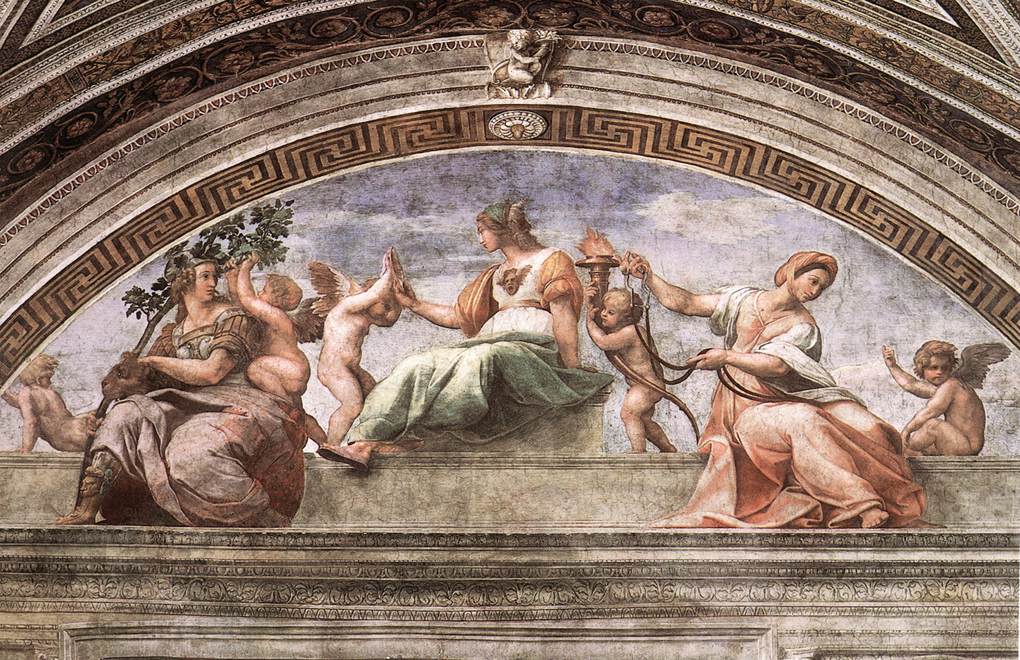
There is an important interplay and balance between the virtues that many modern minds set in opposition to one another. False dichotomies often prevail when the subtlety of virtues are lost or their meanings are grasped in simplistic or inaccurate ways.
Consider three virtues that are related and which enable and moderate one other: fortitude, patience, and meekness. To most people, these virtues seem more opposed than related. Today, fortitude conjures up an image of a fearless warrior in battle or an intense prophet fearing nothing of the opinion of men. Meekness seems to be thought synonymous with weakness and conciliation. Finally, patience in modern parlance often means either not acting at all or acting indecisively and without courage.
There are, of course, many problems with this thinking; the modern understanding of these words is quite different from their biblical or scholastic meaning. So part of our task is to recover a more accurate understanding of these words, but another aspect is to see how these virtues balance and moderate one another.
Fortitude – Consider first that fortitude is the virtue that enables us to withstand even great difficulties that hinder us from attaining our true goal. A chief feature of fortitude is being able to endure difficulties and see an act or decision through to the end. It is not merely being brave in the face of danger or sallying forth into battle; it is also being steadfast in spite of obstacles and enduring without sadness or loss of faith.
As with any virtue, there are certain sins that may emerge (by excess or defect) in relation to fortitude. Timidity, pusillanimity, faintheartedness, and softness are defects of fortitude. There are also excesses related to fortitude such as being foolhardy, presumptuous, overly ambitious, vainglorious, and headstrong (pertinacious).
Thus, patience and meekness are aspects of fortitude, especially in helping to govern excesses related to fortitude. While the modern mind considers them to be in opposition to fortitude, they are actually integral parts of it, because they not only moderate fortitude but are ways of living and expressing it.
Patience – This is perhaps the most frequent form under which fortitude is exercised in the face of the difficulties of life. St. Thomas Aquinas said that patience is attached to fortitude because it helps us to resist giving way to sadness and to bear up under the difficulties of life with a certain equanimity or steadiness of soul. By it, we do not give way easily to emotional sadness or excessive anger. Thus patience is an act of fortitude, because it bids us to endure painful or difficult things without weakening in our faith or our commitment to the truth. With patience, we are steady in the face of the vexations and contradictions of life.
Sadly, many in our culture equate patience with weakness. However, to be patient and to endure is a great strength. As St. Thomas points out, Endurance is more difficult than aggression … because endurance implies a length of time, whereas aggression is consistent with sudden movement (Summa Theologica IIa IIae q. 123, a. 6).
The fact is that many troubles and contradictions last for a long time. Not all (or even most) things can be changed for the better simply or quickly, so patience and suffering are often necessary acts of fortitude; they require great strength and brave endurance. Jesus said, In this world you shall have tribulation, but have courage, I have overcome the world (John 16:33). St Paul added, Through many tribulations we must enter into the kingdom of God (Acts 14:21).
While fortitude will often summon us to face danger bravely, to proclaim the faith, and to do what is right; while it will rebuke cowardliness, faintheartedness, and softness; it will also enable us to endure difficulties without sadness, fear, depression, or excessive anger. In all these ways there is strength and courage to be found. While the modern mind does not often connect patience with fortitude, it is in fact one of its most common manifestations.
Meekness– Even more so the modern mind does not connect meekness with fortitude. The average person today does not even know the real definition of the word “meekness.” Most consider the word to be associated with being a pushover or a doormat. In this flawed sense, meekness is despised as weakness and fearfulness.
But meekness, in its traditional and theological sense, is anything but weakness. The meek are those who have authority over their anger, who can command and control its power, moderating and directing its energy to good rather than destructive ends.
Aristotle defined meekness as the proper middle ground between too much anger and not enough. Anger has an important place in the human psyche but it must be mastered and moderated, for it is unruly. The meek are those who have mastered their anger and know how to use its creative power to set things right.
In our culture, an “angry prophet” gets some credit as he denounces the powerful and vents his anger, but a prophet who is merely angry is not a true prophet. True prophets love God’s people; their anger results from the love of God, His truth, and His people. Beware mistaking true zeal born out of love with angry zeal, which sermonizes indiscriminately. The angry prophet preaches in order to get something off his chest and vent his anger. The true prophet speaks out of zealous love and from a meekness that gives him authority over his anger and zeal.
Fortitude without patience and meekness is like fire with nothing to contain it. Such a fire spreads wildly and destroys what it should illuminate and heat; it destroys what it should purify and transform.
Therefore, patience is not opposed to fortitude but rather is itself an act of fortitude because it courageously resists discouragement when the battle seems long and fierce. It enables fortitude to act over a long period, consistently and persistently, to attain an end that mere zeal would impatiently forsake in the absence of immediate results.
Similarly, meekness is also not opposed to fortitude but is also a form of it, by authoritatively governing the anger directed against injustice and error. The meek person is ultimately at peace deep inside, even while engaging in a struggle on the outside. This, of course, is essential for fortitude to reach its goal because reaching a goal (say, of establishing the truth, refuting error, or restoring justice and respect for life) is nearly impossible for a soul consumed by anger. Meekness, therefore, is the courage of fortitude along with the control that helps focus anger, zeal, and brave action.
Thus, as with so many things, we ought not to separate what God has joined, in this case fortitude, patience, and meekness. Scripture says, be angry but sin not (Eph 4:26). With respect to our virtues we might add this: have the courage and zeal of fortitude, but be not foolhardy, presumptuous, or headstrong.
Have the courage and zeal to enter the battle. Don’t be like so many people today who are soft, cowardly, and indiscriminately conciliatory. Conversely, enter not with wild, ungoverned fortitude (which isn’t really true fortitude at all); enter with a fortitude that is patient and willing to endure through what may well be a long battle. Enter with a fortitude that is authoritatively mastered and stabilized through meekness.
One of the great battles in the spiritual life is mastering our emotions, by God’s grace. Our emotions are not evil, but they are unruly and easily manipulated by the world and the devil. Our own flesh (fallen nature) also contributes to the difficulty of self-mastery.
Yet as I have often testified, if we are faithful to the Lord and to prayer, growth in the spiritual life happens. Many of my once-unruly emotions have become more stable and are more quickly assuaged when they arise. I feel very good and confident about the progress I have made because I know it is the Lord who has accomplished it. Yes, I did my work: prayer, spiritual direction, Scripture, confession, Mass, and psychotherapy, but I know it was the Lord. For example, I remember awaking one morning and realizing that some very deep hurts from the past were gone. I couldn’t say when they had left; it seemed as though they had just evaporated. God was signaling me that it was over; they were gone, just gone. I felt a forgiveness, even a compassion, for those who had hurt me. I knew that I wasn’t the one who had accomplished this. Without God’s grace, I was prone to cling to my anger and resentments and rehash the injustices I had felt. Thankfully those feelings have never returned.
Anxiety was always the unruliest of my emotions. Beginning at ten years of age I would have crippling bouts of anxiety and panic. During these periods I could barely sleep and would obsessively ruminate over the fears that seized me. As a boy, I was terrified of various things: a house fire, someone breaking in and killing our entire family, etc. As I grew older and had more duties and responsibilities, I would have periodic attacks of extreme anxiety about assignments or about presentations/sermons I had to give.
The sporadic nature of these bouts seemed to confirm their demonic source. I could go for months, even years at a time, and be fine; suddenly, and usually for no apparent reason, I would feel an overwhelming panic or anxiety. For example, when I had been a priest for over ten years and been preaching and teaching with ease, I suddenly went through a period of grave anxiety over my Sunday sermons. I would worry all week long about the upcoming sermon.
Whether or not these were satanic attacks, the fact is that demons are opportunistic. They found doorways in my psyche and I, with the Lord, knew that deliverance prayer alone wasn’t going to be enough. The doors had to be closed. The work of grace and my cooperation with the Lord was going to have to win the day.
The heart of the battle occurred during a ten-year period, from my mid-thirties to my mid-forties. The medicines were these: prayer, spiritual direction, psychotherapy, sacraments, liturgy, the purification of the intellect (since most feelings come from thoughts), and learning by grace to trust God.
As in any battle, the victories came, but there were also setbacks and relapses. Little by little, trust triumphed over anxiety. A more stable, serene, and confident joy became my set point.
Now in my mid-fifties, I can say that the most recent ten years have been largely and increasingly victorious. I am seldom anxious about anything today. Thank you, Lord, and thank you also for all who have helped, guided, consoled, and encouraged me in my journey!
Every now and again, usually for just a moment (or no more than a day), I am reminded that I hold this treasure in an earthen vessel and that I need to stay “prayed-up”; I need to maintain the disciplines I have learned. Maybe it is a dream in the middle of the night from which I struggle to recover. Perhaps it is just a memory that seems all too real. Maybe it is the looming possibility of a new duty. Thanks be to God, though, the reminders are brief and whatever anxiety comes is manageable. I cannot tell you how grateful I am to God for this gift!
St. Catherine of Siena writes of these “reminders” in her major work, The Dialogue of Divine Providence. God the Father teaches her why He permits them:
Sometimes I resort to a pleasant “trick” with [the spiritually mature] to keep them humble …. For the sensual emotions slumber [even] in the perfect soul but they do not die. This is why, if they relax their efforts, or let the flame of holy desire grow dim, these emotions will awaken. It is essential to remain in holy fear of me …. Otherwise … the emotions seem to be asleep and it seems that they do not feel the weight of great sufferings or burdens. But then, in some tiny thing that really is nothing (that they themselves will later laugh at), their feelings are so aroused that they are stupefied. My providence does this to make them grow and go down into the valley of humility. [I do this] to give them give opportunity for merit, to keep them in the self-knowledge whence they draw true humility, to make them compassionate instead of cruel toward their neighbors so they will sympathize with them in their labors. For those who have suffered themselves are far more compassionate to the suffering than those who have not suffered
We still need pricks and blows lest in our progress we become prideful or think that something is so far in the past that we forget to be grateful for our deliverance. The point is that we should never lose heart nor think that all progress is lost when we see a simple reminder of our frailty. With God we are strong, but only with God. Salutary reminders of this are necessary and the Lord, who loves us, provides them.
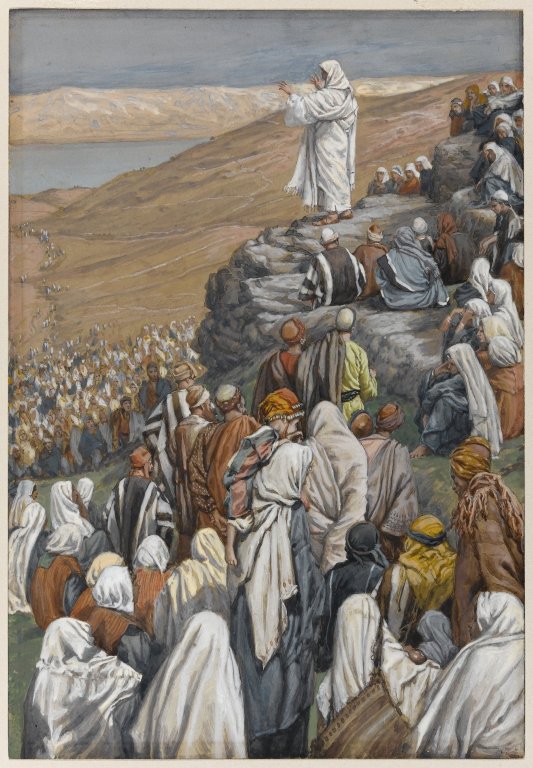
We began reading the Sermon on the Mount during daily Mass this week. One of the flawed ways of reading it is to see the Lord’s teaching merely as a list of moral demands that we must fulfill out of our own flesh or human ability. To do so is to miss the point.
The better way to understand the Sermon on the Mount is to see that our Lord is painting a picture of the transformed human person. In effect, He is saying, “This is what your life will look like and be as I increasingly live my life in you.” The Sermon is description more so than prescription; it is a gift to be received more so than a set of demands to be met.
With this interpretive key in mind, let’s take a look at the Beatitudes, which begin the sermon. What I offer here is a brief pastoral look at each beatitude that states the meaning of each and then ponders an implication or two. My goal is to find the gift that each beatitude describes and see each one as a brushstroke in a beautiful painting the Lord makes of the transformed human person, one in whom He lives.
Blessed are the poor in spirit, for theirs is the Kingdom of Heaven.
The poor in spirit depend on God humbly and serenely. They are poor to this world because their treasure is in Heaven. As the Lord says, “Where your treasure is, there also will your heart be” (Matthew 6:21). With their treasure in Heaven and their hearts focused there, the poor in spirit are not obsessed with this world’s trinkets. Their desires are properly aligned with what matters, with what lasts: God Himself and the eternal joys of Heaven. There is a great blessedness and simplicity to be found when one is freed of obsessions with wealth, popularity, and conformity to this world’s constantly changing and distracting demands.
Blessed are they who mourn, for they will be comforted.
Those who mourn are those who see the awful state of God’s people. They see that many are lost, basing their lives on what can neither save nor satisfy, living lives that are misdirected and futile. The mournful weep for God’s people, but it is not a depressed mourning, rather, it is a motivational one. By it, they pray and work for the salvation of souls. Their mourning places an urgency in their hearts to reach the lost, fallen, and confused. The text speaks of them as being comforted, but both the Greek and Latin roots of the word “comfort” have more to do with being strengthened and assisted than with being consoled and relieved of burdens. The mournful are given the strength and courage they need in order to address what makes them mourn and be strengthened unto the salvation of souls.
Blessed are the meek, for they will inherit the land.
The meek are those who have authority over their anger. Their anger is directed properly, towards things such as injustice and ignorance of God’s ways. They are increasingly freed from anger over insignificant, egocentric, and fear-based things. Their proper anger is like a creative energy directed toward working for justice and the proclamation of God’s truth. They inherit the land because those who work for justice and truth secure a better future for the land and people they love. Of the meek, Scripture says, And your ancient ruins shall be rebuilt; you shall raise up the foundations of many generations; you shall be called the repairer of the breach, the restorer of streets to dwell in (Is 58:12). By using proper anger, they turn it into a creative and healing force; they and those they have healed inherit the land.
Blessed are they who hunger and thirst for righteousness, for they will be satisfied.
A common human problem is desiring the wrong things. We often have excessive desire for things that we know are harmful for us while being rather disinterested in things that are demonstrably good for us. For example, things such as prayer and moderation seem burdensome and difficult to us while overindulging in liquor and spending our time viewing immoral or trivial material comes easily. What a gift it is to see our desires come into conformity with what is actually best for us, with what God really wants to give us! Those who attain to this gift of properly ordered desires are satisfied because righteousness and all it entails is are what actually satisfies. These are the things with which we are designed to thrive and thus they give a deep satisfaction.
Blessed are the merciful, for they will be shown mercy.
To be filled with mercy implies that the Lord has filled us with His mercy. The merciful are first and foremost happy and blessed because they have profoundly experienced how merciful, kind, and good God has been to them. Having been filled with mercy, they have a joyful gratitude that in turn makes them blessed and happy. Because they are filled with mercy they are equipped to show mercy to others. It will go well for them on judgment day because the measure we measure to others will be measured to us (see Luke 6:38).
Blessed are the clean of heart, for they will see God.
The phrase “clean of heart” is probably better translated as “single-hearted.” The Greek word katharoi speaks to a kind of purity, being one thing without admixture of impurities or anything else. The pure of heart are focused on one thing: God. They want only one thing: God. This is a very great gift. So many are torn apart by hearts that are divided; they desperately want many things, often ones that are contradictory to one another. Oh, the gift to know what we want and to be free of competing demands, the gift to be clear and single-hearted in our pursuit! This beatitude is not only a gift in itself; it leads to the greatest gift of all: God, the very one for whom our hearts were made.
Blessed are the peacemakers, for they will be called children of God.
The peacemakers are not merely those who keep us from killing one another. The word “shalom” (peace) as well as the Greek word eirene (used here to translate shalom) have the notion of wholeness, of having in our life and relationship everything that should be there. The peacemakers are those who work to ensure that the things that make for wholeness and integrity are available to others. They work for and teach truth, justice, respect, reciprocity, reverence, and virtue. In this they set forth the ingredients for peace. They are the children of God because this is the very thing that God does and children resemble their parents.
Blessed are they who are persecuted for the sake of righteousness, for theirs is the Kingdom of Heaven. Blessed are you when they insult you and persecute you and utter every kind of evil against you falsely because of me. Rejoice and be glad, for your reward will be great in Heaven. Thus they persecuted the prophets who were before you.
The persecuted are blessed and happy because they know that they suffer for the right things and are in good company. They also know that they are suffering for being the right thing, the contrasting thing in a world hostile and opposed to God. They are light in darkness, free men among those in bondage. Although they are persecuted, it matters less to them because their hearts are with God and set on the things of Heaven. Even death has no sting because death is the very thing that births them to the eternal glory for which they long. They know that their reward is great, far eclipsing any suffering they endure. They are blessed, happy, and free.
Such a gift it is that is being described here: the life of the transformed human person! Note how each of the beatitudes amounts to a matter of the heart: a heart that is pure, a heart that is set on one thing rather than torn by anger or other disordered passions, a heart that hungers and thirsts for righteousness and is increasingly free from the world (except to rescue others who are trapped in its false claims and futility). Having their treasure in Heaven, the blessed are poor to this world because they have little need to hoard its trinkets. They are rich, however, for theirs is the Kingdom of God and God Himself.
At an angle of 45°, we look both up and out, and this is a good paradigm for life. At 45° degrees, we can view both up: seeing and loving God, and out: seeing and loving our neighbor.
At 90° (i.e., straight up or straight out) our field of vision misses either God or the people whom He loves. For example, if I look straight up (90°) I am looking toward God but not toward the people He loves; if I look straight forward (90°) I am looking toward the people I love but not toward the God I love. At a 45° angle, I can see them both.
The Christian life should be lived at 45°. A life directed only to God but oblivious to our neighbor is incomplete, for it lacks the second table of the Law (love of neighbor). A life wholly devoted to man and humanitarian endeavors but forgetful of God is not spiritual at all; it is mere social activism and neglects the first table of the Law (love of God). It is at 45° that we find the proper balance for life.
Here is an interesting video that takes up this theme:
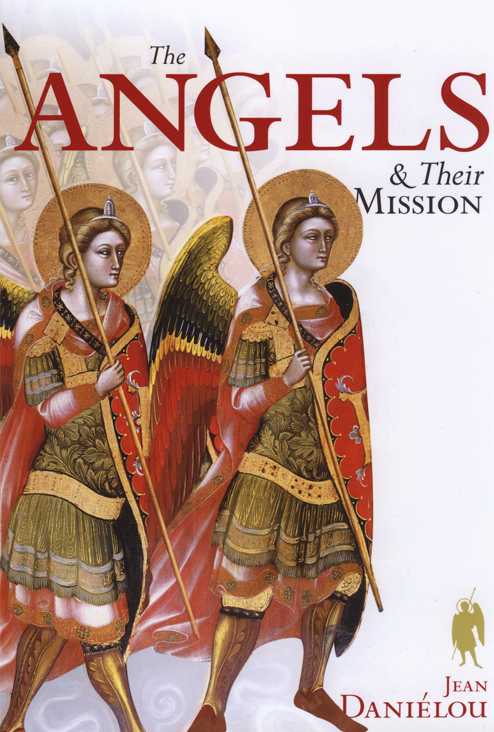
The conclusion of the Book of Tobit on Saturday featured the Archangel Raphael revealing himself to Tobit and others and explaining his ministry to them. This post I write is not a full angelology, it is just a grateful reflection for God, his angels and his creation. Book-length treatments are necessary for a good angelology. If you are looking for a readable, and brief account of angelology I might recommend The Angels and Their Mission According to the Fathers of the Church, by Cardinal Jean Danielou.
Let’s look at a brief excerpt of Archangel Raphael and ponder gratefully the ministry of the angels. Raphael says,
I can now tell you that when you, Tobit, and Sarah prayed, it was I who presented and read the record of your prayer before the Glory of the Lord; and I did the same thing when you used to bury the dead. When you did not hesitate to get up and leave your dinner in order to go and bury the dead….
God commissioned me to heal you and your daughter-in-law Sarah. I am Raphael, one of the seven angels who enter and serve before the Glory of the Lord.” (Tobit 12:14-16)
This passage presents a description of how God interacts with his creation through the ministry of the angels. Notice how Raphael presented the prayers of Tobit and Sarah before God. More than this, the text implies that Raphael presented a record of the prayerfulness of the two and described Tobit’s good deeds. Thus, he stood before God more as a witness of their love and prayerfulness than as a mere conveyor of requests.
Why is this? Is God not omniscient? He is of course and therefore does not need the mediation of the angels, but He does seem to will it. It is common in both Scripture and doctrinal traditions to ascribe to the angels the work of mediation.
Angels in Scripture often speak for God and mediate His presence. At times, such as when Jacob wrestles with God, it is not clear whether it is an angel or God (Genesis 32:22-32); Abram greats three angels but calls them “Lord” (Genesis 18). At other times, it is clearly an angel that people such as Joshua (Joshua 5:13-15), Tobit (Tobit 12), and Mary (Luke 1) encounter. These angles speak for God and mediate His presence but are not God. Throughout the Book of Revelation, angels are sent forth to mediate God’s justice. In many places in Scripture, we are told by the Lord heed the voice of the angels who are sent to guard and guide us.
In the sacred Liturgy the ministry of the angels in connecting our sacrifice to the true altar in heaven is spoken of (Roman canon) and the Book of Revelation describes how the heavenly and earthly liturgy is the work of angels and men. Angels bring the prayers of the saints before God, minister at the altar of incense, and so forth.
There are numerous other passages and teachings that I could present, let it suffice to say that God, though almighty, all-powerful, and omniscient, most often chooses to mediate His presence to creation through the work of the angels.
Perhaps an example may illustrate a likely reason. The laptop computer on which I am typing is not plugged directly into the wall outlet; its delicate circuitry cannot endure the 110-120 V. alternating current; it would blow out. Instead, an adaptor between the laptop and the wall outlet mediates, reducing the voltage to 19 V. direct current. Similarly, direct encounters with God may well be impossible for us on this side of the veil unless God hides His face or mediates His presence through the angels and/or the sacraments.
For us and for all of His creation, the ministry of the angels is a great mercy of God. Doctrinal traditions emphasize the ministry of the angels in mediating all of God’s providence. The highest angels minister in God’s Heaven, other ranks of angels minster the cosmos, and still other ranks minister here on earth. Nations, cities, local churches, and individuals have presiding angels. The Book of Revelation describes angels controlling winds and earthquakes as well as executing God’s justice and authority over history and events. Angels mediate God’s providence and sustenance throughout the whole of creation.
We seldom talk or even think this way today. Let’s look at another modern example. In explaining how a large passenger airplane rises off the runway, a scientist would speak of “lift” and “thrust.” The angle of the wing creates an area of lower air pressure above the wing and higher pressure beneath. Combine this with enough thrust to overcome gravity and you have the lift required for the plane to take off. However, a theologian from the Middle Ages might simply say that “the angels lift the plane.” In a certain sense both explanations are correct. If God sustains all of creation, and if He mediates His actions through the angels, it is not incorrect to say that “the angels lift the plane,” just as they serve God in all His creation. The theologian speaks to the metaphysical while the physicist speaks to the physical/material. The physicist speaks to efficient causality while the theologian speaks to final causality.
Yet there are many today, even among believers, who scoff at ascribing so much (or anything at all) to angels. To them one must point out that physics and mechanics alone cannot fully answer the legitimate questions that arise as we watch the plane take off into the sky. Science is good at answering mechanical questions and quantifying things such as force and lift, but it is not able to answer deeper questions such as why, from what, or for what ultimate reason things exist. Why are things the way they are and not some other way? Where does the order and intelligibility of the material world come from? How is the world sustained in a steady-enough state that we can interact with it reliably and depend upon its laws and order? In fact, why is there anything at all?
There are deeper realities to things than the mere mechanics. And many of the mechanics are not even fully explained or understood. Science, despite the use of numbers and formulas, still has not pierced all the physical mysteries of the plane’s vertical rise.
Perhaps the deepest mystery at the physical level is gravity. We can quantify this force, but its presence in the physical order is mysterious and even counterintuitive. Why do objects attract one another? And how does this attractive force work? Are there invisible strings that pull us toward the earth or other large bodies? What is it about gravity that affects time, as it seems that it does? There are not definitive answers. That gravity exists and can be measured is clear, but precisely what it is and how it works exactly is not clear.
Perhaps one day we will uncover gravity’s secrets, but this still does not satisfy our legitimate metaphysical questions. Simply scoffing at or being dismissive of the ministry and existence of angels (or demons, for that matter) does not do away with our questions. The existence of order, intelligibility, and predictability presents questions that cannot be sidestepped. Who or what ordered creation so that we can discover its order and its laws? If creation can speak to our intelligence by its intelligibility, what intelligence introduced it there to be discovered? If creation moves from simplicity to complexity (in seeming violation of the usual entropy of physical things), how do we explain this?
It will be granted that simply saying “the angels do this” amounts to a kind of “God of the gaps” argument (wherein every unknown thing is simply ascribed to God), but utterly dismissing the role of the angels (and ultimately the role of God) is to fall into the opposite error of scientism, which says that everything can and must be explained as merely the result of physical and mechanical causes. This cannot explain why things exist at all, nor can it speak to metaphysical concepts that are real but nonphysical such as justice, beauty, infinite longing, or our sense of good and evil.
God interacts with his creation. It is revealed to us that He does this most often, if not exclusively, through His angels. This is not to deny that the material order has observed laws and that chains of material causalities that can be measured and observed. The theological world would remind us to reverence all the orders of creation: physical and metaphysical, material and spiritual.
Blessed be God, who created all things through His Word, his Son Jesus, who holds all creation together in Himself (Col 1:17). Blessed, too, be the angels, who mediate God’s interaction with His creation and are His ministers. Blessed also is the created world, all that is in it from the tiniest parts of atoms to the greatest galaxies. Yes, blessed be God, all His angels and saints, and all that He has ordered and sustained. Blessed are we, who by God’s gift of our intellect, can observe and understand the beauty, order, and laws of God’s creation.
May you, O Lord keep us humble, and fill us with wonder and awe. Help us remember that Knowledge puffs up, but love builds up. (1 Cor 8:1). Thank you for your angels. Keep us mindful that although they are hidden from our eyes, myriad angels mediate your presence to this world and are at work all about us in your creation and unto your highest heavens. May Raphael and all the angels witness to our prayers and actions before you and may they bring your graces to us swiftly. May the angels one day lead us to paradise.
There is an old spiritual that says, “My God is so high you can’t get over Him. He’s so low you can’t get under Him. He’s so wide you can’t get around Him. You must come in, by and through the Lamb.”
It’s not a bad way of saying that God is “other.” He is beyond what human words can describe, beyond what human thoughts can conjure. On the Feast of the Most Holy Trinity we do well to remember that we are pondering a mystery that cannot fit in our minds.
A mystery, though, is not something wholly unknown. In the Christian tradition, the word “mystery” refers to (among other things) something that is partially revealed, something much more of which remains hidden. As we ponder the Trinity, consider that although there are some things we can know by revelation, much more is beyond our understanding.
Let’s ponder the Trinity by exploring it, seeing how it is exhibited in Scripture, and observing how we, who are made in God’s image, experience it.
I. The Teaching on the Trinity Explored –
Perhaps we do best to begin by quoting the Catechism, which says, The Trinity is One. We do not confess three Gods, but one God in three persons: [Father, Son, and Holy Spirit] … The divine persons do not share the one divinity among themselves but each of them is God, whole and entire (Catechism, 253).
There is one God and each of the three persons of the Trinity possesses the one divine nature fully. The Father is God; He is not one-third of God. Likewise, the Son, Jesus, is God; He is not one-third of God. And the Holy Spirit is God, not merely one-third of God.
It is our human experience that if there is only one of something, and someone possesses it fully, then there is nothing left for anyone else. Yet mysteriously, each of the three persons of the Trinity fully possesses the one and only divine nature while remaining a distinct person.
One of the great masterpieces of the Latin Liturgy is the preface for Trinity Sunday. It compactly and clearly sets forth the Christian teaching on the Trinity. The following translation of the Latin is my own:
It is truly fitting and just, right and helpful unto salvation that we should always and everywhere give thanks to you O Holy Lord, Father almighty and eternal God: who, with your only begotten Son and the Holy Spirit are one God, one Lord: not in the oneness of a single person, but in a Trinity of one substance. For that which we believe from your revelation concerning your glory, we acknowledge of your Son and the Holy Spirit without difference or distinction. Thus, in the confession of the true and eternal Godhead there is adored a distinctness of persons, a oneness in essence, and an equality in majesty, whom the angels and archangels, the Cherubim also and the Seraphim, do not cease to daily cry out with one voice saying, Holy, Holy, Holy …
Wow! It’s a careful and clear masterpiece, but one that baffles the mind. So deep is this mystery that we had to “invent” a paradoxical word to summarize it: Triune (or Trinity). Triune literally means “three-one” (tri + unus), and “Trinity” is a conflation of “Tri-unity,” meaning the “three-oneness” of God.
If all of this baffles you, good! If you were to say that you fully understood all this, I would have to say you were likely a heretic. The teaching on the Trinity, while not contrary to reason per se, does transcend it and it is surely beyond human understanding.
Here is a final image before we leave our exploration stage. The picture at the upper right is from an experiment I remember doing when I was in high school. We took three projectors, each of which projected a circle: one red, one green, and one blue (the three primary colors). At the intersection of the three circles the color white appeared. Mysteriously, the three primary colors are present in the color white, but only one shows forth. The analogy is not perfect (no analogy is or it wouldn’t be an analogy) for Father, Son, and Spirit do not “blend” to make God, but it does manifest a mysterious “three-oneness” of the color white. Somehow in the one, three are present. (By the way, this experiment only works with light; don’t try it with paint!)
II. The Teaching on the Trinity Exhibited – Scripture also presents images of the Trinity. Interestingly enough, most of the ones I want to present here are from the Old Testament.
As a disclaimer, I’d like to point out that Scripture scholars debate the meaning of these texts; that’s what they get paid the big bucks to do. I am reading these texts as a New Testament Christian and seeing in them a doctrine that later became clear. I am not getting into a time machine and trying to understand them as a Jew from the 8th century B.C. might have. Why should I? That’s not what I am. I am reading these texts as a Christian in the light of the New Testament, as I have a perfect right to do. You, of course, are free to decide whether you think these texts really are images or hints of the Trinity. Here they are:
1. Then God said, “Let us make man in our image, after our likeness …” (Gen 1:26)
God speaks of himself in the plural: “Let us … our …” Some claim that this is just an instance of the “royal we” being used. Perhaps, but I see an image of the Trinity. There is one (“God said”) but there is also a plural (us, our). Right at the very beginning in Genesis there is already a hint that God is not all by himself, but rather is in a communion of love.
2. Elohim
In the passage above, the word used for God is אֱלֹהִ֔ים (Elohim). It is interesting to note that this word is in the plural form. From a grammatical standpoint, Elohim actually means “Gods,” but the Jewish people understood the sense of the word to be singular. This is a much debated point, however. You can read more about it from a Jewish perspective here: Elohim as Plural yet Singular.
(We have certain words like this in English, words that are plural in form but singular in meaning such as news, mathematics, and acoustics.) My point here is not to try to understand it as a Jew from the 8th century B.C. or even as a present day Jew. Rather, I am observing with interest that one of the main words for God in the Old Testament is plural yet singular, singular yet plural. God is one yet three. I say this as a Christian observing this about one of the main titles of God, and I see an image of the Trinity.
3. And the LORD appeared to [Abram] by the oaks of Mamre, as he sat at the door of his tent in the heat of the day. He lifted up his eyes and looked, and behold, three men stood in front of him. When he saw them, he ran from the tent door to meet them, and bowed himself to the earth, and said, “My Lord, if I have found favor in your sight, do not pass by your servant. Let a little water be brought, and wash your feet, and rest yourselves under the tree, while I fetch a morsel of bread, that you may refresh yourselves, and after that you may pass on—since you have come to your servant.” So they said, “Do as you have said” (Gen 18:1-5).
From a purely grammatical standpoint this is a very difficult passage because it switches back and forth between singular and plural references. The Lord (singular) appears to Abram, yet Abram sees three men (some have said that this is just God and two angels, but I think it is the Trinity). Then when Abram addresses “them” he says, “My Lord” (singular). The tortured grammar continues as Abram suggests that the Lord (singular) rest “yourselves” (plural) under the tree. The same thing happens in the next sentence, in which Abram wants to fetch bread so that you may refresh “yourselves” (plural). In the end, the Lord (singular) answers, but it is rendered as “So they said.” Plural, singular … which is it? Both. God is one and God is three. For me as a Christian, this is a picture of the Trinity. Because the reality of God cannot be reduced to mere words, this is a grammatically difficult passage, but I can “see” what is going on: God is one and God is three; He is singular and He is plural.
4. Having come down in a cloud, the Lord stood with Moses there and proclaimed his Name, “Lord.” Thus the Lord passed before him and cried out, “The Lord, the Lord, a merciful and gracious God, slow to anger and rich in kindness and fidelity” (Exodus 34:5).
When God announces His name, He does so in a threefold way: Lord! … The Lord, the Lord. There is implicit a threefold introduction or announcement of God. Is it a coincidence or is it significant? You decide.
5. In the year that King Uzziah died I saw the Lord sitting upon a throne, high and lifted up; and his train filled the temple. Above him stood the Seraphim; each had six wings: with two he covered his face, and with two he covered his feet, and with two he flew. And one called to another and said: “Holy, holy, holy is the Lord of hosts; the whole earth is full of his glory” (Is 6:1-3).
God is Holy, Holy, and yet again, Holy. Some say that this is just a Jewish way of saying “very Holy,” but as Christian I see more. I see a reference to each of the three persons of the Trinity. Perfect praise here requires three “holys.” Why? Omni Trinum Perfectum (all things are perfect in threes). But why? As a Christian, I see the angels praising each of the three persons of the Trinity. God is three (Holy, holy, holy …) and yet God is one (holy is the Lord …). There are three declarations of the word “Holy.” Is it a coincidence or is it significant? You decide.
6. Here are three (of many) references to the Trinity in the New Testament:
Jesus says, The Father and I are one (Jn 10:30).
Jesus also says, To have seen me is to have seen the Father (Jn 14:9).
Have you ever noticed that in the baptismal formula, Jesus uses “bad” grammar? He says, Baptize them in the name (not names (plural)) of the Father and of the Son and of the Holy Spirit (Matt 28:19). God is one (name) and God is three (Father, Son, and Holy Spirit).
Thus Scripture exhibits the teaching of the Trinity, going back even to the beginning.
III. The Teaching of the Trinity Experienced – We who are made in the image and likeness of God ought to experience something of the mystery of the Trinity within us, and sure enough, we do.
It is clear that we are all distinct individuals. I am not you; you are not I. Yet it is also true that we are made for communion. We humans cannot exist apart from one another. Obviously we depend on our parents, through whom God made us, but even beyond that we need one another for completion.
Despite what the Paul Simon song says, no man is a rock or an island. There is no such thing as a self-made man. Even the private business owner needs customers, suppliers, shippers, and other middlemen. He uses roads he did not build, has electricity supplied to him over lines he did not string, and speaks a language to his customers that he did not create. Further, the product he makes was likely the result of technologies and processes he did not invent. The list could go on and on.
We are individual, but we are social. We are one, but we are linked to many. Clearly we do not possess the kind of unity that God does, but the “three-oneness” of God echoes in us. We are one, yet we are many.
We have entered into perilous times where our interdependence and communal influence are under-appreciated. The attitude that prevails today is a rather extreme individualism: “I can do as I please.” There is a reduced sense of how our individual choices affect the community, Church, or nation. That I am an individual is true, but it is also true that I live in communion with others and must respect that dimension of who I am. I exist not only for me, but for others. What I do affects others, for good or ill.
The attitude that it’s none of my business what others do needs some attention. Privacy and discretion have important places in our life, but so does concern for what others think and do, the choices they make, and the effects that such things have on others. A common moral and religious vision is an important thing to cultivate. It is ultimately quite important what others think and do. We should care about fundamental things like respect for life, love, care for the poor, education, marriage, and family. Indeed, marriage and family are fundamental to community, nation, and the Church. I am one, but I am also in communion with others and they with me.
Finally, there is a rather remarkable conclusion that some have drawn: the best image of God in us is not a man alone or a woman alone, but rather a man and a woman together in the lasting and fruitful relationship we call marriage. When God said, “Let us make man in our image” (Genesis 1:26), the text goes on to say, “Male and female he created them” (Genesis 1:27). God then says to them, “Be fruitful and multiply” (Gen 1:28). So the image of God (as He sets it forth most perfectly) is the married and fruitful couple.
We must be careful to understand that what humans manifest sexually, God manifests spiritually, for God is neither male nor female in His essence. We may say that the First Person loves the Second Person and the Second Person loves the First Person. So real is that love that it bears fruit in the Third Person. In this way the married couple images God, for the husband and wife love each other and their love bears fruit in their children (See, USCCB, “Marriage: Love and Life in the Divine Plan”).
So today, as we extol the great mystery of the Trinity, we look not merely outward and upward so as to understand, but also inward to discover that mystery at work in us, who are made in the image and likeness of God.
The commercial below reminds us of an important insight for evangelization. It features a barber shop where business is slow. Things pick up quickly, however, when they begin to post photos of recent customers sporting their new haircuts. The pictures showcase the good results of a haircut and bring “getting a haircut” from the world of abstraction, ideas, and possibilities, into the world of visual reality. In effect, they’re saying, “Here is what happens when you come to our shop!”
For us who would evangelize, it is not enough to present teachings and ideas. We must provide a real picture of salvation in Christ to others. Even if through our words we can get people to acknowledge that the Lord has saved them and can transform them, they might still respond, “Well that sounds good, but how do I know it’s true?” And that is when we have to be able to say, “Just look at me!”
In other words, having an evangelization committee, displaying a rack of pamphlets, or offering a class is not enough. We have to be witnesses of what the Lord has done for us and showcase what He can still do for others. We must be able to say, “Picture this!”

 The commercial below reminds us that the products we use don’t just come out of nowhere. Good goes around and around. The Cheerios in the cereal box started out as seeds in the ground, but the commercial stops well short of showing everyone we should thank for the final product.