A Healing Word for the Scrupulous and Fearful

Anyone who has the care of souls, be it a priest, parent, spiritual director, or teacher, realizes that there are many things that can hinder spiritual growth and progress. A pastor can look out on his flock on any given Sunday and see a wide spectrum. At the one end of the spectrum are those who have little sense of sin or of the need to repent; they have trivialized God to some extent and reduced His holiness to a kind of saccharine kindness. At the other end are those who are scrupulous and anxious, who feel unworthy and fear God as a harsh judge they will meet.

While those with a diminished sense of sin and of God’s holiness are usually more numerous today, the number of scrupulous and fearful is not trivial. Finding a balance in the homily and the liturgy at Mass is difficult, but as always, the balance is found at the cross.

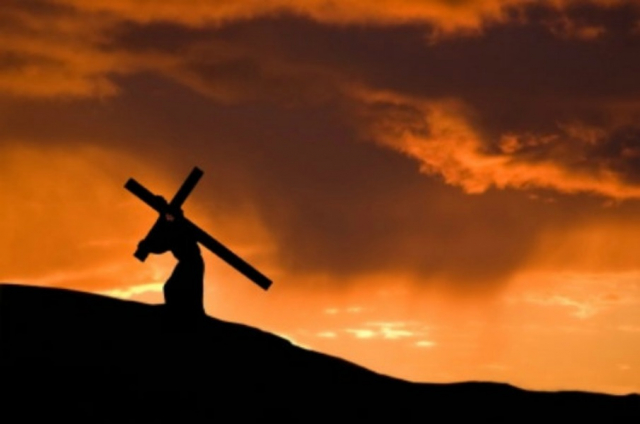
There at the cross are plainly displayed both the awful reality of sin and the abiding love of God. God’s holiness and justice is shown there, for He will not minimize sin and its effects, nor will He pretend that some lesser remedy is sufficient. The cross is a place of honesty and truth. If we let it have its effects, it should lead us to weep for our sins. To the prideful who think little of their sin, the Lord says, “Never make light of what I have to do to save you, of the price I have paid.”

Yet the cross is also place where we should weep for joy and relief, that our Lord meets us there and demonstrates His abiding love for us, sinners though we are. Seeing the cost of our redemption, the Lord Jesus paid the price in full. In every wound is our healing. In His chest, heaved open by the spear, we see the very heart of God.

Yes, the cross is ugly and horrible, and yet beautiful and moving. We must spend substantial time there and, as an old hymn says, “survey the wondrous cross.” It is a remedy. Here the Lord speaks to the scrupulous saying, “Never doubt my love.”

A recent selection in the Office of Readings featured the following meditation, in which St. Peter Chrysologus allowed the Lord to speak to us through him:

In me, says the Lord, I want you to see your own body, your members, your heart, your bones, your blood. You may fear what is divine, but why not love what is human? You may run away from me as the Lord, but why not run to me as your father? Perhaps you are filled with shame for causing my bitter passion. Do not be afraid. This cross inflicts a mortal injury, not on me, but on death. These nails no longer pain me, but only deepen your love for me. I do not cry out because of these wounds, but through them I draw you into my heart. My body was stretched on the cross as a symbol, not of how much I suffered, but of my all-embracing love. I count it no less to shed my blood: it is the price I have paid for your ransom. Come, then, return to me and learn to know me as your father, who repays good for evil, love for injury, and boundless charity for piercing wounds (from a sermon by Saint Peter Chrysologus, bishop. [Sermo 108: PL 52, 499-500]).

A healing word from one of God’s saints to the scrupulous and fearful.

Of the English hymns that have been published, this one is widely considered among the best ever written:

When I survey the wondrous cross
On which the Prince of glory died,
My richest gain I count but loss,
And pour contempt on all my pride.

Forbid it, Lord, that I should boast,
Save in the death of Christ my God!
All the vain things that charm me most,
I sacrifice them to His blood.

See from His head, His hands, His feet,
Sorrow and love flow mingled down!
Did e’er such love and sorrow meet,
Or thorns compose so rich a crown?

Were the whole realm of nature mine,
That were a present far too small;
Love so amazing, so divine,
Demands my soul, my life, my all
(Isaac Watts, 1707).

On the Power of Liturgy and Prayer

There is a text from the Acts of the Apostles (read last week at Mass) that sets forth quite well some of the qualities of the Sacred Liturgy. Although the “liturgy” cited in this passage is not a Mass, the description should apply to all our liturgies; from the Liturgy of the Hours to baptism, from a penance service to a full sung Mass. Let’s look at the passage and learn from it the power of liturgy to deliver, instruct, and transform us and the world.

About midnight, while Paul and Silas were praying
and singing hymns to God as the prisoners listened,
there was suddenly such a severe earthquake
that the foundations of the jail shook;
all the doors flew open, and the chains of all were pulled loose.
When the jailer woke up and saw the prison doors wide open,
he drew his sword and was about to kill himself,
thinking that the prisoners had escaped.
But Paul shouted out in a loud voice,
“Do no harm to yourself; we are all here.”
He asked for a light and rushed in and,
trembling with fear, he fell down before Paul and Silas.
Then he brought them out and said,
“Sirs, what must I do to be saved?”
And they said, “Believe in the Lord Jesus
and you and your household will be saved.”
And they spoke the word of the Lord to him and to all who were in his house.
And he took them the same hour of the night and washed their wounds;
and he was baptized at once, he and all his family (Acts 15:25-33).

DeterminationAbout midnight, while Paul and Silas were praying and singing hymns to God as the prisoners listened … Here they are in an awful place, a deep dungeon with rats and filth all about, and yet they are singing.

An old hymn reminds us to persevere in praise: “Whatever my lot, thou hast taught me to say, ‘It is well with my soul, it is well.’” Yes, happiness is an inside job. There may be times when we don’t feel emotionally ready to praise God, but we have to command our soul. In the words of the psalm, I will bless the Lord at all times. His praise shall continually be in my mouth (Psalm 34:1).

Note that this is communal not personal prayer, and thus it is a kind of liturgy. They are singing hymns, a form of communal and liturgical prayer. More literally, the Greek text says that they were singing praises (humneo) to God. “Hymn” comes from humneo. Perhaps they were singing psalms or perhaps they were singing newly composed hymns such as we see in Philippians 2:5-11, Ephesians 1:3-14, or Colossians 1:15-19. But note their determination to praise the Lord anyway. Such praises will bring blessings, for when praises go up, blessings come down.

The Church must always be determined to celebrate the liturgy. The last thing we should ever consider stopping is the Mass! Recall how many priests and bishops locked up in prisons were earnest to obtain even the slightest scraps of bread or drops of wine in order to celebrate the Mass. Recall the many martyred priests during troubled times in England who risked everything to celebrate the Holy Mass. We must always be determined to pray, and whenever possible, to celebrate the Sacred Liturgy, even at great risk.

Disturbance… suddenly such a severe earthquake that the foundations of the jail shook … Does our worship rock this world to its foundations? It should. The world ought to know and experience that we are at prayer! We should rock this world with our refusal to be discouraged at what it dishes out.

Further, good prayer, preaching, and the simple presence of the Church ought to shake things up a bit. It is said that a good preacher will comfort the afflicted and afflict the comfortable. Each of us has a little of both within us.

Note that the early Christians were often arrested for being “disturbers of the peace.” They said politically dangerous things like “Jesus is Lord” rather than “Caesar is Lord.” Religiously, they upset the order by announcing that many of the old rites were now fulfilled. Temple worship was over. Jesus was the true temple and Lord, and the Eucharist now supplanted the lucrative temple rites. Morally, the Church shook things up by demanding love of one’s enemies and that people no longer live as did the pagans, in the futility of their minds. These things and more tended to disturb the political, social, and religious order. Liturgically, we gather to celebrate and learn many earthshaking truths and to be liberated from the hold of the world, the flesh, and the devil.

Yes, the presence of the early Church was a kind of earthquake. When the Church is strong she not only consoles; she disturbs and even rocks things to their foundations by the simple declaration, “Thus says the Lord” and by our praise of Him who is true Lord and Sovereign King, far outranking all other kings and those who demand our loyalty and conformity.

Deliverance… all the doors flew open, and the chains of all were pulled loose. The liturgy of praise and worship of God should effect an ongoing deliverance. The prayer of the Church in her liturgy should set people free: prison doors swing open, chains fall loose, and increasing freedom is granted to faithful.

I am a witness to this and I pray that you are as well. I have attended and celebrated Mass every day for more than thirty years now. In that time, through praise, hearing God’s Word, being instructed in God’s Word, receiving the Word Made Flesh in Holy Communion, and deep abiding fellowship with believers, I am a changed man. Many shackles have come loose. A new mind and heart have been given to me and the prison cells of anxiety are no longer. Deliverance is what happened to us when the Lord took us out of the kingdom of darkness and into the Kingdom of Light. Through the liturgy, that deliverance becomes deeper, richer, broader, and higher.

DignityWhen the jailer woke up and saw the prison doors wide open, he drew his sword and was about to kill himself, thinking that the prisoners had escaped. But Paul shouted out in a loud voice, “Do no harm to yourself; we are all here.” The liturgy we celebrate is that of the Catholic Church. The term Catholic refers to the universality of the Church’s mission. All are to be called.

One effect of the liturgy on us should be that we neither hate nor exclude anyone. Paul and Silas do not gloat over the misfortune of their jailer. Knowing his dignity, they call out to him, even at the risk of their lives.

The Church, too, seeks the welfare and salvation of even our most bitter opponents. Our liturgy is celebrated not only for our friends but for the whole world.

The Church is Catholic; all are called. Painting a picture of the Church, Scripture says, I [John] looked, and there before me was a great multitude that no one could count, from every nation, tribe, people and language, standing before the throne and before the Lamb. They were wearing white robes and were holding palm branches in their hands (Rev 7:9). I realize how true it is that God does not show favoritism but accepts from every nation the one who fears him and does what is right. Everyone who believes in him receives forgiveness of sins through his name (Acts 10: 34-35, 43).

Discipleship[The jailer] asked for a light and rushed in and, trembling with fear, he fell down before Paul and Silas. Then he brought them out and said, “Sirs, what must I do to be saved?” And they said, “Believe in the Lord Jesus and you and your household will be saved.” And they spoke the word of the Lord to him and to all who were in his house. And he took them the same hour of the night and washed their wounds; and he was baptized at once, he and all his family.

Making disciples (not just members) is the primary job of the Church. To be a disciple is to be a follower of the Lord, but the word “disciple” also comes from the same Latin root (discere) as the word “learning.” Thus, the Church in her liturgy not only worships the Lord, she instructs the faithful and supplies the sacraments.

Note that the jailer asks for light. Do not think of this as merely a practical request. Asking for light is asking for the enlightenment that comes from Faith and Baptism. The Church in her liturgy and by her witness supplies light and acclimates the faithful to that light.

The jailer, having asked for the light, been instructed, and become accustomed to the light, is baptized.

Here, then, are some goals of and a description of true liturgy, one that rocks the world and yet delivers the faith, forming the people in the beauty of God’s grace. Do you and your fellow parishioners see the liturgy this way or do you see it as distant, even boring? See what this Scripture passage teaches about the truest goals and nature of every liturgy, great or small, in the Church.

You Forgot! A Reflection on a Central Spiritual Struggle

Don't Forget

Don't ForgetOne of the more basic human problems in our relationship with God is that we forget. Over and over again in the Scriptures comes an almost exasperated accusation from God: “You forgot!” Consider just a few of hundreds of such texts:

  1. You deserted the Rock, who fathered you; you forgot the God who gave you birth (Deuteronomy 32:8).
  2. When I fed them, they were satisfied; when they were satisfied, they became proud; then they forgot me (Hosea 13:6).
  3. and when your herds and flocks grow large and your silver and gold increase and all you have is multiplied, then your heart will become proud and you will forget the LORD your God, who brought you out of Egypt, out of the land of slavery (Deuteronomy 8:13-14).
  4. They forgot His deeds and His miracles that He had shown them (Psalm 78:11).
  5. But they soon forgot his works; they did not wait for his counsel. … They forgot God their Savior, Who had done great things in Egypt (Psalm 106:13, 21).
  6. But they forgot the LORD their God; so he sold them into the hand of Sisera, the commander of the army of Hazor, and into the hands of the Philistines and the king of Moab, who fought against them. They cried out to the LORD and said, “We have sinned; we have forsaken the LORD and served the Baals and the Ashtoreths. But now deliver us from the hands of our enemies, and we will serve you”‘ (1 Sam 12:9-10).

Another form of this comes in the refrain of God as the Law is announced in Leviticus and Deuteronomy: “I am the Lord.” For example,

You shall not oppress your neighbor or rob him …. You shall not curse the deaf or put a stumbling block before the blind, but you shall fear your God: I am the Lord. Do not turn to mediums or necromancers; do not seek them out, and so make yourselves unclean by them: I am the Lord your God. You shall stand up before the gray head and honor the face of an old man, and you shall fear your God: I am the Lord (Leviticus 19:31-32).

The ancient rabbis explained this expression in a humorous way. They taught that when God says “I am the Lord,” he means, “Look, I am the one who fished you out of the mud. Now come over here and listen to me.” In other words, “Don’t forget that who it is that is talking to you. I am the one who loves you and has rescued you, the one who provides for you and sustains you. Pay attention. Never forget that I speak to you for your good, not to burden you.”

But as it is, we so easily forget. God’s lament is as true as ever: “You forgot!” We discount the vast and almost unimaginable blessings of each day from the hand of God and grumble at the smallest problem, setback, or slight.

What God is most concerned with is not that we forget small details of the law, but that we so easily forget the wonderful things He has done for us. For indeed, He rescued them from slavery, parted the Red Sea for them, fed them with manna, and gave them water in the desert. He led them forth and settled them in the promised land. But how easily and quickly they forgot His saving deeds!

God’s lament is not about His ego needs to be thanked or repaid for his goodness. God is not vain like man. It is essential that we remember. To remember is to have a healing knowledge.

What does it mean to remember? To remember is to have deeply present in our mind and heart what God has done for us such that we are grateful and different. Grateful people are more hopeful, confident, trusting, and serene. They are more generous, forgiving, and joyful. They are this way because they have not forgotten; they remember how good God has been to them.

One essential solution to our tendency to forget is the Liturgy itself. First, because we read every day from God’s word and remember His saving acts and the teachings of the past. Further, at every Eucharist Jesus repeats His command that we “do this in memory of [Him].” In other words, we are not to live unreflective lives. We are to remember what He has done for us. We are to have present in our mind and heart what He has done for us so that we are grateful and different.

The word amnesia (rooted in Greek) means forgetfulness. A key element in the Eucharistic prayer takes place after Jesus’ command that we do this in memory of Him. It is called the anamnesis, which means remembering, the opposite of forgetting. In the Roman Canon the anamnesis begins after the consecration with the words, “Unde et memores (Wherefore and remembering). The second Eucharistic prayer says, Memores igitur mortis et resurrectionis (therefore in memory of the death and resurrection of Christ).

Yes, remembering is at heart of the Eucharistic Liturgy. And we need it! We so easily forget all the good things God does to sustain and prosper us. Every fiber of our being is created and sustained by God. Everything on which we depend is also created, sustained, and given by God. Every single day, trillions of things go right and trillions of gifts are ours. Yet if one thing goes wrong, we are easily downcast, angry, and despondent. What a disproportionate response! It is primarily because we forget and discount His blessings.

Don’t forget! At best, forgetting makes us grouchy. At worst, it makes us anxious and fretful, even mentally ill.

Remember! Remember the innumerable things God has done for you. If you do, you’ll be more grateful and different.

We Must Receive the Whole Counsel of God

The first reading from today’s Mass is Paul’s farewell speech to the presbyters (priests) of the early Church. Here is a skilled bishop and pastor exhorting others who have pastoral roles within the Church. Let’s take a look at this text and apply its wisdom to bishops and priests as well as to parents and other leaders in the Church.

Paul’s Farewell Sermon – The scene is Miletus, a town in Asia Minor on the coast not far from Ephesus. Paul, who is about to depart for Jerusalem, summons the presbyters of the early Church at Ephesus. Paul has ministered there for three years and now summons the priests for this final exhortation. In the sermon, St. Paul cites his own example of having been a zealous teacher of the faith who did not fail to preach the “whole counsel of God.” He did not merely preach what suited him or made him popular; he preached it all. To these early priests, Paul leaves this legacy and would have them follow in his footsteps. Let’s look at excerpts from this final exhortation.

From Miletus Paul had the presbyters of the Church at Ephesus summoned. When they came to him, he addressed them, “You know how I lived among you the whole time from the day I first came to the province of Asia. I served the Lord with all humility and with the tears and trials that came to me … and I did not at all shrink from telling you what was for your benefit, or from teaching you in public or in your homes. I earnestly bore witness for both Jews and Greeks to repentance before God and to faith in our Lord Jesus … But now, compelled by the Spirit, I am going to Jerusalem … But now I know that none of you to whom I preached the kingdom during my travels will ever see my face again. And so I solemnly declare to you this day that I am not responsible for the blood of any of you, for I did not shrink from proclaiming to you the entire plan of God (Acts 20:1-38, selected).

Here, then, is the prescription for every bishop, priest, deacon, catechist, parent, and Catholic: preach the whole counsel (the entire plan) of God. It is too easy for us to emphasize only that which pleases us, or makes sense to us, or fits in with our world view. There are some who eagerly receive the Lord’s sermons on love, but cannot abide His teachings on death, judgment, Heaven, and Hell. Some love to discuss liturgy and ceremony, but not the care of the poor. Others point to the Lord’s compassion, but neglect His call to repentance. Some love the way He dispatches the Pharisees and other leaders of the day, but suddenly become deaf when the Lord warns against fornication or insists that we love our spouse, neighbor, and enemy. Some love to focus inwardly and debate doctrine, but neglect the outward focus of true evangelization to which we are commanded (cf Mat 28:19).

As a whole, we in the Church today too easily divide out rather predictably along certain lines: life issues here, social justice concerns over there; strong moral preaching here, compassionate inclusiveness over there. When one side speaks, the other side says, “There they go again!”

Like St. Paul, we must be able to say that we did not shrink from proclaiming the whole counsel of God. While this is especially incumbent on the clergy, it must also be true for parents and all who attain any leadership in the Church. All of the issues above are important and must have their proper places in the preaching and witness of every Catholic, both clergy and lay. While we may have gifts to work in certain areas, we should learn to appreciate that others in the Church may be needed to balance and complete our work. We must exclude notions that stray from revealed doctrine, but within doctrine’s protective walls, it is necessary that we not shrink from proclaiming and appreciating the whole counsel of God.

Make no mistake about it: if we do this we will suffer. Paul speaks above of tears and trials. In preaching the whole counsel of God (not just your favorite passages or politically correct, “safe” themes), expect to suffer. Understand that you will not quite fit in with people’s expectations. Jesus got into trouble with just about everyone. He didn’t offend just the elite and powerful. For example, even His own disciples puzzled over His teachings on divorce saying, If that is the case of man not being able to divorce his wife it is better never to marry! (Matt 19) In the case of Jesus’ teaching on the Eucharist, many left Him and would no longer walk in His company (John 6). When Jesus spoke of His divine origins, many took up stones with which to stone Him, but He passed through their midst (Jn 8). In addition, Jesus spoke of taking up crosses, forgiving your enemies, and preferring nothing to Him. He forbade even lustful thoughts, let alone fornication, and insisted that we must learn to curb our unrighteous anger. Yes, preaching the whole counsel of God is guaranteed to earn us the wrath of many.

Over my years as a priest, I have had to bid a sad farewell to several congregations. This farewell speech of Paul’s is one I use to examine my ministry. Did I preach even the difficult teachings? Was I willing to suffer for the truth? Did my people hear from me the whole counsel of God, or just the parts that were “safe”?

How about you? Have you proclaimed the whole counsel of God? If you are a member of the clergy, when you move on; if you are a parent, when your child leaves for college; if you are a catechist, when the young people are ready to be confirmed; if you teach in RCIA, when the time comes for Easter sacraments. Can you say that you preached it all? God warned Ezekiel that if he failed to warn the sinner, the sinner would surely die for his sins but Ezekiel himself would be responsible for this death (Ez 3:17 ff). Paul is able to say that he is not responsible for the death (the blood) of any of them, because he did not shrink from proclaiming the whole counsel of God.

We must proclaim the whole counsel of God; not just the safe parts, not just the popular teachings, not just the parts that agree with my views and those of my friends. The whole counsel, even the things that are ridiculed—The Whole Counsel of God.

“And in the Morning Watch, the Lord … Cast a Glance” – A Meditation on the Look of the Lord

Lest the Easter Season slip away and I miss the chance, I would like to look back on a reading from the Easter Vigil.

There is indeed an astonishing verse in the Exodus account, which was read at the Easter Vigil. The Lord has parted the waters of the Red Sea by a strong eastern wind and the Israelites have just made the crossing with the Egyptians in hot pursuit.

And in the morning watch, the Lord in the pillar of fire and of cloud, cast a glance on the Egyptian forces and threw the Egyptian forces into a panic (Ex 14:24).

Just one look … that’s all it took! One can imagine many other ways that God could have despoiled them: lightning, angelic forces, etc. Instead, the Lord merely “cast a glance.”

Was it an angry glance? The text does not say. I would propose, based purely on speculation, that it was a look of love. For if God is love, then how could it have been anything else?

Why, then, the panic among the Egyptian forces? Perhaps it was like the reaction of those accustomed to the darkness, who wince in pain when beautiful light shines. Love confronts and drives out hate the way light drives out darkness. Love is what it is; it cannot be something else. To those held bound by hatred, though, love is like kryptonite. Thus the Egyptian army falls at the glance of God, panics at the weakness it experiences. Yes, love can be like kryptonite.

I propose that despite the panicked result, God’s glance was one of love. God does not change. Even when we speak of His wrath or anger, we are speaking more of our experience than of what is in God. God is love and so He looks with love. That we experience something other than love is a problem in us, not in God.

Indeed, sometimes we see the look but miss the love. In the Gospel of Mark is told the story of a rich young man who sought perfection, but somewhat on his own terms. Jesus looked at him with love and said to him, “You lack one thing: go, sell all that you have and give to the poor, and you will have treasure in heaven; and come, follow me” (Mk 10:21). The young man saw the look and heard the words, but missed the love. As a result, he went away saddened.

And lest we reduce God’s look of love to one of mere sentimentality, we ought to recall that God’s look of love can also convict us and move us to repentance. Peter’s denial of the Lord is recounted in all four of the Gospels. Simon Peter was in the courtyard of the high priest warming himself by the fire; he had just denied knowing the Lord for the third time when the cock crowed. The Gospel of Luke recounts, The Lord turned and looked at Peter. And Peter remembered the word of the Lord, how He had told him, “Before a rooster crows today, you will deny Me three times.” And he went out and wept bitterly (Lk 22:61-62). Here was a look of love that caused pain, but it was a healing pain that led to repentance.

For those of us with deeper faith, we learn to count on the look, the glance of God, to save us. An old hymn says, “Though billows roll, He keeps my soul. My heav’nly Father watches over me.” Another says, “His eye is on the sparrow and I know He watches me.”

Yes, the glance of God may make you feel sad, or mad, or glad; but it is the look of love, always seeking to console or to set us right and bring about healing.

I have a large icon of Christ in my room. In my opinion, what icons from the Eastern tradition do best is to capture “the look.” No matter where I move in the room, it seems that Christ is looking right at me. His look is intense, though not severe. In the Eastern spirituality, icons are windows into Heaven. Hence this icon is no mere portrait that reminds one of Christ; it is an image that mediates His presence. When I look upon Him, I experience that He knows me. He is looking at me with a knowing, comprehensive look.

The Book of Hebrews says of Jesus, No creature is concealed from him, but everything is naked and exposed to the eyes of him to whom we must render an account (Heb 4:13). Christ’s look in the icon in my room is not fearsome; it is serene and confident.

Particularly in Mark’s Gospel, there is great emphasis on the eyes and the look of Jesus. The following expression, or one like it, appears more than 25 times in the Gospel of Mark: And looking at them He said, …

Looking on Christ and allowing Him to look on you is a powerful moment of conversion. Jesus Himself said, For my Father’s will is that everyone who looks to the Son and believes in him shall have eternal life, and I will raise him up at the last day (Jn 6:40). And in the First Letter of John we read, What we shall later be has not yet been revealed. We do know that when it is revealed we shall be like him, for we shall see him as he is (1 Jn 3:2).

Keep looking to the Lord during this Easter season, through the art that most moves you and especially in the Most Blessed Sacrament. Look at Him and let Him look at you. Be not dismayed like the Egyptians of old. God is love and therefore His look is always one of love, no matter how we experience it.

The Lord is casting a glance at you right now. What do you see?

This video is a collection of clips from the movie The Passion of the Christ, set to music. It shows many of the looks of Jesus as well as some that come from us. Look for the “looks.”

Love Lifted Me – A Homily for the Ascension of the Lord

In more dioceses than not, the Feast of the Ascension is celebrated this Sunday. The liturgist in me regrets the move from Thursday, but here we are any way. Let’s ascend with the Lord, three days late!

This marvelous feast is not merely about something that took place two thousand years ago, for though Christ our head has ascended, we the members of His body are ascending with Him. Because He was ascended, we, too, have ascended. In my own life as a Christian, I am brought higher every year by the Lord, who is drawing me up with Him. This is not some mere slogan, but something I am actually experiencing. An old song says, “I was sinking deep in sin, far from the peaceful shore. Very deeply stained with sin, sinking to rise no more. But the master of the sea, heard my despairing cry. And from the waters lifted me. Now safe am I. Love Lifted me when nothing else could help. Love lifted me!”

If we are faithful, the feast of the Lord’s Ascension is our feast, too. Let’s look at it from three perspectives.

I. The Fact of the Ascension – The readings today describe a wondrous event witnessed by the Apostles. By His own power, the Lord is taken to Heaven. In so doing, He opens a path for us, too. The gates of paradise swing open again. Lift up your heads, O gates! and be lifted up, O ancient doors! that the King of glory may come in! (Psalm 24:7) In Christ, man returns to God. Consider three things about the Ascension:

A. The Reality – Imagine the glory of this moment! Scripture says, As they were looking on, he was lifted up and cloud took him from their sight … they were looking intently in the sky as he was going (Acts 1:9). So impressive was the sight that the angels had to beckon them to get along to Jerusalem as the Lord had said, “Men of Galilee,” they said, “why do you stand here looking into the sky? This same Jesus, who has been taken from you into heaven, will come back in the same way you have seen him go into heaven” (Acts 1:11). Yes, it was glorious. Jesus had once said as a summons to faith, What if you were to see the Son of Man ascending to where he was before? (John 6:62) He had also encouraged them saying, Truly, truly, I say to you, you will see heaven opened, and the angels of God ascending and descending upon the Son of man (John 1:51). So here is a glorious reality and a fulfillment of what Jesus had said.

B.The Rescue – In the Ascension, it does not seem that the Lord entered Heaven alone. As we have remarked, in His mystical body we also ascend with Him. Consider this remarkable text that affirms that: Therefore it is said, When he ascended on high he led a host of captives, and he gave gifts to men. In saying, “He ascended,” what does it mean but that he had also descended into the lower parts of the earth? He who descended is he who also ascended far above all the heavens, that he might fill all things (Eph 4:8ff). Yes, the Lord had earlier (just after his death) descended to Sheol, awakened the dead, and preached the Gospel to them (cf 1 Peter 4:6). Now for those He had justified came the moment to ascend, with Jesus as a “host,” as an army of former captives now set free. Behold the great procession that enters behind Christ through the now-opened gates of Heaven: Adam and Eve, Noah, Abraham, Sarah, Isaac, Jacob, Rachel, Judith, Deborah, David, Samuel, Isaiah, Jeremiah, Ezekiel, Malachi, John the Baptist, … and, one day, you! Yes, this is a great rescue. Adam and his descendants have not simply been restored to some paradise-like garden; they have entered Heaven.

C.The Rejoicing – Consider how this once captive train sings exultantly as they follow Christ upward to Heaven. The liturgy today puts before us a likely song they sang: God mounts his throne to shouts of Joy! The Lord amid trumpet blasts. All you peoples clap your hands, shout to God with cries of gladness, for the Lord the most high, the awesome is the great king over all the earth. God reigns over the nations, God sits upon his holy throne (Psalm 47:6-7). I also have it on the best of authority that they were singing this old gospel song: “I’m so glad Jesus lifted me!” as well as this old Motown song: “Your love is lifting me higher than I’ve ever been lifted before!”

II. The Fellowship of the Ascension – We have already remarked that, when Christ ascends, we ascend. Why and how? Scripture says, Now you are the body of Christ and individually members of it (1 Cor 12:27). It also says, All of us who were baptized into Christ Jesus were baptized into his death. By baptism we were buried together with him so that just as Christ was raised from the dead by the glory of God the Father, we too might live a new and glorious life. For if we have been united with him by likeness to his death we shall be united with him by likeness to his resurrection (Rom 6:3ff). When Christ died, we died. When Christ rose, we rose. When He ascends, we ascend.

But, you may say, He is in glory while I am still here. How is it that I am ascended or ascending? Consider a humorous example using our physical bodies. When I get on an elevator and press the button for the top floor, the top of my head gets there before the soles of my feet, but the whole body will get there unless some strange loss of integrity or tragic dismemberment takes place. In an analogous way, so it is with Jesus’ mystical body. In Christ, our Head, we are already in glory. Some members of His Body have already gotten there. We who come later will get there too, provided we remain members of His Body. Yes, we are already ascended in Christ, our Head. We are already enthroned in glory with Him, if we hold fast and stay a member of His Body. This is the fellowship of the Ascension.

III. The Fruitfulness of the Ascension – Jesus does not return to Heaven to abandon us. He is more present to us than we are to ourselves. He is with us always to the end of the age (cf Matt 28:20). In ascending, without abandoning us, He goes to procure some very important things. Consider four of them:

A. Holy Ghost power – Jesus teaches very clearly that He is ascending in order to send us the Holy Spirit. Nevertheless, I tell you the truth: it is to your advantage that I go away, for if I do not go away, the Counselor will not come to you; but if I go, I will send him to you (Jn 16:7ff). He also says, These things I have spoken to you, while I am still with you. But the Counselor, the Holy Spirit, whom the Father will send in my name, he will teach you all things, and bring to your remembrance all that I have said to you (Jn 14:25ff). I still have many things to say to you, but you cannot bear them now. When the Spirit of truth comes, he will guide you into all the truth, for he will not speak on his own authority, but whatever he hears he will speak, and he will declare to you the things that are to come (Jn 16:13-14). So the Lord goes in order that with the Father, He might send the Holy Spirit to live within us as in a temple. In this way, and through the Eucharist, He will dwell with us even more intimately than when He walked this earth.

B. Harvest – Jesus says, And I, if I be lifted up from the earth, will draw all men unto me (John 12:32). While the immediate context of this verse is the crucifixion, the wonder of John’s gospel is that he often intends double meanings. Clearly Christ’s glorification is His crucifixion, but it also includes His resurrection and ascension. So, from His place in glory, Christ is drawing all people to Himself. He is also bestowing grace on us from His Father’s right hand to be His co-workers in the harvest: But you shall receive power when the Holy Spirit has come upon you; and you shall be my witnesses in Jerusalem and in all Judea and Samaria and to the end of the earth (Acts 1:8). Yes, from His place in glory, Christ is bringing in a great harvest. As He said in Scripture, Do you not say, “Four months more and then the harvest”? I tell you, open your eyes and look at the fields! They are ripe for harvest. Even now the reaper draws his wages, even now he harvests the crop for eternal life, so that the sower and the reaper may be glad together. Thus the saying “One sows and another reaps” is true. I sent you to reap what you have not worked for. Others have done the hard work, and you have reaped the benefits of their labor (Jn 4:35-38). Harvest! It is the Lord’s work from Heaven in which we participate.

C. Help – At the Father’s right hand, Jesus intercedes for us. Scripture says, Consequently he is able, for all time, to save those who draw near to God through him, since he lives always to make intercession for them (Heb 7:25). The Lord links his ascension to an unleashing of special power: Amen, amen, I say to you, he who believes in me will also do the works that I do; and greater works than these will he do, because I go to the Father. Whatever you ask in my name, I will do it, that the Father may be glorified in the Son (Jn 14:12).

We must not understand asking in the name of Jesus as a mere incantation, for to ask in His name means to ask in accord with His will. Yet we must come to experience the power of Jesus to draw us up to great and wondrous things in His sight. Despite the mystery of iniquity all about us, we trust that Christ is conquering, even in the puzzling and apparent victories of this world’s rebellion. In putting everything under him, God left nothing that is not subject to him. Though, at present we do not see everything subject to him, yet we see Jesus, who was made a little lower than the angels, now crowned with glory and honor … so that by his death he might destroy him who holds the power of death—that is, the devil—and free those who all their lives were held in slavery by their fear of death (Heb 2:8-9; 14-15). Thus, from Heaven we have the help of the Lord’s grace which, if we will accept it, is an ever-present help unto our salvation.

D. Habitation – Jesus indicates that in going to Heaven, He is preparing a place for us: In my Father’s house are many mansions: if it were not so, I would have told you. I go to prepare a place for you. And if I go and prepare a place for you, I will come again, and receive you unto myself; that where I am, there ye may be also (Jn 14:2ff). Yes, Jesus has the blueprints out and the hard hat on. He is overseeing the construction of a mansion for each of us that we may dwell with Him, the Father, and the Spirit forever.

Here, then, are the ways that Christ, by His love, is lifting us higher than we’ve ever been lifted before. Yes, love lifted me when nothing else could help; love lifted me.

Here’s a modernized version of the hymn:


The Importance of the Communal Life, As Seen in Two Commercials

There is a line from Scripture that says, Woe to the solitary man. If he falls he has no one to lift him up (Ecclesiastes 4:10).

Scripture also says, And let us consider how to stir up one another to love and good works, not neglecting to meet together, as is the habit of some, but encouraging one another, and all the more as you see the Day drawing near (Heb 10:24-25). The teaching is clear: we must come together each week for Mass and learn to live in deep communion with one another. We are not meant to make this journey alone. We need encouragement and exhortation, food for the journey, and companionship and protection.

In the days of Jesus, it was almost unthinkable for a person to make a lengthy journey alone. Once a person left the relative safety of the town, the journey got dangerous. There were robbers lying in wait along the roads just looking for vulnerable targets. For this reason, people almost always made journeys in groups.

This is a good image for the spiritual journey we all must make. Alone, we are easy targets. We are vulnerable and without help when spiritual demons attack.

Yet another insight says, “Feuding brothers reconcile when there is a maniac at the door.”

Somehow I thought of all this when I saw these two videos. They are clever and make the point of partner or perish, love or lose, hang together or hang separately. Yes, woe to the solitary man. How necessary the protection of the flock! How necessary it is to stay together!

On a Sad Sidewalk, a Small Foretaste of Jesus’ Words, “You Will Weep … but Your Grief Will Become Joy”

Something about today’s Gospel (Friday of the 6th Week of Easter) reminds me of an incident on the front lines of the battle to end abortion.

Amen, amen, I say to you, you will weep and mourn,
while the world rejoices;
you will grieve, but your grief will become joy.
When a woman is in labor, she is in anguish because her hour has arrived;
but when she has given birth to a child,
she no longer remembers the pain because of her joy
that a child has been born into the world.
So you also are now in anguish.
But I will see you again, and your hearts will rejoice,
and no one will take your joy away from you
(John 16:20-23).

It was a mild spring day in front of the Planned “Parenthood” facility here in Washington, D.C. Twenty of us were gathered to pray the rosary and the Divine Mercy chaplet. The weather was fine, but as always the mood was heavy, knowing of the toll of life exacted at this facility and the outright confusion of those who think themselves righteous for advocating the death of innocent human beings.

Two sidewalk counselors were courageously at work, seeking a last-minute change of heart from the downcast women (often accompanied by boyfriends or parents) who entered. We supported the sidewalk counselors with our prayers.

Five escorts in orange vests tried to shield the entering clients from us who would shine the light of truth on what was really happening inside.

Keep praying, I thought, for indeed, some among our group were converts to the pro-life cause thanks to the prayers of others.

A low moment came when a few joyful “clinic” escorts shared the news among themselves that a certain woman emerging from the center had “successfully aborted.” Smiles among the escorts, a high five between two of them, and a gloating look over at us from another one brought Jesus’ words painfully alive:

You will weep and mourn, while the world rejoices.

Yes, the hardest part of being on the front lines of the pro-life movement is hearing an abortion called a success and seeing some even joyfully announcing victory.

I gathered close to my fellow prayer warriors and encouraged them between the decades by quoting these words of Jesus’: You will weep and mourn, while the world rejoices. Yet we should also remember that He went on to say, you will grieve, but your grief will become joy … [You] are now in anguish. But I will see you again, and your hearts will rejoice, and no one will take your joy away from you.

It was not enough that we should grieve; we should also offer our sorrow for the ones who were now rejoicing. We must offer our grief for their conversion. For Jesus says,

Woe to you who laugh now, for you will mourn and weep (Luke 6:25).

Indeed, if they are not converted now, they will answer one day to God. Pray for conversion prior to judgement! It gave me the strength to go to each escort, look him or her in the eye, and say, “Think about it now. You know deep in your heart that this is wrong, that this is murder.” It was interesting to me that not a single one of them said anything in reply.

In the distance, I saw one of our sidewalk counselors urgently waving for me to come over. She had not been able to dissuade a certain young woman from entering, but her boyfriend had listened, taken it to heart, and was now asking for confession! He had tried to bring his girlfriend out to join him, but she refused. Now sorrowful and contrite, moved by the words of the sidewalk counselor and the signs our group held, he sought mercy. The counselor said to me, “He’s ready for you Father; he’s ready for mercy.”

Thank you, Jesus. We could not save everyone that day, but at least we saved one. Sorrow was turned to joy. I pray only, Lord, that our joy may one day be complete.

“Keep praying, witnessing, and working.” was all I heard.