The Archdiocese of Washington has a well-established history of welcoming the newcomer in our midst and working to provide our new neighbors with the pastoral, material, and even legal support, that they may require.
The plight of migrants and refugees is also a world-wide crisis. This week, Pope Francis launched the two-year “Share the Journey” global campaign to promote a culture of encounter and to find ways to bring people together. To learn more, please go to sharejourney.org.
In the meantime, as I discussed in a recent letter to priests, this local Church will continue to support our sisters and brothers who come from other lands, as we do with anyone else in need. Parish communities should accompany our immigrant families also with prayer, which can bring comfort and unity. Members of the immigrant community are a vibrant part of our Church in Washington and are woven into our society.
Today, more than 72 unique Hispanic cultures thrive in the Washington, D.C. area, and for 50 years, the Spanish Catholic Center, operated by Catholic Charities of the Archdiocese of Washington, has been offering medical and dental clinics, job training programs, English classes, a food pantry and case management services to meet the needs of our newcomers and neighbors. Over the next few days, the archdiocese will be sharing the Spanish Catholic Center’s story and how all of us can accompany our neighbors.
Today I would like to present excerpts from the stirring sermon “On Pastors,” delivered by St. Augustine to the priests and people of Hippo. Although it is directed to priests, I hope that parents and leaders in general might also take courage from it.
In times like these we must all be reminded of the need to preach the Word of God even if we are reviled and our very proclamation of love is labeled “hate speech.” This is not new; St. Augustine calls us to be resolute and to preach the Word of God in season and out of season. Augustine’s words are shown in bold, while my commentary is in plain text.
[The Lord says:] The straying sheep you have not recalled; the lost sheep you have not sought. In one way or another, we go on living between the hands of robbers and the teeth of raging wolves. … The sheep moreover are insolent. … And in light of these present dangers we ask your prayers [From a sermon on pastors by St. Augustine, Bishop (Sermon 46, 14-15: CCL 41, 541-542)].
Whatever the specifics of St. Augustine’s era, today’s clergy and parents have the difficult task of presiding over a flock or family that on one side is pursued by the raging wolf of hostile and scoffing secularism, and on the other is being robbed of strength and clarity by dissension from within, even up to the highest levels in the Church. While a hostile world is to be expected, internal dissension is most lamentable and even more painful. This is especially the case today.
In contentious times such as ours, as the poison of the world infects the flock, some of God’s own people begin to take up the voice and demeanor of the wolf. In certain times and places, someone who strives to disclose the errors of the world will often be resisted and scorned, referred to as intolerant or hateful. A priest may be called out-of-touch or be discounted as “too political.” Some may even walk out as he preaches about controversial issues that are referred to as political, but are in fact moral: abortion, euthanasia, same-sex “marriage,” and so forth. Others may write letters to the bishop criticizing him. While the scoffing of the world is expected, the insolence of the flock is very discouraging.
Thus St. Augustine says here, “We ask your prayers.” Some priests can fall prey to hostility in sinful ways. Some may give way to anger, which can infect evangelical joy. They will engage in mere argumentation and resort to indiscriminate sermonizing. They go from being the Church militant to the Church belligerent.
More common, and usually deadlier, is when a priest reacts by withdrawing from the battlefield altogether, no longer preaching on any topic considered controversial. He does not seek to correct the straying sheep because it might make them angry; he is not willing to bear the emotional burden of this resistance or to brave the stormy waters of controversy to call to them.
Silent pulpits are all too common today. A priest who is silent from the pulpit may tell himself that he is protecting his people’s feelings by not upsetting anyone. In reality, though, he comes to resemble the false shepherds denounced by Jesus, the ones who do not really care for their sheep but rather run when the wolf approaches.
The effect on the flock (and the world) is devastating because Catholics, who are called to be light in the darkness, have come to resemble the darkness. Catholics have become indistinguishable from the general populace in terms of our views on the most critical moral issues of our times. Even Catholics who have not caved in to all aspects of the cultural revolution are often ill-prepared to make a defense for the hope and truth that is in them.
Augustine calls some of the sheep “insolent.” The Latin root of the word lends it the meaning of being unaccustomed to something. Thus one who is insolent scoffs at what he does not understand. The straying sheep are often insolent as a result of poor catechesis.
Ignorance of the faith in the pews, along with pressure from a culture that loudly and effectively proclaims its own views, presents an enormous challenge to pastors. Without persistence and fortitude, many of our clergy can become resigned to mediocrity and inaction.
Augustine continues on to set forth a model of a shepherd’s heart for his sheep (especially the straying ones) that all clergy should emulate.
The shepherd seeks out the straying sheep, but because they have wandered away and are lost they say that they are not ours. “Why do you want us? Why do you seek us?” they ask, as if their straying and being lost were not the very reason for our wanting them and seeking them out. “If I am straying,” he says, “if I am lost, why do you want me?” You are straying, that is why I wish to recall you. You have been lost, I wish to find you. “But I wish to stray,” he says, “I wish to be lost.”
If, with the help of others, a good priest seeks out the lost, the confused, and the broken, still many will say that they are not ours or that we should leave them alone. Others will say, “If you don’t approve of what I do and you think of me as lost and a sinner, why do you want me?” But it is precisely because they are lost that we seek them.
Our disapproval of sin (regardless of how others choose to interpret it) is no different than a doctor’s disapproval of toxic behavior that can lead to cancer; he will caution us to avoid such behavior and to come to him for healing if the cancer has already set in.
Sadly, many today base their fundamental identity on sinful behaviors; they interpret our searching for them as an offense rather than as an act of loving concern.
St. Augustine captures their attitude well: “But I wish to stray, I wish to be lost.” He then he presents an answer that summons us to perseverance:
So you wish to stray and be lost? How much better that I do not also wish this. Certainly, I dare say, I am unwelcome. But I listen to the Apostle who says, “Preach the word; insist upon it, welcome and unwelcome.” … I dare to say, “You wish to stray, you wish to be lost; but I do not want this.” For the one whom I fear does not wish this. And should I wish it, consider his words of reproach: “The straying sheep you have not recalled; the lost sheep you have not sought.” Shall I fear you rather than him? Remember, we must all present ourselves before the judgment seat of Christ.
This is a powerful reminder to every priest and every Christian. Do not lose your zeal for souls. Do not give up. Preach until the day you die, whether your words are welcomed or not.
Even if you should lose your zeal, never forget that the Lord has not lost His. We will all report to Him one day to render an account of our lives. Priests, above all, must be stirred to zeal. If our own love for God and for souls should flag, at least let a holy fear of the day of judgment move us!
Love is the better motive, but failing that, may we be moved by the fear of the Lord and of the day we shall be called to account for our ministry. Further, we must not fear the anger of men more than the indignation of God should we fail Him in the goal for which He ordained us.
Steeled and motivated by this, Augustine concludes with a stirring summons to resolve:
I shall recall the straying; I shall seek the lost. Whether they wish it or not, I shall do it. And should the brambles of the forests tear at me when I seek them, I shall force myself through all straits; I shall put down all hedges. So far as the God whom I fear grants me the strength, I shall search everywhere. I shall recall the straying; I shall seek after those on the verge of being lost.
Amen. Stir in us, O Lord, a zeal for souls. Give us your own love and strength. May we desire souls with your very desire for them. Priests, parents, and leaders: Take heart and be courageous lovers of souls!
Those who seek to strengthen Holy Matrimony and stem the tide of failed marriages propose many remedies, among them better catechesis, improved marriage preparation, and greater emphasis on the sacrament in sermons. All of these are fine ideas and necessary steps, but let’s also ponder a deep but often unexplored root of the trouble with marriage today: idealism or unrealistic expectations.
Although we live in cynical times, many people still hold a highly idealistic view of marriage: that it should be romantic, joyful, loving, and happy all the time. It is an ideal rooted in the dreamy wishes of romantic longing, but an ideal nonetheless. Amor omnia vincit! (Love conquers all!) Surely, we will live happily ever after the way every story says!
Here’s the problem: Many want their marriage to be ideal, and if there is any ordeal, they want a new deal. Yes, many are wandering about thinking, “I still haven’t found what I’m looking for,” to borrow from a U2 song.
There is no such thing as an ideal marriage, only real marriage. Two sinners have been married. A man and a woman with fallen natures, living in a fallen world that is governed by a fallen angel, have entered into the Sacrament of Holy Matrimony. Like the graces of any Sacrament, those of Holy Matrimony are necessary not because things are wonderful, but because they are oftentimes difficult. Marriage is meant to sanctify. Like baptism, it offers graces that unfold gradually. The graces unfold to the degree that, and at the speed with which, the couple cooperates with God’s work.
It takes a lifetime of joy and challenge, tenderness and tension, difficulty and growth, in order for a husband and wife to summon each other to the holiness that God gives. Some of God’s gifts come in strange packages. Struggles and irritations are often opportunities to grow and to learn what forgiveness, patience, and suffering are all about. These are precious things to learn and to grow in. Frankly, if we don’t learn to forgive we are going to go to Hell (see Mt 6:14-15). Even the best marriages have tension; without tension there is no change.
This may not describe the ideal, happily-ever-after marriage, but it describes the real one: full of joy, love, hope, and tenderness, but also sorrow, anger, stress, and disappointment.
The real problem does not necessarily come from our ideals about marriage, which are good to strive for, but from the fact that we conceive of these ideals within a hedonistic culture.
Hedonism is the “doctrine” that the chief goals of earthly life are happiness and pleasure. (The Greek word hedone means “pleasure.”) In the hedonistic view, any diminishment of pleasure or happiness is the worst thing imaginable, a complete disaster. Many insist on a kind of God-given right to be happy and pleased. Even some devout Christians fall prey to these exaggerated notions and excuse some selfish and sinful behaviors by saying, “God wants me to be happy doesn’t He?” When the Church (or an individual) suggests that someone should do what is difficult, they react, not with puzzlement, but with downright indignation, as if to say, “How dare you get between anyone and what makes him or her happy!”
Our notion of an ideal (happy, fulfilling, blissful) marriage is seen through the lens of hedonistic extremism. If the ideal marriage is not found, many feel a need—a perfect right—to end it in search of greener pastures.
This is just more evidence of our instant gratification culture that is used to “Rush shipping,” “Buy it with one click,” and “Download now.” If the ideal marriage is not evident very soon, the disappointments and resentments come quickly.
There is a saying that “unrealistic expectations are premeditated resentments.” How quickly unrealistic notions of the picture-perfect marriage are dashed on the shoals of reality.
Somewhere, not only in the Church’s marriage preparation programs but also in our work of assisting personal formation, we need to teach that unrealistic expectations are ultimately destructive. Our ideals are not the problem per se; we must become more sober about our conception of these ideals through the lens of hedonism and instant gratification. Growth takes time. Life moves through stages. Marriage is hard, but so is life. Cutting and running from the imperfect marriage—as some do rather quickly today—is not the solution. Sure enough, one imperfect marriage leads to another and perhaps yet another.
In the past, even the relatively recent past, people tended to stick things out, to work through some differences while agreeing to live with others. We would do well to regain something of this appreciation that earthly life is a mixed bag, that there are going to be challenges. Marriage is no different. Though we may idealize it, we should be aware that we are setting ourselves up for resentment and disappointment if we don’t balance it with the understanding that marriage is hard because life is hard.
Clearly there are many other problems that contribute to today’s high rate of divorce, but an overlooked root is the expectation of an ideal marriage. Yes, many want their marriage to be ideal, and if there is any ordeal, they want a newdeal. (We would do well to remember that in a world full of adults behaving like this, it is the children who really get a raw deal.) This is a deeper and less discussed cultural root of our divorce problem, a deep wound of which we should become more aware.
In the Office of Readings, we are currently reading from the prophet Ezekiel. Sunday’s reading warns of the possibility that moral conditions in the world can get so awful, even among the people of God, that He must take the strongest and most severe of measures.
Ezekiel experienced the coming disaster upon Israel very personally as a last warning to the people.
Thus the word of the Lord came to me: Son of man, by a sudden blow I am taking away from you the delight of your eyes …. That evening my wife died (Ez 24:15, 17).
Ezekiel wrote in the period just before the Babylonian destruction of Jerusalem. The loss of his wife was a portent of the coming disaster. God instructed Ezekiel not to mourn, but to turn to the people and say,
Thus the word of the Lord came to me: Say to the house of Israel: Thus says the Lord God: I will now desecrate my sanctuary, the stronghold of your pride, the delight of your eyes, the desire of your soul. The sons and daughters you left behind shall fall by the sword. Ezekiel shall be a sign for you: all that he did you shall do when it happens. … you shall rot away because of your sins and groan one to another.
As for you, son of man (Ezekiel) truly, on the day I take away from them their bulwark, their glorious joy, the delight of their eyes, the desire of their soul, and the pride of their hearts, their sons and daughters …. Thus you shall be a sign to them, and they shall know that I am the Lord (Ezekiel 24, selected verses).
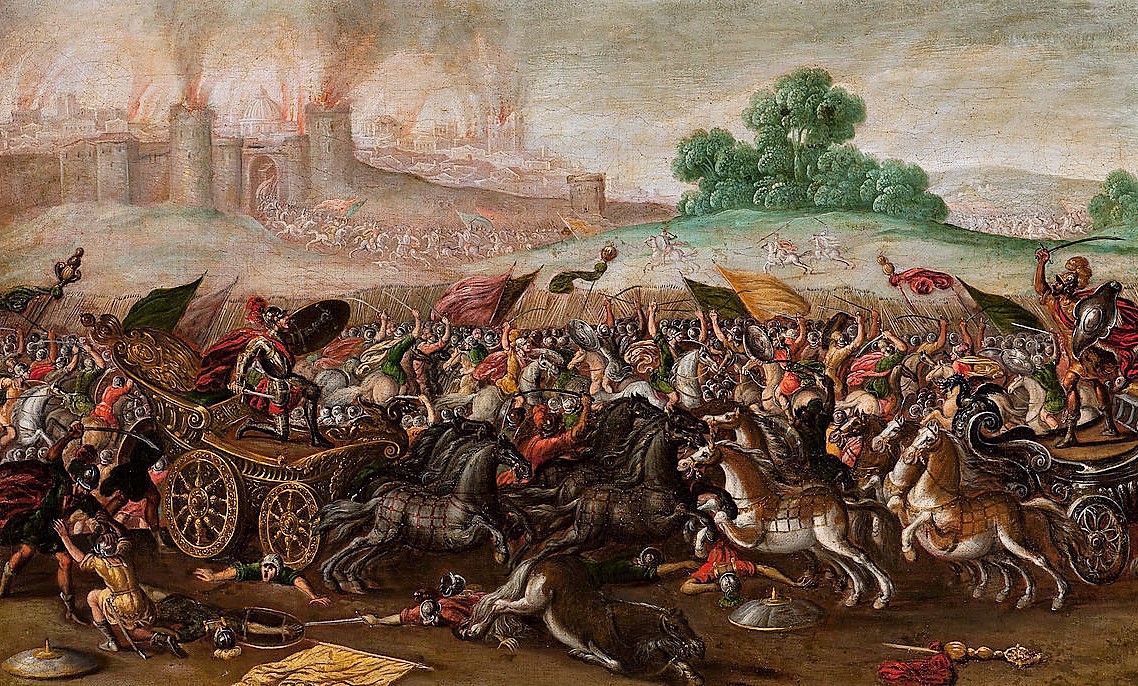
The terrible and tragic moment for Judah came in 587 B.C. The Babylonians utterly destroyed Jerusalem. The Temple was burned and the Ark of the Covenant was lost, never again to be found (until its fulfillment in the Blessed Mother Mary). One could not imagine a more unlikely or complete destruction. Why would God allow His glorious Temple to fall at the hands of an unbelieving nation?
But God is not egocentric. He does not need buildings or holy cities to show His power. His most central work is to fashion a holy people and to draw each of us to holiness.
The terrible state of affairs of ancient Israel and Judah is well documented by the prophets. God’s own people had become depraved in many ways. There was idolatry, injustice, promiscuity, and a tendency to imitate the nations around them. Further they had become incorrigible. God often described them has having necks of iron and foreheads of brass. He called them a rebellious house. On top of all this, they made the presumption that God would never destroy His own temple or allow Jerusalem to fall.
There comes a time when warnings and minor punishments are no longer effective; only the most severe and widespread of losses will purge the evil. Surely this is evident in the smoking ruins of Jerusalem in 587 BC. Those who survived were taken to live in exile.
By the waters of Babylon, there we sat down and wept, when we remembered Zion. On the willows there we hung up our harps (Ps 137:1-2).
We should not delude ourselves into thinking that such a terrible event could only occur in the ancient world. We must consider that our condition can become so debased, so corrupted, that the only solution is the most severe of punishments, one so onerous that we cannot possibly return to our former ways, one that levels the very sources of our pride and sin.
Today, we kill shocking numbers of children in the womb; no amount of preaching or teaching of medical truth seems capable of ending this shedding of innocent blood. Our families are collapsing; we are suffering the ravages of our sexual sins. In our greed we cannot seem to control our spending or ever say no to ourselves. We are saddling future generations with insurmountable debt. No matter the warnings, we cannot or will not stop. There is desperate confusion and silence even in the Church, where one would hope for clarity and words of sanity. Corruptio optimi pessima (The corruption of the best is the worst thing). Believers are silent, weak, and divided, while the wicked and secular are fierce, committed, and focused.
All the while, in our affluence, we cannot imagine that a crushing end might come. Yet God said to the ancient, affluent city of Laodicea,
You say, I am rich, I have prospered, and I need nothing, not realizing that you are wretched, pitiable, poor, blind, and naked. I counsel you to buy from me gold refined by fire, so that you may be rich, and white garments so that you may clothe yourself and the shame of your nakedness may not be seen, and salve to anoint your eyes, so that you may see (Revelation 3:17-18).
It becomes hard to see how God might bring us to conversion without the severest of blows.
Nevertheless, do not wish for this. Continue to pray for conversion! The alternative is almost too awful to imagine. Most of us are too comfortable to endure what might come. Saints, sinners, and everyone in between will suffer. Ezekiel was the first to suffer in the collapse of his times, even though he was one who tried to listen and warn.
The message of this week’s meditation in the Office of Readings is clear: Pray, pray, pray. Be sober that God will not hesitate to inflict severe blows if necessary, so that He might at least save some, a remnant.
What Jesus teaches in this Sunday’s Gospel is one of those parables that rock our world and challenge our worldly way of thinking. Frankly, that is one of its purposes. We are tempted to side with the laborers who worked the longest, thinking that their being paid the same amount as those who worked only for an hour is unfair.
Think very carefully before asking God to be “fair.” What we really should ask of God is that He be merciful, for if He were fair, we’d all be in Hell right now. We have no innate capacity to stand before God in pure justice; we simply cannot measure up. It is only grace and mercy that will win the day for us. So be very careful about challenging God’s fairness. In fact, when we see Him being merciful to someone else, we ought to rejoice, for it means that we might stand a chance.
There are other aspects of this Gospel that are important to learn from, in particular, the various dispositions of discipleship. As the parable unfolds, we can see five teachings. Let’s consider each in turn.
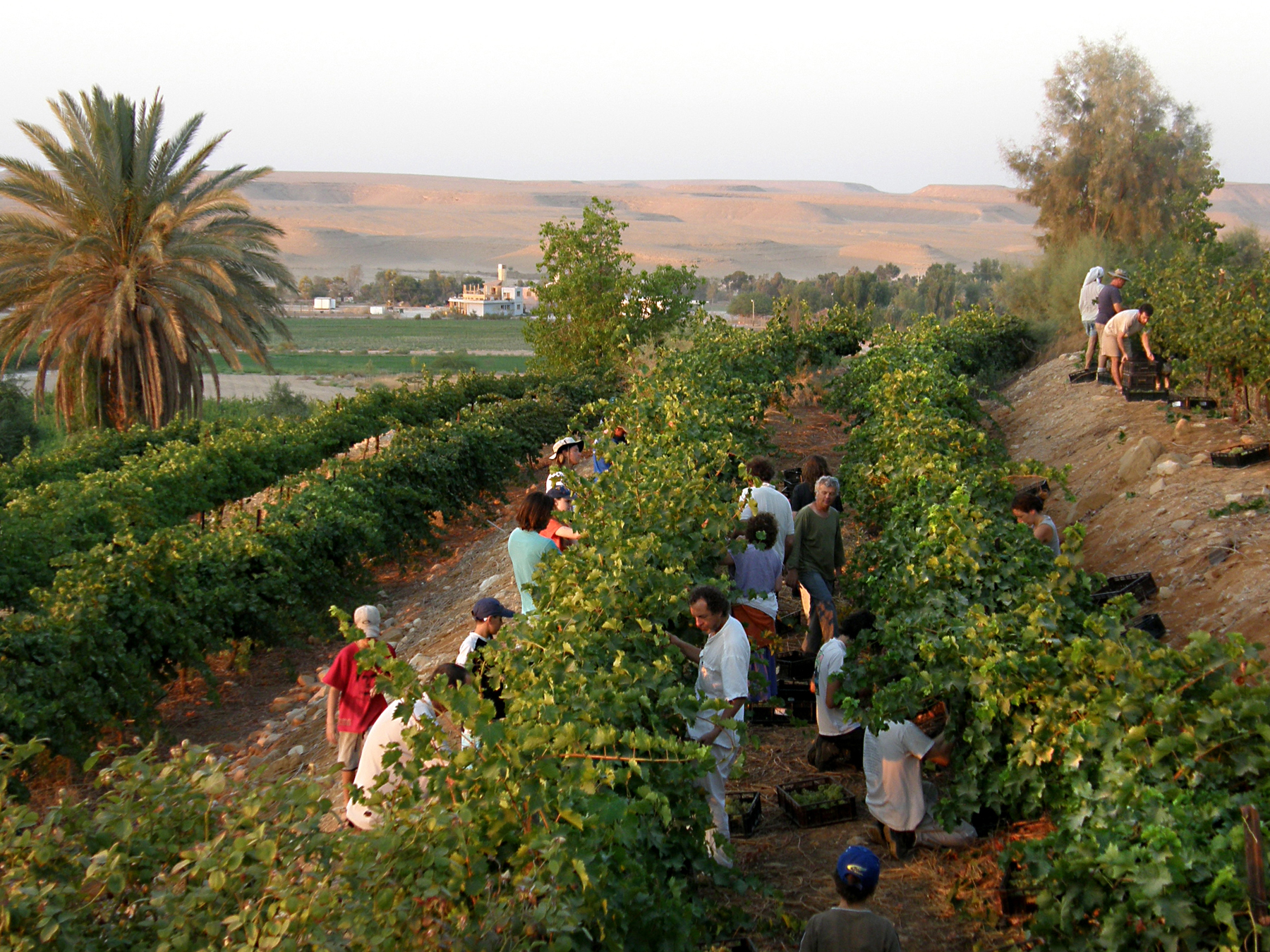
I. The AVAILABILITY of Discipleship – The text says, A landowner went at dawn to hire laborers to work in his field … He went later and found others standing idle … “Why do you stand here all day idle?”
What are described here are “day workers” or “day laborers.” These were men who stood in public places hoping to be hired for the day. It was and still is a tough life. If you worked, you ate; if you didn’t, you might have little or nothing to eat. They were hired on a day-to-day basis, only when needed. This is a particularly burdensome form of poverty for its uncertainty and instability. Men like these were and are the poorest of the poor.
Notice, however, that their poverty, their hunger, makes them available. Each morning they show up and are ready, available to be hired. Their poverty also motivates them to seek out the landowner and indicate that they are ready and willing to work. The well-fed and the otherwise employed do not show up; they are not available. There’s something about poverty that makes these men available. Because their cup is empty, it is able to be filled.
We are these men. We are the poor who depend upon God for everything. Sometimes we don’t want to admit it, but we are. Every now and then it is made plain to us how poor, vulnerable, and needy we really are; this tends to make us seek God. In our emptiness, poverty, and powerlessness, suddenly there is room for God. Suddenly our glass, too often filled with the world, is empty enough for God to find room. In our pain we stand ready for God to usher us into the vineyard of His Kingdom. An old gospel song says, “Lord, I’m available to you; my storage is empty and I’m available to you.” It is our troubles that make us get up and go out with the poor to seek the Lord and be available to Him. When things are going too well, heaven knows where we are to be found! Another gospel song says, “Lord don’t move my mountain but give me the strength to climb it. Don’t take away my stumbling blocks but lead me all around, ’cause Lord when my life gets a little too easy, you know I tend to stray from thee.
Yes, we might wish for a trouble-free life, but then where would we be? Would we seek the Lord? Would we make ourselves available to God? Would we ever call on Him?
II. The AUTHORITY of Discipleship – The text says, The LandOWNER said, “Go into my vineyard” … HE sent them into HIS vineyard.
Notice that it is the landowner who calls the shots. Too many who call themselves the Lord’s disciples rush into His vineyard with great ideas and grand projects that they have never really asked God about. This passage teaches us that entrance into the vineyard requires the owner’s permission. If we expect to see fruits (payment for the work) at the end of the day, we have to be on the list of “approved workers.”
Fruitful discipleship is based on a call from the Lord. Scripture says, Unless the Lord builds the House, they that labor to build it labor in vain (Ps 127:1). Too many people run off and get married, take new jobs, accept promotions, start projects, and so forth without ever asking God.
True discipleship requires the Lord’s to call us first: “Go into my vineyard.” Got a bright idea? Ask God first. Discern His call with the Church and a good spiritual director, guide, or pastor.
III. The ALLOTMENT of Discipleship – The text says, The vineyard owner came at dawn, 9:00 AM, Noon, 3:00 PM, and 5:00 PM.
We may wonder why God calls some early and others late; it’s none of our business. He does call at different times. Even those whom He calls early are not always asked to do everything right now. There is a timing to discipleship.
Moses thought he was ready at age 40, and in his haste murdered a man. God said, “Not now!” and made him wait until he was 80.
Sometimes we’ve got something we want to do but the Lord says, “Not yet.” We think, “But Lord, this is a great project and many will benefit!” But the Lord says, “Not yet.” We say, “But Lord, I’m ready to do it now!” And the Lord says, “Not yet.”
Sometimes we think we’re ready, but we’re really not. An old gospel song says, “God is preparing me. He’s preparing me for something I cannot handle right now. He’s making me ready, just because he cares. He’s providing me with what I’ll need to carry out the next matter in my life. God is preparing me. Just because he cares for me. He’s maturing me, arranging me, realigning my attitude. He’s training me, teaching me, tuning me, purging me, pruning me. He’s preparing me.”
IV. The ABIDING of Discipleship – The text says, When it was evening the owner of the vineyard said to the foreman, “… summon the laborers and give them their pay, beginning with the last and ending with the first.”
Notice that the wages are paid in the evening and in the order determined by the landowner. The lesson is simple: we’ve got to stay in the vineyard. Some people start things but do not finish them. If you’re not there at the end of the day, there’s no pay.
Scripture says that we must persevere. Here are three passages carrying this message: But he who perseveres to the end will be saved (Mat 24:13). To those who by persistence in doing good seek glory, honor, and immortality, he will give eternal life (Rom 2:7). You need to persevere so that when you have done the will of God, you will receive what he has promised (Heb 10:36).
Yes, we must work until evening comes. Saying that we had faith and received all our sacraments when we were young will not suffice. We have to work until evening. An old spiritual says, “Some go to Church for to sing and shout, before six months they’s all turned out.” How about you?
V. The ASSESSMENT of Discipleship – The text says, Those hired first grumbled … “We bore the heat of the day and burdens thereof.”
The workers hired early think of their entrance into the vineyard and its labors as a “burden.” The vineyard, of course, is really the Kingdom of God. Many lukewarm “cradle Catholics” consider the faith to be a burden; they think that sinners “have all the fun.” Never mind that such thinking is completely perverse; it is held by many anyway, whether consciously or unconsciously.
Consider the laborers hired last. Were they having a picnic? Not exactly. Most were resigning themselves to the fact that they and their families would have little or nothing to eat that night. Similarly, most sinners are not “living the life of Riley.” Repeated, lifelong sin brings much grief: disease, dissipation of wealth, regret, loss of family, and addiction. No matter what they tell you, sinners do not have all the fun.
Further, being a Christian is not a burden. If we accept it, we receive a whole new life from Christ: a life of freedom, purity, simplicity, victory over sin, joy, serenity, vision, and destiny.
How do you view the Christian life? Is it a gift, a treasure beyond compare no matter its difficulties? Or is it a burden, a bearing of labor in the heat of the day? Scripture says, For by grace you have been saved through faith; and this is not your own doing, it is the gift of God. The passage goes on to describe our “works” not as burdens but as something God enables us to do: For we are his workmanship, created in Christ Jesus for good works, which God prepared beforehand, that we should walk in them (Eph 2:8-10).
So these are five dispositions of discipleship, as taught by the Lord in this parable.
Note well what the Lord teaches, for too often we want to decide what it means to be a disciple. Beware, for the worst kind of disciple is the one who gets out ahead of the Lord and tries to define his or her own role. Jesus is Lord; let Him lead. Here are some final questions for you: Are you a disciple who is glad at being called, the earlier the better? Or are you like the disciples who grumbled at having to do all the work in the heat of the day? Is discipleship delightful or dreary for you?
The song in the video below says, “I’m available to you.” It reminds us that the owner still seeks souls to enter His vineyard. He wants to use your voice to say to someone, “You, too, go into my vineyard!”
In our culture, many battles are fought on the question of nature. The word “nature” comes from the Latin natus, which means “birth.” Thus, nature is what we are intrinsically born with, what we are born to be. Church teaching and traditional philosophy insist that things have a nature. That is, they are endowed with certain fundamental traits that make them what they are.
As such, nature is something to discover and study. We go out to reality, study it, and obey its demands. Things (including people) have a nature, a purpose; we do well to respect that nature or we will suffer the consequences. God may forgive, but nature does not.
Yet in increasing ways, many people today deny that things have a nature. They argue that most of what has traditionally been called the nature of things is simply a human construct. And if we have constructed something, then we can tear it down; we can “deconstruct” it. As we all know, there is a lot of tearing down going on regarding the meaning of sexuality, gender, marriage, family, and so forth.
In terms of our human nature, there are some legitimate questions as to its interaction with roles. Traditionally, men assumed roles that were dangerous or physically strenuous. For example, many considered it unbecoming for a woman to be a firefighter, soldier, or iron worker. More recently, there has been greater acceptance of women undertaking such roles. These are roles, however, not nature per se. Masculinity and femininity provide a natural delineation. While roles can vary, we are not free to wholly cast aside the fact that there are two sexes, male and female. These are not mere constructs, they are inscribed in our nature, in our very bodies.
As most of you know, I like to keep my Saturday posts light, often featuring a video. In that spirit, I do not intend to go into a deep discourse about the deconstructionism of our times. Instead, I will simply offer an interesting video on airport construction! You may wonder what this has to do with nature, human or otherwise. To answer simply, it shows that those who design airports study human nature very carefully.
We humans behave in certain predictable ways because we share a common nature. Airports are designed to bank on our predictable behaviors. This underscores that nature is not a merely human construct that can change on a whim, but a stable and consistent reality that is common even across individual human variations. The fact is, we behave within a predictable range; those who have a financial interest in how we behave study human nature extensively. They cannot “afford” to entertain deconstructionist theories, which hold that our nature is a mere human construct. No indeed. To those involved in the marketplace, reality is very important; the deconstructionist view doesn’t help the bottom line.
Watch the entire video if you have the time. If not, even the first few minutes should get the point across.
Every year at about this time we read St. Augustine’s sermon “On Pastors” in the Office of Readings of the Liturgy of the Hours. As you know, priests are required to read the Divine Office daily; St. Augustine’s sermon extends over the better part of two weeks. It amounts to a stern warning for priests who too easily live off the sheep instead of shepherding them rightly.
There are tender moments in the sermon as well. At one point, commenting on a passage from Ezekiel rebuking bad shepherds (You have consumed the milk of the sheep and clothed yourself in their wool (Ez 34:3)), Augustine turns to the lay people present and says,
Clothing can well be taken to mean honor, since it covers nakedness. For every man without exception is weak. And who is any man placed over you except someone just like yourself? Your pastor is in the flesh; he eats, sleeps, and awakens; he was born and is going to die. In himself he is, when you think of it, simply a man. But it is true that you make him something more by giving him honor; it is as if you were covering what is weak.
Consider the nature of clothing that the Apostle Paul received from God’s good people. He said, “You have received me like an angel of God ….” Indeed, great honor was shown to him.
St. Augustine then turns back to the priests with an admonition.
But did [Paul] then spare sinners because of that honor, perhaps out of fear that it would be refused and that he would receive less praise when he gave blame? Had he done so, he would be among those shepherds who feed themselves and not the sheep. He would then say to himself: “What has this to do with me? Let everyone do what he will; my sustenance is safe, and my honor too. I have enough milk and wool, so let each one do as he likes.” … In recalling how they treated him, the Apostle does not want to appear forgetful of the honor they did him. Therefore, he gives testimony that they received him like an angel of God … Yet he still comes to the sheep that is ill, to the one that is diseased, to cut the wound and not to spare the diseased part. He says: “Have I then become your enemy by preaching the truth?” He took from the milk of the sheep, as I mentioned a short time ago, and he was clothed with their wool, but he did not neglect his sheep. He did not seek what was his but what was Christ’s.
Pray for priests. We live in times when many priests have been trained or led to think that the goal of our ministry is to affirm people and make them feel welcome. There is a place for affirmation and welcoming, but the goal of our ministry is the salvation of souls. At times, this requires that we say and do difficult things, things that anger people and cause us to be ridiculed and denounced by many in the surrounding culture. As St. Augustine says, though, the treatment of wounds requires not just the oil that soothes, but also the wine that stings as it debrides and decontaminates.
What would one think of a doctor who spent most of his time making sure that his waiting room was pleasant and the examination rooms cheerful, but expended little effort studying disease and doing what was necessary to bring his patients back to good health? Proper medical care often requires strong medicines and painful surgeries. Further, doctors must often share difficult information with patients and/or give strong admonitions that lifestyle changes must be made. Pleasant examination rooms and a good bedside manner are all well and good, but providing medical care is the primary objective. A doctor who does not speak the truth to his patients because he wants to keep them happy is guilty of malpractice; he has maximized the minimum and minimized the maximum.
It is no less the case with priests who avoid conflict or difficulty in order to preserve their honor. They have allowed a lesser thing to eclipse a greater thing. Pleasantries and affirmation too easily overshadow the truth, which is what sets us free even if it is sometimes strong medicine.
As St. Augustine mercifully reminds, priests are human. No one likes conflict; all other things being equal, avoiding unnecessary conflict is a good thing. Avoiding conflict at the expense of the truth, though, is a false peace, a temporary peace. The darkness, baseness, and ferocity of our times testifies against the idea of “going along to get along.” A false peace cannot endure. Our silence and the false tolerance of relativism is, in the end, tyranny.
The concern about silent pulpits on the key moral issues of our day is too widespread to be discredited as a minority view. Despite our human weakness, we who are priests must summon the courage to speak and teach more clearly and consistently than is currently evident. True shepherds can do no less.
I am reminded of a text by St. Basil, which I believe serves as a fitting postscript to my own poorer reflections on this topic:
Men in authority are afraid to speak, for those who have reached power by human interest are the slaves of those to whom they owe their advancement. And now the very vindication of orthodoxy is looked upon in some quarters as an opportunity for mutual attack; and men conceal their private ill-will and pretend that their hostility is all for the sake of the truth. All the while unbelievers laugh; men of weak faith are shaken; faith is uncertain; souls are drenched in ignorance, because adulterators of the Word imitate the truth.
The better ones of the laity shun the churches as schools of impiety and lift their hands in the deserts with sighs and tears to their Lord in heaven. The faith of the Fathers we have received; that faith we know is stamped with the marks of the Apostles; to that faith we assent, as well as to all that in the past was canonically and lawfully promulgated (Saint Basil in Ep. 92, 2).
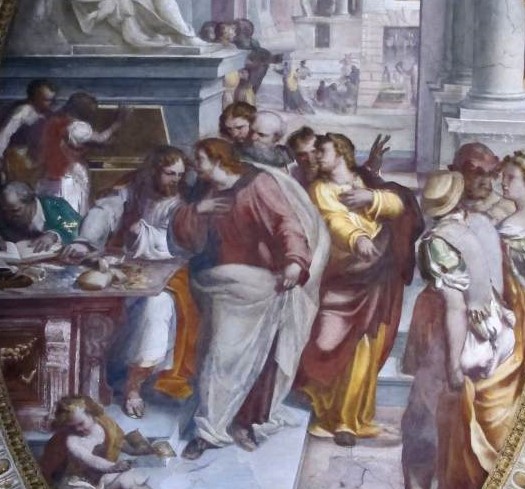
On this Feast Day of St. Matthew, we must acknowledge a great mercy in Jesus’ call. As a tax collector, Matthew was considered a great sinner. In fact, the term “tax collector” was a biblical euphemism for great sinner. Yet despite this, Jesus called him to be an Apostle.
In our times, many set mercy and the fact that we are sinners in opposition to each other, but the Lord Jesus unites these realities together. For the Lord, mercy is necessary because there is sin, not because sin is “no big deal.” It is because sin is a big deal that mercy is needed and is glorious.
Bishop Robert Barron aptly states, Many receive the message of divine mercy as tantamount to a denial of the reality of sin, as though sin no longer matters. But just the contrary is the case. To speak of mercy is to be intensely aware of sin and its peculiar form of destructiveness (Vibrant Paradoxes: The Both/And of Catholicism, p. 1).
Mercy does not deny sin; it acknowledges it and supplies an often-challenging remedy. Jesus shows mercy by calling us from our sin and healing us from its effects.
This understanding is evident in the Gospel for the Feast of St. Matthew:
As Jesus passed by,
he saw a man named Matthew sitting at the customs post.
He said to him, “Follow me.”
And he got up and followed him.
While he was at table in his house,
many tax collectors and sinners came
and sat with Jesus and his disciples.
The Pharisees saw this and said to his disciples,
“Why does your teacher eat with tax collectors and sinners?”
He heard this and said,
“Those who are well do not need a physician, but the sick do.
Go and learn the meaning of the words,
I desire mercy, not sacrifice.
I did not come to call the righteous but sinners” (Matt. 9:9-13).
Notice three things from this Gospel about the relationship between mercy and sin:
I. In His mercy, Jesus reckons us as sinners and regards us as sick. Jesus states plainly, “I have come to call sinners” (this means us). He also says that those who are well do not need a doctor, but the sick (this means us) do.
Many people today have been deceived. Some even call their sin good and something of which to be proud. They say, “God made me this way,” or “God likes me just the way I am.” No! To those such as these the Lord Jesus says, “You are sick. You are a sinner.” An antiphon in the Breviary says, God sees all men as sinners, that he might show them his mercy.
So in His mercy Jesus does not overlook sin or call it something good; he calls it what it is: sin and sickness.
II. In His mercy, Jesus summons us to change. In this Gospel, Jesus calls Matthew away from his tax post, saying, “Follow me.” In other words, stop what you are doing; come away from it and follow me out of here. To the woman caught in adultery He says, “Do not sin again.” Jesus began His ministry by saying, “Repent and believe the Gospel.” To repent (metanoiete) means to change, to come to a new and different mind.
The changes Jesus insists upon are too numerous to list in their entirety, but among them are that we become free of lust, vengeful anger, greed, and unforgiveness, and that we become more generous, loving, serene, faithful, and trusting.
Thus in His mercy Jesus does not confirm us in our sin; He summons us away from it. He calls us to change and equips us to do so. His merciful call is this: “Come away from here. Enough of this; follow me.”
III. In His mercy, Jesus heals sinners of their sin. Jesus uses the image of a doctor and states plainly that sick people (sinners) need a doctor. Jesus is that doctor. A doctor does not look at a sick patient and say, “You’re fine the way you are” or “I affirm you.” That would be malpractice. Jesus sees sin for what it is. He calls it such and prescribes the necessary medicines. He will also likely speak to a person’s lifestyle and recommend needed changes. This is how a doctor heals.
Jesus invokes the image of a doctor with what He does. He diagnoses and says, “This is bad. This is sickness. This is sin.” He then applies healing remedies such as the sacraments, the Holy Liturgy, His Word, the carrying of the cross, active and passive purifications, punishments due to sin, solid moral teaching, and holy fellowship. Like a doctor, Jesus summons us from a bad and unhealthy life to a good and healthy one.
Thus, in His mercy, Jesus heals our sins. He does not ignore them or approve of them—and He certainly does not call them good or something to celebrate. In His mercy, He heals them. He ends them.
So mercy is not a bland kindness. It is not mere flattery that pretends that sin does not exist or that it doesn’t matter. Beware of fake, flattering mercy. True mercy says, “Sin is awful. Let’s get out of here and go to a far better place.”

 The Archdiocese of Washington has a well-established history of welcoming the newcomer in our midst and working to provide our new neighbors with the pastoral, material, and even legal support, that they may require.