What Is the Meaning of Christ’s Circumcision?

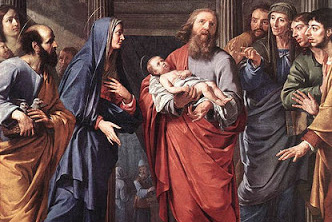
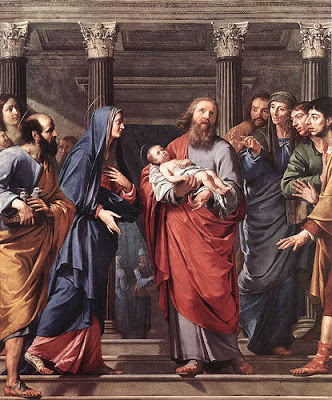
The feast for January 1st is designated as the Solemnity of Mary, Mother of God. Although that is its most ancient title, for many centuries it was the Circumcision of the Lord; it is still celebrated under that title on the calendar of the Extraordinary Form of the Roman Rite.

Yesterday we meditated on the Feast of Mary, Mother of God; today we will ponder the meaning of the Feast of the Lord’s Circumcision. In so doing we will follow the thoughts of St. Thomas Aquinas in his Summa Theologica. The words of St. Thomas are presented below in bold, black italics, while my commentary appears in plain red text.

As his focal question, St. Thomas asks,

Whether Christ should have been circumcised? (Summa Theologica III, Q 37, Art 1). He answer yes, and for the following reasons: 

First, in order to prove the reality of His human nature, in contradiction to the Manicheans, who said that He had an imaginary body: and in contradiction to Apollinarius, who said that Christ’s body was consubstantial with His Godhead; and in contradiction to Valentine, who said that Christ brought His body from heaven.

The sacrament all touch and/or involve the body in some way. For example, we do not simply pray that a person be freed from original sin, we pour water upon the body. To be human is to be both body and spiritual soul.

There has long been a tendency toward a kind of dualism that seeks to make the body a container and locates the self purely in the soul. But Christ, in taking on human nature, took not only a likeness to us, but became fully human. As such, He truly had a body; His body was not a mirage or something uniquely crafted out of His divinity in order that He appear human. He was like us in all things except sin.

Circumcision emphasizes the importance of the body to us because it cuts the very sign of the Covenant into the body. All the sacraments of the New Covenant (to which circumcision points) touch the body in order to have effects on the soul.

Secondly, in order to show His approval of circumcision, which God had instituted of old.

Although the New Covenant no longer requires circumcision, the sacraments do not dishonor circumcision; they fulfill it.

Thirdly, in order to prove that He was descended from Abraham, who had received the commandment of circumcision as a sign of his faith in Him.

Fourthly, in order to take away from the Jews an excuse for not receiving Him, if He were uncircumcised.

Recall that St. Paul had Timothy circumcised for a similar reason (see Acts 16:3). Although Paul was clear that the Judaizers who insisted on circumcision as necessary for salvation were wrong, he made a pastoral and prudential decision to sidestep fruitless debate with them. St. Paul wrote elsewhere about his approach in matters such as this: To the Jews I became like a Jew, to win the Jews. To those under the Law I became like one under the Law (though I myself am not under the Law), to win those under the Law. (1 Cor 9:20).

Fifthly, “in order by His example to exhort us to be obedient” [Bede, Hom. x in Evang.]. Wherefore He was circumcised on the eighth day according to the prescription of the Law (Leviticus 12:3).

Until such time as the New Covenant was fully inaugurated, the Old Law still held. Hence obedience is demonstrated for us. If even the Son of God, who did not need the law’s effects (for He was sinless and law is for the weak), subjected Himself to the standing law and lawful authority, how much more should we be willing to do so.

In a similar matter, Jesus advised the apostles, The scribes and Pharisees sit in Moses’ seat. So practice and observe everything they tell you. But do not do what they do, for they do not practice what they preach (Matt 23:2-3).

To those who argue that circumcision ceased at the birth of Christ (since He Himself is the New Covenant), St Thomas answered, … we are freed by Christ’s Passion. Consequently, this figure was not completely fulfilled in Christ’s birth, but in His Passion, until which time the circumcision retained its virtue and status. Therefore, it behooved Christ to be circumcised as a son of Abraham before His Passion.

St. Thomas also cites the objections of some in his time who said that obedience in circumcision is not a fruitful example to us since we are under no obligation to be circumcised; then he adds this insight: Christ submitted to circumcision while it was yet of obligation. And thus His action in this should be imitated by us, in fulfilling those things which are of obligation in our own time. Because “there is a time and opportunity for every business” (Ecclesiastes 8:6).

Sixthly, “that He who had come in the likeness of sinful flesh might not reject the remedy whereby sinful flesh was wont to be healed.”

Though the Law could not of itself cure sin, it was a remedy in that it prepared us for Christ and help lead us to Him.

Seventhly, that by taking on Himself the burden of the Law, He might set others free therefrom, according to Galatians 4:4-5: “God sent His Son … made under the Law, that He might redeem them who were under the Law.”

Indeed, the Law had many burdens and punishments associated with it and did not contain the grace to accomplish it. Thus, the Lord took up these burdens and fulfilled them, accomplishing them in full so as to free us and give us the grace to live the new Law of Love. St. Paul says elsewhere, For God has done what the law, weakened by the flesh, could not do. By sending his own Son in the likeness of sinful flesh and for sin, he condemned sin in the flesh, in order that the righteous requirement of the law might be fulfilled in us, who walk not according to the flesh but according to the Spirit (Romans 8:3-4).

Here, then, are some teachings on the circumcision of the Lord. Even if the matter may seem arcane to us, to the Christians of the first generation it was a matter of great importance and something to be understood carefully. Through St. Thomas, the Lord gives us much to ponder.

Tomorrow we will consider another aspect of the eighth day of Christmas: the naming of Jesus.


Will the Real January 1st Please Stand Up? A Homily for New Year’s Day

The feast day of January 1st is a very complex tapestry, both culturally and liturgically. Perhaps we can use the second reading by St. Paul to the Galatians as a way to weave through some of the many details. We can look at it in three parts.

I. The chronology of our celebration – The text from St. Paul’s letter to the Galatians says, When the fullness of time had come …

Most people are going about today saying, “Happy New Year!” And rightfully so, for it is the beginning of a new year; but most people think of New Year’s Day in almost wholly secular terms. Sadly, it is best known as an occasion for loud parties and excessive drinking.

It is a mistake to view New Year’s Day simply as a secular holiday. In speaking of “the fullness of time,” St. Paul reminds us that all time and all ages belong to God.

It is not simply 2018; it is 2018 Anno Domini (A.D.). Even the most unbelieving of people in the Western world denote their place in time in relation to Jesus Christ. It is 2017 years since the birth of Christ. Every time we write the date on a check or at the top of a letter, every time we see it at the top of the newspaper or on our computer screen, that number, 2018, points back to Christ. He is the Lord of history. Jesus sets the date; He is the clock by which we measure. All time belongs to Him.

Jesus says in the book of Revelation, I am the Alpha and the Omega, the first and the last, The beginning and the end. He who is, and who was, and who is to come (Rev 22:13).

If it is true that 2018 references the birth of Christ, then why is Christmas Day not also New Year’s Day? The fact that it is not actually makes a lot of sense if we understand liturgical and spiritual sensibilities.

In the Church and stretching back into ancient Jewish times, it was customary to celebrate the high feasts of faith over the period of a week. In Christian tradition this came to be known as the “octave.” Although we think of a week as comprising seven days, consider that we celebrated Christmas this past Monday and now this week we celebrate New Year’s Day on Monday; Monday to Monday, inclusive, is eight days.

Monday, January 1, 2018 is the eighth day of Christmas. In the Christian tradition, the octave is considered as one long “day” that lasts for eight days. Therefore, Monday, January 1, 2018 completes Christmas day; it is fulfilled. Or, as St. Paul says, the “fullness of time” in terms of Christmas day has come. At the end of this eight-day Christmas day, our calendar flips from 2017 to 2018 A.D.

The rest of the secular world has largely moved on already, barely thinking of Christmas anymore. As I walk in my neighborhood, I see Christmas trees already set out at the curb waiting to be picked up by the recycling trucks. Yes, for many in our hurried world, Christmas is over. We in the Church, however, continue to celebrate the great Christmas feast and cycle. Having completed the octave, we move on to Epiphany week.

This New Year’s Day we contemplate the “fullness of time.” The passage of another year reminds us of the magnificent truth that to God all time—past, present, and future—is equally present. He holds all things together in Himself. He is the same yesterday, today, tomorrow, and forever. Whenever He acts, He acts in our time, out of the fullness of time. This is a very deep mystery and we should ponder in silence the mystery that for God, all things are. He is not waiting for things to happen. For Him, everything is accomplished.

II. The content of our celebration – St. Paul goes on to say, God sent forth his son born of a woman. This statement again reminds that we are still in the Christmas cycle.

While it is New Year’s Day, there is also a complex tapestry of religious meanings to this day as well. It is still Christmas day, the eighth day of the one long day that we call Christmas.

Historically, this is also the day of Christ’s circumcision. For a long period in Church history, today was the feast of “The Circumcision of the Lord.” As I have written previously, I regret the loss of this feast, at least in terms of its title.

Today is the day when Joseph and Mary brought Christ to be circumcised. In this, Jesus as man and as God reverences the covenant He has made with His people. It is a beautiful truth that God seeks relationship with His people. In this covenantal act of the circumcision is the moving truth that Jesus is not ashamed to call us His brothers (Heb 2:11).

There is the first shedding of Jesus’ blood. It is also a sign of His love for us.

This feast day also celebrates the Most Holy Name of Jesus, for not only was a Jewish boy circumcised on the eighth day, but he was also given his name; all heard that name for the first time on that day.

The name Jesus means “God saves.” Indeed, this Most Holy Name of Jesus, when used in reverence, has saving power. We are baptized in His Holy Name along with that of the Father and the Holy Spirit, and all of our prayers conclude with His Holy Name. Scripture says this of His great and holy name:

Therefore, God exalted him to the highest place and gave him the name that is above every name, that at the name of Jesus every knee should bow, in heaven and on earth and under the earth, and every tongue acknowledge that Jesus Christ is Lord, to the glory of God the Father (Phil 2: 9-11).

Yet another meaning of today’s feast day is shown in its current, formal title: “The Solemnity of Mary, Mother of God.” This replaced the title of “The Feast of the Circumcision of the Lord” in 1970. However, it is the most ancient title for this feast day. Again, you may read more on this topic in a previous blog post.

We note in the second reading that St. Paul says that God sent forth his Son, born of a woman. Jesus is the eternal Son of the Father; He is God from God, Light from Light, True God from True God. Jesus is God, and because Mary gave birth to Him, she is the Mother of God because Jesus is not two different persons.

Mary did not just give birth to part of Jesus, she gave birth to Jesus. Thus, the title “Mother of God” speaks to us as much about Jesus as it does about Mary. She has that title because of the Church’s insistence that Jesus cannot be divided up into two different people. We cannot say that Mary gave birth to one Jesus but not to “the other one.” Although He has two natures, human and divine, there is only one Jesus.

Thus, on this feast of Christmas, on this eighth day of Christmas, we are reminded and solemnly taught that Jesus is both human and divine. In taking a human nature to Himself from His mother Mary, He remains one person. God has sent forth his son, born of woman.

III. The consolation of our celebration – St. Paul goes on to say, Born under the law to ransom those under the law so that we might receive adoption as sons. As proof that you are sons, God sent the Spirit of his Son in our hearts crying out Abba, Father! So you are no longer a slave, but a son, and, if a son, also an heir through God.

Note three things about this passage:

Our Adoption – We have already noted that on the eighth day Jesus is circumcised and enters into the Covenant, into the Law. In the Incarnation, He joins the human family; in the Covenant, He joins our family of faith. He will fulfill the old Covenant and inaugurate the new one. By this New Covenant, by baptism into Him, we become members of His Body and are thereby adopted as sons.

We become sons in the Son. When God the Father looks at His Son, loving Him, He is also looking at us and loving us, for we are in Christ Jesus, members of His Body through baptism. God is now our Father, not in an allegorical sense, but in a very real sense. We are in Jesus and therefore God really is our Father.

Our Acclamation – St. Paul says that the proof of our sonship is the movement of the Holy Spirit in us that cries out Abba! In Aramaic and Hebrew, Abba is the family term for father. It is not baby talk, like “Dada.” However, just as most adults call their father “Dad” or some other endearment rather than the more formal “Father,” so Abba is used in a similar way. It would be quite a daring thing for us to call God “Dad” unless we were permitted to do so and instructed to do so by Christ.

St. Paul speaks of this word, Abba, as proof that we are sons. In so doing, he emphasizes that it is not merely the saying of the word that he refers to. Even a parrot can be taught to say the word. Rather, St. Paul is referring to what the word represents: an inner movement of the Holy Spirit wherein we experience a deep affection for God the Father. By our adoption, our baptism into Christ, by our reception of the Holy Spirit, we love the Father! We develop a deep affection for Him and dread offending Him. By this gift of the Spirit, God is our Father, whom we deeply love!

Our Advancement – Notice that St. Paul then speaks of how we have moved from being slaves to being sons, heirs. In Jesus, we are not just any son; we are the only Son of the Father. As Jesus has a kingdom from His Father, so do we as we too inherit it with Him. As sons in the Son, we are heirs with Jesus to the Kingdom!  Jesus speaks of His disciples as reigning with Him one day: And I confer on you a kingdom, just as my Father conferred one on me (Lk 22:29). In Jesus, all Heaven will be ours and we will reign with Him forever. This is not our doing, not our glory; it is Christ’s doing and His glory in which we share.

Thus we have a very rich tapestry on this New Year’s Day, this feast of the Octave of Christmas, this Feast of the Circumcision of the Lord, this Feast of the Most Holy Name of Jesus, this Feast of Mary, Mother of God. We are given this feast wherein the glory of Christ is held before us and we who are members of His Body are told of the gifts that we receive by His holy incarnation and His passion, death, and resurrection.

It’s not a bad way to start the new year: being reminded of God’s incredible love for us and of His rich blessings and promises.

What is a Holy Family? A Homily for the Feast of the Holy Family

Here in the Christmas Octave, the Church bids us to celebrate the Feast of the Holy Family. On the old calendar, it falls later (the Sunday after Epiphany), which makes a little more sense as the Gospels appointed for the feast often take place far forward in time from His birth. The Gospel this year is only forty days into the future (as compared to other years, when the gospel takes place twelve years into the future), but it is still well past the Feast of the Epiphany, which we have yet to celebrate.

Nevertheless, here we are. Perhaps it is a good time to reflect on family life, for at Christmas time, family and extended family often gather together. It is important that we understand what God teaches and effectively proclaim it. In pondering the question of what a holy family is, recall that the primary meaning of the word “holy” is “set apart” or “different. Thus, even if our families are not sin-free, they can be holy if we follow God’s plan.

On this Feast of the Holy Family, let us consider marriage and family along three lines: structure, struggles, and strategy.

I. Structure – All through the readings for Sunday Mass, we are instructed on the basic form, the basic structure of the family. For example,

  • God sets a father in honor over his children; a mother’s authority he confirms over her sons (Sirach 3:2).
  • May your wife be like a fruitful vine, in the recesses of your home; your children like olive plants, around your table (Psalm 128:3).
  • Wives, be subordinate to your husbands, as is proper in the Lord. Husbands, love your wives, and avoid any bitterness toward them. Children, obey your parents in everything, for this is pleasing to the Lord. Fathers, do not provoke your children, so that they may not become discouraged (Colossians 3:20–21).
  • Each year, Jesus’ parents went to Jerusalem for the feast of Passover … Your father and I have been looking for you with great anxiety (Luke 2:45, 51).
  • And he was obedient to them; … And Jesus advanced in age and wisdom and favor before God and man (Luke 2:51–52).

In these passages we see the basic structure of the family:

  • A father in honor over his children
  • A wife and mother who is supportive of her husband and his authority
  • A husband who supports, loves, and encourages his wife
  • A mother in authority over her children
  • Children who honor and obey their parents
  • Fathers, and by extension mothers, who instruct and admonish their children, not in a way that badgers or discourages them, but rather encourages them and builds them up.
  • A family structure that helps children to advance in wisdom and age and in favor before God and man.
  • A father, a mother, and children, all reverential and supportive of one another in their various roles and duties.

This is God’s basic teaching on family and marriage. It is the basic structure for the family as God sets it forth: a man who loves his wife and a woman who loves her husband. In this stable, lasting, and faithful union of mutual support and love, they conceive and raise their children in the holy fear of the Lord.

Add to this, the principal description of the book of Genesis, which lays out how God sets forth marriage: A man shall leave his father and mother, cling to his wife, and the two of them shall become one flesh (Gen 2:24). To this first couple, God gave the mandate, Be fruitful and multiply (Gen 1:22).

Note, that the structure of the family takes its basic form based on its essential work: procreation and the rearing of children. Why should marriage be a stable and lasting union? Why is Adam told to cling to his wife, to form a stable and lasting union with her? Because that is what is best and just for children! Children both need and deserve a stable, lasting union of their father and mother as well as the complementary influence of the two different sexes. It is the best environment in which to raise and form children. The family structure of a father and a mother, a male and a female parent, as set forth by God, flows from what is best and just for children. It is what is sensible and what is best sociologically and psychologically for the proper development of children.

Even without opening the Bible, one can see that it makes sense that a child should have a father and a mother, should have the influence and teaching of both a male and a female. There are things that a father, a male, can teach a child that a mother, a female, cannot teach as well. The mother, a female, can teach and model for children what only she knows best. Both male and female influences are essential for the proper psychological and sociological development of children. God’s biblical mandate that marriage should consist of a father and a mother is not without basis in human reason and common sense.

To intentionally deprive a child of this environment is both unjust to the child and unwise. Both God and nature provide for a father and a mother, a male and a female, to conceive and raise a child.

It also makes sense, based on simple human reasoning, that the relationship between mother and father should be a stable one, something that the children can depend on from day-to-day, month-to-month, and year-to-year.

The proper structure for marriage is set forth both by God and human reason.

II. Struggles – Yet what should be obvious to us as a culture seems to be strangely absent from the minds of many. Let us be clear: sin clouds judgment and makes many think that what is sinful and improper is in fact acceptable or even good. It is not. In our current culture we gravely sin against God and against our children through repeated misconduct and by our refusal to accept what is obviously true. The words of St. Paul are fulfilled in our modern times: their senseless minds were darkened, and they became vain and foolish in their reasoning (Rom 1:21).

It is clear that marriage and the family are in crisis today. It is also clear that it is children who suffer the most. The modern Western world displays a mentality that is both deeply flawed and gravely harmful to children. The crisis is a result of the willful, sinful habits of the vast majority of adults in the areas of sexuality, marriage, and family life. The rebellion of adults against the plan and order of God has caused endless grief and hardship and has led to a cultural environment that is poisonous to the proper raising and blessing of children.

Children have much to suffer in this world of our collective making. While not all of us are equally guilty of contributing to their suffering, none of us is wholly innocent either, if for no other reason than our silence.

Consider that most children born today are no longer born into the stable and lasting family units they justly deserve, with a father and mother committed to each other until death do them part.

The problems begin with fornication, which is rampant in our culture. While most do not think of this as a sin of injustice, it is. It is so primarily because of what it does to children.

Many children are conceived out of fornication, and tragically many of them are murdered by abortion. The overwhelming majority of abortions are performed on unmarried women. Despite all the claims that contraception makes every baby a wanted baby, the data show that nothing could be further from the truth. Abortion has skyrocketed since the widespread availability of contraception. This is because the problem is not fertility; it is lust, promiscuity, fornication, and adultery. Contraception fuels these problems with the lie that there is no necessary connection between sex and procreation. The promises associated with contraception are lies; contraception has the opposite effect.

Fornication and the contraceptive mentality (founded on lies) cause grave harm to children, beginning with their death in huge numbers. Children conceived of fornication who do (thankfully) survive are nevertheless (typically) subjected to the injustice of being born into irregular situations. There are single mothers, some single fathers, and many other abnormalities.

Add to this picture the large number of divorced families. Make no mistake about it, these shredded families cause great hardship and pain for children, including being shuttled back and forth between households each week, having to meet “Daddy’s new girlfriend” or “Mommy’s new boyfriend,” and enduring all sorts of other family chaos. Blended families also dramatically increase the likelihood of sexual and emotional abuse, because strictly legal relationships seldom have the built-in protections of natural ones.

All of this misbehavior, individual and cultural, harms children. Not being raised in a traditional marriage dramatically increases a child’s likelihood of suffering many other social ills, starting with poverty.

The chief cause of poverty in this country is single motherhood, absent fatherhood. 71% of poor families are not married. Children of single parent homes are 2 times more likely to be arrested for juvenile crime, 2 times more likely to be treated for behavioral problems, twice as likely to be suspended or expelled from school, 33% more likely to drop out of school, 3 times more likely to end up in jail by age 30, 50% more likely to live in poverty as adults, and twice as likely to have a child outside of marriage themselves (Getting the Marriage Conversation Right: A Guide for Effective Dialogue, William B. May).

Add to the burdens that children must experience the new trend of adoption by same-sex couples. Never mind that it is best for the psychological development of a child to have a father and a mother, a male and a female influence. No, what is best and just for children must be sacrificed on the altar of political correctness. In many states, same-sex couples and heterosexual couples must be given equal consideration as adoptive parents. It is the adults and their “rights” that seem to matter most; what is best for children is quite secondary.

Here, then, are the struggles we face. Our families are in grave crisis and most children in our culture are not raised in the stable and committed homes they deserve. Let us be even more clear: to intentionally deprive children of this sort of home by raising them outside of a (traditional (male/female)) marriage is sinful, wrong, and an injustice.

Disclaimer – It is not possible to judge every instance of a broken family in sweeping fashion. The modern world has experienced a cultural tsunami and many have been influenced by lies and false promises. If you are divorced, you may well have tried valiantly to save your marriage but your spouse was unwilling. Perhaps in a moment of weakness, perhaps before your conversion to Christ, you fell and bore children outside of marriage, but have done your best since then to raise them well.

In the end, though, we must say that children have had much to suffer on account of adult misbehavior. We need to repent and beg God’s grace and mercy to undo our grave sins of commission, omission, and silence. We have set forth a bitter world for our children to inherit.

III. Strategy – What are we to do? In a phrase, “Preach the Word.”

This strategic proclamation must include these key elements:

  • No sex before marriage, ever, under any circumstances. Sexual intercourse is rooted in the procreation of children and there is no legitimate use of it outside of marriage, ever. There are no exceptions.
  • Children deserve and have the right to expect two parents, a father and a mother, committed to each other till death do them part. Anything short of this is a grave injustice to children and a mortal sin before God.
  • Gay unions, or single mothers and fathers are not an acceptable alternative to biblical marriage. To intentionally subject children to this, for the sake of political correctness or for the perceived needs of adults, does them a grave injustice.
  • Married couples must learn to work out their differences (as was done in the past) and not head for divorce court, something that offends God (cf Malachi 2:16).
  • The needs of children far outweigh the preferences and needs of adults.
  • Marriage is about what is best for children, not adults.

Regardless of the personal failings of any of us in this present evil age (cf Gal 1:4), our strategy must be to preach the undiluted plan of God for sexuality, marriage, and family to our children, grandchildren, and great-grandchildren. Even if many of us have fallen short, we must not hesitate to announce God’s plan.

In short, back to the Bible! Back to the plan of God! Away with modern experiments and unbiblical schemes! God has given us a plan. Thinking that we had better ideas, we have caused great sorrow and hardship for our descendants. We have acted unjustly. We have murdered our children through abortion. Through our selfish misbehavior, we have sown the wind and now our descendants have inherited the whirlwind. It is time to repent. We must help our progeny to rejoice in chastity, marriage, and the biblical family. Otherwise we are doomed to perish.

God has a plan. Our strategy to address this crisis of our times must be to get back to God’s structure for our families.

Who Is My Neighbor? Answered by a Touching Christmas Commercial

dec16-blogIn these days of nearly instant information availability, we think we know a lot about people, things, and issues. Truth be told, we may know more in a quantitative sense but less in a qualitative sense. Too much information can make us less discerning.

The Christmas commercial below is touching and enlightening at the same time. Basically, it plays off the Scrooge/Grinch theme. The commercial shows a grouchy fellow who is touched and converted by the Christmas kindness of some children. That’s the obvious message.

But I wonder if there isn’t another way to see this commercial. Perhaps it is the children (and we whom they represent) who need to add some depth to their perception of the man. He does come across as lonely and rather private, but that doesn’t necessarily mean he’s a grouch or that he should be feared. Perhaps he’s just shy. Maybe his wife died recently. Perhaps his age has limited him.

At any rate, the man returns the kind gesture of the children, multiplied. And while this might mean that he experienced a miraculous conversion, it more likely means that he wasn’t really as grumpy and cold as they thought.

A while back, someone wrote to me saying that in my writing I come across as grouchy and generally displeased with things. The person continued on to say that hearing the sound of my voice and my laughter on the radio revealed another side of me, such that my writings no longer seem so severe.

Well praise the Lord! We can’t avoid perceptions, but we do well to consider them provisional until we have more information. To seem is not to be.

Who is your neighbor? This isn’t really a request for a list of names; it’s an invitation to ponder more deeply who our neighbor really is.

Enjoy the commercial!

Who Were the Magi?

The Gospel of Matthew says, After Jesus was born in Bethlehem in Judea, during the time of King Herod, Magi from the east arrived in Jerusalem (Mat 2:1). Matthew uses the Greek term μάγοι, (magoi) and notes simply that they came from the east.

Exactly what “Magi” are is debated. The Greeks of antiquity (ca. 450 B.C.) used the term to refer to a priestly class of men among the Medes and later the Persians, but in later centuries it was used in a wider sense; it came to be applied to men skilled in hidden knowledge and magic. By 200 B.C., its meaning would include men skilled in astronomy and those given to visons and the interpretation of dreams. This expanded definition continued into New Testament times.

What is interesting is that Matthew presents these Magi as men of great dignity while other references to magi in the New Testament are generally negative. For example, in the Acts the Apostles there is a man named Simon, a man described as μαγεύων (mageoun), practicing magic:

But there was a man named Simon, who had previously practiced magic in the city and amazed the people of Samaria, saying that he himself was somebody great. They all paid attention to him, from the least to the greatest, saying, “This man is the power of God that is called Great.” And they paid attention to him because for a long time he had amazed them with his magic. But when they believed Philip as he preached good news about the kingdom of God and the name of Jesus Christ, they were baptized, both men and women. Even Simon himself believed, and after being baptized he continued with Philip. And seeing signs and great miracles performed, he was amazed.

Now when the apostles at Jerusalem heard that Samaria had received the word of God, they sent to them Peter and John, who came down and prayed for them that they might receive the Holy Spirit, for he had not yet fallen on any of them, but they had only been baptized in the name of the Lord Jesus. Then they laid their hands on them and they received the Holy Spirit. Now when Simon saw that the Spirit was given through the laying on of the apostles’ hands, he offered them money, saying, “Give me this power also, so that anyone on whom I lay my hands may receive the Holy Spirit.” But Peter said to him, “May your silver perish with you, because you thought you could obtain the gift of God with money! You have neither part nor lot in this matter, for your heart is not right before God. Repent, therefore, of this wickedness of yours, and pray to the Lord that, if possible, the intent of your heart may be forgiven you. For I see that you are in the gall of bitterness and in the bond of iniquity.” And Simon answered, “Pray for me to the Lord, that nothing of what you have said may come upon me” (Acts 8: 9-24).

Thus, Simon, a magos and therefore likely among the magoi (or magi), while presented in a sympathetic light, is in need of conversion precisely because of his past as a magician or magos.

The Didache also says, you shall not practice magic (μαγεύσεις (mageuseis)) (Didache 2.2).

Thus, in the time of the New Testament, being among the magoi was generally not considered a good thing at all. Matthew’s description of the Magi is a significant exception. He presents them as noble, wise, and persistent in their pursuit of the truth. They are morally upstanding in the face of Herod and more zealous than the Jewish scribes whom they consult. In the end, they worship Christ and offer him fitting sacrifices, whereas Jesus’ own people did not even offer Him a room in the inn. The situation drips with irony.

Given that the Magi are following a star, in using that term, Matthew likely has in mind their role as astronomers. He may not have intended significant references to magic, dream interpretation, or fortune-telling.

So, it is likely that they are wise men, ancient astronomers in particular.

We often think of the Magi as Kings, although the text does not call them that. This mischaracterization may be a result of conflating two Old Testament texts that are read at Epiphany:

The kings of Arabia and Seba shall bring tribute.
All kings shall pay him homage,
all nations shall serve him
(Psalm 72:10-11).

The wealth of nations shall be brought to you.
Caravans of camels shall fill you,
dromedaries from Midian and Ephah;
all from Sheba shall come
bearing gold and frankincense,
and proclaiming the praises of the LORD
(Is 60:5-6).

For the record, the text in today’s Gospel does not call them kings, but Magi. And although they offer gold and frankincense, they do so in fulfillment of Isaiah 60 as Magoi not as kings.

St. Thomas, in his Summa Theologica, sidesteps these questions about the exact identity of the magi and instead emphasizes their role. He writes,

The Magi are the “first-fruits of the Gentiles” that believed in Christ; because their faith was a presage of the faith and devotion of the nations who were to come to Christ from afar. And therefore … the Magi, inspired by the Holy Ghost, did wisely in paying homage to Christ (Summa Theologiae, III, Q 36, art 8).

So, their key identity is that they are Gentiles and have been called. Up to this point in the Christmas story, Jesus was manifest only to Jews in Bethlehem—but now the Gentiles come. This detail cannot be overlooked; it is clear that the gospel will be going out to all the world. St. Paul rejoices in this fact when he speaks of

the mystery made known to me by revelation.
It was not made known to people in other generations
as it has now been revealed
to his holy apostles and prophets by the Spirit:
that the Gentiles are coheirs, members of the same body,
and copartners in the promise in Christ Jesus through the
gospel (Ephesians 3:4-6).

Rejoice, fellow Christians, especially if you are of Gentile origin. The truest identity of the Magi is you. You are among the magi who seek him. Yes, wise men still seek the Lord.

Was the Star that Guided the Magi a Natural or Supernatural Occurrence?

As we continue our survey of teachings on the birth of our Lord from St. Thomas Aquinas, today we consider the mysterious star that led the Magi to Christ. In recent decades there has been a strong tendency to seek a natural explanation for this phenomenon. Some speculate that it was in fact a comet or the appearance of several planets close together in the night sky. While not necessarily incorrect, these explanations are largely set aside by St. Thomas and most of the Church Fathers on whom he relies (especially St. John Chrysostom). They observe that while the manifestation is called a star, it has qualities that stars do not possess.

Before beginning, however, I would like to state that while I agree with the conclusion of St. Thomas and most of the Church Fathers, the first two of the five points they make (see below) are puzzling to me; they seem unnecessary, if not erroneous. I mean no disrespect to men far greater and holier than I, but I cannot, in my limited sensibility, see how they are accurate observations. Therefore, I will simply share my befuddlement in the commentary.

That said, the three points that follow are clear enough and make a good case that the term “star” was used by St Matthew in a generic rather than scientific sense. It was a star-like object, but one with qualities not possessed by normal stars. The full truth about this star is mysterious. Also mysterious is whether others were able to see the star. I personally think not and would see that as further evidence that the star was not merely a natural occurrence. Rather, certain people were able to see the star and others were not.

Onward, then, to St. Thomas’s teaching on the star that led the Magi to Jesus. The question that forms the basis of today’s post is taken from St. Thomas Aquinas’s Summa Theologica. St. Thomas’s answers are presented in italics, while my inferior commentary appears in plain, red text.

Whether the star which appeared to the Magi belonged to the heavenly system? (Summa Theologiae, Part Three, Question 36, Article 7).

As Chrysostom says (Hom. vi in Matth.), it is clear, for many reasons, that the star which appeared to the Magi did not belong to the heavenly system. First, because no other star approaches from the same quarter as this star, whose course was from north to south, these being the relative positions of Persia, whence the Magi came, and Judea.

It is not clear to me why this should be so. At its height, Persia had regions to the south (into modern-day Egypt) and even west toward Greece; but it extended even more to the east from Judea and all the more so at the time of Christ’s birth. It seems possible—even likely—that the Magi would have come from the east rather then the south, and that the trajectory of the star would then have followed the usual course of moving from east to west.

Indeed, the Greek text says rather plainly that the magi arrived ἀπὸ ἀνατολῶν (from the east). It is not clear to me why Chrysostom (Thomas simply quoted him) presumed that the Magi came up from the south. While it is certainly possible, it is not necessarily so, and if anything seems contraindicated.

Secondly, from the time [at which it was seen]. For it appeared not only at night, but also at midday: and no star can do this, not even the moon.

Here, too, I am somewhat confused. The biblical text does not seem to say clearly that the star also appeared during the day. Perhaps St. John Chrysostom presumed that the Magi could not reasonably have traveled at night and thus needed to be able to see the star by day. Without the bright light of the moon, nighttime travel was certainly difficult if not impossible. Further, the comings and goings of the Magi (visiting Herod and going into the house where Jesus and Mary were) are not things that would typically have been done in the dark of night, but rather during the day. Still, the presumption that the star appeared during the day is not proven.

Thirdly, because it was visible at one time and hidden at another. For when they entered Jerusalem it hid itself: then, when they had left Herod, it showed itself again.

This is a detail that escapes many readers: Namely, that upon the arrival of the Magi in Jerusalem, the star either became invisible or at least gave out ambiguous clues as to its location. This is not the nature of normal stars, which are stably present and visible on a clear night. The star had led the Magi this far with clarity and accuracy and yet suddenly was strangely gone from view, requiring them to ask for directions.

St. John Chrysostom saw in this a pastoral purpose of rousing the Jewish people to faith. He spoke of the star now halting and now rousing up the camp of the Jews, when it was needful (Homily 6 on Matthew). Sadly, the Jewish leaders and scholars whom Herod consulted seemed rather disinterested, despite prophecies being fulfilled before their very eyes: Kings from the East following a star and bearing gifts (see Psalm 72:10, Numbers 24:17, Isaiah 60:6).

The point here is that ordinary stars do not appear and disappear.

Fourthly, because its movement was not continuous, but when the Magi had to continue their journey the star moved on; when they had to stop the star stood still; as happened to the pillar of a cloud in the desert.

The text describes unusual movements that normal stars do not make: the star they had seen … went ahead of them until it stopped over the place where the child was.

Fifthly, because it indicated the virginal Birth, not by remaining aloft, but by coming down below. For it is written (Matthew 2:9) that “the star which they had seen in the east went before them, until it came and stood over where the child was.” … But it could not have indicated the house distinctly, unless it were near the earth. And, as he [Chrysostom] observes, this does not seem fitting to a star, but “of some power endowed with reason.”

The need for the star to be lower in the sky than any normal star is explained well here. Even the moon, a relatively closer object, is still too high in the sky to indicate a specific place. If I were to go out and look at the moon, I might perceive it as being directly over my house, but it would also appear to be directly over thousands of other houses for hundreds of miles around. In order to indicate a specific house in Bethlehem, the star must somehow have been lower in the sky or must have pointed to the house with some sort of light ray.

Consequently “it seems that this was some invisible force made visible under the form of a star.”

It seems reasonable to conclude that the star that led the Magi was not a natural star in the usual sense. Rather, the star here had some of the properties of a natural star, yet was something different, and was controlled by a power endowed with reason and a purpose to lead certain men to Christ.

St. Thomas goes on to cite a few other teachings from the Fathers and then includes his own opinion:

Wherefore some say that, as the Holy Ghost, after our Lord’s Baptism, came down on Him under the form of a dove, so did He appear to the Magi under the form of a star. While others say that the angel who, under a human form, appeared to the shepherds, under the form of a star, appeared to the Magi. But it seems more probable that it was a newly created star, not in the heavens, but in the air near the earth, and that its movement varied according to God’s will. Wherefore Pope Leo says in a sermon on the Epiphany (xxxi): “A star of unusual brightness appeared to the three Magi in the east, which, through being more brilliant and more beautiful than the other stars, drew men’s gaze and attention: so that they understood at once that such an unwonted event could not be devoid of purpose.”

Thus we can reasonably conclude that the star was not merely a natural occurrence. While there is no official Church interpretation to which we must adhere, St. Thomas and the ancient Fathers saw the star as a mysterious and miraculous work of God, not simply as a natural phenomenon that He permitted and then used to indicate the whereabouts of Christ.

Tomorrow we will continue this thread and ponder more about the Magi themselves.


Some Questions About the Birth of Christ You May Not Have Thought to Ask

Nativity with Saints Bernard and Thomas Aquinas, by Francesco di Giorgio Martini

During Christmas week we do well to ponder certain questions about the Incarnation and birth of our Lord. The questions are taken from St. Thomas Aquinas’s Summa Theologica. St. Thomas’s answers are presented in italics, while my inferior commentary appears in plain, red text.

Whether Christ was born at a fitting time? (Summa Theologica III, q. 35, art. 8)

There is this difference between Christ and other men, that, whereas they are born subject to the restrictions of time, Christ, as Lord and Maker of all time, chose a time in which to be born, just as He chose a mother and a birthplace. And since “what is of God is well ordered” and becomingly arranged, it follows that Christ was born at a most fitting time.

This argument is based on the authority and sovereignty of God. Simply put, God was free to choose a time; whatever God does is properly ordered and best, thus the time chosen by God was most fitting.

Moreover, at that time, when the whole world lived under one ruler, peace abounded on the earth. Therefore, it was a fitting time for the birth of Christ, for “He is our peace, who hath made both one,” as it is written (Ephesians 2:14). Wherefore Jerome says on Isaiah 2:4: “If we search the page of ancient history, we shall find that throughout the whole world there was discord until the twenty-eighth year of Augustus Caesar: but when our Lord was born, all war ceased”; according to Isaiah 2:4: “Nation shall not lift up sword against nation.”

The claim made that all was at peace at that time is rather sweeping and bold. Does St. Thomas mean that there was peace everywhere, even within households? We need not interpret it in such absolute terms. Instead, the claim can be understood more generally to mean that there were no known military campaigns underway or necessary at the time. During the roughly 200-year Pax Romana (27 B.C. – 180 A.D.) it is not that there were no threats to peace and no civil disturbances anywhere in the Roman Empire.

Again, it was fitting that Christ should be born while the world was governed by one ruler, because “He came to gather His own [Vulgate: ‘the children of God’] together in one” (John 11:52), that there might be “one fold and one shepherd” (John 10:16).

This is another surprising and sweeping claim, at least to modern ears. We tend to think of “one shepherd” as a reference to a religious leader, e.g., the Pope. Remember, though that today’s sharp distinction between secular and sacred leaders was largely unknown in the Middle Ages and earlier; back then, faith and governance were quite intertwined. Further, in saying that “the world” was governed by one ruler, St. Thomas has in mind the Roman Empire. He does not use “world” in a literal and absolute sense, but rather a large section of the known world.

Whether Christ should have been born in Bethlehem? (Summa Theologica III, q. 35, art. 7)

It is written (Micah 5:2): “And thou, Bethlehem, Ephrata … out of thee shall He come forth unto Me, that is to be the ruler in Israel.”

Christ willed to be born in Bethlehem for two reasons. First, because “He was made … of the seed of David according to the flesh,” as it is written (Romans 1:3); to whom also was a special promise made concerning Christ; according to 2 Samuel 23:1: “The man to whom it was appointed concerning the Christ of the God of Jacob … said.” Therefore, He willed to be born at Bethlehem, where David was born, in order that by the very birthplace the promise made to David might be shown to be fulfilled. The Evangelist points this out by saying: “Because He was of the house and of the family of David.” Secondly, because, as Gregory says (Hom. viii in Evang.): “Bethlehem is interpreted ‘the house of bread.’ It is Christ Himself who said, ‘I am the living Bread which came down from heaven.’”

Whether Christ’s birth should have been made known to all? (Summa Theologica III, q. 36, art. 1)

Our modern egalitarian notions demand that the answer here be yes, but St. Thomas says no. He does so for three reasons, each of which amounts to the argument that telling everyone about the birth of Christ and who exactly He was would have short-circuited or ended prematurely some important events and truths that save us.

It was unfitting that Christ’s birth should be made known to all men without distinction. First, because this would have been a hindrance to the redemption of man, which was accomplished by means of the Cross; for, as it is written (1 Corinthians 2:8): “If they had known it, they would never have crucified the Lord of glory.”

This is a daring claim: St. Thomas says that some ignorance was necessary to permit the cross (by which we are saved) to be applied.

Secondly, because this would have lessened the merit of faith, which He came to offer men as the way to righteousness. according to Romans 3:22: “The justice of God by faith of Jesus Christ.” For if, when Christ was born, His birth had been made known to all by evident signs, the very nature of faith would have been destroyed, since it is “the evidence of things that appear not,” as stated, Hebrews 11:1.

Saving faith would have been jettisoned because faith is not needed for things that are evident.

Thirdly, because thus the reality of His human nature would have come into doubt. Whence Augustine says (Ep. ad Volusianum cxxxvii): “If He had not passed through the different stages of age from babyhood to youth, had neither eaten nor slept, would He not have strengthened an erroneous opinion, and made it impossible for us to believe that He had become true man? And while He is doing all things wondrously, would He have taken away that which He accomplished in mercy?”

If the whole world had known from the start that Jesus was Messiah and Lord, He could never have lived an ordinary life in Nazareth, laboring and living among us. But these ordinary years were important indicators of His coming and living as true man.

Whether those to whom Christ’s birth was made known were suitably chosen? (Summa Theologica III, q. 36, art. 3)

Salvation, which was to be accomplished by Christ, concerns all sorts and conditions of me: because, as it is written (Colossians 3:11), in Christ “there is neither male nor female, [These words are in reality from Galatians 3:28] neither Gentile nor Jew … bond nor free,” and so forth. And in order that this might be foreshadowed in Christ’s birth, He was made known to men of all conditions. Because, as Augustine says in a sermon on the Epiphany (32 de Temp.), “the shepherds were Israelites, the Magi were Gentiles. The former were nigh to Him, the latter far from Him. Both hastened to Him together as to the cornerstone.” There was also another point of contrast: for the Magi were wise and powerful; the shepherds simple and lowly. He was also made known to the righteous as Simeon and Anna; and to sinners, as the Magi. He was made known both to men, and to women—namely, to Anna—so as to show no condition of men to be excluded from Christ’s redemption.

In effect, St. Thomas teaches here of the catholicity (universality) of the Church.

Whether Christ’s birth should have been manifested by means of the angels and the star? (Summa Theologica III, q. 36, art. 5)

Yes, it is suitable, because when teaching we begin by moving from what is known to what is unknown. Different audiences (Jews and Gentiles) were called, so different approaches made sense, as each group was differently endowed with knowledge.

As knowledge is imparted through a syllogism from something which we know better, so knowledge given by signs must be conveyed through things which are familiar to those to whom the knowledge is imparted. Now, it is clear that the righteous have, through the spirit of prophecy, a certain familiarity with the interior instinct of the Holy Ghost, and are wont to be taught thereby, without the guidance of sensible signs. Whereas others, occupied with material things, are led through the domain of the senses to that of the intellect. The Jews, however, were accustomed to receive Divine answers through the angels …. And the Gentiles, especially the astrologers, were wont to observe the course of the stars. And therefore Christ’s birth was made known to the righteous, viz. Simeon and Anna, by the interior instinct of the Holy Ghost, according to Luke 2:26: “He had received an answer from the Holy Ghost that he should not see death before he had seen the Christ of the Lord.” But to the shepherds and Magi, as being occupied with material things, Christ’s birth was made known by means of visible apparitions. And since this birth was not only earthly, but also, in a way, heavenly, to both (shepherds and Magi) it is revealed through heavenly signs: for, as Augustine says in a sermon on the Epiphany (cciv): “The angels inhabit, and the stars adorn, the heavens: by both, therefore, do the ‘heavens show forth the glory of God.’” Moreover, it was not without reason that Christ’s birth was made known, by means of angels, to the shepherds, who, being Jews, were accustomed to frequent apparitions of the angels: whereas it was revealed by means of a star to the Magi, who were wont to consider the heavenly bodies. Because, as Chrysostom says (Hom. vi in Matth.): “Our Lord deigned to call them through things to which they were accustomed.”

Tomorrow we will consider several more questions related to the star and the magi.

Why Is Christmas Considered a Nighttime Event?

O Holy night! Yes, a silent night! And it came upon a midnight clear! Christmas, it would seem, is a festival of the middle of the night. Jesus is born when it is dark, dark midnight. We are sure of it. And why shouldn’t we be?

Even though we are not told the exact hour of His birth, we are sure it must have been at night. Scripture does say that the Shepherds who heard the glad tidings were keeping watch over their flock “by night” (cf Luke 2:9). Further, the Magi sought Him by the light of a star, and stars are seen at night, deep midnight. None of this is evidence that Jesus was born at 12:00 midnight but it sets our clocks for night, deep midnight.

Add to this the fact that Christmas is celebrated at the winter solstice, the very darkest time of the year in the northern hemisphere. More specifically, Christmas comes when light is just beginning its subtle return. The darkest and shortest days of the year occur around December 21st and 22nd. But by December 23rd and 24th we notice a definite but subtle trend: the days are getting longer; the light is returning! It’s time to celebrate the return of the light. It’s going to be all right!

How fitting it is to celebrate the birth of Jesus, the true Light of the World, in deep and dark December. Jesus our light kindles a fire that never dies away. Indeed, in the dark hours of December, we notice a trend: the light is returning; the darkness is abating; the days are beginning to grow longer. It is subtle right now, but it will grow. And with the return of light, we celebrate our True Light: Jesus.

But light is best appreciated in contrast. We appreciate most the glory of light when the darkness assails us. There’s just something about Christmas Eve. As the time approaches through December and the darkness grows, we light lights. Yes, all through December we light Advent candles, more candles as it grows darker. Even the secular among us string up lights, in malls, on their houses, in their workplace. It’s as if to say, the darkness cannot win; the light conquers!

Lights show their true glory when contrasted with darkness. Who sees the stars in the middle of the day? Who appreciates the full beauty of light until he has experienced darkness? Yes, Christmas is a feast of the light. We confront the darkness of December and declare to it, “Your deepest days are over. The light is returning.” And we of faith say to a world in ever deeper darkness, “Your darkness cannot prevail. It will be overcome and replaced.” For although darkness has its season, it is always conquered by the light.

An atheist recently scoffed at me in the comments of this blog that our day is over; the world has rejected faith. Sorry, dear atheist friend, the light always wins. On December 22nd, the darkness begins to recede and the light begins to return. The light returns subtly at first, but it always does; the darkness cannot last.

Light has a way of simply replacing the darkness. In three months the equinox occurs and in six months the summer solstice, when we have the most light. Then the darkness will once again seek to conquer. But it always loses! The light will return. Jesus is always born at the hour of darkness’ greatest moment. Just when the darkness is celebrating most, its hour is over; the light dawns again.

We celebrate after sundown on December 24th, in accordance with a tradition going back to Jewish times (feasts begin at sundown the night before). Christmas morning is almost an afterthought. Most pastors know that the majority of their people come to Mass the “night before.” In a deep and dark December, a light comes forth. A star shines in the heavens.

We gather together in and on a dark night. We smile. We are moved by the cry of a small infant, by whose voice the heavens were made.

His little cry lights up the night. The darkness must go; the light has come; day is at hand.

We celebrate at night so as to bid farewell to the darkness. It cannot prevail. It is destined to be scattered by a Light far more powerful than it is, a Light it must obey, a Light that overwhelms and replaces it. Farewell to darkness; the Light of the World has come!

Jesus is the Light of the World.

The video below is a celebration of light. As a Christmas gift to myself I took the afternoon of December 22nd (the darkest day of the year) off so that I could photograph the triumph of light over darkness. I went to a mausoleum, a place where thousands are buried in the walls. But also in those walls are windows, glorious windows where light breaks through and Christ shines forth. Some of the most beautiful stained glass in the city of Washington, D.C. resides in that place of death and darkness. The light breaks through and it speaks of Christ.

This video shows only some of those stained glass windows (I am putting together a video of other windows to be shown later). The text of the music in this video is from Taizé, and it says, Christe lux mundi, qui sequitur te, habebit lumen vitae, lumen vitae (Christ, Light of the World, who follows you has the light of life, the light of life).

As you view this video depicting the Life of Christ, ponder that although stained glass begins as opaque sand, when subjected to and purified by fire it radiates the glory of the light which can now shine through it. So it is for us. Born in darkness but purified by Christ and the fire of the Spirit, we begin to radiate His many splendored Light shining through us to a dark world.

The Light wins. He always wins.