A Dramatic Biblical Moment That Nearly Everyone Missed

The moment of the Presentation of Jesus was one of the most dramatic in biblical history, yet almost no one noticed.

The first part of this post is review for those of you who read my blog regularly. To skip to the newer insights, skip down to the sentence in red.

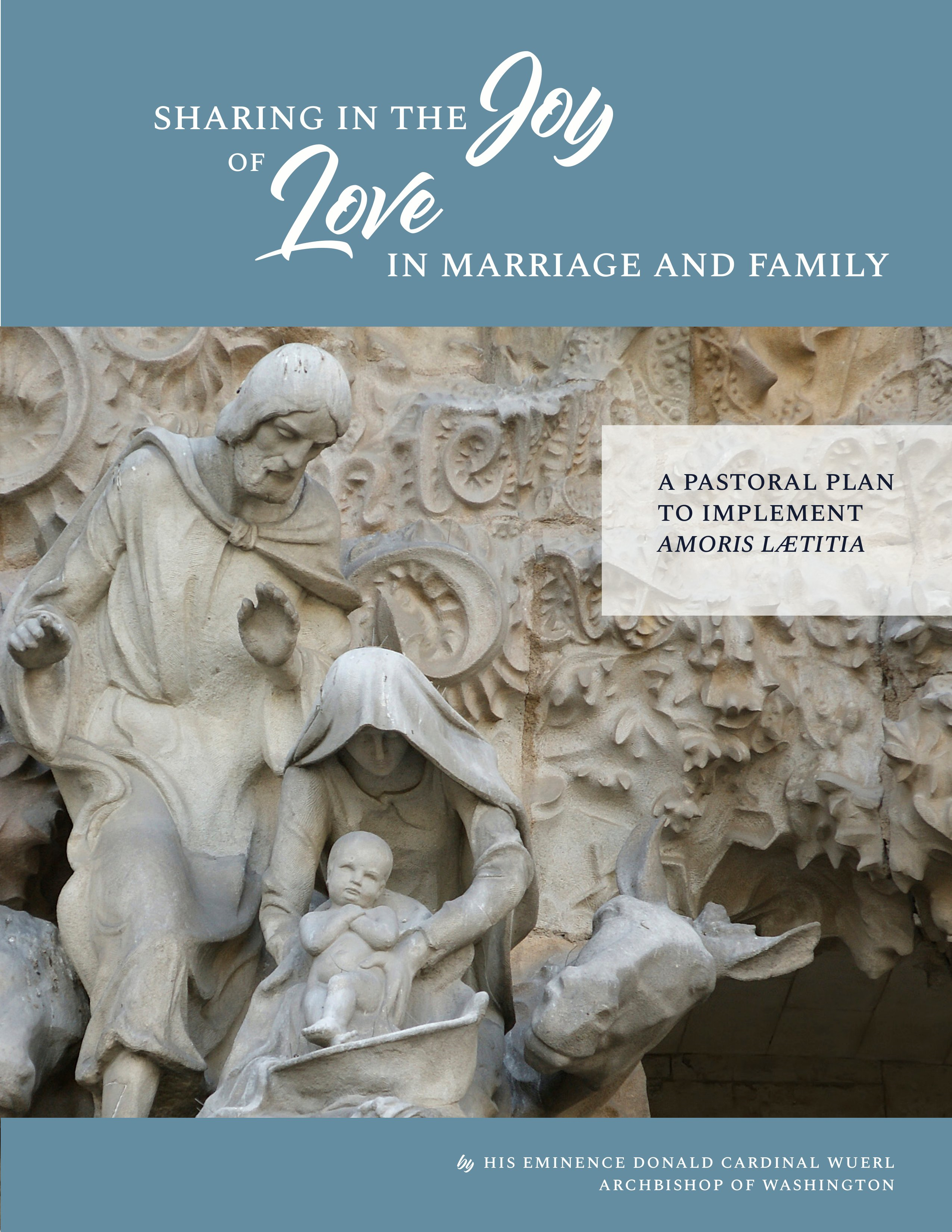
Joseph and Mary have gone to Jerusalem to fulfill two ancient mandates: the Rite of Purification for a woman after childbirth and the Rite of Presentation for a firstborn male child. These rites set the stage for a dramatic moment in biblical history, a moment missed by almost everyone.

Jewish law considered that after a woman gave birth she was ritually impure for a period of time. This was based on the flow of blood that occurred during childbirth. At that time, just about anyone who came in contact with blood incurred a ritual uncleanness for a period of time. The Book of Leviticus has this to say regarding a woman who has given birth:

The LORD said to Moses, “Say to the Israelites: A woman who becomes pregnant and gives birth to a son will be ceremonially unclean for seven days, just as she is unclean during her monthly period. On the eighth day the boy is to be circumcised. Then the woman must wait thirty-three days to be purified from her bleeding. She must not touch anything sacred or go to the sanctuary until the days of her purification are over. If she gives birth to a daughter, for two weeks the woman will be unclean, as during her period. Then she must wait sixty-six days to be purified from her bleeding. When the days of her purification for a son or daughter are over, she is to bring to the priest at the entrance to the Tent of Meeting a year-old lamb for a burnt offering and a young pigeon or a dove for a sin offering. He shall offer them before the LORD to make atonement for her, and then she will be ceremonially clean from her flow of blood.” ‘These are the regulations for the woman who gives birth to a boy or a girl. If she cannot afford a lamb, she is to bring two doves or two young pigeons, one for a burnt offering and the other for a sin offering. In this way the priest will make atonement for her, and she will be clean” (Lev 12:1-8).

Some see a fairly negative concept at work here: a woman becomes ritually unclean by giving birth. This was due not to giving birth per se but to the flow of blood and other fluids during the process. Even more distressing to modern sensibilities is that a woman who gave birth to a daughter was considered ritually unclean for an even longer period of time. Alas, it is well that the power of the Church to bind and loose has freed us from this thinking. Keep in mind that this was ceremonial law, not moral law; hence, the Church is not setting aside immutable moral law in abrogating such notions of ritual impurity.

Obedient to the Law – Nevertheless Joseph and Mary, obedient to law, make the dramatic ascent to the Temple with the Son of God carried in Mary’s arms. It has been forty days since the birth of the Lord in fulfillment of the Law.

As they ascend the glorious steps to the Temple Mount they also fulfill another requirement of the Law:

You are to give over to the LORD the first offspring of every womb. All the firstborn males of your livestock belong to the LORD. Redeem with a lamb every firstborn donkey, but if you do not redeem it, break its neck. Redeem every firstborn among your sons. In days to come, when your son asks you, ‘What does this mean?’ say to him, ‘With a mighty hand the LORD brought us out of Egypt, out of the land of slavery. When Pharaoh stubbornly refused to let us go, the LORD killed the firstborn of both people and animals in Egypt. This is why I sacrifice to the LORD the first male offspring of every womb and redeem each of my firstborn sons’’ (Ex 13:12-15).

Something even more dramatic takes place here. To understand what it is, let’s look back to 587 B.C.

The Babylonians had invaded Jerusalem and the unthinkable had happened. The Holy City was destroyed and, along with it, the Temple of God. Inside the Temple something even more precious than the building had been housed: the Ark of the Covenant.

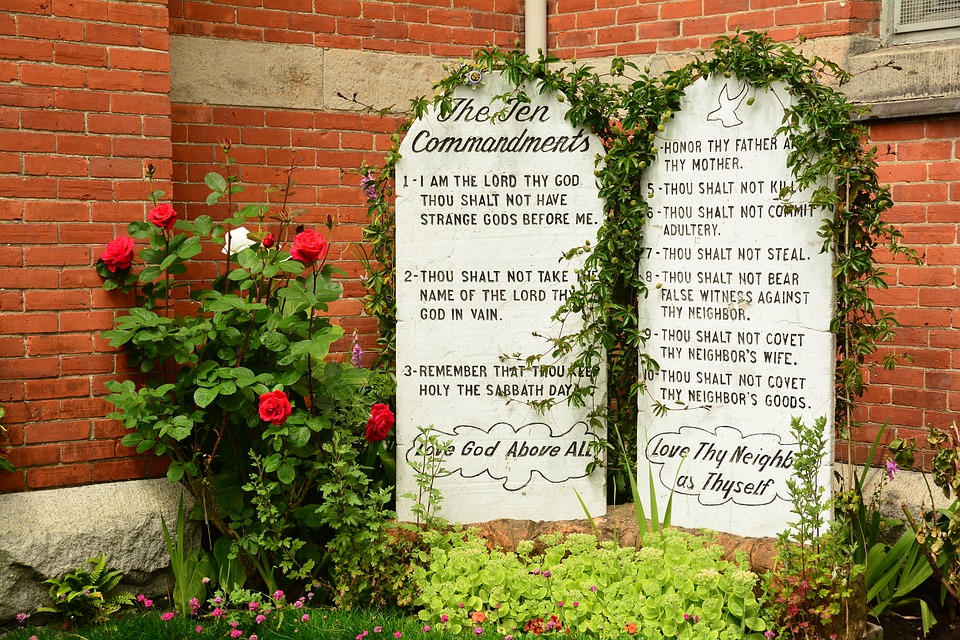
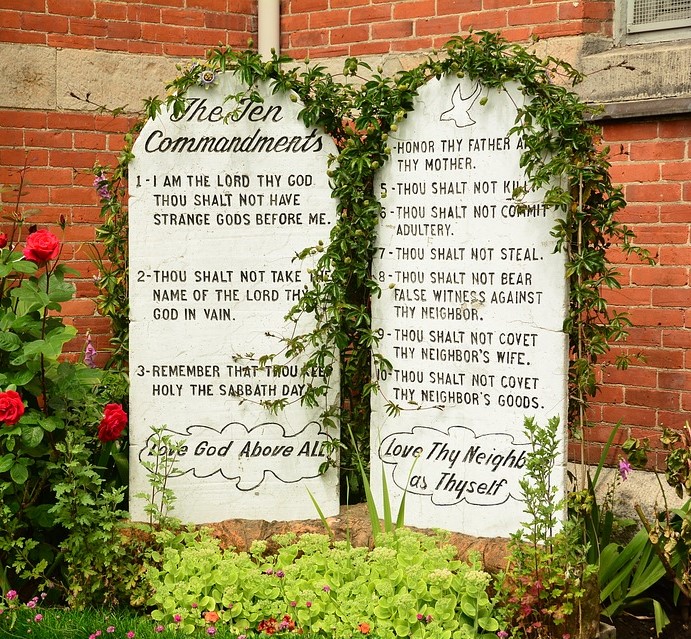
Recall what the Ark of Covenant was in the Old Testament. It was a box of acacia wood, covered in gold. Inside it were placed the two tablets on which God had inscribed the Ten Commandments. Also in it was the staff of Aaron and a vial of the manna. Even more important, in this box, this ark, dwelt the very Presence of God in Israel. God mysteriously dwelt within, much as is the case today in our understanding of the tabernacle in our Catholic churches.

The Lost Ark – Incredibly, however, the Ark was lost when the Babylonians destroyed the Temple and Jerusalem in 587 BC. Some thought that Jeremiah had hidden it in the mountains. Others, that the priests had hastily hidden it in the maze of caves beneath the Temple Mount. Still others argued that it was taken to Ethiopia. But the Ark was gone.

Empty Temple – When the Temple was rebuilt some eighty years later, the Holy of Holies was restored but the Ark was still missing. The High Priest still performed the yearly ritual and entered the Holy of Holies, but the room was empty. Some argued for a spiritual presence in the Temple, but in fact the Ark and the certain presence of God were missing in the Temple after 587 B.C. Something—someone—was missing. The very Holy of Holies was an empty room. The Ark and the presence of God it carried were missing. The Ark, the mercy seat, was gone. Would it ever be found? Would it ever be returned to the Temple? Would the Holy Presence of God ever find its way to the Temple again?

The ascent to Jerusalem is a steep one. Mountains surround Jerusalem and it sits up at a higher altitude than the area around it. As the ancient Jews made the climb they sang the psalms of ascent (120-134). As Joseph and Mary ascended, they too sang the words that instilled joy: I Lift up mine eye to the mountains from whence cometh my help (Ps 121). I rejoiced when they said to me let us go up to the House of the Lord (Ps 122). To you O Lord I have lifted my eyes (Ps 123). Like Mount Zion are those who trust in the Lord (Ps 125). Out of the depths I call unto you O Lord (Ps 130). Let us enter God’s dwelling, let us worship at the Lord’s footstool. Arise O Lord and enter your dwelling place, You and the Ark of your strength (132). Come and bless the Lord. You who stand in the House of the Lord Lift your hands to the Sanctuary and bless the Lord. The Lord bless you from Zion (134).

Singing these songs, Mary carried Jesus. The climb was even more difficult when carrying a newborn, but the burden was sweet. Then came the final ascent up the stairs to the Temple Mount. They probably entered on the southern side through the Huldah gates. They went up the steep stairs, through the tunnel in the walls, and emerged on the bright Temple platform above.

God had returned to His Temple. He and the Ark who carried Him were now found. Mary, the Ark, carrying Jesus in her arms. Jesus, very God, true God from True God. Yes, God and the Ark had been found and God was once again present among His people on the Temple Mount. Scripture says,

And the Lord, whom ye seek, shall suddenly come to his Temple, even the messenger of the covenant, whom ye delight in: behold, he shall come, saith the LORD of hosts. But who may abide the day of his coming? and who shall stand when he appeareth? (Mal 3:1-2)

What a dramatic moment and yet what a remarkable understatement by God! If I had directed the moment I would have called for blaring trumpet, claps of thunder, and multitudes of angels! And everyone would have fallen to his knees in recognition of the great fulfillment and the great return of God to His Temple.

Yet it would seem that only an elderly man and woman (Simeon and Anna) took any note at all. They alone understood that they were in the presence of greatness and beheld the drama of the moment.

Now there was a man in Jerusalem called Simeon, who was righteous and devout. He was waiting for the consolation of Israel, and the Holy Spirit was upon him. It had been revealed to him by the Holy Spirit that he would not die before he had seen the Lord’s Christ. Moved by the Spirit, he went into the temple courts. When the parents brought in the child Jesus to do for him what the custom of the Law required, Simeon took him in his arms and praised God, saying: “Sovereign Lord, as you have promised, you now dismiss your servant in peace. For my eyes have seen your salvation, which you have prepared in the sight of all people, a light for revelation to the Gentiles and for glory to your people Israel.” The child’s father and mother marveled at what was said about him. Then Simeon blessed them and said to Mary, his mother: “This child is destined to cause the falling and rising of many in Israel, and to be a sign that will be spoken against, so that the thoughts of many hearts will be revealed. And a sword will pierce your own soul too.” There was also a prophetess, Anna … Coming up to them at that very moment, she gave thanks to God and spoke about the child to all who were looking forward to the redemption of Jerusalem (Luke 2).

Yes, this was the dramatic moment that had been anticipated for centuries. The Ark of God was found (Mary) and God (Jesus) returned to His temple, but only a few noticed. Just a few understood and celebrated.

What about us? At every Mass, Jesus, God Himself, is present. Do you notice? Do you really see Him? Or do you see only the priest and the human elements of the Mass? Are you Simeon? Anna? Mary? Joseph? Or are you just among those on the Temple Mount who miss the dramatic moment of God with us?

The Gift of the African-American Catholic Tradition

February is African-American History Month.  Most of you who read here regularly know that I’ve spent most of my 28 years of priesthood ministering in African-American parishes here in Washington, D.C. (At right is a picture of our choir.)

In recent years, my own parish has become more racially and ethnically diverse, but we are still deeply rooted in the long African-American heritage here and we celebrate that in particular at our 11:00 AM Sunday Mass.  It is a heritage that retains deep roots in the sacred and draws richly upon the biblical norms of trust, liberation from sin, justice, and the lively experience of God’s immanent presence.

I would like to share a few of the things I have learned and experienced over the years, focusing primarily on the liturgical experience. Despite the inadequacy of my words in describing it, I hope that you will grasp the rich wisdom and sacred tradition that I have been privileged to experience. I do not claim that what I write here is true of every African-American Catholic nor that the values I describe below are wholly lacking elsewhere, but just that they are widely held in the community.

Expectation – Great expectations are brought to the liturgical moment. Most of my parishioners come to Mass expecting to be moved, changed, and transformed. It is expected that God, the Holy Spirit, will show up and that He will do great things. Prior to Mass there is an air of anticipation as the parishioners gather. Some call this “The Hum.” The expectation is palpable and parishioners both want and expect a deep experience of God. They look forward to the songs of praise that are about to be sung and are prayerfully expectant of a good sermon through which they will “get a word” from the Lord. There is little anxiety about time and there is no need to rush. This is God’s time and He is about to go to work.

All about God – Gospel music (traditional and modern) is a central facet of most African-American parishes, but a wide variety of music is sung, including spirituals, traditional hymns, and classical music. One of the glories of the musical repertoire in African-American parishes is that it is almost exclusively focused on God and what He is doing. I have remarked in the past that much modern music is far too focused on us, who we are, and what we are doing. Not so in the gospel music tradition, in which God is invariably the theme. In an anthropocentric time, this is a refreshing stream from which to draw. Regardless of your feelings about the style of gospel music, it is about God. One song says, “God is a good God, He is great God, He can do anything but fail.” Another song says, “God and God alone!” Yet another says, “God never fails!” Even when we mention ourselves it is only to remember God: “We’ve come this far by faith; Leaning on the Lord, trusting in his holy word, He’s never failed me yet!”

Primacy of Joy – A serene and joyful spirit is at the heart of African-American worship. The Church is a bride—not a widow—and God is good! Even in difficult times we ought to praise the Lord. Psalm 34 says, I will bless the Lord at all times, his praise shall continually be in my mouth. An old African-American spiritual says, “Praise the Lord anyhow!”

Joy is manifested in many ways in African-American worship: clapping, stepping, and swaying during the singing, uplifted hands, spontaneous acclamations—even an occasional stamping of the foot!

It is a strange thing if a Catholic Mass looks less like a wedding than a funeral: sour faces and boredom. To be sure, people manifest piety in different ways. Even in African-American parishes not everyone is on his feet as the choir sings powerfully. However, it is right to manifest some glimmer of joy rather looking like we just sucked a lemon!

Joy is a great gift and it is present in abundance in African-American worship. St. Paul says, Rejoice in the Lord always, again I say it, rejoice! Your graciousness should be known to all (Phil 4:4-5). A gospel song says, “Joy, Joy, God’s great joy. Joy, joy, down in my soul. Sweet, beautiful, soul saving joy, oh, joy, joy in my soul!”

Time – This is God’s time. Earthly time is largely suspended in the African-American experience of the Mass. Masses are often substantially longer than those at most Catholic parishes. At the African-American parishes where I have served, the “High Mass” lasts up to two hours.

In most Catholic parishes there is an unwritten rule that Mass should be between 45 minutes and an hour long, and sermons should be less than 10 minutes long. Some of the Masses here are an hour or less, but not the Gospel Mass, where time is more relaxed. It may be that the Holy Spirit inspires a soloist to take up the refrain of a song yet one more time. There’s often an expression that comes from the congregation: “Take your time,” or “Sing on!” This is God’s time and He will do what He will do.

Most African-American congregations are also famous for lingering after the service. Another expression comes to mind: “Take your time leaving.” Mass is one of the highlights of the week; why rush through it? Savor the moment. A song says, “We’re standing on holy ground.”

Creativity and Freedom in the Spirit – African-American Catholic worship is careful to follow the norms for Mass but exhibits an appreciation for creativity and for docility to the Holy Spirit. This is especially evident in music. It is rare that a soloist sings the notes of a song exactly as written. (The exception to this would be when classical music is sung). Rather, liberty is taken as the choir, soloists, organist, and director are all open to what and where the Spirit leads.

There is deep appreciation for this spontaneity; it is seen as a manifestation of the Holy Spirit interacting with the gifts in the community. A gospel song says, “Over my head, I hear music in the air. There must be a God somewhere!”  There is also a history to this that stretches back to slave times. Those who were enslaved enjoyed very little freedom, but on Sundays they would gather in secluded locations. They would often take up the hymns they had heard from the European tradition but adapt them. In so doing they expressed their freedom in the Lord. The spirituals, too, are remarkably creative, manifesting a genius of both word and song. They also admit of a wide variety of interpretations; different verses are swapped in and out at the will of the singers.

All of this creativity leads to a great expectation in the liturgy. Who knows what God will do? There are moments of great delight and a sense that this is all in God’s hands.

It also gives a different understanding to the presence of applause in the liturgy. Many rightly lament that in certain settings applause creates the notion of performance rather than worship, but in the African-American setting applause is an act of praise to God, thanking Him for this manifestation of the Spirit. This is made evident by the fact that the congregation most often applauds even after the songs that it sings together. This is not self-congratulation; it is an act of praise to God. The psalms say, Clap your hands, all you nations; shout to God with cries of joy (e.g., Ps 47).

The Preaching Moment – Sermons are typically longer in African-American Parishes. At the High Mass, the sermon is usually half an hour. The congregation has great expectations for the homily and there is a great interest in spending time with the Word of God. It is expected that the preacher will not only seek to inform the congregation but to celebrate the liberating reality of the Word that is proclaimed. The Word of God does not just inform, it performs and transforms. The preacher is invited and expected not just to preach the “what,” but also the “so what” and the “now what.”  

These expectations have challenged me over the years to be aware of the majesty of God’s Word, to look deeper into its meaning, and to experience its truth and reality in my life. Only then can I really preach with the power and authority that God’s Word deserves.

With more time, there is the luxury of really digging into a passage and analyzing all the lines. Many of you who read this blog have read my Sunday Sermon outlines and note that I usually break open the whole text rather than just draw out one thought or idea and preach that. The longer format permits the preacher to examine the steps often set forth by a gospel passage and to follow the passage line by line. This is a great luxury for me.

I am not alone in the preaching moment. One of the glories of the African-American preaching tradition is that the congregation has a central role in the preaching moment. It begins with their expectation. I know that they are praying for me and are supporting me as I begin. They really want to hear a word and spend some time with it. This is a moment to be savored. 

The priest or deacon will often engage the congregation by taking up the tradition of “call-response,” wherein he elicits a familiar response from the congregation and invites acclamations: “Somebody say, Amen.” “Amen” “Is there a witness in this house?” In this way he builds on the theme and involves the congregation.

The congregation also takes a role in crafting the homily moment through spontaneous acclamations: “Amen!” “Go on, preacher!” Help him, Lord.” “Make it plain, preacher!” There can be spontaneous applause and shouts as well as laughter and even some oohs and aahs.

Jesus is Here Right Now – In African-American Catholic worship there is a profound sense of the presence of the Lord Jesus Christ in every liturgy. Most traditional Anglo-Saxon Catholics prefer to express their faith in the true presence through silent adoration, bowed heads, and folded hands. The African-American tradition, though not excluding such forms, expresses this faith through exuberant joy in the Lord’s presence and cultivates a celebratory experience that this is holy ground, that this is the Lord’s house and He is here. Songs during Communion include texts that acknowledge this in more experiential and immanent than theological and transcendent ways. There are songs with words such as these: Jesus is here right now, I received the Living God and my heart is filled with joy, Now behold the Lamb, Taste and see the goodness of the Lord! Come now and feed our weary souls.

Permission – To think that every African-American likes only gospel music, wants to shout out during homilies, and gets excited at Mass, is to stereotype. There is a whole range of personalities expressed and experienced at Mass. Some people are exuberant and expressive, others quiet and reserved. A wide variety of preferences and liturgical expressions exist.

What makes African-American worship diverse and expressive is the concept of permission. Not everyone is required to clap rhythmically at songs, but there is the permission to do so. Not everyone responds during homilies but one may. Not everyone gets to his feet as the choir sings powerfully, but there is permission to do so. There is a wonderful combination of permission without pressure.

Trust – A key theme of African-American culture is trust in God. This has come not only from a long history of oppression but also from the experience that “God can make a way out of no way” and “do anything but fail.” Gospel music and the spirituals are replete with calls to a trusting and confident faith. Here are some examples from various songs: “God never fails.” “Blessed Assurance!” “Victory is mine.” “Whatever my lot thou hast taught me to say It is well with my soul, it is well.” “Joy comes in the morning; troubles don’t last always.” “He may not come when you want him, but he’s always on time.”

These songs of trust and assurance were very important for me in my 35th year of life when I suffered a nervous breakdown and slipped into a major depression, complete with anxiety attacks. This parish literally helped to sing me back to health.

Sober about Sin and Confident of Grace to Overcome – Good, solid, biblical preaching is appreciated in the African-American tradition. It is understood that the Lord has a lot to say about sin that is plain and unambiguous.

There is also a legacy of gospel music and spirituals that speaks frankly but creatively about sin and its relation to redemption. Here are some excerpts from songs: “I once was lost in sin but Jesus took me in.” “I was sinking deep in sin far from the peaceful shore. Very deeply stained within, sinking to rise no more. But the Master of the sea heard my despairing cry and from the water lifted me. Love lifted me. When nothing else could help, love lifted me.” “I would not be a sinner; I’ll tell you the reason why. I’m afraid my Lord might call my name and I wouldn’t be ready to die.” “Satan wears a hypocrite’s shoe. If you don’t watch he’ll slip it on you.” “Some go to church for to sing and shout, before six months they’s all tuned out.” “Where shall I be when the last trumpet sounds?” “Sign me up for the Christian jubilee, write my name on the roll. I want to be ready when Jesus comes.” “I’ve got to fast and pray, stay in his narrow way, keep my life clean each and every day. I want to go with him when he comes back, I come too far and I’ll never turn back!”

So sin is real but so is grace to liberate us. One song says, “I’m not what I want to be but I’m not what I used to be, a wonderful change has come over me.”

These are just a few of the many lessons I have learned from my parishioners over the years. As you can see, African-American Catholics have important gifts to share with the wider Church. I want to be sure to express my gratitude for this gift of culture and tradition and for the gift that every parishioner has been to me. I have learned far more than I have ever preached. I have come to know by experience that encountering Christ does not just happen from the priest to the faithful, but also from the faithful to the priest. We observed the birthday of Dr. Martin Luther King, Jr. last month. Birthdays celebrate the gift of human life and the gift of each human person. I have much to celebrate.

I realize that not everyone prefers the relaxed exuberance described here; some are more partial to quieter and more traditional forms. I have celebrated the Traditional Latin Mass for almost 30 years and appreciate its beauty as well. Today the Church allows greater diversity; what I set forth here, at the beginning of African-American History month, is that I have been blessed and enriched in this tradition, as I have in others. May God be praised.


Six Principles of Discernment

As a priest and pastor I am often called to spend time with people as they discern the voice and the will of God in their life. I have about twenty lay people for whom I provide spiritual direction. In addition, I am sometimes approached by people who are facing a critical time in their life (e.g., a family crisis, an important career decision, discerning a vocation) and would like careful guidance as they discern the best course of action or the best decision.

Thank God that many of the faithful are actually trying to learn what He would have them do. Too many people run off and make big decisions about things such as marriage or a major career move without asking God. It is always refreshing when someone says, “What would God have me do?”

How to discern in moments like these? Are there any rules? Is there at least a structure to follow to be reasonably certain of the right course of action? Are there any ways to learn how to recognize the voice of God and distinguish it from our own voice, the voices of others, or even the voice of the devil? There are, of course.

While many great spiritual masters have written far more eloquently than I about the art of discernment, I would like to offer a few things I have learned in my own discernment and in walking with others on their journey. The list of principles I offer here is by no means complete, but I have compiled it based on my study and experience as a parish priest dealing with ordinary members of the lay faithful. For a far richer treatment of the topic of discernment I recommend Fr. Thomas Dubay’s Authenticity: A Biblical Theology of Discernment.

Let’s begin with a definition of the word discernment. Many people use discernment as a synonym for “deciding,” but it is a richer and deeper concept that, while related and antecedent to it, is distinct from it. The goal of discernment is to see beyond the external manifestations of something and to probe its deeper significance.

The word discern comes from the Latin dis (“off, or away”) + cernere (“to distinguish, separate, sift, set apart, or divide. Thus, to discern is to sort out what is of God and what is of the flesh, the world, or even the devil. Discernment is something that ought to precede a decision and aid in making it.

As we discern, either a course of action or simply whether what we think or “hear” is of God or not, we must often admit that while some things are purely from God others are admixed with things not of God, things which must be sifted or separated out.

And so we come to some basic norms or principles that I humbly offer, not as a spiritual master but as a simple parish priest. These principles are most often applicable when discerning a course of action, but many can also be applied in determining whether the promptings and urges we sense in our walk with God are truly from Him or just from us.

1.  State in life – There are many different states in life, some temporary, some long-lasting, and some permanent. We may be single, married, a priest, or a religious. We may be young or old, healthy or frail. We may be a student, a parent, a worker, a boss. We may be rich or poor. Being clear about our state in life can help us discern if a call is from God or not.

For example, a woman might sense a call to spend extended hours before the Blessed Sacrament. Of itself this is surely a fine thing, but what if she is the mother of four young children? Would God ask this of her? Probably not. Perhaps one hour would be more in keeping with her state in life. On the other hand, a single woman might be free to do this; it might even be part of her understanding her vocation to the religious life. Other things being equal, it is more likely that this call is of God in the latter case.

State in life helps to do a lot of sorting out. A priest is not going to hear from God that he should leave the priesthood and marry the woman in the front pew. A feeble, elderly man is not going to hear a call from God to walk the 500 mile El Camino de Santiago in Spain. We can be fairly certain that such notions are not of God. Calls that seem to be in keeping with one’s state in life are something to remain open to.

2.  Gifts and talents People have different combinations of virtues, talents, gifts, and skills. In discerning the will of God regarding a course of action or accepting an offer/opportunity, we ought to carefully ponder whether it makes good sense based on our skills and talents.

God has equipped each of us better for some things than for others. I am a reasonably good teacher of adults, but I am not at all good with young children. Thus, when offered opportunities to teach or preach, I am much more open to the possibility that it is God’s will if it involves presenting to adults. If I am asked to address young children for more than a few minutes, I am quite certain that God is not asking.

In this stage of discernment, we should ask, “Is what I am being asked to do, am considering doing, or want to do, a good match for the gifts and talents God has given me? Does it make sense based on what I am equipped to do?” God does sometimes want us to try new things and discover new abilities, but it is more typical that He will ask of us things that are at least somewhat in the range of the possible based on our individual gifts.

Age can be a factor as well. Young people are often still in the process of discovering their gifts and talents and should be more open to trying new and challenging things. Older adults are more likely to discern God’s will a little closer to their current, well-known skill set.

3.  Desire – That desire can be a principle of discernment is a surprise to some people. We are often suspicious of our desires—and not without reason. When it comes to most things in the realm of moral law and doctrine, our desires and feelings are largely irrelevant and should not be used to discern God’s will. For example, that we should not commit adultery remains the clear will of God no matter how much we might desire it. That Jesus is God is true no matter how we feel.

But when it comes to deciding among various courses of action that are each good (e.g., marriage and the priesthood), feelings and desires do matter and may help to indicate God’s will. When God wants us to move in a particular direction, He often inspires in us some level of desire for it. He leads us to appreciate that what He wants for us is good, attractive, and desirable.

Therefore, learning to listen to our heart is an important method of discernment. For example, a good activity might be proposed for us to do but we feel no joy or desire to do it. Such feelings should not necessarily be dismissed as mere selfishness or laziness. It is possible that our lack of desire is a sign that it is not God’s will. On the other hand, we might experience a joy and zeal to do even things that are challenging; such desires can help us to discern that God has prepared us and wills for us to do that very thing. Hence desire is an important indicator in deciding between courses of action that are good. Ultimately God’s will for us gives joy.

4.  Organic development – This principle simply articulates that God most often moves us in stages rather than in sudden, dramatic ways. Although there are times of dramatic change, loss, and gain in the life of most people, it is more typical for God to lead us gently and in stages toward what He wills for us.

In discernment it is valuable to ask, “Does this seem to build on what God has generally been doing in my life? Is there some continuity at work if I move in this direction? Does progressing into the future in this particular way make sense based on how and where God has led me thus far?”

It is generally a good idea to exercise caution about “biggie-wow” projects and “out-of-the-blue” rapid changes. It is better to ask, “What is the best “next step” in my life?”

While sometimes “life comes at you fast,” God more often works through slow, steady, incremental growth, and asks us to be open to changes that make sense for us as the best “next step.”

5.  Serenity – When God leads us, the usual result is serenity and joy. In my own priestly life, I have at times been asked to move from one assignment to another. At such times there was great sadness, because I had to say goodbye to people I greatly loved. Yet when it was God’s will that the time had come for moving on, in spite of my sadness I also felt a deep inner peace, a serenity.

Serenity should not be underestimated as a tool for discernment, because pondering change is stressful, even frightening. Beneath the turmoil of weighing difficult decisions, we must listen carefully for a deeper serenity that signals God’s will.

If serenity is wholly lacking, if there are no consolations but only desolation, we should carefully consider the possibility that the proposed course of action is not God’s will. Amid the stress that often surrounds making important decisions, being able to sense serenity is more difficult; hence, we ought not to jump to the conclusion that serenity is lacking. Sometimes we must wait a while to sense serenity’s still, small voice. When it is present we have an important indicator that this is God’s will.

6.  Conformity to Scripture and Tradition – Some may think that this principle should be at the top of the list and you are free to put it there, but I prefer to say that the Word of God and the teachings of the Church have the last word in any decision.

One may go through the first five principles and feel quite certain of a particular course of action, but the final and most important step is to be sure that our insight or conclusion squares with the Lord’s stated revelation in Scripture and Church Teaching.

If a person were to think that God was telling him of a fourth person in the Godhead and that he should build an altar and spread devotion to this fourth person, we would rightly conclude that she was dead wrong.

God’s revelation trumps every other principle of discernment. Were a wayward priest to think that God had summoned him to found a new Church featuring more “up-to-date” teachings, it would not matter that he thought he desired it, it comported with his state in life, it matched his skills, it was an organic development for him, and it gave him serenity. Sorry, Father; you’re overruled. God is saying no such thing.

On the other hand, one might hear a call from God to be more faithful in prayer or more generous to the poor, and in response go through the five principles of discernment above before arriving at this last one. While Scripture and Church Teaching may have little to say on the method of prayer or the amount of money to be given, surely such notions are in keeping with God’s revelation and would not be overruled by it. One could confidently proceed to discerning when/how to pray or how much to give and to whom alms should best be directed.

Disclaimer – These principles should not be read as absolutes (except perhaps for the last one). They admit of limits and distinctions. They are merely principles to guide further reflection. In a brief post such as this, not everything can be fully said. You may wish to use the comment section to add some of your own thoughts and distinctions. Second, while not every principle applies to every situation, as a general rule these principles ought to be used together. It would be wrong to apply just one principle and think discernment complete. In general, they are all part of a process and their evidence should be considered collectively.

Pick Your Battles – As Seen in a Commercial

In life we have to decide which battles to fight and which to leave to others. We need to learn which battles are ours and which belong to others. Often we allow the urgent to leap ahead of the important on our priority list. We are forever pursuing the latest trendy battles rather than the ones we should be fighting.

In the commercial below a certain “eco-warrior” tries to fight every popular battle: saving the whales, the trees, the ice caps, and so forth. In doing so, she ends up harming not only herself, but also even some of the very things she seeks to save. She also discovers that not everything she thinks needs saving thinks it needs saving.

Let’s skip the politics and consider that in life we need to discern which battles to fight by asking questions. Is this my battle? Is the battle reasonably winnable given my gifts and talents? Am I really the best equipped to aid in this cause or are others better suited? And above all, does God want this of me?

We discern things like this best with the help of others we trust and based on our state in life and on our understanding of our individual gifts and talents.

Tomorrow I will post an article on discernment to further develop these ideas. For now, enjoy the commercial.

The Need for Two Pockets

Like so many things in life, self-esteem needs to be balanced. The balance is between humility and pride. The following is attributed to Rabbi Simcha Bunim, one of the leaders of Hasidic Judaism in Poland in the late 1700s and early 1800s:

Everyone must have two pockets so that he can reach into one or the other according to his needs. In his right pocket are to be the words, “For my sake was the world created,” and in his left pocket, “I am dust and ashes” (quoted in The Spirituality of Imperfection, p. 60).

Indeed, there is something magnificent about every individual. No one will ever be exactly like you or have just your combination of gifts. To you and to us all God gave the earth, saying,

Be fruitful and increase in number; fill the earth and subdue it. Rule over the fish in the sea and the birds in the sky and over every living creature that moves on the ground. Then God said, “I give you every seed-bearing plant on the face of the whole earth and every tree that has fruit with seed in it. They will be yours for food (Gen 1:28-29).

We have exhibited this mastery both as individuals and communally. Ours are science, learning, poetry, philosophy, art, law, technology, libraries, and great universities. We have built cities and civilizations. We’ve even been to the moon and back. No animal species—not even the highest primates—demonstrates anything even close to the qualities we have or has done anything that compares with what we have done. We have spiritual souls and rational minds. There is something glorious about the human person.

Yet we must also remember that we are but dust and ashes. We are contingent beings who depend on God for everything. Every beat of our heart, every fiber of our being, must be caused and sustained by Him. Scripture says,

As a father shows compassion to his children,
so the Lord shows compassion to those who fear him.
For he knows our frame;
he remembers that we are dust.

As for man, his days are like grass;
he flourishes like a flower of the field;
for the wind passes over it, and it is gone,
and its place knows it no more
(Psalm 103:13-16).

Our glory is a humble, derived, reflected one. Whatever spark of glory we have it is but a spark; it is from God, whose glory is unsurpassable.

Remember well your glory, but also your neediness and contingency. Whatever your gifts (and you do have them) remember that they are from God and are often granted through others.

Yes, two pockets: one for esteem, the other for humility.

A Portrait of Jesus the Preacher – A Homily for the 4th Sunday of the Year

In Sunday’s Gospel Jesus models four aspects of powerful and effective preaching.

In using the word “preaching” we ought to be careful not to limit it to what takes place in a church. All Catholic parents should learn from Jesus’ example here for they have the church of their home in which to preach; they have the pulpit of the dining room table, the living room couch, and even the family car. We all must learn from Jesus’ model of powerful preaching and teaching. Note, then, four basic qualities of Jesus as preacher and teacher:

I. PERSONAL – The text says, Then they came to Capernaum, and on the Sabbath Jesus entered the synagogue and taught. The people were astonished at his teaching, for he taught them as one having authority and not as the scribes.

(The picture at the upper right is one of me and fellow parishioners standing in the ruins of the synagogue mentioned in this passage. It is quite moving to stand atop the ruins of the synagogue where Jesus preached both this sermon and the Bread of Life discourse. Some of the ruins are from later than Jesus’ era, but the foundations are clearly from that time. It’s amazing.)

Note that the text says that Jesus spoke “with authority.” The Greek word translated here as “authority” is ἐξουσίαν (exousia), whose root meaning is “to (speak) out of one’s being or substance.” In other words, one speaks of what one knows by experience. Jesus is not simply quoting what others have said nor is He merely quoting slogans or common sayings.

In this, Jesus is distinguished from the scribes, who were famous for quoting only one another and other reputable, safe sources. Quoting other sources is fine, but if it merely stops there, how is listening to a preacher any better than staying home and reading a book?

Too many Christians, including Catholic preachers, are content to live and preach by inference rather than experience. Too many are content to repeat what others have said rather than to speak out of what they know, have seen, and have experienced.

To preach with authority means to be able to proclaim the Word of God with personal knowledge and experience. It means to be able to say this: “What the Lord and the Church have always proclaimed, I know personally, for I have tested and experienced the Word of God in the laboratory of my own life and found it to be true. And now I speak to you not merely of what others have said but what I know and experience to be true. Out of the substance of my own being I announce this truth to you.”

This is what it means to preach personally and with authority. Jesus did not simply quote what others said; He said what He personally knew.

What of you and me? Are you able to speak with authority? Well, do you know what the Lord is doing in your life? Have you personally experienced the truth of what the Scriptures and the Church have always announced? Or are you just quoting slogans, passages, and what others have said? Of course the Scriptures and the authoritative teachings of the Church are the essential foundation of what we know, but do you personally know it to be true? How? Do you speak to your children of what you know or do you merely say, “The Church says … “? Certainly you should say what the Church says, but teaching with authority means knowing and having experienced the truth of what the Church says. It means being able to attest to it personally. This is the basis of preaching and teaching with authority.

II. PROVOCATIVE – To say that something is “provocative” is to say that it elicits a response. When Jesus preached His words did not leave His listeners unmoved. His preaching called forth a response, whether it made people mad, sad, or glad.

The text pointed out that many were glad, but there was one man who was mad. The text describes his reaction: In the synagogue was a man with an unclean spirit; he cried out, “What have you to do with us, Jesus of Nazareth? Have you come to destroy us? I know who you are—the Holy One of God!”

Every experienced, authentic preacher knows that if he preaches effectively, a response will be forthcoming from his listeners. While it is natural to want a positive response, every preacher must be willing to accept that his word may incite anger or ridicule. The Church announces good news but she is also a sign of contradiction to a sinful world. Thus every preacher faithful to the Gospel must expect some degree of negativity and even persecution, ridicule, and anger.

Jesus’ Word angers a demon-possessed man in the congregation and he confronts Jesus, blaming Him with being hateful and causing hurt, saying that Jesus wants to destroy him. (Similarly, many today react with anger and call the Church hateful, bigoted, intolerant, and hurtful—even claiming that she destroys lives.) As we shall see, Jesus does not back down.

The problem in the synagogue is not the Word that Jesus proclaims; it is the man’s inner condition. When the authentic Gospel is proclaimed, the wrath that sometimes follows does not bespeak a problem with God’s Word but with the listener’s inner condition. Note that the man is demon-possessed. That is, his heart and mind are under the influence of Satan and the sin he inspires. The greatest obstacle to our being able to appreciate and understand the Word of God is our sin; the greatest help is a docile and humble spirit, granted by the grace of God.

A powerful preacher, priest or parent, preaches in order to provoke a response, whether one of joy and consolation or of repentance and godly sorrow. While no authentic preacher intends to incite a hostile response, he must be willing to accept such a reaction. When someone is accustomed to the darkness, he finds the light harsh, and calls it such. Anyone who preaches the Gospel authentically will both comfort the afflicted and afflict the comfortable; he will both console and confront (where necessary); he will reassure but also awaken the need for healing. He will speak the truth in love.

Good preaching provokes a response and one who hears the Gospel preached with authority cannot come away unchanged.

III. PRODUCING – Powerful and effective preaching brings results. As Jesus preaches, a man is set free. The text says, Jesus rebuked him and said, “Quiet! Come out of him!” The unclean spirit convulsed him and with a loud cry came out of him. All were amazed and asked one another, “What is this? A new teaching with authority. He commands even the unclean spirits and they obey him.” His fame spread everywhere throughout the whole region of Galilee.

The aim or point of the Word of God is not merely to inform but to transform. It’s not enough for the Word of God to be attractive, informative, or entertaining. Its full purpose is to, in power, drive out demons and bring God’s grace. Good preaching works to drive out the demons of ignorance, sorrow, rebellion, and sin. It works to give godly sorrow, joy, hope, confidence, knowledge, courage, and conviction. Good preaching changes people’s lives.

IV. PERSEVERING – Note that Jesus did not immediately back down in the face of opposition. He persevered with the opposing man and, by His Word, drove out the demons that were afflicting him. We see the man go through three stages:

  1. He is mad, for he confronts Jesus.
  2. He is sad, for he struggles and convulses as Jesus works to free him by His Word.
  3. He is glad, for he is set free and is able to rejoice with the others.

Every preacher, every parent, and every prophet must persevere, not giving up easily; it is often the case that people must go through these stages.

In my own life there was a time when, afflicted by the demons of ignorance and youthful rebellion, I would cross my arms and listen angrily to the priest. I was mad. I would often scoff at the “silly priest” who was trying to tell me what to do. After some years of hearing the preaching of the Church, however, I gradually understood that I had to change. Change does not come easily, though, and thus came the stage of sad; it was a time of struggle, learning new virtues, and forsaking old vices. Now I can truthfully say that I am glad, for the Lord has brought me a mighty long way. His preached Word is powerful. When effectively preached, it has the power to transform. I have experienced transformation personally.

I am glad that the Church persevered, that my parents persevered, that good priests and religious persevered in preaching to me and teaching me. I am glad that my parishioners continue to persevere in witnessing to me and preaching by their lives.

Here is reenactment of Jesus preaching in the synagogue in Capernaum (on a different occasion).

Majoring in the Minors, as Seen in a Commercial

We live in times of great ingenuity; we have a lot of smarts. We’ve been to the moon and back. Our computers can do more and more amazing things, even as we are able to make them smaller and smaller. We can see farther than ever into outer space and look more deeply than ever into “inner space,” doing microsurgery and studying the human genome.

Yet although we have become technological giants, at the same time we’ve become moral midgets. Though able to solve complex technical problems, we can’t figure how to stay faithful to our commitments or keep our families together. The churches that once dominated our skylines are now dwarfed by buildings dedicated to banking, insurance, and other passing worldly affairs.

Our houses, with their great rooms, cathedral ceilings, and granite countertops, are monuments to our wealth. But inside, these houses are not homes; they are often filled with division and sterility.

Despite all our monetary wealth there is little wisdom; despite all our power there is little prudence.

From an eternal perspective our smarts amount to sandcastles on the beach that are sure to be washed away. Ultimately they cannot stand any more than can we.

Scripture warns of the human tendency to maximize the minimum and minimize the maximum. We are smart, but about the wrong things. Our priorities are misguided.

  1. Woe to you, teachers of the law and Pharisees, you hypocrites! You give a tenth of your spices—mint, dill and cumin. But you have neglected the more important matters of the law—justice, mercy and faithfulness. You should have practiced the latter, without neglecting the former. You blind guides! You strain out a gnat but swallow a camel (Matt 23:22-24).
  2. But God said to [the rich man who built barns], “You fool! This very night your soul is required of you; and now who will own what you have prepared?” So is the man who stores up treasure for himself, and is not rich in what matters to God (Luke 12:20-21).
  3. For the people of this world are more shrewd in dealing with their own kind than are the people of the light (Lk 16:8).
  4. For everyone looks out for their own interests, not those of Jesus Christ (Phil 2:21).
  5. But mark this: There will be terrible times in the last days. People will be lovers of themselves, lovers of money, boastful, proud, abusive, disobedient to their parents, ungrateful, unholy, without love, unforgiving, slanderous, without self-control, brutal, not lovers of the good, treacherous, rash, conceited, lovers of pleasure rather than lovers of God— having a form of godliness but denying its power. Have nothing to do with such people (2 Tim 3:1-5).
  6. How prosperous Israel is—a luxuriant vine loaded with fruit. But the richer the people get, the more pagan altars they build. The more bountiful their harvests, the more elaborate their pagan pillars. Their heart is false; now they must bear their guilt. The LORD will break down their altars and destroy their pillars (Hosea 10:1-2).
  7. A discerning person keeps wisdom in view, but a fool’s eyes wander to the ends of the earth (Proverbs 17:24).
  8. They are ingenious in their wickedness (Romans 1:30).

In other words, we humans tend to get smartest about the least important things, and are foolishly forgetful of eternal things—the things that matter most. Yes, we maximize the minimum and minimize the maximum. There are some who know everything there is to know about football, or who’s who in Hollywood or politics, but are at a loss when it comes to the most basic spiritual concepts, biblical stories, or moral teachings. Hours are consumed by sports, television, and politics, but there is no time for prayer.

Well, you get the point. We are smart, but about the wrong things. Meanwhile we remain foolishly out of touch with the things that matter to God and that last unto life eternal.

I thought of all this when I saw the following commercial, which appeared recently in my YouTube queue. It features men who have developed every talent imaginable related to beer.

Now I have nothing against beer in moderation. But allow the beer to represent the things of this world. And thus we see humorously illustrated our tendency and capacity to become very talented in worldly things. But at the end of the day, it’s just beer; it’s just the world, a world that is passing away.

Are we as talented and ingenious about spiritual things?

Eyes that Are Humble – A Meditation on the Conversion of St. Paul

Today in daily Mass we read the well-known story of St. Paul’s conversion. There is a detail in the story that I have often pondered. Although I am speculating on the specifics, I think it ought not to be overlooked. Even my choice of the words “speculating” and “overlooked” (both of which refer to the eyes) indicate that we ought to “give an eye” to St. Paul’s eyes.

As you probably recall, St. Paul was not just struck down on the road to Damascus—he was blinded as well.

Saul got up from the ground,
but when he opened his eyes he could see nothing;
so they led him by the hand and brought him to Damascus.
For three days he was unable to see, and he neither ate nor drank (Acts 9:8-10).

Having persecuted the Lord, Paul was now confronted with the darkness of sin and unbelief. It is as though the Lord wanted nothing to distract Paul as he pondered his experience, neither the delights of food and drink nor the delights of the eye. It was a kind of dying and being with Christ for three days in the tomb before rising. Like the dead, Paul was unable to eat and was enveloped in complete darkness of blindness. He could do little during that time but think and pray.

And pray he did!

[The Lord said to Ananias,]“Get up and go to the street called Straight
and ask at the house of Judas for a man from Tarsus named Saul.
He is there praying,
and in a vision he has seen a man named Ananias
come in and lay his hands on him,
that he may regain his sight.”

… Ananias went and entered the house;
laying his hands on him, he said,
“Saul, my brother, the Lord has sent me,
Jesus who appeared to you on the way by which you came,
that you may regain your sight and be filled with the Holy Spirit.”
Immediately things like scales fell from his eyes
and he regained his sight.
He got up and was baptized,
and when he had eaten, he recovered his strength.

Through Word and Sacrament, Paul’s eyes were healed—or were they? Surely they were, for in the years that would follow, Paul saw well enough to travel the world speaking of Christ.

I’m convinced that some vestige of blindness, some physical memory remained in Paul’s eyes for his entire life, something to remind him of his need for mercy and to keep him humbly mindful of how that mercy was extended.

As background, we do well to recall the story of Jacob, who wrestled with God one night. Jacob proved strong in that great contest, so strong that God gave him a new name, Israel, which means “he wrestles (or struggles) with God.” God also left Jacob with a permanent memory of that nighttime battle. Scripture says that God knocked out Jacob’s sciatic muscle (Genesis 32:32), such that he would walk with a limp for the rest of his life, leaning on a staff. It was a reminder to Jacob that he was always to lean on the Lord (Heb 11:21).

So, too, perhaps, for St. Paul. Although he persevered through three dark days with God and although his eyesight was restored, it would seem that some weakness remained in his eyes. Later, St. Paul would speak of an ailment, a mysterious thorn in his flesh (2 Cor 12:7). Three times he begged God to remove it but the Lord told him to endure it for the sake of humility.

What was it? What was this mysterious physical affliction? I’m convinced that it had something to do with his eyes. Paul told the Galatians,

As you know, it was because of an illness that I first preached the gospel to you, and even though my illness was a trial to you, you did not treat me with contempt or scorn. Instead, you welcomed me as if I were an angel of God, as if I were Christ Jesus himself. Where, then, is your blessing of me now? I can testify that, if you could have done so, you would have torn out your eyes and given them to me (Gal 4:13-15).

While I am speculating, it seems to me that Paul had something to akin to conjunctivitis (pink eye), an affliction that make the eyes fill with a sticky yellowish discharge and become red. It can be extremely contagious and is often repulsive to others. Indeed, it was quite difficult to endure in the era before modern medicine.

Whatever his actual affliction, it seems (if the Galatians text is acknowledged as descriptive) to have involved Paul’s eyes, the same eyes that had been healed but perhaps with a reminder left in them of the need for humility and for remembrance of how God saved him.

What is your thorn? What is your limp? What is your conjunctivitis? All of us have things that keep us humble. They remind us of our need to lean on God and to look to Him, not with haughty eyes, but with eyes that are humble, respectful, and grateful.

This song says, “Nobody knows the trouble I’ve seen. Nobody knows but Jesus”