In this age of nearly instantaneous communication, there is an overwhelming amount of news and information available to us. There is nothing wrong with news and information, but each of us must decide how much exposure, in terms of time and content, is good for us. Not all “Breaking News!” is really that urgent. Too much news can distract us, overwhelm us, and provoke anxiety and anger. Further, the “news” is heavily filtered to feature what is bad, strange, unusual, violent, and dangerous. It does not represent the reality most of us live in nor is it something on which we should be focused. Frankly, most of us lead routine and “boring” lives. This doesn’t make for riveting news, but it is more representative of our lives.
In such an environment, we do well to hear and heed an admonition of Isaiah, who describes the just person in this way:
He who practices virtue and speaks honestly,
who spurns what is gained by oppression,
brushing his hands
free of contact with a bribe,
stopping his ears lest he hear of bloodshed,
closing his eyes lest he look on evil.
He shall dwell on the heights,
his stronghold shall be the rocky fastness,
his food and drink
in steady supply (Isaiah 33: 14-16).
Note especially this part:stopping his ears lest he hear of bloodshed, closing his eyes lest he look on evil. While it is not possible to avoid all exposure to bloodshed and evil, it is surely advisable to avoid unnecessary exposure to it lest we become desensitized to it or unnerved by it.
Obviously, we should avoid movies and video games with gratuitous violence, but we should also limit our exposure to a steady stream of news that emphasizes violence, conflict, controversy, excess, and aberration. Many news programs today feature panels who engage in endless debate, even to the point of yelling, and who say more and more about less and less.
There is also a lot of sinful curiosity and voyeurism involved. Everyone has personal struggles—even tragedies—but the cameras don’t need to be rolling and public displays made of them. Talk shows traffic in this sort of material; people are invited on to share what should remain private, and viewers, indulging in a kind of sinful curiosity, willingly consume the sad display.
Sadly, this bleeds over into news coverage as well, where every sort of strange psychological, addictive, compulsive, and dysfunctional behavior is trotted out for our consumption. The overall effect is to normalize bad or dysfunctional behavior, exaggerate its extent in the population, and make a public spectacle of it. All of this serves to desensitize us to its sinful, even tragic, roots.
We have gradually shifted from being informed to “look[ing] on evil” and “hear[ing] of bloodshed.” The loss of life implied by bloodshed is more than physical death; there is a great deal of spiritual death in our culture as well.
If viewing this public spectacle of sin, confusion, and death led us to deeper prayer and a commitment to working harder to speak the truth in love, perhaps it would be a more tolerable change. Unfortunately, there is little evidence of this even among committed Christians.
Therefore, the advice of Isaiah should be heeded. We should we actively limit our exposure to this spectacle, closing our eyes lest we “look on evil” and stopping our ears lest we “hear of bloodshed.”
There is some need to stay informed, but we should limit our exposure. Reading the news may be better than viewing it; one can skim the headlines and read further only if necessary. We don’t need to know as many details as we think we do. Staying informed at a general level is adequate for most of us.
Stepping back from the spectacle and from the steady diet of the dysfunctional and the tragic will give us greater serenity so that we can pray, which is a better gift to the world than our being merely informed.
St. Paul give the following advice:
Finally, brothers, whatever is true, whatever is honorable, whatever is right, whatever is pure, whatever is lovely, whatever is admirable—if anything is excellent or praiseworthy—think on these things. Whatever you have learned and received and heard from me, and seen in me, put these things into practice. And the God of peace will be with you (Phil 4:8-9).
Being serenely at peace, connected to God, able to pray, and growing in virtue are much better solutions for the problems of our day than is knowing all the gory details. Be careful what you read and listen to each day. There is a place and time to close our eyes lest we look on evil and stop our ears lest we hear of bloodshed.
There is a line in the first reading for Wednesday of the seventh week of the year that reminds us to be humble and to realize that things—including us—are passing:
You are a puff of smoke that appears briefly and then disappears (James 4:14).
This is an antidote of sorts to the modern tendencies of excessive self-esteem and lack of concern for our death. Despite the advances of modern science and technology, we cannot even be sure of the next beat of our heart. A man can be robust and confident, at the height of his career, and then suddenly gone.
To be sure, there is a glory to the human person, a glory that comes from God, but our sense of it must be received with deep humility. Whatever we have, we have received from God. St. Paul says, What have you that you have not received; and if you have received it why do you glory as though you had not? (1 Cor 4:7) Whatever glory we have is from God. We are small, contingent beings; each of us is but a puff of smoke, a vapor, a mist. The slightest wind will scatter us.
In the frontispiece of a family history, my father transcribed the following verse from Psalms:
As for man, his days are like grass; he flowers like the flower of the field; the wind blows and he is gone and his place never sees him again (Psalms 103:15-16).
It is similar to what James says in today’s reading. We are like a puff of smoke or a vapor just before the wind blows or the sun rises.
Our years are seventy, or eighty for those who are strong. They pass swiftly, and we are gone (Ps 90:10).
As Christians, we should not be depressed by such thoughts, but we should be sobered. This life and its worldly glories are not the point. What a cruel joke it would be if that were so! Nothing but a puff of smoke, scattered by the merest breeze—it would be cruelty to say the least.
We Christians know that our life here is like the time we spent in the womb. Our tenure here is temporary while we await a greater glory to come. The child in the womb enjoys its warmth and seclusion, but as it grows, the womb comes to seem confining and limiting. Then birth pangs usher in the news: “You were made for something larger, something greater.” Many things of this world give joy, warmth, and pleasure, but if we are faithful we outgrow them. Our heart expands and this world can no longer contain us.
The birth pangs of our looming death say to us, “You were made for something larger, something greater.” We go forth from the womb of this world to what the Psalms often call the wideness or spaciousness of the glory of God (e.g., 17:29; 117:5; 118:45 Vulgate). Most of us will need the “afterbirth” of this world purged from us. After that is done, we will be received into the loving arms of our God and Father. This is our glory: to be caught up into the heart of God our Father, who conceived us and who loves us.
James warns, within the wider context of calling us a “puff of smoke,” that we must be wary of a pride that roots us in this world and celebrates a human glory somewhere other than in the arms of God.
Come now, you who say, “Today or tomorrow we shall go into such and such a town, spend a year there doing business, and make a profit” you have no idea what your life will be like tomorrow. You are a puff of smoke that appears briefly and then disappears. Instead you should say, “If the Lord wills it, we shall live to do this or that.” But now you are boasting in your arrogance. All such boasting is evil (James 4:14-17).
Yes, beware of arrogance; beware of your own plans. God must have His heartiest laughs when we tell him our “plans.”
People used to visit cemeteries frequently, but doing so is much less common in today’s busy, arrogant times. Make it a practice to walk frequently in the nearest cemetery, particularly during Lent. While there, behold the glory of this world and remember that whatever it gives it takes back.
Consider again the words of Jesus:
Unless the grain of wheat falls to the earth and dies, it remains just a grain of wheat. But if it falls and dies, it rises to produce abundant fruit (John 12:23).
What will it be for you? Will it be the passing glories of this world, which die and then are trampled underfoot, or are blown away like a puff of smoke? Or will it be the seed that is sown but dies to itself and rises to something far more glorious?
Will this world be for you a tomb, which seals you into itself, or a womb, which births you to new and greater life? The decision is yours.
In the final week of Easter, there were frequent references in the readings to the fact that the world would hate true Christians. For example,
If the world hates you, understand that it hated Me first. If you were of the world, it would love you as its own. Instead, the world hates you, because you are not of the world, but I have chosen you out of the world. Remember the word that I spoke to you: ‘No servant is greater than his master.’ If they persecuted Me, they will persecute you as well (John 15:18-20).
The word “world” here obviously does not refer to the planet Earth itself, but to the collective attitudes, philosophies, economies, priorities, political powers, and cultural stances that are arrayed against God and His teachings. It is an accumulation of demonic influences and sinful human connivances, tendencies, and preferences. Because this “world” involves people, human and demonic, it is capable of hate.
The world hates us to the degree that we are true Christians.
Sadly, many Christians work hard to ensure that the world does not hate them. We do this most often by compromising the faith and hiding whatever practice of the faith we do have. It is also due to a love and preference for the world. While this is often done out of weakness, it is a deeply sinful drive. Scripture warns,
Adulterers! Do you not know that friendship with the world is hostility toward God? Therefore, whoever chooses to be a friend of the world renders himself an enemy of God (James 4:4).
These are strong words to be sure, but deep sinful drives require strong medicine.
If we are on a path to becoming truer Christians, we will encounter increasing resistance from the world and from worldly people who sense that we are not quite on board with the current culturally-blessed belief system. Somehow, they sense an independence and freedom in us that they rightly assess will erode their power.
Let’s consider a few related though distinct versions of the world’s hatred of true Christians.
1. The world hates us because we cannot be easily exploited by agreeing to part with our money.
Scripture says this of the fear of death:
Therefore, since the children have flesh and blood, Christ too shared in their humanity, so that by His death He might destroy him who holds the power of death, that is, the devil, and free those who all their lives were held in slavery by their fear of death (Hebrews 2:14-15).
Most marketing schemes exploit the fear of diminishment, which is a version of the fear of death. Find out what a person fears and you can control him. Most people are desperately afraid of rejection, of being diminished in the sight of their fellow human beings.
Many are ensnared by this and are easy targets for exploitation. This fear of diminishment is brought out by delivering the message that you are not measuring up in some way. Here are some examples:
You’re not attractive enough.
You’re not slim enough.
You don’t have the right style or color of hair.
You don’t drive the right sort of car.
You don’t have a modern enough cell phone,
You don’t live in the right kind of house in the right kind of neighborhood.
You’re not smart enough.
You’re not cool.
Your neighbors are laughing at you behind your back because they are richer, more glamorous, and happier than you are.
You’re missing out on life because of all your shortcomings.
“Never fear,” the message goes, “$19.95 (plus shipping and handling) will get you our product and make you less pathetic, more esteemed, and less diminished in the eyes of your neighbors.”
When a person is less obsessed with human approval and more focused on divine approval, when he has the “fear of the Lord” rather than the fear of men, the worldly realize that he is less easily exploited. A true Christian is more satisfied with God’s love and therefore less concerned with the world’s esteem and approval. The world senses this and develops a kind of disdain and hatred for the true Christian and for Christianity itself because it cannot so easily exploit the fear of diminishment.
2. The world hates us because we cannot be easily exploited for worldly power or political gain.
There is power in ideas. Sow a thought, reap a deed; sow a deed, reap a habit; sow a habit, reap a character; sow a character, reap a destiny. Thoughts and ideas are powerful things. This insight is at the heart of the proclamation of the Gospel. No longer be conformed to this world, but be transformed by the renewal of your mind (Romans 12:2). The Church and the world are engaged in a battle of ideas and the battle for the mind.
One of the tactics of the world is to market ideas so as to gain power and influence. This is a worldly sense that if certain ideas and ideologies can be implanted in people, they can then become a base for marketing, politics, and worldly power.
Identity politics, tribalism, race, and highly specific grievances increasingly form a basis for political and worldly power; ideas become ideology.
Reason and shared human values are less the basis for the appeal; fear and competition through organized power become more common. In an increasingly crowded marketplace of divergent ideas, loyalty and an “us vs. them” mentality are insisted upon. Intimidation, both subtle and obvious, is the daily fare.
The world rightly assesses that a true Christian is less easily intimidated. As our faith grows, our ideas become more rooted in perennial truths rather than in the ephemeral views of today. We see things by the light of the Gospel and more quickly understand the errors of much of modern thinking. As we grow in our faith we trust God more and come to delight in the truth He proclaims, experiencing greater liberation. Rooted in this way in clear and lasting truth, we are less easily deceived, controlled, or intimidated. The world and the prince of this world are instinctively aware of this and thus hate us and the faith in which we strive to grow.
3. The world hates us because our call to moderation threatens their wild excesses.
This is basically the summation of the first two points. The Christian faith calls us to moderation and sobriety. We are taught that happiness is not rooted in the multiplicity of things or pleasures, but in the moderate enjoyment of lawful pleasures. This limits the ability of marketers to sell us more and more. It also limits the inroads of political and worldly philosophies that often traffic in inciting dissatisfaction that others have more that we do. The world rightly perceives that a true Christian is less easily provoked to excessive consumption and less easily enlisted in causes rooted merely in possessions or power.
We are an “ugly” reminder to the world that it has lost its way.
In the Book of Wisdom this form of hatred is described in this way:
Let us lie in wait for the righteous one, because he is annoying to us; he opposes our actions, Reproaches us for transgressions of the law and charges us with violations of our training. He professes to have knowledge of God and styles himself a child of the LORD. To us he is the censure of our thoughts; merely to see him is a hardship for us, because his life is not like that of others, and different are his ways. He judges us debased; he holds aloof from our paths as from things impure. He calls blest the destiny of the righteous and boasts that God is his Father. Let us see whether his words be true; let us find out what will happen to him in the end…. Let us condemn him to a shameful death; for according to his own words, God will take care of him.” These were their thoughts, but they erred; for their wickedness blinded them. And they did not know the hidden counsels of God; neither did they count on a recompense for holiness nor discern the innocent souls’ reward (Wisdom 2:12-24).
Deep down, the worldly know that what the Church teaches is right. She touches something deep in the consciences of even the most jaded of modern thinkers. Rationalizing away, resisting, and ignoring the still, small voice of God echoing in their hearts is hard work. Even a small poke from the Church through Scripture or her teaching incites loud cries of pain and anger because they know the Church is right.
Perhaps, too, there is vague awareness that the Church is still going to be here preaching the gospel long after this current experiment of a godless and truth-less “culture” has run its course. Indeed, in the age of the Church empires have come and gone, nations have risen and fallen, heresies have been presented and resisted. Yet here we are still, preaching the gospel.
There is something mysterious about the particular hatred that the world reserves for Jesus and His Church.
In the Western world most religions are tolerated, even if largely ignored. Buddhism, Hinduism, and other eastern religions receive a nod from the cultural elites. New Age “spiritual but not religious,” “god-within” movements are often thought trendy and touted as substitutes for biblical religions. Strangely, despite numerous terrorist attacks and an ideology almost diametrically opposed to Western liberalism, the Muslim faith gets a pass.
Don’t even mention Christianity, let alone Catholicism, to most of them. The reaction is often “over-the-top.” It is not enough for them to dismiss us as irrelevant; they actively oppose us with legal efforts to keep our voice out of the public square. Prayer must go. Christmas must be called “the Holidays.” Mangers are forbidden. Even the colors green and red have been banished from some schools during this time. Easter break is “spring break” and Good Friday is just another teacher in-service day. Ramadan and Rosh Hashana are still mentioned by name. One can express almost any motivation for a view—except a religious one (especially a Christian or Catholic one). One can be a proud supporter of abortion and Planned Parenthood and a proud supporter of same-sex “marriage” and other LGBTQ causes, but one cannot oppose these for sincerely held religious reasons without being labeled a dangerous zealot trying to impose your views on others.
The depth of the fear, anger, and hatred is mysterious. If we are so “irrelevant,” why is it necessary to oppose us so fiercely? Do we really have an ability to impose our views? Why are we said to be “imposing” our views when we voice them while others are free to hold and express their views without backlash?
The anger, fear, and hatred is both obsessive and excessive. It is far beyond rational opposition.
Ultimately the mystery is not so deep that it defies explanation. There is evidence in the behavior of cultural elites and worldly leaders that Jesus and Christianity (especially the Catholic part of it) are public enemy number one.
Satan certainly has a raging fear of Jesus. As the “prince of this world,” he spreads his fear to the world. Thus, despite our many compromises with modernity, Catholicism remains the staunchest opponent to the views of most cultural elites. Our doctrines are stubborn things, even for some inside the Church who would like to change them. The Rock of Peter, whatever the human limitations of the individual popes in history, has a great deal of inertia by the Lord’s own design and grace. By God’s own promise, the gates of Hell (an image of power) slam against the Rock but cannot prevail.
The hatred of the Catholic Church is not really mysterious after all. It is a hatred far more cosmic and sweeping than merely that of those who live today. The special hatred for Christ and His Church are the great evidence that He is true Savior and Lord. Satan cannot keep a “poker face” in the presence of Christ and His Bride, the Church. He nervously rages, and all his worldly structures, philosophies, and those he inspires rage with him.
Be sober and yet at the same time amazed at the evidence of the true Church and Faith.
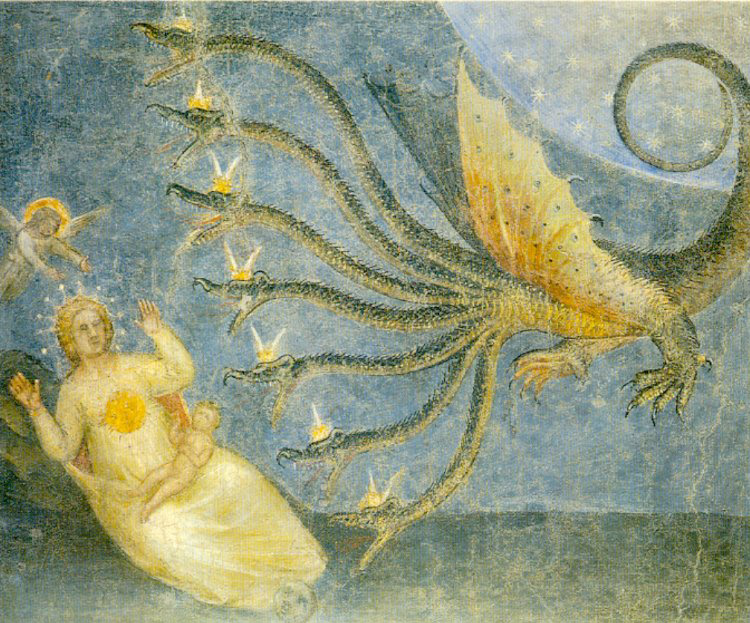
And the dragon was enraged at the woman and went to make war with the rest of her children, who keep the commandments of God and hold to the testimony of Jesus. And the dragon stood on the sand of the seashore. (Revelation 12:17)
One of the quirks of the post-conciliar liturgy is that the octave of Pentecost was dropped. Generally, the post-conciliar age has tried to emphasize the gifts and works of the Holy Spirit, so eliminating the octave of Pentecost is quite paradoxical. The Feast of Pentecost ranks right up there with Easter and the Nativity, both of which have an octave, yet the octave of Pentecost fell away. So it is that on the Monday after Pentecost we are back to ordinary time and green vestments.
However, priests have the option (which I intend to exercise) of celebrating votive Masses of the Holy Spirit for every day possible from now until next Monday.
On the blog this week we will be reflecting a bit on the Holy Spirit and His role in quickening the Church and empowering her for her mission of making disciples of all the nations.
In today’s post we will consider some of the biblical images for the Holy Spirit, and in so doing, strive to learn more about what God the Holy Spirit does for us. These descriptions do not reduce the Holy Spirit to simply fire, water, or tongues. Rather, the Holy Spirit is described as being like these things but at the same time greater than they are.
1. Wind
Scripture says,
When the day of Pentecost arrived, they were all together in one place. And suddenly there came from heaven a sound like a mighty rushing wind, and it filled the entire house where they were sitting (Acts 2:1).
Note that the text speaks of the Spirit as being like a mighty rushing wind. It but does not say that He is a mighty rushing wind, for the Holy Spirit cannot be reduced to mere physical things, even if He is like them.
This text brings us to the very root meaning of the word “spirit.” Spirit refers to breath. This etymology is preserved in the word “respiration,” which is the act of breathing. So, the Spirit of God is the breath of God, the Ruah Adonai.
… the Spirit (ruah) of God was moving over the face of the waters (Genesis 1:2)
… then the LORD God formed man of dust from the ground and breathed into his nostrils the breath of life; and man became a living soul (Genesis 2:7).
The very Spirit of God was breathed into Adam! As we know, though, Adam lost this gift and died spiritually when he sinned. As a result, we lost the Spirit of God and died spiritually. St. Paul says plainly that we were dead in our sins (cf Col 2:13).
We see in this passage from Acts an amazing and wonderful resuscitation of the human person, as these first Christians experience the rushing wind of God’s Spirit breathing spiritual life back into them. God does CPR; He brings humanity, dead in sin, back to life! The Holy Spirit comes to dwell in us once again as in a temple (cf 1 Cor 3:16).
This image of the rushing wind reminds us that the Holy Spirit brings us back to life and sustains us. If Christmas is the feast of God with us, and Good Friday is the Feast of God for us, then Pentecost is the Feast of God in us. The Holy Spirit, like a rushing wind, breathes life back into us.
2. Fire
Scripture says, And tongues, like flames of fire that were divided, appeared to them and rested on each one of them.
The Bible often speaks of God as fire, or in fiery terms:
Moses saw God as a burning bush. God led the people out of Egypt through the desert as a pillar of fire. Moses went up onto a fiery Mt. Sinai where God was.
The LORD reigns; let the earth rejoice; let the many coastlands be glad! Clouds and thick darkness are round about him; righteousness and justice are the foundation of his throne. Fire goes before him and burns up his adversaries round about. His lightnings lighten the world; the earth sees and trembles. The mountains melt like wax before the LORD, before the Lord of all the earth. The heavens proclaim his righteousness; and all the peoples behold his glory (Psalm 97).
Scriptures call God a Holy fire, a consuming fire (cf Heb 12:29), and a refining fire (cf Is. 48:10; Jer 9:7; Zec 13:9; & Mal 3:3).
So it is that our God, who is a Holy Fire, comes to dwell in us through His Holy Spirit. As a Holy Fire, He refines us by burning away our sins and purifying us. As Job once said, But he knows the way that I take; when he has tested me, I will come forth as gold (Job 23:10).
Fire changes everything it encounters. Nothing goes away from fire unchanged; it may be consumed, converted, purified, warmed, mollified, or steeled—but nothing goes way unchanged.
Thus, God the Holy Spirit, like a Holy Fire, is within us. It is changing and transforming us, burning away sin, refining us, enlightening us, stirring the flame of God’s love in us, and bringing us up to the temperature of God’s glory. He is kindling a fire that gives light and warmth in our darkest and coldest moments. Little by little we become a burning furnace of God’s love and we give warmth to those around us.
As fire, God is also preparing us for judgement, for if He is a Holy Fire, then who may endure the day of His coming or of going to Him? What can endure the presence of Fire Himself? Only that which is already fire. Thus, we must be set afire by God’s love.
So, in the coming of the Holy Spirit, God sets us on fire to make us a kind of fire. In so doing, He purifies us and prepares us to meet Him one day, to meet Him who is a Holy Fire.
3. Tongues
The fire is described as tongues. Through this we learn that one of the chief fruits of Spirit is to help us witness to others. What is a witness? It is one who speaks of what he has seen, heard, and experienced.
Of this need to witness, the Lord said,
You will be my witnesses in Jerusalem, and in all Judea and Samaria, and to the ends of the earth (Acts 1:8).
You are witnesses of these things. I am going to send you what my Father has promised; but stay in the city until you have been clothed with power from on high (Luke 24:48-49).
When the Advocate comes, whom I will send to you from the Father—the Spirit of truth who goes out from the Father—he will testify about me. And you also must testify, for you have been with me from the beginning (John 15:26-27).
The spirit comes as tongues in order to strengthen us for our mission, for witness. And, oh, how this witness is needed today! Evil has triumphed because the good have remained silent; pulpits have been silent; parents have been silent. The tongues of fire remind us that God wants bold and fiery saints who are courageous witnesses in a doubting, deceitful, scoffing world.
Many martyrs have died courageously over the years, yet many of us today are afraid because we think that someone might raise an eyebrow at us. Pray for the courage of tongues, the courage to speak.
4. Water
Jesus often used water as an image of the Spirit:
On the last and greatest day of the festival, Jesus stood and said in a loud voice, “Let anyone who is thirsty come to me and drink. Whoever believes in me, as Scripture has said, rivers of living water will flow from within them.” By this he meant the Spirit, whom those who believed in him were later to receive. Up to that time the Spirit had not been given, since Jesus had not yet been glorified (John 7:37-39).
In the Gospel of John, the giving over of the Holy Spirit is described powerfully, even at the very moment of crucifixion:
Jesus said, “It is finished.” With that, he bowed his head and gave up his spirit. Now it was the day of Preparation, and the next day was to be a special Sabbath. Because the Jewish leaders did not want the bodies left on the crosses during the Sabbath, they asked Pilate to have the legs broken and the bodies taken down. The soldiers therefore came and broke the legs of the first man who had been crucified with Jesus, and then those of the other. But when they came to Jesus and found that he was already dead, they did not break his legs. Instead, one of the soldiers pierced Jesus’ side with a spear, bringing a sudden flow of blood and water. The man who saw it has given testimony, and his testimony is true. He knows that he tells the truth, and he testifies so that you also may believe (John 19: 30-35).
In this flow of water, the Spirit comes forth in a kind of Johannine Pentecost. It is a classic Johannine play on words that he relates that Jesus “gave over his Spirit,” a phrase that can mean that He died or that He gave us of His Holy Spirit.
The Fathers of the Church also see water as a fitting image for the Spirit.
St. Irenaeus said, Like dry flour, which cannot become one lump of dough, one loaf of bread, without moisture, we who are many could not become one in Christ Jesus without the water that comes down from heaven. And like parched ground, which yields no harvest unless it receives moisture, we who were once like a waterless tree could never have lived and borne fruit without this abundant rainfall from above. Through the baptism that liberates us from change and decay we have become one in body; through the Spirit we have become one in soul … the devil had been cast down like lightning. If we are not to be scorched and made unfruitful, we need the dew of God (Against the Heresies Lib. 3, 17. 1-3: SC 34, 302-306).
St. Cyril of Jerusalem said, But why did Christ call the grace of the Spirit water? Because all things are dependent on water; plants and animals have their origin in water. Water comes down from heaven as rain, and although it is always the same in itself, it produces many different effects, one in the palm tree, another in the vine, and so on throughout the whole of creation. It does not come down, now as one thing, now as another, but while remaining essentially the same, it adapts itself to the needs of every creature that receives it. In the same way the Holy Spirit, whose nature is always the same, simple and indivisible, apportions grace to each man as he wills. Like a dry tree which puts forth shoots when watered, the soul bears the fruit of holiness when repentance has made it worthy of receiving the Holy Spirit. Although the Spirit never changes, the effects of this action, by the will of God and in the name of Christ, are both many and marvelous. The Spirit makes one man a teacher of divine truth, inspires another to prophesy, gives another the power of casting out devils, enables another to interpret holy Scripture. The Spirit strengthens one man’s self-control, shows another how to help the poor, teaches another to fast and lead a life of asceticism, makes another oblivious to the needs of the body, trains another for martyrdom. His action is different in different people, but the Spirit himself is always the same. In each person, Scripture says, the Spirit reveals his presence in a particular way for the common good (Cat. 16, De Spiritu Sancto 1, 11-12.16: PG 33, 931-935. 939-942).
Thus, water is another fundamental image of the Holy Spirit, for all things are dependent on water to sustain their existence as well as to activate and empower their gifts. I cannot speak more profoundly than did these two saints and Fathers, so I will let their own words suffice.
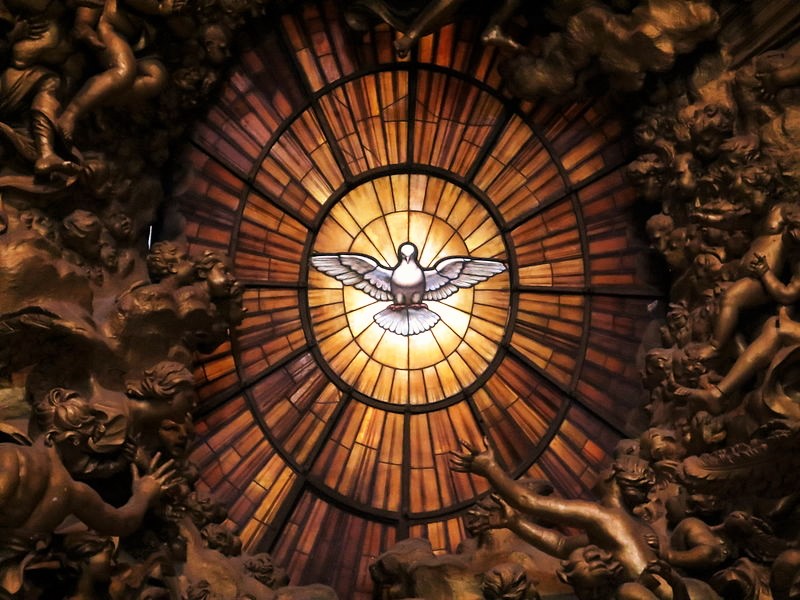
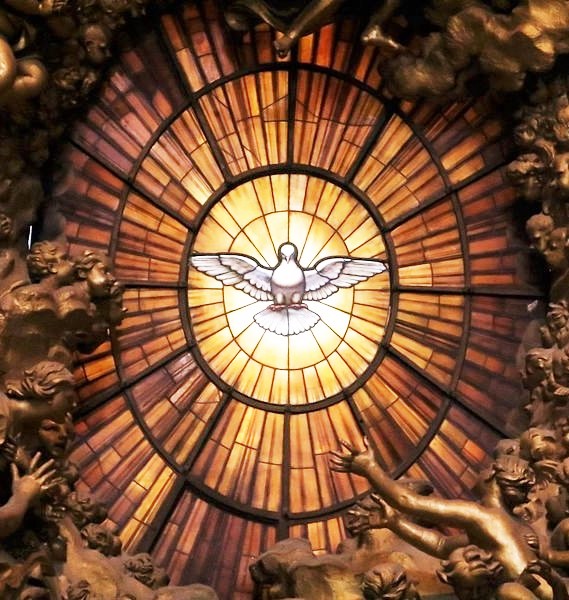
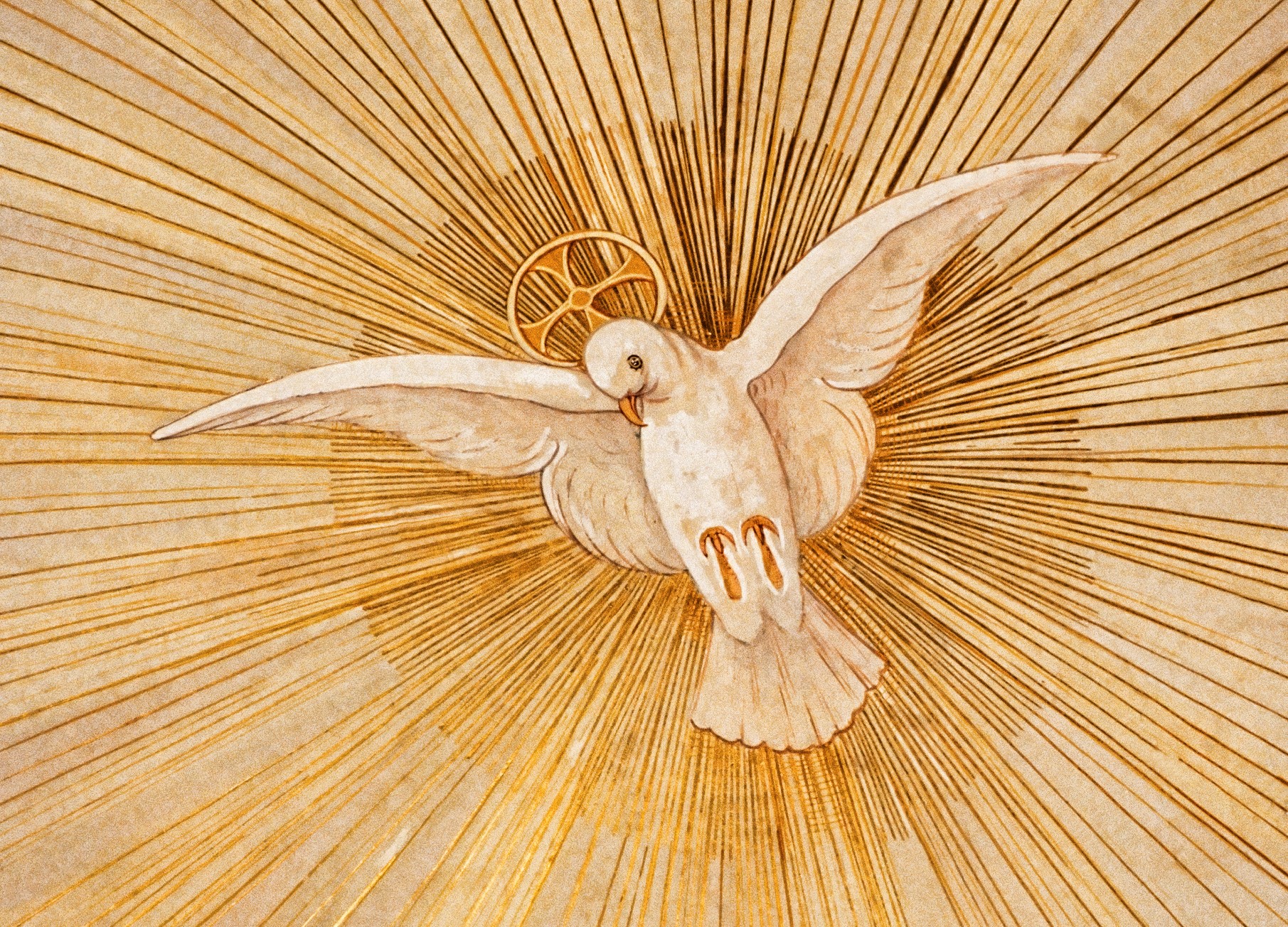
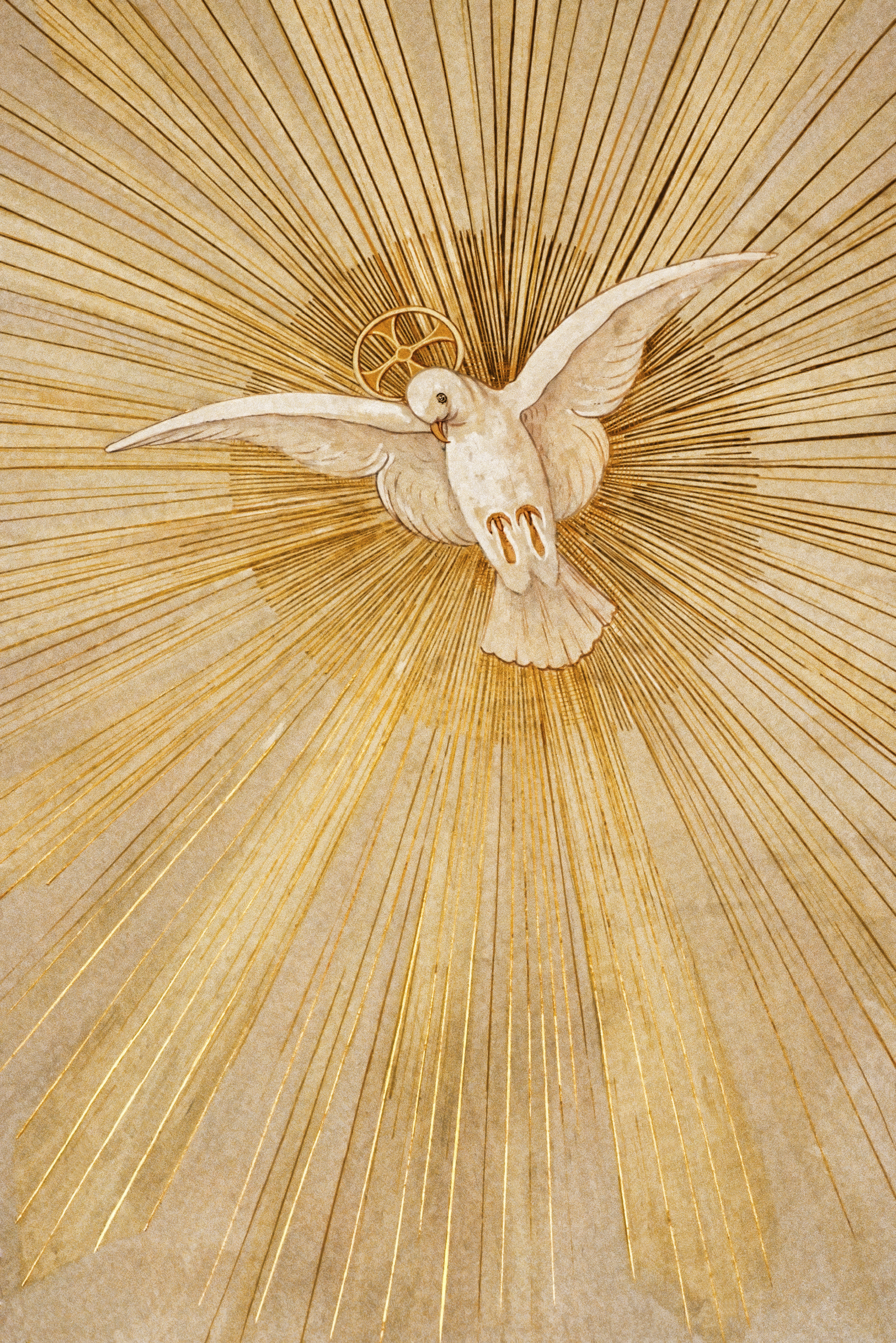
5. Dove
We know that the Holy Spirit descended on Jesus in the form of a dove. Scripture says,
… and the Holy Spirit descended on him in bodily form like a dove. And a voice came from heaven: “You are my Son, whom I love; with you I am well pleased (Luke 3:22).
Again, note the use of simile and analogy. The Holy Spirit is not a bird or a body of any sort. Rather, He is seen in bodily form as being like a dove. The Holy Spirit is God; He is the Third Person of the Holy Trinity.
The image of the Holy Spirit as a dove is reminiscent of the story of Noah:
After forty days Noah opened a window he had made in the ark and sent out a raven, and it kept flying back and forth until the water had dried up from the earth. Then he sent out a dove to see if the water had receded from the surface of the ground. But the dove could find nowhere to perch because there was water over all the surface of the earth; so it returned to Noah in the ark. He reached out his hand and took the dove and brought it back to himself in the ark. He waited seven more days and again sent out the dove from the ark. When the dove returned to him in the evening, there in its beak was a freshly plucked olive leaf! Then Noah knew that the water had receded from the earth (Genesis 8:6-11).
The dove announced to Noah that the bitterness and death that overwhelming sin had brought was now at an end. The dove brought Noah a sign of peace and a sign that the promise of God to cleanse the world was now fulfilled. Noah, having passed through the flood within the safety of God’s ark, may walk in newness of life.
So, too, for us. In the Holy Spirit is peace, shalom. The long reign of sin is ended, and grace is now available to us. We, having passed through the waters of baptism, may walk in newness of life. The Holy Spirit descends on us like a dove, bringing peace, promise, and every good grace.
Here we have five images that help us to ponder the Holy Spirit’s work in us. Surely there are other images and other ways of describing His work, but these five speak powerfully.
This video, “Romancing the Wind,” features a performance of a kite ballet:
On Pentecost, the Holy Spirit was given unto our mission to the ends of the earth. Among His gifts are the fruits of the Spirit which deserve our attention today.
The Fruits of the Holy Spirit in the Catholic Catechism and Tradition are drawn largely from St. Paul’s letter to the Galatians where he writes,
But the fruit of the Spirit is love, joy, peace, patience, kindness, goodness, faithfulness, gentleness and self-control. Against such things there is no law. Those who belong to Christ Jesus have crucified the sinful nature with its passions and desires. Since we live by the Spirit, let us keep in step with the Spirit. Let us not become conceited, provoking and envying each other (Gal 5:22-26).
We can now look at each fruit and ponder its meaning, both ancient and new. Many of these insights are drawn from William Barclay, but some come from Strong’s Concordance.
I. Love – ἀγάπη (agape) – This is a God-like love, unconditional and vigorous, one that does not count the cost, one that is not based on mere reciprocity. It is wanting only what is good for the other. This sort of love is distinct from other forms of love in Greek such as eros (passionate love), philia (warm love most among close friends, brotherly love), and storge (love of affection usually for family members). Agape love is far above these and is, of necessity, a work of God so as to come to its fullest expression. Hence, it is rightly called a fruit of the Holy Spirit. While some scholars argue that agape is a word that pagan Greeks knew little of, that is precisely the point. The Christians of the first century took this little-used word and sanctified it with special meaning that we have associated with it ever since.
II. Joy – χαρά (chara) – The joy referred to here is more than a passing, worldly joy. It is deeper than an emotional experience. It is rooted in God and comes from Him. Because it comes from God rather than the world, it is more serene and stable than worldly joy, which is merely emotional and lasts only for a time. For example, the following uses in Scripture show how it is always connected to the faith and to God, not to the world:
You have turned my mourning into joyful dancing. You have taken away my clothes of mourning and clothed me with joy (Ps 30:11).
For the kingdom of God is not a matter of eating and drinking, but of righteousness, peace and joy in the Holy Spirit (Romans 14:17).
May the God of hope fill you with all joy and peace as you trust in him, so that you may overflow with hope by the power of the Holy Spirit (Romans 15:13).
Knowing this, I am convinced that I will remain alive, so I can continue to help all of you grow and experience the joy of your faith. (Phil 1:25).
III. Peace – εἰρήνη (eirene) – This is normally used in the Greek Bible to translate the Hebrew word shalom. This sort of peace is more than an absence of conflict; it is the presence in the human person and in his relationships of everything that should be there. It is a kind of equilibrium that comes from trusting in God and from the experience that everything is all right, that everything is in His hands. It is the tranquil state of a soul fearing nothing from God and content with its earthly lot. Because of this experience, the peaceful human person does not obsessively seek to control people and things and is more content to allow things to unfold rather than needing to control and manipulate the outcomes of life. In this sense, he becomes more peaceful toward others.
IV. Patience – μακροθυμία (makrothumia) – The Greeks used this word to describe what a man is exhibiting when he is in a position to avenge himself but does not do so. It is often used in the Greek Scriptures in reference to God and His attitude toward us. In the human person, this fruit of the Spirit causes us to be more willing to suffer the difficulties of life and of other people. We feel less driven to avenge wrongs and slights and are more able to endure the imperfections of people and this world. In English we once had the concept of “long-tempered” as the opposite of “short-tempered.” Makrothumia could be called the quality of being “long-tempered,” which is also a quality of God (Ex 34:6). By this fruit we can forebear the crosses, miseries, and difficulties of life in this world.
V. Kindness – χρηστότης (chrestotos) – In Greek, old wine was called “chrestos” which meant that it was mellow or smooth. Christ used this word in referring to His yoke, which was easy (Matt 11:30). That is to say, it did not chafe; it was well fitting and accommodated to the wearer. So, kindness here refers to an attitude that goes beyond mere justice or what is required to something wider and more accommodating. This is a Spirit-produced goodness that meets the needs of others and avoids harshness.
VI. Generosity – Generosity is like kindness in that involves giving beyond what is required by justice. It is distinct from kindness in that it tends to refer to money and things whereas kindness is a little broader and includes matters of attitude and behavior as well.
VII. Goodness – ἀγαθωσύνη (agathosune) – This word is more difficult to define because it rarely occurs in secular Greek. Its biblical use seems to refer to doing what is right and best for others in every circumstance. This might at times include rebuking or disciplining. At other times it would include encouraging or reassuring. The key point in the word seems to be what is good or best for the other person. Following are some other instances in which the word is used in the New Testament. Notice that goodness is placed in the context of instruction, truth, and faith. Hence, goodness here can have different applications than just being a “nice guy.”
I myself am convinced, my brothers, that you yourselves are full of goodness, complete in knowledge and competent to instruct one another (Rom 15:14).
For this light within you produces only what is good and right and true. (Eph 5:9).
To this end we always pray for you, that our God may make you worthy of his calling and may fulfill every resolve for good and every work of faith by his power (2 Thess 1:11).
VIII. Fidelity – πίστις (pistis) – This is the common Greek word for trustworthiness, faithfulness and reliability. In the Bible the word is more commonly used in a nominative form simply to mean “faith.” That is, the act of believing in God. By extension it can mean the quality of being faithful. The connection between the two concepts can include the fact that if one believes in God he will tend to be more trustworthy and reliable. This is because his faith imbues him with a sense that God is watching and will hold him accountable. Further, a man is trustworthy because true faith makes him more inclined to respect others and the commitments made to them. As a fruit of the Spirit, fidelity comes as a result of the Spirit’s promptings that we live up to our commitments.
IX. Gentleness – πραΰτης (praotes) – This word is used in the New Testament. Basically, it is the quality of being submissive to God, being humble enough to be taught by God. It also means being considerate of others. Another common way of translating this word in English is “meekness.” Aristotle defined meekness (πραΰτης) as the mean between being too angry and not being angry enough. There is a place and a need for anger. Not all anger is sinful. It is right to be angry over injustice, for example. The meek person has authority over his anger. He can summon its energy but control its extremes. The Greek word here was also used to describe an animal that had been tamed. Hence meekness refers to us having tamed our anger.
X. Modesty – This refers to observing a proper reverence for mystery in terms of the body. The word modesty comes from “mode” and hence avoids both the excessive rejection of the beauty of the body and the flaunting of it. Private areas of the body are clothed in such a way as to keep hidden what is appropriately unveiled only in certain places or before certain people (e.g., one’s spouse, a physician, people of the same sex). Modesty may include not only covering certain parts of the body but also covering the shape of the body to some degree. Finally, modesty would also include things such as posture, comportment, and language. By modesty one observes a middle position between inappropriate disclosure and excessive prudishness. Standards of modesty allow for some variance between cultures and even within cultures. For example, there may be different standards in the workplace than on the beach.
XI. Self-control – ἐγκράτεια (egkrateia) – This fruit or virtue was understood in Greek as the quality of one who had mastered his love of and desire for pleasure. There is a place in life for pleasures and desires; without them we would perish. Since the fall of man, however, our desires are often inordinate and excessive. There is need for the virtue of self-mastery that moderates and regulates them.
XII. Chastity – This is the virtue in which we exhibit proper sexual expression based on our state in life. For a single person, a member of a religious order, or a priest it involves total abstinence. For a married person, it involves total fidelity to one’s spouse in both thought and action.
These are the 12 fruits of the Holy Spirit in Catholic Tradition. Many of them speak to zeal, but others are rooted in moderation.
One of the great gifts that the Holy Spirit seeks to give us is not a rejection of passion or other human gifts, but a moderation and proper appropriation of them. God the Holy Spirit has given all the gifts of the world, including beauty and human passions, for a reason and for a good end. The fruits of the Spirit are gifts to both inspire zeal and to regulate and appreciate what God has given for a reason and a purpose. By these gifts we steer a middle ground between rejection and indulgence, excess and defect. Modus omnibus in rebus (All things in moderation (including moderation)). The Sequence Hymn for Pentecost says this of the Holy Spirit:
Flecte quod est rigidum (Bend what is rigid), fove quod est frigidum (warm what is cold), rege quod est devium (rule what deviates).
Thus, we see both zeal and moderation in these gifts and in all things, ruling over anything that deviates. Come, Holy Spirit; rule our hearts and inflame them with your love.
What a wondrous and challenging feast we celebrate at Pentecost! A feast like this challenges us because it puts to the lie a lazy, sleepy, hidden, and tepid Christian life. The Lord Jesus said to apostles, and still says to us, I have come to cast a fire on the earth (Luke 12:49). This is a feast about fire, a transformative, refining, purifying fire that the Lord wants to kindle in us and in this world. It is about a necessary fire, for as the Lord first judged the world by fire, the present heavens and the earth are reserved for fire. Because it is going to be the fire next time, we need the tongues of Pentecost fire to fall on us in order to set us on fire and bring us up to the temperature of glory.
The readings today speak to us of the Holy Spirit in three ways: the portraits of the Spirit, the proclamation of the Spirit, and the propagation by the Spirit.
I. The Portraits of the Spirit – The reading today speaks of the Holy Spirit using two images: rushing wind and tongues of fire. These two images recall Psalm 50, which says, Our God comes, he does not keep silence, before him is a devouring fire, round about him a mighty tempest.
Rushing Wind – Notice how the text from Acts opens: When the time for Pentecost was fulfilled, they were all in one place together. And suddenly there came from the sky a noise like a strong driving wind, and it filled the entire house in which they were.
This text brings us to the very root meaning of the word “spirit.” Spirit refers to breath. This is preserved in the word “respiration,” which is the act of breathing. So, the Spirit of God is the breath of God, the Ruah Adonai (the Spirit, the breath of God).
Genesis 1:2 speaks of this, saying, the Spirit of God was moving over the face of the waters. Genesis 2:7 speaks even more remarkably of something God did only for man (not for the animals): then the LORD God formed man of dust from the ground and breathed into his nostrils the breath of life; and man became a living soul.
So, the very Spirit of God was breathed into Adam! As we know, though, Adam lost this gift and died spiritually when he sinned.
Thus, we see in this passage from Acts an amazing and wonderful resuscitation of the human person, as these first Christians experience the rushing wind of God’s Spirit breathing spiritual life back into them. God does C.P.R. and brings humanity, dead in sin, back to life! The Holy Spirit comes to dwell in us once again as in a temple (cf 1 Cor 3:16). It has been said that Christmas is the feast of God with us, Good Friday is the Feast of God for us, but Pentecost is the Feast of God in us.
Tongues of Fire – The text from Acts then says, Then there appeared to them tongues as of fire, which parted and came to rest on each one of them.
The Bible often speaks of God as fire or in fiery terms. Moses saw God as a burning bush. God led the people out of Egypt through the desert as a pillar of fire. Moses went up onto a fiery Mt. Sinai where God was. Psalm 97 says,
The LORD reigns; let the earth rejoice; let the many coastlands be glad! Clouds and thick darkness are round about him; righteousness and justice are the foundation of his throne. Fire goes before him and burns up his adversaries round about. His lightnings lighten the world; the earth sees and trembles. The mountains melt like wax before the LORD, before the Lord of all the earth. The heavens proclaim his righteousness; and all the peoples behold his glory.
Scriptures also call God a Holy fire, a consuming fire (cf Heb 12:29) and a refining fire (cf Is. 48:10; Jer 9:7; Zec 13:9; Mal 3:3).
So it is that our God, who is a Holy Fire, comes to dwell in us through His Holy Spirit. As a Holy Fire, He refines us by burning away our sins and purifying us. As Job once said, But he knows the way that I take; when he has tested me, I will come forth as gold (Job 23:10).
God is also preparing us for judgment, for if He is a Holy Fire, then who may endure the day of His coming or of going to Him? What can endure the presence of Fire Himself? Only that which is already fire. Thus, we must be set afire by God’s love.
So, in the coming of the Holy Spirit, God sets us on fire to make us a kind of fire. In so doing, He purifies us and prepares us to meet Him one day, to meet Him who is a Holy Fire.
II. The Proclamation of the Spirit– Notice that the Spirit came upon them like “tongues” of fire. The reference to tongues is no accident, for the Holy Spirit moves them to speak and ultimately to witness. The text says, And they were all filled with the Holy Spirit and began to speak in different tongues, as the Spirit enabled them to proclaim. Now there were devout Jews from every nation under heaven staying in Jerusalem. At this sound, they gathered in a large crowd, but they were confused because each one heard them speaking in his own language. They were astounded, and in amazement they asked, “Are not all these people who are speaking Galileans? Then how does each of us hear them in his native language? We are Parthians, Medes, and Elamites, inhabitants of Mesopotamia, Judea and Cappadocia, Pontus and Asia, Phrygia and Pamphylia, Egypt and the districts of Libya near Cyrene, as well as travelers from Rome, both Jews and converts to Judaism, Cretans and Arabs, yet we hear them speaking in our own tongues of the mighty acts of God.”
Behold how the Holy Spirit moves them to proclaim, not just within the safety of the upper room, but also in holy boldness before the crowds that have gathered.
Notice the transformation! Moments ago, these were frightened men who gathered in secrecy behind locked doors, huddled together in fear. Now, they go forth to the crowds and proclaim Christ boldly. They have gone from fear to faith, from cowardice to courage, from terror to testimony!
What about us? Too many Christians are silent, overcome by fear. Perhaps they fear being called names or being unpopular. Perhaps they are anxious about being laughed at or resisted, or of being asked questions they don’t feel capable of answering. Some Christians are able to gather in the “upper room” of the parish and to be active, even to be leaders, but once outside the safe confines of the “upper room” they slip into undercover mode. They become “secret agent Christians.”
Well, the Holy Spirit wants to change that. The more we have really met Jesus Christ and experienced His Holy Spirit, the less able we are to keep silent. An old gospel song says, “I thought I wasn’t gonna testify, but I couldn’t keep it to myself, what the Lord has done for me.” The Holy Spirit, if authentically received, gives us zeal and joy, burning away our fear so that testifying and witnessing come naturally.
Note also how the Spirit “translates” for the apostles. The people in the crowd before them spoke different languages, yet each heard Peter and the others in his own language. The Spirit, therefore, assists not only us but also those who hear us. My testimony is not dependent on my eloquence alone but also on the grace of the Holy Spirit, who casts out deafness and opens hearts. Every Christian should remember this. Some of our most doubt-filled encounters with others can still bear great fruit because of the work of the Holy Spirit, who “translates” for us and overcomes many obstacles we might think insurmountable.
III. The Propagation by the Spirit – In the great commission, the Lord said, Go, therefore, and make disciples of all nations, baptizing them in the name of the Father, and of the Son, and of the Holy Spirit, teaching them to observe all that I have commanded you. And behold, I am with you always, until the end of the age (Matt 28:19ff). He also said, I have come to cast a fire on the earth and How I wish the blaze were already ignited (Luke 12:49).
How is the Lord going to do this?
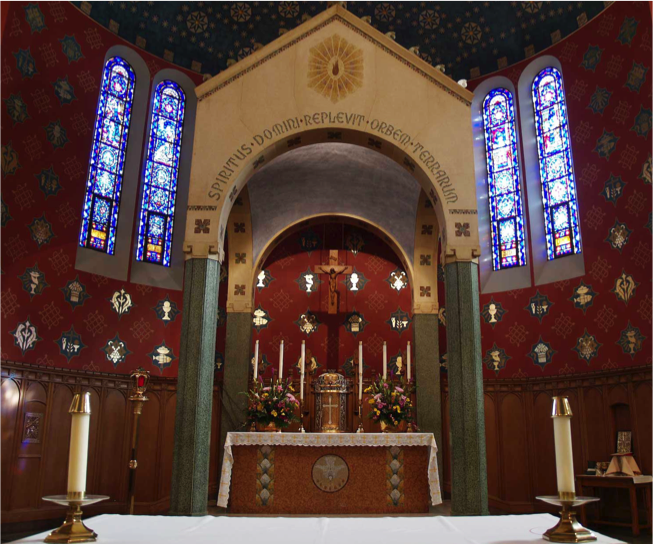
Perhaps a picture will help to illustrate. My parish church is dedicated to the Holy Spirit under the title Holy Comforter. Above the high altar is the following Latin inscription: Spiritus Domini, replevit orbem terrarum (The Spirit of the Lord, filled the orb of the earth). (See the photo above of our high altar.)
The walls of my parish Church answer the question. The clerestory walls are painted Spanish red, and upon this great canvas are also painted the stories of the lives of twenty saints, surrounding us like a great cloud of witnesses (cf Heb 12:1). (See also the video below.) Over the head of every saint is a tongue of fire.
This is how the Spirit of the Lord fills the earth. It is not via “magic fairy dust.” It is in the fiery transformation of every Christian going forth to bring warmth and light to a cold, dark world. This is how the Lord casts fire upon the earth. This is how the Spirit of the Lord fills the orb of the earth—in the lives of saints (and in your life)!
In the end, the great commission (Matt 28) is our first and most important job. No matter what else we do, we are supposed to do this. Parishes do not deserve to exist if they do not do this. As individual Christians, we are a disgrace and not worthy of the name if we fail to win souls for Jesus Christ. The Spirit of the Lord is going to fill the orb of the earth, but only through us. The spread of the Gospel has been placed in your hands. It’s scary, isn’t it!
In my short time on this planet, I have seen it. Parishes that were once big and booming (and, frankly, sometimes arrogant) are now in decline; some are near closure. It happens to the best if they do not evangelize, if they do not accomplish “job one.” The Lord wants to light a fire. Why not become fire? Let the Spirit propagate the Church through you. (I’m not talking about the person next to you; I’m talking to you.)
Happy feast of Pentecost! Don’t forget that the basic image is very challenging, for it means getting out of the “upper room,” opening the doors, and proclaiming Christ to the world. Let the Holy Spirit light a fire in you. Then you can’t help but spread light and heat to a dark, cold world.
Let the evangelization of the whole world begin with you.
The video below features details from the clerestory of my parish, Holy Comforter in Washington, D.C. Notice the tongue of fire above each saint. The paintings show how the Spirit of the Lord fills the orb of the earth through the lives of the lives of the saints (and through you, too). It is not magic; it is grace, working in your life, through your gifts and your relationships, so that the Lord will reach each soul. The witnesses on the walls of my Church say, “You are the way that He will fill the earth and set it on fire.” Let the blaze be ignited in you!
The song says, “We are surrounded by a great cloud of witnesses, looking on, encouraging us to do the will of the Lord. Let us stand worthy and be faithful to God’s call … We must not grow weary …!”
Dum complerentur dies Pentecostes,
erant omnes pariter dicentes, alleluia,
et subito factus est sonus de coelo, alleluia,
tamquam spiritus vehementis,
et replevit totam domum, alleluia.
When the Day of Pentecost had fully come, they were all with one accord in one place, saying, alleluia. And suddenly there came a sound from heaven, alleluia.
The commercial in the video below is a strange and fanciful one. In it, Nike claims that it collects the “air” of the best athletes in the world and makes it available to you in their Nike Air shoes; but what it promises is something that only God can deliver.
Unfortunately, as Scripture rightly notes, our air or breath is passing: What is your life? You are a mist that appears for a little while and then vanishes (James 4:14).
In contrast, God’s breath sustains and gives life:
The Lord God formed a man from the dust of the ground and breathed into his nostrils the breath of life, and the man became a living being (Gen 2:7).
The Spirit of God has made me; the breath of the Almighty gives me life (Job 33:4).
This is what the Sovereign LORD says to these dry bones: I will make breath enter you, and you will come to life (Ez 37:5).
And when Jesus had said this, He breathed on them and said to them, “Receive the Holy Spirit. If you forgive the sins of any, their sins have been forgiven them; if you retain the sins of any, they have been retained” (John 20:22-23).
But after three and a half days, God breathed life into [the two slain witnesses], and they
stood up! Terror struck all who were staring at them (Rev 11:11).
All Scripture is God-breathed and is useful for teaching, for reproof, … (2 Tim 3:16).
By the word of the Lord the heavens were made, and by the breath of his mouth all their host (Ps 33:6).
What this Nike ad promises, only can God deliver. He is the true “Nike.” (In Greek mythology, Nike was the goddess of victory.) God’s breath gives us new life and empowers us to new things. Ruah Adonai (the Breath of God) gives life, empowers us, and bestows upon us new strength. Come, Holy Spirit! Come, Holy Breath of God!
Nike makes fine shoes, but God is the author of all that is fine.
Some years ago, Fr. Patrick Smith, a friend of mine and a priest of this archdiocese, preached a sermon in which he asked if the Church was a clubhouse or a lighthouse.
It seems that many people want the Church just to be a friendly place where people can gather. Many of these same people get angry when the Church shines the light of truth on something. They declare that the Church should just be open and inviting. They object when She is challenging or points to the demands of the gospel.
The Church must be more than just a clubhouse; otherwise, She is no different than a bowling league or the Moose Lodge. She is most certainly meant to be a lighthouse, warning of danger and giving light to those in darkness, but She also must risk that some who are accustomed to the darkness will complain of the Light of Christ She reflects.
It was indeed a fine sermon, and its message is essential and profound. I was mindful of that sermon when I ran across the video below from Ignitermedia.com, which asks if the Church is a cruise ship or a battleship.
Many people surely think of the Church as a cruise ship, existing to provide pleasure and entertainment. “Peel me a grape!” seems to be the attitude that some bring to Church. The video does a good job making its point by listing the questions often asked when evaluating a luxury cruise ship:
Do I like the music they play in the ballroom?
Do I like the captain and his crew?
Is the service good?
Am I well fed?
Are my needs met promptly?
Is the cruise pleasant?
Am I comfortable?
Do I want to cruise with them again?
Our parishes ought to work very hard to ensure that the faithful are effectively served and are helped to find God. Good sermons, reverent liturgy, good music, a beautiful church building, and dedicated clergy and lay staff are all important. God deserves the very best and so do His people.
However, it the world does not exist merely to please us. No parish we attend will ever be exactly the way we want it. No priest preaches perfectly every Sunday. The choir does not always sing our favorites.
Some people stay away from Church, calling it boring or saying they aren’t being “fed.” But in the end it’s not about you! We go to Mass to worship God because He is worthy, because He deserves our praise, and because He has commanded us to do so. God has something important to say to us whether we want to hear it or not. He directs us to eat His flesh and drink His blood, whether we like it or not. We must eat or else we will die. Holy Mass is about God and what He is saying and doing.
The video goes on to suggest that a better image for the Church is a battleship. I was less impressed with the way they compared the Church and a battleship, so I have added my some of my own questions as well:
Is the ship on a clear and noble mission?
Is the ship able to endure storms at sea?
Does the captain submit to a higher authority?
Are the tactics and moves of the enemy well understood by the crew?
Does the crew have proper training and experience?
Are the crew members equipped to succeed?
Does the crew cooperate with the captain and other leaders?
Are they taught to be disciplined and vigilant?
Are they at their posts?
Do they take the battle seriously?
Does the ship have adequate first aid and medical help?
Is the crew properly able to distinguish lesser threats from greater ones?
Some dislike any military imagery in reference to the faith. One person angrily told me that the Church is not a battleship; She is a fishing vessel. Perhaps, but one image does not preclude another. Pugna spiritalis (spiritual battle) is simply a fact. We are besieged by the world, the flesh, and the devil. We are called to engage the battle and by God’s grace win through to victory. Our weapons are the Word of God, the teachings of the Church, the Sacraments, and prayer. We cannot win on our own but must work together under the authority of the Church, which is herself under God’s care and authority. We are rooted in the wisdom of tradition and guided by it. A certain pontiff emeritus suggested that the Church is taking on water lately but will not go under because the Lord is sleeping in the back quarters.
The Barque of St. Peter has endured many storms yet has never sunk. She is a sure a steady ship on a clear and noble mission. She is a well-armed battleship, armed with grace and truth.

 In this age of nearly instantaneous communication, there is an overwhelming amount of news and information available to us. There is nothing wrong with news and information, but each of us must decide how much exposure, in terms of time and content, is good for us. Not all “Breaking News!” is really that urgent. Too much news can distract us, overwhelm us, and provoke anxiety and anger. Further, the “news” is heavily filtered to feature what is bad, strange, unusual, violent, and dangerous. It does not represent the reality most of us live in nor is it something on which we should be focused. Frankly, most of us lead routine and “boring” lives. This doesn’t make for riveting news, but it is more representative of our lives.