The word “relevant” is one seen and heard frequently in modern times. Today it seems that everything said, taught, or presented should be relevant. On one level, this means that it ought to be applicable, reasonable, understandable, easily grasped, etc.
But today there is also a more problematic meaning added to the concept: to be in agreement with or in step with modern times, to be in agreement with the thinking, leanings, customs, and mores of people today.
Thus many today demand that the Church be relevant, meaning by this that the Church reflect the culture around her, that she be more of a thermometer recording the temperature than a thermostat seeking to regulate it. For many, this means that the Church should reflect the views of her members, rather than the views of her founder and head, Jesus Christ, who is the same yesterday, today, and tomorrow, and whose Word endures forever. To many, this also means that the Church should cast aside a large number of her most basic teachings and practices.
Thus there is a lot of tension around the word “relevant” (and the related “relevance”). It is necessary to discern authentic concerns while at the same time screening out inauthentic demands.
An important point can be made to those who demand that the Church be relevant by setting forth the original meaning of the word. For today, many use the word in a way that is directly opposed to its original meaning.
The Latin etymology of relevant is re (again) + levare (to lift). Hence, to be relevant literally means “to lift up something again.” And since “re” can denote a repetitive action, relevant can also mean “to lift up something again and again.”
The implication of the word is that something has been dropped or cast aside, and then someone reaches down and picks it up again. Yes, something that was dropped or had fallen away or into disuse is then picked up and presented anew, presented freshly. Theoretically, you could even apply the word to refer to something that was cast aside as old-fashioned or out-of-date, that is taken up again, that is presented anew.
Thus, in its Latin roots, being relevant actually means nearly the opposite of what many people intend today. Today, many use the word to imply that something ought to be dropped because it is old-fashioned or displeasing. But the original roots of the word speak of something dropped that should be picked up again!
This examination of the Latin derivation suggests a possible way forward in capturing the word “relevant” and using it with proper balance.
On the one hand, the re part of the word demands that while the Church must ever lift up our unchanging truths, we cannot simply rehash ideas in the same old way. Although the idea or truth is still valid, the way in which we express it may need adapting; it may need representing. Obviously as the Church encounters new languages, translations need to be made. As cultures, situations, and circumstances change, some of the analogies or images used to express the undying truth may need adjustment. The Latin etymology captures the notion that although things sometimes do fall away or drop, they need to be picked up again and represented, that is, presented in new and fresh ways.
On the other hand, the levare part of the Latin derivation shows that if something significant has been dropped, it is important to pick it up again. Certain things cannot be allowed to drop or fall away; they must be picked up again and again.
And thus despite demands to be relevant by dropping some of our teachings, the Latin roots of the word say just the opposite. To be relevant, we must re+levare; we must pick them up again and again, presenting them newly and freshly but still lifting them up. Even if the culture is dubious and hostile, we must continue to present, to represent, to lift up again and again the truths that God has given us, truths that can never die.
And in this sense, to a world that demands we be relevant, we can say, “Amen!” We must pick up again and again the perennial truths that God has given us, but we must also accept the challenge to present them freshly and with zeal, in a manner that is understandable—even infectious—to others.
In today’s Gospel, the risen Lord appeared to the apostles, who were gathered together in one place. The fact that they were gathered in one place is not without significance, for it is there that the Lord chose to appear to them. One of them, as we shall see, was not in the gathering and thus missed the blessing of seeing and experiencing the risen Lord. It might be said that Thomas, the absent apostle, blocked his blessing.
Some people want Jesus without the Church. No can do. Jesus is found in His Church, among those who have gathered. There is surely joy to be found in a personal relationship with Jesus, but the Lord also announced a special presence whenever two or three are gathered in His name. It is essential for us to discover how Mass attendance is essential for us if we want to experience the healing and blessing of the Lord. This Gospel has a lot to say to us about the need for us to gather together to find the Lord’s blessing in the community of the Church, in His Word, and in the Sacraments. Let’s look at today’s Gospel in five stages.
I. Fearful Fellowship – Notice how the text describes the gathering of the apostles: On the evening of that first day of the week, when the doors were locked, where the disciples were, for fear of the Jews … These men are frightened, but they are in the right place. It is Sunday, the first day of the week, and they have gathered together. The text says nothing about what they are doing, only that they have gathered. But in a sense this is all we need to know, for this will set the stage for blessings and for the presence of the Lord.
And these are men who need a blessing! The locked doors signify their fear of the Jewish authorities. One may also assume that they are discouraged, lacking in hope, and maybe even angry. For they have experienced the earthquake that Jesus’ crucifixion was for them. It is true that some of the women in their midst claim to have seen Him alive, but now it is night and there have been no other sightings of which they have heard.
But, thanks be to God, they have gathered. It is not uncommon for those who have “stuff” going on in their lives to retreat, withdraw, and even hide. Of course this is probably the worst thing that one can do. And it would seem that Thomas may have taken this approach, though his absence is not explained. Their gathering, as we shall see, is an essential part of the solution for everything that afflicts them. This gathering is the place in which their new hope, new hearts, and new minds will dawn.
And for us, too, afflicted as we are in so many ways, troubled at some times and joyful at others, there is the critical importance of gathering each Sunday, each first day of the week. In every Mass, the Lord prepares blessings for us. I am powerfully aware that every Mass I celebrate, especially Sunday Mass, is a source of powerful blessings for me. Not only does God instruct me with His Word and feed me with His Body and Blood, He also helps form me through the presence and praise of others: the people I have been privileged to serve. I don’t know where I’d be if it were not for the steady support of the People of God: their prayers, their praise, their witness, and their encouragement.
The Book of Hebrews states well the purpose and blessing of our liturgical gatherings:
Let us hold fast the confession of our hope without wavering, for He who promised is faithful; and let us consider how to stir up one another to love and good deeds, not neglecting to meet together, as is the habit of some, but encouraging one another; and all the more as you see the Day drawing near (Heb 10:22-25).
So the apostles are meeting together, encouraging one another. As we shall see, they are about to be blessed. But the blessing occurs only the context of the gathering, so Thomas will miss it; this blessing is only for those who are there. And so it is for us, who also have blessings waiting but only if we are present, gathered for Holy Mass. Don’t block your blessings!
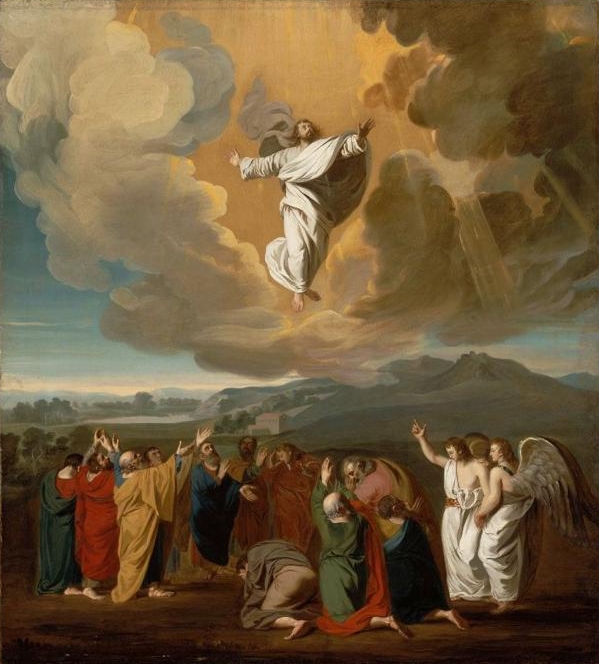
II. Fabulous Fact– Then comes the blessing: For where two or three are gathered in my name, there am I among them (Matt 18:20). The text from today’s Gospel says, Jesus came and stood in their midst and said to them, “Peace be with you.” When he had said this, he showed them his hands and his side. The disciples rejoiced when they saw the Lord. Jesus said to them again, “Peace be with you.”
Suddenly there is a completely new reality, a new hope, a new vision. Note, too, that there is also a new serenity, a peace, a shalom. For not only do they see and come to experience a wholly new reality, they also receive an inner peace. Observe again that this is only to those who are present.
And here is a basic purpose of the gathering we call the Sacred Liturgy. For it is here that we are invited to encounter the living Lord, who ministers to us and offers us peace. Through His word, we are increasingly enabled to see things in a wholly new way, a way that gives us hope, clarity, and confidence. Our lives are reordered. Inwardly, too, a greater peace is meant to come upon us as the truth of this newer vision begins to transform us, giving us a new mind and heart. Looking to the altar, I draw confidence that the Lord has prepared a table for me in the sight of my enemies and my cup is overflowing (Ps 23). The Eucharist is thus the sign of our victory and our election; as we receive the Body and the Blood of the Lord, we are gradually transformed into the very likeness of Christ.
Is this your experience of the gathering we call the Mass? Is it a transformative reality, or just a tedious ritual?
As for me, I can say that I am being changed, transformed into a new man, into Christ, by this weekly, indeed daily, gathering we call the Mass. I have seen my mind and heart changed and renewed. I see things more clearly and have greater hope, joy, and serenity. I cannot imagine what my life would be like were it not for this gathering of the Holy Sacrifice of the Mass, where Jesus is present to me and says, “Shalom, peace be with you.” Over the years, I am a changed man.
Yes, the Mass works. It transforms; it gives a new mind and heart. Don’t block your blessings; be there every Sunday.
III. Forgiving Fidelity – Next comes something quite extraordinary, something that simply cannot take place within a private notion of faith. The text says, “As the Father has sent me, so I send you.” And when he had said this, he breathed on them and said to them, “Receive the Holy Spirit. Whose sins you forgive are forgiven them, and whose sins you retain are retained.”
In this remarkable moment, the Lord gives the apostles the power to forgive sin. Note that He is not simply giving them the ability to announce that we are forgiven. He is giving them the juridical power to forgive, or in certain cases to withhold/delay forgiveness. This is extraordinary! Not only has He given this authority to men (cf Matt 9:8), He has given it to the very men who abandoned Him (with the exception of John) at His crucifixion. These are men who are well aware of their shortcomings! Perhaps it is only because Jesus knows of their awareness that He can truly trust them with such power.
There are those who deny that Confession is a biblical sacrament. But here it is, right here in today’s Gospel. There are other texts in Scripture that also show Confession to be quite biblical:
Also many of those who were now believers came, confessing and divulging their practices (Acts 19:18).
Is any one of you sick? He should call the presbyters of the church to pray over him and anoint him with oil in the name of the Lord. And the prayer offered in faith will make the sick person well; the Lord will raise him up. If he has sinned, he will be forgiven. Therefore, confess your sins to one another and pray for each other so that you may be healed. The prayer of a righteous man is powerful and effective (James 5:14-16).
Many consider it sufficient merely to speak to God privately about their sins, but the Scriptures instruct us away from such a solitary notion and bid us to approach the Church. The Lord gives the apostles the authority to adjudicate and then to absolve or retain sin, but this presupposes that someone has first approached them for such absolution. St. Paul was approached by the believers in Ephesus, who made open declaration of their sins. The Book of James also places the forgiveness of sins in the context of the calling of the presbyters, the priests of the Church, and sees this as the fulfillment of declare your sins to one another … the prayer of the righteous man has great power (James 5:16).
Thus, again, there is a communal context for blessing, not merely a private one. I have written more on the biblical roots of Confession here: The Sacrament of Confession.
IV. Faltering Fellowship– We have already noted that Thomas blocked his blessing by not being present. The text says, Thomas, called Didymus, one of the Twelve, was not with them when Jesus came. So the other disciples said to him, “We have seen the Lord.” But he said to them, “Unless I see the mark of the nails in his hands and put my finger into the nail marks and put my hand into his side, I will not believe.”
Thomas exhibits faltering fellowship in two ways:
First, he is not with the other apostles on resurrection evening. Thus he misses the blessing of seeing and experiencing the resurrection and the Lord.
Second, Thomas exhibits faltering fellowship by refusing to believe the testimony of the Church that the Lord had risen.
One of the most problematic aspects of many people’s faith is that they do not understand that the Church is an object of faith. In the Creed every Sunday, we profess to believe in God the Father and in Jesus Christ, His only Son, our Lord, and to believe in the Holy Spirit, the Lord and giver of life. But we are not done yet. We go on to say that we believe in one, holy, catholic, and apostolic Church. We know and believe what we do about Jesus Christ on the basis of what the Church hands on from the apostles. Some say, “No, I believe in what the Bible says.” But the Bible is a Book of the Church. God has given it to us through the Church who, by God’s grace, collected and compiled its contents and vouches for the veracity of the Scriptures. Without the Church there would be no Bible.
Therefore, in rejecting the testimony of the Church, Thomas is breaking fellowship and refusing to believe in what the Church, established by Christ to speak in His name (e.g. Lk 24:48; Lk 10:16; Matt 18:17; Jn 14:26; 1 Tim 3:15; inter al.) teaches. And so do we falter in our fellowship with the Church if we refuse to believe the testimony of the Church in matters of faith and morals. Here, too, is a privatization of faith, a rejection of fellowship, and a refusal to gather with the Church and accept what she proclaims through her Scriptures, Tradition, and the catechism.
Note that as long as Thomas is not present, he has blocked his blessings. He must return to gather with the others in order to overcome his struggle with the faith.
V. Firmer Faith– Thomas then returns to fellowship with the other apostles. Just as we do not know the reason for his absence, his return is also unexplained. Some may wish to chalk up his absence to some insignificant factor such as being busy, or in ill health, or some other largely neutral factor. But John seldom gives us details for neutral reasons. Further, Thomas does refuse to believe the testimony of the others, which is not a neutral fact.
But, praise God, Thomas is now back with the others and in the proper place for a blessing. Whatever his struggle with the faith, he has chosen to work it out in the context of fellowship with the Church. He has gathered with the others. Now comes the blessing.
You know the story, but the point here for us is that whatever our doubts and difficulties with the faith, we need to keep gathering with the Church. In some ways faith is like a stained glass window that is best appreciated from inside the Church. From the outside, there may seem very little about it that is beautiful. It may even look dirty and leaden. But once one ventures inside and adjusts to the light, one can see that the window radiates beauty.
It is often this way with the faith. I have found that I could only really appreciate some of the more difficult teachings of the Church after years of fellowship and instruction by the Church, in the liturgy and in other ways. As my fellowship and communion have grown more intense, my faith has become clearer and more firm.
Now that he is inside the room, Thomas sees the Lord. When he was outside, he did not see and doubted. The eyes of our faith see far more than our fleshly eyes. But in order to see and experience our blessings, we must gather; we must be in the Church.
Finally, it is a provocative but essential truth that Christ is found in the Church. Some want Christ without the Church. No can do. He is found in the gathering of the Church, the ekklesia, the assembly of those called out. Any aspects of His presence that are found outside the Church are but mere glimpses, shadows emanating from the Church. He must be sought where He is found, among sinners in His Church. The Church is His Body and His Bride. It is here that He is found. “Feeling” His presence while alone on some mountaintop can never compare to hearing the priest saying, “Behold the Lamb of God.”
Thomas found Him, but only when he gathered with the others. It is Christ’s will to gather us and unite us (Jn 17:21). Congregavit nos in unum Christi amor (The love of Christ has gathered us in one).
Note: This Sunday is also Divine Mercy Sunday. I published a homily in the past (Perfect Mercy) with this focus.
In our care for the poor, there are many rewards that we know do not come right away. Sometimes we are not even sure whether what we did helped at all!
Scripture speaks of some blessings that will wait until Heaven. And thus Jesus counsels us to store up for yourselves treasures in heaven, where neither moth nor rust destroys, and where thieves do not break in or steal (Matt 6:20). Of course we do not store up treasure in Heaven by putting it into a balloon or a rocket and sending it up there. Rather, what Jesus teaches is that we store up treasure in Heaven by giving it to the poor and needy. Scripture says elsewhere, Cast your bread on the surface of the waters, for it will come back to you after many days (Eccles 11:1).
Yes, some of our care for the poor will reap rewards much later.
But some rewards are now. Perhaps we see what a difference our help has made. Or perhaps we notice that God’s goodness to us increases, because He can trust us to be generous with His blessings. Scripture says,
And if anyone gives even a cup of cold water to one of these little ones who is my disciple, truly I tell you, that person will certainly not lose their reward (Matt 10:42).
Give, and it will be given to you. A good measure, pressed down, shaken together and running over, will be poured into your lap. For with the measure you use, it will be measured to you (Luke 6:38).
Whoever is kind to the poor lends to the LORD, and he will reward them for what they have done (Proverbs 19:17).
Yes, some rewards are now—not just “return gifts” from the Lord but also the joy of giving itself, the joy of connecting with others.
All of those personal rewards, as well as others, are seen in this beautiful video. Please enjoy it! And remember, God will not be outdone in generosity.
And let us not be weary in well doing: for in due season we shall reap, if we faint not. As we have therefore opportunity, let us do good unto all men … (Gal 6:9-10)
When I was about 10 years old I took some sailing lessons, and then did so again when I was in my early 30s. Sailing involves a kind of romancing of the wind, wherein one observes it and then adapts to it, wooing it, learning its moves, its vicissitudes, its often subtle and changing signs.
Oh, for the great times when the wind was with us! And then catching the wind, the boat would speed along making a slick sound in the water. Oh, too, for those daring and thrilling times when the spinnaker was put out. The boat would almost strain as the proud winds filled her arcing sail.
But there were also difficult days, when the winds were contrary and there was the hard work of tacking, beating, and jibing.
Sailing is an image of receptivity. One cannot control the wind, but must simply accept it, taking it as it is. Yes, sailing requires the sailor to adjust to what is, to learn to accept and work with what is given, to live in the world as it is rather than wishing for the world as it ought to be.
The sailor must simply accept wind’s biddings and blessings, the way in which it would have us go: this way and that, and then shifting directions somewhat unexpectedly. The good sailor accepts that a good strong breeze can suddenly grow calm only to stir again moments later. This is especially the case in the sultry days of summer, when the prevailing winds are less evident and their strength and direction can be very local and very subtle.
Yes, it is all very mysterious. Indeed, Jesus used the wind as an image for mystery when he said to Nicodemus, The wind blows wherever it pleases. You hear its sound, but you cannot tell where it comes from or where it is going. So it is with everyone born of the Spirit (Jn 3:8).
And thus the wind and sailing become something of an image of the soul interacting with God. We cannot control God nor should we try. Our role is to sense His direction and put out our sails accordingly. We are to “romance the wind” by growing deeper in our love and trust of God. We are to discover the serenity of accepting what is, of following the lead of God or receiving what is offered rather than seeking to control and manipulate the outcome.
Sometimes God’s Ruah, His Spirit and breath, is a strong and refreshing wind, as at Pentecost when Scripture says, And suddenly there came from heaven a sound like a mighty rushing wind, and it filled the entire house where they were (Acts 2:4). At other times, God speaks in a whispering breeze: And after the fire came a gentle whisper. When Elijah heard it, he pulled his cloak over his face and went out and stood at the mouth of the cave. Then a voice said to him, “What are you doing here, Elijah?” (1 Kings 19:12-13)
Yes, allow the wind to represent the movements of God’s Spirit, His Ruah, His breath. God is looking for some good sailors, ones who know the subtleties of the wind’s movements and can adjust accordingly.
Now because the wind cannot be controlled and must simply be accepted for what it is, many people prefer motorboats. How much nicer it is to feel empowered from within and to be able to resolutely set our own course, no matter the wind! With a motorboat, there is little to no threat of being at the mercy of the winds. There is no need to relate to, or to be in relationship with the wind; there is no need of romancing the winds here! No, with a motorboat there is only the need to drive forward with a powerful motor, following one’s own designs.
Here is control; here is power; here is the sailor alone with his own will, dependent on little and on no other person. It is one man alone against the elements.
But motorboats are a mixed blessing. They require a good bit of gas, can be noisy, may require maintenance, may suffer breakdowns, and can be downright dangerous to other things and people around them.
And here, too, is another image of our soul interacting with God. For there are many who prefer to be under their own power, dependent on no one (including God) but themselves, acting and operating independently. They prefer not to have to sense the direction of the winds, watch for other signs, or consider other factors.
And just as with a motorboat, there are dangers associated with this sort of controlling person. Indeed, such individuals can be noisy “gas-guzzlers,” prone to breakdowns, and potentially hazardous to things and people around them. For in their perceived power they often truck through life, missing or ignoring its subtleties, and frequently causing harm to themselves and/or others. “Breakdowns” are almost predictable with this sort of person.
Most people prefer a motorboat, but God is more in the sailboat business. He’s looking for some good souls to sense the breeze of His Spirit, His Ruah; to sense that gentle breeze, hoist their sails, and follow where it leads.
We are invited to be more like a sailor, following the Spirit’s lead—yes, like a sailor, trusting in and yielding to a Godly breeze.
Do you prefer a motorboat or a sailboat? Are you a boater or a sailor?
Here is a remarkable video, not of a sailor at sea, but of a “land sailor,” a kite flier. Note the beautiful interaction as this man romances the wind, working with its subtleties and rejoicing in its moves as in a great dance.
The recent death of Mother Angelica provoked the expected saddness at the passing of such a great woman. Indeed, her vivacious and plain-spoken presence has long been missed during these years of her declining health. She called this her time of purgatory and purification. In an extraordinary grace, the Lord called her at 5:00 PM on Easter Sunday, likely the very time at which He was making His first appearances to His disciples at Emmaus and in Jersalem.
For the faithful—and Mother Mary Angelica was surely that—the day we die is the greatest day of our life on this earth. And even if some final purifications await us, the beatific vision for which we long lies just ahead; the exile in this valley of tears is ended.
Is calling the day we die the greatest day of our life too strong a statement? I have seen some fellow Christians wince when I say this. But in this age of emphasis on worldly comforts, medicine, and the secular, this age in which we rarely speak of Heaven (or Hell), I wonder if we have lost some of our longing for Heaven and cling too strongly to the trinkets of this life. I attended the funeral of the relative of a family friend some years ago. She was an unbeliever, a self-described secular humanist, and she made the following comment to me: “Perhaps there is Heaven for the faithful who believe there is life after death. And perhaps, then, to die is the greatest day of their life. But I do not observe that Christians live this way. It seems to me that they are as anxious as anyone else about dying, and earnestly seek to avoid death just as much as anyone else.”
It was a very interesting observation, one that I found mildly embarrassing even as legitimate explanations quickly entered my mind. And even after giving her some of those explanations, I must say that some of the embarrassment lingered as to the kind of witness we Christians sometimes fail to give to our most fundamental values. Based on her remark—and I’ve heard it before—most of us Christians don’t manifest a very ardent longing for Heaven.
There are, of course, some legitimate reasons that we do not rush towards death; there are also some less legitimate reasons. In this post, I’d like to briefly speak to some of these.
Here are some legitimate and understandable reasons that we may draw back from dying, and may not at first think of dying is the greatest day of our life:
There is a natural fear of dying that is part of our physical makeup and, it would seem, hard-wired into our psyche as well. Every sentient and physical being on this planet, man or animal, has a strong instinct for survival. Without this instinct, strongly tied to both hunger and sexual desire, we might not only die as individuals but as a species. It also drives us to look to the future, as we work to ensure the survival, even thriving, of our children and those who will come after us. So this is a basic human instinct that we ought not to expect to disappear, because it has necessary and useful aspects.
Most of us would like to finish certain important things before we die. It makes sense, for example, that parents would like to see their children well into adulthood before meeting their demise. Parents rightly see their existence in this world as critical to their children. Hence we love life here and cling to it not just for our own sake, but because we understand that others depend on us.
The Christian is called to love life at every stage. Most of us realize that we are called to love and appreciate what we have here, for it is the gift of God. To so utterly despise the world that we are almost suicidal and wish only to leave it, manifests a strange sort of ingratitude.
It also manifests a lack of understanding that life here prepares us for the fuller life that is to come. I remember that at a low point in my own life, afflicted with anxiety and depression, I asked the Lord to please end my life quickly and take me home out of this misery. And yet, without hearing words, I felt the Lord’s rebuke: “Until you learn to love the life you have now, you will not love eternal life. If you can’t learn to appreciate the glory of the gifts of this life, then you will not and cannot embrace the fullness of life that is called eternal life.” Indeed, I was seeing eternal life merely in terms of relief or escape from this life, rather than as the full blossoming of a life that has been healed and made whole. We don’t embrace life by trying to escape from it.
Thus a healthy Christian attitude learns to love life as we have it now, even as we yearn and strive for a life that we do not yet fully comprehend: a life that eye has not seen, nor ear heard; what God has prepared for those who love Him.
Most of us seek to set our life in order to some degree before we go to face judgment. While it is true that we can procrastinate, there is a proper sense of wanting time to make amends and to prepare in a fitting and growing way to meet God.
It is not necessarily death that we fear, but dying. Dying is something none of us has ever done before and we tend to fear the unknown. Further, most of us realize that dying itself involves some degree of agony. Instinctively and understandably, we draw back from such things.
Even Jesus, in His human nature, recoiled at the thought of the agony before Him, so much so that He sweat blood and asked, if possible, that the cup of suffering be taken from him. Manfully, though, He embraced His Father’s will, and our benefit rather than His. Still, He did recoil humanly at the suffering soon to befall Him.
Despite this hesitancy to meet death, for a faithful Christian the day we die is the greatest day of our life. And while we ought to regard the day of our judgment with sober reverence, we should go with joyful hope to the Lord who loves us and for whom we have longed. That day of judgment, awesome though it is, will for the future saint disclose only that which needs final healing in purgation, not that which merits damnation.
But we don’t hear much longing for our last day on this earth or for God and Heaven. Instead we hear fretting about how we’re “getting older.” We’re anxious about our health, even the natural effects of aging. And there are such grim looks as death approaches! Where is the joy one might expect? Does our faith really make a difference for us, or are we like those who have no hope? Older prayers referred to life on this earth as an exile and expressed a longing for God and Heaven. But few of today’s prayers or sermons speak this way.
Here are some of the not-so-legitimate reasons that we may draw back from dying:
We live comfortably. While comfort is not the same as happiness, it is very appealing. It is also very deceiving, seductive, and addictive. It is deceiving because it tends to make us think that this world can be our paradise. It is seductive because it draws and shifts us our focus away from the God of comforts to the comforts of God. We would rather have the gift than the Giver. It is addictive because we can’t ever seem to get enough of it; we seem to spend our whole life working toward gaining more and more comforts. We become preoccupied by achieving rather than working toward our truest happiness, which is to be with God in Heaven.
Comfort leads to worldliness. Here, worldliness means focusing on making the world more comfortable while allowing notions of God and Heaven to recede into the background. Even the so-called spiritual life of many Christians is almost wholly devoted to prayers asking to make this world a better place: “Fix my health. Fix my finances. Grant me that promotion.” And while it is not wrong to pray about these things, their cumulative effect, added to our silence on more spiritual and eternal things, gives the impression that we are saying to God, “Make this world a better place and I’ll just be happy to stay here forever.” What a total loss! This world is not the point; it is not the goal, Heaven is. Being with God forever is the point.
Worldliness makes Heaven and being with God seem more abstract and less desirable. With our magnificent comfort that leads to worldly preoccupation, Heaven and any talk of Heaven or going to be with God recedes to the background. In this climate, few speak of Heaven or even long for it. They’d rather just have that new cell phone or the cable upgrade with the sports package. Some say that they never hear about Hell anymore in sermons, and in many parishes (though not in mine, thank you) that is regrettably the case. But it is also true that they almost never of Heaven either (except in some cheesy funeral moments that miss the target altogether and make Heaven seem trivial rather than a glorious gift to be sought). Heaven just isn’t on most people’s radar, except as a vague abstraction for some far off time—certainly not now.
This is the perfect storm of comfort and worldliness leading to slothful aversion to heavenly gifts. That may be why, when I say that dying is the greatest day of our life, or that I am glad to be getting older because it means I’m getting closer to the time I can go home to God, or that I can’t wait to meet God, people look at me strangely and seem to wonder if I need therapy.
No, I don’t need therapy—at least not for this. I am simply expressing the ultimate longing of every human heart. Addiction to comfort has deceived and seduced us such that we are no longer in touch with our heart’s greatest longing; we cling to passing things. I would argue (as does my family friend) that we seem little different from those who have no hope. We no longer witness to a joyful journey to God that says, “Closer to Home! … Soon and very soon I am going to see the King … Soon I will be done with the troubles of this world … Going home to live with God!”
There are legitimate, understandable reasons for being averse to dying. But how about even a glimmer of excitement from the faithful as we see that our journey is coming to an end? St. Paul wrote the following to the Thessalonians regarding death: We do not want you to be like those who have no hope (1 Thess 4:13). Do we witness to the glory of going to be with God or not? It would seem not.
The video below features a rendition of the hymn “For All the Saints Who from Their Labors Rest.” Here is a brief passage from the lyrics:
The golden evening brightens in the West,
Soon, soon, to faithful warriors cometh rest.
Sweet is the calm of Paradise most blest. Alleluia!
Mother Mary Angelica, faithful warrior, rest in peace.
There is an astonishing verse in the Exodus account, which was read at the Easter Vigil. The Lord has parted the waters of the Red Sea by a strong eastern wind and the Israelites have just made the crossing and the Egyptians pursued them. The verse says:
And in the morning watch the Lord in the pillar of fire and of cloud cast a glace on the Egyptian forces and threw the Egyptian forces into a panic (Ex 14:24).
Just one look … that’s all it took! One can imagine many other ways that God could have despoiled them: lightning, angelic forces, etc. Instead, the Lord merely “cast a glance.”
Was it an angry glance? The text does not say. I would propose, based purely on speculation, that it was a look of love. For if God is love, then how could it have been anything else?
Why then the panic among the Egyptian army forces? Perhaps it is like the reaction of those accustomed to the darkness, who wince in pain when beautiful light shines. Love confronts and drives out hate the way light drives out darkness. Love is what it is; it cannot be something else. But to those held bound by hatred, love is like kryptonite. And thus the Egyptian army falls at the glance of God, panics at the weakness it experiences. Yes, love can be like kryptonite.
So I propose that, despite the panicked result, God’s glance was one of love. God does not change. Even when we speak of His wrath or anger, we are speaking more of our experience than of what is in God. God is love and so He looks with love. That we experience something other than love is a problem in us, not in God.
Indeed, sometimes we see the look but miss the love. In the Gospel of Mark is told the story of a rich young man who sought perfection, but somewhat on his own terms. Jesus looked at him with love and said to him, “You lack one thing: go, sell all that you have and give to the poor, and you will have treasure in heaven; and come, follow me” (Mk 10:21). The young man saw the look and heard the words, but missed the love. Thus he was sad and fell away.
And lest we reduce God’s look of love to one of mere sentimentality, we ought to recall that God’s look of love can also convict us and move us to repentance. Peter’s denial of the Lord is recounted in all four of the Gospels. The Gospel of Luke describes it in this way: Simon Peter was in the courtyard of the high priest warming himself by the fire. He had just denied knowing the Lord for the third time when the cock crowed. The Lord turned and looked at Peter. And Peter remembered the word of the Lord, how He had told him, “Before a rooster crows today, you will deny Me three times.” And he went out and wept bitterly (Lk 22:61-62). Here was a look of love that caused pain, but it was a healing pain that led to repentance.
For those of us with deeper faith, we learn to count on the look, the glance of God, to save us. An old hymn says, “Though billows roll, He keeps my soul. My heav’nly Father watches over me.” And another song says, “His eye is on the sparrow and I know he watches me.”
Yes, the glance of God may make you feel sad, mad, or glad; but it is the look of love, always seeking to console, or to set us right and bring about healing.
I have a large icon of Christ in my room. In my opinion, what icons from the Eastern tradition do best is to capture “the look.” No matter where I move in the room, it seems that Christ is looking right at me. His look is intense, though not severe. In the Eastern spirituality, icons are windows into Heaven. Hence this icon is no mere portrait that reminds one of Christ; it is an image that mediates His presence. When I look upon Him, I experience that He knows me. He is looking at me with a knowing, comprehensive look.
The Book of Hebrews says of Jesus,No creature is concealed from him, but everything is naked and exposed to the eyes of him to whom we must render an account (Heb 4:13). Christ’s look in the icon in my room is not fearsome; it is serene and confident.
Particularly in Mark’s Gospel there is great emphasis on the eyes and the look of Jesus. The following expression, or one like it, appears more than 25 times in the Gospel of Mark: And looking at them He said, …
Looking on Christ and allowing Him to look on you is a powerful moment of conversion. Jesus Himself said, For my Father’s will is that everyone who looks to the Son and believes in him shall have eternal life, and I will raise him up at the last day (Jn 6:40). And in the First Letter of John we read, What we shall later be has not yet been revealed. We do know that when it is revealed we shall be like him, for we shall see him as he is (1 Jn 3:2).
Keep looking to the Lord during this Easter season, through the art that most moves you and especially in the Most Blessed Sacrament. Look at Him and let Him look at you. Be not dismayed like the Egyptians of old. God is love and therefore His look is always one of love, no matter how we experience it.
The Lord is casting a glance at you right now. What do you see?
This video is a collection of clips from the movie The Passion of the Christ, set to music. It shows many of the looks of Jesus as well as some that come from us. Look for the “looks.”
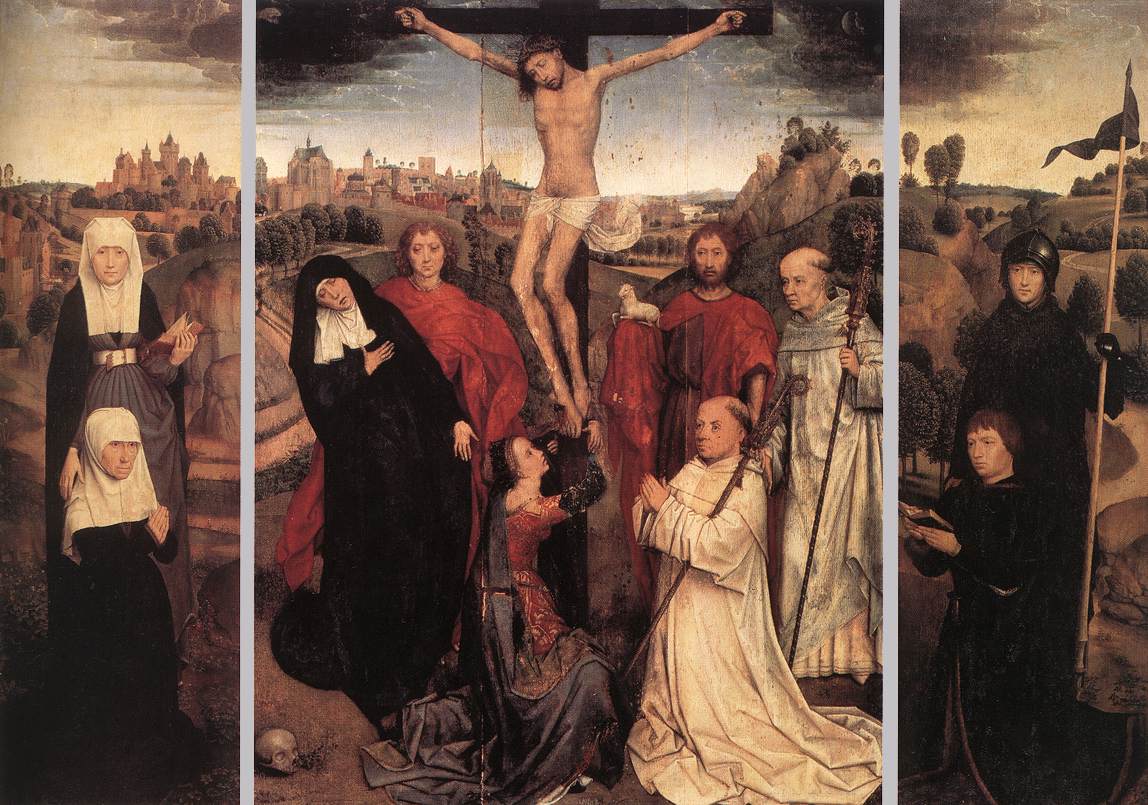
One of the most remarkable aspects of Jesus’ crucifixion is the humble reserve He displayed. As God, He had the power to end His suffering and humiliation at any time. He had already reminded Peter, Do you think I cannot call on my Father, and he will at once put at my disposal more than twelve legions of angels? But how then would the Scriptures be fulfilled that say it must happen in this way?” (Matt 26:52-54)
As Jesus hung on the cross, Satan and others tempted Him one final time, saying, “Come down from the cross.”
Those who passed by hurled insults at him, shaking their heads and saying, “You who are going to destroy the temple and build it in three days, save yourself! Come down from the cross, if you are the Son of God!” In the same way the chief priests, the teachers of the law and the elders mocked him. “He saved others,” they said, “but he can’t save himself! He’s the king of Israel! Let him come down now from the cross, and we will believe in him. He trusts in God. Let God rescue him now if he wants him, for he said, ‘I am the Son of God.’ ” In the same way the rebels who were crucified with him also heaped insults on him (Matt 27:39-44).
The temptation is to give in to pride and the desire for power, to do anything but die on the cross. They taunt Jesus by saying that because God is all-powerful, if you really were God, you would have the power to come down and not be overpowered by your enemy.
It is a crafty, worldly temptation. To the worldly-minded, the demand makes sense. In effect, they are saying, “If it’s faith you want from me, you can have it if you’ll just come down from the cross. Then I’ll be impressed; then I’ll believe.” The tempters want to be saved on their own terms.
Why does Jesus stay on the cross? For three reasons, at least.
I. Humility – Jesus is out to overcome Satan. In this world, we seek to overpower our foes. Does it work? No. Usually the cycle of violence just continues; in fact, it often gets worse. We think, “If I can just yell louder, if I can just outwit or outgun my opponent, then I’ll win the day.” Yes, but there’s more to life than just one day. The next day your opponent will return with louder, wittier arguments and with bigger guns. And the cycle of violence goes on; it is is an endless power struggle.
Dr. Martin Luther King, Jr. once said, “Darkness cannot drive out darkness; only light can do that. Hate cannot drive out hate; only love can do that.” And I would add that here at the cross, pride cannot drive out pride; only humility can do that.
Therefore, although the crowd and Satan try to goad Jesus into a power struggle, the Lord chooses the only weapon that is truly effective against pride: humility. To the devil, humility is like kryptonite!
To our human eyes, it seems that the Lord is defeated. But in His humility, He is doing more damage to Satan than we could ever imagine. He stays on the cross to defeat Satan’s pride through His own profound humility. Jesus does this despite Satan’s desperate attempts to engage His pride and provoke Him into a power struggle.
II. Obedience – It was disobedience that got us into trouble in the first place, and it will be obedience that restores us. Adam said “No,” but Jesus, the New Adam, says “Yes.” It is not the suffering of Jesus itself that saves us; it is His obedience. And Jesus’ suffering is part of that obedience.
Jesus decides to obey His Father, no matter the cost. Isaiah says of Jesus, He suffered because he willed it (Is 53:7). St. Thomas Aquinas said that if Jesus had suffered and gone to the cross without willing it, we would not be saved. Jesus Himself said, No one takes my life from me, I lay it down freely (Jn 10:18). St. Maximus the Confessor said, “We are saved by the human decision of a divine person.”
Jesus went to the cross and decided to stay on the cross in obedience. And it is by His obedience, by His will to obey, that we are saved.
III. To save me – On a more personal level, we can also see that Jesus decided to stay on the cross to save each one of us. If He had come down, I would not be saved; you would not be saved. We might have been impressed and we might have even had a kind of faith, but it would not have been a saving faith.
Pure and simple, Jesus decided to stay on the cross and to endure mockery, shame, pain, and death, in order to save a poor sinner like me. An old gospel song says,
When Jesus hung on Calvary, people came from miles to see They said, If you be the Christ, come down and save your life But Jesus, sweet Jesus, never answered them For He knew that Satan was tempting If He had come down from the cross, my soul would still be lost If He had come down from the cross, my soul would still be lost
He would not come down from the cross just to save himself He decided to die just to save me.
A moment occurs in the Garden of Gethsemane that presents a very good stance for Holy Week, indeed for the whole of our life: Jesus was at prayer; He returned to find His disciples asleep and said,
Watch and pray so that you may not undergo the test. The spirit is indeed willing but the flesh is weak (Matt 26:41).
Let’s examine the passage and explore what it has to say about us and to us.
I. Problem – Jesus comes to His disciples and finds them sleeping. A great showdown between light and darkness, good and evil, Satan and the Lord, is about to unfold—is unfolding! But the disciples, the first leaders of the Church, are sleeping at this crucial moment in human history. Disgracefully, things have not changed since that time.
Yes, this is too often still the case. And lest you think that I am singling out popes, bishops, priests, and deacons alone, let me be clear in saying that the phrase “leaders of the Church” includes parents and community elders as well.
We in the clergy too often remain sleepy and quiet while our people are undergoing severe trials and exposure to terrible sin and error. Well does the Scripture describe many of us clergy when it says, Israel’s watchman are blind, the lack knowledge; they are mute dogs, they cannot bark; they lie around and dream, they love to sleep (Is 56:10).
But many parents, the leaders of the domestic Church, are also woefully out of touch with the struggles of their children. They have little idea what their children are actually listening to or watching; they seem to have higher priorities than monitoring their children and teaching them with clarity.
Yes, for all of us Church leaders, at the parish level and at the domestic level, we too easily doze off and dream away, seemingly unaware of the great cosmic battle that is going on all around us, claiming our people and our children.
Or perhaps we do have some sense of the awful battle, but don’t know what to do about it. Overwhelmed and stressed out, we medicate ourselves. Perhaps like the disciples we drink some wine and doze off in the garden while the critical battle unfolds around us. Overwhelmed, we tune out. We veer off to diversions, watch fantasies on television, or lose ourselves in virtual Internet “relationships” while our real relationships languish. Reality is too painful, so we medicate ourselves and go off to sleep, a spiritual sleep, a moral sleep, even a physical sleep.
Only the pure mercy of God can save us. If the Church or the world depended on human leaders we’d be doomed. If the Church were solely dependent on human beings to keep her together, she would’ve lasted 20 minutes, at best! Yes, only the pure mercy of God can see us through. Without Jesus, awake and sober in the garden, we’re surely lost.
Yes, a serious problem is described here: while the cosmic battle between good and evil rages around us, too many of us are asleep. And while God’s mercy can help to close the gap, we must be willing to do what Jesus commands, what He now prescribes.
II. Prescription – Jesus says, Watch and pray! That is to say, “Wake up; come to your right mind; be sober!” To be sober is to have a clear mind, a mind that is aware of what is going on, and that can clearly identify the signs of the times. The sober mind is able to identify the tactics of the enemy, the drives of sin, and know their moves. The sober mind is also in touch with the remedies of grace and how to apply them prudently. We simply must watch and pray!
In particular, our prayer needs to be rooted in the Scriptures and the revealed truth of Jesus Christ. There’s just too much “stinking thinking” in our world today to believe that our mind is going to be anything but polluted if we don’t cleanse it every day with the Word of God.
Our minds are like sponges. Put a sponge in muddy water and the sponge is going to come out muddy. How then is the muddy sponge to be cleansed? It is plunged into clean water and rung out; then it is plunged back into the clean water and rung out again and again and again. Similarly, our minds—like sponges muddied by the polluted, confusing, and erroneous thinking of the world—must be cleansed daily by being plunged into the clear, clean water of God’s Holy Word.
It is a sobering fact that if we are not praying daily and being deeply rooted in God’s Word, it is very unlikely that we will make it.
The Lord’s prescription is bluntly simple: wake up and keep watch by praying! We somehow seem to find time for everything else. It’s time to wake up and keep our eyes focused on the Lord, to watch Him, to listen to Him, and to be deeply rooted in the relationship of prayer and obedience to His Word. Otherwise, a terrible peril is upon us.
III. Peril – We are told to watch and pray lest we undergo the test, lest we give way to temptation. The Greek word for temptation use here is πειρασμόν (peirasmon), which almost sounds like the English word “peril.”
Now don’t let temptation become something abstract. Temptation is the work of Satan to drag you to Hell. Are you clear on that? If you’re not watching and praying, you’re defenseless; you’re an easy target; you’re low hanging fruit; you’re probably not going to make it. If you do not pray, Jesus warns that you will give way to temptation. That is, Satan will be able to drag you off to Hell and probably others along with you.
If you don’t even care enough about yourself to pray, then at least do it for the sake of others, who are probably depending on you for teaching and example! No priest goes to Hell alone; he takes others with him. And no parents go to Hell alone; they take others with them.
It’s time to wake up and recognize the peril. You will give way to temptation if you won’t watch and pray. Satan can and will drive you to Hell. This peril is real. If you don’t think so, take it up with Jesus; He said it, I didn’t.
IV. Prevailing priority – Jesus goes on to say, The spirit is indeed willing, but the flesh is weak.
Sadly, most of us interpret this passage as an excuse, as if Jesus were permitting us to say, “Well, deep in my heart I want to do what’s right, but I’m really not able to do it because of my weak flesh. So it’s really not my fault. I should get credit for having good intentions in my heart.”
This is not only an incorrect interpretation of what Jesus says here; it is a sinful interpretation. Jesus is not saying that our flesh excuses us. He’s saying that our spirit is willing, that our Spirit (by His grace) has the capacity to prevail over the weakness of the flesh!
We are going to have to battle against our flesh; that is true; that much is clear. But our spirit, the part of us that is open to God, has the capacity to prevail, if we will permit God’s Holy Spirit to strengthen our human spirit.
In other words, our spirit is to be our number one priority, over and against our flesh. With this as our first priority, we will open our spirit to God’s Holy Spirit and will be strengthened. We will prevail over temptation. We will be victorious over Satan’s attempts to drag us to Hell.
There should be no excuses here. Jesus says that although the flesh is weak, and we’ll battle against it until the day we die, our spirit can “will” us to overcome the drives of our flesh. Our spirit can and must have a priority that will empower us to prevail over the flesh and over any incursions of the evil one.
We must make a decision; our spirit must be willing to watch and pray. We cannot allow the emphasis to fall on the weakness of the flesh. The emphasis must always be on the prevailing power and priority of the human spirit, graced by God’s Holy Spirit, to win the victory.
Not a bad prescription for life and for Holy Week, too!