I Got a Robe! A Teaching on One of the Most Shocking Parables Jesus Ever Told

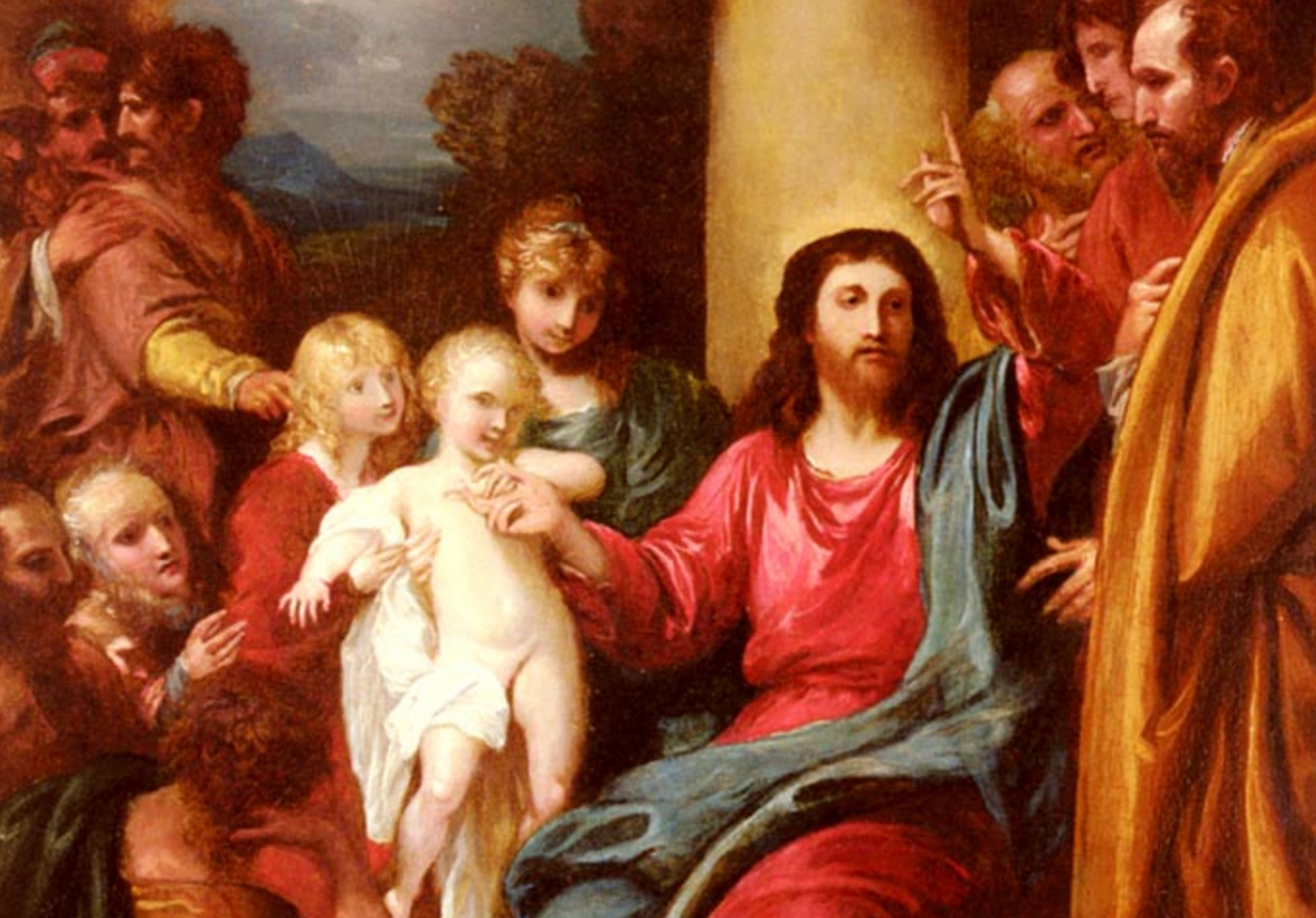
Parable_of_the_Wedding_FeastThe Gospel from Thursday’s Mass (Thursday of the 20th Week of the Year) contains one of the most shocking parables Jesus ever told. It is the Parable of the Wedding Feast from the Gospel of Matthew, and it tells the story of a king who gives a wedding banquet for his son. Most know it well, but in case you want to review it, the full text is available here: Parable of the Wedding Feast.

It does not take a degree in biblical theology to understand that this parable is an allegory. The “king” is God the Father, the “son” is Jesus, and the wedding feast is the great wedding feast of the Lamb described in the Book of Revelation:

Then I heard what sounded like a great multitude, like the roar of rushing waters and like loud peals of thunder, shouting: “Hallelujah! For our Lord God Almighty reigns. Let us rejoice and be glad and give him glory! For the wedding of the Lamb has come, and his bride has made herself ready. Fine linen, bright and clean, was given her to wear.” (Fine linen stands for the righteousness of God’s holy people.) Then the angel said to me, “Write this: Blessed are those who are invited to the wedding supper of the Lamb!” And he added, “These are the true words of God” (Revelation 19:6-9).

The invited guests are the Jewish people of that time who, when the feast is ready, ignore or reject it for various reasons. Some guests express concerns for land (I just bought a farm) or profit (I own a business). And a group of them (for unknown reasons) lay hold of the king’s servants (who represent the prophets and, later, the Apostles), beating and even killing them.

This rejection represents not just the rejection by the Jews of history, but also the long human history of ignoring or rejecting God in favor of worldliness (land), profit (business), and hostility to the truth (the beating and killing of the king’s servants (the prophets and Apostles)).

And yet the focus is on the rejection by the Jews of the time, for the parable calls them the “invited guests.”

The reaction to their rejection, related by Jesus Himself, is that the king (God the Father) was enraged and sent his troops, destroyed those murderers, and burned their city (Matt 22:6).

This detail is especially shocking to many modern readers, because we have bought into a watered down notion of the holiness of God and the significance of human choice for or against Him. The common modern vision of the Father is that of a doting older man (like George Burns or Morgan Freeman) who exists more to get us out of trouble and offer friendly advice than to summon us to holiness, obedience, and a critical choice.

But take note: this detail of the king burning their city is told by Jesus Himself. And as we shall see in this coming Sunday’s Gospel about the wide and narrow roads, He is not playing around! However we want to “rework” God and render Him harmless, however we want to try to oppose God’s love and justice, however we want to render human choice insignificant, the biblical text will have none of it. The bottom line is that no one loves you more than does Jesus Christ, yet no one warned of judgment and Hell more than He did.

Don’t be surprised if this parable shocks you; it is meant to do so. It is a call to sobriety in the face of the four most critical truths of our life: death, judgment, Heaven, and Hell. This parable teaches that we will either enter the wedding feast and celebrate with the Father or we will be caught up in the conflagration when the Lord comes to judge this world by fire (e.g., 2 Pet 3:7; Malachi 4:1; 2 Thess 1:7).

Add to this shock the fact that the parable was actually fulfilled in 70 A.D. (as a kind of precursor to the final end of the age) when, after forty years of pleading with the Jewish people to come to Christ, a fiery destruction came upon Jerusalem. After rejecting the Lord’s warnings (cf Matthew 24, 25; Mark 13; Luke 21), rejecting the call of the early Apostles and Church, and picking a pointless war with the Romans, the Jewish nation was utterly defeated. Jerusalem was sacked and burned and more than a million Jews were killed.

The choice is ours, but the judgment is certain to come: “God gave Noah the rainbow sign, no more water but the fire next time!” (Negro spiritual)

The only safe place to be is at the wedding feast of the Jesus the Lamb, who saves us from the wrath to come (1 Thess 1:10).

Jesus, with weeping, had warned,

Jerusalem, Jerusalem, you who kill the prophets and stone those sent to you, how often I have longed to gather your children together, as a hen gathers her chicks under her wings, and you were not willing. Look, your house is left to you desolate (Matt 23:37).

The next shocking part of the parable comes in the second half. The enraged king (God the Father) orders his servants to go into the streets and gather everyone they can. This detail represents going out to the Gentiles and the Great Commission.

Thanks be to God that the response is good and the banquet is filled. But then comes yet another shock:

When the king came in to meet the guests he saw a man there not dressed in a wedding garment. He said to him, ‘My friend, how is it that you came in here without a wedding garment?’ But he was reduced to silence. Then the king said to his attendants, ‘Bind his hands and feet, and cast him into the darkness outside, where there will be wailing and grinding of teeth.’ Many are invited, but few are chosen.

This makes us moderns wince. Perhaps part of our trouble with these verses is that we may think that the newly invited guests were dragged in right off the street with no chance to change clothes. But there is nothing in the text to suggest that they were not given time to don their wedding clothes. The other guests all seem to be clothed properly and the focus shifts to one man who is not properly dressed.

Whatever the debated cultural parameters of the story, the theological parameters are more clear. The wedding garment is provided by the king (God the Father), who clothes us in righteousness at our baptism.

For the wedding of the Lamb has come, and his bride has made herself ready. Fine linen, bright and clean, was given her to wear. (Fine linen stands for the righteousness of God’s holy people.) (Rev 19:8)

Yes, this is the baptismal gown, the robe of righteousness, which God gives to the baptized, who have been washed in the blood of the Lamb! In the Baptismal Rite, the celebrant points to the white garment of the newly baptized and says,

You have clothed yourself in Christ. Receive this baptismal garment and bring it unstained to the judgment seat of our Lord Jesus Christ, so that you may have everlasting life (# 578).

In the parable, the man is without a wedding garment not because he is poor or was pulled in off the street, but because he cast aside the garment he was given. Remember that the garment is no mere piece of cloth; it represents righteousness. And this righteousness is received and must be cherished. Without it, we cannot endure or remain at the Wedding Feast of the Lamb, which is Heaven.

Thus ends one of the most shocking parables Jesus ever told. (We will examine the “many are called but few are chosen” aspect of the text this coming Sunday.) And though the parameters of this parable do shock, Jesus speaks them with an urgent love to bring forth godly repentance from us and to stir an evangelical urgency in us to reach others before “Great and Terrible Day of the Lord” comes (cf Joel 2:31; Mal 4:5 inter al). On that day there will be only two places: safe at the wedding feast with the Lord or outside in the fiery judgment that is coming on this world.

An old spiritual says,

“God’s gonna set this world on Fire one of these days.”

Another old spiritual goes like this:

“I got a robe, you got a robe, all God’s children got a robe. When I get to heaven gonna put on my robe and go wear it all over God’s heaven! Everybody talkin’ bout heaven ain’t a goin’ there!”

Make sure you’ve got your robe and keep it washed in the blood of the Lamb.

Rock a My Soul in the Bosom of Abraham – Learning the Wisdom of an old Spiritual

Blog-08-12There is an old African-American spiritual that says, “Rock a my soul in the bosom of Abraham. Oh, rock a my soul!” At first glance its meaning may seem obscure, but it speaks to a deep tradition and a kind of spiritual strategy that has great wisdom.

Biblically, the “bosom of Abraham” referred to the place of rest in Sheol, where the righteous dead awaited the Messiah and Judgment Day. It is mentioned only once (Luke16:22-23), in the Parable of the Rich Man and Lazarus. In the parable, Lazarus is said to rest and abide in the bosom of Abraham, awaiting the Messiah’s full redemption, whereas the rich man is in Gehenna, a place of torment.

More generally, though, the image of resting in the bosom of Abraham is rooted in the image of a sick, frightened, or wounded child resting safely in the arms of his parents (in this case those of his father). Most children remember awakening from a bad dream and running into their parents’ bedroom for refuge, to a place where they could rest in security.

Spiritually, Abraham is our father in faith; he also symbolizes the heavenly Father. The ancient Jews considered the bosom of Abraham as a place of security, both in life and after death. Resting in the arms of Abraham meant resting in a place where the evil one could not reach and where the just rested securely.

Christians, too, have taken this image of safety and rest in the arms of Abraham. It finds expression in the beautiful hymn “In paradisum,” in which Christians are commended to the place (the bosom of Abraham) where Lazarus is poor no longer. One of the antiphons in the final commendation says, “May angels lead you to the bosom of Abraham.”

And then came the beautiful African-American spiritual that added a rocking motion to the beautiful rest in Abraham’s arms. The spiritual life is likened to the action of a father, rhythmically rocking his child in his arms. The rocking is soothing, reassuring, and (if one is attuned to it) adds a necessary spiritual rhythm to life.

Yes, rock a my soul in the bosom of Abraham, Oh, rock a my soul. In a world of injustice and great darkness, we need the soothing rhythm of the Father’s love. We need to learn to dance and move to its rhythms and not be overcome with the tremors and evils of this world.

Consider the graceful dance in this video and seek to imitate its wisdom. Learn to move to the rhythm of the Father rocking us in His arms. Learn to move to the gentle and steady beat of God’s love as He holds us close.

Rock a my Soul …

Enjoy this video, featuring an interpretation of this beautiful and rhythmic spiritual. It is a graceful and exuberant dance showing security in God’s love and embrace.

We Live in a Rebellious House

homeOne of the observations that God makes about us over and over again is that we are stiff-necked (cf Ex 32:9, 33:3; Deut 9:3, 10:16; 2 Chron 30:8; 2 Kings 17:14; Jer 7:26; and many, many other texts).

The charge occurs again in the reading from today’s Mass (Thursday of the 19th Week of the Year):

The word of the LORD came to me:
Son of man, you live in the midst of a rebellious house;
they have eyes to see but do not see,
and ears to hear but do not hear,
for they are a rebellious house (Ezekiel 12:1-2).

Yes, God repeats that we tend to be stubborn, prideful, and difficult to correct. And when reproved we often harden our hearts and become resentful.

God notes elsewhere (in love),

I know that you are obstinate, and your neck is an iron sinew and your forehead brass (Is 48:4).

This is another way of saying, “I know that you are stubborn. You are hardheaded, as though your head were made of iron. Nothing gets through your thick skull, as if it were made of bronze.”

Yes, we certainly are difficult! God calls us sheep, but in some ways we are more like cats; our Shepherd, Jesus, has the unenviable task of herding cats! 

For some of us, this tendency to be stiff-necked is gradually softened by the power of grace, the medicine of the sacraments, instruction through God’s Word, and the humility that can come from these. 

For others, though, the stubbornness never abates, even growing stronger as a descent into pride and hard-heartedness sets up. The deeper the descent, the more obnoxious the truth becomes. The likelihood of conversion decreases; resistance to the truth becomes hostility towards it.

God tells Ezekiel that we (collectively speaking) are rebellious. The word “rebellious” comes from the Latin re- (again)+ bellare (to wage war). In other words, God says that we again and again resort to fighting against Him. So easily do we resist Him and even wage war against the truth!

God is talking about all of us. Even though not every individual exhibits this tendency to the same extent, we all have it to some degree.

St. Paul describes this tendency using the phrase “the mystery of iniquity” (2 Thess 2:7). The Greek word here translated as “iniquity” is ἀνομία (anomia) and literally means “without law.” So, this description speaks of an attitude of living in lawlessness, of having utter disregard for God’s law.

While it is clear that it is rooted in Original Sin, there remains a mysterious aspect of this stiff-necked rebelliousness: Why are some people more this way more than others? Why do some harden their hearts more and more while others find the path of humility?

Being stiff-necked, stubborn, impenitent, and hard-hearted is deadly. If it is not repented of, it is a path straight to destruction, to Hell. One must submit to God in order to be saved.

Recall this short text from Proverbs that illustrates the problem:

He who is often reproved, yet stiffens his neck, will suddenly be broken beyond healing (Prov 29:1).

Here, then, is a matter to consider as we look to our moral condition. Am I rebellious? If so, how? Am I teachable, or do I resist and scoff?

Help me, Lord, for you are clear that being rebellious, stubborn, and stiff-necked is a serious problem. Keep me teachable, Lord, and order my steps in your Word!

What Did You Say?

Blog-08-04Voice recognition software has a long way to go.  Every now and then I foolishly assume that dictating some text into my phone will save me some time, but invariably it takes me so long to correct the result that I might as well have typed it to begin with!

I wonder if God doesn’t sometimes “feel” that way about us as we consistently misinterpret His word. We seem to hear what we want to hear; we ignore certain words such as “not” in “thou shalt not.”

Kids often have trouble accurately repeating the words that they hear. I have heard many “adaptations” of the Act of Contrition from them over the years. Here’s an example, containing some of the common mistakes I’ve heard from “out of the mouths of babes”:

O my God, I am partly sorry for having defended thee, and I contest all my sins not only because of the plains of hell, but most of all because they defend thee, my God, who aren’t worthy of all my love. I firmly revolve with the help of disgrace to contest my sins, amend my life and live as I would.

I remember as a child wondering why we called the Holy Spirit a parakeet (instead of the paraclete), and thinking that the Our Father said, “give us this stay our daily bread.” Kids are like that. They hear, but not always accurately; sometimes it takes years to correct the errors. I still hear some adults say that on Good Friday the clergy are prostate on the floor, instead of prostrate.

Enjoy this video, which pokes fun at voice recognition software. Recognize that we also commit some laughable errors in speech and hearing. Thank goodness God knows what we’re saying!

The Look of Christ

J001-HTMJVI have a large icon of Christ in my room (see photo at right). What icons from the Eastern tradition do best is to capture “the look.” No matter where I move in the room, Christ is looking right at me. His look is intense, though not severe. In the Eastern spirituality, icons are windows into Heaven. Hence, this icon is no mere portrait that reminds one of Christ, it is an image that mediates His presence. When I look upon Him, I experience that He knows me. It is a knowing and comprehensive look.

Particularly in Mark’s Gospel, there is great emphasis on the eyes and the look of Jesus. A frequent expression in that Gospel is “And looking at them He said ….” Such a phrase (or a similar one) occurs more than 25 times in Mark’s Gospel.

Looking on Christ and allowing Him to look on you is a powerful moment of conversion. Jesus Himself said, For my Father’s will is that everyone who looks to the Son and believes in him shall have eternal life, and I will raise him up at the last day” (Jn 6:40).

And the First Letter of John says, What we shall later be has not yet been revealed. We do know that when it is revealed we shall be like him, for we shall see him as he is (1 Jn 3:2).

There is just something within us that seeks the face of God and desires that look of love that alone can heal and perfect us. I often think of this verse from Scripture when I am at Eucharistic Adoration: Look! There he stands behind our wall, gazing through the windows, peering through the lattice. (Song 2:9). Yes, I long to see the Lord. Scripture also speaks of His longing to “see” us.

Here are some passages from Scripture that remind us to seek the face of the Lord and to look to Him:

  1. Seek the LORD and his strength; seek his presence continually! (1 Chron 16:11)
  2. If my people, who are called by my name, will humble themselves and pray and seek my face and turn from their wicked ways, then will I hear from heaven and will forgive their sin and will heal their land (2 Chron 7:14).
  3. You have said, “Seek my face.” My heart says to you, “Your face, LORD, do I seek” (Ps 27:8).
  4. Look to the LORD and his strength; seek his face always (Ps 105:4).
  5. I [the Lord] will return again to my place, until they acknowledge their guilt and seek my face, and in their distress earnestly seek me (Hosea 5:15).
  6. Everyone who looks to the Son and believes in him shall have eternal life, and I will raise him up at the last day (John 6:40).
  7. He who loves me will be loved by my Father, and I too will love him and show myself to him (John 14:21).
  8. Blessed are the pure in heart, for they will see God (Matt 5:8).
  9. Now we see but a poor reflection as in a mirror; then we shall see face to face (1 Cor 13:12).
  10. For God, who said, “Let light shine out of darkness,” made his light shine in our hearts to give us the light of the knowledge of the glory of God in the face of Christ (2 Cor 4:6).

An old song says, “We shall behold Him, Face to face in all of His glory …. The angel will sound, the shout of His coming, And the sleeping shall rise, from their slumbering place. And those remaining shall be changed in a moment. And we shall behold Him, then face to face.”

Allow Christ to look on you.

This video is a wonderful collection of many of the looks of Jesus and the reaction of the people following those looks. Pay special attention. The video also features a lot of “looks” that come from us. Notice how people look upon Jesus and how they react as they do so. Look for the “looks” in this video. The final looks are especially moving.

What is Life?

blog-08-03What is life? It seems the simplest and most basic reality, but it is hard to define in a way that is satisfying. One philosopher I know defined it as “ordered energy.” But does that really advance the understanding of the mystery we call life?

Consider an example: I have in one hand a small rock, and in my other, an acorn. They are similar in both shape and color. Now I place each of them in the ground and water them. The small rock just sits there; even a thousand years of water and sunshine would do nothing to change it. But in the case of the acorn, the water is able to reach a mysterious spark of life within it and fuel its mysterious power. The life takes the water in and springs forth. Soon enough, it thrusts through the soil and over time becomes a mighty oak.

What is this secret, mysterious force we call life? Yes, it is ordered energy, but it is so much more than that.

When we say that someone dies, what has really changed?

I remember when my father died. After watching him struggle through weeks of labored breathing and agitation, it was eerie to see him lying so still; he was peaceful for the first time in weeks. His body was still warm, but he was gone. He was a giant in my life. The man through whom God gave me life lay still and silent. His life, his soul, his life-giving principle, his “ordered energy” was gone. No amount of words could fully describe the reality before me. On the surface, nothing appeared so very different. Surely he would stir in a moment and speak to me! He did not. The something mysterious we call life was gone. We can say that he died or that his life ended, but mere words do not explain, they only describe; they are empty sounds before so great a mystery.

I have also seen many of my pets die. One moment there is life and movement, the next a great stillness as the something we call life has departed. What is that mysterious force?

I don’t know.

On my street there are two elm trees. One is luxuriant and full of leaves. The other is dead; it bears no green leaves and its branches are brittle. Something is gone from it, but is that something called life?

I don’t know.

We speak often of that great mystery called life, but a word is not reality; it is just a word. The word “life” cannot really tell us what life is. Saying that something is alive is more to tell us that it is not dead, nor is it inanimate.

Many decades before his death, my father talked to me about the mystery of life. He told me that when he was about ten years old, a powerful thought occurred to him: “I exist.” So stunned was he that he said he stayed very quiet for the next three days, just being silent in the face of a mystery too great for him to fathom. I have had similar moments of reverential silence, when I ponder consciousness and self-awareness, or when I think about the fact that I am thinking.

It is altogether too much. Simple or even complex definitions cannot ultimately provide satisfaction.

The secularism of our time seeks to suppress such matters because they are about meaning, not just about physical things that can be touched and measured. The mysterious reality we call life does not weigh anything. It cannot be seen as it arrives or departs. Its effects can be seen, but “it” cannot be seen. We cannot say of life, “Look, there it is!” or “There it goes!” It is certainly real and it affects physical things profoundly. But of itself, it seems more metaphysical than physical and defies simple categorization.

The secularism of our time would hurry us past questions such as “What is life?” Neither would it have us dwell on other questions of meaning that the physical sciences cannot speak to, such as:

  1. What is my life all about?
  2. What is the ultimate destiny of all things?
  3. Why is there something rather than nothing?

“No, no,” say secularism, atheism, and scientism. “Hurry along now; there is nothing to see here.”

But pardon me if I am not content with being hurried along and if I insist that suppressing such questions does great damage to individuals and cultures as a whole. Without appreciation for imponderable mysteries, there is little reverence. Indeed, too few ask the question “What is life?” And even fewer accept the imponderable quality of such a question.

What is life? It is a mystery too deep for words. Silent reverence, please, before so great a mystery.

These are some of the lyrics of a song written by Steve Green, a contemporary Christian singer:

God and God alone, created all these things we call our own;
from the mighty to the small, the glory in them all;
Is God’s and God’s alone.
God and God alone reveals the truth of all we call unknown;
And the best and worst of man can’t change the Master’s plan;
It’s God’s and God’s alone.

Crack the Whip and the Common Good – Our Lives Are More Connected Than We Think

Blog-08-02We like to think that our personal decisions have little or no impact on others, but our lives are far more intertwined than we imagine. This is especially the case today, when social media can allow sinful and foolish ideas to catch fire and “go viral” in a flash. And although this happens with edifying information and helpful ideas as well, the bad stuff seems to spread more quickly. Why? Well, this is a fallen world, with a fallen angel for its prince, and we have fallen natures.

Therefore, do not so easily dismiss the influence that bad ideas and poor decisions can have on others. Also consider that what may not harm those who are blessed to have other good influences and/or economic options may damage those who are not so fortunate. This warning should especially apply to cultural leaders, who have substantial influence on the lives of others. Those in the public eye have a special obligation to consider how the way they live their lives and the ideas they propose may affect others.

To illustrate, consider the game “Crack the Whip,” which some of us may remember from our days on the school playground. The “game” involved 10 to 20 children forming a straight line. Each child reached back with one arm and took the hand of the one behind him to create a long chain. The child at the front of the line then took off running and everyone else behind followed, still holding hands. Suddenly, the lead child would take a sharp turn. The children immediately behind him were able to successfully negotiate the turn, but the further back one was, the harder it was to hold on. The children toward the end of the line didn’t stand a chance. They were flung off by the centrifugal force and usually ended up on the ground.

This is an analogy for our times. There are some, those at the “front of the line,” who are well-positioned to take their thrill rides, engage in social experimentation, and indulge greed and excess with minimal damage. Among them are some of the Hollywood elite, pop music stars, political leaders, wealthy financiers, Madison Avenue marketers, Wall Street investors, and many other cultural, social, business, and government leaders. But at the “back of the line,” the damage is awful.

Let’s consider two basic areas of life in which “Crack the Whip” is much in evidence: social/moral ills and economic ills.

Social/moral ills – At the very front of the line are those who have sharply turned towards excesses of every sort: drugs, alcohol, sex, revolving-door marriages, glamorization of all sorts of dangerous and deleterious behaviors. These often come with terrible personal consequences.

At the front of the line they can afford (financially and socially, though not morally) the consequences of what they do. They can pay for the stays in rehabilitation centers, the treatments for STDs, and the therapy for their children (who are traumatized by divorce and other issues caused by their parents’ indulgences).

But at the back of the line the drug use, sexual promiscuity and confusion, and the divorce culture have had far more devastating effects. Lacking access to treatment programs, the addicted poor go to jail. Diseases like AIDS and other STDs are less treated and spread more easily. Poor families are more rapidly devastated by sexual promiscuity and divorce. Children are raised without fathers. The socials ills multiply quickly. And surely we cannot neglect the poorest of the poor, the most vulnerable of all, the child in the womb. They have paid supremely, with their very lives, for the moral excesses of a culture like ours. The death toll is unimaginable and it almost never gets mentioned.

It’s a sad game of “Crack the Whip.” At the front of the line, all the misbehavior looks “fun,” even “glamorous.” But at the back of the line, folks go flying off in all directions, staggering and reeling.

I do not write to absolve the poor from all responsibility and merely blame the rich and powerful. Being mesmerized by the glamor of evil is a human problem; it affects all of us. But in the end we ought to consider how our cooperation (whether by active promotion or by sinful silence) in the glamorization of sin and excess affects others—especially those at the “end of the line.”

Economic illsThose at the front of the line can also afford the lifestyles that greed demands. They can generally afford to pay the higher prices of an overheated economy and a lifestyle that expects more and more.

The poor are fined for not having insurance. Many cannot afford to drive. They often face tremendous economic hurdles in trying to open small businesses or even keep their homes. College educations and even advanced degrees are (unreasonably) required for many jobs, but the cost is exorbitant. Obtaining a college education leaves many young people in debt for decades. And the poor are largely locked out of many options.

A few years back it became trendy to leave the stock market and enter the real estate market, buying and “flipping” properties. The market overheated, the cost of housing skyrocketed, and even the upper-middle class found it hard to afford basic housing. The “bubble” burst in 2008 and left the economy reeling. Investors took a few hits and got government bailouts, but mainly they just went back to investing in the stock market. They left in their wake devastated homeowners facing “underwater” properties and foreclosures.

“Gentrification” also accelerated, bringing with it all the difficulties of social dislocation. The poor are economically and literally being moved to the margins as the disturbances to the housing market are still working themselves out. Here in Washington, D.C. the poor are moved to the margins of what many call “Ward 9.” There are actually only 8 Wards in D.C.—being in “Ward 9” is a euphemism for being moved to the margins, outside the city that is increasingly losing its economic diversity. What used to be poor, working-class neighborhoods are now filled with houses sporting prices approaching one million dollars.

It’s a classic case of “Crack the Whip.” Those at the front of the line can adjust to sudden shifts in the economy and “play the market,” but at the back of the line the less privileged are sent flying, staggering as they fall and go off to the “Ward 9s” of our cities.

I am a priest, not an economist, and I realize that economic realities are very complex. I am not calling for all sorts of government intervention, but I do know what I see as a priest working among all social classes. I cannot and should not devise policy solutions; I leave that to the experts among the laity. But what I can and should do is to remind the folks at the front of the line to remember those at the back. “Crack the Whip” is fun and exciting when you’re at the front of the line, but devastating if you’re at the back.

We need to rediscover concern for the common good. We should look at our own behavior regardless of where we are in the line. I am my brother’s keeper; his welfare ought to be important to me. It’s not just about money; it’s about taking care to build a culture that thinks more about those at the back of the line and those yet to be born. What of them? How does my life and lifestyle affect them?