
Here’s a promo video to my conversation about my new book: The Hell There Is.
The Role and Experience of the Angels at the Ascension
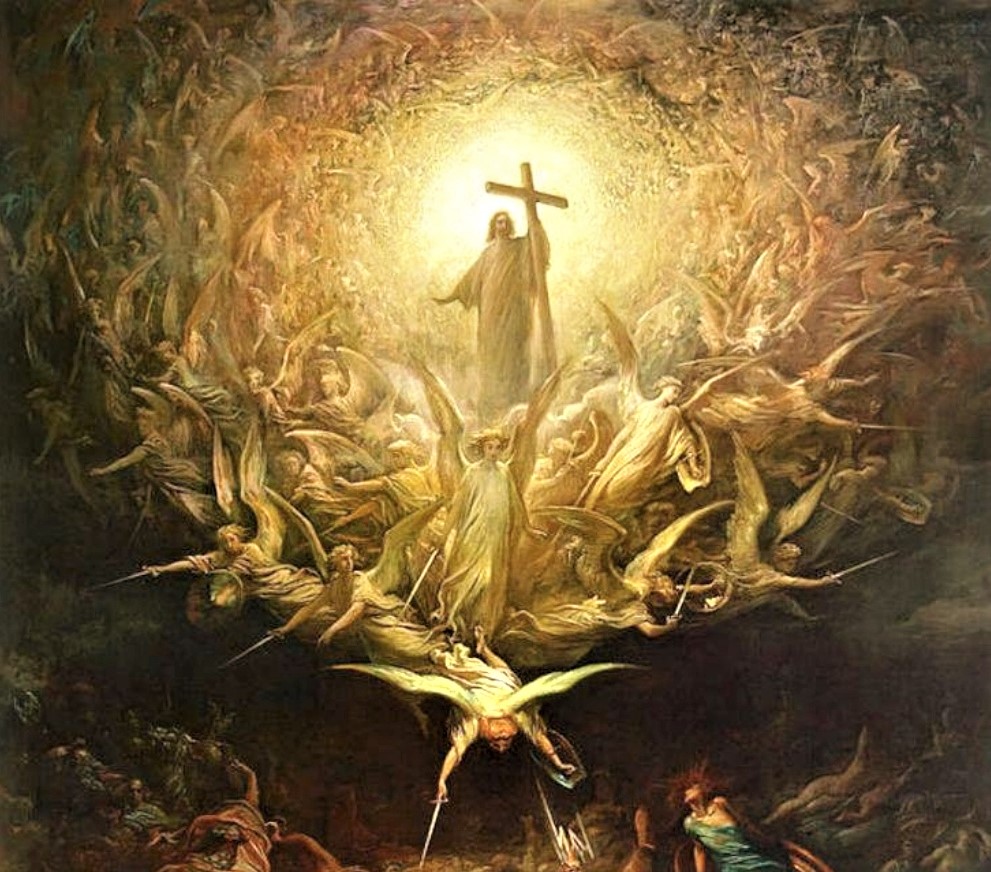
The Feast of the Ascension is often neglected today. It is tucked into a nearby Sunday, it’s role as the fortieth day, jettisoned. But even in those places that still honor it with a Thursday Solemnity, there is still a difficulty in appreciating the full glory of that day. In this post, following the Scriptures and the teaching of some of the ancient Fathers of the Church, we can investigate some of the more hidden glory of this magnificent event.
The fundamental source for these reflections is Jean Cardinal Danielou’s book The Angels and Their Mission: According to the Fathers of the Church. The references to the Fathers in this post are fully footnoted in his book, but some of the scriptural passages below represent my own additions.
We can begin with a parabolic prelude – Jesus told at least two parables that the Fathers of the Church interpret to represent the angels:
-
- Then Jesus told them this parable: “What man among you, if he has a hundred sheep and loses one of them, does not leave the ninety-nine in the pasture and go after the one that is lost, until he finds it? And when he finds it, he joyfully puts it on his shoulders, comes home, and calls together his friends and neighbors to tell them, ‘Rejoice with me, for I have found my lost sheep!’ In the same way, I tell you that there will be more joy in heaven over one sinner who repents than over ninety-nine righteous ones who do not need to repent. (Luke 15:3-7)
- Or what woman who has ten silver coins and loses one of them does not light a lamp, sweep her house, and search carefully until she finds it? And when she finds it, she calls together her friends and neighbors to say, ‘Rejoice with me, for I have found my lost coin.’ In the same way, I tell you, there is joy in the presence of God’s angels over one sinner who repents.” (Luke 15:8-10)
Gregory Nazianzus interprets this parable as Christ entering into heaven at the Ascension and, after having recovered the lost sheep and the Lost Drachma and calling together the angels to share his joy.
Indeed, there is a whole tradition, among the Fathers but going back much further into the early Church which sees the lost sheep as human beings, and flock which the Good Shepherd “leaves” in order to search for the sheep as the angels. Origen sets it forth and Methodius of Philippi writes: “We must see the ninety-nine sheep as a representation of the Powers, Principalities and Dominations whom the Head and Shepherd has left behind to go down and seek out the one lost sheep.” Gregory of Nyssa adds: “We mankind, are the lost sheep…and have strayed from the other spiritual creates [i.e. the angels].
Hence we are given a picture of joy as Christ re-enters heaven with the lost sheep of humanity.
The Picture of the Ascension given by the Lord: Jesus prophecies his ascension in John’s Gospel as something which Nathaniel will see. The Lord’s description also shows the role of the angels
Jesus said to Nathaniel, “Do you believe just because I told you I saw you under the fig tree? You will see greater things than these.” Then He declared, “Truly, truly, I tell you, you will see heaven open and the angels of God ascending and descending on the Son of Man. (John 1:50-51)
Here then is a picture of Jesus ascending, not as a lone figure,
A picture from the Psalms: Church Fathers Eusebius, Chrysostom, Justin and Athanasius say that the virtues (i.e. angels) of heaven, seeing him begin to ascend, rise and surround him to form an escort proclaiming his ascension as they cried: Rise up eternal gates and the King of glory will enter!” Gregory of Nyssa adds, that at first the higher angels do not recognize Christ since he has put on the poor tunic of humanity and because his garments were stained with blood. And herein comes a questioning and wondering dialogue back and forth that is from Psalm 27 but which the ancient Fathers apply to the moment of the Ascension:
The lower ranking angels who have escorted Jesus cry out to the higher ranking angles of heaven:
Lift up your heads, O gates! Be lifted up, O ancient doors, that the King of Glory may enter!
And from within the heavenly angels answer:
Who is this King of Glory?
And the escorting angels answer:
The LORD strong and mighty, the LORD mighty in battle. Lift up your heads, O gates! Be lifted up, O ancient doors, that the King of Glory may enter! (Psalm 24:7-9)
Eusebius also cites Psalm 47 as fulfilled in the Ascension through the praises of the Angels:
God ascends amid shouts of joy, the LORD with the sound of trumpets. Sing praises to God, sing praises; sing praises to our King, sing praises! For God is King of all the earth; sing profound praises to Him. God reigns over the nations; God is seated on His holy throne. For the shields of the earth belong to God; He is highly to be exalted. (Ps 47:5-9)
Another picture from Scripture (Isaiah 63:1-3) is applied by the Fathers to the Ascension where the angels of heaven, seeing Christ approach, cry out:
Who is this coming from Edom, from Bozrah with crimson-stained garments? Who is this robed in splendor, marching in the greatness of His strength?
Jesus answers:
“It is I who speak in righteousness, mighty to save.”
The Angels ask:
Why are Your clothes red, and Your garments like one who treads the winepress?
Jesus answers:
“I have trodden the winepress alone, (Isaiah 63:1-3)
The exultation of our humanity In Christ’s Ascension is also a principle developed in Scripture and by the Father. Thought the angelic nature remains superior to human nature in the order of creation, Christ’s incarnation, resurrection and ascension have exalted our humanity in his. The Book of Hebrews says,
[Jesus] has taken his seat at the right hand of the Majesty on high. So He became as far superior to the angels as the name He has inherited is excellent beyond theirs. For to which of the angels did God ever say: “You are My Son; today I have become Your Father” (Heb 1:3-4)
For it is not to angels that He has subjected the world to come, about which we are speaking. But somewhere it is testified in these words: “What is man that You are mindful of him, or the son of man that You care for him? You made him for a while lower than the angels; and now You have crowned him with glory and honor and placed everything under his feet. (Heb 2: 5-8)
These texts speak to Christ’s superiority to the Angels. As God, he was always superior to the angels but, in hypostatically uniting himself to a human nature, raising it gloriously and ascending with that glorified human nature, he has exalted us all.
St. John Chrysostom says of the Ascension:
Today we are raised up into heaven, we who seemed unworthy even of earth. [In Christ, and as members of his Body] We are exalted above the heavens; we arrive at the kingly throne. The [human] nature which caused the Cherubim to keep guard over paradise is seated today above the Cherubim. Was not such a glory beyond all expression? But he rose above the angels, he passed the cherubim, he went higher than the Seraphim, he bypassed the Thrones. He didn’t stop until He arrived at the very throne of God.
So, the Feast of the Ascension is our feast too. In baptism we died with Christ and rose with him to new life. In the Ascension of Christ, we also ascend. Hence, in Christ and as members of Christ’s Body through baptism, we are mystically seated with him at the Father’s right. In Christ and by his ascension our lowly nature is glorified and we hear the call “come up higher.” For now we never cease to honor the angels who by nature are superior to us and care for us. And yet, by grace alone and in Christ we have ascended with him to the highest place. On account of which the angels marvel and sing God’s praises.
The Ascension is the counterpart of the fall in Eden, but we are not simply restored to an earthly paradise, we are taken to the heavenly one!
Is this why Satan rebelled? There is an ancient tradition that the angels where shown God’s plan and that Lucifer, a high ranking angel, recoiled at the idea of God joining himself to the mere “mud dolls” of humanity. Inspiring a rebellion he waged war in the heavens and was cast out by St. Michael and the other angels. Now he roams the earth, deeply envious of human beings and seeks to debase and destroy him. This is hinted at in Scripture in Revelation 12, but the details of the reason for Satan’s wrath are more in the realm of tradition and speculation.
Here then are some reflections on the glorious feast of the Ascension from Scripture, and the teachings of the Fathers of the Church.
Love Lifted Me: A Homily for the Ascension of the Lord
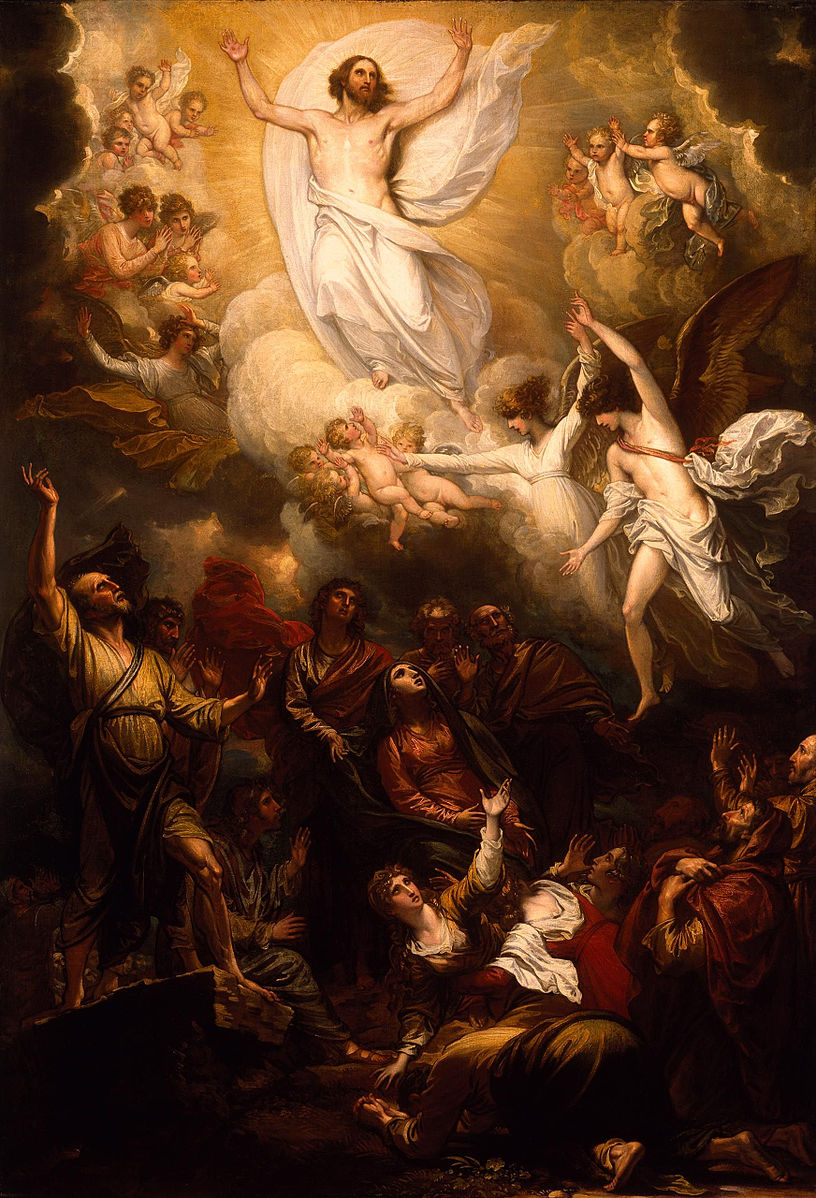
In more dioceses than not, the Feast of the Ascension is celebrated this Sunday. The liturgist in me regrets the move from Thursday, but here we are any way. Let’s ascend with the Lord, three days late!
This marvelous feast is not merely about something that took place two thousand years ago, for though Christ our head has ascended, we the members of His body are ascending with Him. Because He was ascended, we, too, have ascended. In my own life as a Christian, I am brought higher every year by the Lord, who is drawing me up with Him. This is not some mere slogan, but something I am actually experiencing. An old song says, “I was sinking deep in sin, far from the peaceful shore. Very deeply stained with sin, sinking to rise no more. But the master of the sea, heard my despairing cry. And from the waters lifted me. Now safe am I. Love Lifted me when nothing else could help. Love lifted me!”
If we are faithful, the feast of the Lord’s Ascension is our feast, too. Let’s look at it from three perspectives.
I. The Fact of the Ascension – The readings today describe a wondrous event witnessed by the Apostles. By His own power, the Lord is taken to Heaven. In so doing, He opens a path for us, too. The gates of paradise swing open again. Lift up your heads, O gates! and be lifted up, O ancient doors! that the King of glory may come in! (Psalm 24:7) In Christ, man returns to God. Consider three things about the Ascension:
A. The Reality – Imagine the glory of this moment! Scripture says, As they were looking on, he was lifted up and cloud took him from their sight … they were looking intently in the sky as he was going (Acts 1:9). So impressive was the sight that the angels had to beckon them to get along to Jerusalem as the Lord had said, “Men of Galilee,” they said, “why do you stand here looking into the sky? This same Jesus, who has been taken from you into heaven, will come back in the same way you have seen him go into heaven” (Acts 1:11). Yes, it was glorious. Jesus had once said as a summons to faith, What if you were to see the Son of Man ascending to where he was before? (John 6:62) He had also encouraged them saying, Truly, truly, I say to you, you will see heaven opened, and the angels of God ascending and descending upon the Son of man (John 1:51). So here is a glorious reality and a fulfillment of what Jesus had said.
B.The Rescue – In the Ascension, it does not seem that the Lord entered Heaven alone. As we have remarked, in His mystical body we also ascend with Him. Consider this remarkable text that affirms that: Therefore it is said, When he ascended on high he led a host of captives, and he gave gifts to men. In saying, “He ascended,” what does it mean but that he had also descended into the lower parts of the earth? He who descended is he who also ascended far above all the heavens, that he might fill all things (Eph 4:8ff). Yes, the Lord had earlier (just after his death) descended to Sheol, awakened the dead, and preached the Gospel to them (cf 1 Peter 4:6). Now for those He had justified came the moment to ascend, with Jesus as a “host,” as an army of former captives now set free. Behold the great procession that enters behind Christ through the now-opened gates of Heaven: Adam and Eve, Noah, Abraham, Sarah, Isaac, Jacob, Rachel, Judith, Deborah, David, Samuel, Isaiah, Jeremiah, Ezekiel, Malachi, John the Baptist, … and, one day, you! Yes, this is a great rescue. Adam and his descendants have not simply been restored to some paradise-like garden; they have entered Heaven.
C.The Rejoicing – Consider how this once captive train sings exultantly as they follow Christ upward to Heaven. The liturgy today puts before us a likely song they sang: God mounts his throne to shouts of Joy! The Lord amid trumpet blasts. All you peoples clap your hands, shout to God with cries of gladness, for the Lord the most high, the awesome is the great king over all the earth. God reigns over the nations, God sits upon his holy throne (Psalm 47:6-7). I also have it on the best of authority that they were singing this old gospel song: “I’m so glad Jesus lifted me!” as well as this old Motown song: “Your love is lifting me higher than I’ve ever been lifted before!” More on this tomorrow from the Fathers of the Church.
II. The Fellowship of the Ascension – We have already remarked that, when Christ ascends, we ascend. Why and how? Scripture says, Now you are the body of Christ and individually members of it (1 Cor 12:27). It also says, All of us who were baptized into Christ Jesus were baptized into his death. By baptism we were buried together with him so that just as Christ was raised from the dead by the glory of God the Father, we too might live a new and glorious life. For if we have been united with him by likeness to his death we shall be united with him by likeness to his resurrection (Rom 6:3ff). When Christ died, we died. When Christ rose, we rose. When He ascends, we ascend.
But, you may say, He is in glory while I am still here. How is it that I am ascended or ascending? Consider a humorous example using our physical bodies. When I get on an elevator and press the button for the top floor, the top of my head gets there before the soles of my feet, but the whole body will get there unless some strange loss of integrity or tragic dismemberment takes place. In an analogous way, so it is with Jesus’ mystical body. In Christ, our Head, we are already in glory. Some members of His Body have already gotten there. We who come later will get there too, provided we remain members of His Body. Yes, we are already ascended in Christ, our Head. We are already enthroned in glory with Him, if we hold fast and stay a member of His Body. This is the fellowship of the Ascension.
III. The Fruitfulness of the Ascension – Jesus does not return to Heaven to abandon us. He is more present to us than we are to ourselves. He is with us always to the end of the age (cf Matt 28:20). In ascending, without abandoning us, He goes to procure some very important things. Consider four of them:
A. Holy Ghost power – Jesus teaches very clearly that He is ascending in order to send us the Holy Spirit. Nevertheless, I tell you the truth: it is to your advantage that I go away, for if I do not go away, the Counselor will not come to you; but if I go, I will send him to you (Jn 16:7ff). He also says, These things I have spoken to you, while I am still with you. But the Counselor, the Holy Spirit, whom the Father will send in my name, he will teach you all things, and bring to your remembrance all that I have said to you (Jn 14:25ff). I still have many things to say to you, but you cannot bear them now. When the Spirit of truth comes, he will guide you into all the truth, for he will not speak on his own authority, but whatever he hears he will speak, and he will declare to you the things that are to come (Jn 16:13-14). So the Lord goes in order that with the Father, He might send the Holy Spirit to live within us as in a temple. In this way, and through the Eucharist, He will dwell with us even more intimately than when He walked this earth.
B. Harvest – Jesus says, And I, if I be lifted up from the earth, will draw all men unto me (John 12:32). While the immediate context of this verse is the crucifixion, the wonder of John’s gospel is that he often intends double meanings. Clearly Christ’s glorification is His crucifixion, but it also includes His resurrection and ascension. So, from His place in glory, Christ is drawing all people to Himself. He is also bestowing grace on us from His Father’s right hand to be His co-workers in the harvest: But you shall receive power when the Holy Spirit has come upon you; and you shall be my witnesses in Jerusalem and in all Judea and Samaria and to the end of the earth (Acts 1:8). Yes, from His place in glory, Christ is bringing in a great harvest. As He said in Scripture, Do you not say, “Four months more and then the harvest”? I tell you, open your eyes and look at the fields! They are ripe for harvest. Even now the reaper draws his wages, even now he harvests the crop for eternal life, so that the sower and the reaper may be glad together. Thus the saying “One sows and another reaps” is true. I sent you to reap what you have not worked for. Others have done the hard work, and you have reaped the benefits of their labor (Jn 4:35-38). Harvest! It is the Lord’s work from Heaven in which we participate.
C. Help – At the Father’s right hand, Jesus intercedes for us. Scripture says, Consequently he is able, for all time, to save those who draw near to God through him, since he lives always to make intercession for them (Heb 7:25). The Lord links his ascension to an unleashing of special power: Amen, amen, I say to you, he who believes in me will also do the works that I do; and greater works than these will he do, because I go to the Father. Whatever you ask in my name, I will do it, that the Father may be glorified in the Son (Jn 14:12).
We must not understand asking in the name of Jesus as a mere incantation, for to ask in His name means to ask in accord with His will. Yet we must come to experience the power of Jesus to draw us up to great and wondrous things in His sight. Despite the mystery of iniquity all about us, we trust that Christ is conquering, even in the puzzling and apparent victories of this world’s rebellion. In putting everything under him, God left nothing that is not subject to him. Though, at present we do not see everything subject to him, yet we see Jesus, who was made a little lower than the angels, now crowned with glory and honor … so that by his death he might destroy him who holds the power of death—that is, the devil—and free those who all their lives were held in slavery by their fear of death (Heb 2:8-9; 14-15). Thus, from Heaven we have the help of the Lord’s grace which, if we will accept it, is an ever-present help unto our salvation.
D. Habitation – Jesus indicates that in going to Heaven, He is preparing a place for us: In my Father’s house are many mansions: if it were not so, I would have told you. I go to prepare a place for you. And if I go and prepare a place for you, I will come again, and receive you unto myself; that where I am, there ye may be also (Jn 14:2ff). Yes, Jesus has the blueprints out and the hard hat on. He is overseeing the construction of a mansion for each of us that we may dwell with Him, the Father, and the Spirit forever.
Here, then, are the ways that Christ, by His love, is lifting us higher than we’ve ever been lifted before. Yes, love lifted me when nothing else could help; love lifted me.
Interview by Bishop Caggiano re My New Book: The Hell There Is.
Very Insightful Cultural Analysis by Pope Leo XIV (Then Bishop Provost) at the 2012 Synod on Evangelization
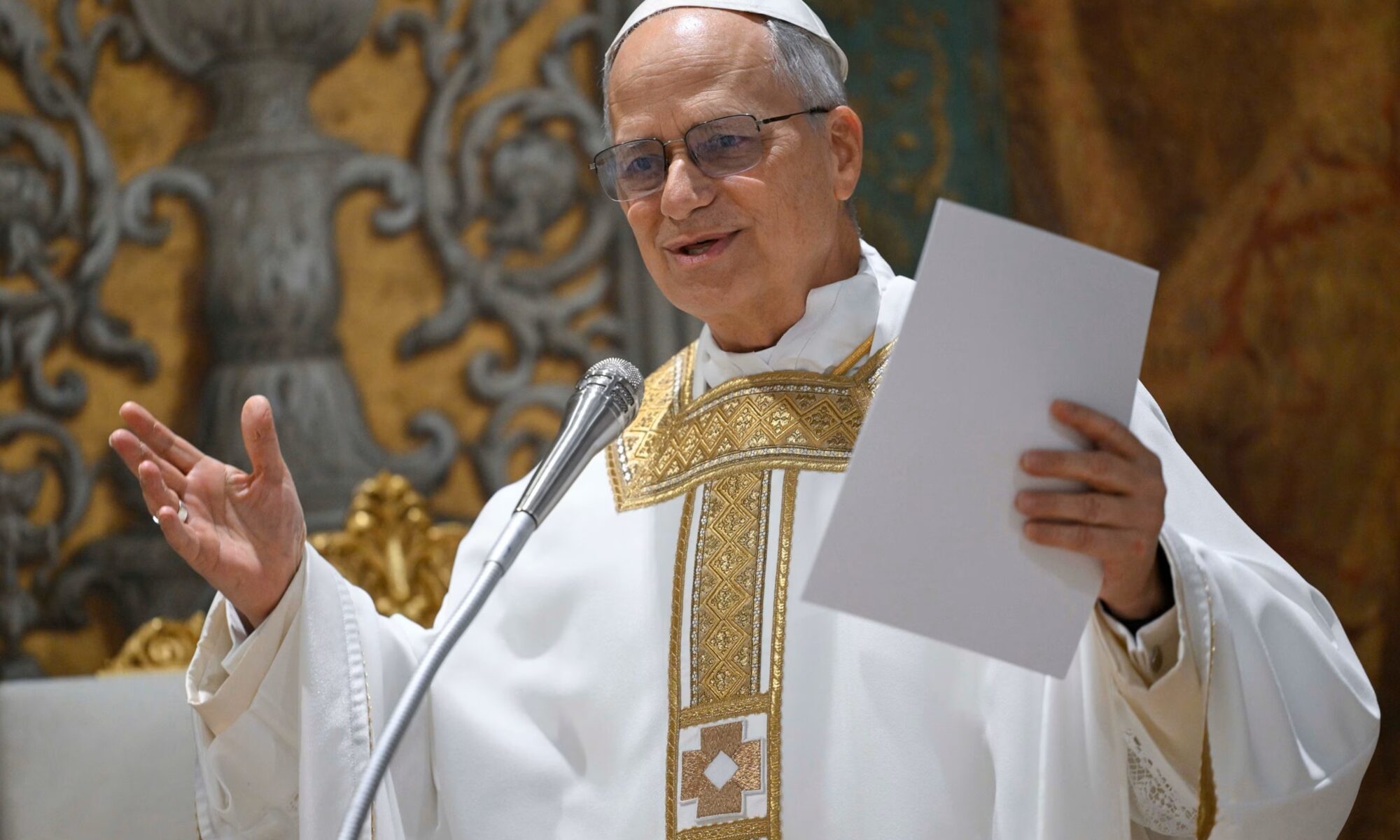
Here is a transcript and two short videos of Pope Leo XIV, then Bishop Prevost’s intervention at the synod on evangelization in 2012. Great stuff! really worth a read or a listen. We learn a lot about where he stood, at least then, on critical issues. The videos where he reads aloud his thoughts are below. Here is a transcript if you prefer to read it.
Transcript of Bishop Robert Francis Prevost (Pope Leo XIV) 2012 reading from address to the Synod of Bishops:
“The Counterculture of the New Evangelization”
BISHOP PREVOST: Western mass media is extraordinarily effective in fostering within the general public enormous sympathy for beliefs and practices that are at odds with the Gospel — for example, abortion, homosexual lifestyle, euthanasia. Religion is at best tolerated by mass media as tame and quaint when it does not actively oppose positions on ethical issues that the media have embraced as their own. However, when religious voices are raised in opposition to these positions, mass media can target religion, labeling it as ideological and insensitive in regard to the so-called vital needs of people in the contemporary world.
The sympathy for anti-Christian lifestyle choices that mass media fosters is so brilliantly and artfully ingrained in the viewing public that when people hear the Christian message, it often inevitably seems ideological and emotionally cruel by contrast to the ostensible humaneness of the anti-Christian perspective. Catholic pastors who preach against the legalization of abortion or the redefinition of marriage are portrayed as being ideologically driven, severe, and uncaring — not because of anything they say or do, but because their audiences contrast their message with the sympathetic, caring tones of media-produced images of human beings who, because they are caught in morally complex life situations, opt for choices that are made to appear as healthful and good.
Note, for example, how alternative families comprised of same-sex partners and their adopted children are so benignly and sympathetically portrayed in television programs and cinema today. If the new evangelization is going to counter these mass media-produced distortions of religious and ethical reality successfully, pastors, preachers, teachers and catechists are going to have to become far more informed about the context of evangelizing in a world dominated by mass media.
The church fathers offered a formidable response to those non-Christian and anti-Christian literary and rhetorical forces at work throughout the Roman Empire in shaping the religious and ethical imaginations of the day. The Confessions of St. Augustine, with its central image of the cor inquietam, has shaped the way that Western Christians and non-Christians reimagine the adventure of religious conversion. In his City of God, Augustine used the tale of Alexander the Great’s encounter with a captured pirate to ironize the supposed moral legitimacy of the Roman Empire.
Church fathers, among them John Chrysostom, Ambrose, Leo the Great, Gregory of Nyssa, were not great rhetoricians insofar as they were great preachers. They were great preachers because they were first great rhetoricians. In other words, their evangelizing was successful in great part because they understood the foundations of social communication appropriate to the world in which they lived. Consequently, they understood with enormous precision the techniques through which popular religious and ethical imaginations of their day were manipulated by the centers of secular power in that world.
Moreover, the Church should resist the temptation to believe that it can compete with modern mass media by turning the sacred liturgy into spectacle. Here again, church fathers such as Tertullian remind us today that visual spectacle is the domain of the saeculum, and that our proper mission is to introduce people to the nature of mystery as an antidote to spectacle. As a consequence, evangelization in the modern world must find the appropriate means for redirecting public attention away from spectacle and into mystery.
At least in the contemporary western world, if not throughout the entire world, the human imagination concerning both religious faith and ethics is largely shaped by mass media, especially by television and cinema. Western mass media is extraordinarily effective in fostering within the general public enormous sympathy for beliefs and practices that are at odds with the Gospel.
However, overt opposition to Christianity by mass media is only part of the problem. The sympathy for anti-Christian lifestyle choices that mass media fosters is so brilliantly and artfully engrained in the viewing public, that when people hear the Christian message it often inevitably seems ideological and emotionally cruel by contrast to the ostensible humaneness of the anti-Christian perspective.
If the “New Evangelization” is going to counter these mass media-produced distortions of religious and ethical reality successfully, pastors, preachers, teachers and catechists are going to have to become far more informed about the challenge of evangelizing in a world dominated by mass media.
The Fathers of the Church, including Saint Augustine, can provide eminent guidance for the Church in this aspect of the New Evangelization, precisely because they were masters of the art of rhetoric. Their evangelizing was successful in great part because they understood the foundations of social communication appropriate to the world in which they lived.
In order to combat successfully the dominance of the mass media over popular religious and moral imaginations, it is not sufficient for the Church to own its own television media or to sponsor religious films. The proper mission of the Church is to introduce people to the nature of mystery as an antidote to spectacle. Religious life also plays an important role in evangelization, pointing others to this mystery, through living faithfully the evangelical counsels.
Yet Another Interview about Hell
Another Interview on my new Book, The Hell There Is
Of Conclaves and Cardinals
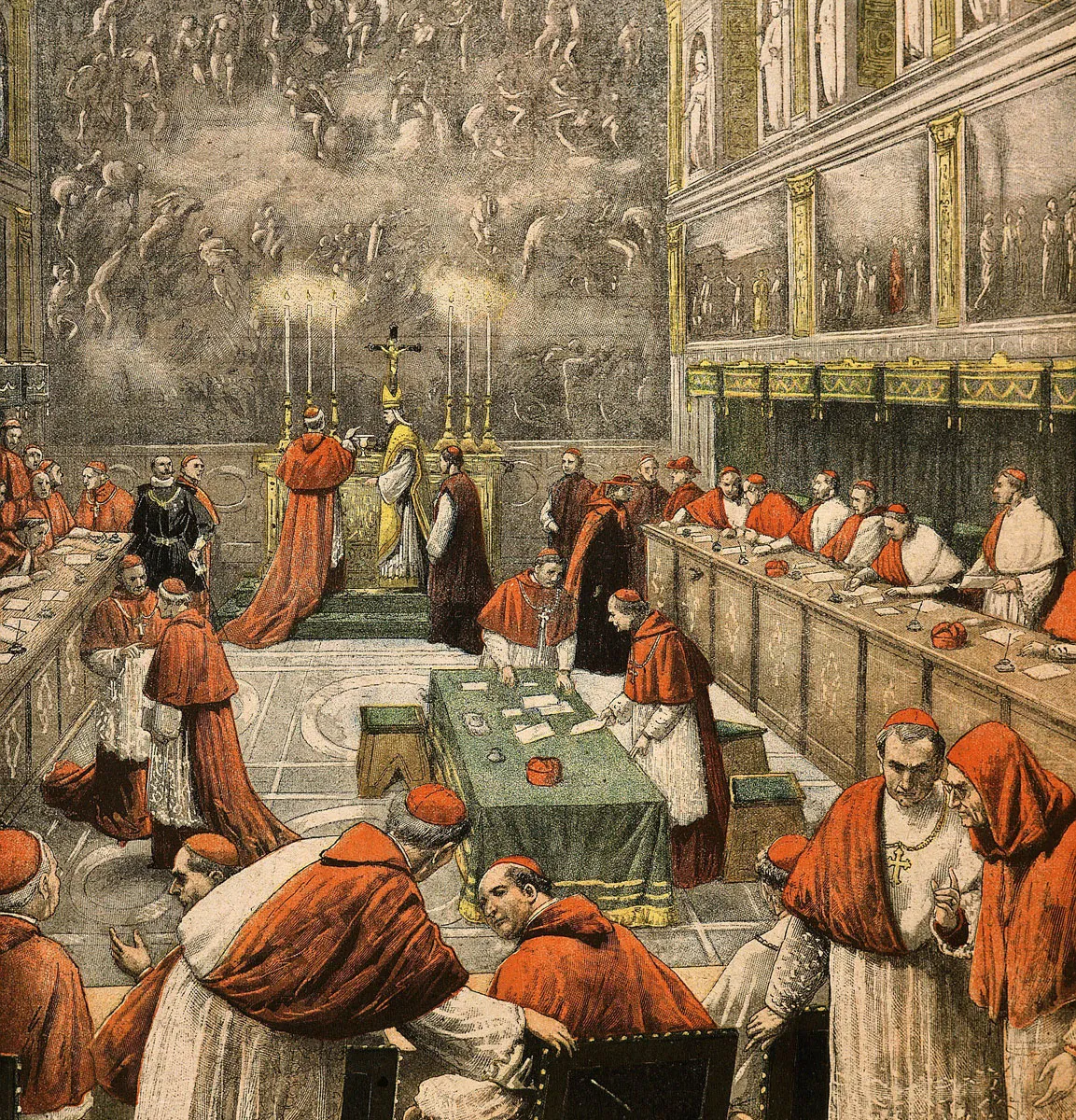
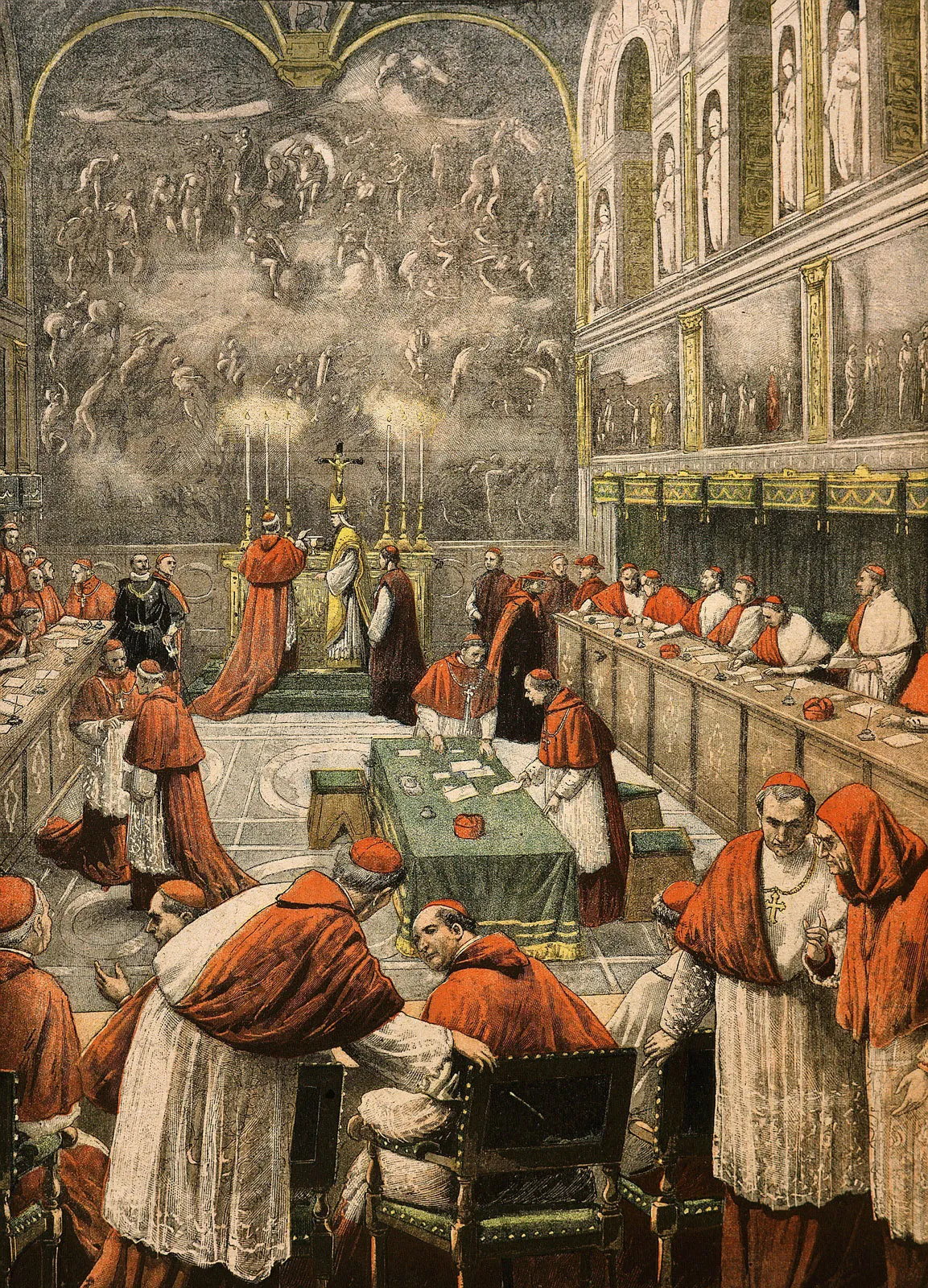 There is much focus on the College of Cardinals with the Funeral of Francis and the conclave to follow. It is funny and sad to think that the term “conclave” means, “with a key.” Things were so bad by the 13th Century as it often took years to elect a pope due to political interference. This led to mandate by Pope Gregory X during the Second Council of Lyons in 1274. Cardinals electors would be locked in seclusion cum clave (with a key) and not permitted to leave until a new pope had been elected. It is also said (perhaps by legend) that if there should there be a lengthy delay in the conclave, the whisky rations of the Cardinals would be decreased and next the food supplies would diminish, helping to hasten the decision. Alas, there were very bitter political divisions between many of the Cardinals due to nationalism and the desire for power. Remember too, that until the Papal States were surrendered in the mid 19th Century, the Roman Pontiff had a lot of land and involvement in temporal power and politics. All of this made for great turmoil and animosity. To be locked in with a key seemed a necessary solution. Now it is more of a formality but surely there are politics, both ecclesial and temporal that affect the process. Did not Jesus say, “Wherever two or three are gathered together in my name…there will be a fight!” (Gee, I can’t remember the citation, but if he didn’t say it, he should have)…. 🙂
All that said, it might be good to spend a brief time reflecting on what a Cardinal is and how the College of Cardinals functions. Perhaps it is good to start with a little history and then describe the present realities.
History [1]– Originally the term “cardinal” simply referred to any priest who was attached to a particular church or diocese. Even to this day we speak of diocesan priests as being “incardinated” (or attached) to a certain diocese or religious order, and this is required for every priest. There are not to be “free-ranging” priests. Later however, from about the 4th Century through the late Middle Ages the term “cardinal” came to be used only of certain more prominent priests in the larger dioceses of antiquity such as Constantinople, Milan, Ravenna, Naples, Sens, Trier, Magdeburg, and Cologne and of course, Rome. In more recent centuries the term came only to be used of Rome.
And thus we find the term cardinal used in the Church at Rome (from at least fifth century) to designate priests permanently serving in the Roman parishes and ministries under the Bishop of Rome, the Pope— These were the “cardinal priests.” However, as the number of priests grew, not all the priests attached to these Roman parishes were known as cardinal, but only the first priest in each such parish—i.e. the Pastor or Rector.
Cardinal priests attended not only to their own ministry or parish but also convened regularly to oversee matters of Church discipline in the diocese of Rome. These might include matters of disciplining the clergy, filling vacancies and so forth. But it also involved matters pertaining to the laity insofar as they interacted with the Church. Thus the Cardinal priests assisted the Pope in the administration of the Diocese of Rome. There are some echoes of all this in every diocese through a mechanisms known as the College of Deans and College of Consultors who assist the Bishop in administrative details and matters of Church discipline.
Cardinal Deacons – During all this time just described there also existed a group known as the cardinal deacons. The Roman Diocese was divided into seven regions and a deacon was assigned to each. They performed numerous duties but chief among them was record-keeping and the coordination of the care of the poor, cemeteries and the like. Given their elevated status over a deacon who only served a parish, they came to be called cardinal deacons. These cardinal deacons would also assist the Pope liturgically whenever he was in that region of the diocese. The number of these cardinal deacons gradually rose over the years.
Cardinal Bishops – Yet again, during all this time there also emerged the cardinal bishops. As the worldwide Church grew in size, the duties of the Pope, and the administrative concerns of the Roman Church (diocese) grew. The Pope increasingly came to call on bishops of nearby dioceses (esp. Ostia and Velletri, Porto and Santa Rufina, Albano, Frascati (Tusculum), Palestrina (Præneste), and Sabina) to represent him in an official capacity and to give him counsel.
Thus we see that the Cardinals had varying ranks and functions. They were, assistants of the pope in his liturgical functions, in the care of the poor, the administration of papal finances and possessions, and met in synod over the disposition of important matters to include Church discipline.
By the 11th Century the College of Cardinals took on more importance as they began to oversee the election of a new pope when this became necessary. They not only saw to the election but they also ran things during the interregnum. From this time on their functions and importance grew. The Pope met regularly with them in something called the “consistory,” i.e. a regular reunion or meeting of the cardinals and the pope. In these meetings doctrinal questions of faith, disciplinary matters, canonizations, approvals of rules of new orders, indulgences for the Universal Church, rules for papal elections, the calling of general councils, appointing of Apostolic legates and vicars etc. were attended to. The consistory also oversaw matters concerning dioceses and bishops, creation, transfer, division, the nomination and confirmation of bishops, also their transfer, resignation, etc.
The Modern Scene – More could be said of the history but allow this to bring us to modern times [2].
Although we see historically that there are three ranks of Cardinals (bishop, priest and deacon) it is now the practice that only bishops are elevated to the College of Cardinals. Since 1962 all cardinals have been required to receive episcopal consecration unless they are granted an exemption from this obligation by the Pope. This happened with Cardinal Avery Dulles who was elevated to Cardinal but remained a priest and most recently with Fr. Timothy Radcliff O.P.
Though most all the Cardinals are now bishops, the traditional distinctions are maintained.
-
-
- The title of “Cardinal Bishop” only means that he holds the title of one of the “suburbicarian” (nearby dioceses of Rome listed above) or that he is the Dean of the College of Cardinals — or that he is a patriarch of an Eastern Catholic Church.
- Cardinal priests today are generally bishops of important dioceses throughout the world, though some hold offices in the Curia.
- The cardinal deacons are either officials of the Roman Curia or priests elevated after their eightieth birthday (such as Cardinal Dulles was).
-
As for the functions of the College of Cardinals, we have already seen much of this in the history above. In modern times the function of the college is to advise the Pope about Church issues whenever he summons them to an ordinary consistory. The cardinals not only attend the meetings of the College but also make themselves available individually or with small panels of cardinals if the Pope requests their counsel in this way. Most cardinals have additional duties, such as leading a diocese or archdiocese. Others run a department of the Roman Curia.
The College of Cardinals also convenes on the death or abdication of a pope as a papal conclave to elect a successor. The college has no ruling power except during the sede vacante (vacant see) period, and even then its powers are extremely limited.
Those who attain to this office have proven their worth as stable and wise counselors, good bishops of the Church. May our Cardinals experience many graces and blessings in their work of electing a new Pope, likely from among their own number.