What Is the Wrath of God?

In yesterday’s Mass (Thursday of the Second Week of Easter) there was a reference to the wrath of God and the fact that only Jesus can save us from it. The Gospel warns, whoever disobeys the Son, will not see life, but the wrath of God remains upon him (John 3:36).

But what is God’s wrath? It is spoken of often in Scripture but it is a concept with which we must be careful. On the one hand we cannot simply dismiss it as contradictory to the fact that God is love, but neither can we deny God’s wrath as unfit in terms of His love.

It seems worthwhile to consider some aspects of the very complicated reality. There is not enough space to cover the whole topic in this post, but the comments stay open, as always, for your additions and subtractions. What are some ways that we can explain and understand the wrath of God? Let me propose a few.

The wrath of God is not merely an Old Testament concept. In fact, it is mentioned quite frequently in the New Testament as well. For example, consider the following examples, of which there are many more:

  1. Jesus said, “Whoever believes in the Son has eternal life, but whoever rejects the Son will not see life, for God’s wrath remains on him” (John 3:36).
  2. The wrath of God is being revealed from heaven against all the godlessness and wickedness of men who suppress the truth by their wickedness (Rom 1:18).
  3. Do not take revenge, my friends, but leave room for God’s wrath, for it is written: “It is mine to avenge; I will repay,” says the Lord (Rom 12:19).
  4. Let no one deceive you with empty words, for because of such things [e.g., sexual immorality] God’s wrath comes on those who are disobedient (Eph 5:6).
  5. For God did not appoint us to suffer wrath but to receive salvation through our Lord Jesus Christ (1 Thess 5:9).
  6. The angel swung his sickle on the earth, gathered its grapes and threw them into the great winepress of God’s wrath (Rev 14:19).

It is clear that the “wrath of God” is not some primitive concept with which the New Testament has dispensed. Notice, too, that the wrath of God is not something only for the end of the world. It is also spoken of as something already operative in certain people.

So again, what is God’s wrath and how can we reconcile it with His love? Consider some of the following images, explanations of God’s wrath. None of them alone is sufficient, but considered together, one can get an overall understanding.

  1. Image: On one level, God’s wrath is His passion to set things right. We see this image of God’s wrath in Genesis, when God cursed Satan and uttered the protoevangelium (the first good news): I will make you and the woman enemies … one of her seed will crush your head while you strike at his heel (Genesis 3:15). God is clearly angered at what sin has done to Adam and Eve; this continues whenever He beholds sin and injustice. God has a passion for our holiness. He wants what is best for us. He is angered by what hinders us in this regard. Surely all sins provoke His wrath, but there are five sins that especially cry out to Heaven: willful murder (Gen. 4:10); the sin of the Sodomites (Gen. 18:20; 19:13); the cry of the people oppressed (Ex. 3:7-10); the cry of the foreigner, the widow, and the orphan (Ex. 20:20-22); and injustice to the wage earner (Deut. 24:14-5; Jas. 5:4) (cf Catechism of the Catholic Church # 1867). In terms of sin, injustice, and anything that hinders the possibility of salvation, God has a wrathful indignation and a passion to set things right. This is part of His love for us. His wrath may be manifested through punishment, disturbance of our conscience, or simply by allowing us to experience the consequences of our sin and injustice.
  2. Clarification: God’s wrath is not like our anger. In saying that God is angry, we must understand that however God experiences anger (or any passion), it is not tainted by sin. When we get angry we often experience an out-of-control quality; our temper flares and we say and do things that are excessive if not sinful. It cannot pertain to God to have temper tantrums and to fly off the handle, to combine anger with an unreasonable lashing out. The way God does experience anger is not something we can fully understand but it is surely a sovereign and serene act of His will, not an out-of-control emotion.
  3. Clarification: God is not moody. It does not pertain to God to have good days and bad days, good moods and bad ones. Scripture clearly indicates that God does not change. Consider this from the Book of James: Every good and perfect gift comes from above, from the Father of lights, in whom there is no variableness or shadow of turning (James 1:17). God’s wrath does not indicate that He has suddenly had enough, or that His temper has flared, or that His mood has soured. God is. He does not change.
  4. Image: The primary location of God’s wrath is not in God; it is in us. Perhaps the best definition I have ever heard of God’s wrath is this one: “God’s wrath is our experience of the total incompatibility of our sinful state before the Holiness of God.” Sin and God’s holiness just don’t mix; they can’t keep company. Think of fire and water. They do not mix. They cannot coexist in the same spot. Bring them together and you can hear the conflict. Think of water spilled on a hot stove and hear the sizzling and popping; see the steam rising as the water flees. If, on the other hand, there is a lot of water, the fire is overwhelmed and extinguished, but the point is that they cannot coexist. They will conflict and one will win. This is wrath: the complete incompatibility of two things. It is this way between sin and God’s utter holiness. We must be purified before we can enter the presence of God otherwise we could never tolerate His glory. We would wail and grind our teeth and turn away in horror. The wrath is the conflict between our sin and God’s holiness. God cannot and will not change so we must be changed, otherwise we experience wrath. Notice that the experience is primarily within us, not God. God does not change; He is holy and serene; He is love. If we experience His wrath it is on account of us, not Him.
  5. Image: It is we who change, not God and this causes wrath to be experienced or not. Consider the following example. On the ceiling of my bedroom is a light with a 100-watt light bulb. At night before bed I delight in the light. I am accustomed to it. But then at bedtime I turn off the light and go to sleep. When I awake it is still dark, so I turn on the light. Ugh! Grrr! The light is bright and I curse it! Now, mind you, the light has not changed one bit. It is still the same 100-watt bulb it was hours earlier. The light is the same; it is I who have changed. But do you know what I do? I blame the light and say, “That light is harsh!” But the light is not harsh; it is just the same as when I was happy with it. Now that I have changed I experience its wrath but the wrath is really in me. Consider the experience of the ancient family of man with God. Adam and Eve walked with God in the cool of the evening when the dew collected on the grass (cf Gen 3:8). They had a warm friendship with Him and did not fear His presence. After sinning, they hid. Had God changed? He had not; they had. They now experienced him very differently. Fast forward to another theophany. God had come to Mt Sinai and as He descended the people were terrified, for there was thunder and lightning, clouds, and the loud blast of a trumpet. The people told Moses, “You speak to us, but let not God speak, else we will die” (Ex 20:19). God, too, warned Moses that the people could not get close lest His wrath be vented upon them (Ex 19:20-25). Had God changed? No, He had not. He was the same God who walked with them in the cool of the evening in a most intimate way. It was we who had changed. We had lost the holiness without which no one can see the Lord (Heb 12:14). The same God, unchanged though He was, now seemed frightening and wrathful to us.
  6. What then shall we do? If we can allow the image of fire to remain before us we may well find a hopeful sign in God’s providence. God is a holy fire, a consuming fire (cf Heb 12:26; Is 33:14); how can we possibly come into His presence? How can we avoid the wrath that would destroy us? Well, what is the only thing that survives in the presence of fire? Fire is the only thing that survives! So we’d better become fire if we want to see God. So it was that God sent tongues of fire upon the Apostles, and upon us at our Confirmation. God wants to set us on fire with the Holy Spirit and in holiness. God wants to bring us up to the temperature of glory so that we can stand in His presence: “See, I will send my messenger, who will prepare the way before me. Then suddenly the Lord you are seeking will come to his temple; the messenger of the covenant, whom you desire, will come,” says the LORD Almighty. But who can endure the day of his coming? Who can stand when he appears? For he will be like a refiner’s fire or a launderer’s soap. He will sit as a refiner and purifier of silver; he will purify the Levites and refine them like gold and silver. Then the LORD will have men who will bring offerings in righteousness, and the offerings of Judah and Jerusalem will be acceptable to the LORD, as in days gone by, as in former years (Mal 3:1-4). Indeed, Jesus has now come: For you have turned to God from idols to serve the living and true God, and to wait for his Son from heaven, whom he raised from the dead—Jesus, who rescues us from the coming wrath (1 Thess 1:10-11).

So there is a “wrath of God,” but it is more in us than in God. But I will not say to you that there is no wrath in God. Scripture does indicate that wrath pertains to God’s inner life. What exactly it is and how God experiences it is mysterious. To some extent we can say what it is not (as we did above) but we cannot really say precisely what it is. Far more rich than this is the meditation that the wrath of God is essentially in us. It is our experience of the incompatibility of sin before God. We must be washed clean in the Blood of the Lamb and purified. Most of us will also need purification in Purgatory, but if we let the Lord do His saving work, we are saved from the wrath, for we are made holy and set on fire with His love. Fire never fears the presence of fire. God is love, but He will not change, so love must change us.

One of the greatest cinematic depictions of the wrath of God occurred in the movie Raiders of the Lost Ark. The Nazis sinfully think that they can open the Ark and endure the presence of God. What they get is wrath, for sin cannot endure the reality of God’s presence. “Enjoy” this clip from the movie!

Why Didn’t Christ Stay with His Disciples Continually from the Resurrection to His Ascension?

After Christ rose from the dead, He appeared to His disciples at certain places and times, but did not seem to stay with them continuously. On the first Easter Sunday, He appeared six times in rather rapid succession: first to Mary Magdalene, then to the women at the tomb, third as the women left the tomb, fourth to Peter, fifth to the two disciples going to Emmaus, and sixth to the ten Apostles in Jerusalem (when Thomas was not present).

In His public ministry, Jesus seemed to be with His disciples nearly all the time. However, after His Resurrection he would appear, converse, and teach, but then be absent from them bodily. For example, John 20:26 says that “after eight days” Christ appeared to the disciples, suggesting that He was not otherwise present to them during that period.

While it is true that we do not have an exact calendar of His appearances and not every appearance is necessary recorded, it seems apparent that the Lord was not constantly with the disciples during the forty days prior to His ascension.

Why is this?

St. Thomas Aquinas reflected on this question and offers two basic reasons. In so doing he does not propose an absolute explanation, but rather demonstrates why it was fitting that Christ was not with them continuously during the forty days prior to the ascension. St. Thomas writes,

Concerning the Resurrection two things had to be manifested to the disciples, namely, the truth of the Resurrection, and the glory of Him who rose. 

Now in order to manifest the truth of the Resurrection, it sufficed for Him to appear several times before them, to speak familiarly to them, to eat and drink, and let them touch Him. But in order to manifest the glory of the risen Christ, He was not desirous of living with them constantly as He had done before, lest it might seem that He rose unto the same life as before … [For as Bede says] “He had then risen in the same flesh, but was not in the same state of mortality as they.”

That Christ did not stay continually with the disciples was not because He deemed it more expedient to be elsewhere: but because He judged it to be more suitable for the apostles’ instruction that He should not abide continually with them, for the reason given above.

He appeared oftener on the first day, because the disciples were to be admonished by many proofs to accept the faith in His Resurrection from the very out set: but after they had once accepted it, they had no further need of being instructed by so many apparitions (Summa Theologiae, Part III, Q. 55, Art. 3).

While St. Thomas observes that there may well be appearances that were not recorded, he is inclined to hold that there were not a lot more of them. He writes,

One reads in the Gospel that after the first day He appeared again only five times. For, as Augustine says (De Consens. Evang. iii), after the first five apparitions “He came again a sixth time when Thomas saw Him; a seventh time was by the sea of Tiberias at the capture of the fishes; the eighth was on the mountain of Galilee, according to Matthew; the ninth occasion is expressed by Mark, ‘at length when they were at table,’ because no more were they going to eat with Him upon earth; the tenth was on the very day, when no longer upon the earth, but uplifted into the cloud, He was ascending into heaven. But, as John admits, not all things were written down. And He visited them frequently before He went up to heaven,” in order to comfort them. Hence it is written (1 Corinthians 15:6-7) that “He was seen by more than five hundred brethren at once … after that He was seen by James”; of which apparitions no mention is made in the Gospels (ibid).

St. Thomas strikes a balance between the Lord’s need to instruct them and summon them to faith in the resurrection, and the need for them to grasp His risen glory. Christ did not merely resume His former life. The disciples were not to cling to their former understandings of Him as Rabbi and teacher; now they were to grasp more fully that He is Lord.

Though Thomas does not mention it here, I would add another reason for the Lord’s action of not abiding with them continuously: It was fitting for Him to do this to accustom them to the fact that they would no longer see Him as they had with their physical eyes. Once He ascended, they would see Him mystically in the Sacraments and in His Body the Church. Thus, as the Lord broke the Bread and gave it them in Emmaus, they recognized Him the Eucharist (Luke 24). Thereupon He vanished from them. It was as if to say, “You will no longer go on seeing me in the same manner. Now you will experience me mystically and in the Sacraments.”

The Four Basic Pillars of the Christian Life

On Sunday we read from the Acts of the Apostles and we do well to look back at the opening verse of that passage (Acts 2:42). There we discover a four-point plan that describes the Christian life. Of the life of the early Christians it is said,

They devoted themselves to the apostles’ teaching and to the fellowship, to the breaking of bread and to prayer (Acts 2:42).

Here then are the four pillars of the Christian life. Before looking at them in detail, recall the context of this verse. Peter has just preached a sermon in which he warns his listeners to repent and believe the Good News. He says to them,

“Save yourselves from this corrupt generation.” Those who accepted his message were baptized, and about three thousand were added to their number that day (Acts 2:40-41).

Now they are baptized and in the Church of the Living of God. (Notice that the verse does not say that they said the “sinners’ prayer” to be saved; it just says that they were baptized.) Unlike some of our Protestant brethren, who hold a kind of “once saved, always saved” mentality, we see that the text does not stop there. These new disciples now have a life to lead that will prepare them to meet God and help them to set their house in order. And this brings us back to our verse:

So here is our “four-point plan” for setting our house in order once we have come to faith. There are four components listed, four pillars if you will. Note that the text says that they devoted themselves to these four pillars of the Christian life. They did not merely do them occasionally, or when they felt like it, or when the time seemed right. They were consistent; they were devoted to these four pillars.

Pillar I. The Apostles’ Teaching – This first pillar of the Christian life is fascinating, not only for what it says, but for what it does not say. When we think of the “Apostles’ teaching” we think first of the four Gospels and the New Testament Epistles. These would surely be components of the Apostles’ teaching for modern Christians, but notice that the text does not say that they devoted themselves to Scripture, but rather to the Apostles’ teaching.

For a Catholic, the Apostolic teaching consists not only of the New Testament Scriptures, but also of Sacred Tradition, which comes to us from the Apostles and has been understood and articulated by the living Magisterium of the Church. Protestants would largely interpret this first pillar as an exhortation to read the Bible every day and base our lives on it. This is a true understanding, but only a partial one. The early Christians did not have the New Testament in its final form from day one and thus could not have lived this text in such a way. The Bible as we now have it was not yet completed, edited, or canonized. Yet they had received the Apostolic teaching, because it had been preached to them by the Apostles and their deputed representatives: the bishops, priests, and deacons.

St. Paul wrote to the Thessalonians, So then, brothers, stand firm and hold to the teachings we passed on to you, whether by word of mouth or by letter (2 Thess 2:15). Therefore, the Catholic application of this first pillar is truer and fuller in that we are devoted to the Apostles’ teaching not in Scripture alone, but also in Sacred Tradition as passed down and interpreted by the living Magisterium of the Church.

To live this first pillar with devotion means to set our house in order by diligently studying what the Apostles have handed down to us. We do this by the daily, devoted reading of Scripture and/or the diligent study of the faith through the Catechism or other approved manuals. We should make it a daily habit to read Scripture and study the faith, attempting to grow in our knowledge of what God has revealed through His prophets and Apostles, and then basing our life on what we learn and repenting of what is not in line with the revealed truth.

Pillar II. The FellowshipThe word fellowship may be a little weak here as a translation of the Greek τῇ κοινωνίᾳ (te koinonia). Most people who hear the word fellowship think of coffee and doughnuts after Mass, but the more theological way of translating this word is probably “a communion.” The sacred gathering of the faithful is better termed a “communion,” or in Latin “communion.” It is a gathering of the members of Christ’s Body the Church into one, a communion of Christ with His Bride the Church. True communio is to be in a rich relationship with others who instruct in the faith, encourage us, hold us accountable, and help when we are struggling. True communio is also to devote ourselves to helping others to salvation and perseverance.

According to this text, the early Christians devoted themselves to this communal gathering, surely on Sundays but also at other important times. Hence, the second pillar of the Christian life, through which we are helped to set our house in order, is “fellowship,” or even better, “communio.”

Keeping fellowship and meeting together in the Lord is rooted in this commandment: Keep holy the Sabbath. It doesn’t make sense to think that we can disregard one of the Ten Commandments and then claim that our house is in order. Some argue that this commandment does not explicitly say that we must be in Church on Sunday, but Leviticus 23:3 says regarding this commandment, You shall do no work and you shall keep sacred assembly, it is the Sabbath of the Lord.

Sacred assembly means “Church.” It is the fellowship, the koinonia, the communio. There is no way around it. God expects us to be in His house on our Sabbath, which is Sunday. The Book of Hebrews also says, And let us not neglect to meet together regularly and to encourage one another, all the more since the Day draws near. See here how the last “Day” and being prepared for it is linked to “meeting together regularly.”

So the second pillar of the Christian life is to set our house in order by going to Mass every Sunday and Holy Day. In the Mass, we encourage others and are encouraged by them. We also receive instruction in the Word of God by the anointed and deputed ministers of that Word: the bishops, priests, and deacons.

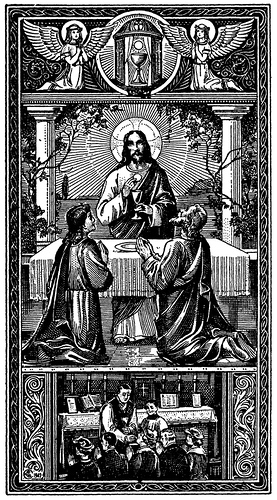
Pillar III. The Breaking of the BreadThe phrase “the breaking of the bread” in the New Testament usually meant the reception of Holy Communion, or the Eucharist.

The worthy reception of Holy Communion is directly connected to having our house in order, for there are wonderful promises made to those who are faithful in this regard. Jesus makes this promise: Whoever eats my flesh and drinks my blood remains in me, and I will raise him up on the last day (John 6:40). That’s quite a promise in terms of being ready! Jesus is saying that frequent reception of the Eucharist is essential preparation for the Last Day. Jesus also warns us not to stay away from “the breaking of the bread” or Holy Communion. Unless you eat the flesh of the Son of Man and drink his blood, you do not have life in you (Jn 6:53).

Without Holy Communion, we’re not going to make it. You have to receive regularly in order to be ready. We cannot claim that our house is in order if we willfully stay away from Holy Communion.

By extension, we must allow this reference to one sacrament (Holy Communion) to be a reference to all the sacraments. Clearly, a Catholic approach to this third pillar of preparation would include being baptized and confirmed. It would also include weekly reception of Holy Communion, regular confession, anointing of the sick when necessary, and where possible the reception of Holy Matrimony or Holy Orders.

The sacraments are our spiritual medicine. We have a bad condition called concupiscence (a strong inclination to sin). It is like spiritual high blood pressure or diabetes. Hence, we must take our medicine and be properly nourished. As our medicine, the sacraments help us to avoid dying from our sinful condition. So the third pillar of the Christian life is to set our house in order by receiving Holy Communion worthily every Sunday and the other sacraments at appropriate times.

Pillar IV.Prayer This final pillar requires more of us than just saying our prayers in a perfunctory way. The Greek word here is προσευχαῖς (Proseuchais), and is best translated just as we have it here: “prayers.” However, the Greek root proseuche is from pros (toward or immediately before) + euchomai (to pray or vow). The prefix pros conveys the sense of being immediately before Him, and hence the ideas of adoration, devotion, and worship are included.

Thus prayer is understood as more than simply “saying one’s prayers.” What is called for is worshipful, attentive, and adoring prayer. Prayer is experiencing God’s presence. Jesus says of prayer that it is necessary for us lest we fall. Watch and pray so that you will not fall into temptation (Matt 26:41). Hence, the fourth pillar is prayer, through which we put our house in order through regular, worshipful, attentive, and adoring prayer of God. This serves as a kind of medicine lest we fall deeply into temptation.

So here are four basic pillars of preparation for the Day of Judgment. Follow them and then even if Jesus “hits like an atom bomb,” you’ll be able to look up and be ready, knowing that your redemption is at hand.

Enjoy this video. Observe in it all the preparations for the atomic bomb that those who are older may remember. In a way, all the preparations you see in the video are a little silly, since ducking under a desk wouldn’t help much if an atom bomb really hit! But the preparations I have mentioned above really are helpful because God gives them to us. The people in this video were trying to get ready using measures that probably wouldn’t help much. How much more important it is for us to do so, who do stand a chance, because God Himself has instructed us. Set your house in order!

Four Qualities of Bold and Believable Witnesses to Jesus

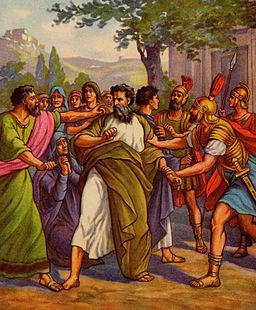
It is worthwhile to look back at a text that was read on Saturday (Saturday of the Octave of Easter). It is from Acts and sets forth a picture of courage and holy boldness that is too little evident in many Catholics. Let’s look at the passage and then reflect on four qualities that the Apostles Peter and John manifest.

Now when [the Sanhedrin] saw the boldness of Peter and John, and perceived that they were uneducated, common men, they were astonished. And they recognized that they had been with Jesus. But seeing the man who was healed standing beside them, they had nothing to say in opposition. But when they had commanded them to leave the council, they conferred with one another, saying, “What shall we do with these men? For that a notable sign has been performed through them is evident to all the inhabitants of Jerusalem, and we cannot deny it. But in order that it may spread no further among the people, let us warn them to speak no more to anyone in this name.” So they called them and charged them not to speak or teach at all in the name of Jesus. But Peter and John answered them, “Whether it is right in the sight of God to listen to you rather than to God, you must judge, for we cannot but speak of what we have seen and heard.” And when they had further threatened them, they let them go, finding no way to punish them, because of the people, for all were praising God for what had happened (Acts 4:13-21).

Their Authority The text opens with a reference to the “boldness” of Peter and John to the fact that the religious authorities are “astonished.” How could such uneducated and common men speak and act this way?

The Greek word translated here as “boldness” is Παρρησία (parresía or parrhēsía) from pás, “all” + rhēsis, meaning “a proverb or statement quoted with resolve.” In other words, parresía means to speak with confidence and exhibit strong resolve; it means to speak plainly, publicly, or boldly. It is from the root rhēsis that the term rhetoric comes. Rhetoric is the art of effective or persuasive speaking and in its more technical sense usually requires training in logic and poise.

Thus, the boldness described in this passage shows the transformation that that the resurrection and Pentecost have effected. Prior to Pentecost, the Apostles, though often zealous and willing to make sacrifices to follow Jesus, were also slow to understand and often confused. Beginning with Easter Sunday (e.g., Luke 24:32,45) and most likely throughout the forty days before ascending, the Lord instructed and formed the Apostles in the Gospel. It would take Pentecost, however, to fully quicken their minds and confirm their hearts. Jesus had said, I still have much to tell you, but you cannot yet bear to hear it. However, when the Spirit of truth comes, He will guide you into all truth (Jn 16:12-13). Elsewhere, He added, All this I have spoken to you while I am still with you. But the Advocate, the Holy Spirit, whom the Father will send in My name, will teach you all things and will remind you of everything I have told you (John 14:25-26).

Prior to Pentecost, the Apostles and disciples gathered in fear, behind locked doors. Afterwards, though, they go about with the boldness described here. The religious leaders are “astonished” and marvel that such common and unlearned men can have such a sweeping command of their topic, and such serene courage. Peter and John have healed a man who had been lame for forty years, a man they knew was lame and had seen in the temple. The religious leaders cannot explain it; further, the usual threats do not seem to have the desired effect on them.

Yes, Peter and John are bold, confident, and unafraid. They are manifesting the gift that the Lord promised when he said, On account of My name, they will deliver you to the synagogues and prisons, and they will bring you before kings and governors. This will be your opportunity to serve as witnesses. So make up your mind not to worry beforehand how to defend yourselves. For I will give you speech and wisdom that none of your adversaries will be able to resist or contradict (Luke 21:12-15).

Such a change in these men, especially Peter! It is clear that the Lord has gifted them just as He promised. Their boldness is God’s grace. May that grace reach Church leaders today, both clergy and lay. Holy boldness such as this is needed more than ever.

Their Association The text says that the Sanhedrin recognized that they had been with Jesus. What a magnificent line. While this may have meant they recalled that these men had accompanied Jesus, for the reader the expression has far more depth. Peter and John, by their transformed lives, are manifesting that they have been with Jesus. They are showing forth the fruit of a life-changing, transformative relationship with Jesus Christ. Yes, these men have been with Jesus; it is obvious!

How about you and me? Would someone be able to look at us and conclude that we have been with Jesus? Is this not a description of what should be the normal Christian life? Is your association with Jesus Christ obvious to others? It ought to be.

It is, of course, a sad reality that most Christians are content to hide out or to blend in with the culture. They are undercover Christians, secret-agent saints, and frozen chosen. There’s no real fire to attract attention, no bold proclamations or visible signs of spiritual life. Few would ever conclude that they had been with Jesus.

Where are we on the light spectrum? Is the Light of Christ in us visible (Mat 5:14)? Do we bear the brand marks of Jesus (Gal 6:17)? Do we love our enemies (Mat 5:44)? Do we shine like the stars in the midst of a twisted and depraved generation (Phil 2:15)?

Their Arresting Ability Although Saints Peter and John have been arrested, they have, in effect, turned the tables and arrested the Sanhedrin. As remarked above, Peter and John do not seem cowed by the usual threats and their arguments are not easily set aside, for they speak with sincerity and authority. Further, the crowds are amazed and the leaders themselves cannot explain how a man, known by them to have been lame for forty years, now walks and even dances!

They don’t really know what to do. They are arrested by the winsome and courageous witness before them.

True holiness can have this effect, at least in certain conditions. St. Teresa of Calcutta was like this. Though many did not share her faith, even enemies of the faith admired her. This was not because she was a people pleaser; in fact, just the opposite. She had a boldness to scold even the most powerful, but a love that could not be denied. Her reflection of the glory of Christ arrested one and all.

This is perhaps one of the rarest gifts of all, yet still one to seek, so that at least some in every age have a holiness and a goodness that is arresting in its purity.

Their Assertiveness – To be appropriately assertive is to get one’s needs met without trampling others. And what is the greatest need of any saint? To proclaim Christ and Him crucified and risen. Thus, when Peter and John are warned to stop proclaiming the name of Jesus, they assert their need and right to continue doing so. However, they do so without disrespecting the leaders before them. They do not shout, “We won’t listen to you!” They do not personally disrespect them at all. Rather, they commend themselves to the conscience of these leaders as a way of respectfully declining a command they cannot follow:

Whether it is right in the sight of God to listen to you rather than to God, you must judge, for we cannot but speak of what we have seen and heard.

In other words, they say, “Brothers, Elders, would you not agree that a man must obey God before obeying any man? Do what you must do. Make your judgments. But we must obey the Lord and speak of Jesus until our last breath.”

They are respectful but clear. They assert themselves and their mission but do not attack and trample the reputations or lawful authority of those in the community or state. They cannot cooperate in an evil directive, but they do not attack or stage an attempted overthrow of power. They stand before their opponents and look them in the eye. They will not flee or yield to fear, but neither will they become like them in arrogance and unrighteous demands.

This is a good model for us who are entering into increasingly difficult days, in which the pressures made upon us by the culture and the government may require that we refuse to cooperate with evil demands. Our goal is not to humiliate and overcome our opponents, but to convert them; and if not them then the culture around us. As St. Paul says, We do not use deception, neither do we distort the word of God. On the contrary, by setting forth the truth plainly we commend ourselves to everyone’s conscience in the sight of God (2 Cor 4:2).

So here is a model for us and a set of challenges. We are to manifest a bold and sincere confidence in the Gospel we proclaim, because we have met Jesus and are being transformed into His likeness. Indeed, we should ask and strive for that rare holiness that is arresting in its purity but also assertively announces Christ Jesus without compromise or hypocrisy.

Help us, Lord!

From Fear to Faith – A Homily for the Second Sunday of Easter

In today’s Gospel, the risen Lord appeared to the Apostles, who were gathered together in one place. The fact that they were gathered in one place is not without significance, for it is there that the Lord chose to appear to them. One of them was not in the gathering and thus missed the blessing of seeing and experiencing the risen Lord. It might be said that Thomas, the absent Apostle, blocked his blessing.

Some people want Jesus without the Church. No can do. Jesus is found in His Church, among those who have gathered. There is surely joy to be found in a personal relationship with Jesus, but the Lord also announced a special presence whenever two or three are gathered in His name. It is essential for us to discover how Mass attendance is essential for us if we want to experience the healing and blessing of the Lord. This Gospel has a lot to say to us about the need for us to gather together to find the Lord’s blessing in the community of the Church, in His Word, and in the Sacraments. Let’s look at today’s Gospel in five stages.

I. Fearful Fellowship – Notice how the text describes the gathering of the Apostles: On the evening of that first day of the week, when the doors were locked, where the disciples were, for fear of the Jews … These men are frightened, but they are in the right place. It is Sunday, the first day of the week, and they have gathered together. The text says nothing about what they are doing, only that they have gathered. But in a sense this is all we need to know, for this will set the stage for blessings and for the presence of the Lord.

And these are men who need a blessing! The locked doors signify their fear of the Jewish authorities. One may also assume that they are discouraged, lacking in hope, and maybe even angry. For they have experienced the earthquake that Jesus’ crucifixion was for them. It is true that some of the women in their midst claim to have seen Him alive, but now it is night and there have been no other sightings of which they have heard.

But, thanks be to God, they have gathered. It is not uncommon for those who have “stuff” going on in their lives to retreat, withdraw, and even hide. Of course this is probably the worst thing that one can do. And it would seem that Thomas has taken this approach, though his absence is not explained. Their gathering, as we shall see, is an essential part of the solution for everything that afflicts them. This gathering is the place in which their new hope, new hearts, and new minds will dawn.

And so it is for us, too, afflicted as we are in so many ways, troubled at some times and joyful at others, there is the critical importance of gathering each Sunday, each first day of the week. In every Mass, the Lord prepares blessings for us. I am powerfully aware that every Mass I celebrate, especially Sunday Mass, is a source of powerful blessings for me. Not only does God instruct me with His Word and feed me with His Body and Blood, He also helps form me through the presence and praise of others: the people I have been privileged to serve. I don’t know where I’d be if it were not for the steady support of the people of God: their prayers, their praise, their witness, and their encouragement.

The Book of Hebrews states well the purpose and blessing of our liturgical gatherings:

Let us hold fast the confession of our hope without wavering, for He who promised is faithful; and let us consider how to stir up one another to love and good deeds, not neglecting to meet together, as is the habit of some, but encouraging one another; and all the more as you see the Day drawing near (Heb 10:22-25).

So the Apostles are meeting together, encouraging one another. As we shall see, they are about to be blessed, but the blessing occurs only the context of the gathering, so Thomas will miss it. This blessing is only for those who are there. So it is for us, too, who also have blessings waiting but only if we are present, gathered for Holy Mass. Don’t block your blessings!

II. Fabulous Fact – Then comes the blessing: For where two or three are gathered in my name, there am I among them (Matt 18:20). The text from today’s Gospel says, Jesus came and stood in their midst and said to them, “Peace be with you.” When he had said this, he showed them his hands and his side. The disciples rejoiced when they saw the Lord. Jesus said to them again, “Peace be with you.”

Suddenly there is a completely new reality, a new hope, a new vision. Note that there is also a new serenity, a peace, a shalom. Not only do they see and come to experience a wholly new reality, they also receive an inner peace. Observe again that this is only to those who are present.

This is a basic purpose of the gathering we call the Sacred Liturgy. It is here that we are invited to encounter the living Lord, who ministers to us and offers us peace. Through His word, we are increasingly enabled to see things in a wholly new way, one that gives us hope, clarity, and confidence. Our lives are reordered. Inwardly, too, a greater peace is meant to come upon us as the truth of this newer vision begins to transform us, giving us a new mind and heart. Looking to the altar, I draw confidence that the Lord has prepared a table for me in the sight of my enemies and my cup is overflowing (Ps 23). The Eucharist is thus the sign of our victory and our election; as we receive the Body and the Blood of the Lord, we are gradually transformed into the very likeness of Christ.

Is this your experience of the gathering we call the Mass? Is it a transformative reality, or just a tedious ritual?

As for me, I can say that I am being changed, transformed into a new man, into Christ, by this weekly, indeed daily gathering we call the Mass. I have seen my mind and heart changed and renewed. I see things more clearly and have greater hope, joy, and serenity. I cannot imagine what my life would be like were it not for this gathering of the Holy Sacrifice of the Mass, where Jesus is present to me and says, “Shalom, peace be with you.” Over the years, I am a changed man.

Yes, the Mass works. It transforms; it gives a new mind and heart. Don’t block your blessings; be there every Sunday.

III. Forgiving Fidelity – Next comes something quite extraordinary, something that simply cannot take place within a private notion of faith. The text says, “As the Father has sent me, so I send you.” And when he had said this, he breathed on them and said to them, “Receive the Holy Spirit. Whose sins you forgive are forgiven them, and whose sins you retain are retained.”

In this remarkable moment, the Lord gives the Apostles the power to forgive sin. Note that He is not simply giving them the ability to announce that we are forgiven; He is giving them the juridical power to forgive, or in certain cases to withhold/delay forgiveness. This is extraordinary! Not only has He given this authority to men (cf Matt 9:8), He has given it to the very men who abandoned Him (with the exception of John) at His crucifixion. These are men who are well aware of their shortcomings. Perhaps it is only because Jesus knows of their awareness that He can truly trust them with such power.

There are those who deny that Confession is a biblical sacrament, but here it is in today’s Gospel. There are other texts in Scripture showing Confession to be quite biblical:

  1. Also many of those who were now believers came, confessing and divulging their practices (Acts 19:18).
  2. Is any one of you sick? He should call the presbyters of the church to pray over him and anoint him with oil in the name of the Lord. And the prayer offered in faith will make the sick person well; the Lord will raise him up. If he has sinned, he will be forgiven. Therefore, confess your sins to one another and pray for each other so that you may be healed. The prayer of a righteous man is powerful and effective (James 5:14-16).

Many consider it sufficient to speak to God privately about their sins, but the Scriptures instruct us away from such a solitary notion and bid us to approach the Church. The Lord gives the Apostles the authority to adjudicate and then to absolve or retain sins, but this presupposes that someone has first approached them for such absolution. St. Paul was approached by the believers in Ephesus, who made open declaration of their sins. The Book of James also places the forgiveness of sins in the context of the calling of the presbyters, the priests of the Church, and sees this as the fulfillment of this passage: declare your sins to one another … the prayer of the righteous man has great power (James 5:16).

Thus, again, there is a communal context for blessing, not merely a private one. I have written more on the biblical roots of Confession here: The Sacrament of Confession.

IV. Faltering Fellowship – We have already noted that Thomas blocked his blessing by not being present. The text says, Thomas, called Didymus, one of the Twelve, was not with them when Jesus came. So the other disciples said to him, “We have seen the Lord.” But he said to them, “Unless I see the mark of the nails in his hands and put my finger into the nail marks and put my hand into his side, I will not believe.”

Thomas exhibits faltering fellowship in two ways:

First, he is not with the other Apostles on resurrection evening, thus he misses the blessing of seeing and experiencing the resurrection and the Lord.

Second, Thomas exhibits faltering fellowship by refusing to believe the testimony of the Church that the Lord has risen.

One of the most problematic aspects of many people’s faith is that they do not understand that the Church is an object of faith. In the Creed every Sunday, we profess to believe in God the Father and in Jesus Christ, His only Son, our Lord, and to believe in the Holy Spirit, the Lord and giver of life. But we are not done yet. We go on to say that we believe in one, holy, catholic, and apostolic Church. We know and believe what we do about Jesus Christ on the basis of what the Church hands on from the apostles. Some say, “No, I believe in what the Bible says,” but the Bible is a book of the Church. God has given it to us through the Church who, by God’s grace, collected and compiled its contents and vouches for the veracity of the Scriptures. Without the Church there would be no Bible.

Therefore, in rejecting the testimony of the Church, Thomas is breaking fellowship and refusing to believe in what the Church, established by Christ to speak in His name (e.g. Lk 24:48; Lk 10:16; Matt 18:17; Jn 14:26; 1 Tim 3:15; inter al.), teaches. We, too, falter in our fellowship with the Church if we refuse to believe the testimony of the Church in matters of faith and morals. Here, too, is a privatization of faith, a rejection of fellowship, and a refusal to gather with the Church and accept what she proclaims through her Scriptures, Tradition, and the catechism.

Note that as long as Thomas is not present, he has blocked his blessings. He must return to gather with the others in order to overcome his struggle with the faith.

V. Firmer Faith – Thomas then returns to fellowship with the other Apostles. Just as we do not know the reason for his absence, his return is also unexplained. Some may wish to chalk up his absence to some insignificant factor such as being busy, or in ill health, or some other largely neutral factor, but John seldom provides us detail for no reason. Further, Thomas does refuse to believe the testimony of the others, which is not a neutral fact.

But, praise God, Thomas is now back with the others and in the proper place for a blessing. Whatever his struggle with the faith, he has chosen to work it out in the context of fellowship with the Church. He has gathered with the others. Now comes the blessing.

You know the story, but the point here for us is that whatever our doubts and difficulties with the faith, we need to keep gathering with the Church. In some ways faith is like a stained glass window that is best appreciated from inside the Church. From the outside there may seem very little about it that is beautiful. It may even look dirty and leaden, but once one ventures inside and adjusts to the light, one can see that the window radiates beauty.

It is often this way with the faith. I have found that I could only really appreciate some of the more difficult teachings of the Church after years of fellowship and instruction by the Church, in the liturgy and in other ways. As my fellowship and communion have grown more intense, my faith has become clearer and more firm.

Now that he is inside the room, Thomas sees the Lord. When he was outside, he did not see and so he doubted. The eyes of our faith see far more than our fleshly eyes, but in order to see and experience our blessings, we must gather; we must be in the Church.

Finally, it is a provocative but essential truth that Christ is found in the Church. Some want Christ without the Church. No can do. He is found in the gathering of the Church, the ekklesia, the assembly of those called out. Any aspects of His presence that are found outside the Church are mere glimpses, shadows emanating from the Church. He must be sought where He is found, among sinners in His Church. The Church is His Body and His Bride. It is here that He is found. “Feeling” His presence while alone on some mountaintop can never compare to hearing the priest say, “Behold the Lamb of God.”

Thomas found Him, but only when he gathered with the others. It is Christ’s will to gather us and unite us (Jn 17:21). Congregavit nos in unum Christi amor (The love of Christ has gathered us in one).

Note: This Sunday is also Divine Mercy Sunday. I published a homily in the past (Perfect Mercy) with this focus.

Why Jesus’ Resurrected Body Still Had Wounds

When Christ rose from the dead, His body was the same one that had been cast down in death. Yet it manifests qualities not currently enjoyed by our bodies. It was truly Christ’s same body, with its bones and muscles, but it was also a glorified body, wholly reflective of and subservient to the glory and faculties of His soul. He could appear and disappear at will, be somewhere at one moment and then elsewhere the next, and so forth.

St. Thomas Aquinas teaches that in order for the resurrection to be a true one, the same body that fell and died now rises and lives. Thomas writes,

That is said to rise, which fell. [So] Christ’s body fell by death … inasmuch as the soul, which was its formal perfection, was separated from it. Hence, in order for it to be a true resurrection, it was necessary for the same body of Christ to be once more united with the same soul (Summa Theologiae III, Q. 51, Art. 1).

But why did the Lord’s soul not shine through perfectly before the resurrection? Why did He suffer fatigue? Why could He not appear and disappear at will? Thomas answers,

Christ’s soul was glorified from the instant of His conception by perfect fruition of the Godhead. But … owing to the Divine economy, the glory did not pass from His soul to His body, in order that by the Passion He might accomplish the mystery of our redemption. Consequently, when this mystery of Christ’s Passion and death was finished, straightway the soul communicated its glory to the risen body in the Resurrection; and so that body was made glorious (ST III, Q. 51, Art. 2).

In rising, Christ takes up His same, true body, but it now also manifests a perfected glory. When our bodies rise on the last day, the same will be true of ours.

But if all this be the case, then why are Christ’s wounds visible in His glorified body? Are not wounds and scars inconsistent with a glorified body? St. Thomas provides five reasons that Christ’s wounds are fitting in His glorified body. His reflections, from the Summa Theologiae III, Q. 54, Art. 4, are beautiful and poignant. St. Thomas’ words are presented below in bold, black italics, while my remarks appear plain red text.

It was fitting for Christ’s soul at His Resurrection to resume the body with its scars. In the first place, for Christ’s own glory. For Bede says on Luke 24:40 that He kept His scars not from inability to heal them, “but to wear them as an everlasting trophy of His victory.” Hence Augustine says (De Civ. Dei xxii): “Perhaps in that kingdom we shall see on the bodies of the Martyrs the traces of the wounds which they bore for Christ’s name: because it will not be a deformity, but a dignity in them; and a certain kind of beauty will shine in them, in the body, though not of the body.”

These wounds are a dignity not a deformity, a sign of love not of loss, an indication of obedience not of onerousness. Through His wounds the Lord can say, “Here is what the world did to me, and yet I live. Here is the cost of your redemption and the lavishness of my love.”

Secondly, to confirm the hearts of the disciples as to “the faith in His Resurrection” (Bede, on Luke 24:40).

This is what theologians refer to as “continuity.” The wounds demonstrate that the same body that died on the cross is the same body the disciples now see standing before them. Continuity means that Christ has not taken up or fashioned some new body or a similar body. Christ is truly risen. The Greek word for resurrection is anastasis, which literally means to stand again. The English word resurrection means the same thing: re (again) + surrexit (he stands). None of this would be true if some different body were before them, no matter how similar. Thus Christ’s wounds confirm the truth of the resurrection.

Thirdly, “that when He pleads for us with the Father, He may always show the manner of death He endured for us” (Bede, on Luke 24:40).

Beautiful! The picture here is of the Son, Jesus, showing His wounds to his Father and saying, “See how I have love them, Father. Have mercy on them.”

Elsewhere, Scripture says, Consequently, Jesus is able to save to the uttermost those who draw near to God through him, since he always lives to make intercession for them. For it was indeed fitting that we should have such a high priest, holy, innocent, unstained, separated from sinners, and exalted above the heavens. He has no need, like those high priests, to offer sacrifices daily, first for his own sins and then for those of the people, since he did this once for all when he offered up himself (Heb 7:25-27).

Fourthly, “that He may convince those redeemed in His blood, how mercifully they have been helped, as He exposes before them the traces of the same death” (Bede, on Luke 24:40).

To those who doubt the Lord’s love or understanding of our trials, Christ’s wounds speak tenderly and clearly of His love and of the price He was willing to pay. His wounds are more eloquent testimony than any words could be. Is God merciful? Does God understand or care at all about our condition? Look to the wounds of Christ; dwell in them. Take shelter in the wounds of Christ.

Lastly, “that in the Judgment Day He may upbraid them with their just condemnation” (Bede, on Luke 24:40). Hence, as Augustine says (De Symb. ii): “… So will [Christ] show His wounds to His enemies, so that He who is the Truth may convict them, saying: ‘Behold the man whom you crucified; see the wounds you inflicted; recognize the side you pierced, since it was opened by you and for you, yet you would not enter.’”

Such powerful and moving words, in this case from St Augustine. There is also an answer here to those who think that God is simply harsh on Judgment Day. In effect He will say, “I endured suffering from you out of love for you. When I was on the Cross, the soldier pierced my side. My heart was literally opened for you and still you would not enter. What more could I have done than to allow your own sins to be your redemption? Still you refused.”

In spite of receiving lifelong graces and unmerited favors and blessings, in spite of God’s call echoing in their depths, many still refuse God’s offer. It is such a tragedy that some hearts are so hardened. The wounds of Christ testify to the justice of God’s only (and final) recourse: to allow them to live apart from Him. Accepting the choice of their free will, God’s last act is simply to recognize their refusal and say, “you would not enter.”

Dwell in the wounds of Christ.

Why Did Christ Rise?

Did Christ have to rise? No, God could have chosen other methods to show us His justice and love. However, for many reasons it was fitting that Jesus should rise bodily and present Himself to His disciples and other believers.

St. Thomas Aquinas presents us with five reasons that the resurrection was fitting. Let’s examine his teaching. St. Thomas’ writing is presented bold, black italics, while my inferior comments appear in plain red text. The teaching is drawn from the Summa Theologiae III, Q. 53, Art. 1.

It behooved Christ to rise again, for five reasons.

First of all; for the commendation of Divine Justice, to which it belongs to exalt them who humble themselves for God’s sake, according to Luke 1:52: “He hath put down the mighty from their seat, and hath exalted the humble.” Consequently, because Christ humbled Himself even to the death of the Cross, from love and obedience to God, it behooved Him to be uplifted by God to a glorious resurrection; hence it is said in His Person (Psalm 138:2): “Thou hast known,” i.e. approved, “my sitting down,” i.e. My humiliation and Passion, “and my rising up,” i.e. My glorification in the resurrection; as the gloss expounds.

God has put His justice in our hearts and it is something for which every human being ultimately longs. While the object of our sense of justice may sometimes be wrong (for some perceive the details of justice wrongly, seeing a grievance where there is none or failing to see injustice where it exists), the longing for justice is hard-wired in our soul.

That acts of murder, theft, violence, injustice to the poor and innocent, and so forth might go unaddressed offends against our deepest sensibilities. God, who put this sense of justice in us—a metaphysical concept that seems wholly lacking in animals—confirms His own justice in Jesus rising from the dead.

Although God’s justice may at times seem delayed, it will come. In the final judgement, all will be set right; hidden deeds and crimes will be disclosed and prosecuted and the truth of God will stand forth vindicated.

This should both console and sober us. For if God’s justice tarries, it is only so as to give us time to repent. There is a day of final justice appointed for this world. Christ’s resurrection proves the world wrong (Jn 16:8-9) and vindicates God’s truth. It sets before us God’s justice so that we understand that nothing unavenged will ultimately remain.

Secondly, for our instruction in the faith, since our belief in Christ’s Godhead is confirmed by His rising again, because, according to 2 Corinthians 13:4, “although He was crucified through weakness, yet He liveth by the power of God.” And therefore it is written (1 Corinthians 15:14): “If Christ be not risen again, then is our preaching vain, and our faith is also vain”: and (Psalm 29:10): “What profit is there in my blood?” that is, in the shedding of My blood, “while I go down,” as by various degrees of evils, “into corruption”? As though He were to answer: “None. ‘For if I do not at once rise again but My body be corrupted, I shall preach to no one, I shall gain no one,’” as the gloss expounds.

The resurrection of Jesus Christ from the dead is the most fundamental of Christian dogmas. If this be not true, then let’s just call the rest of the whole thing off! However, since Christ is raised from the dead, all of what He taught is confirmed and worthy of our faith. He who said I AM the truth (i.e., I am truth itself and all that I have spoken to you is thereby true) has this confirmed by His resurrection. The truth of the resurrection confirms His divinity and the veracity of everything else He proclaimed and announced. Thus the resurrection is fitting for instruction in all the truths of faith.

Thirdly, for the raising of our hope, since through seeing Christ, who is our head, rise again, we hope that we likewise shall rise again. Hence it is written (1 Corinthians 15:12): “Now if Christ be preached that He rose from the dead, how do some among you say, that there is no resurrection of the dead?” And (Job 19:25-27): “I know,” that is with certainty of faith, “that my Redeemer,” i.e., Christ, “liveth,” having risen from the dead; “and” therefore “in the last day I shall rise out of the earth … this my hope is laid up in my bosom.”

Hope is the confident expectation of God’s help in attaining eternal life with Him. What can give greater confidence than to see Christ, who was so brutally struck down, stand victorious over sin and death? Whatever we endure in this life of our own crosses, we can confidently expect to stand victorious over them as well. We shall have the victory in Christ Jesus, our Lord. Indeed, even now, we know that in all things God works for the good of those who love him, who have been called according to his purpose (Rom 8:28).

Fourthly, to set in order the lives of the faithful: according to Romans 6:4: “As Christ is risen from the dead by the glory of the Father, so we also may walk in newness of life”: and further on; “Christ rising from the dead dieth now no more; so do you also reckon that you are dead to sin, but alive to God.”

In His resurrection, Jesus shows not only His divinity, but also a transformed humanity. While in His sinlessness prior to the resurrection He already showed forth a life free from disorder, in His resurrected humanity He shows this even more gloriously. He manifests qualities such as agility, subtlety, and clarity. (I have written more about that here.)

Some of these last qualities will be known by us only when our bodies rise, perfected and glorified. Even now, though, the Lord, by the grace of His passion, death, and resurrection, has purchased for us a new life—a life transformed and increasingly free from sin, sorrow, regret, anger, greed, lust, and all forms of negativity. To be a new creation in Christ is to be more confident, serene, joyful, virtuous, and chaste. It is to live a life that is orderly and properly directed to our noble and glorious end: life with God forever.

Jesus, in his resurrection, manifests this capacity for us to walk in newness of life.

Fifthly, in order to complete the work of our salvation: because, just as for this reason did He endure evil things in dying that He might deliver us from evil, so was He glorified in rising again in order to advance us towards good things; according to Romans 4:25: “He was delivered up for our sins, and rose again for our justification.”

Thus it is one thing to be forgiven of our sins, but God does more by healing us increasingly of sin’s effects. The chief effect of sin was our alienation from the Father, but in Jesus, man returned to God. To be justified is to be in a right relationship with the Father, and that relationship, like all relationships, changes us. In Jesus, risen from the dead, we are restored to the Father and rightly called sons of God because we are made members of the risen and glorified Body of Christ, who is the Son of God. In our risen and ascended Christ and as members of His Body, we sit at the Father’s right in glory, provided that we do not sever our relationship with Christ by serious sin.

From Fear to Faith on Easter Morning

One option for Easter Sunday morning’s Mass is from the Gospel of John (20:1-8). (I have written before on the Matthean Gospel option (here)). Like most of the resurrection accounts, John’s version paints a portrait of a journey that some of the early disciples have to make: out of fear and into faith. It shows the need to experience the resurrection and then come to understand it more deeply. While the Gospel account begins with Mary Magdalene, the focus quickly shifts to St. John; let’s study his journey.

I. Reaction Mode – The text begins by describing everyone as being in reaction mode, quite literally running about in a panic! On the first day of the week, Mary of Magdala came to the tomb early in the morning, while it was still dark, and saw the stone removed from the tomb. So she ran and went to Simon Peter and to the other disciple whom Jesus loved, and told them, “They have taken the Lord from the tomb, and we don’t know where they put him.”

The text describes the opening moments as “still dark.” John is likely trying to do more than tell us the time of day. The deeper point is that there is still a darkness that envelops everyone’s mind.  The darkness makes it difficult for us to see; our fears and sorrows can blind us.

Mary Magdalene sees direct evidence of the resurrection but presumes the worst: that grave robbers have snatched the Lord’s body! It doesn’t even occur to her to remember that Jesus had said that He would rise on the third day and that this was that very third day. She goes immediately into reaction mode instead of reflection mode. Her mind jumps to the worst conclusion; by reacting and failing to reflect, she looks right at the blessing and sees a curse.

We also tend to do this. We look at our life and see only the burdens instead of the blessings.

  1. I clutch my blanket and growl when the alarm goes off instead of thinking, “Thank you, Lord, that I can hear; there are many who are deaf. Thank you that I have the strength to rise; there are many who do not.”
  2. Even though the first hour of the day may be hectic: socks are lost, toast is burned, tempers are short, and the children are loud; we ought to be thinking, “Thank you, Lord, for my family; there are many who are lonely.”
  3. We can even be thankful for the taxes we pay because it means we’re employed, for the clothes that fit a little too snugly because it means we have enough to eat, for the heating bill because it means we are warm, for the weariness and aching muscles at the end of the day because it means we have been productive.

Every day millions of things go right and only a handful go wrong. What will we focus on? Will we look right at the signs of our blessings and call them burdens or will we thank the Lord? Do we live lives that are reactive and negative or do we live reflectively, remembering that the Lord says that even our burdens are gifts in strange packages? And we know that all things work together for good to them that love God, to them who are the called according to his purpose (Romans 8:28).

Do we know this, or are we like the disciples on that early morning when it was still dark, looking right at the blessings but drawing only negative conclusions, reacting and failing to reflect?

II. Recovery mode – The text goes on to describe a certain subtle move from reaction to reflection. So Peter and the other disciple went out and came to the tomb. They both ran, but the other disciple ran faster than Peter and arrived at the tomb first; he bent down and saw the burial cloths there, but did not go in.

Mary Magdalene’s anxiety is contagious. She comes running to the disciples, all out of breath, and says that “they” (whoever “they” are) have taken the Lord (she speaks of Him as a corpse) and “we” (she and the other women who were with her) don’t know where they put Him (again, she speaks of Him as an inanimate corpse). Mary’s panic triggers that same reaction in the disciples. Now they’re all running! The mad dash to the tomb has begun.

Notice, though, that they are hurrying so that they can verify the grave robbery, not the resurrection. Like Mary, they didn’t take the time to reflect and perhaps remember that the Lord had said He would rise on the third day and that this was the third day. Instead, they also panic, rushing forth to try to confirm their worst fears.

But note a subtlety: John runs faster than Peter. Some scholars say it indicates merely that John was the younger man. I would argue, however, that it signals hope. The Holy Spirit, speaking through John, is not likely interested in passing things like youth. Some of the Fathers of the Church see a greater truth at work in the love and mystical tradition that John symbolizes. He was the “disciple whom Jesus loved,” the disciple who knew and experienced that love of God. Love often sees what knowledge and authority can only appreciate and later affirm. Love gets there first.

There is a different verse in Scripture that I believe explains John’s strength (manifested in his speed):

But those who hope in the LORD will renew their strength. They will soar on wings like eagles; they will run and not grow weary, they will walk and not be faint (Is 40:31).

Perhaps John runs faster because he begins to move from reaction to reflection and remembrance. When you run quickly it’s hard to talk, so you tend to recede alone into your thoughts. There is something about love that enlightens, that recalls what the beloved has said. Perhaps John begins to think, to reflect and consider these things:

  1. Didn’t Jesus say He’d rise three days later and isn’t this that day?
  2. Didn’t the Lord deliver Daniel?
  3. Didn’t He deliver Noah from the flood?
  4. Didn’t He deliver Joseph from the hands of his brothers and from the deep dungeon?
  5. Didn’t He deliver Moses and the people from Egypt?
  6. Didn’t He deliver David from Goliath and Saul?
  7. Didn’t He deliver Jonah from the whale?
  8. Didn’t He deliver Queen Esther and the people from wicked men?
  9. Didn’t He deliver Susanna from her false accusers?
  10. Didn’t He deliver Judith from Holofernes?
  11. Didn’t Jesus raise the dead?
  12. Didn’t God promise to deliver the just from all their trials?
  13. As for me, I know that my redeemer liveth!

Something started to happen inside John. I have it on the best of authority that he began to sing this song in his heart as he ran:

“I don’t feel no ways tired. Come too far from where I started from. Nobody told me that the road would be easy but I don’t believe he brought me this far to leave me.”

Yes, John is in recovery now. He has moved from reaction to reflection. He is starting to regain his faith.

The text says that John looked in and saw the burial cloths, but waited for Peter. Mystics and lovers may get there first, but the Church has a Magisterium that must be respected, too.

III. Reassessment mode – In life we must often reassess our initial reactions as further evidence comes in. Peter and John must take a fresh look at the evidence from their own perspective. The text says, When Simon Peter arrived after him, he went into the tomb and saw the burial cloths [lying] there, and the cloth that had covered his head, not with the burial cloths but rolled up in a separate place.

Mary Magdalene’s assessment was that grave robbers must have struck, but the evidence for that seems weak. Grave robbers typically sought the fine linens in which the dead were buried. Yet here are the linens while the body is gone. If they were going to take the body, why not also take the valuable grave linens? The Greek text describes the clothes as κείμενα (keimena)—lying stretched out in place, in order. It is almost as if the clothes simply “deflated” in place when the body they covered disappeared. Finally, the most expensive cloth of all, the σουδάριον (soudarion), lies folded (rolled up, in some translations) in a separate place. Grave robbers would not leave the most valuable things behind. And surely, even if for some strange reason they wanted the body rather than the linens, they would not have bothered to carefully unwrap and fold things, leaving them all stretched out in an orderly way. Robbers work quickly; they snatch things and leave disarray in their wake.

Life is like this: you can’t simply accept the first interpretation of things. Every reporter knows that “in the fog of war” the first reports are often wrong. We have to be careful not to jump to conclusions just because someone else is worried about something. Sometimes we need to take a fresh look at the evidence and interpret it as people of faith and hope, as men and women who know that although God may test us He will not forsake us.

John is now looking at the same evidence that Mary Magdalene did, but his faith and hope give him a different vision. His capacity to move beyond fearful reaction to faithful reflection is changing the picture.

We know little of the reaction of Peter or Mary Magdalene at this point; the focus is on John. And the focus is on you. What do you see in life? Do you see grave robbers, or are you willing to reconsider and move from knee-jerk fear to reflective faith?

Does your resurrection faith make you ready to reassess the bad news you receive and look for blessings, even in crosses?

IV. Resurrection Mode – Somewhat cryptically, the text now focuses on the reaction and mindset of St. John. Then the other disciple also went in, the one who had arrived at the tomb first, and he saw and believed. For they did not yet understand the Scripture that he had to rise from the dead.

On one level the text says that St. John saw and believed. Does this mean merely that he now believed Mary Magdalene’s story that the body was gone? As is almost always the case with John’s Gospel, there is both a plain meaning and a deeper one. The text says that he ἐπίστευσεν (episteusen); he “believed.” The verb here is in the aorist tense, a tense that generally portrays a situation as simple or undivided, that is, as having a perfective (completed) aspect. In other words, something has come to fruition in him.

Yet the text also seems to qualify, saying, they did not yet understand the Scripture that he had to rise from the dead. It is as if to say that John came to believe that Jesus had risen but had not yet come to fully understand all the scriptural connections and how this had to be. He only knew in his heart by love and through this evidence that Jesus was risen. Deeper understanding would have to come later.

For our purposes, let us observe that St. John has gone from fear to faith. He has not yet seen Jesus alive, but he believes based on the evidence and on what his own heart and mind tell him.

At this moment John is like us. He has not seen but he believes. Neither have we seen, but we believe. John would see him alive soon enough and so will we!

We may not have an advanced degree in Scripture, but through love we too can know that He lives. Why and how? Because of the same evidence:

  1. The grave clothes of my old life are strewn before me.
  2. I am rising to new life.
  3. I am experiencing greater victory over sin.
  4. Old sins and my old Adam are being put to death.
  5. The life of the new Adam, Christ, is coming alive.
  6. I am being set free and have hope and confidence, new life and new gifts.
  7. I have increasing gratitude, courage, and a deep peace that tells me that everything is all right.
  8. The grave clothes of my old way of life lie stretched out before me and I now wear a new robe of righteousness.
  9. I am not what I want to be but I am not what I used to be.

So we, like John, see. We do not see the risen Lord—not yet anyway, but we see the evidence and we believe.

St. John leaves this scene as a believer. His faith may not be the fully perfected faith that it will become, but he does believe. John has gone from fear to faith, from reaction to reflection, from panic to peace.