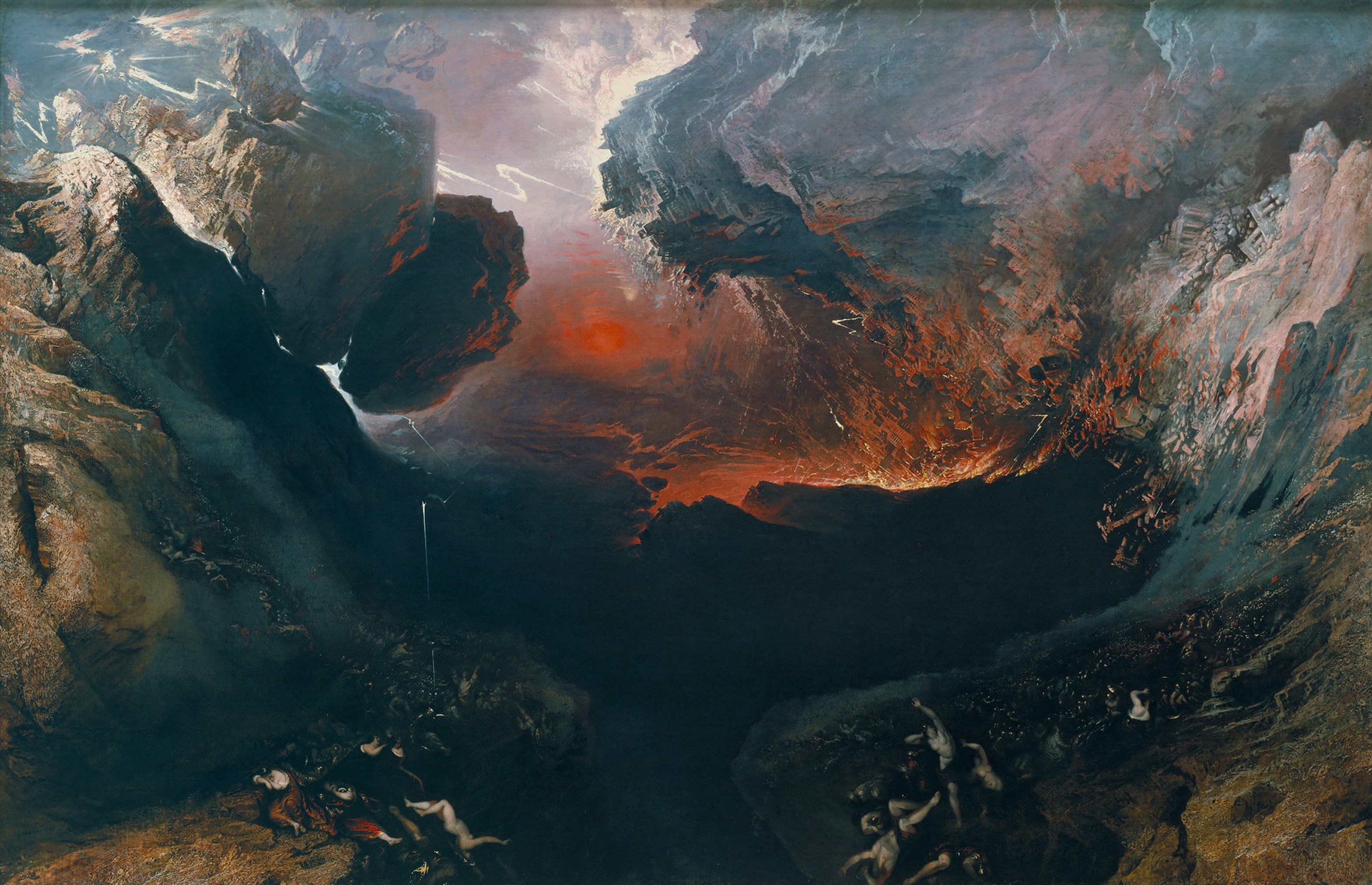
In the wake of recent violence at Annunciation School and the assassination of Charlie Kirk, I propose the following reflection on the widespread theme of vengeance in movies, video games and other modern cultural expressions. The video below is from an unusual source, but I think he is 100% right in calling out hypocrisy in much of Hollywood and other cultural outposts.
When I was a young man in my twenties I loved “action movies.” I remember that we guys often talked about the “kill ratio” as a way of rating the movie. High kill ratio movies were “good,” and low kill ratio movies were poor and dangerously on the way to becoming a “chick flick.” Car chases, buildings being blown up, and the bad guys being killed in large numbers, was the recipe we looked for.
In fact, I’ll save you some money and give you the plot of every adventure movie ever made or to be made. The movie opens with some bad guy, a guy who is unambiguously evil, doing some terrible thing. Perhaps he kills some one, takes hostages, or engages in a terrorist act. After this our hero steps on the scene. And, after about ninety minutes of car chases, blowing things, up and killing people, he exacts vengeance, restores justice and walks off the scene, girl in arm, burning city in the background, roll credits. (There is usually a sub-plot which involves the girl wherein she enters the scene, complicating things for our hero, and is usually a combination of an insistent partner to our hero, and also plays the role of damsel in distress. OK, so save your $15. You’ve just had them all presented to you. There is almost no variance to this theme and it is usually downright cartoonish.
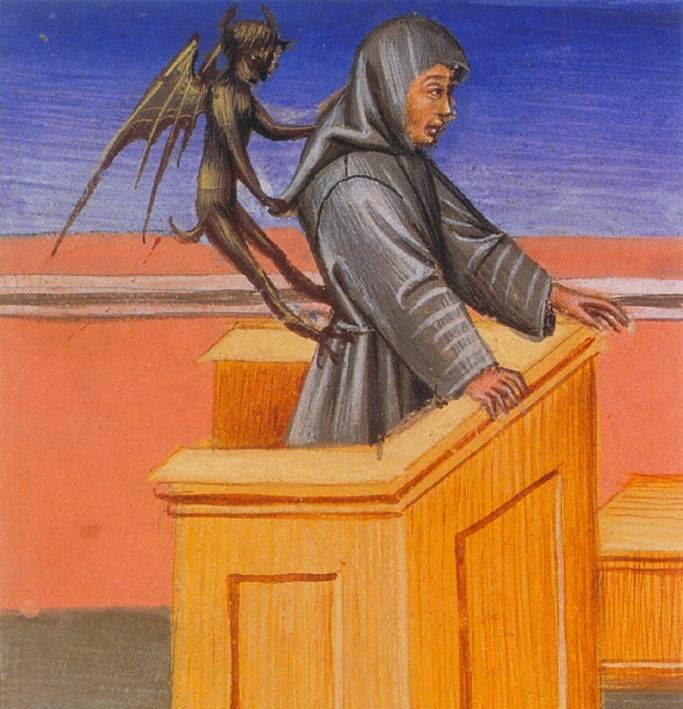
In recent years I have lost interest in these movies. Some of it is age. But a lot of it is my Christian walk. I no longer love these movies because it is clear to me that the Lord does not love them. For a Christian of some depth, it becomes clear that, violence should not be proposed as entertainment, or be experienced as entertaining. Violence is always regrettable and is a cause for sober reflection, not exuberant joy.
I am no pacifist, there are times when the police have to repel or restrain criminals with violent force. There are times when nations, for a grave reason, and as a last recourse, must go to war. But this is always lamentable, and surely not entertaining. People often die terribly in war, and in other violent ways.
The adventure movies and video games often present simplistic and cartoonish notions of violence. For example, our hero may be involved in a high speed car crash. Despite this, he often walks away from it and remains quite fit to do further battle. But in reality no one walks away from a high speed car crash unscathed. The whole body is wrenched and there are almost always neck and back injuries that require months to recover from. Some never recover. Further, as our hero kills bad guys left and right, we are never invited to consider that in real life death has terrible ripple effects as families, children and others, related to the dead, experience the tragedy and often never recover.
I intend no crusade here. I am not calling for abolishment of such games, or of adventure movies. I will even say I oppose those who refuse to let little boys have toy guns and play war. I figure for them it is just a stage, a boy thing. But that is a central point, it should be just a stage.
So what I do propose is that, as we grow in our Christian walk, the notion of raw violence as a form of entertainment, becomes increasingly untenable for us. Violence is something we increasingly mourn, increasingly find troubling. If it ever did appeal to us, it appeals less and less. The voice of Jesus echoes in our conscience: Put away your sword (Matt 26:52).
And as we grow in grace, that still small voice of Jesus gradually has its way. The swords are sheathed, the video controllers are set aside, the movies look silly, and violence becomes unappealing, lamentable, and a subject for prayer, rather than a form of entertainment.
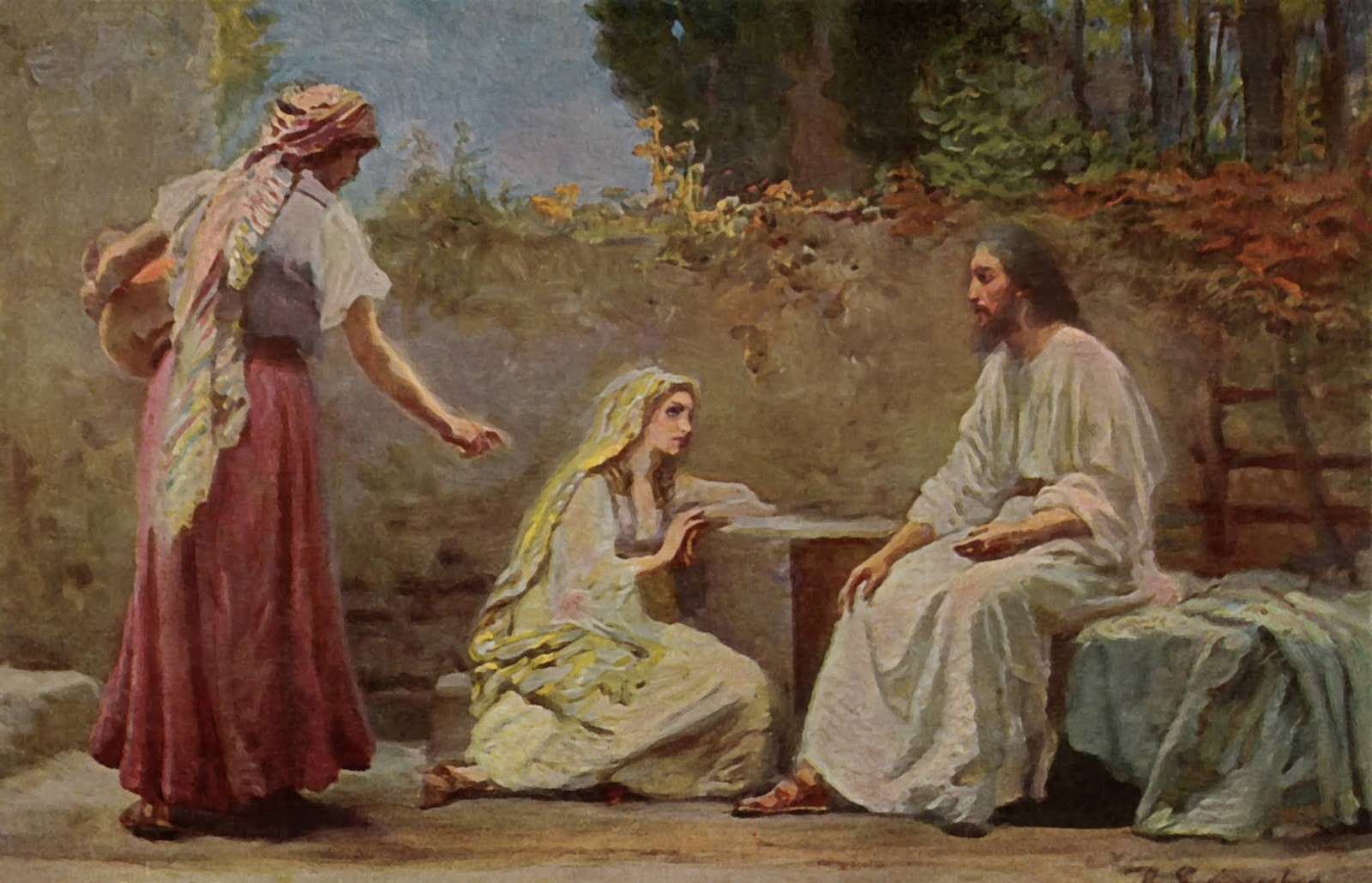
Today’s Gospel at Mass is the very familiar one of Martha and Mary. Martha is the anxious worker seeking to please the Lord with a good meal and hospitality. Mary sits quietly at his feet and listens. One has come to be the image of work, the other of prayer.
Misinterpreted? In my fifty-two years I have heard many a sermon that interpreted this Gospel passage as a call for a proper balance between work and prayer. Some have gone on to state that we all need a little of Martha and Mary in us and that the Church needs both Marthas and Marys.
But in the end it seems that such a conclusion misses the central point of this passage. Jesus does not conclude by saying, “Martha, Now do your thing and let Mary do hers.” He describes Mary as not only choosing the better part but also as doing the “one thing necessary.” This does not amount to a call for “proper balance” but instead underscores the radical priority and primacy of prayer. This, it would seem is the proper interpretive key for what is being taught here. Many other passages of the Scripture do set forth the need to be rich in works of charity but this is not one of them.
With that in mind let’s take a look at the details of the Lord’s teaching today on the Priority of Personal Prayer.
I. PROMISING PRELUDE –Jesus entered a village where a woman whose name was Martha welcomed him. Our story begins by showing Martha in a very favorable light. She opens her door, her life, if you will, and welcomes Jesus. This is at the heart of faith, a welcoming of Jesus into the home of our heart and life. Surely Revelation 3:20 comes to mind here: Behold I stand at the door and knock. If any one hears my voice and opens the door I will come in and eat with him and he with me.
While we acknowledge this promising prelude we ought also to underscore the fact that the initiative is that of Jesus. The text says Jesus entered a village…. In the call of faith the initiative is always with God. It was not you who chose me, it was I who chose you (Jn 15:16) Hence, while we must welcome Him, God leads. Martha hears the Lord’s call and responds. So far so good.
What happens next isn’t exactly clear but the impression is that Martha goes right to work. There is no evidence that Jesus asked for a meal from her, large or small. The text from Revelation just quoted does suggest that the Lord seeks to dine with us, but implies that it is he who will provide the meal. Surely the Eucharistic context of our faith emphasizes that it is the Lord who feeds us with his Word and with his Body and Blood.
At any rate, Martha seems to have told the Lord to make himself comfortable and has gone off to work in preparing a meal of her own. That she later experiences it to be such a burden is evidence that her idea emerged more from her flesh than the Spirit.
II. PORTRAIT OF PRAYER – She had a sister named Mary who sat beside the Lord at his feet listening to him speak. Now here is a beautiful portrait of prayer: to sit at the Lord’s feet and listen.
Many people think of prayer as something that is said. But prayer is better understood as a conversation, and conversations include listening. Vocal prayer, intercessory prayer and the like are all noble and important but the prayer of listening is too often neglected.
Prayer is not just telling God what we want, it is discovering what He wills. We have to sit humbly and listen. We must learn to listen, and listen to learn. We listen by devoutly and slowing considering scripture (lectio divina), and by pondering how God is speaking in the events and people in our life, how God is whispering in our conscience and soul.
Jesus calls this kind of prayer “the one thing necessary” as we shall see. What Mary models and Martha forgets is that we must first come (to Jesus) then go (and do what he says)….that we must first receive, before we can achieve…..that we must first be blessed before we can do our best……that we must listen before we leap into action.
III. PERTURBED and PRESUMPTUOUS –Martha, burdened with much serving, came to him and said, “Lord, do you not care that my sister has left me by myself to do the serving? Tell her to help me.” – And so, sure enough Martha who is laboring in the flesh, but not likely in the Spirit and in accord with the Lord’s wishes, is now experiencing the whole thing as a burden. She blames her sister for all this but the Lord’s response will make it clear that this is not Mary’s issue.
One sign that we are not in God’s will is the experiencing of what we are doing as a burden. We are all limited and human and will experience ordinary fatigue. It is one thing to be weary in the work but it is another thing to be weary of the work.
A lot of people run off to do something they think is a good idea. And maybe it is a fine thing in itself. But they never asked God. God might have said, “Fine.” or He might have said, “Not now, but later.” Or He might have said, “Not you but some one else.” Or he might have just plain said, “No.” But instead of asking they just go off and do it and then when things don’t work out will often times blame God: “Why don’t you help me more!”
And so Martha is burdened. She first blames her sister. Then she presumes the Lord does not care about what is (to her) an obvious injustice. Then she takes presumption one step further and presumes to tell the Lord what to do: “Tell her to help me.”
This is what happens when we try to serve the Lord in the flesh. Instead of being true servants who listen to the Lord’s wishes and carry them out by his grace, we end up as angry and mildly (or not) dictatorial. She here is Martha, with her one hand on her hip and her index finger in the air 🙂 Jesus will be kind with her but firm.
IV. PRESCRIBED PRIORITY – Martha, Martha, you are anxious and worried about many things. There is need of only one thing. Mary has chosen the better part and it will not be taken from her. Now don’t let the Lord have to call you by your name twice! But it is clear the Lord wants her attention and that she has stumbled on a fatal mistake that we all can too easily make. She lept before she listened.
The Lord observes and says that she is anxious about many things. Anxiety about many things comes from neglect of the one thing most necessary: to sit at the feet of the Lord and listen to him.
In life, the Lord will surely have things for us to do but they need to come from him. This is why prayer is the “one thing” necessary and the better part: because work flows from it and is subordinate to it.
Discernment is not easy but it is necessary. An awful lot of very noble ideas have floundered in the field of the flesh because they were never really brought before God and were not therefore a work of grace.
Jesus does not mean that ALL we are to do is pray. There are too many other Gospels that summon us to labor in the vineyard to say that. But what Jesus is very clear to say is that prayer and discernment have absolute priority. Otherwise expect to be anxious about many things and have little to show for it.
Scripture makes it clear that God must be the author and initiator of our works:For by grace you have been saved through faith, and this is not from you; it is the gift of God; it is not from works, so no one may boast. For we are his handiwork, created in Christ Jesus for the good works that God has prepared in advance, that we should walk in them (Eph 2:8-10).
And old prayer from the Roman Ritual also makes this plain: Actiones nostras, quaesumus Domine, aspirando praeveni et adiuvando prosequere: ut cuncta nostra oratio et operatio a te semper incipiat, et per te coepta finiatur. Per Christum Dominum nostrum (Direct we beseech Thee, O Lord, our prayers and our actions by Thy holy inspirations and carry them on by Thy gracious assistance, so that every work of ours may always begin with Thee, and through Thee be ended). Amen
This song reminds that when we really ARE working in the Lord’s will and as the fruit of prayer we love what we do and do so with joy. This song says, “I keep so busy working for the Kingdom I ain’t got time to die!”
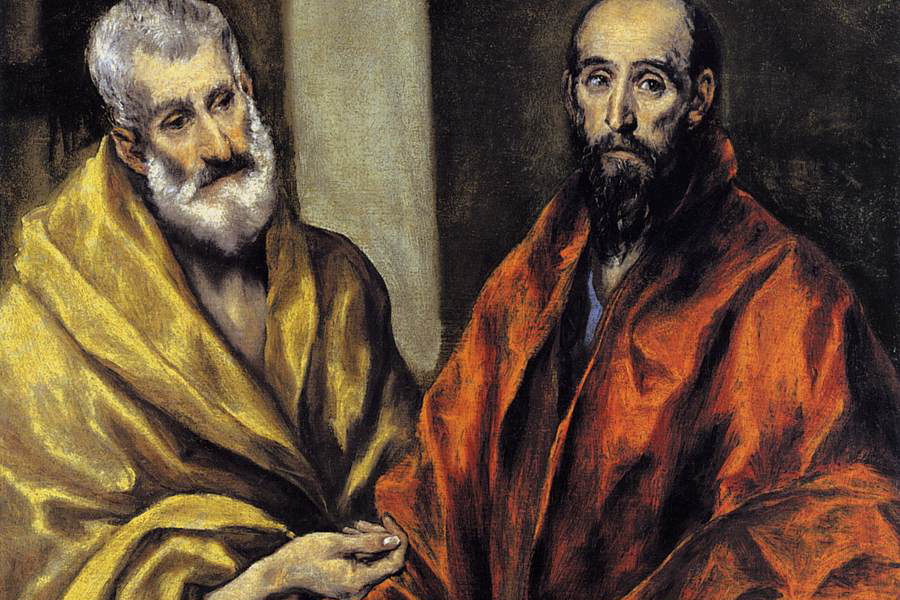
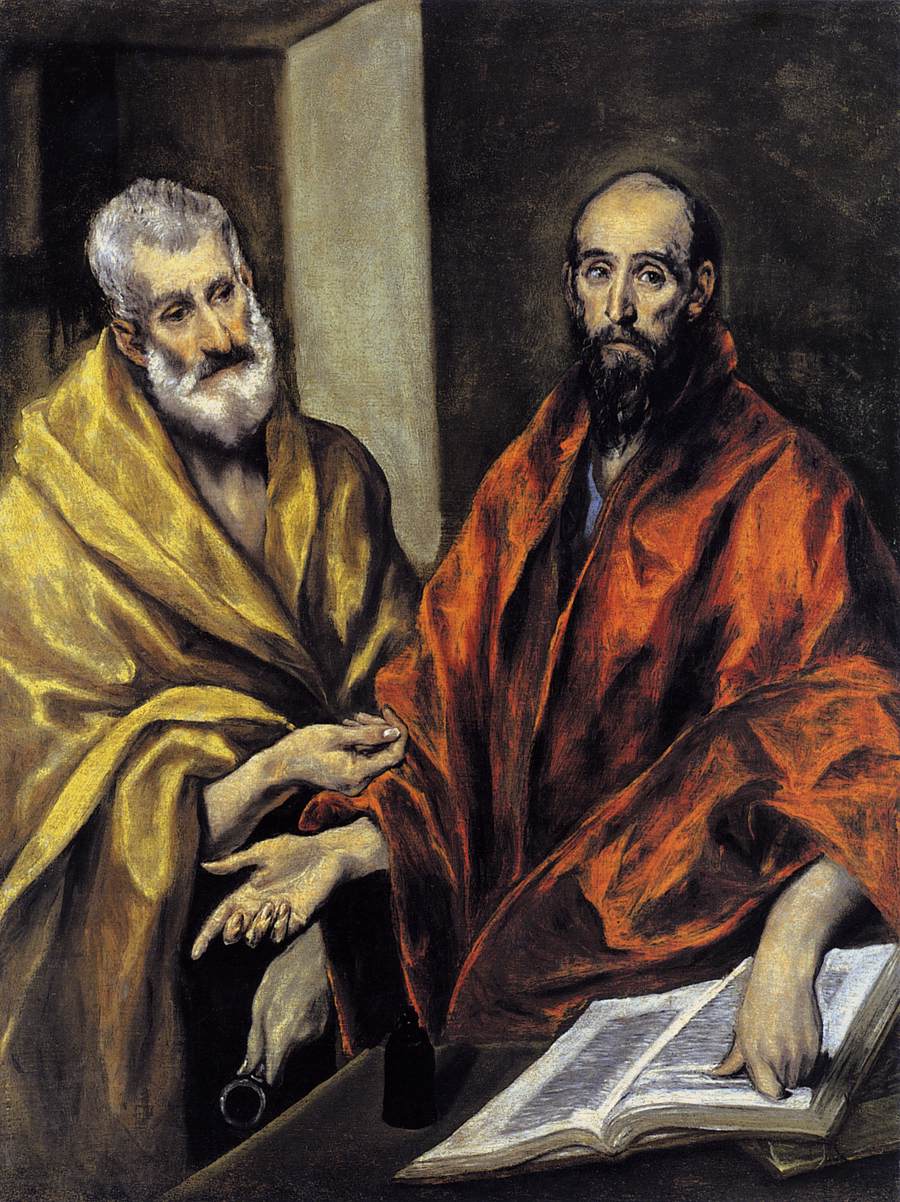
Today’s Feast of Saints Peter and Paul honors two fundamental pillars of the early Church. While all the Apostles form the foundation, Peter and Paul stand out very profoundly in terms of influence and work. And while some have wished to suggest division between them, the Church insists that they must been seen together; hence their feast is set forth in this way.
Indeed, those who see division between them base it on only one text from Galatians (2:11) wherein St. Paul withstood Peter so as to correct him. Peter had taught rightly concerning the inclusion of the Gentiles but, at least according to St. Paul’s report, he struggled to associate with them more freely and was fearful of the Judaizers. Yes, even popes are not beyond reproach. We argue that popes are prevented from formally teaching error in faith or morals (Peter did not teach erroneously), not that they are sinless.
Nevertheless, the same Paul had gone to visit St. Peter in order to get to know him (Gal 1:18) and later submitted his teachings to Peter and others in Jerusalem for scrutiny (Gal 2:1-10). And at the Council of Jerusalem, Paul and Peter were allies (Acts 15).
Thus we ought not exaggerate differences beyond the evidence. The Church today bids us to celebrate them together.
Many different approaches to the reading could be taken today. But since the chief work of the Church and the Apostles is to draw us to faith, it behooves us to look in detail at the first reading from today’s Mass and see in it a kind of roadmap to growing in faith. Peter’s story and experience were not just for him; they were for us as well. Let’s see what we can learn as we focus on five facts of faith from the story of St. Peter in today’s first reading.
I. The Persecution of Faith – Persecution is the normal state of affairs for a Christian. Not every Christian suffers equally at every stage and place in history, but Jesus spoke often about the need to be willing to endure persecution for His sake. He said, A servant is not greater than his master. If they persecuted me, they will persecute you also (Jn 15:20). He added, If you belonged to the world, it would love you as its own. As it is, you do not belong to the world, but I have chosen you out of the world. That is why the world hates you (Jn 15:19). He said elsewhere, In the world ye shall have tribulation: but be of good cheer; I have overcome the world (Jn 16:33). He also warns, Woe to you when everyone speaks well of you, for that is how their ancestors treated the false prophets (Lk 6:26).
And therefore, persecution should be expected. If it is wholly absent, we may have some soul-searching to do as to whether we are witnessing to the Faith authentically.
And so, in this passage, we should not be surprised to see how the early Church was persecuted. In this Gospel is described the persecution, driven by Herod, that breaks out in Jerusalem. In this persecution, James, (of “Peter, James, and John” fame) is killed! Peter is also rounded up and slated for death. Sitting in prison, he awaits his fate.
Note the strange excessiveness of the persecution. Peter is secured with double chains and is forced to sleep between two soldiers. And outside there are even more guards keeping watch. Wowza! Here’s a persecution that is strangely excessive and obviously rooted in no small degree of fear!
And yet as we look at persecution today, we notice something similar. There seems to be a very special hatred for Christians, especially Catholics. Note for example that in the public school system it is permissible to speak about almost anything: how to use condoms, homosexuality, and even certain religions such as Islam. But if the name of Jesus is even mentioned, or Scripture is even obliquely referenced, lawsuits are threatened and television cameras appear! What is this strange fear and hatred for Christ? Jews, Buddhists, Muslims, Zoroastrians, and even Methodists and Episcopalians do not face similar hostility!
While this animosity is somewhat mysterious, it does speak to us of the uniqueness of Jesus Christ and particularly of the Church He founded: the Catholic Church. Satan surely inspires special hatred for Jesus and His Church. So in a certain sense, we can take it as a sign of credibility—even as a compliment. Perhaps too, it is the fact that deep down, they know that what Jesus and His Church teaches is right.
The prince of this world hates Jesus, and has always inspired his followers to do so as well, whether consciously or unconsciously. Yes, persecution is a natural, expected ordeal for a Christian.
II. The Prayer of Faith – In the midst of this, we note that the Church is described as praying fervently to God. The Greek word translated here as fervent is ἐκτενῶς (ektenos), which means “fully stretched.” It is the image of a taught rope that is invoked. Here is prayer that is stretched out, that is costly, that involves more than a brief moment or two. Here is praying that is persevering. This sort of prayer involves more than an honorable mention in the Prayers of the Faithful at Mass. Here is the sort of prayer that involves long hours. Time is invested; effort is expended; energy is invested. It is the sort of prayer that nags God until the solution is at hand.
There is an expression in the African-American community, “by and by.” It refers to the need to be patient and persevering in prayer while waiting for God to answer “by and by.” In other words, God will answer in His own time. It is for us to keep praying. And here is prayer without ceasing; it does not give way to discouragement, but just keeps on praying.
III. The Prescription of Faith – In the midst of this fervent prayer of the Church, a hidden process begins. An angel is dispatched from Heaven, enters the jail, and comes to Peter. His instructions to Peter amount to a kind a prescription for a life of faith, and we note it in four stages:
A. Rise! – The angel says, “Get up”. Here is a call to rise from death, to rise from despairing and doubt, to stand up! Every Christian must die to sin and rise to new life, must die to slavery and despair and rise as a free and active agent, ready to walk with God.
B. Restrain –The angel then tells him to put on his belt (or cincture). The belt (cincture) is traditionally a sign of chastity and of continence (restraint). The Christian life cannot be riddled with unchasteness or with other excesses of this world such as greed, gluttony, and other forms of intemperance. These hinder the journey; they weigh us down. And thus the instruction to tighten our belt.
C. Ready – Peter is also told to put on his sandals. Here is a symbol of readiness to make a journey. When I was a child, my mother would often signal me by saying, “Put on your shoes and get ready to go.” And thus Christians must be ready to make the journey with their feet shod with the gospel of peace, with their shoes on and ready to set out on the great pilgrimage with Jesus to Heaven. The pilgrimage goes up over the hill of Calvary and over into glory. Put your shoes on and get ready to go!
D. Righteous –Peter is then told to put on his cloak. The robe in Scripture is often equated with righteousness. For example the book of Revelation says it was given to the bride to be clothed in fine linen. The text goes on to say that the linen robe is the righteousness of the Saints (Rev 19:8). There is also the parable of the wedding guests, one of whom was not properly clothed, and was therefore thrown out (Mat 22:11). At a Baptism, the priest points to the white garment worn by the infant and tells everyone to see in this white garment the outward sign of his or her Christian dignity, and that the child is to bring this garment unstained to the great judgment seat of Christ. Thus the instruction of the angel reminds us that every Christian is to be clothed in righteousness, and is to be careful to keep this robe, given by God, unsoiled by the things of this world.
D. Run ! – Finally, there is the command of the angel to “Follow me.” In other words, run the race of faith. Toward the end of his life, St. Paul would say, “I have fought the good fight, I have finished the race, I have kept the faith” (2 Tim 4:7). Jesus told his disciples, simply, “Follow me.”
IV. The Procession of Faith- Following this there comes a series of instructions from the angel to Peter (and also to us). These instructions amount to a type of direction to make the procession of faith. We see three things:
A. Not easy – The text says that they passed the first guard, then a second, and finally came to an iron gate. And thus in our journey, there are obstacles and dangers. We must recall that we live in paradise lost. Life is not easy; it is hard. There are hurdles and perils. We are not called to avoid them, we are called the face them with courage. God allows these in our life in order to test us, to see if we will follow Peter’s example and move past the one guard, then the second, and then the apparently locked gate (which God opens for us). Life is not easy, but God’s grace conquers the challenge, if we only trust Him.
B. Narrow – The text here describes a narrow alley through which Peter and the angel pass. Jesus spoke of the way that leads to salvation as a narrow way (e.g., Mat 7:14). Why is this so? Because the narrow way is the cross! Most are not interested in this difficult path, the path that is steep and narrow. Most look for the broad highway through the valley, the easy way. The world still insists that we live in paradise (which Adam rejected) and that life should be easy. It is a lie; the path now is over the hill of Calvary. It is a narrow and steep path, but it is the only true way to glory. Avoid preachers who never mention sin, who never speak of repentance, who never speak of struggles and difficulties. Avoid them; for the tuning fork, the A440 of the Gospel is the cross. There are glories and joys in this life to be sure, but the fundamental path to Heaven and glory is through the cross. It cannot be avoided. Walk the narrow way, the way of the cross. Do not listen to the “prosperity preachers” who exaggerate one truth, excluding all others.
C. Need an angel –As soon as Peter emerges from the prison and out into the openness of freedom, the angel disappears. But until this point, he needed an angel! And so do we. Though demons are roaming and patrolling this earth, so are God’s Angels. We all have an angel assigned to us, and many other angels along the way to help us. Never forget this. We do not journey alone. For every demon, there are two angels (Rev 9:15). Stop fearing demons and call on God’s angels, trusting in God’s grace.
V. The Product of Faith – There comes finally the product of faith wherein Peter is able to confidently assert, Now I know without a doubt that the Lord has sent his angel and rescued me (Acts 12:11). Do you know this? Or is it only true because others have said so? Do you experience God’s saving glory? Have you experienced him rescue you? How? Do you have a testimony? The normal Christian life is to know and experience that our God can and does rescue us from this hell-bound, sin-soaked world. We have a God who can make a way out of no way, and can, as St. Paul says, Rescue us from this present evil age (Gal 1:4). Do you know this? Have you experienced this? Then tell someone! It is the product of faith!
The Feast of the Ascension is often neglected today. It is tucked into a nearby Sunday, it’s role as the fortieth day, jettisoned. But even in those places that still honor it with a Thursday Solemnity, there is still a difficulty in appreciating the full glory of that day. In this post, following the Scriptures and the teaching of some of the ancient Fathers of the Church, we can investigate some of the more hidden glory of this magnificent event.
The fundamental source for these reflections is Jean Cardinal Danielou’s book The Angels and Their Mission: According to the Fathers of the Church. The references to the Fathers in this post are fully footnoted in his book, but some of the scriptural passages below represent my own additions.
We can begin with a parabolic prelude – Jesus told at least two parables that the Fathers of the Church interpret to represent the angels:
Then Jesus told them this parable: “What man among you, if he has a hundred sheep and loses one of them, does not leave the ninety-nine in the pasture and go after the one that is lost, until he finds it? And when he finds it, he joyfully puts it on his shoulders, comes home, and calls together his friends and neighbors to tell them, ‘Rejoice with me, for I have found my lost sheep!’ In the same way, I tell you that there will be more joy in heaven over one sinner who repents than over ninety-nine righteous ones who do not need to repent. (Luke 15:3-7)
Or what woman who has ten silver coins and loses one of them does not light a lamp, sweep her house, and search carefully until she finds it? And when she finds it, she calls together her friends and neighbors to say, ‘Rejoice with me, for I have found my lost coin.’ In the same way, I tell you, there is joy in the presence of God’s angels over one sinner who repents.” (Luke 15:8-10)
Gregory Nazianzus interprets this parable as Christ entering into heaven at the Ascension and, after having recovered the lost sheep and the Lost Drachma and calling together the angels to share his joy.
Indeed, there is a whole tradition, among the Fathers but going back much further into the early Church which sees the lost sheep as human beings, and flock which the Good Shepherd “leaves” in order to search for the sheep as the angels. Origen sets it forth and Methodius of Philippi writes: “We must see the ninety-nine sheep as a representation of the Powers, Principalities and Dominations whom the Head and Shepherd has left behind to go down and seek out the one lost sheep.”Gregory of Nyssa adds: “We mankind, are the lost sheep…and have strayed from the other spiritual creates [i.e. the angels].
Hence we are given a picture of joy as Christ re-enters heaven with the lost sheep of humanity.
The Picture of the Ascension given by the Lord: Jesus prophecies his ascension in John’s Gospel as something which Nathaniel will see. The Lord’s description also shows the role of the angels
Jesus said to Nathaniel, “Do you believe just because I told you I saw you under the fig tree? You will see greater things than these.” Then He declared, “Truly, truly, I tell you, you will see heaven open and the angels of God ascending and descending on the Son of Man. (John 1:50-51)
Here then is a picture of Jesus ascending, not as a lone figure,
A picture from the Psalms: Church Fathers Eusebius, Chrysostom, Justin and Athanasiussay that the virtues (i.e. angels) of heaven, seeing him begin to ascend, rise and surround him to form an escort proclaiming his ascension as they cried: Rise up eternal gates and the King of glory will enter!” Gregory of Nyssa adds, that at first the higher angels do not recognize Christ since he has put on the poor tunic of humanity and because his garments were stained with blood. And herein comes a questioning and wondering dialogue back and forth that is from Psalm 27 but which the ancient Fathers apply to the moment of the Ascension:
The lower ranking angels who have escorted Jesus cry out to the higher ranking angles of heaven:
Lift up your heads, O gates! Be lifted up, O ancient doors, that the King of Glory may enter!
And from within the heavenly angels answer:
Who is this King of Glory?
And the escorting angels answer:
The LORD strong and mighty, the LORD mighty in battle. Lift up your heads, O gates! Be lifted up, O ancient doors, that the King of Glory may enter! (Psalm 24:7-9)
Eusebius also cites Psalm 47 as fulfilled in the Ascension through the praises of the Angels:
God ascends amid shouts of joy, the LORD with the sound of trumpets. Sing praises to God, sing praises; sing praises to our King, sing praises! For God is King of all the earth; sing profound praises to Him. God reigns over the nations; God is seated on His holy throne. For the shields of the earth belong to God; He is highly to be exalted. (Ps 47:5-9)
Another picture from Scripture (Isaiah 63:1-3) is applied by the Fathers to the Ascension where the angels of heaven, seeing Christ approach, cry out:
Who is this coming from Edom, from Bozrah with crimson-stained garments? Who is this robed in splendor, marching in the greatness of His strength?
Jesus answers:
“It is I who speak in righteousness, mighty to save.”
The Angels ask:
Why are Your clothes red, and Your garments like one who treads the winepress?
Jesus answers:
“I have trodden the winepress alone, (Isaiah 63:1-3)
The exultation of our humanity In Christ’s Ascension is also a principle developed in Scripture and by the Father. Thought the angelic nature remains superior to human nature in the order of creation, Christ’s incarnation, resurrection and ascension have exalted our humanity in his. The Book of Hebrews says,
[Jesus] has taken his seat at the right hand of the Majesty on high. So He became as far superior to the angels as the name He has inherited is excellent beyond theirs. For to which of the angels did God ever say: “You are My Son; today I have become Your Father” (Heb 1:3-4)
For it is not to angels that He has subjected the world to come, about which we are speaking. But somewhere it is testified in these words: “What is man that You are mindful of him, or the son of man that You care for him? You made him for a while lower than the angels; and now You have crowned him with glory and honor and placed everything under his feet. (Heb 2: 5-8)
These texts speak to Christ’s superiority to the Angels. As God, he was always superior to the angels but, in hypostatically uniting himself to a human nature, raising it gloriously and ascending with that glorified human nature, he has exalted us all.
St. John Chrysostom says of the Ascension:
Today we are raised up into heaven, we who seemed unworthy even ofearth. [In Christ, and as members of his Body] We are exalted above the heavens; we arrive at the kingly throne. The [human] nature which caused the Cherubim to keep guard over paradise is seated today above the Cherubim. Was not such a glory beyond all expression? But he rose above the angels, he passed the cherubim, he went higher than the Seraphim, he bypassed the Thrones. He didn’t stop until He arrived at the very throne of God.
So, the Feast of the Ascension is our feast too. In baptism we died with Christ and rose with him to new life. In the Ascension of Christ, we also ascend. Hence, in Christ and as members of Christ’s Body through baptism, we are mystically seated with him at the Father’s right. In Christ and by his ascension our lowly nature is glorified and we hear the call “come up higher.” For now we never cease to honor the angels who by nature are superior to us and care for us. And yet, by grace alone and in Christ we have ascended with him to the highest place. On account of which the angels marvel and sing God’s praises.
The Ascension is the counterpart of the fall in Eden, but we are not simply restored to an earthly paradise, we are taken to the heavenly one!
Is this why Satan rebelled? There is an ancient tradition that the angels where shown God’s plan and that Lucifer, a high ranking angel, recoiled at the idea of God joining himself to the mere “mud dolls” of humanity. Inspiring a rebellion he waged war in the heavens and was cast out by St. Michael and the other angels. Now he roams the earth, deeply envious of human beings and seeks to debase and destroy him. This is hinted at in Scripture in Revelation 12, but the details of the reason for Satan’s wrath are more in the realm of tradition and speculation.
Here then are some reflections on the glorious feast of the Ascension from Scripture, and the teachings of the Fathers of the Church.
In more dioceses than not, the Feast of the Ascension is celebrated this Sunday. The liturgist in me regrets the move from Thursday, but here we are any way. Let’s ascend with the Lord, three days late!
This marvelous feast is not merely about something that took place two thousand years ago, for though Christ our head has ascended, we the members of His body are ascending with Him. Because He was ascended, we, too, have ascended. In my own life as a Christian, I am brought higher every year by the Lord, who is drawing me up with Him. This is not some mere slogan, but something I am actually experiencing. An old song says, “I was sinking deep in sin, far from the peaceful shore. Very deeply stained with sin, sinking to rise no more. But the master of the sea, heard my despairing cry. And from the waters lifted me. Now safe am I. Love Lifted me when nothing else could help. Love lifted me!”
If we are faithful, the feast of the Lord’s Ascension is our feast, too. Let’s look at it from three perspectives.
I. The Fact of the Ascension – The readings today describe a wondrous event witnessed by the Apostles. By His own power, the Lord is taken to Heaven. In so doing, He opens a path for us, too. The gates of paradise swing open again. Lift up your heads, O gates! and be lifted up, O ancient doors! that the King of glory may come in! (Psalm 24:7) In Christ, man returns to God. Consider three things about the Ascension:
A. The Reality– Imagine the glory of this moment! Scripture says, As they were looking on, he was lifted up and cloud took him from their sight … they were looking intently in the sky as he was going (Acts 1:9). So impressive was the sight that the angels had to beckon them to get along to Jerusalem as the Lord had said, “Men of Galilee,” they said, “why do you stand here looking into the sky? This same Jesus, who has been taken from you into heaven, will come back in the same way you have seen him go into heaven” (Acts 1:11). Yes, it was glorious. Jesus had once said as a summons to faith, What if you were to see the Son of Man ascending to where he was before? (John 6:62) He had also encouraged them saying, Truly, truly, I say to you, you will see heaven opened, and the angels of God ascending and descending upon the Son of man (John 1:51). So here is a glorious reality and a fulfillment of what Jesus had said.
B.The Rescue – In the Ascension, it does not seem that the Lord entered Heaven alone. As we have remarked, in His mystical body we also ascend with Him. Consider this remarkable text that affirms that: Therefore it is said, When he ascended on high he led a host of captives, and he gave gifts to men. In saying, “He ascended,” what does it mean but that he had also descended into the lower parts of the earth? He who descended is he who also ascended far above all the heavens, that he might fill all things (Eph 4:8ff). Yes, the Lord had earlier (just after his death) descended to Sheol, awakened the dead, and preached the Gospel to them (cf 1 Peter 4:6). Now for those He had justified came the moment to ascend, with Jesus as a “host,” as an army of former captives now set free. Behold the great procession that enters behind Christ through the now-opened gates of Heaven: Adam and Eve, Noah, Abraham, Sarah, Isaac, Jacob, Rachel, Judith, Deborah, David, Samuel, Isaiah, Jeremiah, Ezekiel, Malachi, John the Baptist, … and, one day, you! Yes, this is a great rescue. Adam and his descendants have not simply been restored to some paradise-like garden; they have entered Heaven.
C.The Rejoicing – Consider how this once captive train sings exultantly as they follow Christ upward to Heaven. The liturgy today puts before us a likely song they sang: God mounts his throne to shouts of Joy! The Lord amid trumpet blasts. All you peoples clap your hands, shout to God with cries of gladness, for the Lord the most high, the awesome is the great king over all the earth. God reigns over the nations, God sits upon his holy throne (Psalm 47:6-7). I also have it on the best of authority that they were singing this old gospel song: “I’m so glad Jesus lifted me!” as well as this old Motown song: “Your love is lifting me higher than I’ve ever been lifted before!” More on this tomorrow from the Fathers of the Church.
II. The Fellowship of the Ascension – We have already remarked that, when Christ ascends, we ascend. Why and how? Scripture says, Now you are the body of Christ and individually members of it (1 Cor 12:27). It also says, All of us who were baptized into Christ Jesus were baptized into his death. By baptism we were buried together with him so that just as Christ was raised from the dead by the glory of God the Father, we too might live a new and glorious life. For if we have been united with him by likeness to his death we shall be united with him by likeness to his resurrection (Rom 6:3ff). When Christ died, we died. When Christ rose, we rose. When He ascends, we ascend.
But, you may say, He is in glory while I am still here. How is it that I am ascended or ascending? Consider a humorous example using our physical bodies. When I get on an elevator and press the button for the top floor, the top of my head gets there before the soles of my feet, but the whole body will get there unless some strange loss of integrity or tragic dismemberment takes place. In an analogous way, so it is with Jesus’ mystical body. In Christ, our Head, we are already in glory. Some members of His Body have already gotten there. We who come later will get there too, provided we remain members of His Body. Yes, we are already ascended in Christ, our Head. We are already enthroned in glory with Him, if we hold fast and stay a member of His Body. This is the fellowship of the Ascension.
III. The Fruitfulness of the Ascension – Jesus does not return to Heaven to abandon us. He is more present to us than we are to ourselves. He is with us always to the end of the age (cf Matt 28:20). In ascending, without abandoning us, He goes to procure some very important things. Consider four of them:
A. Holy Ghost power– Jesus teaches very clearly that He is ascending in order to send us the Holy Spirit. Nevertheless, I tell you the truth: it is to your advantage that I go away, for if I do not go away, the Counselor will not come to you; but if I go, I will send him to you (Jn 16:7ff). He also says, These things I have spoken to you, while I am still with you. But the Counselor, the Holy Spirit, whom the Father will send in my name, he will teach you all things, and bring to your remembrance all that I have said to you (Jn 14:25ff). I still have many things to say to you, but you cannot bear them now. When the Spirit of truth comes, he will guide you into all the truth, for he will not speak on his own authority, but whatever he hears he will speak, and he will declare to you the things that are to come (Jn 16:13-14). So the Lord goes in order that with the Father, He might send the Holy Spirit to live within us as in a temple. In this way, and through the Eucharist, He will dwell with us even more intimately than when He walked this earth.
B. Harvest – Jesus says, And I, if I be lifted up from the earth, will draw all men unto me (John 12:32). While the immediate context of this verse is the crucifixion, the wonder of John’s gospel is that he often intends double meanings. Clearly Christ’s glorification is His crucifixion, but it also includes His resurrection and ascension. So, from His place in glory, Christ is drawing all people to Himself. He is also bestowing grace on us from His Father’s right hand to be His co-workers in the harvest: But you shall receive power when the Holy Spirit has come upon you; and you shall be my witnesses in Jerusalem and in all Judea and Samaria and to the end of the earth (Acts 1:8). Yes, from His place in glory, Christ is bringing in a great harvest. As He said in Scripture, Do you not say, “Four months more and then the harvest”? I tell you, open your eyes and look at the fields! They are ripe for harvest. Even now the reaper draws his wages, even now he harvests the crop for eternal life, so that the sower and the reaper may be glad together. Thus the saying “One sows and another reaps” is true. I sent you to reap what you have not worked for. Others have done the hard work, and you have reaped the benefits of their labor (Jn 4:35-38). Harvest! It is the Lord’s work from Heaven in which we participate.
C. Help – At the Father’s right hand, Jesus intercedes for us. Scripture says, Consequently he is able, for all time, to save those who draw near to God through him, since he lives always to make intercession for them (Heb 7:25). The Lord links his ascension to an unleashing of special power: Amen, amen, I say to you, he who believes in me will also do the works that I do; and greater works than these will he do, because I go to the Father. Whatever you ask in my name, I will do it, that the Father may be glorified in the Son (Jn 14:12).
We must not understand asking in the name of Jesus as a mere incantation, for to ask in His name means to ask in accord with His will. Yet we must come to experience the power of Jesus to draw us up to great and wondrous things in His sight. Despite the mystery of iniquity all about us, we trust that Christ is conquering, even in the puzzling and apparent victories of this world’s rebellion. In putting everything under him, God left nothing that is not subject to him. Though, at present we do not see everything subject to him, yet we see Jesus, who was made a little lower than the angels, now crowned with glory and honor … so that by his death he might destroy him who holds the power of death—that is, the devil—and free those who all their lives were held in slavery by their fear of death (Heb 2:8-9; 14-15). Thus, from Heaven we have the help of the Lord’s grace which, if we will accept it, is an ever-present help unto our salvation.
D. Habitation – Jesus indicates that in going to Heaven, He is preparing a place for us: In my Father’s house are many mansions: if it were not so, I would have told you. I go to prepare a place for you. And if I go and prepare a place for you, I will come again, and receive you unto myself; that where I am, there ye may be also (Jn 14:2ff). Yes, Jesus has the blueprints out and the hard hat on. He is overseeing the construction of a mansion for each of us that we may dwell with Him, the Father, and the Spirit forever.
Here, then, are the ways that Christ, by His love, is lifting us higher than we’ve ever been lifted before. Yes, love lifted me when nothing else could help; love lifted me.