Last night while driving over the 14th Street bridge and making my way home, I noticed that the temperature read 23 degrees. I had plans to bundle up and head for a run with a friend. But as I sat in traffic and watched the temperature fluctuate between 23 and 26 degrees I began to think otherwise. There I was, sitting in my warm car, with great music on in the background, and choosing between “bundling up” and running outside, or making my way to the gym. At the very same time, many of our city’s poor were wondering if they would find a bed for the evening – a place to rest and escape the blustering winds for at least the night hours.
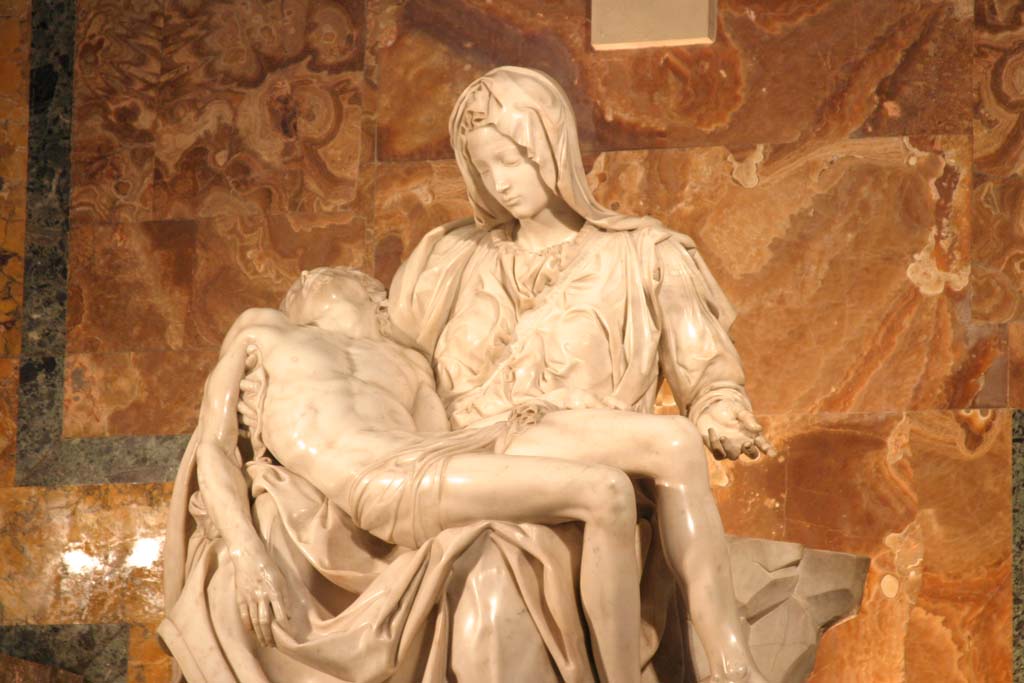
Unfortunately, the need for warmth and security offered by shelters is great. On an average night, over 1,300 beds are provided through a Catholic Charities program throughout the archdiocese. Some of the people who seek the warmth of the shelters have been homeless for years, while others have simply fallen on hard times and need an opportunity to get back on their feet. Some suffer with serious mental illnesses and others struggle with addictive behaviors. Some are men and others are women. The one thing that remains the same – Jesus is present in each person. Not only is He present in our city’s poor, but Jesus calls out to us and begs us to rediscover His presence in those struggling to survive on our city’s streets.
Since our nights are getting colder and the need for beds is growing, Catholic Charities is responding by opening additional emergency shelters. Warm Hands, Friendly Faces is a new volunteer initiative that has been created to help provide these beds and extend the light of Christ to the homeless as they come in form the cold. Volunteers are currently being recruited to assist Catholic Charities staff members with tasks around the shelters and be a warm presence for its visitors.
Is God calling you to be a friendly face and extend your hands to our city’s poor? If God is inviting you to this volunteer ministry, consider responding. This might be an opportunity to meet Him in a new way. As Blessed Teresa taught us, “In the poor, we meet Jesus—not a reminder of Jesus, not a symbol of Jesus, but Jesus himself, face-to-face, hungering for our love, thirsting for our kindness, waiting to be clothed by our compassion.”
Is the number of Catholics really dropping? Is the bottom really falling out of Catholic Mass attendance? If you are a regular reader of this blog you know that I have written several articles and cited several studies that detail an increasingly grave situation for the Church (e.g. HERE). Most of us are familiar with a significant number of Church closings, school closings and the like thought Catholic America. These surely strengthen the view that we are in an increasingly grave condition.
However, there are other views that see the statistics very differently and argue that the number of Catholics is about steady and even slightly growing. The Center for Applied Research in the Apostolate (CARA) has a blog edited by Mark Gray which presents a more sanguine view of the situation and argues that, while there are concerns, the bottom is not falling out of Catholic Church membership in any statistically significant way. I would like to present excerpts of the CARA blog post and do a little running commentary. As I often do, the CARA material will be in bold, black, italics, and my remarks will be plain text red.
At the end of this post I will still argue that I think we are heading into a grave condition, However, I have great respect for the work of CARA and think their data is an essential reality check that helps us to see what is really going on.
Here then are excerpts of the CARA blog post. The complete post can be read here: CARA Blog Post
Since the end of World War II, on average, 25% of the U.S. adult population has self-identified in national surveys as Catholic (±2 to 3 percentage points attributable to margin of sampling error). This spans many trusted sources from commercial polling by Gallup and others, news media polls, exit polls, and academic surveys such as the General Social Survey and the World Values Survey…..Thus, notice that we are fairly steady in terms of our percentage of the U.S. population. That also means that, as the U.S. population has grown significantly since WW II so have our numbers. In the early 1950s there were about 35 million Catholics in the US. Today there are are over 75 million. This number however does not distinguish between practicing and non practicing Catholics. It is estimated that just over 80% of Catholics attended Mass each Sunday in the 1950s. Today it is estimated that about 25% of Catholics go each Sunday. That means that in the early 1950s about 28 million Catholics were in Church each Sunday. Today that number, even with a growing Catholic population, has dropped to 19.2 million. In other words, almost 9 million fewer Catholics are in Church now as compared to the 1950s.
The chart [at left] tracks growth in the Catholic population percentage from 2% in 1776 (45,000) to 25% in 2010 (77.7 million). The size of the circles represents the total size of the Catholic population…..In the last 40 years, the Catholic population has grown by about 75%. If it did the same in the next 40 years it would be 136 million in 2050 and represent about 31% of the projected U.S. population at that time. This however is an unlikely scenario as overall population growth has slowed in the United States and is expected to slow more as the Baby Boom, and the “echoes” from it, fade…..The highest projection accounts for differences by race and ethnicity. In recent years, polling has consistently indicated that about 60% to 65% of Hispanics/Latinos in the United States self-identify as Catholic. However, there is also evidence that this percentage is dipping slightly lower. This projection assumes this falls even further—to only about 55% and that Catholic self-identification among the non-Hispanic population measures about 18.5%. Both assumptions are on the conservative side. However, even with only assuming 55% Catholic identification among Hispanics/Latinos, the rapid growth expected in this sub-group will likely boost Catholic population numbers significantly (this is even the case if it falls further than 55%). This projection leads to an expected growth in the Catholic population of 65% between 2010 and 2050 with a Catholic population total of 128 million in 40 years, representing 29.2% of the total U.S. population. OK, so the bottom line is that our numbers of overall Catholics will continue to grow significantly even using rather conservative premises. It looks like, within forty years we will surely top 100 million Catholics in the US. A huge number overall. However, will they attend Mass and support the work of the Church? What if the U.S. numbers of practicing Catholics drop to European levels which are currently only 10% going to Mass each week. That means there would be only 10 million at Mass on Sunday, a drop of another 9 million. It is not clear that the numbers will drop that low and as well will see, the 25% practicing Catholic number seems to be rather a stable number at this time. If it holds steady then we will see growth in the numbers in our pews each Sunday. But the key question is, will it hold steady or grow? Or will it drop further? That surely depends on us evangelizing and working to restore people to the Sacraments! It may also be affected by other things such as the economy, the emergence (or not) of some significant crisis and so forth. A final factor that is probably hard to guage is what happens to the children and grandchildren of non-practicing Catholics? Will they continue to self-identify as Catholics or will that “identity” fade as the generations proceed? It’s hard to know. Thus, while the overall news of a growing Catholic population looks good, there are on-going questions about how many of them will, in any meaningful way, practice the Catholic faith and/or hand it on to their children and grandchildren. Question:Didn’t Pew find that nearly “one in three” people raised Catholic leave the faith leading to an astounding “one in ten” adult Americans who are formerly Catholic? How could the population grow with losses like these? Answer: …the “one in three” finding drawn from the Pew study is consistently quoted without context. Most often the number is used to drive a narrative—an undeniable signal of extraordinary crisis…..All things considered, Catholicism does a better job of keeping those raised in the faith than any Protestant denomination (68% of those raised Catholic remain so as adults).The Chart at left shows the data for other denominations. I would like to mine the data deeper on the “unaffiliated nones” category which I presume refers to the mega church members and/or evangelicals. I have long thought that we too quickly admire the numbers present in mega-churches and have long suspected that they don’t keep their members for a long time. I have a lot of anecdotal evidence that people go for a year or so and eventually get bored or disillusioned and move on to another mega-church, then to another. At some point they leave the system altogether and I thus suspect the mega-Church phenomenon will run its course and the numbers overall will diminish in that “branch of Zion.” But there is good news here if we compare ourselves to other Churches. However, it is still an awful fact that one-third of those raised Catholic later leave the Church and lose the sacraments. This is still an awful number..
The CARA post then addresses the Church closing phenomenon. …..For generations Catholic immigrants have often started their new lives in industrial urban areas. They created parishes where others spoke the same language. Sometimes a Polish parish would be built across from a parish where Italian was the language in use. The sheer number of people involved led to a boom in parish construction and along with schools—often in close proximity to each other. Yet, in the post-World War II era things began to shift. Many Catholics moved to the suburbs and away from the Northeast and Midwest into the Sunbelt. New waves of Catholic immigration from Latin America have led to even more growth in the South from coast to coast. The Catholic population has realigned itself in the course of a few generations. People move, parishes and schools do not. Many of the parish and school closings one reads about are in inner cities of the Northeast and Midwest where Catholic population has waned.….OK fair enough. But I would argue that we still cannot avoid the fact that there are 9 million fewer Catholics in Church on Sunday than in the early 1950s. The other factors mentioned here are not insignificant, but neither is 9 million fewer Catholics in the pews. Many of the over-churched urban areas would still have many more thriving parishes if even 50% were still going every Sunday. I surely doubt we would be closing as many parishes, even in depopulated urban centers, if Catholics were, as a whole, more faithful.
Although Catholic Mass attendance did decline in recent decades from a peak in the 1950s, there has been no decline in Mass attendance percentages nationally in the last decade. Just under one in four Catholics attends Mass every week. About a third of Catholics attend in any given week and more than two-thirds attend Mass at Christmas, Easter, and on Ash Wednesday. More than four in ten self-identified Catholics attend Mass at least once a month. So the good news is that we may have bottomed out. You can click to the “no decline” study at the blue text above and sure enough, the number of weekly attendants has hovered steadily in the low 20%s for over ten years now. There is little guarantee we will stay here however and I remain concerned that the number is going to head even lower as secularism continues to increase and the unchurched generations become even more detatched from things spiritual. Even the great Christmas and Easter holy days are becoming silenced in our culture.
In the end, I find looking at the CARA analysis helpful in distinguishing the true problem. The overall number of Catholics is, in fact rising. However the critical factor seems to be that Mass attendance has dropped dramatically since the 1950s, from over 80% to around 20-25% now. This indicates a very critical condition indeed. Tell me any organization in which 80% of its members were inactive that you would call healthy. Our condition is critical. It is helpful to know that we seem to have stabilized at this number. That is, we haven’t gone lower in over ten years. However I am concerned that the 25% number is soft and wonder if it will be stable for long. Rampant secularism, the moral malaise of many, a hostile culture etc. all stand to likely erode that number even further.
I pray for a miracle to be sure. I pray for an evangelizing spirit among Catholics. The Church at the upper right of this post is St. Mary of the Angels in Chicago. Ten years ago it was boarded up and slated for demolition. But Opus Dei agreed to take it and brought it back to life. Today it is a thriving parish. But generally, we have become very sleepy and many have barely noticed as large numbers of fellow Catholics have slipped away. In the end, the greatest tragedy is not the numbers per se but the fact that almost 80% of our Catholic brothers and sisters are away from the sacraments, away from the medicine they need, and not having the gospel preached to them. These 80% live in a poisonous culture wherein their mind will increasingly darken without the help of the Sacraments and the Word of God. This is tragic and if we have any real love for them we will not rest until they are restored to God’s house. God asked Cain one day, “Where’s your brother?” And God still asks this of us. We may protest that we have murdered no one. And yet, many of them will die spiritually if we remain indifferent. “Where is your brother?…Where?”
This song says, Come and go with me to my Father’s House
OK – It has been over a month since my last posting. And just today, I realized that I fell into the very trap that I often preach to others about avoiding – namely, rushing your relationship with God.
How long is this prayer?
I was recently at a meeting. This meeting had an ambitious agenda and I was worried that we would not cover all of the items in a timely manner. The meeting started with prayer and the prayer was longer than normal. It was so long in fact that I actually found myself looking up from the table and, instead of praying with everyone else, I was wondering, “How long is this prayer?”
Don’t rush your relationship with God
Providentially, I immediately recognized the absurdity of my thought and joined everyone else in prayer. However, on my way home, I started to reflect on other ways I may have been trying to rush through my relationship with God. Do I get impatient because Mass is going a little longer than expected? Do I forget to say grace before my meals? Do I neglect going to a Bible study class because I am too busy? Do I go too long between blog posts? (A definite “yes” to the last question)
Love is patient
I suspect that many of us are more susceptible to this trap at Christmas time. The traffic around popular shopping areas is heavier. Even the local pharmacy and grocery store are difficult to navigate quickly. My calendar quickly fills up with extra commitments during the month of December. At times, I feel hurried, anxious and edgy. But, in his letter to the Corinthians, Paul reminds us that with our God, “Love is patient” (1 Cor 13:4)
Take the time to pray. It is time well spent!
My prayer for myself and for you is that your love is patient especially during the Christmas season. And if you find yourself looking at your watch during Mass, forgetting to say grace before meals or asking yourself “How long is this prayer?” remember, we have a God that is willing to listen to us ramble on for hours if necessary. God’s love is patient and no prayer is too long or too short!
The Gospel today presents some Practical Principles of Powerful Prophecy as we focus on the ministry of John the Baptist. All of us have been anointed as prophets by virtue of our baptism. Now, a prophet is not usually someone who foretells the future but, rather, someone who speaks for God, who announces the truth of the Lord to this world. The Catechism of the Catholic Church speaks of this prophetic office in the following way:
[the baptized] must profess before men the faith they have received from God through the Church” and participate in the apostolic and missionary activity of the People of God. (CCC, 1270)
So, we have an obligation to evangelize and to be prophets in this world. But how can we do this effectively? What are the some of the essential ingredients? The ministry of St. John the Baptist in today’s Gospel provides four “Principles for Powerful Prophecy.” Let’s look at the elements that are displayed
1. The Poise Powerful Prophecy. Poise here refers to balance. The text says, John the Baptist appeared, preaching in the desert of Judea and saying, “Repent, for the kingdom of heaven is at hand!” Note the content of John’s preaching is twofold. He first says, “Repent!” And then adds, “For the Kingdom of God is at hand.” Here is a balance to get right. The preacher and the prophet must speak frankly of sin and call people to repentance. But the prophet must also speak of the grace available to conquer that sin and the Good News that the Kingdom of Heaven is now open and available. Hence John the Baptist is willing and able to declare the reality of sin and the necessity of repenting from it. But he is also able to declare the availability of the Kingdom wherein one is able to find the grace to overcome sin.
Too many preachers, catechists and even parents lack this balance. In the past, some argue, that sermons were all fire and brimstone. Today it is too often, the steady diet “God is love” with little reference to the need to repent. This is one explanation of why our Churches have emptied in the past 40 years. This is because the good news only has relevance and significance if the bad news is first understood.
To illustrate, suppose you are looking at a newspaper and see a headline that announces a cure for a deadly disease has been found. But what if you have never heard of this disease and don’t even know you have it? It is not likely you will read the article, it will be only of passing interest. But, now suppose you know of this disease, and that you have it, and you know others who have it. Suddenly this headline jumps out, is very relevant, causes joy and is an article to read very carefully by you! Because you know very personally the bad news of the disease, the good news of the cure now means everything to you. It is the same with the Kingdom. We have to know the bad news of sin in a very personal and profound way if the Good News of Salvation is going to be appreciated. But in the Church we have lately soft-pedaled the bad news. Thus the Good News is irrelevant to people and the medicine of the cure is pointless. Why pray, receive sacraments or read scripture if everything is really fine? Why bother coming to Church for all that stuff? Hence our Churches have emptied, in part, due to a lack of the proper balance of repent and the Kingdom of God is at hand.
If we are going to be powerful and effective prophet we are going to have to be able to speak frankly to others about the reality of sin and balance it with the joyful announcement of the Kingdom with its grace and mercy now being available. Prophecy must be proper by having the right balance.
2. The Product of Powerful Prophecy. The text says, At that time Jerusalem, all Judea, and the whole region around the Jordan were going out to him and were being baptized by him in the Jordan River as they acknowledged their sins. Here is the desired product of powerful prophecy: repentance unto salvation for all who believe. St. Paul wrote to the Corinthians about this aspect of prophecy and preaching. He is aware that he grieved some of them due to a strong rebuke he gave the community (cf 1 Cor 5) but he is glad that it produced a godly sorrow which in turn produced repentance and holiness. He also distinguishes between godly sorrow and worldly sorrow:
Even if I caused you sorrow by my letter, I do not regret it. Though I did regret it—I see that my letter hurt you, but only for a little while—yet now I am happy, not because you were made sorry, but because your sorrow led you to repentance. For you became sorrowful as God intended and so were not harmed in any way by us. Godly sorrow brings repentance that leads to salvation and leaves no regret, but worldly sorrow brings death. See what this godly sorrow has produced in you: what earnestness, what eagerness to clear yourselves, what indignation [at sin], what alarm, what longing, what concern, what readiness to see justice done…..By all this we are encouraged. (2 Cor 7:8-13)
An old priest once told me, “Never think you have preached well unless the line to the confessional is long.” Good preaching, among other things produces repentance unto salvation. It may cause some to be mad or sad, but if it is proper prophecy, it will produce a godly sorrow and the madness and sadness gives way to gladness. Here is the expected product of proper preaching: repentance unto salvation.
3. The Purity of Powerful Prophecy. The text says: When [John] saw many of the Pharisees and Sadducees coming to his baptism, he said to them, “You brood of vipers! Who warned you to flee from the coming wrath? Produce good fruit as evidence of your repentance. And do not presume to say to yourselves, ‘We have Abraham as our father.’ For I tell you, God can raise up children to Abraham from these stones. Even now the ax lies at the root of the trees. Therefore every tree that does not bear good fruit will be cut down and thrown into the fire. John the Baptist had no fear of people’s opinion and would not compromise the message based on his audience. All the credentials of the temple leaders did not impress him. Neither did the status of the Jews as the chosen people cause him to soften his message. John had no fear of human opinion, no need for the good favor of others, especially the rich and powerful. Because of this his preaching had purity. He did not compromise the message out of fear or the need to flatter others. He spoke boldly, plainly and with love and desire for the ultimate salvation of all. If that called for strong medicine he was willing to do it.
The ancient martyrs went to their death proclaiming Christ but many of us moderns are afraid even of someone raising their eyebrows at us. Fear is a great enemy of powerful prophecy for by it many remain silent when they should speak. The fear of what other people may think causes many to compromise the truth and even sin against it. This sort of fear has to go if our prophecy is going to have the purity necessary to reach the goal.
4. The Person of Powerful Prophecy. The text says, I am baptizing you with water, for repentance, but the one who is coming after me is mightier than I. I am not worthy to carry his sandals. He will baptize you with the Holy Spirit and fire. His winnowing fan is in his hand. He will clear his threshing floor and gather his wheat into his barn, but the chaff he will burn with unquenchable fire. John’s audience and disciples were fascinated by him, and drawn by his charisma. But as they want to know more about him, John talks instead about Jesus. That’s the message, “Jesus, not me.” If we are going to be powerful prophets the message has got to be about Jesus, not about me and what I think. We are not out to win an argument and boost our own egos. We are not out to become famous. We are about Jesus Christ and his gospel, his message, his truth. John said of Jesus, “He must increase, I must decrease” (John 3:30). A prophet speaks for the Lord, not himself. A prophet announces God’s agenda not his own. A prophet is about Jesus.
Here then are four Principles of Powerful Prophecy. You are that prophet whom the Lord seeks. Some one was John the Baptist for you. Someone brought you to Christ. Thank God for that individual or those individuals. But you too are to be John the Baptist for others. Learn from John, apply his principles and make disciples for Jesus Christ.
This song says:
If I can help somebody, as I pass along,
If I can cheer somebody, with a word or song,
If I can show somebody, how they’re travelling wrong,
Then my living shall not be in vain.
We all have heard the stories about the failure of the Church to adequately address the sexual misconduct with minors by some in ministry. Let’s be clear, one act of sexual misconduct with a child is abhorrent. And, there have been failures. But there is another story I want to tell. I want to talk about what the Archdiocese of Washington is doing right for the victims of abuse and for the parishes which have suffered.
Help for victims
We have an office of Child Protection Services. A person who has been harmed can pick up the phone and call the director. She works closely with victims to help them move towards healing and recovery from their experience. The director also investigates allegations that come to the attention of the office or archdiocese. Finally, this office coordinates the training that all clergy, and any adult who works or volunteers with children in any of our programs, is required to take. Over the past seven years alone, we have trained at least 38,000 adults who now can put what they have learned to work, not only in our parishes, schools and organizations, but also in their homes, workplaces and the community. Today, the archdiocese makes a huge contribution to keeping kids safe, both inside and outside of the church.
We not only respond to individuals who come forward, but we also often work with a parish where the priest or deacon served because the pain often extends to the larger community of faith. When a credible allegation or a criminal charge is made, the archdiocese puts together a team of people to work with a parish to provide the resources it needs to cope.
Our pastoral response seeks to open up pathways to transformation. Firstly, we are one church and so the team goes to the parish to pray and work with the pastor or pastoral council leadership on a pastoral response that will be right for this particular community. Secondly, our response includes presence. We are present to communicate support and to plan a time for the parish to come together to pray; for the victims, known and unknown; for the parish community; for the accused and for the guiding force of God’s love. Thirdly, we develop a communications plan. In crisis situations, it is so important that people know the facts and have accurate, clear and compassionate communication. Fourthly, our experience has made it possible to provide a rich diversity of resources. In some cases parents are looking for talking points so that they can explain the situation to children and talk with them openly. In other cases, people want to learn more about suffering, forgiveness and reconciliation.
Announcements about what happened typically are made at Masses. Members of our team are present at all of the Masses. We come prepared to listen, to answer questions and to provide immediate support if someone were to come forward with an additional allegation. I have been on these teams and I was prepared (or at least as prepared as one can be when you don’t know what to expect) to hear that someone in the room may be a victim. What I was not prepared for is that people feel a need to share their own experience of sexual abuse, not by a priest or church employee, but rather by other people in their lives. The situation in which they find themselves now brings back all of the hurt of their own experience, confusion and sadness.
It is painful, but I am so grateful that my role is to help the parish community find ways to work through the experience by drawing on the church’s spiritual gifts and resources. I believe that in the face of the enormity of the sin and a wounded community, it is grace that will see the victims, parishioners and parish through such a dark night. I recently heard a speaker who referred to the choice made by a wounded heart as being bitterness or blessing. That captures exactly what my experience has been in the two parishes in which I have assisted.
It is very easy to understand how pain can be overwhelming, but the great gift the church can bring to the situation is the gift of blessedness. The church can offer the hope that the broken hurt can be transformed and can walk with those affected through that transformation.
A transforming love
For a parish hurting, that may not always seem possible, but I have seen the transformation. There comes a time when a parish that is hurting is ready for an experience of God’s transforming love and to see that forgiveness and healing is possible. One approach is a retreat, when parishioners can begin the process of reconciliation and forgiveness. In prayer, in sharing individual experiences, they find a new found strength; they can identify obstacles to healing and reconciliation. They discover evidence of a new life that can only come through God’s healing touch.
One parish I worked with that was deeply wounded, three years later can point to a new spiritual vitality that is an experience of transformation. It is the story of a community that again found blessing, not bitterness and hope, not despair.
The Archdiocese of Washington is hoping that by Monday morning these yard signs will be all over the Metro area inviting people to stop and think about the lasting value of the “perfect gift” for which they are spending hours on- line or in the mall searching and the PERFECT GIFT that is found in Jesus Christ.
Find the Perfect Gift
“Find the Perfect Gift” is our Advent initiative that gives you an opportunity to share the gift that Jesus has been in your life and to invite others to “come and see.” We hope, not only that people will visit our website and take some time to think about the reflections but when a friend or neighbor asks you about the sign, you will share the difference knowing Jesus and participating in a parish makes in your life. That’s it! That the whole program!
Invitation to Dialogue
At least we thought that was it until an alert parishioner called this ad to my attention. So, now it seems that we have an opportunity for dialogue. What is striking about the Atheist ad is that they have chosen to define themselves by what they don’t believe rather than what they do believe! The ad also implies that faith and reason are not compatible. This could not be more wrong. The church has always embraced reason as a pathway to faith. Fr. John Hardon writes, “While it is the role of the intellect to perceive truth, reason is the basis or evidence used by the mind to attain truth.” If one is faithful to the search for truth, one finds God and therefore, finds faith. The search for truth is what led two very different but influential Catholic women to faith and to the church; St. Teresa Benedicta of the Cross (Edith Stein) and Dorothy Day. They could not have chosen more different paths, Edith Stein as a philosopher and academic and Dorothy Day as a radical, journalist and advocate for the poor. Whenever I encounter this argument that reason and faith are not compatible, I think of the story of these two women.
Join the Campaign
If you would like to be part of our initiative, get to Mass early this weekend and ask for a sign. Also, we would love to hear how many signs you see in your neighborhood, on the drive to work, on your running route or from the window of your bus or Metro car. We are posting pictures on Facebook, if you have a camera handy and can snap a picture.
The first weeks of Advent focus more on the Lord’s second coming in glory more than his first coming at Bethlehem. The Gospel is clear enough to state that we must be prepared, for, at an hour we do not expect, The Son of Man will come! “Ready” is the key word. But how should we be ready?
The Second reading of today’s Mass (Romans 13:11-14) gives us a basic recipe for readiness. We can distinguish five fundamental ingredients in Paul’s recipe.
1. WAKE UP – The text says: You know the time; it is the hour now for you to awake from sleep. For our salvation is nearer now than when we first believed; the night is advanced, the day is at hand. Let us then throw off the works of darkness and put on the armor of light; let us conduct ourselves properly as in the day – St. Paul of course has more than physical sleep in mind here. But consider for a moment some of the aspects of physical sleep. When we sleep we are unaware of what is taking place around us or even of what we are doing. Perhaps a family member will say, “When you sleep you talk and snore!” “Really?” we may wonder. “I was unaware I was doing that.” At other times we may doze off in front of the TV and miss the game-winning touchdown or the critical scene that helped the movie make sense. Further, when we are asleep our minds are dreamy and confused. Some of the craziest things happen in our dreams because our more rational part of the brain is asleep and any absurd thought may manifest itself and seem perfectly understandable. But when we finally do awake, we say. “What was THAT all about?!
Now this text which tells us to “wake up” refers to all of this in a moral and mindful sense. What St. Paul is really saying here is that we need to wake up, and become more aware of what is happening in our life. We cannot sleep through life like someone dozing on a couch. We need to live lives that are alert and aware of what is happening. We need to be morally awake and responsible for our actions. We cannot and must not engage in dreamy thinking that is not rooted in reality and is fundamentally absurd in its premises. Dreamy thinking has to go. We need to be alert, rooted in what is real, and what is revealed. We cannot go on calling good what God has called sinful. We need to wake up, take the “coffee” of God’s Word, shake off the cobwebs of drowsiness, and start living in the light of holiness, rather than the darkness of deceit and sin.
Waking up also means taking responsibility and exercising authority over one’s life. When we sleep we toss and turn and have little authority over our movements. But when we are awake we take authority over our actions and are responsible for them.
The first ingredient in the recipe for readiness is to wake up! The cobwebs of groggy and sleepy behavior have to yield to the alertness of a new mind. There are many scriptures that make a similar point
Rom 12:2 Do not be conformed to this world but be transformed by the renewal of your mind, that you may prove what is the will of God, what is good and acceptable and perfect.
1 Cor 15:34 Come to your right mind, and sin no more. For some have no knowledge of God. I say this to your shame.
Eph 4:17 Now this I affirm and testify in the Lord, that you must no longer live as the Gentiles do, in the futility of their minds; they are darkened in their understanding, alienated from the life of God because of the ignorance that is in them…22 Put off your old nature which belongs to your former manner of life and is corrupt through deceitful lusts, and be renewed in the spirit of your minds
Col 3:2 Set your minds on things that are above, not on things that are on earth
2. CLEAN UP– the text says – not in orgies and, not in promiscuity and lust… and make no provision for the desires of the flesh. – Notice the emphasis in this passage on sexuality. This is because the pagan world at the time of Paul was sexually confused and immature: Promiscuousness, fornication, homosexual activity, divorce, abortion, and infanticide were all rampant. Sound familiar? We have slipped right back into pagan immaturity and immorality. This text tells us it is time to clean up and grow up and take authority over our sexuality by God’s grace. It’s time to act more like adults than irresponsible teenagers.
The text, in saying we should make no provision for the desires of the flesh, is indicating we should avoid the near occasions of sin. We should not easily find ourselves in compromising and tempting situations. To make “provision” literally means to “see ahead” or to “look toward” something in such a way as to facilitate it. The text says to resolve ahead of time not to provide occasion for the flesh.
Many people make light of sexual sin today and say it’s no big deal and “everyone is doing it.” But God says otherwise and speaks very strongly against it in his Word. He does not do this because he is a prude, or wants to limit our fun. Rather, God wants to save us a lot of suffering and also protect the innocent. What does promiscuity get us? Sexually transmitted diseases, AIDS, abortion, teenage pregnancies, children born outside of the ideal nuclear and properly formed family, divorce, bitterness, jealousy, broken hearts, and used, discarded human beings. God is not out to limit our fun, He is trying to protect us. He is also trying to protect marriage and children. With all this promiscuity, it is children who suffer most. Many of them are simply killed by abortion. Those who survive are often raised in less than ideal settings without both parents in a stable union of marriage. Many are born to teenage mothers not ready to raise them.
God says to all of us that, in order to be ready we have to clean up. We have to take authority over our sexuality by his grace. Promiscuity, orgies, pornography, illicit sexual union, and lust have to go. Those who make light of sexual sin have been deceived. It is a very serious matter and God makes this clear in his word:
Ephesians 5:3-7 As for lewd conduct or promiscuousness or lust of any sort, let them not even be mentioned among you; your holiness forbids this. Nor should there be any obscene, silly or suggestive talk; all that is out of place. Instead, give thanks. Make no mistake about this: no fornicator, no unclean or lustful person – in effect an idolater – has any inheritance in the kingdom of God. Let no one deceive you with worthless arguments. These are sins that bring God’s wrath down upon the disobedient; therefore, have nothing to do with them.
1 Cor. 6:9-11 Can you not realize that the unholy will not fall heir to the Kingdom of God? Do not deceive yourselves: no fornicators, idolaters, or adulterers, no sodomites, thieves, misers, or drunkards, no slanderers or robbers will inherit the kingdom of God…Flee fornication… You must know that your body is a temple of the Holy Spirit, who is within – the Spirit you have received from God. You are not your own. You have been purchased at a price. So glorify God in your body.
3. SOBER UP – the text says, Not in drunkenness– Physically, to be drunk means to have our mind confused due to the influence of alcohol or drugs. Conversely, to have a sober mind is to have a clear mind that is capable of making sound judgments. So much of our battle to be ready to meet God comes down to our mind. Stinkin’ Thinkin’ is a real problem today. There are many fuzzy-headed, lame-brained, crazy and just plain wrongful notions today that amount to a lack of sobriety. They emerge from the haze of un-sober thinking and from a world that increasingly and in a moral sense resembles the Star Wars barroom scene. Don’t believe everything you think. Much of what we think has come from a drunken and confused world. Square everything you think with God’s word and the teachings of the Church. The third item in the recipe for readiness is to sober up, to request and receive from God a clear and sound mind. Scripture says elsewhere about the need to cultivate a sound and sober mind:
1 Peter 1:13 Therefore gird up your minds, be sober, set your hope fully upon the grace that is coming to you at the revelation of Jesus Christ.
1 Peter 5:8 Be sober, be watchful. Your adversary the devil prowls around like a roaring lion, seeking some one to devour. Resist him, solid in your faith.
Titus 2:2 Let the older men be sober, serious and temperate.
4. CHEER UP– The text says, not in rivalry and jealousy – An awful lot of our sins revolve around our touchy little egos. Paul warns elsewhere of other things that flow from this source: enmity, strife, anger, selfishness, dissension, factions, and envy (Gal 5:20). The recipe for readiness here warns that this sort of stuff has to go. We need to be more forgiving if we expect to be forgiven. We also to more generous to the poor, less stingy, and less prone to the kind of anger that comes from being thin-skinned and lacking in humility. The biggest sin is pride and it is enemy number one. It has to go and along with it all its minions: envy, jealously, selfishness, hatred, fear, bitterness, a hard and unforgiving heart, and being just plain mean. The Lord wants to give us a cheerful heart, a heart that is loving, generous to the poor, considerate, glad at others’ gifts, forgiving, truthful, patient and meek, a heart that is less ego-centric and more Theo-centric, a heart that is open to others.
5. DRESS UP– The text says, But put on the Lord Jesus Christ, – If we miss this point, everything else is just a moralism, more rules to live by. But the moral life of the New Testament is not achieved, it is received. The Moral life of the New Testament is not so much a prescription, as it is a description. It is description of what we are like when Jesus Christ really begins to live his life in us. St. Paul says, I have been crucified with Christ; and it is no longer I who live, but Christ lives in me (Gal 2:20) Jesus says, I am the vine; you are the branches. Those who remain in me, and I in them , will produce much fruit. For apart from me you can do nothing (John 15:5). St John says, But if anyone obeys his word, God’s love is truly made complete in him. This is how we know [experience] we are in him: Whoever claims to live in him must walk as Jesus did(1 John 2:5-6). Hence the moral life is not imposed, it is imparted, it is not achieved it is received, it is not demanded it is delivered. There is surely a requirement that the moral law describes, but the requirement can only be met in a real or full sense by Jesus Christ living his life in us. If we try and accomplish it by our flesh, any minor success will last about twenty minutes (max). Hence we must put on the Lord Jesus Christ. We must humbly give him our life and assent to his kingship and authority over us. The more we surrender the more he renders us apt and fit to the life he describes. The fact is, if we really hope to wake up, clean up, sober up, and cheer up it will have to be a work of his grace.
The Book of Revelation speaks of the garment, the long white robe that is given to each of the saints to wear (Rev 6:11). Later, Revelation 19:8 describes the long white robe (of the Bride of the Lamb) as the righteous deeds of all the saints. It is in this sense that St. Paul tells us to “put on the Lord Jesus Christ” Hence righteousness is imparted both to the individual and to the Church as the gift of God. It is given to us like a precious wedding garment. In the baptismal ritual the newly baptized is clothed in white and told that their garments represent their dignity which they are to bring it unstained to the judgment seat of Christ. In the funeral rites the cloth placed over the casket recalls the baptismal garment. Yes, the final element in the recipe for readiness is to “put on the Lord Jesus Christ.” Only Jesus can really can really get us ready.
I was reminded today of one of my favorite hymns as I read the first reading from today’s Mass. In particular these lines stood out:
[An] angel came out of the temple, crying out in a loud voice to the one sitting on the cloud [Jesus], “Use your sickle and reap the harvest, for the time to reap has come, because the earth’s harvest is fully ripe.” So the one who was sitting on the cloud swung his sickle over the earth, and the earth was harvested. Then another angel came out of the temple in heaven who also had a sharp sickle……“Use your sharp sickle and cut the clusters from the earth’s vines, for its grapes are ripe.” So the angel swung his sickle over the earth and cut the earth’s vintage. He threw it into the great wine press of God’s wrath. (Rev 14:14-19)
Ah, yes, the Battle Hymn of the Republic:
Mine eyes have seen the glory of the coming of the Lord:He is trampling out the vintage where the grapes of wrath are stored;He hath loosed the fateful lightning of His terrible swift sword:His truth is marching on– –
We live in a time that does not usually appreciate these fearsome images of God. These are dainty times where many have tried to tame God. And yet the image from the hymn above is thoroughly biblical as you can already see. This first verse of the Battle Hymn also recalls Jeremiah
God will thunder from his holy dwelling and roar mightily against his land. He will shout like those who tread the grapes, shout against all who live on the earth. The tumult will resound to the ends of the earth, for the LORD will bring charges against the nations; he will bring judgment on all mankind and put the wicked to the sword,'” declares the LORD. (Jeremiah 25:30-31)
Yet again Scripture is alluded to by the hymn in reference to the terrible swift sword which is from Isaiah: In that day the LORD will take his terrible, swift sword and punish Leviathan, the swiftly moving serpent, the coiling, writhing serpent. He will kill the dragon of the sea (Isaiah 27:1).
The author of these words, Julia Ward Howe, lived in times that were anything but dainty or delicate. She lived in time of war, the Civil War. And she , like many of that time, possibly including President Lincoln, had come to see that horrible war as God’s judgment on a land that had enslaved, and cruellyand unjustly treated a whole race of people. Many decades before Thomas Jefferson had written, Can the liberties of a nation be secure when we have removed a conviction that these liberties are the gift of God? Indeed I tremble for my country when I reflect that God is just, that his justice cannot sleep forever. Commerce between master and slave is despotism. Nothing is more certainly written in the book of fate than that these people are to be free (Notes on the State of Virginia). Yes, many abolitionists and others saw the Civil War in terms of God coming to render justice for the oppressed and to punish and purify by fire a land that strayed far from justice.
Julia Ward Howe had been stirred to write the hymn when, just outside of Washington DC, she heard the troops marching to the tune “John Brown’s Body.” The rythmn of that hymn stayed with her and that night she lodged at the Willard Hotel in Washington and recounts how she was was inspired to write:
I awoke in the grey of the morning, and as I lay waiting for dawn, the long lines of the desired poem began to entwine themselves in my mind, and I said to myself, “I must get up and write these verses, lest I fall asleep and forget them!” So I sprang out of bed and in the dimness found an old stump of a pen, which I remembered using the day before. I scrawled the verses almost without looking at the paper (Julia Ward Howe, 1861).
She describes it as a moment of inspiration. The words seem to flow from her effortlessly as is the case with inspiration. We have been blessed by these words ever since. It is true, these words do not remain without controversy. Some object to such warlike imagery associated with God. Even more objectionable to some is the human tendency to have God take sides in a war or to attribute any war to his inspiration. And yet, for one who has read Scripture, it is hard to wholly dismiss the notions advanced in this hymn even if they are offensive to modern ears. The Battle Hymn remains a masterpiece of English Literature and the music is surely masterful as well.
Other verses contain Biblical quotes and allusions as well. Perhaps a brief look at them.
Verse two says,
I have seen Him in the watch-fires of a hundred circling camps,They have builded Him an altar in the evening dews and damps;I can read His righteous sentence by the dim and flaring lamps:His day is marching on.
A powerful word painting here. The campfires of the bivouacked troops burning like candles before an altar to God’s glory and justice. The righteous sentence perceived by the flickering light recalls Daniel 5 where the hand of God wrote a sentence on the wall near the lamp stand at King Bleshazzar’s feast: MENE, TEKEL, PERES. The King trembled and all with him as the words appeared in the flickering candlelight. The righteous sentence of God announced that the King had been “placed in the scales and found wanting.” His kingdom was about to end. God’s “Day” of judgment marches on. The Scriptures often refer to the Day of the Lord as the “Great and Terrible Day of the Lord” (eg. Mal 4:5-6).
Verse Three says,
I have read a fiery gospel writ in burnished rows of steel:
“As ye deal with my contemners, so with you my grace shall deal;
Let the Hero, born of woman, crush the serpent with his heel,
Since God is marching on.”
“Contemners” are those who despise God and his justice, who hold his law in contempt. Against these is the fiery Gospel. The Scripture says the Lord Jesus will judge the world by fire (eg. 2 Peter 3:7) and that his word comes forth from his mouth like a sharp sword: Out of his mouth comes a sharp sword with which to strike down the nations. He will rule them with an iron scepter. He treads the winepress of the fury of the wrath of God Almighty(Rev 19:5). The author allows the bayonets of the soldiers to allude to Word of the Lord whose fiery gospel judges the world. And in the second line the Lord promises grace to those who fight for justice. The last two lines are the reference to Genesis: And I will put enmity between you and the woman, and between your offspring and hers; he will crush your head, while you strike at his heel (Gen 3:15). It also refers to the reiteration of this in Rev 12. The Lord is destroying Satan’s power and ending the injustice of slavery, and ultimately all injustice.
Verse Four says:
He has sounded forth the trumpet that shall never call retreat;
He is sifting out the hearts of men before His judgment-seat:
Oh, be swift, my soul, to answer Him! be jubilant, my feet!
Our God is marching on.
A clear reference is made here to St. Paul who writes of the trumpet blast, For the trumpet will sound, the dead will be raised (1 Cor 15:52) and of the judgment we must face: For we must all appear before the judgment seat of Christ, that each one may receive what is due him for the things done while in the body, whether good or bad (2 Cor 5:10). The third line is a reference to Malachi which promises a joyful judgment day to the Righteous: Surely the day is coming; it will burn like a furnace. All the arrogant and every evildoer will be stubble, and that day that is coming will set them on fire,” says the Lord Almighty. “Not a root or a branch will be left to them. But for you who revere my name, the sun of righteousness will rise with healing in its wings. And you will go out leaping like calves released from the stall. Then you will trample down the wicked; they will be ashes under the soles of your feet on the day when I do these things,” says the Lord Almighty (Mal 4:1-4).
Verse Five says,
In the beauty of the lilies Christ was born across the sea,
With a glory in His bosom that transfigures you and me:
As He died to make men holy, let us die to make men free,
While God is marching on.
The lily is a symbol of purity in the Scriptures. A sea a clear and calm as glass is described as surrounding the throne in heaven (Rev 4:6; 15:2). We are transfigured by Christ’s glory for we are made members of his body (Eph 5:30). Hence, when the Father sees Christ he also sees us, transfigured as it were in Christ’s glory. We too are called to walk in Christ’s footsteps. We are to carry our cross as he did (eg. Lk 9:23). As his cross made us holy, our cross can help to make others free. Now I rejoice in my sufferings for your sake, and in my flesh I am filling up what is lacking in Christ’s afflictions for the sake of his body, that is, the Church (Col 1:24). Clearly Howe is appealing here to Northern Soldiers to be willing to die in order to free the slaves.
The Final verse says is a kind of doxology:
He is coming like the glory of the morning on the wave,
He is Wisdom to the mighty, He is Succour to the brave,
So the world shall be His footstool, and the soul of time His slave,
Our God is marching on.
Christ is Lord of History (Rev 1:8; 21:6; 22:13) and the earth is his footstool (Is 66:1; Mat 5:35; Acts 7:49). He will come in Glory accompanied by his angels: They will see the Son of Man coming on the clouds of the sky, with power and great glory. And he will send his angels with a loud trumpet call, and they will gather his elect from the four winds, from one end of the heavens to the other (Mat 24:30-31). The world has doubted and scorned him and his teachings, Yet wisdom is vindicated by all her children (Luke 7:35).
Ah, what a hymn. It is remarkably Christological and Biblical. Some consider it controversial. But that’s OK, the Bible is too, and this hymn is rather remarkable stitching of Bible verses and allusions. For this reason, it is not only the Battle Hymn of the Republic, it is also the Bible Hymn of the Republic.

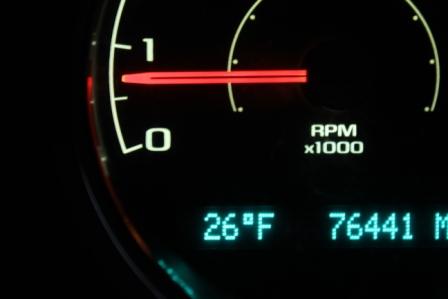 Last night while driving over the 14th Street bridge and making my way home, I noticed that the temperature read 23 degrees. I had plans to bundle up and head for a run with a friend. But as I sat in traffic and watched the temperature fluctuate between 23 and 26 degrees I began to think otherwise. There I was, sitting in my warm car, with great music on in the background, and choosing between “bundling up” and running outside, or making my way to the gym. At the very same time, many of our city’s poor were wondering if they would find a bed for the evening – a place to rest and escape the blustering winds for at least the night hours.