For children, December can be both the happiest and the most agonizing month of the year. The anticipation of Christmas is almost too much to bear—the long weeks of waiting, knowing that any (or none!) of the absolutely necessary, can’t-live-without toys and gadgets on their Christmas lists could be hiding in some closet somewhere, can be almost physically painful. Some might even resort to drastic measures to ease the pain of waiting—turning clocks forward, changing calendars, and rooting out potential present hiding spots.
As we get older, the objects of our desires change, but the ways we try to satisfy them might stay the same. Waiting for what we want is hard, and always comes with a kind of pain; just taking what we want often seems easier. Why wait in a long line if I can just cut to the front instead? Why ask to use my neighbor’s snowblower if I can take it and return it before he notices? Why apologize to my girlfriend if I can make my mistake look like her fault?
But we are not trapped forever in our own egos and selfish plans. The third beatitude shows us the way out: “Blessed are the meek, for they shall inherit the earth.” The meek are those who accept that they are not the masters of their own lives. Rather than trying to force their will upon every situation, they trust that the Lord loves them enough to give them what they need.
The meek are not spineless or weak; they are men and women who have allowed their desires to be shaped completely by God. The meek live the life God has given them without reservation or selfishness; freed from the prison of their own obsessive grip on time and the world, they are free to be fully human. The meek will inherit the earth, not by the merely transient pleasures of the world, but by the heavenly joy that has no end.
Our Lord will come again, we know not when. But we know he will take to himself all those who have given their desires over to him, who have not tried to force their way into heaven by selfish pride, but have allowed God to change them slowly, in his own time.
Today’s meditation: Spend a few minutes in prayer, asking God for the virtue of patience.
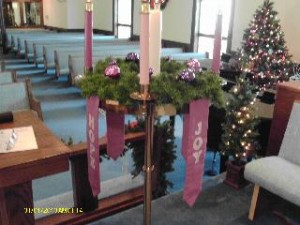
Today is a day for us to rejoice! Of course, every Sunday is a day of rejoicing because it’s the day on which we celebrate the resurrection of our Lord Jesus. On this third Sunday of Advent, however, joy and rejoicing are special themes that run throughout the prayers and Bible readings appointed for today’sMass. That’s why today is traditionally called “Gaudete” Sunday, from the Latin word for “rejoice.” And that’s also why the candle we lit on the Advent wreath today is pink, a more festive and joyful color than purple.
Joy is something that all of us long for and search for. Deep down, every one of us wants to be a joy-filled person. “God made us for joy,” said Pope John Paul II. That’s why it’s important, I think, that we give careful consideration to what today’s scripture readings suggest that we do. For instance, the first reading, from the prophet Isaiah, doesn’t tell us simply to rejoice. It tells us instead to rejoice “in the Lord.” That’s a critical distinction, because so many people today try to find joy in something other than the Lord.
Yet that’s a hopeless quest. Because while there are many things in our world that can bring us some passing happiness, true and lasting joy can only come about through a personal, life-giving relationship with the Lord. As Isaiah said, “In my God is the joy of my soul.” This means two things. First, joy is God’s gift to us when we’re in relationship with him. Second, if we want to be joyful people, we need to work on our relationship with God. Joy, then, is something we need to cultivate.
One way we can cultivate joy is to remember, on a regular basis, all the wonderful things that God has done for us. We heard Isaiah do this when he rejoiced that God had clothed him with a robe of salvation and wrapped him in a mantle of justice. And we heard Mary, the Mother of Jesus, do the same in today’s responsorial psalm, which is a selection from her Magnificat, the song she sang after Jesus was conceived in her womb. “My spirit rejoices in God my Savior,” she sang. “The Almighty has done great things for me.”
Attending Mass frequently, even daily if possible, is an excellent way we can remember the great things that God has done for us. In fact, this is one of the reasons why Jesus gave us the Mass. “Do this inmemory of me,” he said. And every time we honor that command, we recall Jesus’ life, death, resurrection, and ascension- all done out of love for us, for our salvation, and for our joy.
Praying the rosary is another excellent way we can bring to mind the great things that God has done for us, because it helps us to reflect upon the significant events in Jesus’ life, and Mary’s too. It’s also essential that we read the Bible. If you don’t do so already, I would recommend, during the week, prayerfully reading and studying the Scripture readings appointed for Sunday Mass.
A second way we can cultivate joy is by counting our blessings. This is what St. Paul tells us to do in today’s reading from I Thessalonians. “In all circumstances give thanks,” he said, “for this is the will of God.” So often, however, we go through our day taking things for granted and being bombarded with materialistic messages. We wind up envious of the things we don’t have, and ungrateful for the things we do. This can rob us of our joy. That’s why we should follow St. Paul’s advice to give thanks for anything and everything. We can give thanks for even the littlest things: A morning cup of coffee, the fact that the toilet flushed, a smile from a stranger. We can even give thanks for difficult and painful things, because they’re opportunities God gives us to exercise patience and forgiveness. If we give thanks for all things, we’ll recall how much God loves us and provides for us, and our joy will grow.
St. Paul also told us today to “pray without ceasing.” This is another way we can grow in joy. Praying without ceasing may seem like an unattainable or unrealistic goal. But ask yourself how much you pray now, and you’ll be sure to find that you can pray even more. One way to pray more is to make it a habit to pray at the beginning and the end of regular daily events. For instance, say a prayer when you first wake up. Instead of saying, “Oh no, it’s morning,” say “Oh God, it’s morning” and then ask for his blessings upon your day. Prayer also when you go to bed at night. We can also pray at the beginning and end of meals, commutes to and from our jobs, and when starting and finishing our work. We can pray when we tuck our kids in, pray when we drop them off at school, and pray when we pick them up. We can pray in the shower, in the car, and while we fold laundry and do the dishes. And many people today offer morning and evening prayers from devotional books or magazines.
The bottom line is that we joy for which we seek can only be found through a relationship with God. And anything we do to grow in that relationship will help us to grow in joy. Because with God, we’ll receive the joy of being forgiven. We’ll experience the joy of being unconditionally loved. We’ll know the joy of being promised an eternity of happiness. And we’ll find joy in the assurance that God is in control, that he walks by our side, and that he has a purpose and plan for our lives. Truly, in the words of John Paul II, “Our God is the God of joy!”
This Sunday is traditionally called Gaudete Sunday based on the Introit for the day: Gaudete in Domino semper, iterum dico, Gaudete (from Philippians 4:4 Rejoice in the Lord always, again I say, Rejoice). This theme is developed most fully in today’s readings in 1 Thessalonians 5:16ff. It too begins with the salutation and imperative: Rejoice always!
Let’s take a closer look at that reading and what is meant by the admonition “rejoice.”
The text begins, Rejoice always. The Greek word properly translated here as “Rejoice” is χαίρετε (chairete). However, more is intended here than to merely rouse ourselves to some sort of the emotional state of joy or happiness. You may note the root word “charis” in “chariete” and “charis” refers to “grace.” Hence chairete means, properly, to delight joyfully in God’s grace, to experience God’s favor (grace) , to be conscious of and glad for His grace.
Thus, our text ask more of us than an emotional fervor. Rather, and more richly, it invites us to become joyfully aware of God’s grace and favor toward us, to consider the magnificent and unmerited gift of God’s love and favor, and thereby, to experience a kind of stable and deeply rooted joy, based on this abiding knowledge. Hence the text bids us to rejoice “always.”
The text goes further, to identify three basic ways that our joy can become both stable and deeply rooted in our personality and psyche. In effect the text does not merely tell us to rejoice always, but goes on to say how this can be done. Let’s look at these three ways.
I. PERSEVERANCE IN PRAISE – The text says, Pray without ceasing. In all circumstances give thanks, for this is the will of God for you in Christ Jesus. Do not quench the Spirit. Hence we see the first three foundations for rejoicing always. Let’s take them a little out of order.
A.In all circumstances give thanks – thanksgiving is an important discipline that trains our mind to focus on reality. For it so happens that we tend to be negative, perhaps due to our fallen nature. The reality is that, everyday, ten trillion things go right and a few things go wrong. Now if you think ten trillion is an exaggeration, it is not. Consider all things that have to go right with every cell in your body. Add to that all the many things and factors on this earth, indeed in the whole universe that must be delicately balanced for you and I to be her, be alive and be flourishing. Ten trillion is not an exaggeration.
However, it we are not careful, we going to focus on the five or six things that went wrong today. And, mind you, some of them may feel serious at times (usually they are not). Nevertheless, even the truly serious mishaps cannot deny the reality of the ten trillion things that have gone right.
Thanksgiving disciplines our mind to focus on the bigger reality of countless blessings. Even some of the mishaps of a day can be blessings in disguise.
Hence we are told to give thanks in all circumstances. Daily thanksgiving disciplines our mind to focus on the blessings in astonishing number. What you feed grows, and if the negative is fed, it will grow. But, if the positive is fed, it will grow, and become an important basis of stable joy in our life. Give thanks in all circumstances.
B. Pray without ceasing – Here too is a discipline of the mind. Paul does not mean to stay in a chapel all day. He means that we should lay hold of the normal Christian life, which is to be in living conscious contact with God at every moment of our day. To the degree that we are consciously aware of God’s presence, and in a dialogue of love with him all day, our joy is deeper and becomes stable. Thus we are able by this ongoing sense of His presence to “rejoice always.”
C. Do not quench the Spirit – That such gifts (on-going prayer and thanksgiving) are “God’s will for us” means that God wants to give us these gifts. Hence we should not quench the Spirit which bids us seek these things. But rather, we should heed His promptings and seek after these gifts, even pester God for them. Too often we quench the Spirit by not taking seriously the promises He offers us in Christ Jesus. We are not convinced that the Spirit can give us a whole new life, and deepen our prayer and gratitude, so we don’t even ask. We also quench the Spirit by cluttering our lives with endless distractions and we never sit still for a moment to listen to the small, still voice of God. But if we will fan into flame the gifts of God’s love, God the Holy Spirit will kindle a fire in us that never dies away. And as the gifts of his love, to include deeper prayer and constant thankfulness, take hold, our joy too deepens and we can “rejoice always.”
II. PERSPECTIVE THROUGH PROPHECY – the text says: Do not despise prophetic utterances. Test everything; retain what is good.
In the first place, “prophetic utterance” is Scripture itself. Scripture is a prophetic interpretation of reality. It describes the world as it truly is, and sets forth a clear vision. It is an antidote to the muddled and murky suppositions of worldly thinking which, at best, gropes in the darkness, and at worst, is deceitful and erroneous. We ought not despise God’s Word in any way, but accept it wholeheartedly and, to the degree that we do, it assures us of the ultimate victory of God, His truth and His Kingdom. Our own victory is also set forth in the paschal mystery of God’s word wherein every cross, faithfully carried produces for us a weight of glory beyond all compare (cf 2 Cor 4:17). This vision, this prophetic interpretation of reality, produces in us a serene joy that allows us to “rejoice always.”
Prophetic utterances are, also, the teachings of the Church, the utterances of the Fathers of the Church and the teachings of the saints down through the ages. There is a great deposit of faith carefully collected and loving handed down from apostolic times. The dogmas and doctrines of the faith are like the precious fragments gathered up by the Apostles at the multiplication of the loaves and fishes. For the Lord had told them that nothing was to go to waste. And so too for us who ought to seek for every instruction prophetically uttered by Mother Church, nothing is to fall to the ground.
The Fathers and saints too have left us a wondrous testimony that we should not despise or ignore. They, along with the Church utter wisdom and announce victory to every believer. In the laboratory of their own lives they have tested the Word of God and found it true. Added to this number are trustworthy people in our own time who teach us the Word of God. They include our parents, priests, religious, and holy men and women who have inspired us. And to the degree that we will let the Church and the saints teach us, along with trustworthy souls of our own time, to the degree that we do not despise prophetic utterance, the foundation of our joy becomes more sure and we can rejoice always.
III. PROGRESS TOWARD PERFECTION – The text says, Refrain from every kind of evil. May the God of peace make you perfectly holy and may you entirely, spirit, soul, and body, be preserved blameless for the coming of our Lord Jesus Christ. The one who calls you is faithful, and he will also accomplish it.
The greatest source of sorrow, the biggest killer of joy in our life, is our sin. To the degree that we indulge it, our joy is sapped. But to the degree that we allow the Lord to deliver us from sin and make us more and more holy, our joy will become deeper and lasting. The words “holy” and “whole” are not far apart. And to the degree that we become more whole, more perfected, more free of sin, more perfectly holy and blameless as the text says, our joy becomes deeper and we can increasingly “rejoice always.” God can do this for us if we are willing, and if we ask.
Thus we see that the mandate, the exhortation, to “Rejoice always” is far more than whipping ourselves up to an emotional high. Rather it is a stable and serene joy rooted in prayerful gratitude, a mind transformed by God’s truth and a growing holiness. Allow the promise of the Lord to be fulfilled in you. For he has said,
Now remain in my love. If you obey my commands, you will remain in my love, just as I have obeyed my Father’s commands and remain in his love. I have told you this so that my joy may be in you and that your joy may be complete (Jn 15:9-11)
This song says, Joy, Joy, God’s great joy! Joy, Joy, down in my soul. Sweet, beautiful soul-saving joy. Oh Joy! Joy in my soul!
This time of year is an especially noisy one, wouldn’t you agree? Some of this noise we might call “good” noise: Christmas carols, the sounds of our favorite movies and shows, the excitement and laughter of children. Other noise, however, we might characterize as “bad,” namely the full-scale marketing assault we’re bombarded with “24/7.”
The danger with all this noise- both “good” and “bad” is that it can drown out the voice of God- a voice that rarely shouts, but usually speaks in whispers. That’s why we need to make a special effort to listen amidst the hubbub of this season.
Consider today’s gospel. Jesus laments that the people of his generation didn’t make an effort to listen- either to John the Baptist, or to him. As a consequence, they robbed themselves of the wisdom that only they could give.
Jesus dearly wanted them to listen, and he dearly wants us to listen as he speaks to us in the silence of our hearts. Yet in this season, silence isn’t going to find us. We have to go and find it, by making the time for quiet time with God. Just think about it: When were the abiding shepherds able to hear the herald angels sing? In the middle of a silent night.
Have you ever seen “The Family Man,” a film starring Nicholas Cage? Cage’s character is an wealthy businessman who’d made a choice thirteen years earlier to leave behind the woman he was to marry to pursue his professional dreams. But then one day he wakes up to find he’s been given a glimpse of what might have been if he’d made a different choice. He’d married the woman instead of having left her. She’s loyal and loving, and they have two beautiful children and a supportive network of friends. Having experienced this, Cage comes to regret the choices he’d made. So when he’s returned to his real life, he fights valiantly to restore what he had lost, and make a reality the glimpse he’d been given of what might have been.
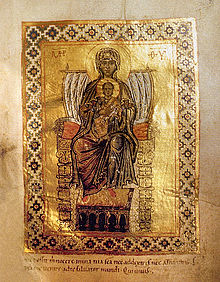
In Mary, our mother, you and I are given a glimpse of what might have been if different choices had been made, if the choice to sin had never been made, leaving us with a fallen human nature. Through the Immaculate Conception, God preserved Mary from this condition, allowing us to behold in her a life of perfect faith, love, and obedience to God’s will. We see in Mary what we might have been today.
However, Mary’s witness should give us, not only a longing for what might have been, but also a sign for what might yet be. This is because Mary’s Immaculate Conception made possible the Virgin Birth of Jesus Christ, who came to heal us, and restore what had been lost. Through Jesus, we can hope that the perfection Mary enjoyed on earth might be ours to enjoy one day in heaven. Which makes our commemoration today, not an occasion of longing and regret, but a celebration of gratitude and hope.
Sometimes people are nostalgic for an era they never lived in. They might prefer the fashion, the music, or the mores of a bygone era, or they might look forward to some future period when all of their political or cultural aspiration will be realized. On one level, a critical evaluation of the glories of the past can be helpful in giving us a measuring stick for our own achievements. Nevertheless, we must be always conscious of the importance of living our lives to the full in the world in which we really exist, not obsessed with our own imaginary construction of the past or future.
The reason for this is that although there is a certain contingency to our existence at this moment in history—I did not choose to enter the world I did, but happened to do so following upon the concrete decisions of others that ordered their lives in a certain way—nevertheless my existence at this moment fits into God’s providential plan. There is no contradiction between contingent human decisions and divine providence. God freely creates the soul of each of us at the moment of conception, a moment that occurs on the basis of the union of our parents. This, incidentally, is the core of the tragedy of abortion—although this child may not be desired by his or her parents, whatever the contingent circumstances may be, he or she is created and loved by God.
On the Feast of the Immaculate Conception, we celebrate the marvelous congruence between the contingent human action and divine providence in the conception of Mary. The parents of the Virgin conceived her in the normal manner, but on this occasion God not only created her soul but did so in a way that preserved her from every stain of sin by virtue of the death of his Son, which he foresaw, preparing her to be a worthy dwelling for Jesus. Mary’s parents lived at a particular moment of history, unchosen by themselves, and decided to marry each other at a time they themselves chose. The child that was born to them, whom they decided to name Mary, was to play an integral role in the mystery of redemption: in the fullness of time, at the exactly appropriate moment, she was to bear a son, and name him Jesus.
Meditation: Reflect on the ways God’s providence has worked in your life through contingent events. Pray for your parents, and those who have played an important role in your life.
The world doesn’t work the way it should. Freak accidents ruin our plans; the greatest passions dwindle to boredom; our best friends annoy us; death snatches our loved ones and they are gone. Conflict is built into the structure of the world—we are not even at peace with ourselves. The sin of Adam has shaken the earth, and nothing is stable anymore.
Sin causes us pain because it doesn’t belong. God made the world good, free from sin and death. But when Adam and Eve rejected God’s love and chose to create their own path to happiness, they lost the special gifts of closeness to God that they had enjoyed, and the earth became a place of struggle and pain.
But sin is not the last word about us. Our hearts still long for God, and he gives us his grace that we might be lifted out of our sin and filled with the very presence of the Divine Trinity. This is our hope—that God did not make us for death, but for life eternal as his adopted sons and daughters. Jesus came to earth for this purpose, and he will come again to bring this work to completion.
God calls us to hope for a goodness that we often can’t see, that will be fulfilled only in the world to come. In Advent especially we realize that the longing for heaven can itself be a kind of pain, because we see the brokenness of the world and the brokenness of our own hearts, caused by the blows of sin, and we yearn for the wholeness of Christ.
Christ offers us this holy longing in the second beatitude: “Blessed are those who mourn, for they shall be comforted.” Left to our own devices, we mourn selfishly, sinking into self-pity whenever something of ours—a relationship, a piece of property, even a comfortable lie—is taken away from us. By God’s grace, we long for his presence and mourn what separates us from him, hoping to be made more like him; we mourn our sins and those of the world because we long for Christ to come again and bring us the comfort of the heavenly Jerusalem.
Today’s meditation: Reflect on Jesus’ mercy. Offer God one of your selfish desires and ask him to take it away.
Advent begins with both a bang and a whisper. Now that Thanksgiving is out of the way, stores, commercials, and TV channels are roiling with the frenetic energy of Yuletide cheer, while each of us struggles to remember what it is we are actually preparing for.
But the clash between noise and stillness is nothing new. Thinking of the Messiah’s coming, Isaiah begs the Lord to come in thunder and earthquake, while St. Mark reminds us that Jesus comes so quietly that we might miss him unless we keep careful watch.
The first beatitude helps us resolve the apparent conflict: “Blessed are the poor in spirit, for theirs is the kingdom of heaven.” Our world has its own values and priorities, according to which the poor are usually somewhere between despised and pitied, but never blessed. Jesus opens the door here to a new way of living: the poor in spirit are those who don’t need to create their own meaning, to wrest wealth, power, and happiness from the world by their own brute strength. The poor in spirit place their hope in God, and live in his presence wherever they happen to be, however chaotic or earth-shaking their surroundings may be.
Jesus Christ is the stillness at the heart of the world’s noise. He invites us to become poor in spirit, to be with him now, sharing a foretaste of the kingdom of heaven even on this earth.
But Christ will come again, with a splendor and a majesty that will shake loose the foundations of the world—stillness doesn’t mean immobility. We can’t make ourselves ready for that day by our own power; we can’t force ourselves to be poor in spirit. Jesus himself prepares us for his Second Coming through this beatitude, offering us a new wealth, a new kingdom, and new life: grace. May the life of grace grow in us this Advent, letting us live in God’s presence, in noise and in quiet.
Today’s meditation: Ask God to increase your desire for him.