The Gospel from Wednesday of this week describes well a spiritual gift to be sought. It is from Mark 10:32 and says,
The disciples were on the way, going up to Jerusalem, and Jesus went ahead of them. They were amazed, and those who followed were afraid.
Fr. Robert Barron Titles one of the Episodes in his Catholicism Series, “Amazed and Afraid” and he does a wonderful job applying it that section. My Purpose here is more modest and must be more brief, but I speak to the same balance that Fr. Barron sets forth.
We need to be both amazed and afraid, and the proper balance. Theologians have in the past described the balance with Latin phrase fascinosum et temendum. It is phrase that speaks of reverent bowing and Holy Fear before the Holy One who draws me close bids me to seek His face.
Fascinosum is where we get the word fascinating. It refers to something that calls to me, draws me, peaks my interest, something that strongly attracts and inspires reverence.
Tremendumis where we get the word tremendous. It refers to something awesome; something overwhelming and too big to comprehend or grasp. Hence we draw back in a kind of reverential fear mixed with a kind of bewilderment. And we feel small before the tremendous.
And these words well describe the proper state of the human person before the mystery of God: drawn by God’s inexorable beauty yet compelled to fall prostrate before His awesome majesty. Scripture speaks of this experience in many places. Here are but a few:
I saw the Lord seated on a high and lofty throne, with the train of his garment filling the temple. Seraphim were stationed above; each of them had six wings: with two they veiled their faces, with two they veiled their feet, and with two they hovered aloft. “Holy, holy, holy is the LORD of hosts!” they cried one to the other. “All the earth is filled with his glory!” At the sound of that cry, the frame of the door shook and the house was filled with smoke. And then I said, “Woe is me, I am doomed! For I am a man of unclean lips, living among a people of unclean lips; yet my eyes have seen the King, the LORD of hosts!” Then one of the Seraphim flew to me, holding an ember which he had taken with tongs from the altar. He touched my mouth with it. “See,” he said, “now that this has touched your lips, your wickedness is removed, your sin purged.” (Isaiah 6:1-5) And so Isaiah is draw and captivated by the beauty and glory he sees (fascinosum) but is then bewildered, fearful and alarmed at his unworthiness (Tremendum).
And Jesus was transfigured before them; his face shone like the sun and his clothes became white as light. And behold, Moses and Elijah appeared to them, conversing with him. Then Peter said to Jesus in reply, “Lord, it is good that we are here. If you wish, I will make three tents here, one for you, one for Moses, and one for Elijah.” While he was still speaking, behold, a bright cloud cast a shadow over them, then from the cloud came a voice that said, “This is my beloved Son, with whom I am well pleased; listen to him.” When the disciples heard this, they fell prostrate and were very much afraid. But Jesus came and touched them, saying, “Rise, and do not be afraid.” (Matt 17:1-6) Yes! It is good to be here (fascinosum) but soon enough, they fall to their faces and are very much afraid (tremendum)
I [John] saw seven gold lampstands and in the midst of the lampstands one like a son of man, wearing an ankle-length robe, with a gold sash around his chest. The hair of his head was as white as white wool or as snow, and his eyes were like a fiery flame. His feet were like polished brass refined in a furnace, and his voice was like the sound of rushing water. In his right hand he held seven stars. A sharp two-edged sword came out of his mouth, and his face shone like the sun at its brightest. When I caught sight of him, I fell down at his feet as though dead. He touched me with his right hand and said, “Do not be afraid. I am the first and the last, the one who lives. (Rev 1:15-17) Such a vision! But he falls down in fear!
Note the pattern of these theophanies: They are drawn by God and behold his beauty (fascinosum), they instinctively fall prostrate, and need to be reassured by God (tremendum). It is an awesome thing to fall into the hands of a living God! (Heb 10:31).
The most interesting passage to me is the third one involving John the Beloved. This is the same John who, at the Last Supper, was perfectly capable of leaning back on the Lord’s shoulder to ask him a question. Yet now, as he beholds the full glory of Christ in the heavenly realm, he falls to his face. The Lord’s glory is fully unveiled here and John, who appreciates the beauty and describes it to us is ultimately compelled to fall down.
We have come through an era that has trivialized God in many ways. Perhaps it was an over correction to a more severe time of the 1950s when any misstep of ours could result in a quick trip to hell if we didn’t get to confession immediately. Mortal sin was understood only objectively by many in those days and by God, even if there were two feet of snow on the ground and you missed Church, your were in sin and had to get to confession asap. Fear was a strong motivator for many in those days.
But we over corrected and by the 1970s the usual notion was that God didn’t seem to care what we did. He was rendered quite “harmless” actually and it seemed that his main purpose was to affirm us.
As for Jesus, gone was the unrelenting and uncompromising prophet of the Scriptures, only to replaced by a kind of harmless hippie version, or, for others, a “Mr Rogers,” or “Buddy Jesus” version who just went about saying nice things. The Jesus who cleansed the Temple, rebuked unbelief, demanded first place in our life, insisted on the cross, warned of coming judgement and hell, and spoke with such authority that even the guards sent to arrest him came back empty-handed saying “no one has ever spoken like that man”, this Jesus was no where to be found by the 1970s
And thus we have needed a return to the balance that fascinosum et tremendum offers. Surely we sense a deep desire for God, we are drawn to him in all his beauty and glory. But we are encountering God here, and we are but creatures. A reverential fear is appropriate for the Father and the Son, and the Holy Spirit. It may well be that God will reassure us, but our instinct to tremendum is a proper and biblical one. The Biblical saints knew both fascinosum and tremendum and they show us what a true encounter with God includes.
This does not mean that our liturgies need be somber, for reverence and joy can occupy the same heart. But in the end, it is God whom we worship and falling to our knees is wholly appropriate. Seeking the necessary purification and striving for the holiness without which no one will see God (Heb 12:14) is appropriate.
Make your journey with Christ as one who is amazed and afraid. Do not trivialize him. He is savior, he is our brother, he loves us, but he is also the Lord, He is God and is deepest reverence and holy fear is due him. Make your journey in fascinosumettremendum!
Here’s a video where Cardinal “Glitch” gets the balance a little wrong:
Maybe this is a little closer to where we need to be:
I think one of the joys of heaven will be to finally see what our prayers actually wrought. Yes, even our distracted and imperfect prayers, by God’s grace may well have had the power to bring immense healing, cast out demons, cancel discouragement, push back temptation and even turn away wars.
I know that I am the result of prayer. My conversion to the Lord and my subsequent healing over the years are inexplicable to me, except that someone, indeed, some many, were praying for me.
And so, something tells me that a special joy of heaven will be to know and see what prayer did for us, and what our prayers did for others. For now, things can seem discouraging at times. The effects of our prayers may seem subtle or even non-existent. But God is working his purposes out and collecting and dispensing the fruits of our prayer in due season.
Anyway, I thought of all this yesterday as I was reading from The Dialogue of Catherine of Siena. And therein, the Lord speaks to her of what the prayers of the faithful do and how they release grace and set souls free. Here are some excerpts:
The sufferings you endure will, through the power of charity, suffice to win both atonement and reward for you and others…The stains of your foolishness will be blotted out, and I will no longer remember that you have ever offended me.
As for the others, because of your loving charity, I will pardon them in proportion to their receptiveness….They will come in this way to truly know and regret their sins, and so, because of my servants’ prayers they will receive the fruit of grace….They will receive both forgiveness and its gifts, unless their stubbornness is such that they despair….
I look on them and give them light. I rouse the dog of conscience within them. I make them sensitive to the perfume of virtue and give them delight in the fellowship of my servants. Sometimes I allow the world to show them its true colors….that they may know how inconstant it is and be more eager to seek their homeland in eternal life.
The eye cannot see nor the tongue tell, nor can the heart imagine how many paths and methods I have, solely for love and to lead them back to grace so that my truth may be realized in them. (Dialogue # 4)
Yes, here is what prayer and sacrifice unleash. Continue to pray and do not doubt the words of the Lord who says that our heart cannot imagine all the paths he can open for others back to grace, the Church and the Sacraments, back to Him.
Of this I am a witness that, by the prayers of others, especially my Grandmother and mother, that the dog of conscience was roused, the glory of virtue came to be appreciated, the gift of walking in fellowship with the Church was restored, the true colors of the world were seen, and the goal of heaven loved more dearly. I have see these things come alive, mysteriously, but truly. And I know it was not me. It was the prayers, and it was the Lord.
Keep praying and don’t lose heart. It was bear its fruit in due season.
We live in a culture that tends to treat anger as a taboo. One common tactic to unsettle an opponent is to accuse them of being angry. It is amazing how easily humiliated and defensive one can make an opponent by using this tactic. Yes, it is amazing how quickly the one accused of “anger” will be thrown off his game and feel the need to resort to denials or euphemisms such as:
1. I am NOT angry! (which is usually said angrily and is usually a lie).
2. I am not angry, I am just frustrated! (But frustration is a euphemism for anger, yet, as a euphemism it somehow feels less humiliating).
3. I am not angry…You’re the one who is angry! (and thus the terrible charge of anger must be denied and shoved back, instead of owned and appreciated as an energy or passion for what matters).
4. Of course I’m angry, but who would not be angry when talking with an idiot! (And thus the charge is only tacitly or partially accepted since its cause is purely extraneous).
Rare indeed in the American setting is someone who will respond in a way that both admits anger and owns it as something positive and important, perhaps by saying: “I am angry. And I am angry because I really care about this matter. I am not merely a neutral observer. I fully admit I have an agenda, an agenda I passionately believe in, and I experience grief and anger when what I value is dis-valued. Yes, I am angry, and I care about this.”
Of itself anger is just a passion, an energy that is stirred forth when we sense that something is wrong. Sensing what is wrong or threatening, our anger is stirred, energizing us for action, whether mental, physical or both. The body is actually involved as adrenaline is released.
The Bible does condemn vengeful anger but also teaches of anger that is not sinful:Be angry, but sin not (Eph 4:26). The sinless Jesus also exhibits a lot of anger (e.g. Luke 11; Mark 10; Matthew 17:17; Matthew 21:15; Matthew 26:8; Mark 10:14; Mark 14:4 John 2, John 8, inter al) and indignation modelling that anger is sometimes the appropriate response.
Yet somehow we are stymied and easily felled by the charge that we are angry. We tend to live in egotistically soft, thin-skinned times. The pervasive relativism seems to require that if we are going to believe in something we ought not hold it too strongly, because then we might have an “agenda” and actually let slip that we think there is a truth to be upheld and insisted upon. And, according to modern “rules” having an “agenda” i.e. thinking certain things are surely true, is Wrong, with a capital “W.” Perhaps too there is the over-appropriation of tolerance, an necessary component in a pluralistic setting, but not an absolute virtue.
Whatever the causes, anger, an ordinary and necessary human passion, is humiliating to most modern westerners. And to be accused of being angry is something most try quickly to squirm out of.
And yet I will say plainly, we need more of it. I do not speak of a mere fisticuffs rooted in violent outburst or of the simple ugliness and persoanl disrespect evident on blogs and issued from the anonymous safety behind the computer screen. But rather, I speak of an anger rooted in love and a deep commitment to the truth, an anger that emerges because we see the harm caused by lies, deception, error, sin and injustice.
Lovers fight, lovers get angry, and well they should, for when love is in the mix, things matter, truth matters, error and harm matter. Lovers want what is best, not merely expedient or convenient.
Author Dale Ahlquist, says a lot of this better than I can. Writing in his recent book, The Complete Thinker where he synthesizes the thought of G.K. Chesterton Ahlquist says:
Chesterton illustrates the point about “the twin elements of loving and fighting”…..Modern philosophies have tried to do away with this paradox…But fighting and loving actually go together. You cannot love a thing without wanting to fight for it….To love a thing without wishing to fight for it is not love at all…
The connection between two such apparent opposites points to the idea that truth is always an amazing balancing act….If we lean too far in one direction or the other, we lose our balance. Thus, both militarism and pacificism represent a loss of balance.
Militarism is simply bullyism, the strong having their own way. Pacifism is a lack of loyalty, a promise not to defend the innocent, the helpless, the defenseless.
The Church has always had to maintain the precarious balance of truth, whether in war or in anything else….
Sometimes the only way to stop the fighting is to fight. Sometimes the only way to end a war is to win it—but only as an act of defense, not as an act of aggression…..
The sword is an important symbol of Christianity. It is not only in the shape of a cross; it is the scriptural symbol of truth, which cuts both ways—because error comes from opposite sides.
Chesterton also says he likes swords because “they come to a point”, unlike most modern art and philosophy.
Yes, lovers fight, lovers get angry. And the anger of the Greatest Lover of them all, God, is evident in the downward thrust of the cross into the soil of this world and its manifold lies and half truths. The cross is the downward thrust, like a sword, of God’s non placet to the rebellion and error this world holds so arrogantly.
And yet, that downward thrust is also open in love as seen in the outward arms of cross, the outstretched arms of Christ. At the very center of the cross where anger and love unite is the heart of Christ.
Yes, love and anger are closer than we moderns will often admit or fathom. Love says there are certain things worth fighting for and being angry about. But its anger is not egocentric, it is other-centric, focused on God, the truth and the dignity of those who are meant to walk in truth. Ahlquist says, in loving our enemies, we want to convert them so they are not our enemies anymore. Ultimately, we want to get our enemies to join our side.
And thus, some things are worth fighting for and about. Ahlquist continues:
No sane man has ever held, that war is a good thing….But the… occasion may arise when it is better for a man to fight than to surrender….War is not the direst calamity that can befall a people. There is one worse state, at least: the state of slavery.
While a good peace is better than a good war, even a good war is better than a bad peace.
[And thus the] Church on earth is called the Church Militant. War is a metaphor, and it would not work as a metaphor if it were not a reality, a reality that we have to live with.
This life of ours is a very enjoyable fight, but a very miserable truce.”
And that last line is a very telling description of the modern age: a miserable truce. Everyone is walking on eggs, afraid to offend and suppressing the truth on account of this fear. And thus our anger gets suppressed, renamed, and turned inward. Some has said that the definition of depression is “anger turned inward.” Not a bad diagnosis of a time like this when vast percentages of us are on anti-depressants and other psychotropic medicines to manage the “miserable truce” that is the false peace of these times; a peace rooted not in truth, but in the compelled silence of PC, euphemisms and thinly veiled politeness.
Perhaps too that is why such ugliness erupts from time to time, especially in more anonymous settings like blog com-boxes where we, who have forgotten how to have a good argument in person, or how to manage and appreciate our anger in normal ways, act so ugly and engage in sometimes savage and unkind personal attacks.
This sort or anger, often evident in political settings as well, is not about truth or love, it is about scoring, it is about winning with little regard to truth or love. But the Church militant without love is not the Church.
At the end of the day, though, anger has its place in the context of love, and decent fights are necessary for those who love. Without a proper appreciation for these, we end up with the gray fog of a “miserable truce” that is the modern West.
Many people today put Hell in opposition to the love of God. But Jesus combines them. Here is an important truth: No one loves you more than Jesus Christ. And yet, no one spoke of or taught on Hell and Judgment more than Jesus Christ. There is from him, warning after warning, parable after parable, that speak and warn, even shout judgment and the reality of Hell.
No “heresy” of our day is more widespread or pernicious that the “heresy” that denies hell and the proclaimed truth of its existence and sad its frequency. I say “heresy” in quotes only because I, as a simple priest, do not have the power to declare formal heresy. However, “heresy” in the broader and descriptive sense means simply to pick and choose among reveled truth. The “heretic” confronted with truths that are in some some tension (such as God’s Justice and mercy or human freedom and God’s sovereignty) choose one and throw out the other to resolve the tension. Orthodoxy says “both” but heresy picks one and discards the other.
And thus, in teaching on Hell and judgment, the modern and heretical, mindset cannot reconcile the mercy and love of God with the reality of Hell, and eternal separation from God.
And yet, the Lord of Love, Jesus, spoke of these more than any other. The problem is in us, not in Jesus, not in the Father. The problem is in us.
We simply refuse, in this modern age, to obey what is taught and to accept that we, who are free, make choices that ultimately matter. We have been bewitched by the fairy tale ending that “everyone lived happily ever after.” We are convinced that it must be so and deny that our choices build to constitute our character, and that our character ushers in our chosen destiny. We refuse to take responsibility for the fact that we make choices that build and will one day never be renounced by us. Instead we blame God and call him (who sent his own Son to save us) the bad one, and responsible party when it comes to Hell.
Meanwhile God is pleading, “Come to me, come to me before it is finally time to rise and close the door!”
Bottom line: either God is Love and we are free to choose him or not, in our own act of Love, or God is a slave driver and, no matter what, what have to go to his heaven and live with Him for ever. In other words, freedom means choice, and choice permits the “no” to God. And thus there is hell.
We need to be sober about this. Jesus was. And he warned, and warned, and warned; he pleaded and pleaded. He knows whereof we are made and how stubborn and stiff-necked we are, that we don’t like being told what to do. Yes Jesus sadly observed that many, indeed “most” prefer reigning to Hell to serving in Heaven (cf Matt 7:13 inter al).
We must overcome our smug presumption that salvation is a done deal and hear again the pleading in love of our Messiah and Lord, Jesus. We must allow him to warn us in love, we must allow him to ignite holy fear, and, if necessary even servile fear, in order to sober us and draw us to be serious about the work necessary to save us.
In service of this plea, I want to present in one place a kind of compendium or collection of “warning texts”as a sort of antidote to the heresy of modern times that denies the reality and possibility of Hell. As I hope this document will show, those who deny Hell, or its possibility must reject a huge number of Biblical texts to do so.
The texts that follow are only some of the texts that could be quoted. I encourage you dear reader to add to the list I have compiled and abbreviated for space. I will publish a final version after you have added to it.
But please, let us all realize this rock bottom truth: No one loves you more than Jesus. Yet no one warned of Judgment and Hell more than Jesus, no one. Allow the Lord to wed these ideas in your mind. Softly and tenderly Jesus is calling, calling, O Sinner, come home! Do not buy into the modern “heresy” of universal salvation. Jesus did not teach this, neither did the Apostles, his appointed spokesmen and successors in ministry. Do not overrule or correct Jesus. Just accept what he taught and listen in love and faith. Hell is real, we need a savior. But he needs our yes.
Here then are many texts, not all, that warn of Hell, form God’ word. Most of them right from the mouth of Jesus. [Please note: I have attached these quotes in PDF format for your convenience here: Texts on Hell and Judgment]
Texts on Hell and Judgment
Here are just two Old Testament Texts that serve as an example of the prophetic tradition into which Jesus will draw.
Is 35:8And a highway will be there; it will be called the Way of Holiness; it will be for those who walk on that Way. The unclean will not journey on it; wicked fools will not go about on it.
Is 66:24 – And they will go out and look on the dead bodies of those who rebelled against me; the worms that eat them will not die, the fire that burns them will not be quenched, and they will be loathsome to all mankind.
Matt 3:12 – His winnowing fork is in his hand, and he will clear his threshing floor, gathering his wheat into the barn and burning up the chaff with unquenchable fire.” It is John the Baptist who speaks here.
Matt 5:22But I tell you that anyone who is angry with a brother or sister will be subject to judgment. Again, anyone who says to a brother or sister, ‘Raca,’ is answerable to the court. And anyone who says, ‘You fool!’ will be in danger of the fire of hell. Yes, even unrighteous anger, unrepeated of can bring forth hell. We tend to justify our anger. Pay attention, God does not and warns that we cannot cling to it and walk into heaven.
Matt 5:29If your right eye causes you to stumble, gouge it out and throw it away. It is better for you to lose one part of your body than for your whole body to be thrown into hell.We make light of sin, but the Lord does not. What he is saying here is not to mutilate ourselves, but, rather, that it is more serious to sin than to lose our eye, or foot or hand. We do not think this way. But God does and warns us that our most serious problem is not our physical health or finances or any other passing problem. Our most serious problem is our sin.
Matt 6:14-15For if you forgive other people when they sin against you, your heavenly Father will also forgive you. But if you do not forgive others their sins, your Father will not forgive your sins.A pretty clear waring here that we must allow God to give us the give of mercy and forgiveness or we cannot enter heaven. Blessed are the merciful, for (only they) will obtain mercy.
Matt 7: 13Jesus said, “Enter through the narrow gate. For wide is the gate and broad is the road that leads to destruction, and many enter through it. But small is the gate and narrow the road that leads to life, and only a few find it.Do you see this? More are lost than are saved. A mysterious text in terms of its sweeping quality – why would God permit this? But it is a text that is pretty plain in its meaning – most are lost! Hear Jesus’ pleading here and be sober about how stubborn and stiff-necked we can be!
Matt 10:28Do not be afraid of those who kill the body but cannot kill the soul. Rather, be afraid of the One who can destroy both soul and body in hell.Jesus is talking about himself here and calling us to a holy fear.
Matt 11:23And you, Capernaum! You won’t be lifted up to heaven, will you? You’ll go down to Hell! Because if the miracles that happened in you had taken place in Sodom, it would have remained to this day.Don’t think that because you’re a member of “the club” you’re in. Indeed, for those who have heard and seen, more is required, not less.
Matt 12:36But I tell you that everyone will have to give account on the day of judgment for every empty word they have spoken. For by your words you will be acquitted, and by your words you will be condemned. Yes, even the gossip we make light of will be required of us. Lord have mercy!
Matt 13: 24-30Jesus told them another parable: “The kingdom of heaven is like a man who sowed good seed in his field. But while everyone was sleeping, his enemy came and sowed weeds among the wheat, and went away. When the wheat sprouted and formed heads, then the weeds also appeared. “The owner’s servants came to him and said, ‘Sir, didn’t you sow good seed in your field? Where then did the weeds come from?’ “ ‘An enemy did this,’ he replied. “The servants asked him, ‘Do you want us to go and pull them up?’ ‘No,’ he answered, ‘because while you are pulling the weeds, you may uproot the wheat with them “Let both grow together until the harvest. At that time I will tell the harvesters: First collect the weeds and tie them in bundles to be burned; then gather the wheat and bring it into my barn.’ ”So there is a day of judgment, not now, but it will come.
Matt 22:1-14 The Parable of the Wedding Banquet – Jesus spoke to them again in parables, saying: “The kingdom of heaven is like a king who prepared a wedding banquet for his son. He sent his servants to those who had been invited to the banquet to tell them to come, but they refused to come. “Then he sent some more servants and said, ‘Tell those who have been invited that I have prepared my dinner: My oxen and fattened cattle have been butchered, and everything is ready. Come to the wedding banquet.’ “But they paid no attention and went off—one to his field, another to his business. The rest seized his servants, mistreated them and killed them. The king was enraged. He sent his army and destroyed those murderers and burned their city. “Then he said to his servants, ‘The wedding banquet is ready, but those I invited did not deserve to come. So go to the street corners and invite to the banquet anyone you find.’ So the servants went out into the streets and gathered all the people they could find, the bad as well as the good, and the wedding hall was filled with guests. “But when the king came in to see the guests, he noticed a man there who was not wearing wedding clothes. He asked, ‘How did you get in here without wedding clothes, friend?’ The man was speechless. “Then the king told the attendants, ‘Tie him hand and foot, and throw him outside, into the darkness, where there will be weeping and gnashing of teeth.’ “For many are invited, but few are chosen.” A Shocking parable who, in the end accepts the “no” of the invited guests. As for the wedding garment, remember, it is provided by God (cf Rev 19:8). Thus the refusal to wear the robe of righteousness is on us, not on God.
Matt 23:33You serpents, you brood of vipers, how will you escape the sentence of hell?
Matt 24:36-51The Day and Hour Unknown – But about that day or hour no one knows, not even the angels in heaven, nor the Son, but only the Father. As it was in the days of Noah, so it will be at the coming of the Son of Man. For in the days before the flood, people were eating and drinking, marrying and giving in marriage, up to the day Noah entered the ark; and they knew nothing about what would happen until the flood came and took them all away. That is how it will be at the coming of the Son of Man. Two men will be in the field; one will be taken and the other left. Two women will be grinding with a hand mill; one will be taken and the other left. “Therefore keep watch, because you do not know on what day your Lord will come. But understand this: If the owner of the house had known at what time of night the thief was coming, he would have kept watch and would not have let his house be broken into. So you also must be ready, because the Son of Man will come at an hour when you do not expect him. “Who then is the faithful and wise servant, whom the master has put in charge of the servants in his household to give them their food at the proper time? It will be good for that servant whose master finds him doing so when he returns. Truly I tell you, he will put him in charge of all his possessions. But suppose that servant is wicked and says to himself, ‘My master is staying away a long time,’ and he then begins to beat his fellow servants and to eat and drink with drunkards. The master of that servant will come on a day when he does not expect him and at an hour he is not aware of. He will cut him to pieces and assign him a place with the hypocrites, where there will be weeping and gnashing of teeth. Beware of presumption and making light of sin!
Matt 25:1-13 – The Parable of the Ten Virgins “At that time the kingdom of heaven will be like ten virgins who took their lamps and went out to meet the bridegroom. Five of them were foolish and five were wise. The foolish ones took their lamps but did not take any oil with them. The wise ones, however, took oil in jars along with their lamps. The bridegroom was a long time in coming, and they all became drowsy and fell asleep. “At midnight the cry rang out: ‘Here’s the bridegroom! Come out to meet him!’ “Then all the virgins woke up and trimmed their lamps. The foolish ones said to the wise, ‘Give us some of your oil; our lamps are going out.’ “ ‘No,’ they replied, ‘there may not be enough for both us and you. Instead, go to those who sell oil and buy some for yourselves.’ “But while they were on their way to buy the oil, the bridegroom arrived. The virgins who were ready went in with him to the wedding banquet. And the door was shut. “Later the others also came. ‘Lord, Lord,’ they said, ‘open the door for us!’ “But he replied, ‘Truly I tell you, I don’t know you.’ “Therefore keep watch, because you do not know the day or the hour.The groom delays, but not forever!
Matt 25:26-30Parable of the talents – Conclusion “His master replied, ‘You wicked, lazy servant! So you knew that I harvest where I have not sown and gather where I have not scattered seed? Well then, you should have put my money on deposit with the bankers, so that when I returned I would have received it back with interest. “ ‘So take the bag of gold from him and give it to the one who has ten bags. For whoever has will be given more, and they will have an abundance. Whoever does not have, even what they have will be taken from them. And throw that worthless servant outside, into the darkness, where there will be weeping and gnashing of teeth.’ We will reckon for what we have done and failed to do with our gifts.
Matt 25:41-46Sheep and Goats – Conclusion “Then he will say to those on his left, ‘Depart from me, you who are cursed, into the eternal fire prepared for the devil and his angels. For I was hungry and you gave me nothing to eat, I was thirsty and you gave me nothing to drink, I was a stranger and you did not invite me in, I needed clothes and you did not clothe me, I was sick and in prison and you did not look after me.’ “They also will answer, ‘Lord, when did we see you hungry or thirsty or a stranger or needing clothes or sick or in prison, and did not help you?’ “He will reply, ‘Truly I tell you, whatever you did not do for one of the least of these, you did not do for me.’ “Then they will go away to eternal punishment, but the righteous to eternal life.”Reward or loss, you decide.
Mark 9:42 – 48Giving Scandal “If anyone causes one of these little ones—those who believe in me—to stumble, it would be better for them if a large millstone were hung around their neck and they were thrown into the sea. If your hand causes you to stumble, cut it off. It is better for you to enter life maimed than with two hands to go into hell, where the fire never goes out. And if your foot causes you to stumble, cut it off. It is better for you to enter life crippled than to have two feet and be thrown into hell. And if your eye causes you to stumble, pluck it out. It is better for you to enter the kingdom of God with one eye than to have two eyes and be thrown into hell, where “ ‘the worms that eat them do not die, and the fire is not quenched.’Those who lead others to sin are going to have to answer to Jesus for what they have done. Do not doubt this. Pray that all repent prior to the day of reckoning!
Luke 8:17For there is nothing hidden that will not be disclosed, and nothing concealed that will not be known or brought out into the open. You can’t hide from God.
Luke 12:42 “Who then is the faithful and wise manager, whom the master puts in charge of his servants to give them their food allowance at the proper time? It will be good for that servant whom the master finds doing so when he returns. I tell you, he will put him in charge of all his possessions. But suppose the servant says to himself, ‘My master is taking a long time in coming,’ and he then begins to beat the other servants, both men and women, and to eat and drink and get drunk. The master of that servant will come on a day when he does not expect him and at an hour he is not aware of. He will cut him to pieces and assign him a place with the unbelievers. Against presumption
Luke 13:22-30Then Jesus went through the towns and villages, teaching as he made his way to Jerusalem. Someone asked him, “Lord, are only a few people going to be saved?” He said to them, “Make every effort to enter through the narrow door, because many, I tell you, will try to enter and will not be able to. Once the owner of the house gets up and closes the door, you will stand outside knocking and pleading, ‘Sir, open the door for us.’ “But he will answer, ‘I don’t know you or where you come from.’ “Then you will say, ‘We ate and drank with you, and you taught in our streets.’ “But he will reply, ‘I don’t know you or where you come from. Away from me, all you evildoers!’ “There will be weeping there, and gnashing of teeth, when you see Abraham, Isaac and Jacob and all the prophets in the kingdom of God, but you yourselves thrown out. People will come from east and west and north and south, and will take their places at the feast in the kingdom of God. Indeed there are those who are last who will be first, and first who will be last.”Hell an exclusion are quite real. Jesus is pointing to fear here. Some call fear “unhealthy,” but Jesus is willing to use it if it will shake you and me up and bring forth repentance.
Luke 16:19-31 Lazarus and Dives – “There was a rich man who was dressed in purple and fine linen and lived in luxury every day. At his gate was laid a beggar named Lazarus, covered with sores and longing to eat what fell from the rich man’s table. Even the dogs came and licked his sores. “The time came when the beggar died and the angels carried him to Abraham’s side. The rich man also died and was buried. In Hell, where he was in torment, he looked up and saw Abraham far away, with Lazarus by his side. So he called to him, ‘Father Abraham, have pity on me and send Lazarus to dip the tip of his finger in water and cool my tongue, because I am in agony in this fire.’ “But Abraham replied, ‘Son, remember that in your lifetime you received your good things, while Lazarus received bad things, but now he is comforted here and you are in agony. And besides all this, between us and you a great chasm has been set in place, so that those who want to go from here to you cannot, nor can anyone cross over from there to us.’ “He answered, ‘Then I beg you, father, send Lazarus to my family, for I have five brothers. Let him warn them, so that they will not also come to this place of torment.’ “Abraham replied, ‘They have Moses and the Prophets; let them listen to them.’ “ ‘No, father Abraham,’ he said, ‘but if someone from the dead goes to them, they will repent.’ “He said to him, ‘If they do not listen to Moses and the Prophets, they will not be convinced even if someone rises from the dead.’ ” Contempt and indifference toward the poor is a damnable sin. Note too, the rich man does not change after death. He is locked into his patterns. He does not ask to come to heaven, he wants Lazarus sent to Hell. He still does not regard the dignity of Lazarus, he still sees him as an errand boy. The Rich man, after death is miserable, but cannot and will not change. Here is a teaching on our fixed character after death which explains why Hell is eternal, we will never change.
John 12:48-50If anyone hears my words but does not keep them, I do not judge that person. For I did not come to judge the world, but to save the world. There is a judge for the one who rejects me and does not accept my words; the very words I have spoken will condemn them at the last day. For I did not speak on my own, but the Father who sent me commanded me to say all that I have spoken. I know that his command leads to eternal life. So whatever I say is just what the Father has told me to say.” Hence we, in effect bring judgment on ourselves. We might wish to blame God. But, at the end of the day, we show, by our own disposition that we are not apt for heaven and would not be happy there at all, since it is the full realization of many things we either detest or scoff at, such as love of the poor, love of and forgiveness of enemies, chasity, worship of God, and so forth.
Rev 22:12-16“Look, I am coming soon! Says the Lord. My reward is with me, and I will give to each person according to what they have done. I am the Alpha and the Omega, the First and the Last, the Beginning and the End. “Blessed are those who wash their robes, that they may have the right to the tree of life and may go through the gates into the city. Outside are the dogs, those who practice magic arts, the sexually immoral, the murderers, the idolaters and everyone who loves and practices falsehood. “I, Jesus, have sent my angel to give you this testimony for the churches. I am the Root and the Offspring of David, and the bright Morning Star.”Jesus speaks here in vivid terms of sinners as dogs and cowards. Pay attention. The “Mister Rogers” version of Jesus, the harmless Hippie Jesus, in not the Jesus of Scripture.
Jesus commissioned the Apostles to preach, teach, govern and sanctify in His name, and thus, in hearing them in the following quotes, we hear Jesus.
Heb 12:14Strive for peace with everyone, and for the holiness without which no one will see the Lord.Only those open to God making them holy can endure the bright lights of the Kingdom of God.
Heb 13:4Marriage should be honored by all, and the marriage bed kept pure, for God will judge the adulterer and all the sexually immoral.Pay attention modern age that has shredded marriage at every turn.
James 2:12-13Speak and act as those who are going to be judged by the law that gives freedom, because judgment without mercy will be shown to anyone who has not been merciful. Mercy triumphs over judgment. Help us to show mercy Lord, for the measure we measure to others will be measured back to us.
Romans 2:3-11Do you think you will escape God’s judgment? Or do you show contempt for the riches of his kindness, forbearance and patience, not realizing that God’s kindness is intended to lead you to repentance? But because of your stubbornness and your unrepentant heart, you are storing up wrath against yourself for the day of God’s wrath, when his righteous judgment will be revealed. God “will repay each person according to what they have done.” To those who by persistence in doing good seek glory, honor and immortality, he will give eternal life. But for those who are self-seeking and who reject the truth and follow evil, there will be wrath and anger. There will be trouble and distress for every human being who does evil: first for the Jew, then for the Gentile; but glory, honor and peace for everyone who does good: first for the Jew, then for the Gentile. For God does not show favoritism. Judged by deeds, not by prerogatives or by being better than someone else.
1 Cor 6:9Or do you not know that wrongdoers will not inherit the kingdom of God? Do not be deceived: Neither the sexually immoral nor idolaters nor adulterers nor men who have sex with men. Let us be clear, though the modern world makes light of sexual sins, God does not and warns that these sins render us incapable of bright lights of heaven since we “prefer the darkness (cf John 3:18)
1 Cor 9: 26-27Therefore I do not run like someone running aimlessly; I do not fight like a boxer beating the air. No, I strike a blow to my body and make it my slave so that after I have preached to others, I myself will not be disqualified for the prize. If even Paul realized he had to be sober, why not us?
Phil 2:12Therefore, my dear friends, as you have always obeyed—not only in my presence, but now much more in my absence—continue to work out your salvation with fear and trembling – Some call fear unhealthy, God is willing to appeal to it.
Gal 5:19-21The acts of the flesh are obvious: sexual immorality, impurity and debauchery; idolatry and witchcraft; hatred, discord, jealousy, fits of rage, selfish ambition, dissensions, factions and envy; drunkenness, orgies, and the like. I warn you, as I did before, that those who live like this will not inherit the kingdom of God. Not inherit heaven = will go to Hell
Eph 5:3-7But among you there must not be even a hint of sexual immorality, or of any kind of impurity, or of greed, because these are improper for God’s holy people. Nor should there be obscenity, foolish talk or coarse joking, which are out of place, but rather thanksgiving. For of this you can be sure: No immoral, impure or greedy person—such a person is an idolater—has any inheritance in the kingdom of Christ and of God.Let no one deceive you with empty words, for because of such things God’s wrath comes on those who are disobedient. Therefore do not be partners with them. Once again, sexual sin, which many make light of, God says excludes us from the Kingdom of God, i.e. we go to Hell if we die unrepentant since we, preferring the darkness cannot stand the light.
About two years ago I attempted to trace our philosophical disaster of the modern world back to Descartes and the disconnect from reality he introduced (and with which, at least, he struggled). In effect, the radical doubt he introduced in anything I see or experience, disconnects us from reality. And, pulling up roots from reality and the revelation of creation, we live increasingly in our mind and out of touch with reality. Welcome to the modern and post Cartesian age, a strange landscape that seems little impressed with reality or stubborn facts. (N.B. It is a strange paradox of modern times that we idolize the physical sciences, and I also wrote of that here On the Cartesian Anxiety of our Times).
Perhaps the most extreme example of the disconnect from reality in our times is the celebration of homosexual activity. If, for example a “cultural neanderthal” such as me suggests that the design of the body speaks against homosexual acts by a simple consideration that “the parts” do not fit, I am greeted with a continuum of responses from blank stares on down to indignity which rhetorically asks, “What does the body have to do with it? It is what I think and feel that matters!” And thus, the disconnect from reality and the retreat into the mind and psyche is complete.
How did we get here? I attempted to answer in the previous post I referenced above tracing the problem to the great Cartesian divide. But in so doing I must say I am in less command of the subtleties of the problem since my philosophical training is thin, and especially the history of philosophy.
Last Tuesday, the priests of Archdiocese of Washington were summoned to a meeting wherein Cardinal Wuerl laid out his concerns of regarding our modern culture, and then asked us to listen to Msgr. Brian Bransfield, Associate General Secretary of the United States Conference of Catholic Bishops. He gave a wonderful talk, many details of which I cannot share now, but will in the future. But among his teachings was a cogent and concise description of the stages of our journey out of reality and into the self defined world of personal opinion and merely the mind.
His description is brief, really an aside in a larger talk, but I am always appreciative of those who can see and describe the stages of our current malaise. There is something about naming the demons that afflict us and mapping the stages wherein we have come. Perhaps there is a way back, or at the very least, a rediscovery of the glory of the original map of God’s desgin and the charting of a newer and better course.
Allow me to quote from Msgr. Bransfield and supply some commentary of my own. Please direct any critique at me, not him, since I am excerpting from a larger talk and context is important.
Also, Msgr. Bransfield’s talk was aimed more at the heart than the head, and he argues that merely intellectual arguments will not be enough in the current climate of doubt and cynicism. And yet, understanding the intellectual disconnect is important in order to help us understand why mere argument will not be enough.
His brief description is in black and bold italics. My poor commentary is in plain, red text.
We can trace the fragmentation of the last four hundred years…in steps, how Descartes, to establish clear certainty in his search for knowledge set up:
Notice the use of the word fragmentation. For if it be so that we tend today to live in our heads, not in reality, then there is very little to unite us. If all that matters is what I personally think, and that is “reality” for me, and if you have claim the same authority for your own personal thoughts, then we are not united, we are fragmented.There is nothing outside ourselves to unite us. We are divided, fragmented and living in our own little world, living up in our head, not in a shared experience called reality.
Descartes set up:
1. A dualism between the material and spiritual –
And thus the disconnect between the actual world and what we think begins. Descartes entertained or struggled with radical doubt wherein he could not be sure there was anything “out there,” that is, outside his mind. The only thing he knew for sure was that he existed, since he was a thinking agent. And here was the memorable” Cogito ergo sum (I think, therefore I am). But that is all that is certain for him. Everything else might be a dream or deception.
Thus the wall of separation between the thinking mind and reality is introduced.
By the way, radical doubt, though an intriguing theory, and one we have all wrestled with a bit, is a wholly useless theory at the end of the day. One cannot possibly live by it. Such folks tend to sit on chairs that may or may not be there, and avoid walking into walls that may or may not be there. But of course they are there. And thus the doubters ignore the overwhelming evidence of reality in theory, but must navigate it in actuality. Their little theory of radical doubt is useless and they violate it at every moment.
But useless though it is, the theory has been very intoxicating to the decaying West which loves its little dualisms, and prefers conflict to synthesis.
2. and in the dualism introduced…a separation in which he set man’s internal mind in, opposition to external reality. –And thus the retreat out of reality and into our minds began. We start to live up in our heads and think something is so just because we think so.
3. [Next] Descartes….elevated the mind, (the thinking subject) and …reduced the external, objective world of concrete reality.
And thus what we think becomes more important that what is. Thought, opinion and feeling trump reality. Many people today do not even sense the need to check on the facts of what they think. Merely that they think it makes it so.
Today we often here phrases like, “That may true for you, but not for me.” And, more humorously, “Don’t confuse me with the facts, my mind is made up!”
And thus, what we think trumps reality. We actually start to suppose that saying “truth is relative” or “that is true for you but not for me” is a real argument (it is not) when all it really is, is a lazy “living up in our head” and a stubborn refusal to engage reality.
4. Man’s understanding of himself and the world have been in a downward spiral ever since. Only the mind and what the mind says is reality, is real.
And this partly explains the shredding of tradition and the iconoclastic tendencies of the modern age. “Who cares what the ancients said or thought? If you and I, who are contempories cannot even agree on what is real and all that matters is what I think, why should what you think matter to me, let alone what someone who lived centuries ago think?” If we all just live up in our heads, not in reality, what do I have in common with you, let alone The Founding Fathers, St. Thomas, or Jesus for that matter. Everything now goes into the shredder, all that matters is what I think.
5. [And] thus there is … a collapse between the mind and reality. And in the collapse, reality loses.– exactly
6. [And so] reality becomes a mere label (nominalism). The child in the womb is not called a child, it is labeled something else. A refugee seeking asylum is not called a person, but is labeled undocumented.
And thus the modern battle over terminology: pro-abortion or pro-choice, fetus or baby, fornication or cohabitation, homosexual or gay, redefining marriage or marriage freedom, and even worse than “undocumented” is illegal “alien.”
So much hinges on terminology, euphemism and redefinition since thought trumps reality. And if we can influence thought, reality doesn’t matter. Never mind that a baby has been dismembered alive, this is all about “choice” and “reproductive freedom.” And “sodomy” is such an unpleasant reality, lets just call it “Gay Love”
It is as if we suppose our terminology and thought can change or alter the reality somehow. It cannot, but in this post Cartesian fog that is exactly what we suppose. Away with reality, all that matters is what I think.
7. [So] the mind now “creates” rather than conforms to reality –Yes, or so we think
8. Relativism is born; [and] the thinking subject is… autonomous – Notice that word; “Autonomous.”
And here is where things get scary. Reality is what I say it is. No one and no thing gets to tell me what to do or what to think, I should answer to no one.
As Pope Benedict had warned, while this attitude marches under the banners of tolerance and freedom, the ultimate result of relativism is tyranny.
This is because if you and I cannot agree on something outside ourselves to which we are bound (e.g. reality) and to which we must answer, then we cannot appeal to that, so we resort to the use of power to enact our view. Raw power, be it political, economic or popular opinion, are now used to impose agendas since appeals to reason, or a common sense, or justice and or religious values, even to Constitutional parameters is becoming increasingly impossible.
In the video below Fr. Barron laments how we cannot even have a decent argument anymore since we agree on so little. Thus we just end up talking past one another. The final result is the mere use of raw power. Reality is what I think, I am autonomous. And if you don’t agree I will first ignore you, and if that doesn’t work I will work to marginalize you, eliminate your influence altogether, and , if necessary, destroy you.
Welcome to the dark side of the Cartesian Divide.
9. And [thus], the ultimate absurdity is enthroned: nihilism: nothing, not as a privation, but as a positive reality: there is nothing…no relation between reality, be it the child in the womb, the prisoner on death row, the immigrant on the border, and …. our conscience. There is no communion between reality and the mind. –
Yes, today we witness the exultation of nothing, the outright celebration that “nothing is true.” Indeed, we live in self-congratulatory times where many, if not most, applaud their nihilism as being “open-minded,” “tolerant” “humanitarian” and so forth.
But As Msgr Bransfield points out, all this really does is to sever communion. There is nothing humanitarian about it since there is no real communion between human beings possible when I just live up in my head. Further there is nothing to be tolerant of since there is nothing out there, outside what I think, to tolerate. And there is absolutely nothing open-minded in any of it since it is the ultimate form of close-mindedness saying, “Reality is what I think, and that settles it.” For the modern post-Cartesian, “tolerance” is your right to agree with me, “open-minded” means you agree with me, and humanitarianism is only what I say it is.
So here we are, in a post Cartesian malaise and cauldron, the vast majority living up inside our head. To all this the church must keep shouting reality.
It may seem dark now, and it may get darker. But reality has a funny way of reasserting itself. Our little collective experiment in unreality will necessary run its course. Let us pray that our reintroduction to reality will not be too harsh. But I am afraid it will be.
There is an old Spiritual that says, My God is so high, you can’t over him, he’s so low, you can’t under him, he’s so wide you can’t round him, you must come in, by and through the Lamb.
Not a bad way of saying that God is other, He is beyond what human words can tell or describe, He is beyond what human thoughts can conjure. And on the Feast of the Most Holy Trinity we do well to remember that we are pondering a mystery that cannot fit in our minds.
A mystery though, is not something wholly unknown. In the Christian tradition the word “mystery,” among other things, refers to something partially revealed, much more of which lies hid. Thus, as we ponder the teaching on the Trinity, there are some things we can know by revelation, but much more is beyond our reach or understanding.
Lets ponder the Trinity by exploring it, seeing how it is exhibited in Scripture, and how we, who are made in God’s image experience it.
I. The Teaching on the Trinity Explored – Perhaps we do best to begin by quoting the Catechism which says, The Trinity is One. We do not confess three Gods, but one God in three persons: [Father, Son and Holy Spirit]…The divine persons do not share the one divinity among themselves but each of them is God whole and entire. (Catechism, 253).
So there is one God, and the three persons of the Trinity each possess the one Divine nature fully. The Father IS God, He is not 1/3 of God. Likewise the Son, Jesus, IS God. He is not 1/3 of God. And so too, the Holy Spirit IS God, not a mere third of God. So each of the three persons possesses the one Divine nature fully.
It is our experience that if there is only one of something, and I possess that something fully, there is nothing left for you. Yet, mysteriously each of the Three Persons fully possess the one and only Divine Nature fully, while remaining distinct persons.
One of the great masterpieces of the Latin Liturgy is the preface for Trinity Sunday. The Preface, compactly, yet clearly sets for the Christian teaching on the Trinity. The following translation of the Latin is my own:
It is truly fitting and just, right and helpful unto salvation that we should always and everywhere give thanks to you O Holy Lord, Father almighty and eternal God: who, with your only begotten Son and the Holy Spirit are one God, one Lord: not in the oneness of a single person, but in a Trinity of one substance. For that which we believe from your revelation concerning your glory, we acknowledge of your Son and the Holy Spirit without difference or distinction. Thus, in the confession of the true and eternal Godhead there is adored a distinctness of persons, a oneness in essence, and an equality in majesty, whom the angels and archangels, the Cherubim also and the Seraphim, do not cease to daily cry out with one voice saying: Holy Holy, Holy….
Wowza! A careful and clear masterpiece, but one which baffles the mind as its words and phrases come forth. So deep is this mystery that we had to “invent” a paradoxical word to summarize it: Triune (or Trinity). “Triune” literally means, “Three-one” (tri+unus) and “Trinity is a conflation of “Tri-unity” meaning the “three-oneness” of God.
If all this baffles you, good! If you were to say, you fully understood all this, I would have to call you a likely heretic. For the teaching on the Trinity, while not contrary to reason per se, does transcend it and surely it transcends human understanding.
A final picture or image, before we leave our exploration stage. The picture at the upper right is an experiment I remember doing back in High School. We took three projectors, each of which projected a circle: One was red, another green, another blue (the three primary colors). As we made the three circles intersect, at that intersection, was the color white (see above). Mysteriously, in the color white (or clear) three primary colors are present but only one (white or clear) shows forth. The analogy is not perfect (no analogy is, it wouldn’t be an analogy) for Father, Son and Spirit do not “blend” to make God. But the analogy does manifest a mysterious three-oneness of the color white. Somehow in the one, three are present. (By the way, this experiment only works with light, don’t try it with paint!)
II. The Teaching on the Trinity Exhibited : Scripture too, presents images and pictures of the Trinity. Interestingly enough most of the pictures I want to present are from the Old Testament.
Now I want to say, as a disclaimer, that Scripture Scholars debate the meaning of the texts I am about to present, that’s what they get paid the big bucks to do. Let me be clear to say that I am reading these texts as a New Testament Christian and seeing in them a Doctrine that later became clear. I am not getting in a time machine and trying to understand them as a Jew from the 8th Century BC might have understood them. Why should I? That’s not what I am. I am reading these texts as a Christian in the light of the New Testament, as I have a perfect right to do. You of course, the reader are free to decide if these texts really ARE images or hints of the Trinity from your perspective. Take them or leave them. Here they are:
1. Then God said, “Let us make man in our image, after our likeness… (Gen 1:26) So God speaks to himself in the plural: “let us….our.” Some claim this is just an instance of the “Royal We” being used. Perhaps but I see an image of the Trinity. There is one (“God said”) but there is also a plural (us, our). Right at the very beginning in Genesis there is already a hint that God is not all by himself, but is in a communion of love.
2. Elohim?? In the quote above, the word used for God is אֱלֹהִ֔ים (Elohim). Now it is interesting that this word is in a plural form. From the view point of pure grammatical form Elohim means “Gods.” However, the Jewish people understood the sense of the word to be singular. Now this is a much debated point and you can read something more of it from a Jewish perspective here: Elohim as Plural yet Singular. (We have certain words like this in English, plural in form but singular in meaning: news, mathematics, acoustics, etc.). My point here is not to try and understand it as a Jew from the 8th Century BC or a Jew today might understand it. Rather, what I observing is that it is interesting that one of the main words for God in the Old Testament is plural, yet singular, singular yet plural. It is one, it is also plural. God is one, yet he is three. I say this as a Christian observing this about one of the main titles of God. I see an image of the Trinity.
3. And the LORD appeared to [Abram] by the oaks of Mamre, as he sat at the door of his tent in the heat of the day. He lifted up his eyes and looked, and behold, three men stood in front of him. When he saw them, he ran from the tent door to meet them, and bowed himself to the earth, and said, “My Lord, if I have found favor in your sight, do not pass by your servant. Let a little water be brought, and wash your feet, and rest yourselves under the tree, while I fetch a morsel of bread, that you may refresh yourselves, and after that you may pass on — since you have come to your servant.” So they said, “Do as you have said.” (Gen 18:1-5). Now this passage from a purely grammatical point of view is very difficult since we switch back and forth from singular references to plural. Note first that the Lord (singular) appeared to Abram. (In this case יְהוָ֔ה Yahweh (YHWH) is the name used for God). And yet what Abram sees is three men. Some have wanted to say, this is just God and two angels. But I see the Trinity being imaged or alluded to here. And yet when Abram address “them” he says, “My Lord” (singular). The “tortured” grammar continues as Abram asks that water be fetched so that he can “wash your feet” (singular) and that the “LORD” (singular) can rest yourselves (plural). The same thing happens in the next sentence where Abram wants to fetch bread that you (singular) may refresh yourselves (plural) In the end the LORD (singular) gives answer but it is rendered: “So they said” Plural, singular….. what is it? Both. God is one, God is three. For me, as a Christian, this is a picture of the Trinity. Since the reality of God cannot be reduced to words we have here a grammatically difficult passage. But I “see” what is going on. God is one and God is three, he is singular and yet is plural.
4. Having come down in a cloud, the Lord stood with Moses there and proclaimed his Name, “Lord.” Thus the Lord passed before him and cried out, “The Lord, the Lord, a merciful and gracious God, slow to anger and rich in kindness and fidelity” (Exodus 34:5). Here we see that when God announces his name He does so in a threefold way: Lord!…The Lord, the Lord. There is implicit a threefold introduction or announcement of God. Coincidence or of significance? You decide.
5. In the year that King Uzziah died I saw the Lord sitting upon a throne, high and lifted up; and his train filled the temple. Above him stood the Seraphim; each had six wings: with two he covered his face, and with two he covered his feet, and with two he flew. And one called to another and said: “Holy, holy, holy is the LORD of hosts; the whole earth is full of his glory. (Is 6:1-3) God is Holy, Holy, and yet again, Holy. Some say this is just a Jewish way of saying “very Holy” but as Christian I see more. I see a reference to each of the Three Persons. Perfect praise here requires three “holys”, why? Omni Trinum Perfectum (all things are perfect in threes), but why? So, as a Christian I see the angels not just using the superlative but also praising each of the Three persons. God is three (Holy, Holy, Holy) and God is one, and so the text says, Holy ”IS the Lord.” Three declarations “Holy”: Coincidence or of significance? You decide.
6. In the New Testament there are obviously many references but let me just refer to three quickly. Jesus says, The Father and I are one (Jn 10:30). He says again, To have seen me is to have seen the Father (Jn. 14:9). And, have you ever noticed that in the baptismal formula Jesus uses is “bad” grammar? He says, Baptize them in the Name (not names as it grammatically “should” be) of the Father and of the Son and of the Holy Spirit (Matt 28:19). God is One (name) and God is three (Father, Son and Holy Spirit).
Thus Scripture exhibits the teaching of the Trinity, going back even to the beginning
III. The Teaching of the Trinity Experienced – We who are made in the image and likeness of God ought to experience something of the mystery of the Trinity within us. And sure enough we do.
For, it is clear that we are all distinct individuals. I am not you, you are not me. Yet it is also true that we are made for communion. Humanly we cannot exist apart from one another. Obviously we depend on our parents through whom God made us. But even beyond physical descent, we need one another for completion.
Despite what old songs say, no man is a rock or an island. There is no self-made man. Even the private business owner needs customers, suppliers and shippers, and other middle men. He uses roads he did not build, has electricity supplied to him over lines he did not string, and speaks a language to his customers and others he did not create. Further, whatever the product he makes, he is likely the heir of technologies and processes he did not invent, others before him did. And the list could go on.
We are individual, but we are social. We are one, but linked to many. Clearly we do not possess the kind of unity God does, but the three oneness of God echoes in us. We are one, yet we are many.
We have entered into perilous times where our interdependence and communal influence are under-appreciated. That attitude that prevails today is a rather extreme individualism wherein “I can do as I please.” There is a reduced sense at how our individual choices affect the whole of the community, Church or nation. That I am an individual is true, but it is also true that I live in communion with others and must respect that dimension of who I am. I exist not only for me, but for others. And what I do affects others, for good or ill.
The “It’s none of my business, what others do” attitude also needs some attention. Privacy and discretion have important places in our life, but so does having concern for what others do and think, the choices they are making and the effects that such things have on others. A common moral and religious vision is an important thing to cultivate. It is ultimately important what others think and do, and we should care about fundamental things like respect for life, love, care for the poor, education, marriage and family. Indeed, marriage an family are fundamental to community, nation and the Church. I am one, but I am also in communion with others and they with me.
Finally there is a rather remarkable conclusion that some have drawn, that the best image of God in us is not a man alone, or a woman alone, but, rather, a man and a woman together in lasting a fruitful relationship we call marriage. For, when God said, “Let us make man in our image” (Genesis 1:26) the text goes on to say, “Male and female he created them” (Genesis 1:27). And God says to them, “Be fruitful and multiply” (Gen 1:28). So the image of God (as God sets it forth most perfectly) is the married and fruitful couple.
Here of course we must be careful to understand that what we manifest sexually, God manifests spiritually. For God is not male or female in His essence. Thus, we may say, The First Person loves the Second Person, and the Second Person loves the First Person. And so real is that love that it bears fruit in the Third Person. In this way the married couple images God, for the husband loves his wife and the wife loves her husband, and their love bears fruit in their children. [1]
So, today as we extol the great mystery of the Trinity, we look not merely outward and upward to understand but also inward to discover that mystery at work in us who are made in the image and likeness of God.
Here’s another song that reminds us that we were made for communion:
There are a few lines at the end of today’s gospel that I would account as among the lesser known sayings of Jesus. They occur at the end of Mark 9:
“Everyone will be salted with fire. Salt is good, but if salt becomes insipid, with what will you restore its flavor? Keep salt in yourselves and you will have peace with one another.” (Mark 9:49-50)
Some argue that these were separate sayings of Jesus just stitched together here, but I think otherwise. The who logic of the saying seems cogent and unified to me.
Perhaps a few observations about salt are first in order and then a look at the fuller saying here.
1. First of all salt was valuable. Some were even paid with salt (which is where we get the word salary).
2. Salt was connected with healing and purity. Saltwater was applied to infections and wounds. It helps heal affliction of the skin. New Born babies were washed salt water, etc.
3. Salt was connected with preservation. In the years before refrigeration salt was one of the commonest ways to preserve meat and fish.
4. Salt was connected with flavor. It adds spice to life, it brings out the flavor in a food.
5. Salt was also connected with worship and covenant. Scripture says, Season all your grain offerings with salt. Do not leave the salt of the covenant of your God out of your grain offerings; add salt to all your offerings. (Lev 2:13) So, the use of salt was ordered first for the meal offerings, afterwards it was ordered for “all” offerings, including the “burnt offering:”
6. Scripture speaks elsewhere of a “Covenant of Salt.” For example, Don’t you know that the LORD, the God of Israel, has given the kingship of Israel to David and his descendants forever by a covenant of salt? (2 Chron 13:5) “The covenant of salt” refers the imperishable and irrevocable quality of the engagement made between the two parties to the covenant.
7. The use of salt to signify and ratify what was sacred was widespread in ancient culture. There is a Latin attested by Pliny the Elder and Virgil too: Nulla sacra conficiuntur sine mola salsa (Sacred things are not made without salted meal).
And all these things are caught up in Jesus’ use of salt as an image. Sadly today salt, a necessary ingredient for life, has been demonized as almost a poison. But none of this thinking was operative in ancient minds.
To apply the image of salt to the Christian life we should see that the Christian is to purify, sanctify and preserve this wounded and decaying world by being salt to it. The Christian is to bring flavor to life in a world that is so often filled with despair and meaninglessness.
And now we turn to Jesus’ words:
1. Everyone will be salted with fire – two images of salt and fire come together here, but the result is the same, purification. We have already seen how salt purifies. And fire does the same thing through the refining process. Precious metals come from the ground admixed with iron and many other metals. Subjecting them to fire purifies the gold or silver separating it from the iron and other metals.
Both salt and fire purify by burning, each in their own way. Hence the Lord marvelously brings both images together telling us that we will all be “salted with fire.”
And indeed, it must be so. We must all be purified. Scripture says of heaven, Nothing impure will ever enter it (Rev 21:27). And thus St. Paul speaks of purgatorial fire to effect what ever purification has not taken place here on earth:
If anyone builds on this foundation [of Christ] using gold, silver, costly stones, wood, hay or straw, their work will be shown for what it is, because the Day will bring it to light. It will be revealed with fire, and the fire will test the quality of each person’s work. If what has been built survives, the builder will receive a reward. If it is burned up, the builder will suffer loss but yet will be saved—yet as one escaping through the flames. (1 Cor 3:15-15)
And the Book of Malachi also reminds us of our need to be purified, to be “salted with fire:”
But who can endure the day of his coming? Who can stand when he appears? For he will be like a refiner’s fire or a launderer’s soap. He will sit as a refiner and purifier of silver; he will purify the Levites and refine them like gold and silver. (Mal 3:2-3)
Yes, we must all be salted with fire, we must be purified, both here, and if necessary (as it likely will be) in purgatory.
2. Salt is good, but if salt becomes insipid, with what will you restore its flavor? – In other words, we have to let the salt of God’s grace have its effects or we, who are to salt for others, become flat, tasteless and good for nothing but to be thrown out and trampled underfoot (cf Matt 5:13).
What does it mean that salt goes flat? We are not used to salt going flat. But salt in the ancient world was frequently less pure. It came from the sea and was admixed with other things. And, as the compound broke down the salt could go flat (tasteless) or become bitter. In this case it was useless except as pavement.
The image is a powerful portrait of a Christian who has become debased, flat. The fall is steep: from a worthy, esteemed, necessary and helpful place (like good salt) to ignoble pavement trampled unappreciated beneath the feet of people, people they should have blessed with savor and sweetness. And thus Jesus says, if salt loses its saltiness, how can it be made salty again? It is no longer good for anything, except to be thrown out and trampled underfoot (Matt 5:13)
Alas, consider the condition of this world because so many Catholics stepped back from being salt and light. Increasingly the world is therefore hell-bound and sin-soaked as never before.
And the contempt for Christians, Catholics in particular, of the world has indeed reduced us to less than pavement dust in their estimation. We can lament their lack of appreciation for our faith, but a lot of it is due to our own lack of saltiness. Salt gone flat is good for nothing, nothing but to be thrown out and trampled underfoot. Right or wrong, fair or unfair, this world thinks of us as flat and bitter to the taste.
We have a lot of work to do to recapture our role of adding spice and flavor to life. The good, the true, and the beautiful must be reintegrated to the lives of Catholics who have too easily cast them aside.
Fr. Robert Barron speaks of 70s Catholicism as the era of “beige Catholicism” where all the zest, color, edginess, and zeal of the Catholic faith was painted over and Catholics sought to blend in, even disappear. Welcome to the results of “salt gone flat” Catholicism. Little by little we must recover our salt, our zest, pep and even stinging quality. Flat Catholics are good for nothing.
And if the salt will not be salt, there is no salt-substitute for it. Thus Jesus asks rhetorically: if salt becomes insipid, with what will you restore its flavor? Again there is no substitute for Christians. If we will not be light, the world is in darkness. If we will not be salt the world will not be purified, preserved, or have anything good or tasty about it at all. The decay of Western culture happened on our watch when we collectively decided to stop being salt and light.
3. Keep salt in yourselves and you will have peace with one another. –In other words, allow the salt, allow the purification to have its effect. And only if we do this will we have peace with one another.
Our divisions and lack of peace are caused by our sins. Thus, to accept the purification of being salted with fire is our only true hope for peace. When the Lord burns away my envy, I no longer resent your gifts, I rejoice in them and come to appreciate that I need you to complete me. Thus there is peace. When the Lord burns away my jealously and greed and helps me be grateful for what I have, I no longer desire to take what is rightly yours, neither do I resent you for having it. And there is peace. When the Lord burns away my bitter memories of past hurts and gives me the grace to forgive, an enormous amount of poison goes out of my soul and I am equipped to love, be kind, generous and patient. And there is peace.
Yes, allowing ourselves to be salted with fire is a source of peace for us. And while we may resist the pain of fire and salt, just like any stinging medicine we must learn that is it good for us, painful though it is. Yes, it brings peace, it ushers in shalom.
Everyone will be (must be) salted with fire!
Here are some photos from saltier times. I do not idealize them, but there was a time when Catholics stood out and were anything but beige, a time when, as Belloc says, “In Catholic countries the sun doth shine, and there is music and good red wine. At least I have always thought it so, Benedicamus Domino.”
At daily Mass we are reading from the Book of Sirach, and there are several verses which bespeak blessing but also warning:
Wisdom breathes life into her children and admonishes the one who seeks her…. She puts him to the test; Fear and dread she brings upon him and tries him with her discipline until she try him by her laws and trust his soul. Then she comes back to bring him happiness and reveal her secrets to them and she will heap upon him treasures of knowledge and an understanding of justice. But if he fails her, she will abandon him and deliver him into the hands of despoilers. (Sirach 4:11, 18-19)
There is in this text great reminder and admonishment for all of us about the decisions that lay before us. Either we will heed God’s ways, and walk in the life of his holy wisdom, or our life is all too easily dissipated and despoiled. And we shall see how this is so in a moment.
But first let us consider that to embrace holy Wisdom is to see all things as pointing to, and related to God himself. It is to see created things not as gods or idols, but as things pointing to God who is the giver of every good and perfect gift.
Holy wisdom counsels moderation, for the gift is only the symbol pointing to the greater reality. The gift alone cannot supply the fuller reality to which it points.
To reject this holy Wisdom leads to dissipation because it mistakes the sign for the reality and thinks that the gift is the giver. Dissipation and dissolution comes because one embarks on a foolish and futile (and very costly) attempt to make the gift satisfy, as if it were God and giver of the gift. But the gift can never supply what it is merely pointing to, namely the Giver, and the Giver is always so much greater than the gift. And only the Giver can really satisfy, not the mere gift, no matter how great the quantity we try to heap up.
Holy wisdom knows and appreciates this. And, at the end of the day Wisdom saves us a lot of money and from all sorts of dissipation. Fleshly foolishness rejects Wisdom and indulges gifts, even wildly so, well beyond what is reasonable, and this is where dissipation enters in. Let us consider some examples.
Greed– By definition, greed is the insatiable desire for more. On account of it, we are never satisfied, no matter the quantities, no matter how much we heap up, it is never enough, never. And the greedy abandon the moderation that comes with holy Wisdom, a moderation that enjoys the gifts, but look at the giver for a deeper and truer fulfillment.
Abandoning reasonable moderation and the call to be grateful for the gifts that one does have, the greedy person suffers dissipation. The desire for more becomes increasingly insatiable, they will often incur huge debts, spending increasingly, even wildly, on the things they cannot really afford and do not really even need or use. As such their wealth is dissipated the often find themselves in debt and soon enough in bankruptcy court.
This is because they have mistaken the gift for the giver, thinking that mere gifts can fill the God-sized hole in their hearts, greed takes hold of them, and makes their desire for more increasingly insatiable.
Abandoning holy wisdom, the text is fulfilled in them that says they are delivered into the hands of despoilers.
Gluttony – Food is a funny thing. We often think if we just get a good amount of food, our hunger will go away. But instead there is a strange pattern regarding food that the more we get, the more we seem to want.
After a series of large and immoderate meals, our appetite does not decrease, it increases. As one gains weight, the desire for food does not diminish, it grows. Too soon, things go off the hook, weight continues to increase and our health is dissipated. With extra weight and obesity come endless health problems: cholesterol, high blood pressure, diabetes, sleep apnea, asthma, and on and on.
Holy wisdom would have us enjoy the food God gives us, but to remember that it is the gift, it is not God. It is on account of gluttony that we too easily fulfill the text of St. Paul that says Their God is their belly (Phil 3:19). And losing sight of the holy wisdom, there is fulfilled in us as our health dissipates, We are delivered into the hands of despoilers.
Lust too can have a wild, “off the hook” quality. Sexuality is very great gift from God but it has his proper place in marriage and must be governed by moderation and reason. Abandoning his holy wisdom many are surely handed over to their despoilers.
On account of wild and uncontrolled lust many lives are dissipated, and destroyed. So many great tragedies come from lust despoiling the lives of vast numbers by things such as: sexually transmitted diseases, Aids, teenage pregnancy, single motherhood, abortion, absent fathers, juvenile delinquency, poverty, and ruined marriages.
Uncontrolled lust Is also powerfully evident in the great tragedy of Internet pornography addiction today. What begins as looking at reasonably normal but sinful pictures, ignites a lust that becomes increasingly dissatisfied with the merely normal and it sinks rather quickly to levels of deeper depravity and debasement. For many, as their lush grows increasingly wild, they begin to look at pictures and acts almost too awful to describe. Many married men carried off by this begin to lose interest in normal relations with their wife, who will not simply conform to or participate in their increasingly debased notions of sexual intimacy. As lust grows increasingly out-of-control some hook up with prostitutes. Others begin to visit illegal sites and eventually the FBI shows at the door. Arrest and jail are in their future. Yet even knowing these dangers and having been warned many cannot stop, so wild has their lust become.
Abandoning holy wisdom in which sex is a gift from God for the particular context of marriage, and for the particular purpose of loving procreation, lust indulged, and Wisdom, having been forsaken, many are delivered over dissipation, disease and countless other costly complications.
Other examples could be given, for example the way alcohol and drugs and other things destroy people’s lives. but allow these examples to suffice to show that these ancient biblical texts are not so abstract after all. They speak to us of a reality that is all too easily experienced if we do not hear the admonition of holy wisdom.
The gifts of God are not gods, they only point to God. God is the real point. Holy Wisdom teaches us and counsels moderation, counsels that we enjoy the gifts of God and then turn to God and gratitude with joy and satisfaction for what he is given, counsels and admonishes that we turn to God in worshipful thanks.
If we will heed this wisdom, happiness will be ours, as will joy, serenity and satisfaction. But if we reject this wisdom and insist on making the gift the god, we will be handed over to our despoilers.

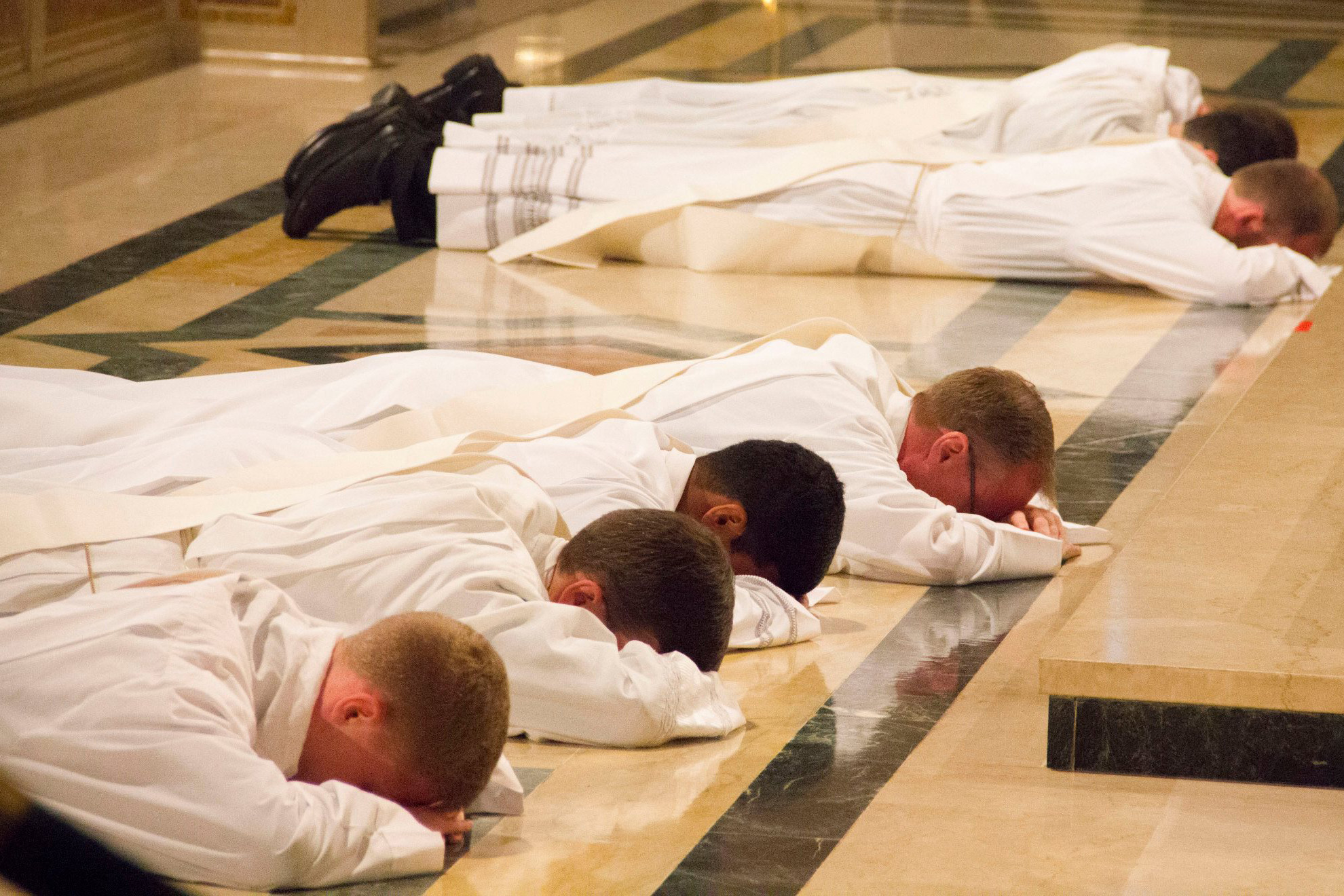
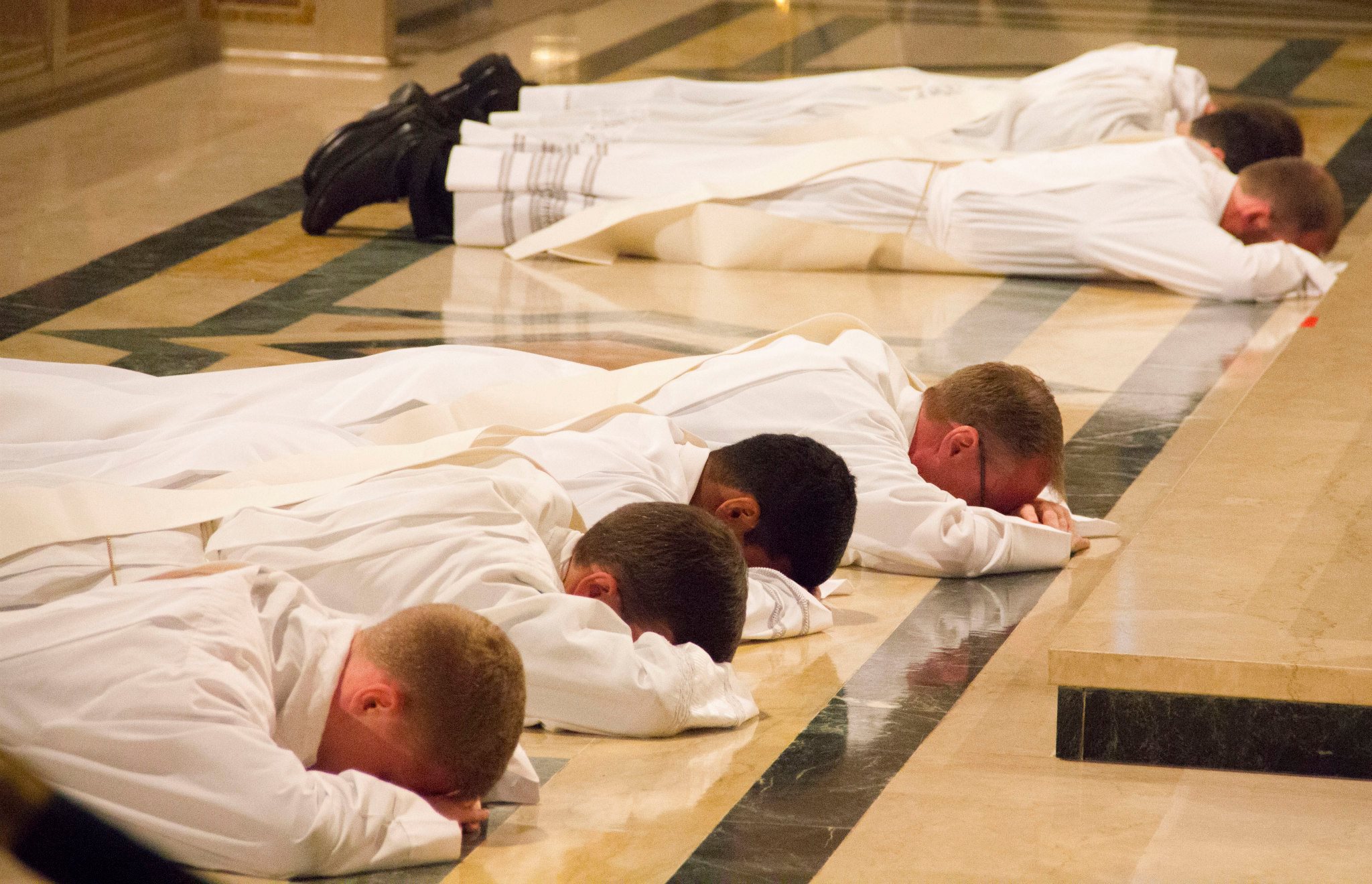 The Gospel from Wednesday of this week describes well a spiritual gift to be sought. It is from Mark 10:32 and says,

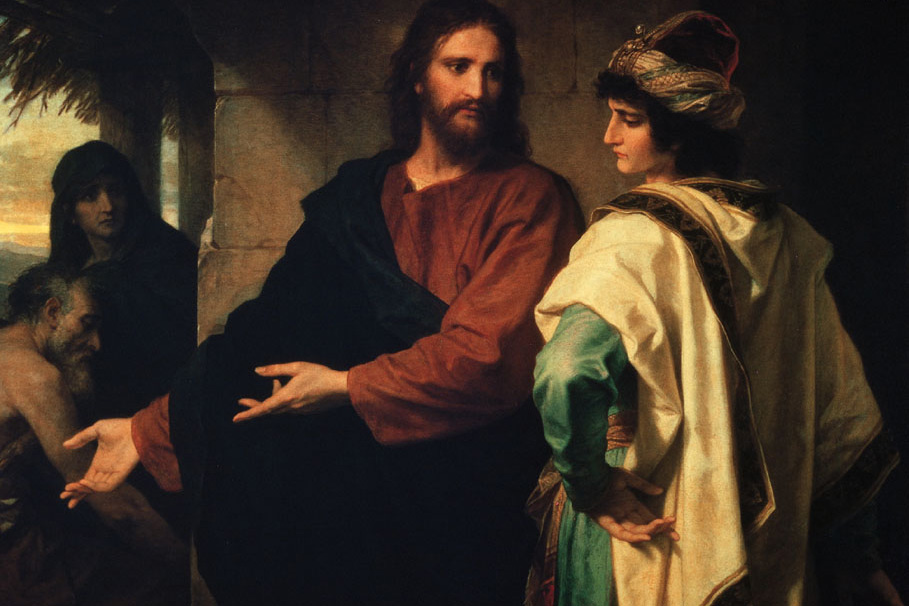
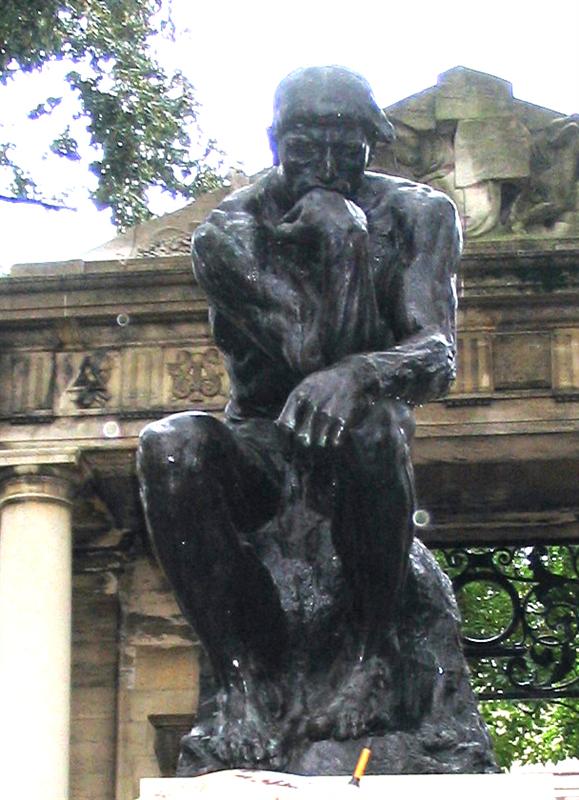
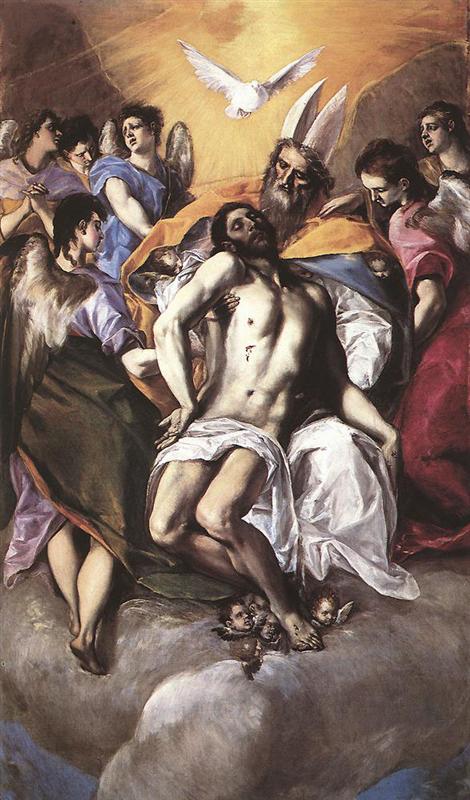

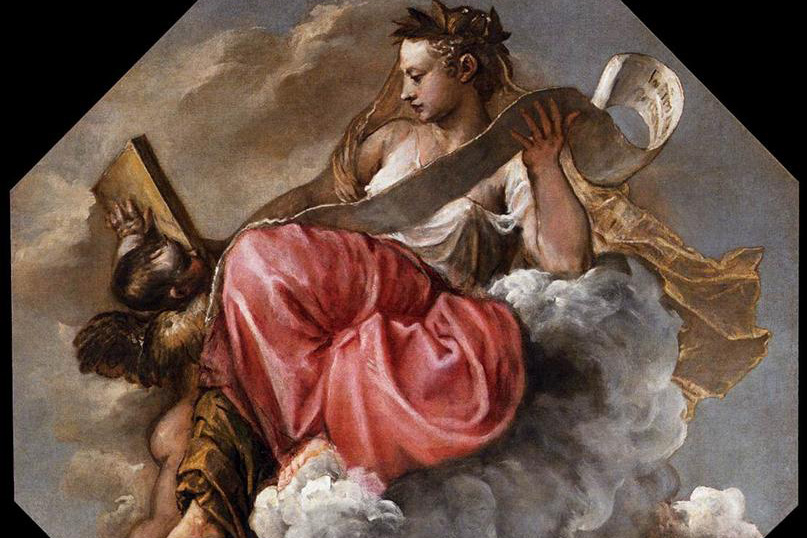
 At daily Mass we are reading from the Book of Sirach, and there are several verses which bespeak blessing but also warning: