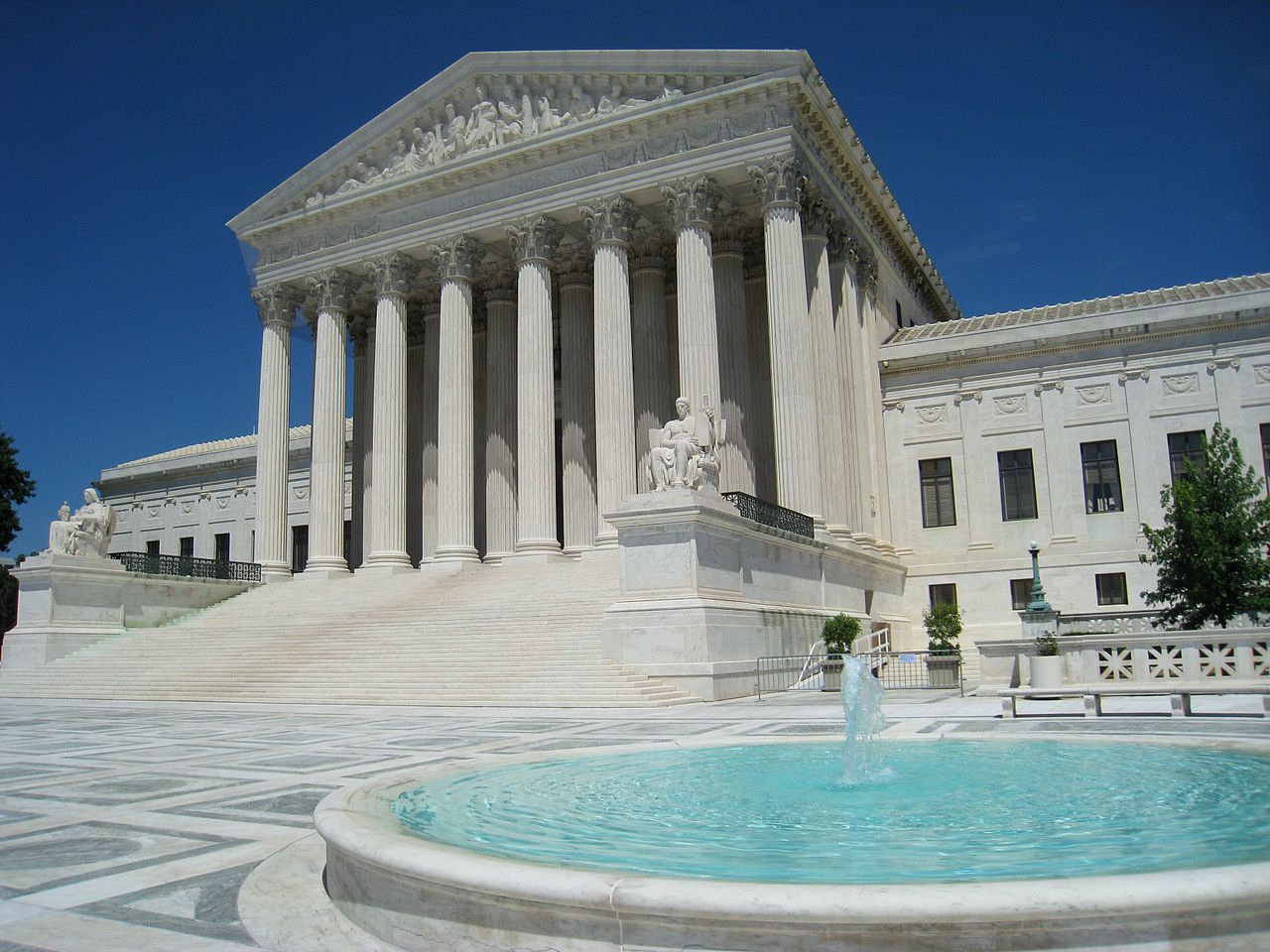
On the Fourth of July, in the United States of America we celebrate freedom. In particular we celebrate freedom from tyranny, and a government that is not representative; freedom from unchecked power and unaccountable sovereigns.
Distorted and faithless notions – Yet, as Christians we cannot overlook that there are ways of understanding freedom today that are distorted, exaggerated and detached from a proper context. Many modern concepts of freedom treat freedom as something that faith limits, not enhances.
Alexis De Tocqueville saidLiberty cannot be established without morality, nor morality without faith. In America today we are seeing the erosion of all three in reverse order.
Those who want to eliminate faith remove the ultimate basis of morality. For if God, and what he has set forth in Natural Law, and the Scriptures be not the basis of or law and freedom, then we are and there is no real basis to determine right and wrong, it is all just opinion and power struggle. We are our own absolute rulers, answerable to no one. This is dangerous.
And just as it is a bad idea for the inmates to run the jail, so absolute self-governance turns to tyranny. We tend to turn on each other and engage in deadly power struggles.
Welcome to the secular setting wherein freedom is eroded because power struggles have replaced the recognition of a higher law that binds us all. Welcome to the tyranny of relativism, and the bondage and litigiousness of unbelief.
Among the sources of growing and intrusive law is that some refuse to limit their bad behavior, some refuse to live up to commitments they have made, some abandon self control, some insist on living outside safe and proper norms. Many insist that the solution to protect them from others who abuse their freedom, is more laws. And many are successful in getting increasingly restrictive laws passed.
Yes, without a commonly held morality and a salutary fear that we will answer one day to God, bad behavior multiplies and freedom erodes into lots of tedious laws. In this climate, an increasingly powerful and intrusive State seeks to keep a lid on the immoral behavior resulting from the faithless notion that I will never answer to anyone.
Hence, those who seek to eliminate faith for the sake of “freedom” get only tyranny. Even unbelievers ought to be grateful that most people have a vigorous sense that they must answer one day to God. But without God, those in power, and those who act wickedly, think they will never have to answer to anyone and their sociopathic behavior gets more severe and tyrannical.
Those who claim that the truth of the gospel limits their freedom might also consider that the world outside God’s truth shows itself to be far less than free than it claims:
Addictions and compulsions in our society abound.
Neuroses, and high levels of stress are major components of modern living.
The breakdown of the family and the seeming inability of increasing numbers to establish and keep lasting commitments is quite significant.
A kind of obsession with sex is evident and the widespread sadness of STDs, AIDs, teenage pregnancy, single motherhood (absent fathers) and abortion are its results.
Addiction to wealth and greed (the insatiable desire for more) enslave many in a kind of financial bondage wherein they cannot really afford the lifestyle their passions demand, and they are unsatisfied and in deep debt.
The so-called “freedom” of the modern world, (apart from the truth of the Gospel), is far from evident. The Catechism says rather plainly:
The more one does what is good, the freer one becomes. There is no true freedom except in the service of what is good and just. The choice to disobey and do evil is an abuse of freedom and leads to “the slavery of sin.” (CCC # 1733)
In the end, the paradox proves itself. Only limited freedom is true freedom. Demands for freedom apart from faith lead only to hindered freedom and outright slavery and tyranny.
Ponder freedom on this 4th of July. Ponder its paradoxes, accept its limits. For freedom is glorious. But because we are limited and contingent beings, so is our freedom. Ponder finally this paradoxical truth: The highest freedom is the capacity to obey God.
Note that in the video this song about Freedom, often sung in reference to various political and social struggles, roots the freedom in Jesus. Some seculars eliminate the 2nd verse today, but they thus undermine the basis for freedom. For if there be no Lord to whom we point as the basis of justice, Those who cry for freedom are simply being arbitrary in their notion. Without God and the justice he puts in our hearts, why should the desires of the oppressed have any more merit than the wishes of the oppressor? It is a mere matter of opinion, for there is no outside source for morality or justice. Unbelievers cannot really point to any basis other than popular opinion or raw power to usher in their view. Their notion of freedom without faith ends only in the tyranny of power struggle.
One of the great tasks in our spiritual and moral life is to fix our point of reference. Simply put, is Jesus Christ our point of reference, or is our reference point where we stand viz a viz others?
Many, today, in order to assess their moral state, consider their position in relation to the vast numbers of people that surround them. Perhaps they will consider that there are some who are surely holier than they are. Yes, surely internationally known figures (like Mother Theresa was), surely they rank up there way above us. Perhaps too in a more local way, many will see the holy ones who attend daily Mass or frequent Eucharistic Adoration or other devotions, and conclude that these sorts of people rank ahead of them in holiness and moral excellence.
But then comes the dark side of such relative moral ranking. For many of the same folks will also think of others as behind them and with relief say, “Well, I may not be perfect, but at least I am not like that drug dealer over there, or that prostitute, or that corrupt businessman or politician.”
And thus, most of us who use this point of reference will rank ourselves somewhere in the middle, and feel reasonably content. But this sort of contentedness is not the sort of assessment that helps us to be zealous to grow in holiness. And, more problematically, how I rank among others is not a valid standard, or meaningful assessment.
For indeed, we must find and fix our true point of reference on Jesus. He is the Way we must walk, he is the Truth to whom we must conform, He is the Life we must live. Jesus must be our moral reference, our moral compass.
Someone say, “Lord have mercy!” For now the standard shifts from a mediocre, middle of the pack, “at least I’m not as bad as so and so” reference point, to the very person of Jesus who also added: “You must be perfect, as the heavenly Father is perfect.” (Mat 5:43).
Thus, when Jesus is our standard and point of reference, we can rightly and with true humility and hope cry out “Lord, have mercy!” For with our sights fixed on Jesus, pride cannot long endure, and true humility begins to flourish.
For looking to Jesus, we know it is going to take boatloads of grace and mercy to ever close the gap between his holiness and our present unseemly state. Only grace and mercy will help us meet the standard that is Jesus himself.
To illustrate, go with me to the upper room, to the Last Supper. And as Mark’s gospel relates,
As they were reclining at the table and eating, Jesus said, “Truly I say to you that one of you will betray Me—one who is eating with Me.” They began to be grieved and to say to Him one by one, “Surely it is not I?” (Mark 14:18-19)
“Surely it is not I?” And thus we see, none of us can be certain of our innocence in the presence of Jesus, in the presence of holiness Himself. Yes, in the presence of Innocence Himself, none of us are sure of our own innocence. Somehow, when Christ is our reference point, we see our truer state, and in a salutary grief and sober awareness of our capacity for sin, we simply and sincerely cry out: Kyrie, eleison! Lord, have mercy!
But now you see that we are thus equipped to trust Him, and to learn to depend on his mercy. He is not just the one who gets up over the top, or supplies what we lack. He is the one who has brought us back to life when we were dead in our sins! He is the one on whom we must wholly depend.
Too easily and smugly we rank ourselves among others, and too easily we falsely justify ourselves in this way. We grade ourselves on a kind of “moral curve” and thus become so easily prideful, self assured, and lacking in gratitude.
But when Jesus is our reference point, as He should be, we know our need to be saved. And perhaps we cry out the words of an old gospel hymn: “It’s me Oh Lord, Standin’ in the need of prayer!”
And looking to Him in this way, we may feel grieved, or overwhelmed, but in the end these are salutary, for they set the stage for, and usher in a kind of joyful humility and an immense gratitude, for what Jesus has done for us.
Knowing our unfathomable need for grace and mercy, how grateful we are to receive it! And being grateful, we are changed, we are different. Gratitude is a kind of joy. And when gratitude rushes into our chastened hearts, an awful lot of poison goes away. Anger, fear, resentment, ingratitude, greed, disappointment, desire for revenge, envy, jealously and so many other poisons, begin to vanish. And the joy of gratitude begins to usher in serenity, peace, love, generosity, forgiveness, mercy, contentment, and so many other gifts.
Yes, look to Jesus! Your neighbor is not the standard, not the point of reference, Jesus is. And while this look may bewilder at first, is is also a look that will save and bless us. Look! There is the Lamb of God who takes away the sins of the world!
In his attempt to discourage the faithful, Satan will often tap into the idealism of those who have chosen to pursue a special and dedicated spiritual path. In effect, he will tempt them with a false piety by sowing the thought that they have not done all they could do, that if only they would do more, pray more, fast more etc., they would have better results, or that other souls, or that the world would be in better condition.
Not only do such a thoughts seem pious, but, in fact, such thoughts have some roots in reality. Our finite abilities and capacities mean there will always be more that we can do, more that can be accomplished. Frankly, commitment, for limited creatures like us, can always be expanded in wider directions! And this how Satan discourages the devoted and dedicated soul.
But the trap is this, when you could always do more, you have never done enough! And thus discouragement and the sense of being overwhelmed sets in. Presuming that the call to pray more and more is from God, the vexed soul starts to experience God more as a task-master and slave driver, than as a savior and deliverer. And this is just where Satan wants us: discouraged, angry and fearful.
Therefore, it is important for the dedicated, yet scrupulous or afflicted person to consider, along with a spiritual director, a path and prayers that can reasonably be said, given one’s state in life. And, having done so, to pursue that path steadily, not allowing Satan to discourage them by guilty thoughts and false piety, which says they should do more, and more.
In this regard, St. Ignatius, in the Spiritual Exercises advises the faithful:Age quod agis (Do what you are doing). In other words, stay the course, hold fast and be constant to an agreed-upon, and reasonable spiritual program.
St. Francis De Sales says in his Introduction to the Devout Life, addresses a similar concern when he writes: The practice of devotion must be adapted to the strength, to the occupation, and to the duties of each one in particular…Tell me please, whether it is proper for a bishop to want to lead a solitary life as if he were a monk, or for a working man to spend all day in church like a religious. Is not this sort of devotion…unorganized and intolerable?
St. Augustine also says in his Letter to Proba: More things are accomplished in prayer by sighs and tears, than by many words.
St. Paul does say that we should “Pray always” but by this he means that we should seek the gift to be in living conscious contact with God all through the day. He does not mean prayer in the sense of having suspended all other actions or neglecting other duties.
And thus one should pray daily, but other duties ought not be neglected, including duties to yourself, to sleep, work, family and communal involvement etc. Prayer is to be integrated into our lives, and by God’s grace support us in our other duties. It will be helpful to speak with a pastor, spiritual director or other wise soul to ensure one does not neglect prayer, but neither is one scrupulously anxious of never having done enough.
Each day, having prayed, serenely move to the other duties of the day and do not be unsettled by discouraging thoughts from the devil that you ought to pray longer and with more words. The Lord knows your heart, and your desire for deliverance, and for holiness. And when thoughts occur that you ought to pray more and more and in often burdensome ways, simply say, “Jesus, I trust in your love for me.”
Sweet hour of prayer! sweet hour of prayer!
Thy wings shall my petition bear
To Him whose truth and faithfulness
Engage the waiting soul to bless.
And since He bids me seek His face, Believe His Word and trust His grace, I’ll cast on Him my every care, And wait for thee, sweet hour of prayer!
Scripture is a prophetic interpretation of reality. That is, it tells us what is really going on from the perspective of the Lord of History. As an inspired text it traces out not only the current of the times, but also the trajectory, the end to which things tend. It is of course important for us to read Scripture with the Church and exercise the care the Church would have us show and, at the end of the day, to submit our understanding to the rule of faith and the context of Sacred Tradition.
With those parameters in mind, I would like to consider Romans 1, wherein St. Paul describes the grave condition of the Greco-Roman culture of his day. Under the inspiration of the Holy Spirit he prophetically interpreted those times of the First Century AD. And, though the text speaks specifically to those times, it is easily evident that our current times are becoming almost identical to what St. Paul and the Holy Spirit described.
St. Paul saw a once noble culture that was in grave crisis and was in the process of being plowed under by God for its willful suppression of the truth.
Let’s take a look at the details of this prophetic interpretation of those days and apply it to our own. The text opens without any niceties, and words reach us almost like lead pellets.
I. The Root of the Ruin – The text says, The wrath of God is being revealed from heaven against all the godlessness and wickedness of people, who suppress the truth by their wickedness.
As the curtain draws back, we not eased into the scene at all. We are confronted at once with the glaring lights of judgment and the woeful word: “wrath.” And note that the wrath of God is called here a revelation. That is to say it is a word of truth that revels, and prophetically interprets reality for us. The wrath is the revelation!
Quite astonishing really and directly contrary to our modern tendency to see God only as the “affirmer in chief;” whose love for us in understood only in sentimental terms, never in terms of a strong love that insists for us what is right and true, and what is ultimately what we need, not just what we want.
And what is the “wrath of God?” The wrath of God is our experience of the total incompatibility of unrepented sin before the holiness of God. The unrepentant sinner cannot endure the presence, and the holiness of God, There is for such a one wailing and grinding of teeth, anger and even rage when confronted by the existence of God and the demands of His justice and holiness. God’s wrath does not mean in some simplistic sense that God is “mad” as if being emotionally worked up to fury. God is not moody and unstable. God is not subject to temper tantrums like we are. Rather this, God is holy, and the unrepentant sinner cannot endure his holiness, but experiences it as wrath.
To the degree that God’s wrath is in Him, it is his passion to set things right. God is patient and will wait and work to draw us to repentance. But his justice and truth cannot forever tarry, and when judgment sets in on a person or culture, a civilization or epoch, his holiness and justice are reveled as wrath to the unrepentant, be it an individual or a culture.
And what was the central sin of St. Paul’s day, and our own too? Simply stated in the verse, THE sin of Romans 1 is this, (and it is the sin that leads to every other problem): they suppress the truth by their wickedness.
Note this well, those who seek to remain in their wickedness suppress the truth. It was the problem in St. Paul’s day and also in ours. On account of wickedness, and a desire to persist in sin, many suppress the truth. The catechism of the Catholic Church warns,
by the impact of the senses and the imagination, but also by disordered appetites which are the consequences of original sin….it happens that men in such matters easily persuade themselves that what they would not like to be true is false or at least doubtful. (Catechism of the Catholic Church # 37)
Yes, and St Paul also told St. Timothy
For the time will come when people will not tolerate sound doctrine. Instead, to suit their own desires, they will gather around them a great number of teachers to say what their itching ears want to hear. (2 Tim 4:3)
And as Isaiah had described:
They say to the seers, “See no more visions!” and to the prophets, “Give us no more visions of what is right! Tell us pleasant things, prophesy illusions! (Isaiah 30:10)
Yes, on account of a desire to cling to their sin and to justify themselves, people in Paul’s day and now as well suppress the truth. And while this human tendency has always existed, it has taken on a widespread and collective tendency in our own times, as it did in St. Paul’s age. There is an increasing and widespread tendency for people of our own time in the decadent West to go on calling good, or no big deal what God calls sinful.
As such we suppress the truth and now, as then, the wrath of God is being revealed. We shall see just how his wrath is revealed in a moment. But the text makes it clear, on account of the sin of the repeated, collective and obstinate suppression of the truth, God’s wrath is being revealed on the culture of the decadent West.
II. Revelation that is Refused – The text goes on to say, and since what may be known about God is plain to them, because God has made it plain to them. For since the creation of the world God’s invisible qualities—his eternal power and divine nature—have been clearly seen, being understood from what has been made, so that people are without excuse. – (Romans 1:19-20)
Note well that God the Holy Spirit and St. Paul attest that the suppression of the truth is willful. We are not dealing with simple ignorance here. And while it is true that the Pagan people of St. Paul’s day did not have the Scriptures, nevertheless, they are “without excuse.” Why? Because they had the revelation of creation. Creation reveals God, and speaks not only to His existence, but also to his attributes, to his justice and to his his power, his will and the good order He instills in what he has made and thus expects of us.
All of this makes even those raised outside the context of faith, whether in the First Century or own day, to be “without excuse.”
The Catechism also couches our responsibility to discover and live the truth as rooted in the existence of something called the conscience:
Deep within his conscience man discovers a law which he has not laid upon himself but which he must obey. Its voice, ever calling him to love and to do what is good and to avoid evil, sounds in his heart at the right moment. . . . For man has in his heart a law inscribed by God. . . . His conscience is man’s most secret core and his sanctuary. There he is alone with God whose voice echoes in his depths….It bears witness to the authority of truth in reference to the supreme Good to which the human person is drawn, and it welcomes the commandments….[Conscience] is a messenger of him, who, both in nature and in grace, speaks to us behind a veil, and teaches and rules us by his representatives. Conscience is the aboriginal Vicar of Christ. (Catechism of the Catholic Church #s 1776-1778).
Again, and therefore, because of the witness and revelation of the Created order, and on account of the conscience present and operative in all who have attained the use of reason, those who suppress the truth are without excuse for this suppression. They are suppressing what, deep down, they know.
It has been my experience for 25 years as a pastor working with sinners (and not being without sin myself) that those I must confront about their sin, know, deep down, what they are doing. They may have suppressed the still small voice of God, and they may have sought to keep His voice at bay by layers of stinking thinking. They have also collect false teachers to confirm them in their sin and permitted many deceivers to tickle their ears. But, deep down they know what they do is wrong and, at the end of the day, they are without excuse.
Some degree of the lack of due discretion may ameliorate the severity of their culpability, but ultimately they are without excuse for the suppressing of the truth. There is a revelation of creation (and for many today, also the Word of God which has been preached and heard by most).
But many today, as in Paul’s time refuse revelation, doing so willfully and to justify wickedness, they are without excuse.
III. The Result in the Ranks– The Text says, For although they knew God, they neither glorified him as God nor gave thanks to him, but became vain in their thinking and their senseless minds were darkened. Although they claimed to be wise, they became fools and exchanged the glory of the immortal God for images made to look like a mortal human being and birds and animals and reptiles. (Romans 1:21-23)
This should seem very familiar. As in St. Paul’s Day, but even more so in ours, a prideful culture has set aside God, whether through explicit atheism and militant secularism, or through neglect and willful tepidity. God has been escorted to the margins of our proud anthropocentric culture. His wisdom has been forcibly removed from our schools, and the public square. His image and any reminders of him are increasing removed by force of law. And many too mock His holy Name and mention His truth only to ridicule and scorn it as a remnant from the “dark ages.”
Faith and the magnificent deposit of knowledge and culture that has come with it, has been scoffed at as a relic from times less enlightened and scientific than our our own “brilliant” and enlightened times.
Our disdainful culture has become a sort of iconoclastic anti-culture which has systematically put into the shredder every vestige of Godly wisdom it can. The traditional family, human sexuality, chastity, self control, moderation and almost every other virtue have been scorned and willfully smashed by many iconoclasts of this time. To them everything of this sort must go.
And as a prophetic interpretation of reality, the Scripture from Romans describes the result of suppressing the truth and refusing to acknowledge and glorify God. The text says, they became vain in their thinking and their senseless minds were darkened. Although they claimed to be wise, they became fools.
Yes there is a powerful darkening effect that comes from suppressing the truth and refusing the wisdom and revelation of God. While claiming to be so wise, so smart and advanced, we have, collectively speaking become foolish, and vain, as our intellects grow dimer and darker by the day. Our concern for vain, foolish, passing and silly things knows little bounds today. And yet the things that really do matter, death, judgment, heaven and hell, are almost never attended to. We run after foolish things but cannot even exercise moderate self control. Our debt knows no bounds but we cannot stop spending. We cannot make or keep commitments, addictions are increasingly serious and widespread, and all most basic indicators indicate grave problems: graduation rates, SAT scores, teenage pregnancy, STDs, abortion rates, AIDs, Divorce rates, cohabitation rates. All the numbers that should be up are down, and the numbers that should be down are up.
Claiming to be so wise and smart, we have become collectively foolish and even our capacity to think clearly of solutions and have intelligent and meaningful conversations becomes increasingly impossible, since we cannot agree on even basic points. We simply talk past each other and live in separate little stovepipes, in smaller and increasingly self defined worlds.
And if you think the line about idolatry doesn’t apply today, don’t kid yourself. People are into stones and rocks, and all sorts of strange syncretistic combinations of religions, to include the occult. This is the age of the “designer God” wherein people no longer tolerate the revealed God of the Scriptures, but recast, reinvent, and remake a God of their own understanding, who just so happens to agree with everything they think. Yes, idolatry is alive and well in age of a designer God, a personal sort of hand carved idol that can be invoked over an against the true God of the Scriptures.
And for all this people today congratulate themselves for being tolerant, open-minded, non-judgemental and so forth. It is hard not see that our senseless minds have become very dark, our thoughts vain, and our behavior foolish.
Our culture is in the very grave condition that this Scripture, this prophetic interpretation of reality describes. There is much for which we are rightfully concerned.
And yet, tragically , the darkness, foolishness, idolatry and vanity get even worse. We must read on.
IV. The Revelation of the Wrath – The text says, Therefore God gave them over in the sinful desires of their hearts to sexual impurity for the degrading of their bodies with one another. They exchanged the truth about God for a lie, and worshiped and served created things rather than the Creator—who is forever praised. Amen.Because of this, God gave them over to shameful lusts. Even their women exchanged natural sexual relations for unnatural ones. In the same way the men also abandoned natural relations with women and were inflamed with lust for one another. Men committed shameful acts with other men, and received in themselves the due penalty for their error. (Rom 1: 24-27)
And here the “wrath” is revealed. The text simply says, “God gave them over to their sinful desires.” This is the wrath, this is the revelation of the total incompatibility of unrepented sin before the holiness of God and the holiness to which we are summoned.
In effect, God says, “OK, if you want sin and rebellion, you can have it. It is all yours. I will now allow you to experience the full consequences of your sinful rebellion. You will now feel the full fury of your own sinful choices.” Yes, God gave them over to their sinful desires….
And as a prophetic interpretation of reality, it seems conclusive that God has also given us over in a similar way to our sinful desires.
And note the first and most prominent effect of this being given over to sinful desires: sexual confusion of a colossal degree. The text describes sexual impurity, the degradation of their bodies, shameful lusts and the shameful acts of homosexual perversion that is condoned and celebrated. The text also speaks of bodily penalties for such action, probably disease and other deleterious effects that come from doing what is unnatural and using the body for purposes for which it is not designed.
Welcome to the 21st Century decaying West.
Many misunderstand what Romans 1 is saying and point to this text to warn us that God will punish us for our condoning and celebrating of homosexual acts. But Romans 1 does not say God will punish for this. Romans 1 says that the widespread condoning and celebrating of homosexual acts IS God’s punishment, it is the revelation of wrath. It is the first and chief indication that God has given us over to our stubborn sinfulness and to our lust.
Now, let us be careful to distinguish here. The text does not say that homosexuals are per se being punished. For some may mysteriously have this orientation but live chastely. But rather the text is saying we are all being punished.
Why? For over 60 years now the decadent West has celebrated promiscuity, pornography, fornication, cohabitation, contraception, and even to some extent adultery. The resulting carnage of abortion, STDs, AIDs, single motherhood, absent fathers, poverty, and all sorts of hideous and heinous effects on our children has not been enough to bring us to our senses. Our lusts have become wilder and more and more debased.
In contraception we severed the connections between sex, procreation, and marriage. Our senseless minds have become darkened. Sex was reduced to two adults doing what they pleased in order to have fun or “share love (lust).” This opened the door to increasingly debased sexual expression and irresponsibility.
Enter the homosexual community and its demands for acceptance. And the wider culture, now debased, darkened, and deeply confused, cannot comprehend what is frankly obvious, that homosexual acts are wholly contrary to nature. The very design of the body, of the actual body parts shouts against it. But the wider culture, already deeply immersed in its own unnatural confusions about sex via contraception, and an increasing and steady diet by many of highly debased pornography that celebrates both oral and anal sex among heterosexuals, had no answer to the challenge.
We have gone out of our collective mind, our senseless minds are darkened, confused, foolish, and debased. This is wrath, this is what it means to be given over to our sinful desires. This is what happens when God finally has to say to a culture, “If you want sin, you have it, until it comes out of your ears.”
How many tens of millions of aborted babies have been sacrificed to our wild lusts, how high have the other body counts of pain effects gone: children in poverty, without fathers, in confused and broken homes, divorce, STDs, deaths by AIDs. In none of this have we repented.
But in all of it the wrath of God is being revealed from heaven against all the godlessness and wickedness of people, who suppress the truth by their wickedness. Notice again, homosexuals are not being singled out, the wrath is against ALL godlessness and wickedness of all who suppress the truth. And when even our lustful carnage has not been enough to bring us to our senses, God finally says, enough, and gives us over to our own sinful desires to feel their full effect. We have become so collectively foolish and vain in our thinking and darkened in our intellect that we now as a culture “celebrate” homosexual acts which Scripture rightly calls disordered (paraphysin = “contrary to nature” and is the word St. Paul uses in this passage to assess homosexual acts). Scripture also speaks of these sorts of acts as acts of grave depravity that cry to heaven for vengeance.
But, as the text says, Although they know God’s righteous decree that those who do such things deserve death, they not only continue to do these very things but also approve of those who practice them (verse 32). This is darkness, this is wrath.
This is what it means to be given over to our sins, a deeply darkened mind. The celebration of homosexual acts IS God’s punishment and demonstrates, according to the text that God has given us over.
V. The Revolution that Results – The text says, Furthermore, just as they did not think it worthwhile to retain the knowledge of God, so God gave them over to a depraved mind, so that they do what ought not to be done. They have become filled with every kind of wickedness, evil, greed and depravity. They are full of envy, murder, strife, deceit and malice. They are gossips, slanderers, God-haters, insolent, arrogant and boastful; they invent ways of doing evil; they disobey their parents; they have no understanding, no fidelity, no love, no mercy. (Romans 1:28-31)
The text states clearly and in very familiar terms the truth that when sex, and marriage and family go into the cultural shredder, and enormous number of social ills are set loose.
This is because children are no longer properly formed. The term “bastard” in its figurative term refers to an incorrigible person, and its more literal meaning is some one who has no father. Both senses are related. And this text says in effect that every starts to act like bastards.
Children raised in large numbers, outside the best setting of a father and a mother in a stable traditional family, is a recipe for the social disaster described in these verses. I will not comment on them any further. They speak well for themselves and well describe our current struggle. Here too is the wrath revealed and the giving over to our sin that God seems to have permitted .
VI. The Refusal to Repent –Although they know God’s righteous decree that those who do such things deserve death, they not only continue to do these very things but also approve of those who practice them. (Romans 1:32)
Here too is the mystery of our iniquity, of our stubborn refusal to repent, no matter how high the body count, how clear the evidence. Let us pray we will still come to our senses. But if not, God has a record of allowing civilizations to come and go, nations to rise and fall. If we do not love life we do not have to have it. If we want lies rather than truth, we can have them and feel their full effects.
But somewhere God is saying,
When I shut up the heavens so that there is no rain, or command locusts to devour the land or send a plague among my people, if my people, who are called by my name, will humble themselves and pray and seek my face and turn from their wicked ways, then I will hear from heaven, and I will forgive their sin and will heal their land. Now my eyes will be open and my ears attentive to the prayers offered in this place. (2 Chron 7:14-15)
The Gospel today portrays for us some disciplines that are important for disciples. They are portrayed in the life of Jesus, but are to be applied by us. Lets look at them each in turn.
I. Purposefulness – The text says, When the days for Jesus’ being taken up were fulfilled, [Jesus] resolutely determined to journey to Jerusalem, and he sent messengers ahead of him.
Note that Jesus was resolute. He was heading to Jerusalem to suffer, die and rise, just as he announced in last week’s gospel. He is heading there to undertake the great battle, and the great mission entrusted to him. Everything he did was to be oriented to this goal.
What about us? Are we as resolute in our determination to seek Christ and head for his Kingdom? Is our direction clear? Have we set our sites resolutely, or do we meander about, chasing butterflies. Are we on the highway to heaven? Or do we make easy compromises with this passing world and seek to serve two masters?
Yes, notice how easily we takes exits and diversions to to sin city, vicious village and injustice junction.
Our goal is to set our face like flint to the Jerusalem of Heaven, as Jesus set his face toward the Jerusalem of this earth to accomplish his mission and task.
Scripture speaks often of developing a firm and unequivocal resolve, to be purposeful and single-hearted in our determination to follow Jesus and set our sites on heaven:
This one thing I do, forgetting those things which are behind, and reaching forth unto those things which are before, I press toward the mark for the prize of the high calling of God in Christ Jesus. Phil 3:13
A double minded man is unstable in all his ways. James 1:4
No one can serve two masters; for either he will hate the one and love the other, or he will be devoted to the one and despise the other. You cannot serve God and mammon. Mat 6:24
There is one thing I ask of the LORD, this alone I seek: that I may dwell in the house of the LORD all the days of my life and gaze upon the beauty of the LORD…Ps 27:4
Are you focused, purposeful? What is the ONE THING you do? Concentration is the secret of power. Water over a large area is a stagnant pond. Yet, in a narrow channel it is a powerful river.
The first discipline of discipleship is to be purposeful, to be determined, single-hearted and focused in our pursuit of the Lord and His kingdom.
II. Perseverance –the text says, On the way they entered a Samaritan village to prepare for his reception there, but they would not welcome him because the destination of his journey was Jerusalem. When the disciples James and John saw this they asked, “Lord, do you want us to call down fire from heaven to consume them?” Jesus turned and rebuked them, and they journeyed to another village.
Note that James and John are angry and discouraged at the rejection of Jesus and the values of the Kingdom. But Jesus rebukes their desire for retaliation.
Notice how Jesus stays at his task. Rejected here, he moves forward. He does not let the devil distract him or his disciples from the task of persistently proclaiming the Word, in season or our of season, popular or unpopular, accepted or rejected. Just persevere, keep preaching, keep plowing, keep walking, Do NOT give up, do NOT grow angry, just keep working. Leave judgment to God, for now just preach, teach, instruct, warn and admonish.
Scripture says,
And if any one will not receive you or listen to your words, shake off the dust from your feet as you leave that house or town. Truly, I say to you, it shall be more tolerable on the day of judgment for the land of Sodom and Gomorrah than for that town. …and you will be hated by all for my name’s sake. But he who endures to the end will be saved. When they persecute you in one town, flee to the next Matt 10:14, 22
Yes, persevere! Remember, we’re called to be faithful not successful. We need to persevere not just in the face of rejection, but in the face of trials and temptations, setbacks and sorrows, hurts and hardships, failures and frustrations. Preach, persevere, teach, be tenacious. Remember too, trust in Jesus. They killed him but he rose.
Many too have announced the end of faith, have sworn that they will bury the Church and that the days of faith are over. But the Church has buried every one of her undertakers. They dug our grave, but fell in it themselves. Yes, we read the funeral rite over them instead and have outlived every opponent.
No weapon waged against us will prosper. Long after the current confusion and pride of the decadent West is gone, the Church will still exist, preaching Christ, and Him crucified. Persevere! A Critical discipline of discipleship.
III. Poverty – The text says, As they were proceeding on their journey someone said to him, “I will follow you wherever you go.” Jesus answered him, “Foxes have dens and birds of the sky have nests, but the Son of Man has nowhere to rest his head.”
Here too is a critical discipline of discipleship: to follow Jesus even if worldly gain not only eludes us, but is outright taken from us. Here is a critical question: Do you love the consolations of God or the God of all consolation? Do you seek the gifts of God, or the Giver of every good and perfect gift? What it following Jesus gave you, no earthly gain? What if, in fact, being a disciple brings you ridicule, loss, even prison or death? Would you still follow? Would you still be a disciple?
In this verse the potential disciple of Jesus seems to have had power, prestige or worldly gain in mind. Perhaps he saw Jesus as a political messiah and he wanted to be on the “inside track.” So Jesus warns him that this is not what discipleship is about. The Son of Man’s kingdom is not of this world.
We need to heed Jesus’ warning. Riches are actually a great danger. Not only can riches not help us in what we really need, they might actually hinder us! Poverty is the not the worst thing. You see there’s a risk in riches, a peril in prosperity and a worry in wealth.
The Lord Jesus here points to poverty and powerlessness (in worldly matters) when it come to being disciples. Frankly this is not merely a remote possibility or an abstraction. If we live as true disciples, we are going to find that piles of wealth are seldom our lot. Why? Well our “poverty” or lack of wealth derives from the fact that if we are true disciples, we won’t make easy compromises with sin or evil. We won’t just take any job. We won’t be ruthless in the workplace or deal with unscrupulous people. We won’t lie on our resume, cheat on taxes, or take easy and sinful short cuts. We will observe the sabbath, be generous to the poor, pay a just wage, provide necessary benefits to workers, and observe the tithe.
Now the world hands out (temporary) rewards if we do its bidding. But true disciples refuse such compromises with evil. In so doing they reject the temporary rewards of this earth, and may have a less opulent place to lay their head. They may not get every promotion, or attain to power.
And thus “poverty” is a discipline of discipleship. What is “poverty?” It is the capacity to be free from the snares of power, popularity, and possessions.
Jesus had “nowhere to lay his head.” That’s poor, but it is also to be free of the many duties, obligations and compromises that come with wealth. If you’re poor no one can steal from you, or threaten your stuff. You’re free and “have nothing to lose.”
Most of us have too much to lose, and so we are not free and our discipleship is hindered.
Poverty is an important discipline of discipleship.
IV. Promptness (readiness) –The text says, And to another he said, “Follow me.” But he replied, “Lord, let me go first and bury my father.” But he answered him, “Let the dead bury their dead. But you, go and proclaim the kingdom of God.“
The Lord seems harsh here. However note that the Greek text can be understood in the following way: “My Father is getting older. I want to wait until he dies and then I will really be able to devote myself to being a disciple!”
And so the point of Jesus is that if he didn’t have this excuse he’d have some other. He does not have a prompt or willing spirit. We can always find some “reason” that we can’t follow whole-heartedly today but have to get a few things resolved first.
It’s the old problem: Tomorrow!
There is a peril in procrastination. Too many look to tomorrow. But tomorrow is not promised. But in the scriptures there is one word that jumps out over and over again, it is the word “NOW.”
Isaiah 1:18 Come now, and let us reason together, saith the LORD:
2 Cor 6:2 …behold, now is the day of salvation.
Ps 95:7 Today if ye will hear his voice, Harden not your heart,
Prov 27:1 Boast not thyself of tomorrow; for you know not what a day may bring forth.
That’s right, tomorrow is not promised! Better choose the Lord today, for tomorrow very well might be too late. Now is the day of salvation.
Indeed, there were three demons who told Satan of their plan to destroy a certain man. The first demon said, “I am going to tell him there is no hell.” But Satan said, “People know there there is a hell and most have already visited here.” The second demon said, “I am going to tell him there is no God.” But Satan said, “Despite atheism being fashionable of late, most people know, deep down, there is a God, for He has written his name in their hearts.” The third demon said, “I am not going to tell them there is no hell or no God, I am going to tell them there is no hurry.” And Satan said, You’re the Man! That’s the plan!”
Yes, promptness is a discipline of discipleship. To not put off for tomorrow what must be done today is a great gift to be sought from God. It is the gift to joyfully run to what God promises without delay.
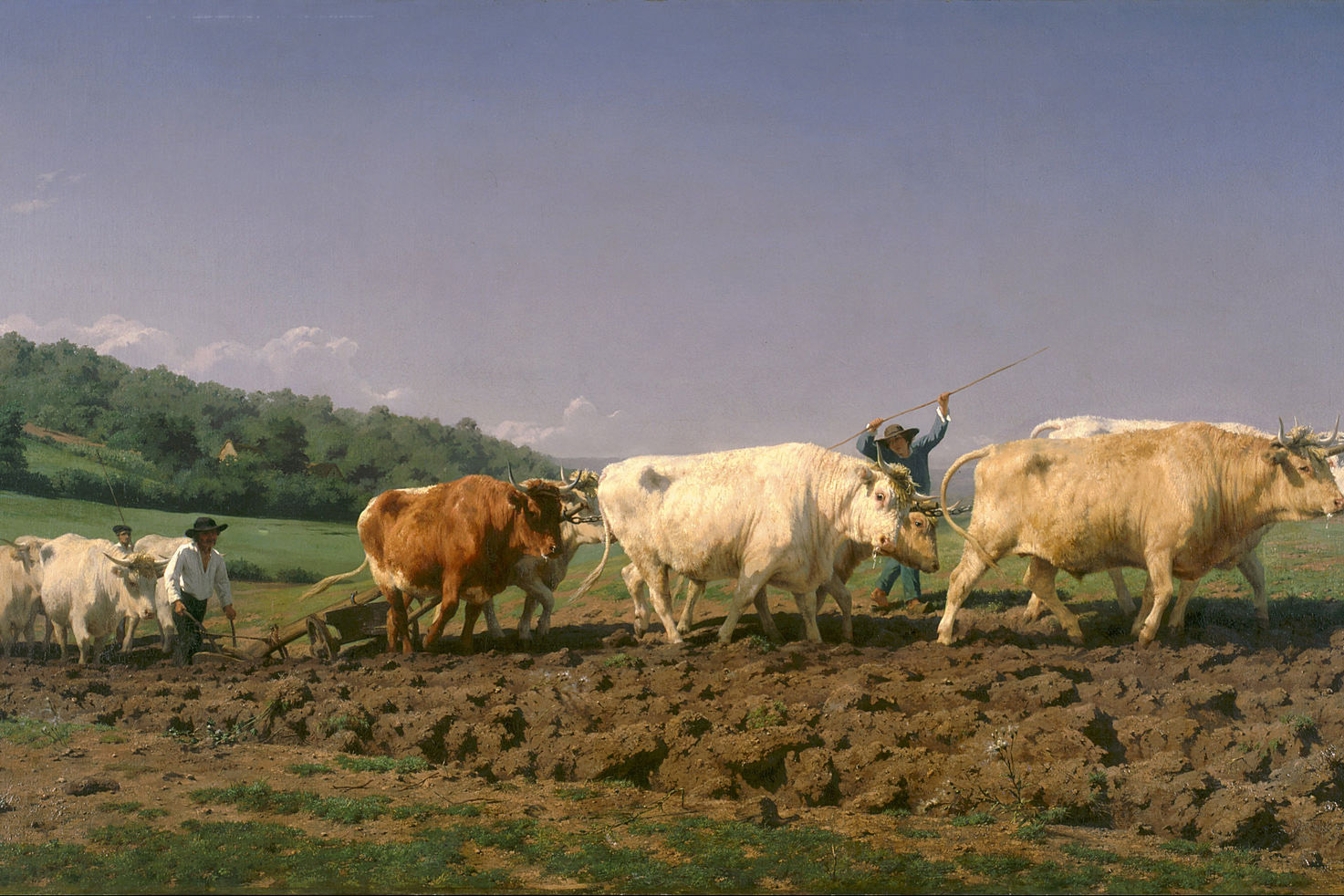
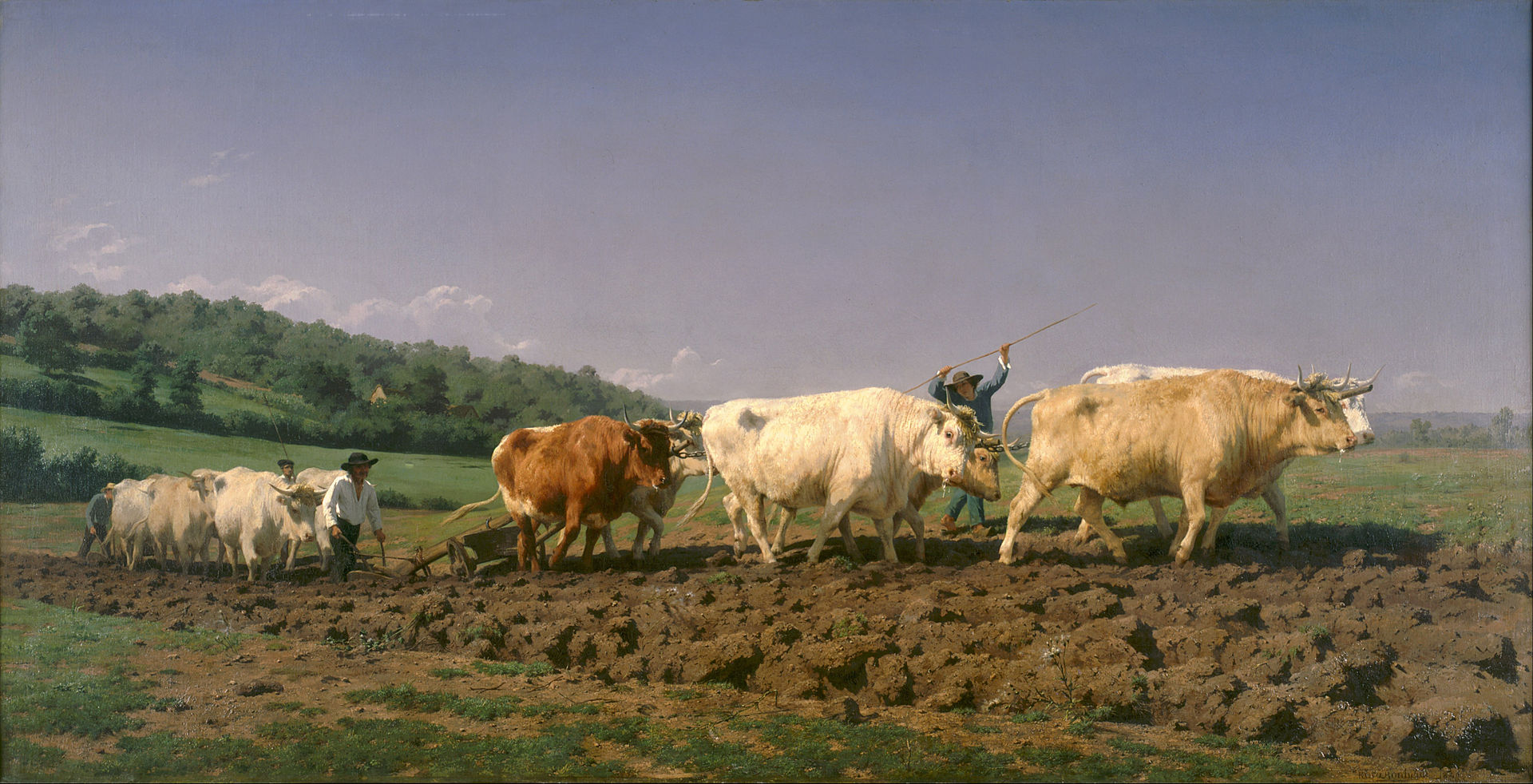
V. Permanence –The text says, And another said, “I will follow you, Lord, but first let me say farewell to my family at home.” To him Jesus said, “No one who sets a hand to the plow and looks to what was left behind is fit for the kingdom of God.”
When we accepted Christ, we set our hand to the gospel plow and we left certain things behind. We are not to return to those things. Things like: Harmful habits, ruinous relationships, soul-killing sinfulness, and perilous pleasures.
Yes, there are some things that we used to do that we have no business doing now. We need to give up our former ways and not look back:
Scripture says,
Now this I affirm and testify in the Lord, that you must no longer live as the Gentiles do, in the futility of their minds; they are darkened in their understanding, alienated from the life of God because of the ignorance that is in them, due to their hardness of heart; they have become callous and have given themselves up to licentiousness, greedy to practice every kind of uncleanness. You did not so learn Christ!– assuming that you have heard about him and were taught in him, as the truth is in Jesus. Put off your old nature which belongs to your former manner of life and is corrupt through deceitful lusts, and be renewed in the spirit of your minds, and put on the new nature, created after the likeness of God in true righteousness and holiness. (Eph 4:17-23).
And again,
Therefore, brothers, make every effort to make permanent your calling and election, because if you do these things you will never stumble. (2 Peter 1:10)
An old spiritual says, Hold on, Hold on! If you want to get to heaven let me tell you how, keep your hands on the Gospel plow! Keep your hands on the plow and hold on! Hold on. When you plow that field don’t lose your track, Can’t plow straight and keep a-lookin’ back. Keep your hand on the plow and hold on, Hold on!
Persevere, hold on, don’t let go, keep a inching along like a poor old inch worm. Stay, hold, keep, walk, and don’t look back!
Perseverance is a discipline of discipleship.
Here then are five disciplines of the discipleship. Learn of them and seek them from the Lord. Without them we will surely perish.
When my Father lay dying, I remember that one of the losses I began to grieve was that he was the keeper of many family stories. He was the one who could look at an old family photograph and tell you who they all were and something about each of them. As I saw him lying there, no longer able to talk much, I thought of all the memories stored up in his mind, all the stories, all the people he once knew and had spoken so vividly of.
And not only the family stories, but he was also a great historian and a great wellspring of the classics. He had read all the “Great Books” all of Shakespeare, all of Sacred Scripture, so many other worthy writings, and had memorized many lengthy quotes.
Such an encyclopedic mind, vivid thoughts, vivid memories, the keeper of the family story. And though I knew he’d take it with him in his soul, there was a grief to me that his magnificent mind was now closing to me. I regret I did not more carefully retain all he told me.
Thankfully he had written a family history that stays with us, and all his many photos and family films, that we worked to preserve, stay with us. We his sons, are moving much of this to digital, but it took Dad’s living presence to really bring these things home.
The video below put me in this reflective mind. It is of an old man who lays dying. And in various flashbacks we see his life, told almost as if from God’s perspective. We see his story, his good moments and tragedies. And then he passes.
I remember a Bible verse my father had jotted down on the frontispiece of a book he was reading at the time of his own father’s death:
But as for man, his days are like the grass, or as the flower that flourishes in the field. The wind blows, and he is gone, and his place never sees him again. (Psalm 103:16)
Reading that, as a very young teenager, I realized, for the first time that the Bible was very beautiful and I was startled to think that the house in which I was sitting would one day “never see me again.” All the stories, all the memories, gone with the proverbial winds.
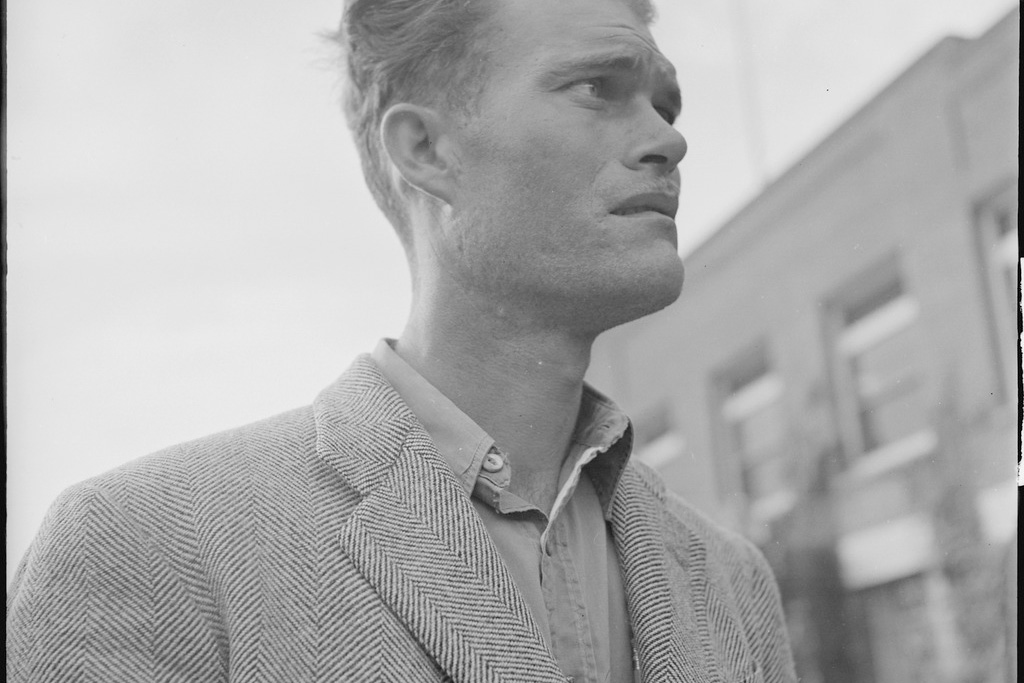
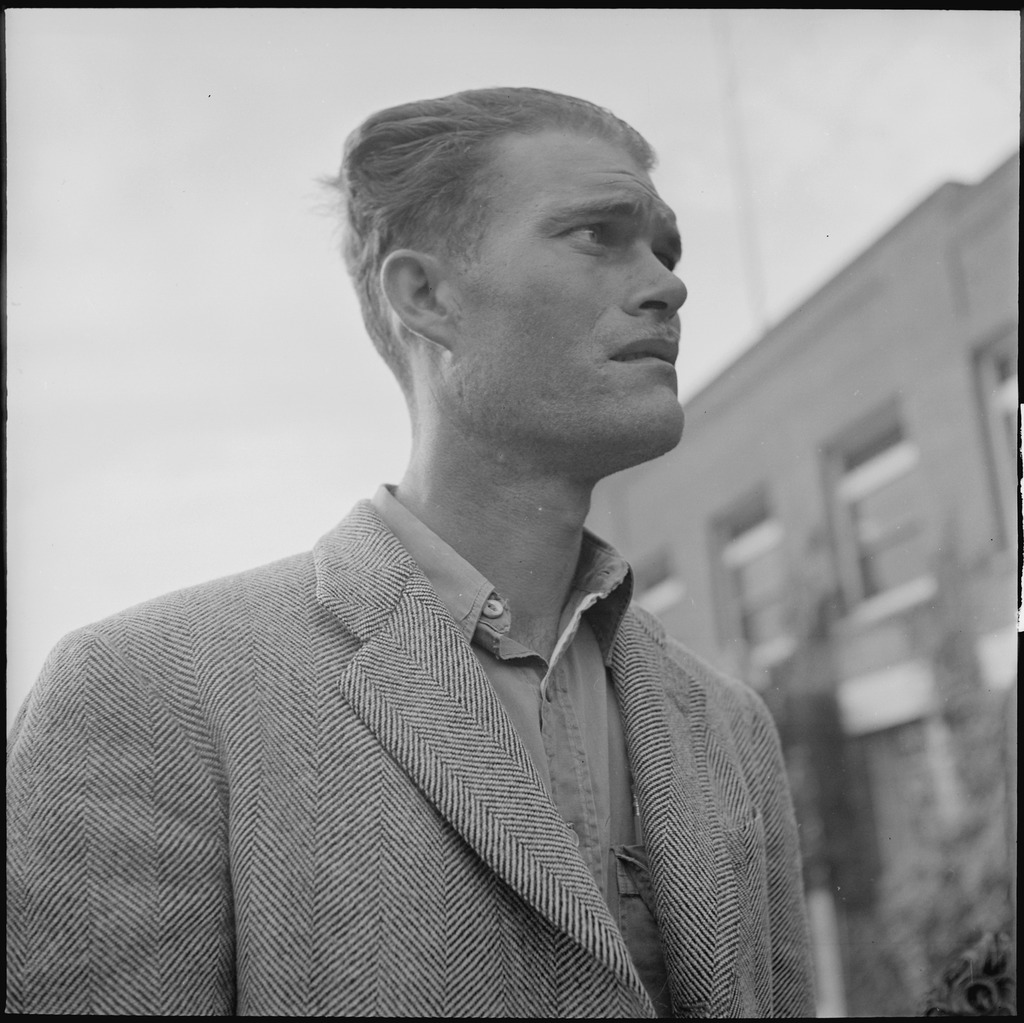
The photo at the upper right is the last picture I ever took of my father. He standing in front of the family home. This was taken as he was leaving it for the last time. He moved into a retirement community for a brief while, but he was not long for this world. And, there he is, standing in front of the place that “never sees him again.”
Yes, there is something very precious about our memories, our stories. They are meant to be shared, handed down. But something irreplaceable, dies with each person. A very personal glimpse of history, a very personal story, something that can never be fully shared with anyone, no one but the Lord.
Only the Lord really knows our story, knows it better than we ourselves:
O LORD, you search me and you know me.
You yourself know my resting and my rising;
you discern my thoughts from afar.
You mark when I walk or lie down;
you know all my ways through and through.
Before ever a word is on my tongue,
you know it, O LORD, through and through….
For it was you who formed my inmost being,
knit me together in my mother’s womb.
I thank you who wonderfully made me;
My frame was not hidden from you,
when I was being fashioned in secret
and molded in the depths of the earth.
Your eyes saw me yet unformed;
and all my days were recorded in your book,
before one of them came into being…
at the end I am still at your side… (Ps 139:varia)
Yes, the Lord knows. He knows all about us.
An old spiritual says,Nobody knows the trouble I seen, Nobody but Jesus. For in the end, he is the keeper of every story, my father’s, my own, yours. And whatever is lost in death will be restored a hundredfold, with understanding besides, in the great parousia. Not a story, not a word will be lost, but we shall recover it all, and tell the old, old stories once again.
Enjoy this poignant and moving video of a man’s life, almost as if told from the standpoint of God, the God who knows. Though the man seems to die alone, someone is remembering his story. Maybe it’s God doing the remembering:
In the wake of the supreme court decisions of this week, I would like to return to a question I have Asked before: Are we coming to a point where we should consider dropping our use of the word “marriage?”
It is a simple fact that word “marriage” as we have traditionally known it is being redefined in our times. To many in the secular world the word no longer means what it once did and when the Church uses the word marriage we clearly do not mean what the increasing number of states mean.
The Catechism of the Catholic Church defines “Marriage” (i.e. Holy Matrimony) in the following way:
The matrimonial covenant, by which a man and a woman establish between themselves a partnership of the whole of life, is by its nature ordered toward the good of the spouses and the procreation and education of offspring; this covenant between baptized persons has been raised by Christ the Lord to the dignity of a sacrament (CCC # 1601)
The latest actions by numerous states and the hat-tip that the Supremes gave Same sex unions mean that increasingly, the secular world’s definition of marriage no longer even remotely resembles what the Catechism describes.
To be fair, as we have previously noted, this is not the first redefinition of marriage that has occurred in America. The redefinition has actually come in three stages:
In 1969 the first no-fault divorce law was signed in California. Within 15 years every state in this land had similar laws that made divorce easy. No longer did state laws uphold the principle which the Catechism describes as a partnership of the whole of life. Now marriage was redefined as a contract easily broken by the will of the spouses.
The dramatic rise in contraceptive use and the steep drop in birthrates, though not a legal redefinition, amount to a kind of cultural redefinition of marriage as described in the Catechism which sees the procreation and education of offspring as integral to its very nature. Now the American culture saw this aspect as optional at the will of the spouses. Having sown in the wind (where we redefined not only marriage, but sex itself) we are now reaping the whirlwind of deep sexual confusion and a defining of marriage right out of existence.
This final blow of legally recognizing so called gay “marriage” completes the redefinition of marriage which the Catechism describes as being a covenant, …which a man and a woman establish between themselves. Now secular American culture is removing even this, calling same-sex relationships “marriage”.
Proposal: So the bottom line is that what the secular world means by the word “marriage” is not even close to what the Church means. The secular world excluded every aspect of what the Church means by marriage. Is it time for us to accept this and start using a different word? Perhaps it is, and I would like to propose what I did back in March of 2010, that we return to an older term and hear what you think.
I propose that we should exclusively refer to marriage in the Church as “Holy Matrimony.”
According to this proposal the word marriage would be set aside and replaced by Holy Matrimony. It should be noticed that the Catechism of the Catholic Church refers to this Sacrament formally as “The Sacrament of Matrimony.”
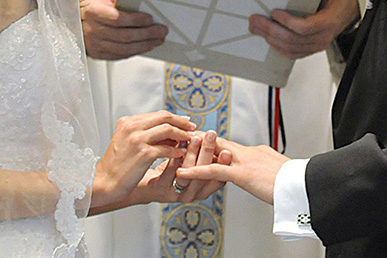
The word “matrimony” also emphasizes two aspects of marriage: procreation and heterosexual complementarity. The word comes from Latin and old French roots. Matri = “mother” and mony, a suffix indicating “action, state, or condition.” Hence Holy Matrimony refers to that that holy Sacrament wherein a woman enters the state that inaugurates an openness to motherhood. Hence the Biblical and Ecclesial definition of Holy Matrimony as heterosexual and procreative is reaffirmed by the term itself. Calling it HOLY Matrimony distinguishes it from secular muddle that has “marriage” for its nomen.
Problems to resolve – To return to this phrase “Holy Matrimony” is to return to an older tradition and may sound archaic to some (but at least it isn’t as awkward sounding as “wedlock”). But clearly a new usage will be difficult to undertake. It is one thing to start officially referring to it as Holy Matrimony. (Which, by the way I have done in my parish – we no longer prepare people for marriage, but for “Holy Matrimony”) But it is harder when, for example, a newly engaged couple approaches the priest and says, “We want to be married next summer.” It seems unlikely we easily train couples to say, “We want to enter Holy Matrimony next summer.” or even just to say, “We want to have a wedding next summer.” Such dramatic changes seem unlikely to come easily. Perhaps you, who read this blog can offer some resolutions to this problem.
Perhaps, even if we cannot wholly drop the terms “marry, ” “marriage” and “married” a more modest form of the proposal is that we at least officially discontinue the use of the word marriage and refer to it as the “Sacrament of Holy Matrimony.”
What do you think? Do we need to start using a new word for marriage? Has the word been so stripped of meaning that we have to use different terminology to convey what we really mean?
When I proposed this two years ago this very time, many of you we rather unconvinced and some were even perturbed that we were handing on over our vocabulary to the libertines. That may be, but we already know that “gay” will never mean what it used to, and it would seem that “marriage” will never again mean what it did.
A secondary but related proposal is that we begin to consider getting out of the business of having our clergy act as civil magistrates in weddings. Right now we clergy in most of America sign the civil license and act, as such, as partners with the State. But with increasing States interpreting marriage so differently, can we really say we are partners? Should we even give the impression of credibility to the State’s increasingly meaningless piece of paper? It may remain the case that the Catholic faithful, for legal and tax reasons may need to get a civil license, but why should clergy have anything to do with it?
Frankly, I am uncomfortable signing DC Marriage licenses, and do so only because my Ordinary has indicated we should continue doing this. I am happy to obey him in this and defer to his judgment in the matter. There is a reason his is the Ordinary and I am not. That said, I have told him what I think. But for now, it seems clear we must stay the course and still sign them until the Bishop says, no more.
If we did stop signing civil licenses, we would surely need a strong catechesis directed to our faithful that reiterates that civil “marriage” (what ever that means anymore) is not Holy Matrimony and that they should, in no way consider themselves as wed, due to a (meaningless) piece of paper from a secular state that reflects only confusion and darkness rather than clarity and Christian light.
Here too, what do you think? Should the Catholic Bishops disassociate Catholic clergy from civil “marriage” licenses?
The decisions of the Supreme Court regarding marriage today were disappointing but not surprising. Especially disappointing was the decision turning away “Proposition 8” where California voters rejected the status of legal marriage for same-sex attracted couples. The court seemed to set aside that proposition for technical reasons. This is not a legal blog, and hence I am not equipped to speak to legal aspects of the questions. And frankly, I am not at all certain that a Proposition 8 were it voted on again today, would pass.
For indeed, I think many of us who support traditional marriage are bewildered by the kind of tsunami that has swept over our culture in regards to this matter. DOMA passed not so long ago with an overwhelming majority in the House and Senate, and was signed into law by a relatively liberal President, Bill Clinton. More recently, Proposition 8 passed in the rather liberal state of California. Now, just a few years later, polls show that over 60% of Californians want Proposition 8 removed.
Yes, there have been dramatic shifts, and within such a very short number of years! Perhaps “tsunami” is a adequate description, or that it almost seems as if some hallucinogen has suddenly had its effects on American opinion.
And while this is also not a political blog, it seems, culturally that proponents of same-sex unions have scored their victory by successfully shifting the terms of the discussion away from marriage per se, to the rights of the individual adults in the question. The legal analysis of the attorney for the plaintiffs in these cases indicated that a crucial factor in his victory was that his side was able to demonstrate damages incurred by the plaintiffs, whereas of those who opposed them could show forth “no damages” in permitting the same-sex unions to be recognized.
Culturally and politically this also seems to be the essence of the problem, that the focus is on the rights of the adults in the question, not on what is best for children. And we Catholics too, who engage to debate on behalf of traditional marriage, often fall into this trap of focusing on the adults in the equation, not on the children, and what is best and just for children.
Simply put, the Church has, and must continue to oppose every erosion of traditional marriage because traditional marriage is what is best for children. And while it is true that we have a pastoral concern to call to repentance those who commit serious sexual sins, such as fornication, adultery, and homosexual acts, from the public policy point of view the Church’s stance on marriage is that traditional marriage is what is best and just for children. Hence to act in ways, or adopt policies that further erode traditional marriage, is to act unjustly. It is unjust because it fosters and encourages a climate that is increasingly poisonous and problematic for the children who are raised in it.
And hence, our objection to the legal recognition of Same-sex unions is not only an objection to homosexual aberrations, but also to other assaults on the family such as fornication, cohabitation, polygamy, no-fault divorce, intentionally single motherhood, and fatherhood, and so forth. Every child deserves, and has the right to be raised by his father and mother, who have committed themselves to a lifelong stable union.
Psychologically as well, every child deserves to have a father and mother. The father both teaches and forms his child in the way a mother cannot. Likewise for the mother, she also teachers and forms a child in ways that a father cannot.
Given what is best for children, the Church holds that it is reasonable to expect that traditional marriage and the traditional family be upheld and encouraged in our culture. Fornication and cohabitation should be shunned. Where adoption is necessary, the traditional family setting should be sought and have the preeminence among any other sort of setting. Only in rare cases where a traditional setting absolutely cannot be found, the children be put into less than ideal settings such as with one mother, or one father, or same-sex couples and so forth.
Further, as a culture, we ought not go on celebrating all sorts of other “diverse” forms of family and marriage. This does not help children, but it harms them by further fostering less than ideal family settings.
One may wish to argue the legal aspects of giving special recognition in terms of benefits and other legal rights to traditional families. There are possibly legitimate legal arguments about the equal protection clause etc.
But as a principle, it is not unreasonable that a culture might seek to foster traditional family settings and bestow special benefits upon a traditional family to encourage such settings. And thus, prescinding from all the legal questions that may surrounded special benefits, as a principle the Church does support certain special benefits and prerogatives be given to traditional families.
Again, the bottom line is we want to support and foster what is best for children. The traditional family setting, with a father and a mother in a lifelong committed relationship of marriage, and raising their children in that setting is what is best for children. It is what we must seek to promote.
As a faith community, we set forth what God himself has set forth. God’s wisdom is also vindicated by the common sense of natural law. Traditional marriage, is what is best, and what is just for children.
Supreme Mistake – The systematic dismantling of traditional marriage through sexual irresponsibility, fornication, adultery, easy divorce, and now elevating as same sex unions to the status of legal marriage, all shred what children need and deserve, namely, traditional marriage.
The Supremes of SCOTUS have weighed in on the topic, but it is we who have made the supreme mistake, as a culture. We have made a mess of the family over the last 60 years. Sadly, it our children who suffer, and our children yet to be born will suffer by our supreme mistakes.

 On the Fourth of July, in the United States of America we celebrate freedom. In particular we celebrate freedom from tyranny, and a government that is not representative; freedom from unchecked power and unaccountable sovereigns.