Polygenism is Problematic – A Catholic Caution on another Aspect of Evolutionary Theory

102313In the blog last week, we discussed the Genesis account, evolutionary theory and how these can be reconciled with Catholic thought and teaching.

At one level, the genre for the Genesis accounts must be taken into consideration wherein figurative language is sometimes used to confer the sacred truths that God alone created everything out of nothing. Further, that God oversaw every aspect of creation with intelligence, and purpose, and that he created everything out of nothing, each according to its kind. However the genre, or literary form, of Genesis does not purport to be of nature of a scientific journal article, or of a comprehensive historical genre with exact dates and geographical descriptions. What Genesis tells us is true, but it speaks to us in a summary sort of way, more as a poetic description than an earth science textbook. (More on this HERE). As the Catechism states:

Scripture presents the work of the Creator symbolically as a succession of six days of divine ‘work,’ concluded by the ‘rest’ of the seventh day” ….”nothing exists that does not owe its existence to God the Creator. The world began when God’s word drew it out of nothingness; all existent beings, all of nature, and all human history is rooted in this primordial event, the very genesis by which the world was constituted and time begun” (CCC 337-338).

Material Sufficient Causality? Not! We also discussed that Catholics may be open to the scientific teachings of evolution but that they cannot accept it uncritically, without certain distinctions. Catholics are free to believe in some sort of evolutionary or gradual process as a secondary cause of biodiversity. But we simply cannot accept a theory which says that the sufficient cause and complete explanation of all life is the combination of natural selection and random mutations. The words NATURAL and RANDOM are positively meant to exclude intelligent activity by God by most proponents of the Theory of Evolution. Catholics can come to accept a kind of theistic evolution wherein God is the primary cause of all secondary causes. But we are not free to accept the Theory of Evolution as most commonly proposed without the necessary distinction that natural selection and random mutations are not sufficient causes or a complete explanation for the existence of all things as they are. (More on this HERE).

Here too the Catechism provides an important and balanced approach that respects the role of science but also announces its limits:

The question about the origins of the world and of man has been the object of many scientific studies which have splendidly enriched our knowledge of the age and dimensions of the cosmos, the development of life-forms and the appearance of man. These discoveries invite us to even greater admiration for the greatness of the Creator…..The great interest accorded to these studies is strongly stimulated by a question of another order, which goes beyond the proper domain of the natural sciences. It is not only a question of knowing when and how the universe arose physically, or when man appeared, but rather of discovering the meaning of such an origin: is the universe governed by chance, blind fate, anonymous necessity, or by a transcendent, intelligent and good Being called “God”? (CCC 283-284)

The Problem of Polygenism – There is also another matter which the Theory of Evolution gives rise to that a Catholic must be aware of and realize that he or she cannot give it uncritical acceptance. This is the usual premise in evolutionary theory of polygenism.

Polygenism is a theory of human origins positing that the human race descended from a pool of early human couples, indeterminate in number. Hence, this theory, Adam and Eve are merely symbols of Mankind. Rather than being an historical couple, they represent the human race as it emerges from the hominids that gave rise to them as they become homo sapiens, properly speaking.

This is opposite to the idea of monogenism, which posits a single origin of humanity in Adam and Eve. In this understanding, Adam and Eve are historical figures who actually existed and from them alone the whole of the human race is descended.

Polygenism is the proposed vision of almost all evolutionary theorists. It obviously flows from the theory. As life emerged from one-celled organisms, ultimately more complex forms of life arose to include fish, then reptiles, mammals, higher forms of mammals and early humanoid forms, and then the first homo sapiens. But, presumably this process did not occur only in one case. Rather, it is usually supposed that a larger, indeterminate number of this new species of Man arose. So what we had was an emergent group, rather than simply two individuals: Adam and Eve.

But this presents a problem for a Catholic who might wish to uncritically accept evolution, for, simply put, we cannot accept polygenism. Pope Pius XII in 1950 specifically addressed the problem of polygenism in the Encyclical Humani Generis:

[T]he Teaching Authority of the Church does not forbid that, in conformity with the present state of human sciences and sacred theology, research and discussions, on the part of men experienced in both fields, take place with regard to the doctrine of evolution, in as far as it inquires into the origin of the human body as coming from pre-existent and living matter…..When, however, there is question of another conjectural opinion, namely polygenism, the children of the Church by no means enjoy such liberty. For the faithful cannot embrace that opinion which maintains that either after Adam there existed on this earth true men who did not take their origin through natural generation from him as from the first parent of all, or that Adam represents a certain number of first parents. Now it is in no way apparent how such an opinion can be reconciled with that which the sources of revealed truth and the documents of the Teaching Authority of the Church propose with regard to original sin, which proceeds from a sin actually committed by an individual Adam and which, through generation, is passed on to all and is in everyone as his own (Humani Generis, 36-37).

Hence, it seems clear that a Catholic is not free to accept polygenism. There are some in theological circles who have attempted to assert that the Pope is merely saying it is not apparent how such a theory can be reconciled, but not actually indicating that such a view must be rejected. But this seems fanciful since the Pope says quite clearly that Catholics “by no means enjoy such liberty” and “cannot embrace” the opinion of polygenism. No later Pope or Council has chosen to distinguish or, in any way, limit the conclusion of Pius XII in this matter. Perhaps this does not preclude some eventual theory of polygenism that can be acceptable, but none has yet been offered.

Some Catholics will point to an oversimplified notion presented in the media some ten years ago that science has “proved” that all humans trace their origin to one woman. This woman was dubbed “Eve” or “Mitochondrial Eve.” But, most people have over-simplified understandings of this finding. It does not mean that there were not other women who predated this woman, and other genetic lines that died out. She is merely our most recent common matrilineal ancestor and seems to have lived at a time significantly prior to Y-Chromosomal Adam who is also an important fork in the genetic road. The point is that the theory of one woman is more complicated than the popular conception describes it. [1] It is not likely a resolution to the problem of polygenism.

The heart of the problem in terms of polygenism is, as the Pope notes, the doctrine of original sin as expounded in Scripture:

Therefore, just as sin entered the world through one man, and death through sin, and in this way death came to all men, because all sinned—….Consequently, just as the result of one trespass was condemnation for all men, so also the result of one act of righteousness was justification that brings life for all men. For just as through the disobedience of the one man the many were made sinners, so also through the obedience of the one man the many will be made righteous. (Rom 5:11, 19)

For as in Adam all die, even so in Christ shall all be made alive (1 Cor 15:22)

We are thus all linked not to a group, but to a man, Adam. And when he sinned, we sinned. Sin reaches us all since we all share one common ancestor. Further, it is hard to conceive a group of early humans, all sinning in such as way as all our ancestors went into this state commonly. Scripture says, sin came through one man. Scripture is inerrant in such a matter. We cannot simply set its truth aside.

Scripture also affirms our connection to the one man, Adam when it records that God sent one, Jesus Christ, as the New Adam. This sets up a parallelism: One Adam, One New Adam. God did not send a committee, or a squadron to save us which would be the parallel for polygenism and/or group sin.

So the problem of polygenism is a significant matter for Catholics who want to uncritically accept evolution or understand it in a simplistic and easy-going way. And herein is the central point of this and previous articles of mine on this subject: Namely, it is essential that we make proper distinctions and exclusions if we choose to embrace some aspects of the Theory of Evolution. The Catholic approach to this whole matter is carefully balanced. We are not fundamentalist and creationists but neither do we uncritically accept the Theory of Evolution. We must make proper distinctions, exclusions and clarifications in order to accept what I might term a theistic evolution as a tenable theory. Even here, Catholics are free to reject aspects of a theistic evolution on the grounds of science. But this last distinction (scientific objections) is beyond the role of the Church. Perhaps again, the old advice is helpful here: Seldom affirm, never deny, ALWAYS distinguish. We need to be careful and sober when it comes to Evolutionary Theory.

Perhaps it is good to conclude with the words of Pope Benedict which remind us that we are dealing ultimately with a deep mystery for which we must ultimately have great reverence:

The clay became man at the moment in which a being for the first time was capable of forming, however dimly, the thought of “God.” The first Thou that – however stammeringly – was said by human lips to God marks the moment in which the spirit arose in the world. Here the Rubicon of anthropogenesis was crossed. For it is not the use of weapons or fire, not new methods of cruelty or of useful activity, that constitute man, but rather his ability to be immediately in relation to God. This holds fast to the doctrine of the special creation of man . . . herein . . . lies the reason why the moment of anthropogenesis cannot possibly be determined by paleontology: anthropogenesis is the rise of the spirit, which cannot be excavated with a shovel. The theory of evolution does not invalidate the faith, nor does it corroborate it. But it does challenge the faith to understand itself more profoundly and thus to help man to understand himself and to become increasingly what he is: the being who is supposed to say Thou to God in eternity. (Creation and Evolution: A Conference With Pope Benedict XVI in Castel Gandolfo, S.D.S. Stephan Horn (ed), pp. 15-16)

Order! Order! A Meditation on how the mystery of order proclaims the glory of God

By Jengod at en.wikipedia  Licensed under  CC-BY-SA-3.0  or  CC-BY-SA-3.0
By Jengod at en.wikipedia Licensed under CC-BY-SA-3.0 or CC-BY-SA-3.0

One of the things that most amazes me about the universe is its order. And its order is even more striking for its context of another widespread force: disorder, the tendency of things to fall apart. Let me explain.

When we look at things we can observe that, left to themselves, things tend to fall apart and and become disorderly.

Consider for example a house in Detroit (Photo upper right). Let’s say that in 1890 human beings assembled basic elements like wood, nails, brick, glass, and so forth and ordered (or assembled) these materials into a complex system known as a “house.” It has divisions, known as rooms and other structures that supply electricity, ventilation, water and so forth. It has a purpose, known as “shelter.”

Now, as long as humans live in or near the house and maintain it, the house continues to exist as an orderly and purposeful system. But suppose now it is 1985 and, due to the economic factors, the house becomes abandoned. Within a few years the order of the house will begin to decay. Perhaps within fifty years it will have completely collapsed and been reclaimed by the earth.

This illustrates the tendency of things to fall apart unless they are acted upon by some force outside themselves to order and sustain them.

The Paradox of order – As we look around in the natural order we observe the tendency of things to fall apart or revert to less complex states. For example, mountains erode, compounds breakdown into elements, living organisms and systems die and return to dust.

And yet we ALSO observe the exact opposite. All around us is order and purpose. Somehow natural things have sprung up into orderly systems. Explosive disorder (the big bang) where things moved rapidly apart, have swirled into orderly and complex systems known as Galaxies and solar systems. Here on earth from the most basic elements of dust and water, complex life forms have developed. These life forms exhibit order and purpose. A complex ecosystem interacts at multiple levels and exhibits tremendous order and synergy. And all of this exists in world where we also learn that, without some unifying force things tend to fall into disorder.

Life is ordered energy, and death is disordered energy. And yet, from a purely natural perspective order seems to exist in the midst of a lot of disorder and a strong tendency of things to fall apart.

So where does order come from and what and directs the purpose and complex interaction and order of all things? Order points to purpose, purpose points to intelligibility, intelligibility points to intelligence. To every atheist I know, which is not very many, I ask, why is there order, rather than disorder? Why is there order even in the midst of disorder. What causes it. Why do things seem to work for a purpose and attain an end. The universe manifests a tendency to fall into basic elements. What causes complex interactive systems that are intelligible, manifest a purpose and attain to an end, to emerge out of things that otherwise tend to fall apart? Frankly, why is there existence at all? And whence does order and complexity have its origin.

To me, as a believer, Creation shouts the existence of one who orders and directs it. We who believe call this someone, “God.” It seems evident to me that without God’s purposeful ordering of things, the tendency of things to fall apart and return to basic, less complex systems would envelop all things. Just like the abandoned farmhouse described above, all the complexity and biodiversity we see in the world around us would collapse and be reclaimed by more basic elements. Like the farmhouse, something or someone sustains all this, and orders it in a way that is intelligible and rational since we see order and purpose in it. Creation shouts out God.

Of course all my feeble musings point to a much better articulation of the point by St. Thomas advanced in the Summa:

The fifth way [of demonstrating God’s existence] is taken from the governance of the world. We see that things which lack intelligence, such as natural bodies, act for an end, and this is evident from their acting always, or nearly always, in the same way, so as to obtain the best result. Hence it is plain that not fortuitously, but designedly, do they achieve their end. Now whatever lacks intelligence cannot move towards an end, unless it be directed by some being endowed with knowledge and intelligence; as the arrow is shot to its mark by the archer. Therefore some intelligent being exists by whom all natural things are directed to their end; and this being we call God. (Summa I, 2.3)

Here is a beautiful video that rejoices with wonder and awe at what God has made. Such beauty, such order, such glory, the glory of God:

.

A simple but powerful definition of prayer.

102113I have read many definitions of prayer. I have been especially fond of St Therese’s description.

But one of the nicest and briefest descriptions of prayer I have read comes from Dr. Ralph Martin, in his book The Fulfillment of All Desire. Dr. Martin says beautifully, in a way that is succinct and yet comprehensive and inclusive of diverse expression:

Prayer is, at root, simply paying attention to God (p. 121).

Such a wonderful image: paying attention to God. Imagine that, actually paying attention to God. So simple, yet so often overlooked.

More traditionally I have heard prayer defined as “conversation with God.” True enough, and well attested. But the definition sheds less light since many, while able to grasp the talking part of conversation, are less able to grasp or appreciate the listening part of a conversation. And thus, there can be a lot of emphasis on recited prayers, intercessory prayers, etc., good in themselves and even required, yet, when and how does one listen?

One could theoretically recite long prayers, but in the end pay little attention to God. This is not usually for malicious or prideful motive, but often simply to due the fact that our minds are very weak. And thus the “conversation” definition has pitfalls and limits.

But how different to go to prayer saying, “I am going to go aside now and spend some time paying attention to God. I am going to sit still and listen, while he speaks. I am going to think on his glory, rejoice in his true, and ponder as deeply as I can his presence.”

Paying attention to God can take many forms. Preeminently there is the slow, thoughtful and deliberate reading of Scripture called lectio divina. We are not merely reading a text, we are listening to God speak, we are paying attention to what he says. And as we listen, as we pay attention to him, our minds begin to change, and the Mind of Christ becomes our gift.

Another preeminent way of paying attention to God is Eucharistic Adoration. A thoughtful attentive and loving look to the Lord as our thoughts gently move to him and his loving look returns often wordless but powerful presence.

Further, in authentic and approved spiritual reading we pay attention to God in a way that is mediated through his Saints, mystics and other reputable writers and sources. Good, wholesome and approved spiritual reading presents the Kingdom of God, his Wisdom and vision to us. And in carefully considering holy teaching, we are paying attention to God.

And of course the highest form of paying attention to God is when we attend to him in the Sacred Liturgy, experiencing his presence and power, listening to his word proclaimed thoughtfully and reflectively. Attending to his presence on the sacred altar, and receiving him with attentiveness and devotions.

There are countless ways throughout the day where we can take a moment and pay attention to God. Momentary aspirations, a quick thought sent heavenward, a look of love.

I will say no more here. For so much is beautifully and simply conveyed in the words: Prayer is, at root, simply paying attention to God.

Some Hard Spiritual Truths That Will Set You Free. A Meditation on a Teaching from St. John of the Cross

I have written before on Five Hard Truths That Will Set You Free. In this post I would like to ponder Some Hard Spiritual truths that will set us free.

In calling them “hard truths,” I mean that they are not the usual cozy bromides that many seek. They speak bluntly about the more irksome and difficult realities we confront. But, if we come to accept them, they have a strange way of bringing serenity by getting us focused on the right things, instead of chasing after false dreams.

For it sometimes happens that a person can spend his whole life being resentful that life isn’t peachy, forgetting all the while that we are in exile, that we are making a hard journey, we pray,  to a life where, one day,  every sorrow and difficultly is removed, and death and sorrow are no more. But not now.

There is a kind of unexpected serenity in living in the world as it is, rather than resenting the world for not being what we want it to be. For now, the journey is hard and we have to be sober about our obtuse desires and destructive tendencies. And that is why there is a value in calling these insights, “hard truths that will set us free.”

In the very opening section of his Spiritual Canticle, St. John of the Cross lays out a presumed worldview that the spiritually mature ought to have attained. And because he presumes it of his reader, he states it only briefly.

Yet, for us who live in times not known for spiritual maturity, we ought to slow down for a moment and ponder these truths which are not only poorly understood, but even actively resisted today by many who call themselves wise and spiritually mature.

Remember now, these are hard truths, and many today wish to bypass the harder teachings of God. Thus we do well to pay special attention to a Spiritual Master who is deeply immersed in Scripture, as a remedy for the soft excesses of our modern times.

Lets first look at the quote from St. John and then, by way of a list, examine his points. With this preamble of sorts, St. John begins his Spiritual Canticle:

The soul… has grown aware of her obligations and observed that life is short (Job 14:5), the path leading to eternal life constricted (Mt. 7:14), the just one scarcely saved (1 Pet. 4:18), the things of the world vain and deceitful (Eccles. 1:2), that all comes to an end and fails like falling water (2 Sam. 14:14), and that the time is uncertain, the accounting strict, perdition very easy, and salvation very difficult. She knows on the other hand of her immense indebtedness to God for having created her solely for Himself, and that for this she owes Him the service of her whole life; and because He redeemed her solely for Himself she owes Him every response of love. She knows, too, of the thousand other benefits by which she has been obligated to God from before the time of her birth, and that a good part of her life has vanished, that she must render an account of everything – of the beginning of her life as well as the later part – unto the last penny (Mt. 5:25) when God will search Jerusalem with lighted candles (Zeph. 1:12), and that it is already late – and the day far spent (Lk. 24:29) – to remedy so much evil and harm. She feels on the other hand that God is angry and hidden because she desired to forget Him so in the midst of creatures, Touched with dread and interior sorrow of heart over so much loss and danger, renouncing all things, leaving aside all business, and not delaying a day or an hour, with desires and sighs pouring from her heart, wounded now with the love for God, she begins to call her Beloved…

Let us look at these hard but freeing spiritual insights one by one, with  commentary by me, in red.

The soul has grown aware of her obligations and observed

1. That life is short (Job 14:5).

More than any other age we entertain the illusion that death can be easily postponed. It cannot be. We are not guaranteed the next beat of our heart, let alone tomorrow! It is true that with advances in medical science, sudden death from lesser causes it not as frequent today. But too easily this leads us to entertain the notion that we can cheat death. We cannot.

Life remains short, and we do not get to choose when we will die. Both my mother, and sister died on a sudden, were swept away in an instant. They never got to say goodbye. You do not know if you will even finish this sentence before or article before death summons you.

This is wisdom. It is a hard truth that gives us an important perspective. Life is short and you don’t have a calendar to know how short.

What are you doing to get ready to meet God? What are you getting worked up about and what are not concerned about? Are your priorities rooted in the truth that life is short? Or are you waging bets in a foolish game where the house (death and this world) always wins on its terms and not yours?

There is a strange serenity and freedom in realizing that life is short. We do not get as worked up about passing things, and we become more invested in lasting things, and the things to come.

2. The path leading to eternal life constricted (Mt. 7:14) 

Another illusion we entertain today is that salvation is a cinch, that it is a done deal. The “heresy” of our time is a kind of universal salvation that denies the consistently repeated biblical teach which declares: Enter by the narrow gate. For the gate is wide and the way is easy that leads to destruction, and those who enter by it are many. For the gate is narrow and the way is hard that leads to life, and those who find it are few. (Matt 7:13-14 inter al).

In parable after parable, warning after warning, Jesus speaks with sober admonition about the reality of hell and the closing reality of judgment. No one loves you more than Jesus, and no warned you about Hell and Judgment more than Jesus.

Salvation is not easy, it is hard. Jesus said this, not me. This is not because God is mean, it is because we are stubborn, obtuse and prefer the darkness to light. We need to sober up about our stubbornness and our tendencies to prefer “other arrangements” to what God offers and teaches. In the end, God will respect our choice and there comes a day when our choice for or against the Kingdom and its values will be sealed forever.

This is a hard saying, but it sets us free from the awful sin of presumption, a sin against hope and instills in us a proper priority for the work that is necessary to root us in God. Accepting this hard truth will free you from silly and baseless presumption. It will make you more serious about your spiritual life and aware of the need for prayer, sacraments, Scripture and the Church. It will help you have better priorities that are less obsessed with passing worldly things and people, and be more rooted in what it eternal. It will make you more evangelical and urgent to save souls. It will turn you to Jesus and away from Belial and passing pathetic worldly things.

3. That the just one scarcely saved (1 Pet. 4:18) 

Here is a further truth that sets aside modern errors about an almost universal salvation. The fuller context of the quote is this: For it is time for judgment to begin with God’s household; and if it begins with us, what will the outcome be for those who do not obey the gospel of God? And, “If it is hard for the righteous to be saved, what will become of the ungodly and the sinner?” (1 Peter 4:17-18)

And yet, despite this and many other quotes and teachings like it, we go one presuming that almost everyone will go to heaven. We set aside God’s Word, for human errors and wishful thinking. We substitute human assurances for God’s warnings. We elevate ourselves over St. Paul who said that we should work out our salvation in fear and trembling (Phil 2:12) and spoke of disciplining himself, lest, after preaching to others, he should be lost (1 Cor 9:27). Are we better and more enlightened that Jesus? Than Paul, Than Peter?

Salvation is hard. This is not meant to panic us, but it is meant to sober us to the need for prayer, Sacraments, Scripture and the Church. Without these medicines we don’t stand a chance. And we must persevere to the end.

This hard truth sets us free from illusion and sends us running to the Lord who alone can save us. Smug presumption roots us in the world, Godly fear and sober awareness of our stubborn and unrepentant hearts sends us to Jesus and this frees us.

4. The things of the world vain and deceitful (Eccles. 1:2)

Such a freeing truth. First that the things of this world are vain. That is to say, they are empty, passing, and vapid. We so exult power, popularity, and worldly glories. But they are gone in a moment. Who was Miss America in 1974? Who won the Heisman Trophy in that same year? If you know, do you really care and does it really matter? Empty show, glitter and fools gold, yet we spend billions and watch this stuff forever.

And even though we should fight for justice, for the sake of the kingdom, even here the Scriptures counsel some perspective: I have seen a wicked, ruthless man, spreading himself like a green laurel tree. But he passed away, and behold, he was no more; though I sought him, he could not be found. (Ps 37:35-36).

And how deceitful is this passing world.! The main deceit of this world is to say, “I am what you exist for, I am what matters, I am what satisfies.” Lies and deceptions on all counts. The form of this world is passing away. It cannot supply our infinite desires. Our hearts were made for God, and only being with him one day will satisfy.

Yet so easily do we listen to the world’s seduction and lies. Too often we want to be lied to and prefer to chase illusions, vanity and indulge deceit.

How freeing this truth is, if we can lay hold of it. We learn to make use of what we need, but begin to lose our obsession with vain and passing things, and our insatiable desire for more. Yes, perhaps you can live without that granite counter top.

This is a very freeing truth if we can accept its hard reality. And becoming more free a deeper serenity finds us.

5. That all comes to an end and fails like falling water (2 Sam. 14:14)

The world is passing away. It can’t secure your future. The world cruel lies that it can supply you is on display in every graveyard. So much for the world’s empty promises: “You can have it all!” Yes, and then you die.

Meditate on death often. Indeed, every night the Church bids us to rehearse our death in night prayer by the reciting of the Nunc Dimittis.

Scripture says, For here we have no lasting city, but we seek the city that is to come (Heb 13:14). Do you have your sights fixed where true joys are? Or are you like Lot’s wife?

Let this truth free you to have proper perspective. Since, then, you have been raised with Christ, set your hearts on things above, where Christ is, seated at the right hand of God (Col 3:1).

6. And that the time is uncertain. 

You got plans for tomorrow? Great, so do I. Only problem, tomorrow is not promised or certain. Neither is the next beat of your heart. Another hard, but freeing truth.

7. The accounting strict

Jesus warns,  But I tell you that everyone will have to give account on the day of judgment for every empty word they have spoken (Matt 12:36). St. Paul says, He will bring to light what is hidden in darkness and will expose the motives of the heart (1 Cor 4:5). And adds, So we make it our goal to please him, whether we are at home in the body or away from it. For we must all appear before the judgment seat of Christ, so that each of us may receive what is due us for the things done while in the body, whether good or bad (2 Cor 5:9-10). And James chillingly says, So speak and so act as those who are to be judged by the law of liberty. For judgment will be merciless to one who has shown no mercy (James 2:12-13) What he says is chilling since so many are without mercy today.

If God judges us with the same strict justice we often dish out, we don’t stand a chance. The accounting will be strict, so don’t pile on with unnecessary severity and wrath toward others.

Here is another freeing truth that helps us take heed of the coming judgement.

8. Perdition very easy – I wonder why he might have repeated this? I just wonder….!

9. And salvation very difficult – Hmm… look he repeated this too! I wonder why? Maybe repetition is the mother of studies.

10. [That we are often and strangely ungrateful and unmoved] She knows on the other hand of her immense indebtedness to God for having created her solely for Himself, and that for this she owes Him the service of her whole life; and because He redeemed her solely for Himself she owes Him every response of love. She knows, too, of the thousand other benefits by which she has been obligated to God from before the time of her birth, and that a good part of her life has vanished,

Here is a sober truth that calls us to remember. What does it mean to remember? To remember means to have present in your mind and heart what the Lord has done for you so that you are grateful and different. 

And yet we live so many years and hours of the day in ingratitude. We get all worked up resentful about the smallest setbacks, and almost totally ignore the trillions of blessings each day.

In a sense our ingratitude is obnoxiously massive because of the easy manner with which we mindlessly receive and discount incredibly numerous blessings, and magnify every suffering setback or trial. So much of our life passes in the complaint department. And so commonly we are stingy with even a simple “Thank you Lord, for all your obvious and hidden blessings, thank you Lord for creating, sustaining and loving me to the end, and for inviting me to know, Love and serve you.

11. That she must render an account of everything – of the beginning of her life as well as the later part – unto the last penny (Mt. 5:25) when God will search Jerusalem with lighted candles (Zeph. 1:12) – Did he repeat himself again? Now why do you suppose he does that?! You don’t think he considers us stubborn, do you?

12. and that it is already late – and the day far spent (Lk. 24:29) – to remedy so much evil and harm. Repetitio mater studiorum

13. [That the unrepentant will experience the wrath to come]She feels on the other hand that God is angry and hidden because she desired to forget Him so in the midst of creatures,

The wrath of God is really in us, not in God. It is our experience of discomfort before the holiness of God. It is like being used to a dark room, and suddenly being brought into the bright afternoon sunlight. We protest and say the light is harsh. But the light is not harsh. We are incapable of tolerating the light due to our preference for and acclamation to the dark. In the same way God is not  “mad” He is not moody or harsh. He is God. And God does not change.

Thus St. John teaches here, the hard but freeing truth that God is holy and no one is going to walk into his presence unprepared. If we prefer the world and its creatures to the Creator, we thereby prefer the darkness and cannot tolerate the light. Heaven is simply not possible for those who prefer the darkness. And thus Jesus says, And this is the judgment: the light has come into the world, and people loved the darkness rather than the light because their works were evil (John 3:19) – That’s right, just three verses after John 3:16

And while the sinful soul may “feel” that God is angry and hiding himself, the problem is in the sinful soul, not God.

The freedom of this hard saying comes in reminding us, and urging us to get ready to meet God. He is not going to change. He can’t change. So we have to change, and by his grace, become the light of his holiness.

14. [We Need to Call on the Savior] – Touched with dread and interior sorrow of heart over so much loss and danger, renouncing all things, leaving aside all business, and not delaying a day or an hour, with desires and sighs pouring from her heart, wounded now with the love for God, she begins to call her Beloved

And yes, here is the real point of all these hard truths: to make us love our savior more, learn to depend on him, and run to him as fast as we can. Only when we know the hard truths are we really going to be all that serious.

After all, who goes to the doctor? One who is convinced he has no cancer (even though he does). Or the one who knows he’s got it bad and that ain’t good? The answer is self evident.

Bad sadly the answer is self-evident enough to this current generation where, even in the Church, there are so many who don’t want to discuss any of the hard and sober truths we need to lay hold of before we get serious.

A steady diet of “God loves you and all is well, no matter what…” has emptied our pews. Why? Well, who goes to the spiritual hospital if all they hear is that nothing is wrong and that their salvation is secure, almost no matter what?

The good news of the gospel has little impact when the bad news is no longer understood. What does salvation mean if there is no sin and nothing to be saved from? Now of course the bad news should not be preached without pointing to the good news. But the point is that both are needed.

Thus, St. John’s hard truths are not meant to discourage. They are meant to sober us and send us running to the doctor.

Now look,  you’ve got it bad and that ain’t good. But the Good news is, there is a doctor in the house. Run to him now, he’s calling you!

On The Passing of All things as Seen on T.V.

The Video below is a commercial that must have taken weeks to film. And whatever the intent of the commercial, (I think they are selling insurance), there is something of an admonition in both the video and the music that life and the things of life slip away.

While the music of the video set forth the theme: Don’t stop, thinking about tomorrow, Don’t stop, it’ll soon be here, every object in the home begins to get up and move away from the owners. And the owners themselves too begin to be swept away. By the end, all that was within, and all who were within, are swept outside and away.

And here is a paradigm for life. No thing, and no one in this world will endure the passage of time. All will be swept away, all will pass. Geologically, even lofty mountains were once on the sea floor, and to that floor they will erode and return.

Scripture says, For here we do not have an enduring city, but we are looking for the city that is to come (Heb 13:14). And again, The end of all things is near. Therefore be alert and of sober mind so that you may pray (1 Peter 4:7) but adds later, But according to His promise we are looking for new heavens and a new earth, in which righteousness dwells (2 Peter 3:13).

And thus, this video is not morbid. Rather it is almost joyful. For indeed, though earthly glories fade, Scripture also says, “Trouble don’t last always.” (cf Psalm 30:5).

The video ends with a snapshot. And ultimately each moment in life is but a snapshot in time. But time itself and all things are moving downstream, and slipping away. But God alone remains forever and our only hope is to be anchored him him. He is our Rock, our firm Foundation, and his Kingdom is our lasting city. All else fails and slips away.

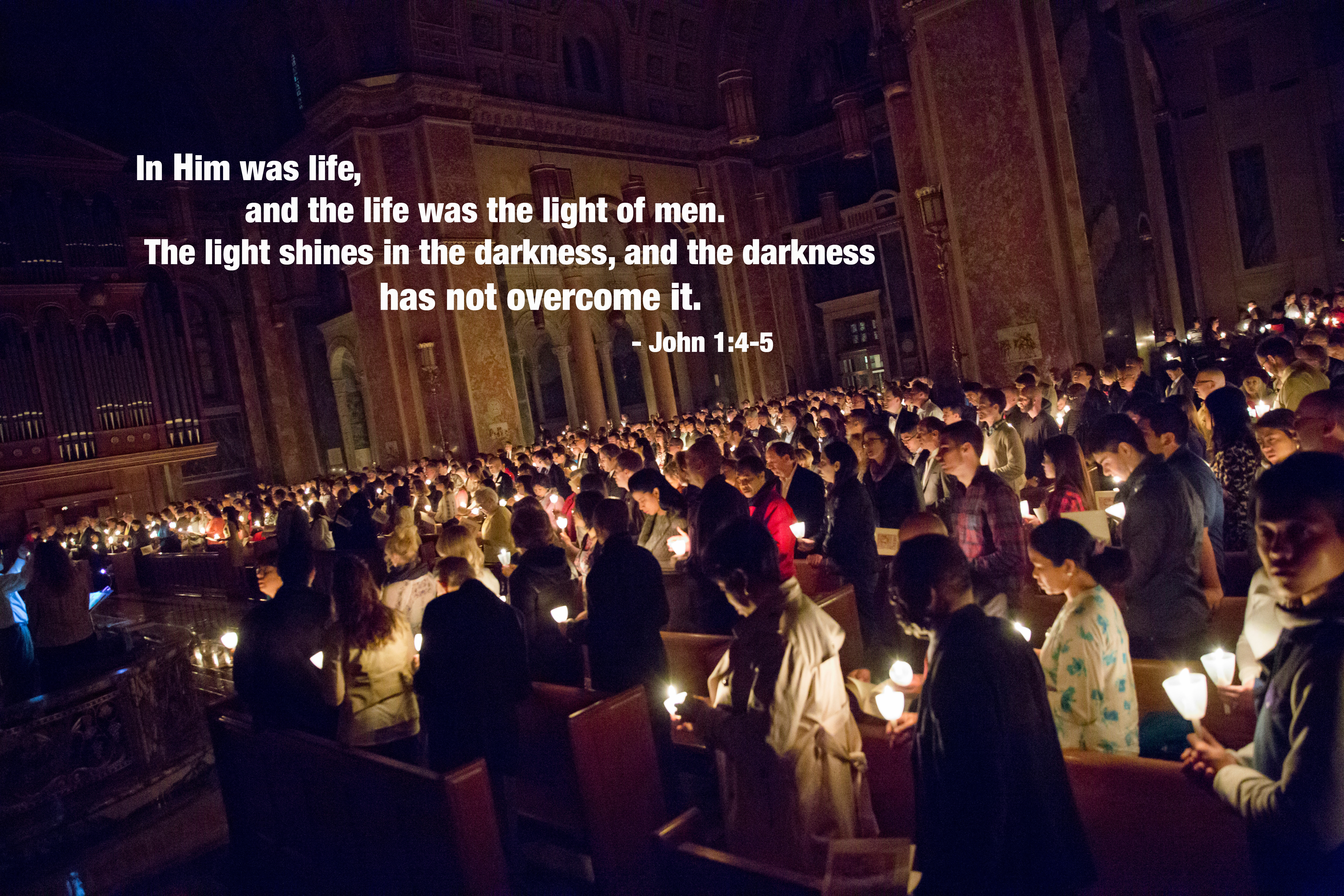
The Church is God’s Lampstand in Dark Times – A Meditation on a saying from St. Maximus

101713There is a helpful word of reminder given by Saint Maximus the Confessor, one of the Fathers of the Church that was in the Breviary yesterday. I want to rework the order of what he writes, if only for the purpose of applying it to the times in which we live. But for the sake of respect here is the original quote as he sets it forth.

This Word is most unwilling to be kept under a bushel; it wills to be set in a high place, upon the sublime beauty of the Church. For while the Word was hidden under the bushel, that is, under the letter of the law, it deprived all men of eternal light. For then it could not give spiritual contemplation to men striving to strip themselves of a sensuality that is illusory, capable only of deceit, and able to perceive only decadent bodies like their own. But the Word wills to be set upon a lampstand, the Church, where rational worship is offered in the Spirit, that it may enlighten all men. For the letter, when it is not spiritually understood, bears a carnal sense only, which restricts its expression and does not allow the real force of what is written to reach the hearer’s mind.

From an inquiry addressed to Thalassius by Saint Maximus the Confessor, abbot (Quaest. 63: PG 90, 667-670)

Thus let us look at this teaching in three sections –

1. The Problem of the Flesh –St Maximus explains well the deadening effects of the flesh in coming to grasp the beauty and sublimity of God’s Word, of his vision for our lives. He therefore speaks of those living in the flesh who indulge a sensuality that is illusory, capable only of deceit, and able to perceive only decadent bodies like their own.

We who live in the increasingly decadent and self indulgent West need to be sober about these words, first of all for our very selves.  All day long we are bombarded with temptations to sensuality, self indulgence and almost complete preoccupation with the flesh.

Biblically the “flesh” is more than just our body, it is more generally our rebellious sin-nature. It is that part of us that is resentful of any instruction, limits or being told what what to do. It doesn’t want to have a thing to do with God and prefers the darkness to light.

Yet “the Flesh” is very connected to bodily sensuality and St. Maximus emphasizes this here. Sins related to the body especially regarding sight, taste and touch, are not the most serious sins (sins against the spirit are). But they are among the most disgraceful because of their capacity to cloud our intellect and to make rather obvious truths seem extreme or less obvious. This effect on the intellect is disgraceful, since our intellect is our glory and the clouding of the intellect by sensuality amounts to a kind of fall from grace.

We must stay on guard from the indulgence of the flesh so easily available today lest we soon discover that our intellect is clouded and finds the clear light of God’s vision too strong or “harsh.” In excessive self indulgence, any call to self denial seems arduous, even obnoxious. In excessive sensuality, any appeal to matters spiritual seems strange, foreign, even threatening.

And this is what the Church is largely facing today in trying to preach to an increasingly decadent, excessively sensual world. While these tendencies can be ascribed to the fallen human condition, perhaps as at no other time, the capacity to indulge the flesh has never been greater. Almost endless and often instant self gratifications and diversions  have become available. There are a wealth of comforts today that Kings and Queens of old never dreamed of.

Synonymous with the onset of this extreme sensuality has come the darkening of the intellect such that some of us, who by God’s grace alone have been spared some of the worst trends of modern culture must often ask with dismay, “How can people get this confused?”

St. Maximus supplies the general answer. [They have indulged] a sensuality that is illusory, capable only of deceit, and able to perceive only decadent bodies like their own. In other words, the flesh cannot perceive the things of spirit. And once the flesh gains ascendency in the human psyche it capacity to appreciate anything other than the flesh and sensuality becomes increasingly eclipsed.

Thus St. Maximus adds, For the letter [of the Law], when it is not spiritually understood, bears a carnal sense only, which restricts its expression and does not allow the real force of what is written to reach the hearer’s mind.

And thus the plainest and most beautiful utterances of God’s moral and spiritual vision make little impact on many moderns who see God’s glorious call to human freedom from the slavery to passions, as intrusive, limiting, intolerant, even hateful. No matter how deep the darkness of indulgent flesh gets, it seems the proposed answer by the fleshly is always going to be to further indulge the flesh. And herein is manifest the darkening of the intellect, and human spirit, that the indulgence of the flesh brings about. Paradoxically, indulging the physical senses leads us to have senseless minds.

St. Paul says, Claiming to be wise, they became fools, and their senseless minds were darkened….Therefore God gave them over in the sinful desires of their hearts to sexual impurity for the degrading of their bodies with one another….to shameful lusts. Even their women exchanged natural sexual relations for unnatural ones. In the same way the men also abandoned natural relations with women and were inflamed with lust for one another. Men committed shameful acts with other men, and received in themselves the due penalty for their error. Furthermore, just as they did not think it worthwhile to retain the knowledge of God, so God gave them over to a depraved mind, so that they do what ought not to be done. (Rom 1:18ff)

Homosexuality and other sexual sins are not the only manifestation of the flesh’s darkening impact. For St. Paul goes on to state other ills proceeding from ascendent flesh, reduced spirit, and darkened intellect: They have become filled with every kind of wickedness, evil, greed and depravity. They are full of envy, murder, strife, deceit and malice. They are gossips, slanderers, God-haters, insolent, arrogant and boastful; they invent ways of doing evil; they disobey their parents; they have no understanding, no fidelity, no love, no mercy. Although they know God’s righteous decree that those who do such things deserve death, they not only continue to do these very things but also approve of those who practice them. (Rom 1:-29-32)

Yes, the flesh is deceitful, blinding and degrading. It makes us hostile to the more elevated things of both the human spirit and the Holy Spirit. You might almost think that St. Paul had visited our Century.

2. The Passion of the Lord – In the face of this cancerous situation, what does the Lord want? St. Maximus says here: This Word is most unwilling to be kept under a bushel; it wills to be set in a high place, upon the sublime beauty of the Church….

And therefore God continues to speak forth his Word. He continues to let the light of His truth shine forth. He has a passion to call his wayward children home. Too easily we are  like the foolish prodigal who had wandered off. Yet the Father never stopped looking. And when the foolish prodigal took one step back, the Father took two, and started running.

For as once the Eternal Father uttered the WORD of his Son, and through this one Word all creation came forth, thus this Logos (Word) imbued all creation with the “logike” (logic) or impression of his will and glory.

Sadly in our fallen condition, many indulging the fallen flesh no longer love or appreciate the logike, the Logos or the Father who utters the Logos.

Yet still the Father speaks the Word, the Logos. He has a passion that will not end to summon all his fallen children back to the glory of his Word. And his Word, Jesus, has a passion too. The Word must still go forth! As Maximus teaches.

3. The Purpose of the Church – But how? And as we can see, St Maximus says how. This Word is most unwilling to be kept under a bushel; it wills to be set in a high place, upon the sublime beauty of the Church.the Word wills to be set upon a lampstand, the Church, where rational worship is offered in the Spirit, that it may enlighten all men.

And here then is our role as the Church, to be the lampstand on which God sets his word to enlighten all. And, as Maximus says, through our “rational” (a spiritual worship, rooted in truth), we are to enlighten all.

There is of course a lot of tension in the past 60 years or so about what in the Church needs updating and where we must be unwavering. Clearly our Dogma and Doctrine, though they may develop and become more deeply what they are, still they cannot change. Yes the languages and modes of communications may alter, but not the message. We need to be clearer about this than we have. Too many have the impression that eventfully we will “see the light” and come come round to worldly thinking.

But those who speak this way do not understand that our mission is not reflect worldly “lights” but to set forth the LIGHT of the world Jesus. We are to speak this Word, not parrot the passing words or “lights” of this world.

The Church must continue to set out the lamp of God’s Word, Jesus. And while light may bring different things to light, the Light itself never changes. And though translated into a thousand different languages, the Word himself does not change or mutate.

Note too the reference to Liturgy by Maximus wherein we are formed by God unto “rational worship.” The Sacred liturgy both forms and conforms us to the truth of God and the truth about ourselves. We become the Word we hear proclaim, and the Word made Flesh whom we receive. The Church must ever undertake her sacred liturgy with joy, reverence and profound attentiveness. And old saying goes, “Save the Liturgy, save the World.”

Yes, the Church is but the lampstand on which God sets his Light. It is God’s Light that must shine. We can do no other. She is the pulpit from which he proclaims His Word.

St Peter richly combines Word and Light when he says, we ourselves heard this utterance made from heaven when we were with Him on the holy mountain. So we have the prophetic Word made more sure, to which you do well to pay attention as to a lamp shining in a dark place, until the day dawns and the morning star arises in your hearts. (1 Peter 1:18-19)

And St. Paul adds, by setting forth the truth plainly we commend ourselves to everyone’s conscience in the sight of God. (2 Cor 4:2)

Yes, we can do no other. The world has lately indulged the blindness of the flesh, But the Father has not stopped uttering his Word and setting forth the light of his truth. On account of this we can do no other, for we are his instrument, we are his lampstand.

Kindess is not the same as Love.

By Enver Rahmanov (Own work)  Licensed by  CC BY-SA 3.0, via Wikimedia Commons
By Enver Rahmanov (Own work) Licensed by CC BY-SA 3.0, via Wikimedia Commons

In yesterday’s post we pondered that being holy is more than being nice. Today we do well to ponder that that being loving is not the same as being kind.

Here too we live in a reductionist culture that has tended to reduce love to kindness. The results are often quite problematic as we shall see.

Kindness is a very great thing and has an important place in our relationships. Kindness is evidenced by goodness and charitable behavior, a pleasantness, tenderness and concern for others. According to Aristotle, kindness is an emotion manifesting itself by the desire to help somebody in need, without expecting anything in return.

Peter Kreeft defines kindness as “sympathy, with the desire to relieve another’s suffering.” [Envoy Magazine, Vol 9.3, p. 20]

However, as Kreeft himself notes, it is a very great mistake to equate kindness with love. Kindness is an aspect of love, but it is necessarily distinct from love. For is sometimes happens that love, which wills what is best for the other, may deem it best not to remove all suffering. A father, in fact may impose punishment on a child out of love.

Kindness generally seeks to alleviate suffering and negativity. But love understands that suffering often has a salvific role. My parents disciplined me out of love. Had they been merely kind to me, I would likely have been spoiled, undisciplined and ill-equipped for life.

Paradoxically the more we love, the more we will often see mere kindness diminish. Consider how kind we can be to strangers. We may sometimes give money to strangers with little questions asked. But if a son or daughter asks for money we may often want to know why and, even if we give it, we will frequently lecture them about being more responsible with their money. The interaction may be less kind, but it may also be more loving for it seeks to end the problem rather than merely relieve the symptom of the problem.

The good eclipses the best – And herein lies the danger of reducing love to kindness. In simply seeking to alleviate the suffering of the moment or to give people what they want, many deeper issues go unresolved and worsen.

Welfare has created a slavish dependence for many in our culture. And it is not just the poor in our cities. There is corporate welfare, and many other subsidies and entitlements that too many sense they can no longer go without.

Rather than addressing the root causes of poverty, dependence or poor economic conditions and bad business models, kindness interrupts love’s deeper role and treats only the suffering of the moment. In this sense the merely good (kindness) replaces the truly best (Love). True love gives what is best, not merely what is immediately preferred. Kindess too often looks merely to relief whereas true love looks to healing, which often involves some painful choices.

Further, many false expectations are centered in the exaltation of kindness over love. Generally this is manifest in the fact that suffering of any kind is seen as obnoxious and even the cause for legal action in our culture. It has also led to our demands for comfort to go on steroids. Demand for euthanasia flow from this sort of thinking as well.

A final and very terrible effect often flows from mistaking mere kindness for love is that it disposes many towards atheism. Here I simply want to quote Peter Kreeft because he says it so well

It is painfully obvious that God is not mere kindness, for He does not remove all suffering, though He has the power to do so. Indeed, this very fact — that the God who is omnipotent and can, at any instant, miraculously erase all suffering from the world, deliberately chooses not to do so — is the commonest argument that unbelievers use against him. The number one argument for atheism stems from the confusion between love and kindness. [Peter Kreeft, Envoy Magazine, Vol 9.3, p. 20]

Kindness is a very great attribute and it surely has its place. But we must carefully distinguish it from love. Exalting kindness over love amounts to a denial of the wisdom of the Cross. Kindness focuses on comfort and alleviating suffering and this is a very great thing. But love is greater thing for it focuses on healing, and it wills what is best, not what is merely desired.

Please note this is not a blog against kindness, only an attempt to distinguish and to subsume kindness under well ordered love. But kindness is an important and necessary virtue.

This video is a beautiful story of how kindness is also tied to sacrificial love and seeks to bring healing, even at cost rather than mere relief.

Why Don’t You honor Mary?

101413Most of us who are Catholics eventually get asked, “Why do you Catholics worship Mary?” More often than not the question is not a real question it is a rhetorical question. For a few of you who might not know what is meant by the expression “rhetorical question,” it refers to a “question” whose purpose is not to seek an answer, but, rather, to make a (usually hostile) point. For example the expression “Who do you think you are!?” is in the form of a question but it does not seek an answer. Instead it is meant as a rebuke. And so it usually is when we Catholics get asked the “question” Why do you worship Mary?” we’re usually aware that it is not a sincere question seeking a sincere answer. However, for those cases where an answer really is sought I might propose the following approach:

“Well, of course we don’t worship Mary since that would be a terrible sin. Worship belongs to God alone. We DO honor her though. Afterall, she is Jesus’ mother. But let me ask you a question. Why in your church, do you NOT honor Mary at all? Doesn’t scripture say Every generation will call [Mary] blessed because God who is mighty has done great things for [her]? (Luke 1:48-49) It seems to me that we Catholics are fulfilling scripture but that in your denomination you are not fulfilling or following it. So why don’t you honor her at all? Why don’t you call her blessed as the Bible says?”

Now stop there and wait for an answer. Don’t keep going. Just stop and wait. Have them answer for a change. We Catholics are always on the defensive, always in answer mode. But we ought to ask a few questions too. And try to avoid a merely rhetorical or hostile tone. Try to allow this question to be genuine, respectful, one meant to provoke thought. It is possible that many Protestants have never been asked this question or pondered an answer. Now it is also possible that your interlocutor will try to change the subject or evade an answer by piling on about Catholics but just repeat the question respectfully and ask for an answer. Remember your point is not to argue, be hostile or win an argument. Your point is to provoke thought and get a real answer. And even if the conversation ends badly or with no answer, you’ve planted a seed, a question that they will ponder even if they don’t admit it. Jesus often asked questions to proke thought and conversion. I will be doing a post on this next week.

A final thought on Mary. Another way to explain out devotion and love for Mary is that we are imitating Jesus. We love, honor, respect and entrust ourselves to her care because Jesus did all these things and we want to be just like Jesus. Consider that the very Son of God, dwelled in Mary’s womb, nursed at her breasts, was held in her arms, sat on her lap and entrusted himself to her care. Our Lord could have chosen to enter our world in other ways. Perhaps He could simply have entered the world as a full grown man. The fact is that He freely chose Mary to be his mother and he was truly her Son. As her son he loved and honored her as any good son must and as her son he entrusted himself to her care. All of this serves to highlight Mary’s dignity and to show us how devotion to her is in perfect imitation of Jesus himself.

What more need we say: Jesus our Lord and God honors and loves Mary, and his very scriptures sing her praises; so too His Angel Gabriel and countless saints. When we honor Mary we imitate the very Son of God and fulfill Holy Scripture. Certainly our Lord is pleased that we love and honor his mother.

Here’s a little viseo I recently put together. The Music is from the Daughters of St Paul, “I Am Thine” from the Handmaiden of the Lord Album: