Beginning (Lent) with the Four Last Things

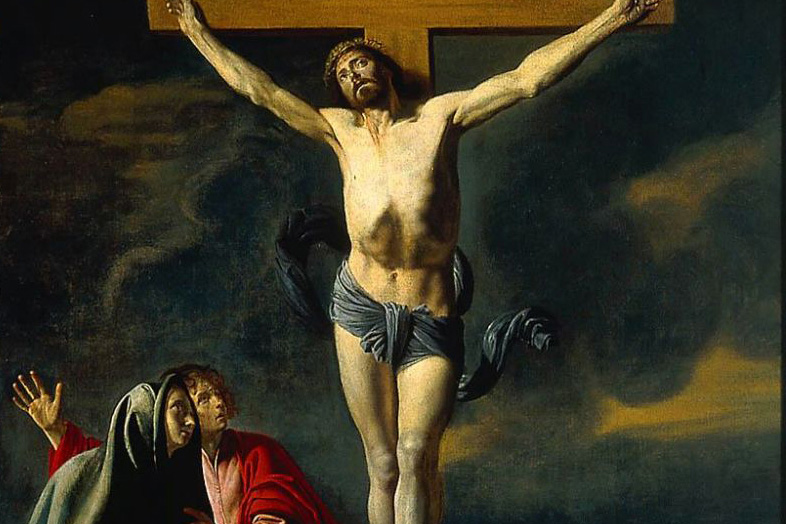
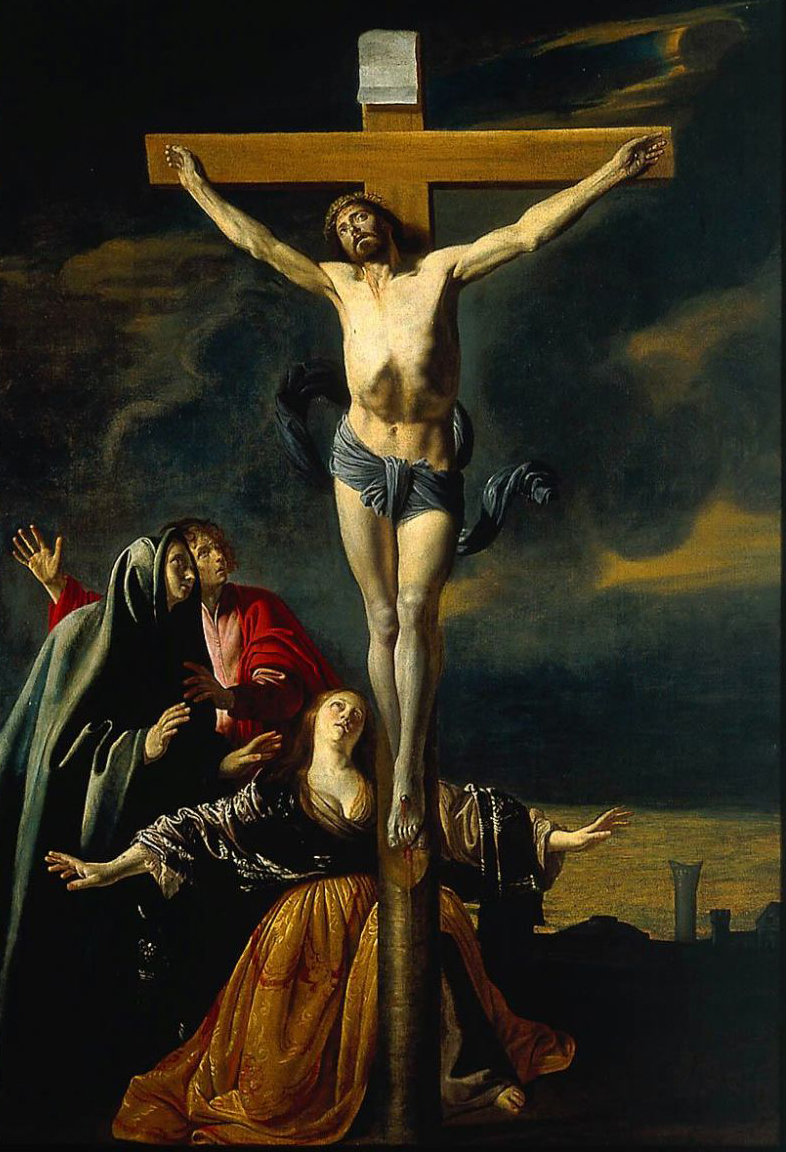
030514Traditional Catholic theology has distinguished the “Four Last Things” : Death, Judgment, Heaven, and Hell. We are admonished to meditate upon these things frequently. We WILL die, be judged, and spend eternity either in Hell or in Heaven (likely after some time in purgatory).

Beginning with the end, or starting with the last things, is, paradoxically, a good place for Lent to commence.

Regarding Death –  All men are appointed to die once, and after that face The judgment (Hebrews 9:27) The video posted below is of a song by Johnny Cash on the topic of judgment. Here are some of the words:

You can run on for a long time
Run on for a long time,
run on for a long time
Sooner or later
God’ll cut you down

Go tell that long tongue liar,
go and tell that midnight rider
Tell the rambler, the gambler,
the back biter
Tell ‘em that God’s
gonna cut ‘em down.

We will all die one day, or as the song puts it, be “cut down.”

Regarding Judgment – Scripture says, For we must all appear before the judgment seat of Christ, so that each of us may receive what is due us for the things done while in the body, whether good or bad. (2 Cor 5:10). And of the unrepentant St. Peter says, but they will have to give account to Him who is ready to judge the living and the dead (1 Peter 4:5). And in Hebrews, For we know him who said, “It is mine to avenge; I will repay,” and again, “The Lord will judge his people.” It is a fearsome thing to fall into the hands of the living God. (Hebrews 10:31). And of this salutary fear we should have of our Judgment Scripture says, Nothing in all creation is hidden from God’s sight. Everything is uncovered and laid bare before the eyes of him to whom we must give account. (Hebrews 4:13). And Jesus himself warns, But I tell you that for every careless word that people speak, they shall give an accounting for it in the day of judgment. (Matt 12:36)

Regarding Heaven –  Heaven is our true goal, not all the other stuff we run after endlessly. The heart of heaven is to be with God, to look upon his beautiful and serene face and become fully alive with him for all eternity. As Scripture says, there is a deep longing in us for this look: My heart says of you, “Seek his face!” Your face, Lord, I seek! (Psalm 27:8). This is really what our desires are all about: God, and the healing, fulfilling, and beatific glory of being in His presence forevermore, transformed by the Look and the glory of his love.

So glorious is this promise that it cannot be reduced to words; eye has never seen it, nor ear heard it. Scripture says, Beloved, now we are children of God, and it has not appeared as yet what we will be. We know that when He appears, we will be like Him, because we will see Him just as He is. (1 John 3:2).

Jesus said to St. Catherine that if she ever saw the state of a human being fully alive with him in heaven, she would fall down and worship because she would think she was looking at him (Jesus). This is our dignity and our call. Heaven is beyond what we could ever imagine in its glory and beatitude.

Regarding Hell – The teaching  of Hell bothers a lot of modern Christians who have had God’s love emphasized to the exclusion of just about everything else about God. For example, they have learned that He is Truth and utterly Holy, that nothing unholy can tolerate His presence, and so forth. No one loves you more than Jesus does, and yet no one warned of Hell and judgment more than Jesus did – in parable after parable, warning after warning.

God does want to save us all and have us live with him forever. This is clear in Scripture. But God has also made us free, and wants us to love Him freely and accept His invitation. This is His respect for our freedom.

And though everyone wants to go to heaven, it is a heaven as they perceive it. But not everyone wants to go to the real heaven, which is God’s Kingdom in perfection. You see in heaven, God’s Kingdom, there is love for the truth, love for chastity, love for the poor, love for justice, love for one another, esteem of mercy and forgiveness, and at the center, God himself. But NOT EVERYONE wants these things. Not everyone wants the truth, or wants to be chaste; not everyone wants to forgive and to love everyone. Not everyone wants God to be at the center; they prefer that spot for themselves or some other idol. Many people can’t stand to go to Church at all, or if they do, they want it to be as short as possible. If we don’t want to spend time with God here, what makes us think we will want to do so after death? If the liturgy is boring or loathsome to someone now, what makes him think he will enjoy the liturgy of heaven? And the Scriptures clearly describe heaven as primarily a liturgy of praise (cf esp. Rev 4-8) centered on God.

So God invites, but not all accept or are even interested in the real heaven to which God invites them. In the end, God respects our choice. This is why there is Hell; it is for those who do not want what the Kingdom of God is.

We ought to pray for a deepening desire for heaven. Death is on the way; sooner or later we will all be cut down. And the Lord Jesus will judge us, among other ways, by asking this question: “What is it that you want?” Do not think that we will magically change at that moment. By that time our choice for the Lord and his Kingdom, or for something else will be firmly fixed. Behaviors become habits; habits become character; character becomes destiny.

The Four Last things are actually a pretty good place to begin our Lenten reflections.

Ponder this video:

Clear and Helpful Teaching on the Evil of Pornography from Arlington Va. Bishop Paul Loverde

At the opening of Lent, Bishop Paul Loverde has written an important and encouraging pastoral letter on the disturbing and increasingly pervasive issue of  pornography. The full letter was released today and you can read it here Bought With a Price

It is good to see bishops address moral issues with clarity. And Bishop Loverde surely does that here. There are many things I like about the letter but let me highlight a few things here.

1. We live in a culture that makes light of sexual sin in general, and pornography in particular.  Many people speak of it as a victimless crime, etc.  It is not.  Producing and peddling pornography is a grave offense against human dignity and a complete distortion of one of God’s greatest gifts. Bishop Leverde is extremely clear on this point, drawing from both Scripture and the Catechism. He emphasizes very strongly that the peddling and use of pornography is a grave, mortal sin – a sin that severs our relationship with God. It must be repented of. For those who struggle with compulsive or  addictive behaviors, help must be sought. The bishop is clear. Whatever one’s struggles, we must not go on calling good, or no big deal, what God calls gravely sinful.

Jesus says we ought to be more willing to endure serious bodily harm than to intentionally look with lust at another.

You have heard that it was said, ‘You shall not commit adultery.’e But I tell you that anyone who looks at a woman lustfully has already committed adultery with her in his heart. If your right eye causes you to stumble, gouge it out and throw it away. It is better for you to lose one part of your body than for your whole body to be thrown into hell. And if your right hand causes you to stumble, cut it off and throw it away. It is better for you to lose one part of your body than for your whole body to go into hell. (Matt 5:27-30)

The good Bishop also uses other arguments and scriptures to strongly refute arguments that make light of the serious sin of pornography. It is good to read these strong teachings unambiguously articulated. Bravo!

2. While not failing to address all the faithful, he addresses the letter with a special emphasis on men.  He does this not only because men are more prone to access pornography, but also because he summons men to leadership in seeking to protect their families from the great damage of pornography.

This approach comports well with my own pastoral experience. For though men can and do experience temptations to pornography, men also respond well as a general rule to being summoned to battle for what is right. Men do have a protective instinct that can be appealed to. Sadly, many in recent decades, in the wake of feminism, have shamed men for this instinct, or have sought to deny that it exists.

As a pastor and confessor, it is evident to me that the struggle with internet pornography has reached epidemic proportions. Many confessors struggle to know how to counsel those who are contending with compulsive and addictive tendencies. Among the approaches I use is to call these men to battle and to remind them that when they view pornography they are playing on the wrong team and lining Satan’s pockets with money. Even if they don’t actually buy it, each time they click on a site or picture they increase the page ranking for the site. And this increases its revenue.

 To arms! Fight the good fight of faith. Do  not provide recognition or resources for Satan’s evil design. Pornography is clearly a satanic attack on our families, on Matrimony, on women, and on children. It is a great darkness on our land. It must be resisted. Our families must be protected. Yes this is a great battle and the Lord is looking for some good soldiers strong enough to resist the tide. An old gospel song comes to mind: “I’m a Soldier in the Army of the Lord.”

3. Bishop Loverde makes good use of Scripture as well as sociological and natural law arguments. In the past I have read too many statements from the Bishops conference that make little or no reference to Scripture. About ten years ago the conference issued a statement on the problem of cohabitation and did not use a single quote from Scripture. When we have asked certain bishops about this they have indicated that since they are addressing the world, it is important to use sources upon which all agree. But of course the world includes Christians. I realize that using only Scripture may be less effective, but any document from the Bishops ought to quote “The Boss” from time to time!  Bishop Loverde gets the balance right here.

Please take time to read the whole letter. There are many other good aspects in the letter such as a pastoral exhortation to priests, a message for parents, and a helpful study guide.

To arms!

Three Wisdom Sayings for Cultural Warriors

030214Some final thoughts from the Wisdom tradition, which we have been sampling in the Liturgy of the Hours, just prior to the arrival of Lent. The following two Proverbs from Ecclesiastes come to mind, along with some concluding advice at the end of that Book. These sayings seem especially apt for those of us who engage and struggle with our troubled culture, and they help us to keep things in perspective.

Do not in spirit become quickly discontented,  for discontent lodges in the bosom of a fool.

We certainly do live in times that challenge our sense of well-being. There is much to lament in these times of broken families, confused sexuality, secularism, and greater hostility to the teachings of our holy faith.

And yet, in all of this, we must not yield to the temptation to become too sour. Or as the proverb says, we ought not become too quickly discontented.

At the center of every Christian heart should be a deep and abiding gratitude to God for his many, indeed countless gifts. Into every life, every family, every community, every culture, and every nation, there are admixed many beautiful blessings, along with struggles and hardships.

The proverb here warns us against “discontent.” The word comes from the past participle of the Latin word continere meaning to contain or hold. And thus to be discontented amounts to refusing to hold within us the joy and gratitude that we ought to have for so many rich blessings, even in the midst of difficulties.

Every day, ten trillion things go right and only a handful of things go wrong. It is no exaggeration to speak of ten trillion things going right when we consider that every aspect of every cell within our body, every molecule that makes up those cells, every atom that makes up the molecules that make up our cells; all those things are up and running and functioning by the grace of God.

And beyond our bodies is a vast ecosystem with myriad complex interactions such as photosynthesis enabling plants to produce oxygen for us to breathe, the Gulf Stream moderating our temperature, the Van Allen belts protecting us from the harmful radiation of the sun, Jupiter and Saturn out there catching comets, the Earth’s orbit maintaining itself carefully, a mere 3° from being a perfect circle, keeping our temperatures more stable. Our sun remains stable, unlike many other stars, and we live in a relatively quiet section of the Milky Way galaxy, free from the usual space debris that flies about in other areas.

And troubled though America is, people are still (literally) dying to get here. We drive on paved roads, have a functioning and reliable electrical grid, a stable government, and a good market system.

We ought to be filled with immense gratitude, with large doses of wonder and awe at the countless blessings that God bestows on us from moment to moment.

To become quickly discontented, and even more, to allow discontent to lodge in our hearts, is deeply foolish. It is foolish first of all, because it is so myopic. Refusing to see, or to reflect frequently on our manifold blessings is a kind of self-imposed blindness.

Consider a rich man who thought himself poor. Only a fool would close his eyes and refuse to see the millions he actually had in the bank. Why live poor and run from creditors? There is no one would not agree that a man of such resources claiming to be poor must either be blind, or a fool, or both.

So much more so for us who have even more blessings. And yet how easily we become discontented and negative.

Thus, even though there are things about which we must be very sober, there are also many other things about which we must be exuberantly joyful. Without this balance we are, as a Proverb says, foolish.

Do not say: How is it that former times were better than these? For it is not in wisdom that you ask about this.

Here too is an important caution for those of us who lament many things in these difficult days. We may tend to look to previous decades see them as more idyllic than they actually were. All ages have struggles particular to them, but they have blessings too. Some look to the 1950s with nostalgic affection but they forget the nuclear arms race, the Korean War, and the Cold War. The 1940s had the second World War; the 30s had the Great Depression; and the 20s was a time of rather widespread immorality and organized crime. The 1910s had another major world war. The 1900s was a time of great economic recession, and waves of immigrants were often made to live and work in horrifying conditions. And so forth with every decade going backward in time. But each of these decades also had its blessings.

The fact is, whatever strengths or struggles there were in the past, whatever strengths or struggles there are in the present day, we are living now. Accept your assignment with humility, and seek to influence positively the many difficulties faced in these current times. And do not fail to be grateful for the many blessings we have today such as medicine, technology, and many creature comforts that make life a little more pleasant.

Be actively grateful and gratefully active.

Finally, then, comes this word from Ecclesiastes, as we look to Lent and to essential goal of our life:

The last word, when all is heard: Fear God and keep his commandments, for this is man’s all; because God will bring to judgment every work, with all its hidden qualities, whether good or bad.

Yes, look to your own judgment. Have a healthy Fear of God and a sober appreciation for the fact that judgment awaits us all. Prepare for your own judgment and help others prepare for theirs, insofar as it is your duty to remind and prepare them.

If you have suffered injustice, or grow weary of these sinful times, remember God sees all and others will answer to God for what they have done if they have not repented. Pray that they do repent; for nothing will be unrequited and every idle word will have to be accounted for (see Mat 12:36).

Do not delay your own repentance either. Tomorrow is not promised, but judgment is.

Jesus our Judge says, For there is nothing hidden that will not be disclosed, and nothing concealed that will not be known or brought out into the open. Therefore consider carefully how you listen. (Luke 8:17-18)

Jesus gets the last word!

This video is an allegory of a woman who rejects the offer of truth and order. Truth offers his friendship. After being rejected, he warns, admonishes, and offers again. But the woman’s rejection of truth persists and great is her ruin.

Advice from the Lord in overcoming anxiety. A sermon for the 8th Sunday of the Year

020114When we read today’s Gospel (from the Sermon on the Mount) we must be careful not to misinterpret its basic vision.  Jesus is not telling us what to do, but rather is offering us something to receive.  The wrong way to interpret this Gospel is to think Jesus is just saying, “Stop worrying.”  We all get this advice from people every day and it isn’t very helpful.  This is not what Jesus is saying.  For remember, in the Sermon on the Mount Jesus is describing what a transformed human person is like.  And what he is teaching us here is that as He begins to live His life in us, many of our anxieties will diminish and go away.

The transformed human person trusts God and is even able to see God’s hand in the difficulties of life.  It is this trust growing in us by God’s grace that ultimately diminishes and removes fear.  Trust God and fear diminishes.  This is the gift that Jesus offers in this Gospel.

We can distinguish three particular aspects of  anxiety that Jesus sets forth: The Problem of Possessions, the Problem of Paternity, and the Problem of Priority. Let’s examine each and see how the Lord wants to free us from them.

1. The Problem of Possessions – The text says, No one can serve two masters. He will either hate one and love the other, or be devoted to one and despise the other. You cannot serve God and mammon. Mammon is variously understood as riches, greed, or possessions. In an extended sense it can refer to the agenda of the world, which is focused essentially on material things, and which ties our dignity to only those things.

Whose slave are you? The Lord is clear that we cannot serve mammon  if we wish to serve God. The Greek word translated here as “serve” is δουλεύειν (douleuein), which more specifically means to “serve as a slave.”  We miss the strength of the text when we fail to notice the slavery aspect. It may happen in our culture that one works at a job, yet after work hours goes home and is free from obligations. Hence we tend to believe that we CAN serve both God and mammon. But the Greek word used here describes a slave, not a mere servant. And a slave is wholly given over to the will of his master. The Greek word is thus more intense than the English translation.

What the Lord is saying is, “Look, you’re either going to be a slave of the Lord or you’re going to be a slave of the world.”  And the honest truth is that most people are slaves of the world, slaves of mammon, slaves to riches, greed, and the agendas associated with them. These worldly things tend to completely consume us so that when we hear of some demand from God, we feel overwhelmed, even angry that something “more” is required of us. Our anger at God is a sign that we are slaves to mammon.

We are usually too proud to admit that we are slaves of the world, but the fact is that most of us are, to a large extent. The world and its demands press on us, and take up nearly all the oxygen in our life. It is this terrible slavery that is a huge source of our anxiety and  from which the Lord offers to free us.  The Lord describes the anxieties that flow from slavery to Mammon, slavery to the world, its riches, and its agenda:

I tell you, do not worry about your life, what you will eat or drink,  or about your body, what you will wear….. Why are you anxious about clothes? Do not worry and say, What are we to eat?’ or ‘What are we to drink?’ or ‘What are we to wear?’

Still anxious! For us who live in the Western World, the anxieties about merely HAVING such things may have receded a bit. We are well-supplied and may not worry IF we will have clothes, food, etc. But even though we have them in abundance, still we obsessively worry about them. For example, we worry if we have the right clothes, if they are in fashion, if they look good on us, etc. We worry that we eat too much salt or too much fat. Indeed many are quite obsessed about what they eat. We have never lived so long and been so healthy, yet we have never been so anxious about our health! It’s amazing when you think of it. We have plenty of food and still we worry about food! Worry, worry, worry.  Anxiety about these things is a sign that we are slaves to them. Scripture says, but as for the rich, their abundance permits them no sleep. (Eccles 5:12)

What the Lord offers us here is to live His life in us so that we will not be slaves to mammon, but slaves to Him. We may not like the image of slavery, but I have news for you: we are so small and powerless that we are going to be slaves of someone; it might as well be the Lord! Being wholly devoted to the Lord and what pleases him breaks our obsession with the world, money, possessions, popularity, fashion, and the like.

As the Lord’s life and His will begin to replace our own life and will, our obsession with the world’s demands diminishes and its power is broken. As we grow into a deeper relationship with the Lord, our ties and concerns with worldly agendas fade. And as the ties are loosened, the anxiety diminishes.

You and I, in our flesh, are not going to stop worrying. But the Lord, living His life in us, isn’t worried at all. And as His power and influence over us grows, the worries lessen, and the anxiety goes.

This is the gift the Lord is offering if we but let him take greater possession of our hearts. How do we do this? Through the medicine of prayer, the Sacraments, daily doses of Scripture, and spiritual reading. Gradually the Lord’s heart, mind, and will transform our heart, mind, and will to be like His own.

2.  The Problem of Paternity  – The Lord Jesus wants to draw us to a deeper relationship with his Father. It remains a common spiritual problem that even those who develop something of a relationship with Jesus, still find the Eternal Father to be distant or remote. To many, the Father is a stranger. They have surely heard of Him and read of Him in the Scriptures. But he is stranger. Some even have a sort of fear of him. There are Old Testament texts that may come to mind, or perhaps some people struggle because their earthly Father was either stern or remote. Whatever the problem, the Lord Jesus wants to lead to us His Father. Note that the phrase, “your heavenly Father” occurs twice in this passage and four times in Chapter 6 overall. There are two other references to the Father as “God” in today’s gospel, and it is in Chapter 6 of Matthew that Jesus teaches us the “Our Father.”

Now all of these references to the Father, in close proximity to the invitation, “Do not worry,” cannot be overlooked. There is to be seen here an antidote to anxiety in having a closer relationship with the Heavenly Father. Our Heavenly Father knows what we need.  He cares for birds, flowers, and countless other things, and thus he is willing and able to care for us. To embrace and experience His love for us is to experience a lessening in anxiety.

Perhaps an illustration will help. When I was six years old, I had a fear that someone would break into our home, or that perhaps something bad would happen during the night. But when my Father was home I did not have these fears. In 1968 he left for Vietnam and was gone for a year. During that year I had an extended bout of ongoing fear that something bad might happen during the night. Daddy was gone and I felt unsafe. But in 1969 he returned and my fears went away. I did not cause them to go away; it was not an act of will on my part. It was simply this: Daddy was home.

And thus you and I may not be able to dismiss our fears and anxieties by a simple act of the will. But to the degree that our “Daddy-God” is near and we feel his presence, our fears just go away.

Here is a critical gift that Jesus wants to give us: a deep, personal experience of, and love for his Father. It is our perceived distance from the Father that causes our anxiety. But when we truly experience that our Heavenly Father “knows what we need,” we find our fears melting away.

Seek this gift from Jesus that his Father will be known and loved by you, that His presence will be close at hand. And then watch your fears melt away. The Lord Jesus can do this for us.  Take time and read the Parable of the Prodigal Son (Luke 15) slowly, and realize that the parable is really about the Father more than it is about the sons. Jesus is saying, “This is what my Father is like.”

3.  The Problem of Priority. The Text says,  But seek first the kingdom of God and his righteousness, and all these things will be given you besides. One of our greatest struggles is to have proper priorities and in the end, to do just one thing. This third matter (priority) is not unlike the first (possessions), but it is more about choices and direction rather than things and allegiances.

The simple truth is that we have a lot of trouble deciding what is most important and how to make good decisions. This causes a lot of grief and anxiety for us. We want too many things. We want to please too many people. We are too easily distracted from our goal. In many ways we have not even fully clarified our goal.

What is it that you want? What is the one thing that really guides every other thing you do? Now be honest! You may say “God.” You may say “the world,” or maybe “my career.”  But the fact is, a lot of people don’t really have a clear answer as to what the one thing they want is. The fact is they want a lot of things,  and have never really sat down and determined the one overarching goal of their life. And thus they run about chasing this thing and that, and experiencing lots of anxiety along the way.

Imagine a man driving north to New York from Philadelphia. He knows that Philadelphia is his destination. Along the way he sees lots of signs but is quickly able to determine which ones pertain to his journey and which ones can be ignored. If he sees a sign that says, “95 South Baltimore,” he ignores it and experiences no anxiety at all about doing so.

But now imagine another man who is not sure where he is going. It may be New York or it may be somewhere else. He just isn’t all that sure. Frankly, he hasn’t thought about it all that much and just sort of lets life happen. Now HE sees the sign for “95 South Richmond” and struggles to know if he should take it or not. The sign makes him anxious. It is a fork in the road and he is not sure what to do. Should he take it, or not? And even if he does finally make a choice, he wonders if he did the right thing. His choice only heightens his anxiety. He made a choice but keeps looking back, second-guessing, and wondering. Yes, he is anxious because he has not sought first to determine his real destination.

Many live this way today. They have no real priority, no definite choice.  And even if they have some vague direction (e.g., “I want to be happy”) they have little idea what it really takes to get there. And frankly, they don’t want to know the specifics all that much. Commitments and decisions are eschewed. But, strangely, in trying to avoid a decision or commitment, they are not any less anxious; if fact they are more anxious. Every intersection is bewildering: “What should I do?”

Now the Lord wants to save us all this anxiety and thus offers us the grace to become clear about what we want and where we are going. As He begins to live His life more fully in us, our mind gets clearer; our heart desires with greater clarity.  When Jesus’ own life begins to replace our own, we want what He wants. And He wants the Kingdom and its values. He loves his Father and everyone and everything that His Father loves.

And so do we. By grace and by degrees the Lord begins to change us, to clarify things for us, and increasingly our life becomes about only one thing: “I want to die and leave this world loving God and His kingdom.  I want to be with him forever.”

Received, not achieved – In all three of these areas please remember that the Lord is not merely saying to us that through our own power we must serve only God, experience Him as Father (Abba), and seek first the Kingdom of God. If it depended on us, it would last twenty minutes (max)!

No, what the Lord is doing here is painting a picture of the transformed human person and what we will increasingly experience if we let Him live His life in us and transform us in stages. This work begins in us and continues when we get down on our knees and beg the Lord to do it. It begins and continues when we are serious about having a steady diet of prayer, Scripture, Church teaching, the Sacraments, Holy Mass, and holy fellowship.

Now if you want to stay anxious and fretful, fine; you can have all my turns. But if you seek serenity, then ask the Lord into your life; reinvite him every day. Stay faithful to spiritual practices. And if you do, I promise you (I am a witness), you will see your anxieties lessen, your fears abate, your serenity grow, and your confidence strengthen. The choice is yours.

This video illustrates the Scripture, “but as for the rich, their abundance permits them no sleep.” (Eccles 5:12)

And this video speaks of the doing just one thing (pardon the slight profanity):

Why Learn the Hard Way? Let the Lord and the Church Teach You. (As seen in a commercial).

"Early toddler"  by Danilobu - Own work.  Licensed under  CC BY 2.5 via Wikimedia Commons
“Early toddler” by Danilobu – Own work. Licensed under CC BY 2.5 via Wikimedia Commons

When I was a teenager, I remember resenting how adults would try to prevent me from doing what I wanted. They would often warn me not to “learn the hard way” that something was wrong. I would often be told that I should learn from them and their experiences not to make the same mistakes they did. The rebel in me thought that it might be fun to “make a few mistakes of my own.” Arrogantly, I thought that I would escape the consequences.

In the end of course they were right; and one of the most valuable gifts I have received from others is to have learned from their experience. As a pastor too, I must say that my staff has saved me from innumerable errors through their expertise and long experience with the parish.

The word “experience” comes from the Latin experientia, meaning the act of trying or testing. More deeply, it comes from two Latin words: ex (out of) and periri (which is akin to periculum, meaning peril or danger). Hence “experience” refers to those who have endured trials, perils, testing, and danger, and speak of these to us so that we don’t have to endure the same things. It is a very great gift!

The Church too offers us the great gift of long experience. Indeed, one of the great advantages of making our home in the Catholic Church is that we are at the feet of a wise and experienced teacher who has “seen it all.” The Scriptures, the Catechism, the lives of the Saints—all of the Church’s teaching is a wealth of knowledge and collected experience for us. Through this vast treasury, The Church, as a good mother and teacher, helps us to learn from the experiences of others.

At this point I would like to let G.K. Chesterton do the talking:

The other day a well-known writer, otherwise quite well-informed, said that the Catholic Church is always the enemy of new ideas. It probably did not occur to him that his own remark was not exactly in the nature of a new idea…Nevertheless, the man who made that remark about Catholics meant something…What he meant was that, in the modern world, the Catholic Church is in fact the enemy of many influential fashions; most of which…claim to be new. [But] nine out of ten of what we call new ideas, are simply old mistakes.

The Catholic Church has for one of her chief duties that of preventing people from making those old mistakes; from making them over and over again forever, as people always do if they are left to themselves…There is no other case of one continuous intelligent institution that has been thinking about thinking for two thousand years. Its experience naturally covers nearly all experiences; and nearly all errors.

The result is a map in which all the blind alleys and bad roads are clearly marked, all the ways that have been shown to be worthless by the best of all evidence: the evidence of those who have gone down them. On this map of the mind the errors are marked…[but] the greater part of it consists of playgrounds and happy hunting-fields, where the mind may have as much liberty as it likes. But [the Church] does definitely take the responsibility of marking certain roads as leading nowhere or leading to destruction…By this means, it does prevent men from wasting their time or losing their lives upon paths that have been found futile or disastrous again and again in the past, but which might otherwise entrap travelers again and again in the future.

The Church does make herself responsible for warning her people against these; she does dogmatically defend humanity from its worst foes…Now all false issues have a way of looking quite fresh, especially to a fresh generation…[But] we must have something that will hold the four corners of the world still, while we make our social experiments or build our Utopias. (From Twelve Modern Apostles and Their Creeds (1926). Reprinted in The Collected Works of G.K. Chesterton, Vol. 3 Ignatius Press 1990)

Yes, what a gift! Many may take of the role of a pouting  teenager and be resentful at any warning from the Church. But in the end, it’s a mighty fine gift to be able to learn from others and benefit from their experience.

Here’s a funny commercial that shows the value of learning from the experiences of others:

What the Book of Ecclesiastes has to Say About the Foolishness of our Times

022714We are currently reading through some wonderful “Wisdom Sayings” in the Office of Readings of the Liturgy of the Hours. Several of the sayings speak to the relationship between suffering and wisdom. And in this way the foolishness of our age, which is so hyper-focused on avoiding suffering at all costs, is exposed. Perhaps the link of suffering to wisdom is not the most pleasant of associations, but it is no less true for its difficulty. Let’s consider a few of the sayings.

The tone was set in the psalm of the day which says,

Make us know the shortness of our life, that we may gain wisdom of heart.  (Ps 89:3)

In the last portion of my sermon at every funeral, I say to the faithful very plain terms, “You are going to die, and you don’t get to choose when.”  I then ask them what are they doing to get ready to meet God.

For indeed in our culture, with all of our medicines and with the fact that many of the elderly die in nursing homes out of our sight,  we have tended to ignore the reality of death. And this creates the illusion that death is remote, that we can somehow stave it off indefinitely. To many people, death seems almost theoretical. And in our fallen state, of course we entertain willingly the illusion that death is remote.

And yet in our almost unprecedented ability to maintain this illusion, it is also evident how foolish our collective behavior has become.   Many people live with almost no thought that they will one day die and appear before the judgment seat of Christ, and will have to render an account for what they have done. Too many of us have wrongful priorities and spend most of our time and energy in passing, unimportant things. And we spend little or no time on eternal and certain things like death, judgment, Heaven, and Hell. Too many go on living in unrepentant mortal sin. All of this is foolishness on an almost colossal scale.

When I preach at funerals and say to people “You are going to die,” there is a visible reaction throughout the congregation. Some look anxiously amused; some look annoyed; and a few look knowingly and nod. But almost all are surprised, even shocked to hear something they almost never hear anymore.

As the Psalm verse implies by its logic, this silence about death is at the root of a great deal of the foolishness of our modern age.  Many surveys indicate that 75-80% of people are not living in any discernible way that acknowledges that they will die and must prepare for it. Most are not praying; they are not reading Scripture; they are not going to Mass or to any church; they are not receiving Communion; and many are in serious and unrepentant mortal sin. All of this  foolish neglect given the judgment that is coming upon them.

Sadly, when they do confront death and find themselves in a church for the funeral of a friend or relative, they are more likely to hear a “sermon” about what a great guy Joe was,  but little to nothing of their need to pray for him and to prepare for death themselves.

And thus the verse from the Psalm is indeed poignant, beautiful, and necessary: Make us know the shortness of our life, that we may gain wisdom of heart.

There then come a number of wise sayings in the book of Ecclesiastes that also speak to this theme.

It is better to go to the house of mourning, than to the house of feasting, for that is the end of every man, and the living should take it to heart.

To be sure, there is a time to celebrate and feast. We ought to rejoice with those who rejoice; we ought to celebrate the goodness of God. But as the saying from the Book of Ecclesiastes reminds us, there is also a place for mourning and suffering, and in some sense that is better for us.

The text goes on to explain why.

Sorrow is better than laughter, because when the face is sad the heart grows wiser.

Yes, mirth and celebration bring joy, but  sorrow and suffering bring wisdom. And though joy is wonderful, it passes in this world. But wisdom perdures and draws us to God. Wisdom is of God, and the things waiting for us in Heaven draw us to that place where true joys—joys that never end—are.

 And then text drives the point further home.

The heart of the wise is in the house of mourning, but the heart of fools is in the house of mirth…For as the crackling of thorns under a pot, so is the fool’s laughter.

Yes, jokes and laughter have their moments and they have their place. But too much draws us into foolishness. For the need to laugh, if we are not careful, comes to take on an almost addictive quality.

Any look at the “Comedy Channel” will confirm this. Most of the humor there is becoming edgier and edgier, more and more bawdy, filled with sexual content and the demeaning of many values such as family life, sexuality, and any number of human virtues. Comedians stand before large crowds in theaters and have the audience laughing about such foolish things as drunkenness, adultery, lust, greed, and pornography.  Comedians also spent a great deal of time demeaning well-known figures as well as many important human institutions and activities. At most comedy clubs almost nothing is sacred, and people will laugh at some of the most hurtful and hateful things.

And thus the text from Ecclesiastes warns that the heart of fools is in the house of mirth, as the crackling of thorns under a pot, so is the fool’s laughter. Though mirth has its place, it must be balanced with sobriety and respect—respect for what is holy, decent, admirable, and pure. This is seldom the case with comedy today.

Is this too harsh an indictment? The text from Ecclesiastes goes on to say,

It is better to hearken to the wise man’s rebuke than to hearken to the song of fools;

Yes, some who read this reflection may consider this biblical wisdom to be too “negative,” too judgmental, too rebuking.

Before rushing to judgment, though, one ought to consider that many of us have had a steady diet of “the song of fools.” Whether it is the filthy comedy just described, or the music, movies, and other media of pop-culture, which celebrate things like fornication, rebellion, and gratuitous violence; a steady diet of this sort of stuff is bound to make God’s word seem too severe.

Is the problem God’s Word, which summons us to sobriety, or is it sin, which makes us foolish and hypersensitive to any correction? Light is only abhorrent to those who are accustomed to darkness.

Is God’s word unbalanced, or are we? You decide for yourself. As for me, I will strive to listen to the Lord and seek balance on His terms, not the world’s terms, which are already the outer extreme. God’s Word is the reference, not the world’s excesses.

We must look at more Wisdom sayings next week! Our Lady Seat of Wisdom, pray for us!

Here’s a song about meditating on what is good, true, and beautiful—things which, having been discarded, are not sought as pearls of great value:

A Hymn and The Mystery of Time

"World Time Zones Map"  by TimeZonesBoy - Own work.  Licensed under  CC BY-SA 3.0 via Wikimedia Commons
“World Time Zones Map” by TimeZonesBoy – Own work. Licensed under CC BY-SA 3.0 via Wikimedia Commons

It is late in the evening on the east coast of the United States: the 23rd hour of the day we call February 25th. But where my Uncle, Fr. George Pope, lives (he is a priest in Bangladesh), not only is it already February 26th, but it has been so for some time. It is 9:00 in the morning there and people are likely arriving at work—on a day that has yet to begin for me. Further to the east, in Sydney, Australia, it is 1:00 in the afternoon of February 26th, and people are returning from lunch—before I have even gone to bed! In Wellington, New Zealand, the work day is almost over; it is 3:00 PM and many are looking to wrap things up in a couple of hours and head home—from a day that doesn’t even exist for me yet!

Time. What could be simpler than for me to look at the clock and say, “It is 11:00 PM on June 15th”? And yet what could be more mysterious than a simple thing like 11:00 PM, June 15th? For time interacts with space and folds back on itself. Time is simply a human reckoning of a mysterious passage.

And yet the mystery is also beautiful. At any given time, some of us sleep and some of us are at midday. There is a wonderful verse in an old English hymn that says,

The sun that bids us rest is waking
Our brethren ‘neath the western sky,
And hour by hour fresh lips are making
Thy wondrous doings heard on high.

And other verses say,

We thank Thee that thy Church unsleeping,
While earth rolls onward into light,
Through all the world her watch is keeping,
And rests not now by day or night
.

As o’er each continent and island,
The dawn leads on another day,
The voice of prayer is never silent,
nor dies the strain of praise away
.

They are magnificent lines, a beautiful and poetic description of the Church—always praising, always sighing, always at worship. While some sleep, the praises continue. One of the psalms says, Let the name of the Lord be praised, both now and forevermore. From the rising of the sun to the going down of the same, the name of the Lord is to be praised. The Lord is exalted over all the nations. (Psalm 113:2-4). And yet the praises never end, for the sun is always rising even as it is setting somewhere else on this earth.

And Malachi, prophesying the glory of the Mass celebrated worldwide, says, My name will be great among the nations, from the rising to the setting of the sun. In every place incense and pure offerings will be brought to my name, because my name will be great among the nations,” says the LORD Almighty. (Mal 1:11). At any one time, Mass is surely being offered somewhere on this earth. The Liturgy of the Hours too, always coming forth from the lips of the faithful somewhere on this spinning orb. Yes, in the mystery of time, this planet of ours is a place of perpetual praise. And our praises join the perpetual praises of heaven, for as the Liturgy proclaims (in the words of the new translation), And so, Angels and Archangels, with Thrones and Dominions, and with all the hosts and Powers of heaven, as we sing the hymn of your glory, without end we acclaim: Holy, Holy, Holy Lord God of hosts…

Yes, the mystery of time, and our praises caught up in its ever-moving sweep. What St Paul says to us as individuals is also fulfilled by the worldwide Church. The advice is so simple and yet so profound. He says, Pray always (1 Thess 5:17)

Here is the full hymn (The Day Thou Gavest, Lord, is Ended) that was quoted above. The full text of the hymn is here: The Day Thou Gavest.

Will this World be for You a Tomb, or a Womb?

022514One of the criticisms of modern liturgy, and especially modern Church music, is that we sing so highly of ourselves. We are the “aware, gathered community” that, according to one song, has been “gathered in, and sung throughout all of history!” Another song seems to suggest that we have the power to “sing a new church into being.” Apparently the one Christ founded needs replacing!

A popular song back in my college years was “We are the light of the world!” And while it is true that Jesus called us this, it is clear that he meant it more as a challenge to us than as praise of us. Given the mess that this world is in, not to mention the darkness that permeates it, it does seem awfully bold to praise ourselves as being the “light of the world.”

I’m sure many of you could add any number of similar quotes from songs that illustrate our modern tendency toward anthropocentric praise of ourselves. I lost touch with most contemporary Catholic music when I began pastoring in African-American parishes some twenty years ago. Whether you like gospel music or not, there’s one thing you can’t deny: it’s all about God.

But given our tendency to praise ourselves in contemporary Catholic worship, I was amused at the line from the book of James from today’s Mass (Wednesday of the seventh week of the year).  James says (according to the lectionary translation we are using),

You are a puff of smoke that appears briefly and then disappears. (James 4:14)

Whoops, where did that come from? How did that tough little phrase to get into our self-congratulatory party?…Oh, that’s right, God said it.

All kidding aside, and to be fair, there is a glory to the human person, a glory that comes from God. But our sense of it must be received with deep humility. For whatever we have, we have received from God. St. Paul says, “What have you that you have not received; and if you have received it why do you glory as though you had not?” (1 Cor 4:7) Whatever glory we have is from God. Of ourselves, we are small, contingent beings; each of us is but a puff of smoke, a vapor, a mist. The slightest wind will scatter us.

My father wrote, in the frontispiece of a family history, the following from Psalm 103:

As for man, his days are like grass;  he flowers like the flower of the field;
the wind blows and he is gone and his place never sees him again

It is the same thing that James says in today’s reading. We are a puff of smoke or a vapor just before the wind blows or the sun rises. And David also says elsewhere,

Our years are seventy, or eighty for those who are strong. They pass swiftly, and we are gone. (Ps 90:10)

As Christians, such thoughts should not depress us, but they should sober us. This life, and worldly glories, are not the point. If they were, what a cruel joke it would be. A puff of smoke and then scattered by the merest breeze; it would be cruelty to say the least.

But for us Christians, we know that our life here is like the time we spent in the womb. Our tenure here is temporary, while we await a greater glory to come. The child in the womb for a while enjoys the warmth and seclusion of that secret place. But as growth takes place, the womb comes to seem confining and limiting. Then birth pangs deliver the news: “You were made for something larger, something greater.” Many things of this world give joy and a kind of warmth and pleasure. But if we are faithful, we outgrow these. Our heart expands and this world can no longer contain us.

The birth pangs of our looming death say to us, “You were made for something larger, something greater.”  So we go forth from the womb of this world to what the Psalms often call often call the wideness or spaciousness of the glory of God (e.g., 17:29; 117:5; 118:45 Vulgate). Most of us who are faithful will need the “afterbirth” of this world purged from us. But this having been done, we will be received into the loving arms of our God and Father. And this is our glory: to be caught up into the heart of God our Father who conceived us and who loves us.

But as James warns, in the wider context of calling us a “puff of smoke,” we must beware of a pride that roots us in this world and celebrates a human glory somewhere other than in the arms of God. He says,

Come now, you who say,
“Today or tomorrow we shall go into such and such a town,
spend a year there doing business, and make a profit”–
you have no idea what your life will be like tomorrow.
You are a puff of smoke that appears briefly and then disappears.
Instead you should say,
“If the Lord wills it, we shall live to do this or that.”
But now you are boasting in your arrogance.
All such boasting is evil. (James 4:14-17)

Yes, beware of arrogance; beware of your own plans. God must have his heartiest laughs when we tell him our “plans.”

People used to visit cemeteries, but in the arrogant and busy times in which we live, such visits are rare. During Lent, make it a practice to walk frequently in the nearest cemetery. And while there, behold the glory of this world; whatever it gives it takes back.

Yet to those who are faithful, whose remains lie in whatever cemetery you walk through, consider again the words of Jesus:

Unless the grain of wheat falls to the earth and dies, it remains just a grain of wheat. But if it falls and dies, it rises to produce abundant fruit. (John 12:23).

What will it be for you? Will it be the passing glories of this world, which die and then are trampled underfoot, or as the puff of smoke, blown away? Or will it be the seed that his sown, but dies to itself and rises to something far more glorious?

Will this world be for you a tomb, which seals you into itself, or a womb which births you to new and greater life?  The decision is yours.

I write this on the ninth anniversary of my mother’s death. She told me of Jesus and committed me to God (That’s my mother and me in the photo above right). Nine years ago, as her son and also her ministering priest, I placed her body into the Earth like a seed, so that she could rise to something new and more glorious that, “Eye has not seen nor ears ever heard, that no human mind could ever conceive.” (cf 1 Cor 2:9).

I who came forth from her womb, beheld her birth pangs as she went forth from the womb of this world. May Nancy Geiman Pope, and all of our beloved dead, rest now in that wider, that larger, that more glorious place we call Heaven.

I am confident she does; she died in faith. This world would not be her tomb. It was for her a womb, that birthed her to glory by God’s grace.

To this world, we are a puff of smoke. But to God, each of us is a beloved son or daughter that He seeks to birth unto glory. Will you let him?