 It is critical for us who would preach the Gospel to ponder what sorts of presuppositions our listeners bring to the conversation. Today, sadly, there are many trends that have poisoned the culture and make our task much more difficult.
But difficult does not mean impossible. It helps to describe modern mindsets not to despair of them, but rather to look at them with some insight rather than being only vaguely aware of them. If we are more clear on the presuppositions that people bring to the table, we can better direct our message to them and ask them to consider if these notions are helpful or right. For indeed, most bring their preconceptions to the conversation subconsciously. Bringing their premises to light can act as a kind of medicine or solvent that will assist us in clearing the thorns so that the seeds of truth can be sown.
I list here six presuppositions and try to avoid an overly philosophical analysis, instead attempting to use a more descriptive approach. The first few may seem familiar but the last three are less often discussed. Please add to this list in the comments box. I also hope to discuss other presuppositions tomorrow.
I. Secularism – The word “secular” comes from the Latin saecula, which is translated as “world,” but can also be understood to refer to the age or times in which we live. Secularism is excessive concern about the things of this world and the times in which we live. It does this to the exclusion of the values and virtues of Heaven and the Kingdom of God. The preoccupation with the things of this world crowds out any concern for the things of Heaven.
Hostile – And it is not merely a matter of preoccupation with the world, but, often, it is a case of outright hostility to things outside the “saecula” (world or age). Spiritual matters are often dismissed by the worldly as irrelevant, naïve, hostile, and divisive. Secularism is an attitude that demands all our attention be devoted to the world and its priorities.
Misplaced Priorities – The attitude of secularism also causes many who adopt it to tuck their faith under worldly priorities and views. In this climate, many are far more passionate about and dedicated to their politics than to their faith. Their faith is “tucked under” their political views and made to conform to them. It should be the opposite—political views should be subordinate to faith. The Gospel should trump our politics, our worldview, our opinions, and all worldly influences. Faith should be the doorkeeper. Everything should be seen in the light of faith. But secularism reverses all this and demands to trump the truths of faith.
Secularism is the error wherein I insist that the faith should give way when it opposes some worldly way of thinking or some worldly priority. If faith gets in the way of career, guess which gives? If faith forbids me from doing what I please and what the world affirms, guess which gives way? The spirit of the world often sees the truths of faith as unreasonable and unrealistic, and demands that they give way, either by compromise or a complete setting aside of faith.
As people of faith, we should put the world and its values on trial. But secularism in us instead puts the faith on trial and demands it conform to worldly thinking and priorities.
Secularism also increasingly demands that faith be privatized. Faith is to have no place in the public square of ideas or values. If Karl Marx said it, fine. But if Jesus said it, it has to go. Every other interest group can claim a place in the public square, in the public schools, etc. But the Christian faith has no place. Yes, God has to go. Secularism in its “purest” form demands a faith-free, God-free world. Jesus promised that the world would hate us as it hated Him. This remains true, and secularism describes the rising tendency for the world to get its way.
To make this world our priority and let it overrule our faith, is to board a ship doomed to sink with no life boats on board. With secularism, our fascination and loyalty is primarily to the world, and this amounts to “rearranging deck chairs on the Titanic.” If the world is really all that matters then we are the most pitiable of men, for everything we value is doomed and already passing away.
II. Materialism – Most people think of materialism as the tendency to acquire and need lots of material things. It includes this, but true materialism goes far deeper. In effect, materialism is the error that insists that physical matter is the only thing that is real or existent. Materialism holds that only those things that can be weighed on a scale, seen in a microscope, or empirically experienced (through the five senses) are real. The modern error of scientism, which insists that nothing outside the world of the physical sciences exists or is real, flows from materialism. (More on that HERE.)
In effect, materialism says that matter is all that “matters.” The spiritual is either non-existent or irrelevant to the materialist. This of course leads to the tendency to acquire things and neglect the spiritual. If matter is all that really matters then we will tend to want large amounts of it. Bigger houses, more things, and more creature comforts are all amassed in order to give meaning and satisfaction to me.
In the end, however, it is a cruel joke since, All things are wearisome, more than one can say. The eye never has enough of seeing, nor the ear its fill of hearing (Eccles 1:7). And again, Whoever loves money never has enough; whoever loves wealth is never satisfied with their income. [It] is meaningless … The sleep of a laborer is sweet, whether they eat little or much, but as for the rich, their abundance permits them no sleep (Eccles 5:10-12). But never mind that; the materialist will still insist it is the only thing real or relevant.
The error of materialism is ultimately tied up in thinking that matter is all that exists and that man, a creature of matter and spirit, can be satisfied only with matter. Materialism denies a whole world of moral and spiritual realities that are meant to nourish the human person: goodness, beauty, truth, justice, equity, transcendence, courage, feelings, attitudes, angels, and God. These are ultimately spiritual realities. They may have physical manifestations to some extent, but they are not physical. Justice does not walk through the door and take a seat in the front row. Transcendence does not step out for a stroll, give a speech, or shake hands with beauty. Such things are not merely material.
To deny the spiritual is to already be dying, for the form of this world is passing away. To deny the spiritual is to have little to live for other than today, for tomorrow is uncertain and one step closer to death.
III. Individualism – The error of individualism exalts the individual over and above all notions of the common good, and our need to live responsibly in communion with God and others. Individualism exalts the view of the individual at the expense of the received wisdom of tradition.
Individualism demands autonomy without proper regard to the rights and needs of others. It minimizes duties toward others and maximizes personal prerogatives and privileges. It also tends to deny a balanced notion of dependence on others for human formation, and the need to accept correction and instruction.
Individualism also tends to be defiant and declare, “I will not be told what to do.” Hence there is little notion of being required to conform to the truth or even to reality. The notion that I should live by the “creeds of dead white men” is rejected as absurd, repressed, and even unhealthy.
Most individualists think of themselves as having an intrinsic right to make their own religion, to invent their own deity, and even craft their own reality. In the past these sorts of things were called idolatry, syncretism, heresy, and delusional thinking. But today many in our culture celebrate this notion as a strange form of liberty, not seeing it for the isolation that it is, and not recognizing that they are consigning themselves to the status of spiritual orphans.
Personal freedom and autonomy have their place and should not be usurped by government or other collectives. But freedom today is often misunderstood as the ability to do whatever I please, instead of the ability—the power—to do what is good. Freedom is not absolute and should not be detached from respect for the rights and welfare of others. Individualism ultimately scoffs at this idea.
Never mind that excessive and mistaken notions of freedom have caused great harm in our culture and it is often children who suffer the most. Sexual promiscuity, easy divorce, abortion, substance abuse, etc. are an abuse of freedom and cause harm to both children and to the wider society that must often seek to repair the damage caused by irresponsible behavior. Individualism still scoffs at this, refusing to acknowledge any personal responsibility for societal ills.
Individualism, because it rejects the collective wisdom of the ages, also leads to the iconoclasm of the next problematic area: the hermeneutic of discontinuity.
IV. The Hermeneutic of Discontinuity – The word “hermeneutic” refers to the interpretive key by which one sees and understands the world. Thus, the phrase “hermeneutic of discontinuity” refers to those who interpret previous generations and their wisdom as flawed, erroneous, naïve, and so forth.
It will be granted that no past era was perfect or all wise. Nevertheless, there is an accumulated wisdom that has stood the test of time.
But those possessed of the hermeneutic of discontinuity will have none of it. It is old, and therefore bad, irrelevant, unenlightened, bigoted, naïve, superstitious, backward, medieval, and so forth.
In the Church, we are just emerging from a time when anything “old” was dismissed as “pre-Vatican II.” There was a presumed break and a great chasm with the past that we “ought” to observe, that it was somehow “wrong” to quote St. Thomas or the Council of Trent.
There is a widespread, arrogant, modern notion that we have “come of age.” We confuse our technical knowledge with wisdom. But our arrogance cuts us off from the collected wisdom of our ancestors and we make mistakes that were long ago recognized as harmful and foolish.
Here, too, as the Church “re-proposes” the Gospel, she is proposing the wisdom of God and the wisdom of the ages. Yet a modern world, often locked in the hermeneutic of discontinuity, scoffs merely on the basis that what we propose is ancient rather than modern.
Regardless, we must continue to insist upon and preach the wisdom of God, in season and out of season. We must refuse to be swayed by false notions of and demands for relevance. The true meaning of the word relevant is not “modern” or “hip.” The word comes from the Latin re (again) + levare (to lift). And thus, it means to take up again what was dropped or which fell by the wayside.
Our job is to persevere and by our persistence keep the wisdom of God ever before humanity like a burning torch. We must preach the Gospel in season and out of season and not confuse ephemeral notions with wisdom. But neither should we imagine that there is nothing good today or that something is bad simply because it is modern. Jesus says, Therefore every scribe who has been trained for the kingdom of heaven is like a householder who brings out of his treasure what is new and what is old (Mt 13:52).
V. Neo-Nominalism – There are at least two main versions of nominalism. One version denies the existence of universals—things that can be illustrated by many particular things (e.g., strength, humanity). The other version specifically denies the existence of abstract objects since they do not exist in space and time. Most nominalists have held that only physical particulars in space and time are real, and that universals exist only subsequent to particular things. The term “nominalism” stems from the Latin word nomen (name).
The modern and more lazy version of nominalism, which I will here call neo-nominalism, holds that words (nomen = word) are simply arbitrary sounds we assign to things that reflect us, more than anything we call reality. In a more sweeping way, whole categories are also dismissed.
Thus, for example, words and categories such as male, female, marriage, abortion, euthanasia, etc. are just words we assign; they are mere human “constructs” that do not exist in reality. So, many claim the right today to move beyond human words and categories such as male, female, marriage, and so forth. They also claim the right to assign new words to describe these realties. Abortion becomes “choice,” “reproductive freedom,” or “women’s healthcare.” Unnatural acts of sodomy are called “gay” (a word that used to mean happy) and anal sex is celebrated as an “expression of love.” Same-sex “pseudo-gamy” is called “marriage.” Suicide or killing of the aged or imperfect is called “euthanasia” (a word that mean means “good death” in Greek). Sexual identity is now called “gender” (a grammatical category of nouns in nearly one-fourth of the world’s languages, not a word for human sexual differentiation).
Neo-nominalism claims the right to define new reality and scoffs at the more humble proposition that we ought to discover reality and conform to it. Nominalism casts aside such humility and claims the right to merely define reality by inventing new words and thoughts and then imposing them on what really is. And thus we get endless absurdities such as LGBTQ (and Lord knows what letter will be added next). We have bizarre notions such as being “transgendered,” a concept that denies human distinctions that could not be more obvious and are literally inscribed in our bodies. But the neo-nominalists will not be troubled with reality.
The next and even more absurd “edge universe” for many of them is the so called “transhuman” movement in which even the reality of being human is dismissed as a mere “construct.” People will claim the right to start calling themselves other species and (presumably) the right to engage in all sorts of bizarre consort with animals, the “right” to develop cross-cloning, etc. For after all, who is to say what is “human” to these neo-nominalist iconoclasts?
For them, there is no reality per se, just human constructs that are fungible. So-called “reality” is merely to be toyed with and defined according to the latest whim and need for self-justification through the re-describing of what is actually happening.
Neo-nominalism gets very dark and very absurd very quickly, as we are observing every day in our increasingly indecipherable “anti-culture.”
VI. Hedonism – This is the doctrine that pleasure or happiness is the sole or chief good in life. It comes from the Greek word hēdonē “pleasure” and is akin to the Greek hēdys meaning “sweet.”
Of course pleasure is to be desired and to some degree sought, but it is not the sole good in life. Indeed, some of our greatest goods and accomplishments require sacrifice: years of study and preparation for a career; the blood, sweat, and tears of raising children.
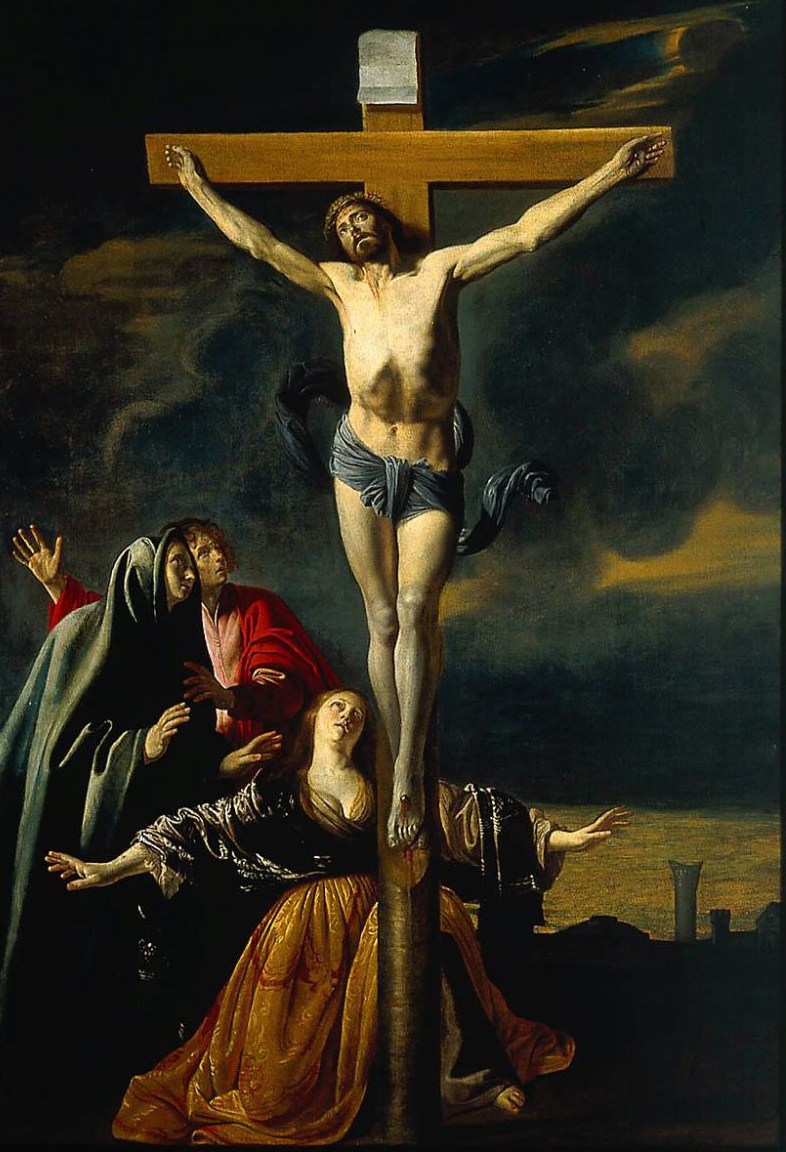
But hedonism seeks to avoid sacrifice and suffering at all costs. Hedonism is directly opposed to the theology of the Cross. St. Paul spoke in his day of the enemies of the cross of Christ. Their end is destruction, their god is the belly, and they glory in their shame, with minds set on earthly things (Php 3:18–19). He also taught that the Cross was an absurdity to the Gentiles (1 Cor 1:23).
Things have not changed, my friends. And thus the world reacts with great indignation whenever the Cross or suffering is even implied. And so the world will cry out with bewildered exasperation and ask (rhetorically) of the Church: “Are you saying that a poor woman who was raped needs to carry the child to term and cannot abort?” (Yes we are.) Are you saying that a “gay” person can never marry his or her gay lover and must live celibately?” (Yes, we are.) “Are you saying that a handicapped child in the womb must be “condemned” to live in the world as handicapped and cannot be aborted and put out of his (read “our”) misery?” (Yes we are.) “Are you saying that a dying person in pain cannot be euthanized to avoid the pain?” (Yes, we are.)
The shock expressed in these rhetorical questions shows how deeply hedonism has infected the modern mind. The concept of the Cross is not only absurd, it is downright “immoral” to the modern hedonistic mentality, which sees pleasure as the only true human good. To the hedonist, a life without enough pleasure is a life not worth living. And anyone who would seek to set limits on the lawful (and sometime unlawful) pleasures of others is mean, hateful, absurd, obtuse, intolerant, and just plain evil.
When pleasure is life’s only goal or good, how dare you, or the Church, or anyone seek to set limits on pleasure let alone suggest that the way of the Cross is better or is required of us! You must be banished, silenced, and destroyed.
And indeed many faithful Catholics in the pews are deeply infected with the illusion of hedonism and thus take up the voice of bewilderment, anger, and scoffing whenever the Church points to the Cross and insists on self-denial, sacrifice, and doing the right thing even when the cost is great. The head wagging in congregations is often visible if the priest dares mention that abortion, euthanasia, IVF, contraception, and so forth are wrong and should be set aside regardless of the cost, or if he preaches about the reality of the Cross. The faithful who swim in the waters of a hedonistic culture are often shocked at any notion that might limit the pleasure others want to pursue.
Hedonism makes the central Christian mysteries of the Cross and redemptive suffering seem like a distant planet or a strange, parallel universe. The opening word from Jesus’ mouth, “Repent,” seems strange to the hedonistic world, which has even reworked Jesus and cannot conceive that He would want them to be anything but happy, content, and pleased. The cry goes up, even among the faithful, “Doesn’t God want me to be happy?” And on this basis all sorts of sinful behavior is supposed to be tolerated because insisting on the opposite is “hard” and because it seems “mean” to speak of the Cross or of self-discipline in a hedonistic culture.
Bringing people back to the real Jesus and to the real message of the Gospel, which features the Cross as the way to glory, takes a lot of work and a long conversation. We must be prepared to have that long conversation with people.
There are other modern trends I hope to discuss tomorrow (e.g., reductionism, minimalism, scientism, fixation).

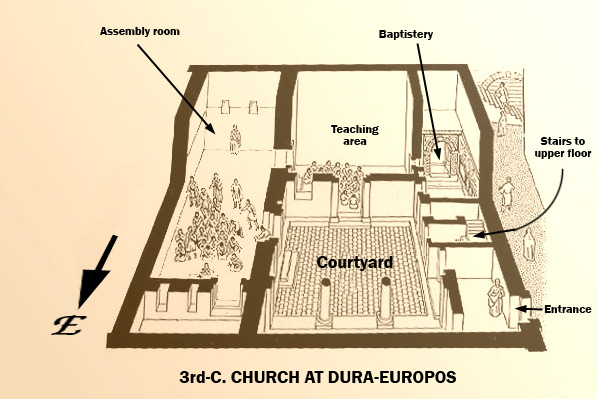
 As you may know, the Catholic Faith was illegal in the Roman Empire prior to 313 AD, when the Emperor Constantine issued the Edict of Milan permitting the Christian Faith to flourish publicly. Prior to that time, Church buildings as we know them today were rare—Mass was usually celebrated in houses.