Pondering”Gradualism”and the”Midterm”Report

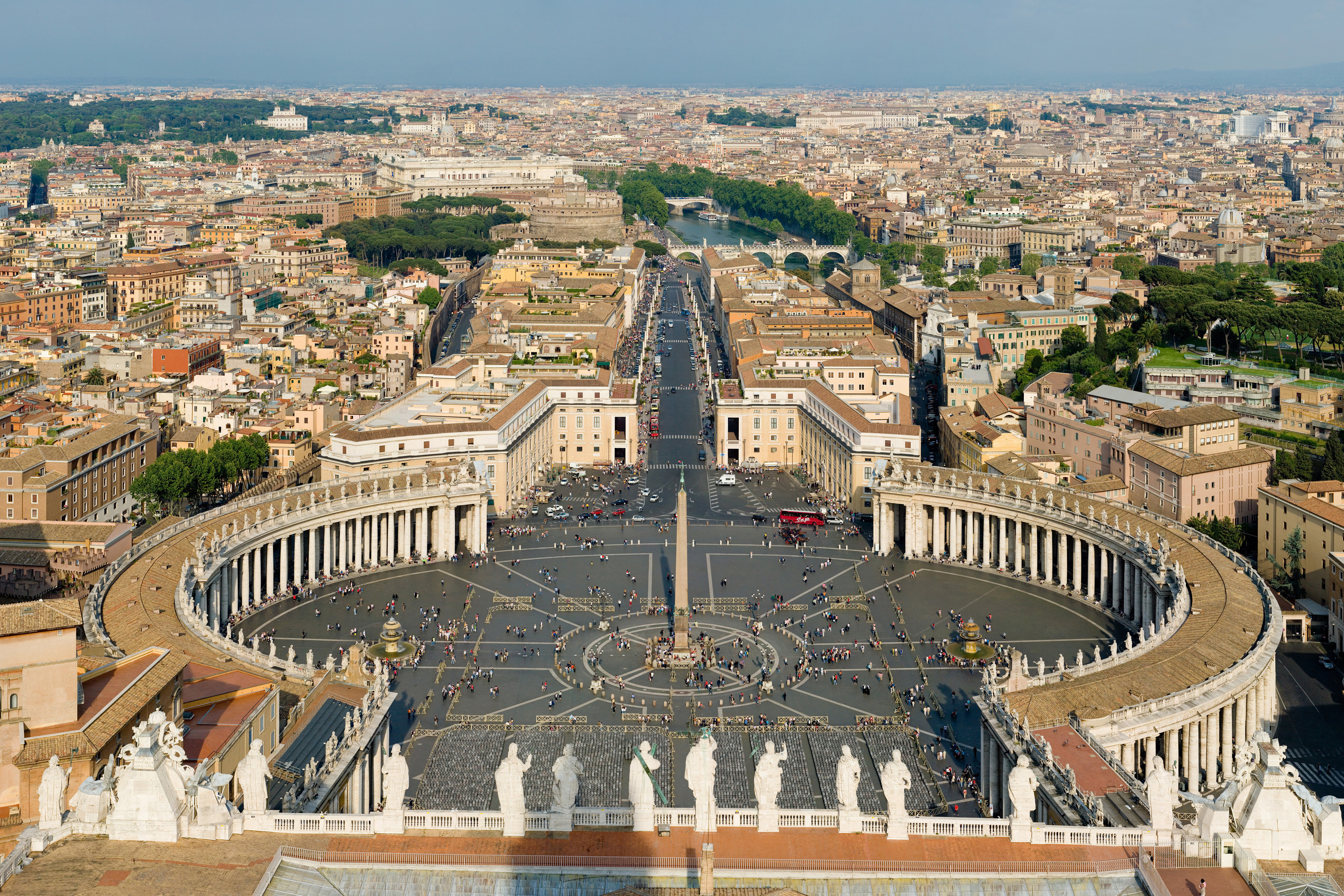
"St Peter's Square, Vatican City - April 2007" by Diliff - Own work. Licensed under CC BY-SA 3.0
“St Peter’s Square, Vatican City – April 2007” by Diliff – Own work. Licensed under CC BY-SA 3.0via Wikimedia Commons.

The so-called “midterm” report of the Synod is out. Please remember, it is only a rough draft and the final report may in fact look very different. Frankly, I am not sure why we are even being permitted to look at a rough draft. Nevertheless, presuming the Pope is serious about inviting discussion, let me consider a certain aspect of the report and a few particulars.

A governing principle that seems to permeate the report’s reflections is one that some refer to as “gradualism.” As a pastoral strategy, gradualism can be an effective, even necessary approach in order to lead people more deeply into the moral and spiritual life of the Church. However, as with any pastoral strategy, there are serious concerns and pitfalls to avoid.

What is gradualism? While I myself have never personally called it this, gradualism is a way in which we meet people where they are and seek gradually to draw them more deeply into the true life of a Christian. All of us who have journeyed toward Christ realize that we have we have not always been where we are today, and that future growth is necessary. Growth usually happens in stages and by degrees, ideally leading us more deeply to Christ.  

Perhaps an analogy involving a doctor and patient may help. Suppose a doctor meets a man in his late 50s who presents with a large number of health issues. There are many things wrong with the man (obesity, hypertension, diabetic tendencies, pulmonary and cardiac issues, etc.). Many aspects of the man’s lifestyle (drinking and eating to excess, poor diet, smoking, lack of exercise, etc.) may be contributing to this deterioration in his health. Seldom does a doctor give a patient a list of 25 things to do immediately. Such a “prescription” might leave the patient discouraged and unlikely to comply. So most doctors choose to chip away at the problem. What are some small changes that the patient can reasonably make in the next month? Perhaps it is beginning to take short walks, or making small  changes in his diet.  And thus the doctor begins with what he thinks is reasonable and achievable right away, and then gradually draws the patient to a more healthy lifestyle and better health. Small changes can eventually lead to a lot of progress.

In the pastoral ministry, similar strategies are often employed and they sometimes make good sense. People who show up at the front door of the rectory (or at our RCIA or marriage preparation programs) often present in a state of extensive spiritual disrepair. Many unhealthy and sinful moral issues or spiritually irregular practices are evident. Many have also been influenced by modern errors and misinformation. In many cases, the best place for a priest to begin is with a conversation, laying a foundation of trust that will assist the person in being conformed once again to the truth of the Gospel. During these conversations, the priest can clarify doubts and errors, display careful reasoning based on Scripture, and explain why we teach certain things. This approach can inspire repentance from sinful habits or patterns.

Priests and other pastoral leaders engage in this process frequently even if we don’t use the term “gradualism.” Not everyone is ready to go right into the confessional. Most people must be carefully prepared and led back to the truth. It is obviously a process that will vary considerably from person to person depending on his or her needs.

However, as with any pastoral strategy, there are pitfalls that must be avoided. Here are a few concerns that the practice of so-called gradualism might raise:

1. Gradualism works best when the one who administers it remains committed to seeing the whole process through and is not simply trying to evade the difficult work of restoring people. Again, for example,  the doctor who begins in small ways to help a person to better health must remain deeply aware of how serious things like heart disease, pulmonary disease, etc. are. Well-trained doctors must have a proper sense of urgency for the overall goal of actually restoring health. Today in the Church, however, it is not certain that a similar urgency is evident among the laity, the rank and file clergy, and I would suppose even some bishops.

However, the prevalence of “universalism” (the unbiblical view that all are saved in the end no matter what) in the Church has led to a profound lack of urgency. Very few in pastoral leadership today have a strong sense of concern about the fact that so many people are confused, are in darkness, and are living in serious, unrepentant sin. In the midst of a great moral crisis, many pulpits remain strangely silent and most parishes seem more focused on the next chicken dinner or the upcoming fundraiser than about how to reach out to those who live in darkness.

It is very troubling, akin to a doctor suddenly saying, “Well, heart disease, cancer, etc. are not really big deals, so in the end it doesn’t really matter whether we do anything or not.” And yet for many in the Church this is exactly the way they speak, at least implicitly. Apparently, for many, it is no big deal that people are living in great moral confusion, or that many are not coming to Mass, receiving sacraments, or explicitly confessing Christ, or that many are fornicating, divorcing, and engaging in or celebrating homosexual acts. If, as universalism implies, everyone will be saved in the end, who really cares all that much that people do these things?

This widely held pastoral stance has left many in  the Church without an appropriate sense of urgency to reach out to people who may in fact be lost.

In such a climate, gradualism is not likely to work well since there is no necessary goal to which we must urgently summon those to whom we minister.  In such a climate of little urgency, the emphasis is more on how people might feel. And even if gradualism is attempted, at some point, even in gradualism, there are difficult things that have to be said and unpopular truths that must be announced. Without that urgency to drive it, it’s hard to imagine a “gradualist” approach really moving the ball much.

Only if the priest or pastoral leader is deeply committed to the truth and is aware of the urgent need for people to live that truth, can gradualism bear the necessary fruit. Do such leaders exist? Yes, but how numerous they are is debatable in the Church today, so infected is it by universalism.

2. Gradualism as a strategy is poorly attested to in Scripture, where an urgent call to conversion and repentance is more the norm. The biblical evidence paints a picture of prophetic urgency and a strategy that strongly, even sternly asserts a clear contrast with the sinful world. The call to come away from worldly thinking is unambiguous and is to be done singularly and without lots of careful steps laid out.

For example, Jesus says, If the world hates you, know that it has hated me before it hated you. If you were of the world, the world would love its own; but because you are not of the world, but I chose you out of the world, therefore the world hates you. Remember the word that I said to you, ‘A servant is not greater than his master.’ If they persecuted me, they will persecute you; if they kept my word, they will keep yours also. But all this they will do to you on my account, because they do not know him who sent me (John 15:18-21). And Paul admonishes,  Do not be conformed to this world but be transformed by the renewal of your mind, that you may prove what is the will of God, what is good and acceptable and perfect (Rom 12:2).

Some will argue that Both Jesus and St. Paul were dealing with a small window of time and thus had to work urgently and in this manner. Fine. But Scripture cannot be wholly set aside as a model for evangelization. And even though our culture may prefer the “kinder, gentler” approach, and gradualism has its place, it must be balanced with other pastoral strategies that emphasize contrast and urgency.


3. Gradualism is a personal pastoral strategy, not  a global strategy. That is to say, it is directed to a specific person. The skilled pastor will have to adapt such a strategy to the specific needs of different people. Gradualism is a very complicated thing to try to pull off toward a group.

On any given Sunday, a pastor looks out upon a congregation filled with people at all different stages of spiritual and moral growth. He cannot possibly have a homily perfectly crafted to draw every one of them in stages, gradually closer to the truth. He will have to speak generally, but also very clearly, to the issues.

St. John Vianney was reputed to have remarked that a pastor should be tough in the pulpit and more gentle in the confessional. This illustrates to some degree the problem with gradualism applied to a large, diverse group such as a typical Catholic congregation. It works better as a personal strategy wherein a confessor or pastor can help a person work on particular areas in order to lay the ground for other areas. But this is very personal and varies widely from person to person. 

And this leads to the next point.

4. The cultural climate also presents challenges for the widespread use of gradualism. Generally, in these days of rapid cultural collapse and deep cynicism about biblical morality, a silent, quiet, or highly gentle approach is likely to be regarded as evidence of implicit agreement. Many today will say, “See, I went to this parish or that confessor and no one said anything to me about what I’m doing; no one seems concerned. So I guess it’s all right.” Thus, gentleness is confused with approval.

The Synod “midterm,” as published, contains a lot of ambiguous language about being “welcoming” and finding what is beautiful in non-traditional expressions of family and sexuality. OK, I get it; even a broken clock is right twice a day. And in certain personal settings, we can sit down with people and find areas of agreement. But when “gradualist” notions are issued to a wide, unbelieving, skeptical world such broad notions are subject to a thousand interpretations and may signal to some that the Church has “moved” in her doctrinal stance. Gradualism must be more carefully articulated. Signaling this approach without proper distinctions clouds more than it clarifies; it blurs the Church and her teaching.

Thus, when the document speaks about homosexuals and being open to the gifts they bring, to whom is it really referring? To those homosexuals who are living celibately? Or to those openly living in unions and engaging in activity that the Catechism calls gravely disordered and sinful? One can surely see that celibate homosexuals heroically living chastely in a world gone mad would indeed have the gift of heroic witness to offer, among other gifts. I am less certain that whatever gifts an openly practicing homosexual would bring would not be eclipsed by the scandal and confusion caused by that open practice.

When the document speaks of “accepting the reality of civil marriage and also cohabitation …”  and goes on to state rather generally that many such “unions” have “reached a notable level of stability through a public bond … characterized by deep affection, responsibility with regard to offspring …” one wonders what “gradualism” is necessary for seemingly so lovely a thing. It sounds like the Synod is equivocating between true marriage and the endless arrangements of the world that clearly vary from God’s plan.

One can see a pastor working quietly with a cohabiting couple and encouraging them to validate their union, even telling them that their relationship appears beautiful and strong and that the Church’s blessing will make it even better. But for a Roman document to use such broad and affirming language to an unspecified audience is to invite the notion that affection equals approval.

Our modern culture is not usually going to understand these “outreaches” as an invitation to come to Christ, but rather as a capitulation by the Church to the status quo. The subtle approach of gradualism does not translate well to a culture that takes a mile when the Church offers an inch.

The better approach is that reputed of St. John Vianney: the Church should be clear in the pulpit and work quietly and in stages with people who struggle to meet the norms (and that is all of us, really). Let the norms and teachings of the Church be clear. Let local pastors and clergy work carefully within guidelines to clear obstacles, apply canonical remedies, and draw people (gradually) through preaching and teaching to a deeper adherence to the true and clear teaching of Christ and His Church.

Gradualism has its place: as a local and very personalized strategy under the direction of Church norms. I do not think it is viable as a worldwide pastoral strategy, one which will surely be misunderstood and likely misapplied.
Temptation as a Form of Martyrdom – A Meditation on a Writing of St. Ambrose

101214Temptation is a universal human experience. And because it’s so directly associated with sin, many too easily equate being tempted with sinning. But temptation is not the same as sin. If it were, how could the Scriptures say to us that Jesus was tempted in every way we are and yet was without sin? (Heb 4:15) Hence, the simple experience of temptation is not sin. It is true, however, that our past indulgence in sin can make us more susceptible to temptation.

However, properly understood, temptation is a form of suffering—even a kind of martyrdom—that the faithful must endure, and through it bear witness to the abiding and surpassing power of God’s grace.

Yes, temptation is a form of suffering that we must endure daily. Too many people, however, feel guilty merely for being tempted. Perhaps they think they are already sinning simply because the thought of sin comes to mind. To be sure, temptation does speak to our desires and hence presents what at least seems to be a pleasurable prospect. It would not be temptation if it did not have this quality. We are not tempted by something odious or by something that has no pleasurable dimension. Nevertheless, feeling tempted is not a sin. And thus in temptation the Christian should not think of himself or herself as somehow displeasing to God. Rather, we should remember that God is our helper, someone to whom we should turn in times of temptation. We should not feel ashamed or afraid of running to God and asking for His deliverance.

In a reading from last week’s Office, St. Ambrose quite eloquently spoke to the martyrdom of temptation. I’d like to present some excerpts from his writing (in bold italics) and make some comments of my own (in red).

As there are many kinds of persecution, so there are many kinds of martyrdom. Every day you are a witness to Christ:

  • You were tempted by the spirit of fornication, but feared the coming judgment of Christ and did not want your purity of mind and body to be defiled: you are a martyr for Christ. Yes, for you reverently feared God and considered the judgment of wrath that comes upon fornicators. You loved God’s rewards more than passing pleasures!
  • You were tempted by the spirit of avarice to seize the property of a child and violate the rights of a defenseless widow, but remembered God’s law and saw your duty to give help, not act unjustly: you are a witness to Christ. Christ wants witnesses like this to stand ready, as Scripture says: Do justice for the orphan and defend the widow. And here again, you considered God’s love for the poor and that remembered that giving alms covers a multitude of sins (Lk 11:41). God dismisses those who did not feed, clothe, or give assistance to the poor into everlasting flames (Matt 25:31ff). And thus, like a martyr, you resisted the pull of greed gave until it cost you.
  • You were tempted by the spirit of pride but saw the poor and the needy and looked with loving compassion on them, and loved humility rather than arrogance: you are a witness to Christ. What is more, your witness was not in word only but also in deed. Yes, you considered that we are all blind beggars before God and that the measure we measure out to others will be measured back to us (Lk 6:38). You considered that the merciful will be shown mercy (Mat 5:7) and that merciless is the judgment on the one who has shown no mercy (James 2:13).

How many hidden martyrs there are, bearing witness to Christ each day and acknowledging Jesus as the Lord! … Be faithful and courageous when you are persecuted within … in those unseen persecutions there are kings and governors, judges with terrible power. You have an example in the temptation endured by the Lord. Indeed, temptations are a kind of persecution, and the proper response to persecution is willing martyrdom. 

In another place we read: Do not let sin be king in your mortal body (Romans 6:12). You see the kings before whom you are made to stand, those who sit in judgment over sinners … There are as many kings as there are sins and vices; it is before these kings that we are led and before these we stand. These kings have their thrones in many hearts. Sinful temptations seek to rule our hearts like despots. But do not fear even the many kings arrayed about you. Stand before them with courage, even unto death. For though they can destroy your body, they cannot destroy your soul or take your spiritual freedom unless you let them. What is the worst they can do? Kill you? But this is pathetic, for then you go home victorious to Christ. Resist these domineering kings (of temptation), even unto death. For in dying faithfully you are born to eternal life! 

But if anyone acknowledges Christ, he immediately makes a prisoner of this kind of king and casts him down from the throne of his own heart. How shall the devil maintain his throne in one who builds a throne for Christ in his heart? Amen. As servants of Christ, we escape slavery to the kings of the world, to the flesh, and to the devil.

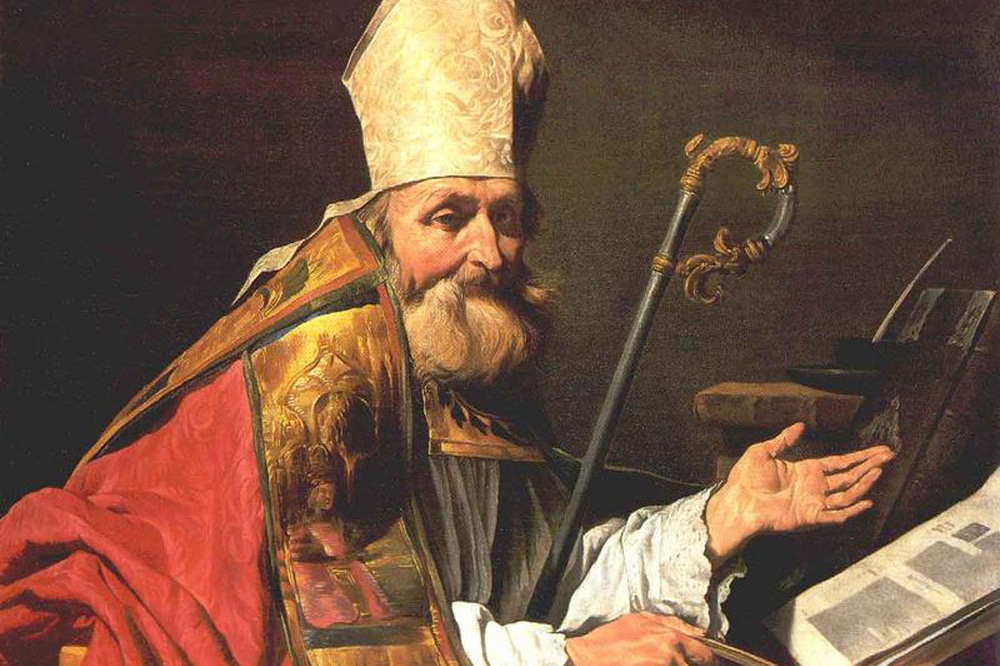
From a commentary on Psalm 118 by Saint Ambrose, bishop
(Sermo 20, 47-50; CSEL 62, 467-469)

And thus we see that temptation is a form of suffering, even of martyrdom, if we engage in battle and refused to be mastered. Our martyrdom makes us witnesses to the surpassing value of what God offers as compared to the trinkets and passing pleasures of this world.

Temptation is a form of suffering, but to endure it brings us a share in the crown of martyrs. As St. Paul beautifully said near the end of his life,

For I am already on the point of being sacrificed; the time of my departure has come. I have fought the good fight, I have finished the race, I have kept the faith. Henceforth there is laid up for me the crown of righteousness, which the Lord, the righteous judge, will award to me on that Day, and not only to me but also to all who have loved his appearing (2 Ti 4:6–8).

Do not be ashamed of your temptations; do not be fearful that on account of them you have already sinned or that God is displeased. Rather, see them as a summons to battle and to glorious martyrdom. Let it not be said of you,  In your struggle against sin you have not yet resisted to the point of shedding your blood (Heb 12:4).

In every temptation, hear the battle cry. Take to the field manfully and resist. Win through to the victory and remember the glory of the martyrs, whose company, through temptation, you are able to join.

Party or Perish! A Homily for the 28th Sunday of the Year

101114The past three Sundays have featured intense and shocking parables about our readiness, our fruitfulness, and our decision to accept and enter the Kingdom of God or not. The Lord has used the image of a vineyard into which workers are dispatched at different times of the day but who have different attitudes about what is due to them at the end of the day; or a vineyard into which two sons are sent, one going and the other not; or a vineyard in which are numerous wicked tenants who refuse to render rightful fruits and who abuse and kill those sent to call for the harvest, even the landowner’s very own son.

The parables are shocking and speak to the great and dramatic decision to which we are all summoned: will we accept the Kingdom of God, entering into to it and accepting its terms, or not? It is a decision on which your destiny (and that of those you love) depends. And Jesus is not playing around; He lays out the drama in stark and shocking ways. Jesus is not the harmless hippie or the mild-mannered Messiah that many today have recast Him to be. He is the Great Prophet, the very Son of God and Lord who authoritatively stands before us and says, “Decide.”

This Sunday’s gospel is perhaps the most shocking and dramatic of all. The Lord Jesus issues another urgent summons to the Kingdom. As with past Sundays, there is the warning of hellish destruction in the refusal of the Kingdom. But this view must be balanced with the vision of a seeking Lord who wants to fill His banquet and will not stop urging until the end. You might say that the theme of this gospel is “Party or Perish!”

Lets look at the gospel in five stages.

I. RICH REPAST – The text says, The kingdom of heaven may be likened to a king who gave a wedding feast for his son. He dispatched his servants to summon the invited guests to the feast. Of course the king is God the Father and the wedding feast is the wedding feast of His Son, our Lord Jesus Christ. On one level, the wedding feast is the invitation to faith in general. But more biblically, the wedding feast is the wedding feast of the Lamb, described in the Book of Revelation (19:7-9). Hence it is also the Liturgy of Heaven, which we share in through the Mass.

What a wonderful image of the Kingdom: a wedding feast! Most Jewish people of that time looked forward to weddings all year long. Weddings were usually timed (in an agricultural setting) between planting and harvest, when things were slower. Weddings often lasted for days and were among the most enjoyable things a Jewish person could imagine. There was feasting, family, and great joy in what God was doing. And consider the unimaginable joy and honor of being invited to a wedding hosted by a king!

Yes, these were powerful images for the ancient Jews of the Kingdom. A wedding! And the wedding of a King’s son, at that! The joy, the celebration, the feasting, the magnificence, the splendor, the beautiful bride, the handsome groom, the love, the unity; yes, the Kingdom of Heaven may be likened to a king who gave a wedding feast for his son.

Who would not want to come? And today we may well ask, “If this is Heaven, who does not want to go?” And yet, as we shall see, the invitation is rejected by many!

II. RUDE REJECTION! – The text says, but they refused to come. A second time he sent other servants, saying, “Tell those invited: Behold, I have prepared my banquet, my calves and fattened cattle are killed, and everything is ready; come to the feast.”‘ Some ignored the invitation and went away, one to his farm, another to his business. The rest laid hold of his servants, mistreated them, and killed them.

Why? Here is a real twist to the story, an unexpected development. Why the rejection of the king’s offer? And in our time, why the rejection of what God offers? Are these people crazy? In effect, Jesus explains their rejection in a twofold way: worldliness and wickedness.

Some of those rejecting the invitation to the Kingdom of Heaven do so for worldly reasons. Jesus describes them as going “one to his farm, another to his business.” In other words, the things of the world, though not evil in themselves, have these people preoccupied. They are too busy to accept the invitation; their priorities and passions are elsewhere.

They think, “Weddings are nice, but money is nicer. Yes, you see, God and religion have their place, but they don’t pay the bills.” The goal of the worldly is this world and what it offers, not God or the things awaiting them in Heaven. Things like prayer, holiness, Scripture, and the Sacraments don’t provide obvious material blessings to the worldly minded. Hence, such things are low on their priority list. St Paul speaks of people whose god is their belly and who have their mind set on worldly things (cf Phil 3:19).

So off they go, one to his farm, another to his business; one to watch football, another to detail his car; one to sleep in, another to play golf; one to make money, another to spend it lavishly at the mall.

Others of those rejecting the kingdom do so out of some degree of wickedness. Jesus speaks of how they abuse those who invite them, even killing some of the servants (prophets, apostles, evangelizers). Why this anger?

Many reject the kingdom of God because it is not convenient to their moral lives. Many of them rightly understand that in order to enter the wedding feast of the Kingdom, they will be required to be “properly dressed,” and this will be seen below. But of course “proper dress” here refers not to clothes, but to holiness and righteousness, to living the moral vision of the Kingdom.

Hence the invitation to the wedding feast of the Kingdom incites anger in some, because it casts a judgment on some of their behaviors; it tweaks their consciences. A great deal of the hostility directed toward God, Scripture, Jesus, the Church, and her servants who speak God’s truth is explained by the fact that, deep down, the hostile know that what is proclaimed is true.

Or, if their minds have become very darkened and their hearts hardened by sin, they simply hate being told what to do; they hate any suggestion that what they are doing is wrong. Being told to live chastely, or to forgive, or to be more generous to the poor, or to welcome new life (even when there are deformities), or that there are priorities higher than money, sex, career, and worldly access—all of this is obnoxious to those who have become hardened in sinful choices or sinful patterns of one sort or another. Hence the world often treats God and those who speak of Him with contempt. In certain places and at certain times, some are even martyred.

Of course for many who reject the Kingdom there are multiple reasons. But Jesus focuses on these two broad categories, under which a lot of those reasons fall.

III. RESULTING RUIN. The text says, The king was enraged and sent his troops, destroyed those murderers, and burned their city. As in last week’s gospel, we have here a stunning and shocking detail to the story that is, to some extent, mysterious to us. How can such a violent punishment be squared with the vision of a God who loves us?

It is not an easy thing to answer. But to respond by pretending it is not taught or that this will never happen is to reject the loving urgency with which Jesus speaks. He is not simply using scare tactics or hyperbole; He is teaching us what is true for our salvation.

Historically this destruction happened to ancient Israel in 70AD, forty years after Jesus’ resurrection. After having extended the invitation for a long forty years, God finally accepts the “No” of the invited guests (in this case the Ancient Jews, corporately speaking).  Their “No” became definitive and led to their national ruin and the end of the temple.

It is the same for us. For as long as we live, the Lord invites us all to accept His kingdom . And if we are slow to respond, He repeats His offer again and again. But in the end, if we don’t want to have the Kingdom of God we don’t have to have it. And at death our choice is fixed. And if our answer is “No,” our ruin is sure, for outside the kingdom, now rejected, there is nothing but ruin. You and I will either accept the invitation to live in the Kingdom of God and by its values or we will reject it and make “other arrangements.” And those other arrangements are ruinous.

But be sure of this: God wants to save everyone (cf Ez 18:23, 32, 33:1; 1 Tim 2:4, among others). If Hell exists, it is only because of God’s respect for our freedom to chose. And mind you there are not a mere few who reject the Kingdom. Those who reject it live demonstrating that they do not want a thing to do with many of the values of the Kingdom of Heaven: chastity, forgiveness, love of enemies, generosity to the poor, detachment  from the world, and so forth. And God will not force them to accept these things nor to be surrounded by those who live them perfectly in Heaven. They are free to make other arrangements and to build their eternal home elsewhere. And compared to Heaven, everything else is a smoldering ruin.

IV. RELENTLESS RESOLVE – The text says, Then he said to his servants, “The feast is ready, but those who were invited were not worthy to come. Go out, therefore, into the main roads and invite to the feast whomever you find.” When some reject the invitation, God merely widens the net. He wants his Son’s wedding feast full. Hence, God is resolved to keep inviting and extending the invitation. Here is an extravagant God, one who does not give up. If rejected, He just keeps calling.

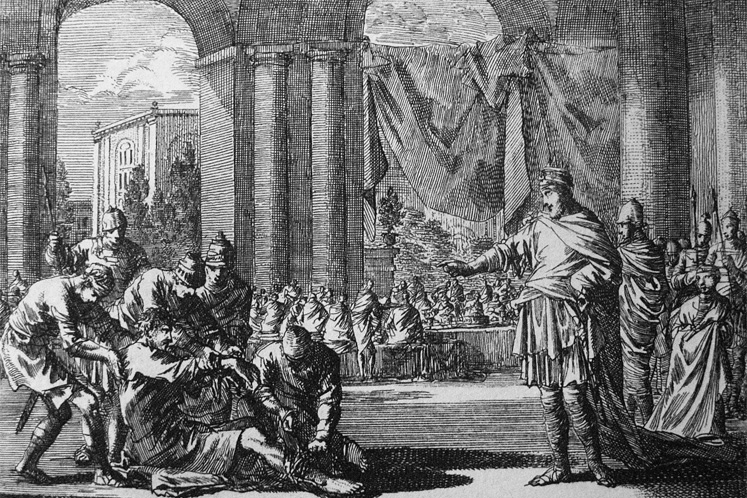
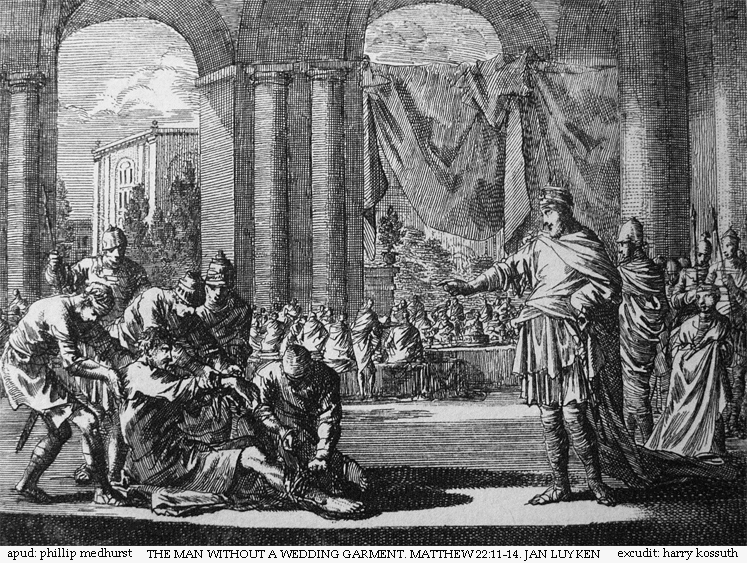
V. REMAINING REQUIREMENT – The text says, The servants went out into the streets and gathered all they found, bad and good alike, and the hall was filled with guests. But when the king came in to meet the guests, he saw a man there not dressed in a wedding garment. The king said to him, “My friend, how is it that you came in here without a wedding garment?” But he was reduced to silence. Then the king said to his attendants, “Bind his hands and feet, and cast him into the darkness outside, where there will be wailing and grinding of teeth.” Many are invited, but few are chosen.

And here, then, is a warning even for those of us who do accept the invitation and enter the kingdom: we must wear the proper wedding garment.

As we have already remarked, the garment here is not one of cloth but one of righteousness. And this righteousness in which we are to be clothed can come only from God. God supplies the garment. The book of Revelation says that the saints were each given a white robe to wear (Rev 6:10). The text also speaks of the Church in a corporate sense as being clothed in righteousness: Let us rejoice and exult and give him the glory, for the marriage of the Lamb has come, and his Bride has made herself ready; it was granted her to be clothed with fine linen, bright and pure—for the fine linen is the righteous deeds of the saints (Rev 19:7-8). Hence righteousness is imaged by clothing, and that clothing is given by God. At our baptism, the priest describes our white robe as an outward sign of our dignity. It is a robe that we are to bring unstained to the judgment seat of Christ. At our funeral, too, the white pall placed upon the casket recalls the white robe of righteousness given to us by God.

Scripture speaks elsewhere about our righteousness as a kind of provided clothing we “put on”:

  1. Rom 13:12 Let us then cast off the works of darkness and put on the armor of light.
  2. Rom 13:14 But put on the Lord Jesus Christ, and make no provision for the flesh, to gratify its desires.
  3. Eph 4:23 And be renewed in the spirit of your minds, and put on the new nature, created after the likeness of God in true righteousness and holiness.
  4. Eph 6:11 Put on the whole armor of God, that you may be able to stand against the wiles of the devil.
  5. Eph 6:14 Stand therefore, having girded your loins with truth, and having put on the breastplate of righteousness.
  6. Col 3:10 You have put on the new nature, which is being renewed in knowledge after the image of its creator.
  7. Col 3:12 Therefore, as God’s chosen people, holy and dearly loved, clothe yourselves with compassion, kindness, humility, gentleness and patience.
  8. 1 Thess 5:8 But, since we belong to the day, let us be sober, and put on the breastplate of faith and love, and for a helmet the hope of salvation.

Hence, when the king comes upon a man “not properly dressed,”  the man is confronted. And, saying not one word in reply, he is cast out. But recall two things. First, this is not about a dress code, it is about a code of holiness. The clothes are symbolic of righteousness. Second, remember that the garment is provided. We have no righteousness of our own but only what God gives us. Hence the refusal to wear the clothes is not about poverty or ignorance of the rules. It is an outright refusal to accept the values of the Kingdom of God and to “wear” them as a gift from God.

Scripture says of Heaven, Nothing impure will ever enter it, nor will anyone who does what is shameful or deceitful (Rev 21:27). Scripture also warns us, without holiness no one will see the Lord (Heb 12:14b). And an old Spiritual says, None can walk up there, but the pure in heart. Consider that Heaven would not BE Heaven if sin and unrighteousness were allowed to commingle there.

Now only God can make us pure enough to enter Heaven and He offers this gift of purity to everyone. Yet not everyone chooses to accept the garment of righteousness He offers; not all will agree to undergo the purification necessary to enter Heaven.

The Lord concludes by saying that many are called but few are chosen. Indeed the Lord calls many (likely, all). But far fewer are chosen, for they themselves choose not to accept the offer of the Kingdom and the garment of righteousness. God thus ratifies their choice by choosing them not.

Some final notes:

Understand the urgency with which Jesus speaks and teaches. Our choices have consequences and at some point our choices become fixed. Further, at that point, God will ratify what we have chosen. Notions of judgment, fixed choices, and Hell may be obnoxious to some in the modern world, and surely these teachings are sobering and even frightening. We may have legitimate questions as to how to square Hell with God’s mercy. Nonetheless, judgment, the finality of our choices, and the reality of Hell are all still taught despite our objections or questions.  And they are taught by the Lord Jesus who loves us. No one loves you more than Jesus Christ, and yet no one spoke of Hell more than Jesus Christ did.

It is as if the Lord is solemnly urging us to be sober and serious about our spiritual destiny and about the spiritual condition of those whom we love. If nothing else, hear the Lord’s urgency in this vivid parable, told in shocking detail. Realize that it is told in love and heed its message.

A final picture. In Luke 15, the Lord told the parable of the Prodigal Son. The sinful son returned to his father, who, being joyful and moved, threw a great feast. But the other son sulked and refused to enter the feast. Incredibly, his father came out and pleaded with him to enter the feast. “We must rejoice!”  he said. And, strangely, the parable ends there. We are not told if the sulking son ever enters. The story does not end because you must finish it. You are the son. So is your spouse, your children, your friends. What is your answer? Will you learn to forgive and accept all the values of the Kingdom, or will you stand outside? What is your answer? What are you doing to help ensure the proper answer from your spouse, children, brothers, sisters, and friends? What is your answer? What is theirs? The Father is pleading for us to enter the feast. What is your answer?

This song says, I got a robe, you got a robe, all God’s children got a robe. When I get to heaven gonna put on my robe and go wear it all over God’s Heaven. Heaven, (Everybody talking ’bout Heaven ain’t a goin’ there), Heaven, gonna walk all over God’s Heaven.

F

Do Not Forget the Works of the Lord – A Meditation on Fear, as Seen in a Short Cartoon

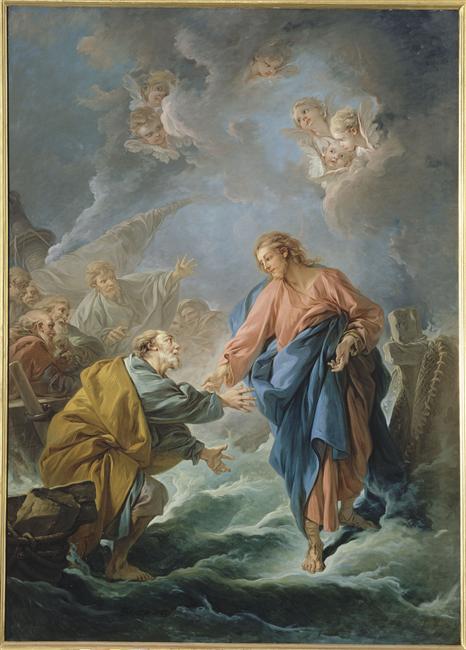
101014There was a moment in Peter’s life when he faced a choice to focus on either the storm or the Lord. It is in the memorable Gospel story in which Peter was walking on the water toward Jesus. As the Gospel recounts,

But when he saw the wind, he was afraid, and beginning to sink (Mt 14:30).

It is so difficult for us. We seem wired for the negative, wired to be anxious, doubtful, on the alert for any danger. It takes great faith to keep our sights focused on the Lord, who alone can save us and will save us if we trust in Him. But too easily the world, the flesh, and the devil seek to steal our serenity and snatch from us our ability to see God. And losing that ability, whether through careless neglect or weakness, we are overwhelmed by the fears of the world that loom large. SO often our loss of the sight of God has us frantically running about wondering what to do. Scripture says,

For thus said the Lord GOD, the Holy One of Israel: By waiting and by calm you shall be saved, in quiet and in trust shall be your strength. But this you did not will. “No,” you said, “Upon horses we will flee.” Very well, you shall flee! “Upon swift steeds we will ride.” Very well, but not as swift as your pursuers! (Is 30:15–17)

Scripture further warns,

  • For you have forgotten the God of your salvation, and have not remembered the Rock of your refuge (Is 17:10).
  • You were unmindful of the Rock that begot you, and you forgot the God who gave you birth (Dt 32:18–19).
  • But they soon forgot his works; they did not wait for his counsel (Ps 106:13).

Indeed, do not forget the works of the Lord!

I thought of these things as I watched this little cartoon. It features an astronaut of sorts. He is in a threatening place, alone in orbit high above the earth. But he has a picture of his beloved, likely his wife, and this consoles him. He struggles to keep his eyes on his beloved as his fears grow. He loses his connection with her as the warning bells sound and he rushes about in a panic. Finally, his fears wholly snatch his beloved from his sight and his fears overwhelm him.

And this is a picture of us, too, who so easily allow our fears to sever our connections with our Father in Heaven. How quickly our fears, elicited by the world, the flesh, and the devil, snatch away our connection with God. And then our fears loom large, overwhelming us.

Do not forget the works of the Lord!

Musings and Concerns on the Synod

100914We are seeing in Rome a rather unusual unfolding of the Synod, wherein cardinals and bishops with very different points of view are airing those differences quite publicly. Even prior to the Synod there was the publication of various competing books.

To be fair to the bishops and cardinals, it would seem that Pope Francis himself has largely encouraged this. It is more typical at synods for the sparring and debates to take place more privately, and press conferences usually just issue summaries of things discussed. Time will tell of the wisdom (or lack thereof) of such public airings, but if the permission for frank discussion may extend to a lowly parish priest, I will say that it concerns me greatly. It is never pretty to see how the sausage is made and some who are less familiar with the internal debates may well be discouraged, while others will be inappropriately heartened. Again, though, to be fair, vigorous debates in Church Synods and Councils extend all the way back to the first one described in Acts 15.

If you’re a regular reader of this blog, what I think about the matter of Holy Communion to those in invalid matrimonial states and other irregular situations is no secret. I simply cannot see how it is possible for us to extend Holy Communion to Catholics living in invalid marriages unless they are willing to live as brother and sister. Rather than restate all the reasons, I’ll just refer you to  earlier posts I wrote: HERE and HERE.

And while the pastoral solution of living as brother and sister may not seem a “pastoral” or reasonable solution to many, it does remain a solution if Holy Communion is sought. Of course it is not a perfect solution. There is still the possibility of scandal, since not everyone will know or understand that an individual who is coming forward is not sexually intimate with his or her current “spouse” from a second union. But if celibacy is generally known as a possibility, others could presume good will and a large degree of scandal could be avoided.

I was speaking of this matter recently on the phone with someone (not a parishioner) and she scoffed at the notion of asking celibacy of people in these situations. She shifted the terms and asked me somewhat rhetorically,

How can you go on denying something as important as Holy Communion to people just because they are in what you consider a bad marriage?

I told her that I would answer her question if she would answer mine:

How is it that many have come to regard having sexual intimacy as more important or necessary than receiving Holy Communion?

I went on to add:

While Holy Communion is important (and I surely think that it is), I wonder why the people you describe as seeing it as so important wouldn’t choose to live celibately in order to be able to receive our Lord. You suggest I’m being cruel by denying it, but it isn’t really I who is making the choice here. The choice is really theirs. I am not the master of the Eucharist; I am His servant. Given Jesus’ description of second marriages as adulterous (Matt 19), and Paul’s clear warning against receiving Communion in an ongoing state of serious sin (1 Cor 11), it doesn’t seem that I have any choice. The choice is and remains theirs: either to so value Holy Communion and intimacy with the Lord that they are willing to forego sexual intimacy, or to seek solutions in the annulment process, or to continue refraining from Holy Communion.

Though I was being accused of somehow denying Holy Communion, I am not really doing any such thing. I celebrate Holy Communion every day for God’s faithful who are not impeded to receive. If they are somehow impeded, I will do what I can to help them overcome this impediment. If at the end of the process there can be no way to address the impediments, then the choice returns to them: live celibately and receive Communion, or choose not to and refrain from Communion. I am not denying anyone Communion; some choose to exclude themselves.

I realize that some people are in difficult and complex situations, but I cannot simply overrule the Lord or what He said to St. Paul. At the end of the day there is a choice for those who desperately seek Communion but are in second unions. That choice is celibacy. I realize that this is difficult and some conclude that this would be unjust to the second “spouse.” But it is ultimately their choice, not mine. I am respectful of the fact that some do not think they can reasonably choose to live celibately in their second union. However, it is not fair to say that just because other avenues have been exhausted, those in these situations have absolutely no choice. They do. It is difficult, but it is their choice to make.

It is sad that the Synod on the family has seemingly become a synod on divorce. I do hope and pray that some discussion is being had about the grace of living according to the Lord’s plan for matrimony and family. Surely the agenda will expand!

Humility in Prayer

100814I, perhaps like you, have to see folks I love and care about through some difficult periods in their lives. One neighbor and parishioner just lost her eight-year-old daughter to cancer. A number of parishioners are seeking work and praying daily for it, but no work offers seem to be forthcoming. Still others cry out for relief from any number of different crosses. I, too, have lots of things for which I pray and sometimes I get discouraged or even angry when God seems to say, “No,” or “Wait.”

One thing I have surely learned about true prayer is that I have to be humble—very humble. The Scriptures say, we do not know how to pray as we ought (Romans 8:26). Many other translations of this text say even more emphatically, We do not know what we ought to pray for. Yes, it is true, and yet we are often so sure of what is best for us or best for others. But what we find is that our desired outcome is not necessarily the best outcome. And this insight requires of us great humility. We see so little and understand even less. When we ask for some particular outcome, and it is not wrong to do so, we need to ask humbly. We must recognize that God alone knows the best answer and when to answer. This is humility.

There is an old teaching that basically says that although many think of prayer as trying to get God to do your will, true prayer is trying to understand what God’s will is and then doing it. I heard an African-American preacher put it this way:

You got a lotta people that talk about naming and claiming, and calling and hauling … But there’s just something about saying, “THY will be done!” that we’ve forgot.

It’s not wrong to ask. The Book of James says, You have not because you ask not (James 4:2). But we do need to ask with great humility because, truth be told, we don’t really know what is best. James and John came to Jesus one day seeking high positions in the new “administration” (Kingdom). Jesus said to them, You don’t know what you are asking (Mk 10:38). And the truth is, we don’t.

So ask, but ask humbly. St. Augustine writes beautifully on this matter in his letter to Proba:

Paul himself was not exempt from such ignorance … To prevent him from becoming puffed up over the greatness of the revelations that had been given to him, he was given … a thorn in the flesh, a messenger of Satan to buffet him, he asked the Lord three times to take it away from him … even such a great saint’s prayer had to be refused: “My grace is enough for you: my power is at its best in weakness” (2 Cor 12:7-9).

So when we are suffering afflictions that might be doing us either good or harm, [we ought to remember that] we do not to know how to pray as we ought. [B]ecause they are hard to endure and painful, because they are contrary to our nature (which is weak) we, like all mankind, pray to have our afflictions taken from us.  [But], we owe this much respect to the Lord our God, that if he does not take our afflictions away, we should not consider ourselves ignored and neglected. But [rather, we] should hope to gain some greater good through the patient acceptance of suffering. For His power is at its best in our weakness.

These words are written so that we should not be proud of ourselves … when we ask for something it would be better for us not to get; and also that we should not become utterly dejected if we are not given what we ask for, despairing of God’s mercy towards us. [I]t might be that what we have been asking for could have brought us some still greater affliction, or it could completely ruin us through the corrupting influence of prosperity. In such cases, it is clear that we cannot know how to pray as we ought.

Hence if anything happens contrary to our prayer [request], we ought to bear the disappointment patiently, give thanks to God, and be sure that it was better for God’s will to be done than our own.

The Mediator himself has given us an example of this. When he had prayed, “My Father, if it is possible, let this cup pass me by,” he transformed the human will that was in him because he had assumed human nature and added: “Nevertheless, let it be as you, not I, would have it.” Thus, truly, By the obedience of one man many have been made righteous (Rom 5:19).

(St Augustine Letter to Proba (Ep 130 14.25ff)

This song reminds us that the answer to our prayers is often caught up in the paradox of the Cross:

Jesus Rejected Unlawful and Unchaste Marriages in His Own Day – Here’s Why and Where

100714Monday’s decision by the Supreme Court not to take up numerous state appeals regarding same-sex unions pretty much signals that the secular redefinition is here to stay. This is really no surprise given the rather deep confusion about sexuality and marriage in our culture. The polygamists and any number of other groups demanding recognition for their aberrant notions of marriage are sure to follow with all due haste. And what is to stop them, legally, at this point? The word “marriage” is now largely meaningless since, if marriage can mean anything, marriage means nothing, in the linguistic sense. At my parish, we celebrate the Sacrament of Holy Matrimony and are retooling our documents with this new designation wherever possible.

While Jesus did not directly address the issue of same-sex “marriage” (since such a bizarre notion would not even have occurred to anyone in the Jewish world of his day), he did address the notion of illicit or unchaste unions. He did this in the “Matthean exception” (Matt 19 and Matt 5). While Jesus forbade divorce, He set aside or excluded certain unions that were illicit or unchaste and indicated that these were not unions to which one should cling. In effect, He said that they are not marriages at all so the term “divorce” does not apply to them and they should be set aside.

Consider the text from Matthew 19. Let me first present the text itself and then provide some background and interpretation. (I am using the Catholic NABRE translation.)

[Jesus said], I say to you, whoever divorces his wife (unless the marriage is unlawful) and marries another commits adultery (Matt 19:9).

The RSV (Catholic Edition) translates the passage this way: whoever divorces his wife, except for unchastity, and marries another, commits adultery.

Now the phrases, “unless the marriage is unlawful” and “except for unchastity,” are translations of the Greek phrase  μὴ ἐπὶ πορνείᾳ (me epi porneia). The usual meaning of the word porneia is “fornication” (i.e., sex between two unmarried people). However, depending on the context, porneia can also refer to other forms of sexual contact that are illicit or irregular by biblical standards. For example, many Greek lexicons (e.g., Strongs and Thayer & Smith) define porneia broadly as “illicit sexual intercourse” and then go on to define porneia to include fornication, homosexual activity, lesbian activity, sexual intercourse with animals, sexual intercourse with close relatives (as spelled out in Leviticus 18), or sexual intercourse with a divorced man or woman. Protestants tend to include adultery in the definition of porneia more so than do Catholics. The reason that Catholics in general do not is that there is another Greek word specifically for adultery: μοιχᾶται (moichatai). Therefore we do not consider adultery to be grounds for divorce based on either Matt 19 or Matt 5.

So, fundamentally, porneia most often means fornication (pre-marital sex) but can mean other illicit things as well.

Why then does Jesus utter this “exception” to the otherwise air-tight prohibition of divorce? The answer would seem to lie in the influence of certain Gentile notions, which the Lord wanted to be clear to exclude, at least in the settings Matthew recalled. The Gentile world was a very sexually confused—even depraved—world. All sorts of strange sexual practices were tolerated and even tied into some of the pagan religious practices. Gentile notions of marriage were often at wide variance with Jewish ones. Gentiles often called “marriage” what Judeo-Christians would call incest. There were also difficulties encountered with  homosexual behavior and other sexual liaisons that the Christian Church could not and would not recognize as legitimate or anything but sinful. (The most thorough discussion of this background can be found in the Navarre Biblical Commentary.)

So, in effect, Jesus is declaring that certain so-called marriages that featured porneia (some form of illicit sexual union) were not marriages at all, and that His forbiddance of divorce should not be seen as applying to these illicit unions. The implication is that since such unions were not considered marriage at all,  one could and should leave them without being guilty of divorce. The bottom line is this: there was a defined understanding of marriage that Jesus insisted upon, and He freely declared that just because someone called something a “marriage” didn’t make it a marriage.

Many today want to redefine marriage into something other than one man and one women in a fruitful (child-bearing) relationship until death do them part. I have little doubt, based on biblical evidence alone, that Jesus would declare such unions as “not marriages at all,” since He clearly set aside certain unions of His day by calling them unlawful, or more specifically, unchaste.

To those who would argue that Jesus did not specifically mention homosexual unions, I would point out, as already noted, that the term porneia can and does include all forms of illicit sexual unions: incest, fornication, and homosexual acts. Hence His use of the word here does include an exclusion of unions based on this form of unchastity.

As an aside, many today argue that Jesus never explicitly mentioned homosexual acts (though I’d like to point out that also didn’t explicitly say “Don’t beat your wife,” either) and they seek to conclude from His “silence” that He therefore would approve of homosexual acts. But of course Jesus does address the sinfulness of homosexual acts—through His appointed spokesmen, the Apostles, to whom He said, “He who hears you hears me” (Luke 10:16).  The New Testament teachings of the apostles, who speak for Jesus, clearly describe homosexual acts as sinful (e.g., Rom 1:18ff, 1 Cor 6:9; 1 Tim 1:8-11) and contrary to nature (paraphysin – Romans 1:26).

Hence, the term porneia (here understood widely as unchastity) surely does include homosexual acts (as any Greek dictionary will affirm). In the Matthean exception or exclusion, Jesus thus sets aside unchaste or illicit unions since they are not true marriages at all. Divorce does not apply to them and such unions should be discontinued since they are unchaste.

Atheism is Acquired, and recent studies show it is not natural to the human person

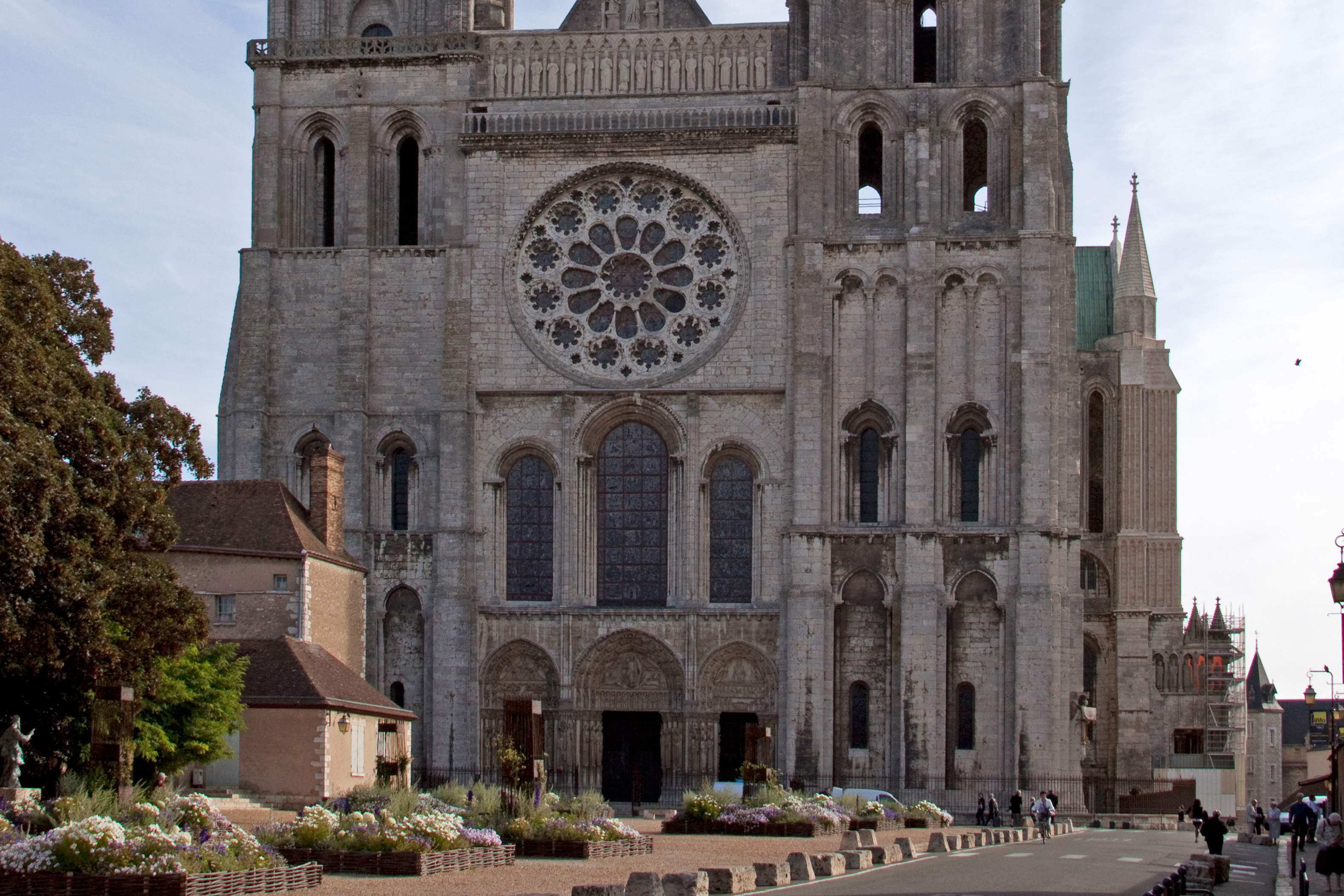
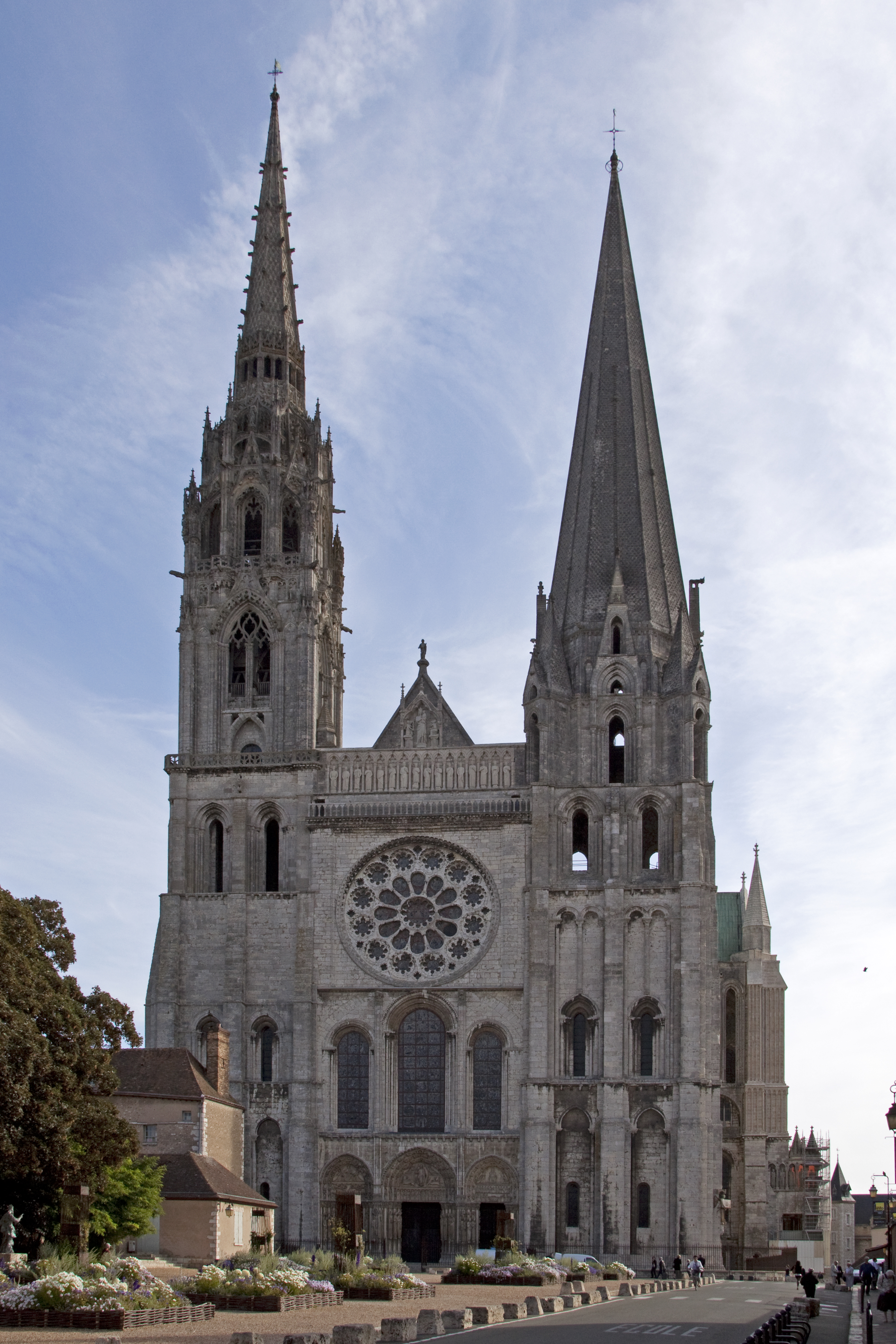
"Chartres Cathedral” by Tony Hisgott. Licensed under CC BY 2.0 via Wikimedia Commons.
“Chartres Cathedral” by Tony Hisgott. Licensed under CC BY 2.0 via Wikimedia Commons.

The Venerable Bishop Fulton Sheen once remarked that atheism was not natural to the human person and that it was acquired. He used as his reference St. Paul’s words in Romans:

For the wrath of God is revealed from heaven against all ungodliness and wickedness of those who by their wickedness suppress the truth. 19 For what can be known about God is plain to them, because God has shown it to them. 20 Ever since the creation of the world his invisible nature, namely, his eternal power and deity, has been clearly perceived in the things that have been made. So they are without excuse; 21 for although they knew God they did not honor him as God or give thanks to him, but they became futile in their thinking and their senseless minds were darkened (Romans 1:18-21).

And thus the Holy Spirit, speaking through St. Paul, says that the ungodly  suppress a truth that is plain and available to the human intellect, namely that God exists and is to be honored and thanked. Our capacity to perceive the existence of God is activated by the evidence of God’s power and divinity that is itself perceivable in creation. Hence, to choose to live in an ungodly (atheist) stance is not natural to us, but must be acquired through suppression of the truth and the evidence.

Since this suppression requires effort and an overriding of truth and evidence naturally available to us through our reason, those who engage in this suppression are, as the text says, without excuse. The term suppress is a present active participle in the Greek (κατεχόντων (katechonton), literally “suppressing.” Hence the text implies that atheism requires an ongoing effort to maintain the suppression. 

Now of course none of this would mean a thing to an atheist, since I am quoting a sacred text. However, for us who believe, Scripture is a prophetic interpretation of reality. In other words, it tells us what is really going on. Atheists are suppressing the truth in an ongoing way. The reference to their “wickedness” need not be taken to mean that all, or even many atheists are living wicked lives in a comprehensive sense. Rather, it can simply mean that the suppression of the truth of God’s existence and the evidence for it in creation is itself a sin, a form of  wickedness. As such, atheism is not seen by Scripture merely as evidence of bad luck, poor upbringing, or ignorance. Atheism is sinful because it resists what we are naturally equipped to do: perceive God’s existence. And this resistance is described as on ongoing, sinful state since the verb form used is a participle, indicating ongoing action.

A recent article at Science 2.0, describes some recent studies on the capacity of the human mind to perceive and ponder the metaphysical. The term “metaphysical” refers to concepts and realities that are beyond (meta) the physical world. Hence, concepts and realities such as justice, fairness, mercy, and so forth are not seen under a microscope but as real concepts that we not only debate, but which can both cause war and launch great humanitarian acts. Radical materialists deny metaphysics anywhere in the definable world. However, truly radical materialists are very rare, partly because it is so unnatural for humans to “think” this way, or to suppress the truth of metaphysical reality, which so clearly affects us.

I’d like to highlight excerpts of the article in the usual way, using black, bold italics, and include my own remarks in plain, red text. I do not vouch for the credibility of the Science 2.0 site, and I limit my comments simply to what is written in the column. But even if the science of studying this topic is nascent and is disputed by some, it nevertheless remains interesting that some in the field are beginning to discuss whether the human person is naturally wired to perceive and ponder the metaphysical. The full article is here: Atheism Unnatural?

Cognitive scientists are becoming increasingly aware that a metaphysical outlook may be so deeply ingrained in human thought processes that it cannot be expunged … We are born believers, not atheists, scientists say. Humans are pattern-seekers from birth, with a belief in karma, or cosmic justice, as our default setting. “A slew of cognitive traits predisposes us to faith,” writes Pascal Boyer in Nature, the science journal, adding that people “are only aware of some of their religious ideas” …

And this is just what Fulton Sheen once observed: atheism is unnatural to us and is acquired only through effort. There is also reference here to a kind of “meta-narrative” about justice, to which all human beings seem oriented no matter the culture or the era. We have a sense of justice, of right and wrong. I recently featured an article describing the discovery by brain researchers that this sense is apparent even in the youngest children. You can read that article here: Even the youngest children know right and wrong

While the UK is often defined as an irreligious place, a recent survey by Theos, a think tank, found that very few people—only 13 per cent of adults—agreed with the statement “humans are purely material beings with no spiritual element”. For the vast majority of us, unseen realities are very present … In the US, only 20 per cent of people have no religious affiliation, but of these, only one in ten say they are atheists. The majority are “nothing in particular” according to figures published in New Scientist

And this makes sense, since the rejection of God does not necessarily imply a wholesale rejection of the metaphysical, as is proposed by the radical adherents of “scientism.” Scientism is the claim that the physical sciences can and do explain the whole of reality, that there is nothing beyond the physical.

Indeed, it appears that stories exist to establish that there exists a mechanism or a person—cosmic destiny, karma, God, fate, Mother Nature—to make sure the right thing happens to the right person … the stories which become universally popular appear to be carefully composed records of cosmic justice at work

This is what I referred to above as a meta-narrative, which is essentially the set of archetypal stories that illustrate the basic human longing for justice and truth, and the triumph of what is good and true. This is a consistent theme in every culture and in every epoch of recorded human history. It is a remarkably consistent theme that points to its being placed in the human heart and soul, not merely as a learned preference but as an infused attraction to what is good, true, beautiful, and just. Biologists and anthropologists may wish to attribute this merely to a learned biological mechanism that helps survival. But the question still remains as to how the physical can produce the metaphysical. Further, it seems puzzling that this would be a necessary adaptation for survival, since none of the other animals seem to need a meta-narrative, or archetypal stories assuring final triumph of justice, in order to survive. 

But if a belief in cosmic justice is natural and deeply rooted, the question arises: where does atheism fit in? Albert Einstein, who had a life-long fascination with metaphysics, believed atheism came from a mistaken belief that harmful superstition and a general belief in religious or mystical experience were the same thing. 

In other words, atheism arose as a response to spiritual extremism and unbalanced or inaccurate notions of God and faith. But they overcorrected by dismissing good faith along with bad or flawed notions.

But as higher levels of education spread, will … atheism sweep the field, as some atheism campaigners suggest? Some specialists feel this is unlikely … The need for periods of contemplative calm in churches or temples or other places devoted to the ineffable and inexplicable will remain. They appear to be part of who we are as humans.

Yes, it is unlikely that we will outgrow what is a fundamental human trait. Faith is not a lack of education; it is a fundamental human quality that may at times go in wrong directions intellectually, but which is innately correct and essential to who and what we are: spiritual as well as corporeal persons.

When looking at trends, there’s also population growth to consider. Western countries are moving away from the standard family model, and tend to obsess over topics such as same-sex marriage and abortion on demand. Whatever the rights and wrongs of these issues, in practice they are associated with shrinking populations …

Touché

Africans and South Asians, on the other hand, are generally religious and retain the traditional model of multi-child families—which may be old-fashioned from a Western point of view, but it’s a model powerfully sanctioned by the evolutionary urge to extend the gene pool.

The power of the womb and the noticeable dying of the culture of death and selfish decadence; faith will out!

“It’s clearly the case that the future will involve an increase in religious populations and a decrease in scepticism,” says Steve Jones, a professor in genetics at University College London, speaking at the Hay Festival in the UK recently … Bad news for pro-atheism campaigners.

Indeed, I frequently get atheists, and also some non-Catholics, who predict the demise of the Catholic Church. I always respond to them that they must not have not read history. In the 2000 years of the Church, empires have come and gone, nations have risen and fallen, theories, heresies, trends, and fads have all sparked and then faded. But the Church is still here. Many have predicted our death, and to quote Chesterton, “We have buried every one of our undertakers.” Where is Caesar, where is Napoleon, where is Stalin, where is the USSR? They are gone, but we are here. I do not write this triumphantly; the Church is ever in need of reform and our numbers may rise and fall, but by the Lord’s promise, the power of Hell will not prevail over His everlasting Kingdom, the Church.

Here’s a hymn by John Henry Cardinal Newman: “Firmly I Believe and Truly”